Ask what Fukuoka is known for and you will be told tonkotsu ramen and street food stalls, and both answers are more interesting than they sound. The stalls in particular are the last of their kind in Japan, they very nearly disappeared, and the reason they did not is a city ordinance.
This guide takes the city's famous things in order of how much they repay attention: the yatai, the food, the shrine that receives about ten million visitors a year, the festival, and the crafts. It also covers what Fukuoka is not, which is a place you visit for a checklist of sights.
What Is Fukuoka Famous For? The Yatai, Above Everything
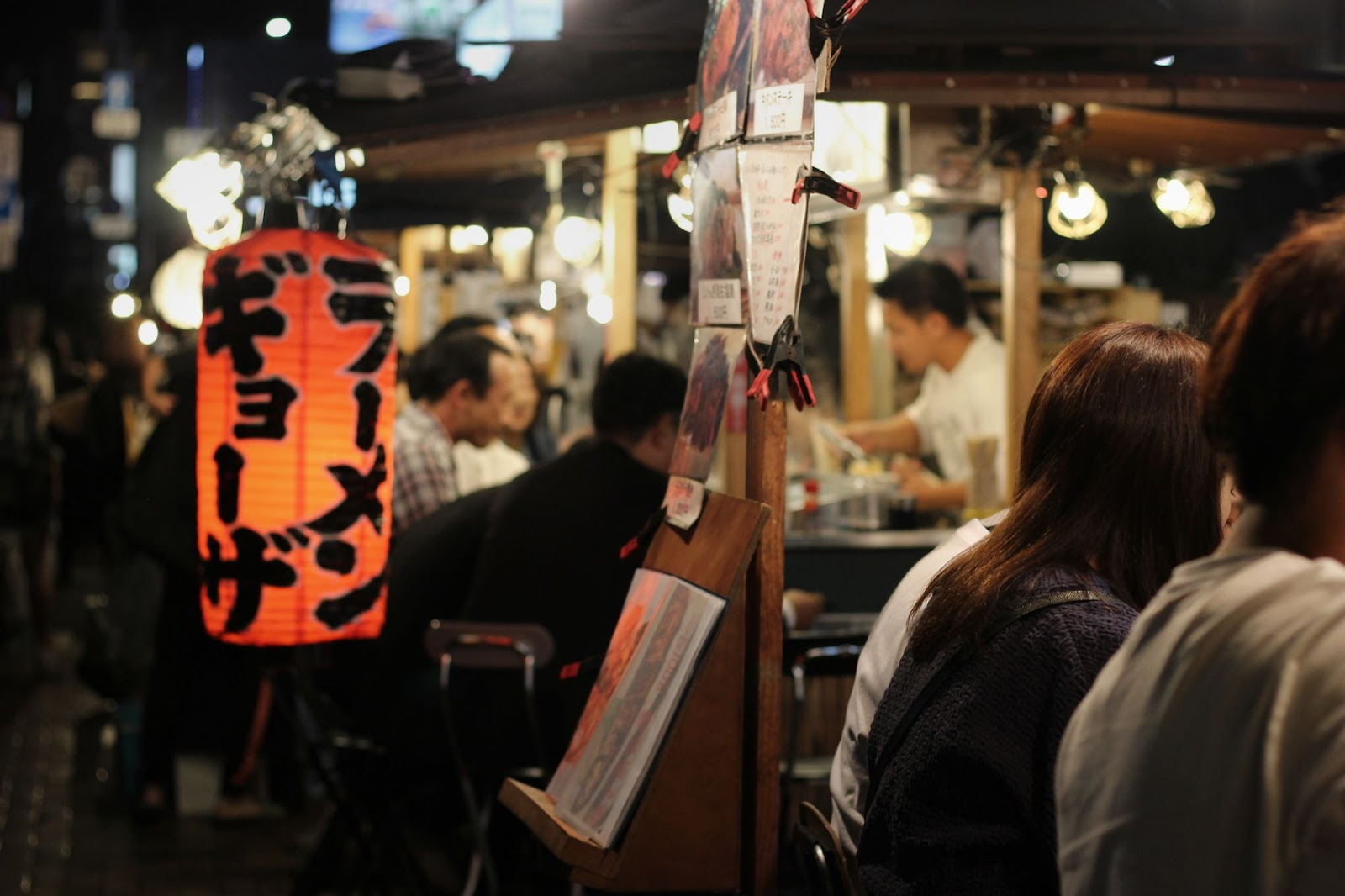
A yatai is a wheeled stall that is towed into place in the late afternoon, unfolded into a counter seating seven or eight people, run until the small hours, and then towed away again, leaving nothing on the pavement. Fukuoka has around a hundred of them, which is more than any other city in Japan, and it is the single thing that most distinguishes the place.
It is also the thing that came closest to being lost, and the numbers are worth setting out because they are not what you would guess.
At the peak in the 1960s Fukuoka had more than 400 yatai. By 2010 it had 155. The reason was a rule that sounds reasonable and turned out to be terminal: licences were held for one generation only, and could not be transferred. Every time an operator retired, a stall vanished permanently and no new one could take its place. The system could only count down.
In July 2013 the city passed a Yatai Basic Ordinance, and its central change was to open licences to public competition. Fukuoka's official tourism office sets out what happened next: ten years on, the city was running about 105 stalls, of which 41 were new entrants who had come in through the open call — more than four in ten. Recruitment has continued. The sixth round, whose applications have now closed, offered 23 pitches in Nakasu, Tenjin and Nagahama; candidates sit a written examination, then a documents round and an interview, and the licences run from April 2027 for an initial three years, renewable.
.webp?width=800&height=533&name=The%20cityscape%20surrounding%20Hakata%20Bay%20(from%20above%20Fukuoka%20City).webp)
The economics moved the other way from the count. A city survey put the economic ripple effect of the yatai at 10.49 billion yen as of November 2023, against 5.32 billion in a 2011 survey — roughly double, from fewer stalls. Just over 1.19 million people visited one across the year, spending an average of 1,923 yen each.
So the thing to understand about Fukuoka's most famous feature is that it is not a survival. It is a restoration, done deliberately, by a municipal government that decided a street-food culture was worth writing a law for.
How to Use a Yatai Without Getting It Wrong
The first thing to know is that a yatai is not a food court. Each one is a single operator with one menu, so the stall you pick determines what you eat — some are ramen, some are oden, some do tempura or gyoza, and a few now do things their grandfathers would not recognize. Prices are posted or should be; if they are not, ask.
Sit down and order something to drink first; the counter is small and the turnover matters. Two or three dishes per person is the normal load, and staying for hours is not the etiquette — people eat, drink, talk to whoever is beside them, and move on. Cash is safest; card acceptance varies by stall. There is no toilet — that is what the convenience store on the corner is for. The three main concentrations are Nakasu, along the river, which is the photograph everyone has seen; Tenjin, which is nearer the offices and the bars; and Nagahama, near the old fish market, which is where the ramen argument starts.
What Is Fukuoka Known For in Food? Tonkotsu Ramen and the Rest
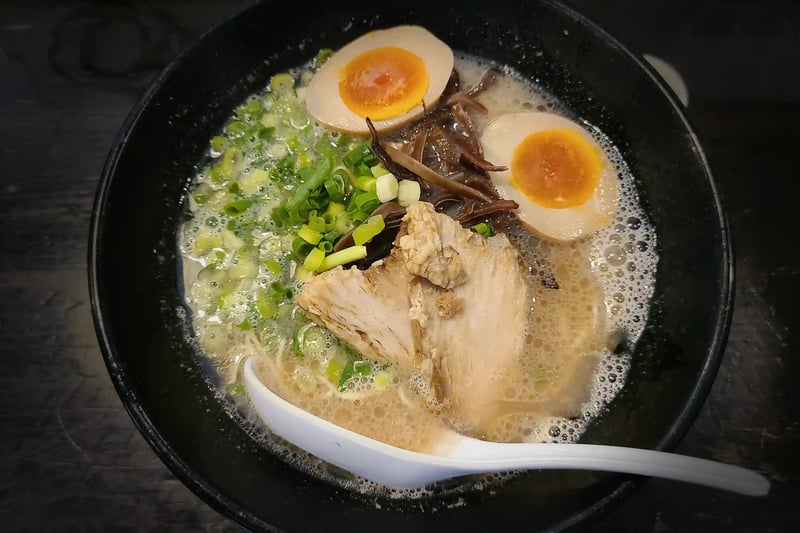
Hakata ramen is the city's export to the world, and the local version differs from what you will have eaten elsewhere. The broth is pork bone boiled hard until it emulsifies into something opaque; the noodles are very thin, very straight, and cooked briefly. Because they are thin they keep for about as long as it takes to eat them, which is why the shops offer kaedama — a second helping of noodles dropped into the broth you still have. You order it by saying the word, and the second bowl of noodles arrives almost immediately. You can also specify firmness when you order, and the scale runs further towards raw than the word "firm" suggests: futsu is normal, katamen firm, barikata very firm, and past that harigane and konaotoshi, which is noodles shown the water and removed. Ordering barikata is not a test of courage; it is a practical choice, because the noodles keep softening in the broth while you eat.
The other thing to know is that Hakata ramen is a counter food eaten quickly, not a meal to linger over. Two of Japan's largest ramen chains, Ichiran and Ippudo, both started here, and the city is estimated to have well over a thousand ramen shops — the density is why the style got refined rather than merely popular.
Motsunabe is beef offal simmered with cabbage and garlic chives in a soy or miso broth, and it is the dish the city eats in winter. Mizutaki is the opposite register — chicken simmered plainly in its own stock until the stock is the point, eaten with ponzu. Mentaiko has a documented inventor. The Fukuoka trade association records that Kawahara Toshio, who grew up in Korea and founded the firm Fukuya, wanted to give Japan the chili-cured roe he had eaten there; from around 1949 he worked out his own method using a chili seasoning liquid and sold it in Nakasu. Every tub sold at the airport descends from that one shop. Goma saba, raw mackerel in sesame and soy, is the one to order if you want to know why locals talk about the fish here: mackerel is not usually eaten raw in Japan because it spoils fast, and Fukuoka is close enough to the boats coming in off the Genkai Sea to ignore that.
One more that visitors miss: yaki-ramen, ramen noodles fried on a griddle rather than served in broth. It is a yatai dish, it is not sold much outside Fukuoka, and it is the thing to order when you have already had a bowl of soup that evening.
If Japanese food history interests you beyond one city, our guide to Japanese food culture and its regional differences covers the wider frame.
Dazaifu Tenmangu, and What Fukuoka Japan Was Before It Was Fukuoka
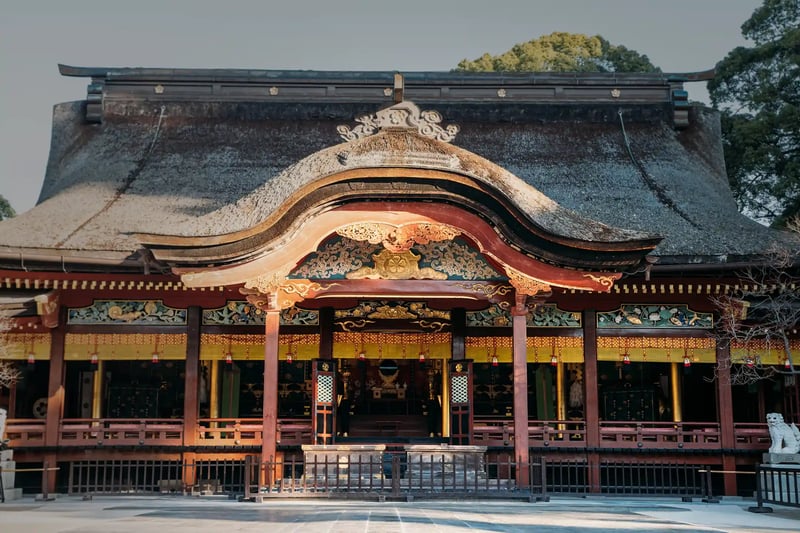
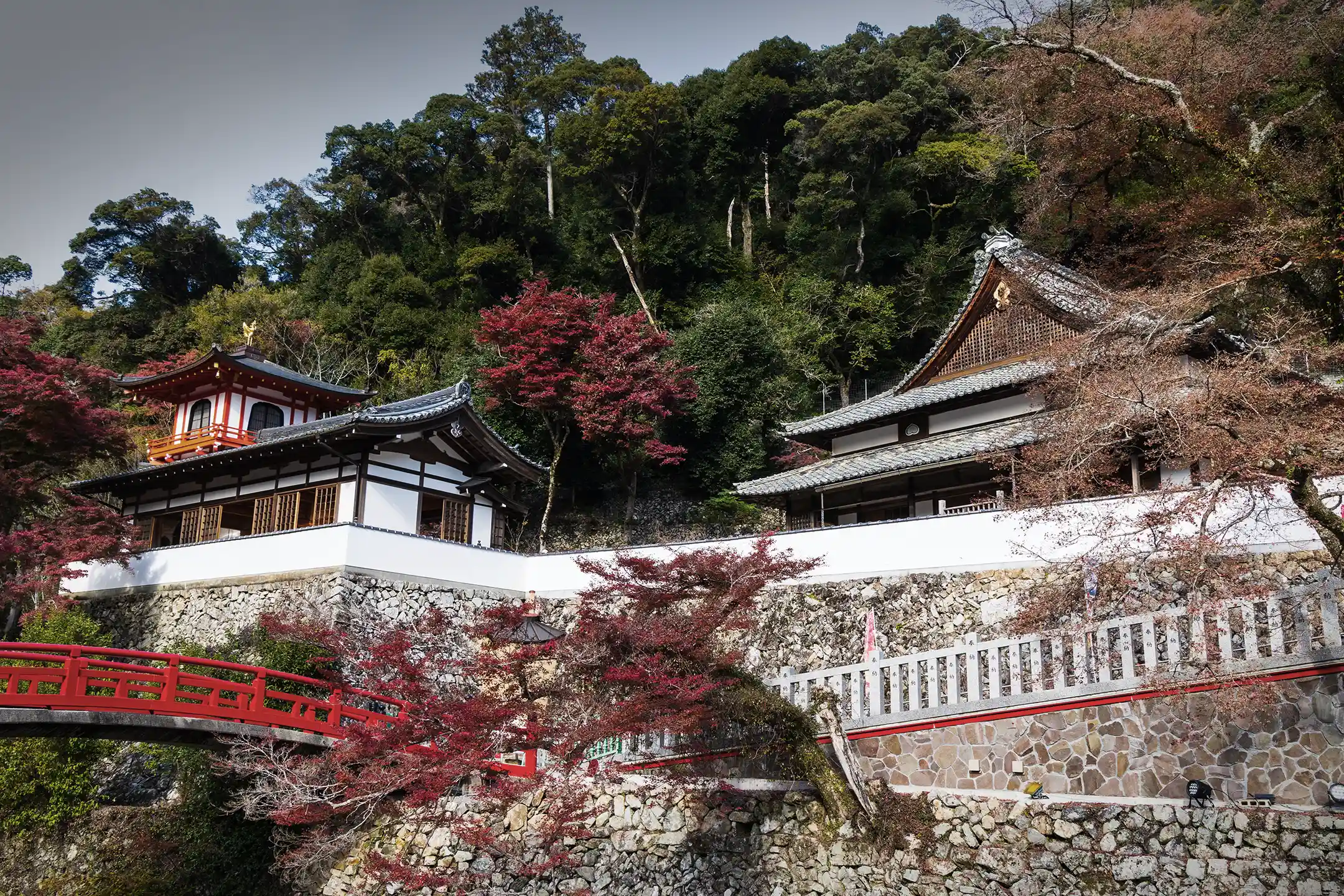
Dazaifu Tenmangu enshrines Sugawara no Michizane, born in 845, a scholar and official who rose high at court, was sent to Dazaifu after a political intrigue, and died there. Dazaifu City's own account gives the sequence precisely: a shrine was raised over his grave in 905, and in 919 an imperial order replaced it with a proper hall. The present main hall, in the five-bay nagare-zukuri style, is a nationally designated Important Cultural Property, and it still stands on the burial site.
Michizane was subsequently deified as the god of learning, and this is the head shrine of roughly twelve thousand Tenmangu shrines across Japan. The city puts annual visitors at about ten million, many of them students praying for examination results. If you come at new year you will be one of a very great many; outside the new year and the exam season it is a walk through a plum grove to a building that has stood over the same grave since 919.
The reason the shrine is where it is matters more than the shrine. Dazaifu was the seat of the government office that administered Kyushu and handled all diplomatic contact with China and Korea for several centuries. Fukuoka is closer to Busan than to Tokyo, and for most of Japanese history that was the defining fact about it — this was where the continent arrived. The Mongol invasions of 1274 and 1281 landed here, and after the first the shogunate had a stone wall built along the bay; stretches of it survive, and you can walk up to them at Nishijin and Imazu.
The single object that makes the point is in the Fukuoka City Museum, and it is very small. A gold seal about 2.3 centimeters square and 2.2 high, weighing 108.7 grams at 95.1 percent gold, cut with five characters read as a title — king of Na, of Wa, under Han. The museum's account records that a farmer on Shikanoshima found it on 23 February 1784 while repairing an irrigation ditch, and that it is taken to be the seal the Later Han emperor Guangwu granted in 57 CE. It was designated a national treasure in 1931.
Two thousand years ago somebody in this bay was important enough to be sent a gold seal by a Chinese emperor. That is the fact the rest of Fukuoka sits on top of.
The middle of that story has a building. The Kōrokan, a state guesthouse for foreign envoys, stood on what is now the grounds of Fukuoka Castle from the seventh century to the eleventh — the only one of Japan's three such halls whose site has been found and excavated. Envoys from Tang China and the Korean kingdoms were received there, and the goods that came through it are why this coast has always felt slightly less insular than the rest of the country.
Two later interventions shaped the city you walk around now. Toyotomi Hideyoshi rebuilt Hakata as a merchant town after it was destroyed in the wars of the sixteenth century, laying out the ward structure that the festival districts still follow. And the Shinkansen reached Hakata in 1975, which is when the local food stopped being local — mentaiko and tonkotsu ramen became national the moment there was a fast train to carry people to them and back.
Hakata Gion Yamakasa and the Festivals
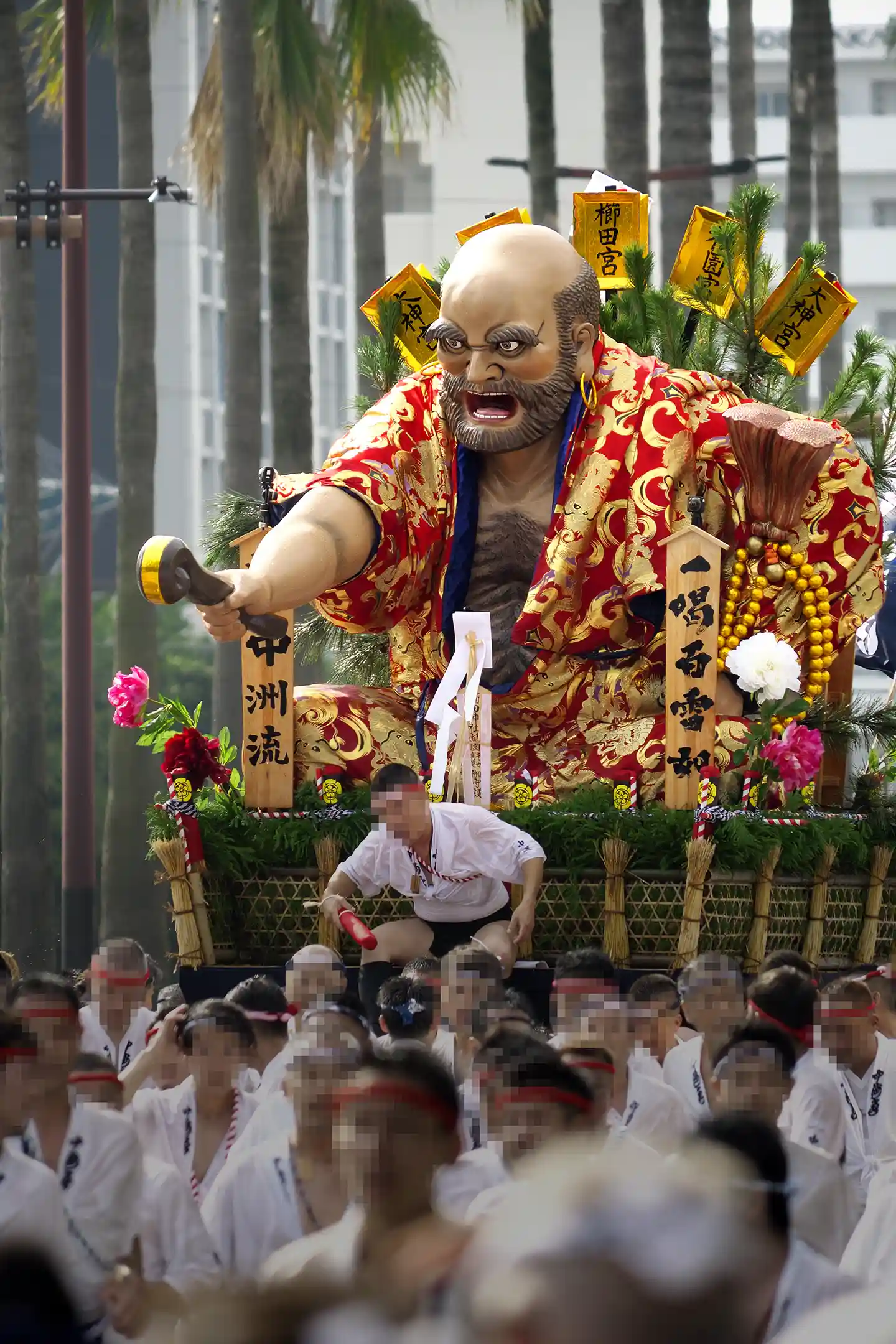
Hakata Gion Yamakasa belongs to Kushida Shrine and runs for the first half of July, ending at 4:59 on the morning of the fifteenth, when teams race one-ton floats through the streets on a fixed course against the clock, each carried by a crew of more than two dozen men working in rotation. It was inscribed on the UNESCO list of intangible cultural heritage in 2016 as part of Japan's float festivals. The two kinds of float are different objects with different names. The kazariyama, the tall decorated ones you will see photographed, stand around the city through the first two weeks — one of them, at Kamikawabata, is built to be carried as well. The kakiyama are lower and lighter and are the ones that race. The floats that are carried are a different, lower, lighter design, because a structure built to be run with has different requirements from one built to be looked at.
If you are in the city in early July you will see the men of the participating districts in shimekomi going about ordinary business. Participants also observe a set of abstentions for the duration, the best known of which is that they do not eat cucumber — the reason usually given is that a cut cucumber resembles the crest of Kushida Shrine, to which the festival belongs, though the shrine's own explanation of the crest traces it to the quince flower instead. It is a small thing, and it tells you how seriously the two weeks are taken.
The festival is old, and it is attributed to a specific person. The account given is that in 1241 the priest Enni Ben'en, founder of Jōten-ji in Hakata, was carried through the streets on a platform scattering holy water to quell an epidemic. Enni is the same figure credited with bringing tea, udon and steamed buns back from Song China — a single monk sits behind a surprising amount of what Hakata is known for. The festival is a nationally designated Important Intangible Folk Cultural Property as well as a UNESCO listing, and the districts that carry the floats are the descendants of the merchant wards Hideyoshi laid out.
Hakata Dontaku, on 3 and 4 May, is the other one, and it is a different animal — a civic parade with hundreds of participating groups rather than a rite. Even the name is an import: dontaku comes from the Dutch zondag, Sunday, picked up through the Nagasaki trade and meaning a day off. Participants clap wooden rice paddles together as they walk, which is what you will hear before you see anything. Between them they mark the two poles of the city's temperament: the merchant town that organises itself, and the merchant town that shows off.
Hakata-ori and Hakata Dolls: The Crafts
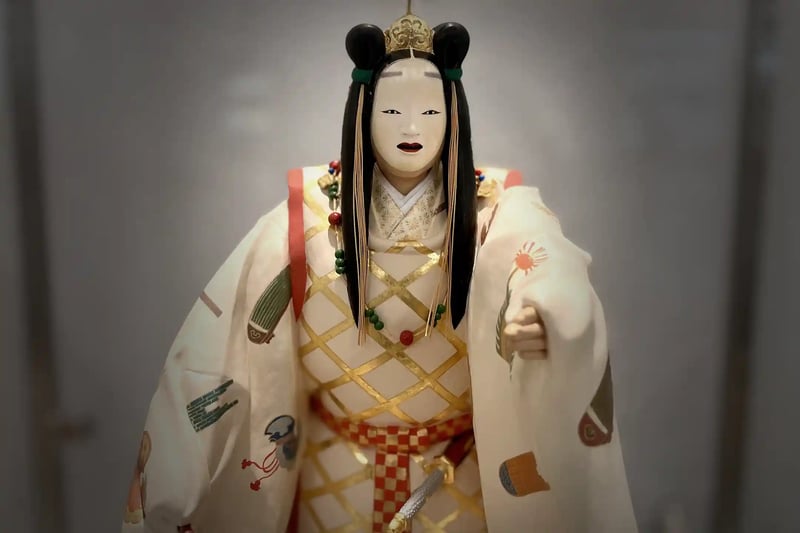
Hakata-ori is a silk weave that dates to the same journey as the festival: the Hakata merchant Mitsuda Yazaemon accompanied Enni to Song China and came back in 1241 with weaving techniques. It is dense, slightly stiff, and produces a sash that holds a knot without slipping — which is why it became the standard obi for men's formal dress and for kendo and other martial arts. You can identify it by the repeating motif of Buddhist ritual implements — the dokko, a ritual thunderbolt held to break through delusion, and the hanazara, the dish used to scatter flower petals in a rite — woven into the stripe, a pattern known as the presentation design because the Kuroda lords sent lengths of it to the shogunate as tribute. Buying an obi is not a casual souvenir purchase, but the smaller pieces made from the same cloth are, and they carry the pattern just as clearly.
Hakata dolls are unglazed painted clay figures, and their origin is a change of trade rather than an invention: the tile makers brought in to build Fukuoka Castle in the early seventeenth century turned their clay and their kilns to figures. They went international in 1900, when they were shown at the Paris Exposition. They are still made by hand in small workshops, and they are the souvenir that is actually a craft rather than a souvenir shaped like one.
Things to Do in Fukuoka, and What the City Is Not
Why Fukuoka Feels Different From Kyoto or Tokyo
One statistic explains a great deal. The city's own figures, from the 2020 census, put the population at 1.51 million and note that Fukuoka has the highest population growth rate of Japan's designated cities, and the highest share of young residents among them — 19.2 percent aged between ten and twenty-nine.
That is unusual in a nation whose population is falling, and it changes what the city is like to be in. Kyoto and Nara are places where the interesting things happened and are now looked after. Fukuoka is a place where the interesting thing is happening: new restaurants, a young drinking culture, and — this is the connection that matters — enough demand to make a hundred street stalls viable enough that people sit a written examination for the right to run one.
It also explains the yatai arithmetic. Fewer stalls, double the economic effect, is what happens when a city grows into its own tradition rather than out of it.
Fukuoka is compact in a way that no other major Japanese city is. The airport sits two subway stops from Hakata Station, inside the city rather than an hour outside it, which is unusual enough to change how you plan: you can land at noon and be eating at a counter by one.
What it does not have is a dense stack of famous sights. There is no Kinkaku-ji here, no Nara deer, no set-piece view that justifies a day of queueing. Arrive with a checklist and there is not much to tick. Arrive planning to eat, walk and talk to people and the city opens up immediately.
The other practical point is that Fukuoka is the gateway rather than the destination for a lot of Kyushu. Yufuin and Beppu are a couple of hours away, Nagasaki is reachable in under two hours by train, and Karatsu and its pottery are closer than that. Treating the city as a base rather than a stop is what the geography invites.
The useful way to spend two days: Dazaifu and the museum on one, the bay and the wall remains in the afternoon; the second day for the market, the crafts, and then an evening that starts in Tenjin and ends at a stall on the river. For the wider region, our guide to Hakata and Fukuoka's culinary culture goes deeper on the food, and our Tokyo-to-Okinawa route guide places Fukuoka in a longer itinerary.
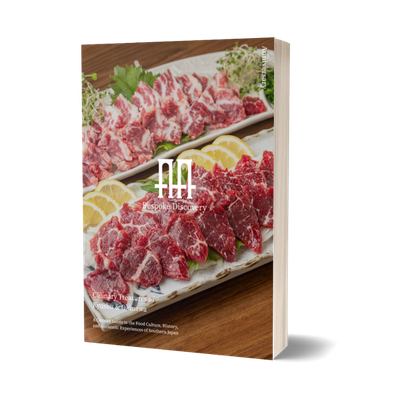
The story behind the flavor
A single article can offer a glimpse — a taste, a thread to follow. The Culinary Treasures of Kyushu & Okinawa Digital Guide gathers those threads into something more complete: the people, the places, the traditions, and the quiet logic behind what each region puts on the table. It's a reading for those who want to understand not just what to eat, but why it matters.

Conclusion: What Is Fukuoka Famous For, Really
What is Fukuoka known for, in the end, is ramen and street stalls — and the interesting version of both facts is administrative. The ramen is thin-noodled because the shops needed to serve fast, and kaedama exists because thin noodles do not wait. The stalls exist in 2026 because a city watched them fall from four hundred to a hundred and fifty-five, worked out that the licence rules were the cause, and passed a law to reverse it.
That is the thing worth carrying away, and it is the honest answer to what Fukuoka is famous for. A city that is famous for something is usually living off it. Fukuoka noticed what it was losing and legislated to get it back — and the result is a street-food culture whose economic ripple effect is now put above ten billion yen a year, with fewer stalls than it had in the 1960s.