The question people ask before a first trip to Japan is what to see. It is the wrong question, and the evidence that it is wrong is that almost everybody who asks it comes home with the same answer and the same photographs. The better question is narrower and harder: how do you design a first trip so that there is a second one?
That is not a sentimental point. It is a planning one. Japan is a country where the difference between a place you have visited and a place you understand is unusually large, and where a great deal of what is worth seeing is only legible once you have a frame to put it in. A first trip that tries to be complete produces a fortnight of surfaces. A first trip that is built to be the first of two produces a fortnight of surfaces and a reason to come back for what is underneath them.
So this article does three things. It explains what the standard first-timer route is optimised for, using the government's own figures on where visitors actually go and how long they stay. It says what belongs in a first trip. And it says what to leave out on purpose, which is the part no itinerary template contains. Every figure taken from a source carries that source and the date we read it; the few numbers that are our own estimates are marked as ours.
A First Time in Japan: What the Golden Route Is Optimised For
What the Route Optimises For
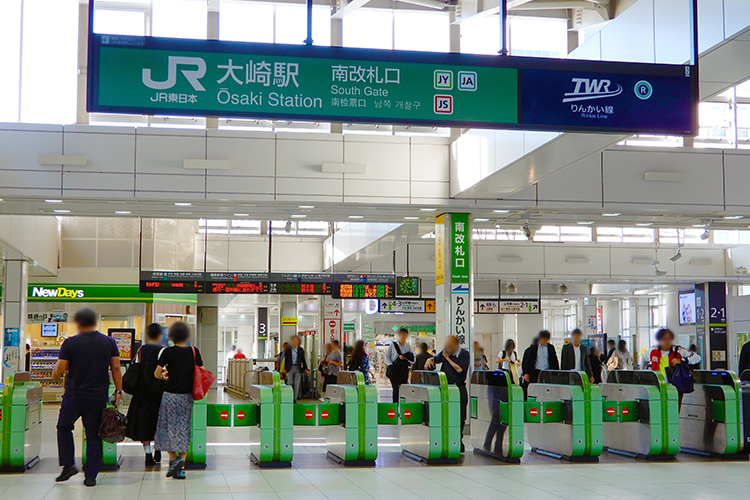
Tokyo, Hakone, Kyoto, Osaka, with Nara on a spare afternoon. The route persists, and on our reading that is because it works; and the clearest way to see what it is doing is to look at the column nobody reads: nights.
The Japan Tourism Agency publishes a prefecture-by-prefecture table of visitor numbers, spending per person and average nights. The figures below are its confirmed ones for the 2025 calendar year, released on 31 March 2026 and read by us on 11 September 2026. The table gives Tokyo 20.892 million visitors at an average of 5.4 nights and Osaka 16.996 million at 3.5. Kyoto has 12.228 million at 2.3, Chiba 14.456 million at 0.6, and Nara 3.709 million at 0.4. The figures cover visitors other than cruise passengers, and the agency notes that its prefecture totals do not match the national one because inter-prefecture transport costs and spending that cannot be attributed to a place are left out, among other reasons.
Read those five rows as a sequence and the design shows itself. Chiba receives more visitors than Kyoto and holds them for six-tenths of one night; Chiba is where Narita is, and our reading of the row is that most of those visits are the airport. Nara receives 3.7 million people for four-tenths of a night each, which is a way of saying that it is mostly a day trip from somewhere else. Kyoto — the place the whole trip is nominally about — averages 2.3 nights. The route is not a set of destinations. It is a corridor with two places people sleep in and several they pass through.
That corridor is optimised, and it is optimised well, for a specific job: moving a large number of people between a small number of nodes where the transport, the language support and the room capacity already exist. If you have nine days, one shot and no appetite for uncertainty, it is the right answer. It is worth saying plainly, because a great deal of writing on this subject treats the standard route as a failure of imagination. It is not. Read as a solution to the problem of moving a lot of people through a small number of nodes, it works, and following it is not a mistake. That reading is ours; the agency publishes the nights, not the intention.
What a First Time in Japan Costs You
The cost is not that the places are bad. It is that the route concentrates you in time as well as in space, and the concentration is measured.
The same agency publishes a second breakdown in the same document, which we read on 11 September 2026: eight prefectures — Tokyo, Kanagawa, Chiba, Saitama, Aichi, Osaka, Kyoto and Hyogo — against the rest of the country. It comes from a separate regional survey which covers visitors other than cruise passengers and leaves out inter-prefecture transport costs and unattributed spending, among other reasons, so its own total of 8.6419 trillion yen is smaller than the national figure of 9.4549 trillion. Within that total, the eight took 6.5081 trillion yen in 2025, or 75.3 per cent, and everywhere else 2.1338 trillion, or 24.7 per cent. In 2019 the same chart reads 73.3 and 26.7. Three-quarters of the measured spending lands in eight of forty-seven prefectures, and the share outside them is slightly smaller than it was before the pandemic.
The government treats that as a problem rather than a success. In October 2023 the Cabinet's tourism ministers' conference adopted a package of measures on preventing and restraining overtourism, which we read on 11 September 2026. Its opening paragraph says that demand has recovered quickly and that many destinations have got their liveliness back. It then says that a tendency to concentrate in a few areas, mainly urban ones, is also visible. And it says that in some places and at some times of day, excessive congestion and breaches of manners are affecting residents' daily lives and raising concerns about visitor satisfaction falling. The package then lists what the state is doing about it under three headings — responding to the congestion and the breaches of manners, promoting visits to the regional part, and promoting tourism together with residents — with named pilot sites under the first two.
What that means for you is not that the standard route is ruined. It is that the standard route is the object of national policy, and the policy is to spread people out. You are, on the standard route, doing the thing a Cabinet-level package is trying to undo. Some of what it lists does bind a visitor: entry restrictions and compulsory guides under the ecotourism and natural parks laws, naming Iriomote; the introduction of entry fees, centred on national parks and naming the Chubusangaku park; and traffic restrictions following local consultation, piloted in the Oirase area. Two more are a stage earlier than that. On Mount Fuji the package says consultations on proper entry management and related matters were to begin that autumn, and on penalties it says a casebook on provisions made by local ordinance would be compiled and shared with the regions. That is worth knowing before you copy an itinerary.
What Belongs in a First Time in Japan
One City, Not Three, on a First Visit
The argument for fewer cities is usually made emotionally — slow down, breathe, be present. Here it is arithmetically. A travel day in Japan is not a lost half-day; it is a lost day and a fraction. You check out by ten, you move, you cannot check in until three, your luggage is either with you or ahead of you, and the hours in between are spent in stations and coffee shops with a bag. Three cities in ten nights means two of those. Two cities means one.
The agency's own nights column is the argument's other half. If Kyoto averages 2.3 nights and Tokyo averages 5.4, then a visitor who gives Kyoto four nights is already doing something unusual, and the thing they get for it is not more temples. It is the second morning in the same neighbourhood, when the walk to breakfast is a walk you have done before and you start noticing what is on it. Our guide to Tokyo's neighbourhoods is built on the assumption that where you are based is a bigger decision than what you visit.
One city is the version that templates almost never propose and that the arithmetic favours most: a single base, day trips out and back, and no travel day at all beyond the two that get you into the country and out of it. Three cities is not a mistake — if you have a fortnight and a reason, take it — but it is a different trip, and the difference is two days spent moving. What we will say is that the number should be a decision you make deliberately, with the travel days counted, rather than a number you inherit from a template.
One Thing You Cannot Do at Home: the Ryokan Night
A first trip should contain exactly one thing that has no equivalent anywhere else, and it should be decided before anything else is arranged around it. Not three such things, and not none.
The reason for exactly one is that these experiences are not additive. The first time you eat a meal in the room you are sleeping in, served in a sequence you did not choose, in a building where you have taken your shoes off at the door, it reorganises what you think a place to stay is. The second time, four days later, it is a good dinner. A ryokan night in the middle of a first trip does something to the rest of the trip; three of them do something to each other.
The reason for not none is harder to argue and more important. The thing that produces a second trip is not a list of places you did not reach. It is one hour in which the country stopped being a place you were looking at. That hour is not something an itinerary can schedule, which is an argument for making room for it rather than for trying to place it.
We have named a category rather than a place, because the right one depends on you and because this article is not a catalogue. What we will say is what it is not: it is not the most famous thing, and it is not the thing with the longest queue.
Enough Empty Time to Notice Where You Are
The most common structural error in a first itinerary is not too many cities. It is too few gaps. A day with four fixed appointments has no capacity to absorb the thing you walk past on the way to the second one, and walking past things is how a first trip finds its second trip.
There is a version of this argument that sounds like a lifestyle preference and can be ignored. Here is the version that cannot. The state is spending money on exactly this problem: the same 2023 package funds the visualisation and real-time distribution of congestion at sites and the areas around them, naming Biei and Kamakura, and a scheme that proposes uncrowded routes to visitors, with pilots named at Hakone and Chichibu. Read that as an admission that the queue is not knowable from a schedule made in February, and a day with no slack in it converts every queue into a cancelled plan. Empty time is not a luxury in that context. It is the tolerance that keeps the rest of the day working. Our quiet guide to Tokyo is an itinerary built around that idea rather than against it.
A working proportion, offered as ours rather than as a finding: one fixed thing a day, two at most, and the rest of the day open. That feels alarmingly empty on a spreadsheet in February and turns out to be full in April.
What to Leave for Next Time
Seasons You Did Not Get: Hanami Is Not One Date
The single most useful thing to leave for a second trip is a season, and the reason is that the seasons in Japan are not a backdrop that changes colour. They are closer to different countries occupying the same coordinates.
The hanami season is the case where this can be shown with numbers rather than asserted. The Japan Meteorological Agency records the flowering date at each of its observation sites and publishes the table as the season runs. On its page for 2026, read by us on 11 September 2026, Naha flowered on 18 January and Ishigaki on 4 February; Tokyo on 19 March, Kyoto on 23 March; Sapporo on 18 April; Wakkanai on 1 May. That is just under three and a half months between Naha and Wakkanai, and the table's own earliest and latest are earlier and later still — Miyakojima on 9 January, Abashiri and Kushiro on 3 May.
It is also not one tree. The agency notes on the same table which species each site observes where it is not the standard one: the Okinawan sites are recording hikanzakura, and several Hokkaido sites — Wakkanai, Asahikawa, Abashiri, Obihiro, Kushiro — are recording ezoyamazakura. So the thing that gets described abroad as a two-week national event is, in the record, a sequence of different flowerings of different trees spread across more than a quarter of the year. The agency gives each site a normal date, which it calls the 2020 normal value; in 2026 Sapporo was thirteen days ahead of its normal date and Wakkanai twelve.
A first trip gets one of these. Leaving the others alone deliberately is what turns a vague intention to return into a specific one — you are not going back to Japan, you are going back to the north in May.
Places That Need You to Have Been Once
Some places do not work without context, and giving them to a first trip is the most reliable way to waste them. The distinction is not between famous and obscure. It is between places that explain themselves and places that assume you already know something.
Here the government has done the selection work and published it, which is convenient for a different reason than it intended. In March 2023 the tourism agency selected eleven model regions for what it calls high-value inbound destination development, and in September 2024 it added three more, bringing the total to fourteen. The definition it works to is a number: a high-value traveller is one who spends a million yen or more in Japan. On the agency's figures in the first announcement, that was about one per cent of inbound visitors, 290,000 people, and about 11.5 per cent of the spending, 552.3 billion yen. The second announcement puts the same group, also as of 2019, at about one per cent, 320,000 people, and about 14 per cent, 670 billion yen. Those are two estimates of the same year rather than a change between them. In both documents the agency's stated reason for the programme is that this group's spending concentrates in the large cities and does not reach the regions. The first announcement and the second, both read by us on 11 September 2026, name each one with a single line of what it is for. Eastern Hokkaido for untouched nature and coexistence with rare animals. Hachimantai as a place where a Japanese culture of several thousand years ago survives. Matsumoto and Takayama for the forests, snow and water of Japan's spine, and the society the old highways and castle towns produced — that is the 2023 wording, which the 2024 announcement revises. Hokuriku for the cultures grown from the sacred Mount Haku and the trade of the northern shipping routes. Ise-Shima for the nature and the life that are of a piece with the pilgrimage culture centred on the Ise Grand Shrine. Setouchi for a beauty of many islands found nowhere else, and its fusion with living and with art. Tottori and Shimane as the land of Japan's origins and myths. Okinawa and Amami for Ryukyuan spirituality.
Read that list as a definition rather than as a recommendation. Most of those lines describe a place whose interest is a relationship — between a landscape and a belief, between a trade route and a craft, between an island and a kind of work. A relationship is not visible to someone who arrived yesterday. It is legible to someone who has been to Japan before and has something to hang it on. That is the test for what to leave: if the one-line description of a place is about a connection rather than an object, it belongs to the second trip. Our guide to Hakone is about a place that sits on the near side of that line, which is why it works on a first trip.
Practicalities That Actually Change a First Time in Japan
The Two Decisions That Are Hard to Undo
Most first-trip advice is a list of things that can be fixed in twenty minutes after you land. Two things cannot, and both are made months earlier.
The first is where you sleep. Not the hotel — the location. A room in the wrong district is not a small inconvenience that money can fix later; it is time added to the front and back of every day for the length of the stay, and it decides what your evenings can contain. The agency's table says the average visitor spends 5.4 nights in Tokyo. Put our own figure of forty wasted minutes a day against that — it is our figure, not the agency's — and it comes to close to four hours, which is most of a day's walking. Our complete guide to places to visit in Tokyo is organised geographically for exactly this reason.
The second is how long you stay in each place, because it is the one variable that cannot be adjusted once the bookings are made. Everything else on a Japanese trip is remarkably forgiving — you can change a restaurant, skip a temple, take a later train. You cannot add a night in Kanazawa on the morning you were meant to leave it.
Both of these are decided at the point when you know least about the trip, which is the uncomfortable part and the reason to think about them rather than to default.
The Ones That Are Easy to Fix on Arrival
The corollary matters more than it sounds. A large proportion of the anxiety attached to a first trip attaches to things that resolve themselves in the first hour: connectivity, local transport, the mechanics of paying for a coffee, what to do with a suitcase between a checkout and a check-in. These are real, and they are all soluble at the airport or in the first afternoon, and none of them is worth a week of research in advance.
We are deliberately not making this article the place where those are answered. Rules made by ministries and operators change from year to year, which is exactly why a general-purpose first-trip guide is the wrong container for them, and why the place to settle them is the page the ministry or the operator publishes, in the month before you travel. The thing we would say about the whole category is structural: if a problem can be solved in the country in an hour, solving it from home in February is not preparation. It is displacement activity that uses up the attention the two hard decisions needed.