Kyushu hot springs are among Japan’s great geothermal blessings—an island region rich in mineral waters and dramatic, unforgettable landscapes. Abundant heat from Kyushu’s volcanic zones produces an exceptional variety of spring waters and plentiful sources, forming the foundation for truly high-caliber onsen ryokan and deeply restorative stays for both body and mind. In quiet hot-spring towns, you’ll find modern Japanese spaces that highlight natural materials, where time seems to slow and you can step away from everyday noise and gently return to yourself.
In Kyushu, the long tradition of therapeutic hot-spring stays has evolved into contemporary wellness experiences. These onsen ryokan are places where care for the body and luxurious ease coexist—inviting you to relax without compromise. In this article, you’ll journey through premium onsen ryokan across Kyushu and explore their appeal from multiple angles: the characteristics of each spring type, wellbeing programs, guestroom design, and even local food culture.
For high-value travelers seeking an exceptional stay that truly brings you back into balance, Kyushu’s onsen ryokan—and the distinctive character of Kyushu hot springs—may be the ideal destination.
Why Kyushu Hot Springs Ryokan Are Chosen—and How to Choose Well
Kyushu’s onsen ryokan are highly regarded for three main reasons: the rich diversity of their waters, the fusion of nature and quiet, and the flexibility that suits longer stays as well.
First, Kyushu concentrates some of Japan’s most remarkable geothermal resources, which makes the mineral composition of its hot springs exceptionally varied. Oita Prefecture, for example, is so abundant in hot springs that it’s nicknamed “Onsen Prefecture.” Even within the same area, you can move from strongly acidic, stimulating milky-white baths to strongly alkaline waters that feel silky and gentle on your skin. That range is so satisfying that even onsen enthusiasts praise it as something you can “keep exploring without ever getting bored”—and it includes distinctive bathing styles such as sand baths, steam baths, and mud baths, giving the region a true “hot-spring theme park” appeal(*1).
At the same time, Kyushu’s hot-spring destinations stretch from coastlines to mountain valleys to remote islands, and that environmental variety supports a calm, nature-close atmosphere wherever you stay. Rooms that open onto sweeping mountain ridgelines or tranquil seas—and settings where the soundtrack is a stream’s murmur or the rhythm of waves—can bring deep relaxation simply by being there. Even on a short trip, you’ll benefit from resisting the urge to overpack your schedule. Savor seasonal local cuisine at an unhurried pace, switch off your phone and laptop with intention, and feel nature and the shifting seasons—this kind of approach can make even a one-night, two-day stay feel genuinely restorative.
Beyond the physical comfort of hot springs, time spent in minimal, nature-embraced Japanese spaces offers a mental ease that’s difficult to replicate. And the spring water type itself can be a key deciding factor when you choose a ryokan. Depending on the minerals, aroma, and texture, the sense of relaxation and how your body responds can differ—so there’s also the pleasure of finding “the water that suits how you feel right now.”
When you choose both the inn and the water with these points in mind, your stay at a Kyushu hot springs ryokan can become a premium wellness experience that truly resets you from the inside out.
Choosing an Onsen Ryokan by Your Purpose
When you choose an onsen ryokan, you’re less likely to miss the mark if you first decide your main purpose for the trip. If you want to break free from a stressful routine, consider a quiet inn tucked into a rustic mountain setting—especially one that offers programs designed to gently release tension from your body and mind.
For instance, if you’re dealing with a disrupted autonomic nervous system or a tendency toward sleeplessness, it’s often said that an inn with a low-stimulation simple spring (alkaline simple hot spring) can be a good match. This water type feels gentle on the skin and is traditionally listed in Japanese onsen guidance as suitable for concerns such as autonomic instability, insomnia, and mild depressive states—though this does not guarantee medical effects, and individual experiences vary.
If you’ve been thinking, “Lately I can’t fall asleep easily,” or “My sleep feels shallow,” try setting sleep improvement as your goal. Research has suggested that habitual evening hot-spring bathing may be associated with better sleep and, in older adults, a lower prevalence of hypertension(*2).
Warming your body from the core in an onsen before you sleep is often said to encourage parasympathetic dominance, making it easier to drift into deeper rest. If you want to aim for that experience, look for an inn with a private, on-site spring source that allows bathing through the night, or a ryokan with in-room open-air baths where you can soak longer in comfortably warm water. If your goal is digital detox, you might also consider a mountain village or remote island location with limited signal—or a property that intentionally doesn’t place televisions in the rooms.
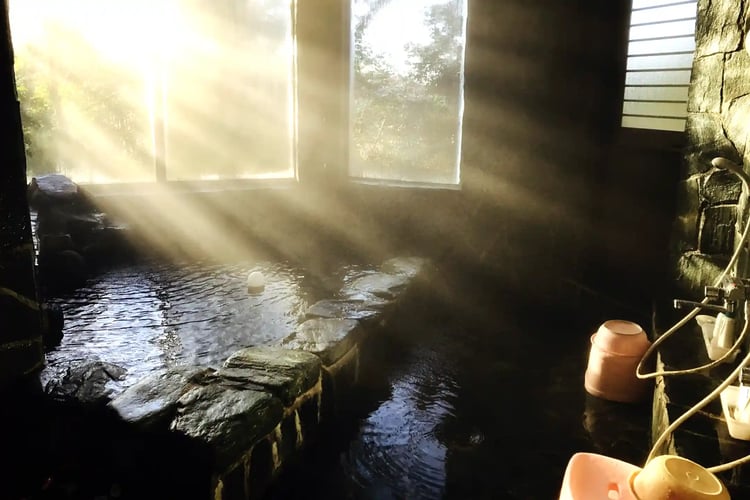
If you want to center your trip on returning to nature, a ryokan set in the forest or alongside a mountain stream is a wonderful choice—somewhere you can sense the seasons as they change. And if the inn offers morning and evening walking paths, or a terrace designed for stargazing, you can experience a feeling of unity with nature from day into night.
In every case, it’s important to keep travel time and stimulation as low as possible. If the journey to the inn is overly long, you may arrive exhausted, and the restorative effect you came for can be reduced. Build your itinerary around “one day, one inn,” travel at an unhurried pace, and after check-in, minimize outings so you can secure enough time to rest and settle within the property.
Wake a little early to greet birdsong and morning light; turn off digital devices earlier at night; soak, read, and calm your mind with breathing practices—when you keep a simple routine like this, even a short stay can deliver the satisfying fullness of a true retreat.
Spring Types and How They Feel—The Basics
Hot springs are broadly classified into 10 types, and in Kyushu you can enjoy many of them. When you understand the characteristics of each, choosing a ryokan—and noticing differences while you bathe—becomes far more interesting.
Simple springs (simple hot springs) contain relatively few dissolved components, and they’re known for their mildness and low stimulation on the skin.
With alkaline simple springs, you may notice a smooth, silky feeling on your skin. They’re often considered gentle and approachable, and are traditionally associated with helping calm the nervous system and support better sleep. Because they’re easy for most people to enjoy, they’re also well suited for first-time onsen visitors or anyone with sensitive skin.
Chloride springs contain higher levels of salt and are sometimes called “heat-retaining waters.” After bathing, salt clings lightly to the skin and helps prevent sweat from evaporating too quickly, which supports warmth retention. They’re traditionally associated with supporting recovery from minor cuts and easing sensitivity to cold, and the cozy afterglow tends to linger.
Bicarbonate springs are rich in baking-soda-like components, giving the water a soft, slightly viscous feel and leaving your skin pleasantly moisturized. Because they can emulsify and rinse away sebum and old keratin, they’re widely known as “beautiful-skin waters.” In fact, in famous sodium bicarbonate springs such as Ureshino Onsen, many people say, “After bathing, my skin feels unbelievably smooth—like a fresh layer.” They’re also traditionally associated with supporting wound recovery and soothing inflammation, and they’re relatively approachable even if your skin is sensitive.
Sulfate springs contain sulfate ions and are also traditionally associated with minor cuts and sensitivity to cold. As a kind of saline spring, they may also support warmth retention. Myoban Onsen in Beppu, Oita, is a well-known example—the milky water with yunohana (natural mineral “hot-spring flowers”) floating through it has a distinctive charm.
Carbon dioxide springs—what you might call carbonated springs—contain dissolved CO2 that clings to your skin and creates a gentle, fizzy sensation. Because they’re associated with promoting circulation, they’re often chosen by travelers who want to feel warmed through and refreshed. This spring type is relatively rare in Japan, and in Kyushu, Nagayu Onsen in Taketa City, Oita, is particularly famous. High-concentration natural carbonated springs are rare even globally, and they attract popularity—especially among women—for circulation support and beautiful-skin effects(*3).
Next, iron-rich springs contain higher levels of iron and often turn reddish-brown when exposed to air. Some say moderate drinking can be suitable for those prone to anemia, though the bath itself can have an iron-rust scent and may feel more “for experienced onsen fans.” Acidic springs are strongly acidic waters with very high antibacterial properties, and they’re traditionally associated with helping disinfect skin conditions such as atopic dermatitis and athlete’s foot. However, they can be quite stimulating, so if you have delicate skin—or if you plan to soak for a long time—you’ll want to be careful.
After bathing, doing an “agari-yu” (rinsing your body with fresh water in the shower) can reduce strain on the skin. In Kyushu, Unzen Onsen is an example of a sulfur-containing acidic spring: the sulfur aroma rising from the milky water heightens the sense of being far from everyday life. Sulfur springs are known for that distinctive sulfur scent (often compared to an overcooked egg), and their water color is frequently milky-white to grayish. They have strong antibacterial power and are traditionally associated with helping chronic eczema and fungal skin conditions; at the same time, the scent may cling to clothing and hair after bathing, so preferences vary.
As you can see, each spring type has its own personality. Still, common general effects traditionally associated with hot springs include easing muscle and joint pain, supporting fatigue recovery, and reducing various stress-related symptoms(effects are traditional and general; individual experiences vary). When you choose your ryokan, consider the spring type too: “Today I want my skin to feel extra smooth, so a bicarbonate spring,” or “I want to warm up thoroughly, so a chloride spring,” or “I’m hoping to support recovery, so a sulfur spring.” Approaching your baths this way makes the experience even richer.
Guidelines by Length of Stay
How you spend your time—matched to your trip length—also shapes how satisfying your onsen ryokan stay feels.
【1 Night / 2 Days)With a short trip, the key is how effectively you use your arrival day and the next day. On day one, it’s best to arrive at the ryokan as early as you reasonably can. Check-in is often around 3 p.m., but you can usually leave your luggage first, stroll the hot-spring town, or enjoy a welcome drink in the lounge—settling into an unhurried pace both inside and outside the property. Once you’re shown to your room, change into yukata, exhale, and let yourself soften. Taking a bath before dinner is also a wonderful way to release travel tension.
At that time, drinking a glass of water before bathing can help prevent feeling unwell from the heat. Also, rather than trying to do everything at once, it can actually be more relaxing to spread experiences out—“Tonight I’ll enjoy only the open-air bath, and tomorrow morning I’ll try the large public bath,” for example. After dinner, dim the lights earlier and spend time with a book or music. At night, an onsen inn becomes exceptionally quiet; when you place yourself in a world without digital notification sounds, your whole system can finally rest. If you soak once more in comfortably warm water before bed, your body loosens further, gently leading you toward better sleep.
【2 Nights / 3 Days)With two nights, the middle day can dramatically change how fulfilling your trip feels. Since you’re staying for two evenings, it’s worth venturing a little farther to enjoy local sightseeing or activities. You might join a light morning yoga or tai chi program, visit a local museum or shrine/temple during the day, then return in the afternoon for an aroma massage—fully savoring a resort-like rhythm.
Some ryokan even prepare special menus for guests staying multiple nights, so it’s a good idea to check at the time of booking. Another benefit of two nights is that you can recover from travel fatigue on day one and truly enter a refresh mode from day two onward.
【Extended Stay (3 Nights or More))With three nights or more, time begins to flow like a true therapeutic hot-spring stay. Let go of the usual timetable, and enjoy the luxury of “doing nothing” at your own pace: soak → rest → eat → stroll → read… and repeat.
Many ryokan vary their breakfast and dinner themes each day, so you’re unlikely to tire of meals—and you’ll also become familiar to the staff, receiving even more attentive hospitality. The longer you stay, the more you may feel your body and mind reset and vitality return. There are also reports suggesting that long-term hot-spring use may be associated with improvements in blood pressure and hormonal balance, though outcomes vary by individual and lifestyle.
By checkout, you’ll likely feel a renewed, forward-looking energy—“I can do this again.” Even on longer stays, though, don’t get careless: rehydrate after bathing, replenish salt as needed, and rest properly. This is essential for keeping travel fatigue from carrying into the next day. If you plan gentle movement and secure enough downtime across your itinerary, you’ll be able to create the best possible onsen ryokan stay for any length of trip.
Kyushu Hot Springs Ryokan by Area (Oita, Kumamoto, Nagasaki, Kagoshima, Saga)
If you’re traveling through Kyushu, one of the great pleasures is exploring onsen ryokan that each feel distinct from region to region. Starting from Fukuoka Airport or Kagoshima Airport, you can design a route that stays in two or three onsen areas—so even a short itinerary lets you experience Kyushu’s diverse landscapes and Kyushu hot springs in very different settings.
Here, we’ll introduce major areas across Oita, Kumamoto, Nagasaki, Kagoshima, and Saga, highlighting what makes each onsen ryokan scene special and the best ways to stay. From coastal baths with breathtaking views to secluded mountain springs to experiences unique to islands, take note of each area’s strengths and sketch out a wellness travel plan that feels made for you.
Yufuin Onsen Ryokan|A Detached-Villa Stay Immersed in Art and Nature
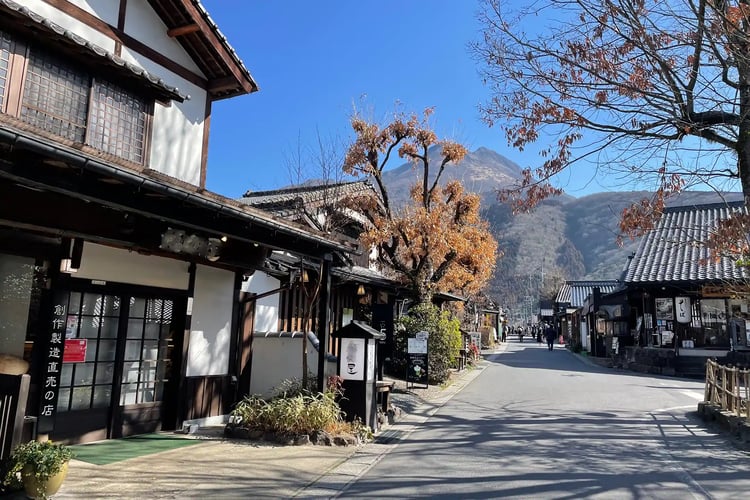
Yufuin is one of Oita Prefecture’s signature restorative hot-spring destinations, loved for the harmony between its pastoral scenery at the foot of Mt. Yufu and its refined art culture. Many Yufuin onsen ryokan favor a small-scale, dispersed “hanare” (detached villa) style, with standalone guest rooms scattered across the grounds. This design preserves a high level of privacy and quiet, letting you feel as though you’ve retreated into your own private holiday home.
From the open-air bath in your room, you can watch ripening rice sway like waves or admire Mt. Yufu’s silhouette—scenery that changes expression moment by moment with the time of day. Mornings are especially memorable: the dreamlike sight of white mist rising from the surface of Lake Kinrin (Kinrinko) is a Yufuin signature you’ll want to experience(*1)(the morning mist is seen from autumn through winter).
Yufuin is sometimes called a “hot-spring town you’ll want to live in,” and around Yunotsubo Kaido you’ll find galleries, small museums, and craft shops scattered along the streets. If you love art, one option is to take your ryokan’s shuttle into the area around Yufuin Station and explore during the day.
At places like the COMICO Art Museum Yufuin, you can view world-class contemporary art in a quiet space that feels almost sharpening—like your senses are coming back online. Return to your ryokan by late afternoon, and you may find properties offering experiences such as a tea ceremony in a dedicated tea room or small-group yoga sessions—well worth joining.
Yufuin also produces Japanese black tea (domestically made black tea), so hospitality featuring locally grown tea is another detail you won’t want to miss. At night, soak in an open-air bath under a sky full of stars while listening to insects sing, and you may feel city stress dissolve into something unreal. In a Yufuin onsen ryokan where art and nature blend seamlessly, enjoy a detached-villa stay that refines not only your body, but your sensitivity and perception as well.
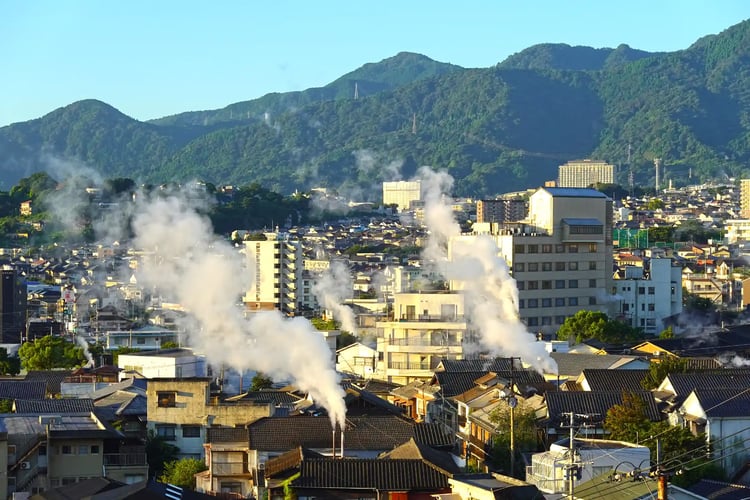
Beppu Onsen Ryokan|Geothermal Wellness and a Sand Bath Experience
Beppu Onsen is a world-famous hot-spring area known for its extraordinary volume of flowing springs—and it’s rich in distinctive wellness experiences powered by geothermal energy.
In the Kannawa district in particular, there’s a long tradition of integrating rising onsen steam into everyday life, and a local culture of steaming food known as “Jigokumushi” has taken root. Using around 98°C natural steam to cook vegetables, seafood, and meat, this method preserves flavor while staying light and wholesome—earning growing attention in recent years and becoming one of Beppu’s signature culinary experiences(*2). Some ryokan even offer plans that let you try jigokumushi while you stay; the pleasure of steaming ingredients yourself and enjoying them fresh is truly special.
While you’re in Beppu, you should also try a sand bath onsen. On a seaside beach, you’ll lie down and be covered in sand warmed by hot-spring heat—an experience known for its warming, detox-like sensation that reaches deep into your body. The sand’s weight and heat can dramatically encourage circulation and support the release of metabolic byproducts, and it’s also said to help ease lower-back pain and joint discomfort.
At Beppu Kaihin Sunayu, you can enjoy the rare experience of being buried in warm sand while listening to the surf. It’s popular, so going first thing in the morning tends to be smoother. The sightseeing classic “Jigoku Meguri” (a circuit of vivid hot mud pools and boiling springs) can get crowded during the day, so aim for quieter early-morning or evening hours, or fit it into the open time before or after ryokan check-in.
If you stay at a ryokan on higher ground, you can enjoy a variety of baths paired with spectacular views—an infinity-style open-air bath overlooking Beppu Bay, or a grand-view bath where you watch the sunrise beyond drifting plumes of steam. Beppu is also famous for variety: mud baths, steam baths, foot baths, and more. Still, it’s wise not to overdo it—limit yourself to a few places per day and keep enough breathing room to relax at your ryokan.
If your inn offers reservation-only private baths or scenic private open-air baths, you may even be able to soak privately under a sky filled with stars. In Beppu’s onsen ryokan, where geothermal blessings are fully channeled into wellness, you can expect to feel refreshed from the inside and out.
Kurokawa and Aso Onsen Ryokan|An Outdoor-Bath Culture that Blends into Forest and Stream
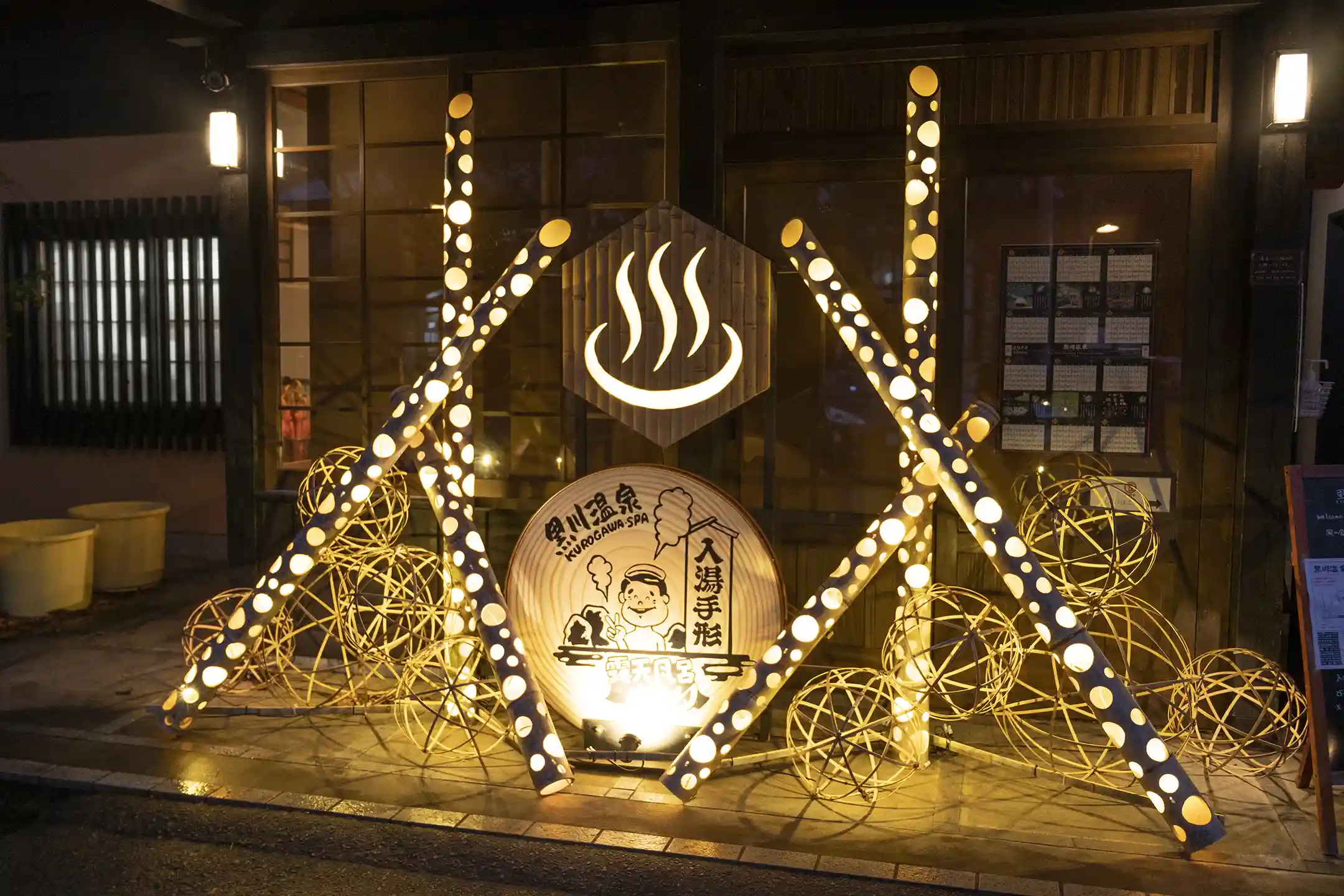
Kurokawa Onsen in Kumamoto Prefecture is a hot-spring village quietly nestled along a mountain stream deep in the hills on the northern side of Mt. Aso. Many ryokan here are traditional in style, surrounded by bamboo groves and broadleaf forests; the harmony between wooden buildings and nature can feel like stepping into a folktale. One hallmark of Kurokawa is its outdoor-bath hopping culture using the “Nyuto Tegata” pass. Typically priced around 1,500 yen, you can buy a wooden pass you wear around your neck and bathe in any three open-air baths among participating inns during the designated hours(*3). (Details such as pricing, participating baths, and reception times can change, so it’s best to confirm locally.)
Try a morning bath-hopping stroll in the crisp air when few people are out. Soaking in a forest bath as light filters through the mist can reveal a mysterious scene completely different from the starry sky of the night before. Kurokawa’s ryokan are often designed in a Japanese-modern style, using abundant natural materials such as Aso-grown cedar, bamboo, and local ceramics—creating a warm atmosphere that naturally settles your mind. In fact, some studies suggest that interiors featuring natural wood can support relaxation and stress recovery.
Some inns offer rooms where you can hear the stream, or semi-open-air baths attached to each room where birdsong replaces all artificial noise. At night, do look up: the Aso caldera rim area has little light pollution, and on clear evenings you can see the Milky Way with remarkable clarity. When you watch the stars while soaking, everyday worries can feel suddenly smaller.
From Kurokawa, drive toward Mt. Aso and expansive grassland scenery opens up. The next day, consider an Aso scenic drive to enjoy panoramas at Kusasenrigahama or Daikanbo. If you plan to approach the volcano, be mindful of eruption alert information.
Back at your ryokan, soothe your body again in the onsen, and savor nourishing dishes featuring local vegetables and Akaushi beef (explained later). Pairing Kurokawa and Aso gives you a luxurious itinerary: forest and grassland, Japanese quiet and grand nature, both in one journey. Enjoy the outdoor-bath culture in harmony with nature, and let yourself sink into a calm that feels as though you’re dissolving into the woods.
Unzen Onsen Ryokan|Sulfur Springs and the Stillness of Mist
Unzen Onsen in Nagasaki Prefecture is a historic hot-spring town that also developed as a summer retreat within one of Japan’s first designated national parks. Located about 700 meters above sea level, it remains relatively cool even in summer, so it flourished as a destination for foreign visitors from the Meiji era through the early Showa period(*4). Even today, classic Western-style hotels with a nostalgic atmosphere remain, and their retro presence can move you with a quiet, timeless charm.
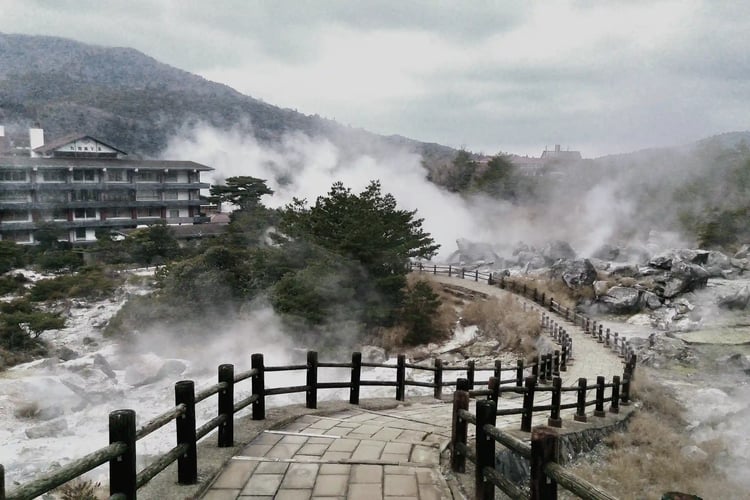
Unzen’s defining symbol is Unzen Jigoku—vents that constantly release white steam. The area is filled with the scent of sulfur, wrapped in pale plumes, and the view is truly striking. With more than 30 “jigoku” spots—such as Daikyokan Jigoku and Oito Jigoku—you can observe and wander as you go. If you walk during quiet morning or evening hours, you’ll feel an otherworldly stillness amid the sulfur aroma and the hot-spring droplets that fall like misty rain.
In recent years, night tours around the jigoku have also been held, and the combination of illuminated steam and starry skies is said to be especially enchanting. In the onsen town you’ll also find places like Gokuraku Park and footbath spots; even simply sitting on a bench and watching the steam can leave you feeling cleansed. Unzen’s waters are sulfurous, strongly acidic springs—high in antibacterial power and known for softening keratin, though they can also be stimulating. As befits a famous onsen, ryokan here offer thoughtfully designed bathing facilities.
From large communal baths where you can enjoy sulfur’s distinctive cloudy waters, to open-air baths surrounded by trees, to private baths—soaking while looking out at a misty forest is a singular pleasure. After bathing, your skin can feel soft, moist, and smooth, making you understand why it’s called a “beauty bath.” Many Unzen properties keep their room counts modest, with a calm, refined atmosphere throughout.
At night, lighting is often lowered early, with only gentle illumination in the corridors. This is done so you can sleep well, and soundproofing and spacing between rooms are also carefully considered. Some ryokan even position themselves as “adults-only inns,” not accepting guests under 12—a detail appreciated by travelers who want to relax in quiet. In classic Western-style hotels, you may spend luxurious hours reading a foreign-language book by a fireplace in the lounge, or enjoying tea time while listening to live piano music.
On nights when the mist deepens, close your eyes in a quietly steaming open-air bath, and you may feel everyday mental clutter fade away as your mind clears. In the serene world created by sulfur springs and fog, Unzen onsen ryokan become exquisite hideaways—where the culture of an old summer resort blends seamlessly with contemporary wellness.
Ibusuki and Kirishima Onsen Ryokan|Sand Baths and Volcanic Blessings
Ibusuki Onsen and the Kirishima Onsen area in Kagoshima Prefecture are distinctive hot-spring destinations shaped by volcanic blessings. With the gentle climate typical of southern Kyushu and abundant hot-spring resources, these areas have long been loved by people seeking therapeutic stays.
Ibusuki’s most famous specialty is its sand bath onsen—rare even on a global level. You lie along the shore while sand warmed by hot-spring heat is placed over your body; it’s well known for warming you to the core and encouraging perspiration. Some materials note that sand baths may promote sweating more readily than other bathing methods.
The pressure of the sand also provides a pleasant stimulus, and because blood flow can improve dramatically, it’s said to help ease stiff shoulders and muscle pain as well(*5). As you breathe slowly and deeply and listen to the waves during the sand bath, you may feel both body and mind gently open up. In Ibusuki, some ryokan have their own sand-bath facilities on site, while others provide transport to nearby sand-bath centers—either way, it’s an experience worth trying.
After you’ve worked up a sweat, rinse off the sand in the shower and then slip straight into the onsen—your whole body will stay warm, and you’ll likely sleep deeply that night.
Next is the Kirishima Onsen area: a group of hot springs rising from a highland region at higher elevation. It’s a collective name for multiple onsen towns scattered around the foot of the Kirishima mountain range, and the spring types differ by location. With sulfur springs, saline springs, carbonated springs, and more, it’s so varied it’s sometimes called a “department store of hot springs.” Because each ryokan draws from its own source, you can enjoy differences in aroma and skin feel from one property to the next.
One relaxation method you should try in Kirishima is alternating bathing. First, soak slowly in comfortably warm water for a longer time. Once your body is warm to the core, step out and cool down with fresh air. Then soak briefly in slightly hotter water to add a gentle stimulus—repeat this a few times, and it’s said to help regulate the autonomic nervous system and improve how easily you fall asleep(*6). It’s like experiencing that “reset” feeling people talk about with sauna culture—only through hot springs—and it’s especially enjoyable at inns with abundant water and multiple bath types, like those in Kirishima.
Because bath-hopping is part of Kirishima’s charm, try not only your ryokan’s baths but also public baths and day-use hot springs. For example, at the Sulfur Valley open-air bath near Maruo Falls, a huge open-air bath (spanning the equivalent of 30 tatami mats) is filled with milky sulfur water, offering a wonderfully wild, natural soak. If you like driving, the route from Kirishima toward Sakurajima is also invigorating.
Visit Kirishima Shrine and viewpoints while looking out toward majestic Sakurajima, then come back and be soothed again by Kirishima’s waters—this is a trip where you can balance activity and relaxation with clear contrast. Ibusuki and Kirishima differ in climate and spring types, but they share one common point: they’re both gifts born from volcanoes. In Kagoshima, enjoying the extremes—sweating under volcanic sand in Ibusuki and exploring multiple spring types in Kirishima—is part of the region’s special appeal.
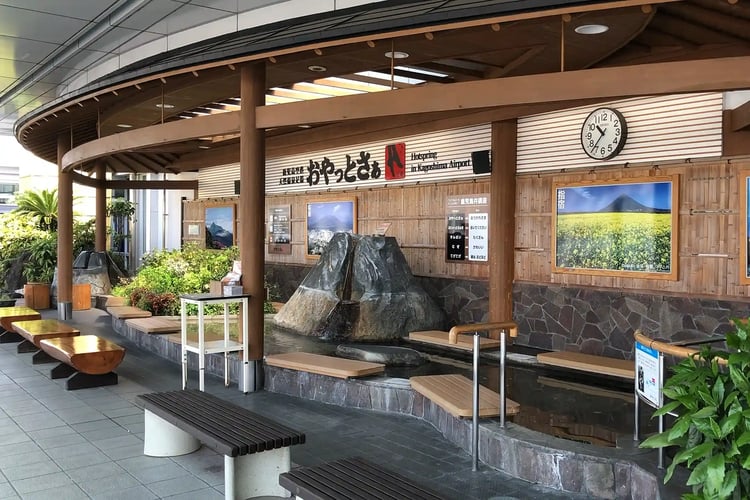
Ureshino and Takeo Onsen Ryokan|Velvety “Beauty Baths” and Tea Culture
Ureshino Onsen and Takeo Onsen in Saga Prefecture are both long known as therapeutic hot-spring destinations, celebrated for high-quality waters loved for skincare. Ureshino Onsen is counted among the “Three Great Beauty Hot Springs of Japan,” and its water is known for a velvety, slippery feel(*7).
Its spring type is sodium bicarbonate/chloride, and its baking-soda components help emulsify and wash away sebum and grime while softening old keratin. After bathing, your skin can feel astonishingly smooth and supple—one reason it has long been cherished as a “beauty bath.” In Ureshino, many ryokan let you enjoy free-flowing spring water not only in large communal baths and open-air baths, but also in private baths and in-room baths—an indulgence that lets you soak in “beauty water” whenever you like.
Another pleasure unique to Ureshino is “Onsen Yudofu.” When tofu is simmered in hot-spring water, soy proteins dissolve and turn the liquid milky, creating a soft, creamy-style yudofu that’s become a local specialty. It’s a unique regional dish where you “eat the hot spring,” gentle on the stomach and often served at ryokan breakfasts.
Ureshino is also a tea-producing region. Ureshino tea, especially the pan-fired style made here, is known for its mildness and rounded flavor among Japanese teas, and in recent years it has also attracted attention as Japanese black tea.
In the onsen town, you’ll find cafés and tea shops specializing in Ureshino tea, and some spots let you enjoy pairings of Japanese black tea and sweets. Many ryokan also offer thoughtful “tea hospitality”—serving warm Ureshino tea at check-in, or offering non-alcoholic Ureshino black tea at dinner. Because Ureshino tea is said to be rich in catechins and polyphenols and associated with anti-aging support, it’s a welcome companion to hot springs for beauty and wellbeing.
Takeo Onsen, meanwhile, is about a 30-minute drive from Ureshino and feels a bit more sightseeing-oriented. Its symbol is the retro vermilion Romon gate designed by Kingo Tatsuno (who also worked on Tokyo Station), and it’s also known for the Taisho-romantic shared bathhouse “Motoyu” in a Western-style building. Takeo’s waters are alkaline simple springs—gentle on the skin—and while they may feel less “silky” than Ureshino, they still offer a soft bathing experience.
If you stay in Takeo, consider visiting nearby art spots and architecture as well. The Takeo City Library, for example, is a modern library with Tsutaya Books involved in its operation; its open atmosphere makes it popular not only with locals but with travelers too. While you soothe yourself with gentle waters in a quiet inn, you can spend your daytime hours enjoying Japanese sweets at a café overlooking tea fields or taking in modern architecture—creating a relaxed, richly satisfying trip.
Yakushima Onsen Ryokan and Hot Spring Spots|Time to Regenerate in the Forest
Yakushima in Kagoshima Prefecture is a mysterious island covered in primeval forests and registered as a World Natural Heritage site. It isn’t widely known as an onsen destination, but the island does have several distinctive hot springs scattered around—perfect to enjoy alongside forest exploration.
Yakushima’s ideal travel style tends to be minimal and light: with lots of outdoor activity such as trekking through forests and walking in streams, many accommodations favor simple, unadorned design that helps you prioritize time in nature.
One experience you’ll especially want to try is the dramatic hot-spring spot known as a “kaichu onsen” (an ocean hot spring). Hirauchi Kaichu Onsen on the island’s southern coast is an open-air bath among coastal rocks that appears only at low tide—and disappears entirely beneath the sea at high tide. Bathing is possible only for about two hours before and after low tide, making it a rare onsen where your “soaking time” is determined by the tides(*8). Before you go, check the tide table and plan your movement around it.
The water rises directly from the rocks and contains a slight salinity; as it mixes with seawater, it becomes a comfortable temperature. The Pacific Ocean stretches just beyond the bath—so close that you may feel sea spray, as if you’re soaking in the ocean itself. Because conditions matter (and bathing etiquette and safety rules apply), it’s best to confirm timing and local guidance before you visit; but when everything aligns, soaking with the sound of waves can be an unforgettable moment.
Yakushima also has other hot springs such as Yudomari Onsen, which rises from seaside rocks, and Onoaida Onsen inland, beloved by locals. Onoaida Onsen in particular is famous for soothing tired bodies after hiking. Though the water is clear and colorless, it carries a gentle sulfur aroma. After you’ve sweat through the forest, soaking here can ease muscle fatigue and help restore your energy for the next day.
Yakushima doesn’t have a large number of onsen ryokan, but the accommodations it does offer are often blessed with locations that let you feel the forest and sea up close. At coastal inns, you may enjoy the luxury of soaking in a private bath while watching the sun sink into the horizon at dusk.
Resort-style hotels on higher ground may also draw simple hot-spring water as part of their pool-and-spa facilities. And on Yakushima, what stands out is that beyond onsen, you can also enjoy “forest therapy.”
Places like Shiratani Unsuikyo, where thousand-year-old Yakusugi cedars grow, and the Jomon Sugi trek turn the forest itself into a stage for healing your mind and body. In the morning, you might unroll a yoga mat to birdsong and fill your chest with the forest’s air through deep breathing. By day, you can take a quiet hike through moss-covered woods; at night, you can rinse off the day’s fatigue in an open-air bath beneath a shower of stars—this Yakushima rhythm truly deserves the name “time to regenerate in the forest.”
For getting around the island, it’s best to use a rental car or available shuttles and to keep your schedule generously paced. On Yakushima, try not to watch the clock too closely; instead, travel in a way that lets you surrender to nature’s rhythm. Hot springs and forests held by vast nature can quietly restore a mind and body tired by modern life.
Programs You Can Experience at an Onsen Ryokan
To make your onsen ryokan stay even more fulfilling, some properties offer thoughtfully curated wellbeing programs.
In the early morning, you might join sunrise yoga or tai chi sessions accompanied by birdsong. In the afternoon, there may be a silent tea ceremony (a meditative tea gathering) held in a quiet tea room, and for those who wish, even a zazen (seated meditation) experience at a nearby temple. Programs vary by ryokan, but they share a common purpose: helping you bring body and mind into balance.
As one example of a day: you naturally wake around 6 a.m. and slowly drink a cup of warm water to gently rouse your digestive system(*1). Then, wearing a light jacket over your yukata, you step into the garden or onto a terrace. Breathing in clean air, you do a little stretching and deep breathing. A brief soak before breakfast to warm your body is also a lovely choice—morning bathing can gently wake the body and help you start the day feeling clear.
After breakfast, you might read in the ryokan library or spend calm time in the lounge with herbal tea. In the afternoon, take a nature walk on the grounds or nearby. A mindful walk, listening closely to birds and water, can become a moving meditation.
Around 3 p.m., you return to the ryokan, and if you like, you can deepen relaxation further with a spa treatment or oil massage. In the evening, joining a sunset yoga class led by an instructor can be a freeing experience—stretching as you look up at a sky colored by the setting sun. At night, lights are lowered around 9 p.m., and there may be a stargazing gathering in the garden. If there’s a specialist guide, you might listen to constellation stories; if not, you simply share quiet time looking up at the Milky Way together.
Through this daily rhythm, you can gain deep relaxation and time for self-reflection that everyday life rarely allows. Many facilities also offer programs in English, so guests from abroad can participate with peace of mind. Check the schedule when you arrive, and do join any activity that sparks your interest. Wellness programs like these—paired with onsen—can make your travel memories even richer.
A Sample “Ideal Day” Rhythm
Below is a sample schedule for an ideal day at an onsen ryokan.
6:30 Wake up: Open the window and let in fresh morning air. Slowly drink a cup of warm water to wake your digestive system(hydrating upon waking can support digestion and help you ease into the day). Do light stretching and deep breathing to loosen your body.
7:00 Morning bath: Soak in the morning onsen in a private bath or the large public bath. Sink into comfortably warm water, and if you take slow breaths in a semi-open-air bath while feeling the morning sun, circulation that slowed during sleep is encouraged—and you can feel energy returning for the day ahead.
8:00 Breakfast: Enjoy a healthy breakfast centered on Japanese dishes. Fermented foods (miso soup, pickles), onsen-boiled eggs, and lightly seasoned local vegetables are gentle on your stomach and well balanced nutritionally. With modest saltiness that lets the ingredients shine, you still get solid protein. After eating, sip green tea or roasted hojicha and take a quiet pause.
9:30 Walk: Head out for a nature stroll nearby. If there’s a river, walk along a riverside path and enjoy forest bathing. Listening to birds and wind, sharpen your senses with a calm mindfulness walk. Pause at a bench and meditate for a few minutes while watching the stream, letting your mind go pleasantly empty.
11:00 Tea time: Return to the ryokan and enjoy a warm, caffeine-free drink in the lounge—seasonal herbal tea or Ureshino black tea, for example. With soft music in the background, settle into a sofa to read or write in your journal. Avoid looking at your smartphone and continue your digital detox.
13:00 Lunch: Have a light lunch(if your plan includes two meals, you can also go out to a local café and enjoy a soup lunch filled with vegetables, for instance). Keep it light enough that you don’t feel overly full, and save your energy for the afternoon.
14:00 Spa treatment: Receive an aroma massage at the ryokan spa. Choose your favorite Japanese essential oils in advance—hinoki, yuzu, lavender, and more—and request your preferred pressure level. During the treatment, you may drift into a light doze, wrapped in soothing fragrance. Afterward, you may be offered herb water and a small salt candy to replenish fluids and salt(after a massage, it’s important not only to drink water, but also to replenish electrolytes appropriately).
15:30 Rest: Return to your room and take a break with the wagashi sweets served for tea and a warm cup of tea. Lie down on a daybed by the window and take a short nap for about an hour, letting your body and digestion rest.
17:00 Evening yoga: Those who wish gather for a simple yoga session in the courtyard or on a terrace. With the sunset sky as your backdrop, you stretch with slow yoga poses. As you repeat deep breaths, the sympathetic nervous system elevated by the day’s activity settles, and you return to a calm state. At the end, you bring your hands together and hold a feeling of gratitude.
18:30 Dinner: Enjoy kaiseki cuisine or a Japanese-Western fusion course featuring seasonal local ingredients. If you drink alcohol, you may enjoy a pairing; if you prefer non-alcohol, some ryokan offer local tea pairings chosen by a sommelier or fermented non-alcoholic drinks. Conversation flows, but you also focus on taste and eat slowly. The key is to avoid overeating and put your chopsticks down at about 80% full.
20:30 Night spa: Before bed, it’s time for onsen again. Soak briefly in slightly hotter water than during the day, warming your body thoroughly. After bathing, drink a glass of cool spring water to calm down an overheated body. A pleasant tiredness and looseness naturally invites sleep.
21:30 Prepare for sleep: Keep only warm-toned indirect lighting in the room, and turn off the TV and smartphone. Place a drop of your favorite aroma oil near your pillow and stretch while wrapped in a scent you love. Some ryokan even mist your pillow with a Japanese fragrance during turndown service. Gentle notes like hiba (Thujopsis) or yuzu can help you relax and guide you into comfortable sleep.
22:00 Sleep: Lie down on your futon or bed and close your eyes. As you recall joyful moments from the day and delicious dishes, offer quiet thanks in your mind—“Thank you for today.” After surrendering to the rhythm of onsen, nature, and a carefully lived day, a comfortable sleepiness arrives naturally. You fall into deep sleep, and by morning you’ll be able to wake with a clear, refreshed feeling again.
How to Get the Most from Spa and Aroma Treatments
At onsen ryokan, you may be able to receive professional treatments or beauty services at an on-site spa. Here are key points worth knowing.
First, do try Japanese scents in the essential oils used for treatments. Oils like hinoki (Japanese cypress), yuzu (citrus), and sansho (Japanese pepper) offer fresh forest and fruit notes that can bring deep relaxation. Hinoki is often associated with calming aromatic components, while yuzu is linked with a bright, refreshing feeling. During your consultation, share your preferences and how you’re feeling, and ask the therapist to create the most suitable blend for you.
Next is massage pressure. Japanese spas may offer everything from stronger shiatsu-style pressure to softer, Swedish-style strokes. Don’t hesitate to request, “A little stronger / a little gentler, please.”
Your therapist will adjust to what fits you best, and if anything feels off mid-treatment, it’s absolutely fine to speak up. To truly relax, receiving pressure that matches your body is essential. Whether you like a “pleasantly intense” sensation or something soft enough that you can fall asleep, preferences vary—so keep communicating and let the pressure be tuned to you.
How you spend time before and after the treatment also matters. Rather than rushing in right before your appointment, arrive a little early, drink herbal tea in the spa lounge, and settle your mind first. After the treatment, blood flow increases and the body can more easily flush out byproducts—so be sure to hydrate.
Because you also lose electrolytes through sweat, it’s better not to drink only large amounts of plain water; replenish salt in moderation as well. In some situations, over-consuming only water can dilute sodium in the body and may contribute to feeling unwell(*2). Some spas provide salt tablets or lightly salted soup after treatment. If you bring something yourself, even a single umeboshi (pickled plum) is fine.
Also, after a spa session, avoid intense exercise or sauna right away; spend at least about an hour quietly resting your body. If you plan to bathe in the onsen again, cool down first and keep it brief in comfortably warm water.
Finally, about frequency: if you’re staying two nights or more, adding one session on your middle day is often just right. If you do it every day, you may end up with too much stimulation. As with onsen, the secret is using the spa in a “just-right balance.” With the synergy of onsen plus aroma spa, your relaxation effect can feel doubled—so use it well to bring yourself even more fully into balance.
Choosing an Onsen Ryokan by Dining and Food Satisfaction
Meals at an onsen ryokan make up a large part of the joy of travel. Dishes that are gentle on the body and deeply nourishing can raise your sense of wellbeing throughout your stay. At Kyushu’s onsen ryokan, you’ll often find delicate, light kaiseki cuisine that makes the most of local seasonal ingredients, fermented foods, and the culture of dashi (broth).
For example, appetizers may include seasonal vegetables pickled in miso or dressed with shiokoji, while soups highlight aromatic dashi made from kombu and bonito. Even with main dishes, heavy fried foods are often kept to a minimum; instead, steaming and simmering techniques bring out ingredients’ natural flavors. Quality is prioritized over sheer quantity, and each dish tends to be served in refined portions designed to satisfy without weighing you down.
In recent years, more ryokan have also begun proposing pairings of Japanese cuisine and tea. For guests who don’t drink alcohol, local teas or non-alcoholic fermented drinks may be served alongside the course, creating a thoughtful marriage with each dish. At Ureshino Onsen ryokan in Saga, non-alcoholic tea pairings—matching Ureshino black tea or pan-fired tea to different plates—have been especially well received. Tea’s astringency and roasted notes can lift flavors, and you never have to worry about overdrinking.
Accommodation for food allergies and preferences also tends to be more careful at higher-end ryokan. Vegan, vegetarian, and gluten-free requests may be handled within what’s possible if you share details in advance. Ideally, communicate specifics at booking or at least one week before your stay—such as “I can’t eat ○○,” or “Even dashi must be non-animal-based.” As international guests increase, some ryokan even prepare English templates for meal requests. For dislikes or religious restrictions as well, don’t hesitate to consult them.
It’s also worth touching on breakfast. Traditional Japanese breakfasts often include salt-forward grilled fish and pickles, but lately you may see menus designed with reduced salt or lower carbohydrates in mind. Yudofu, onsen eggs, lightly seasoned greens, and gently flavored dashimaki tamago appear as options that keep salt modest while still delivering umami—and even miso soup may be made with strong dashi and lighter salting.
You may also be served local tofu, yuba, or even soy-milk yogurt as protein sources—breakfasts that make your body feel genuinely happy from the morning. Some inns offer onsen rice porridge or zosui, creating breakfasts with many fans for being both gentle and nourishing. Overall, ryokan dining aims not for “endless indulgence,” but for a “satisfying kindness” that supports body and mind. Food that’s not only delicious, but leaves you feeling light and energized for the next day—this is a crucial element that supports high-value wellness travel.
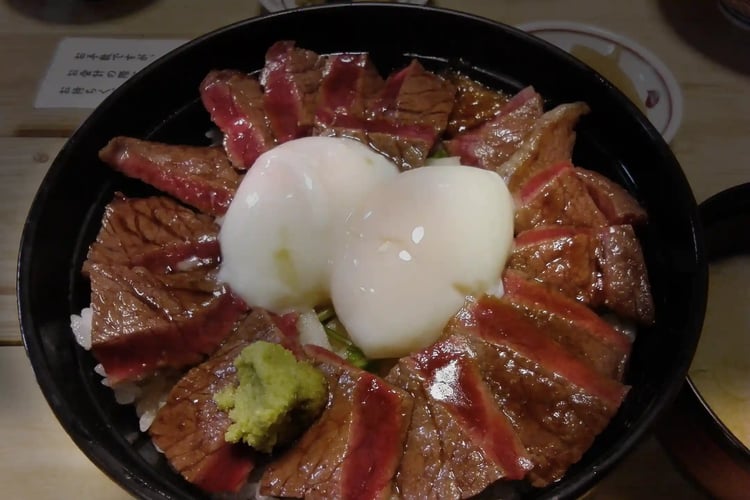
How to Encounter Regional Food Culture
If you can connect with local food culture while staying at an onsen ryokan, your travel pleasure deepens even more. Across Kyushu, you’ll find unique regional dishes and ingredients—and many ways to enjoy them alongside hot springs. In Oita and Beppu, the representative specialty is the jigokumushi cuisine described earlier. Food steamed by hot-spring vapor concentrates ingredients’ flavor to a surprising degree; it’s wholesome, and its uniqueness adds to its popularity(*1).
For example, a jigokumushi dinner set served at a ryokan may steam shrimp, shellfish, local chicken, and seasonal vegetables right in front of you, letting you enjoy them piping hot. If you want the hands-on experience, visit a daytime facility such as a jigokumushi workshop. Simply seasoned with salt or ponzu, steamed dishes highlight the ingredients’ natural taste and are a gentle recommendation that won’t sit heavily in your stomach.
In Kumamoto’s Aso region, a signature specialty is Akaushi (red/brown Japanese beef). Raised on Aso’s vast grasslands, this breed is often described as a leaner wagyu with less heavy fat. It offers a satisfying tenderness and spring, with flavor that doesn’t rely on sweetness from fat but instead highlights the meat’s own umami(*2). When served at ryokan, it’s often prepared simply—on a ceramic grill or as a steak—so the ingredient can shine.
If you don’t eat meat, consult the ryokan at the time of booking about a different main dish instead of Higo Akaushi. In Aso, they may be able to offer alternatives such as local river fish (salt-grilled yamame or iwana) or creative dishes featuring regional vegetables.
In Ureshino, Saga, enjoy local specialties like onsen yudofu made with hot-spring water, and pair your meals with Ureshino tea. If yudofu is served at dinner, try your first bite without adding anything, so you can taste the mellow quality of the hot-spring water itself(*3). You may be surprised by the distinctive, melt-in-the-mouth texture.
Ureshino tea isn’t only something you drink with food—it may also appear as an ingredient in dishes. For example, tea leaves might be fried as tempura, or spent leaves might be used in dressed side dishes. The roasted aroma of hojicha can stimulate your appetite and make a satisfying palate refresher.
In Kagoshima’s Ibusuki area, do try Satsuma cuisine as well. Dishes using kurobuta pork, local chicken, and bonito tend to feature rich sweet-salty flavors, but in recent years, some ryokan have reinterpreted these traditions in lighter, contemporary ways. For instance, with braised kurobuta pork, they may carefully remove excess fat and simmer it with a less-sweet sauce; with keihan (chicken rice soup), they may use mixed grains and plenty of vegetables for a cleaner finish. They may also incorporate kurozu (black vinegar) as an accent in salads, or turn the local golden satsumaimo variety (Kogane Sengan) into a soup—ensuring traditional tastes can be enjoyed in a body-friendly way.
One of the great joys of onsen ryokan is that through meals, you can sense local culture and history. If you ask the chef or staff something like, “What does this dish mean?” they may share the region’s stories with you. To taste a place with all five senses and feel both body and mind filled—these are the kinds of encounters waiting for you at the table in an onsen ryokan.