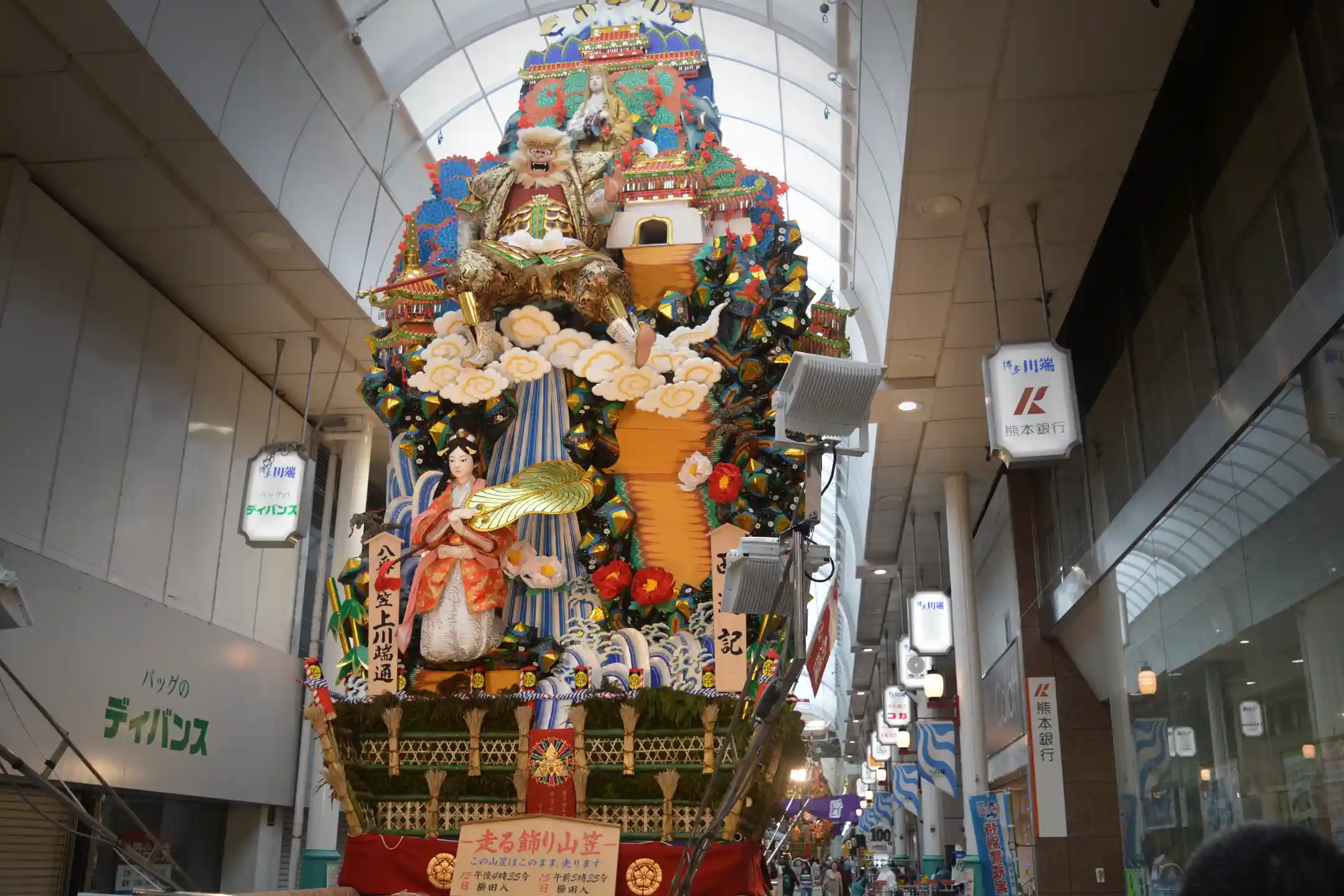
Hakata food is the cooking of Fukuoka's old merchant town, and most of its famous dishes can be traced to a person, a shop or a decade. Tonkotsu ramen took its cloudy broth from a stall in Kurume in 1947. Mentaiko spread because the man who made it popular did not patent it. Mizutaki, by the city's account, was built in Japan from what a cook had learned in Hong Kong. Knowing where each dish came from tells you what to order, where to eat it, and which of the city's arguments about it are worth having.
This guide goes through the dishes one at a time and ends with where to eat them.
This article is one doorway into a much wider culinary landscape. The Culinary Treasures of Kyushu & Okinawa Digital Guide draws together regional dishes, food culture, local producers, and the distinct flavors of each island into a single, connected reading.
Hakata Food or Fukuoka Food? Why the Dishes Carry the Merchant Town's Name
Visitors arrive in Fukuoka and eat Hakata ramen, buy Hakata mentaiko and order Hakata mizutaki. The two names belong to two towns that grew up side by side. The city's own history column explains that Hakata is the older name, known since antiquity and, in the medieval period, a center of international trade. Fukuoka was a newcomer: Kuroda Nagamasa, the first lord of the Fukuoka domain, built a castle and a castle town just west of Hakata in the early seventeenth century and named it after Bizen Fukuoka, a place connected with his family's ancestors. The Naka River ran between the two.
For the next two and a half centuries, the castle side was where the domain was governed and the Hakata side was where goods were bought and sold. The city was incorporated as Fukuoka in 1889, and when the council later fought over changing the name to Hakata, the column records, Fukuoka was kept by a single vote. Hakata survived as the name of the main railway station, and today it is also the name of a ward.
That history explains the labels on the food, though not in the way you might expect. Hakata is the name traders and travelers knew, so it is the name the dishes carry, whatever their address. Several of them were not born in today's Hakata Ward at all. The first mizutaki house is in Hirao, the Nagahama ramen stalls stood by the fish market, and Yanagibashi Market is in Haruyoshi, all three in Chuo Ward, and the cloudy ramen broth came from Kurume, a separate city to the south. "Hakata" on a menu is a reputation, the old port's name lent to whatever the city became good at. It is also a reminder that much of what Fukuoka is famous for came in by sea or by road and was adapted here.
Hakata Ramen Began in Kurume
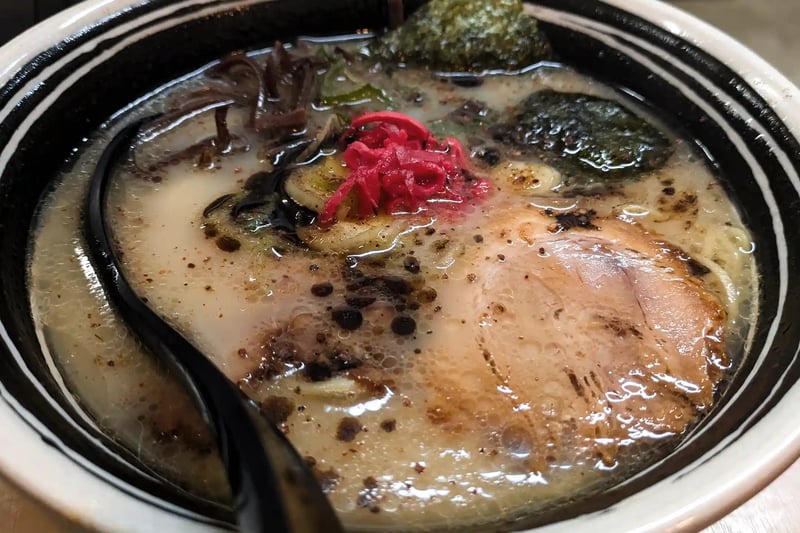
The bowl usually meant by Hakata ramen is pork-bone broth, cloudy and pale, with very thin straight noodles. The style did not start in Hakata. Japan's Ministry of Agriculture, Forestry and Fisheries, in its December 2024 timeline of ramen in Japan, places the turning point in Kurume, a city in southern Fukuoka Prefecture. In 1947 a stall there called Sankyu began serving a cloudy white pork-bone broth. An earlier Kurume shop, Nankin Senryo, had already been making a pork-bone soup, but the ministry describes that one as light and clear-tasting. It calls Sankyu's soup the source of today's Kyushu ramen, and says it had a large influence across Kyushu, Hakata and Kumamoto included.
Nankin Senryo was still in business when Kyushu Walker reported in 2018 that the shop dates its founding to 1937; its founder, Miyamoto Tokio, had previously run an udon stall. It moved within the same Kurume neighborhood in 2015. The story usually told about Sankyu is that the cloudy broth was an accident: the pot was left on a high flame while the owner was out, and the stock boiled until it turned opaque. That is a local account rather than a documented fact, and it has the shape of many food origin stories. The ministry's timeline is the firmer ground: a stall in Kurume, 1947, cloudy pork-bone broth.
The timeline also shows how the bowl left Kyushu. It lists the opening of Hakata Ippudo in Fukuoka City in 1985 and a tonkotsu boom centered on the Tokyo area in 1989. In an interview in the same feature, the director of the Shin-Yokohama Ramen Museum notes that Fukuoka Prefecture later bred a wheat specifically for Hakata ramen noodles, released in 2009 as Ra-mugi. A dish that came up the road from Kurume now has its own local flour.
For a visitor, the Kurume origin is a practical fact as well as a historical one. Kurume is a short train ride south of Hakata, and its ramen shops still serve their own version of the bowl. Eating one there and one in Hakata on consecutive days is the clearest way to understand what Hakata did with the idea.
Nagahama, the Fish Market and the Kaedama
The other branch of the family grew up beside Fukuoka's fish market. Tenjin Site's guide to Nagahama ramen traces the style to the stalls of Nagahama, the district facing the Hakata fishing port, around 1955. The people who bought and sold fish at the market were busy, so the stalls used thin noodles that cooked in moments. Thin noodles soften quickly in hot broth, so the stalls kept the first portion small and let customers order more. That is the origin of the kaedama, a second ball of noodles dropped into the broth you have left. The same guide names Ganso Nagahamaya, which dates its founding to 1952, as the shop credited with both the style and the kaedama.
An earlier version of this article said the kaedama was devised for busy fishermen. The source it cited says something slightly different and more specific: the customers were the people working at the fish market, and the point was speed for people in the middle of a working morning. The difference matters if you go to Nagahama, because the market is still there and the logic of the bowl still fits it: order quickly, eat while the noodles are firm, and ask for the kaedama before your broth cools.
Our guide to what Fukuoka is famous for explains the firmness scale, from futsu to harigane, and the city's street stalls; the rest of this guide stays with the dishes.
Mentaiko: The Hakata Food Its Pioneer Gave Away

Spicy mentaiko, pollock roe cured with chili, is the souvenir Fukuoka is best known for, and its history begins outside Japan. The industry's fair-trade council explains that processing and eating pollock roe had spread on the Korean Peninsula by around the seventeenth century, that the word comes from myeongtae, the Korean name for Alaska pollock, and that chili- and garlic-coated roe was being imported into Japan from the early Showa period. After the Second World War, Kawahara Toshio, who had grown up in Korea, came back to Hakata. From around 1949, the council says, he made the roe with a seasoning liquid of his own based on chili, sold it in Nakasu, and adjusted the taste to suit Japanese palates. When the Sanyo Shinkansen reached Hakata in 1975, mentaiko became known across Japan as a gift.
The part of the story that explains how many brands you will see is what Kawahara did next. The business daily Nikkan Kogyo Shimbun, profiling the company he founded in 1948, Fukuya, wrote in 2020 that he did not call himself the originator, did not take a patent on the method, and taught other firms how to make it. The council's account records that makers multiplied, centered on Fukuoka City, and competed to develop new products.
That is why there is no single correct mentaiko to buy. Every maker starts from the same idea and seasons it differently, some sharper with chili, some built on dashi, some sweeter. The useful way to choose is to taste more than one before committing to a box, and to treat the brand as a choice of seasoning, since no maker owns the original.
Mizutaki and Motsunabe: Fukuoka Cuisine in Two Pots
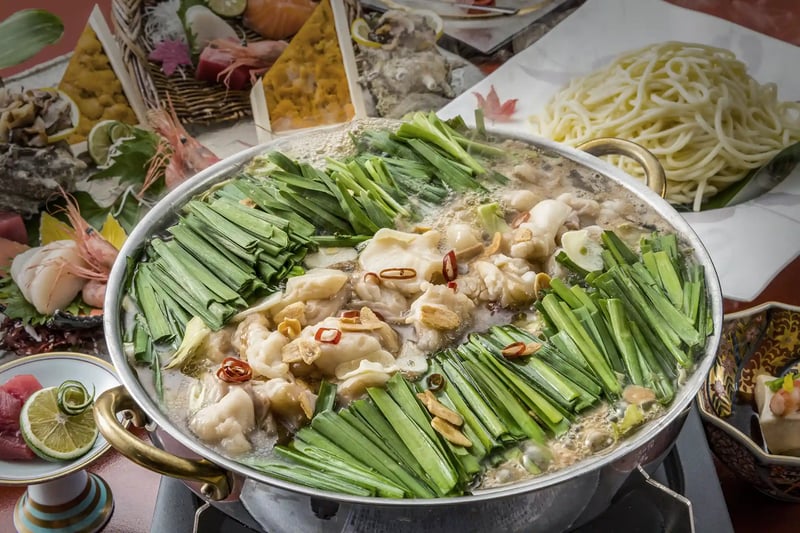
Fukuoka's two famous hotpots sit at opposite ends of the table. Mizutaki is a light chicken soup eaten in stages, broth first; motsunabe is beef offal in a seasoned soup with cabbage and garlic chives. One has a documented founder and the other has a story that varies with whoever tells it.
Fukuoka City's official column on mizutaki credits it to Hayashida Heisaburo, who was born in Nagasaki, went to Hong Kong at the age of fifteen, and learned Western cooking while living in an English household. Back in Japan he combined the idea of a Western consommé with the Chinese method of simmering chicken in water, made it into a light soup, and added seasonal vegetables, udon and mochi, with a rice porridge to finish. In 1905, the column says, he brought it to Fukuoka and opened a restaurant under the name Suigetsu, which still serves it in Hirao. The dish was also called Hakata-ni, Hakata stew, and spread from Hakata to the rest of the country.
Suigetsu is not the only old house with a claim. Shin-Miura, which gives its founding year as 1910, describes its mizutaki in its restaurant listing as the traditional taste of the place where the cloudy white soup originated. The two claims do not have to be resolved for you to use them. One house is credited with the dish and the other presents itself as the origin of the milky soup most visitors now picture, so if you have time for two mizutaki dinners, these are the pair to compare.
Motsunabe is harder to pin down. The motsunabe maker Yamaya, on its blog, ties the dish to people working in the coal mines after the war, noting that Fukuoka Prefecture had some of the country's leading mines, and the same post says motsunabe was popular enough by 1992 to be chosen as one of that year's buzzwords. No single founder or first recipe is documented. What is safe to say is that motsunabe is a working people's dish that became a national fad in the early 1990s. Finish it, as the shops encourage, with noodles cooked in the last of the broth.
How to Eat Mizutaki the Hakata Way
Mizutaki has an order, and the city's column sets it out. First, take only the soup into your bowl and drink it with a little of Fukuoka's thin local green onion, so that you taste the chicken in it before anything else goes into the pot. Then eat the chicken. After that come the vegetables: Chinese cabbage or cabbage, tofu, chrysanthemum greens and mushrooms. Season with citrus juice from yuzu, sudachi or daidai, with soy sauce and yuzu kosho. The column adds that in Hakata mizutaki is eaten all year round, not only in winter. At a good mizutaki house the staff will often start the pot for you; if they ladle soup into your bowl first, that is the reason.
Goma Saba and the Raw Mackerel Question
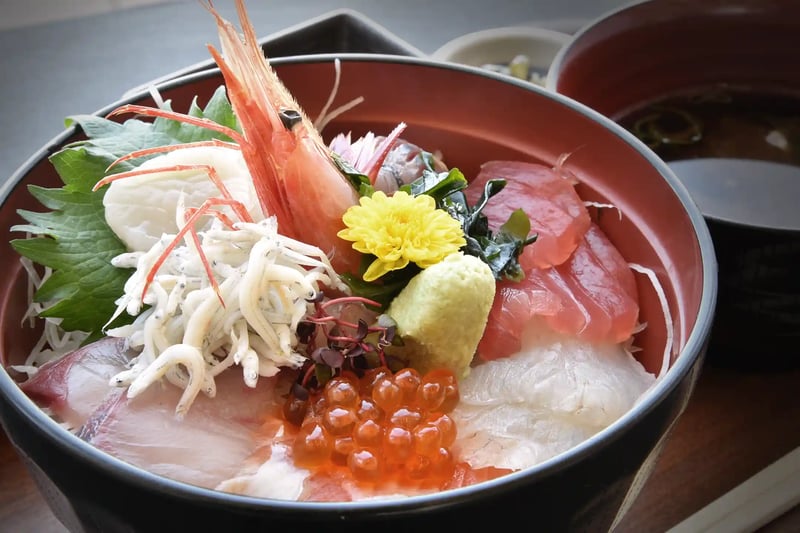
Mackerel spoils quickly, and in most of Japan it is cured or cooked before it is eaten. Hakata eats it raw. Goma saba is fresh mackerel, skinned and sliced a little thinner than sashimi, dressed in soy sauce, toasted sesame and mirin. The Ministry of Agriculture's regional food database explains it as the habit of a place where fresh seafood came ashore, with the Genkai Sea named as Fukuoka's source of it, and says this way of eating mackerel is thought to have spread between the late Edo period and the early Meiji period, when soy sauce became widely available. It is eaten on hot rice, as a snack with drinks, or as chazuke: rice topped with the fish, wasabi and nori, with hot tea poured over.
The same page also addresses the parasite question directly. Because of the risk of food poisoning and anisakis, it says, fresh mackerel should be used and it is preferable to freeze the fish once before preparing it. Japan's Ministry of Health, Labour and Welfare, on its anisakis page, lists mackerel among the fish the larvae live in, advises businesses to freeze at minus 20°C for at least 24 hours or to heat the fish, and states that ordinary vinegar, salting, soy sauce and wasabi do not kill the larvae. The sesame-soy dressing is flavor, not protection.
None of this means skipping goma saba, which is one of the best things to eat in the city. It means asking how the mackerel was handled. A good shop will have an answer, and the answer is part of what you are paying for.
Fukuoka's habit of eating raw fish belongs to a longer Japanese story, which our guide to Japanese raw fish culture follows from preservation to sashimi.
Umegae-mochi and Keiran Somen: The Sweets and Their Makers
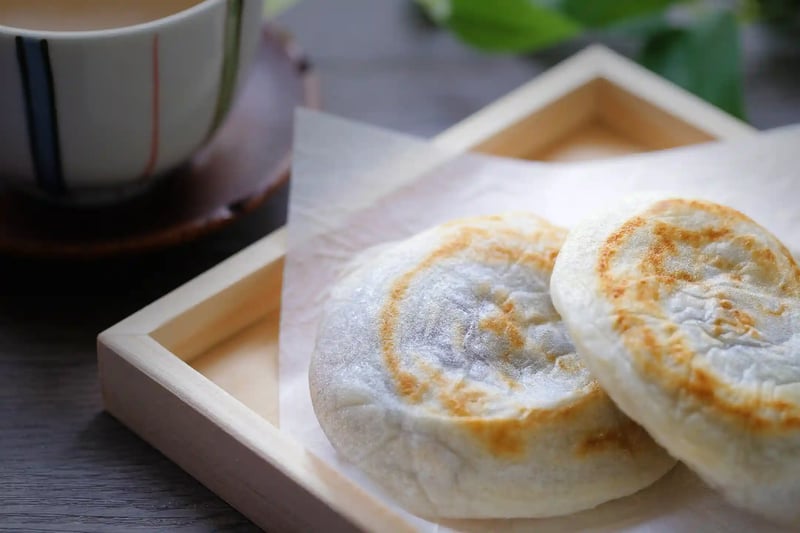
Fukuoka's two classic sweets show the two ways a regional confection survives: one through a shrine, one through a family.
Umegae-mochi, "plum-branch mochi," is the grilled rice cake sold along the approach to Dazaifu Tenmangu. As the Dazaifu maker Kikuchi explains on its page on the cake's origin, there is no plum in the mochi. The name comes from a legend: when the scholar Sugawara no Michizane was exiled to Dazaifu in the Heian period and lived like a convict, short even of food, an old woman nearby, Jomyo-ni, brought him millet cakes wrapped around a plum branch. Michizane is enshrined at Dazaifu Tenmangu, which is why the cake belongs to the shrine's approach. Kikuchi's page also notes that when the 25th of the month falls on its usual Thursday closing day, the shop closes on the Wednesday before instead because of the shrine's observances, a small sign of how closely the two run together. Buy one hot and eat it on the way to the shrine.
Keiran somen, egg-yolk threads cooked in sugar syrup, has a more fragile history. It is a Nanban confection, one of the sweets that came into Japan with Portuguese traders. In Fukuoka it was made for generations by a house of confectioners whose head took the name Matsuya Riemon; the first of them, according to Data Max, a Fukuoka business news site, learned the method of the Portuguese sweet and sold it under this name, and it was once counted among Japan's three great confections. Data Max reported in 2019 that the company the eleventh-generation head set up in 1957, Matsuya Kashiho, went bankrupt in 2012. A confectioner from Kagoshima bought the factory and resumed production as Ganso Keiran Somen Matsuya, while the current head of the family resumed making it separately under the old name, Matsuya Riemon. A sweet that was once made by a single house was, as of that 2019 report, made by two, and we could not confirm how either is sold today, so ask in the department store food halls before you go looking.
Where to Eat Hakata Food: Yatai, Yanagibashi Market and a Day in Kurume

The dishes in this guide each have a natural place to eat them, and choosing the place well matters more than choosing the restaurant.
The yatai, Fukuoka's wheeled street stalls, are where to eat ramen late at night, along with grilled skewers and oden. They have their own history, including a city ordinance that saved them, and our guide to what Fukuoka is famous for covers it in detail, along with how to use one.
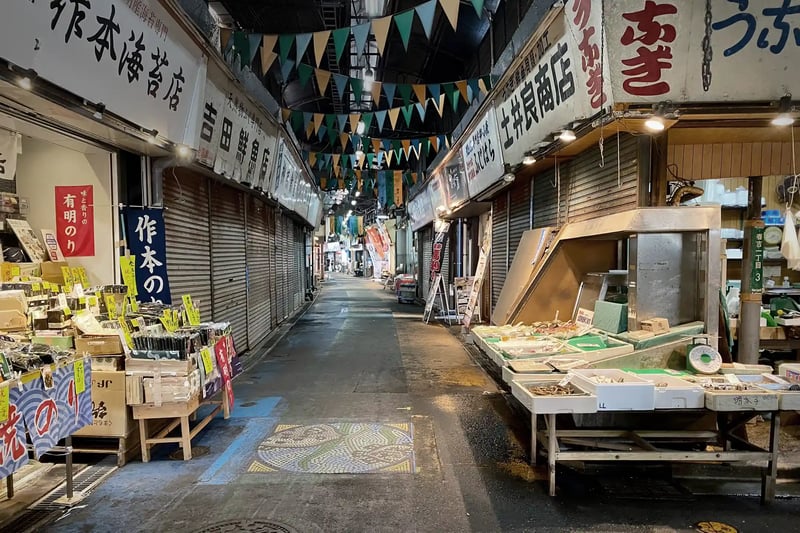
For fish, go in the morning to Yanagibashi Rengo Market in Haruyoshi, which calls itself Hakata's kitchen and is used, in its own words, by everyone from professional cooks to home cooks. The market's official site traces it to the early Showa period, when a fishmonger named Abe Akira sold fresh fish from a handcart, the beginning of what was called the Akira Market. Today it is a cluster of fishmongers and food shops, and a sensible place to see the mackerel, sea bream and cod roe that the dishes above depend on before you eat them.
For mizutaki, book the old houses ahead, and expect a set course that takes the pot from soup to porridge at a measured pace. For motsunabe, go in a group, since the pot is meant to be shared.
For ramen, eat at a Nagahama-style counter in the city, and if you have a spare half day, take the train south to Kurume. If you would like a guide to join you at the counter, our overview of food tours in Japan explains how they work, and our guide to Japanese food culture and its regions places Hakata among the country's other regional kitchens.
The story behind the flavour
A single article can offer a glimpse — a taste, a thread to follow. The Culinary Treasures of Kyushu & Okinawa Digital Guide gathers those threads into something more complete: the people, the places, the traditions, and the quiet logic behind what each region puts on the table. It's a reading for those who want to understand not just what to eat, but why it matters.

Reading the Menu by Where Each Dish Came From
Hakata food rewards a little history. Its ramen came up from Kurume and was made faster and thinner beside a fish market. Its mentaiko came from Korea through a man who did not keep the method to himself, which is why the shelves now hold one brand after another. Its mizutaki was assembled from what one cook learned in Hong Kong, and two old houses still frame it in different ways. Its raw mackerel depends on fresh fish and on a question you should feel free to ask. Its sweets survive through a shrine on one side and a family business on the other.
Eat the dishes in the places that shaped them: ramen at a counter or a stall, fish in the morning near the market, mizutaki slowly in an old house, and one bowl in Kurume to see where the broth began. Each meal will make more sense because you know where it came from.