Across Japan, you’ll find countless compelling observation spots—from rooftop Observation Deck experiences on skyscrapers to panoramic facilities on mountain summits. In this article, we zoom in on two standout destinations—Tokyo’s Shibuya Sky and Osaka’s Umeda Sky Building Kuchu Teien Observatory—and walk you through what makes each one special, plus how to enjoy them to the fullest. Sweeping views from high-rise city towers offer far more than a simple “which one is higher?” comparison; they deliver a rich range of experiences that shift with the hour, the season, and even your mood.
For instance, winter’s crisp, clear air often brings exceptional visibility—making it ideal for night-view watching. That’s one reason famous nightscape destinations like Hakodate, Kobe, and Nagasaki draw so many visitors, especially in colder months (*2). Here, you’ll get everything from the basics—how to choose an observation deck and how to make your visit more rewarding—to deep dives into the highlights of Shibuya Sky and Umeda Sky Building, plus a curated list of recommended observation spots across different regions of Japan. Please note that ticket rules, pricing, and operating details can change, so it’s always best to confirm the latest information on official websites before you go.
By exploring what makes Tokyo and Osaka’s signature observation decks so memorable, we hope you’ll be able to pinpoint the perfect next “viewpoint” for your travels—and step into a skyline experience you’ll want to relive again and again.
How to Choose and Enjoy Observation Decks in Japan
Japan offers a wide range of observation spots: rooftop decks atop skyscrapers, tower-style tourist landmarks, and panoramic facilities on mountain summits. To start, let’s organize the key points for choosing an observation spot—and the best ways to enjoy it for a richer experience. When you’re looking for an observation deck, it helps to think beyond height or fame and instead anchor your choice around “What do you want to see?” and “What kind of experience are you after?”
In Tokyo, for example, if you want a 360-degree urban panorama, you might choose Tokyo Skytree. If you’d rather take in a historic landmark alongside the surrounding cityscape, Tokyo Tower can be a better fit. Each observation deck frames the city differently, and there’s a sense of openness and immediacy—an “unblocked view” and presence—that can’t be measured by height alone.
In fact, there are cases where a building may not be the tallest, yet still receives world-class recognition because of its design philosophy and the quality of its views (*1). So rather than fixating on altitude, choosing based on “What can you actually see?” and “Is there an emotion you can only feel here?” will help you find a spot that truly suits you.
Next, let’s cover the basic knowledge of the best times of day and seasons to visit observation decks. Generally, the sharpest long-distance visibility comes in winter, when the air tends to be clearest. Cold weather can feel bracing, but it also brings out the best in night views. Many people gather in winter at famous nightscape destinations like Hakodate, Kobe, and Nagasaki, drawn in by their beauty (*2).
Meanwhile, spring and autumn offer mild weather and are perfect for enjoying the gradient from sunset into night. If you enter before sundown, you can take your time watching the sky’s shifting colors while the city lights gradually awaken below. Summer can bring slightly hazier air on some days, but it’s also the season when warm evenings make outdoor decks especially comfortable. When you plan with each season’s character in mind, your observation experience becomes far more satisfying.
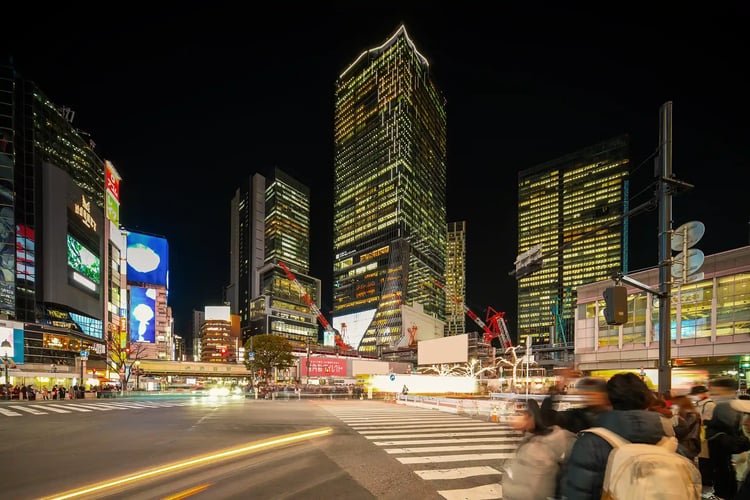
Reading the City (Using an Observation Deck as a Vantage Point)
When you look down at a city from above, you can suddenly grasp its structure and relationship to the surrounding terrain—things that are hard to sense at street level. An observation deck becomes a perfect “vantage point for reading the city,” letting you take in how the city grew, how its landmarks are arranged, and how nature sits at the edges of the urban core. From Shibuya Sky, for example, you can not only look down over the Shibuya Scramble Crossing at your feet, but also see the Shinjuku skyscraper district—and, on clear days, even Mt. Fuji in the distance (*3).
In this way, a single observation spot can reveal a city’s past and present, and sometimes its natural environment as well. In the city center you’ll notice dense clusters of high-rises; farther out, residential neighborhoods; and beyond that, mountain ridgelines or the sea. Each “layer” in your view carries hints of the city’s functions and history.
In Tokyo, you can read the relationship between the Sumida River and Tokyo Bay; in Osaka, you can observe the grid-like urban pattern alongside the flow of the Yodo River. From a high viewpoint, you can’t help but start asking: “Why is this building here?” “Which direction is the city expanding?” If you bring binoculars or a telephoto lens, spot key buildings, and compare what you see with a guide map, you’ll deepen your understanding of the city you’re visiting—turning a beautiful view into a more meaningful travel moment.
Appreciating Architecture and Space
When the observation spot itself is an outstanding piece of architecture, admiring the building becomes a major part of the joy. At an observation deck, what you “look at” isn’t only the cityscape.
Take the Umeda Sky Building: its very structure is globally unusual. It’s described as “the world’s first connected super high-rise,” made of two towers built 50 meters apart and linked at the top—and the experience of riding a long escalator suspended in midair up to the connecting section is unlike anything else (*4). One of the unique pleasures of observation facilities is that you can feel these architectural ideas from the visitor’s perspective—through your own body and senses. Shibuya Sky, too, is more than a simple rooftop viewpoint: it’s defined by a cohesive production that unfolds across multiple layers, from the 14th floor all the way to the rooftop (*5).
As you rise in the elevator, you’ll encounter light and sound effects; and just before stepping outside, the circulation route is designed so you pass from a darker interior space into a suddenly bright floor—an intentionally dramatic sequence. In other words, the spatial experience itself is crafted almost like an attraction in a theme park.
When you visit an observation deck, try to notice the structure and materials around you as well. Flooring, railing designs, wall finishes, and lighting reveal the thoughtfulness of architects and designers at every turn. Pay attention, too, to how the atmosphere changes between outdoor and indoor zones.
On an outdoor deck, you’ll feel the wind and the openness of the air on your skin; indoors, you can quietly savor the view through glass. Even with the same scenery, the space changes how you experience it.
Discovering that difference—and appreciating the architecture as part of the destination—is one of the great pleasures of visiting observation decks.
Avoiding Crowds and Spending Your Time Well
At popular observation spots, knowing how to avoid crowds and stay comfortable is key to enjoying a high-quality experience. First, consider your entry time. Weekdays and the hours right after opening are often less crowded, giving you room to breathe and take in the view. By contrast, the period around sunset, as well as weekends and holidays, tends to be busy—so it’s smart to arrive early, secure a good spot, and settle in. Shibuya Sky uses a date-and-time reservation system. Same-day tickets may be sold if there’s availability, but if you have a preferred time, buying in advance is the safer choice (*6).
Another point is seating. Many observation decks have benches or counter seating, and if you claim a seat while it’s quiet, you’ll be able to stay comfortable even as crowds build. This matters especially for night views—standing too long can wear you out—so pace yourself and take breaks at the right moments.
Your clothing deserves a bit of planning, too. At higher elevations, you’re exposed directly to wind and changing weather, so even in summer it can help to bring a light jacket. In winter, a scarf or stole is a reassuring layer to have in your bag. In fact, at outdoor observation decks like Mt. Hakodate, visitors are advised to dress for true winter conditions, including hats and gloves (*7). Even if the indoor observation room is heated, stepping outside can mean strong winds and low temperatures, so aim for clothing that lets you adjust your comfort easily.
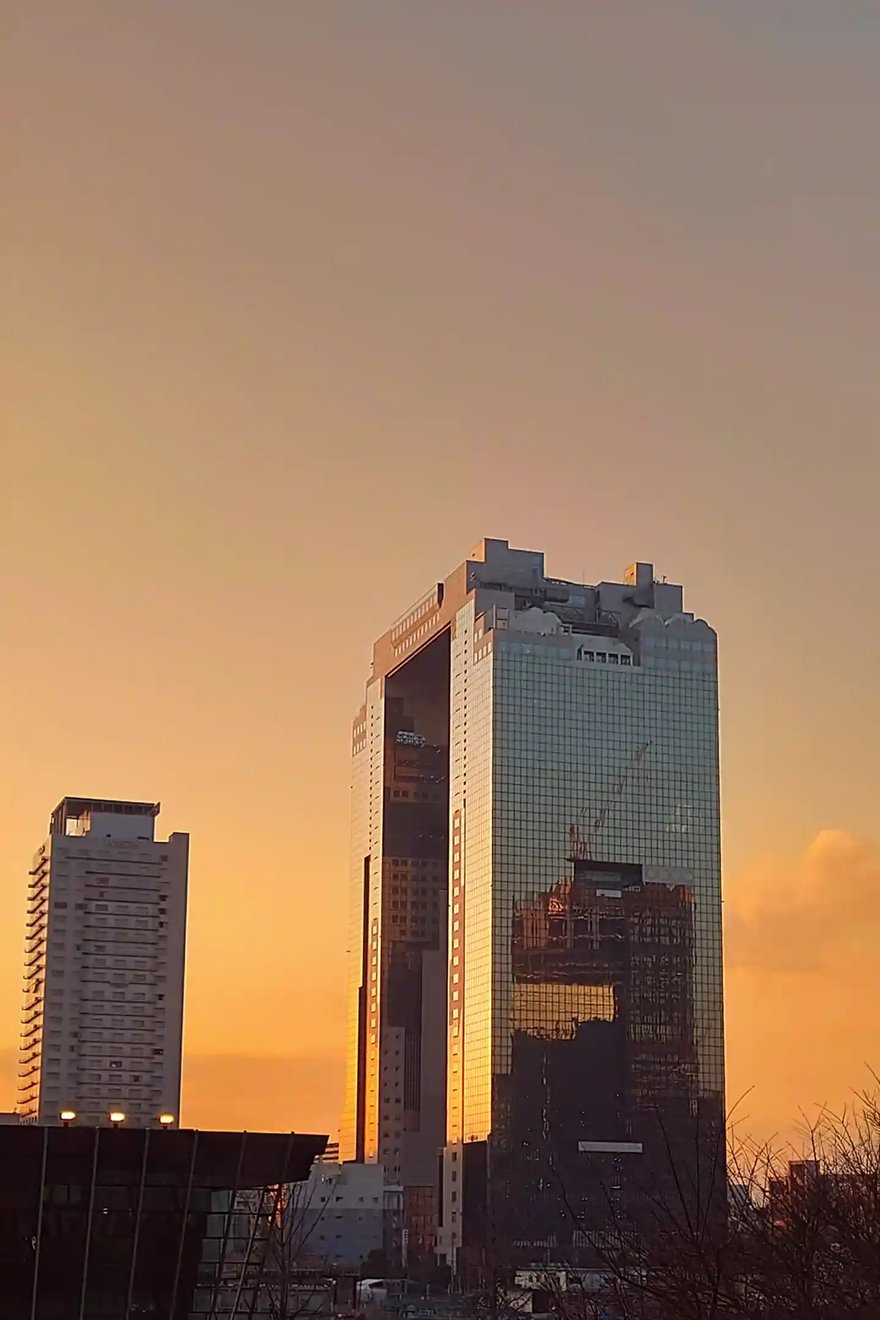
On chilly nights outdoors, your body can cool down quickly if you stand still for long periods. Holding a hot drink can make a noticeable difference in comfort. And if you want a quieter environment to really sink into the view, it’s also worth aiming for times when large tour groups are less common.
Just before closing can be comparatively calm, and you might even feel like you have the night view to yourself. Ultimately, timing and small in-the-moment choices determine whether your visit feels rushed—or deeply satisfying. Find your own rhythm, and let the view become one of those travel experiences that stays with you long after you’ve gone.
Shibuya Sky Observation Deck Complete Guide: Highlights, Best Times, Tickets, and Access
Now, let’s start with Tokyo’s standout modern landmark: Shibuya Sky. Shibuya Sky is an observation facility that opened in November 2019 atop Shibuya Scramble Square, a super high-rise directly connected to Shibuya Station. Located at roughly 229 meters above ground—the highest point in Shibuya—it offers a rooftop space so open and expansive it can feel as though you’re merging with the sky itself (*1).
It’s built in two main zones: the indoor observation area spanning the 45th and 46th floors, and the open-air rooftop Sky Deck. That means you can enjoy two distinct experiences—an all-weather indoor gallery and a fully open rooftop—depending on the day and your preferences.
As a new landmark in Shibuya, the heart of youth culture, it draws visitors from Japan and around the world, and it’s become a beloved spot for taking in Tokyo’s dynamic cityscape.
Highlights and Interpreting the Architectural Design
Shibuya Sky’s biggest draw is its unobstructed 360-degree view. The rooftop observation space, “SKY STAGE,” spans about 2,500 square meters, with a lawn area and wood deck laid out around the helipad (*1). When you look around, you’ll notice there’s no building taller than Shibuya Scramble Square in your immediate surroundings—so Tokyo’s cityscape seems to stretch all the way to the horizon. It’s the kind of view that can make you blurt out “Wow” before you even realize it (*1).
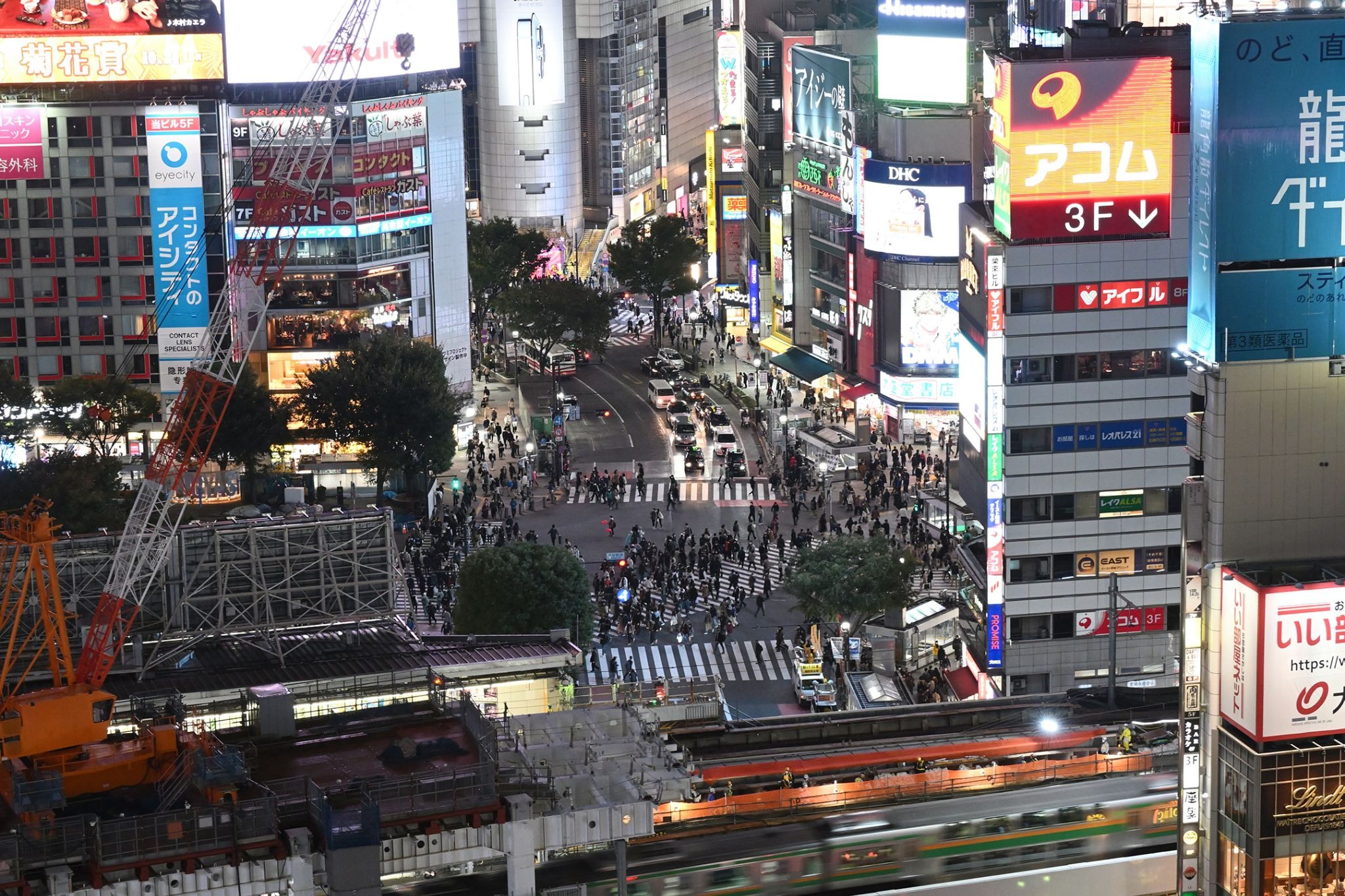
Among the most iconic spots is “SKY EDGE”—Shibuya Sky’s signature photo point. This is a glass-walled corner that juts out in a triangular shape at the edge of the building. You can look straight down at Shibuya’s streets and the Scramble Crossing, while at face level there’s nothing blocking your gaze—creating a thrilling, floating-in-the-air sensation (*2).
You’ll see plenty of photos from this spot on social media, and if you love photography, it’s hard to skip. There’s also a commemorative photo service run by staff, so if you’re visiting with friends or a partner, having a professional capture the moment can become a great keepsake (*2).
From an architectural perspective, Shibuya Sky is full of intriguing details. The facility isn’t just about “the rooftop”—it’s designed to let you experience a story: a narrative of ascending into the sky. On the way from the ticket counter on the 14th floor to the observation level, you pass through a transitional space called “SKY GATE,” and the elevator hall uses futuristic visuals and sound to heighten your anticipation (*3).
The 30-second ride in the high-speed elevator, “TRANSITION POD,” which shoots you up to the 45th floor, surrounds you with ceiling-projected visuals that accelerate as you rise—wrapping you in a strange, exhilarating feeling, like you’re launching into the heavens (*3). The indoor observation corridor on the 45th and 46th floors, “SKY GALLERY,” is also refined like a contemporary art gallery, featuring interactive digital art displays and large-screen visual productions.
This is also a very “Shibuya” form of cultural expression: the Observation Deck itself becomes an entertainment device. As you climb the staircase to the rooftop, “LEADING LINE,” and step from a dim interior into the suddenly open rooftop, the emotional impact is powerful—an effect only possible through carefully calculated spatial design.
On the rooftop, you’ll also find unique features like “CLOUD HAMMOCK,” a net where you can lie back and look up at the sky, and “GEO COMPASS,” a slightly elevated viewpoint—small touches that keep you engaged.
If you explore Shibuya Sky while reading its design—where architecture, technology, and art intersect—you’ll likely feel that your experience gains an extra layer of depth and wonder.
Best Times (Sunrise / Sunset / Night Views)
At Shibuya Sky, Tokyo’s expressions shift dramatically depending on the time of day. The most recommended window is around sunset. Because you can generally take your time once you’re inside (depending on crowd conditions), entering in late afternoon can let you enjoy the full “sky drama” in one visit—from bright afternoon blue, to sunset hues, to the glow of night (*4). Watching the sun sink in the western sky from 229 meters up feels especially memorable, as warm orange light spreads beyond the skyline—an image that’s likely to stay with you long after your trip.
Don’t miss the magic hour after the sun goes down, either. As the sky deepens into indigo, the city lights below gradually intensify, creating an almost dreamlike atmosphere. If you sit down on the lawn and take your time, you’ll find yourself captivated by a fleeting “artwork of the sky” that exists only in that exact moment (*4).
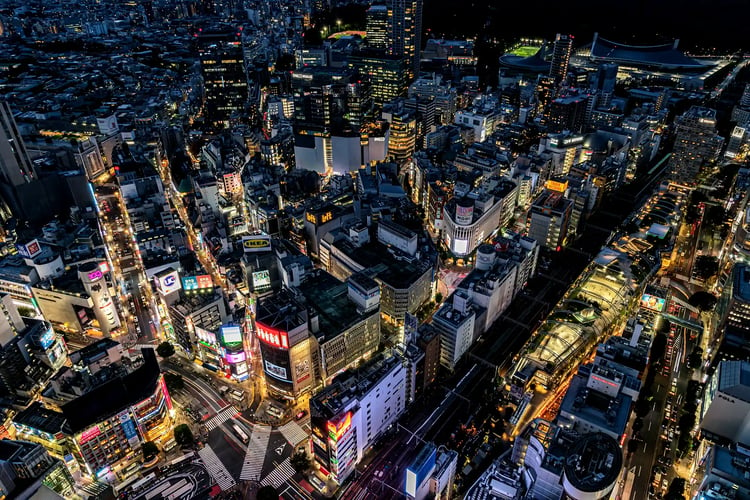
Then comes the night view. Once darkness fully settles, Tokyo becomes a carpet of countless lights spread out beneath you. From above, the flow of cars and people crossing Shibuya can look like a river of light, and distant landmarks such as the Shinjuku skyscraper district, Tokyo Tower, and Tokyo Skytree shine like jewels. At Shibuya Sky, after around 7:00 p.m., a light-and-sound event called “CROSSING LIGHT” may be held at regular intervals, adding an extra layer of spectacle to the skyline (*5).
Searchlights shoot into the night sky, and pillars of light rise in sync with music echoing through Shibuya—an unforgettable sight. It also functions as a time signal, and it’s popular as a show that adds sparkle to the city’s nighttime atmosphere.
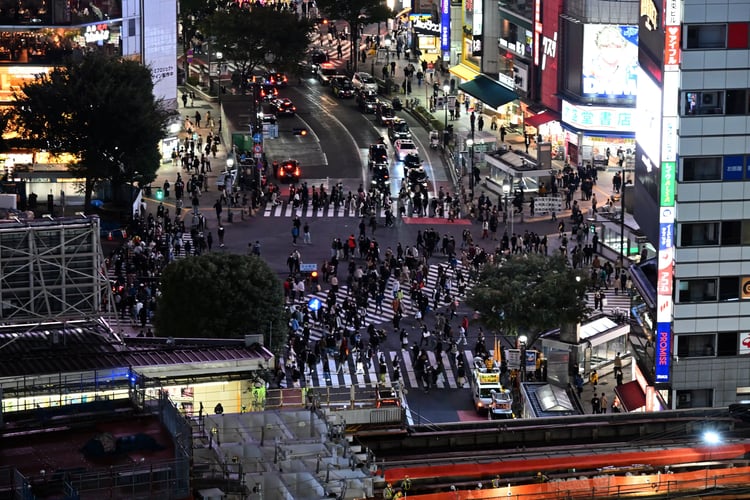
As you can see, morning and daytime views are wonderful too, but if you want to experience Shibuya Sky at its fullest, visiting from dusk into night is highly recommended. That said, arriving early to watch the sunrise between Tokyo’s buildings can feel refreshing, and on clear days you may even spot Mt. Fuji to the west. Choose the time that matches the view you want most, and let yourself feel Tokyo’s day unfolding from above at Shibuya Sky.
How to Enjoy the Lounge and Dining
To make your Shibuya Sky experience even richer, pairing the views with food and drinks is a great idea. Inside the indoor observation corridor on the 46th floor, you’ll find a stylish café & bar called “Paradise Lounge” (*6). Designed by British designer Tom Dixon, the space feels polished and contemporary, with interiors inspired by Shibuya’s streets and the Scramble Crossing (*6).
During the day, you can enjoy coffee and sweets; at night, alcoholic drinks and light bites are available. Hours generally run from morning to late evening, and last order is typically around 10:00 p.m., which is close to the Observation Deck’s operating hours (*7). Especially after late afternoon, you can sip a cocktail slowly while taking in the night view, with background music selected by music producer Tomoyuki Tanaka (Fantastic Plastic Machine) playing throughout the lounge (*6).
There’s also a DJ booth inside the counter area, and the space may be used for events on an irregular basis—so if your timing lines up, you might enjoy a very Shibuya-style collaboration of music and skyline. Window-side sofa seats are especially popular, but even when it’s busy, try asking the staff rather than giving up. If you visit at a quieter time, you may land a prime seat where you can truly relax with the city lights as your backdrop.
At certain times of year, a rooftop bar called “THE ROOF” may open for limited periods, offering an even more indulgent experience—like enjoying Tokyo’s glittering nightscape with champagne from a reserved sofa seat (availability varies by period).
Finally, Shibuya Sky also has a museum shop on the 46th floor: “SHIBUYA SKY SOUVENIR SHOP.” With a wide lineup—Hachiko-themed goods and Shibuya Sky-exclusive sweets, among others—you can shop for souvenirs while lingering in the afterglow of the view.
Umeda Sky Building Kuchu Teien Observation Deck Guide: Highlights, Best Times, Tickets, and Access
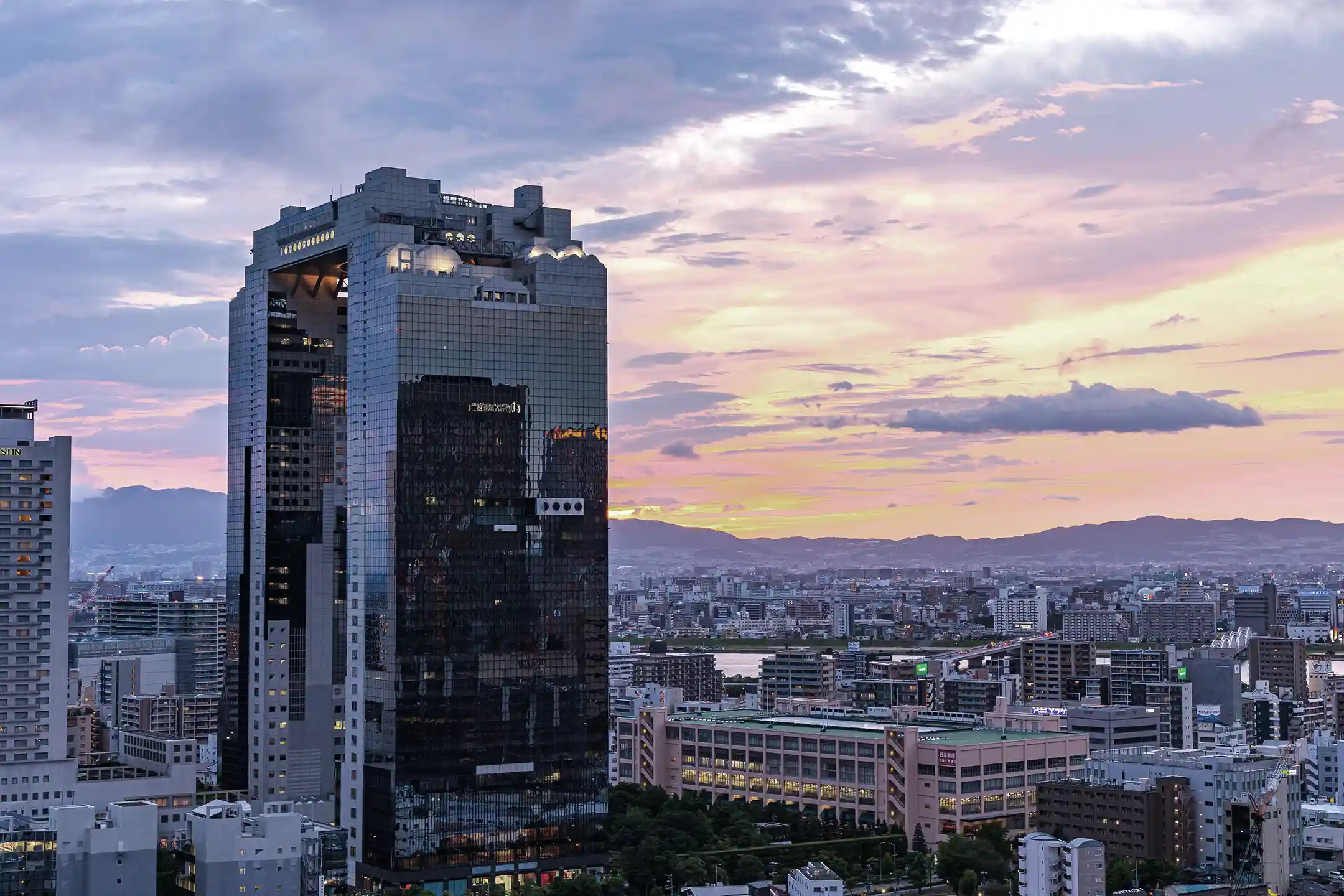
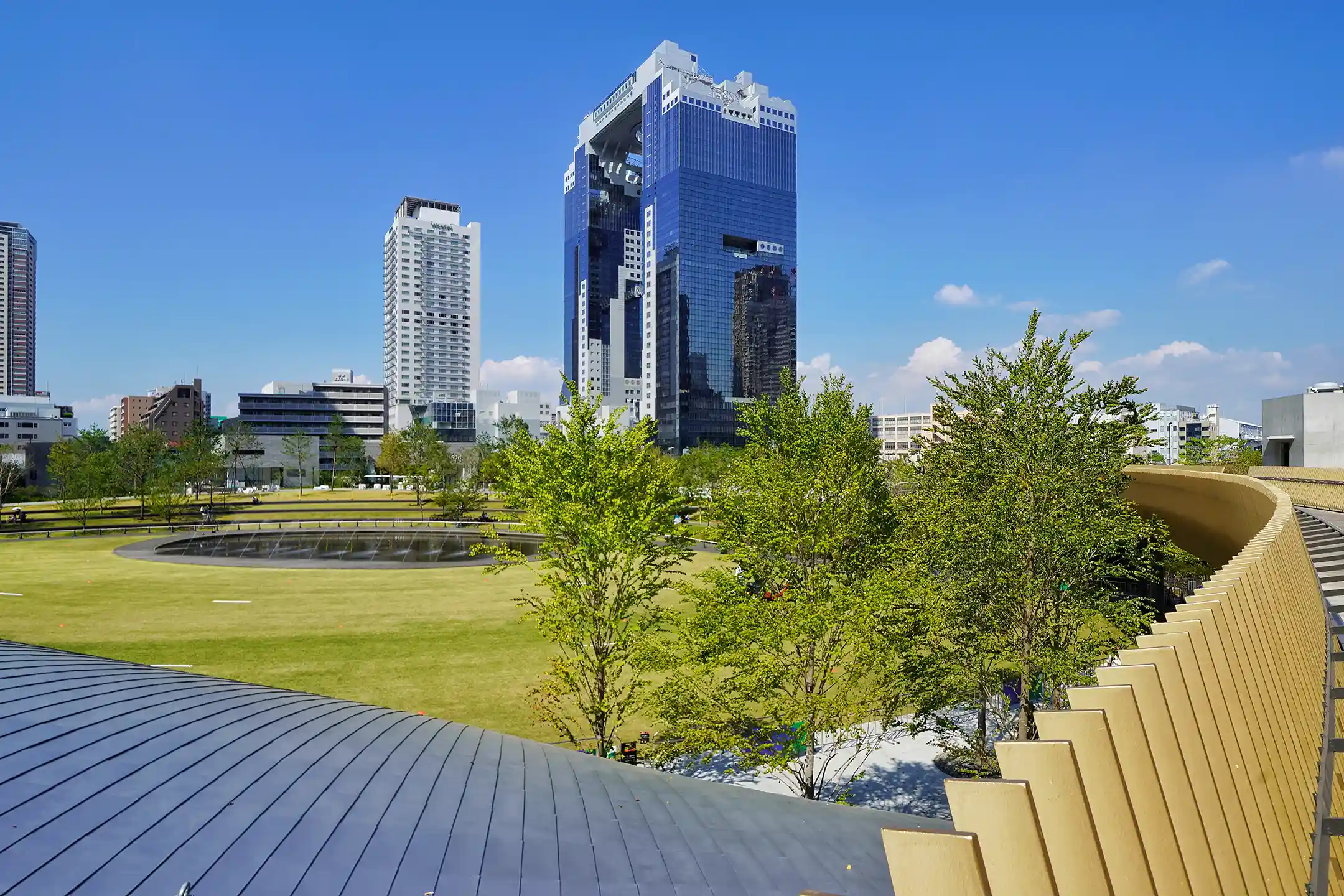
Next, let’s guide you through Osaka’s signature observation spot: Umeda Sky Building Kuchu Teien Observatory (often known as the Floating Garden Observatory). Umeda Sky Building is a 40-story skyscraper rising to 173 meters, located about a 7-minute walk northwest from JR Osaka Station (*1). Its defining feature is its rare structure: two towers—East and West—connected at the top into a single form, an architectural configuration unlike almost anything else in the world.
When it was completed in 1993, it was the tallest building in western Japan (*1). Its bold design later earned international recognition—for example, being selected in 2008 by the UK newspaper The Times as one of the “Top 20 Buildings in the World” (*2).
Located in the connecting section at the top, the Kuchu Teien Observatory is an open and airy observation facility spanning both indoor and outdoor areas. From here, you can take in Osaka’s cityscape, the Yodo River, and even distant mountain ranges such as Ikoma and Rokko—making it one of the city’s most impressive panoramic viewpoints.
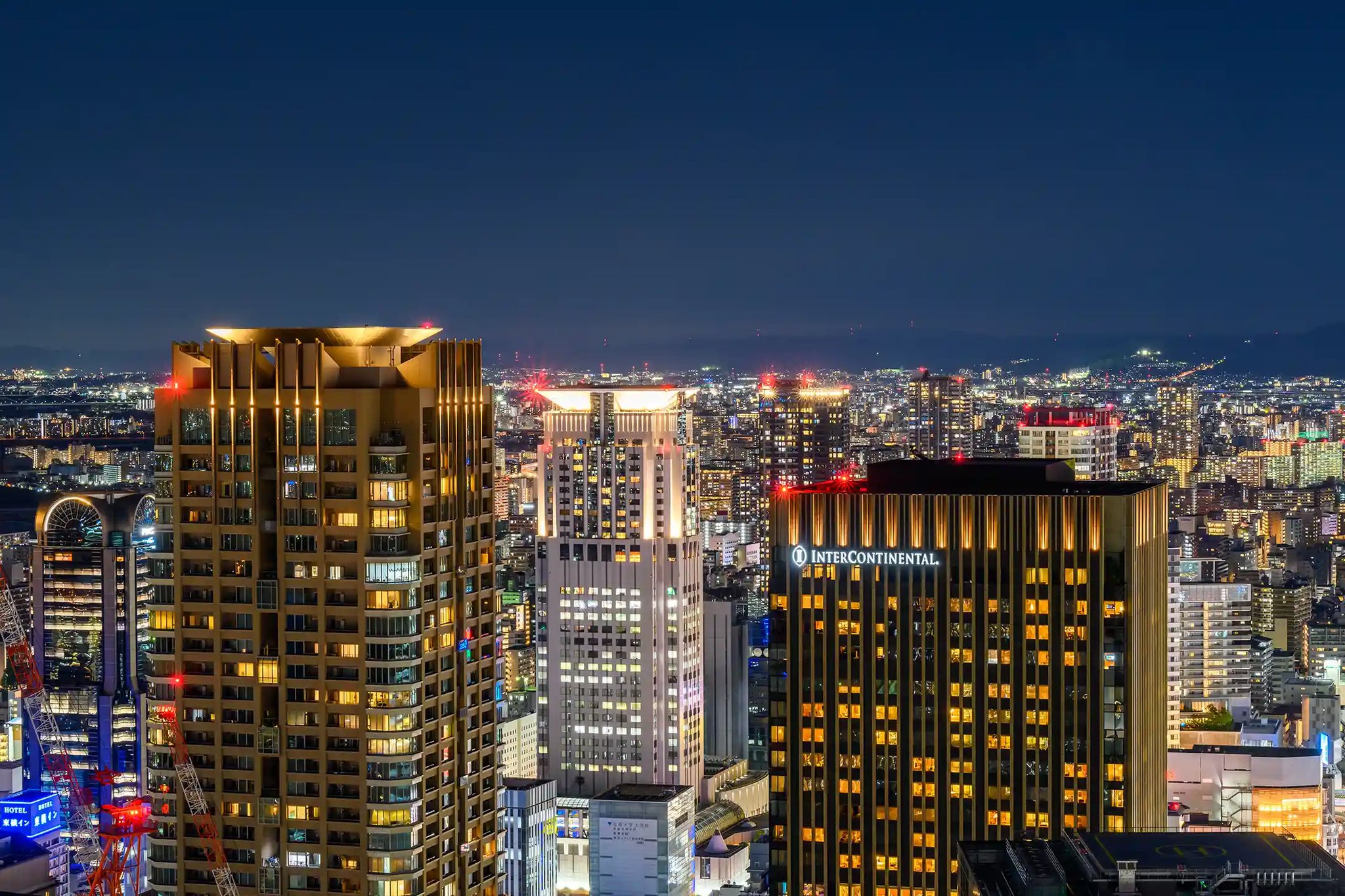
Highlights and Architectural-Historical Value
Umeda Sky Building’s greatest highlight is the “theatrical experience” created by its very structure. From the ground, you can see two skyscraper towers joined in midair, forming a monumental silhouette—almost like a grand gate to a future city.
To reach the circular connecting structure known as the “Kuchu Teien,” you ride a tube-shaped, glass-walled escalator that links the towers at about the height of the 35th floor. As you ascend inside the transparent tube, the ground view beneath you shrinks rapidly, and you may feel as if you’re crossing a floating bridge in the sky—an experience that’s both thrilling and unforgettable.
It’s so stimulating that you may hear the kind of advice that says, “If you’re not a fan of heights, try not to look straight down” (*3)—and that intensity is precisely what makes Umeda Sky Building’s staging so distinctive. Once you arrive at the observatory, your view opens up in 360 degrees, and a vast panorama across the Osaka Plain welcomes you.
The building was designed by architect Hiroshi Hara, a world-renowned figure who also designed Kyoto Station Building. Conceived under the concept of a “village of the future,” Umeda Sky Building blends a wide range of design elements down to the smallest details, turning the entire structure into a single work of art (*4). The exterior of the connecting section is wrapped in a glass curtain wall that reflects the sky, making the “floating garden” appear even more dreamlike (*4).
In this sense, its originality lies not only in physical height, but also in its ideas and expression—making it a high-rise of real architectural-historical value. When you visit the observatory, take time to look both inside and outside the building: notice how the massive columns and beams connect, and what kinds of designs appear on the floors and ceilings. Umeda Sky Building isn’t merely a “tower for viewing scenery”—it’s closer to a living museum where the architecture itself is part of what you came to see.
Best Times (Daytime / Sunset / Night Views)
At the Kuchu Teien Observatory, you can enjoy different charms in the daytime, at dusk, and at night. In the daytime, if you want to observe Osaka’s urban details, visiting during daylight hours is recommended. From 173 meters up, you can look down on the area around Osaka Station and see a massive transportation terminal (the station platforms) and an expansive network of highways. Watching trains and cars move below can feel like looking over a beautifully animated miniature world.
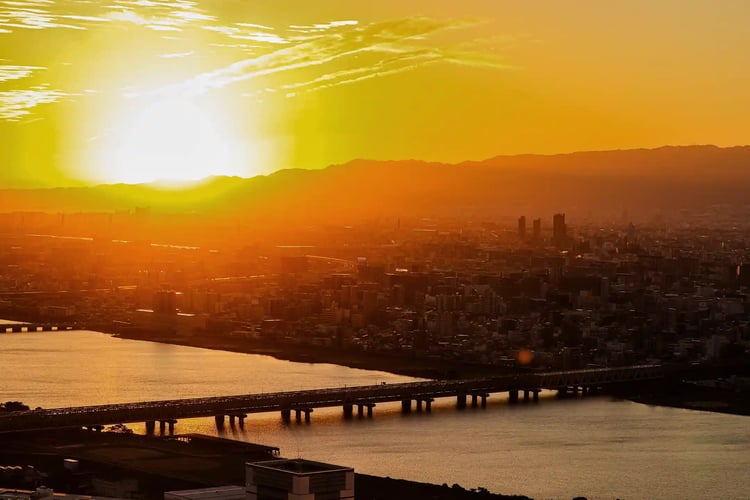
To the north, the Yodo River’s broad flow reflects light and sparkles, and beyond it you’ll see the ridgelines of the Ikoma mountain range. On clear days, you may even be able to see Mt. Hiei toward Kyoto and the Rokko Mountains toward Kobe, helping you truly feel the scale of the Osaka Plain.
Next comes dusk. As the sun sets behind the Rokko Mountains to the west, the evening light paints the sky toward Osaka Bay in warm orange tones. The sky’s shifting colors—and the cityscape tinted beneath them—can be deeply moving. The silhouettes of buildings sharpen, and the sunset reflected on the Yodo River creates a scene many people would call romantic.
If you want to watch the transition from dusk into night, it’s ideal to be at the observatory around 5:00–6:00 p.m., so you can enjoy the full gradient of the sky. Then, the night view arrives. Osaka is a city with a high “density of light,” and the illumination in commercial areas like Umeda and Namba shines especially bright.
At the same time, when you look toward distant suburbs, you’ll clearly notice the contrast where darker areas remain. From Umeda Sky Building, you can spot the neon of Tsutenkaku to the southeast, the glow of Abeno Harukas to the southwest, city lights stretching toward Kobe to the northwest, and below you, the futuristic nightscape of the redeveloped Umeda area around Grand Front Osaka. As night falls, the city’s spread becomes visible in a different, flatter way—revealing a completely different expression from what you saw during the day.
At night, you may also enjoy more than city lights: if the weather is favorable, starlight and moonlight add another layer, creating a beautiful interplay between natural and urban illumination.
In short, you can observe the lively movement of the city by day, sink into dramatic sky colors at dusk, and fully enjoy sparkling lights at night—this ability to taste Osaka’s shifting expressions by time of day is the true pleasure of the Kuchu Teien Observatory.
Even the observatory’s official guidance notes that dusk through night is recommended (*5), but you should absolutely visit at the time that best matches what you want to feel.
Lounge and Dining
Umeda Sky Building also offers facilities where you can enjoy food and drinks alongside the views. On the 39th and 40th floors—where the Kuchu Teien Observatory is located—you’ll find a café & bar where you can take a break while gazing out over the scenery below.
On the 40th floor indoor observation area, there’s a glass counter stretching an impressive 35 meters. Sitting here, you may feel as though you’re floating in midair as you enjoy “café time” (*6). If you settle into one of these counter seats with coffee or a soft drink, you’ll get a satisfying blend of relaxation and that special, out-of-the-ordinary feeling that only a high-rise can offer.
Business hours are generally from morning to late evening, and you can also enjoy wine or cocktails while taking in the night view (*5). On the 39th floor, there’s also an authentic Cantonese restaurant called “Chinese Cuisine Sangū (さんぐう)”, where you can enjoy lunch or dinner with a sweeping view of Osaka through large windows.
After the refreshing thrill of the Kuchu Teien, you can linger in a calm bar, or dive into local flavors in the retro dining lanes—Umeda Sky Building offers plenty of “view + alpha” ways to enjoy your time. Mix and match the sky-high café and the street-level food scene to fit your style, and you’ll create a day you’ll remember with real warmth.
Touring Art and Cultural Districts
Around Umeda Sky Building, you’ll also find many places to connect with culture and the arts. One especially recommended option is a short excursion to the Nakanoshima area. About a 15-minute walk south from Umeda, Nakanoshima is a lush, water-and-greenery district surrounded by rivers, and it’s one of Kansai’s leading cultural zones.
After you take in Osaka from above at the Kuchu Teien Observatory, head to Nakanoshima and experience the city’s culture up close. For instance, the National Museum of Art, Osaka and the Osaka Science Museum sit next to each other, letting you enjoy intellectual experiences in two different fields—art and science. At the National Museum of Art, Osaka, you can view collections of contemporary art from Japan and abroad; at the Osaka Science Museum, you can enjoy the planetarium and explore up-to-date scientific exhibits.
The Osaka Nakanoshima Museum of Art (opened in 2022) is also within walking distance, offering encounters with art connected to Osaka in a modern architectural setting. Nakanoshima also features historic, dignified buildings like Osaka City Central Public Hall (a nationally designated Important Cultural Property) and the Nakanoshima Library, with beautiful streetscapes that harmonize with riverside scenery.
The official Umeda Sky Building website also suggests that after enjoying the observatory, you might explore nearby shopping and cultural spots (*7). In practice, it encourages you to head toward Osaka Station or Nakanoshima—both within walking distance—to enjoy a wide variety of shopping, dining, and cultural experiences (*7).
By using the observation deck as your “starting point” and expanding outward into the surrounding area, you can multiply the richness of your trip. If you’re traveling with family, strolling through Nakanoshima Park at a relaxed pace or visiting educational facilities to spark a child’s curiosity can be especially rewarding.
Enjoying Umeda Sky Building and Nakanoshima together allows you to experience two sides of Osaka at once: “a future city” and “a cultural city.”
Barrier-Free Access and Tips for Families
Umeda Sky Building Kuchu Teien Observatory is designed with accessibility in mind so that people of many ages and needs can visit comfortably. Wheelchair users and visitors with strollers can access the observatory.
Normally, from the 35th floor and above, the route uses only the see-through escalator, but if you are using a wheelchair or traveling with a stroller, you can inform staff at the first-floor entrance and be guided via a direct high-rise elevator to the 39th-floor observation area (*8).
In fact, Umeda Sky Building has a direct elevator from the 1st floor to the 39th floor, allowing wheelchair users and families with strollers to reach the observatory without transferring to the escalator on the 35th floor (*8). The walkways are wide enough for smooth movement, and there is even one loaner wheelchair available—showing thoughtful universal design throughout.
The observatory includes barrier-free multi-purpose restrooms, and baby care rooms (nursing room and diaper-changing station) are also provided on the 39th and 40th floors (*8). That means you can handle sudden diaper changes without stress. The elevators are spacious enough to enter with a stroller. Visitors with disability certificates can receive discounted admission, and there is also a service where one accompanying person can receive the same rate (*8).
The observatory floor is generally flat and step-free, but there is a short staircase when going up to the rooftop area (Sky Walk). However, even if you use a wheelchair, you can still enjoy the view fully from the indoor observation level just below the rooftop, so it should not be a major obstacle.
If you’re visiting as a family, it’s a good idea to plan breaks and meals using places like the “Fun Fun Plaza” on the observatory entrance level or Takimi Koji in the basement, so you can enjoy Umeda Sky Building throughout the day. If you’re using a stroller, staff assistance is needed only for the escalator section, but if you speak up in advance, support should be smooth.
As you can see, Umeda Sky Building is a sightseeing spot that can be enjoyed by everyone—from children to older adults. Knowing the facility details ahead of time helps you visit with confidence, so come experience a grand “sky walk” together as a family.
Comparison Table: Key Differences Between Shibuya Sky and Umeda Sky Building Observation Decks
Finally, let’s organize the key differences between Shibuya Sky and Umeda Sky Building Kuchu Teien Observatory. Both are signature observation spots representing Tokyo and Osaka, but they differ in height, facilities, and overall atmosphere. Below is a beginner-friendly comparison of the main points.
Height and View Range: Shibuya Sky stands at roughly 229 meters above ground, offering a grand view that can stretch as far as Mt. Fuji beyond the central city’s high-rises (*1). Umeda Sky Building, at 173 meters, is lower than Shibuya Sky, but its location allows you to take in the entire Osaka Plain, including the Yodo River and natural terrain like the Ikoma and Rokko mountain ranges (*2). In other words, you’re choosing between Tokyo’s skyscraper-driven panorama and Osaka’s wider landscape that includes mountains and rivers.
Outdoor Observation Availability: Both Shibuya Sky and Umeda Sky Building have rooftop outdoor observation spaces. Shibuya Sky’s entire rooftop—including the helipad—is open-air, and its signature appeal is the freedom of feeling the wind directly. Umeda Sky Building also offers the open-air rooftop corridor “Sky Walk,” where you can enjoy a 360-degree “walk in the sky” exposed to the elements.
However, because Shibuya Sky is higher, its rooftop may be closed for safety during strong winds or severe weather (*3). At Umeda Sky Building, it’s also best to avoid the rooftop in harsh weather, but in both cases you can still enjoy the scenery from the indoor observation floor.
Facilities and Comfort: Shibuya Sky is newer (opened in 2019), and with timed-entry tickets, visitor numbers are carefully managed. Its lounge, digital art displays, and overall add-on facilities feel futuristic and stylish.
Umeda Sky Building opened in 1993. It keeps exhibitions to a minimum, but that contributes to a more relaxed atmosphere, and you can often buy tickets on the day without a set time slot. In terms of crowd tendencies, Shibuya Sky maintains a consistent level of busyness as one of Tokyo’s newest must-see spots, and in the evening it can be hard to get reservations.
Umeda Sky Building, on the other hand, is often quite relaxed on weekday daytime visits, and even on weekends it’s less likely to produce long lines since it isn’t a strict capacity-managed system (though it can get crowded during peak tourism seasons or events). Overall, if you want a calmer, unhurried experience, Umeda is a strong choice; if you want a more “event-like,” trend-driven atmosphere, Shibuya may fit you better.
Photography: At both observation decks, you’re free to take photos with a camera or smartphone. However, Shibuya Sky is strict about rooftop safety: tripods and selfie sticks are prohibited, bags and hats must be stored in lockers, and you’re allowed to bring only a smartphone or a camera with a strap (*4).
Umeda Sky Building does not have the same level of item restrictions, and tripods can be used at your own discretion, though you should be cautious in strong winds. During crowded times, restrictions may also be applied depending on staff judgment. Shibuya Sky also offers professional photo services, which can be a nice plus if you want an easy commemorative photo without needing advanced camera skills.
Admission Fees: Shibuya Sky is slightly more expensive, with adult tickets typically in the 2,000-yen range (with discounted advance web reservations), while Umeda Sky Building Kuchu Teien Observatory is often set a bit lower, around 1,500 yen for adults. This can be seen as reflecting differences such as Shibuya Sky’s newest staging and comfort-focused facilities, versus Umeda Sky Building’s more accessible pricing despite nearly 30 years since opening.
Both may offer seasonal events or combination tickets that improve value, so it’s wise to check official information when you visit.
Access: Shibuya Sky’s biggest advantage is its direct connection to Shibuya Station—ideal for dropping in between shopping and sightseeing. Umeda Sky Building requires a short walk from Osaka Station, but underground passages with signage help you get there without getting lost. Because it sits slightly away from the densest cluster of high-rises, you’ll also benefit from a more open sky and fewer tall buildings immediately surrounding it.
Recommendations for Beginners: If it’s your first time visiting an Observation Deck, the simplest choice is to match it to your destination city: Shibuya Sky for a Tokyo trip, Umeda Sky Building for an Osaka trip. If you can do both, it’s absolutely worth experiencing both. If you’re choosing by atmosphere, Shibuya Sky—with its trend-forward energy and high entertainment value—suits travelers who want to taste “urban refinement,” while Umeda Sky Building is ideal for architecture lovers or anyone who wants a calmer setting to savor the view.
Both are hard to rank against each other, but if you want an easy mental shortcut: for sheer scale driven by height and city size, think Shibuya Sky; for open-air freedom and a one-of-a-kind architectural experience, think Umeda Sky Building.
Recommended Observation Decks Around Japan, by Region
So far, we’ve introduced the two major observation decks in Tokyo and Osaka, but there are many more compelling observation spots across Japan. To wrap up, here’s a region-by-region selection of notable viewpoints. Depending on where you’re traveling, consider adding one of these to your itinerary.
Observation Spots in Kanto
The Kanto region, centered on Tokyo, is packed with famous observation facilities. First up is Tokyo Skytree. At 634 meters, it is one of the world’s tallest freestanding towers (*1) and has become a new symbol not only of Tokyo, but of Japan itself. With observation areas at 350 meters and 450 meters (Tembo Deck and Tembo Galleria), you can take in the entire Kanto Plain. On clear days, you may even see Mt. Fuji and Mt. Tsukuba in the distance—and the sheer scale of the view can feel overwhelming in the best way.
Next is Tokyo Tower. Standing 333 meters tall, it opened in 1958 and remains a historic broadcasting tower. Known for its orange illumination, it’s a landmark that has grown alongside Tokyo’s changing cityscape, and from its observation areas you can enjoy views of Tokyo Bay and the central city. Even today, more than 60 years after opening, Tokyo Tower continues to be cherished as an icon of the city (*2).
Roppongi Hills Observation Deck (Tokyo City View) is also a popular spot. From the rooftop Sky Deck (helipad level) and the indoor observation floor on the 52nd floor, you can look out over Tokyo—and you can also enjoy art at the Mori Art Museum on the same floor. It’s known for its sleek, stylish city vibe. And of course, Shibuya Sky, which we covered in depth, is another must-see new landmark in Kanto.
From the heart of Shibuya, you can look down over the district synonymous with youth culture and feel Tokyo’s vast urban energy firsthand. Beyond Tokyo, Kanto also offers a wide variety of view spots, such as the Yokohama Landmark Tower observation floor “Sky Garden,” the Hitachi Station observation café in Ibaraki (a station with ocean views), and the Nikko Futaarasan Shrine elevator observation deck in Tochigi (overlooking Kegon Falls), among many others.
Observation Spots in Kansai
Kansai is also full of unique observation facilities. Osaka’s Umeda Sky Building Kuchu Teien Observatory, as discussed above, is a classic spot for taking in the city.
Another essential destination is Abeno Harukas, one of Japan’s tallest skyscrapers, and its observation deck “Harukas 300.” From the glass-walled space spread across the top floors (58–60F) of the 300-meter building, you can enjoy one of Osaka’s finest views. On clear days, you may even see the Rokko Mountains, the Akashi Kaikyo Bridge, and Awaji Island (*3). Watching the sun set, or looking down at Tennoji Zoo and Tsutenkaku from above, is also a uniquely memorable experience.
In Hyogo, Kobe Port Tower is well known. It’s a red, drum-shaped tower with a height of 108 meters (the observation level is around 100 meters). While it isn’t massive, its charm lies in the 360-degree observation deck where you can see Kobe Port, the city, the Rokko Mountains, and even Awaji Island in the distance (*4). Following a major renewal in 2024, a new rooftop corridor was added, making it an even better place to enjoy sea, mountains, and city all at once.
Kyoto has Kyoto Tower (131 meters), where you can look out over the historic cityscape and—on clear days—see Mt. Hiei to the east and Mt. Atago to the west. Shiga and Nara have fewer high-rise towers, but they offer nature-focused viewpoints such as the mountaintop observatory at Biwako Valley and Wakakusa-yama. Overall, Kansai is rich in observation spots that let you blend urban night views with natural scenery.
Observation Spots in Hokkaido and Tohoku
Expansive Hokkaido and Tohoku also offer memorable observation facilities. In Hokkaido, start with the Sapporo TV Tower. A historic landmark completed in 1957, it stands 147 meters tall at the eastern end of Odori Park in Sapporo. From the observation deck at about 90 meters, you can enjoy views west toward Mt. Teine and the Okurayama Ski Jump Stadium, and east toward the Toyohira River and the Ishikari Plain—letting you enjoy Sapporo’s cityscape alongside vast natural scenery (*5).
At night, the illuminations and snowy landscapes of Odori Park are also beautiful, and the tower remains a beloved presence for locals. In Hakodate, there is the world-famous Mt. Hakodate Observatory. The night view of Hakodate’s city lights seen from the 334-meter summit is often called a “million-dollar night view,” and it is popularly said to be one of the world’s three great night views alongside Hong Kong and Naples (*6). The band of light formed by a city flanked by the sea is profoundly moving, and the ropeway makes it easily accessible—making it a major highlight of Hokkaido travel.
In Tohoku, Aomori City’s Aomori Prefecture Tourist Center ASPAM has an observation room. With its distinctive triangular building at 76 meters tall, it’s a landmark facing Aomori Bay (*7). From the top-floor observation deck, you can see the city and Aomori Port, and on clear days you may even see the mountain lines of the Shimokita and Tsugaru Peninsulas across Mutsu Bay. Morioka City in Iwate has a prefectural office observation lobby where you can view Mt. Iwate in the distance, and Sendai City in Miyagi offers views over the “City of Trees” from the AER Building observation terrace. Many Tohoku prefectural capitals also have free high-rise observation floors, so if you have time during your trip, it can be well worth stopping by.
Observation Spots in Tokai and Chubu
Chubu also has noteworthy observation facilities. In Nagoya (Aichi), the Nagoya TV Tower (Chubu Electric Power MIRAI TOWER) is a leading presence. Completed in 1954 as Japan’s first integrated radio tower, it stands 180 meters tall and reopened after seismic retrofitting in 2020 (*8). Located in Hisaya Odori Park, it offers views over Nagoya’s cityscape and, in the distance, Mt. Ontake.
The tower itself is designated as an Important Cultural Property of Japan, and its neon-lit night appearance is beautifully retro-modern. Another must in Nagoya is Midland Square “Sky Promenade.” This outdoor observation facility sits across the top floors (44–46F) of a 247-meter skyscraper in front of Nagoya Station, offering a wraparound view of the city from about 220 meters high (*9).
It’s one of Nagoya’s signature outdoor decks, and at night, the lighting effects at your feet create a remarkably dreamlike sky-walk atmosphere. Gifu has Gifu Castle (Mt. Inaba) with a keep observation deck looking out over the Nobi Plain from Mt. Kinka. In Shizuoka City, Nihondaira Yume Terrace is a popular new spot for views of Mt. Fuji and Suruga Bay, and Yamanashi’s Fuefukigawa Fruit Park night view (one of the “New Japan Three Great Night Views”) is also well known.
Because Chubu has many high mountains, it also offers an abundance of natural viewpoints—so if you enjoy hiking or scenic drives, consider building a “nature observation deck” into your travel plans as well.
Observation Spots in Chugoku, Shikoku, Kyushu, and Okinawa
Western Japan also offers a wide variety of observation spots. In the Chugoku region, Hiroshima City’s Orizuru Tower stands out. This complex facility opened in 2016 near the Atomic Bomb Dome, and from the rooftop wooden deck “Hiroshima no Oka,” you can look out over Peace Memorial Park and the city (center) at once.
There are also scenic spots such as the observation point for the five-story pagoda of Rurikoji Temple in Yamaguchi City, and the Senkoji Park Observatory in Onomichi City with views over the islands of the Seto Inland Sea. In Shikoku, you can enjoy views of Takamatsu and the Seto Inland Sea from the Yashima mountaintop observatory in Kagawa, and a castle-town panorama from the keep of Matsuyama Castle in Ehime. Kochi Castle’s observation areas and the night view from Mt. Bizan in Tokushima are also locally beloved.
In Kyushu, Fukuoka Tower is famous as Japan’s tallest seaside tower, standing 234 meters high (*10). From the observation room at 123 meters, you can take in a 360-degree view of Fukuoka and Hakata Bay, and the night view is excellent. In Kumamoto City, the Kumamoto City Hall 14th-floor observation lobby is popular. It’s free to enter, and it offers a close view looking down at Kumamoto Castle—letting you see the illuminated keep at roughly the same height as your eyes (*11).
Kagoshima’s Shiroyama Observatory offers powerful views of Sakurajima and Kagoshima Bay, while the night view from Nagasaki’s Inasayama Observatory is also selected among Japan’s “New Three Major Night Views.” In Okinawa, a classic example is the hilltop spot within Shurijo Castle Park. From the lookout platform called Nishi no Azana (about 130 meters in elevation) atop the castle walls, you can see Naha’s cityscape, Naha Port, and even the Kerama Islands in the distance (*12). It is also known as “Shimazoe Azana,” and historically it was a place where flags and bells were used to tell time.
Elsewhere on Okinawa’s main island, there are also easy-to-visit spots like the rooftop garden at “Tenbusu Naha” in Naha City, and the rooftop observation area at Aeon Mall in Kitanakagusuku Village. On remote islands, you’ll find many observation points for natural beauty—such as views over the Yaeyama Islands from the Banna Park observatory on Ishigaki Island, and sweeping emerald seas from the Ryugujo Observatory on Miyako Island.
Above, we’ve introduced major observation spots by region. Japan offers a diverse range of “spectacular viewpoints,” from tower-style decks to mountain summits, each delivering its own distinctive panorama. When you have a bit of extra time during your trip, try looking up a local observation spot and visiting it. The encounter with scenery unique to that place can add even more color to your travel memories.
In Closing:
We began with Tokyo and Osaka’s two major observation spots, then expanded to observation decks and viewpoints across Japan. Skyscraper and tower observation decks don’t just let you take in the city and surrounding nature at a glance—they also turn architecture, spatial design, and even the time you spend there into an essential part of your travel experience.
At Shibuya Sky, you can enjoy an exciting moment where cutting-edge urban culture meets the liberating openness of the sky. At Umeda Sky Building, you can savor distinctive architectural beauty and Osaka’s warmly textured scenery. By comparing the different charms of each, you’ve likely gained a clearer sense of how to choose the observation spot that matches the experience you want.
You’ve also seen how starting from an Observation Deck and then exploring nearby cultural facilities—or shifting your attention to other scenic places in the region—can multiply the enjoyment of your trip. On your next journey, use this article as your guide and try visiting observation spots across Japan.
A breathtaking view from above can give you a kind of emotion and insight that everyday life rarely provides. Read the city, appreciate the architecture, and let the grandeur of the landscape move you—please treat yourself to that kind of luxurious time. It will surely add a new page to your travel memories.
Author Bio

Shohei Toguri