Shibuya Sky is the open-air observation deck on the roof of Shibuya Scramble Square, the tower directly above Shibuya Station, and its rooftop sits 229 meters above the street. Three things decide whether a visit goes well: buying a timed ticket in the two-week window before your date, picking an entry time that puts you on the roof before the light changes, and knowing that the roof, though not the indoor floor below it, can close for wind, rain or heat. This guide covers all three, along with what you can see in each direction.
It also corrects a claim that an earlier version of this guide made: that the tower stands where Shibuya's famous planetarium once was. It does not. The ground under Shibuya Sky was a railway terminus and a department store, and that history explains why the deck sits where it does.
What Shibuya Sky Is: Three Zones From the 14th Floor to the Roof
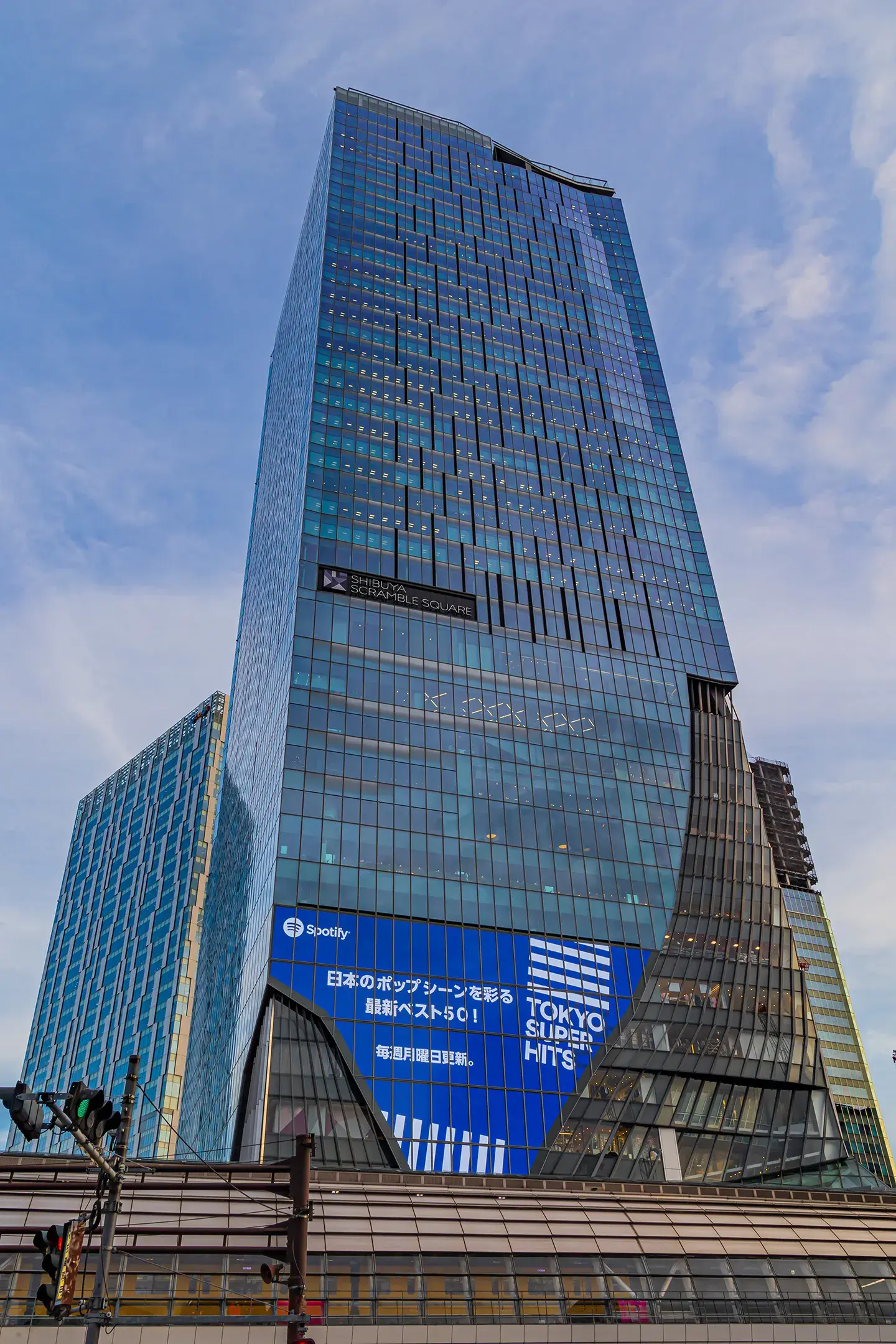
Shibuya Sky occupies four levels of Shibuya Scramble Square. According to the operator's February 2025 press release, the ticket counter is on the 14th floor, the indoor observation floors are the 45th and 46th, and the open-air deck is on the roof. The operator divides the visit into three zones: SKY GATE, the transition space from the 14th to the 45th floor; SKY GALLERY, the indoor observation corridor on the 46th; and SKY STAGE, the rooftop, which it describes as one of the largest rooftop observation spaces in Japan. The same release gives the rooftop about 2,500 square meters and the indoor floors about 3,000, and describes the view from the top as a 360-degree panorama from the highest point in Shibuya. Its message for the facility reads, in Japanese, "Tenbō seyo. Shibuya, sekai, jibun, mirai": look out over Shibuya, the world, yourself, the future.
The tower itself is the first phase of a larger project. The release lists the East Tower at 47 floors above ground and 229.7 meters high, opened on November 1, 2019, and names the design architects for the Shibuya Scramble Square project as Nikken Sekkei, Kengo Kuma and Associates, and SANAA. Opening hours are 10:00 to 22:30, with last admission at 21:20.
SKY GATE and SKY GALLERY: The Indoor Floors
The ride up is part of the design. GOOD LUCK TRIP's guide to Shibuya Sky describes the elevator to the 45th floor, called TRANSITION POD, as a car with images on its ceiling and three-dimensional sound, which it likens to a prologue to the visit.
SKY GALLERY on the 46th floor is the indoor observation corridor, with a souvenir shop and a cafe-bar, Paradise Lounge, whose interior the same guide credits to the designer Tom Dixon. Seasonal exhibitions also run here: the operator's release announced "Flower View," giant art flowers in the corridor, for spring 2025. The practical point is that this floor stays open when the roof does not. The operator states that the 46th-floor indoor corridor operates even when the roof is closed, so a windy day costs you the open air but not the view.
SKY STAGE: What the Rooftop Allows and Forbids
The roof has no ceiling and no glass overhead. At the northwest corner, an area called SKY EDGE is built lower than the rest of the edge so that you can look straight down at the Shibuya Scramble Crossing, as nippon.com describes it, and Rakuten Travel notes that nothing stands between your face and the view there. There are also hammocks set into the deck, where you can lie back and watch clouds pass.
That openness is the reason for the rules, and they are strict enough to change how you dress. The Tokyo Metropolitan Government's tourism site GO TOKYO lists what cannot go onto the observation space: travel luggage, food, drink and animals. Loose hats, earphones, tripods and selfie sticks are prohibited as well. Phones, glasses and cameras are allowed if they have a strap or fit in a pocket, and everything else goes into lockers on the 46th floor; larger luggage belongs in the lockers around Shibuya Station. Rakuten Travel's visitor guide says bags and hats go into the lockers, and adds that if your clothes have no pockets, the information desk lends a bag for the purpose. Wear something with a zip pocket and leave the large camera bag at the hotel.
Shibuya Sky Tickets: Prices, the Two-Week Window and Cancellation
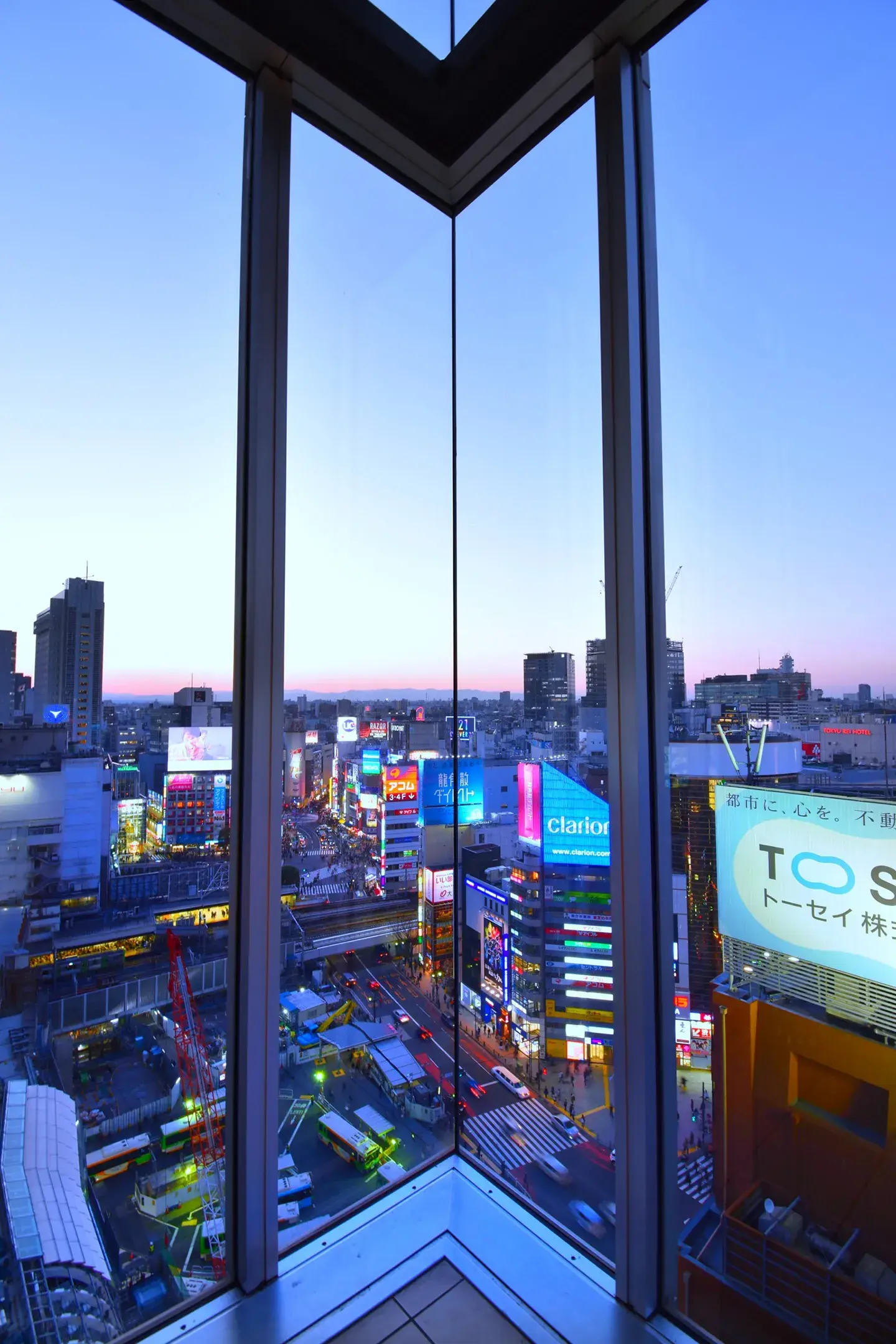
A Shibuya Sky ticket is for a specific date and a specific entry time, set in 20-minute slots. The operator revised its ticketing for visits from April 1, 2025, and its release sets out the current structure:
- Online, adult (12 and over): 2,700 yen for entry from 10:00 to 14:59, and 3,400 yen for entry from 15:00 to 21:20.
- At the counter, adult: 3,000 yen before 15:00 and 3,700 yen from 15:00, when tickets remain.
- Children aged 6 to 11: 1,200 yen at any time, sold at the counter only. A 12-year-old still in elementary school counts as a child.
- Under 6, and 6-year-olds not yet in elementary school: free.
Online tickets go on sale at midnight Japan time two weeks before the date of entry. Online tickets can be canceled free of charge up to the day before your visit; counter tickets cannot be canceled. GO TOKYO adds that when adult tickets sell out online, they are not available at the counter either, so the counter is a fallback for a quiet weekday, not a plan for a sunset in high season.
Two rules in the same release change which ticket to buy. First, the operator sets no limit on how long you stay once inside, though you cannot re-enter after leaving. Second, the price steps up at 15:00. Put those together and the winter months offer something the price table does not advertise. GO TOKYO puts sunset in Tokyo at about 16:30 in early December and notes that the time about 30 minutes before sunset is usually a popular one, with a queue. An entry slot just before 15:00 avoids competing for that slot and its queue, and because no one asks you to leave, it still puts you on the roof through sunset and into the first city lights, at the lower rate as well. In June and early July, when the sun sets nearer 19:00, the same approach means four hours on the deck before the light changes, and a later slot fits the day better.
Families need one more piece of planning. Because children's tickets are sold only at the counter on the day, a family can book the adults online and buy the children's tickets on arrival at the 14th floor.
When the Rooftop Closes
The release is direct about the weather. The rooftop and the 46th-floor outdoor area may be closed for rain, lightning, strong wind, or high temperatures, the last as a precaution against heatstroke. It introduced a matching rule: if the roof is closed at your designated entry time, an online ticket can be canceled free of charge on the day, up to the point you enter, though after a certain time past your slot it can no longer be canceled. The operator posts whether the roof is open on its official site and its official X account.
The roof, or regular viewing, can also be limited by the facility's own programs. For a night music event on April 28, 2026, the operator's March 2026 release stated that the rooftop and the 46th-floor outdoor area would be closed to visitors for the day, and its 2025 release, announcing a spring exhibition, warned that regular viewing may not be possible on special operating days during the event. Before you buy, check the official site for event days as well as the forecast.
Best Time to Visit Shibuya Sky: Sunset, Night and New Year's Dawn

GO TOKYO's advice is to book for about 30 minutes before sunset, and it warns that this is usually a popular time, so allow extra time for the queue. That timing gives you the city in daylight, the sky changing color over the western horizon, and the switch to night lights, all from one ticket. On a clear day, Mount Fuji appears to the west, and at sunset it stands out as a dark cone against the glow, as in the photograph above.
Daytime has its own case. Morning and midday slots are cheaper, and daylight is when you can pick out the landmarks named in the section below. The roof has little shade, and since a hat may have to wait in a locker, sunscreen is the safer answer in summer.
The rarest time is dawn on New Year's Day. The operator's March 2026 release lists New Year's Day as the facility's closing day, yet it has held a special first-sunrise opening, sold separately. The Shibuya Keizai Shimbun reported that on January 1, 2025, the deck opened at 5:30 a.m. in the dark, that the 330 tickets prepared had sold out, and that the sun began to rise at about 6:49, slightly earlier than expected. Watching the first sunrise of the year, hatsuhinode, is an old Japanese custom, and the morning can go on to hatsumode, the first shrine visit of the year; our guide to hatsumode in Tokyo covers the second half of that morning.
CROSSING LIGHT After Dark

After dark, the roof marks time with light. CROSSING LIGHT is a show of light and sound in which beams rise from the deck into the night sky. In 2023, nippon.com described it as running every 30 minutes from 7 p.m. to 10 p.m., and Rakuten Travel's guide also describes it as a light-and-sound show held once every 30 minutes from 7 p.m. Seasons change what that means for a sunset visit. In midsummer, when the sun sets near 19:00, the first show follows almost at once; in early December, with sunset near 16:30, it is about two and a half hours away. Check the schedule on the official site before you plan around it, since special events can change the night program. The operator's 2025 release also names its recurring programs, among them ROOFTOP astronomical observation, stargazing on the roof, and says most of its cultural programs can be joined with that day's admission ticket.
What You See From Shibuya Sky, Direction by Direction

Turn a full circle on the roof and the city falls into four quarters: Shinjuku's skyscrapers to the north, Tokyo Tower and Tokyo Skytree to the east, Tokyo Bay to the south and Mount Fuji to the west, by nippon.com's account, with the Imperial Palace among the sights toward the northeast according to GO TOKYO. Closer in, the oval roof of the Japan National Stadium is easy to pick out among the city blocks.
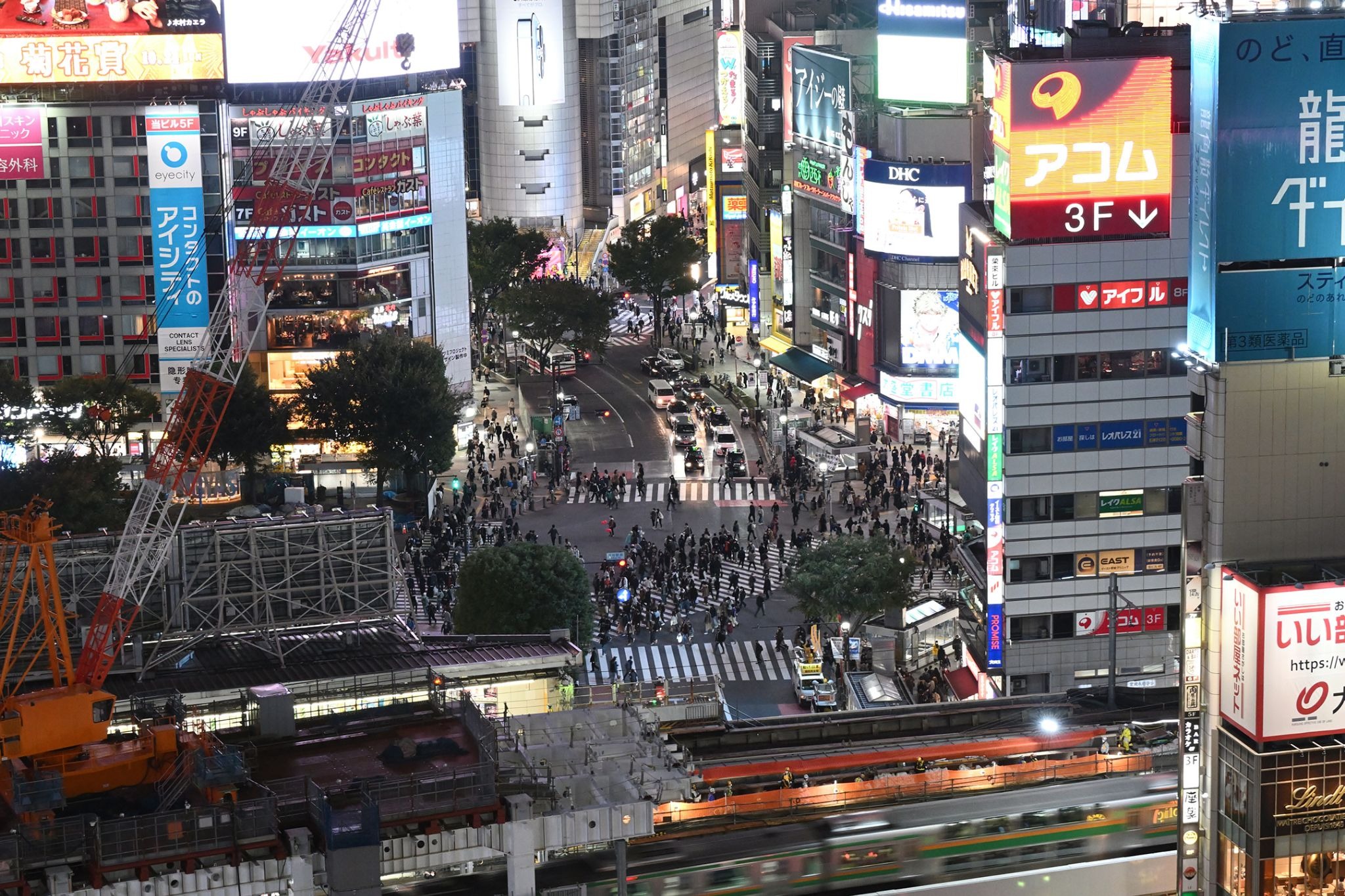
The view most visitors came for is straight down. As many as 3,000 people can cross the Scramble Crossing on a single green light, according to the same nippon.com article. From SKY EDGE, the crossing becomes a pattern: the crowd waits on every corner, floods the intersection when the signals turn, and drains away before the cars move again. At street level you are inside that crowd; from 229 meters you see its whole shape, the diagonal lines included, at once.
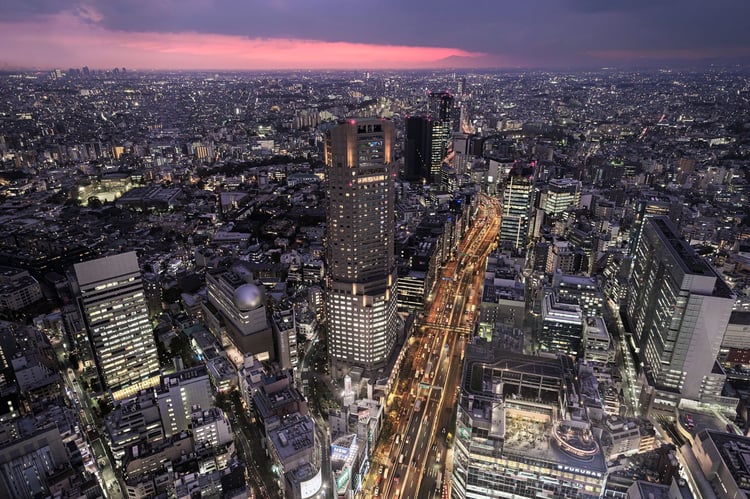
For photographs, the deck rewards two choices. Pick the northwest corner for the crossing, and the west side for the sunset and Mount Fuji. Keep the camera or phone on its strap; the rules exist because the wind at this height is real.
If the view leaves you wanting to see Shibuya at street level with an eye for its architecture and food, our guide to things to do in Shibuya picks up where the deck leaves off, and our architecture tour of Tokyo covers buildings across the city that you can see from the roof.
The Ground Beneath Shibuya Sky Was a Railway Terminus
An earlier version of this guide said that Shibuya Sky stands on the site of the Tokyu Bunka Kaikan, the cultural center whose Gotoh Planetarium was a Shibuya landmark, and that the deck continues its role. The location was wrong. The archive of Shibuya's history kept by Sumitomo Mitsui Trust Realty, Kono Machi Archives, records that the Bunka Kaikan opened in front of the station's east exit in 1956, was demolished in 2003, and that its site became the Shibuya Hikarie tower in 2012. Tokyu's official company history confirms that Hikarie was developed on ground that included the former Bunka Kaikan site and opened on April 26, 2012. The planetarium's ground is across the street, under Hikarie.
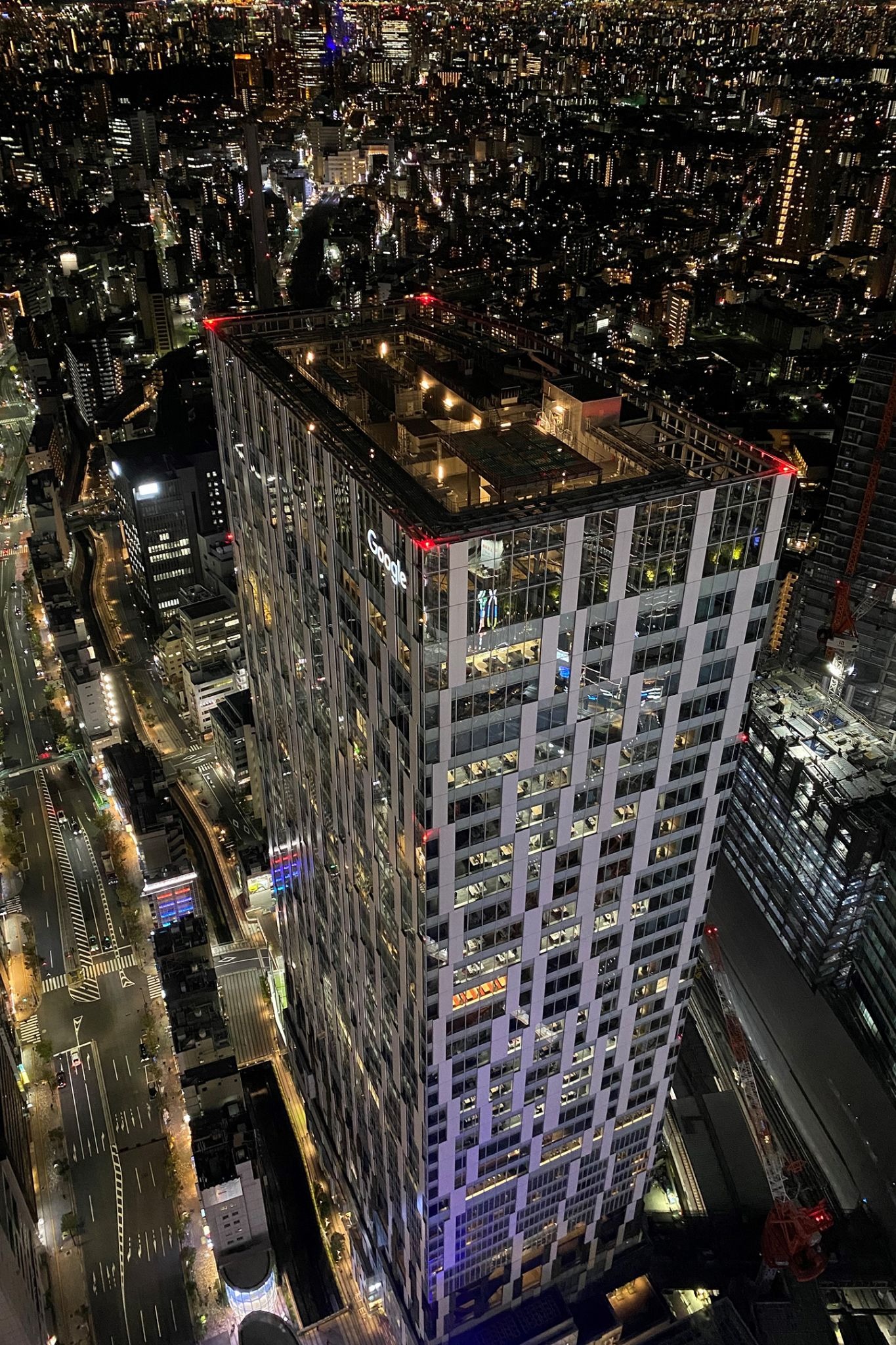
What actually lies under Shibuya Sky is the history of the railway that made Shibuya. The same archive's page on the station records that in 1934 the Toyoko Department Store opened as the Kanto region's first terminal department store run by a private railway, built straddling the Shibuya River on a narrow plot, with the Toyoko Line's dead-end platforms connected to its second floor. The terminus and the store were built as one. WWD Japan reported, in a piece written before the opening, that the first tower of Shibuya Scramble Square stands on the site of that store's East Building, which closed in 2013, and Kono Machi Archives places the tower on the northern part of the old above-ground Toyoko Line station.
That station ended in one night. On March 16, 2013, as Norimono News recounts, the Toyoko Line's platforms moved underground to join the Tokyo Metro Fukutoshin Line, after about 85 years at street level. The old four-track terminus was demolished, and the southern part of its site became the Shibuya Stream tower, completed in September 2018, which you can look down on from the roof. The underground move freed the ground; the department store's closing the same year cleared it. The rooftop you stand on is the top of what the project's three developers, the railway companies Tokyu, JR East and Tokyo Metro, built in their place.
The planetarium did leave something behind that you can visit. Tokyu reported in a February 2026 article that the projector used at the old Gotoh Planetarium is preserved on display on the second floor of the building that houses Cosmo Planetarium Shibuya, the city's present planetarium. The same article gives the Gotoh Planetarium's closing year as 2001, two years before its building came down.
The project is not finished. In February 2025 the operator listed the second phase of Shibuya Scramble Square, a central and a west building, as scheduled for fiscal 2027. Its March 2026 release lists the same phase for fiscal 2031. The cranes you see around the station from the roof belong to a redevelopment that is still moving, and its end date has moved with it.