
Most of the Japan itineraries on the first page of results describe the same journey. Tokyo for a few days, then Kyoto, then Osaka, with Hakone or Nara inserted according to taste. The agreement is so complete that it looks like consensus about what is worth seeing.
It is not consensus. It is a railway line, and it was opened on a particular day. Understanding that does not mean you should avoid the route — it is a good route — but it does change what you are choosing when you choose it, and it explains why the alternatives feel harder than they are.
There is a second thing worth fixing before you start moving days around. Itineraries are written in days, and days are not the unit that runs out. What runs out is the number of days that are not partly consumed by getting somewhere. Seven nights, which is close to what the average leisure visitor actually has, is a very different trip depending on whether three of those days are travel days or one is.
So this article does three things: it shows where the standard route came from, it counts the travel days honestly, and it sets out what leaving the line actually costs. Figures carry the date we read them on.
The Tokaido Shinkansen Underneath Every Japan Itinerary
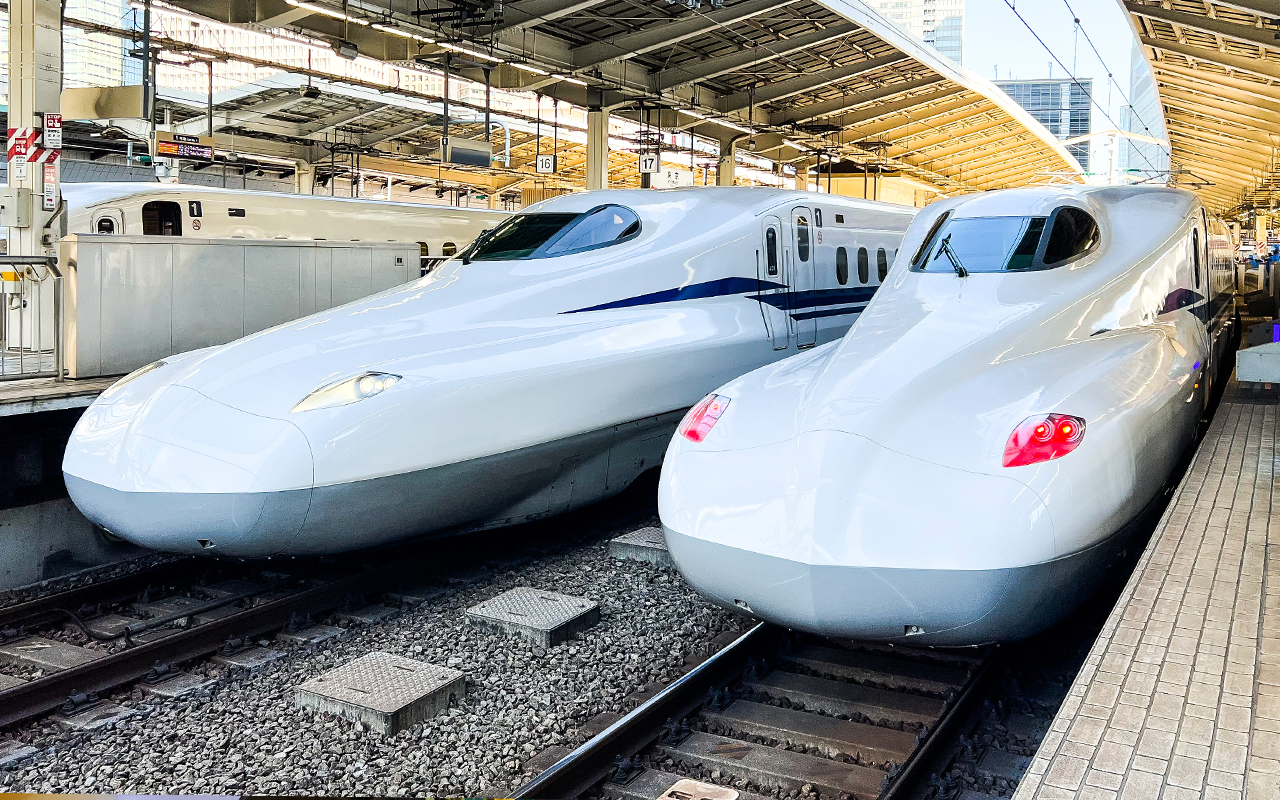
The National Archives of Japan says that the Tokaido Shinkansen, between Tokyo and Osaka, opened on 1 October 1964. It records something else in the same breath, which is easy to skim past: in view of the fact that the new trains could run at 200 kilometres an hour or more, a special law was enacted on the punishment of acts obstructing the safe operation of trains on the Tokaido Shinkansen Railway. The document the archive displays is the file from the Cabinet Legislation Bureau's review of that bill. We read the page on 12 September 2026.
That, on our reading, is the origin of the itinerary you have been reading. On our reading, the cities the line joined became the cities a first visit contains — not because anyone ranked them, but because they were on it. The guidebooks that followed described the consequence, and it has been read as a recommendation ever since.
What the Archive Actually Records About the Line
The line joined Tokyo and Osaka. The cities a standard itinerary visits run from one of those points to the other, with Kyoto in between, which is a fact about the map rather than about the timetable. We are going to stop there, because this is exactly the kind of claim that gets padded out without a source. The archive page gives the date, the two end points, the speed and the law. It does not give the distance, the journey time before and after, or the construction cost, and the figures that circulate for those are not ones we have confirmed against a public record, so we are leaving them out.
What can be said without any of that is enough. A fast line existed between Tokyo and Osaka from 1964, and it did not exist before. On our reading, the order in which visitors see Japan is downstream of an engineering decision rather than of a judgement about what a traveller should want.
A Japan Itinerary Counted in Transfer Days, Not Sights

Here is the part that changes plans. Start from what the average trip actually is rather than from the two-week itinerary that gets written about.
The Japan Tourism Agency's confirmed figures for the 2025 calendar year, published on 31 March 2026 and read by us on 12 September 2026, carry two averages, and the difference between them matters more than either. Across all purposes of visit the average stay, on the confirmed figures, and excluding cruise passengers, was 9.5 nights, up 0.5 on the previous year. For visitors travelling for sightseeing and leisure it was 7.1 nights, up 0.3. The first figure includes business travel and visits to relatives; the second is the one that describes the trip this article is about. The agency notes that both are calculated from the entry and departure dates. That means they measure the whole stay rather than the sightseeing part of it.
The spread underneath the leisure average is wider than the average suggests, and it is the more useful number. Travelling for sightseeing and leisure, the leisure table gives visitors from Korea an average of 3.4 nights, from Taiwan 5.6, from Hong Kong 6.0, from the United States 10.7, from Canada 12.5, from Australia 13.2. If you are reading this from North America or Australia you are at the long end of that range, and the standard three-city itinerary assumes a length of stay that the shorter end of that range — Korea at 3.4 nights, Taiwan at 5.6, Hong Kong at 6.0 — does not have.
A First Time Japan Itinerary Loses Half Days You Cannot Get Back
A travel day is not a lost day, but it is not a whole one either. Checkout is in the morning, check-in is in the afternoon, and the hours in between are spent with luggage. Three cities means two of those days, not three, because you do not move on the first day or the last.
The arithmetic that follows is ours rather than the agency's, and we will label it as such. Count each move as half a usable day. At the leisure average of 7.1 nights, three cities costs one day of the seven, or about 14 per cent. A fourth city takes it to a day and a half, or 21 per cent. A fifth takes it past a quarter of the trip. There is a point at which the itinerary starts to be about the itinerary, and at seven nights it arrives at the fourth city.
What to do about the luggage on those days is a separate question with a real answer, and it belongs to a separate article rather than this one.
Where the Money Goes, and What That Says About Moving
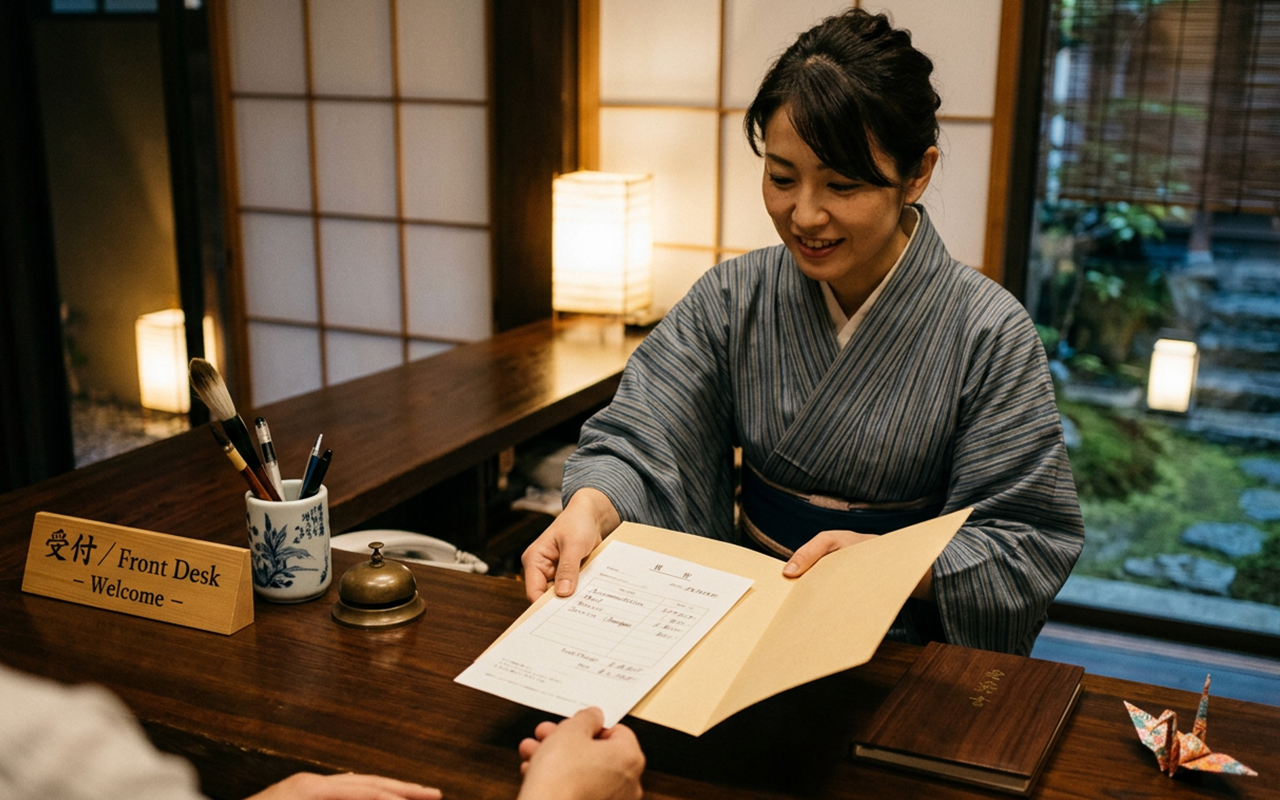
There is a belief that travelling within Japan is the expensive part of a Japanese trip. The same confirmed figures say otherwise, and the correction is worth carrying because it changes what you optimise.
Take the table for visitors travelling for sightseeing and leisure, which is the one this article has been using. Excluding cruise passengers, the Japan Tourism Agency describes accommodation at 80,712 yen per head, shopping at 61,830 yen, food and drink at 48,777 yen, transport within Japan at 23,226 yen, and entertainment and services at 9,918 yen. Transport is less than a third of what goes on rooms.
The shares tell the same story at the level of the whole. According to the Japan Tourism Agency's confirmed figures, across all inbound spending, accommodation is 36.6 per cent, shopping 27.0, food and drink 21.9 and transport 10.0. We read both tables on 12 September 2026.
Read against the travel-day arithmetic, that has a clear implication. The cost of moving is mostly not money; it is hours. Optimising an itinerary for cheap transport while adding a city is solving the small problem and creating the large one. The reverse — fewer moves, longer stays, whatever the fare — buys back the resource that is actually scarce.
Our guide to day trips in Tokyo, Yokohama, Osaka and Kyoto sorts the same problem by base rather than by sight. A day out of a base is not a travel day on our arithmetic, because the luggage stays where it is.
Leaving the Line: Model Tourist Areas and What They Cost in Time
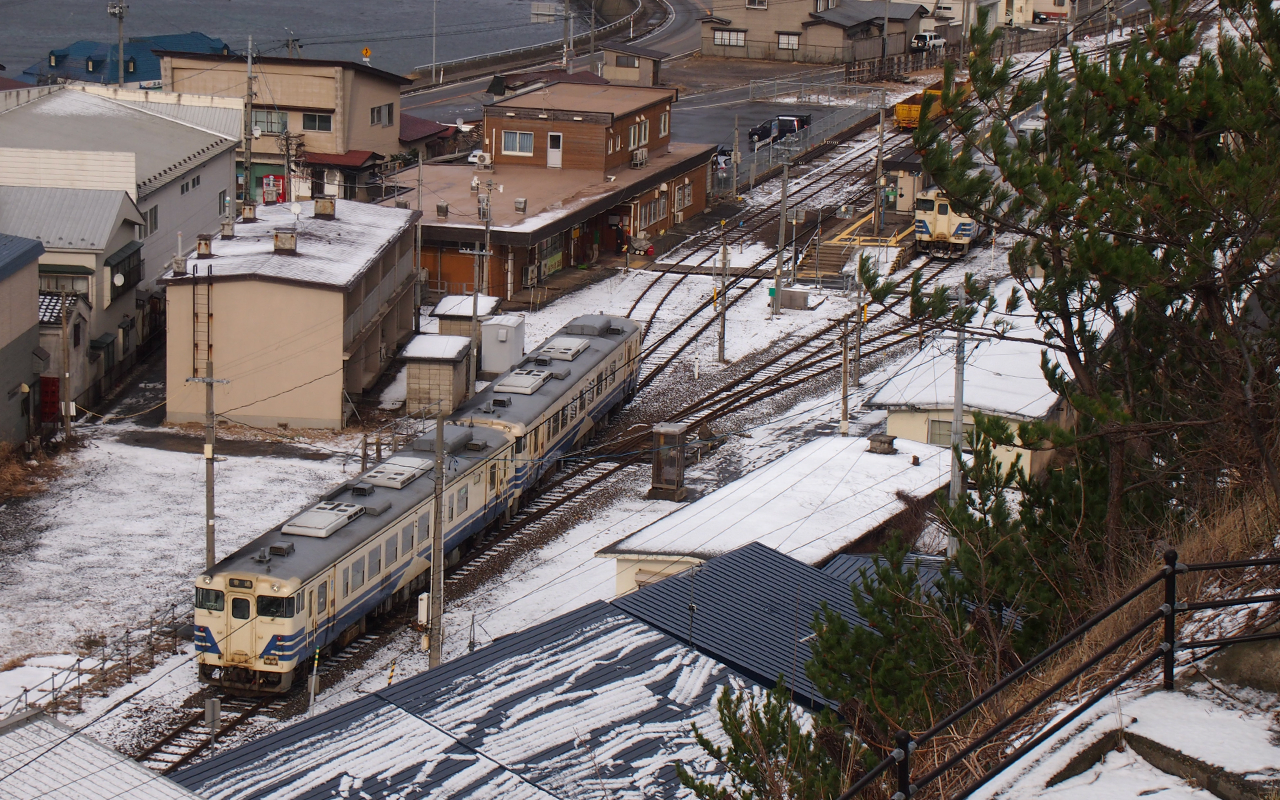
Everything above argues for fewer bases rather than more, which raises the obvious question of whether one of those bases should be somewhere the line does not go.
The honest answer is that swapping one base for another does not add a move. Three bases are three bases wherever they are. What changes is the length of each leg, and we are not going to put a number on that, because journey times vary by destination and we have not checked them one by one. Inserting a fourth stop rather than swapping one is the expensive version: one more move, half a day, taking the total to the day and a half the arithmetic above already counted.
The government has put money behind exactly this problem, and the way it describes the problem is worth reading if you are the kind of traveller this article is written for. The notice announcing its first eleven model tourist areas was published on 28 March 2023, and we read it on 12 September 2026. In it the Japan Tourism Agency writes about so-called high-value travellers, defined in a footnote as visitors spending a million yen or more per person at the destination. On the 2019 figures the notice works from, they were about 1 per cent of all inbound visitors, some 290,000 people. They accounted for about 11.5 per cent of spending, 552.3 billion yen. It then says the difficulty is that this spending is concentrated in shopping in the large metropolitan areas and is thin in the regions.
The eleven areas named in the Japan Tourism Agency's notice are, in the order it gives them: East Hokkaido, Hachimantai, Nasu and its surroundings, Matsumoto and Takayama, Hokuriku, Ise-Shima and its surroundings, southern Nara with Nachikatsuura in Wakayama, Setouchi, Tottori and Shimane, Kagoshima with Aso and Unzen, and Okinawa with Amami. Southern Nara here is the Yoshino side, which is our gloss and not the notice's; the notice names the area only. Three more were added on 27 September 2024, on a page we read on 12 September 2026. We have not checked those three, so what follows is about the original eleven. Read alongside the 1964 line, not one of the eleven is a city the standard itinerary uses — southern Nara being the prefecture's southern end, not Nara city. Several of them are on later Shinkansen lines, so this is not a list of places without fast trains. It does treat getting there as part of the problem. The action plan it reports on frames the work under five headings, and the last of them is ashi — the legs, meaning how you get around once you are there.
What makes it worth the arithmetic is that the trade is not between the same things. A day given to a fast line buys you another famous city. A day given to leaving it buys a category of place that the itinerary you were handed cannot contain at all. Our guide to Matsumae and Kanazawa and our Tokyo-to-Okinawa route both work at that scale.
We are not going to tell you that the quiet places are better. Some are, some are a long way to go for a village. What we will say is that the choice is a real one and it is being obscured by itineraries that present the line as a preference.