In this guide to sophisticated day trips from Kyoto, you’ll discover model itineraries you can comfortably complete as round‑trips while savoring the ancient capital’s quietude and cultural richness.
Each journey is meticulously designed to deliver genuine intellectual satisfaction within limited time. Through encounters with historic architecture, the arts, and superb cuisine, you’ll deepen your appreciation of place. Step away from urban noise, engage directly with cultural heritage, and return with insights—and a lasting sense of fulfillment.
Day Trips from Kyoto|Concept and Value
If you’re driven by curiosity, a culture‑focused day trip from Kyoto is a rare chance to learn and be moved in a short span. More than entertainment, travel that encourages you to study cultural assets offers inspiration while contributing to local vitality (*1). Because travel times are short and efficient, you can enjoy your day with a relaxed mind—even on a tight schedule.
Another advantage is route design that favors public transport and walking on site, maximizing time in quieter places. Within each model course, experiences at historic temples, shrines, and museums invite you to deepen your understanding. When a Kyoto day‑trip route balances intellectual depth, time efficiency, comfort, and environmental consideration, it truly earns its value.
Route Selection Criteria(Cultural Depth × Transit Efficiency × Quietude × Seasonality)
The routes in this guide were chosen using four criteria: cultural depth, transit efficiency, quietude, and seasonality.
First, cultural depth refers to how fully a destination lets you encounter National Treasures or Important Cultural Properties—and learn the historical context and artistry unique to that place. At ancient temples, for example, you can read architectural styles and the characteristics of Buddhist sculpture; at local archives and museums, you can delve into traditional crafts and everyday culture.
Second, transit efficiency means you can comfortably visit round‑trip from Kyoto Station (or another starting point) within a day, minimizing time in transit. Because you’ll move between several sites with short hops, most of your time stays devoted to on‑the‑ground experiences.
Third, quietude is about avoiding crowds so you can absorb a serene atmosphere. Aim for early morning or late afternoon at famous sites—and combine lesser‑known temples and gardens—to step away from the bustle and engage with culture in peace.
Finally, seasonality: each course is attuned to what shines in spring cherry blossom, fresh greens in the rainy season, autumn foliage, or winter scenery. Visiting a temple renowned for blossoms in spring, or a foliage icon in autumn, lets you feel the season in your bones.
We’ve also built in rainy‑ or scorching‑day alternatives—indoor facilities such as museums or temple halls—so itineraries are less weather‑dependent. Guided by these criteria, we selected day trips that balance cultural richness with comfort.
Five Curated Model Courses|Day Trips from Kyoto
From here, you’ll find five concrete model courses. Each follows a flow of “Orientation → On‑site Experience → A Place for Reflection → Quality Dining,” so you can deepen your knowledge and refine your sensibilities over the course of a single day.
Themes range from ancient history and Buddhist art to tea culture, mountain ascetic traditions, castle architecture, and the stories of merchant towns. Every course departs Kyoto in the morning and returns by evening. Ready? Let’s set out on five journeys that will delight your curiosity.
1 Nara|A Route to Read the Spiritual History of the Ancient Capital and Buddhist Art
Course Overview(Kyoto Station → Kofuku‑ji National Treasure Museum → Todai‑ji Great Buddha Hall & Nigatsu‑do → Isuien Garden → Nara National Museum → Naramachi Stroll → Kyoto Station)
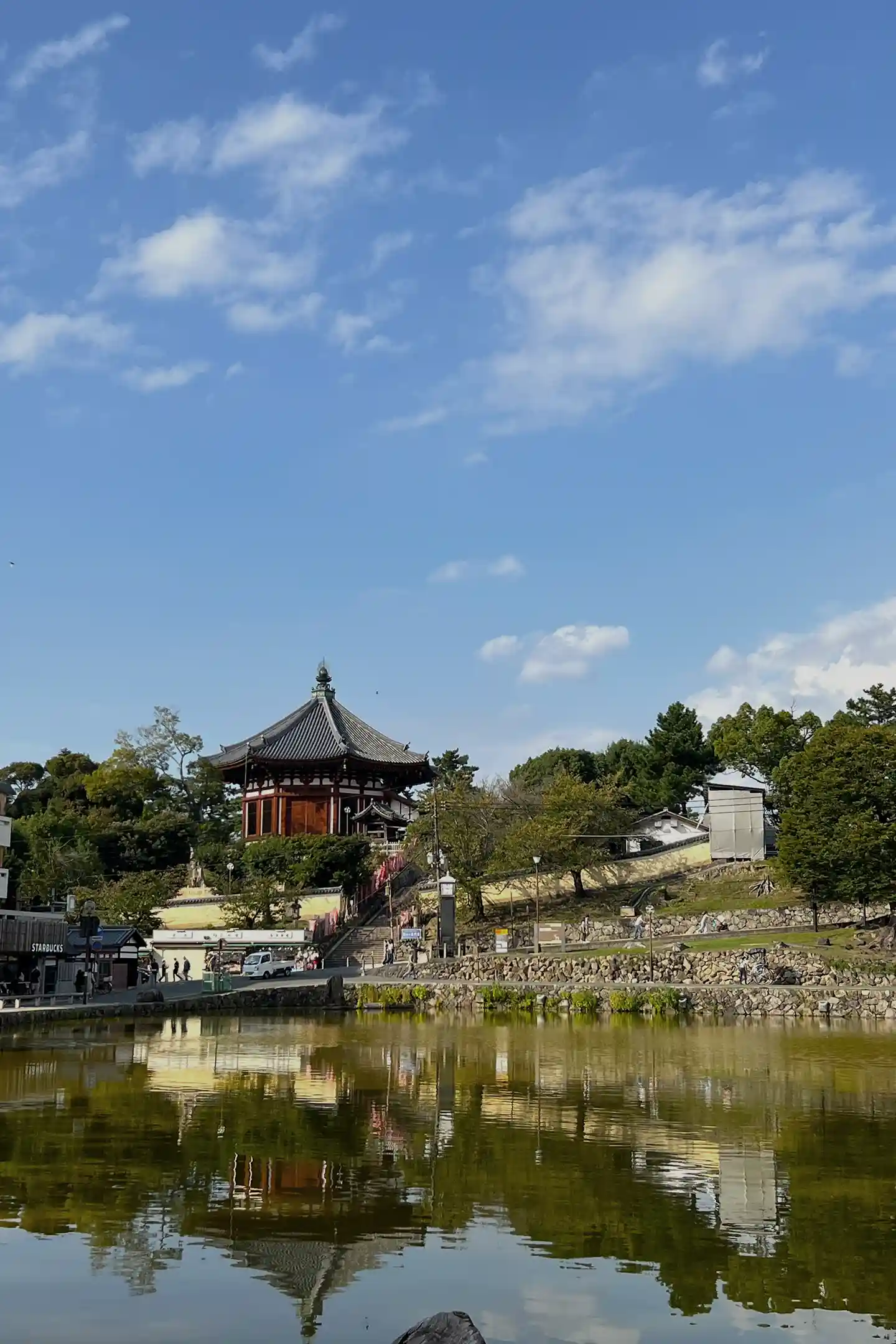
Trace the spiritual history of ancient Nara by walking the core zone of Heijo‑kyo, Japan’s capital in the Nara period. It’s about 35 minutes from Kyoto Station to Nara by Kintetsu limited express, making this one of the most essential day trips from Kyoto. Your first stop is Kofuku‑ji. At the Kofuku‑ji National Treasure Museum, you’ll be welcomed by precious Nara‑period Buddhist sculptures, including the famed Ashura. As your introduction to Buddhist art, start by reading the expressions and forms of these statues—their messages run deep.
Next, walk to Todai‑ji and encounter the overwhelming scale of the Great Buddha (Rushana). Built as a national project, the statue symbolizes the union of politics and faith in the Nara period and embodies prayers for the peace of the realm. Then climb to Nigatsu‑do behind the Great Buddha Hall. From the hilltop terrace, take in the Nara Basin and sense the scope of ancient urban planning.
After a morning rich with learning, pause at Isuien Garden just north of Todai‑ji. This strolling pond garden masterfully frames the South Great Gate of Todai‑ji and Mount Wakakusa as “borrowed scenery,” creating a view of rare harmony. Wrapped in stillness, let the beauty of the garden slow your breathing as you sink into the timelessness of the old capital—city clamor falls away.
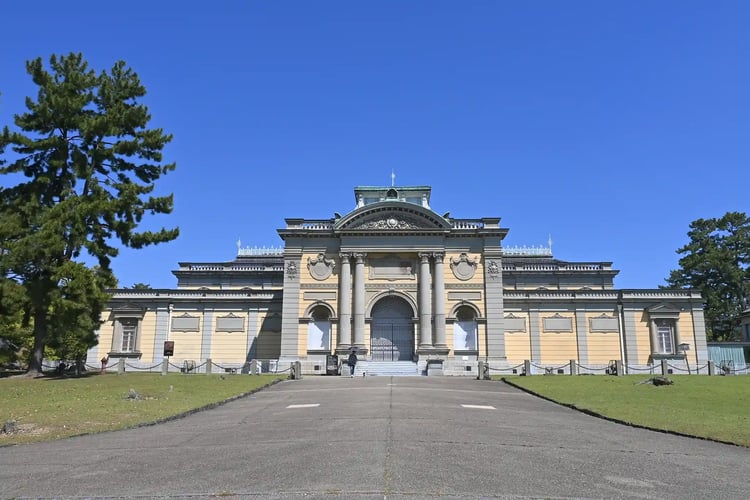
In the afternoon, head to the Nara National Museum, dedicated to Buddhist art. With works tied to Kofuku‑ji and Todai‑ji well represented, your morning visits come into even sharper focus. Finish with a wander through the Naramachi district, where Edo‑period townhouses line the streets along with second‑hand bookshops, craft stores, and sweet cafés—an intimate glimpse of life in the old capital. After enjoying the lanes, return to Kyoto from Kintetsu Nara Station or JR Nara Station.
Highlights & What You’ll Learn
The pinnacle of the Nara course is the moment you face the National Treasure Ashura at the Kofuku‑ji museum. With three faces and six arms, Ashura is a god of conflict rendered as a youthful figure whose slightly furrowed brow conveys a tender melancholy. Rather than an imposing war deity, he appears as a beautiful youth touched by sorrow—an interpretation often linked to conversion to Buddhism and deep remorse(*1).
At Todai‑ji, the Great Buddha (Rushana) is a bronze colossus about 15 meters high, erected under Emperor Shomu’s fervent wish to “protect the nation through the power of the Buddha.” For the eye‑opening ceremony in 752, people gathered from across the country; records suggest roughly 2.6 million person‑days were involved—nearly half the population at the time(*2). Standing before its grandeur, you’ll feel the Nara period’s sweeping scale, when state and religion moved as one.
At Isuien, pay attention to the garden technique of shakkei, or “borrowed scenery.” Distant Mount Wakakusa and Mount Kasuga—and even the neighboring South Great Gate of Todai‑ji—are all drawn into the composition. Blossoms, foliage, and sky reflect in the pond, uniting into a luxurious space quintessentially Nara(*3).
Sit quietly and gaze at Nara’s mountain ridgeline across the garden; it invites you to imagine the Pure Land world that Heian aristocrats once longed for. To close the day, enjoy wagashi and matcha at a townhouse café in Naramachi and linger in the afterglow of a day spent contemplating Nara’s history.
2 Uji|Learn the Total Art of “Tea” with All Five Senses
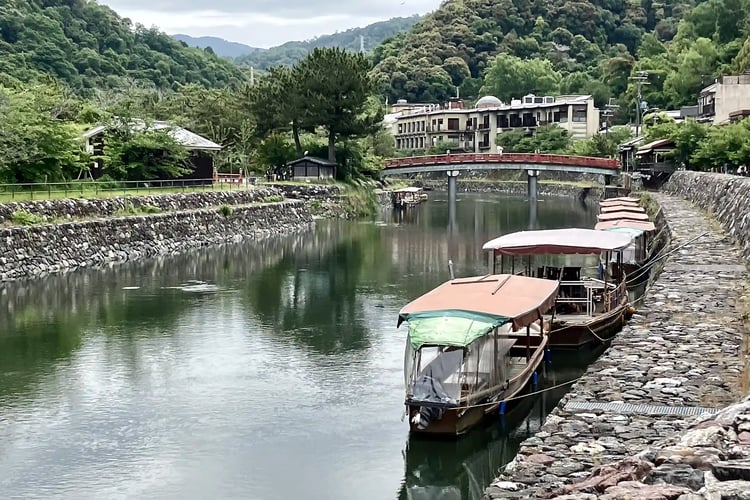
Course Overview(Kyoto Station → Byodoin Phoenix Hall → Tea Workshop [Tea Ceremony Experience] → Uji Riverside Walk → Pottery Gallery → Kyoto Station)
In Uji—renowned since the Heian period for exceptional tea—you’ll immerse yourself in the culture of chanoyu. About 30 minutes by train from Kyoto Station, begin at World Heritage–listed Byodoin. The Phoenix Hall, dedicated to Amida Nyorai, sits within a Pure Land garden centered on Aji‑ike Pond, a landscape conceived to recreate on earth the paradise envisioned by Heian nobles. Lotus blossoms on the water and blue sky mirrored alongside the hall’s vermilion conjure a living Pure Land painting—a serene tea‑town day trip from Kyoto.
Next, at a long‑established tea workshop, learn how to whisk matcha and enjoy a bowl in a tearoom (advance reservation required). Being taught how to handle the bowl and the whisk, then savoring tea you prepare yourself, is a small revelation.
Even within “Uji matcha,” terroir and production methods produce nuanced differences. Tasting side by side lets you learn these distinctions with all five senses. After the mindful focus of whisking and tasting, wander along the Uji River.
Paths lined with cherry trees and foliage spots unfold along the banks, changing with each season. Drop into a ceramics gallery en route and handle fine chawan for tea; you may also encounter works by potters from nearby Shigaraki, whose kilns have shaped the region’s aesthetics. After enjoying this storied tea town, return to Kyoto from Uji Station.
Highlights & What You’ll Learn
The highlight in Uji is the harmony of the Phoenix Hall and its Pure Land garden. The hall, Aji‑ike Pond, the Uji River, and the gentle mountain backdrop merge into a scene that mirrors the Pure Land ideal people of the Heian period sought to realize here and now. Witnessing a garden that has spanned a millennium invites reflection on time itself(*4).
Uji also offers a rare, sensory education in matcha. In a guided tasting you’ll compare Uji matcha with teas from other regions and be surprised by subtle differences in aroma, umami, and astringency. Thanks to Uji’s climate—marked by cool nights and warm days—and the traditional technique of growing shaded tea leaves, Uji tea is celebrated for mellow depth and a graceful bouquet, often called “Japan’s representative fine tea”(*5). As you taste, you’ll also notice how important the tools are: the shape and texture of the bowl, the delicacy of the whisk, and the rhythm of each gesture all affect flavor and feeling—this is why chanoyu is considered a total art. To cap your visit, treat yourself at a venerable tea house to thick‑matcha gelato or a matcha parfait. Saturated in tea culture, you’ll come away with a multisensory understanding of history and craft.
3 Otsu & Mount Hiei|Lake Biwa Waterscapes and the Dynamics of Sacred Architecture
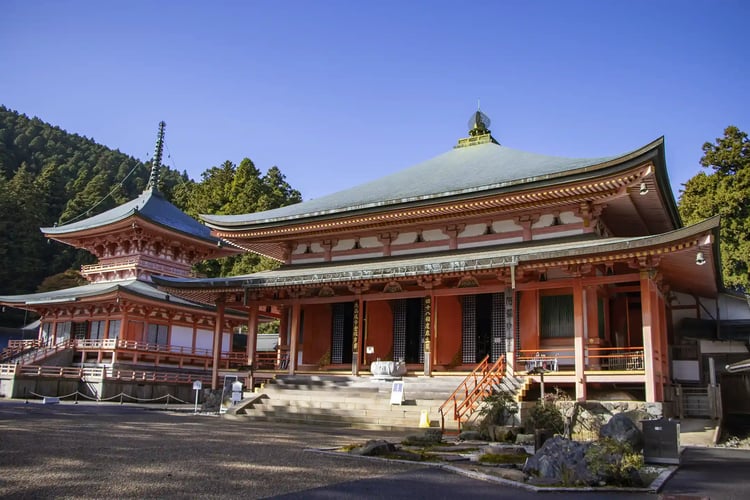
Course Overview(Kyoto Station → Enryaku‑ji [Toto & Saito] → Hiyoshi Taisha → Miidera (Onjo‑ji) → Lake Biwa Canal (Otsu) → Kyoto Station)
On this course around sacred Mount Hiei and the lakeside city of Otsu, you’ll experience an ancient religious landscape alongside the legacy of modern industry.
From Kyoto Station, a bus ride of about an hour brings you to Enryaku‑ji on Mount Hiei’s slopes. Founded in 788 by Saicho, Enryaku‑ji is the head temple of the Tendai school, often called the mother mountain of Japanese Buddhism. The vast precincts are divided into three areas—Toto, Saito, and Yokawa—and today you’ll focus on the primary Toto and Saito zones.
In Toto, visit the National Treasure Konpon Chudo. As your eyes adjust to the dim interior, look for the ever‑burning Dharma lamp said to have been kept alight for more than 1,200 years—it’s a moment that quiets the mind. Transfer by shuttle to Saito, where a cedar‑lined path links halls such as Shaka‑do; feel the dialogue between mountain Buddhism and nature.
After learning deeply at Enryaku‑ji, descend by bus to Sakamoto at the foot of the mountain. Hiyoshi Taisha, guardian shrine of Mount Hiei, is a beautiful interplay of vermilion halls and deep green woods. As the protective shrine of the northeast “kimon” direction, it has been revered by emperors and monks for centuries.
Next, take the Keihan line from Sakamoto to Miidera (Onjo‑ji). Founded in the Heian period, Miidera’s spacious grounds feature the National Treasure Main Hall and an elegant belfry, with a sweeping view over Lake Biwa and Otsu.
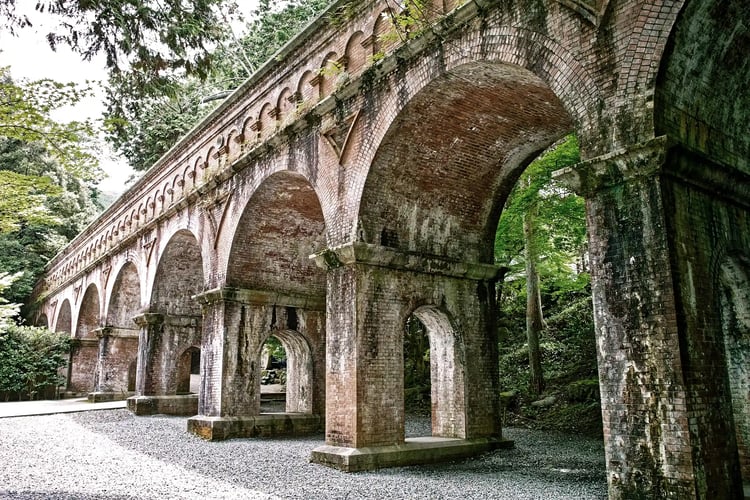
On the way back toward Kyoto, touch the history of the Lake Biwa Canal. Conceived to revive Kyoto after the Meiji Restoration, this grand civil‑engineering project, completed in 1890, drew water from Lake Biwa into the city. It powered Japan’s first commercial hydroelectric railway, restored water transport, secured fire‑fighting reserves, and more—contributions credited with fueling Kyoto’s industrial and cultural flowering(*7). Remnants remain today around Nanzen‑ji and the Keage Incline, preserved as valuable industrial heritage. From Otsu, return to Kyoto via JR or Keihan.
Highlights & What You’ll Learn
What makes this course special is the contrast you can experience in a single day: Enryaku‑ji, where you feel the living history of Japanese Buddhism, and the Lake Biwa Canal, which underpinned Kyoto’s leap into modernity.
Since Saicho established Konpon Chudo to guard the northeast of Heian‑kyo, the Dharma lamp has burned continuously for over 1,200 years. Enryaku‑ji is also the training ground from which the founders of major schools—Honen, Shinran, Eisai, Dogen, and Nichiren—emerged, underscoring its central role in Japanese Buddhism(*6).
In the twilight of the main hall, let the monks’ chanting resonate; you may sense the discipline that has endured since Dengyo Daishi’s time. At Hiyoshi Taisha, reflect on the history of shinbutsu‑shugo—the intertwining of kami and buddhas. The harmony of vermilion architecture and deep forest embodies the mountain faith venerated by Enryaku‑ji’s monks.
At Miidera, explore the Main Hall and treasured artifacts to grasp the breadth of Tendai esoteric art. The layout of the mountain complex and the Pure Land garden atmosphere show how sacred space integrates with the natural world.
In turn, the Lake Biwa Canal reveals the drama of Kyoto’s modernization. Completed in 1890, it pioneered the urban use of electricity in Japan and has carried “life‑giving water” to Kyoto ever since. Considering the ambition of the engineers who realized this project deepens your understanding of modern Kyoto. Witnessing these layered histories in one itinerary is the essence of this course.
4 Himeji|World‑Heritage Castle Architecture and the Culture of a Castle Town
Course Overview(Kyoto Station → Himeji Castle → Koko‑en Garden → Shoshazan Engyo‑ji → Castle‑Town Stroll → Kyoto Station)
Visit Himeji City in Hyogo Prefecture for a course that pairs a world‑famous castle with a mountain monastery. It’s about 45 minutes from Kyoto Station to Himeji Station by rapid train; from there, head to Himeji Castle. Nicknamed the “White Heron Castle,” this elegant stronghold took its present form in the early Edo period under Ikeda Terumasa—an ambitious, yet easy, long‑range day trip from Kyoto.
Enter through Otemon Gate and explore the complex of interlinked keeps centered on the main tenshu. The thick, white‑plastered walls not only protect wooden structures from the elements but also heighten the castle’s graceful silhouette. The maze‑like layout and the gun‑and‑arrow slits in the stone walls were designed to confuse invaders and give defenders every advantage.
As you move through the interior, you’ll sense the builders’ intelligence in its meticulous defensive design. From the top floor, enjoy a 360‑degree panorama over Himeji and as far as the Seto Inland Sea—an unforgettable view fit for a lord.
After the castle, take a lunch break at adjacent Koko‑en, a strolling garden where seasonal flowers and a series of intimate sub‑gardens are artfully arranged, with the castle as borrowed scenery for a leisurely appreciation.
In the afternoon, ride a bus about 30 minutes from Himeji Station to Shoshazan Engyo‑ji, a revered temple complex on Mount Shosha (370 m). A ropeway brings you to the summit; after a 15‑minute forest walk, the great lecture hall, Mani‑do, appears.
Farther along, the celebrated trio of halls—Jogyodo, Jikido, and Daikodo—awaits. Nestled in a quiet ravine, their solemn presence has moved visitors for centuries; the site is also known as a filming location for the Hollywood movie The Last Samurai, a reminder of its international appeal. After an unhurried stroll through the precincts, descend to the castle‑town area around Himeji Station, take in the evening glow on the castle from afar, and return to Kyoto.
Highlights & What You’ll Learn
At Himeji Castle, you’ll revel in both architectural beauty and functional brilliance. The luminous white plaster that catches the blue sky and the layered defenses encoded in the castle’s plan—understanding both deepens your appreciation for the perfection of Japanese castle design(*8).
Himeji’s defenses comprise triple moats and labyrinthine corridors; few castles in Japan deploy such rigorous measures. Balanced elegance and strength have earned Himeji Castle exceptional esteem worldwide.
At Shoshazan Engyo‑ji, the fusion of mountain Buddhist architecture and nature is breathtaking. The three‑hall ensemble feels suspended in time, its stillness leaving a deep impression.
Knowing the temple appeared in The Last Samurai adds a spark of recognition—familiar cinematic imagery comes alive in front of you. Back in the castle town, you’ll also sense the layers of history: samurai and townspeople living side by side, followed in the modern era by Western‑style buildings. Experiencing a medieval castle, a mountain temple, and a modern townscape in one sweep reveals Japan’s cultural depth at a glance.
5 Omi‑Hachiman|Merchant Culture, Waterside Landscapes, and Architecture
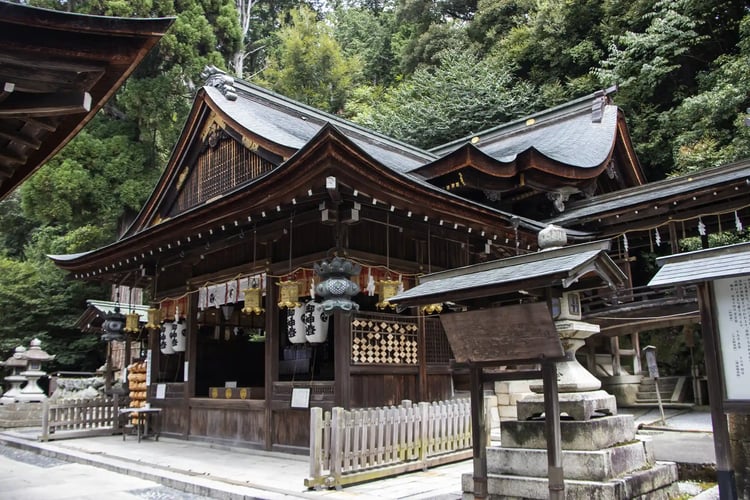
Course Overview(Kyoto Station → Himure Hachimangu Shrine → Hachiman‑bori Canal Walk/Boat → The Vories Architecture Ensemble → La Collina Omi‑Hachiman → Kyoto Station)
In Omi‑Hachiman, Shiga Prefecture, enjoy the harmony of a merchant town’s culture, scenic waterways, and modern architecture. About 30 minutes by train from Kyoto Station, begin at Himure Hachimangu, associated with Toyotomi Hidetsugu. Offer a prayer for safe travels in the forest‑ringed precincts, then head next door to the Hachiman‑bori area—an easy, low‑stress day trip from Kyoto for architecture and history lovers.
Excavated in 1585 by Hidetsugu to encircle the castle town of Hachiman‑yama, the canal connects to Lake Biwa. Stretching about 4.75 km, it functioned as the vital artery that brought people and goods into town and underpinned prosperity. Even after the castle was dismantled in the Edo period, the waterway continued to power logistics and supported the rise of Omi merchants(*9).
Today, stone‑paved lanes lined with white‑walled storehouses flank the canal, now landscaped with promenades and boat tours. As willows and warehouses ripple on the water’s surface and you stroll at an easy pace, the atmosphere feels like stepping into the Edo period. Next, explore the townscape’s other calling card: the buildings designed by architect William Merrell Vories.
In the Traditional Buildings Preservation District around Shinmachi Street, Edo‑period merchant houses stand shoulder to shoulder, while early 20th‑century Western‑style structures punctuate the scene. Hakuunkan, with its white clapboard siding and green window frames, is a classic example of giyōfū—Japanese takes on Western architecture. The interplay of these Western buildings within a traditional townscape is a highlight of Omi‑Hachiman.
Finally, visit La Collina Omi‑Hachiman, a multi‑facility complex by a long‑established wagashi maker. Architect Terunobu Fujimori’s signature grass‑roof building is a striking piece of contemporary design that harmonizes with the surrounding fields. Inside, you can observe wagashi production—a symbol of regional branding that fuses tradition and innovation. Return to Kyoto from Omi‑Hachiman Station.
Highlights & What You’ll Learn
The essence of Omi‑Hachiman is how merchant culture—nurtured by waterways—blends with historic architecture. Thanks to canal traffic, local merchants extended their reach across Japan and abroad.
Guided by the credo “good for the seller, good for the buyer, good for society,” Omi merchants valued community benefit alongside profit, a philosophy known as sanpo‑yoshi(*10). Their ethics and enterprise drove Japan’s economic growth from the Edo through Meiji eras—an outlook with much to teach us today.
The coexistence of Vories‑designed Western structures among Edo merchant houses reveals the town’s openness: it has preserved tradition while embracing the new.
La Collina’s grass‑roof architecture, meanwhile, shows how contemporary design can resonate with an old townscape and become a new regional icon. As you walk a city where old and new, Japanese and Western, live in harmony, you’ll reflect on how tradition and innovation thrive together.
Route Extensions by Theme and Season
Beyond the model courses, tailoring a day trip to your interests or to seasonal events opens fresh layers of appeal. Focusing on a particular genre—or timing your visit with limited‑season festivals—means you can return again and again and still find deeper insights. Below are examples of how you might customize your plan.
Art / Architecture Focus
Combine a visit to MIHO MUSEUM in Shigaraki, Shiga Prefecture—designed by architect I. M. Pei—with tours of local kilns to immerse yourself in both art and architecture. If you align your trip with exhibition rotation periods, you’ll encounter new works each time.
Religious History Focus
If you want to focus on ancient beliefs, head to the Sakurai area of Nara Prefecture. Omiwa Shrine venerates Mount Miwa itself as the deity and has no main hall, preserving the primordial form of worship—often described as Japan’s oldest shrine(*1).
Nearby, Isonokami Shrine appears in the Nihon Shoki and preserves sacred treasures from antiquity, including the National Treasure Seven‑Branched Sword. After visiting these ancient shrines, deepen your understanding at the Nara Prefectural Kashihara Archaeological Research Institute’s museum to approach ancient rites through archaeology. Encounter the solemn atmosphere of shrines embraced by Mount Miwa, then read ancient faith through excavated artifacts—you’ll come closer to the spiritual roots of Japanese culture.
Best Seasons and How to Avoid Crowds
To enjoy day trips from Kyoto in maximum comfort, timing and a few smart tactics matter. Japan’s four seasons each have their charms, but visitor numbers and the weather vary widely. Here you’ll find seasonal highlights and cautions, crowd‑avoidance strategies, and backup plans for bad weather and heat waves. With the right timing and a flexible mindset, you’ll elevate your trip even more.
Seasonal Highlights and Tips
Spring cherry blossom and autumn foliage are peak times around Kyoto. But other seasons brim with appeal: the plum‑scented late winter, the fresh greens of early summer, or early autumn before school holidays often see fewer visitors, allowing you to linger(*1). If you deliberately visit during blossom or foliage peaks, aim for early mornings or the shoulder of the season to sidestep the heaviest crowds.
In midsummer and midwinter, plan for the elements. On hot days, keep your outdoor schedule gentle and hydrate; if you’re seeking snowy scenes in deep winter, be mindful of potential transport delays.
Timing Strategy + The Power of Reservations
Weekends and holidays are busier, so weekdays are ideal if you can swing it. Many sites open around 9:00 a.m.; entering just after opening lets you enjoy a calm atmosphere(*1). Even if weekends are your only option, targeting opening time or just before closing helps. Increasingly, attractions offer timed tickets—reserve ahead to reduce on‑site waiting.
Start early, then rely on your reserved slots during the midday rush to move efficiently. Pairing time‑of‑day strategy with reservations is your best path to a smooth day.
Rainy‑Day & Heat‑Wave Alternatives
Even if rain or extreme heat arrives, a few switches can keep your day rewarding. Shift to museums and galleries with indoor collections—Nara National Museum and Kyoto National Museum can easily fill a day, and the contemplative mood suits rainy weather.
At some temples, damp moss and fresh green maple glow in the drizzle; if it’s only a light rain, that quiet beauty can be a gift. During heat waves, intersperse cool breaks in archives or cafés and keep your route gentle. Consider cooler highland escapes such as Mount Hiei—Enryaku‑ji tends to be a few degrees below central Kyoto, making summer days more comfortable. If you must stay in town, spend midday indoors and explore outdoors as the sun dips; you’ll lighten the load considerably. Adapting to the weather with flexibility is the hallmark of a savvy traveler.