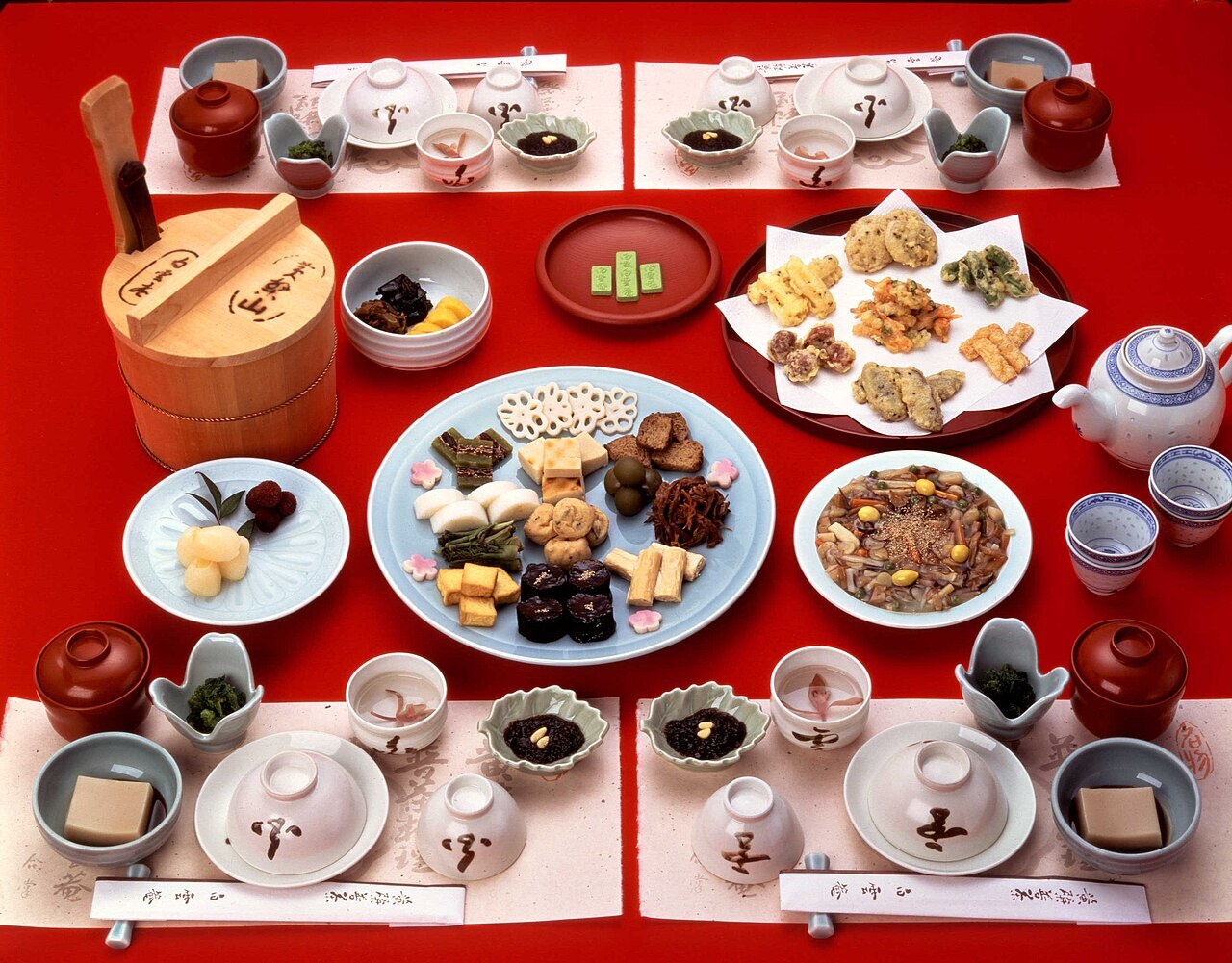
Search for shojin ryori and you will find a definition and a list of places to eat. This guide asks a different question: what is a shojin meal for, and how can you tell whether the one in front of you honors that purpose? The answer sits in two moments four centuries apart.
In the thirteenth century the Zen master Dōgen wrote instructions for a monastery's head cook. In 1654 a Chinese monk named Ingen landed at Nagasaki, and in 1661 he founded a temple near Kyoto that still serves a Chinese-style vegetarian meal, fucha ryori, which its own pages describe as eaten four to a table with no seat above another. Read together, the two turn a plate of vegetables into something you can judge.
This is a guide for choosing a temple meal, not for cooking one. It leans on the Japan Tourism Agency, Manpuku-ji's own pages, the Japan National Tourism Organization, Wikipedia and GO TOKYO, and it says where those sources disagree.
Shojin Ryori in Dogen's Kitchen: The Tenzo and a Meal Cooked as Zen
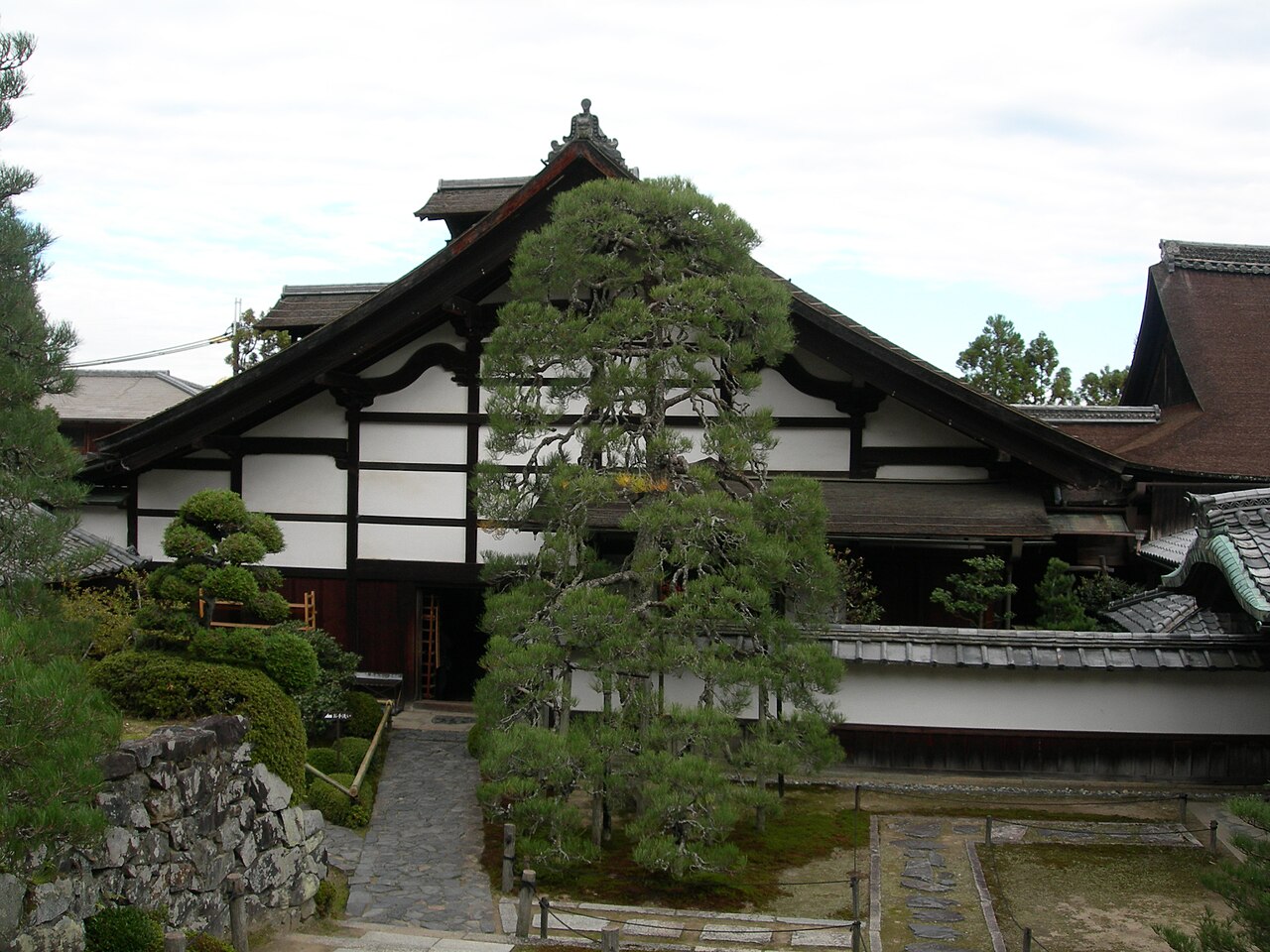
Shojin ryori is the vegetarian cooking of Buddhist temples. It rests on the precept of ahimsa, nonviolence toward living creatures. The Japan Tourism Agency's multilingual guide to temple cuisine, an entry associated with the tourism council of the Eihei-ji area and prepared in fiscal 2020, places its arrival in Japan with Buddhism in the sixth century and its rise in popularity in the thirteenth, as Zen spread.
The word to hold onto is not vegetarian but practice. The agency credits Dōgen (1200–1253), founder of the Sōtō school of Zen in Japan, with a key role in establishing the cuisine as it is known today. The sections below follow what he asked of the cook.
The Tenzo: Why Dogen Wrote Instructions for the Head Cook
The Japan Tourism Agency's account begins in China. Dōgen met the tenzo, the head cook, of Ayuwang Temple and could not see why the monk was troubling himself with cooking instead of devoting himself to Zen practice. The monk replied that Dōgen did not yet understand what it means to engage wholeheartedly in practice. According to the agency, that exchange strongly influenced Dōgen's view of Buddhist teaching.
Dōgen later wrote Tenzo Kyōkun, Instructions for the Zen Cook. Wikipedia dates the text to 1237, ten years after his return from Song-dynasty China, written at a monastery he had founded four years earlier. It forms the first part of the Eihei Shingi, the rules of Eihei-ji. In its preface Dōgen asserts that the post of tenzo suits only experienced monks with a deep understanding of Zen practice. Ekiho Miyazaki, an abbot of Eihei-ji, sums up the work's importance this way: “Instructions for the Cook are instructions for life.”
The agency's translation gives the working principle. The tenzo's job is Zen practice itself, pursued with single-minded intent, and cooking should be done with three states of mind. One is joyful (kishin), the mind of creation. One is nurturing (rōshin), the mind of a parent feeding a child. One is magnanimous (daishin), tall like a mountain and broad like the ocean. All three are held with equal appreciation for every ingredient.
A passage from a translation of the same text, quoted on Wikipedia's page on Buddhist cuisine, shows the principle at work: a rich buttery soup is “not better as such than a broth of wild herbs.” Wikipedia cites a translation by the White Wind Zen Community, and the passage opens by calling for sincerity and for respect toward each ingredient, however coarse or fine. That is the first thing to carry into a meal: ask how a dish was made, if you can find out, before you ask how elaborate it is.
What Shojin Ryori Leaves Out and Why: Strong Smells, Plain Seasoning and a Count That Changes by Source
The Japan Tourism Agency describes shojin ryori as vegetarian as a rule. It notes that it is contrary to the precepts in Tenzo Kyōkun for a monk to refuse any food, even fish or meat, received as alms. GO TOKYO, the official Tokyo travel guide, says shojin ryori frequently uses no animal products at all, which makes it suitable for vegans.
Two exclusions mark the cooking. The first is pungent vegetables. The agency lists onion, leek and garlic as forbidden because they were historically thought to stimulate human passions. Wikipedia explains the wider rule, which names five strong-smelling plants in all and which is not about killing: the belief is that strong flavors stir up passion and irritability and interfere with inner calm. The second is seasoning. Apart from salt, sugar, soy sauce and ginger, the agency says, spices and seasonings are not used as a rule, so that the natural flavors of the ingredients come forward.
Then there is the matter of counting flavors, where two public sources differ. The agency says Tenzo Kyōkun sets rules for flavor: each meal should hold six flavors (rokumi), bitter, sour, sweet, salty, mild and spicy, and three virtues (santoku), light and flexible, clean and neat, conscientious and thorough. GO TOKYO says a meal should show five tastes: sweet, sour, salty, bitter and umami. The two lists share four tastes. One adds mildness and spice; the other adds umami. If a menu tells you shojin ryori has five flavors, or six, ask whose count it is.
Fucha Ryori: The Chinese Table That Ingen Brought to Japan
Dōgen's kitchen belongs to Sōtō Zen. The second table in this story belongs to another school. Fucha ryori is the cooking of the Ōbaku school, one of Japan's three Zen schools alongside Rinzai and Sōtō. Manpuku-ji's own site describes it as vegetarian cuisine that the founder, Ingen, brought from China. Wikipedia calls it a more recent version of temple cooking, more Chinese in style, served at the head temple Manpuku-ji and at its subtemples. The sections below take up the history, then the table and its dishes, then how the temple itself tells fucha apart from the shojin meal described above.
Ingen Arrives: A Chinese Monk, His Followers and a Temple Built in the Ming Style
Manpuku-ji's own account of its history, a Japanese-language page whose renderings here are ours, gives the facts. Ingen Ryūki, a Chinese monk who had been abbot of a temple of the same name at Fuqing in Fujian, answered repeated invitations from Japan and came in 1654 with twenty disciples and others in his party. Wikipedia describes the party as around thirty monks and artisans who went to Nagasaki. The temple's figure counts disciples and gives no total; the encyclopedia's figure counts monks and artisans.
In 1661, with the esteem of the Retired Emperor Go-Mizunoo and the Tokugawa shogunate, the temple says, Ingen received about 90,000 tsubo (a Japanese unit of land area) of temple land at Uji, founded a Zen temple there and named it Ōbakusan Manpuku-ji after his temple in China.
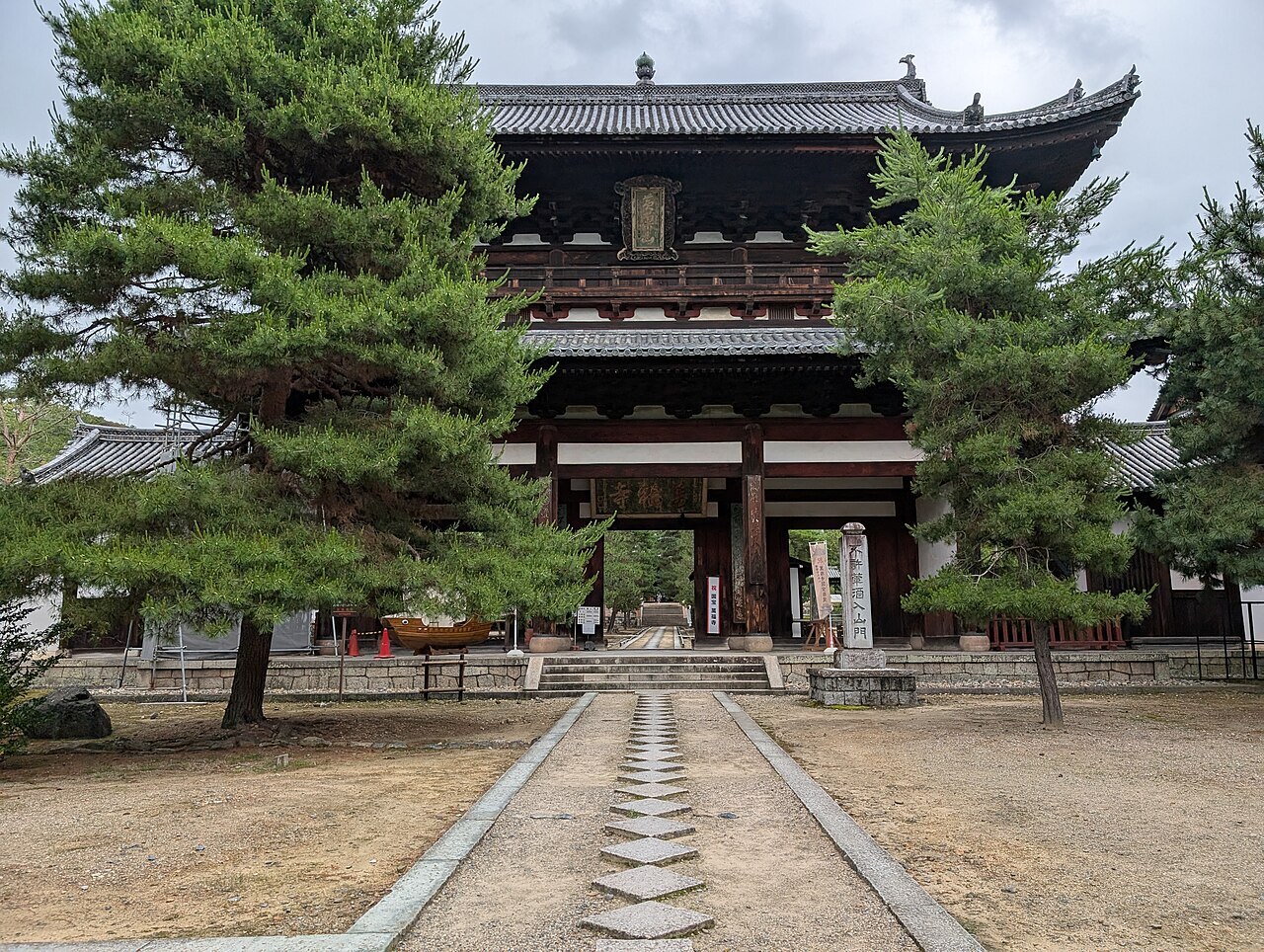
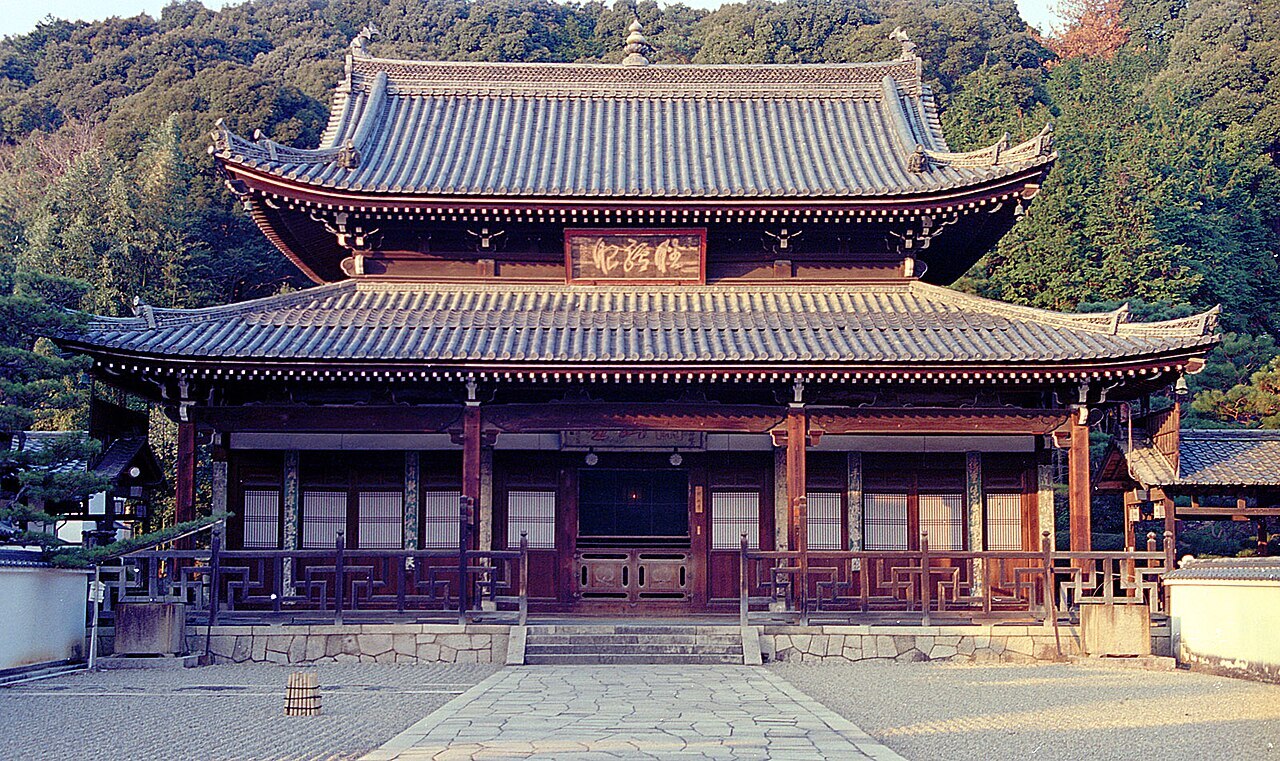
The Japan National Tourism Organization adds that the temple was built in the architectural style of China's Ming dynasty, with many structures built of teak and a layout reminiscent of a dragon. It adds that Ingen's disciple Muyan took control in 1664, and that it was not until the fourteenth priest that Japanese monks ran the temple.
The temple's own page puts the point more broadly. From the early to the middle Edo period, it says, most abbots of the head temple were monks who had come from China, and the morning and evening services, ritual manners and chanting keep that tradition. Wikipedia adds that Ingen came to Nagasaki to help three temples founded by Chinese emigrants there, and reports that for the next century Manpuku-ji was headed by Chinese immigrant monks, naming its first Japanese abbot in 1740.
Among Japan's three Zen schools, Rinzai, Sōtō and Ōbaku, what sets Ōbaku apart, the temple says, is that it kept strongly Chinese features. The school took its present name late: the temple says it was first called a Rinzai branch and was recognized as an independent school, Ōbaku, in 1876. For the other two Zen schools, see our guide to zazen in Japan, which covers Rinzai and Sōtō practice.
The tourism organization's page on the temple notes that Ingen and his successors brought new approaches to art, calligraphy, diet and medicine from the continent. The temple's own history page names more: art, medicine, architecture, music, history, literature, printing, sencha and fucha ryori, imports that it says influenced Edo-period culture well beyond the religious world. It adds foods that it says also came through Ingen, among them kidney beans, watermelon, lotus root and mōsō bamboo.
Four Seats, No Head of the Table: How the Temple Describes a Fucha Meal
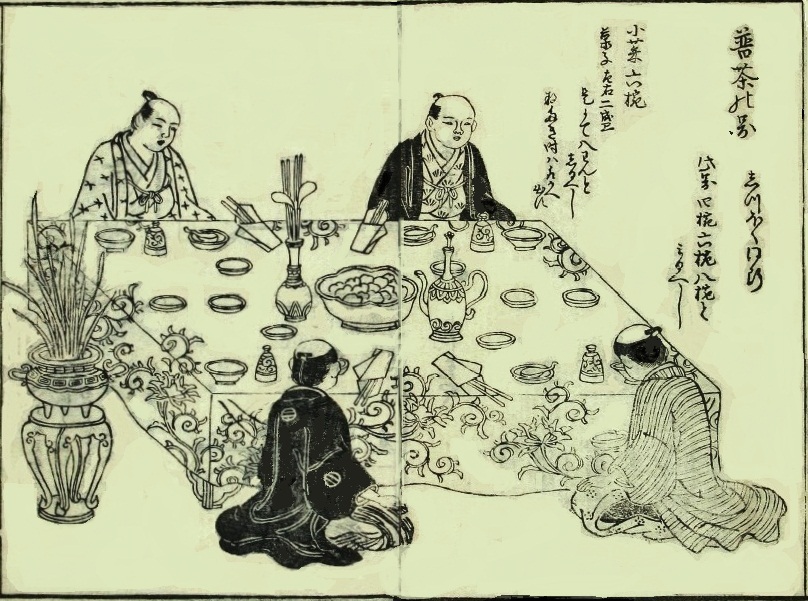
The temple's page on fucha ryori, written in Japanese, says the name comes from a phrase meaning to share tea widely with the multitude. The manner of a fucha meal, it says, is that four people sit at one table with no seat above or below another and eat everything in a cheerful atmosphere. The same page describes the meal as cooked from the natural produce of Japan's hills and fields, carrying the fragrance of Chinese culture, so that everyone can repay the Buddha's grace. It treats eating itself as part of Zen practice and prints the Five Contemplations, the verse that Zen schools recite before a meal, and it notes that plate-served dishes, an Ōbaku tradition the temple had suspended during the pandemic, have returned in its special fucha course.
The temple lists a menu, which it calls by the Chinese word caidan, and notes that the dishes are examples that change with the course and the season:
- Shunkan: seasonal vegetables and dried foods, simmered and arranged on a large plate. The temple says it can be called the flower of the meal.
- Modoki: vegetarian ingredients made to look like grilled eel or fish cake.
- Mafu: a refined sesame tofu that the temple says can be called the original of goma-dofu.
- Sume: a clear soup with fried ingredients in it, light in flavor.
- Shincai: a lightly seasoned seasonal dish that sets off the others.
- Unpen: trimmings left over from preparation, chopped fine and bound with kuzu starch, likened to clouds.
- Yuji: a dish that looks like tempura but whose ingredients and batter are themselves seasoned, closer to karaage.
- Suigo: fruit and sweets to close the meal.
One detail is worth carrying away: unpen. The temple says the trimmings are used without waste. Set that beside the agency's translation of Dōgen's instruction to treat every ingredient with equal appreciation, and the Ōbaku kitchen and the Sōtō kitchen read as the same discipline in two kitchens. That pairing is our reading, not the temple's.
Same Family, Different Table: How the Temple Itself Tells Fucha Apart From Shojin
Is fucha ryori shojin ryori? The sources agree on the family. Manpuku-ji's own history page calls it Chinese-style shojin cuisine. Wikipedia's page on the Ōbaku school describes it as similar to usual shojin ryori, but with more Chinese influence.
Where the temple draws the line is in the image of the meal. The temple's history page says fucha ryori has an image different from that of Japanese shojin, which it describes as the plain meal that Zen monks eat every day. It says the dishes of fucha are beautifully plated, and that the meaning of fucha lies in enjoying the food, and giving thanks for it, together with the people who share your table. Our reading chains three sourced facts: Chinese-born monks headed the temple until 1740, its rites kept Chinese forms, and the temple describes fucha as unlike Japanese shojin. Together they make it plausible that the Chinese table survived because the people running the temple kept eating it, though no source we read says so.
How different is Ōbaku today? Wikipedia's Ōbaku page calls the school well known for fucha ryori, and says that starting under the chief abbot Ryochu Nyoryu (1793–1868) Zen practice largely became the same as Rinzai practice, though monastic and cultural differences remain. It also quotes the scholar Helen Baroni to the effect that, with a few notable exceptions such as the style of sutra chanting, Ōbaku temples and monasteries “appear very like their Rinzai neighbors.” The temple's history page stresses the Chinese features it kept. Whether the fucha table is a living difference or a rare survival we cannot settle from these sources.
Fucha and Chaji: Tea, Ingen and Two Ways of Sharing
Fucha begins with the word for tea. The temple's explanation of the name is the phrase given above: to share tea widely with the multitude.
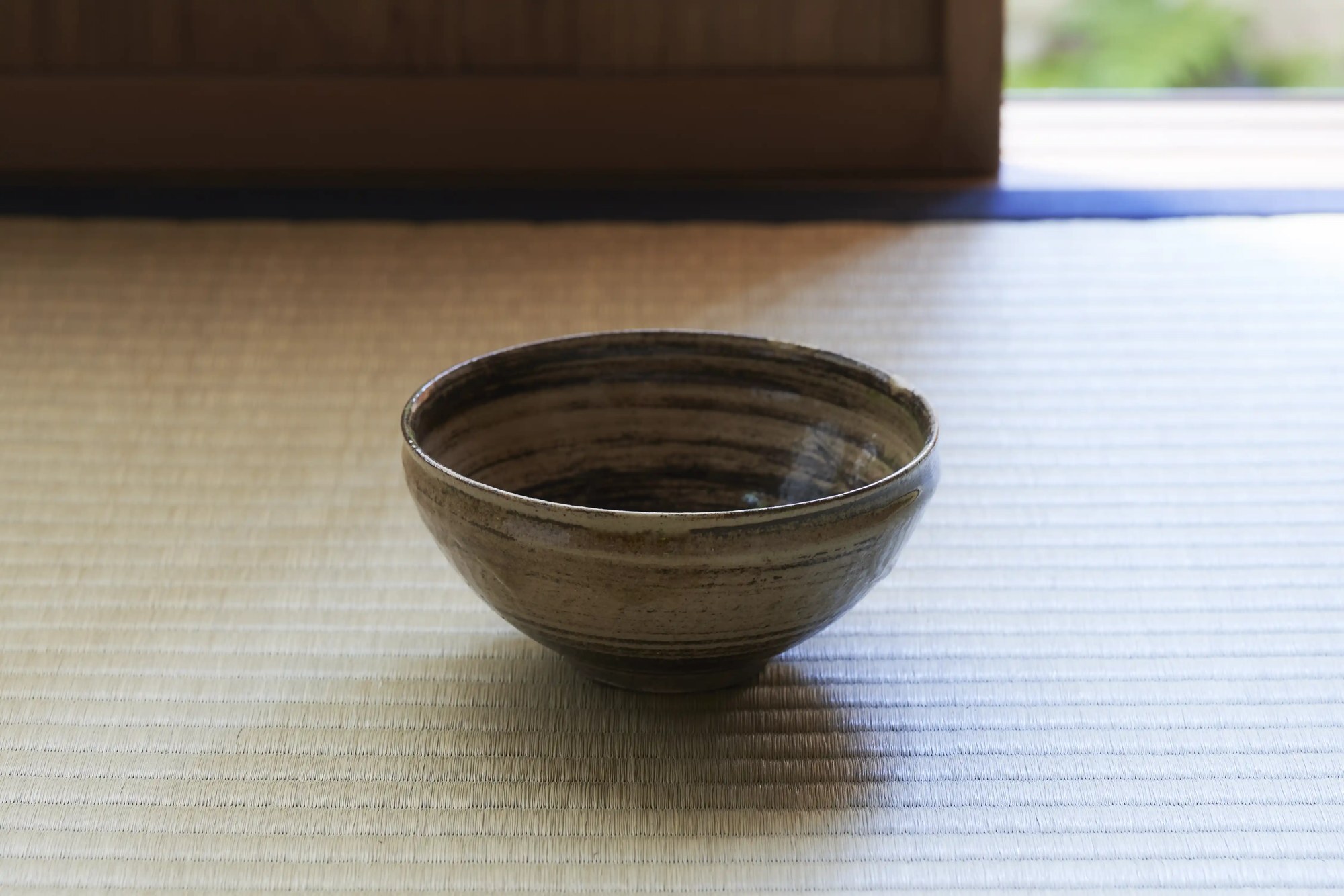
Japan has a second gathering that puts one shared bowl at its center: chaji, the full tea gathering. Sokou Udagawa, 18th head of the Sowa school of tea, described it to us in an interview we published on September 12, 2026, tracing it back to its original form: “you pass around a single bowl of koicha, tea whisked thick almost like a paste, for everyone to drink from in turn.”
Udagawa told us the first half of a chaji grows lively: “guests who start out tense loosen up as the sake takes hold, and the conversation picks up.” Everything then leads to the koicha. “If I haven't gotten the guests into a state where they can enjoy the koicha in silence, none of it means anything,” he said, and he warned that if the first half grows too rowdy to settle, the point is lost. He added that the first half can be kept somewhat austere, “even shōjin cuisine, on occasion,” since it is all building toward the koicha. In our reading, at a chaji the meal leads to the bowl, while by the temple's account the meaning of a fucha meal is in the shared meal itself.
The temple ties Ingen to tea as well. Its history page lists sencha and fucha ryori side by side among the things Ingen brought. Wikipedia's page on the Ōbaku school adds that the school introduced Ming-dynasty tea culture, steeping loose-leaf tea (sencha) rather than whisking the powdered matcha of chanoyu, and that this later produced a new tea ceremony, senchado. The temple's announcement for the third Ingen tea gathering, on November 3, 2026, describes him as the monk who came from China in the Edo period and conveyed a rich tea culture along with Zen's teaching, and promises a tea seat serving sencha associated with Ingen and Chinese teas.
Judging a Shojin Meal: Practice or Just Plant-Based
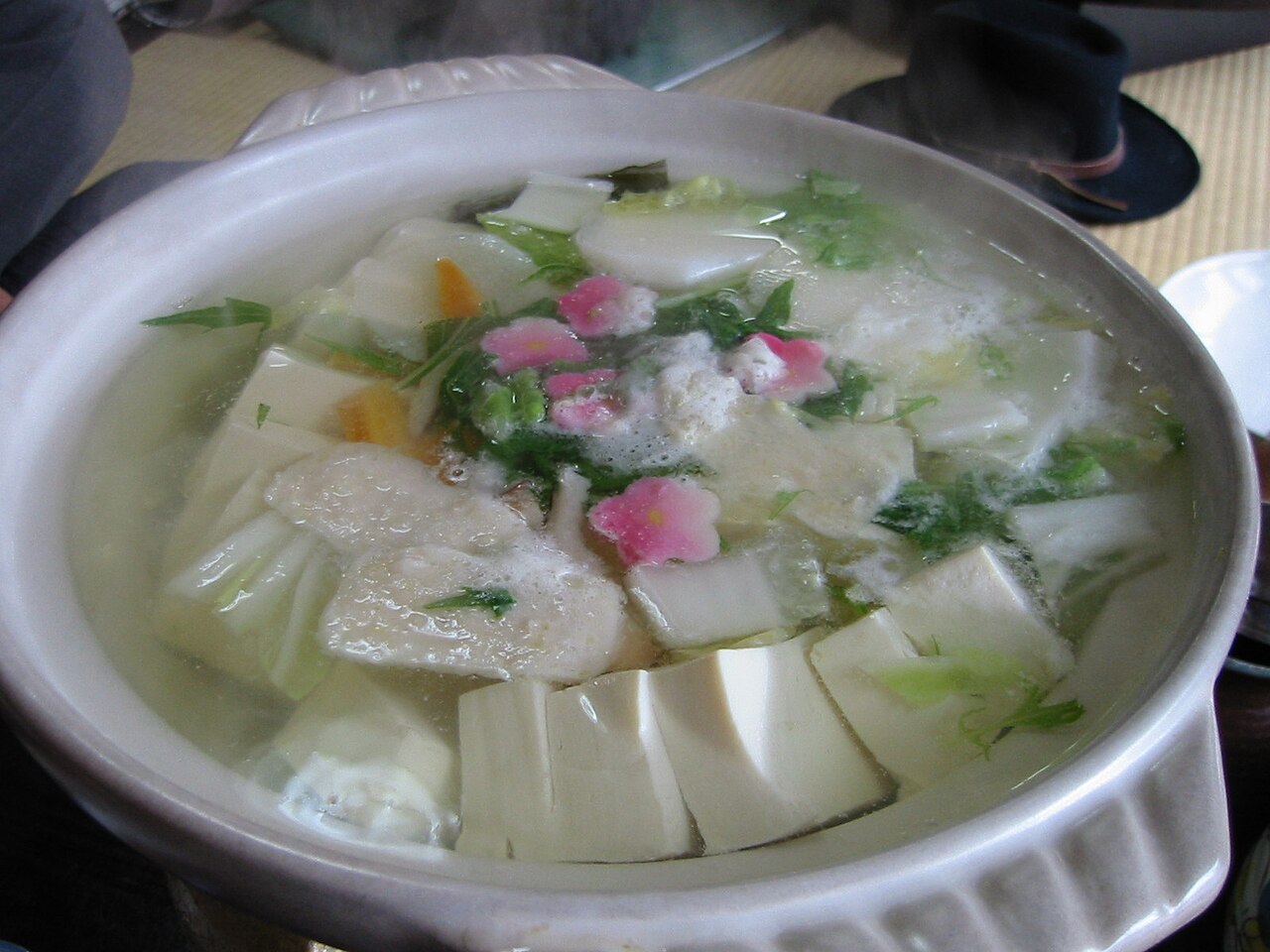
The five cues below are built from the public sources named; they are cues to look for, not a rulebook.
GO TOKYO shows why a cue matters. Describing a Daikanyama cafe whose name means “temple,” it cautions that not every item on the menu qualifies as shojin ryori, because meat and fish options sit beside the vegetable ones. A name or a décor is not a guarantee. The dish in front of you is the evidence.
Five Things to Look For on the Tray
- Is it seasonal? The agency says a typical meal uses seasonal produce and soybean foods such as tofu in place of animal products. GO TOKYO gives the example of cooling cucumber in summer and comforting root vegetables in winter.
- Is anything pungent in it? Pungent vegetables such as onion, leek and garlic are forbidden, per the agency. A dish built on them is not following the temple rule, whatever else it is.
- Does the seasoning stay plain? Salt, sugar, soy sauce and ginger, with other spices not used as a rule, so that the ingredients' flavors come through. The temple's fucha menu notes one dish, yuji, whose ingredients and batter are themselves seasoned, so treat this as a cue, not a law.
- Is there a moment before eating? At a temple, the agency says, monks begin the meal by reciting the Five Contemplations, gokan no ge, which were included in a work by Dōgen, Fushuku hanpō, Principles for Meals. The agency's translation moves in five steps: reflecting on the effort that brought the food; on whether one's virtue and practice are worthy of it; on freeing oneself from excess such as greed; on the food as good medicine; and receiving it for the sake of enlightenment. A restaurant need not recite anything; a place that makes room for something like it is closer to the source.
- If it is fucha, what does the table look like? The temple's page lists its dishes as examples that change with the course and the season, among them a large plate of simmered vegetables and dishes made to look like eel or fish cake. It also offers a boxed fucha lunch that can be reserved from one person.
Plant-Based Japanese Food Is Not the Same Thing
A menu can be vegan and still fail several of the cues above. Vegan excludes animal products; shojin excludes the pungent vegetables too, so a vegan dish built on garlic sits outside the temple rule. As noted above, GO TOKYO says shojin ryori frequently uses no animal products at all, so it suits vegans. The reverse does not follow.
What no vegan label can supply is the other half. The agency's account says that cooking and eating with deep gratitude and respect for any food is central to shojin ryori. A vegan restaurant may share that spirit. The label does not tell you.
Tiers of Access to a Shojin Meal: The Temple Table, the Temple Stay and the Question of a Third Door
Knowing where a meal sits in a hierarchy of access changes how you read a listing. We sort temple meals into three tiers. The scheme is ours, not the sources', and the question worth asking is whether a third tier exists. Our guide to tea in Tokyo has a section on access too, under the heading Three Tiers of Access.
Reservable in advance: the temple table. Manpuku-ji serves fucha ryori in its own grounds, and its page states that a meal requires a reservation made in advance. Outside the temple, GO TOKYO's page, last updated in September 2020, lists several restaurants and cafes in Tokyo that serve shojin ryori; check current details before you go. For the wider itinerary, see our guide to a quiet trip to Tokyo through art and architecture.
Through a stay: temple lodgings, and subtemples we have not checked. Wikipedia says fucha ryori is also served at the head temple's subtemples, and the temple's website has a search page for Ōbaku subtemples; we have not checked whether they serve visitors. A different door to a shojin meal is a temple lodging, where the meal is part of the stay. Our guide to temple lodgings covers the shojin cuisine at a Koyasan temple stay.
By introduction: a table set by a practitioner. In our scheme the third tier is a meal outside any temple, set by a person who practices the cuisine and reached through an introduction rather than a listing. We have not confirmed such a table for fucha, so for now this tier is a question to ask.
Shojin Ryori After the Monastery: Restaurants, Temple Events and Open Questions
Two sources speak to shojin ryori beyond the monastery, and they differ in emphasis. GO TOKYO, in a page last updated in September 2020, says that in recent years its popularity had been rising among the general public, and that people around the world had taken an interest in the cuisine for its health benefits and its taste. Wikipedia's Buddhist-cuisine page says, in a sentence that follows its note on fucha ryori, that in modern times commercial restaurants have also taken up the style, serving practicing and non-practicing lay people alike. The same page calls the older tradition seldom encountered beyond temples, religious festivals and funerals.
Manpuku-ji's own announcements show fucha and Ingen's foods appearing at events as well as in the dining room. In its announcement of evening openings, on selected evenings from October 2026 to February 2027, the temple offers a night fucha bento and a night sencha gathering, both by reservation only.
The temple's announcement of October 16, 2026 says that on November 3 its third Ingen tea gathering will serve “Ingen soba,” a shojin-style noodle dish made with foods said to have been introduced by Ingen, his favorite fried tofu, shiitake and kombu stock. The announcement says participation is free; the temple's entry fee is paid separately.
Ask of any shojin meal who cooks and who sits: a monk's kitchen, a restaurant's, or a host's table. The answer tells you what you are being offered.