In an age where busyness has become the norm, retreats—journeys that momentarily return your mind and body to “silence”—are drawing attention. Japan stands out in particular: a place where the spirituality rooted in Zen and Shinto, the shifting seasons, the architectural beauty symbolized by tatami and shoji, and the power of forests and hot springs all converge to create a different quality of quiet.
This article explores the essence of Japanese retreats—tuning yourself through immersion in culture—from temple lodgings to forest sanctuaries and contemporary minimalist villas, and shows you how to plan your own.
This article is one doorway into the world of the ryokan. The Digital Guide draws its architecture, hospitality, and the quiet rituals of an anniversary stay into a single, connected reading.
Continue with the Digital Guide:
The Ultimate Ryokan Guide for Your Anniversary Celebration in Japan
Reasons Japan’s Retreats Are Special
There are clear reasons why retreats in Japan differ from wellness travel elsewhere. Their defining traits are deeply intertwined with spiritual culture cultivated over centuries. The philosophical backdrop—such as Zen thought and Shinto’s reverence for nature—breathes through every part of the retreat experience. Beyond simple rest, Japanese retreats are positioned as time “to look inward in stillness” (*1).
For those living under constant stress in modern society, Japan’s retreats have become sought-after places to restore yourself and realign mind and body (*1).
Japan also has longstanding practices of healing in nature—forest bathing (shinrin-yoku) and therapeutic hot-spring bathing (toji)—and it is often said that “well-being has long been part of Japan’s spiritual culture.” This cultural and spiritual foundation gives Japanese retreats their distinctive depth.
From Zen Temples to Forest Sanctuaries
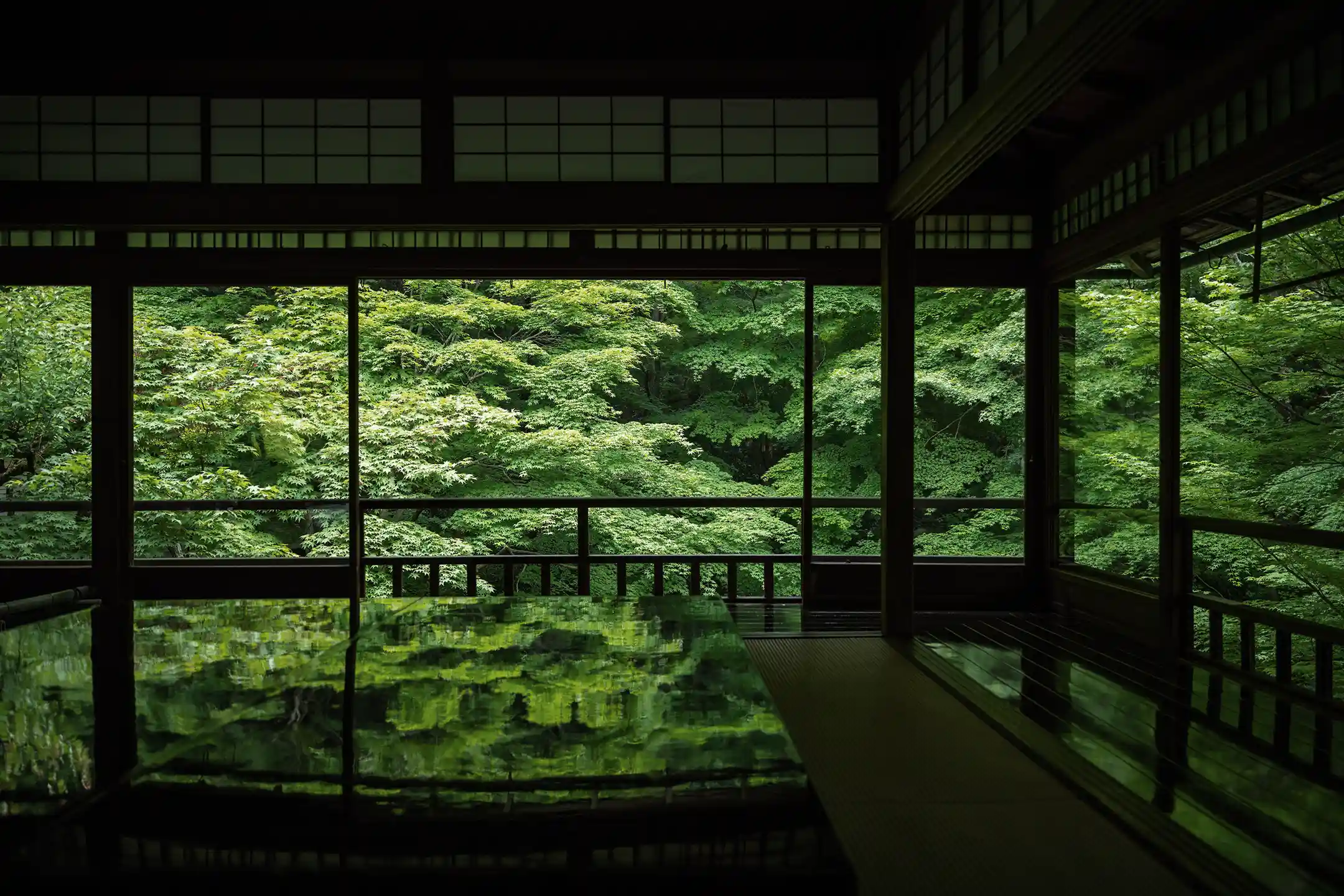
The settings that host Japan’s retreats are wonderfully diverse. One example is shukubo—temple lodgings at Zen monasteries. Staying within a serene temple compound and joining morning sutra chanting and zazen (seated meditation) is a uniquely Japanese spiritual retreat. Morning light pours across a tatami-lined great hall; a bell resounds; you kneel on the tatami, letting your breath settle—time in a Zen temple becomes an ideal moment to face yourself.
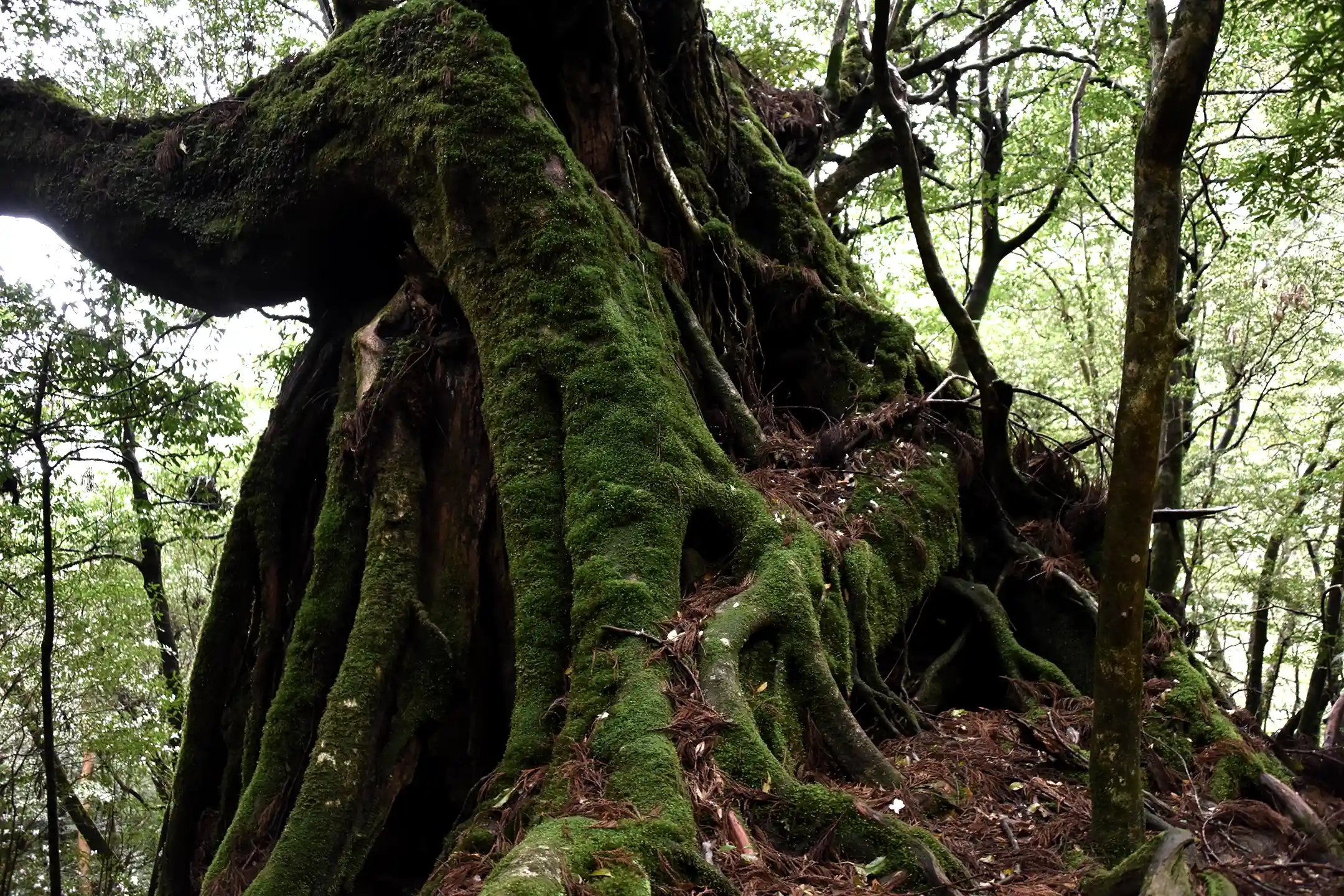
On the other hand, deep forests and remote natural environments also serve as retreat stages. In places like Yoshino in Nara, the mountain regions of Nagano, and the forests of Yakushima (Kagoshima Prefecture), the woods themselves function as “sacred realms.” Sit in a quiet grove, breathe deeply, and tune your ear to birdsong and the wind—you’ll naturally feel calm and find it easier to hold an inner dialogue.
Across Japan, from temples to forest sanctuaries, a variety of retreat spots invite you into the extraordinary. In fact, national parks and sacred sites have, since ancient times, been places where people heal mental and physical fatigue. “Forest bathing” as little as 15–30 minutes of woodland walking has, on average, shown relaxation effects such as lowered blood pressure and heart rate (*2). Time spent embraced by dappled light and the murmur of streams offers a depth of restoration you won’t find in a city gym or spa.
Cultural Immersion and Inner Renewal
Another reason Japanese retreats feel special is the inner renewal that comes through immersive cultural experiences.
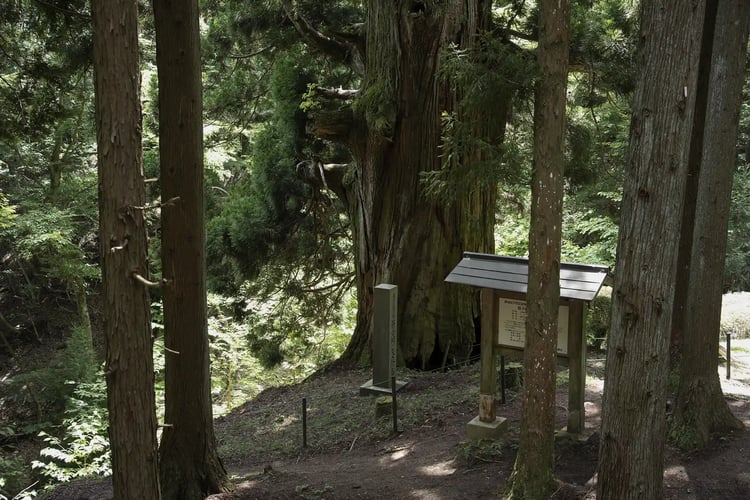
Zazen and sutra copying (shakyo) at Zen temples, prayer at shrines, and quiet moments with sacred trees bring you into contact with the core of Japanese culture, offering a sense that goes beyond relaxation—something like cleansing the spirit. For example, some temple retreats begin a shakyo session from grinding the ink. As you guide the brush in a room scented with ink and copy each character one by one, you’ll notice your mind clearing and a sense of peace arriving (*3).
Many international participants say “distracting thoughts fall away and my heart calms,” and even without understanding the literal meaning of the text, the act itself creates a meditative state. In a tea room, a tea ceremony experience (chado) lets you feel the spirit of ichigo ichie—treasuring the unrepeatable moment—and the mutual respect expressed between host and guest.
For many travelers from Europe and North America, wearing kimono, kneeling on tatami, and watching the host’s precise gestures is delightfully new. The unhurried time flowing within the tea room and the nourishing taste of matcha seep into your senses, gently turning your attention inward. Tea ceremony is popular among visitors precisely because it brings together, in one sitting, Japan’s aesthetic sensibilities—kimono, traditional crafts, wabi, and sabi—and the recent global fascination with matcha has helped spread it (*4).
In this way, Japanese retreats transform the very process of cultural immersion into therapy—a catalyst for self-reflection.
Why the World Is Watching Japan’s Retreats
In recent years, Japanese retreats have been drawing strong attention from overseas. A key attraction is how Japan’s refined aesthetics and omotenashi (thoughtful hospitality) are woven into retreat design.
Quiet settings, exquisite gardens, seasonal interior styling and cuisine—experiences that let you feel Japanese beauty with all five senses—are truly one of a kind for international travelers. For instance, “Zenbo Seinei,” which opened in 2022 on Awaji Island in Hyogo Prefecture, is a wooden wellness retreat by globally renowned architect Shigeru Ban. Inspired by Zen, it offers meditation programs and shojin ryori (Buddhist vegetarian cuisine)(*).
It has been featured by British travel magazines as a “retreat that embodies Zen on an island,” and welcomes a steady flow of visitors from Japan and abroad. This rising interest aligns with global trends in wellness tourism. Japan is the third-ranked wellness destination in Asia, and in 2019 the government leveraged the Tokyo Olympics to promote “Japanese-style wellness” such as hot springs and forest bathing to the world (*6). As part of a strategy to disperse visitors beyond major urban centers, retreats rooted in pristine nature and tradition are being encouraged (*5).
Different from whirlwind sightseeing, Japan’s retreats—journeys that enrich your inner life—now attract travelers worldwide.
Spatial Beauty in Japanese Retreat Architecture
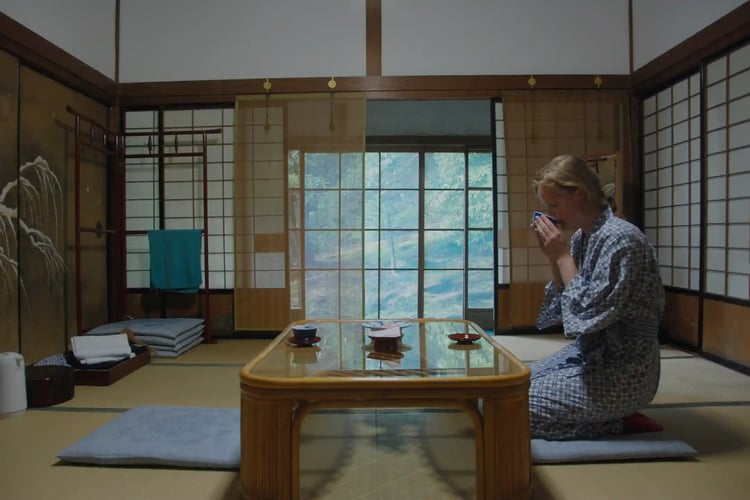
The architecture of Japanese retreat facilities carries a healing “beauty” in the spatial design itself. Traditional aesthetics and harmony with nature merge to offer visual and sensory calm. From quintessential elements like tatami and shoji to engawa—threshold spaces that bridge indoors and out—beauty embedded in fine details enriches the retreat experience. This chapter explains the spatial aesthetics and design philosophies seen in Japanese retreat architecture through concrete examples.
Tatami, Shoji, and Materials that Speak of Aesthetics
Traditional elements such as tatami and shoji are said to have restorative effects in their own right. Tatami—flooring woven from rush (igusa)—has a gentle resilience and a fresh aroma that calm you the moment you sit down. “Tatami is soft, fragrant, and pleasant to the touch,” and it symbolizes Japan’s aesthetic sense and craftsmanship (*1). Sitting on tatami naturally lengthens your spine and helps the mind settle. Shoji—wooden lattices covered with washi paper—softly diffuse natural light.
Unlike direct sunlight, light filtering through shoji wraps a room in a tender glow. This soft illumination is said to soothe the spirit and relax the mind (*2). In fact, shoji paper reflects roughly 50% of light, balancing brightness and reducing glare while gently lighting the interior (*2). At dusk, interior lamps glow through the shoji like an andon lantern, creating a tranquil, otherworldly atmosphere. Materials like wood, paper, clay, and stone—another hallmark of Japanese architecture—also matter deeply.
In renovated kominka (historic homes) used as retreats, the sheen of polished beams and pillars, the earthy texture of clay walls, and the mossed stones of a garden come into harmony, forming an ambience you cannot replicate with synthetics. Surrounded by natural materials, you can feel the energy of forests and soil even indoors. Altogether, these traditional elements engage all five senses, yielding deep relaxation and aesthetic satisfaction.
.webp?width=750&height=500&name=Inome%20Window%20(Heart-shaped%20window).webp)
Engawa — A Dialogue Space with Nature
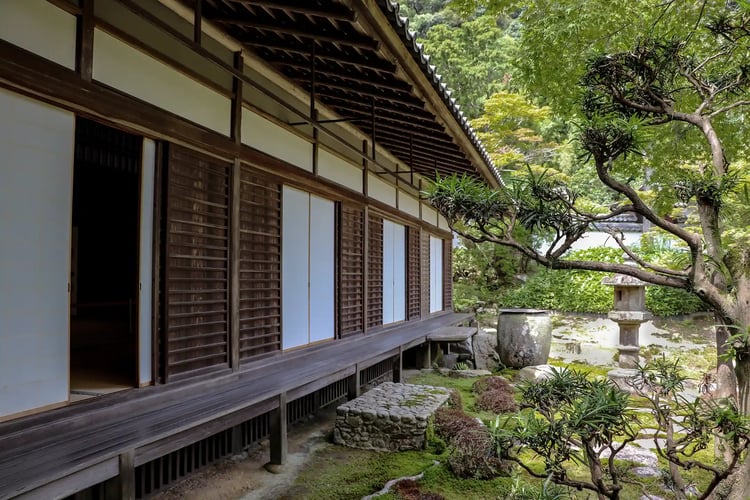
Engawa, the signature threshold space of Japanese homes, plays an important role in retreat architecture. It’s a narrow, wood-floored zone between room and garden—a gentle in-between that connects indoors and out. Sit on the engawa and gaze at the garden, and you’ll feel as if you’re conversing with nature.
Engawa “softens the boundary between inside and outside, opening up the entire dwelling and fostering oneness with the outdoors” (*3). On rainy days you can savor the luster of the garden; on sunny days you can bask and invite in the breeze. In spring, cherry petals drift across the engawa; in summer, you take in fresh green and crickets; in autumn, crimson foliage frames your view like a painting; in winter, you crack the snow-view shoji and feel the hush of falling snow—engawa stages the seasons for you.
Many retreats reinterpret this idea with “modern engawa” spaces—wood decks or semi-outdoor lounges that let you enjoy open air and scenery with indoor comfort. At night, you might sit there beneath a star-filled sky, listening to the chorus of insects. Unlike a city hotel balcony, this healing interval (ma)—a space tuned to its environment—brings mental ease and openness. The wisdom of the traditional engawa lives on in modern retreats, creating times where you and nature meet, seamlessly.
Trends in Contemporary Japanese Retreat Architecture
Evolving with tradition, today’s Japanese retreat architecture earns high praise at home and abroad. The keywords are “minimalism” and “harmony.” The pared-back, refined design philosophy linked to sukiya architecture and tea rooms strongly informs the latest retreats. A leading example is the “modern Zen” style typified by the aforementioned Zenbo Seinei. Shigeru Ban’s design uses domestic cedar for columns and beams and opens wide apertures to borrow sweeping forest views, rigorously pursuing “continuity between inside and outside.”
A 30-meter rooftop wood deck hosts zazen and yoga at sunrise and sunset—architecture itself becomes a “vessel for meditation.” Another master, Kengo Kuma, has designed retreat spaces across Japan, known for his bold use of traditional materials like wood and washi. In one Arashiyama project in Kyoto, he crafted a façade that melts into the bamboo grove so guests can feel the play of wind and light in the rustle of bamboo. Eco-conscious construction is also rising.
THE ROYAL PARK CANVAS Sapporo Odori Park, opened in 2021, is Japan’s first high-rise hybrid timber hotel, featuring Hokkaido timber interiors and a rooftop wood-deck campfire experience—blending natural materials with activity (*4).
The latest retreats prioritize “local materials,” “landscape integration,” and “physical comfort paired with mental quiet,” achieving a balance where Japan’s wabi-sabi worldview meets modern comfort. When you dwell in such architectural works, you feel aesthetic sensibility in every corner of the building, and your own senses sharpen in response.
Cultural Experiences and Arts Programs in Japanese Retreats
Another hallmark that sets Japan apart is the abundance of cultural programs. You won’t just pass time quietly—you’ll touch Japan’s traditional culture and arts during your stay, gaining both cultivated satisfaction and opportunities for self-growth.
From tea ceremony, calligraphy, and kaiseki cuisine to encounters with local masters and monks, and participation in hands-on workshops, the offerings are wide-ranging. By satisfying your curiosity and savoring culture through all five senses, Japanese-style retreats refresh you from the deepest place.
Traditional Experiences: Tea Ceremony, Calligraphy, and Kaiseki
Tea and calligraphy, emblematic of Japanese culture, are among the most popular programs.
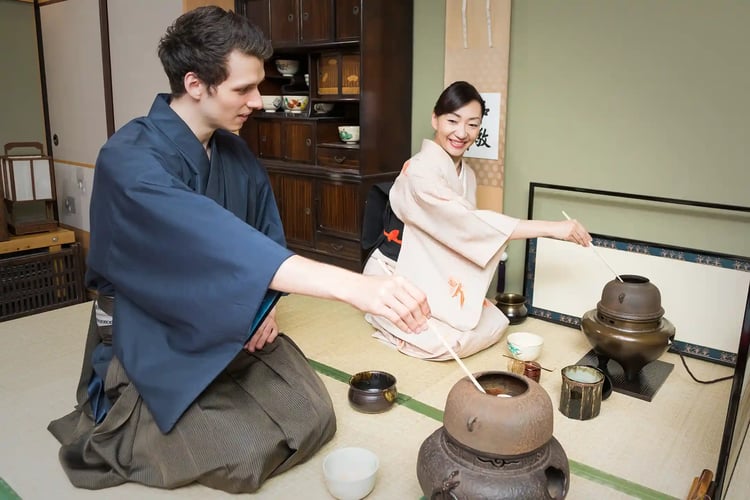
In a typical tea ceremony experience, you watch the host’s temae (tea preparation) and then whisk a bowl of matcha yourself and enjoy it. Enter a tatami tea room; admire the fusuma paintings, the hanging scroll in the alcove, and seasonal flowers; then take tea in seiza posture—this time itself resembles meditation. You’ll touch the spirit of wa-kei-sei-jaku—harmony, respect, purity, and tranquility—and feel your heart washed clean.
Tea ceremony is extremely popular among international travelers; many are captivated by the comprehensive art of kimono, tea room space, and choreographed gestures (*1). Because it encapsulates wabi-sabi aesthetics and the heart of hospitality, experiencing it once leaves a lasting impression.
In calligraphy, you use simple tools—paper, brush, and ink—focusing your mind on each stroke. Surrounded by the fragrance of ink, your brush flows, and afterward you’re left with a sense of accomplishment and a pleasant fatigue. Many say, “Beginning from grinding the ink and focusing on the paper, a natural calm arrives” (*2).
The value lies less in how the work looks and more in the process itself. You often can bring your piece home—an especially meaningful travel memento. Kaiseki cuisine, Japan’s refined multi-course dining, also elevates a retreat stay. Chefs craft each dish with seasonal, local ingredients—an edible art.
The plating alone conveys the passage of seasons: in spring, a starter garnished with cherry petals; in autumn, grilled fish accented with a red maple leaf—expressing nature’s beauty through food. Such “plating that expresses natural beauty and the seasons” sits at the heart of washoku, which is inscribed on UNESCO’s Intangible Cultural Heritage list (*3).
You’ll taste Japanese aesthetics not only with your palate but with your eyes. If you enjoy alcohol, a little local sake pairs beautifully; later you might lie back on the tatami, blissfully relaxed. Calm your heart through tea, open it through calligraphy, and delight all five senses through kaiseki—these traditional experiences are not just activities; in Japanese retreats they directly reset mind and body.
Encounters with Masters, Monks, and Local Experts
Encounters themselves bring healing and learning. Exchanges with masters of craft, monks, and local experts—the living vessels of regional culture—often become the highlight of your trip. In temple lodgings, for instance, you may have a chance to hear a lay sermon from the head priest after morning devotions.
As Buddhist teachings are explained in plain language, your daily worries may seem smaller, and you might gain a fresh insight. One retreat organizer said, “Time spent talking with a monk in the bright main hall or by the sunny engawa moved me in ways everyday life never could” (*4). Sharing tea and life perspectives with a resident monk by chance—that’s a uniquely Japanese luxury.
In rural retreats, programs led by traditional artisans are popular: polishing Wajima lacquerware, papermaking of Mino washi, throwing pottery in Shigaraki. Receiving guidance from a seasoned craftsperson lets you feel the depth of Japanese making and aesthetics firsthand. Many programs provide interpreters, so visitors from overseas can join with confidence; even without words, simply observing a master’s movements communicates something essential.
You might also meet local experts of everyday life: working alongside a farmer in the fields, or heading out at dawn with a fisherman and learning how to fillet your catch. Through these, you learn wisdom rooted in the land and a sense of reverence for nature.
Don’t overlook encounters with performing artists either: music sessions where you learn from masters of koto or shamisen; events with Noh actors or even with maiko. While the word “retreat” might sound inward, such “human connections” open your heart and bring new energy from outside. People heal people—Japanese retreats embody that saying, and the beautiful meetings you have on the road may nourish you long after.
Join Cultural Workshops and Seasonal Events
Many stay-based retreats host a rolling calendar of cultural workshops and seasonal events. Especially if you’re new to Japan, actively joining these programs will elevate your trip. Beyond tea and calligraphy, consider:
Ikebana: Arrange local flowers while learning the basics of kadō. They say your gestures reflect your heart; focus, and distractions fall away. Photograph your finished work as a keepsake.
Kōdō (Incense Appreciation): The refined Japanese art of “listening” to fragrances—distinguishing the scents of different aromatic woods with eyes closed in a quiet room—gently guides you into deep relaxation through smell.
Japanese Instruments: Try taiko drums or shakuhachi under a pro’s guidance. Feeling rhythm through your whole body on the drums is wonderfully cathartic; coaxing sound from a flute or shamisen is its own rare joy.
Kimono Dressing: Learn to wear traditional attire with help from specialists. Men’s kimono sessions exist too. Stroll the retreat’s garden in kimono and you’ll feel you’ve stepped into a Japanese painting.
Food Culture Workshops: Make regional dishes or wagashi sweets, or join a shojin ryori class. Handling local ingredients deepens your understanding of Japanese foodways. There’s nothing quite like eating the onigiri you shaped or the sweets you crafted.
Seasonal and local events add more: time a summer stay for a matsuri and join a bon dance or help carry a mikoshi; in winter, try pounding mochi by the hearth or preparing miso. Retreats usually post workshop and event schedules in advance—check them. Most programs require reservations, but you can sometimes hop in if there’s space during your stay. Move from “seeing” to “doing”—that’s the joy of a retreat. Even if you feel clumsy, the act of trying will let you grasp the spirit and aesthetics under the surface. Cultural programs at Japanese retreats deliver fresh surprise and emotion—and, in the quiet, a chance to grow.
Sustainability and Wellness in Contemporary Japanese Retreats
Today’s Japanese retreats increasingly prioritize sustainability and wellness alongside tradition and healing. Choosing eco-conscious stays and travel styles now goes hand in hand with a richer experience. This chapter highlights earth-friendly architecture, greener mobility, and wellness programs centered on natural therapies and organic approaches—plus concrete examples from around Japan—so you can imagine a future-forward retreat.
Eco-Friendly Stays and Architectural Design
As interest in sustainable tourism rises, Japanese retreats are adopting eco-practices under the banner of “energy-saving, local production and consumption, and circularity.” Common initiatives include (*1):
- Eliminating single-use plastic amenities in favor of bamboo, paper, or recycled alternatives.
- Switching all guestroom lighting to LEDs and offering eco-cleaning with limited linen changes.
- Generating and storing power via solar panels to cover part or all electricity needs with renewables.
- Installing rainwater systems that purify and reuse roof runoff for toilets and garden irrigation.
- Composting food waste and recycling used cooking oil into biofuel to minimize trash.
- Restoring ecosystems by tree planting and creating on-site or nearby biotopes.
Some accommodations systematically implementing these earn the international “Green Key” eco-label (*1)—a reliable booking cue. For example, Otogino Yado Komeya, a hot-spring ryokan in Fukushima, became Japan’s first Bio Hotel–certified ryokan, reducing HVAC-related CO₂ emissions and installing EV charging spots to support eco-friendly stays (*2).
WEAZER Nishi-Izu, a villa in Shizuoka Prefecture, operates off-grid with solar and rainwater—achieving minimal impact on its surrounding environment (*2). On the design side, harmony with nature matters: Auberge Herbastella in Furano, Hokkaido, blends into the landscape with simple forms, organic flower fields, and a kitchen garden (whose produce appears later at the restaurant).
Modern retreats create value by “minimizing environmental burden” and “contributing to local communities.” In sunlit, energy-efficient buildings rich in wood and other natural materials, you feel well—part of the earth. A sustainability-minded journey isn’t mere self-satisfaction; it’s a “gift to the next generation.” An eco-friendly stay brings immediate healing and the quiet joy of doing right by the future.
Green Travel by EV and Scenic Routes
The journey itself becomes richer when you choose greener transport. Electric vehicles (EVs) are increasingly recommended in Japan.
Traveling by EV or hybrid reduces your carbon footprint and, with lower cabin noise, makes conversation and scenery more enjoyable. In nature-rich areas, the quiet ride lets you hear rivers and birds along the way. Municipalities and tourism operators are expanding EV rentals and charging infrastructure.
In Goto City, Nagasaki Prefecture, for instance, an EV rental program launched in 2010 and now offers 20 vehicles for visitors (including the popular “Tsubaki Neko” cars with local character wraps) (*3). Fast chargers at major sights and hotels mean a 30-minute stop can bring your battery to around 80%, making a full island loop easy (*3).
For scenic EV-friendly drives, consider the Yamanami Highway from Aso to Beppu in Kyushu; the Venus Line in Nagano; the rolling hills of Furano and Biei in Hokkaido; and the Kumano-Owase Road on the Kii Peninsula. These routes feature roadside stations and attractions where you can dine, soak your feet, and charge along the way.
The Ministry of the Environment is also promoting “Zero Carbon Parks,” advancing renewable energy and EV use in national parks. In Ise-Shima, facilities like NEMU RESORT support sustainable stays and electric mobility.
More lodgings are self-generating power and even offering EV car-sharing for guests. With an EV gliding through green landscapes, driving itself can feel meditative: crack the window to breathe the forest, pull over for photos, wander a viewpoint while you top up your charge.
Many rental agencies let you reserve EVs specifically, and expressway service areas increasingly have chargers—so plan your “green journey” from the start. It’s kinder to the planet and stunningly scenic—an ideal model for next-generation retreat travel.
Forest Bathing and Organic Cuisine for Healing
Among Japan’s wellness experiences, two time-honored yet fresh keywords stand out: forest bathing and organic. As noted, shinrin-yoku originated in Japan and is known as a health practice that relaxes you by opening all five senses to the woods. Since the 1980s, designated “Forest Therapy Bases” across the country have supported scientific validation.
Phytoncides (aromatic compounds from trees), the sight of green, and the sounds of water and birds help regulate the autonomic nervous system; medical studies report reduced salivary stress hormones, stabilized blood pressure, and calmer pulse—often after surprisingly short sessions.
Retreats embrace this science, offering early-morning forest walks, meditation platforms deep in the trees for yoga sessions, and “grounding” experiences near Fuji where you traverse Aokigahara’s trails with a guide, pausing to touch ancient trunks. Feel moss, soil, and bark underfoot—like being held by the earth itself. Many hot-spring inns pair open-air baths with woodland views, letting you soak while “forest bathing”—hot-spring minerals and the woods’ negative ions unwind you to the core.
Food is the other pillar. Organic cuisine, long central to Western wellness retreats, is gaining ground in Japan, too. Many retreats feature pesticide-free local produce and certified organic ingredients.
In Omachi, Nagano Prefecture, a mountain retreat serves macrobiotic courses built around that morning’s harvest from its own organic gardens—minimal animal products and refined sugar, relying on vegetables, grains, and legumes. Guests praise how “the stomach rests and the body feels light.”
In Furano, Herbastella’s chef duo are certified vegetable sommeliers; their Italian full course uses only pesticide-free vegetables from their garden and local organic farms—even condiments are carefully chosen (*4).
Hot-spring ryokan are joining in: at Otogino Yado Komeya, the creative kaiseki uses only JAS-certified organic ingredients, with options for gluten-free and vegan diets (part of its Bio Hotel certification).
Some retreats even offer supervised fasting programs—juice cleanses or enzyme drinks for several days under nutritionists or physicians—with gentle re-feeding via rice porridge and miso soup. Guests often report clearer skin and lighter spirits. Easier versions include light fasting breakfasts of fresh fruit and smoothies.
In short, Japanese retreats pursue well-being from both sides: nature-based therapy and nourishment from within. Breathe deeply in the forest, warm yourself in onsen, and heal from the inside with gentle food—the combined effect forms a comprehensive “journey of restoration.” By the time you head home, you may find your rhythm synced with nature again, your nerves steadied and your diet reset—mind and body crystal-clear, like a new you. That is the heart of wellness in modern Japanese retreats.
How to Plan a Retreat Trip in Japan
If you’re ready to take a retreat in Japan, how should you plan it? Even for a restorative escape, good research and preparation shape your satisfaction. This chapter covers how to choose regions suited to retreats, the characteristics of different accommodation types, and practical points like best seasons, booking, and budgeting—concrete tips to help you plan your ideal journey.
Which Regions in Japan Are Best for Retreats?
Stretching long north to south, Japan’s climates and cultures vary by region—so do ideal retreat areas. While you’ll find great options everywhere, here are representative examples:
Koyasan (Wakayama Prefecture): A sacred center of Shingon Buddhism and a mountaintop religious city. Dozens of temples welcome international guests as shukubo, making Koyasan famous worldwide. Join morning services and Ajikan meditation—an authentic Buddhist experience. It’s about two hours from Osaka by train and cable car, convenient for first-timers.
Kyoto & Nara Area: Kyoto, the heart of traditional culture, offers zazen at Zen temples and short-format retreats in renovated townhouses. In green suburbs like Kurama and Ohara you’ll find hideaway inns; in Nara, luxurious spa ryokan in the Yoshino mountains let you feel the spirit of shugendo while staying in comfort.
Nagano & Yamanashi (Central Highlands): At the foot of the Japanese Alps, crisp air and soaring peaks set the scene. In Nagano, luxury villa-style retreats in Karuizawa and auberges in Azumino and the Yatsugatake area are popular. In Yamanashi, retreats with Fuji views offer forest-yoga and mindfulness programs. Summers are cool—perfect for escaping the heat.
Tohoku: The deep embrace of nature draws you north. Tono in Iwate and the Tazawako area in Akita have inns where you can live the slow life amid satoyama and lakeshores. Stay in a farmhouse with an irori hearth and wake to birdsong—rustic retreats restore your sense of slower time. Visiting in winter for snowy landscapes can be magical.
Kyushu & Okinawa: Southern abundance is compelling. Kyushu’s Aso foothills and the Kirishima range hide many onsen inns—Yufuin in Oita and Kurokawa Onsen in Minamioguni, Kumamoto, are ideal for toji-style stays in quiet forests. Yakushima in Kagoshima, called “the island of life,” offers meditative treks in a World Heritage forest and even waterfall training. In Okinawa, islands like Ishigaki and Miyako now host retreats blending Ryukyuan spirituality and beach leisure.
Choose based on your interests, condition, and travel style—Buddhist culture in Kansai; cool forests in the highlands; hot springs in Kyushu, and so on. Consider lesser-visited regions: with about half of inbound visitors staying in major metros like Tokyo, Kyoto, and Osaka (*1), quieter, high-quality retreats often await elsewhere.
Shimane or Kochi, for example, have fewer overseas tourists—more untouched nature, tradition, and serenity. Climate matters, too: pick Hokkaido or highlands for summer cool; southern Kyushu or Okinawa for winter warmth. Region choice sets your retreat’s tone—take your time choosing.
Temple Stays, Ryokan, or Luxury Villas—Which to Choose?
“Retreat” covers several lodging styles: temple lodgings (shukubo), hot-spring ryokan and auberges, and luxury villas or glamping. Each offers different charms:
Temple Stays (Shukubo): Found nationwide (Koyasan, Mount Hiei, Zenkoji in Nagano). The appeal is stepping into monastic rhythms—morning/evening services, shakyo and zazen, and shojin dinners.
Rooms are simple—tatami floors, futons, shared baths, curfews—but you gain quiet and value. Typical rates are about ¥10,000–¥20,000 per adult per night with two meals (*2). Many Koyasan lodgings fall in this range, including services and activities (*2).
Solo travelers are welcome; bring earplugs and warm layers as insulation can be basic. Some places still book by phone or email—check official sites or shukubo associations ahead. The new “Terahaku” portal also lists English-friendly options.
Onsen Ryokan & Auberges: At onsen towns and rural destinations, ryokan pair tatami rooms with cypress or open-air baths—soaking anytime, sometimes in private baths. Service can feel hotel-like and beginner-friendly. Dinners are seasonal kaiseki in-room or in private dining; breakfasts feature local specialties.
The joy is “the luxury of doing nothing”: read, nap, watch koi drift in the garden. Mid-range ryokan run about ¥20,000–¥30,000 per person with two meals; luxury properties can exceed ¥50,000. Many include service charges and require little extra payment at checkout. Auberges may serve European courses, but increasingly with organic, local ingredients—ideal if healing through food is your priority. Check reviews for “quiet” and “few rooms” to gauge privacy—small inns are often best for retreats.
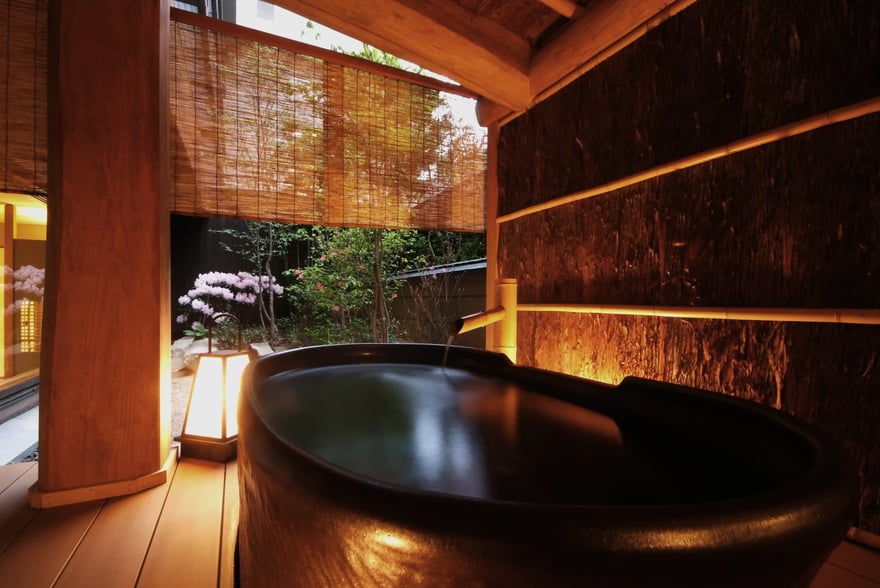
Luxury Villas & Glamping: High-end retreats limit guests to just a few parties per day—private villas, standalone cottages, or hotel-grade tents in nature. Privacy, meticulous interiors, and curated amenities create space for your own rhythm. WEAZER Nishi-Izu (mentioned earlier) hosts just one party per day; you can soak in an open-air bath while watching the sun set over the sea.
Some villas offer private-chef dinners, in-room spa treatments, or private yoga—fully customized stays. Glamping puts you under starry skies with plush beds and chef-made BBQs.
Prices are higher, but the immersion is unmatched: roughly ¥50,000–¥200,000 per room per night (about ¥25,000–¥100,000 per person for two). Multi-night packages can bring value. Many guests splurge for anniversaries or personal milestones, often saying the refresh was life-changing. If you want peak quiet and luxury, this is the lane.
Choose based on what matters most: learning and cultural practice (temple), onsen and classic Japanese comfort (ryokan), or design-forward privacy (villa). You can also combine them—a night of spiritual focus at a temple, a lazy onsen interlude, then a finale at a luxury hotel. Booking sites now have categories like “Temple Lodgings” and “Whole-Villa Stays,” making comparison easier.
Best Seasons, Booking, and Budgeting
For seasonality, spring (April–May) and autumn (October–November) bring mild weather and beautiful scenery—ideal for walks and activities—but they’re busy, so popular properties book out.
Summer (July–September) can be hot and humid in cities and lowlands, but highlands and Hokkaido are comfortable—forest shade makes summer woodland time surprisingly cool.
Winter (December–March) is cold but magical for snow-and-onsen pairings. Plan extra time for weather delays in snowy regions. Avoid Japan’s holiday peaks (Golden Week, Obon, New Year) for quieter stays—or aim for weekdays.
For booking, online tools have improved dramatically. Koyasan has an official shukubo association site(*)for availability and bookings; many other temples appear on major travel portals (Rakuten Travel, Jalan, JTB). Some still prefer phone/email—check official pages for rates and plans before contacting.
For ryokan and hotels, compare details and reviews across platforms; prices can vary (sometimes lower than direct), so check multiple sites (*3). JNTO guides multilingual platforms for overseas residents. Villas and glamping may be listed on specialists like Relux or Ikkyu.com, or bookable only via official sites. In all cases, book early for foliage season and event periods (e.g., major Koyasan commemorations).
Also book activities: some zazen sessions are free at fixed times (no reservation), but artisan workshops often cap participants and require advance signup. Make a list and weave programs into your itinerary from the start.
For budgeting, retreats can fit a wide range. To keep costs lower, pair temple stays with public transit: two nights at ¥10,000 each plus train fares can create a deep, affordable retreat around ¥30,000–¥40,000. On the high end, domestic travel keeps transport costs moderate so you can invest in lodging: two nights at ¥50,000 per person plus about ¥20,000 transport totals around ¥120,000.
That may offer better value than a week at an overseas spa resort. Estimate “lodging × nights + transport + meals & extras.” Many stays include meals, but budget for lunches, cafés, and souvenirs. Activity fees range from free to paid—check in advance. Note that farther destinations mean more time and cost: from Tokyo, Koyasan runs roughly ¥15,000 one way by Shinkansen/limited express, while Karuizawa is about ¥6,000 by Shinkansen. Flights fluctuate—use early-bird deals.
Finally, clarify your purpose: Do you want quiet rest, cultural learning, play in nature, or quiet luxury? Your aim shapes your destination and budget. If online information overwhelms, consult specialists or local tourism boards.
Many agencies now offer tailor-made wellness retreats for affluent travelers, and municipalities share model routes. In Kyushu, for instance, a ferry company and Hoshino Resorts proposed a “5-Day Kyushu Scenic Retreat by EV” course (onsen resorts connected by electric vehicles) (*4). Use such models as inspiration and customize your own. Prepare well, then open your heart to the journey.
The stillness, culture, and aesthetics of Japan’s retreats will cast new light on your daily life. Take a deep breath and step forward. Have a beautiful trip.
Longer in the world of the ryokan

Conclusion
The reason Japanese retreats feel special is simple: stillness isn’t the goal by itself—it’s the medium that helps you meet yourself with care. That intention runs through culture, nature, architecture, and food. Zazen and shakyo at a Zen temple, a single mindful bowl of tea, deep breaths in the forest followed by hot springs, and seasonal kaiseki or an organic course—each aligns your body and mind in the same direction.
New properties committed to sustainability and coexistence with local communities extend healing into the future. The key to planning is to name what you want to restore right now—learning, rest, nature, or quiet luxury.
Once your purpose is clear, destination and budget take shape. Reserve cultural experiences, choose your season, plot your transport (consider the quiet of EV travel), and simply avoid peak holidays—the quality of your experience will rise dramatically. Take one deep breath; when you’re ready, take the first step. In this land of stillness and aesthetics, your senses will clear again, and you’ll find yourself refreshed.