Somewhere between Tokyo's temple markets and its craft-supply backstreets, you will eventually pass a bolt of hand-dyed silk in colors no printer quite manages — colors laid down by an artisan tracing a design that took decades to learn, not by a machine repeating one. That craft is yuzen dyeing, the technique behind Japan's most elaborate painted kimono. Knowing what you are looking at, before you go, changes what you notice once you are there.
This is part of a wider guide to a quiet trip to Tokyo, and it exists for one reason: yuzen has a Tokyo chapter that almost nothing written for travelers mentions. Every article competing for this search sends you to Kyoto or Kanazawa. This one sends you to a dye house a few train stops from Shinjuku.
Yuzen Dyeing: The Painterly Kimono Art Behind Japan's Most Elaborate Textiles
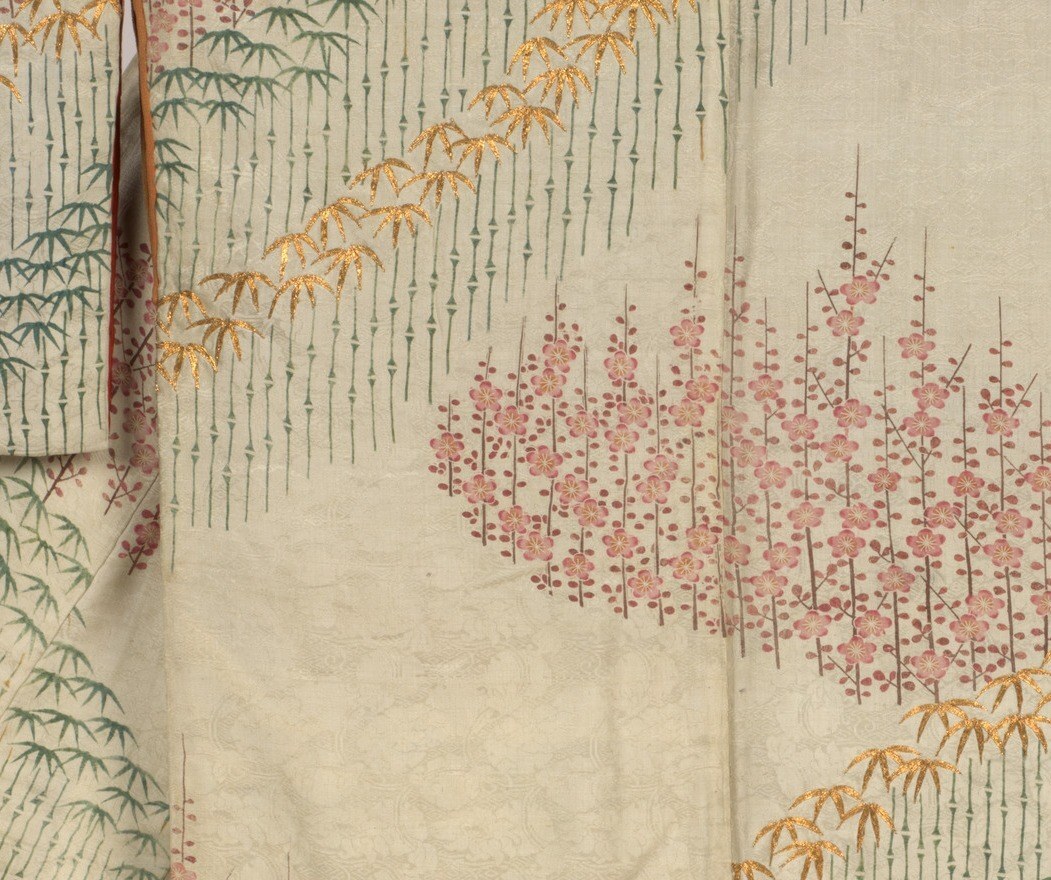
Yuzen is a resist-dyeing technique, not a painting technique, though it is built to look like one. An artisan draws a design directly onto silk, then traces every outline with a rice-paste resist called nori, piped from a paper cone into a raised ridge known as itome. Where that ridge sits, dye cannot penetrate the cloth beneath it. Once that paste is rinsed out — in a washing stage some workshops still call yuzen-nagashi — the fabric is left with the thread-thin white line separating each field of color. That line is the visual signature that lets a viewer read a yuzen kimono as a single continuous picture, a flock of cranes or a curtain of wisteria, rather than as a printed repeat.
That is also the answer to the question most searches around this word are really asking. The meaning of "yuzen" is not a technique at all — it is a person's name, absorbed into the craft that carries it, a history this article returns to further down. And "yuzen painting" is a slight misnomer for the same reason: brushes apply the color, but a painting has no resist ridge holding each stroke inside its own border. The Victoria and Albert Museum explains this paste-and-dye sequence in a short film on Kyo-Yuzen dyeing, from sketch to finished bolt — worth the six minutes before you compare it with what a shop shows you in person.
Yuzen vs. Shibori and Katazome: Why the Brush Makes All the Difference
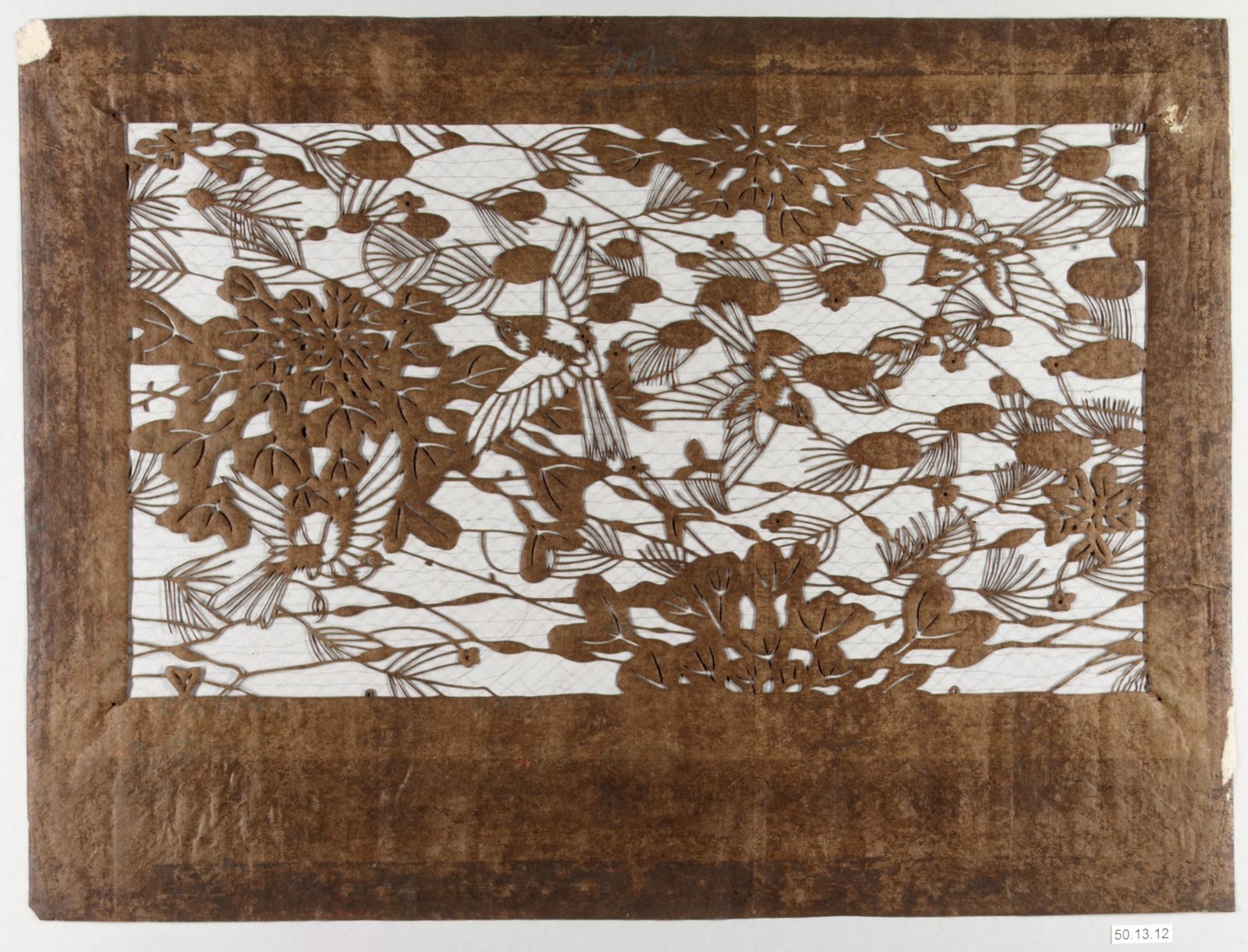
Japan has three major resist-dyeing families, and a traveler who can separate them at a glance gains a judgment tool that no amount of vocabulary alone provides. Shibori binds, stitches, or clamps the cloth before dyeing, so the resist is the fabric's own folded shape; the result reads as soft, slightly blurred rings and pleats, because dye always creeps a little under a physical fold. Katazome pushes paste through a carved paper stencil, so the resist is a template; the result is crisp, geometric, and — this is the tell — it repeats. The same motif recurs across the bolt at fixed intervals, because a stencil can only be so large.
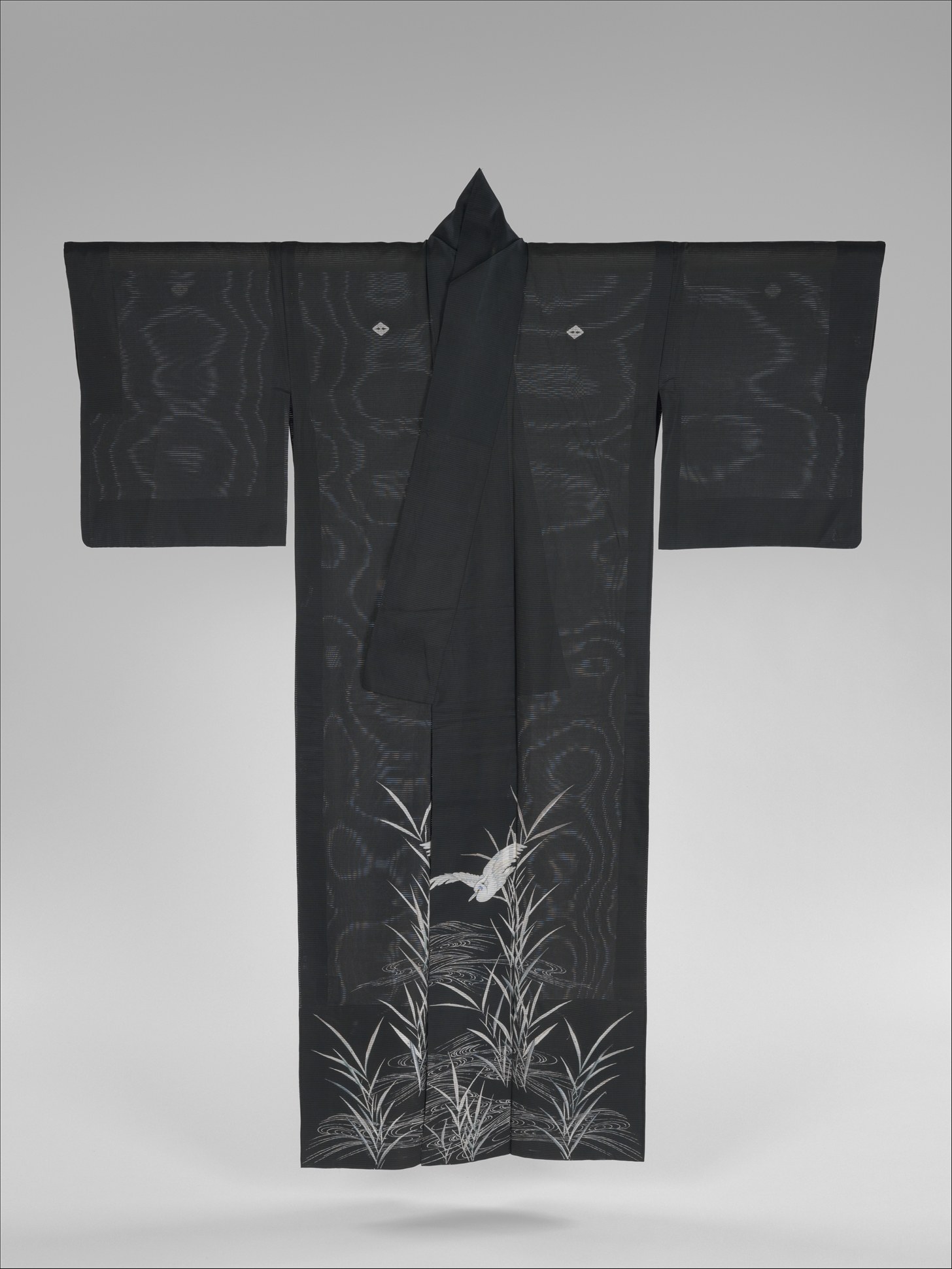
Yuzen answers to neither constraint. The paste is piped by hand, freehand, so the design can be as large and as non-repeating as an entire kimono back panel — a single heron in flight, a single mountain, unbroken by any seam the stencil would have forced. The judgment call this gives a visitor is simple to apply and hard to fake: if the pattern on a bolt of "hand-dyed" silk repeats every arm's length, a stencil made it, not a brush.

The Fan Painter Who Gave the Craft His Name: Yuzen's Origin in Edo-Period Kyoto
The craft is named after Miyazaki Yūzen — also recorded in some sources as Miyazaki Yūzensai — a fan painter working in Kyoto in the final decades of the seventeenth century. Historians place that century's final decades in the early Edo period — a name belonging to the era, not to the city of Edo, whose own yuzen style appears later in this article. His fan designs — bold, pictorial, unlike the small repeating patterns then common on textiles — became fashionable enough that Kyoto dyers began adapting them directly onto kimono silk, and the paste-resist method that could hold such large pictorial designs in place took his name rather than a technical one. It is a detail worth sitting with: the most technically demanding dyeing method in Japan is named not for its inventor-craftsman but for a painter whose ambition it was built to serve.
What makes this origin story more than trivia is what it explains about the craft's whole character. Because yuzen began as an attempt to move a painter's freedom onto cloth, its defining constraint is the opposite of a stencil's: the design is not supposed to repeat, and no two finished kimono are meant to read as identical. A traveler who keeps that origin in mind is already asking the right question in front of any bolt — not "how was this made" but "could this exact image exist twice."
Kyo-Yuzen, Kaga-Yuzen, Edo Yuzen: Three Cities, Three Very Different Looks
The technique did not stay in Kyoto. As it spread — to Kanazawa in the west and to Edo, the shogun's capital and the city that would become Tokyo — it split into three regional schools with genuinely different looks, not just different marketing names. Kyo-Yuzen stayed closest to the original court aesthetic: elaborate, frequently finished with gold leaf, couched thread embroidery, or hand-applied metallic accents over the dyed design. Kaga-Yuzen, centered on Kanazawa, developed its own signature instead of copying Kyoto's — commonly described as a five-color palette of indigo, crimson, ochre, green, and a deep purple-brown, with color graded from dark at a leaf's or petal's outer edge toward light at its center, and, distinctively, no gold accents at all. Edo Yuzen, the school this article is actually about, went the other direction from both: a narrower, more restrained palette, more single-color and two-color compositions, and almost none of Kyoto's added gold.
That answers a natural follow-up question directly. Kyo-Yuzen and Edo Yuzen share one underlying resist-and-dye technique, but they are not interchangeable products of it: each was shaped for a different city, a different clientele, and, as the next section explains, different social pressures — which is why they do not look alike on the bolt even to an untrained eye. A Textile Society of America symposium paper on the evolution of yuzen-dyeing techniques and designs, hosted in the University of Nebraska–Lincoln's open repository, traces this same regional divergence in more technical depth than a single museum label ever attempts.
Why Edo's Palette Turned Quiet: Samurai Sumptuary Laws and a City's Taste
Edo Yuzen's restraint was not a lack of ability. Yuzen dyeing as a whole, as the Yūzen entry compiled from historical costume scholarship records, became popular in part as a way of working around sumptuary laws restricting ostentatious dress. Those pressures fell hardest on the very class producing and wearing fine Edo dress. The Metropolitan Museum of Art notes that Edo-period Japan enforced a rigidly ranked Confucian social order in which merchants and artisans sat at the bottom of the official hierarchy, even as they were, in the museum's own words, "free to reap the economic and social benefits" of an increasingly prosperous age. Outward modesty was not optional for that class; it was the price of being conspicuously wealthy in a city built on rank.
Edo Yuzen's single-color grounds and its almost complete avoidance of gold read differently once that context is in view. The restraint was a workaround: luxury the eye had to be taught to find, rather than luxury announced from across a room. A single flawlessly even color field, dyed by hand across a full bolt of silk with no visible transition, is exacting work in its own right — it simply does not announce itself the way Kyoto's gold does.
How to Tell Museum-Quality Yuzen From a Tourist Souvenir
Three checks travel well, and none of them require reading Japanese or asking permission to touch anything you shouldn't. First, look at the resist ridge itself: a hand-piped itome sits in very slight relief and varies by a hair's width along its own length, because a human hand piped it; a printed imitation of that white outline is perfectly flat and perfectly uniform, because a screen made it. Second, ask to see — or simply look for — the reverse side of the fabric. Genuine dye soaks partway through hand-dyed silk and softens slightly at the edge of each field; a surface print sits entirely on top of the cloth and shows almost nothing on the back. Third, watch for repetition across the width of a garment. A single yuzen kimono is designed as one continuous composition; if the identical motif recurs at a fixed interval down the bolt, a stencil or a print cylinder made it, whatever the price tag claims.
None of this requires expertise a visitor cannot build in an afternoon. It requires knowing which three things to check, in an order that takes under a minute per garment — a shortcut worth more, in a shop, than any amount of general enthusiasm for "traditional craftsmanship."
From Kimono to Obi: How Yuzen Fits Tokyo's Wider Craft Wardrobe
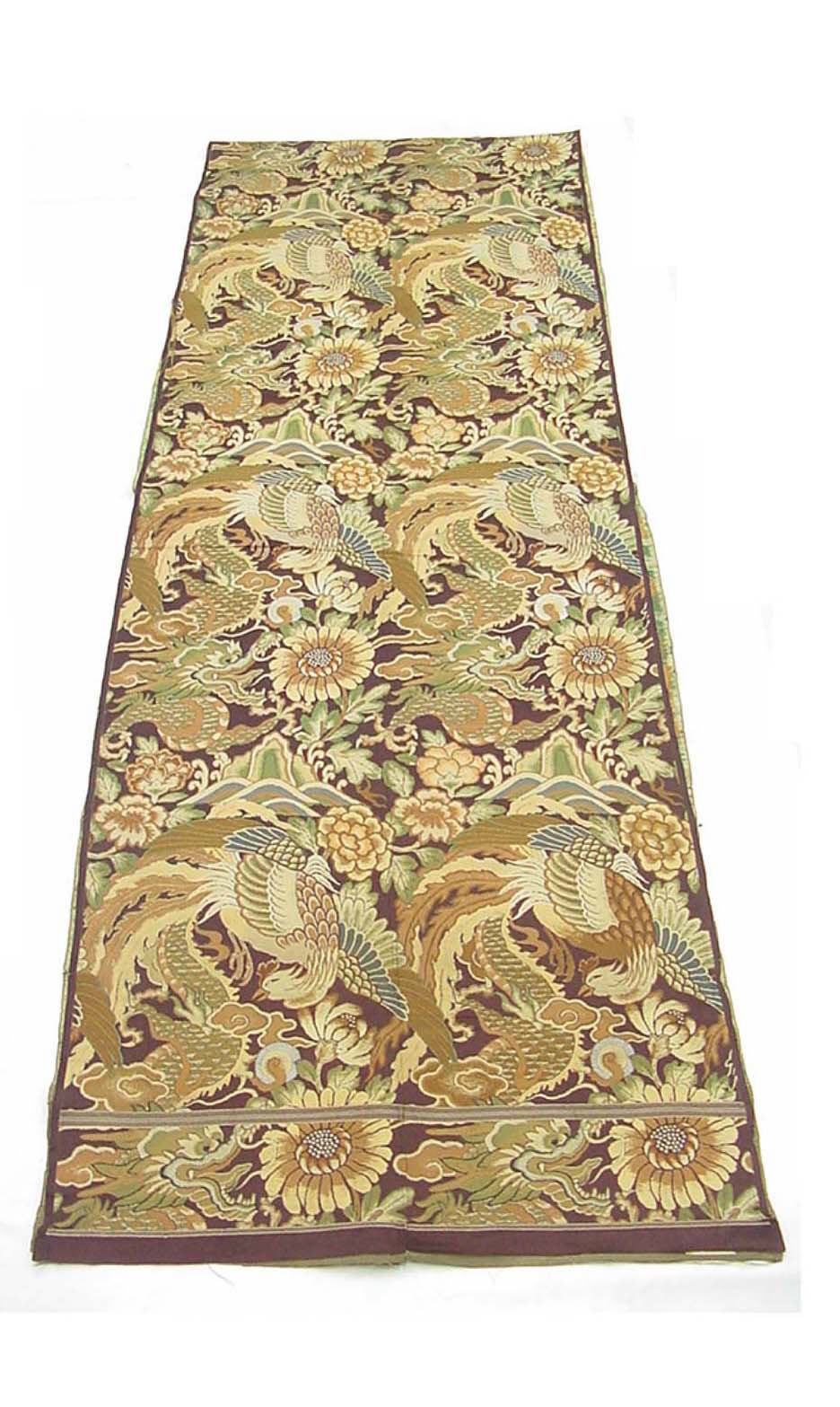
A yuzen kimono is never worn alone, and reading the rest of the outfit is part of reading the garment. The sash that ties it, the obi, is traditionally secured with a narrow braided cord called an obi-jime. The silk in that cord is dyed using a related but distinct technique, graded color along a single thread rather than across a woven field, as this site's history of kumihimo braiding sets out in more detail. The two crafts sit side by side on the same body without sharing a workshop — one more instance of the same specialist division of labor this article traces inside yuzen dyeing itself.
Kimono culture in Tokyo is also still a living, working-clothes culture in specific corners of the city, not only a museum subject. Rakugo storytellers perform in kimono at the city's surviving yose theaters, and — as this site's guide to judging rakugo covers — the choice and condition of a performer's robe is itself something a practiced audience reads, in the same spirit this article has been describing for yuzen. The garment and the performance share an audience trained to notice restraint.
The Access Hierarchy: From Museum Glass to a Workshop Door Few Tourists Find
Yuzen is visible to travelers at three distinct levels, and the first is by far the easiest to reach. Anyone can see museum-quality yuzen behind glass in a permanent textile collection, a level that takes little more than checking a museum's opening hours. A level up, a smaller number of visitors find their way to hands-on dyeing programs, typically built around katazome stencil work rather than freehand yuzen, where a guide or a listing has to be known in advance to book a slot.
The third level is the one this article exists to point toward: a working dye workshop, open to visitors only through introduction, where the craft is not displayed but practiced. This same structure governs access to at least one other living Tokyo craft trade — this site's guide to Tokyo's atsurae silverware craft describes an identical three-tier pattern for a completely different material. Knowing that a third tier exists at all — that it is not a myth, and that the door is simply not marked — is itself the useful piece of information here. This article does not carry a booking link for a reason: the deeper access is arranged through relationships, not listings, and that part is handled elsewhere.
Inside a Tokyo Hikizome Workshop: One Craft's Quiet Present, and Its Place in a Larger Chain
One such workshop is Fujiya Senkobo (ふじや染工房), a Tokyo dye house that continues to operate today and that specializes in hikizome — the background-dyeing stage of the yuzen process. As of 2026, Fujiya Senkobo is a working atelier, not a museum exhibit, and a fuller account of the people who work there — recorded on site, with names and dates attached — is planned to follow this article later in the year. What can be written honestly now, ahead of that reporting, is what hikizome actually is and where it sits inside the larger craft.
One Robe, Many Hands: Why Yuzen Is Never a Single Artisan's Work
A finished yuzen kimono is not, in either Kyoto or Edo tradition, the product of one person's hands. The design is drawn by a pattern specialist. The resist paste is piped by a nori-oki specialist, tracing that design line by line. The background color is then laid in — evenly, without a single visible brushstroke or streak across a panel of silk many feet long — by a hikizome specialist, using a wide flat brush and a technique closer to controlled flooding than to painting. After that, the piece typically passes to a steamer, who fixes the dye with heat in a stage called mushi, and finally to a washer, who rinses out the resist paste in the yuzen-nagashi stage and reveals the finished white line beneath it. By tradition, these are separate trades, each learned on its own rather than as a single apprenticeship.
A short description of a supplier's technique can easily flatten this distinction, so it is worth stating precisely: hikizome is one stage within yuzen production, not a synonym for yuzen itself. A workshop that specializes in it — as Fujiya Senkobo does — is not painting the pictorial motifs a visitor first notices on the finished robe. That craft's mastery is the opposite kind: laying, by hand, an absolutely even field of color across a large panel of silk — a skill easy to overlook precisely because, done well, it leaves nothing for the eye to catch on. Once that division of labor is visible, a finished kimono stops reading as a single object and starts reading as a small production chain — several distinct trained hands, anonymous to the wearer, each responsible for a stage a visitor would otherwise never think to separate out.