Ask what a wagara, a traditional Japanese pattern, means and the answers come easily: luck, protection, growth. Ask whether the pattern on a particular piece of cloth is well made and the conversation gets harder. This guide is about that second question. It does not give a glossary. It gives a set of things to look at before the motif, such as where a repeat joins, how a pattern reads from a distance and what the ground is doing, along with the history that explains why those things mattered.
Where it can, the guide leans on museums, a university dictionary and Tokyo's own craft records. Where only a shop is speaking, or where sources disagree, the text says so.
Wagara: What a Japanese Pattern Is, and What It Is Not
A list of meanings, such as waves for good fortune or hemp leaf for healthy growth, tells you what a pattern is said to carry. Whether the person who made it did the work well is a separate question. The meanings are documented. The National Gallery of Victoria's essay on kimono patterns says the hemp-leaf asanoha symbolises healthy growth and was often used on children's clothing, and that the tatewaku rising-steam pattern began in the Heian period (794 to 1185) as a court pattern used by nobles. But a meaning is one question and workmanship is another, and this guide starts with the second.
Wagara, Monyo and Ko: The Three Words That Get Translated as "Pattern"
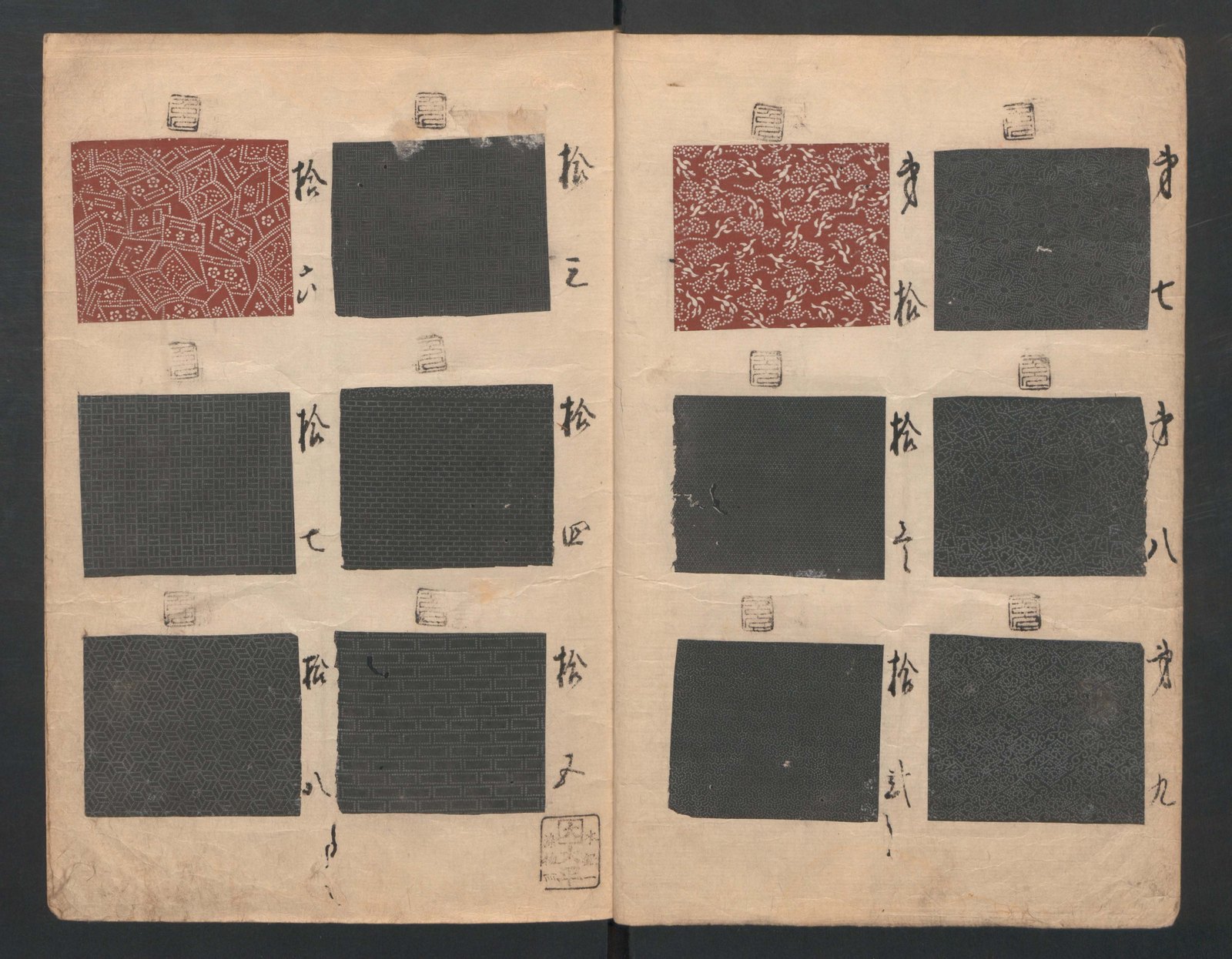
English folds three words into "pattern," and this guide sorts them as follows. Wagara, literally "Japanese pattern," names the whole family of traditional Japanese designs. Monyo (紋様) is the design itself, the word the National Gallery of Victoria uses for kimono patterns. And komon, "small pattern," is a scale. The Tokyo Metropolitan Government's craft page (archived April 2026) says fine-patterned stencil dyeing is said to have earned its name by contrast with large-patterned (daimon) and medium-patterned (chūgata) stencil dyeing. The dictionary of Columbia University's JAANUS defines komon as a small-scale repeated design, usually in one colour on a coloured ground, with motifs that range from tiny dots to blossoms nearly life-size. The short answer to "What is Wagara?" is Japan's traditional pattern vocabulary. The fuller answer is that the English word "pattern" covers family, design and scale at once, and the sections below take them apart.
Why "Each Wagara Has a Meaning" Is Only Half True
A one-line meaning flattens two different kinds of information: what a pattern was said to wish for, and who was allowed to use it. JAANUS says yūsoku motifs, court patterns derived from Heian court decoration, were used on clothing, utensils and furniture for the court and the state, with use tied to a family's status or court rank. The National Gallery of Victoria says the chrysanthemum pattern was reserved for the imperial court, that common people refrained from using it, and that it came into wide use after the Edo period. For these patterns, who could use them mattered as much as what they meant. A third question, how this particular piece was made, is the one you can check on the object.
How to Judge a Wagara: Six Things to Look At Before the Motif
Six things separate looking from naming: where the repeat joins, how the pattern reads from a distance, what the ground is doing, what tool cut the stencil, who the pattern was for, and what object it sits on. The first three are below. The tool and the audience come in the next chapter, and the object in the chapter after that.
Katagami and the Repeat: Where the Stencil Joins, and Why You Can See It
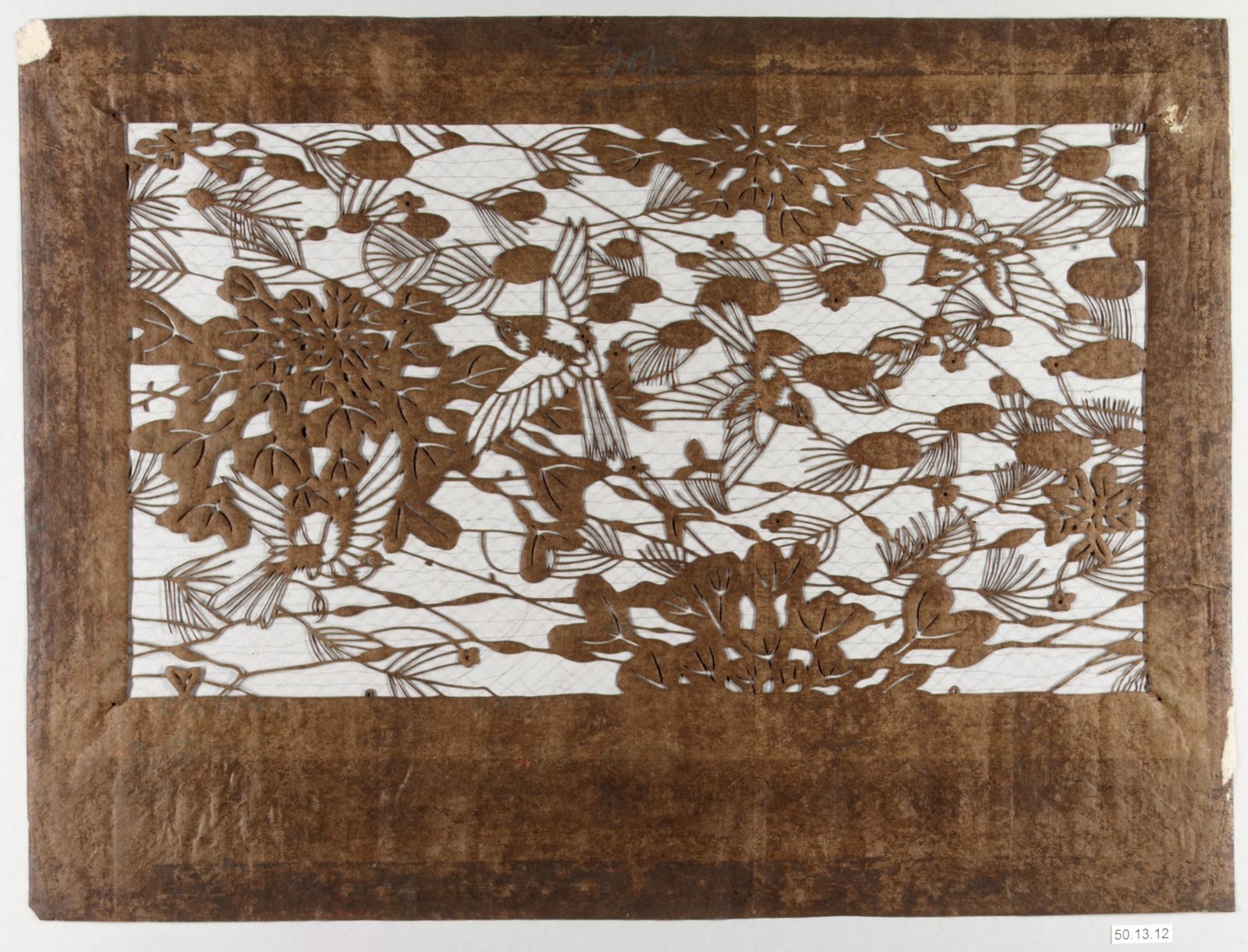
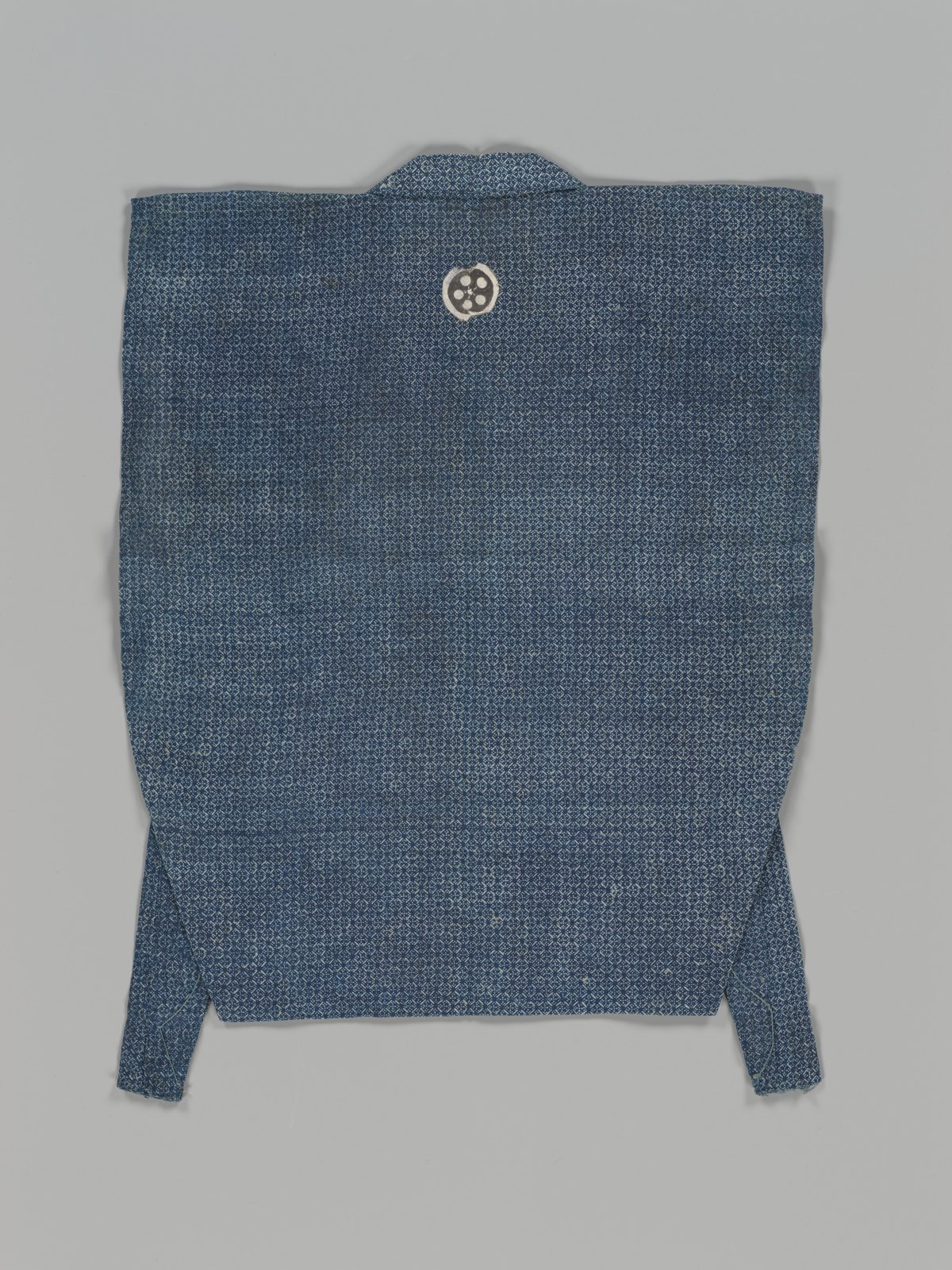
Komon-type patterns are not painted freehand. JAANUS gives the method for komon: a rice-paste resist is applied through a paper stencil, katagami, and the cloth is then dyed. The Tokyo Metropolitan Government's page on Tokyo Some-Komon adds that the stencils are applied to the cloth by hand, with the patterns matched up. That is where a repeat can show: the point at which the stencil rejoins itself. A visible seam or a break in the rhythm reads as a flaw, and a repeat that reads as continuous cloth is the intended result. This is a way of looking offered here, not a standard quoted from a source. The Metropolitan Museum of Art's note on a komon stencil says why such work was prized: komon textiles were expensive because small patterns require "great skill on the part of both the stencil cutter and the dyer."
Edo Komon: Why the Finest Wagara Reads as a Solid Colour from Two Metres
Edo komon pushes the repeat very far. The Tokyo page, which is about Tokyo Some-Komon, says the patterns are made of points and lines as small as 0.5 to 1 mm, and that the fine shark-skin pattern gokuzame holds more than 1,000 dots within a 3 cm square. Seen from a distance the cloth looks plain; the work shows up close, which the page describes as iki, a refinement that avoids apparent splendour as a first impression. NHK Educational's story on Google Arts & Culture, supervised by Associate Professor Maezaki Shinya of Kyoto Women's University and M. Rinne of the Kyoto National Museum, says that Edo komon textiles look "almost like solid colors from far away." Its examples include fine dots that, up close, form the characters for "flowers, birds, wind, and moon." So the test is a distance test: step back and the cloth should read as quiet colour, then step in and it should resolve into pattern. The sources give a scale, not a distance. Two metres is this guide's rule of thumb for "far enough."
Ground and Figure: The Part of a Wagara That Is Not Printed
The third thing is the ground. JAANUS describes komon as usually one colour on a coloured ground, and the Tokyo page explains the logic of the resist: a paste of glutinous rice powder, rice bran and salt is dye-proof, and areas treated with it keep their original colour when the cloth is dyed. In this kind of dyeing the figure is therefore made by what the cloth was prevented from taking. JAANUS notes that early Edo silk komon often showed three to seven white dots on blue. Look at the shapes that were kept clear as well as the shapes that appear to have been laid down.
How Wagara Changed Hands: Rank, Sumptuary Law and the Answer to a Ban
This guide reads three pressures in the record: rank decided who could use a pattern, law restricted what townspeople could wear, and the stencil is where fine work was physically carved. The next three sections take the pressures in that order.
Yusoku Monyo: When a Pattern Was a Rank, Not a Taste
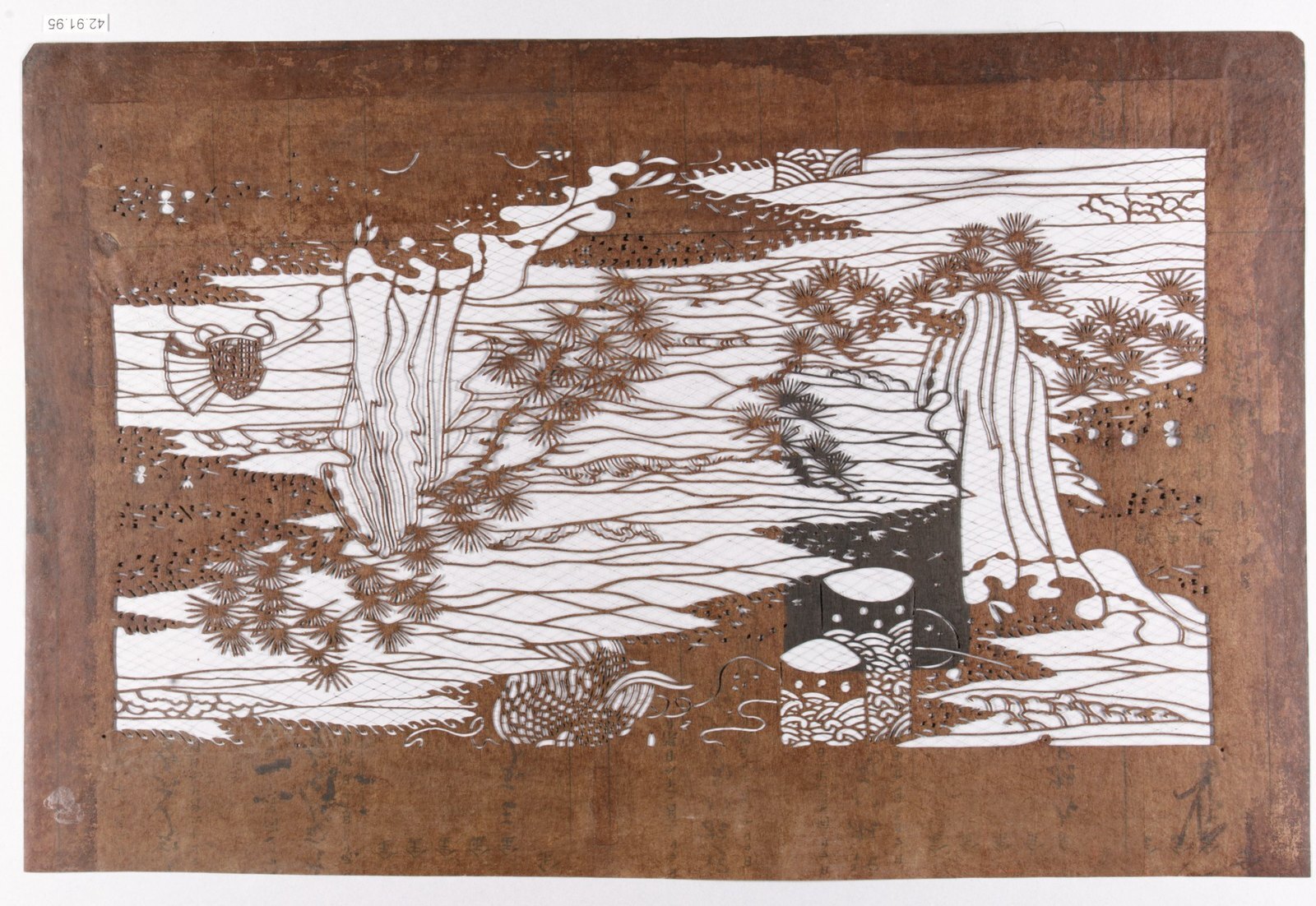
JAANUS dates the arrival of yūsoku monyō from the continent to about the eighth and ninth centuries, under Tang influence, and says they were adapted into distinctly Japanese designs. Its examples include circles, diamonds, crossed diagonals, checkerboards and the vertical curves of tatewaku, along with abstracted tortoiseshell, hailstones and a floral arabesque. The National Gallery of Victoria describes tatewaku as a Heian court pattern used by nobles on formal garments and furnishings, and says it has been widely used for celebratory occasions, including wedding kimono. The detailed rules about who could use which motif are not given in these sources, so this guide does not reconstruct them. The contrast this guide draws with the present is that people today choose a pattern by liking it, while for these motifs the older question was whose pattern it was.
The Edict Read as a Design Brief: Restriction and the Turn to Fineness
The second pressure came from the opposite direction. The Victoria and Albert Museum's gallery label for a kasuri kimono says that sumptuary laws issued during the Edo period prohibited particular fabrics, techniques and dyes. The edicts were not consistently enforced nor particularly effective, it adds, but they did lead to changes in style and taste: kasuri kimono, associated with rural Japan, became popular among fashionable city dwellers. A story from Kyoto Women's University's Lifestyle Design Laboratory on Google Arts & Culture says the Shogunate often issued orders banning luxury, and that townspeople hid their taste behind modest-looking goods such as accessories and linings in plain brown and grey and in simple patterns like checks.
Whether the same pressure explains the fineness of komon needs more care. A Ginza kimono dealer's history of Edo komon says that sumptuary laws moved samurai kamishimo, the formal upper garment of the samurai class, from bold, large patterns to finer komon, that samurai from different domains competed in delicacy, and that townspeople answered with witty iware komon in everyday motifs. The Tokyo page gives a different and shorter account: minute patterns were dyed into the kamishimo worn by feudal lords (daimyo) to distinguish their domains, and from the mid-Edo period the same techniques spread to townspeople's kimono and haori as culture flourished among them. The Met's stencil record says komon was used for samurai formal dress and, in the late Edo period, for "chic understated clothing of sophisticated townspeople." Read together, the sources agree that fineness and restraint went together. Only the dealer ties the law directly to the fineness. Reading the edict as a design brief, a limit that moved ambition into finer work, is this guide's interpretation, and it is offered as one.
Ise Katagami: The Tool That Made the Fineness Possible
The third pressure is the tool. The Tokyo page says that "Tokyo Some-Komon" names products engraved in Ise and dyed in Tokyo. Traditional Crafts Aoyama Square says Ise katagami are made in Suzuka, Mie Prefecture, around the villages of Shiroko and Jike, which received the protection of the Kishu domain in the Edo period. It lists four carving techniques, pull, thrust, tool and drill carving, and says drill carving is used for small patterns such as same-komon (shark skin), gyogi-toshi and arare (hailstone). The Tokyo page describes handmade paper treated with persimmon juice, seven or eight sheets overlaid and carved at once, and some patterns in a 3 cm square pierced with more than 1,000 holes. The Minister of Economy, Trade and Industry designated Ise katagami a traditional craft tool on 27 April 1983.
Seigaiha, Asanoha, Yagasuri: Reading Wagara Patterns Against the Object
Three motifs are taken up below. A list can say what each one is called. Reading one against an object is a different job.
Seigaiha: A Wave Pattern That Is Not Drawn as a Wave
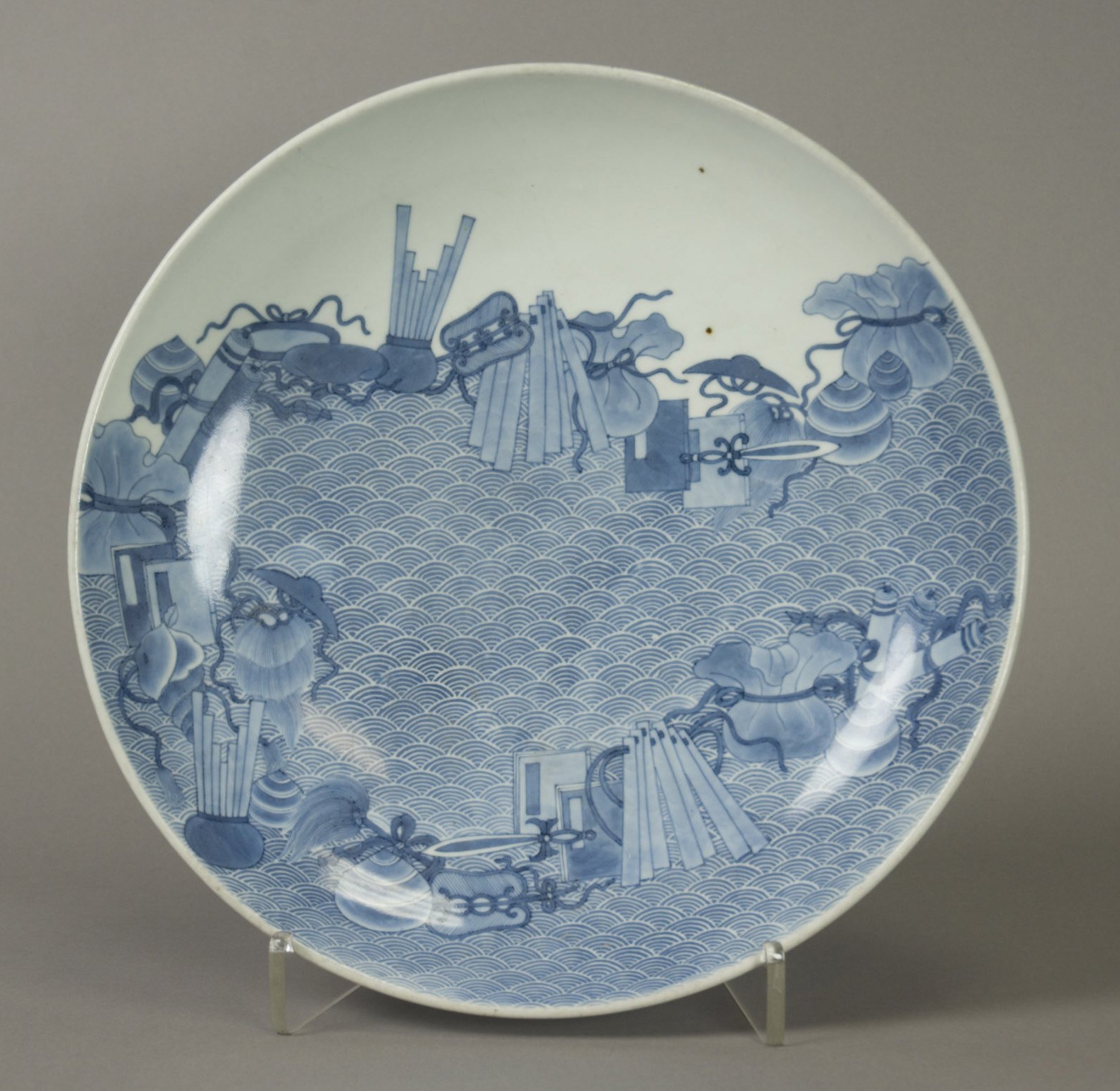
The Japanese wave pattern is called seigaiha. JAANUS describes it as overlapping concentric arches of which only the upper part of each set shows. JAANUS also records its history. In China the design depicted the sea on ancient maps. In Japan it first appears on the clothing of a haniwa (clay tomb figure) of a girl excavated in Gunma Prefecture, and from the Heian period it appears on the mo worn with the jūnihitoe court layers. It shows up on Kamakura-period Seto ceramics and lacquered inkstone cases, and in textile dyeing it is first seen on costumes for the court dance gagaku. In the Edo period Seikai Kanshichi developed a way to paint it in black lacquer with a brush, which some scholars think may have given the design its name. JAANUS offers this as one suggestion, not a settled origin.
Asanoha: The Geometry That Came from Somewhere Else
Asanoha, the hemp-leaf pattern, is a repeating six-sided design of six identical diamonds around a central point. JAANUS says it appears across ancient Asia but is said to resemble hemp only in Japan, that it was used in dyeing, weaving, papermaking and woodworking, and that because hemp grows straight it was often used on children's garments to wish for healthy growth. The National Gallery of Victoria dates its use in Japan to the Heian period and adds associations with prosperity and protection against evil. JAANUS finds it on the clothing of Buddhist statuary from the Heian to Muromachi periods and says it was especially popular in the Edo period, when Iwai Hanshirō (1776 to 1847) promoted it. A single structure that turns up in dyeing, weaving, papermaking and woodworking is the reason this pattern leads into the next chapter.
Yagasuri: The Arrow Pattern and What It Was Actually Worn For
The yagasuri pattern is the arrow-feather pattern. Masanao Arai's paper in the Textile Society of America's proceedings describes the Meiji image of women students: arrow-feather-pattern ikat (yagasuri) kimono, maroon pleated hakama (divided skirts) and lace-up boots. Around 1878, Arai writes, students preferred purple, but within about ten years maroon became popular and students were sarcastically nicknamed "Lady Maroon." The paper adds that the student fashion played an important part in the production of meisen textiles. The kimono in that description is ikat, which is woven rather than stencilled. The V&A's catalogue entry for a kasuri kimono explains that in kasuri the yarn is bound and dyed before weaving, so the pattern emerges as the cloth is woven, and the stencil-seam test above does not apply to it.
Wagara Beyond Cloth: The Same Pattern in Glass, Braid, Paper and Curtain
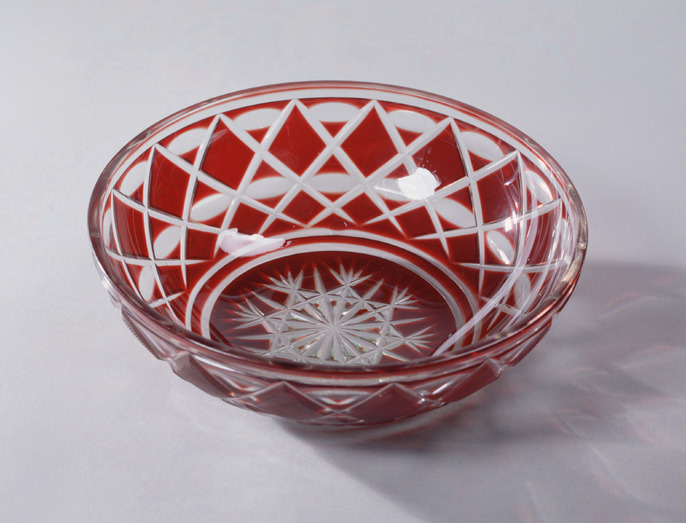
Pattern names are not tied to one material. The Edo Kiriko Cooperative Association's list of typical cut-glass patterns includes asa-no-ha, shippō, kikkō and yarai alongside nanako, and the National Gallery of Victoria describes kikkō as a pattern based on a regular hexagon. The same names appear in cloth and in glass. Our overview of Japan's traditional crafts covers the wider field.
Edo Kiriko and Kumihimo: When a Textile Wagara Becomes a Cut and a Braid
In komon, the pattern is made by keeping dye out. In Edo Kiriko it is cut into the glass. The Edo Kiriko Cooperative Association names fourteen typical patterns, and the Tokyo Metropolitan Government's page on Edo Kiriko describes a range of some 20 traditional patterns. The names are shared and the methods differ: resist dyeing in one, cutting in the other. Kumihimo is pattern-making of a different kind. Our kumihimo article describes silk threads wound onto weighted bobbins, set around a stand and moved through a fixed sequence until they interlock into one cord, and our article on kumihimo patterns reports that the design is settled before the braiding stand and carried by the cord's structure and its dyed threads. Whether named wagara motifs appear in braids is not covered there.
Noren and Washi: Wagara Designed to Be Seen Through
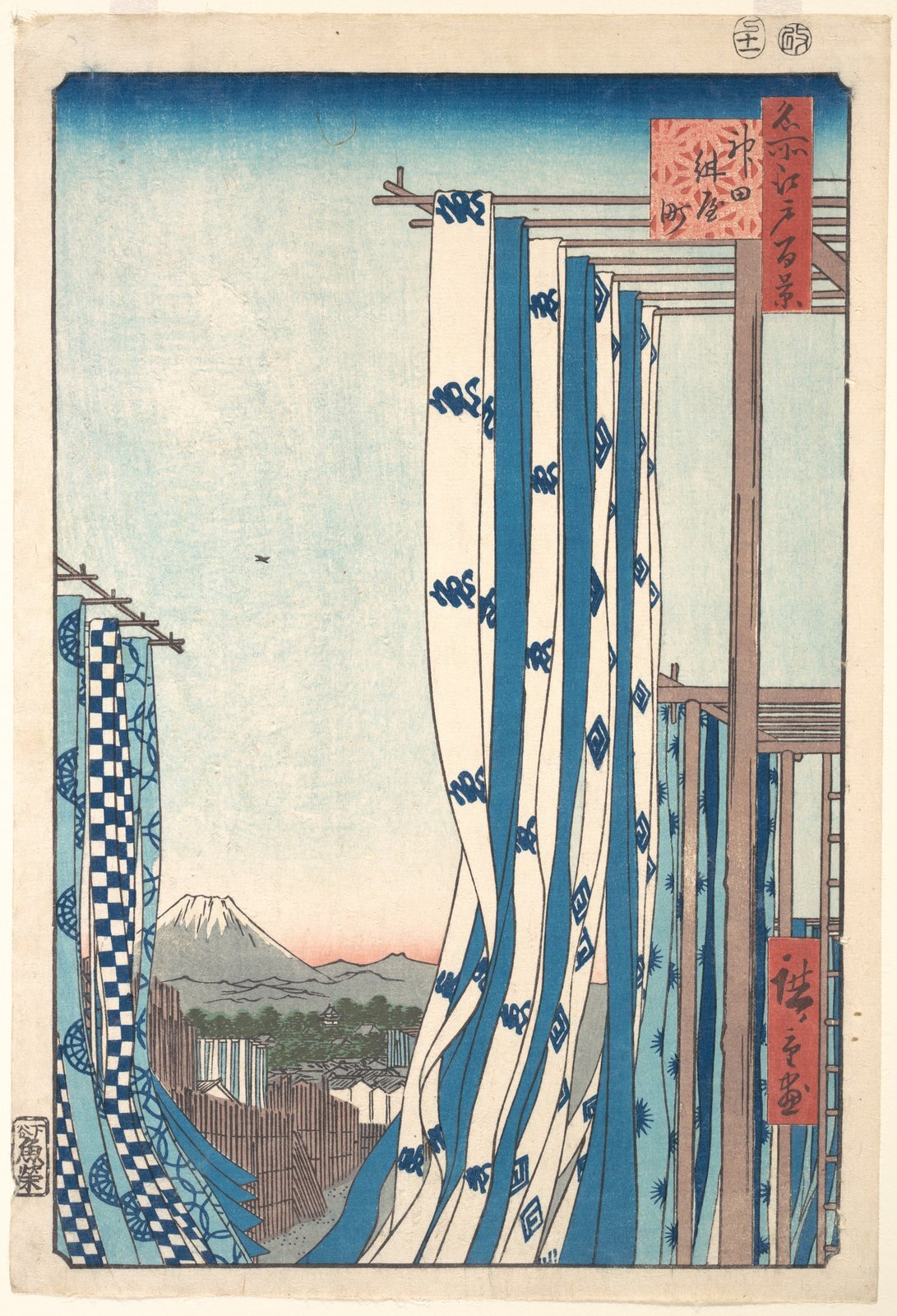
The Tokyo guide on GO TOKYO (archived January 2026) says the dyeing workshops of the Kanda River area produced "everything from kimono to noren shop curtains." Washi is valued for letting light through: our washi article, citing a hotel installation and a wallpaper maker, describes washi that lets gentle light filter through. A pattern on cloth is usually judged on an opaque surface, so a pattern on a curtain or a sheet of paper invites one more test: look at it with the light behind it and ask whether it still reads. That test is a way of looking offered here, not a documented design rule.
Where to See Wagara in Tokyo: The Three Tiers of Access
Access to wagara in Tokyo comes in three tiers, and knowing the tiers exist is worth more than any single address on the first. Opening details change, so the places below are named and the details are left to the official pages.
Anyone Can Go: Wagara in Museum Collections and Permanent Displays
The Tokyo National Museum's Japanese Gallery (Honkan) lists a second-floor gallery called "The Art of Fashion | 17th–19th century." The museum rotates its displays and posts the dates for each room, so what is on view in that room varies; check its page before going. In Shinjuku, GO TOKYO says the Tokyo Some Monogatari Museum, also known as Tomita Dye Craft, shows dyed kimono, shirts and neckties.
If You Know: Dyeing Districts, Open Workshops and Seasonal Showings
One tier up in effort is the dyeing district itself. GO TOKYO says the Kanda area was designated a centre of fabric dyeing in the Edo period, and that around the turn of the 20th century dyers moved up the Kanda River to Waseda, Totsuka, Ochiai and Nakai in search of clean water. Futaba-en, founded in 1920 and now called Some-no-Sato Ochiai, offers classes in the Edo dyeing technique, and the Tokyo Some Monogatari Museum runs workshops in the Tokyo Some-Komon style that must be reserved in advance. The same guide describes the Some no Komichi festival, held on the last weekend of February each year, when dyed cloth is hung over the river in the Ochiai and Nakai areas and the organising committee gives explanations in English. Prices, times and dates change, so confirm them with the studios.
By Introduction Only: The Design Studio Floor
This article does not yet include a firsthand account from inside a pattern-design studio: Bespoke Discovery has not yet visited or interviewed one for it, so the third tier, a visit by introduction only, is the part this article cannot yet describe from experience.
For travelers mapping a wider day of Tokyo craft and quiet cultural sites, our guide to a quiet trip to Tokyo is the place to start.