Osaka is a city where a deep past and cutting-edge energy meet in the best possible way. Whether you’re visiting for the first time or you already know your way around like a true Osaka regular, you’ll find layers of charm—and plenty of fresh discoveries waiting for you. If you’re searching “what to do in osaka,” this guide brings the essentials and the lesser-known gems together, with detailed recommendations by area and by theme.
From world-class cultural experiences and entertainment to exceptional food and nightlife—and even easy day trips—this guide covers the full spectrum. The more you read, the more clearly you’ll picture your ideal pace and priorities, and the easier trip planning becomes. Consider this your go-to, all-in-one Osaka playbook.
Introducing Recommended Things to Do in Osaka
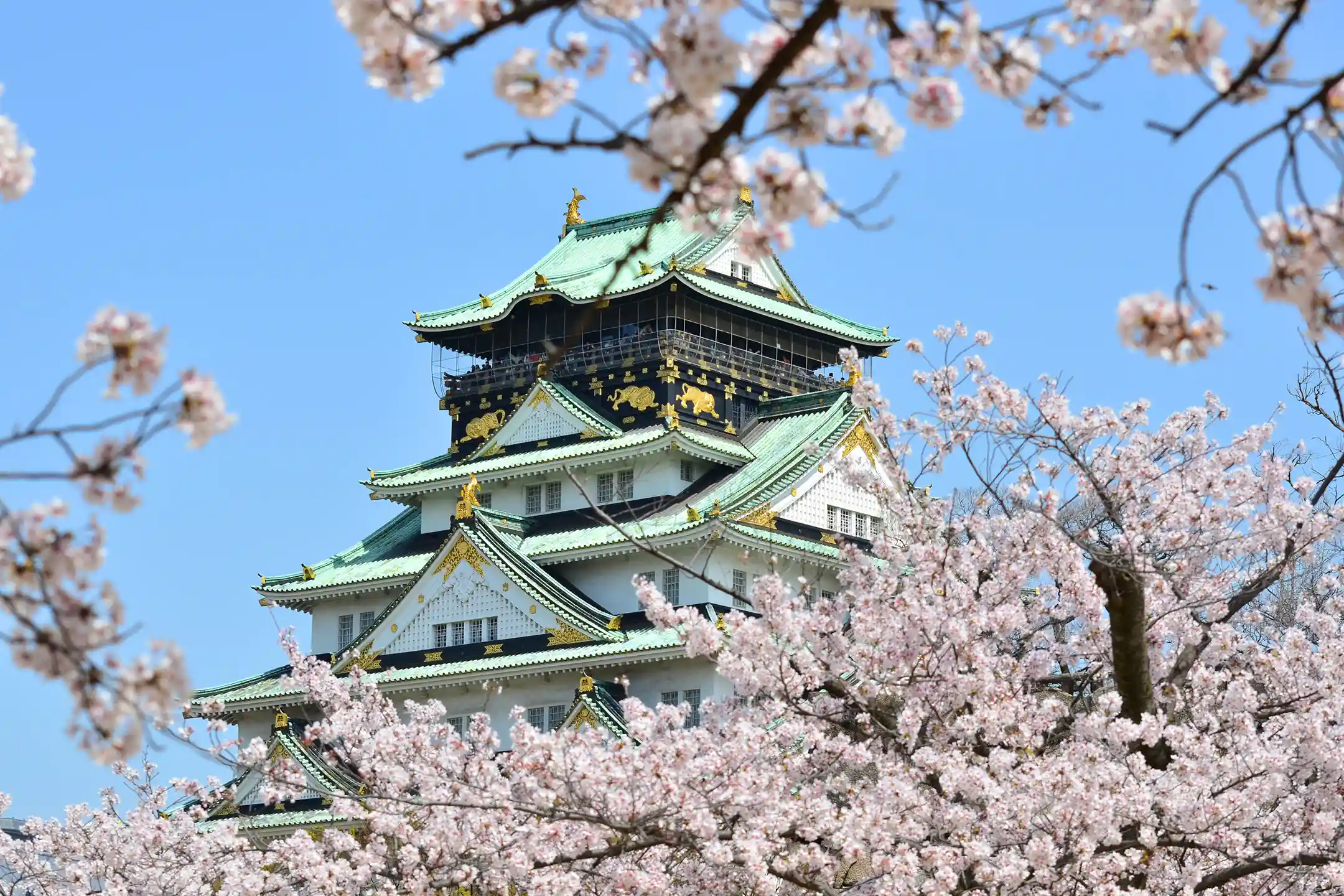
Let’s start with the essential highlights you won’t want to miss on your Osaka trip. If you love history, Osaka Castle—built under Toyotomi Hideyoshi as he pursued the unification of Japan—is a top recommendation. From the main tower, you can take in sweeping views of the modern skyline and the lush castle park below, and its majestic silhouette still stands out dramatically against the contemporary city around it.
The Dotonbori area, packed with food and photo-worthy scenes, is another must. Along the river, neon lights glow brightly, and the famous Glico sign—along with a sea of oversized billboards—paints the night sky in a way that instantly feels like “This is Osaka!” Kuromon Market is perfect for strolling and snacking: you can savor fresh sushi, seafood, and fruit right on the spot. If you head toward the waterfront, you’ll find Kaiyukan, one of Japan’s largest aquariums, where you can meet an enormous whale shark gliding through a massive tank and encounter around 620 species and 30,000 marine creatures (*1).
If you’re traveling with family—or you’re a movie fan—Universal Studios Japan (USJ) is a can’t-miss theme-park experience inspired by global blockbusters. And from the Floating Garden Observatory at Umeda Sky Building, you can enjoy a stunning 360-degree panorama from dusk into night, setting the stage for an unforgettable, romantic moment (*2).
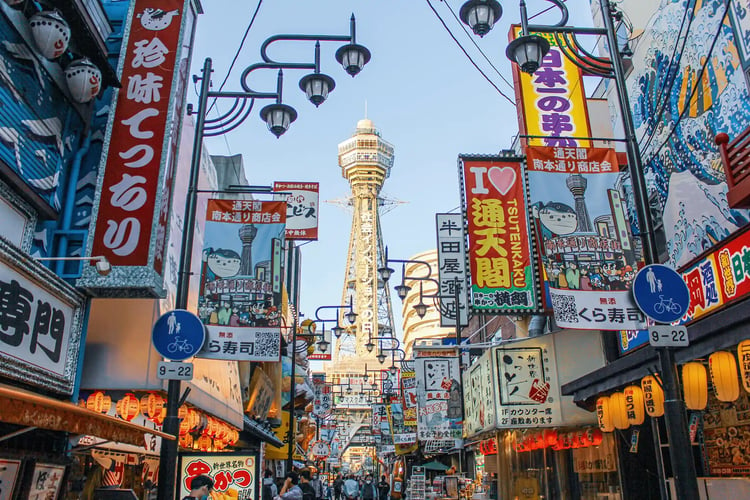
If you’re drawn to art and retro architecture, the Nakanoshima area’s cluster of museums and its stately Neo-Renaissance buildings make for an inspiring walk. In the Shinsekai area, you can head up Tsutenkaku Tower to soak up the downtown atmosphere, then bite into crispy kushikatsu in a throwback setting—an easy way to feel close to everyday Osaka culture.
And beyond the classics, you can discover a different side of Osaka too: visit Sumiyoshi Taisha for a quiet shrine visit in a serene forest, or step into a dreamlike “garden of light” at Nagai Botanical Garden during its nighttime digital art events (*3). In short, Osaka gives you endless ways to enjoy yourself—so follow your curiosity, check official sites for the latest hours and ticket rules, and build your own best-of route.
Things to Do in Osaka by Area
Osaka’s attractions have distinct personalities depending on where you are. Once you understand how the key neighborhoods fit together, it becomes much easier to design an efficient itinerary. The northern Umeda (Kita) area, centered around Osaka Station, is a modern business district where skyscrapers and the newest facilities gather in one place.
In central Osaka, the Nakanoshima and Kitahama area is surrounded by rivers—an elegant waterfront arts zone where Osaka’s history and culture still feel close. In the south, Minami (Shinsaibashi to Namba and Dotonbori) is famous as the city’s food-and-fun core. Farther south, the Tennoji and Shinsekai area blends classic downtown character with modern landmarks. To the west, the bay area (around Osaka Port) offers an open, seaside feel along with forward-looking attractions.
By pairing sightseeing with food in each area—and leaning on the city’s convenient rail and subway connections—you’ll be able to experience Osaka’s many sides without missing a thing.
Nakanoshima & Kitahama|Water-City Art and Historic Architecture
The Nakanoshima to Kitahama area, lined with office towers, is wrapped by the Dojima and Tosabori Rivers—an emblem of “water-city” Osaka that still holds echoes of earlier eras. In fact, this neighborhood is also a treasure trove of retro architecture: many landmark buildings from Osaka’s economic golden age remain here, dating from the late Meiji period through the early Showa period, when the city was known as “Great Osaka” (*1).
Nakanoshima is home to internationally recognized museums such as The National Museum of Art, Osaka, and the Osaka Nakanoshima Museum of Art—perfect if you want a serious art day. Along the riverside, you’ll find striking Western-style buildings like the Neo-Renaissance Osaka City Central Public Hall (completed in 1918) and the Osaka Prefectural Nakanoshima Library, completed in 1904 (Meiji 37). Their elegant façades are incredibly photogenic. At night, the illuminated red-brick architecture reflected on the water creates a dreamlike scene you’ll want to capture.
Around Kitahama, you’ll also spot stylish cafés and bars inside renovated former bank buildings. Some riverside terraces let you enjoy tea time with a waterfront breeze, where the pace feels surprisingly unhurried for a big city. This is the charm of Nakanoshima & Kitahama: admire historic buildings, immerse yourself in art museums, and then pause in a retro-building café—an ideal cultural stroll, all in one area.
Umeda (Kita)|Observatories, Architecture, and Hotel Experiences
The Umeda area (often called Kita) is Osaka’s premier business district and shopping town. You can take in sweeping views from high-rise observatories, but the most rewarding time to go is from sunset into night.
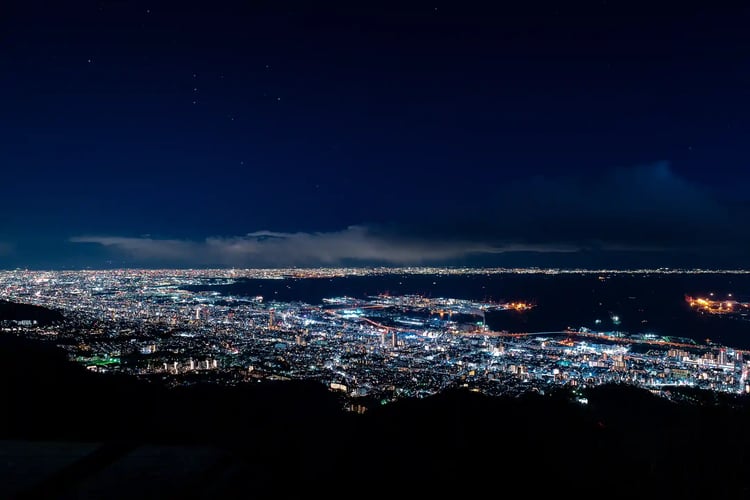
After the sun goes down, the sky turns a deep indigo, and then the city’s neon gradually begins to glow—your “magic hour” begins (*1). If you head up to the Floating Garden Observatory at Umeda Sky Building (about 173 meters above ground) at just the right moment, you’ll catch Osaka’s shifting twilight and nightscape in one memorable stretch of time. Even on rainy days, you can still enjoy the view from the indoor floor of the observatory or from a station-connected building’s observation lobby.
Another Umeda-area highlight is the number of hotels that incorporate strong design sensibilities. Slightly closer to Nakanoshima, Conrad Osaka is famously described as “an art museum floating in the sky,” with an astonishing 389 art pieces displayed throughout the property (*2). Even if you’re not staying overnight, you can still view some of the art by visiting the lobby or using the restaurants—an easy way to step into a non-everyday world.
Umeda also has department stores that often include galleries and exhibition spaces. At Hankyu Umeda Main Store, for instance, you’ll regularly find exhibitions by well-known painters and rotating craft shows. Whether you’re sipping a cocktail at a high-floor bar while admiring the night view, or enjoying a hotel stay where art and hospitality blend seamlessly, Umeda offers plenty of sophisticated ways to spend your time.
Minami (Shinsaibashi–Namba–Dotonbori)|Food, Performing Arts, and Design
Minami is Osaka’s center of entertainment and cuisine. The Namba and Dotonbori area truly lives up to Osaka’s reputation as a city built for eating well: along Dotonbori, you’ll find stalls and specialty shops serving local classics like takoyaki and okonomiyaki, making it a perfect place for casual food-hopping.
Beyond flour-based comfort foods, Minami also offers a wide range of dining—from long-established kappo restaurants to standout sushi counters—so you can enjoy everything from relaxed meals to refined experiences. Around Hozenji Yokocho, for example, hidden kappo spots and bars are tucked away in atmospheric lanes. After you visit Hozenji Temple, known for its Mizukake Fudo (the “water-splashing” Fudo deity), you can settle into a quietly stylish dinner and drinks—an effortlessly Osaka kind of evening.
Minami is also a gathering point for traditional performing arts. In Nihonbashi, the National Bunraku Theatre lets you experience bunraku, one of Japan’s most celebrated performing arts. Bunraku was born in Osaka in the 17th century, and its distinctive stagecraft features puppets operated by three puppeteers, performed in sync with the shamisen and the powerful narration of the tayu storyteller (*3). Subtitles and headphone guides (including English support) are available for beginners, so even if you don’t understand every word, the intensity of the performance and the artistry of the puppets can move you deeply.
Comedy culture thrives here too. While Tenma Tenjin Hanjotei (a fixed venue for Kamigata rakugo) is located in the Tenjinbashisuji Shopping Street, Minami is also full of rakugo and manzai energy. At Namba Grand Kagetsu (NGK), Yoshimoto Shinkigeki and manzai shows run daily, letting you feel Osaka’s love of laughter firsthand. And from an architectural design perspective, Minami is full of intriguing stops.
In Shinsaibashi, you’ll find the main building of Daimaru Shinsaibashi Store (Neo-Gothic design by W. M. Vories), completed in 1933 (Showa 8). While the interior has been renewed, the exterior’s design details have been preserved. Near Ebisu Bridge, the “Orange Street” (Tachibana-dori) area gathers interior shops and cafés created from renovated warehouses, and you can discover tasteful products and craft goods by younger designers.
If you love tableware, you’ll also enjoy exploring the backstreets behind Shinsaibashi-suji for galleries and ceramics shops. In Minami, tradition and trend intersect—food, performance, and design all converge—so you can feel Osaka’s vibrant momentum up close.
Tennoji & Shinsekai|Modern Heritage and Everyday Osaka Culture
In southern Osaka, the Tennoji and Shinsekai area has a distinctive atmosphere where old Osaka and new development exist side by side. Tennoji is home to the Osaka City Museum of Fine Arts, with notable holdings that include Chinese art and Japanese painting. Right beside it, Keitakuen Garden is a strolling-style Japanese garden donated by the Sumitomo family in the Taisho era. After museum time, it’s an ideal place to wander while admiring seasonal flowers and the pond. Early in the morning, the grounds are especially quiet—spend a calm moment by the water, and you may forget the city’s bustle entirely.
In the morning, visiting Shitennoji Temple is also highly recommended. Founded in the 6th century by Prince Shotoku, Shitennoji is considered one of Japan’s oldest Buddhist temples. If you follow basic temple etiquette—bow lightly when passing through gates, avoid walking down the very center of the approach, and keep a respectful tone as you move through the grounds—you can start your day feeling clear and refreshed (*4).
Head toward Shinsekai, and the mood shifts instantly into a lively, Showa-era throwback. The area’s symbol, Tsutenkaku Tower, offers a 360-degree view of Osaka, and the grid-like streetscape of Shinsekai spread out below feels uniquely memorable. The first Tsutenkaku was built in 1912, and the current tower is the second, rebuilt in 1956 (Showa 31).
If you walk through Janjan Yokocho in the morning, you’ll find scenes that feel straight out of another time: older locals playing shogi, kushikatsu shops preparing to open, and a lived-in atmosphere that’s a dream for photographers. It gets crowded from midday onward, but the morning alleys are full of local texture—perfect for a casual snapshot walk.
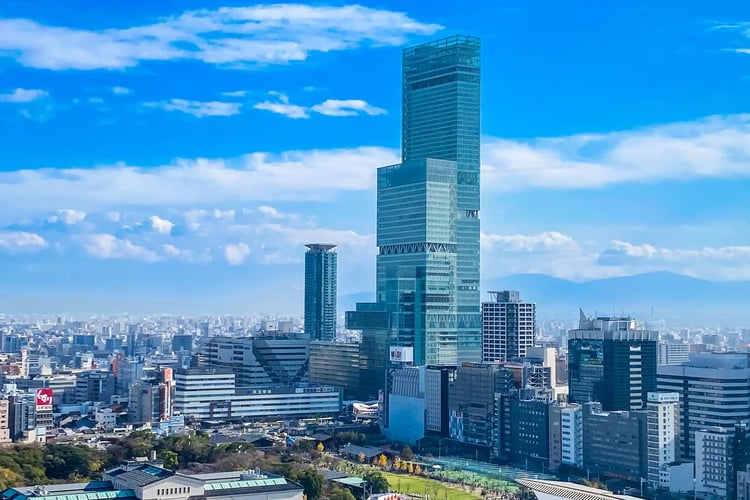
A bit east of Shinsekai, you’ll also find historic sites associated with Sanada Yukimura, such as Chausuyama, which will interest history fans. In the Tennoji Park area, large commercial facilities and green spaces have been developed, and the 300-meter skyscraper Abeno Harukas rises above it all.
Because the Harukas observatory is indoors, you can enjoy it regardless of the weather—and at night, sparkling views stretch across the Osaka Plain. Tennoji and Shinsekai, where warm downtown character blends with modern city growth, is an area where you can feel Osaka’s many expressions in one place.
Bay Area (Kaiyukan, USJ, Sakishima)|Waterfront Freedom and a Future-Forward Feel
Facing Osaka Bay, the bay area is a breezy waterfront zone with major entertainment facilities that work beautifully for everyone—from families to couples. One standout is Kaiyukan (Osaka Aquarium Kaiyukan) in the Tempozan area. Known as one of the world’s largest aquariums, it features a massive tank recreating the Pacific Ocean, where you can watch the world’s largest fish, the whale shark, swim calmly up close.
Around 620 species and 30,000 living creatures inhabit the facility, making its scale one of the most impressive in the world (*1). The distinctive architecture itself is also a landmark of Osaka, and since opening in 1990, it has welcomed more than 80 million visitors—proof of its enduring popularity (*1). To enjoy Kaiyukan efficiently, aim for right after opening in the morning or later in the day, when it tends to be less crowded.
Because the whale sharks swim slowly and gracefully, take your time: descend alongside the tank (roughly the height of a three-story building) on the escalator, and observe from different angles as you go. In the evening, riding a nearby cruise ship to enjoy the bay area’s night view and ocean breeze can feel wonderfully romantic.
On the night cruise of the sailing-ship-style sightseeing boat Santa Maria, you can relax as you watch the harbor lights sparkle. Nearby Tempozan Harbor Village also offers a Ferris wheel and a marketplace, plus restaurants where you can dine while admiring the waterfront nightscape.
Another major bay-area highlight is Universal Studios Japan (USJ) in Konohana Ward. This theme park recreates the worlds of globally popular movies, and it’s packed with experiences—from the newest Mario-themed area to Hollywood-style thrill rides—so you’ll easily find a full day isn’t enough.
To enjoy USJ efficiently, it’s recommended to buy an “Express Pass” in advance. With it, you can access priority entry for in-demand attractions and make the most of limited time. Another basic strategy is to arrive before opening, wait near the entrance gates, and head straight to your top-priority ride the moment the park opens. Wait times often ease a bit after late afternoon, so looping back for popular rides then can also be a smart move—just be sure to confirm current ticket rules and entry procedures on the official site.
At the southern end of the bay area, Sakishima also offers event venues such as Osaka Nanko ATC and Intex Osaka, along with the 256-meter Osaka Prefectural Government Sakishima Building Observatory (Cosmo Tower). From the top floor, you can look across Osaka Bay all the way to the Akashi Kaikyo Bridge, and the sunset view is a true hidden gem. With futuristic architecture lining the area, Sakishima lets you sense a new face of Osaka.
Things to Do in Osaka by Theme
If you want to explore Osaka in a way that matches your interests, this section gathers key highlights by theme. Even when themes overlap across areas, we’ll introduce them here in a unified way—so you can build your itinerary around what you’re most excited about.
Whether you want to go all-in on food, immerse yourself in traditional culture and performing arts, enjoy architectural and design-focused city walks, plan your nights, prepare for rainy days, or find budget-friendly ways to get around—this is where you’ll find the practical, purpose-driven ideas you’re looking for.
Gourmet Experiences
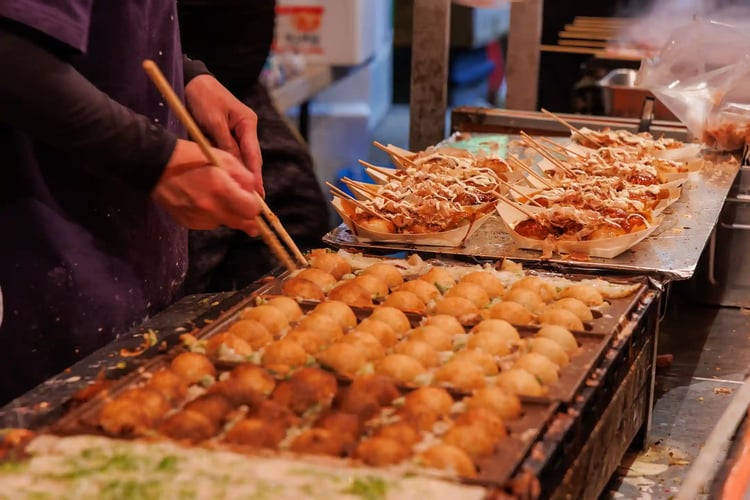
Flour-Based Favorites & Everyday Osaka Eats:When you think of Osaka, flour-based classics are impossible to skip. Takoyaki—crispy on the outside and deliciously soft inside—is a beloved local comfort food. In Dotonbori, you can bite into it fresh from famous shops or from a stall village like “Takoyaki Yokocho.”
Okonomiyaki is another essential. If you try the hands-on experience of cooking Kansai-style okonomiyaki yourself at a long-established Minami restaurant, it becomes a travel memory you’ll carry home. Kushikatsu is also something you’ll want to try in Shinsekai—enjoy it while respecting the famous “no double-dipping” sauce rule. With so many tasty, affordable options, Osaka truly lives up to its reputation as a city where food-hopping can leave you happily, completely full.
High-End & Traditional Cuisine:At the same time, Osaka is home to many Michelin-starred restaurants, and its fine dining scene is top-tier. In Kitashinchi, renowned kappo and sushi restaurants line the streets, and you can savor seasonal dishes that showcase master craftsmanship. Osaka-style sushi (such as oshizushi/box sushi), distinct from Edo-style, offers a refined curiosity: beautifully composed, visually elegant, and delicately flavored—exactly the kind of detail that sparks an intellectually curious traveler’s interest.
Some highly regarded ryotei can be difficult to book, but certain Japanese restaurants inside hotels make it easier to experience kaiseki in a more approachable way. And as a taste of the city’s true “kuidaore” spirit, you can also stop by local diners and izakaya, sample everyday side dishes or oden, and enjoy local sake—this is Osaka style, too. Osaka’s food culture has a remarkable range, from luxe to casual, so choose what fits your budget and try widely.
Market Walks & Learning Through Food:If you’re deeply interested in food culture, visiting “Osaka’s kitchen” is especially rewarding. At Kuromon Market, you can explore fishmongers and dried-goods shops where professional chefs also source ingredients, and learn about dashi culture and seasonal produce as you go. On an English-guided market tour, you may get to smell katsuobushi or kombu, and even sample dashi—an experiential way to understand the depth of Japanese umami.
If your interest goes further, joining a specialized workshop on fermented foods or dashi can be another great option. Osaka has long-established soy sauce brewers and miso makers, and some programs let you make miso or try comparative soy sauce tastings.
If you love cooking, you might also visit Sakai—the city known for knives—and join a Japanese knife-sharpening class, or stop by culinary tool shops to bring home a copper takoyaki pan as a keepsake. Osaka’s food culture becomes even richer when you go beyond “eating” into “learning and making.”
Culture, Performing Arts, and Art
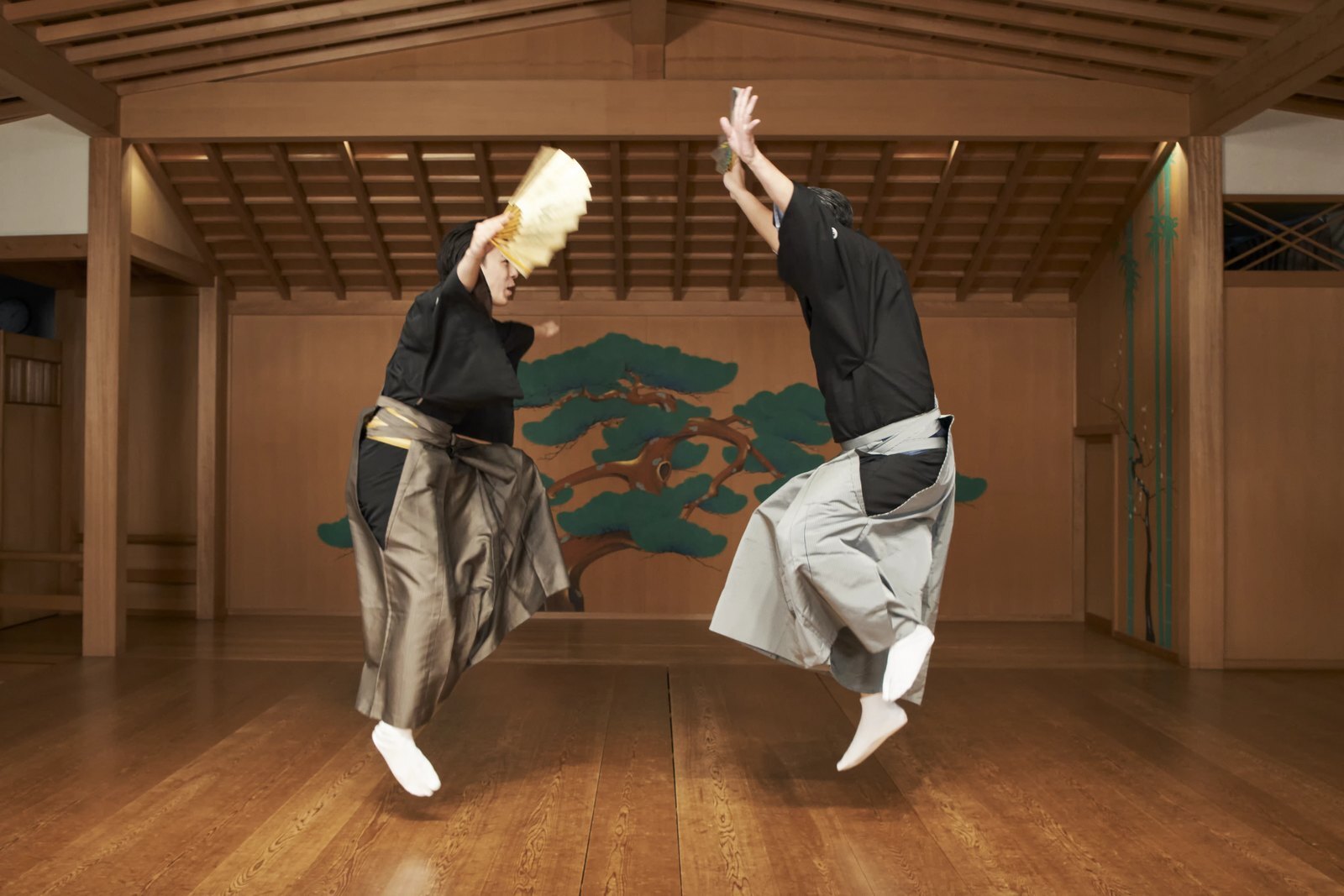
Bunraku and Traditional Performing Arts:As a center of Kamigata culture, Osaka has long supported puppet theater, Noh, kabuki, and more. Among these, bunraku (puppet joruri) is a traditional performing art that originated in Osaka and is recognized as a major cultural treasure of Japan—also designated by UNESCO as an Intangible Cultural Heritage (*1).
At the National Bunraku Theatre, full bunraku performances are held several times a year. The stage is powered by a compelling unity: puppeteers, the tayu narrator who tells the story with shamisen accompaniment, and the shamisen musician together weave the drama. Even if it’s your first time, the intensity can pull you in completely. With English audio guides and pamphlets available, overseas visitors and beginners can watch with confidence.
Kamigata Rakugo and the Culture of Laughter:Osaka is often imagined as the “capital of laughter,” famous for manzai and comedy sketches, but rakugo—an important classical art—also holds a central place here. Compared with Edo rakugo, Osaka’s version is known as Kamigata rakugo, often described as more down-to-earth, with livelier gestures. Tenma Tenjin Hanjotei, in the Tenjinbashisuji Shopping Street, is a historically significant venue that reopened a fixed rakugo theater in 2006 after a hiatus of more than 60 years following WWII (*2). Rakugo shows are held twice daily, afternoon and evening.
Even if you don’t understand every word, the storytelling—creating vivid scenes using only a folding fan and a small towel—can still be genuinely enjoyable. In recent years, some rakugo performers have begun presenting rakugo in English for international audiences, so if the timing works out, joining an English rakugo event in Osaka could be a memorable experience. Kabuki and Noh are also performed at venues such as Osaka Shochikuza and Otsuki Noh Theatre, and subtitle-supported performances for beginners are increasingly available—so if your schedule allows, take the chance to experience traditional performing arts.
Contemporary Art and Galleries:Osaka’s art scene is thriving as well. In Nakanoshima, The National Museum of Art, Osaka (NMAO) holds a wide range of works, from international modern and contemporary art (including artists such as Picasso and Dalí) to Japanese contemporary art. In 2022, the Osaka Nakanoshima Museum of Art also opened, and its collection spans pop art, graphic design, and architectural materials, totaling more than 6,000 works (*3).
Exhibitions rotate with changing themes, so every visit can bring new discoveries. Beyond museums, distinctive galleries are scattered throughout the city. In Kitahama and Semba, you’ll find art spaces created from renovated townhouses over 100 years old, as well as contemporary galleries featuring emerging artists—drop in casually, and you may enjoy chatting with the owner about the pieces.
Around Amerikamura, you can also encounter street-art-focused galleries, murals, and pop-culture-influenced works. If you love art, try visiting both museums and smaller city galleries during your stay—alongside tradition, you’ll feel Osaka’s contemporary creative energy.
Architecture and Design Walks
Key Exterior Highlights of Modern Architecture:Osaka preserves many buildings that left a mark on modern Japanese architectural history. From Nakanoshima’s Central Public Hall and the prefectural library to the Bank of Japan Osaka Branch in Kitahama and the Cotton Industry Hall, you’ll see styles ranging from Neo-Renaissance to Art Deco.
At the time, Osaka’s commerce and industry were so advanced that the city was called the “Manchester of the East,” and one dignified building after another rose across the city. Each structure carries the ambition of the business leaders behind it, expressed through substantial, carefully crafted design. Don’t just look at the front façade—many buildings have intricate decoration along the sides and rear as well. If you have time, observe them from multiple angles.
Renovated Commercial Facilities:Osaka also has many modern commercial spaces created by repurposing older architecture. Daimaru Shinsaibashi Store’s main building preserved its exterior walls while renewing the interior into a modern department store. Nakanoshima’s Daibiru Honkan (built in 1930) retains its retro exterior while housing offices and restaurants inside.
Near Sakaisuji-Hommachi, the Shibakawa Building (built in 1927) stands out with ornate Maya Revival-style decoration. Today it hosts lifestyle shops and cafés, serving as a relaxing place for locals. In these renovated historic spaces, you can feel a distinctive atmosphere where classic design and modern functionality meet. Pay attention to details unique to older buildings—high ceilings, thick beams, stained glass—while you explore.
A Drink in a Former Bank Building Bar:Osaka also has bars and restaurants with the unusual history of having once been banks. The Shibakawa Building in Fushimicho, Kitahama, was originally built in the 1920s as the former Kawasaki Bank building, and today it houses shops, cafés, and bars. Enjoying a cocktail in an interior that still preserves the solid presence of old vault doors feels even more special because of the setting. If you want to extend a “design walk” beyond buildings, consider design-forward cultural venues and events too—such as bunraku and rakugo theaters, museum architecture, and seasonal art fairs that activate historic venues across the city (*1)(*2)(*3)(*4)(*5).
Things to Do in Osaka at Night
Osaka at night glows with neon and brims with energy. In busy entertainment districts, keep your usual big-city awareness—especially around persistent touting—while following basic local manners, and you’ll be able to enjoy the night comfortably. Night views from high-rise bars and observatories are exceptional, and Osaka offers plenty of spots where you can look out over the city lights, including the Floating Garden Observatory at Umeda Sky Building and the bar lounge at Osaka Marriott Miyako Hotel.
Cruises that glide along the city’s rivers are also popular. Whether it’s a Dotonbori River night cruise or the Santa Maria sightseeing boat at Osaka Port, you can take in the city’s sparkle from the water. In addition, nighttime-only art events—such as teamLab digital art—are sometimes held, letting you experience a more fantastical side of Osaka, illuminated by light and sound.
Things to Do in Osaka on Rainy Days
Indoor Museum Hopping:A rainy day is actually a perfect chance to slow down and connect with Osaka’s culture indoors. First up: the Osaka Museum of History, located next to Osaka Castle. Through models and reconstructed streetscapes, you can experience Osaka’s story from ancient times to the present.
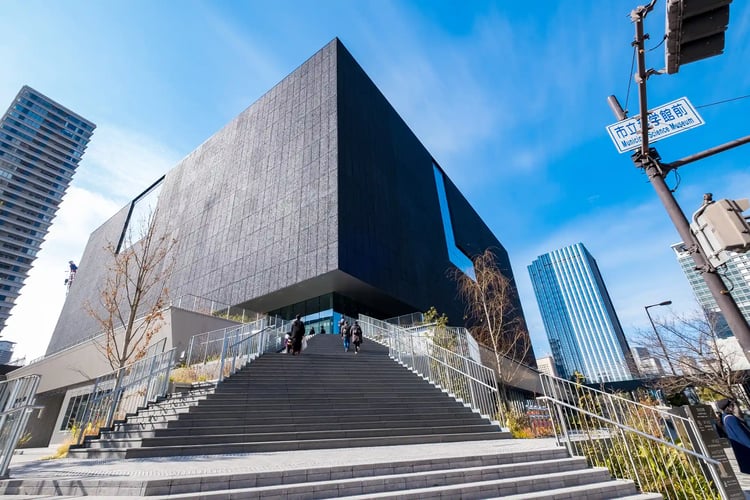
The Edo-period Osaka townscape model recreated on the 8th floor is especially impressive—listening to rain while letting your imagination travel through centuries can be a pleasure in itself. If you’re into science, how about a planetarium show at the Osaka Science Museum? Under a full-dome starfield and powerful visuals, you’ll feel like you’ve traveled through space—and you may forget the rain entirely. Nearby, you can also immerse yourself in art at The National Museum of Art, Osaka, or the Nakanoshima Museum of Art for a richly satisfying day.
Art in Commercial Facilities:Large commercial complexes in Osaka also hide art in plain sight. At Grand Front Osaka, the intellectual exchange hub “Knowledge Capital” area features permanent digital art displays and installations that you can enjoy for free. At the Abeno Harukas Art Museum (16th floor of Abeno Harukas), varied special exhibitions from Japan and abroad draw crowds even on rainy days.
Department stores often host exhibitions too—Hankyu Umeda Gallery on the 9th floor of Hankyu Umeda Main Store, for example, or Takashimaya Osaka Store’s Grand Hall, frequently features art shows and regional product fairs. Combine window-shopping with checking the event spaces—you might stumble upon a major painting exhibition or a craft show from a particular region.
Indoor Observation Spots:If you still want city views even in the rain, indoor observatories are your best friend. Harukas 300, the Abeno Harukas observatory mentioned earlier, is an all-glass indoor space, and the rainy cityscape beyond the droplets can be strangely captivating. Sometimes, when sunlight breaks through clouds, you’ll catch dramatic scenes you wouldn’t see on a clear day.
In Umeda, the HEP FIVE Ferris wheel is also recommended. The gondolas are covered, so light rain is fine—and seeing rainy Umeda from the bright red cabins has its own charm. The WTC Cosmo Tower and the Sunset Hall (Sakishima Building Observatory) also have spacious indoor areas where you can rest and enjoy the view at your own pace. Holding a drink while watching the rain-washed city from above can feel wonderfully luxurious.
A Cozy Tea Ceremony Experience:With rain as your background music, experiencing the Japanese tradition of tea can feel especially elegant. At Sakai’s Sakai Risho no Mori, you can enjoy a tea service experience in a recreated tea-room space associated with Sen no Rikyu. In the softly lit room, savoring freshly prepared matcha alongside seasonal wagashi can calm your mind—and brighten a rainy mood.
Within Osaka city as well, some hotels and temples offer tea ceremony experience plans. At Taikoen, tea lessons may be held in a Japanese-style room overlooking the garden, and at Hoshoan in Osaka Castle’s Nishinomaru Garden, you can enjoy a matcha set. Because rainy days often mean fewer visitors, you might even experience these spaces with a near-private quietness. Fold up your wet wagasa umbrella, sit formally on tatami, and take a mindful sip—your understanding of Japanese culture will deepen, naturally.
On days when outdoor walking isn’t realistic, be sure to fully enjoy “Osaka experiences you can do indoors.” Rainy Osaka can reveal a quieter, more refined side that you might otherwise miss.
Free or Budget-Friendly Things to Do in Osaka
Parks and Shrine Visits:If you want to enjoy Osaka without spending much, start with the city’s parks and shrine-and-temple visits. Osaka Castle Park is free to enter, and its vast grounds include about 3,000 cherry trees—making spring an unforgettable hanami destination. Only the Nishinomaru Garden requires admission; otherwise, you can stroll freely. Likewise, Nakanoshima Park and Utsubo Park are well maintained with rose gardens and tree-lined paths, serving as beloved local retreats.
In early summer, Utsubo Park’s roses bloom in vivid colors—great for photography. Many shrines and temples are also free to enter. Sumiyoshi Taisha is known for its grand arched bridge and National Treasure shrine architecture, but simply walking through the grounds—free of charge—can feel refreshing, especially in the quiet forest setting.
Central-city shrines such as Osaka Tenmangu and Namba Shrine also welcome you to pray freely, and you can enjoy collecting goshuin while admiring historic shrine buildings.
Free Views and Walkways:Osaka has more free or low-cost viewing spots than you might expect. The Floating Garden Observatory at Umeda Sky Building requires a ticket, but the “Sky Lounge” on the 39th floor below lets you sit and enjoy the view if you order a drink. At JR Osaka Station, the Tokitoki Hiroba (Time and Space Plaza) on the 5th floor is a roofed open deck where you can look out over Umeda’s high-rises.
The Sakishima Cosmo Tower observatory also offers both bay-facing and city-facing views. High-floor restaurant levels in Nakanoshima Festival Tower and rooftop gardens such as Namba SkyO are also worth checking. Hunting for skyline views at zero cost—or with minimal spending—can become one of the most satisfying parts of your trip.
Shopping Arcade Walks:Osaka is often called a city of shopping streets. It’s home to many distinctive arcades, including Japan’s longest, Tenjinbashisuji Shopping Street (2.6 km end to end). The appeal is simple: even in rain, you can walk comfortably under covered arcades, passing one interesting shop after another. In Tenjinbashisuji, you’ll feel the energy of everyday Osaka—from greengrocers and prepared-food shops to small variety stores. The lively calling-out from shopkeepers and casual chats with locals become part of the fun.
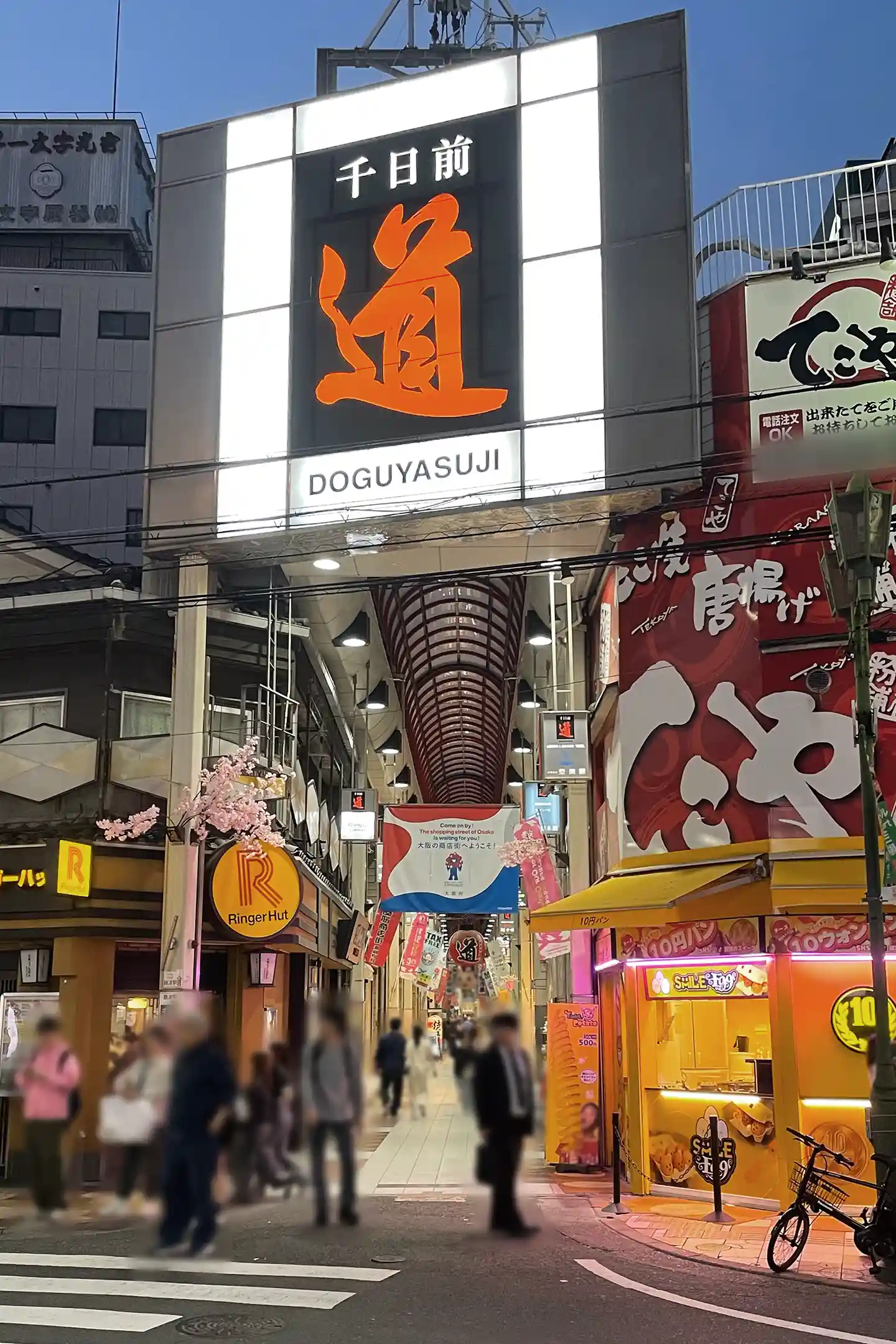
Namba’s Doguyasuji Shopping Street (Sennichimae Doguyasuji) is another unique stop. Food replicas and professional-grade tableware and kitchen tools fill the street, and it stays fascinating even if you’re only browsing. Some shops also offer mini food-replica-making experiences for visitors (paid), so you can join on the spot if you feel like it.
If you want a more old-school, local-feeling shopping street, Janjan Yokocho in Shinsekai and the shopping streets in Kyobashi are also recommended. Narrow grid-like lanes pack in small independent shops and standing bars, giving you a strong sense of downtown Osaka atmosphere. Shopping street walking is essentially free, and even if you buy a snack, you can often enjoy yourself for just a few hundred yen—an incredibly wallet-friendly way to glimpse Osaka’s daily life.
Using a Tourist Pass:Osaka also offers good-value sightseeing passes for visitors, which can help you cover major spots at a lower cost.
A representative option is the “Osaka Amazing Pass” (often offered as a QR-code-style digital ticket in recent years; check the official site for the latest naming and inclusions). It’s a convenient pass that can make admission to 25+ attractions free with a single code (*2). For example, depending on the current lineup, you can use it for major facilities such as Osaka Castle’s main tower, Umeda Sky Building, and Tsutenkaku (transportation is not included).
If you want an even higher tier, the “Osaka Raku-Yu Pass PREMIUM” can bundle famous observatories like Harukas 300, Osaka Castle’s main tower, and new Tsutenkaku attractions—and it may include extra perks such as entry benefits for nightlife venues, making it a powerful all-you-can-enjoy style option (*3). You do pay for the pass itself, but if you plan your route well, you can save significantly compared with buying tickets individually.
Check the Osaka Convention & Tourism Bureau website or tourist information centers for sales details, confirm current terms and blackouts, and fit the pass to your itinerary. It should help you keep costs down while fully enjoying Osaka.
Model Itineraries (24 Hours / 48 Hours)
Here are suggested model itineraries to help you explore Osaka efficiently with limited time. The key is to group areas so your travel routes stay short, avoid wasting time on unnecessary transit, and place the best spots at the best times of day.
We’ve also considered the timing of meals and performances, creating routes that let you enjoy Osaka’s appeal without pushing your schedule too hard. Below, you’ll find a 24-hour (1-day) plan and a 48-hour (2-day) plan—use whichever fits your stay.
Things to Do in Osaka in 24 Hours
Morning to Midday (History and Cultural Strolling):Start at 9:00 a.m. in Osaka Castle Park. Enter Osaka Castle’s main tower right as it opens, and walk through the museum-style exhibits (about 1 hour). After taking in the city view from the top floor, don’t forget a commemorative photo with the famous Toyotomi Hideyoshi-era castle as your backdrop. Around 10:30 a.m., move to the Nakanoshima area (about 15 minutes by train or taxi).
Admire the exteriors of retro buildings such as the Central Public Hall and the Nakanoshima Library, then stroll along the riverside. Before noon, take a break in Kitahama and enjoy lunch at a café. Trying a long-established Western-style meal in a retro building—or a sandwich at a riverside terrace café—is a lovely option.
Afternoon (Modern and Contemporary Osaka Experiences):Around 1:00 p.m., head to central Osaka around Umeda. Enjoy shopping at Grand Front Osaka and Hankyu Department Store, and then after 3:00 p.m., make your way to Umeda Sky Building. Go up to the Floating Garden Observatory and watch the cityscape transition from sunset to night view as daylight fades.
At 5:00 p.m., after soaking up the magic-hour nightscape, enjoy dinner around Umeda. You can head to Kitashinchi for kappo cuisine, or keep things casual at the restaurant floors inside station buildings—either way, you’ll find great Osaka food.
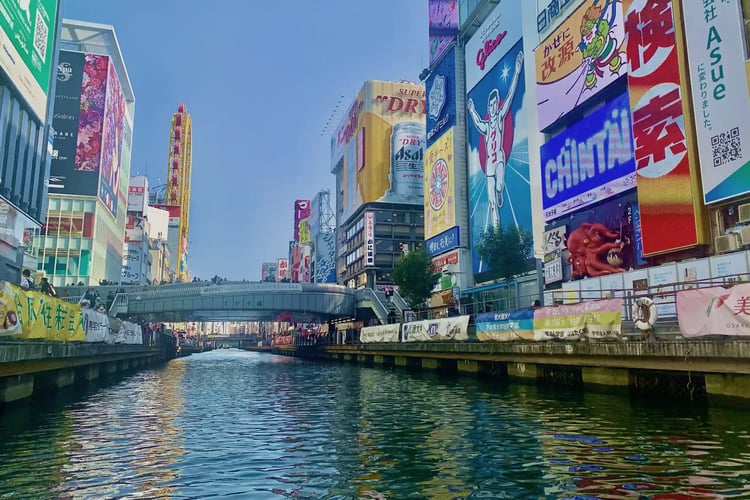
Night (Neon and a Nightcap):Around 7:30 p.m., take the train to the Namba area. Walk through Dotonbori’s neon-lit streets and photograph iconic scenes like the Glico sign and the dazzling view from Ebisu Bridge. Then take a detour to the atmospheric lanes of Hozenji Yokocho, and relax with a drink at a calm kappo bar while savoring the afterglow of your day.
After 9:00 p.m., don’t forget a final bowl of Osaka-style ramen to close the night. By 10:00 p.m., return to your hotel—your 24-hour Osaka circuit is complete. Even at a brisk pace, you’ll experience a well-balanced mix of major highlights, making for a satisfyingly full day.
Things to Do in Osaka in 48 Hours
Day 1 (Nakanoshima and Kita Focus):In the morning, visit Osaka Castle Park and the Osaka Museum of History to get a clear overview of Osaka’s past. Then move to Nakanoshima for lunch. After enjoying a Western-style lunch at a retro restaurant beneath the Central Public Hall, spend your afternoon viewing contemporary art at the Osaka Nakanoshima Museum of Art. Pair it with a visit to The National Museum of Art, Osaka next door, and fully immerse yourself in art. In the evening, return to Umeda and take in twilight-to-night views from the Floating Garden Observatory. At night, explore Kitashinchi with a kaiseki dinner and bar-hopping, and enjoy Osaka after dark.
Day 2 (Minami and Waterfront Focus):Start your morning in Namba at Kuromon Market and enjoy an Osaka-style breakfast—market sushi and kushikatsu are perfect. Then, if timing works, visit the National Bunraku Theatre to see a bunraku performance or explore puppet-related displays. From late morning, stroll Dotonbori and enjoy shopping. After an okonomiyaki lunch, head to Osaka Port in the afternoon and take your time at Kaiyukan.
Toward evening, go as far as the area near Universal Studios Japan (USJ), and if time allows, use a night pass to enjoy USJ after dark (try a few popular rides). At night, return to Minami and end your trip with a Dotonbori night cruise. Over two days, you’ll explore Osaka’s tradition and modernity, city energy and waterfront scenery in a balanced way—an ideal model course for truly savoring Osaka.
Best Seasons and Events
Osaka is enjoyable year-round, but the city changes its mood with each season, bringing different highlights and events. When you’re planning your itinerary, it helps to understand what’s special about the season you’ll visit—and what to watch out for.
Here, we’ll introduce recommended points for spring, summer, autumn, and winter, along with art-and-design-related events that feel distinctly Osaka. We’ll also include notes on expected crowds and what to wear, so you can plan confidently by season.
Spring, Summer, Autumn, Winter Recommendations
Spring:Spring in Osaka, with cherry blossoms in bloom, is extraordinary. In Osaka Castle Park, about 3,000 cherry trees burst into bloom, and you can enjoy the iconic pairing of the castle tower and sakura. At the Japan Mint’s “Cherry Blossom Passage,” a tunnel of double-flowered cherry trees opens to the public for a limited time, drawing many visitors.
Days are pleasantly warm, but mornings and evenings can still feel chilly, so a light coat is reassuring. Dress in layers so you can adjust easily, and choose comfortable sneakers for walking. Around Golden Week, fresh greenery becomes radiant, and flower spots outside the city—such as Expo ’70 Commemorative Park—are also well worth seeing.
Summer:Summer in Osaka is full of energy and heat. The biggest event is Tenjin Matsuri in late July. With more than 1,000 years of history, this festival attracts over one million people across two days—the Yoimiya and Honmiya (*2). The boat procession on the Okawa River and the dedicated fireworks create a lavish spectacle that feels unique to “water-city” Osaka.
Heatstroke precautions are essential: wear a hat, hydrate frequently, and if you attend in yukata, choose footwear you can walk in comfortably. Daytime temperatures can be intense, so build a realistic plan that mixes in indoor stops. Fireworks events also take place in August across the region, including PL Fireworks Art and the Naniwa Yodogawa Fireworks Festival, lighting up the night sky. During summer vacation, tourist areas get crowded, so give yourself plenty of time to move around.
Autumn:Autumn is comfortable and ideal for sightseeing. Heat can linger until around October, but once November arrives, temperatures drop and the autumn leaves reach their peak. In Osaka Castle Park and Expo ’70 Commemorative Park, maples and ginkgo trees turn brilliant colors, and many people stroll with cameras in hand. A light jacket is usually perfect, and walking feels especially pleasant.
Autumn also brings many cultural and arts events, including distinctive food-and-culture festivals that are held periodically. While Osaka still sees plenty of visitors in autumn, moving around is generally more comfortable than in summer. Evenings can get chilly, so if you plan to go night-view watching, don’t forget warm layers.
Winter:Osaka winters are relatively mild, but wind can make it feel colder, so you’ll want a coat and scarf. In December, a large-scale illumination event called “Osaka Hikari no Kyoen” takes place. Its two flagship programs are the Midosuji Illumination and the OSAKA Hikari Renaissance (in Nakanoshima), transforming the city into a magical landscape of light (*3).
Along Midosuji, ginkgo-lined streets glow in colorful illumination, while Nakanoshima features highlights such as projection mapping on the Osaka City Hall building façade. Admission is free, making it perfect for a winter evening walk. Around New Year’s, many people visit Sumiyoshi Taisha and Osaka Tenmangu for hatsumode (the first shrine visit of the year). In mid-January, Ebessan (Toka Ebisu) also brings festive excitement. Snow rarely accumulates, but the air can be dry—take care of your throat and enjoy wintertime Osaka.
Art and Design Events
Osaka International Art Festivals and Art Fairs:In recent years, Osaka has also attracted attention as a host city for international art events. Around Expo 2025 Osaka, Kansai, “Osaka Kansai International Art Festival 2025” was planned to bring large-scale programs into the city. Major showcases have been discussed, including an Asia-focused art fair commemorating the 60th anniversary of Japan–Korea normalization in July (*4).
The annual contemporary art fair “ART OSAKA” is also well worth watching. Held every summer, ART OSAKA is known as the longest-running existing art fair in Japan, and it has long been loved as a place to see the latest movements among emerging to mid-career artists (*5).
In 2025, galleries from Japan and abroad were set to gather again in early June at venues such as Osaka City Central Public Hall, with artwork sales and video programs. These festivals and fairs feel welcoming not only to dedicated art fans but also to first-timers, and they let you experience a city-wide mood where art energizes the streets.
Design and Creative Events:Osaka also hosts many distinctive events in the design world. Every autumn, a large-scale event sometimes referred to as an “Osaka Design Week” (tentative name) is held, with exhibitions and sales of interior design and craft works at venues like Nanko ATC and Grand Front Osaka.
As for pop-culture events originating in Osaka, the spring “Nipponbashi Street Festa” (a cosplay event) and the summer “Osaka International Manga & Anime Festival (OIMAF)” are also uniquely international and lively.
For architecture enthusiasts, public-facing symposiums are sometimes held at institutions such as Osaka University, offering chances to hear talks by well-known architects. You can check Osaka Convention & Tourism Bureau listings and each venue’s website in advance, and consider joining if the timing matches your trip.
Making Use of Conferences and Symposiums:Osaka also has a side as an academic city, with international conferences and professional gatherings held frequently. While these are specialized events, there are often open symposiums and special lectures that the public can attend.
For example, Osaka Science Museum sometimes hosts lectures by notable scientists, and Osaka University’s Nakanoshima Center offers events that introduce the latest research to the public. At public lectures held as part of English-language international conferences, simultaneous interpretation may be available, so you can feel at ease even if you’re not fully confident in the language.
If your travel dates align, this can be a rare opportunity for intellectual stimulation you wouldn’t normally encounter—so consider building it into your schedule. By attending, you’ll be able to touch the thoughtful, creative side of Osaka as well.
Day Trips You Can Take from Osaka
With Osaka as your base, you can easily take day trips to many parts of Kansai. Public transportation is well developed, so even a schedule where you head out in the morning and return at night can be more than enough for sightseeing. Still, be sure not to neglect travel-time planning and checking the last train times.
Below are popular nearby destinations you can visit as day trips from Osaka city. Each has its own distinct character, so choose based on your interests and weave them into your itinerary. Note that mornings at Osaka Station and Namba Station can be crowded, so buying tickets in advance (the day before) helps everything go smoothly. And always double-check the last train home.
Nara
From Osaka, you can reach Nara city in about 50 minutes on the JR Yamatoji Rapid, or around 40 minutes on the Kintetsu Rapid Express. Nara is famous for Todaiji Temple’s Great Buddha and the deer park at Kasuga Taisha. Start by heading from Nara Station to Todaiji by bus or on foot.
At the World Heritage site Todaiji, you’ll meet the Rushana Buddha seated in the Daibutsuden—one of the world’s largest wooden buildings—standing about 15 meters tall. Its overwhelming presence is likely to move you. The pillar-hole passage inside the hall (said to be the same size as the Great Buddha’s nostril, and believed to bring good health if you pass through) is popular too, but if it’s crowded, don’t force it—move on comfortably.
In Nara Park around Todaiji, about 1,200 wild deer live freely, and the friendly deer will welcome you. When you hold deer crackers, they’ll gather quickly, so enjoy interacting with them while handing them out thoughtfully.
Next, visit Kasuga Taisha. Lanterns line both sides of the long approach, and you’ll be surrounded by the solemn forest atmosphere unique to sacred grounds. At the shrine, pray with the etiquette of two bows, two claps, and one bow, and on the approach, be mindful of manners such as walking to the side rather than down the center (*1). In the Naramachi area, Edo-period townhouses remain and are now used as stylish cafés and small shops. Rest in a traditional-house café and enjoy kuzumochi or matcha sweets—an excellent way to slow down.
Kyoto
From Osaka to the old capital Kyoto, it’s an easy ride: about 30 minutes on the Special Rapid (JR Osaka Station to Kyoto Station). Because Kyoto sightseeing is extremely popular and crowds can be intense, timing is everything. For classic spots such as Kiyomizudera and Fushimi Inari Taisha, visiting right after opening in the early morning lets you enjoy them with fewer people and more calm.
Kiyomizudera opens from 6:00 a.m., so if you finish your visit before 8:00 a.m., you can experience a quiet that disappears later in the day. Busy spots like Kinkakuji and Arashiyama can also feel more relaxed early in the morning or later in the evening. In Kyoto, city buses are convenient but can be delayed by traffic, so combining them with the subway and JR lines helps you move efficiently.
When visiting temples and shrines, follow the etiquette of each place and behave respectfully. Kyoto is expansive, so narrowing your target areas makes it easier to cover. For example, it’s recommended to divide your day by region—Higashiyama in the morning, Arashiyama in the afternoon.
Kyoto tends to have slightly bigger temperature swings than Osaka, so in spring and autumn, adjust with layers; in summer, stay hydrated consistently. Trains back to Osaka run late into the night, but returning to Kyoto Station by late afternoon to shop for souvenirs before heading back can feel reassuring.
Kobe
From Osaka to the port city Kobe, it’s about 30 minutes on the JR Kobe Line Special Rapid, or about 40 minutes from Umeda to Kobe-Sannomiya on Hankyu. With its international atmosphere, Kobe offers high satisfaction even as a day trip. In the morning, start by strolling harbor areas such as Meriken Park and Harborland. If you go up Kobe Port Tower (renewed in 2023), the symbol of Kobe Port, you can look out over the city, the Rokko mountain range, and Osaka Bay. Around the Naka Pier area, enjoy the sea breeze as you watch sightseeing boats at anchor and the Mosaic Ferris wheel scenery.
Before lunchtime, head to Kitano Ijinkan-gai. Western-style houses once inhabited by foreign residents in the Meiji era—such as Uroko no Ie and Kazamidori no Yakata—are open to the public, and their stained glass and antique furnishings are must-sees. Enjoy tea time at an ijinkan café as well. In the afternoon, walk and snack your way through Nankinmachi Chinatown with xiaolongbao and butaman, and enjoy Kobe’s food scene.
Kobe is also famous as a “city of sweets,” with more than 100 years of Western confectionery history and many long-established patisseries lining the streets (*2). You can visit cake shops around Motomachi, and pick up popular souvenirs like butter sandwiches and chocolates. In the evening, return to the harbor area, watch the port at sunset, and head back to Osaka. Even in one day, you can fully enjoy Kobe’s open waterfront feel and its cross-cultural character.
Sakai and Craftsmanship
Sakai City, located south of Osaka, is a place of history and culture that produced figures like Sen no Rikyu and Akiko Yosano—and it’s also known as a city of crafts, from kitchen knives to wagashi. It’s close, too: about 10–15 minutes from Namba via the Nankai Railway, making it ideal for a day trip.
In Sakai, start by peeking into the world of Sakai Hamono, one of Japan’s signature regions for swords and kitchen knives. With a 600-year tradition, Sakai is said to hold more than a 90% domestic share in professional chef knives (*3). At Sakai Traditional Crafts Museum, you may be able to observe parts of the manufacturing process or watch knife-sharpening demonstrations by artisans. The on-site shop also sells approachable knives for beginners—excellent as souvenirs.
Sakai is also celebrated for tea culture. As the place where Sen no Rikyu was born and raised—and where he perfected wabi-cha (*4)—the city is filled with Rikyu-associated historic sites. At Sakai Risho no Mori, you can learn about the achievements of Sen no Rikyu and Akiko Yosano in the tea museum, and also try a matcha experience in the adjacent tea room. At places like Nanshuji Temple (Rikyu’s family temple), reservation-based zazen experiences may be available—if you’re interested, consider asking directly.
Sakai is also known for wagashi. You can enjoy classic flavors such as the kurumi mochi at Kansukuro (founded in Meiji 6) or the keshimochi at the long-established Kojimaya. Some historic shops even offer wagashi-making experiences, which can be a wonderful way to create a travel memory.
If you have extra time, you can also visit the Sakai City Museum or Daisen Park and connect with the history of the Nintoku-tenno-ryo Kofun (Daisen Kofun), Japan’s largest keyhole-shaped burial mound. Observation decks for kofun viewing are available as well, letting you reflect on ancient history. If you savor Sakai’s craftsmanship, tea culture, and ancient past together, your Osaka trip will feel even more fulfilling.