Most guides tell you Tsukiji opens at five in the morning. That is true, and it is also close to useless — because at five, almost nothing you came for is open yet. The wholesalers are working, the restaurants are not, and the shops selling knives and dried bonito have not lifted their shutters. The question that matters is not when Tsukiji opens. It is which hour belongs to which kind of visitor.
This guide gives you the actual times by shop type, how the closing days really work, and the reading skills that separate a stall selling to chefs from one selling to tourists.
Tsukiji Fish Market Opening Hours: The Times That Actually Matter
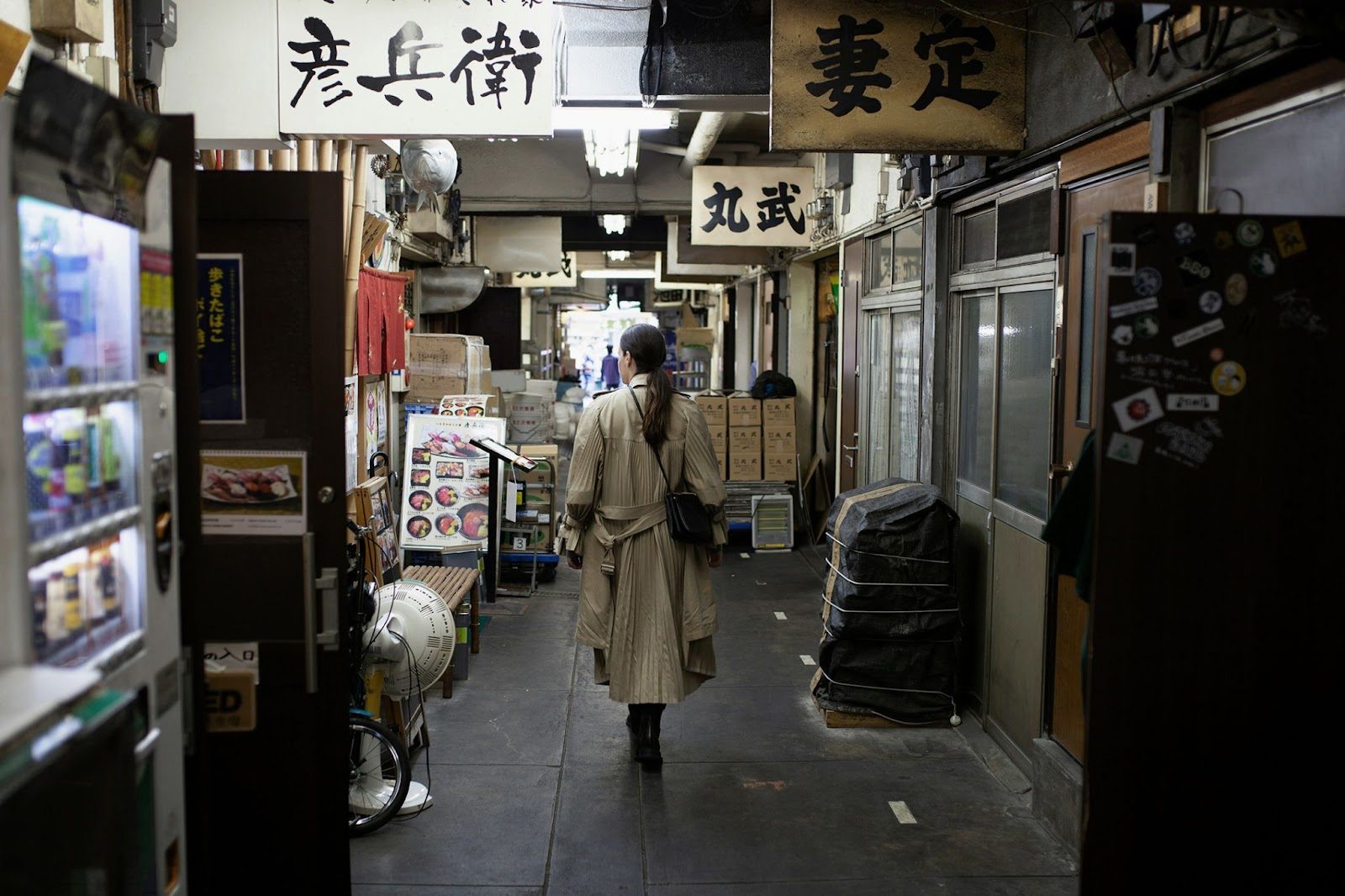
Tsukiji runs on four separate clocks, and knowing which one you are chasing decides what time you set your alarm.
- Around 5:00 a.m. — Seafood and produce wholesalers begin trading. This hour belongs to buyers, not visitors. You can walk through, but most shutters are still down.
- 6:00 to 7:00 a.m. — Sushi counters and set-meal diners open. This is the earliest hour worth arriving for if breakfast is the point.
- 9:00 a.m. — Professional buying is finishing. Nearly everything is open, staff are no longer rushed, and there is still room to walk. For most visitors this is the single best arrival time.
- 11:00 a.m. to 1:00 p.m. — Peak congestion. Queues at the well-known counters run past an hour.
- Around 2:00 p.m. — Shutters begin coming down. By mid-afternoon the market is effectively over.
The counterintuitive part is that the earliest hour is not the best hour. At 5:00 a.m. you get atmosphere and very little else. At 9:00 a.m. you get the full market with a fraction of the crowd. Individual shops vary, and the Tsukiji Outer Market official calendar is the only source that carries current per-shop hours and irregular closures.
Why "Tsukiji Closed" Is Only Half True: Jonai Moved to Toyosu and Jogai Stayed
Travellers regularly arrive in Tokyo believing Tsukiji no longer exists. The confusion is understandable, and correcting it changes what you plan.
Tsukiji was always two markets sharing a name. The jonai — the inner wholesale market, with the tuna auction and the licensed intermediate wholesalers — moved to Toyosu in October 2018. According to the Tokyo Metropolitan Central Wholesale Market, that relocation ended a function the site had held since 1935.
The jogai — the outer market — did not move. It is a district of independently owned shops on ordinary streets, not a facility the city could relocate. It is still there, still opening before dawn, and it is what nearly everyone now means when they say "Tsukiji."
The distinction that decided it is simple: the jonai was a facility, the jogai is a neighbourhood. A city can relocate what it owns and licenses. It cannot relocate a few hundred privately held businesses that happen to stand next to each other on public streets.
The practical consequence: the tuna auction is at Toyosu, the eating and shopping is at Tsukiji, and they are a fifteen-minute taxi ride apart. Doing both in one morning works, and the order is fixed: the tuna auction finishes early, so Toyosu comes first and Tsukiji second. Leaving Toyosu once the auction winds down puts you in the outer market well inside its best hours. If you want both, our guide to Tokyo's two great markets sets out how the two sites divide a morning.
Tsukiji Market Hours by Day and Season: When the Jogai Rewards an Early Start
There is no single closing day, because there is no single owner. The jogai is a street of independently owned businesses, each setting its own calendar. What creates the appearance of a shared closing day is the wholesale market's non-trading days at Toyosu: with no fresh supply arriving, a large share of shops see no reason to open. Those non-trading days fall mainly on Sundays and Wednesdays, with adjustments around public holidays and the New Year period.
The practical version: assume Sunday is quiet and many shutters are down. Treat Wednesday as unpredictable — in holiday weeks a good number of shops trade normally. And check the official calendar against your specific date, because the answer genuinely differs shop by shop.
Saturdays are open and busy. Queues run long from mid-morning through early afternoon, and the character of the market shifts: fewer trade buyers, more families. Weekdays hold the working rhythm — chefs collecting orders, shopkeepers who have time to answer a question about what came in that morning.
Seasonally, the density peaks over Japan's long holiday weeks and the year-end shopping rush in late December, when Tsukiji supplies households buying for New Year. Spring and autumn travel seasons run consistently busy. In these periods the 9:00 a.m. window narrows — an earlier arrival, closer to 7:00 a.m., buys back the space you lose. The same seasonal logic shapes the rest of the region's food calendar, which our regional culinary guide sets out market by market.
How Tsukiji Got Here: Fire, Requisition, and a Fan-Shaped Building
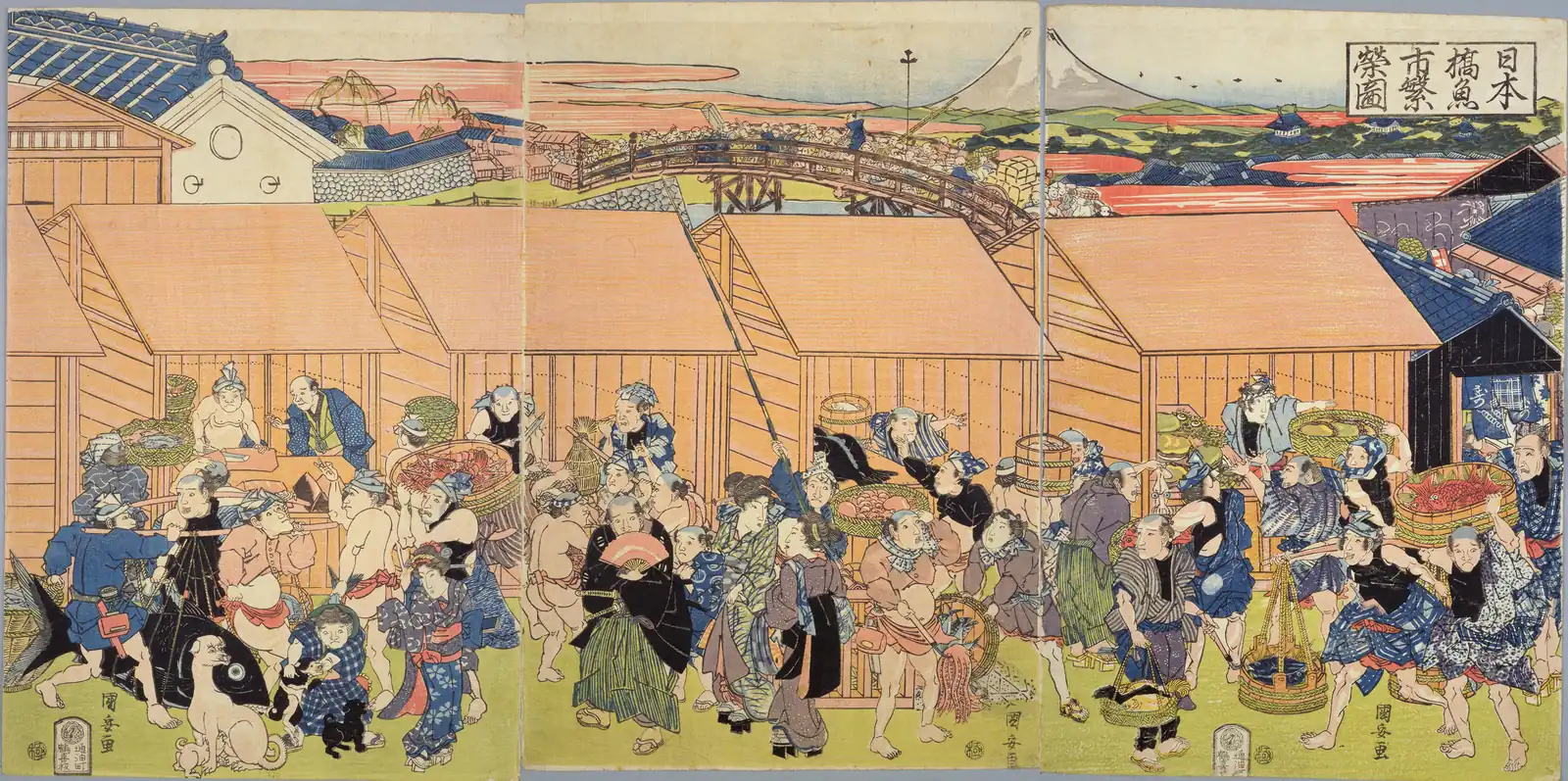
Tsukiji is not an old market. It is a young building on borrowed ground, and every stage of that story was forced from outside.
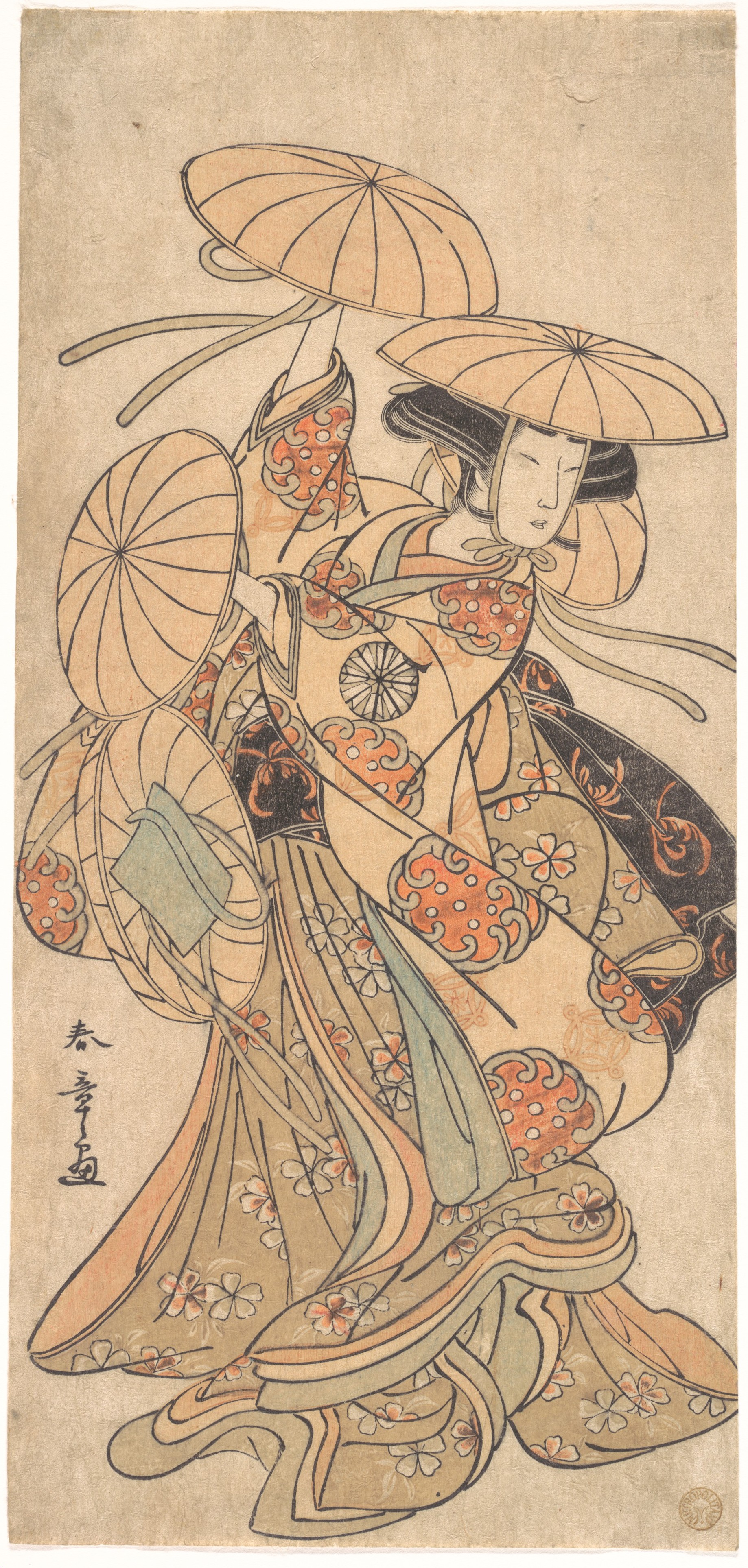
Tokyo's fish trade sat at Nihonbashi for roughly three centuries, licensed under the Tokugawa shogunate — the print above shows it at its height, crowded enough that the boats and the buyers occupy the same frame. It ended in a single morning: the Great Kantō Earthquake of 1923 burned the district out. The trade needed somewhere immediately, and the land available was a naval facility at Tsukiji — a site the fish market occupied first as an emergency measure and then permanently.
The building that opened there in 1935 was designed around rail. Its distinctive curve was not an aesthetic choice but the arc of a siding, so that freight cars could pull alongside and unload directly into the market. According to the Tokyo Metropolitan Central Wholesale Market, that layout served the trade for more than eight decades.
Then the same logic that built it took it apart. Freight moved to road, and a building shaped around railway tracks became a building shaped around nothing. Add an ageing structure on some of the most valuable land in Tokyo, and the 2018 move to Toyosu follows almost mechanically.
What is worth noticing is which part of this the outer market sat out. Through the fire, the requisitioned land, the rail-shaped building and the move, the shops on the surrounding streets simply carried on. They were never the thing being planned. That is the same distinction — facility versus neighbourhood — that decided who moved in 2018, and it is the reason the part you can walk into today is the part nobody ever designed.
Reading the Jogai Stalls: How to Tell a Professional Shop from a Tourist One
This is the skill the official listings cannot give you, and it changes what a morning at Tsukiji is worth.
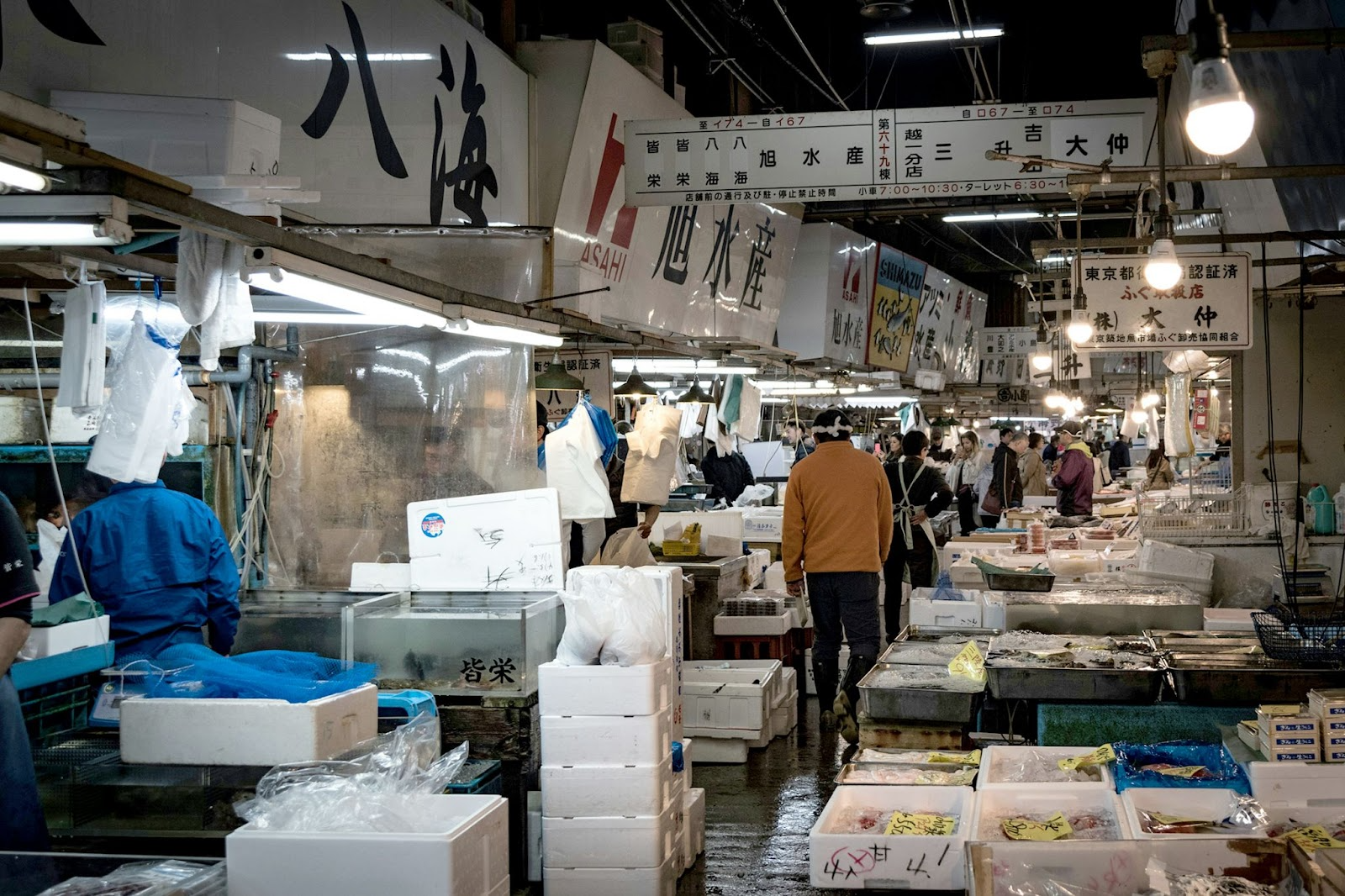
The outer market grew up to supply the inner market's trade — knife makers, dried bonito specialists, tableware dealers, tea merchants. Some of those shops still sell primarily to restaurants. Others have reoriented toward visitors. Telling them apart is quick once you know where to look.
- Range versus depth. A shop selling one category in many grades is serving people who know the difference. A shop selling sea urchin, wagyu skewers, strawberries and matcha soft serve from one narrow frontage is serving people who want variety in a single stop.
- Who is being served at 9:00 a.m. If the queue is holding wrapped orders and speaking in shorthand, that is trade. If everyone in line is photographing the sign, it is not.
- Whether the price is quoted by weight or by piece. Weight pricing addresses someone buying to cook with. Per-skewer pricing addresses someone buying to eat now.
- What the shop refuses to sell. The strongest signal. A dried bonito specialist that stocks nothing else is telling you where its reputation sits — and where it is not willing to spend it.
This is not a distinction between good and bad shops. A grilled scallop eaten standing up is one of the pleasures of the place, and the visitor-facing stalls are what keep the streets alive between trade hours. But the two are pulling the district in different directions, and it is worth being honest about that. Every frontage that converts from supplying kitchens to selling skewers is one less place a chef can source from — and the outer market's whole claim to being more than a food court rests on those remaining suppliers. Our own view is that the specialists are the reason to come, and that they are the part most easily lost.
So if you have three hours and want to come away with something you cannot buy at home — a knife, a block of katsuobushi, a specific grade of nori — knowing which frontage to stop at is the whole game.
One frame that helps if you are coming from Europe or North America: the closest equivalent is not a farmers' market but a street of trade suppliers — the restaurant-supply districts that sit behind professional kitchens, where the customer is assumed to already know what they want. The pleasure is not discovery of the unfamiliar. It is watching people buy with precision.
Beyond Tsukiji Outer Market Hours: The Three Layers of Access at Tsukiji and Toyosu
Tokyo's seafood trade is open to visitors in three distinct degrees, and most itineraries only ever touch the first.
Open to anyone. The Tsukiji outer market streets, every shop with a shutter up, and Toyosu's upper-floor glass corridors, which look down on the tuna floor from behind windows. No booking, no introduction, no cost.
Open if you know to ask. Toyosu's lower observation deck — the one that puts you at floor level with the auction rather than a storey above it — has run on a limited daily allocation with advance application, and its availability has changed more than once since the market opened. Seasonal events at Tsukiji, such as the spring festival with its fish-cutting demonstrations, are published locally and fill quickly. Nothing is hidden here. It simply requires knowing the thing exists, and checking its current status, before you arrive.
Open only through introduction. The floor of the intermediate wholesalers at Toyosu during trading. A knife maker's workshop. The relationship between a specific chef and the specific supplier who has held their account for thirty years. These are working environments, not attractions, and access runs through people rather than tickets.
Knowing the third layer exists is itself useful — it reframes what you are looking at on the first. The Tsukiji Outer Market association publishes its own account of how the district sees its future role.
What to Eat First at Tsukiji Outer Market, and Why the Order Matters
Sequence matters at Tsukiji for a reason that has nothing to do with etiquette: the things worth queuing for sell out, and the things that do not sell out are better eaten later anyway.
One exception to all of this, worth knowing if you have just landed: Sushizanmai's main branch trades around the clock. If jet lag has you awake at 3:00 a.m. with the whole district still shuttered, that is the answer — and it is the only part of Tsukiji that does not run on the schedule this guide describes.
First, before 9:00 a.m. — whatever is limited that day. Sea urchin, particular cuts, anything a shop describes as that morning's arrival. This is the only category where arriving early changes what is physically available to you.
Second — a seated bowl or sushi counter, while the queues are still short. A kaisendon at 9:30 a.m. costs you ten minutes of waiting; the same bowl at noon costs an hour. If you are deciding between the styles, our kaisendon guide covers how the bowls differ and what to look for.
Third, on the way out — the standing food. Grilled scallops, tamagoyaki, croquettes. These do not run out and they do not require sitting down, which makes them the natural close rather than the opening.
Last — anything you are carrying home. Knives, dried goods, tea, ceramics. Shopping before eating means carrying it through the crowd; shopping after means the shop has had all morning to sell down its display, which is when a shopkeeper has time to explain what you are actually buying.
Getting to Tsukiji Fish Market: Access, Parking, and Timing Your Morning
Two stations put you at the edge of the outer market on foot:
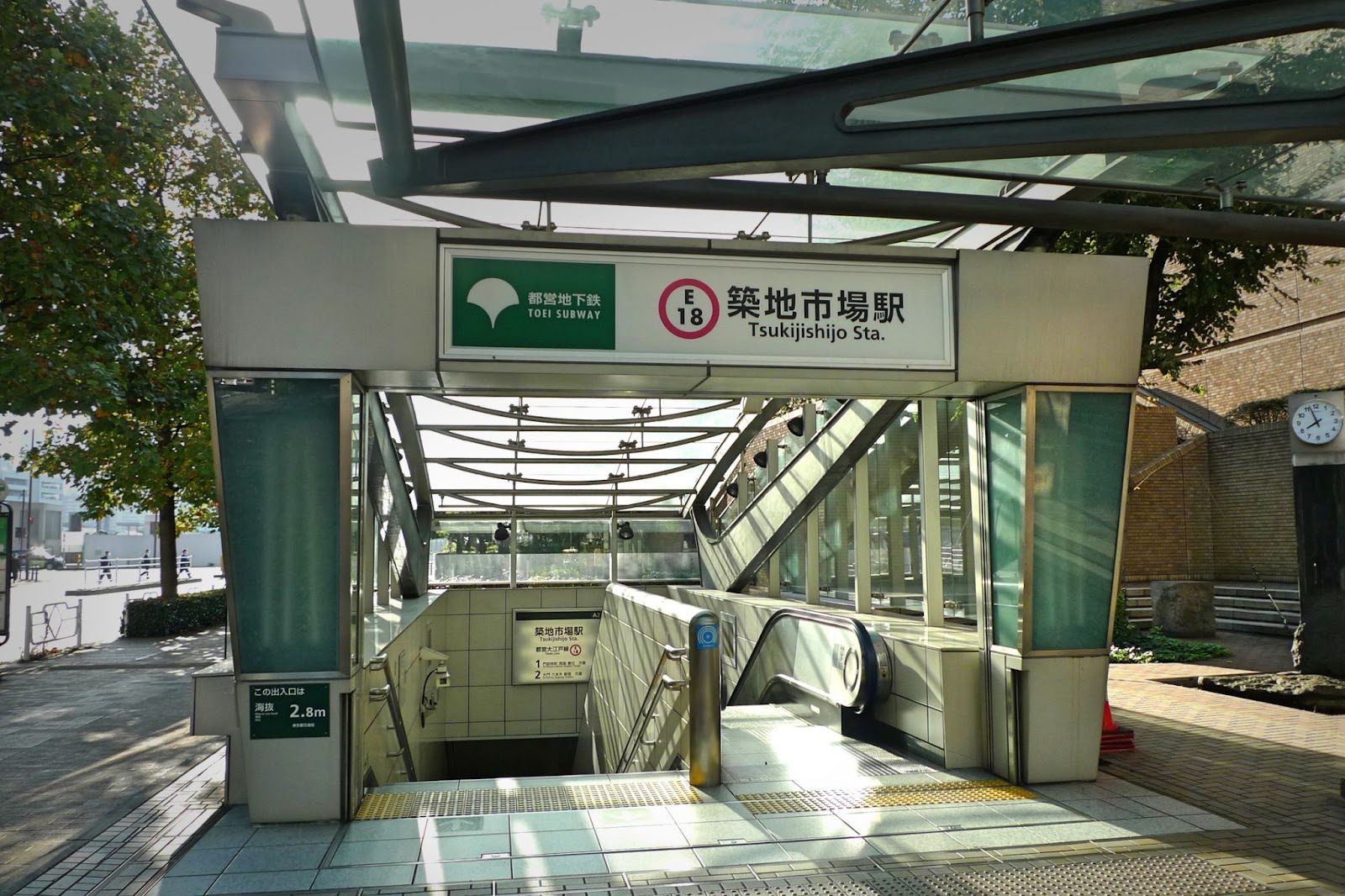
- Toei Oedo Line — Tsukiji-shijo Station, Exit A1. The closest approach to the market streets.
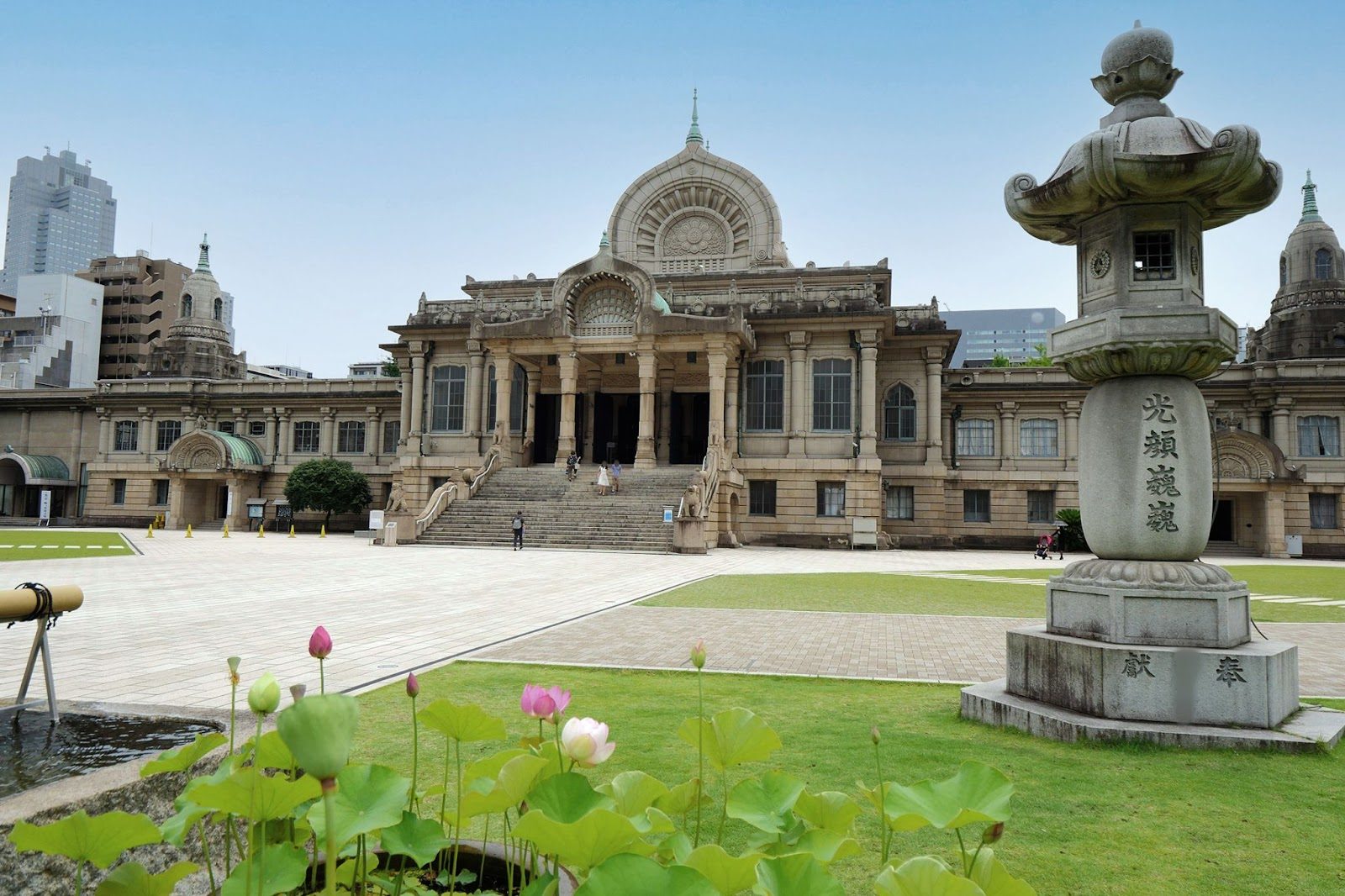
- Tokyo Metro Hibiya Line — Tsukiji Station, Exits 1 and 2. Slightly further, and the approach passes Tsukiji Hongwanji, whose South Asian-influenced stone exterior is worth the two minutes even if you do not go in.
- JR — from Shimbashi Station, on foot or by bus. Useful if you are already on the JR network and would rather not transfer underground.
From Ginza the walk is roughly fifteen minutes, which makes an early Tsukiji morning and a late Ginza afternoon a natural pairing on the same day.
Two minutes off the main lanes, Namiyoke Inari Shrine repays the detour. Alongside the shrine's lion head you will find stones raised to the fish themselves — memorials for tuna, for shrimp, for sushi. A trade that kills for a living built monuments to what it sells. Nothing else in the district tells you as directly what the market thinks it is doing.
Driving is the weakest option. Central Tokyo parking is scarce and priced in thirty-minute increments, often without a daily cap — the Chuo City Tourism Association parking guide lists the nearby lots, including the 24-hour Tsukijigawa Daiichi lot. If you arrive by car, arrive early enough that the rate has not compounded before the shops are even open.
Tsukiji Opening Hours: What to Remember
Three things carry the morning. Arrive around 9:00 a.m. unless you are specifically after limited stock, in which case come at 7:00. Check Wednesdays and Sundays against the official calendar before you commit the date. And look at what each shop refuses to sell — it is the fastest way to find the ones that have been supplying professionals since long before the visitors came.
Tsukiji did not close. It changed shape, and the part that stayed is the part you can walk into.
Kanto's Culinary Treasures