The question people type is about crime. It is a reasonable question and it has a short answer, which this article gives first and then leaves alone.
The longer answer is that the hazard with a published annual count of hospital transports, broken down by age and by place, is not crime. It is heat. In 2025 the ambulance services carried more than a hundred thousand people for heat illness between May and September, and a third of them were adults between 18 and 65. The road and open-air locations where visitors spend their days account for about a third of the cases by place.
Japan also has a warning system for weather, earthquakes and volcanoes. It runs in tiers with defined words, the agencies publish it in English, and for four weather hazards the tier number is now printed inside the warning's own name. The tiers are easy to travel past without learning, which is a shame, because the whole point of the system is that the words tell you what to do.
So this article does three things. It answers the crime question with the National Police Agency's own series, briefly and without comparing Japan to anywhere else. It sets out what the published figures actually count, which turns out to be heat. And it gives you the warning vocabulary, in the wording the agencies themselves use in English. Every figure carries the date we read it.
Is Japan Safe? The Crime Question, Answered Briefly
The National Police Agency publishes an annual volume of statistics on Penal Code offences. The edition covering 2025 was issued in August 2026, and its first table is a run of recognised offences going back to 1946. We read it on 13 September 2026.
Two numbers from that table are worth having, and they point in opposite directions. The peak year was 2002, at 2,853,739 recognised offences, or 22.4 per thousand population. In 2025 the figure was 774,142, or 6.3 per thousand. That is a little over a quarter of the peak, on either measure.
The other number is the recent direction. The low point was 2021, at 568,104. Since then the count has risen every year: 601,331, then 703,351, then 737,679, then 774,142. Four consecutive increases. The agency also reports a clearance rate of 38.9 per cent for 2025, on 301,055 cleared cases and 200,663 people cleared.
Two caveats belong with those figures, and both come from the document. The per-thousand rate for 2025 uses the previous year's population, because the 2025 population had not been published when the volume was compiled; the agency says so in a footnote. And in March 2026 the agency withdrew a set of tables from the 2017 to 2024 editions of this series and from the older publication it replaced, because the definition of school-age categories differed between the numerator and the denominator. The notice says the published files are not being reissued, so the withdrawn tables are still inside those PDFs. If you find a per-population figure for schoolchildren from them, it is one the agency has disowned.
We are not going to compare that with anywhere else. No ranking appears in this document, we have not found one in a source we can stand behind, and a comparison assembled from two countries' differently defined statistics is not a fact about safety. What can be said is what the series says: far below the level of 2002, rising for four years, with about two in five cases cleared.
That is the crime question. The rest of this article is about the thing the published figures actually count.
Is Japan Safe for Tourists? What the Published Figures Count
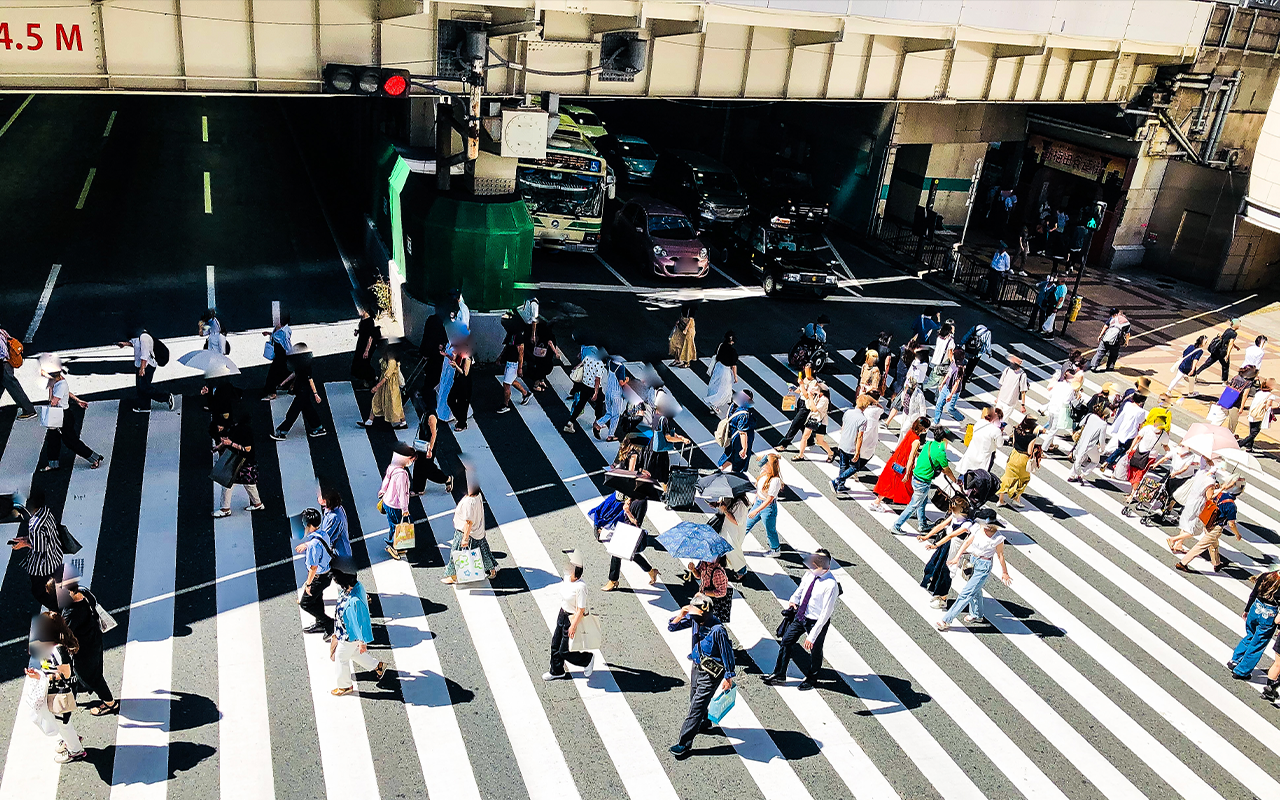
Ask which hazards Japan counts people for, annually, by age and by place, and the list is shorter than the reputation suggests. Earthquakes and typhoons have a warning apparatus, which the next section is about. What has a published annual count of hospital transports, broken down in a way a traveller can use, is heat.
This is not a claim that earthquakes and typhoons are unimportant. It is a statement about what is in the documents. We looked for an annual figure for visitor casualties from either, in the sources this article uses, and did not find one. That is where the counting stops.
Netchusho and What the Fire and Disaster Management Agency Counts
The Japanese word is netchusho, and it covers the whole range from the faintness of a hot afternoon to the emergency. The Fire and Disaster Management Agency runs a survey of ambulance transports for it every summer and publishes the confirmed annual figures after the season ends. The report for 2025 came out on 29 October 2025, and we read it on 13 September 2026.
Between May and September 2025, ambulances carried 100,510 people for heat illness. The Fire and Disaster Management Agency notes that this is the highest figure since the survey began in 2008. It gives the context in the same paragraph: the rainy season ended earlier than in any year since records began in many regions, the national summer mean temperature was the highest on record, and heat alerts were issued more times than in any previous year.
The breakdown is where this becomes a travel fact rather than a headline. By age, people aged 65 and over accounted for 57,433 cases, or 57.1 per cent. Adults between 18 and 65 accounted for 34,096, or 33.9 per cent. By severity at first examination, about 36 per cent required admission to hospital, which the agency classes as moderate or severe. The largest share, about 63 per cent, were classed as mild. In 117 cases death was confirmed at first examination, which is 0.1 per cent.
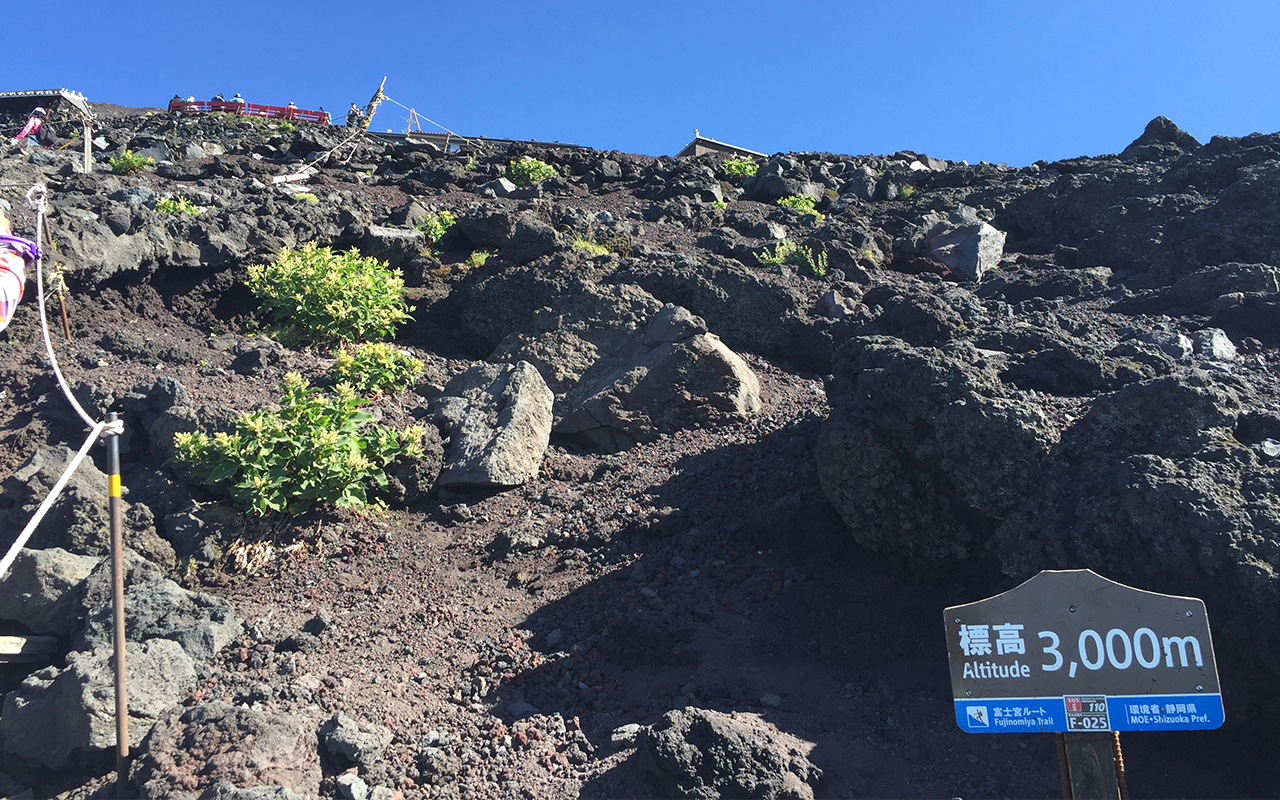
By place, homes accounted for about 38 per cent. Roads accounted for about 20 per cent. Outdoor locations open to the general public accounted for about 12 per cent; the agency defines the category as the outdoor part of places the public comes and goes from, giving sports grounds, outdoor car parks, open-air concert venues and station platforms as examples. Workplaces such as roadworks, factories and yards accounted for about 11 per cent.
Read the middle two together. Roads and open-air public places are about a third of the cases, and they are where a visitor spends the day. The agency is not describing people collapsing in fields. It is describing people out on roads and in the open-air parts of public places. Those are the places a visitor passes through, though the count itself covers everyone in Japan and not visitors specifically.
The agency also publishes weekly counts through the season, so this is not a figure you have to wait a year for. In the week from 31 August to 6 September 2026 the provisional national total was 1,723.
None of that argues against going in summer. It argues for treating the middle of the day as a constraint the way you would treat an opening time, which is a scheduling problem rather than a risk to be braved. Our model courses for days out of Kyoto approach the day from the other direction.
The Warning Words Keiho and Tokubetsu Keiho in the English Japan Publishes
The Japan Meteorological Agency publishes this vocabulary in English itself, so you do not have to trust a translation, ours included. It sets out the tiers in its own English. There are Advisories, chuiho. Above them there are Warnings, keiho. Above those, since 30 August 2013, there are Emergency Warnings, tokubetsu keiho, which the Japan Meteorological Agency describes as issued when phenomena are expected to be of a scale that will far exceed the warning criteria. We read the page on 13 September 2026.
Rain, Flood, Landslide, Storm Surge: the Rung That Says Evacuate
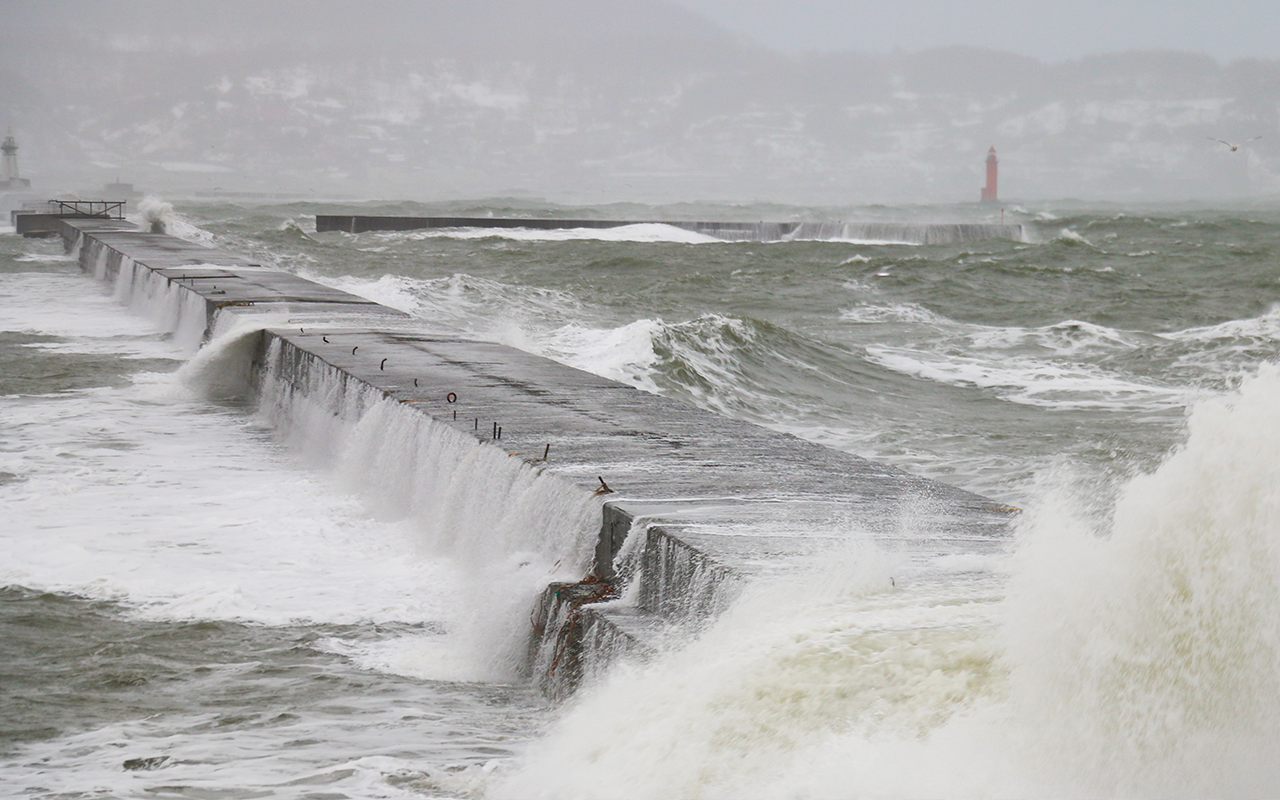
For four phenomena, though, there is a tier between the last two, and it is the one that matters most to a traveller. For heavy rain, flood, landslide and storm surge, the agency writes that it issues warnings and advisories corresponding to five Alert Levels, including Urgent Warnings equivalent to Alert Level 4, which it says mean that a likelihood of catastrophes is high and that all residents should evacuate from dangerous areas. It adds that evacuation should be finished while the Urgent Warnings are issued at the latest, and that elderly people, those with disabilities and others who may need more time should start once Warnings equivalent to Alert Level 3 are issued. If you learn one rung, learn that one.
There is a reason that rung is newly legible. The agency states that in 2026 it reorganised warnings and advisories for those four phenomena into the five Alert Levels, and that they are now issued with the corresponding Alert Level number included directly in the warning name, so that the action for each phase is easily understood. In Japanese the Level 4 tier is kiken keiho, the danger warning, and the agency's table gives the names as they now appear: Level 4 heavy rain danger warning, Level 4 landslide danger warning, and so on, against the action "everyone evacuate from dangerous places". The number is in the name. You do not have to know the vocabulary to read the tier off a screen; you have to know that the digit is the instruction.
Two sentences on that page do more work than the tier list. The first is what an Emergency Warning means: the agency says its issuance for an area indicates a level of exceptional risk of a magnitude observed only once every few decades. The second is what it does not mean. Warnings and Advisories continue to be issued in their current form, the agency writes, and residents should not let down their guard even if no Emergency Warning is currently in effect in the area. In other words the top tier is not the threshold at which to start paying attention. Nor is it rare in the sense of never happening: the agency publishes verification papers on occasions when it has issued one, and we found no English version of them, and that list has entries for every year from 2019 to 2026, usually more than one. The most recent is a Level 5 heavy rain emergency warning for Chiba Prefecture on 13 August 2026. The magnitude is once in a few decades for the place it lands on, not for the country.
The same English page also answers a question the tier list raises, which is whether the top threshold is one national number. It is not. The agency writes that the criteria for Emergency Warning issuance were determined in response to the views of local governments in charge of disaster management for their own areas.
What the Japanese page adds is the tone at the top. For heavy rain it says that when an Emergency Warning is issued, some disaster has very likely already occurred, and that this is a situation in which life is in danger and safety must be secured immediately. The English page describes the tier; the Japanese page describes the moment.
Heat: Two Tiers, and a Door That Opens
Heat has its own two-tier system, run by the Ministry of the Environment with the Japan Meteorological Agency, and it too is published in English with the ministry's own labels. The English page gives the outline: the country is divided into 58 regions, a Heat Stroke Alert is announced for a region when the WBGT index is 33 or higher, and the announcement comes at five in the afternoon the day before and again at five the following morning. Above it sits the Special Heat Stroke Alert, and the two are built differently. The Japanese page for the upper tier states that it is issued when the next day's forecast WBGT reaches 35 at all the index measurement points in a prefecture, among other conditions, against 33 at any one point for the ordinary alert. When we looked at five in the afternoon on 13 September 2026, one Heat Stroke Alert was in effect, for Nagasaki Prefecture, and no Special Heat Stroke Alert had been issued.
The upper tier also does something the lower one does not, and it is the clearest case in this article of counting turning into policy. The Japanese page states that where a municipal head has designated facilities in advance as cooling shelters, those facilities are opened, during their designated hours, when a Special Heat Stroke Alert is issued. The designation requires the building to meet conditions including having air conditioning, and the page gives public halls, libraries and shopping centres as examples. The same page counts every index measurement point in the prefecture except those listed in a schedule to the enforcement regulations of the Climate Change Adaptation Act. Heat went from something the ambulance service counted to something named in a law, with an alert above it and a door that opens when the alert fires.
Tokubetsu Keiho in Two Languages: the English Is Real, and Not Always in Step
One more thing about the English. The meteorological agency maintains a multilingual disaster page covering weather, earthquake, tsunami and volcano information, and English is one of fourteen languages on it besides Japanese. The provision is real and it is official.
The provision is also not always in step across languages. The English page for the Emergency Warning System illustrates the kind of event the system is for with the heavy rain caused by Typhoon Talas in 2011, in which around a hundred people were killed or left missing. The Japanese page for the same system fills that slot with a different storm, which it names Reiwa Gannen Higashi-Nihon Taifu — the East Japan typhoon of 2019 — with more than a hundred killed or missing. We are not going to say which example is the right one, because both are the agency's and the agency has not told us that one supersedes the other. What we will say is that the two pages are not identical, so if a detail matters to you, it is worth checking both. The traffic does not run one way either: the 2026 reorganisation described above appears on the English page, and the Japanese page for the Emergency Warning System does not mention it.