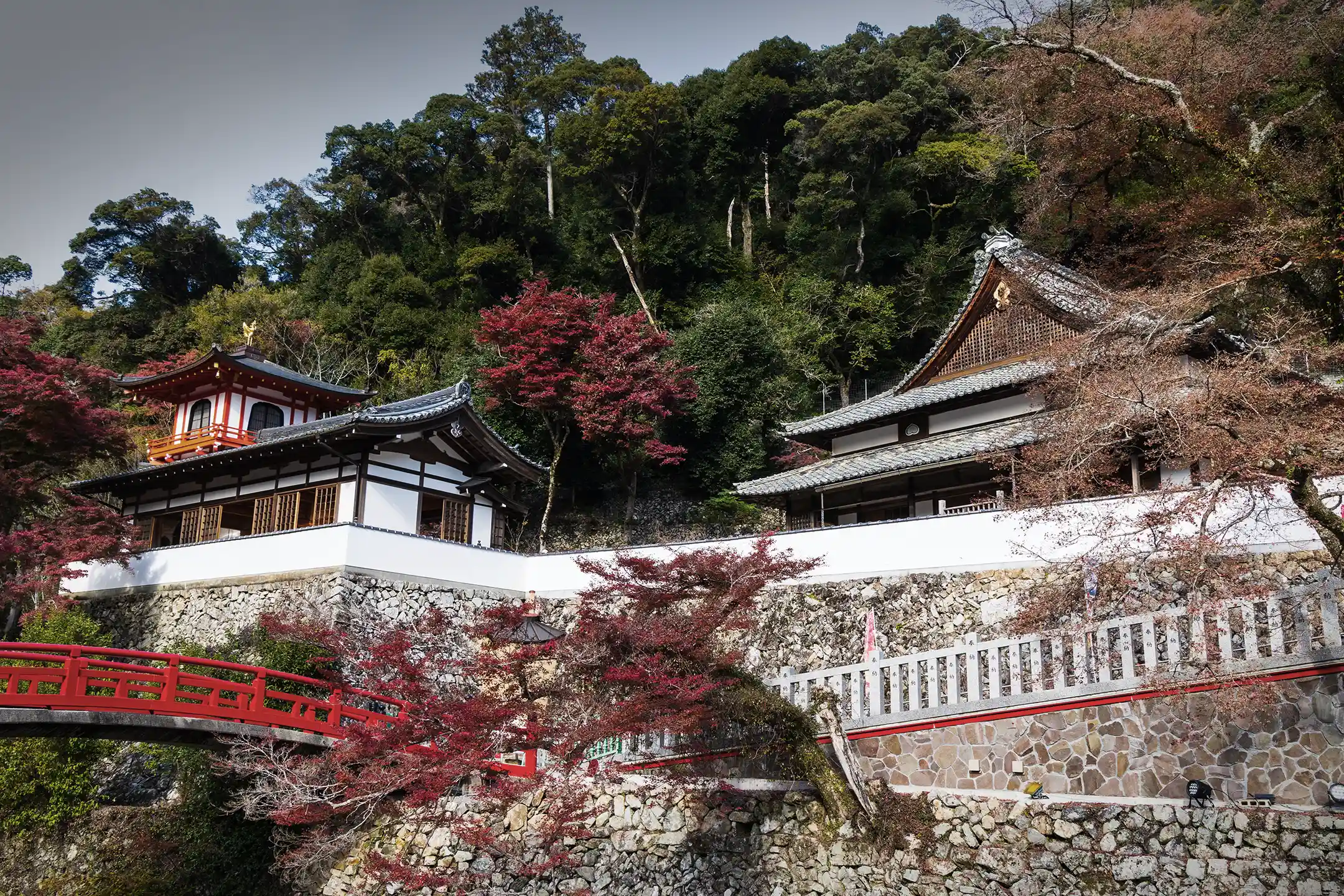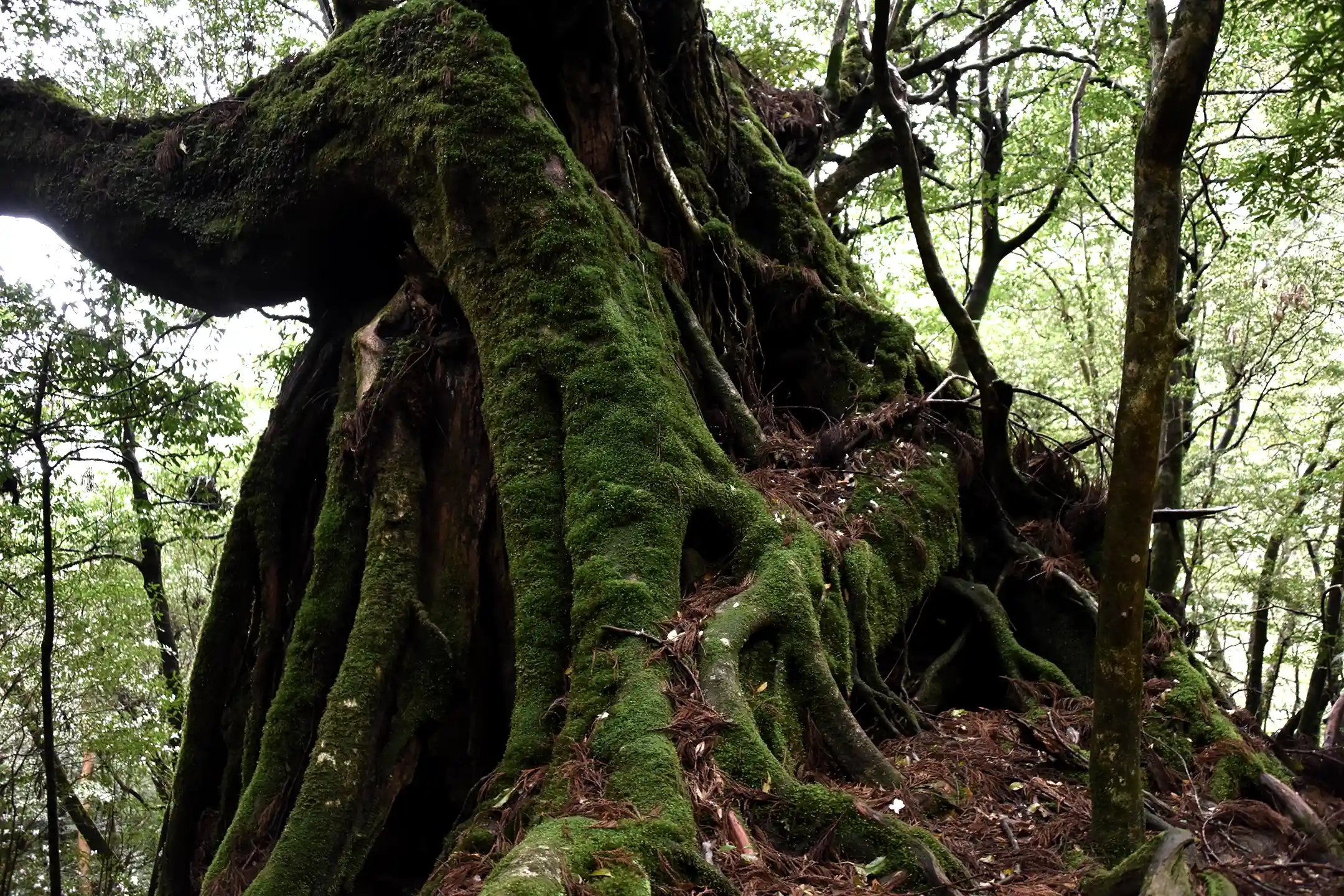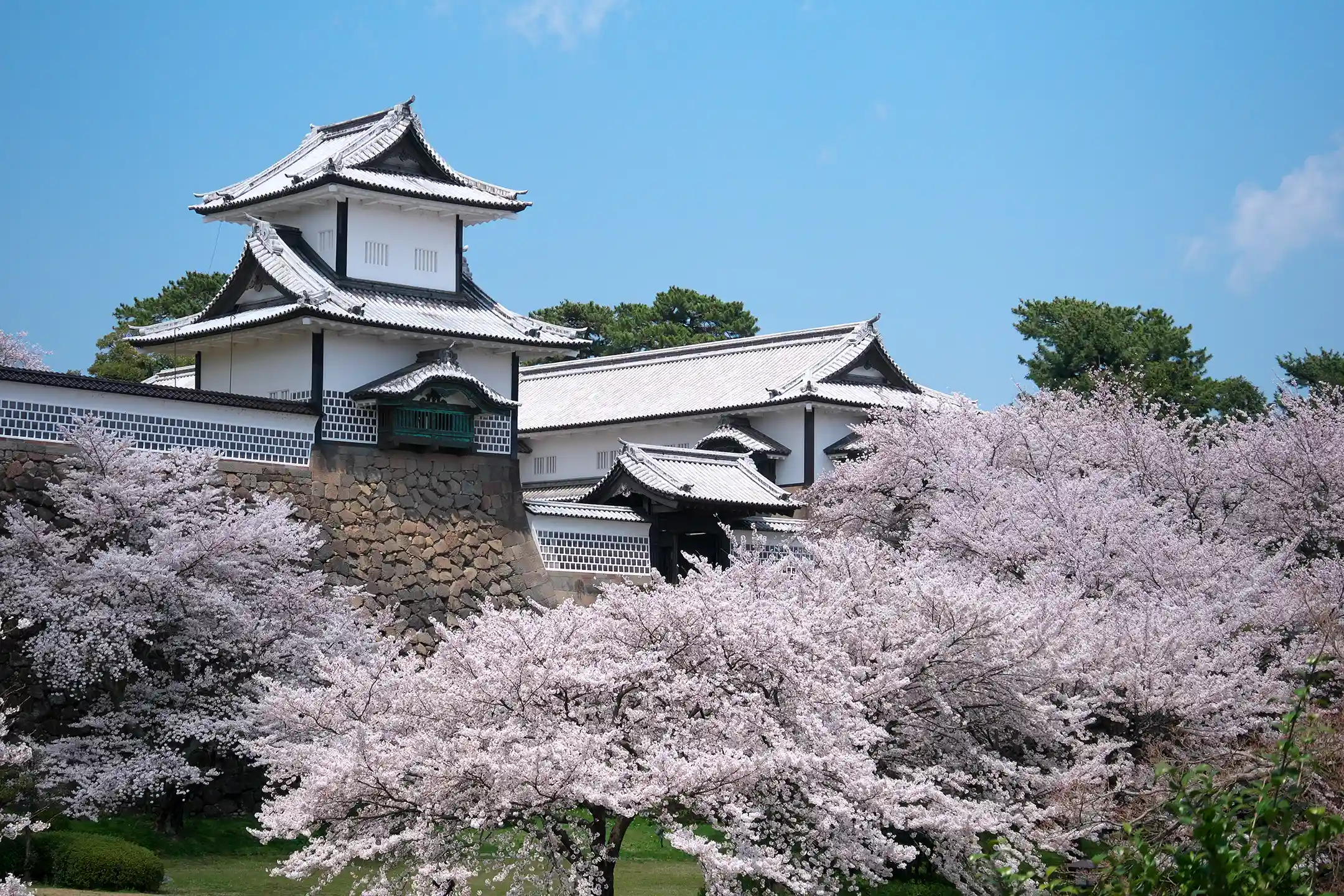
Search for a Kanazawa private onsen and the results will offer you inns, suites with open-air tubs, and reservable baths for two. What they rarely tell you is the thing that decides whether the water is worth the fare: Kanazawa is a castle town rather than a spa town. Its hot springs are real, but they sit outside the sightseeing grid — and a well-known reservable bath downtown turns out to be no onsen bath at all.
This guide is about how to tell the difference before you pay. Japanese law requires a bathing facility to post what its water is and what has been done to it — heated, diluted, recirculated, disinfected — together with the reason in each case. Once you know that document exists, the choice stops being a matter of photographs.
This article follows a single thread through Kanazawa — one way into a city shaped by centuries of quiet refinement. The Kanazawa Unveiled Digital Guide draws its craft traditions, gardens, historic districts, and culinary culture into one connected reading.
Kanazawa Onsen Is Not Where Most Visitors Think It Is
The hot spring towns of this coast are famous, and none of them are in Kanazawa. The Kaga City tourism association presents Kaga Onsen as three resorts of quite different character — Katayamazu on its lake, Yamashiro with its Kutani pottery lineage, and Yamanaka above the Kakusenkei gorge. All three sit in Kaga City, a separate municipality south of Kanazawa. When a search engine answers "Kanazawa onsen" with photographs of steaming riverside inns, it is showing you these.
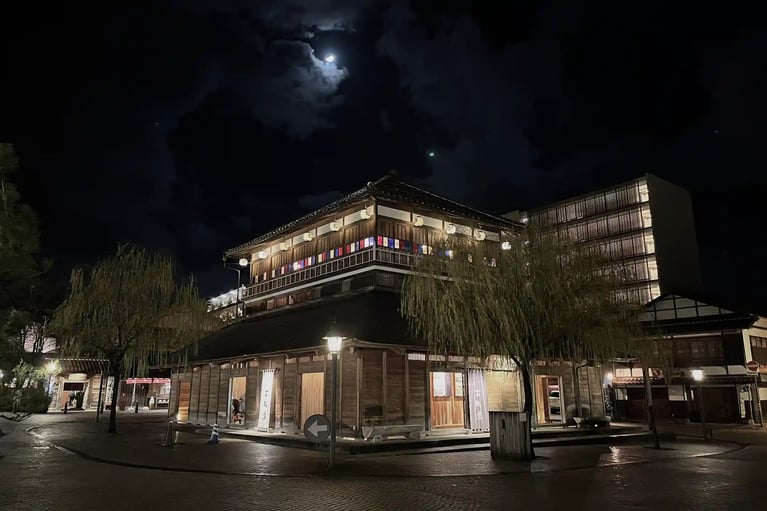
The bathhouse above stands in Yamashiro, which is to say in another municipality. If that is the trip you want, our guide to Kaga Onsen ryokan covers those towns and the inns worth the transfer, and our piece on Kayotei in Yamanaka Onsen looks closely at one of them.
What Kanazawa itself has is smaller and stranger, and it is the reason this article exists. The city holds a hot spring village in the hills behind it, a spring on the upper Sai River, and a farmhouse spring in the satoyama, the cultivated hill country between village and mountain, to the south. Between them and the castle district lie several kilometers and a bus ride. Nothing bubbles under Kenrokuen.
What Counts as an Onsen in Kanazawa, and What the Law Makes a Bath Tell You
Japan defines the word. According to Japan's Ministry of the Environment, water qualifies as onsen under the Hot Spring Act of 1948 if it emerges from the source at 25°C or above, or — failing that temperature — if it carries at least one of the substances listed in the Act's schedule above a set concentration. Twenty-five degrees at the mouth is enough on its own. So is the right chemistry at the right concentration, at any temperature. Either route qualifies, which is why a spring you would call tepid can be legally the same thing as one that scalds.
That definition is generous, which is why the second half of the law matters more to a traveler than the first. Our guide to what an onsen is works through the mineral classes in detail; here the useful part is the paperwork.
The Onsen Bunsekisho, and the Four Admissions Beside It
Every licensed facility must display an onsen bunsekisho, a spring analysis certificate produced by a registered laboratory, giving the source name, the temperature at the mouth, and the mineral composition. Ishikawa Prefecture explains that the analysis has to be repeated every ten years, and that the posted notice must be updated within thirty days of the results arriving — a rule in force since October 20, 2007. A certificate with no date, or no laboratory, is not a certificate.
Beside it sits the more revealing notice. The enforcement regulation of the Hot Spring Act requires a facility to declare four things, and in each case to state the reason:
- Kasui — whether water has been added to the spring, and why.
- Kaon — whether the spring has been heated, and why.
- Junkan — whether the water is recirculated, whether it is filtered, and why.
- Shodoku — whether a bath additive or a disinfectant is used, which one, and why.
The reason clause is the part worth reading. A spring arriving at 49°C has an honest reason to be tempered. A spring arriving at 30°C has an honest reason to be warmed. What the notice exposes is the case where all four boxes are ticked at once: added, heated, recirculated, chlorinated. That water was legally onsen when it left the ground. By the time it reaches the tub it is closer to a swimming pool with a pedigree.
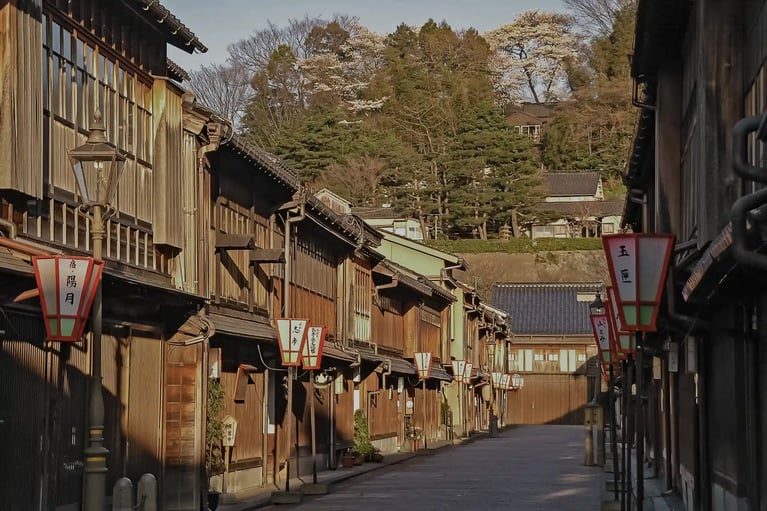
The lanes above are Higashi Chaya, and the refined inns that ring this part of the city are exactly where the question bites. This is a Western blind spot rather than a Japanese peculiarity: a European hotel may call a heated tub a spa bath and owe you no account of where the water came from. Japan turned provenance into a posted document and made the operator sign it. Nothing equivalent hangs on the wall of a hotel spa in Zurich or Bath.
Take a well-known case in central Kanazawa. Asadaya, the ryotei ryokan — an inn built around its restaurant — was founded in 1867, the year before the Meiji Restoration, and it keeps the reservable family bath the inn is known for. Open the bathing sheet for the inn, though, and the spring-quality field is a dash. The inn's own pages present the house and the kaiseki, the seasonal tasting dinner, rather than a spring. Which is what you would expect of a bath that no hot spring feeds. It is a fine bath. It is a different purchase from the one the phrase "private onsen" implies.
Kashikiri-buro: What a Private Onsen in Kanazawa Actually Buys
Three arrangements travel under the English phrase "private onsen," and they are priced differently because they are different products.
A kashikiri-buro is a bath the property closes to everyone else for a fixed slot — commonly forty to sixty minutes, booked ahead or claimed on arrival. Kazoku-buro is the older word for the same thing, carrying a family connotation that no longer restricts who may use it. A guest-room open-air bath is a different animal: a tub attached to your room, available whenever you want it, with no clock and no queue. The first two buy exclusivity for an hour. The third buys it for the length of your stay, and the room rate reflects that.
Understand what the exclusivity is for, because it is not modesty. Japan's shared bathing culture is nothing the country is embarrassed about — mixed bathing survives in pockets, and our guide to konyoku follows where. A reserved bath solves narrower problems: a couple who want to talk, a guest with tattoos at a property that would otherwise turn them away, a body that would rather not be looked at. Those are practical purchases, and worth making. They are a different thing from a more authentic bath.
There is a trade, too. A reserved tub is small, and small tubs cool. The large bath a property built for everyone tends to be the one fed hardest from the source, sited for the view, and open at dawn. Book the private slot for the hour you want alone, and take the shared bath at six in the morning when nobody is in it.
Two questions decide the bill, and both are worth asking before you book the room rather than at the desk. Is the reserved bath open to day visitors, or held for staying guests? And is it included in the room rate, or charged per use? Properties answer both ways, and at an inn that allocates slots at check-in, the good hours are gone by the time you arrive.
Where the Water Is: Three Places to Find a Private Onsen in Kanazawa
Kanazawa's springs sit in three places, none of them downtown. Each solves a different problem.
Yuwaku, the Village the City Kept Behind It
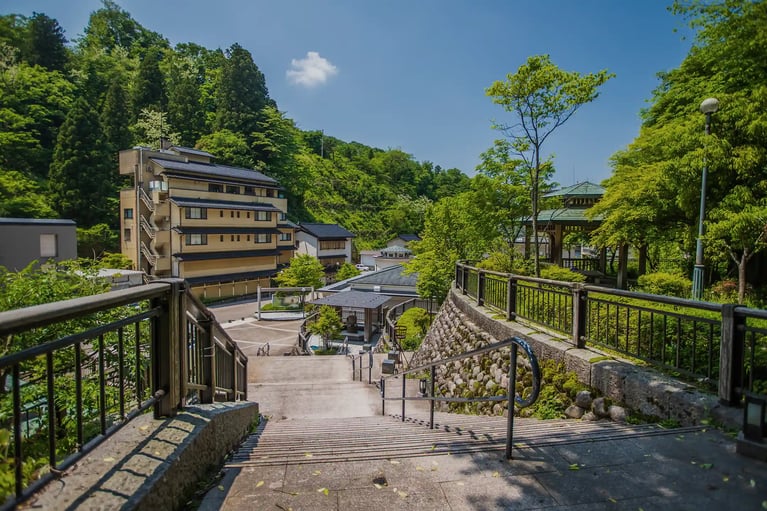
Yuwaku is a hot spring hamlet in the hills, reached in about forty-five minutes by Hokutetsu bus or thirty by car from Kanazawa Station, according to the Kanazawa City Tourism Association. The Yuwaku Onsen Tourism Association calls it a village of eight houses. Eight, which is the scale of a hamlet rather than a resort strip; the association's whole roster fits on one page. Ask about the inn shuttle when you reserve, and check the last bus before you plan a late dinner in town.
Hyakurakuso is the house here that concentrates hardest on privacy, and it publishes enough numbers to be checked. Its official site gives twenty-four rooms across two buildings — twelve in the Annex Kagura, twelve in the Main Building, Iroha — with five reservable open-air baths between them, four in Kagura and one in Iroha. Fourteen of the rooms carry a bath of their own: six en-suite open-air in Kagura, eight semi open-air in Iroha. The site describes the property as a hot spring resort for adults, which is a filter worth knowing about in either direction.
The public bath in the village is the useful control. The Kanazawa City Tourism Association lists Shirasagi-no-yu, Yuwaku's communal bathhouse, as open 7 a.m. to 10 p.m., closed the third Thursday of the month, at ¥490 for an adult — and classifies the spring as sodium chloride and sulfate, low in osmotic pressure, weakly alkaline, and low in temperature. That last word is the one to notice. A spring classed as low-temperature reaches the bath below bathing heat, so wherever a facility warms it, the rule above obliges the operator to post the fact and the reason. Go read the notice. It is on the wall, and it is the cheapest lesson in Kanazawa.
Kanazawa Saigawa Onsen, Twelve Minutes from Kenrokuen
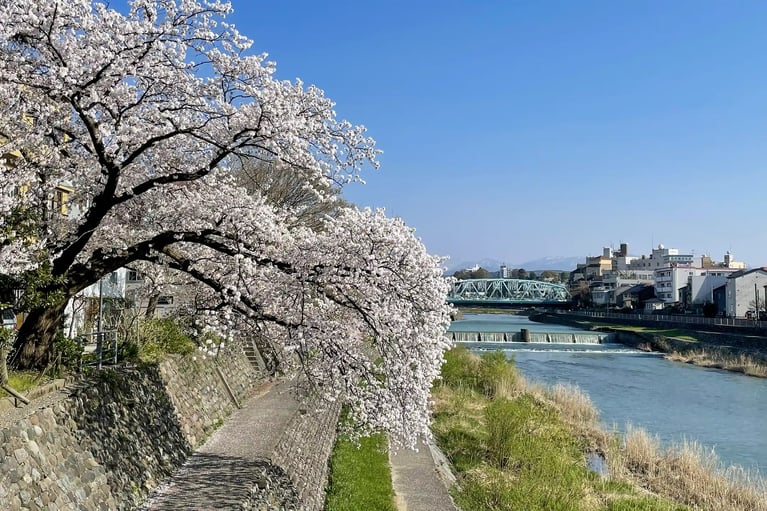
Upstream of the Sai River, in Suemachi, a single inn holds the spring that gives Kanazawa Saigawa Onsen its name. Takitei sits twelve minutes by car from Kenrokuen and the 21st Century Museum, by its own reckoning — close enough that the garden and the bath fit into one day, far enough that the river is what you hear at night. Rooms in the detached Saigawa wing carry their own open-air tubs above the water.
This is the compromise position, and the right one for a first visit: twelve minutes from the castle town and standing in a spring. Neither Takitei nor Hyakurakuso publishes its analysis certificate online, so the reading happens on arrival. Both trade as hot spring properties, which means the notice has to be posted somewhere you can see it — the changing room is the usual place. If you cannot find it, ask at the desk.
Nanamagari, and the Day-Use Private Onsen in Kanazawa
South of the city, at Nanamagari, a two-hundred-year-old farmhouse has a spring on its own grounds. Onsen and Garden Nana is the one address in this article that will sell you a private hot spring bath without a room, and the numbers on its official page reward a close reading: three reservable open-air baths — one of lacquer, one of stone, one of Aomori hiba cypress — booked one party at a time in fifty-minute slots, at ¥4,400 including tax, a flat rate however many of you there are.
Then the water itself. Sodium-calcium chloride, hypertonic, weakly alkaline, high-temperature, with the source at 49.5°C, and the page states plainly that the bath runs gensen kakenagashi with no added water — flowing through, never reused, undiluted. Go back to the general rule two sections above: a spring arriving at 49°C has an honest reason to be tempered. This one arrives at 49.5°C and the operator has put in writing that it adds nothing to it. That is a harder sentence to write than it looks, and it is exactly the sentence the four disclosures exist to make an operator either state or withhold. Set it beside Yuwaku's low-temperature spring and one city holds the whole range.
Booking a Kanazawa Onsen Bath: Prices, Slots and the Ceiling Set by Law
Prices in Kanazawa's bathing world sit in three tiers, and only the middle one is a market price.
At the bottom, the fare is set by the government. Ishikawa Prefecture's governor fixes a maximum charge for ordinary public bathhouses under the Price Control Ordinance, and since May 1, 2025 that ceiling has been ¥500 for an adult, ¥150 for a child of six to eleven, and ¥70 below that. A sento, the neighborhood public bathhouse, counts as a hygiene utility rather than an amenity, so an operator cannot charge above the line however good the water is. Leisure bathing complexes — the super sento — fall outside the rule and price freely. When a communal bathhouse asks under ¥500, you are looking at a regulated price rather than a bargain.
In the middle sits the reserved slot: Nana's ¥4,400 for fifty minutes, priced per party. Towels are rented rather than assumed — ¥440 for a bath towel, ¥220 for a face towel — so bring your own if you would rather not. Reserve online, because a single party holds the whole bath and the sunset slots go first. Afterwards the lounge and its seasonal tea are yours for as long as you like, which is the part of the fifty minutes people forget to count.
At the top is the room with its own tub, where the bath is folded into the room rate and no clock applies. Whether that is worth the difference turns on one question: how many times will you actually get in? Twice, and the reserved slot was better value. Five times, including once at two in the morning because you woke and could, and it was not close.
The fuller landscape of Kanazawa

Yuwaku's 1,300 Years and the Festival an Anime Invented
The Kanazawa City Tourism Association notes that in 718 a farmer found the spring at Yuwaku after watching a white heron bathe in it to heal itself, which is where the name of the village bathhouse comes from. Under the Kaga domain the Maeda lords visited to take the cure, and the village became the city's back parlor — the place the castle town went to be unwell in comfort.
Then, in the twentieth century, the mechanism that had sustained it changed. Rail and highway put Kaga's larger resorts within reach of the same travelers, and a valley of eight houses cannot compete on scale with three towns. What Yuwaku did next is the reason it is still here.
In 2011 an animated series called Hanasaku Iroha, set in a fictional Yuwaku inn, put a lantern festival on screen that had never existed. The village staged it for real. The festival's organizers tie the first edition to the third anniversary of the recovery from the Asano River flood, and give the rite a story: in the tenth month, when the gods withdraw to Izumo, the small deity of the Yuwaku Inari shrine must find the road, so the village lines it with lanterns; in return the deity carries the wishes written on the nozomi-fuda tied to them to the assembled gods. The fourteenth Bonbori Festival falls on October 17, 2026; its lantern-lighting ceremony was held on July 19.
It is worth being precise about what happened, because the easy reading fails in both directions. It is not a tradition, and not a marketing stunt that outstayed its welcome. A community took a fiction, attached it to a shrine it already had and a recovery it had actually lived through, and performed it until it became the thing the calendar is built around. Fifteen years is a short time. It is long enough that people who were children at the first one now write the wishes.
Which brings the argument back to where it started. The reason to soak in Kanazawa is not that its water beats Kaga's — the certificates will tell you it does not. It is that eight houses in a valley behind a castle town are still deciding what they are, in public, and you can book a bath in the middle of it. That is a different thing to buy, and worth knowing you are buying it.
Author Bio

%20Gunkan%20Maki%20Sushi.webp)