Japan’s deeply rooted onsen culture, when combined with the most up‑to‑date ideas of wellness travel, creates what many travellers now consider the best private onsen in Japan experience – especially if you are looking for both inner balance and a more sustainable way of travelling.
Imagine soaking in a secluded hot spring, surrounded by quiet nature, where no one disturbs you and the entire bathing time is yours and yours alone. That sense of spacious, uninterrupted calm is what makes private onsen stays so special. In fact, a recent survey suggests that around 80% of affluent overseas travellers who are considering or have already visited Japan place “wellness” at the centre of their travel priorities(*1).
In this guide, you will explore the appeal of private onsen in Japan from different angles – by type and by region – along with key points for choosing the right property, tips on how to weave wellness experiences into your stay, and even scientific insights into water quality and bathing etiquette.
From basic information that will reassure you if it’s your first onsen trip to more “deep‑dive” pleasures that seasoned hot‑spring lovers look for, everything is presented through a sustainable lens. Sharpen your senses and, together with warm mineral‑rich waters that are gentle on your body, step into a uniquely Japanese style of travel where “Wellness × Sustainability” is the main theme.
This article is one entrance into Japan's hot-spring tradition. The Digital Guide gathers the country's most celebrated onsen — their waters, their settings, and the quiet rituals of stillness around them — into a single, connected reading.
How to Choose the Best Private Onsen in Japan Without Regrets
To really enjoy a private onsen stay that feels like the best private onsen in Japan for you, it’s crucial to choose a property that matches what you personally need. In particular, three points – the level of privacy, the view, and the quality and temperature of the hot spring water – will strongly affect how satisfied you feel during your stay.
If you understand what to check under each of these points, you can avoid that “It wasn’t as peaceful as I expected…” feeling and instead sink into an onsen experience where you can completely let go. Below, you’ll find practical tips for choosing wisely from these three perspectives.
Privacy and Guest Flow (Access Routes)
Even when an onsen is advertised as “fully private” or “for exclusive use”, the actual degree of privacy can vary. A truly private space is one where you never have to worry about other guests’ gaze or noise while you are using it. A reserved open‑air bath where only you and your partner, family, or friends can enter during your time slot becomes a luxurious cocoon of intimacy – particularly precious for couples and families(*1).
When you book a private bath by time slot, the staff will ensure that no other guests enter while you’re using it, but when you’re comparing options for the best private onsen in Japan, it is worth paying attention to the flow as well – meaning how you move between your room and the bath. If you can walk directly from your room to your private tub without passing through shared corridors, you won’t have to worry about running into other guests, and you can slip back to your room after bathing without feeling exposed.
For many visitors from Europe and North America, the custom of bathing nude with others in a Japanese onsen can feel a bit intimidating at first. A property where the routes for private and public spaces are clearly separated gives you an extra sense of comfort and ease.
If you stay in a room with its own open‑air bath, everything is contained within your private space, so the stress of moving around is minimal. At villa‑style properties where each unit is a detached building, you’ll barely come into contact with other guests at all.
It’s also worth checking whether the private bath area is screened by fences, bamboo, or trees to block outside lines of sight. Those small design choices create a hideaway atmosphere where you can truly relax as if you were in your own secret retreat. And if you’re travelling with children or older family members, it’s a good idea to confirm whether there are handrails and minimal steps between the changing area and the tub, so everyone can bathe safely and comfortably.
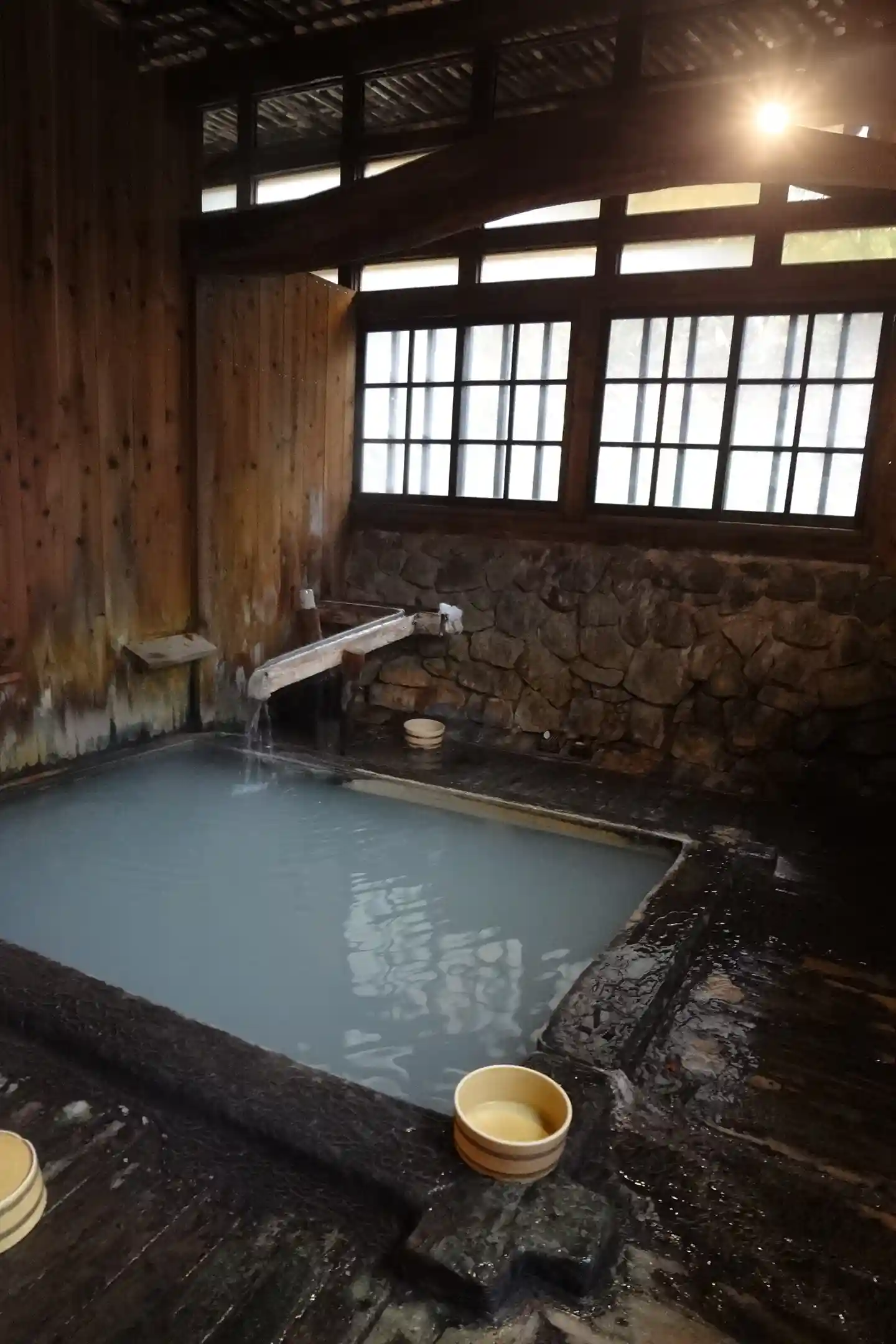
Views and Location
The scenery that unfolds before your eyes while you soak in an onsen can leave a deep impression on your heart. If you’re going to the trouble of booking a private onsen, it’s worth putting some thought into the view as well. Some of the most sought‑after options are clifftop or lakeside open‑air baths, or locations that bring you close to dramatic ravines and waterfalls.
At open‑air baths facing the Pacific Ocean, for example, you may be able to watch the sun rise straight up from the horizon. In mountain hot spring areas, you can have entire seasons all to yourself: fiery autumn foliage, or snow‑framed winter landscapes that you admire from your private tub.
What you’ll want to check in advance are the direction the bath faces and the time slots you’re likely to use. If you want to bask in the glow of sunrise on the sea, choose an east‑facing bath; if you dream of watching the sunset, look for a west‑facing outdoor tub.
If you tend to bathe at night, keep in mind that the scenery may disappear into darkness. It helps to look through photos and reviews beforehand so you know what kind of views you can expect in which season and at what time of day. That way, you can time your private bath for the most memorable moments.
Water Quality and How the Temperature Feels
If you already love hot springs, you may know that the minerals dissolved in the water – the “spring quality” – affect how the water feels on your skin, how warm it seems at a given temperature, and how long you stay toasty after bathing. If you choose a spring quality that matches your body and preferences, your soak will feel even more satisfying.
Sulfur springs and strongly acidic springs, for instance, are known for powerful antibacterial properties and can leave your skin feeling thoroughly cleansed. At the same time, these components can be stimulating, so if your skin is delicate you might feel some tingling. Sulfur springs, in particular, are often called “beautifying baths” in Japan because they are said to help with conditions like eczema and atopic dermatitis – but precisely because they’re so active, people with sensitive skin are often advised to rinse off the mineral film in the shower after bathing, especially if there is any stinging(*3).
Bicarbonate springs, on the other hand, are what you might hear described as “soda springs”. They act almost like a natural soap, softening old keratin and loosening dirt in your pores, which is why your skin tends to feel extra smooth afterwards. This is why they are also known as “baths of beauty”. However, because they can remove not only excess keratin but also some of the protective layers, your skin may lose moisture more quickly after bathing. Applying a moisturizer before your skin dries out is key.
If the bicarbonate spring is also rich in chloride components, the fine salt film that forms on the skin can help prevent moisture from evaporating, reducing the risk of dryness(*3). Chloride springs – often nicknamed “salt springs” – leave a delicate coating of salt on your skin, which reduces the evaporation of sweat and therefore keeps you warm for longer. Because your body heat is retained and you don’t cool down easily, this type of water is sometimes called “the hot bath” or “the warming bath”(*4). In cold seasons or if you often feel chilly, choosing a chloride‑rich spring will help you enjoy a long‑lasting, comfortable warmth.
If you prefer a refreshing, almost sparkling sensation while you’re in the water, carbonated springs are a wonderful choice. In hot springs that contain a high concentration of carbon dioxide, countless tiny bubbles adhere to your skin and create a pleasant tingling feeling. The carbon dioxide is absorbed through the skin and dilates the blood vessels, which is why these springs are said to improve circulation and raise body temperature.
Iron‑rich springs (known as “iron springs”) are another distinctive type. The water is nearly clear as it emerges from the ground, but as soon as it comes into contact with the air it oxidizes and turns a reddish‑brown colour. The high iron content gives the water a thick, velvety feel and is said to warm you thoroughly, keeping your body from cooling quickly after your bath. If you are troubled by feeling cold easily, these springs can be particularly effective, and if the water is safe to drink, it may also help improve anaemia(*5).
One thing to remember: because of the iron content, towels or swimwear can become stained a tea‑brown colour. If you’re unsure which spring quality to choose, you can use your own skin and wellness goals as a guide:
If you want something gentle on your skin, look for mildly alkaline simple hot springs (low in irritation, leaving your skin soft and smooth).
If you’re hoping for detox or antibacterial benefits, try acidic or sulfur springs (but moisturize thoroughly afterwards).
If you want to support healing of small wounds or muscle soreness, sulfate springs are known for supporting moisture retention and recovery.
Every hot spring is different, and their characteristics vary widely from place to place. If you stay at a property with several types of baths, it can be fun to “bathe around” and sample different springs. With a private onsen, you can take your time, try a little of each, and discover the one that feels just right for you – a very luxurious way to enjoy hot springs.
What Is a Private Onsen?|Definition, Types, and Benefits
Before anything else, let’s clarify what “private onsen” actually means in Japan and why it can be so appealing when you’re searching for the best private onsen in Japan.
In general, a private onsen is a hot spring bath where you do not share time or space with other guests – it is reserved solely for your use. Unlike a large public bath, you and your partner, family, or friends have the whole tub to yourselves. The biggest benefit is peace of mind: you don’t have to worry about being seen naked by strangers, and you can relax without self‑consciousness.
That sense of privacy also makes many people feel more comfortable in terms of hygiene. If you’re someone who feels uneasy about soaking in water that many others have just used, a privately reserved bath lets you enjoy the onsen experience without that concern.
Private onsen are also ideal when you want to bathe together with small children, or with older family members who may need a bit of help. You don’t have to worry about disturbing others around you, and you can move at your own pace in a safer, more controlled environment. On top of that, there is a special feeling that comes from “having all the healing powers of the hot spring” to yourselves. You’ll be able to fully enjoy both the skin‑care and recovery effects of the water, and because no one interrupts you, the mental relaxation effect is also very strong.
In fact, private open‑air baths are often chosen for anniversaries and other special occasions precisely because they offer privacy and a sense of celebration. Many people also appreciate being able to bathe “without worrying about others watching” when they’re not used to public bathing(*1). Broadly speaking, there are several main styles of private onsen. Let’s look at the typical types, along with their features and benefits.
Reserved Open‑Air Baths (Private Baths)
A reserved open‑air bath is a tub located either inside the main building or in the grounds of a ryokan or hotel that you can book for exclusive use during a fixed time slot. In many places, you’ll need to reserve in advance, either when you book your room or at check‑in, and you’ll usually get something like 50–60 minutes per session (in some places up to 90 minutes)(*2).
Some properties use a simple “vacant/occupied” sign system instead of advance reservations, where you can step in whenever it’s available and enjoy it as often as you like. The great charm of these private baths is that they allow you to enjoy a private soaking experience quite easily. Even if your room doesn’t have its own hot spring bath, you and your partner or family can still enjoy a soak together by booking one of these private tubs.
The styles are wonderfully varied: hinoki (Japanese cypress) baths, rock baths, jacuzzi‑style baths and more, each with a different atmosphere and character. There are indoor versions and open‑air versions; if you want to bathe regardless of the weather, the indoor type is convenient, while the open‑air type is perfect for those who want to enjoy the sky and nature. Some baths are designed as panoramic “view baths”, with large windows framing dramatic scenery.
If you reserve a time slot, it’s considered good manners to be punctual, both when you start and when you finish. Even at properties without strict time limits, it’s kind to keep your use to a reasonable length so that others can enjoy the bath too.
Note that some private baths do not have washing areas. It’s best to check in advance, and if there is no shower or faucet inside the private bath area, you can wash your body in your room’s shower first, then head to the bath to soak. These private open‑air baths are also called “family baths”, and they’re very popular for trips with babies or small children, because you can relax without worrying about noise or splashing.
If you come as a couple, the bath becomes your own intimate little universe – ideal for a special anniversary night. With friends, you can chat and laugh together (as long as you’re considerate and avoid getting too loud). In a private open‑air bath surrounded by nature, the calls of birds and the sound of the wind become part of your experience. That feeling of stepping away from everyday life is exactly where reserved baths shine.
Guest Rooms with Open‑Air Baths
A room with a private open‑air bath is exactly what it sounds like: your guest room comes with its very own outdoor onsen. Having a hot spring all to yourself right outside your door is an extraordinary luxury, and the greatest benefit is being able to slip into the water whenever you like, as many times as you like.
Because there are usually no time restrictions, you can soak late at night or at dawn, even when the large shared baths are closed – effectively 24 hours a day. You might wake up and greet the morning sun from your tub, or sink into the water before bed under the moonlight – it’s entirely up to you.
In most cases, these private outdoor baths are designed so that you are shielded from outside views, giving you a very high level of privacy. At the same time, the tub is often fully open to the air, so there is a delicate balance between openness and seclusion. If your main purpose is rest, recuperation, or celebrating a special occasion, a room with its own open‑air bath is one of the most ideal options you can choose.
From check‑in to check‑out, you can spend almost your entire stay wrapped in the comfort of your room and your private tub, creating the ultimate “soak, rest, repeat” retreat.
Detached Suites, Villas, and Whole‑House Rentals
If you’re looking for an even more independent, luxurious stay, consider properties that offer hot springs in detached suites, cottages, or villas. These “hanare” units are separate from the main building, giving each group of guests a fully enclosed private area.
Some might be renovated farmhouses with thatched roofs, others sleek modern villas – in both cases, the architecture often reflects the local landscape and culture. Many of these detached units have their own indoor and outdoor baths, and because the buildings themselves are separate, the feeling of “this whole onsen retreat belongs to us” is especially strong.
Your freedom of movement is much greater in these layouts. The bath may be only a few steps from your bed; you can wander in your yukata through the garden, relax on the terrace, and come and go without feeling observed.
Meals are often served in private dining rooms, and some properties go further and offer full in‑room dining for both breakfast and dinner. In such places, you can savour seasonal kaiseki cuisine while lingering over conversation, without worrying about other guests – a true “hideaway resort” feeling.
Spending time in a space that values both your privacy and the surrounding environment allows you to enjoy a luxurious yet conscientious style of travel.
Recommended Areas for the Best Private Onsen in Japan 【By Region】
Across Japan, you’ll find hot spring towns scattered from north to south, each with its own landscape, water qualities, and cultural background. In this section, you’ll find some of the most recommended regions for enjoying some of the best private onsen in Japan.
For each area, you’ll see what makes its scenery and spring qualities unique, what kind of wellness experiences you can expect, how the seasons change the atmosphere, and a rough idea of how to get there. Japan, often called a “hot spring paradise”, has around 2,900 distinct hot spring areas(*1), which means countless different experiences to choose from. Use this section to find the region that appeals to you most and then search for that one special property that feels like your perfect hideaway among the best private onsen in Japan.
Hakone and Gora (Kanagawa)
Hakone is one of the closest hot spring escapes from Tokyo – less than two hours away – yet it offers grand nature and abundant hot spring sources. If you want easy access from the capital to some of the best private onsen in Japan, Hakone and, in particular, the quieter Gora area are excellent options. The area is often referred to as “Hakone’s seventeen springs”, a cluster of different hot spring districts. Among them, Gora, located at a higher elevation, is especially loved for its quiet, serene environment.
Hakone’s waters are wonderfully diverse: sulfur springs, chloride springs, simple springs and more. The sulfur springs sourced from Owakudani, a volcanic valley, are milky white and look like the very image of a classic onsen. Some private onsen rooms in Gora even give you a view of the sacred Mount Fuji on clear days. Watching Mount Fuji turn shades of red and gold at sunset while soaking in your own open‑air bath is a once‑in‑a‑lifetime kind of moment – many international guests describe it as “like stepping into a postcard”.
Hakone also has deep ties to art. You can spend the day visiting museums such as the Pola Museum of Art and the Hakone Open‑Air Museum, then return to your private bath in the evening. Gora is also home to Zen temples that offer morning services and zazen (sitting meditation) experiences, so if, like many wellness‑oriented travellers, you’re drawn to reflective journeys, Hakone can be a wonderful match: hot springs for the body, Zen teachings for the mind.
Each season has its own charm. In spring, cherry blossoms and fresh green leaves colour the hillsides; in summer, Hakone serves as a cool mountain retreat; in autumn, the slopes blaze with red and yellow foliage; in winter, you might see a snow‑capped Fuji against crisp, clear skies. From Shinjuku, the Romancecar limited express takes about 85 minutes to Hakone‑Yumoto, then the mountain railway gets you to Gora in about 35 minutes.
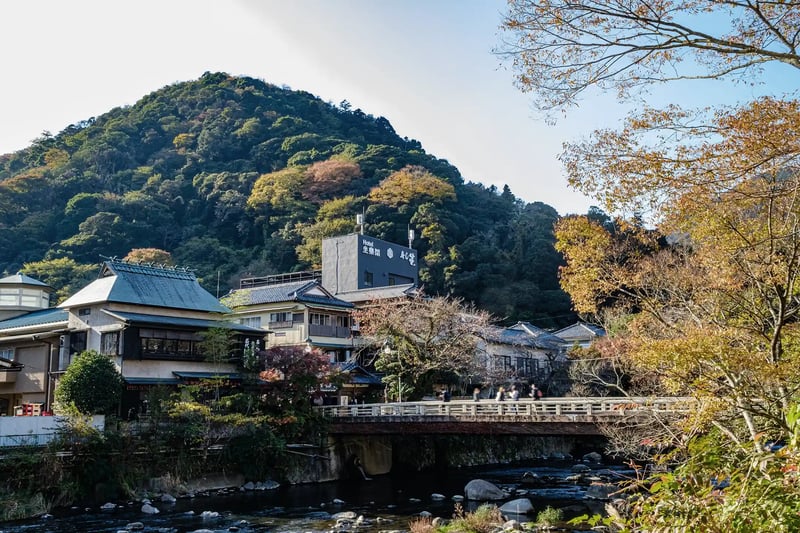
Weekends and holidays can be busy given its proximity to Tokyo, but a private onsen inn lets you withdraw from the crowds and enjoy a calm, slow pace.
Izu (Shuzenji, East Izu, South Izu / Shizuoka)
The Izu Peninsula, blessed with a mild climate and a rich mix of sea and mountain landscapes, is also home to many exceptional private onsen properties. “Izu” actually includes several different moods depending on the area.
Inland, Shuzenji Onsen sits quietly among mountains, with a bamboo grove and the gentle flow of the Katsura River creating an atmosphere that has long attracted writers and artists. Shuzenji’s water is a mild alkaline simple spring that feels very gentle on the skin. At the historic temple Shuzen‑ji, you can join zazen sessions and other contemplative programs that help you slow down and breathe.
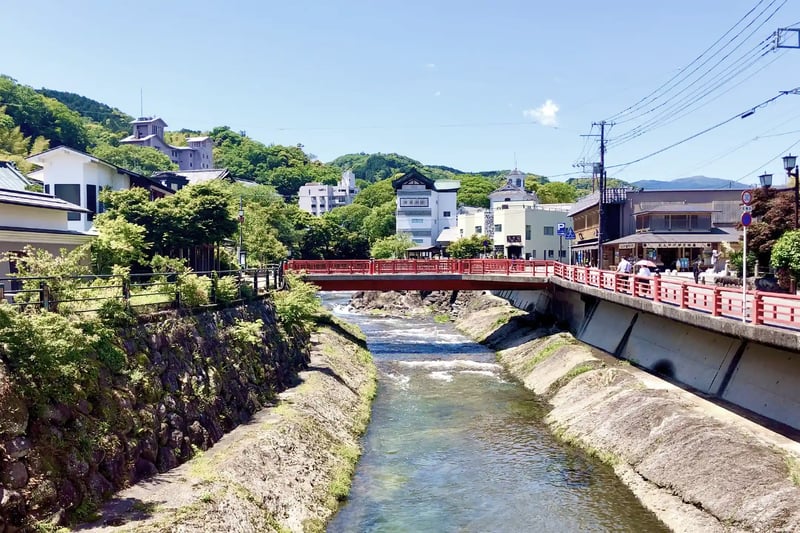
On the other side, East Izu (including places like Atagawa and Kitagawa) faces Sagami Bay and offers many ocean‑view onsen inns. In villa‑style properties with private coastal baths, you can watch the sun rise from the horizon or observe the shimmering “path of the moon” on the water at night.
The springs in East Izu are often chloride‑rich, which means they keep you warm and stop you from cooling too quickly – especially welcome when the sea breeze chills the air. Local seafood is a highlight here: fresh fish and shellfish arrive daily from nearby fishing ports, so you can savour the best of the sea right alongside your bathing experience.
If you travel further down to South Izu (around Shimoda and Yumigahama), you’ll find quieter beaches where nature is less developed, as well as more unusual baths such as cave hot springs. Here, you’ll encounter springs that mix bicarbonate and chloride components, combining skin‑softening and deep‑warming benefits in a single soak.
Across the entire Izu Peninsula, a core attraction is its commitment to local cuisine: local vegetables, wild plants, and seafood play starring roles in seasonal menus. In Shuzenji you might try a simple bowl of wasabi‑topped rice or hot pot made with wild boar; in Shimoda, simmered kinmedai (golden eye snapper) is a beloved speciality.
From Tokyo, you can reach Izu via the Shinkansen through Mishima, or by limited express Odoriko trains that run along the coast directly to Shimoda. For example, it takes about two and a half hours from Tokyo Station to Shuzenji on the Odoriko. If your accommodation is by the sea, driving can also be a pleasure: the Izu Skyline offers sweeping views over the ocean and mountains.
Kusatsu, Manza, and Around Karuizawa (Gunma / Nagano)
To the northwest of the Tokyo metropolitan area, the Joshinetsu Highlands stretch out with clear, cool air and a string of distinctive hot spring towns.
In Gunma Prefecture, Kusatsu Onsen is a famous hot spring with a reputation so strong that people say it can cure every ailment “except lovesickness”. Its water is intensely acidic, with strong antibacterial effects. That mild prickling feeling on your skin softens keratin and helps leave your skin smooth; however, the stimulation can be quite strong, so even when you have private access, it’s better to avoid excessively long soaks and to take breaks in between.
With a reserved private bath, you can follow your own rhythm and rest whenever you like, which makes the powerful water easier to enjoy. Kusatsu has lively attractions such as traditional “yumomi” hot‑water stirring shows at Netsu‑no‑yu, but if you stay in a ryokan on the hill above town, you’ll discover quiet open‑air baths where you can gaze at the night sky in peace.
Further into the mountains lies Manza Onsen, at an elevation of about 1,800 metres. Manza’s water is a milky white sulfur spring with one of the highest hydrogen sulfide contents in Japan. Soaking in an open‑air bath surrounded by high‑altitude scenery – especially in winter when the snow piles high – is an unforgettable experience. Some resort hotels in Manza offer private open‑air baths where you can bathe while looking up at a sky filled with stars.
Crossing into Nagano Prefecture, the tone shifts again when you arrive in Karuizawa, a polished highland resort town. Karuizawa itself isn’t traditionally known as a hot spring town, but the area is home to good springs, such as Hoshino Onsen. As a summer resort, temperatures stay pleasantly cool; mornings and evenings can even feel chilly. In that crisp air, slipping into your own outdoor bath feels particularly luxurious.
Many Karuizawa resorts offer wellness programs such as morning yoga or guided forest walks, so you can combine relaxing baths with stylish strolls around the outlet malls and old town. From Tokyo, Kusatsu and Manza are about three hours away by a mix of Shinkansen and buses, while Karuizawa is just over an hour by Shinkansen – making the whole area fairly easy to access.
Up here, summer is for cool retreats and winter for snow sports, so you can adjust your style of stay according to the season: cool‑air summer soaks or hot baths after a day on the slopes.
Kanazawa and Kaga Onsen Village (Ishikawa)
In the Hokuriku region, Kaga Onsen Village is an excellent choice if you want to combine the castle‑town atmosphere of Kanazawa with the charm of mountain hot springs. “Kaga Onsen Village” is the collective name for four hot spring areas in southern Ishikawa Prefecture: Yamashiro, Yamanaka, Katayamazu, and Awazu, each with its own personality.
Yamashiro Onsen has a history of some 1,300 years and is also a centre for traditional crafts like Kutani porcelain, giving the town a subtle artistic atmosphere. The water is a blend of sodium sulfate and chloride springs (often referred to as “bansho” and “shokuen” types), which is said to help heal wounds and moisturize the skin.
Some long‑established ryokan in Yamashiro still maintain detached rooms where famous writers from the Meiji era once stayed. Enjoying a private bath in such a historic setting can feel like stepping back in time.
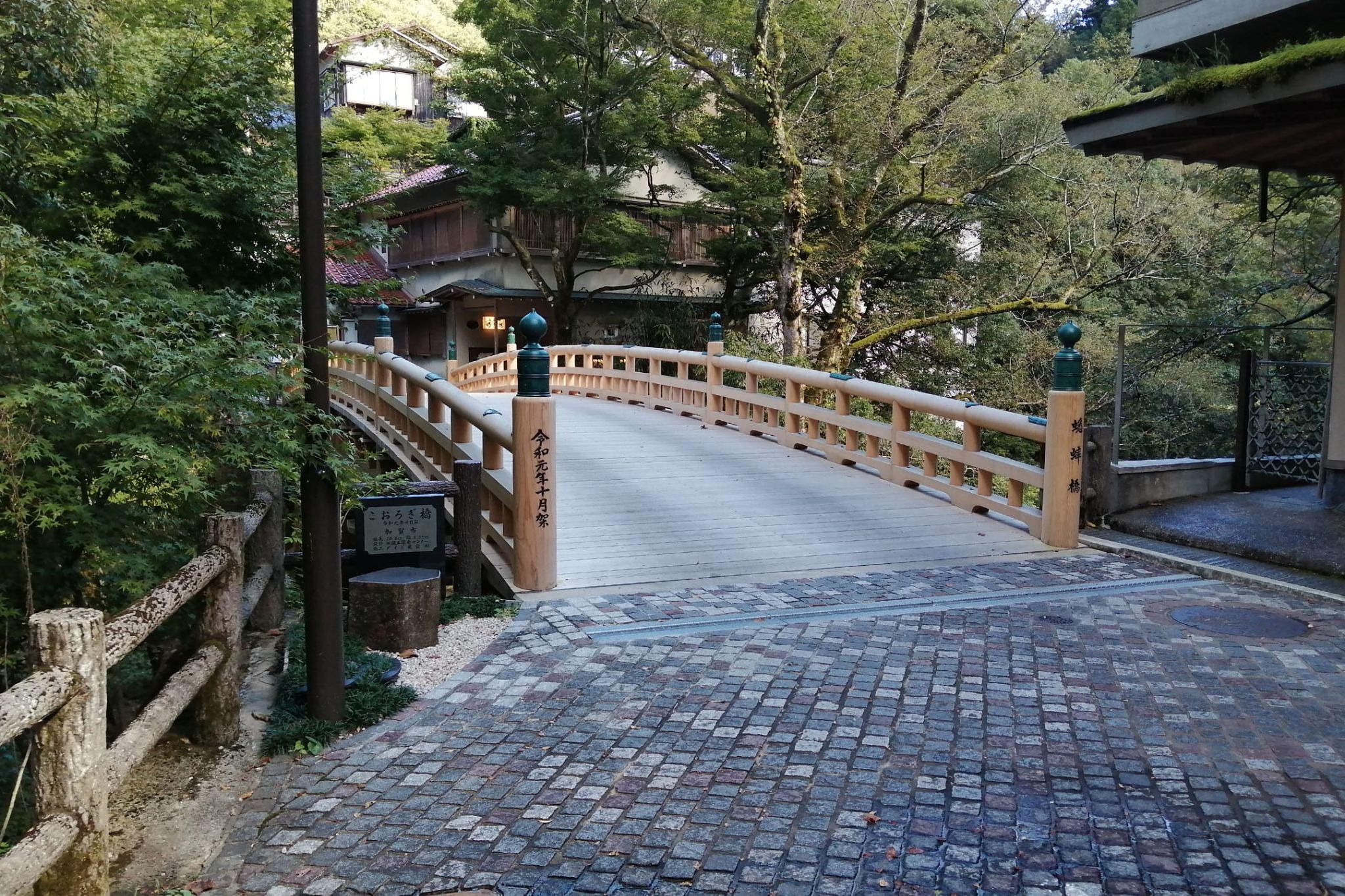
Yamanaka Onsen lines the side of a beautiful gorge, with scenic spots such as the Korogi Bridge and Kakusenkei Ravine. The water here is a calcium sulfate spring, long used for therapeutic bathing and known as a “healing bath” for wounds. In guest rooms with private open‑air baths facing the river, the sound of flowing water becomes your lullaby as you soak.
Katayamazu Onsen sits on the shore of Shibayama Lagoon, famous for sunsets that dye both the lake and sky shades of deep orange. Its water is a chloride spring, warm and long‑lasting, sometimes called a “hot bath” because it keeps you from cooling down too quickly. Private open‑air baths that appear to hover over the lake give you front‑row seats to sunrises and sunsets that you can savour quietly, thanks to the privacy of your own space.
Awazu Onsen is a quieter hot spring town set in the forest and is said to be the oldest hot spring in Hokuriku, with a history of about 1,300 years. Its sulfate water feels very soft on the skin. Some properties here have a series of different private baths, each with its own design, so you can enjoy a combination of bathing and art.
Across the Kaga Onsen area, you can also try hands‑on experiences such as painting Kutani porcelain or dressing in Kaga‑yuzen kimono – cultural activities that pair beautifully with hot spring stays. From Kanazawa Station, you can reach the hot springs in about 30–60 minutes by train or shuttle bus.
A popular style is to spend a day exploring Kanazawa’s Higashi Chaya district and the 21st Century Museum of Contemporary Art, then retreat to a hot spring inn for a peaceful night – two distinct kinds of Japanese charm in one trip.
Arima Onsen (Hyogo)
Arima Onsen, counted as one of Japan’s three oldest hot springs, is one of the top onsen destinations in the Kansai region and is easy to reach from Kyoto and Osaka. It is especially known for its high‑quality private onsen accommodations.
What makes Arima special is that it offers two distinctive types of spring water, something quite rare even on a global scale. One is the reddish‑brown “golden spring” (a strong saline iron spring), rich in both iron and salt, which warms you all the way to your core. The water is colourless when it first emerges, but as it comes into contact with oxygen it oxidizes and turns a deep rust‑red. Because of its strong heat‑retaining power, people often say that once you soak in gold water, you won’t cool down easily afterwards.
The other is the clear “silver spring”, which may be a carbonated spring or a radon (radioactive) spring. Carbonated silver springs feel lightly effervescent on your skin and are said to promote blood circulation.
Some venerable ryokan in Arima have detached rooms where gold water flows directly into the in‑room bath, and some allow you to enjoy both gold and silver springs in total privacy. A perfect day might look like this: soaking in a private open‑air gold bath at dusk while looking toward the bright red Taikobashi Bridge, then warming your body again at night in an indoor silver bath. That ability to play with two very different spring qualities is something only Arima offers.
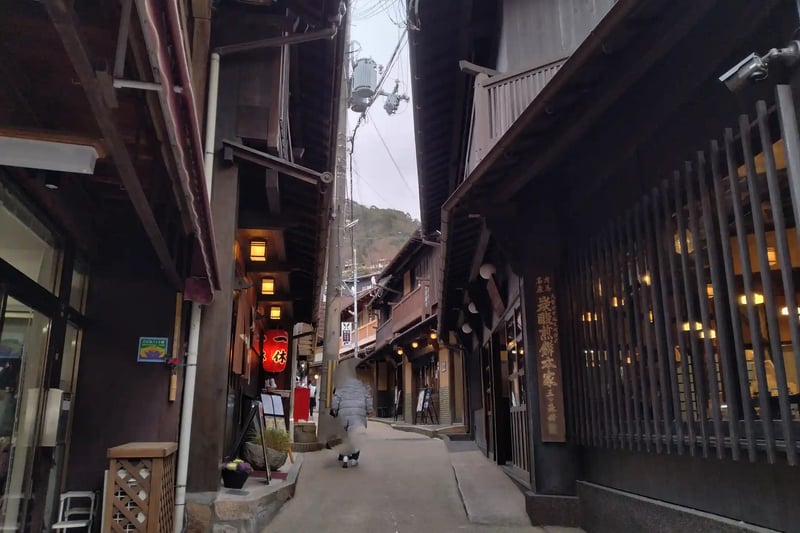
The town itself has a distinctive charm, with steep lanes and rising steam giving it a mature presence. It was a favourite retreat of the warlord Toyotomi Hideyoshi, so if you enjoy history, you’ll find plenty to explore. From Kobe or Osaka, Arima is about an hour away by train or car, making it a perfect weekend escape from the city.
Many international travellers combine Arima with sightseeing in Kyoto or Kobe, enjoying a contrast between cosmopolitan streets and a calm hot spring town grounded in Japanese tradition.
Yufuin and Beppu (Oita)
In Oita Prefecture, sometimes called an “onsen paradise”, the names Beppu and Yufuin are known even overseas.
Beppu is one of the world’s leading hot spring cities, with hundreds of springs bubbling up all across town. The plumes of steam rising from here and there create a dramatic urban landscape. In the “Beppu Hachiyu” area, you’ll find an incredible variety of spring qualities – acidic, carbonated, chloride, sulfur, and more – which means you can feel completely different textures and scents depending on where you bathe. With private baths, you can enjoy this “department store of hot springs” in your own time, hopping from one type to another.
Traditional quarters like Kannawa Onsen and Myoban Onsen are home to many atmospheric ryokan, where you can savour milky, mineral‑rich waters in private baths. Beppu also offers a uniquely local experience: sand baths. On the beach, warm sand heated by hot spring steam is piled over your body as you lie down, warming you from the inside out and providing a powerful detox. Some ryokan offer private sand baths, where you and your partner or friends can enjoy this curious experience together.
Neighbouring Yufuin offers a very different tone. At the foot of Mount Yufu, the town stretches out across gentle fields, combining a rural landscape with a refined resort atmosphere. The main spring here is a simple one, soft and easy to bathe in even for those with sensitive skin. Yufuin is especially famous for its morning mists: imagine soaking in a private bath near Lake Kinrin, wrapped in the gentle haze of dawn – it feels almost dreamlike.
Many accommodations in Yufuin are run or designed by women, and the town has many stylish cafés and galleries, which is why it’s often called a “town of art and hot springs”. Ryokan may display local artworks in their lounges or offer thoughtful aromatherapy treatments – small touches that show how carefully they think about your physical and emotional well‑being.
Yufuin and Beppu are only about an hour apart by train or car, so with two nights you can easily visit both. One idea is to spend your first night in Yufuin, taking your time with a private open‑air bath, then spend the second night in Beppu enjoying a variety of spring qualities and the local food culture, such as “jigoku‑mushi” – dishes steamed using hot spring vapour.
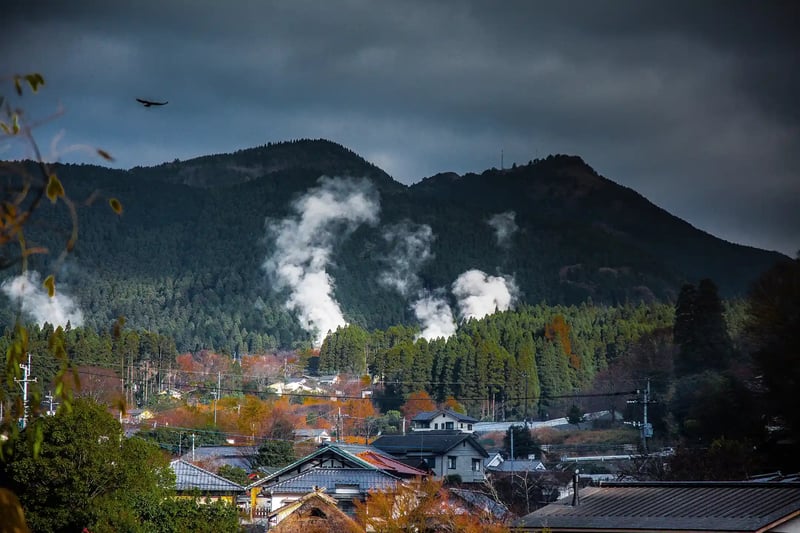
Kurokawa Onsen (Kumamoto)
Kurokawa Onsen lies quietly in a gorge at the base of Mount Aso and became widely known as a key player in Japan’s “hidden hot spring” boom. Wooden ryokan line the narrow streets, and the whole town feels almost like a single, cohesive inn nestled into the landscape. The way the townscape blends with nature is especially memorable.
One of Kurokawa’s hallmarks is its “bath hopping pass”, which lets you visit several ryokan baths in one day. Each property has created its own distinctive outdoor baths – rock pools by the river, cave baths, multi‑tiered semi‑outdoor baths that resemble rice terraces, and more – so each soak feels like a new discovery.
If you’re drawn to privacy, be sure to ask about each property’s private baths or detached rooms. Some inns blend their own sources to create a balance of beautifying and warming effects. Overall, Kurokawa’s springs include chloride, sulfate, and bicarbonate types, and the town’s shared source is known for its moisturizing and heat‑retaining qualities – many people comment that their skin feels like they’ve applied lotion after bathing(*1).
Because the water keeps your skin hydrated and warm, you can stroll comfortably even in winter chill, which is particularly welcome if you tend to feel the cold. The architecture often uses local cedar and bamboo, with features like sunken hearths and soft lantern light that evoke a classic, nostalgic Japan.
At night, the town is lit with bamboo lanterns, creating a soft, calming glow. Just walking around becomes an experience in itself.
Reaching Kurokawa Onsen takes about two to three hours by car from Fukuoka or Kumamoto city, so it’s not the easiest place to get to – but that’s exactly what gives it its sense of retreat. Many travellers combine it with visits to Aso or Yufuin as part of a scenic drive.
Once you settle into a secluded guesthouse by the gorge, soak in your private open‑air bath, and listen to the rustling of trees and the murmur of the river, daily stress feels far away.
Kirishima and Ibusuki (Kagoshima)
Southern Kyushu is also blessed with unique hot spring areas. Kirishima Onsen Village in Kagoshima Prefecture lies in a highland region thick with subtropical plants and is famous as the destination of one of Japan’s first “honeymoon trips”, taken by the historical figure Sakamoto Ryoma.
Kirishima’s springs are gifts of active volcanoes, especially sulfur springs, and the water flows abundantly. At over 700 metres above sea level, temperatures are comfortable even in summer. Open‑air baths that look out over the Kirishima mountain range feel exhilarating, and some private baths even offer views of Sakurajima, the smoking volcano in Kagoshima Bay – an impressive encounter between volcanic power and hot spring healing.
Along the Amori River, several inns have guest rooms with private open‑air baths facing the gorge. You’ll be able to listen to birdsong as you soak, a natural soundtrack that enhances the sense of retreat. The sulfur springs often leave your skin feeling smooth and refreshed after your bath.
Kagoshima is also home to another distinctive hot spring town: Ibusuki. Located near the southern tip of the Satsuma Peninsula along the calm waters of Kinko Bay, Ibusuki is most famous for its sand baths. Here, you lie down in a shallow pit on the beach, and staff gently cover you with sand warmed by hot spring heat. This sand steaming tradition is said to offer both detoxification and deep relaxation.
Some accommodations even offer private sand baths, where couples or friends can take turns being buried in sand and snapping fun commemorative photos.
Many Ibusuki inns are built with detached units scattered across large gardens, surrounded by colourful subtropical flowers. Private open‑air baths tucked into this greenery feel like your own little paradise. The water is usually a chloride spring, warming you thoroughly from within; combine it with a sand bath and you’ll experience intense yet pleasant sweating.
Kagoshima is also known for its rich food culture: black pork, free‑range chicken, and locally made shochu, among others. In Kirishima, you might enjoy shabu‑shabu hot pot made with black wagyu beef or black pork; in Ibusuki, fresh bonito and small silver fish called kibinago are among the regional delicacies.
Kirishima is about 30–40 minutes by car from Kagoshima Airport, while Ibusuki can be reached in about an hour by limited express train from Kagoshima‑Chuo Station. Wrapped in the generous atmosphere of the south, you can feel both the power of volcanoes and the soothing embrace of hot springs with your whole body.
Noboribetsu, Lake Toya, and Niseko (Hokkaido)
Hokkaido, too, has areas where private onsen experiences truly shine. In central Hokkaido, Noboribetsu Onsen is often called a “department store of hot springs” because it offers an unusually wide variety of water types – sulfur, saline, iron, acidic, and more, totalling around nine or ten kinds.
While Noboribetsu is known for attractions like the bear park and “Hell Valley”, high‑end ryokan here feature guest rooms with private open‑air baths where you can enjoy different source waters, often piped directly from the springs. The dense, milky white sulfur water clings to your skin and keeps you warm long after you step out of the bath.
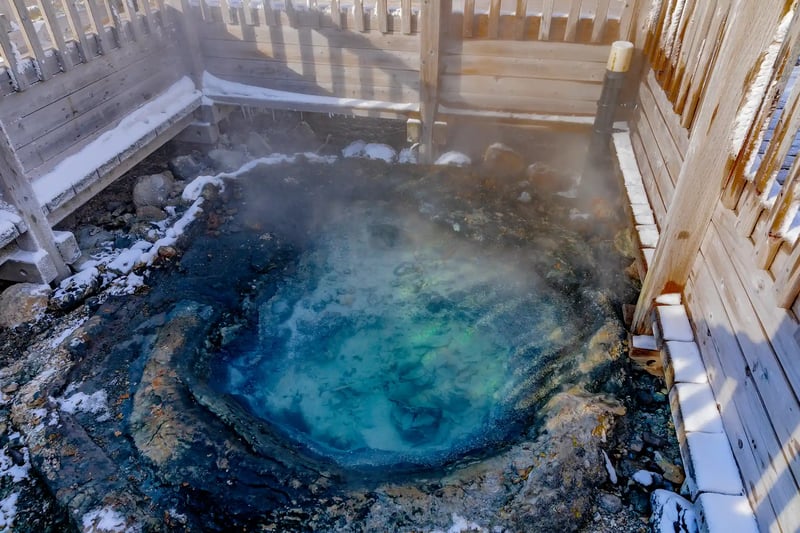
In winter, the experience becomes even more magical: you soak in hot water wrapped in the scent of sulfur, while snow piles up silently all around you. Noboribetsu is about an hour and a half by car from Sapporo, making it accessible yet still a world apart.
Lake Toya Onsen lies on the shore of a caldera lake, where islands float quietly and Mount Showa‑Shinzan rises nearby – a truly grand setting. At lakeside inns, you can slip into your private open‑air bath and gaze out over the lake’s surface, watching the moonlight, early morning mists, or shifting clouds.
Lake Toya was the site of the 2008 G8 summit and is known for its focus on environmental conservation. Ecotourism is active here, with programs such as lakeside morning yoga or forest therapy walks that you might like to join as part of your wellness‑oriented stay.
Finally, there is Niseko. Best known internationally as a ski resort with world‑class powder snow, Niseko also benefits from hot springs. In winter, you can ski to your heart’s content and then return to your own onsen to warm your tired muscles – a combination that feels almost unfairly indulgent.
In summer, Niseko transforms into a cool highland resort. You can spend your days rafting, hiking, or horse riding under the gaze of Mount Yotei, then end each day in a private bath with a view over the fields and mountains.
Many luxury condominiums and villas with private onsen in Niseko are operated by international groups, making it easy to stay in a way that feels like “living” there for a while. Hot spring areas in Hokkaido are generally not too difficult to reach from Sapporo or New Chitose Airport, but do note that roads can be snowy in winter, so it’s worth checking whether your property offers shuttle services or transfers.
Wherever you choose, Hokkaido’s vast landscapes create a special balance of openness and quiet – a backdrop that pairs beautifully with private hot spring time.
How to Choose Wellness Experiences
To deepen the pleasure of your private onsen stay, you can weave various wellness activities into your time there. Hot springs themselves are already known to benefit physical and mental health, but when you combine them with elements like saunas, yoga, or spa treatments, your getaway becomes an even more complete retreat.
If you’re particularly interested in yoga or meditation, for example, you may want to check whether a property offers such programs before booking. In this section, you’ll find some wellness experiences that pair especially well with private onsen stays and suggestions on how to choose and enjoy them.
Recent reports on wellness travel note that affluent international travellers are focusing not only on hot springs and Japanese cuisine, but also on experiences unique to Japan such as Zen practice and forest bathing(*1). When you plan your trip, it’s worth thinking about which of these wellness elements resonate with you personally and how you might integrate them into your stay.
Sauna, Cold Baths, and Open‑Air Cooling
In recent years, saunas have become very popular in Japan, especially for the state of deep relaxation they can bring when combined with cold baths and fresh air – a state often called “totonou”, or feeling completely reset. When you’re choosing a private onsen stay, it’s worth checking whether there is a private sauna you can use.
Some hotels now have guest rooms with their own saunas, while some hot spring inns have small Finnish‑style sauna cabins that can be reserved for private group use. If you and your partner or friends can use the sauna together and then step straight into a private cold bath or open‑air space, you can enjoy your own rhythm of sauna → cold water → open‑air relaxation without worrying about others around you.
In terms of etiquette, when you’ve worked up a good sweat in the sauna, it’s important to rinse off with a shower or scoop water over yourself before stepping into a cold bath(*1). In a private sauna, you’re free to decide how many rounds to do, but rather than overdoing it, aim for two or three comfortable sets. Don’t forget to drink water afterwards.
If you already love saunas, combining a private sauna with your private onsen is close to the ultimate wellness pairing.
Yoga, Meditation, and Nature Bathing
Once you’ve soaked in hot spring water and your body has softened and warmed, it’s a perfect time to turn your attention inward. Yoga and meditation naturally fit into this state of loosened tension. Increasingly, hot spring properties offer morning or evening yoga classes or zazen sessions in their gardens or tatami rooms.
Early morning yoga at sunrise gently wakes up your body, and deep breathing combined with stretching can help increase your metabolism. Because your muscles are warm and more flexible after bathing, the poses may feel more comfortable and satisfying than usual. Many places lend yoga mats, so you can join without bringing much equipment.
Meditation or zazen can feel especially clear and deep when you do it after a bath, when your mind is already calmer. Choose a space where you personally feel at ease – a tatami room with the scent of rush grass, or a quiet gazebo in the garden – sit up with your spine straight, and focus on your breath. Even a short session can create a sense of stillness that’s hard to achieve in busy everyday life.
Even if your accommodation doesn’t offer formal programs, you can still incorporate your own small rituals. Bringing your favourite essential oil and using it by your pillow, then giving yourself ten minutes of quiet breathing or guided meditation in bed before sleeping, can make it easier to drift into deep rest.
In settings rich in greenery, forest bathing is another powerful option. In places like Okuhida or Kurokawa, which are embraced by forests, a short walk among the trees in the morning before check‑out can feel incredibly refreshing. Trees release aromatic compounds called phytoncides, which are said to promote relaxation; studies suggest that walking and breathing deeply in such environments can reduce stress hormones.
Some inns even offer guided early morning hikes or walks along shrine approaches, with a gentle focus on the spiritual atmosphere of the place. Combining hot springs, yoga, and forest bathing creates a kind of “golden triangle” of wellness, making your trip a genuine reset for body and mind.
Spa Treatments
When your body is thoroughly warmed and your circulation is flowing smoothly thanks to the hot springs, it’s the perfect moment to add a professional spa treatment. With the muscles relaxed and more receptive, fatigue and tension can be released even more effectively.
Many high‑end ryokan and resort hotels now have full‑fledged spa facilities, offering everything from aromatherapy to shiatsu and Thai‑style massage. One idea is to book a treatment when you check in and schedule it for the time before dinner or after a morning bath.
Full‑body oil treatments using aromatherapy oils are especially relaxing, enveloping you in natural scents as the therapist’s hands work deeply into your muscles. With your skin already moisturized and warmed by the hot spring, the oil glides smoothly and feels extra nurturing. Techniques like shiatsu or Thai massage, which involve stretching and pressure, are also more effective when your body has already been warmed and loosened by bathing.
Some spas offer original treatments using local herbs or teas. In Hida Takayama, for example, you might find massages using oil infused with magnolia leaves; in Okinawa, treatments may incorporate a fragrant herb called getto. These regionally rooted treatments become part of your travel memories as well as your wellness routine.
When you plan to use a spa, it’s helpful to check the available times and reservation methods in advance. Popular slots, like right after dinner, tend to fill quickly, so booking at the same time as your accommodation can give you peace of mind.
Be careful not to overbathe before or after treatments: stepping into very hot water immediately after a massage can sometimes be too stimulating. Follow your therapist’s guidance on when to bathe, and take it easy afterwards – drink water and rest.
By combining onsen and spa, you can achieve a level of deep relaxation that feels almost impossible in everyday life. If you’ve been looking for a meaningful way to treat yourself, this is a wonderful option to consider.
Onsen Water Qualities and Their Effects (Scientific Insights and Cautions)
Since ancient times, hot springs in Japan have been used for “toji” – extended stays to recover from illness – and different spring qualities have been associated with different effects and sensations. In this section, you’ll find an overview of some of the main types of hot spring water, their known medical or scientific actions, and important points to keep in mind when bathing.
Under Japanese law, hot springs are classified into ten main types according to the mineral content per kilogram of water. Here, we’ll focus on those that are particularly characteristic and relevant to your travel choices. While the potential benefits mentioned are general tendencies rather than guaranteed medical outcomes, they can help you choose springs that suit your body and goals.
If you have specific medical conditions or are pregnant, keep in mind that some springs are not recommended in certain cases. If you’re unsure, it’s wise to consult a doctor before planning intensive bathing or using hot springs as part of a health regimen.
Sulfur Springs and Acidic Springs
Sulfur springs are defined by having a certain amount of total sulfur in the water. They often have a distinct “rotten egg” smell due to hydrogen sulfide. Acidic springs, meanwhile, have a pH around 2 or below, and they too can emit a strong odour.
The major characteristic they share is strong antibacterial action. These waters can kill bacteria on the skin and help cleanse pores, which is why they are often recommended for chronic eczema, atopic dermatitis, acne, and other skin troubles(*1). Sulfur is also said to help break down melanin pigment, which has led some to call it “the spring that helps prevent dark spots”. By improving blood circulation and helping the body flush out waste products, it may support detox processes as well(*1).
At the same time, strongly acidic or highly concentrated sulfur springs can be quite stimulating. If you have sensitive skin or if you feel noticeable tingling while bathing, it’s better not to push yourself. Keep your dips short, and when you get out, rinse your body with fresh water or under a shower(*1).
Rinsing off the mineral film and then applying moisturizer can help prevent dryness. In Zao Onsen, for example, guests are advised to rinse well in clear water after soaking in the sulfur springs and to hydrate the skin thoroughly.
Sulfur springs also have a tendency to blacken metal. If you enter the bath wearing silver jewellery, it may oxidize and turn black, so it’s best to remove all such items before bathing(*1). Towels or swimwear may become yellowed or stained after repeated use in sulfur springs, but this is simply due to the mineral content and not a sign of any problem.
If you approach these springs with respect, you can enjoy both their distinctive scent and their powerful effects in a safe, comfortable way.
Bicarbonate Springs and Sulfate Springs
Bicarbonate springs contain bicarbonate ions of minerals such as sodium or calcium and are often called “soda springs”. They act like a mild natural peeling: they soften old keratin and emulsify excess sebum and dirt, which is why your skin often feels particularly smooth and silky afterwards. Because of this, they are widely known as “beautifying springs”.
However, that same effect means that the protective layers on your skin can be thinned, making moisture more likely to evaporate after your bath. To enjoy the beautifying effect without dryness, it’s important to use a moisturizer promptly while your skin is still slightly damp(*1).
If the spring also has chloride components, the salt that remains on your skin can form a light film, helping to prevent moisture loss and making dryness less of a concern. Many bicarbonate springs are mildly alkaline, which further softens the skin and contributes to that clean, refreshed feeling when you leave the bath.
Sulfate springs contain sulfate ions of calcium or sodium, and you may see older names such as “seikumi” or “bansho” springs. The water is usually clear, gentle on the skin, and is said to have anti‑inflammatory properties that can support healing of cuts and burns.
Both bicarbonate and sulfate springs are considered relatively mild and are popular among people seeking skin‑friendly, beauty‑oriented baths. At the same time, if your skin is fragile, it’s best not to soak for too long so you don’t strip away too much of your natural oils. Again, moisturizing afterwards helps keep your skin happy.
These are ingredients you may recognize from bath additives, but experiencing them in natural hot springs, with their unique textures and mineral balances, can make you realize just how different real onsen water feels.
Chloride Springs and Iron Springs
Chloride springs are essentially “salty hot springs”, with compositions similar to seawater. In sodium chloride springs, the salt in the water adheres slightly to the skin, narrowing the pores and reducing the evaporation of sweat – a bit like a “hot spring pack”.
Because this film prevents your body heat from escaping easily, chloride springs have extremely high heat‑retention effects. Your body stays warm for a long time after bathing, which is why these springs are often called “hot baths” and are considered helpful for conditions like neuralgia or chilliness(*2).
That gentle salt veil also slows moisture loss, so these springs are appreciated by people with dry skin as well. Chloride springs are one of the most common spring types in Japan, found from Noboribetsu in Hokkaido to Ibusuki in Kyushu.
“Strong saline” versions, with higher salt concentrations, may feel a bit prickly at first, but many people enjoy that slight bite as part of the bathing experience, and it can encourage sweating. If you don’t like the feeling of salt on your skin afterwards, you can rinse briefly; if you leave it, you may find your warmth lasts even longer.
Iron springs, by contrast, are defined by containing at least 20 mg of iron per kilogram of water. Typically, the water is clear or almost clear when it emerges from the ground, but once it touches the air it oxidizes quickly, turning a reddish brown. Sometimes your skin may take on a faint rusty tint after soaking, adding to the sense of being in a truly special bath.
The iron content gives the water a slightly syrupy feel, allowing it to cling to your skin and further boosting heat retention. Many people comment that their bodies remain warm for an unusually long time after bathing, making these springs popular among those who struggle with cold limbs(*3).
You do need to be mindful of staining: towels and swimwear can easily pick up the bath’s reddish‑brown hues. It’s usually best to use the towels provided by your accommodation and to avoid wearing favourite swimsuits into iron baths. The brown deposits you see on the tub or tiles are mineral buildup, not dirt.
Iron springs often also contain chloride components, combining the benefits of “hot baths” with iron’s own warming properties. Although the metallic smell and unusual colour might surprise you at first, many people fall in love with how long the warmth lasts. Because iron springs are relatively rare in Japan, finding one on your journey can feel like discovering a hidden treasure.
Carbonated Springs
Carbonated springs (carbon dioxide springs) contain at least 1,000 mg of free carbon dioxide per kilogram of water. Because of the visible bubbles clinging to your skin, they’re sometimes nicknamed “ramune baths”, after a fizzy soda.
When you slide into a carbonated bath, countless tiny bubbles attach themselves to your skin, creating a light, tingling sensation. As the carbon dioxide is absorbed through the skin, it dilates capillaries and improves blood circulation, which can help stabilize blood pressure and reduce strain on the heart. The expansion of peripheral blood vessels also means that carbonated springs can be effective against cold hands and feet.
For these reasons, carbonated springs are sometimes referred to as “baths for the heart” or “beautifying baths” that support skin metabolism by improving blood flow. While you’re in the water, the stimulation can increase activity in your sympathetic nervous system; after you get out, the parasympathetic system takes over, leading to a sense of pleasant relaxation and a gentle, lingering warmth.
Carbon dioxide escapes easily at higher temperatures, so carbonated springs are usually enjoyed at relatively low temperatures, around 38–40°C, with longer, leisurely soaks. In Oita’s Nagayu Onsen, the springs are notably warm for carbonated baths, while in places like Hijiori Onsen in Yamagata, cooler springs let you feel the bubbles even more.
In either case, it’s better not to soak for too long without breaks. When used in moderation, carbonated baths may support immune function and pain relief – effects that feel almost mysterious compared to other springs.
From one spring to the landscape

In Closing:
Private onsen journeys are much more than a simple indulgence. They offer precious time and space for you to look inward, unwind, and gently recalibrate your life. In a hot spring world that belongs only to you, surrounded by nature and local traditions, every moment becomes a deeply grounded wellness experience.
As you’ve seen, by choosing the right property and region, you can create exactly the kind of stay you want: quiet, contemplative soaks, or rich combinations of hot springs with saunas, yoga, spa treatments, and more. This creates not only physical relaxation but also a deep mental reset, dramatically increasing how satisfied you feel with your trip.
It’s also encouraging to see more and more properties embracing a sustainable mindset – valuing local ingredients and culture, and running their operations with care for the environment. When you stay at such places, your trip supports the surrounding communities and landscapes as well.
As a form of high‑value travel, private onsen stays allow you to step away from noise and busyness, reclaim your sense of quiet, and feel how your own rhythm can come back into harmony with the land and culture you’re visiting.
If you care about your well‑being, Japan’s private onsen retreats – including many of the best private onsen in Japan introduced in this guide – may well be an ideal destination for you. Using this guide as a starting point, why not design your next holiday as a personal onsen retreat – a gift from you to yourself?
Somewhere beyond the rising steam, new energy and a gentle sense of peace are waiting for you.