For couples searching in Tokyo for a private ryokan Tokyo stay with a strong sense of seclusion, this guide covers every key point for choosing a retreat that turns your anniversary into an exceptional memory.
If you and your partner are marking a milestone amid the rush of everyday life, we suggest intimate Japanese hideaways in the city and nearby—places where even a short itinerary lets you slip into a different world. From guestrooms with private open‑air baths to ryokan offering reservable private baths and saunas, you’ll learn how to secure privacy while enjoying a luxurious, unhurried time together.
We also weave in seasonal scenery, surprise ideas, and ways to fold in Japanese cultural experiences—uniting a research‑minded lens with story‑driven inspiration—and share it all with an easy, magazine‑like touch that keeps you engaged.
Conclusion: How to Choose a Private Ryokan in Tokyo
The shortest path to the right fit—To choose a private ryokan in or around Tokyo worthy of your anniversary, first clarify three conditions: how private you want your space to be, travel time from the city center, and budget.
For the degree of privacy, many ryokan offer either a guestroom with its own hot‑spring bath or a hot spring you can reserve by time slot for private use. If you want a soak for just the two of you, choose the former; if you’re prioritizing sightseeing and want to keep costs down, check the latter (*1).
For travel time, you’ll find quality hot‑spring areas within one to two hours of central Tokyo. If you’d like to cut movement and savor your stay, choose the city or nearby; if you want the journey itself to feel leisurely, well‑known hot springs a bit farther afield also deserve a look.
On budget, high‑end ryokan with private open‑air baths can start from around ¥50,000 per person per night, whereas Japanese‑modern hotels in the city can deliver a sense of privacy from around ¥20,000. Prices vary by season and room type, so confirm on official sites before booking. Decide on these three conditions up front and you’ll narrow countless options with ease.
Recommended plans by occasion—Next, match ryokan types to your anniversary situation. For a couple’s anniversary date, a central luxury hotel with a guestroom open‑air bath is popular; at night, enjoy a rooftop bar or restaurant with city views before returning to your room.
For a honeymoon, consider two relaxed nights at a high‑end ryokan in Hakone or Izu with detached villa‑style rooms, adding traditional craft experiences or a spa for pure escape. For birthday celebrations, choose a property that can arrange bouquets or cakes in advance; in a JTB survey, birthdays ranked second to wedding anniversaries as a reason for commemorative travel (*2).
If you’re planning a proposal, a ryokan with a private open‑air bath or thoughtfully staged in‑room settings can be a strong ally. Organize what matters most for your scene (freedom to customize, photo‑friendliness, quiet), then choose a ryokan that aligns—so you create the best possible “extraordinary anniversary” for you both.
Location Comparison: Criteria for Choosing a Private Ryokan in Central Tokyo vs. the Greater Tokyo Area
Balancing access time and satisfaction—You can enjoy a hot‑spring atmosphere even within Tokyo’s 23 wards, but central and nearby areas each have distinct charms. The central city’s advantages are easy access and pairing with urban sightseeing.
For example, you might check in after work on a Friday, savor the night view, and linger over brunch the next morning. If you’re after grander nature or an authentic hot‑spring‑retreat mood, it’s worth extending into the suburbs.
Happily, the Kanto region around Tokyo is dotted with famous hot‑spring towns, so you don’t need a long vacation to visit (*1). Add just an hour of travel and you can be uder star‑filled skies or beside the murmur of a waterfall—scenes that feel a world apart.
Think about your flow after checkout, too. In the city, you can head straight to shopping and lunch in Ginza or Omotesando. In outlying hot‑spring areas, you might stop at a local market for regional specialties or hop off the train to see a nearby landmark on the way home. Weigh the convenience of a central stay against the openness of a nearby resort, and choose the one that fits your preferences and your anniversary theme.
How to Choose in Central Districts (Ginza, Nihonbashi, Asakusa, Yanesen, Shinjuku, Shibuya)
Tokyo’s central districts host boutique hotels and ryokan that embrace Japanese aesthetics. In Nihonbashi–Otemachi, for instance, HOSHINOYA Tokyo offers a refined, tatami‑matted world on every floor—and natural hot spring water drawn from below the building.
Around Ginza, some luxury hotel suites even come with hinoki cypress tubs. In downtown areas like Asakusa and Yanesen, small but distinctive Japanese‑modern stays are on the rise.
At “chashitsu ryokan asakusa,” for example, you’ll find just 10 rooms, yet a top‑floor private open‑air bath with Tokyo Skytree views. Certain rooms (the Ofuro Suite) connect directly to an outdoor tub, so you can slip straight into a private soak from your room. Blending downtown charm with modern comfort, reviews praise it for letting you immerse yourself in a Japanese sense of escape right in the city center.
Properties like “Shoryukan” in Ochanomizu set Japanese rooms and open‑air baths within part of a building, helping you forget the urban buzz. In lively areas like Shinjuku and Shibuya, high‑rise hotels with private spa‑equipped rooms are popular. The abundance of late‑night dining and bars nearby also makes planning after dark simple—one of the central city’s perks.
You might dine at a starred restaurant for your anniversary, then return to claim the night view together from a private bath. When choosing central, check reviews for soundproofing and outlook to ensure the quiet you want—and include “private ryokan tokyo” in your search if privacy is the top priority.
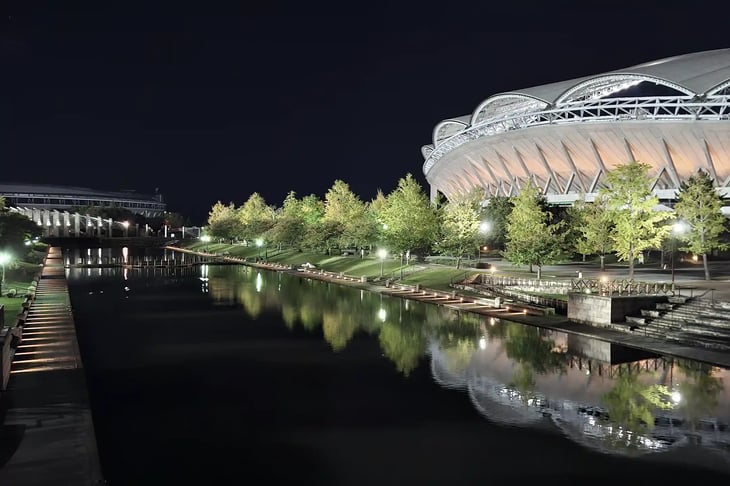
How to Choose in the Greater Tokyo Area (Hakone, Yugawara, Izu, Okutama, Chichibu)
Hot‑spring areas reachable by train or car within two hours are a powerful ally for anniversary trips. Hakone is the standout: it’s especially popular thanks to the Romancecar limited express from Shinjuku, which takes about an hour and a half (*2).
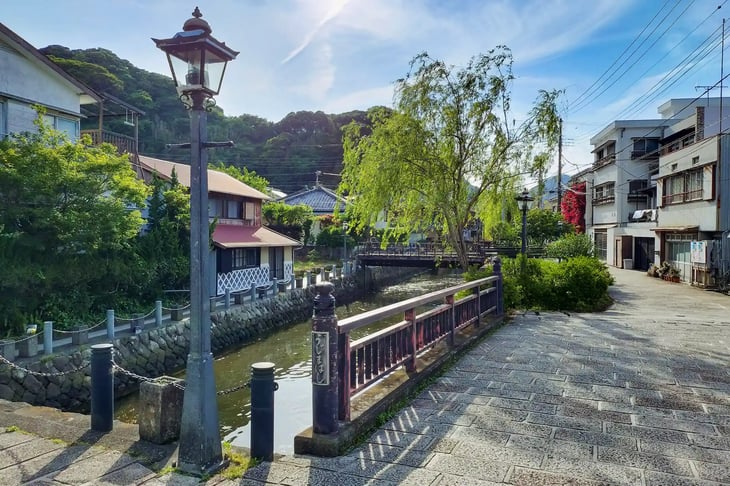
At Hakone‑Yumoto Station, a lively shopping street lines the approach with souvenir shops and cafés; step back a block and you’ll feel the calm of ryokan that have hosted guests for generations. You’ll find many room types in Hakone, including detached villas and rooms with open‑air baths; properties like “Gora Kadan,” known for anniversaries, and “Hakone Ginyu,” famed for sweeping open‑air views, have strong reputations for special occasions.
In Yugawara and Atami, the sea is close—ideal for pairing fresh seafood with hot springs. At ryokan with ocean‑view open‑air baths, you can claim sunset over the water for just the two of you. If you go farther to Izu, you’ll find private villas in Izu‑Kogen and storied ryokan in Shuzenji—hideaways nestled in nature.
These areas are also easy to reach via shinkansen or limited express trains. Okutama (western Tokyo) offers deep‑mountain seclusion; along the gorge, ryokan with detached rooms let you gaze at clear streams and forest in stillness—a restorative immersion that feels far beyond a two‑hour train ride from the city.
Chichibu (Saitama) is about 80 minutes by direct limited express and known for sparkling starry skies and dramatic gorges. Some inns have open‑air baths designed for stargazing, and in winter a soak beneath a clear, starry sky can be wonderfully romantic.
For suburban stays, confirm shuttle services and luggage delivery. If your ryokan sits far from the nearest station, a shuttle smooths the journey, and sending gifts or extra bags ahead lets you travel light.
For arrival‑day plans, you can enter the area early for sightseeing before check‑in—or reverse it: settle in first, then explore the next day. Optimize arrival and departure to build a schedule that feels unhurried for both of you.
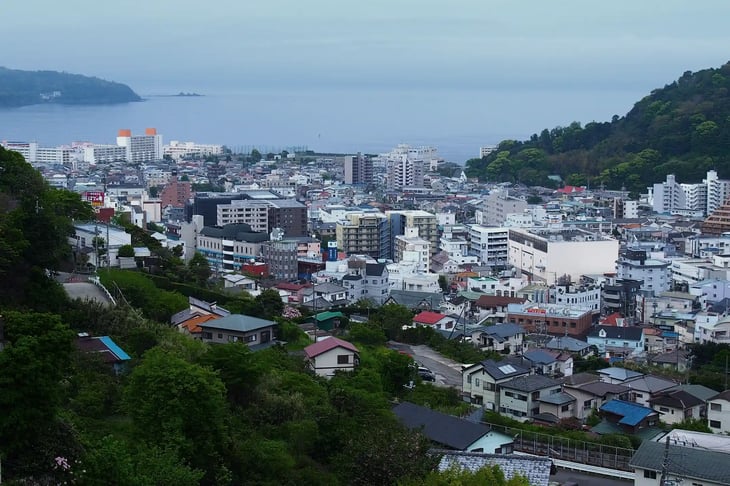
Optimizing Season and Scenery
One of the pleasures of an anniversary trip is enjoying the sights unique to that season. Around Tokyo, landscapes change richly with the four seasons, so factoring them into your ryokan choice can double the impact.
Spring means cherry blossoms. In Hakone, the elevation varies, so you can enjoy hanami over a long span—from late March at the foot of the mountains to early May by the lakeside. The 600‑meter row of cherries along the Hayakawa in Miyagino is especially famous. During sakura season, some ryokan set their open‑air baths amid clouds of blossoms—soaking while petals drift around you is an unforgettable luxury. From the rainy season into early summer come hydrangeas.
The lines along the Kamakura area and the Hakone Tozan Railway are renowned for hydrangeas; flowers glistening with rain and the steam of hot springs create photogenic scenes. Autumn is all about fiery foliage. Okutama and Chichibu gorges and Hakone’s Sengokuhara are prime; rooms with open‑air baths facing peak color are competitive to book, but the memories are worth it.
Winter brings crisp air and snow‑view baths. Snow is rare in central Tokyo, yet in the mountains you may be greeted by a white landscape. Snow‑view soaks—paired with illuminated trees or starry winter skies—create once‑a‑season magic. Because seasonal peaks are short, research photo spots in advance and aim for early mornings or weekdays to avoid crowds.
.webp?width=730&height=487&name=Kurokawa%20Onsen%20Yu-akari%20(Hot%20Spring%20Illumination).webp)
Choosing “Quietude” and “Photogenic Appeal” Through Rooms and Amenities
Orientation and view of rooms with open‑air baths—When you choose a privacy‑minded ryokan, details of rooms and facilities matter. For rooms with open‑air baths, check the room’s orientation and what you can see from the tub.
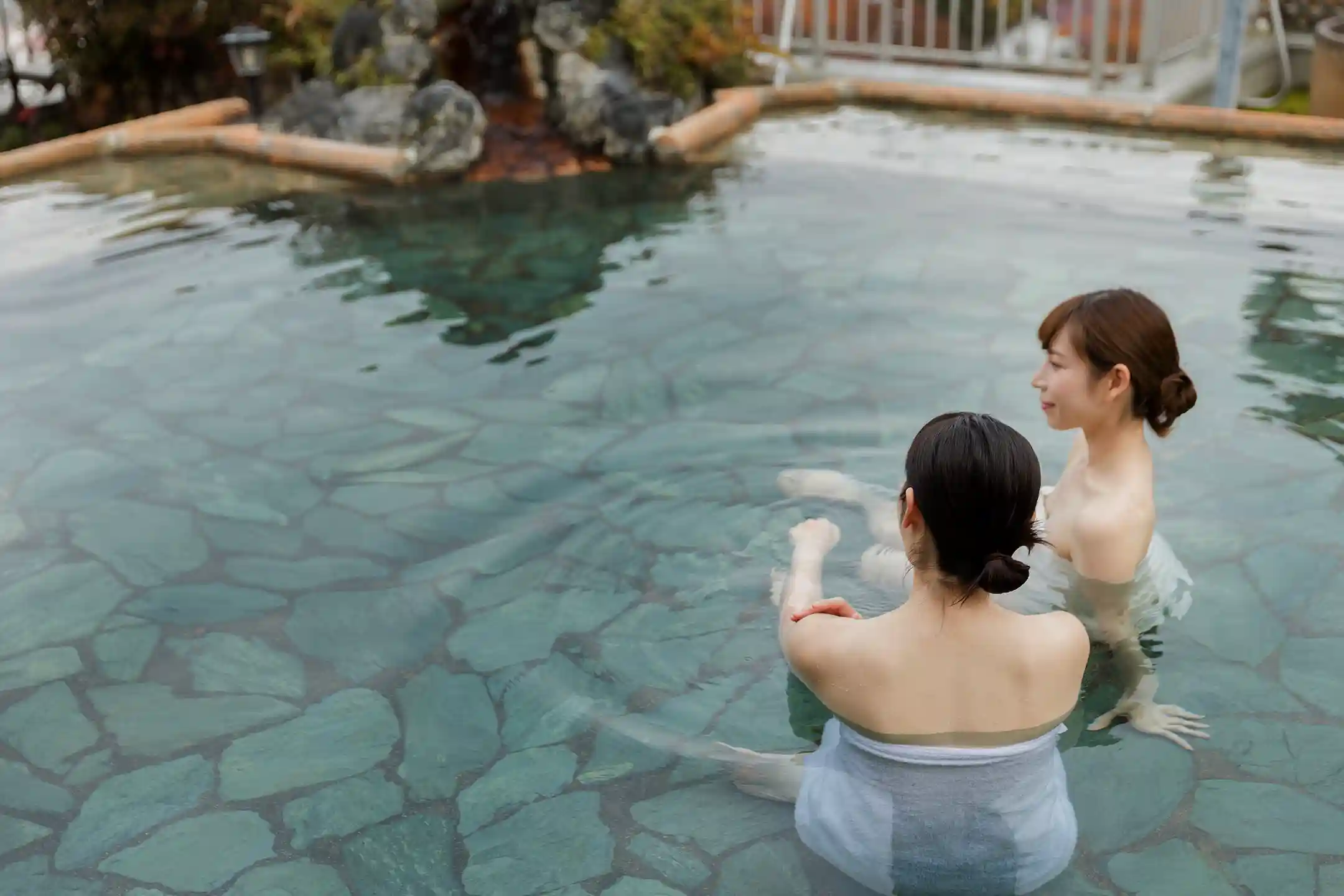
In high‑rise hotels with view baths, certain rooms face Tokyo Tower or Skytree; in mountain ryokan, views may differ between river‑side and garden‑side. The allure of a true open‑air bath (a tub outdoors without a roof or full enclosure) is its openness.
At night, you can bask under starry skies or a city skyline; in the morning, you’ll welcome soft daylight and fresh air with your soak. Note that a fully open bath is more weather‑sensitive. As rain or winter‑chill countermeasures, consider semi‑open‑air baths (partially sheltered by roof or walls).
Semi‑open‑air tubs preserve atmosphere while softening direct sun or rain. Conversely, a panorama bath (indoors with large windows) lets you enjoy the view comfortably in any weather. For pure photo impact (that clean, unobstructed background), open‑air baths usually win; for heat retention and wind protection, semi‑open‑air and panorama baths excel.
If you plan commemorative photos, daylight makes water surfaces sparkle; at night, lighting and candles add romance. Some ryokan even lend wagasa (traditional umbrellas) so rainy days feel poetic—use them well.
Soundproofing, blackout, and quiet—To cherish uninterrupted time for two, check soundproofing and surroundings. In the city, look for double‑glazed windows and blackout curtains. If a room’s selling point is the night view, a higher floor helps maintain privacy even with curtains open.
Detached villa‑style rooms have no neighbors, so you won’t notice next‑door noise—but you may hear nature: insects, a river’s hush. Many find this part of the charm; if you’re sensitive, ask the ryokan in advance. Dining privacy also shapes quiet.
Many luxury ryokan offer in‑room meals or private dining rooms. In‑room meals mean you can linger over kaiseki without interruption, and private dining rooms with sliding doors ensure conversations stay yours. More hotels now offer in‑room à la carte, so you can order drinks or light bites on your schedule, not just a set course.
Guestroom sauna, cold‑plunge, and outdoor cool‑down flow are worth checking. Among sauna lovers, the pathway to “drop into that blissful reset” matters. If your room has a sauna and cold bath, the shorter and smoother the route between them (with minimal steps), the better; a small outdoor space completes a superb cool‑down.
From a quietude standpoint, consider whether sauna sounds (like ladling water over stones) might carry. Overall, equipment like soundproofing, views, and circulation paths affect both photo appeal and comfort. Review guest comments and official websites before you book a private ryokan Tokyo stay.
Differences Among Open‑Air, Semi‑Open‑Air, and Panorama Baths
Let’s clarify terms. An open‑air bath is, as above, a tub fully open to the outside, without a roof or surrounding walls. Its sense of freedom is unmatched, but comfort depends on the weather. A semi‑open‑air bath typically means a tub with a roof or three walls, open only on one side.
For example, it might sit on a terrace partly under a roof, with the front open to the view—a balanced option where rain and direct sun are softened, yet you still see the sky.
A panorama bath is indoors, with large windows that frame the scenery—think view baths in high‑rise hotels or glass‑fronted bathhouses. You get sweeping views plus indoor comfort—reassuring in winter or rainy seasons.
For that clean, unobstructed photo background, the order is often open‑air > semi‑open‑air > panorama. With an open‑air bath, there’s no glass glare, so you can place nature directly behind you. Semi‑open‑air and panorama baths can still look stunning with a little care; using a polarizing filter helps reduce reflections. For heat retention and wind protection, the advantage flips to panorama baths.
They hold temperature well and keep you comfortable on blustery days. Semi‑open‑air tubs offer some shelter but, like open‑air baths, can cool faster in winter. In the rain, you may even see people slip into open‑air baths with umbrellas (many find the mood charming).
With semi‑open‑air, you can listen to the rain; with a panorama bath, you watch the weather without getting wet. Understand each type and factor in the day’s forecast and season when you choose.
%20in%20a%20Guest%20Room%20with%20an%20Open-Air%20Bath.webp?width=730&height=487&name=A%20Cypress%20Bathtub%20(Hinoki-buro)%20in%20a%20Guest%20Room%20with%20an%20Open-Air%20Bath.webp)
Dining Privacy (In‑Room Meals, Private Dining Rooms, In‑Room À la Carte)
Meals are part of the magic. When selecting a ryokan, look closely at dining formats. The classic is in‑room dining: attendants bring dinner and breakfast to your room and set everything up—so you can enjoy kaiseki together without meeting other guests.
It’s perfect for surprises, whether slipping in a handwritten letter or quietly playing your favorite music as background. Just note that availability can be limited at popular properties, so book early.
Next is a private dining room: within the ryokan’s restaurant, you’ll have your own enclosed space. It’s not quite as secluded as in‑room dining, but a fully private room keeps gazes out—and your room stays tidy. Many luxury ryokan make this the standard. In‑room à la carte (room service) is rarer at traditional ryokan, though Japanese‑modern city hotels increasingly offer menus for ordering your preferred dishes and drinks. Some hotels operate 24 hours—yes, you can order champagne late at night and toast with a birthday cake.
Also ask about customizing kaiseki. Many ryokan accommodate requests like no raw items during pregnancy or a message on dessert, and they can handle vegetarian or allergy needs—just say so at booking.
Wine or sake pairing plans are becoming common. Tasting local labels alongside kaiseki is a treat, and if you both love sake, consider ryokan where a certified kikizake‑shi (sake sommelier) can curate pairings.
In short, dining isn’t mere nourishment; it’s the experience itself. Choosing a format that protects privacy and suits your tastes will raise your anniversary satisfaction another notch.
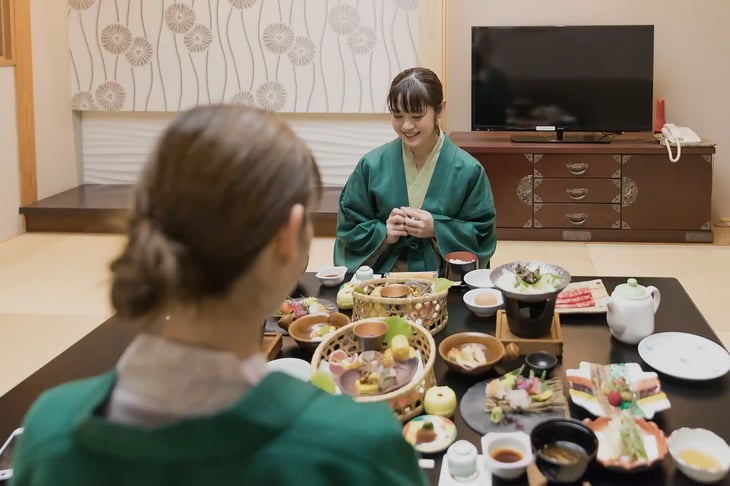
Photogenic Design
In recent years, ryokan design has embraced photogenic touches. Rooms lit by softly glowing washi paper lamps, open‑air tubs lined in hinoki or polished black granite, a tokonoma (alcove) accented with seasonal flowers—Japanese aesthetics alone make a remarkable frame.
If you plan commemorative photos, consider interior design and details when choosing. Natural light matters, too: a washitsu where morning light pours in, or an open‑air tub that catches the warm glow at dusk—light that changes by the hour creates dramatic shots.
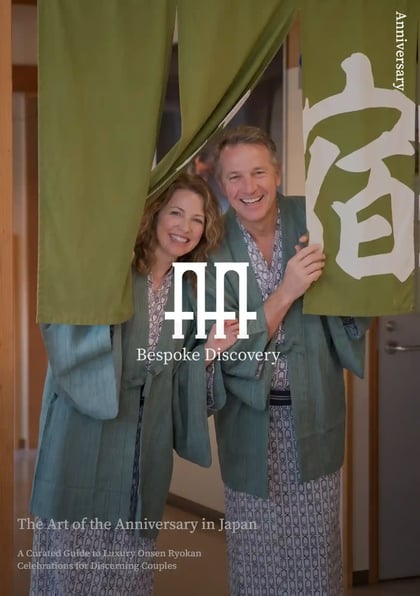
Some properties offer complimentary, colorful yukata; two‑shots in attire you don’t wear every day carry a special charm. Men’s options are varied, so coordinate together. Traditional andon or bamboo lamps cast flattering, warm light.
Check whether tripods are allowed. Some ryokan prohibit them, but using one in your room or a private bath time slot may be fine. With a waterproof phone case or action camera, you could even record a playful selfie video while soaking—always without disturbing the atmosphere.
Avoid intrusive flashes and lean on high‑sensitivity settings to preserve the glow. Photos that honor the textures of washi, wood, and stone will be keepsakes you’re proud to share with friends back home.
Finally, incorporate flowers. Many ryokan will place a bouquet in your room before check‑in, or you can bring a small glass vase and arrange a single bloom yourself. A subtle flower in frame becomes the symbol of your day.
With an eye for photogenic spaces, your ryokan becomes a private studio for two. Without hiring a pro, you can capture moments that ring true to the heart.
Upgrading Your Anniversary with Surprises and Narrative Design
Before you arrive—Thoughtful surprises make anniversary trips even more special. Many ryokan are happy to collaborate in advance—don’t hesitate to ask.
For example, you can leave a bouquet at check‑in to be arranged in your room during dinner. Some properties offer anniversary plans that include cakes; at high‑end ryokan, you may find options bundled with a whole cake, champagne, and floral décor (*1).
A handwritten letter placed in a visible spot for your partner to discover after check‑in is timelessly romantic; discreet staff may be willing to help. For music, prep a playlist of favorites and play it on a small speaker—keeping the volume gentle out of courtesy.
If you’re planning a proposal, careful flow design is key. Coordinate with the ryokan ahead of time: guide you to a private bath after dinner; arrange petals and champagne by the open‑air tub; then present the ring under the night sky—classic moves feel effortless with staff support.
For a more elaborate touch, some guests reserve a private open‑air bath and propose beneath the stars, timed with a heart‑shaped room‑lighting reveal. The goal is for you, the planner, to enjoy it too—the story starts with your preparation. Picture the surprise and joy to come, and craft a meticulous yet playful plan.
On the day—There are many small, sparkling moments between check‑in and being shown to your room.
You might arrange for staff to greet you with “Happy Birthday, Ms./Mr. ___!” the instant your door opens, or ask for special‑edition sweets on the tea tray.
Once you enter your private space, it’s time for two. Pace your surprises—a bouquet here, a song there—and build your own rhythm. If you can see stars or city lights from an open‑air bath or terrace, invite your partner to close their eyes, then look up together: simple, and moving.
In colder months, have a blanket ready. For proposals, you’ll likely want photos or video at the decisive moment. If possible, ask staff or a pro photographer to discreetly capture it (some ryokan can arrange photographers).
If you’ll record it yourselves, set up a tripod and shoot video to frame the whole room. The key is to make everything feel natural so your partner isn’t tipped off. For an open‑air‑bath proposal, consider practicalities like stowing the ring safely in a locker and wrapping it in a towel—rehearse the little movements. For bigger reveals, removing a blindfold at the right instant is powerful.
For example, you might gently cover your partner’s eyes with a towel while guiding them to the private bath; on your ready signal, uncover—revealing a panorama of night lights and candles. Because vision primes expectation and anticipation, the release feels dramatic. Just mind steps and footing for safety. These day‑of touches add a new chapter of wonder to your bond.
The morning after—Surprises placed at the end of the trip make the feeling last. At breakfast, ask for a small dessert plate with “Happy Birthday” instead of a larger cake; the morning air and the contrast with last night leave a vivid memory.
Add a twist to the morning soak. Some ryokan offer seasonal botanicals in the bath (like iris leaves or yuzu). With a request, you might enjoy a fragrant surprise herb bath to start the day. Handing over a second letter before checkout—“Thank you for yesterday. Here’s to us, from today forward.”—is disarmingly sweet; read it together as you head home by train or car.
You can also visit a place that deepens the afterglow. Stop by where you first met or had your first date, and say, “From that day to today, you’ve mattered to me more than ever.”
One last surprise as you step from the extraordinary back into daily life helps the happiness linger. Above all, thoughtful care and love matter most. A plan built around what truly delights your partner always reaches the heart.
Design the surprise, the joy, and even the afterglow as a story only you two can tell—and create an anniversary on a higher plane.
Deepening Japanese Experiences for Two (Onsite and Strolls)
Quiet time and immersion—A privacy‑minded ryokan stay is the perfect moment to share Japanese experiences. Step away from the noise of daily life; in a quiet setting, immersing yourselves in culture can reveal new sides of each other.
When choosing a ryokan, look at what traditional activities are offered onsite. Check whether English‑language guidance is available, too. Even if one of you is new to Japanese culture, clear explanations make participation easy (more ryokan now provide English‑friendly programs for international guests).
In this unhurried time, experiences that engage all five senses will deepen your bond. Below are examples of Japanese activities to enjoy both inside the ryokan and around the neighborhood.
Onsite Activities
Many luxury ryokan curate cultural programs for guests. Private saunas are increasingly popular; you can take your time with the sauna → cold plunge → open‑air cool‑down cycle. In a dimly lit private sauna scented with aromatics, conversation flows in calm relief.
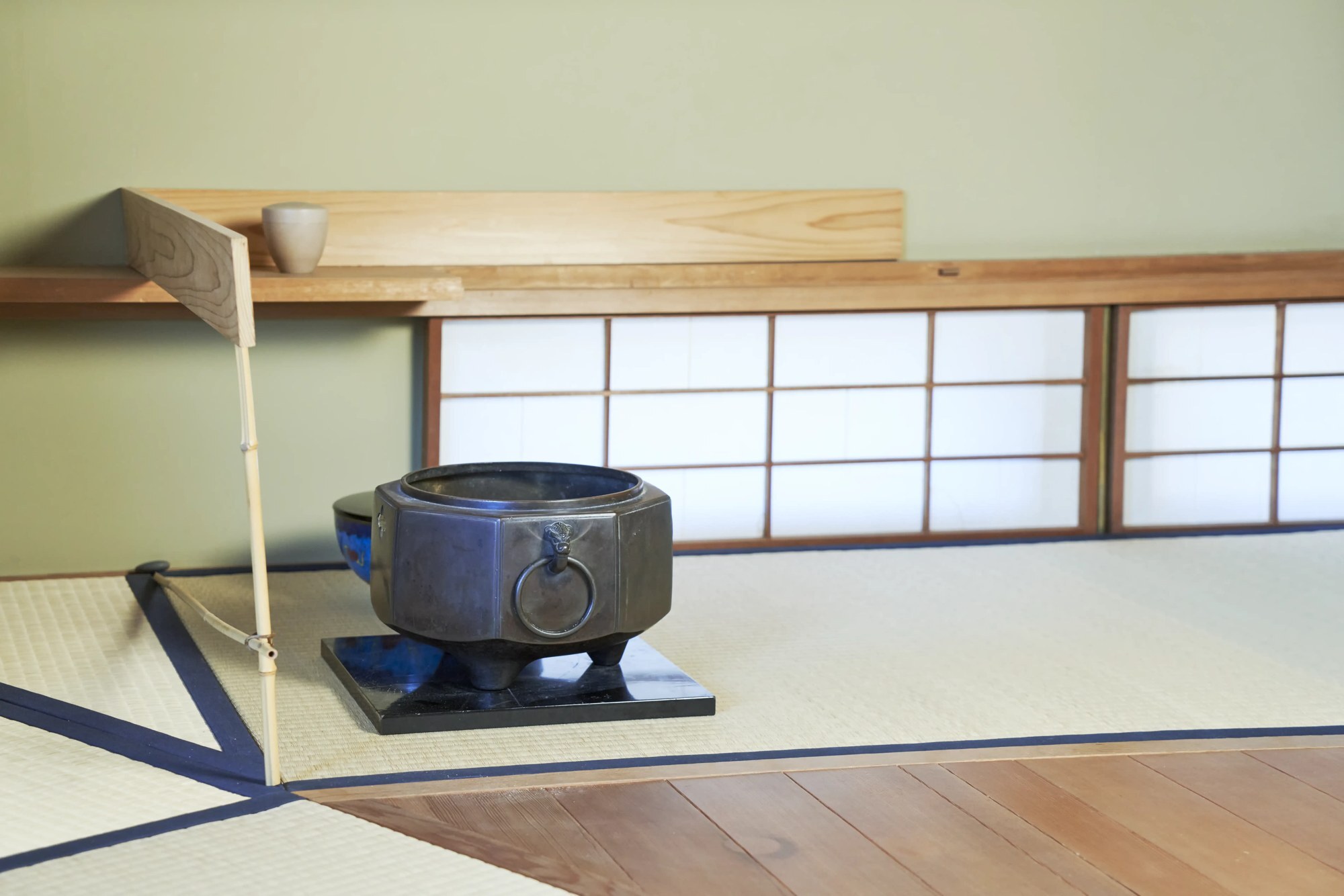
Aromatherapy is another favorite. Book a paired aromatherapy treatment at the spa to ease everyday fatigue while sharing a sense of ceremony. Among classic cultural experiences is the tea ceremony. At Hotel Chinzanso Tokyo, for example, you can take part in a tea ceremony in an authentic tearoom on the grounds. Sitting on tatami and following the host’s choreography to prepare tea offers a serene encounter with the spirit of Japanese hospitality (*1).
Beginners are guided from observing the host’s service to whisking a bowl themselves. With the gentle bitterness of matcha and the sweetness of wagashi, time moves softly in silence. Other options include kōdō (appreciating the fragrance of aromatic woods), seasonal nihon‑buyō performances, or workshops with local artisans—from pottery to wagashi making—sometimes led by the ryokan owner or craftspeople.
Even around Tokyo, you’ll find area‑specific programs: Hakone ryokan may offer yosegi marquetry coaster‑making, for example. Changing into yukata for activities makes photos even better. Some programs require advance reservations, so confirm during booking. Casual, low‑pressure experiences in a non‑everyday setting become fresh learning for both of you—and shared memories that last a lifetime.
Nearby Night Plans
Lingering at the ryokan is lovely, but stepping out for night‑time ambience can be just as rewarding. In Tokyo, bay‑view dinner cruises are a popular pick. The “Symphony” cruising restaurant from Odaiba offers couple plans so you can enjoy dinner as Tokyo Bay lights up.
If you want even more privacy, several companies run private charters on Tokyo Bay—two of you alone on the water, widely recommended for proposals (*2).
From the deck, Rainbow Bridge and the city skyline become part of your night. For classic Japanese atmosphere, consider a yakatabune boat: on the Sumida River or Tokyo Bay you’ll dine on tempura and sashimi on tatami while floating past riverside lights; choose a private charter to secure your own space.
Around greater Tokyo, romantic night spots include the Ferris wheel at Yokohama Minato Mirai and after‑hours private aquarium plans at Hakkeijima Sea Paradise. Or choose a quiet, grown‑up evening at a private bar. Some ryokan feature an in‑house lounge limited to guests, where you can sample local sake or original cocktails in hushed comfort.
If you head into town, research hidden bars or jazz lounges. For a cultural evening, look for museum after‑hours; in Ueno and Roppongi, certain museums open late on select days, offering art in calm, less‑crowded spaces.
For instance, the National Art Center, Tokyo has Friday late openings, and Mori Art Museum pairs views with contemporary art—an uncommon blend. If nearby spots welcome guests in yukata, take advantage. A nighttime stroll hand‑in‑hand back to your ryokan reframes familiar streets into a small scene that lingers as part of your anniversary.
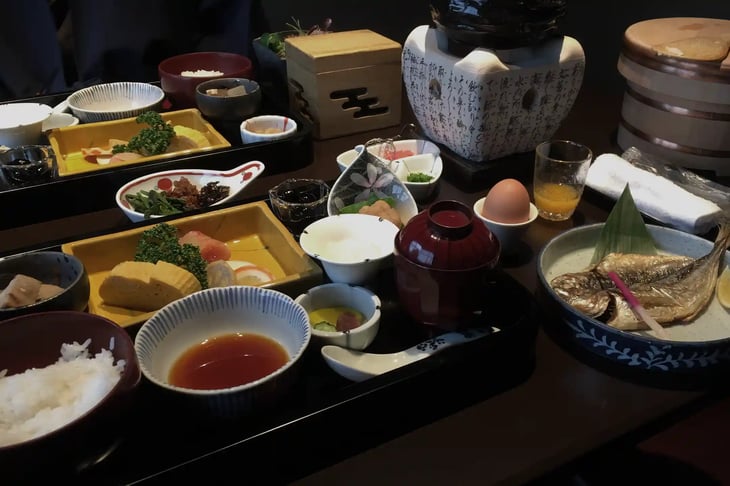
Morning Rituals
Mornings at a ryokan feel worlds apart from everyday starts. Make space for shared rituals.
Begin with a morning soak. Many say hot springs in the morning stimulate the sympathetic nervous system and lift you for the day ahead. Wake, wander straight to the open‑air tub, and let the contrast of cool air and warm water sharpen your senses. Wrapped in steam and birdsong, your day begins. Some ryokan offer post‑bath treats like amazake or milk.
Follow with breathing. Hot‑spring wellness wisdom holds that deep breaths after bathing help balance the parasympathetic system and enhance relaxation (*3). Step onto the terrace and breathe deeply together several times, filling your lungs with clear morning air. Light stretching or a few gentle yoga poses—your body is supple after bathing, so move within comfortable limits in the sunlight. Add a short walk.
In Hakone, stroll early by the lakeshore; in Izu, along seaside promenades; in Okutama, beside the gorge—landscapes look different in morning light. In quieter hours, conversations meander. If there’s a nearby shrine, consider a visit. Shrines often open early; in the clear morning air, a simple prayer soothes the heart.
Stand side by side to clap in thanks for arriving at this anniversary together. Collecting a goshuin (a commemorative seal from a shrine or temple) makes a meaningful memento; more travelers are carrying goshuincho stamp books these days—this trip could be your start.
Before breakfast, sharing small rituals like these helps inscribe the experience deeper in memory. Morning at a ryokan isn’t just getting ready; it’s time to savor life together.