Japan’s culinary culture isn’t just delicious—it’s delightfully surprising. From natto and kusaya—born of unique fermentation techniques—to funa-zushi, whose bold aroma draws comparisons to cheese, “Cool Food” thrives across the country and keeps global gourmets on their toes.
You’ll also meet the cutting edge where tradition and technology intersect: 3D-printed sushi and AI sommeliers, insect cuisine unique to Japan, and sustainable game dishes. This guide opens up a vivid, many-layered picture of Japanese food. Use it to discover a fresh way to experience Japan.
Introduction — What Is “Cool Food in Japan”?
Across Japan you’ll find foods that strike visitors and food lovers around the world as truly “cool.” Some are fermented with distinctive aromas; others look or smell surprising at first but taste wonderful—each one hinting at the cultural depth behind Japanese cuisine.
Natto, funa-zushi, and kusaya have long drawn attention as “Cool Food (fun or unusual foods)” thanks to their traditional methods and unmistakable character. In this article, you’ll explore these foods with a blend of scholarly insight and travel-friendly storytelling so even if you’re new to Japanese culture, you can follow along with ease.
What You’ll Learn and How to Read This Guide
Why Japan is called a “Cool-Food” nation: You’ll get the context behind the acclaim for washoku—Japan’s traditional cuisine—and learn how fermentation and other uniquely Japanese practices shape the country’s food culture.
Fermentation’s coolest classics: We focus on three fermented foods—natto, funa-zushi, and kusaya—covering how they’re made, how their flavors developed, and what science says about them.
A hybrid of culture and science, made practical: These aren’t curiosities for shock value. You’ll also see the science of fermentation, potential health upsides, and smart ways to try each item in real life (including on-site experiences).
As you read, short notes clarify technical terms for newcomers. Each section ends with sources so you can go deeper. Now—let’s step into Japan’s cool culinary world.
Why Japan Is Called a “Cool-Food” Nation
Japan’s traditional food culture, washoku, was inscribed on UNESCO’s Intangible Cultural Heritage list in 2013—recognition rooted in the distinctive practices embedded in everyday Japanese eating (*1).
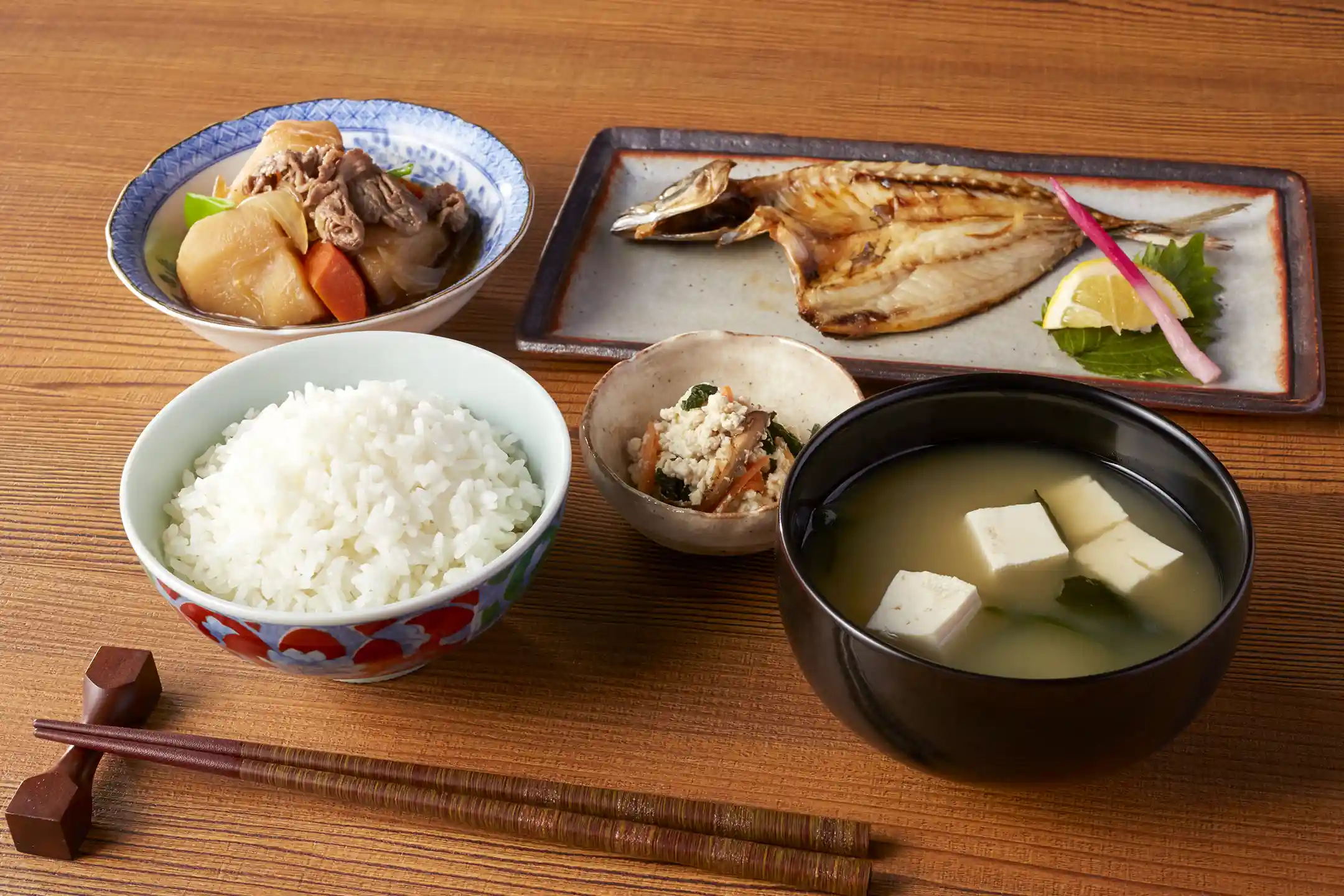
With four vivid seasons, Japanese cooking highlights fresh, diverse ingredients while honoring each one’s natural character. A classic meal structure—ichiju-sansai (one soup, three sides)—supports nutritional balance, and artful plating expresses the season on the plate. In Japan, the culinary arts blend aesthetic sensibility with culinary science.
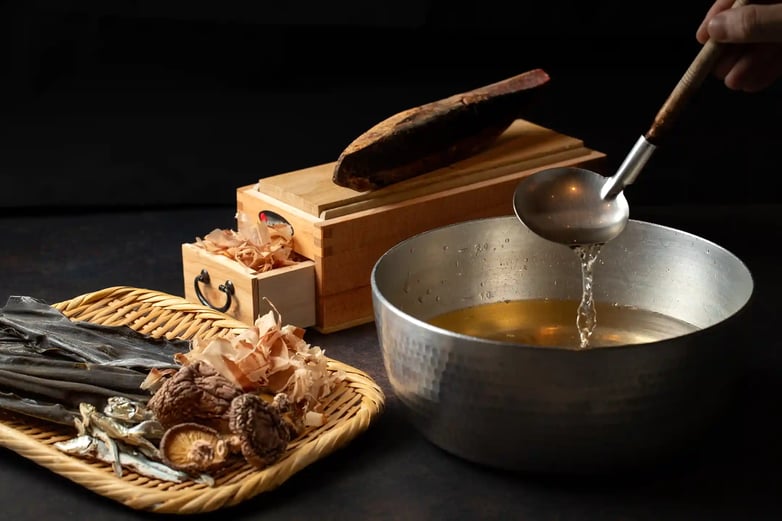
Another hallmark is the sophisticated use of umami, the savory taste captured in dashi made from kombu and katsuobushi. This approach helps limit animal fats and is often linked to longevity. Add to that a profusion of fermented foods—miso, soy sauce, pickles, sake—and you get a culture where fermentation is everyday fare.
Across Japan, regions developed their own fermented specialties and folded them into daily meals. The resulting aromas and flavors can be striking to overseas visitors—eliciting smiles of “That’s cool!” along with genuine admiration. For these reasons, Japan is often praised as a “Cool-Food” nation, where tradition and innovation coexist in a food culture with global appeal (*1).
Fermented Food Frontiers — Fermented Cool Food in Japan
Fermentation is central to Japanese cuisine, and its singular flavors sit at the heart of “Cool Food.” Here we spotlight three time-honored fermented foods—natto, funa-zushi, and kusaya—to show how they’re made, what they taste like, and how they’ve evolved into the present. Alongside research findings, you’ll get the backstory and on-site experiences that reveal a world far richer than “acquired taste” novelties.
Natto’s Evolution: From Straw Bundles to Lab-Cultured Starters
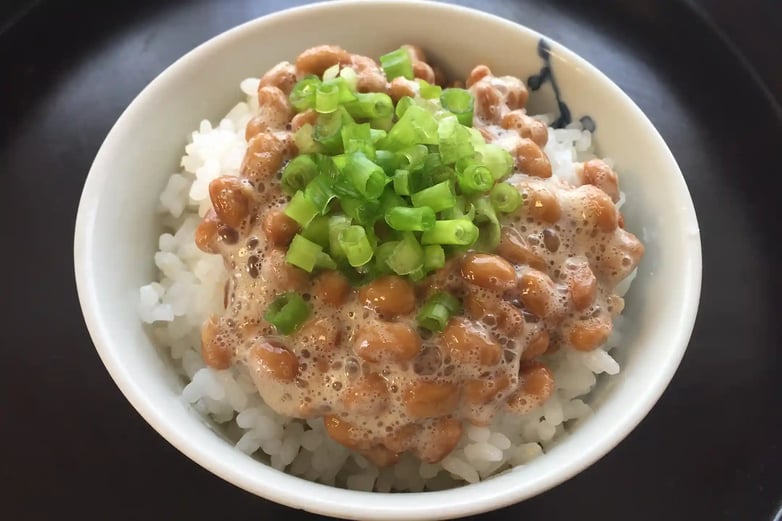
Natto is a uniquely Japanese fermented food: soybeans inoculated with Bacillus subtilis var. natto. Famous for its stringy, sticky texture and bold aroma, natto has long served as an everyday protein source. The stickiness comes from poly-γ-glutamic acid, a high-molecular polymer formed when natto bacteria produce enzymes during fermentation—also generating umami along the way.
Traditionally, “warazuto natto” (straw-wrapped natto) involved packing boiled soybeans in rice straw and holding them around 40°C overnight. Bacteria living on the straw inoculated the beans and kicked off fermentation—an ingenious method discovered empirically, with straw serving as both vessel and microbial carrier.
Because straw natto is labor-intensive, unsuited for scale, and straw has grown harder to source as agriculture changed, pure-culture methods took over. In the 1930s, microbiologist Jun Hanzawa established sanitary pure-culture techniques for natto bacteria, enabling reliable mass production: factories now spray cultured bacteria onto cooked beans and precisely control temperature (*2)(*3).
Some products still mimic straw wrapping for a traditional look, even though the natto inside is made under modern hygiene controls. Authentic straw-wrapped natto survives as a prized specialty in a few places. Today’s natto fuses ancestral wisdom with contemporary microbiology—an evolution worthy of the “Cool Food” label (*2)(*3).
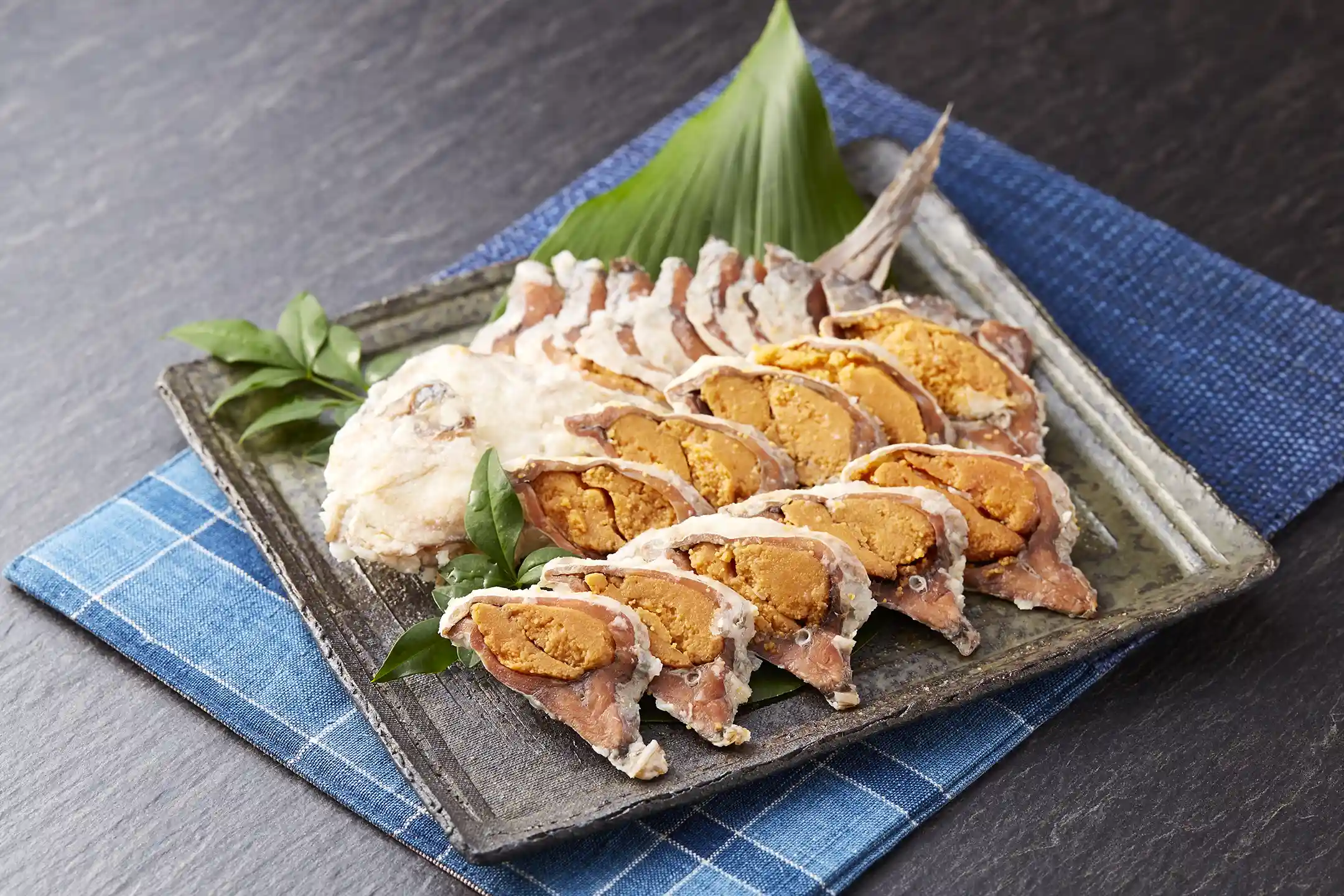
Funa-zushi — A Cheese-Like Charmer of Fermented Crucian Carp
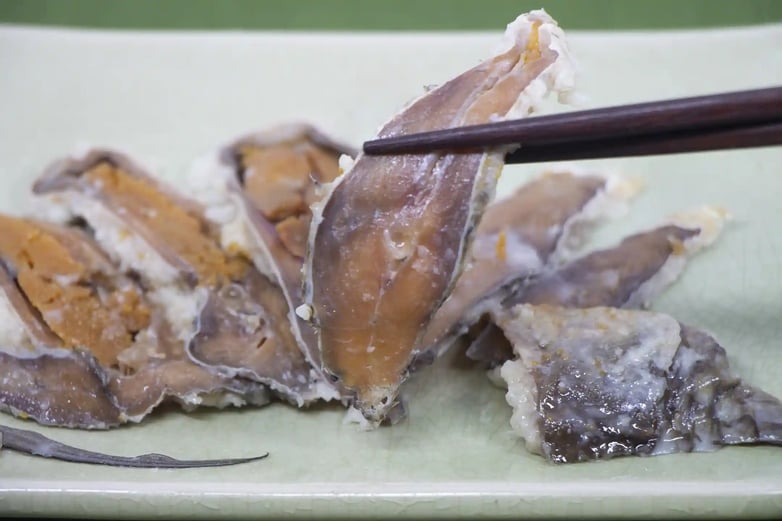
Shiga Prefecture’s local specialty funa-zushi is a kind of nare-zushi, considered one of Japan’s oldest sushi styles. Made by salting nigorobuna (a crucian carp), then sealing it with cooked rice for a long fermentation, funa-zushi boasts a history said to span more than a millennium. As fermentation progresses, fish and rice meld; lactic acid develops a singular tang and layered savoriness.
In funa-zushi, lactic acid softens the bones, so you usually enjoy it thinly sliced. Proliferating lactic acid bacteria may aid digestion, and the food’s nutrition was once prized enough in Shiga that people reportedly ate it as a folk remedy for stomachaches. This tradition is recognized formally: the culture of nare-zushi (including funa-zushi) is designated as a Shiga Prefecture intangible folk cultural “food heritage” (*4).
Why compare funa-zushi to cheese? Its aroma is rich and assertive, and the depth of flavor is extraordinary. Take a slice: first comes that fermented intensity—often likened to cheese—followed by a harmony of acidity, sweetness, saltiness, and umami.
Its velvety, matured flesh delivers umami rivaling blue cheese; some fans call it “Japanese cheese.” The scent can put you off at first, but many who push through become hooked—some call it an “enigmatic flavor” with fiercely loyal devotees (*5).
Funa-zushi also fascinates scholars as sushi’s origin story. A fermentation practice thought to have roots in Southeast Asia evolved uniquely in Japan, and you’ll find related wisdom in regional specialties such as Akita’s hatahata-zushi or Nagano’s salmon rice-zushi.
Though household pickling diminished as nigorobuna numbers in Lake Biwa dropped, long-established shops still safeguard tradition while innovating—think pairings with cheese or new products. With its “cheese-like” appeal forged by fermentation, funa-zushi wonderfully showcases the depth of Japan’s fermented culture.
Learn the Science of Aroma and Umami on a Kusaya Workshop
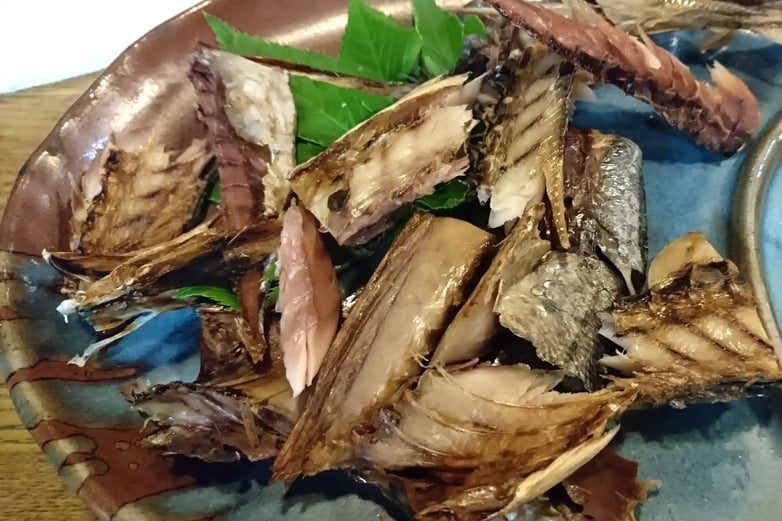
On the Izu Islands, kusaya—a dried fish cured not in simple brine but in a unique, fermented “kusaya-juice”—is famed worldwide for its powerful smell. Made with fish like frigate mackerel or flying fish, the technique is a 300-plus-year tradition.
The origin story points to mid-Edo-period Niijima. Salt was precious, so people reused the same brine for drying fish; over time it fermented and became “kusaya-juice,” imparting singular aroma and flavor. Families treasured their own ferment as a “secret taste,” reusing it for generations. The result was kusaya—unparalleled in pungency and shelf life.
Microbes in matured kusaya-juice include lactic acid bacteria, yeasts, and even Corynebacterium kusaya (“kusaya bacteria”).
Research led by Associate Professor Toshihiro Suzuki at Tokyo University of Agriculture reports that kusaya-juice contains antibiotic compounds from microbes that suppress molds and spoilage organisms—one reason kusaya resists spoilage better than other dried fish (*6). In Niijima’s past, when medical care was limited, people even used kusaya-juice as a topical or oral folk remedy—testament to its perceived antimicrobial power.
Today, kusaya production continues on Niijima and a few neighboring islands, but aging producers and a shortage of successors pose challenges. Where there were once 50-plus isaba (kusaya makers) on Niijima, only about four remain, leaving demand unmet.
Responding to this, the Tokyo Islands Promotion Public Corporation launched hands-on training in Niijima to recruit passionate newcomers nationwide (*7). Visitors, too, can tour facilities such as Kusaya-no-Sato and try a simple marination—engaging your senses with live fermentation.
In workshops, you’ll stand amid the heady air of a curing room, learn to distinguish the sharp note from deeper, cheese-/fish-sauce-like aromas, and taste kusaya fresh off the racks—an eye-opening contrast. This isn’t “shock food”; it’s a cultural heritage born from nature’s process and human ingenuity, satisfying your scientific curiosity and sense of adventure in one go.
Complete Guide to Cool Food in Japan (Fun & Unusual Japanese Foods)
Rare & Adventurous Ingredients — Rare & Unique Cool Food in Japan
Shimonoseki Tiger Pufferfish: A License System Safeguards Sublime Texture
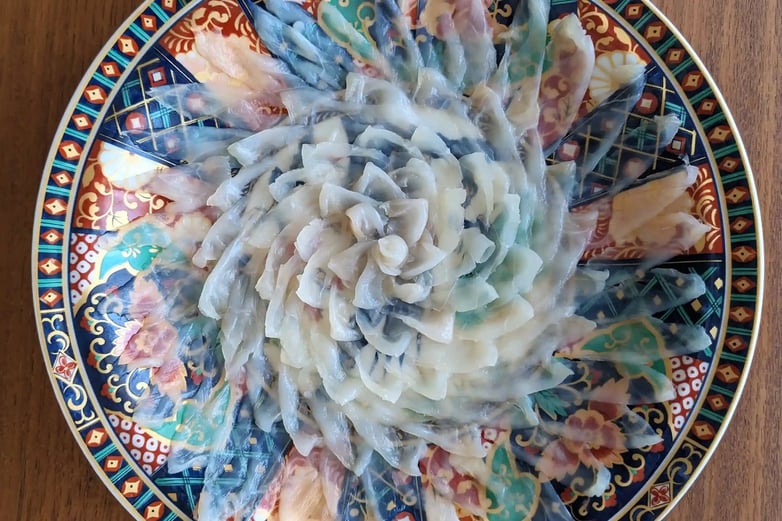
Shimonoseki is one of Japan’s great fugu hubs. The premium tora-fugu (tiger pufferfish) is famous for its springy bite. Sliced paper-thin so it’s almost translucent and plated in chrysanthemum patterns, the sashimi looks like art. Take a bite and a gentle sweetness blooms in the delicate white flesh, while the signature crisp-elastic texture delights you (*1).
To enjoy it safely, you need chefs with advanced skill and knowledge: some parts of fugu contain tetrodotoxin, and mistakes can be fatal. Japan therefore requires a license for fugu preparation. Only chefs authorized by prefectural governors may process and serve it, ensuring food safety under strict public oversight (*2). Thanks to this system, you can savor Shimonoseki’s tora-fugu with confidence—and revel in its extraordinary texture and umami.
Shinshu’s Insect-Cuisine Revival: Your Future-Protein Experience
Landlocked Nagano (Shinshu) has a long tradition of eating insects. When protein was scarce, people relied on river larvae called zaza-mushi, hachi-no-ko (bee larvae), and rice-field grasshoppers (inago). Sweet-savory soy-simmered inago and fragrant hachi-no-ko rice became beloved, nutrient-dense local dishes—far tastier than their looks suggest (*3).
Globally, insect cuisine has been re-evaluated. Spurred by a 2013 FAO report, insects emerged as a promising answer to a looming 2030 protein gap and a 2050 food-security crunch: they’re nutrient-dense and require fewer resources than conventional livestock (*4).
In Shinshu, tradition meets innovation: a chef-led “Insect Mirai Project” developed playful ideas like grasshopper chocolates and other sweets, making insects easy for newcomers to try—and sharing a future-protein experience with audiences in and outside Japan (*5).
.webp?width=782&height=521&name=Traditional%20Japanese%20Entomophagy%20(Insect%20eating).webp)
Hokkaido Ezo Deer: Ainu Culture and Sustainable Hunting
The large Ezo deer of Hokkaido has long been as vital as salmon to the Ainu, the region’s Indigenous people. Called yuk in Ainu, deer were integral to life—meat for food; hides and bones for clothing and tools—reflecting a culture that used every part with respect (*6).
In the early Meiji era, the Hokkaido Development Commission even built a venison cannery for export, recognizing Ezo deer as an important food resource (*7).
After overhunting and severe winters drove numbers near collapse, protections helped populations rebound—so much so that by FY2023, Hokkaido estimated about 730,000 deer statewide. Crop damage and vehicle collisions have grown serious (*8). With ecological impacts mounting, the focus today is sustainable hunting and full use of venison as a “forest blessing.” Across Hokkaido, captured deer for population control are being processed locally and enjoyed as food (*9).
High-protein, low-fat, and rich in iron, Ezo venison is a highly regarded game meat. Learning from Ainu methods, you’ll see it in curries, burgers, and even ohaw—a traditional Ainu soup (*10).
Honoring life and living with nature, Ezo-deer cuisine has returned as a uniquely Hokkaido cool-food experience that captivates travelers from around the world.
Edible Art — Wagashi & Sweet Cool Food in Japan
Nerikiri × Seasonal Motifs Workshop
Among traditional wagashi, nerikiri stands out for artistry: soft sweets made by kneading white bean paste and gyuhi (pounded rice dough), sculpted into seasonal flowers and scenes—cherry blossoms and plums in spring, morning glories and goldfish in summer, maples in autumn, camellias in winter (*1).
Lately, hands-on workshops invite you to craft nerikiri yourself. Under a veteran artisan’s guidance, you’ll shape two seasonal designs and plate your creations like miniature artworks (*2).
The gentle sweetness and refined looks soothe you at first glance and bite. Through wagashi-making, you literally touch Japan’s seasons—a cool, culture-rich, and sensory food experience.
Savoring Light and Sound with Kohakutō Installations
Kohakutō—“edible jewels”—is a traditional sweet of sugar and agar. Freshly made, it has a crystalline, crackly shell and a softly gelled center; hold it to the light and it glitters with translucent color (*3).
Set like a gallery installation, kohakutō can be visually calming. But part of its “cool” appeal is auditory: bite down and the sugar shell breaks with a delicate snap (*4).
That tiny, crystalline ASMR has charmed millions and helped spark kohakutō’s video fame. Beautiful to see, fun to hear, and softly sweet, this multisensory dessert becomes an unforgettable page in your refined, culture-seeking Japan trip.
.webp?width=602&height=401&name=Kohakutou%20(Crystal%20Candy).webp)
Bean-to-Bar Matcha Bonbons and Terroir
In craft chocolate, bean-to-bar highlights cacao terroir. Japanese chocolatiers now merge that idea with distinctly Japanese matcha. In Kyoto, for instance, one chocolatier developed bonbons filled with ganache made from premium Uji matcha (*5).
They roast and grind cacao in-house, then fill each bonbon with aromatic Uji single-origin matcha—sourced from a single farmer and cultivar—so you feel its deep umami and fragrance (*6).
Pair those matcha notes with cacao varieties that bring fruit acidity or nutty warmth, and you get a duet of terroirs—matcha and cacao—meeting on your palate. East and West ingredients cross-pollinate, each elevating the other. One bite holds a landscape’s memory—an edible artwork whispering of Japan’s nature and craftsmanship. As a “cool” sweet to taste and learn from, these bonbons will move you.
Future Gastronomy — Tech-Driven Cool Food in Japan
Make “Your Own Nigiri” at a 3D-Printed Sushi Lab
With cutting-edge 3D food printers, sushi is entering a new dimension. In labs and experimental restaurants, printers extrude edible gels and fish pastes to “print” custom toppings with your preferred shapes and textures.
A team led by Professor Furukawa at Yamagata University stacked layers of soft fish paste through a nozzle to create a shrimp nigiri in about ten minutes. Swap the data and you can print fatty tuna, eel, or even broccoli and pumpkin in fanciful forms—freeing you to design your sushi.
In Tokyo, a futuristic concept called Sushi Singularity is underway. After you reserve, a health kit arrives; your DNA, gut microbiome, and nutritional profile are analyzed so the restaurant can personalize nutrients for your meal. Imagine 3D-printed nigiri optimized not just for taste but also for what your body needs—straight out of sci-fi.
Developers are also building a “food operation system” so once a recipe is digitized, the exact dish could be reproduced anywhere. It’s a meeting of high tech and washoku that fills you with wonder about food’s future (*1)(*2).
An AI Sommelier Suggests Your Sake Pairings
AI is now mapping the nuanced aromas and flavors of nihonshu (sake) to help you find “the one” and match it with food.
With “KAORIUM for Sake,” an AI trained on human sensory language turns sake profiles into clear words and color-coded cues—like “cool-breezy (blue)” or “rounded (yellow).” The tablet interface makes differences intuitive for beginners and guides pairings right at the table.
If a junmai evokes a “chilly mountain morning,” the AI may propose pristine seafood carpaccio. It’s like having a virtual sommelier at your elbow—tradition meeting data-driven discovery for a fresh, five-senses experience (*3).
Plant-Based Unagi Test Kitchen and a CO₂ Show-and-Tell
Japan’s beloved summer staple, kabayaki eel, is being reimagined through food tech. In R&D kitchens, manufacturers are recreating eel purely from plant ingredients; Nissin has even developed a plant-based unagi.
Layered design nails the details: soy-based proteins emulate fluffy white flesh; plant oils mimic silky fat under the skin; bamboo charcoal gives that char-kissed color. Developers say it can fool even eel lovers, and early trial releases sold out in a flash.
This innovation helps protect the endangered Japanese eel and keeps unadon on future tables. It’s also a win for the planet: plant foods typically generate less CO₂ and use less water than animal-based foods. Some test kitchens even run lifecycle CO₂ comparisons of farmed eel vs. plant-based versions, so you can see the footprint difference—“Switching this one dish saves X kg of CO₂”—and feel part of tomorrow’s food solution.
Savoring sustainability without sacrificing pleasure, this is future-forward gastronomy attracting attention worldwide (*4)(*5).
Sustainable × Local Experiences — Eco-Friendly Cool Food Tours
Behind the Scenes at a Zero-Waste Restaurant in Kamikatsu, Tokushima
In Tokushima’s Kamikatsu, Japan’s first town to declare Zero Waste, about 1,500 residents sort refuse into 45 categories, drastically reducing trash destined for incineration or landfill.
At the town’s heart stands the Zero Waste Center “WHY”, a striking building made from repurposed local scrap and hundreds of old window frames—a community hub where residents bring and sort items. The site includes the world’s only zero-waste hotel, a reuse shop, and guided tours that let you feel sustainable living up close.
Don’t miss the brewery-restaurant RISE & WIN Brewing Co. BBQ & General Store. Book the behind-the-scenes tour to step into the brewhouse, hear directly from the team, and taste their beers.
Here, the process itself is circular: spent grain and other by-products are fermented into a liquid fertilizer called reRise, used to grow local barley—closing the loop back into the brewhouse. Herbs and vegetables nourished by that fertilizer appear on the restaurant’s plates. It’s a kitchen where nothing goes to waste.
After the tour, enjoy craft pints with veggie-forward BBQ while chatting with staff about zero-waste philosophy. In the gentle satoyama landscape, this backstage encounter with circular foodways leaves you inspired—and a little changed (*1)(*2).
Setouchi Lemon-Island Ride and Circular Farming
The islands of the Seto Inland Sea are both cycling paradise and citrus country. On Ikuchijima and Osaki-Kamijima—nicknamed the “Lemon Islands”—you can rent an e-bike, ride on sea breezes through lemon groves, and pause at unmanned roadside stands for freshly picked fruit or hidden cafés for house lemonade.
A highlight is visiting a young organic farmer’s fields. For over 30 years, local growers have raised citrus without pesticides or synthetic fertilizer, building soil with composted weeds and vegetable scraps. You’ll see pruned branches and kitchen trim all looped back into the soil. Even post-harvest peels aren’t wasted: they’re turned into natural dyes, tinting fabrics a luminous lemon yellow.
Hearing these farmers while you stand in the grove, you feel how island wisdom lets nothing living go to waste. Bite into a lemon you just picked and you taste sunshine and care in the bright tang. The ride’s light sweat feels good—an embodied, memorable way to experience sustainability (*3)(*4).
A Yamagata “Snow Cellar” Dinner Powered by Nature
In snowy Yamagata, try a yukimuro (snow-cellar) dinner. A yukimuro stores winter snow to keep spaces at 0–5°C and high humidity all year—a traditional, electricity-free cold chain whose science is being re-appraised.
At the farm restaurant Koshyaru in Iide, coffee beans, vegetables, and rice are aged in the yukimuro to enhance flavor. Research shows coffee beans stored in the snow cellar lose bitterness-causing compounds as moisture adsorbs them, while aromatic compounds rise—yielding a rounder, toastier cup. Regulars swear even dark roasts taste gentle.
Dinner features snow-cellar-sweetened local vegetables and Yamagata beef whose umami deepens with slow, cold aging. In a small farmhouse warmed by a wood stove, you look out at a white world and savor dishes raised by nature’s energy. In that hush, each bite of patiently matured food feels like the land and snow soaking into you.
Without modern machinery and with minimal footprint, the yukimuro symbolizes sustainable food culture—quietly teaching you to value the seasons and hinting at a gentler future (*5)(*6).