Hokkaido's May is not one season. It is two, and the seam falls near the middle of the month.
Through the first ten days the island is finishing its cherry blossom, with Golden Week standing in the middle of it. From about the twentieth, the cherry is gone and the moss-phlox hills, the tulip fields and Sapporo's lilacs are all at their peak at once — in the quietest flowering window Japan offers. A trip booked for "May" without choosing a half tends to catch the end of one and the beginning of neither.
This guide is built around that seam, with the dates, opening hours and admission fees that decide it, and two things the season asks you to plan around that most May itineraries leave out.
This article follows a single trail through Hokkaido's wild north — one way into a far larger landscape. The Hokkaido Unleashed Digital Guide draws its mountains, coastlines, and shifting seasons into one connected reading.
Hokkaido in May: One Month, Two Different Seasons
The reason May works is not that Hokkaido is warm. It is that Hokkaido is bright and dry.
In Sapporo, the Japan Meteorological Agency's 1991–2020 climate normals put May's sunshine at 200.4 hours — the highest figure of any month in the year, ahead of June's 180.0 and July's 168.0. Rainfall averages 55.5 mm, against 90.7 mm in July and 126.8 mm in August. Mean relative humidity is 65 per cent, where July and August sit at 75. April is fractionally drier on both counts, at 54.6 mm and 61 per cent — but April has 175.8 hours of sun to May's 200.4, and no flowers to speak of. May is the month that combines the light with the dry air.
Daylight runs long at this latitude. The National Astronomical Observatory of Japan gives Sapporo a sunrise of 4:29 and a sunset of 18:35 on 1 May 2026, and 3:59 and 19:06 on the 31st — fourteen hours of light at the start of the month, fifteen at the end. The month adds an hour of daylight and splits it almost evenly — dawn arrives thirty minutes earlier by the 31st, dusk thirty-one minutes later.
Hokkaido May Weather: What the Climate Normals Actually Say
.webp?width=750&height=500&name=Hosooka%20Observatory%2c%20Kushiro%20Marsh%20(in%20summer).webp)
Sapporo's May normals are a mean of 13.0°C, a mean daily high of 17.9°C and a mean daily low of 9.0°C. Single-figure mornings are not an exception in May; they are the average. Layering is not a precaution here, it is the standard kit.
The number that matters more is how far those figures fall once you leave the west coast. Kushiro, the gateway to the eastern wetlands, averages 8.6°C in May with a mean daily high of 12.6°C, a mean daily low of 5.4°C, 115.7 mm of rain and 80 per cent humidity. That is four degrees colder on the mean and twice as wet as Sapporo on the same dates. Inland Asahikawa averages 12.3°C with a daily high of 18.8°C and a low of 6.1°C — close to Sapporo by day, three degrees colder at dawn.
A dawn on a Kushiro boardwalk in May is therefore a five-degree dawn, not a twelve-degree one — the 12.6°C is the afternoon. Plan the east and the interior as a different climate rather than a colder version of the same one — the same gap that shapes where to go across the island in any season. Fog off the Pacific is a live possibility on top of it.
One correction worth carrying: Hokkaido has no rainy season to avoid. The Meteorological Agency publishes rainy-season dates for every region of Japan except Hokkaido, which it does not treat as having one. The unsettled spell locals call Ezo-tsuyu falls in late June and early July — after the window this guide covers, not inside it.
Golden Week Sits Inside the Cherry Window
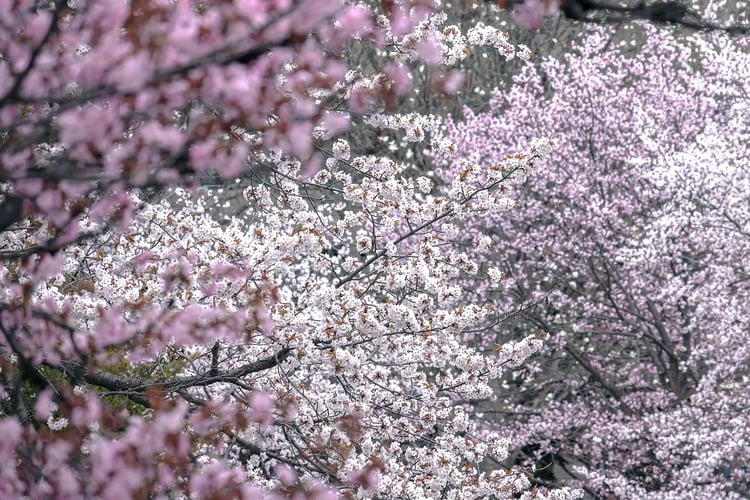
Hokkaido's cherry is the last in the country, and it lands squarely on Japan's busiest travel week. Hokkaido's official tourism body puts the island's cherry season from late April into early May: Goryōkaku in Hakodate opens first, with Matsumae Park further down the peninsula on the same clock, and Maruyama Park, Nakajima Park and the grounds of Hokkaido Jingū in Sapporo follow. That is the same stretch — 29 April to 5 May — when domestic travel peaks.
The trade is the single planning decision the month turns on. Come for the cherry and you accept Golden Week. Come after the 20th and you get the hills, the tulips and the lilacs past the holiday week, but the blossom will be over. No arrangement of dates gives you both in quiet.
What to Do in Hokkaido in May: A Flower Calendar With Real Dates
The published dates below are the ones that decide an itinerary, and they are narrower than the "mid to late May" that circulates elsewhere.
Ezoyamazakura: The First Half of Hokkaido Spring
Ezoyamazakura (Prunus sargentii) is the island's signature cherry — deeper pink than Honshu's Somei-yoshino, and flowering with its leaves rather than before them. It carries the first ten days of the month across southern and central Hokkaido. Plan a hanami around a city park rather than one famous tree: the season is short and early-May weather is unreliable.
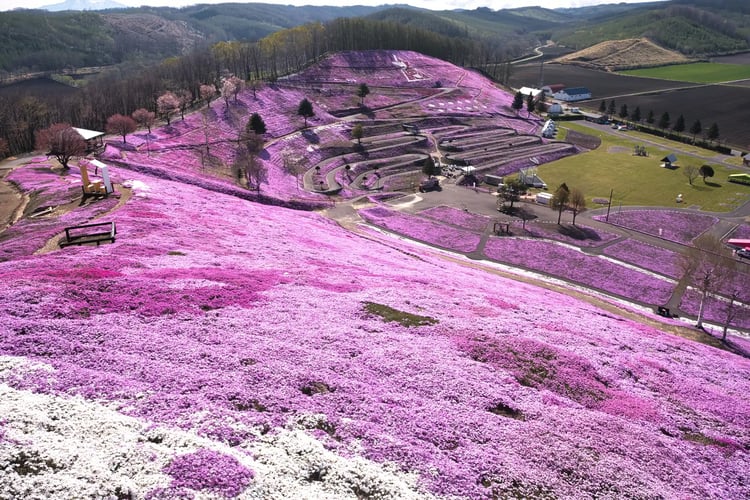
One place holds both halves at once. The prefecture's record for Shibazakura Takinoue Park lists roughly 300 Ezoyamazakura inside the park flowering from early to mid-May, against a moss-phlox hillside that runs from early May into early June.
Shibazakura, Tulips and Lilacs: The Second Half
Shibazakura — moss phlox, not a cherry despite the name — covers two Okhotsk hillsides at a scale that has no equivalent in Honshu.
Takinoue Park runs about 100,000 square metres, grown over more than sixty years from a single mandarin-orange box of seedlings, and the prefecture gives its season as early May to early June. Higashimokoto Shibazakura Park in Ōzora is ten hectares raised by one farmer across more than twenty years; its festival opens on 3 May and runs to late May, with peak bloom from the middle of the month. Hokkaido's official tourism organisation describes what is actually on that hillside: a pink torii at the Yamatsumi shrine halfway up, a foot bath fed on site, an 820-metre go-kart course and a sightseeing tram to the second lookout. It is a designed park with a stage programme, not a wilderness.
Kamiyūbetsu Tulip Park runs its fair on fixed dates: 1 to 31 May every year, 8:00 to 18:00 with last entry at 17:30, 600 yen for adults and 300 for children. The park holds about 200 varieties and 700,000 tulips across 12.5 hectares, of which 7 are planted, and the town puts peak bloom in the second half of the month. Dogs and cats are not admitted to the paying area, and there are accessible toilets at the car park and inside the shop.
Sapporo's lilacs are the tightest window of all, and the blocks do not all run the same dates. The Sapporo Lilac Festival published its 2026 schedule as Ōdori block 5 from 20 to 24 May, blocks 6 and 7 from 20 to 31 May, and the Kawashimo Park venue on the 30th and 31st only. Block 5 is where the wine garden stands, so it closes a week before the others. Roughly 400 lilacs grow at the Ōdori venue — 370 in the purple range and 30 white. Arrive in Sapporo on 12 May and the festival has not started.
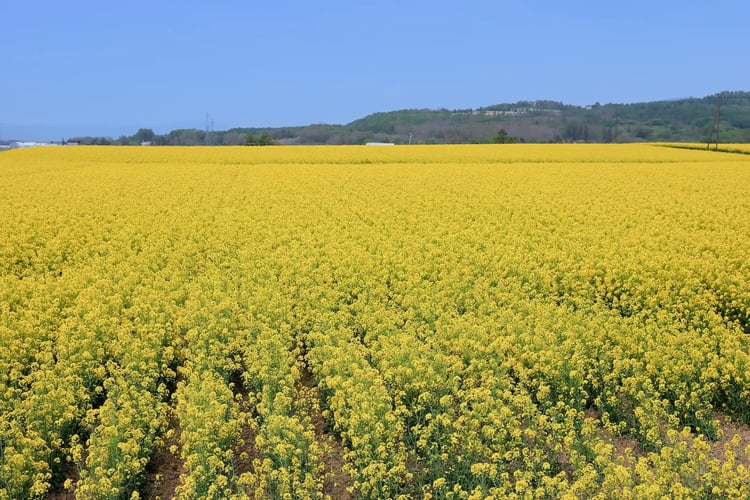
The canola is a mid-month event, not a late one. Takikawa City states that it has one of the largest planted areas of rapeseed in Japan and puts flowering from the middle to the end of May; the 2026 Takikawa Canola Festival ran 16 to 24 May, 10:00 to 16:00. The fields are a working oil crop, replanted in a different place each year to avoid soil fatigue, which is why the view changes annually — and they are on the list of Hokkaido's hundred most affecting moments. Only the festival's special enclosures let you walk into a field.
Gates, Fees and the Dawn You Cannot Have
Photographers are told to reach these hillsides at first light. At this latitude in May, first light is around four in the morning — and every one of these places is a fenced park with a gate and a ticket.
Takinoue opens at 7:00 and charges 500 yen for adults and 250 for children, with 165 free parking spaces. Kamiyūbetsu opens at 8:00 at 600 yen. Higashimokoto, according to the Ōzora tourism association, opens at 9:00, closes at 17:00 and does not admit pets; admission is charged at the gate. The earliest you can stand on those slopes is three hours after sunrise at Takinoue and five at Higashimokoto — alongside the gate staff and the first coach.
The quiet hour at these parks is the first hour after opening, not the hour before it. Genuine solitude at sunrise in May has to come somewhere with no gate.
Two Things Hokkaido in May Asks You to Plan Around
Both of the following are published by the Hokkaido government, and both bear directly on the forest-and-wetland itinerary this season invites.
Brown Bears: The Advisory Runs 1 April to 31 May
Hokkaido issues its brown bear cautions under the prefectural Brown Bear Management Plan. The prefecture's own record of past issuances shows a Spring Brown Bear Special Caution Period covering the whole of Hokkaido from 1 April to 31 May in each of 2023, 2024, 2025 and 2026 — the entire month this guide is about, in every year the prefecture has run it. It is a standing seasonal caution rather than a response to a particular sighting, so check the current status before you travel rather than assuming this year matches.
The reason is behavioural and it maps onto exactly the hours a wellness itinerary uses. The prefecture states that bears move while avoiding people — in the early morning, at dusk and at night. Spring is also when mountain-vegetable foraging draws people onto the same slopes the bears are working, which is why the caution and the foraging season are published together.
What the prefecture asks of anyone who sees one is specific: back away slowly, put distance between you, and leave quietly. Throwing stones, or shouting and running away, can provoke the animal. Tell the nearest police station what you saw. Note that this is conduct on an encounter, not on the trail — walking so that a bear hears you coming is the prevention, and it is the reason guided groups carry bells.
None of this puts a Hokkaido forest off-limits, in Shiretoko or anywhere else. It does mean a solo pre-dawn walk on an unfamiliar trail is a different proposition here, and that a guided programme earns its fee for reasons beyond the guiding.
Birch, Not Cedar: The Pollen of Hokkaido Spring
Hokkaido is sold to hay fever sufferers as the island without cedar. True, and beside the point in May.
The Hokkaido Institute of Public Health states plainly that where Honshu's spring allergen is cedar, Hokkaido's is birch. Its record of dispersal start dates gives Sapporo 16 April in 2026 against a ten-year average of 21 April, and Kitami a ten-year average of 2 May. The Okhotsk towns where the moss phlox grows are entering their birch season exactly when the flowers peak, and the institute forecast Sapporo's 2026 volume as above average.
There is a second consequence worth knowing at the table. The institute notes that people with birch pollen allergy can develop itching in the mouth on eating apples and cherries — the oral cross-reaction. Yoichi cider and Hokkaido cherries are both on the spring menu, and a reaction to them in May is more likely to be this than anything wrong with the fruit.
If you react to birch at home, bring what you take for it. Recommending deep breathing in a May forest without saying so is the advice that needed correcting.
Onsen, Sauna and the Table in Hokkaido in May
May still asks to be warmed at the end of the day. What follows is what the season changes about the bathing and the eating.
Moor Springs, Sulphur Springs and What They Do to Silver
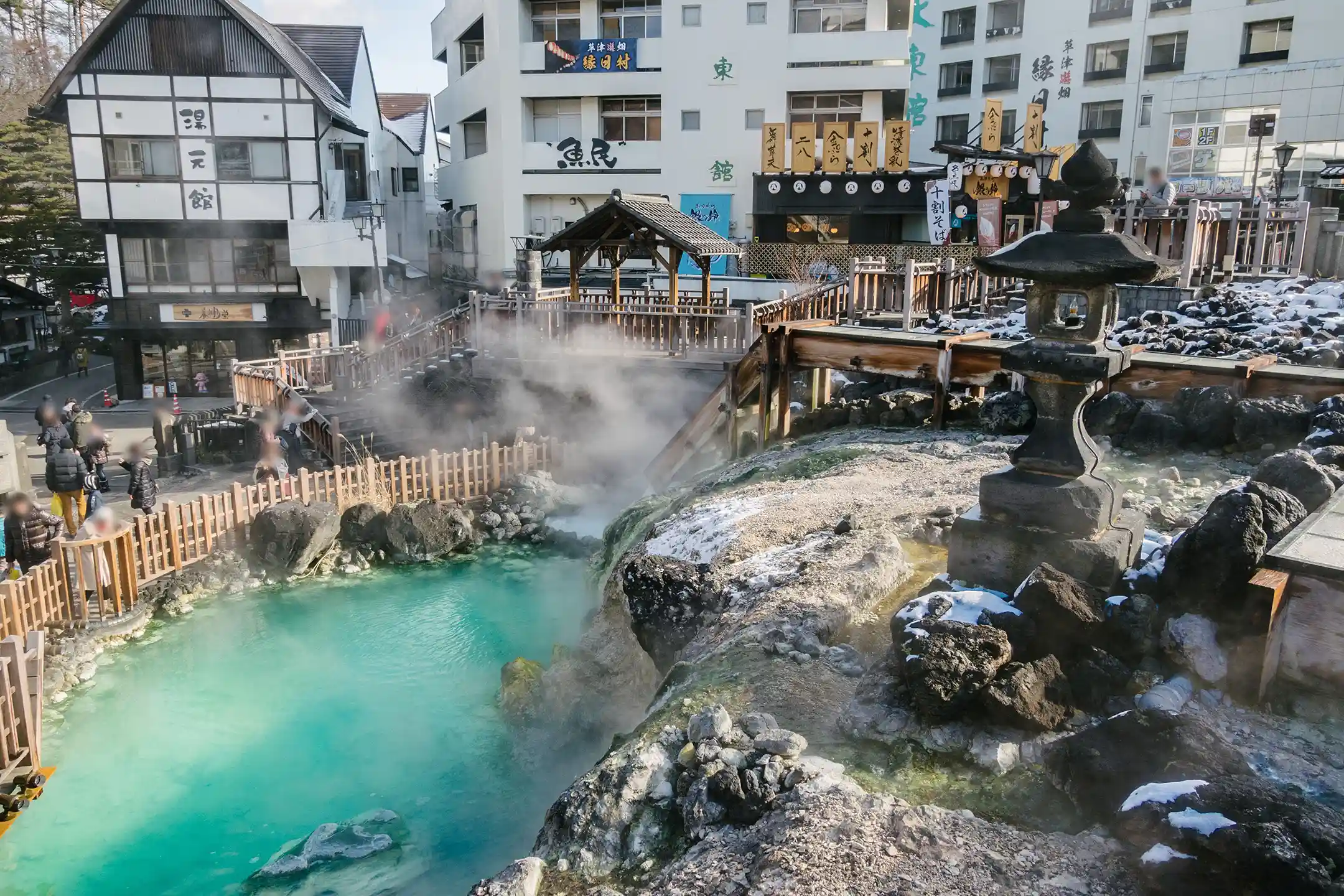
Tokachigawa Onsen holds a Hokkaido Heritage designation under the phrase "moor hot spring — the beautifying water rising from a peat layer". The water is amber to brown, faintly viscous, and its character comes from organic matter picked up in that peat. It is gentle on skin after a day of wind and cold, and it is one reason the island's onsen ryokan read differently from Honshu's.
Sulphur and acidic springs are the opposite proposition. Noboribetsu's milky sulphur baths and the strongly acidic waters around the Daisetsuzan foothills reward short repeated soaks — five to eight minutes, rest, repeat. Take off silver first: sulphur tarnishes it, and the discolouration does not rinse away.
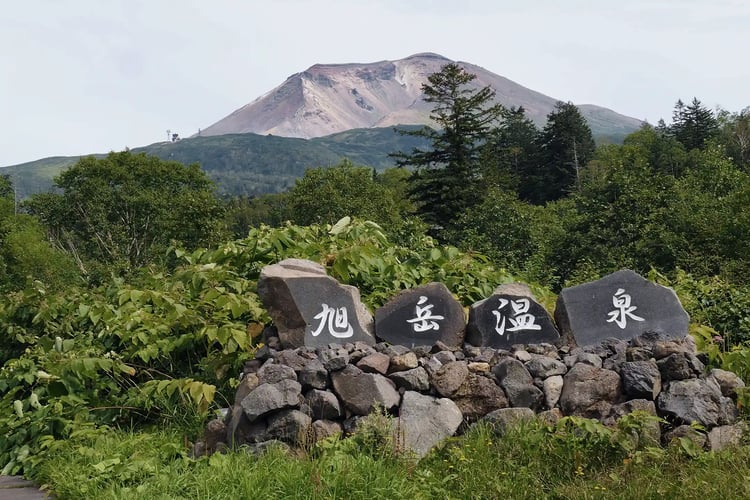
If the mountains are on your list, check the season you are actually entering. Asahidake Ropeway counts 1 November to 31 May as its regular season — 2,800 yen return, rising to 3,500 from 1 June — and runs every twenty minutes until 31 May, moving to every fifteen from 1 June. At 1,600 metres you are still in the operator's winter half-year, on a mountain whose own site warns that visibility can close in without warning.
Zazen at Tokugenji: Two People Minimum, April to November
Seated meditation at a Zen temple is a fixture of Hokkaido wellness itineraries, and the details of the actual programme change what you can book. At Tokugenji in Otaru — Shioya 2-25-1, not the canal district — the zazen session runs about an hour at 2,500 yen a person, from early April to the end of November. It takes a minimum of two participants and a maximum of thirty, with a lower age limit of ten. Booking is by request rather than instant confirmation, payment is cash on the day, and tea and sweets are a 1,000-yen option that must be added two days ahead.
The minimum of two is the detail to check first: a solo traveller cannot hold this session alone.
What to Eat in Hokkaido in May
Asparagus is the crop of the month, and Hokkaido's white asparagus is the rarer half of it. Gyōja ninniku, the wild garlic also called Ainu-negi, carries a bold allium scent that a quick blanch does not soften. Sakuramasu, the cherry salmon named for its season, is rose-fleshed and firm; in the east you may meet it as ruibe, sliced while part-frozen. Scallops out of cold water are at their sweetest before the summer warms the sea.
Hokkaido's wineries and the cider made from Yoichi apples suit this food better than anything imported — with the birch cross-reaction above as the one caveat on anything apple.
A Three-Day Hokkaido in May Itinerary
Built for the second half of the month, when the flowers peak and Golden Week is over. It stays in the Sapporo orbit rather than reaching for the Okhotsk hills: Takinoue is three and a half hours from Sapporo by bus and will not fold into a short trip.
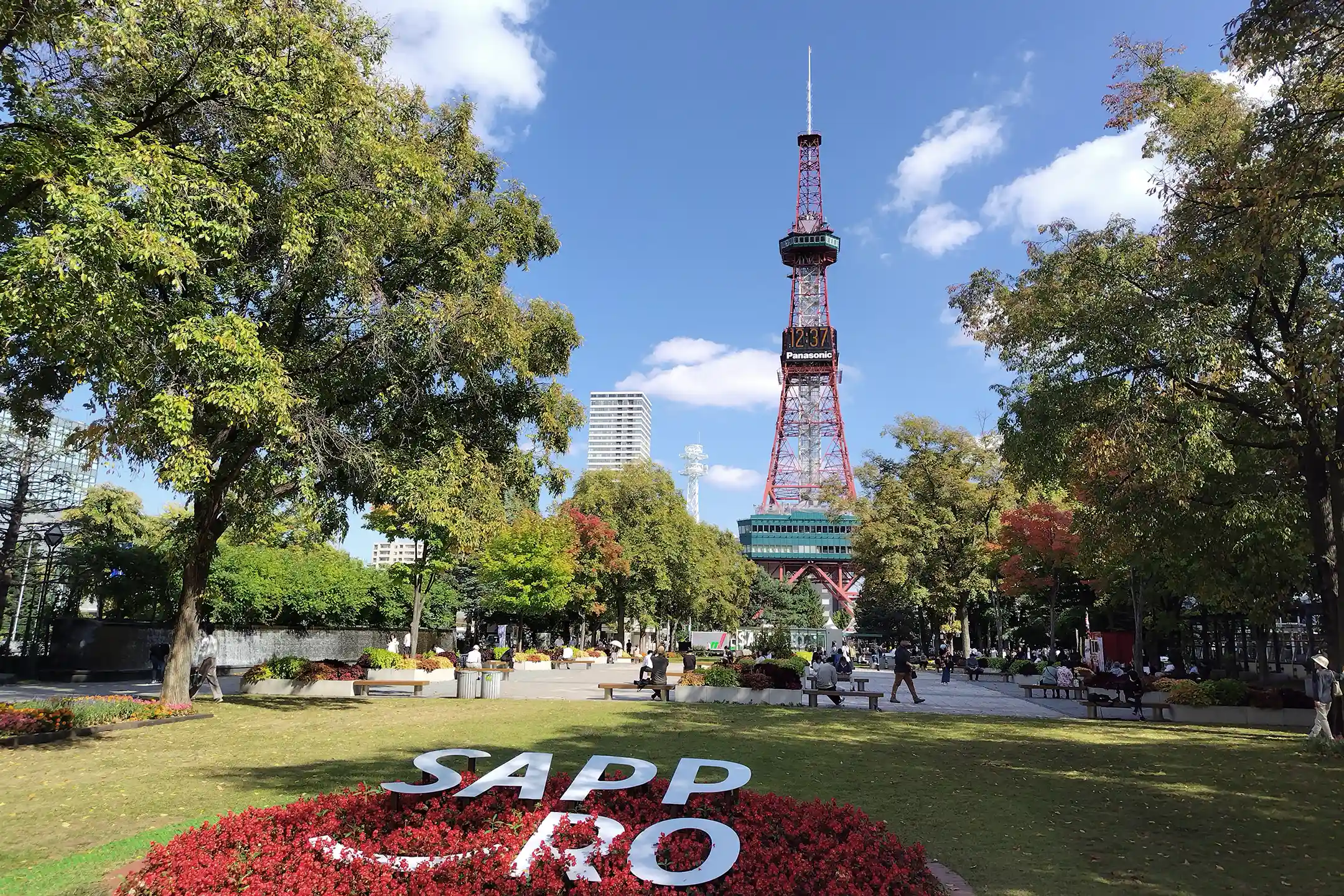
Day 1 — Sapporo. Ōdori Park in the morning if your dates fall between 20 and 31 May, when the lilacs are open across blocks 5 to 7. Maruyama Park and the grounds of Hokkaido Jingū afterwards for new leaf rather than blossom. Dinner around the spring vegetables and the day's scallops.
Day 2 — Jōzankei. An hour from the city, and the most worthwhile of the day trips out of Sapporo in this season. Morning in the ravine while the light is still low, then a long soak in the sodium chloride water, which holds heat well on a nine-degree morning. Keep the walking to marked paths and go with a guide if you want the forest early — see the bear advisory above.
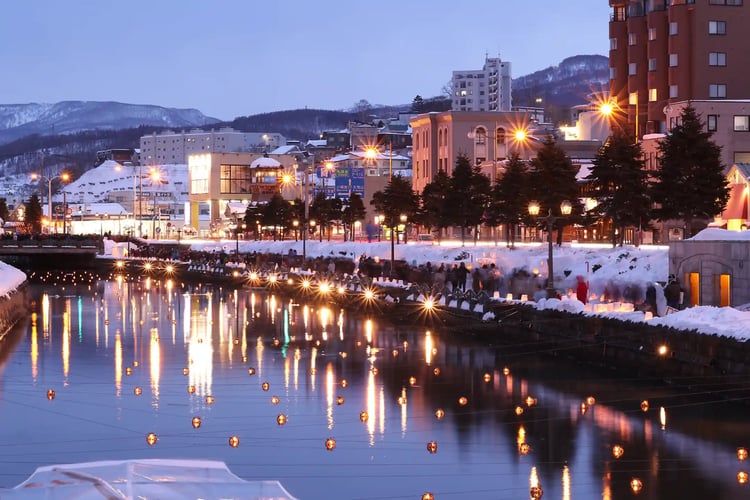
Day 3 — Otaru. The canal's famous picture is the night one, lit along the warehouses; the morning is when it is empty. Take the first hour after breakfast if you want it to yourself. Sushi at the fish market for lunch. If you want the Tokugenji zazen, it needs to be booked as its own morning in Shioya with a second person, not slotted between the canal and the airport.
Where the wilderness opens further

In closing
May rewards a decision more than it rewards a wish list. Choose the first half and you are travelling for the tail of Japan's cherry front, in the busiest week of the Japanese year. Choose the second and you get moss phlox, tulips and lilacs under the most sunshine hours Sapporo records in any month, with the holiday week behind you.
Either way, the same two things hold: the bear advisory runs the whole month, and the pollen in the forest is birch. Plan around those and Hokkaido in May gives back more light and more room than any other month on the island.
Author Bio

Shohei Toguri