Japanese hot spring culture offers a special kind of experience where long‑standing bathing traditions meet rich, unspoiled nature. In this guide to hot springs Japan, you’ll explore everything from the basic definition and history of onsen to bathing etiquette, health benefits, and elevated, high‑value ways to enjoy them. Even if it’s your first time, you’ll find the essential knowledge you need to feel at ease, along with ideas for a refined wellness trip that also respects the environment and supports more sustainable ways of traveling.
Through onsen, shaped by centuries of tradition, you can gently step away from everyday life and into a world of luxurious journeys that are kind to both your body and your mind.
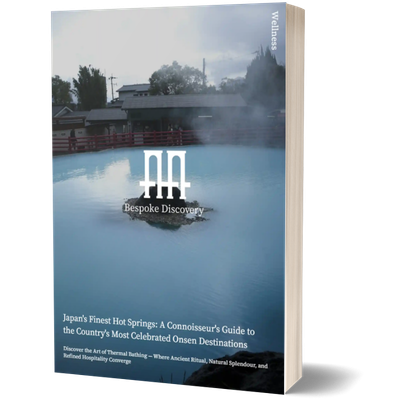
This article is one entrance into Japan's hot-spring tradition. The Digital Guide gathers the country's most celebrated onsen — their waters, their settings, and the quiet rituals of stillness around them — into a single, connected reading.
What Is a Japanese Onsen? (Hot Springs Japan Basics)
A Japanese onsen is far more than “hot water in a tub.” It is a natural resource clearly defined and protected by law. Under Japan’s Hot Spring Act, an onsen is “hot water, mineral water, water vapor, or other gas (excluding natural gas with hydrocarbons as its main component) that springs from underground,” with a source temperature of at least 25°C, or which contains certain designated minerals above a specific concentration (*1). Thanks to this legal framework, the conditions for something to be called an “onsen” are scientifically guaranteed, and a huge variety of spring qualities exist across the country—one reason hot springs Japan attracts so many wellness‑minded travelers.
Japan has around 3,000 hot spring areas, each shaped by its own geology and volcanic activity. This creates distinct differences in water quality, color, and aroma, forming a remarkably diverse onsen culture. For example, sulfur springs often found in volcanic regions are milky white with a distinctive sulfur smell, while chloride springs along coastal areas contain salt that helps your body retain warmth, so you stay cozy longer after bathing.
It’s also helpful to understand the types of onsen areas by landscape. Broadly speaking, Japan’s hot spring resorts can be grouped into three categories: mountain, seaside, and urban. Mountain onsen towns let you enjoy clear air and deep quiet, along with seasonal scenery such as rushing streams, vibrant autumn foliage, or peaceful snowy landscapes.
Seaside hot springs, on the other hand, offer open‑air baths where you can soak while listening to the sound of waves and feeling the sea breeze on your skin. Watching the sun set into the ocean or gazing up at a sky full of stars from a steaming outdoor bath often becomes one of those memories you never forget.
Urban onsen areas usually have excellent transport access and make it easy to combine your soak with visits to museums, galleries, shopping districts, and other attractions. Because each type of region has its own climate, you might, for example, aim for a snow‑view open‑air bath in a mountain resort in winter, or plan to enjoy warm‑season seaside bathing along the coast. The ideal is to choose an onsen area according to the kind of scenery and mood you want to immerse yourself in when planning your own hot springs Japan itinerary.
Onsen Etiquette and Step‑by‑Step Bathing
Even if you’re entering a Japanese onsen for the very first time, once you know the basic etiquette and the proper order of bathing, you can relax and enjoy yourself. When you walk into the bath area, the golden rule is to rinse and wash your body thoroughly with a shower or by using a washbowl before you ever step into the tub. This is part of the etiquette, but it’s also a safety measure: it helps your body gradually adjust to the water’s temperature and mineral content and reduces the risk of sudden spikes in blood pressure.
Use a small bath bucket to scoop some of the onsen water and pour it slowly over yourself, starting from the parts farthest from your heart, such as your feet and hands. If you have long hair, tie it up so it doesn’t get into the water, and don’t put your towel in the bath either. These little actions show consideration for other bathers and reflect the Japanese sense that the “hot water is shared by everyone.”
Inside the bathing area, it’s best to keep conversations low and gentle. In most onsen, photography and mobile phone use are prohibited. Protecting privacy and preserving a quiet atmosphere helps everyone feel comfortable and at ease.
Next, let’s look at the basic steps of onsen bathing and how to warm up efficiently. Rather than staying in the hot water for a long time all at once, it’s better to repeat short soaks and breaks—a method known as “divided bathing” (bunkatsu‑yoku).
For example, during your first soak, limit your time in the tub to about five minutes, and get out before you feel overheated or dizzy. When you step out, gently towel off and drink some water to stay hydrated. To avoid catching a chill, try not to let your body get too cold in the dressing area or lounge, especially in cooler seasons. After a short rest, you can slip back into the water, perhaps staying in a little longer this time.
When you divide your total bathing time into several short sessions—say, a total of 10–15 minutes spread out over a few rounds—your body experiences less stress and you’re also less likely to get chilled afterward (*1). For instance, if you repeat “three minutes in the water → rest” three times, you’ll have soaked for nine minutes in total, which feels far easier on the body than one continuous 10‑minute bath, yet still keeps you warm for a long time. If you’re someone who loves long baths, this style with breaks in between is especially worth trying.
When you’re ready to leave the tub, avoid standing up suddenly. Sit on the edge of the bath and spend a little time in a half‑body or foot‑bath position, letting your body slowly adjust to the temperature. This helps prevent lightheadedness. After you leave the bath, gently pat your body dry with a soft towel, and once you step out of the bathing area, get dressed promptly so you don’t cool down too quickly. In winter in particular, a rapid drop in body temperature from cold air can trigger “heat shock,” so use a hair dryer, heater, or other means to keep yourself comfortably warm.
If you keep these points in mind, even your very first onsen experience in Japan can be both safe and deeply relaxing. When you let everyday noise fade away, breathe deeply in the quiet steam of the bath, and simply feel the water holding you, both body and mind begin to unwind. With the basic etiquette and bathing steps as your foundation, you can find your own rhythm and savor your onsen time exactly as you like.
Choosing Bathing Styles and Facilities (Focusing on Privacy)
If you want to enjoy onsen in a more private and indulgent way, you have several options in terms of facilities and styles. If you feel shy about sharing a large public bath with many others, or if you’d like to spend unhurried time with your partner or family, it’s a good idea to choose an inn that offers “guest rooms with private open‑air baths” or “reserved private baths.”
For example, if your room comes with its own open‑air onsen bath, you can soak whenever you like without worrying about anyone else. You might slip into the water in the stillness before sunrise or sit in the bath under the moonlight—moments that feel wonderfully special. Even if your room doesn’t have its own bath, many ryokan (traditional inns) offer private baths you can reserve by the hour. In that case, you usually book the time slot you want when you check in and enjoy exclusive use of the bath for that period (*1).
Private baths come in indoor and open‑air varieties, so it’s worth checking the view and atmosphere in advance. In many of these spaces, it’s also acceptable to wrap yourself in a towel or wear a swimsuit while you bathe (this depends on the property), which can feel reassuring if you’re visiting from overseas or traveling with children (*2).
If you’re considering a room with a private open‑air bath, it’s wise to check how well it’s separated from neighboring rooms and how good the soundproofing is. Since you’re investing in a private retreat, you want to make sure the design allows you to truly relax without worrying about being seen or overhearing noise from next door; reviews and guest comments can be very helpful here.
By choosing facilities that prioritize privacy and comfort, you can create your own personal onsen retreat and enjoy a deeply restorative stay.
Spring Qualities, Sensations, and Expected Effects of Japanese Hot Springs
The “spring quality” (senshitsu) of an onsen is determined by the minerals dissolved in the water, and those differences show up as variations in skin feel, scent, and expected benefits (*1). Below are some of the most common types of spring qualities, along with what you can expect to feel when you bathe, what effects are traditionally associated with them, and what to be careful about. While actual medical benefits vary greatly from person to person, you can use these descriptions as a rough guide based on long‑standing local wisdom and experience.
Sulfur Springs and Acidic Springs:
Sulfur springs (iō‑sen) contain sulfur compounds in the water. They are famous for their distinctive smell—often compared to rotten eggs—and, depending on the source, for their milky, cloudy appearance. Because of their strong antibacterial properties, they have long been said to help improve skin conditions such as atopic dermatitis and eczema, and you’ll often see them described as “beautifying baths.” When you bathe in this type of water, it tends to soften dead skin cells, giving your skin a smooth, sleek feeling afterward.
However, sulfur compounds can discolor metals like silver and copper, so it’s important to remove jewelry and accessories before bathing (*2). You don’t want to discover that your treasured rings or necklaces have turned black. Thanks to their powerful cleansing action, sulfur springs have historically been used as therapeutic baths for skin troubles.
Strongly acidic springs can tingle or sting slightly on the skin and may leave your body feeling as if a thin layer has been gently peeled away, resulting in a very smooth surface. Because the stimulation is intense, if you have sensitive skin or any cuts or abrasions, it’s best to keep your time in the water short and rinse your body lightly with fresh water afterward.
Both sulfur and acidic springs are so potent that you may be more prone to “yu‑atari,” a phenomenon where you feel fatigue, headache, or overall malaise after bathing. The key is to start with brief soaks, listen to how your body feels, and gradually adjust your bathing time.
Bicarbonate Springs and Sulfate Springs:
Bicarbonate springs (tansan suisoen‑sen), often called “baking soda springs,” contain sodium bicarbonate. This compound can soften and emulsify old keratin and skin oils, helping them wash away (*1). As a result, these baths are popular as “smooth skin” or “beauty” springs that leave your skin feeling extra silky.
It’s as if you’re experiencing a natural cleansing treatment: after bathing, your skin may feel smoother and look a shade brighter. In highly alkaline bicarbonate springs (pH 8.5 and above), the water can feel almost slippery or soapy, which is a sign that old keratin is being removed. At the same time, this powerful cleansing can strip away too much natural oil, so you’ll want to be extra careful about moisturizing afterward.
Sulfate springs (ryūsan‑en‑sen), rich in sulfate salts of calcium or sodium, tend to be clear and light in texture. Because they’re said to create a protective film on the skin, they’ve traditionally been valued as “healing baths” for cuts and burns. After bathing in a sulfate spring, your skin often feels softly hydrated, in contrast to the clean, refreshed feeling of bicarbonate springs; many people think of them as “moisturizing baths.” This type of water is also believed to support circulation and have a mild calming effect, with folk wisdom linking it to improvements in high blood pressure and arteriosclerosis.
As your body warms in a sulfate spring, small blood vessels may dilate and blood flow is expected to improve. The effects, however, are gentle, so it’s best not to expect dramatic changes but simply to enjoy the comfortable, hydrated feeling after your bath.
Although bicarbonate and sulfate springs are relatively mild, spending too long in any hot water isn’t advisable. Bicarbonate springs, in particular, can make your skin feel so smooth that you may not notice how much you’re sweating and accidentally stay in too long. Try to keep your soaks to a moderate length and take breaks in between.
Chloride Springs and Carbon Dioxide Springs:
Chloride springs, which contain large amounts of salt (such as sodium chloride), are sometimes called “salt springs.” Because they share some similarities with seawater in terms of composition, the water can taste salty if you happen to get a drop on your lips.
After you bathe, the salt that remains on your skin slows the evaporation of sweat, helping to retain heat. This is why chloride springs are known as “heat‑retaining baths” where your body stays warm for a long time. If you get cold easily or are looking specifically to improve poor circulation, choosing a chloride spring is a smart strategy. Many people report that after soaking in this type of water, they feel warm to the core and stay that way right up until bedtime, even on winter nights.
Because chloride springs reduce evaporation, there is also a tendency to overheat if you soak for too long. If you keep your time in the tub reasonable and rehydrate and rest between sessions, you can fully enjoy their heat‑retaining benefits. These springs also have antiseptic properties and have long been popular in therapeutic bath resorts for issues such as minor cuts, burns, and chronic skin conditions.
If the water in the tub is brownish, it may be a “chloride spring with iron” (a ferruginous chloride spring). In these springs, iron in the water oxidizes when exposed to air, turning the bath a tea‑brown color. Such iron‑rich baths have traditionally been thought to help with anemia, but the same iron can stain towels, so it’s better to wash white towels thoroughly afterward.
Carbon dioxide springs (tansan‑sen), sometimes called “sparkling baths” or “ramune baths,” are infused with dissolved carbon dioxide gas. Even at relatively low temperatures, the water forms fine bubbles that cling to your skin and gently fizz against your body. When carbon dioxide is absorbed through the skin, it can dilate capillaries and lower blood pressure, which reduces the burden on your heart and produces a distinctive, pleasant feeling of relaxation. Because of this, carbon dioxide springs are sometimes known as “heart baths” and have been used in rehabilitation for high blood pressure and heart conditions.
While you’re soaking, your circulation improves significantly. Your skin may take on a rosy hue and you might feel as though oxygen is reaching every corner of your body. These baths are also said to help relieve cold sensitivity and ease muscle soreness, so athletes and people recovering from physical exertion sometimes incorporate carbonated baths into their routine. In fact, in experiments comparing ordinary baths with carbon dioxide baths, the latter have been associated with deeper sleep afterward.
However, because carbon dioxide springs can lower blood pressure even at relatively low temperatures, staying in too long may leave you feeling lightheaded, much like ordinary overheating. Older adults and people with a tendency toward low blood pressure should be especially careful not to overdo it, even if the water feels warm rather than hot.
In some facilities, the bathwater is also approved as drinking water, and you may see it offered as a treatment for digestive issues or diabetes. If you want to try drinking it, always follow the facility’s rules and guidance. Note that if the water is heated too much, the carbon dioxide escapes, so carbonated baths are often kept at slightly lower temperatures (generally 40°C or below). If that feels a little cool, you can enjoy a longer, relaxed half‑body soak instead.
How to Choose by Spring Quality—and General Cautions:
As you can see, each spring quality has its own personality. If you choose an onsen that matches your travel purpose, skin type, and physical condition, you’re likely to feel much more satisfied with your stay. That said, there are some important points that apply to any type of spring: above all, make sure to drink water before and after bathing and take enough rest.
Some people want to maximize the “medicinal” effects of hot springs and end up going in and out many times or soaking for very long periods. In reality, extreme or frequent long baths can strain your body and even make you feel unwell. Springs like sulfur or acidic waters can make you particularly prone to “yu‑atari,” so it’s healthiest to get out while you still feel “maybe a little short” rather than pushing yourself.
If you live with conditions such as heart disease, high blood pressure, or if you’re pregnant, it’s wise to consult your doctor before your trip and enjoy onsen within limits that feel safe for you. These days, bathing during pregnancy is no longer considered medically forbidden in itself, but there are extra risks of dizziness or slipping, so safety comes first: lukewarm water, short soaks, and having someone with you can all help.
After bathing, you can either let the mineral water dry on your skin or rinse off lightly in the shower once—opinions differ here. With stronger waters like sulfur or acidic springs, rinsing gently with fresh water can help prevent irritation.
By contrast, with milder springs such as carbon dioxide or sulfate baths, some people like to leave a light layer of minerals on the skin to prolong the moisturizing effect. In either case, moisturizing afterward is essential—lock in the hydration you’ve just gained and don’t let that newly balanced skin dry out. Let the gifts of the hot springs work for you, and have fun discovering the type of water that feels just right for you.
Recommended Model Routes for Hot Springs Japan by Region and Season
Japan stretches a long way from north to south, and throughout this archipelago you’ll find uniquely flavored hot spring towns that together form the essence of hot springs Japan. If you choose where to go based on your travel theme and the season, your onsen experiences will become even more memorable. In this section, you’ll find model routes and recommended spots for high‑value onsen trips, organized by region and season, along with tips on how to avoid crowds and how to get there. Use these ideas as inspiration when you design your own ideal hot spring journey.
Capital Region and Surroundings (Hakone, Nikko, Kusatsu):
Around Tokyo, there are many famous onsen areas suitable for day trips or 1–2 night stays. Hakone in Kanagawa Prefecture is a classic example: it’s only about 90 minutes by limited express from Shinjuku, yet offers striking views of Mt. Fuji and Lake Ashi, plus the chance to combine hot springs with first‑class art museums.
In the Gora area, you’ll find internationally acclaimed museums such as the Hakone Open‑Air Museum and the Pola Museum of Art. You can spend the day stimulating your senses with art, then soothe your body in milky, sulfur‑scented water fed by the Owakudani springs—a truly luxurious combination.
Along the shores of Lake Ashi, many inns offer open‑air baths that face both the lake and Mt. Fuji, giving you a sweeping, dramatic panorama. Hakone is popular all year round, but especially crowded in autumn when the leaves turn and in spring when cherry blossoms bloom. To avoid the worst of the crowds, aim for weekday stays or consider winter, when the air is crystal clear and views of Mt. Fuji are often their sharpest.
Nikko in Tochigi Prefecture is famous for the UNESCO World Heritage site Toshogu Shrine, but further into the mountains you’ll find hot springs with a secluded, almost hidden feel. A popular pattern is to visit Toshogu and nearby sights in Nikko National Park, such as Kegon Falls and Lake Chuzenji, then spend the night at a hot spring inn.
Oku‑Nikko Yumoto Onsen, situated at around 1,500 meters above sea level, is known for its milky white sulfur baths with a strong aroma and a pleasantly firming effect on the skin, enhanced by the cool highland climate. The drive from Yumoto down past Senjogahara Marsh to Lake Chuzenji is spectacular in autumn, but heavy traffic is common at that time of year, so leaving early in the morning or visiting on weekdays can make your trip much smoother.
Kinugawa Onsen, about two hours from central Tokyo by limited express, is an easy‑access resort town lined with large hotels along a scenic gorge. Here you can enjoy expansive views of the river valley and visit attractions like Edo Wonderland, a theme park that recreates life in the Edo period. Families often choose Kinugawa, while travelers seeking a quieter, more adult atmosphere might opt for nearby areas like Yumoto or Kawaji instead.
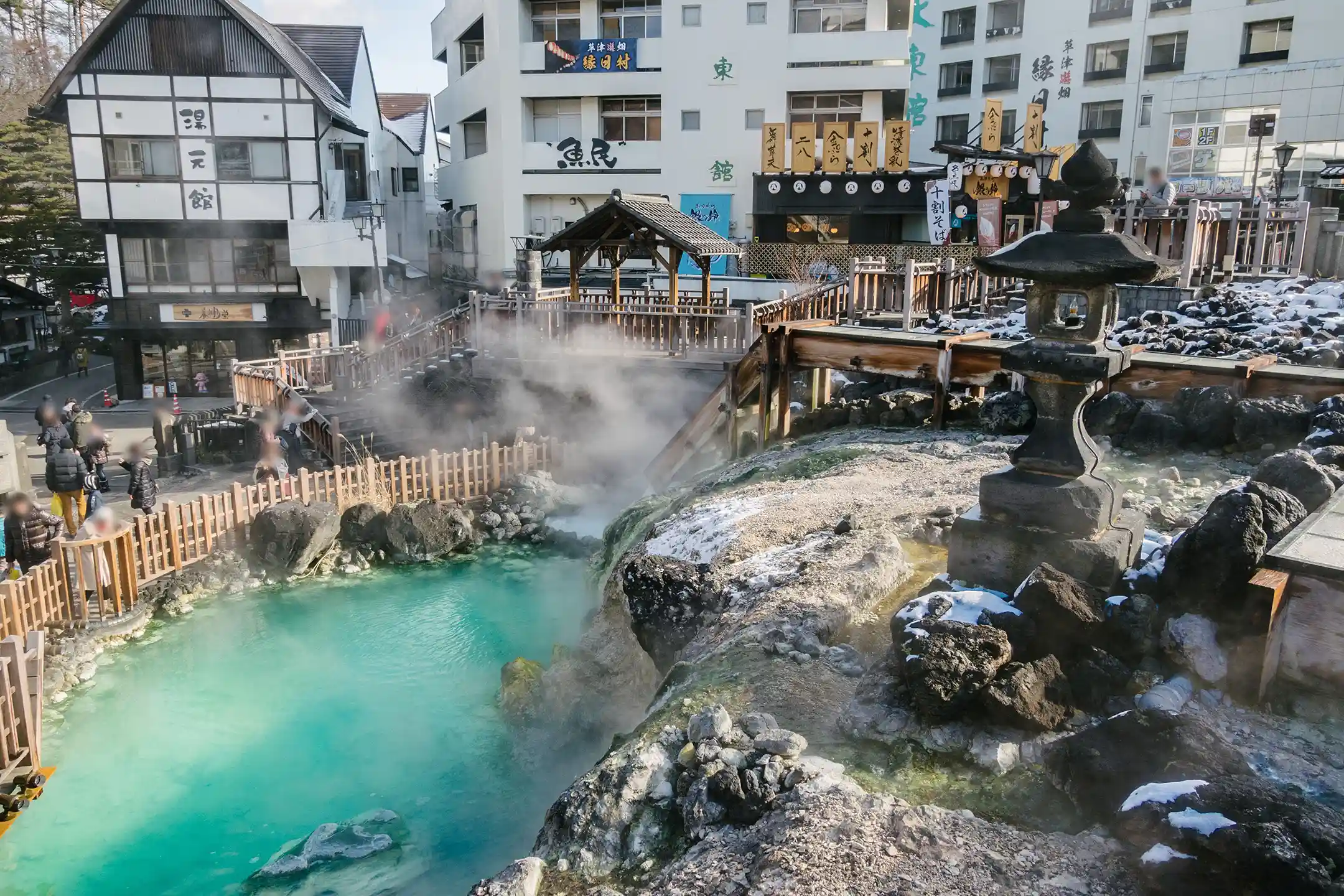
Kusatsu Onsen in Gunma Prefecture is another must‑visit in the greater Tokyo region. Counted among Japan’s “three great hot springs,” Kusatsu gushes with strongly acidic water. At the center of town stands the famous Yubatake (“hot water field”), a cascading series of wooden channels where the steaming, mineral‑rich water flows and cools. About 4,000 liters of water bubble up from the Yubatake every minute; the rising steam and sulfur scent create a striking, almost otherworldly scene.
Nearby you can watch the traditional “yumomi” performance at Netsu‑no‑Yu, where women in kimono use large wooden paddles to stir and cool the hot water while singing the Kusatsu folk song. Kusatsu’s water has a pH of around 2, making it strongly acidic and powerfully antibacterial; when you bathe, your skin may feel wonderfully tightened.
Because of the highland climate, Kusatsu is comfortably cool even in summer, but the real magic comes in winter, when you can sit in an open‑air bath as snow falls silently around you. Note that at 1,200 meters elevation, winter roads can be icy and snowy, so snow tires are essential if you’re driving. There are also direct highway buses from Tokyo, which take about four hours when traffic is light. Kusatsu draws visitors year‑round, but if you stroll around the Yubatake late at night when it’s lit up, or visit the public baths early in the morning, you can experience the town’s atmosphere without the crowds.
Kansai and San’in Region (Kyoto Area, Arima, Kinosaki, Tamatsukuri, Misasa):
Around Kyoto and across the San’in region, you’ll find trips that combine excellent hot springs with rich cultural experiences.
Arima Onsen in Hyogo Prefecture is another of Japan’s “three great hot springs” (alongside Kusatsu and Gero). Loved even by the historical warlord Toyotomi Hideyoshi, this ancient resort is only about an hour from Osaka or Kyoto by train or car. Arima is famous for its two distinct types of water: “kinsen” (golden springs), a reddish‑brown chloride spring rich in salt and iron that keeps you wonderfully warm, and “ginsen” (silver springs), clear, carbonated water that promotes circulation.

After a soak in a kinsen open‑air bath at a high‑end ryokan, you can savor local delicacies such as Kobe beef and other Tajima region specialties—one of Arima’s signature luxuries. If you’d like to pair Arima with Kyoto, it’s about a two‑hour drive from central Kyoto, making an itinerary of temple‑hopping in Kyoto followed by a night of blissful bathing in Arima very appealing. Autumn foliage season is particularly popular, so early booking is recommended.
Kinosaki Onsen in northern Hyogo (Tajima region) is famed for its charming “soto‑yu meguri,” or public bath hopping. Seven wooden bathhouses line the willow‑fringed Otani River, and the classic way to enjoy the town is to stroll along in yukata, wooden clogs clacking on the stones as you move from one bath to the next.
In winter, Kinosaki is renowned for matsuba crab (snow crab), drawing many visitors who come specifically to feast on this seasonal treat. It’s a busy time, but you can enjoy both crab cuisine and snowy open‑air baths. Summer through early autumn tends to be quieter, making it a good time to wander from bath to bath at a more relaxed pace. With yukata, clogs, and bath‑hopping pass in hand, you’ll be immersed in a very Japanese atmosphere that international visitors often find enchanting.
Tamatsukuri Onsen in Shimane Prefecture is known as a “kami‑no‑yu,” or “bath of the gods,” linked to the myths of Izumo. Dating back to the Nara period, it was once opened by imperial decree. Its mildly alkaline sulfate spring is celebrated for softening and hydrating the skin, making it especially beloved by women. Many guests describe the sensation as if their skin had been wrapped in a thin, protective veil.
The town features shops selling magatama (comma‑shaped beads) and other items inspired by Shinto mythology, as well as photogenic spots for strolling in yukata. It’s also a convenient base for visiting Matsue and Izumo Taisha Grand Shrine, with Izumo City just about 30 minutes away by train. You might spend the late afternoon praying for good relationships at Izumo Taisha, then return in the evening to sink into Tamatsukuri’s beautifying waters—a trip that feels nourishing for both mind and body.

Misasa Onsen in Tottori Prefecture is one of the world’s most concentrated radon hot springs. This type of radioactive spring is said to provide hormesis effects—stimulating the body’s natural healing capacity—even from the inhalation of steam.
The water itself is colorless, odorless, and very gentle on the skin, perfect for long soaks. In Misasa, you can even bathe in outdoor riverside baths at night, listening to the murmur of the river under a sky full of stars. Nearby Kurayoshi City features a historic district of white‑walled storehouses and traditional buildings; pairing a visit there with your onsen stay adds cultural richness to your trip.
Winters in the San’in region can be snowy, so public transport such as JR trains and local buses is often the safest choice. Misasa is about 20 minutes by bus or taxi from Kurayoshi Station. Some say radon springs show their best therapeutic effects after stays of two weeks or more, and you’ll find self‑catering accommodations designed for extended “toji” (healing stays). If time allows, you might try living slowly in a hot spring town for a while.
Hokkaido Region (Niseko, Noboribetsu, Tokachigawa):
Hokkaido’s hot springs are all about dynamic experiences in wide‑open nature. Niseko (in Rankoshi Town, Hokkaido) is world‑famous as a powder‑snow ski resort, but it’s also rich in hot springs. After a full day of skiing or snowboarding, you can glide into an open‑air bath right by the slopes and let the hot water melt away the cold and your muscle fatigue.
Niseko Yumoto Onsen and similar areas offer sulfur springs with beautiful milky white water. In winter, the white steam rising from the baths looks striking against the snow‑covered landscape. Stepping into an outdoor bath in sub‑zero temperatures might sound intense, but once the hot water envelops you, it becomes surprisingly comfortable. Just be sure to cover up quickly with a robe or coat when you get out, so you don’t chill in the cold wind.
When bathing in falling snow, your head can get cold faster than the rest of your body, so you may see people wearing knit caps in the bath—one of those uniquely Hokkaido hot spring hacks. Niseko is also a beloved summer retreat and outdoor playground; you can go rafting, hiking, or cycling and then wash off the sweat in a relaxing hot spring. Gazing at Mt. Yotei in its changing seasonal colors while soaking is a sure way to leave everyday life behind for a while.
Noboribetsu Onsen in Noboribetsu City is often called an “onsen department store” because of the variety of waters that bubble up from its dramatic Jigokudani (“Hell Valley”) fumarole fields. There are nine types of springs here—including sulfur, salt, iron, and alum—each with distinct colors and properties. In this one compact resort town, you can try multiple spring qualities just by hopping between baths.
Because the source temperatures are high, the flow of water is abundant and many inns offer the luxury of free‑flowing, non‑recycled baths. Noboribetsu is also home to family‑friendly attractions such as a bear park and Noboribetsu Date Jidaimura, a historical theme park with samurai and ninja shows. With so much to do, staying two nights gives you time to enjoy both sightseeing and the hot springs at a leisurely pace.
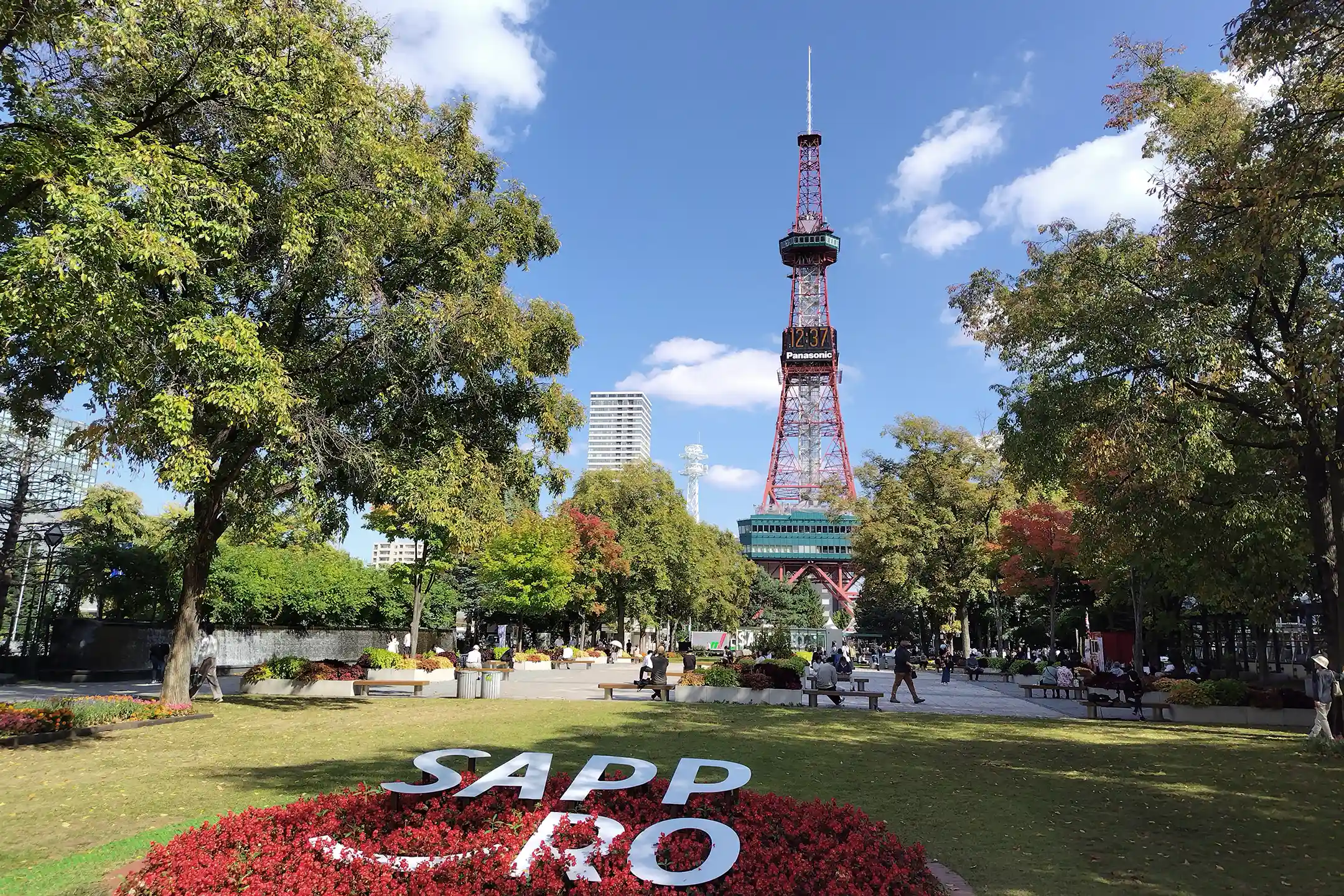
From Sapporo or New Chitose Airport, Noboribetsu is about an hour away by limited express train. In winter, local roads can be icy, so if you’re not used to snow driving, public transportation is the safer choice. Jigokudani has well‑maintained walking paths, and after dark, the valley is illuminated, creating a mysterious, almost otherworldly atmosphere. Sitting in a footbath while watching the steam and lights is a uniquely Noboribetsu experience.
Tokachigawa Onsen in Otofuke Town is famous for its rare “moor” hot spring. This amber‑colored water is rich in organic material from ancient plants, giving it an exceptionally smooth feel and strong moisturizing properties—another so‑called “beauty bath.” Many people say their skin feels incredibly soft after bathing, to the point where they hardly need lotion afterward.
Tokachigawa is only about 30 minutes by car from Obihiro City. From open‑air baths overlooking the vast Tokachi Plain, you can take in breathtaking sunsets. In midwinter, when the air is extremely dry and cold, the steam can freeze into sparkling “diamond dust.” After your bath, you can sample local favorites like Obihiro’s famous buta‑don (pork rice bowl) or fresh milk from nearby farms.
Moor springs are rare even worldwide, found in only a few places such as Baden‑Baden in Germany, so Tokachigawa Onsen is particularly special for hot spring enthusiasts. In summer, you can also enjoy hot‑air balloon rides, cycling, and other outdoor activities, making it an excellent base for an active Hokkaido holiday.
Tohoku Region (Ginzan, Zao, Nyuto, Sukayu):
The Tohoku region is dotted with onsen that retain the atmosphere of old‑fashioned healing retreats.
Ginzan Onsen in Yamagata Prefecture is known for its romantic townscape: multi‑story wooden inns line a small river, and gas lamps cast a soft glow at night. In winter, as snow blankets the streets, many visitors say it feels like stepping into the world of an animated film. The hot spring water itself is a clear sodium chloride spring, with a history as a therapeutic bath.
There is a public bath called Shirogane‑yu that you can use in addition to the baths at your inn, letting you experience both “inner” and “outer” baths. Ginzan Onsen is about 40 minutes by bus from Oishida Station on the Yamagata Shinkansen, but it’s a heavy snow area, so there may be fewer buses and some schedule changes in winter. Visiting on a winter weekday evening lets you savor the quiet charm of the town without the crowds.
Zao Onsen (Yamagata side), straddling Miyagi and Yamagata Prefectures, lies at the foot of the Zao mountain range, famous for skiing and its “snow monsters” (frost‑covered trees). Zao’s strongly acidic sulfur springs are among the most acidic in Japan, on par with Kusatsu, and are highly antibacterial.

The white, cloudy water grips and tightens the skin, and after a day of skiing, many people swear by a soak here to ease muscle soreness. Zao’s “snow monsters” are world‑famous; at night you can ride a ropeway to see the illuminated, ghostly shapes. Imagine skiing during the day, watching glowing snow monsters at night, and then finishing with a hot soak in acidic spring water—this is winter indulgence at its finest.
Zao Onsen is about 40 minutes by bus from Yamagata Station. Weekends in February can be extremely busy, so if your schedule allows, aim for weekdays or the shoulder seasons before or after peak winter.
Nyuto Onsenkyo in Akita Prefecture is a dream destination for hot spring purists. Nestled in the mountains among primeval beech forests, seven rustic inns sit scattered through the trees, each with its own distinct water and character. The best‑known, Tsurunoyu, has milky white sulfur springs and a thatched‑roof inn that perfectly captures the feel of a secluded hot spring retreat.

Other inns like Kuroyu and Taenoyu offer everything from clear to cloudy waters, and with a “yu‑meguri pass” you can visit several of them as a day guest. The whole valley is hushed and still, and at night, soaking in an outdoor bath lit only by moonlight feels almost zen‑like. Mobile reception can be patchy, making it a natural place for a digital detox.
Access is via a roughly one‑hour bus ride from Tazawako Station, but services are limited when the snow is deep, so it’s essential to check in advance. Snow can reach two meters or more in winter, and spending time in a small inn cut off by white drifts is about as far from daily life as you can get. Spring greenery and autumn foliage are also stunning, so it’s no surprise that many visitors return in different seasons to experience the change.
Sukayu Onsen in Aomori Prefecture sits deep in the Hakkoda Mountains and is designated a National People’s Hot Spring Health Resort. It’s known for record‑breaking snowfall, sometimes the heaviest in Japan. Its signature feature is the vast, all‑hinoki‑cypress “Senjin‑buro” (“1,000‑person bath”), a mixed‑gender hall of milky sulfur water that has endlessly poured in since the Meiji era.
Many writers and artists have stayed here over the years, and the inn’s atmosphere is that of an authentic healing retreat. In winter, roads are frequently closed by snow, so the most reliable ways to arrive are by bus from Aomori Station (reduced service in winter) or by using the inn’s shuttle. The most unforgettable time to visit is the heart of winter, when snow piles up past the second floor, forming towering white walls around the bathhouse.
At night, as the pale light of the snow filters into the bath hall, you may find that all sound seems to be absorbed by the snow outside. In the silence, the only thing you hear is the flow of the water. It’s a deeply meditative moment, a chance to be completely present with yourself.
Sukayu’s sulfur baths are fairly hot, but they also have a softness that makes it hard to overheat if you pace yourself. Between soaks, you can join tours to see Hakkoda’s snow monsters or enjoy local dishes made with wild mountain vegetables and mushrooms. It’s a rich, immersive experience of both nature and culture.
Koshinetsu and Hokuriku Region (Nagano, Niigata, Kaga, Yamashiro, Nozawa, Shirahone):
From the central highlands to the Sea of Japan coast, this region offers onsen journeys where mountain resorts and traditional culture blend beautifully.
Nagano Prefecture, at the foot of the Japanese Alps, is dotted with famous hot springs. Shirahone Onsen, near Kamikochi, is known for its milky white (sulfur‑containing) calcium/magnesium bicarbonate springs, where the white color comes from calcium carbonate and other minerals precipitating out. Locals say “if you bathe for three days, you won’t catch a cold,” and the spring is also famous as a drinkable water for digestive complaints. Soaking in its cloudy baths while gazing at fresh green slopes or autumn foliage is the perfect way to unwind after a high‑altitude hike.
Some inns close in winter because of heavy snow, so visits are generally limited to spring through autumn.
Nozawa Onsen, also in Nagano, is an internationally known ski destination that draws many overseas visitors, yet at its heart it remains a warm, traditional village. There are 13 public baths (“soto‑yu”) open free of charge, where locals and visitors mingle. The hot water is a sulfate spring rich in sulfur and gypsum; the baths tend to be hot, leaving your skin smooth and glossy afterward.

At the source area known as Ogama, steam rises as locals boil vegetables in the hot spring water—an iconic scene that shows how deeply onsen is woven into daily life. In winter, the village is full of European and other international travelers, giving it a cosmopolitan feel, while summer is relatively quiet and ideal for leisurely bath‑hopping.
Niigata Prefecture is famous for deep snow and rice, but there are plenty of hot springs as well. Echigo‑Yuzawa, the setting of Yasunari Kawabata’s novel “Snow Country,” is just about 70 minutes from Tokyo by Shinkansen. The town has everything from large resort hotels to traditional inns and is lively in winter with skiers and snowboarders. The hot water here is a clear chloride spring that warms you thoroughly.
Yuzawa also hosts events like “onsen stamp rallies” in the summer, encouraging visitors to explore multiple baths and the town itself year‑round. You can combine your stay with visits to sake breweries or even hands‑on rice farming experiences.
Along the Niigata coast, you’ll find seaside hot springs such as Naoetsu and Senami. Senami Onsen, for example, is famous for open‑air baths where you can watch the sun sink into the Sea of Japan. Driving along the coast in summer and timing your bath for sunset can be incredibly rewarding. Just remember that summer on the Japan Sea coast is hot and sunny, so it’s best to bathe in the morning or evening and spend midday time at the beach or sightseeing.
If you’re touring Nagano, Niigata, and the Hokuriku region, trains and Shinkansen lines make for a smooth rail journey. One idea is to ride the Hokuriku Shinkansen from Tokyo to Ueda, stay in Bessho Onsen (often called the oldest onsen in Nagano), then continue via Karuizawa to Kanazawa for sightseeing, followed by a night in the Kaga Onsen area. From there, you could continue by limited express to Echigo‑Yuzawa to enjoy local sake and hot springs before returning to Tokyo—a very appealing route for train lovers.
Each area hosts seasonal festivals and events; if you weave these into your itinerary, your onsen journey will become even more unforgettable.
Tokai and Chubu Region (Gero, Okuhida, Hida‑Takayama):
Centered on Gifu Prefecture, this region offers both renowned hot springs and beautifully preserved old townscapes.
Gero Onsen in Gifu, alongside Kusatsu and Arima, is one of Japan’s “three great hot springs.” Its alkaline simple springs are velvety to the touch and highly regarded as a “beauty bath” that leaves skin smooth as silk, especially popular among women. The town has been bustling with bathers since the Edo period.
You’ll find numerous footbaths scattered throughout the streets, making it easy to enjoy the hot spring water as you wander. Local crafts like Gero‑yaki pottery and visits to small sake breweries add depth to your stay in this compact yet refined town. Access is easy too: it’s about 90 minutes by limited express from Nagoya, which is why so many repeat visitors come from the Tokai region.
Okuhida Onsenkyo in northern Gifu is a cluster of five hot spring villages—Hirayu, Shin‑Hotaka, Tochio, Shin‑Hirayu, and Fukuji—set in mountain valleys at the base of the Northern Alps. Shin‑Hotaka Onsen, at around 1,050 meters altitude, is especially noteworthy. Japan’s only double‑decker gondola, the Shin‑Hotaka Ropeway, takes you up to a mountaintop station where there’s also an onsen. The open‑air baths with sweeping views of the Alps are exhilarating, whether you visit during summer’s wildflower season, autumn’s fiery foliage, or winter’s snowy wonderland.
The springs in Okuhida are mainly clear simple and bicarbonate waters, with abundant flow. Many inns pride themselves on rustic, riverside open‑air baths where you can soak under a canopy of stars at night. From Takayama Station, it’s a little over an hour by bus; in winter, mountain roads can be icy, so public buses offer a safer ride.
A “yu‑meguri tegata” (hot spring tour pass) is available for hopping between the five villages’ baths, letting you sample different atmospheres and views. Under the crisp mountain sky, with only the sound of streams and birds around you, bathing here makes the city feel very far away.
Hida‑Takayama itself isn’t primarily known as a hot spring resort, but it is a beautifully preserved historic town and pairs wonderfully with nearby onsen. There are small springs bubbling up within the city, and some inns have their own private sources. You might spend a day exploring the morning market and traditional streets designated for preservation, then relax in a “Hida‑Takayama Onsen” bath at your accommodation at the foot of Shiroyama Park.
On the way to Okuhida, you can stop at day‑use onsen such as Hirayu‑no‑Mori in Hirayu Onsen or baths in Tochio Onsen, then head back to Takayama for the night. Hida‑Takayama is also a foodie’s paradise, with Hida beef steaks and hōba miso grilled on magnolia leaves among its specialties. Combining hot springs, local cuisine, and town walks makes for a deeply satisfying trip.
From Nagoya, it’s about two and a half hours to Takayama by limited express; from Osaka, there are direct highway buses. Spring festival season and autumn foliage periods are extremely popular, so be sure to secure both accommodation and transport well in advance.
Kyushu Region (Beppu, Yufuin, Kurokawa, Ibusuki):
Kyushu is often called a “hot spring heaven,” blessed with abundant geothermal activity from its many volcanoes. Beppu Onsen in Oita Prefecture tops the charts in both volume and number of sources, making it a true paradise for hot spring lovers. The city is divided into eight main hot spring areas—the “Beppu Hattō”—each with its own water qualities and atmosphere (*1). In the Kannawa district, steam rises between houses and lanes, and the air is filled with the smell of minerals, creating a deeply atmospheric townscape.

One of Beppu’s signature experiences is the “Jigoku Meguri” (“Hell Tour”), where you visit vividly colored hot spring pools such as cobalt blue and bright red “blood ponds.” These “hells” are for viewing only, not bathing, so for soaking you’ll head to public baths or ryokan within the city. Beppu also offers unusual experiences like sand baths and mud baths (there are facilities near Umi Jigoku where you can enjoy mud baths (*2)).
At Beppu Beach Sand Bath, for instance, you lie down on sand warmed by hot spring heat while attendants cover you completely up to your neck. After about 10 minutes, sweat pours out and you feel thoroughly detoxed. Although Beppu is always busy with tourists, visiting retro public baths like Takegawara Onsen gives you a chance to share the water with locals and feel the everyday side of this onsen city.

Yufuin (Yufuin Onsen, also in Oita) is an extremely popular resort, especially among women. At the foot of Mt. Yufu, pretty inns, cafés, and small museums dot a landscape of rice fields and country roads, giving the town a refined and somewhat romantic feel. The springs here are mainly simple and sulfur waters, gentle on the skin and deeply relaxing.
One highlight is Lake Kinrin in the early morning, when mist rises from its surface and wraps the town in a dreamlike atmosphere. Many inns offer aromatherapy or spa treatments, making Yufuin an ideal place for a wellness‑oriented stay with hot springs at its heart. Direct buses from Oita Airport take about 55 minutes, so access is straightforward.
If you love art, you can tour distinctive museums like Yufuin Trick Art Museum “Kuusou no Mori Artegio” and Tsukahara Kogen Art Museum. If food is your passion, you can seek out Yufuin burgers, local sweets, and other specialty treats. There’s plenty to do beyond bathing alone.
Kurokawa Onsen in Kumamoto Prefecture is famous for its “nyū‑yu tegata” pass, which lets you visit multiple outdoor baths. Rustic inns with thatched or wooden roofs line a small river, blending harmoniously into the surrounding countryside. Each ryokan’s water is slightly different—some sulfur springs, some bicarbonate—and with the pass you can choose three baths to try.
You’ll find everything from cave baths to waterfall‑view open‑air tubs, perfect if you enjoy exploring different bathing environments. At night, the town glows with the soft light of blue lanterns, and as you stroll quietly, you may find that the only sounds are the river and the insects.
Kurokawa is about three hours by direct highway bus from Fukuoka, so it takes a little time to reach, but that distance helps preserve the area’s secluded charm. Snow is possible in winter, so bring warm layers and sturdy footwear. The town is also well known for its environmental initiatives, carefully managing forests and rivers; it’s often held up as a model of sustainable onsen tourism.
Ibusuki Onsen in Kagoshima Prefecture is another place where sand baths are a signature experience. On the sandy beach, you lie down in a shallow pit with only your head exposed while staff shovel warm sand over your body. Within about 10 minutes, sweat flows freely and you feel a deep, sauna‑like release. After emerging from the sand, you rinse off in a seaside open‑air bath, which feels wonderfully refreshing.
The local hot springs are mainly chloride springs with strong heat‑retaining properties, so bathing after the sand treatment further boosts circulation. Ibusuki sits at the southern tip of the Satsuma Peninsula, about an hour by limited express from Kagoshima‑Chuo Station. The scenery is distinctly southern, with palm trees and the graceful outline of Mt. Kaimon rising over Kinko Bay.
Because midsummer can be extremely hot, spring and autumn are more comfortable seasons to visit. Nearby you can tour places like the samurai residences of Chiran or the scenic viewpoint at Nagasakibana, and renting a car lets you move freely between them. From stylish beach resorts to cozy family‑run inns, there’s a wide range of accommodations, so you can choose the style that best matches your trip.
Shikoku Region (Dogo, Konpira):
Shikoku may not have large‑scale resorts, but its hot springs are rich in history and character. Dogo Onsen in Ehime Prefecture is one of Japan’s oldest hot springs, appearing in the ancient chronicle Nihon Shoki.
It’s also the setting for Natsume Sōseki’s novel “Botchan,” and the main bathhouse, Dogo Onsen Honkan, is a traditional wooden structure designated as an Important Cultural Property. Its appearance often calls to mind the bathhouse in “Spirited Away,” and you can spend time in yukata inside, relaxing between baths and nibbling on “Botchan dango” sweets as if you’d slipped back into the Meiji era.
The water is a mildly alkaline simple spring, gentle enough for almost anyone to enjoy. Located within Matsuyama City, Dogo pairs easily with visits to Matsuyama Castle, rides on the nostalgic Botchan train, and other sightseeing. While Dogo is busy year‑round, summer festivals bring special events such as the Botchan mechanical clock, making the town even livelier. You’ll also find plenty of English signage, so visiting from overseas feels straightforward and comfortable.
Konpira Onsenkyo (Kotohira Onsen) in Kagawa Prefecture is a hot spring area that developed in the temple town at the foot of Kotohira‑gu Shrine (often called “Konpira‑san”). The town has been bustling with pilgrims for centuries, but the hot spring itself was only discovered and developed in the Heisei era. Despite being relatively new, it blends naturally into the old streets and historic inns, where you can now enjoy onsen bathing as well.
The spring is a chloride type, traditionally associated with easing fatigue and muscle pain. After climbing the 785 stone steps up to the shrine, soaking your legs in the inn’s bath feels especially satisfying. Nearby you can visit the historic Kanamaru‑za kabuki theater or local sake breweries, adding a cultural dimension to your stay.
And of course, in Sanuki, you shouldn’t miss udon. You can sample chewy, freshly made noodles at shops along the approach to the shrine, then enjoy local Sanuki beef at dinner. Access is simple: it’s about 40 minutes by car from Takamatsu Airport, and there’s also JR Kotohira Station.
The hot spring water itself is clear but holds warmth well, making you less likely to feel chilled after bathing. It’s an ideal way to wash away the sweat of your pilgrimage and restore your energy for the next day. Because visitor numbers are relatively modest, Shikoku’s hot springs are a great choice if you prefer a quieter, more contemplative onsen experience.
Beauty and Recovery in Japanese Onsen (Skincare, Sleep, Stress Care)
To get the most out of the time you spend healing your body and mind in onsen during your hot springs Japan trip, it helps to pay attention not only to bathing but also to your pre‑ and post‑bath beauty routine, sleep, and mental care. With just a few small adjustments, you can enhance the effects on your skin, improve recovery from fatigue, and deepen your overall satisfaction with the trip.
Skincare Flow:
After soaking in a hot spring, your skin often feels incredibly smooth, and it may seem like you don’t need to do anything else. But onsen water doesn’t contain oils that protect moisture, so if you skip skincare, the hydration you’ve gained can evaporate and leave your skin drier than before.
In fact, hot spring water is rich in natural minerals with skin‑conditioning benefits, but if you simply leave it and do nothing, your skin may lose water more easily, which can contribute to fine lines or roughness (*1). That’s why post‑bath moisturizing is essential. A good routine is: remove makeup and sunscreen with a cleanser before bathing, let the hot spring open your pores and soften your skin during the soak, then, as soon as you get out, quickly apply toner or serum to replenish moisture, followed by lotion, cream, or oil to seal it in.
Ideally, you’d apply toner within about five minutes after leaving the bath, then follow with lotion or cream within roughly ten minutes. If you don’t want to carry a full set of products while traveling, you can pack an all‑in‑one gel or combine a favorite facial oil with a lighter lotion as a substitute. When you moisturize while some of the onsen minerals are still on your skin, they may work together with your skincare ingredients to create an even longer‑lasting sense of hydration.
For stronger waters like acidic springs, leaving too much mineral residue on the skin can sometimes cause irritation, so in those cases it’s safer to lightly rinse with fresh water before moisturizing. In any case, it’s worth keeping up your twice‑daily skincare habit even during your hot spring trip (*1). That little extra step helps you enjoy the smooth, fresh‑from‑the‑onsen feeling for much longer.
Bathing for Better Sleep:
Good sleep is one of the most powerful tools for beauty and health. Hot spring bathing has been shown to positively influence sleep quality.
The key is timing: try to finish your bath about 90 minutes before you plan to go to bed. When you soak in warm water, your core body temperature rises temporarily. After you get out, your body begins to release heat, and your deep body temperature gradually drops below its previous level. This fall in temperature is linked to the natural onset of sleepiness and smoother sleep.
So if you warm up in an onsen about 1.5 to 2 hours before bedtime, your body temperature will be dropping at just the right time to help you drift off comfortably (*2).
You can get this effect with a normal bath as well, but hot springs often keep you warm longer and provide deeper relaxation, which may enhance the sleep benefits. Many people find that on nights when they take their time in an onsen, they sleep more deeply than usual. Preparing for rest by bathing, then gently easing into sleep with your parasympathetic nervous system in charge, is a simple but powerful ritual.
Avoid bathing in very hot water right before bed, as that stimulates the sympathetic nervous system and can actually make it harder to fall asleep. Aim for water around 40°C, soak steadily without rushing, then spend your post‑bath time in a softly lit room, perhaps doing some light stretching or simply reading quietly. While staying at a hot spring inn, try turning in earlier than usual and letting yourself sleep through the night. The next morning, you’ll likely wake up feeling refreshed and notice your skin looking particularly vibrant.
Mind Care:
Onsen don’t only soothe your muscles; they can also support your mental wellbeing. Since you’ve already created time to step away from everyday responsibilities, you might also use part of your bathing or post‑bath time for simple mind care practices.
One easy option is to combine breathing exercises and light meditation with your soak. Close your eyes in the bath and try gentle abdominal breathing: inhale through your nose to the count of four, then exhale slowly through your mouth to the count of eight. This “4–8 breathing” pattern encourages the parasympathetic nervous system and deep relaxation (a 4‑4‑4‑4 “box breathing” rhythm is another simple variation).
As you focus on your breath, your mind tends to settle and your autonomic nervous system can rebalance more easily (*3). Let your muscles relax, and direct your awareness toward the sound of your breathing and the quiet movements of the water. You may notice distracting thoughts gradually falling away.
After your bath, rehydrate and then spend 5–10 minutes in a quiet spot practicing mindfulness meditation. Sit up straight, bring your attention to your breathing, and gently return your focus to “this moment, right now” whenever your thoughts wander. This can calm mental noise, reduce stress hormones, and guide you into a deeply relaxed state. Doing this after a hot spring soak, when your body is already in a parasympathetic mode, may make the experience even more profound.
Another simple habit is to write in a journal or jot down a “gratitude list” after your bath. Note the things you enjoyed that day—the taste of dinner, a beautiful view, a friendly conversation. Ending your day with these positive memories helps you go to sleep in a calmer, more content frame of mind. Onsen trips already offer a sense of release from everyday pressures, but when you consciously take time to organize your thoughts and feelings, the emotional benefits can last long after you return home.
Contrast Bathing and Recovery:
One more way to enjoy hot springs is with contrast bathing: alternating between hot water and cold water. This is often used by athletes as a recovery method after intense training and is thought to help with muscle fatigue and circulation.
The basic approach is simple: move between warm and cold in a set pattern. For example, soak in water around 42°C for two minutes, then switch to cold water—either a cold plunge or a cool shower—for 30 seconds to a minute. Repeating this cycle several times is typical. Some studies suggest that alternating 60–120 seconds in cold water with about 120 seconds in warm water, for a total of 15–20 minutes, can speed up the removal of fatigue‑related substances from the body.
In one experiment, people who practiced contrast bathing after exercise showed a significantly faster drop in blood lactate (a marker of muscle fatigue) compared to those who simply rested (*4). The repeated dilation and constriction of blood vessels caused by moving between hot and cold is thought to act like a pump, helping to clear metabolic waste from the muscles.
In many onsen, you may not find a dedicated cold plunge. Even so, you can adapt the idea by alternating between full baths, half‑body soaks, and short cooling breaks outside the tub; this still provides some of the same benefits.
Because onsen water has buoyancy and mineral stimulation on top of temperature effects, contrast bathing in a hot spring may feel especially effective—though it also puts extra demand on your heart, so you should never push beyond what feels comfortable. Drink enough water, watch your physical condition, and stop immediately if you feel unwell (*4).
After contrast bathing, you may notice that your legs feel lighter and less swollen, and your muscles feel looser. Even without strenuous exercise, this technique can help relieve the fatigue and swelling that builds up after a full day of sightseeing. If you try it on a night when you’ve walked a lot, you’ll likely feel the difference in your body the next morning.
Used wisely, hot springs can become a powerful tool for total conditioning—supporting beauty, sleep, and emotional resilience. By combining the natural power of onsen with simple self‑care, you give yourself a chance to shine from within. The body and mind you refresh on your onsen trip will continue to support your everyday life and performance long after you’ve returned home.
From one spring to the landscape

In Closing
Japanese onsen are a healing stage where nature and culture are beautifully intertwined. In this guide, you’ve explored onsen from many angles: spring qualities and traditional benefits, bathing etiquette and facility choices, and even how to use hot springs to support beauty, better sleep, and stress relief. This culture, shaped where tradition and modern science meet, turns bathing into something much more than washing—it becomes a way to travel in a refined, sustainable style across hot springs Japan.
As you follow the changing seasons and choose the waters, landscapes, and rhythms that suit you best, you can simply breathe deeply in the quiet steam and feel your body and mind loosening. The time you spend in this gentle, extraordinary world of onsen will continue to support your everyday life even after you return home.