Kimono rental in Tokyo is a simple arrangement: a shop lends you a ready-made kimono for a few hours or a day, its staff dress you in it, and you walk out into the city. The shops cluster in Asakusa, around Sensoji Temple, and for a day of walking and photographs it is a good choice. It is also something different from a kimono made for one person, which in Japanese is called atsurae, a made-to-order commission.
Picture two kimono on the same approach to Sensoji. One is borrowed for the afternoon and goes back to the shop before evening. The other began as a bolt of cloth chosen by its owner, was dyed in a colour agreed for that bolt, and was sewn to that owner's measurements. From a few metres away they can look alike. This guide sets out, fairly and without ranking any shop, what the first one gives you and what it does not, and then follows the second one into a Tokyo dyeing workshop, Fujiya Dyeing Studio in Shinjuku, which we visited to interview the third-generation dyer Takatoshi Nakamura.
Kimono Rental in Tokyo: What a Rental Day Actually Includes
The practical questions come first: what is in the package, where the shops are, what the price depends on and what tends to go wrong. Most of what follows is drawn from official tourism sites and from what rental shops publish in their own plans. No shop is named or ranked here, because the useful facts are the ones the shops share.
What a Kimono Rental Plan Includes: Kimono, Obi, Zori and the Dressing
Tokyo's official travel guide, GO TOKYO, describing a rental counter near Sensoji, sums up the standard package in one line: "Kimono rentals include a kimono, accessories and dressing." The shops' own published plans fill in the accessories: the obi sash, zori sandals, tabi socks and a small drawstring bag. Dressing, or kitsuke, is done by the shop's staff; putting a kimono on another person is a skilled job, and the plans are priced with it built in.
The items that vary are hair, photographs and storage. Some published plans include a simple hair set; others list it as an extra or ask guests to arrive with their hair already done. Photography is sold as a separate service. Several shops will keep your bags while you are out, free in some plans and for a fee for large luggage in others. Read the plan for these three before you choose, because they decide whether the advertised price is the price you pay.
Where Kimono Rental Shops Cluster: Asakusa in Tokyo, Gion in Kyoto
In Tokyo, Asakusa is where rental shops gather, within walking distance of Kaminarimon gate and Sensoji; shops also operate in Ginza and other districts. In Kyoto, the Japan National Tourism Organization's guide to the kimono and yukata experience, in a reader recommendation it reproduces, notes that "There are lots of shops where you can rent kimono in the vicinity of the Gion Shijo Station on the Keihan Main Line!"
In both cities the shops sit near the backdrop: a temple approach, an old shopping street, a lane of wooden townhouses. A rental is built around the photograph and the walk, and the shops are placed accordingly. Asakusa has another side worth knowing before you go, the craft trades that worked there long before the rental counters, among them a hand-painted lantern trade in Asakusa.
Kimono Rental Cost and Timing: What Sets the Price, and When It Goes Back
The price of a kimono rental in Tokyo is set by four things: the fabric, the formality of the garment, what is added and the season. Washable polyester costs less than silk; a long-sleeved furisode or a visiting kimono costs more than an everyday one; hair and photographs can be extras; and some shops publish higher prices for busy periods. Shops' published plans show the spread clearly: plans built on pure silk or formal kimono sit at several times the price of a standard plan. We do not quote yen figures here, because they change by season and by shop; the shop's own current price list is the only reliable number.
Timing is the other half of the cost. The published plans we checked set a same-day return, by 5 or 6 in the evening, and some shops offer a next-day return as a paid add-on. The return time decides how far you can go and whether you can stay out for dinner.
Common Kimono Rental Problems: Fit, Weather, Walking and the Clock
Four things tend to go wrong on a rental day in Japan: fit, weather, walking and the clock. Fit, because a rental kimono is ready-made: sleeve length and the reach from the centre back to the wrist are set for a range of bodies rather than for yours. Valk, a researcher whose fieldwork is cited below, describes her own frame as "objectively at the upper limit of what a kimono can fit." Weather, because the official Kyoto City travel guide notes that kimono are worn with tabi socks, "so you won’t be able to wear tights under them," and that "Many kimono shops also offer warm accessories like shawls and fur stoles, or special kimono overcoats for rent." Walking, because zori are flat thonged sandals, not shoes, so a route is worth planning with that in mind. The clock, because the return time is fixed.
None of these is a reason not to rent. They are reasons to plan a shorter route, dress for the season and arrive early.
What a Rental Kimono Is Not: Ready-Made Sizes, Washable Fabric, a Borrowed Day
A rental kimono is easiest to understand by what it is not, and none of the three differences below is a defect. Each is the condition that makes renting possible.
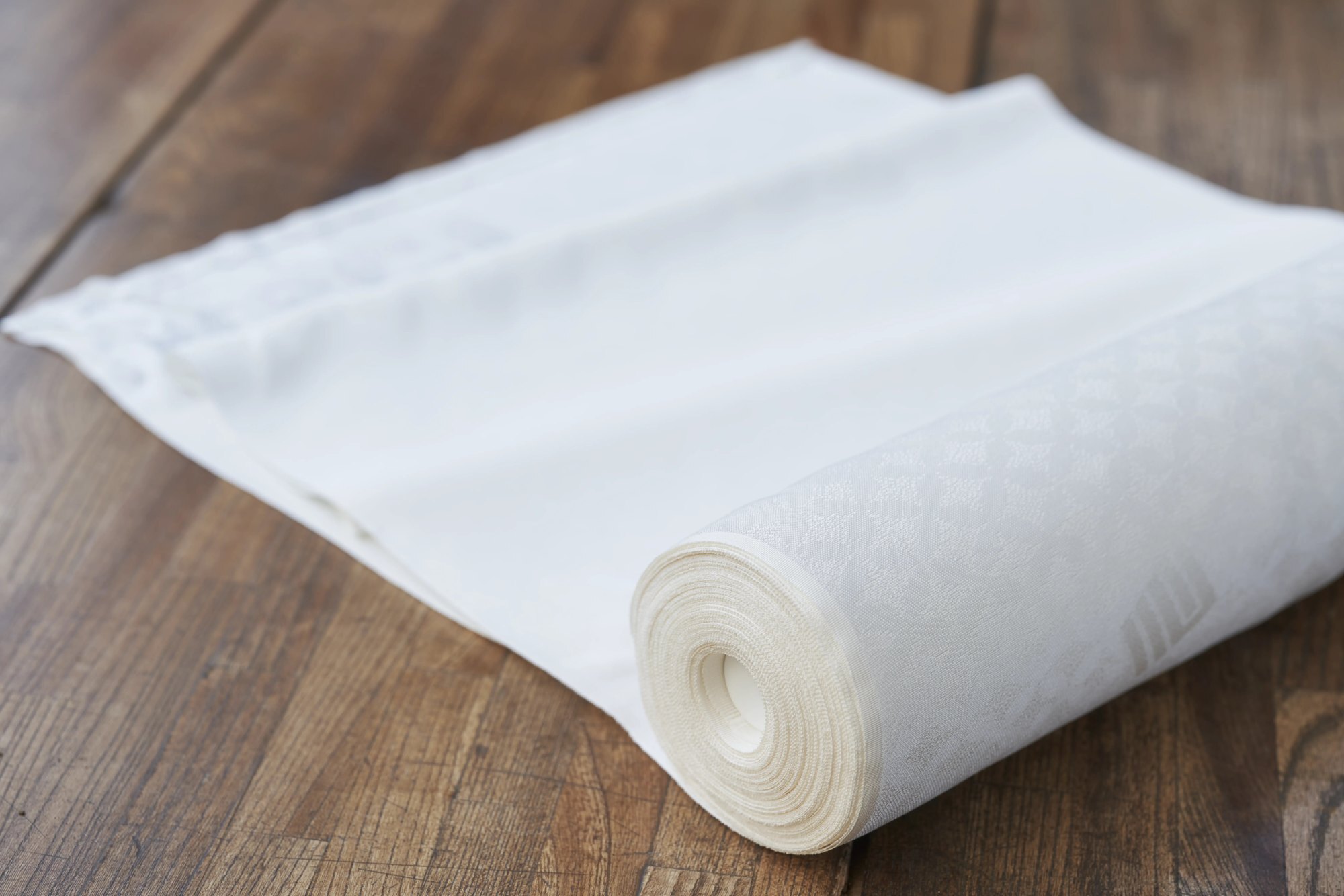
It is not cut to your body. A kimono is assembled from a tanmono, a bolt of cloth; Julie Valk's 2018 Oxford doctoral thesis on the kimono trade, Survival or Success? The Kimono Retail Industry in Contemporary Japan, describes the bolt as "usually between 37 and 40cm wide" and "between 11 and 13 metres long," cut into eight pieces. In the ordinary way of buying one, she writes, the client buys the bolt and "Then the client must pay for it to be sewn to order." A rental garment skips that step and is sewn to sizes meant for a range of wearers.
It may not be silk. Polyester can be washed, which suits a garment worn by a different visitor from one day to the next, and one shop's published plans state that it has "not only polyester Kimonos but also traditional authentic silk Kimonos." Valk, who learned to wear kimono for her fieldwork, found her early polyester ones "cold in winter and hot in summer," and records the Japanese phrase for how polyester sits on the body, karada ni najimanai, which she renders as "it does not fit with the body" in English.
And it is borrowed for the day. That is the point of it. A rental is not a fake kimono. It is a different use of the same form.
Printed or Dyed: How to Tell a Rental Kimono From Brush-Dyed Silk
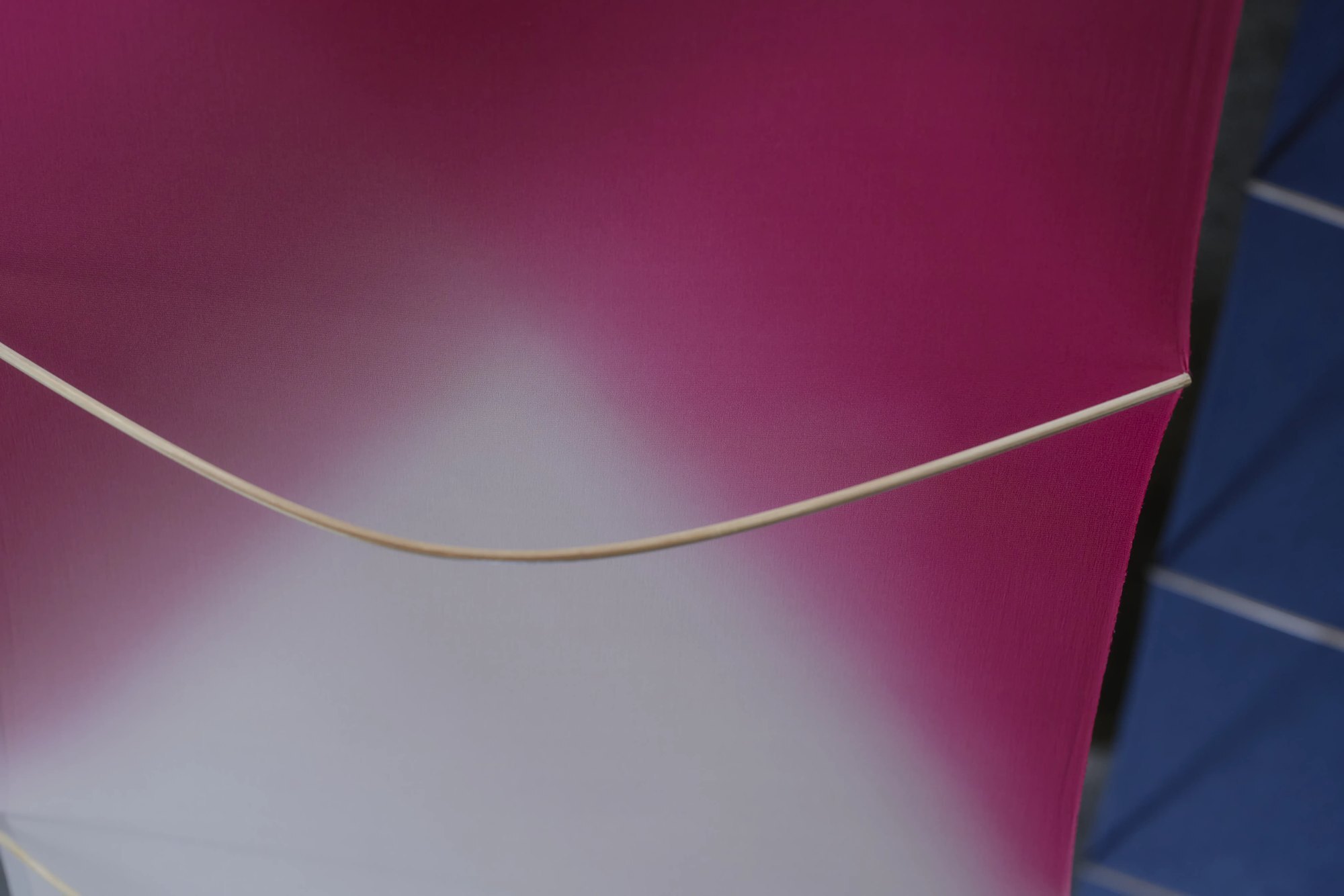
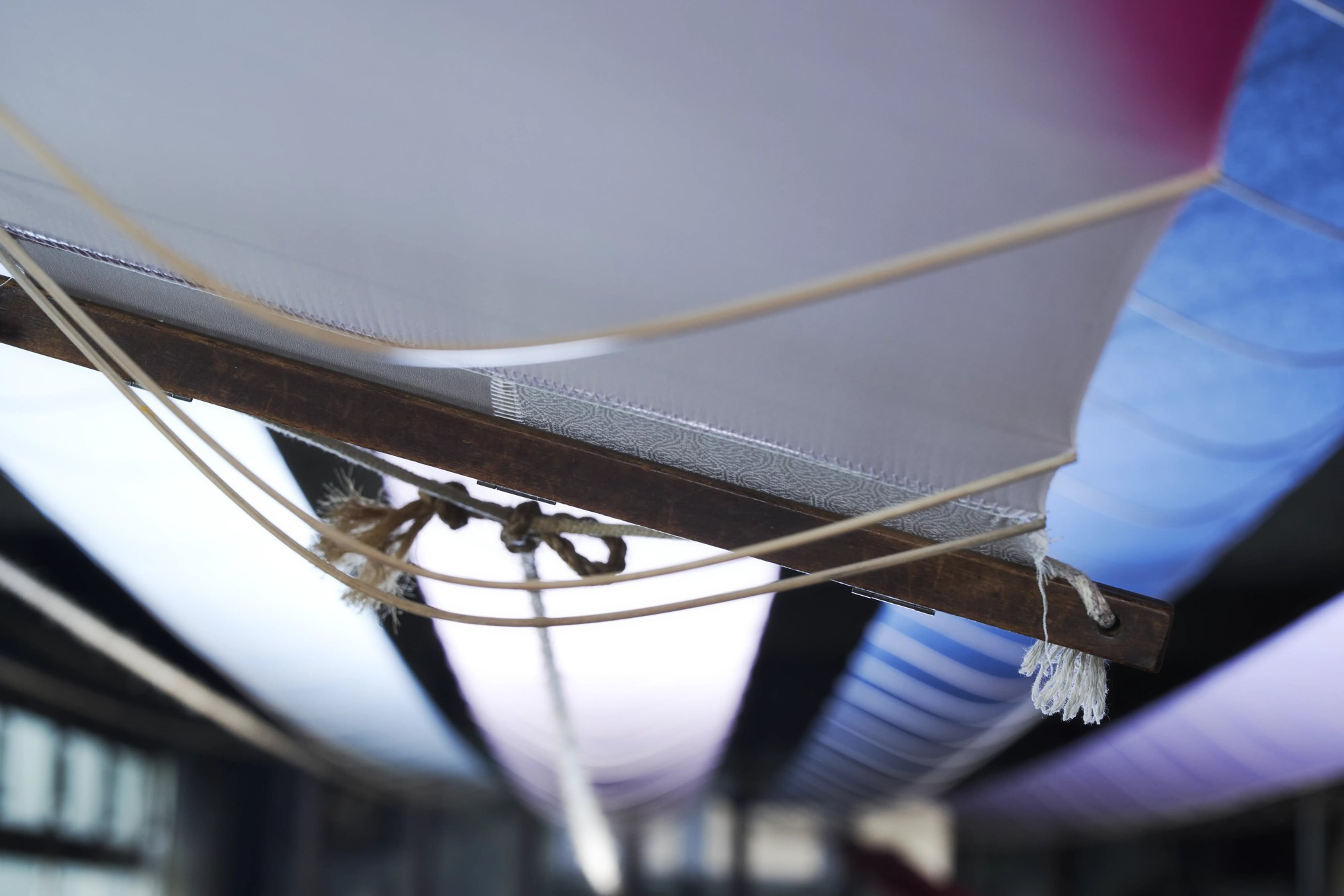
One place to look is the back of the cloth. Fujiya brush-dyes kimono silk by the technique called hikizome, and one technique our interview describes as unique to the workshop, double-sided dyeing, ryōmen-zome, makes the difference from printing easy to picture. It means dyeing the front and back of the fabric in two different colours, with the dye soaking into the cloth rather than resting on it.
Nakamura explained it by the thickness of the cloth: "Say this is the thickness of the white fabric — it's not like printing, where one color sits on top, another sits on the bottom, and white remains in the middle. The color from the top side actually penetrates into the fabric and emerges slightly on the other side." He controls how far the dye travels, he said, "by how much dye I load onto the brush, and also by the amount of funori," a seaweed paste whose viscosity sets the speed at which the dye moves.
Nakamura draws that line between printing and double-sided dyeing. Our own reading, for a traveller, is that it gives you something to look at: on an unlined kimono, turn back a hem or a sleeve opening and ask whether the colour sits on the surface or has gone into the cloth. It is a clue rather than a proof, since techniques vary, and in Nakamura's own description a print can carry colour on the bottom side too. Printed and brush-dyed cloth are both fine for a day's walk; they are different ways of putting colour on cloth.
Kimono Experience in Tokyo and Kyoto: Three Different Days
A "kimono experience" in Tokyo or Kyoto can mean at least three different days, and they answer different wishes.
The first is the rental walk described above: dressed in the morning, out among temples and shopping streets, returned by evening. What you take home is photographs.
The second is a package that pairs kimono with something else: dressing combined with a photo shoot or a rickshaw ride, both offered alongside rental in published plans. What it adds is time spent sitting and moving in the garment.
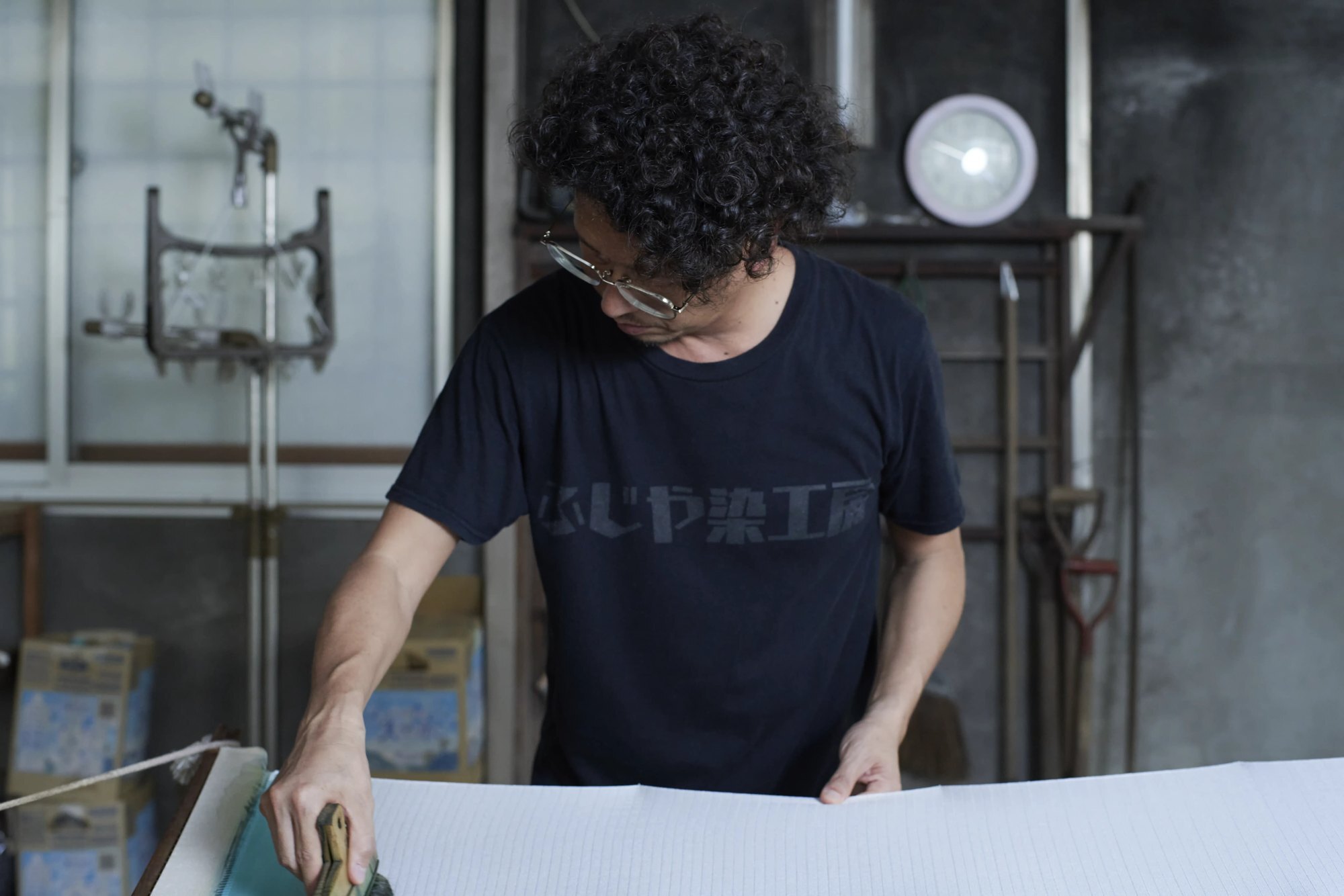
The third is a day spent where kimono cloth is made, rather than worn. At Fujiya Dyeing Studio in Shinjuku, the workshop runs a hands-on session in which visitors, after Nakamura explains the workshop's history, build a colour from scratch beside a craftsman, practise, and dye a scarf of their own; our page on a session in which visitors brush-dye a scarf describes how it runs. Nakamura told us what he notices in participants: at the first stroke on white fabric, he can feel how tense they are. What you take home from a day like this is an understanding of the cloth.
None of the three is the better day. The question is what you want to keep: the image, the movement or the material.
Custom Kimono vs Atsurae: What Made-to-Order Means in Japan
Atsurae, the Japanese word for a made-to-order commission, is often translated as "custom-made." In a kimono it covers more than a choice of pattern or size: the whole sequence from choosing the cloth to having it sewn for one person. The same word is used across Japanese crafts, and the silversmiths of one Tokyo workshop explain the idea in our piece on what atsurae means to a Tokyo silversmith. Here the question is narrower: what, in a kimono, counts as atsurae.
Atsurae Starts From a Tan: The Bolt Chosen Before the Garment Exists
A made-to-order kimono starts from a tan, the bolt long enough for one garment. Two ways in appear in the sources we used. A customer, who may well be a trade client, can bring a bolt to the dyer and settle its colour there, as happens at Fujiya's front entrance, or buy a finished bolt from a shop, as Valk describes. Either way, the bolt is chosen before the garment exists, and it is chosen for one wearer.
Valk describes how such bolts are sold: "usually marketed to customers in terms of the cloth’s quality, the regional particularities of the techniques used to make them and the occasion for which the kimono can be used." She also notes that "The kimono industry does not fix prices, and thus pricing is largely at the shop's discretion." On time, she reproduces one shop's price list for mourning kimono, cloth already dyed black, with tailoring included: "Orders will be completed one month after measurements are taken." That is one shop and one kind of kimono, and it covers the sewing alone; a commission that also involves dyeing the cloth goes through a dyer's hands first.
Who Makes a Made-to-Order Kimono: Shop, Dyer, Artist and Tailor
A made-to-order kimono passes through several specialists, and the customer usually meets only the first. The shop takes the order. Behind it, Valk explains, wholesalers called tonya work with "makers" who place orders with craftspeople, and "In almost all cases, craftspeople have no involvement whatsoever in the process of selling to customers."
Fujiya sits in that chain. Since its founding in 1952, its speciality within hikizome has been jizome, ground-dyeing: laying the base colour for artists of Tokyo Tegaki Yūzen, hand-painted yūzen, who then paint their design onto it. Nakamura described how orders reached the workshop: "The customers were professionals too, so a system existed where they'd tell my mother the dyeing method and color they wanted, and it would reach us that way." In the arrangement Nakamura describes from his years working only inside the workshop, orders came through professionals rather than from the wearer.
The last hands are the tailor's. Sewing Japanese clothing, wasai, is one of the trades in Japan's national trade skills tests; the Ministry of Health, Labour and Welfare's list of skills test occupations includes it among clothing and textile trades. Valk's 2018 thesis adds a number that changes the picture of who sews today: "It is estimated that about 70% of kimono are now stitched abroad, mainly in China."
Choosing a Pattern Is Not Being Fitted: Where Custom Ends and Atsurae Begins
The line between custom and atsurae runs through the body. Choosing a pattern from a rack, or a size from a chart, is selection. Atsurae begins when someone measures you, in the traditional units of shaku and sun that Valk notes only "the most hardened of kimono aficionados" know, and when a colour is settled for a bolt that is now yours.
It costs time and money, and a short trip may not hold both a fitting and a finished garment. That is the honest case for renting, and it stands. There is also an honest case for the other side: a kimono made to measure can be unstitched, washed and resized for someone else, a practice Valk traces through Japanese households. A traveller can reasonably stand on either side. Rent for this trip, or start a commission that will outlast it.
Inside a Made-to-Order Commission: How a Dyer Handles One Customer's Bolt
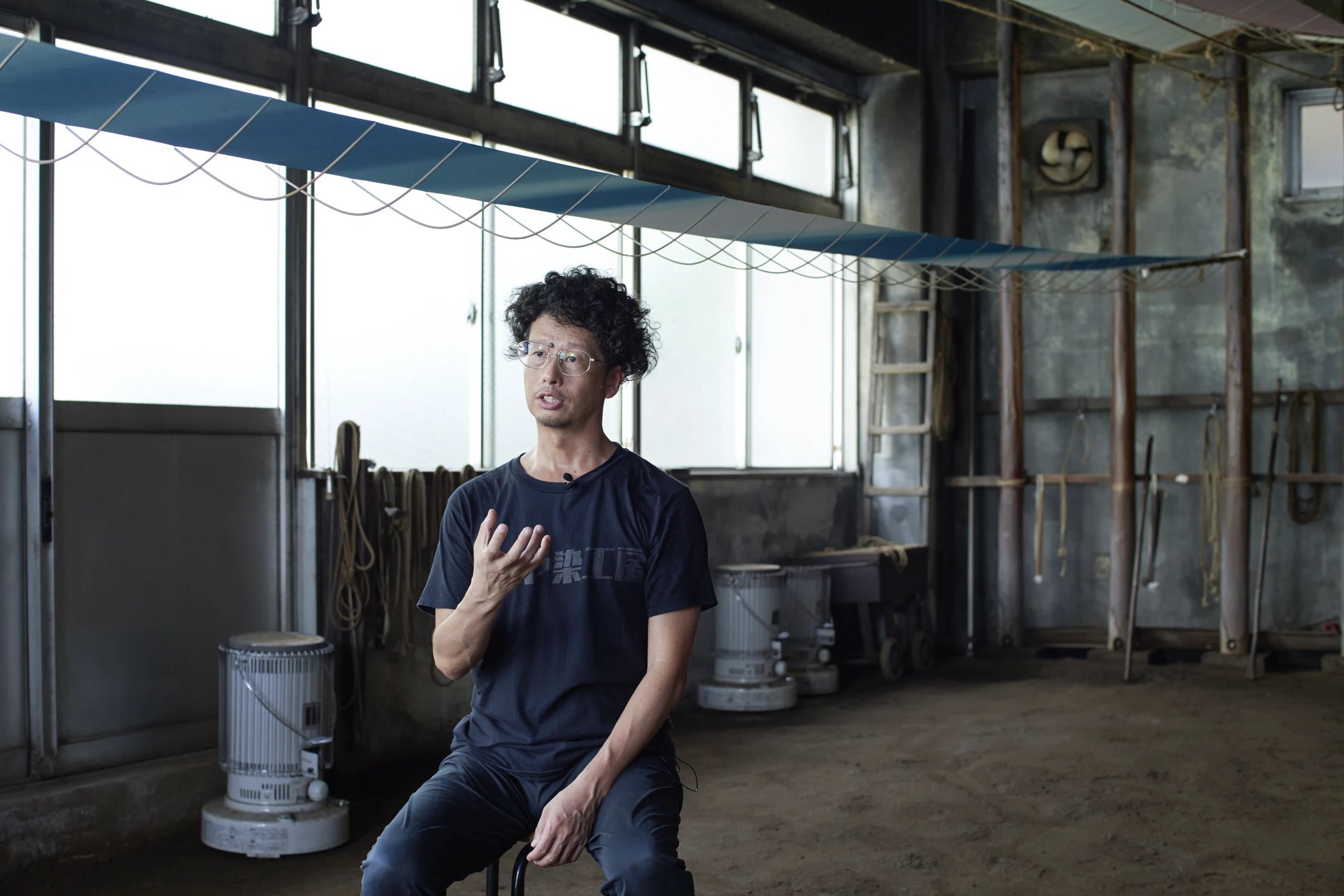
What follows is the part of a commission a customer rarely sees: how one customer's bolt is handled once it reaches a dyeing workshop. The account comes from our interview with Nakamura at Fujiya. The interview does not say whether the customer at the door is a trade client or a private one.
The Consultation: Garment, Colour, and an Honest "Not With This Technique"
At Fujiya, the work of a day begins at the front entrance. Our interview records that the consultation, what kind of garment and what colour, happens there on the spot, and that the bolt is inspected for stains and loose threads before it is carried into the workshop.
What makes a consultation worth trusting is what the dyer is willing to refuse. Nakamura said it took about twenty years before he felt he had come into his own as a craftsman, and he defined that moment not by perfect technique but by honesty with a customer: being able to say "I can't do this yet, but with more practice I will," or "this is a bit outside what hikizome can achieve, so a different option might serve you better."
It is a test a traveller can apply to a commission in any craft. Atsurae does not mean the maker accepts every request. It means the maker tells you which requests the technique can carry.
Testing on the Seam Allowance: Matching Colour on the Customer's Own Cloth
Colour is built by mixing dyes and testing, over and over, until the specified shade is reached. Then comes the step that belongs to atsurae: the colour is tried on the customer's own cloth, on the seam allowance, the margin of cloth that disappears inside a seam. "Once we feel the color looks right, we apply a small amount to the actual customer's fabric — on a kimono, there's a section that ends up folded into the seam — to confirm what the true color looks like on the real material, and if that's good, we move on to dyeing," Nakamura said.
Because there is no room for failure on a customer's cloth, our interview records, he practises repeatedly on cotton before touching the real material. In a rental shop, one garment serves many wearers. In a commission, each bolt is treated as its own material, and the test is hidden inside the finished kimono.
Receiving, Dyeing, Handing Back: The Workshop Behind the Order
For most of its history, Fujiya's work has been commission work. Nakamura described it as "receiving a customer's material, dyeing it, and handing it back," rather than selling the workshop's own products. As demand for kimono fell, our interview records, that work narrowed to one bolt, one colour, for a customer already identified.
That is the centre of the work, not all of it. About four years ago, Nakamura began making the workshop's own products and services as well, and he has been experimenting with fabrics beyond silk. The cloth on Fujiya's floor today can be a customer's or the workshop's own.
In the second episode of our film series, Nakamura tells how he came back to the workshop from civil engineering.
How the Kimono Became Something You Rent: From Made-for-You to Ready-to-Wear
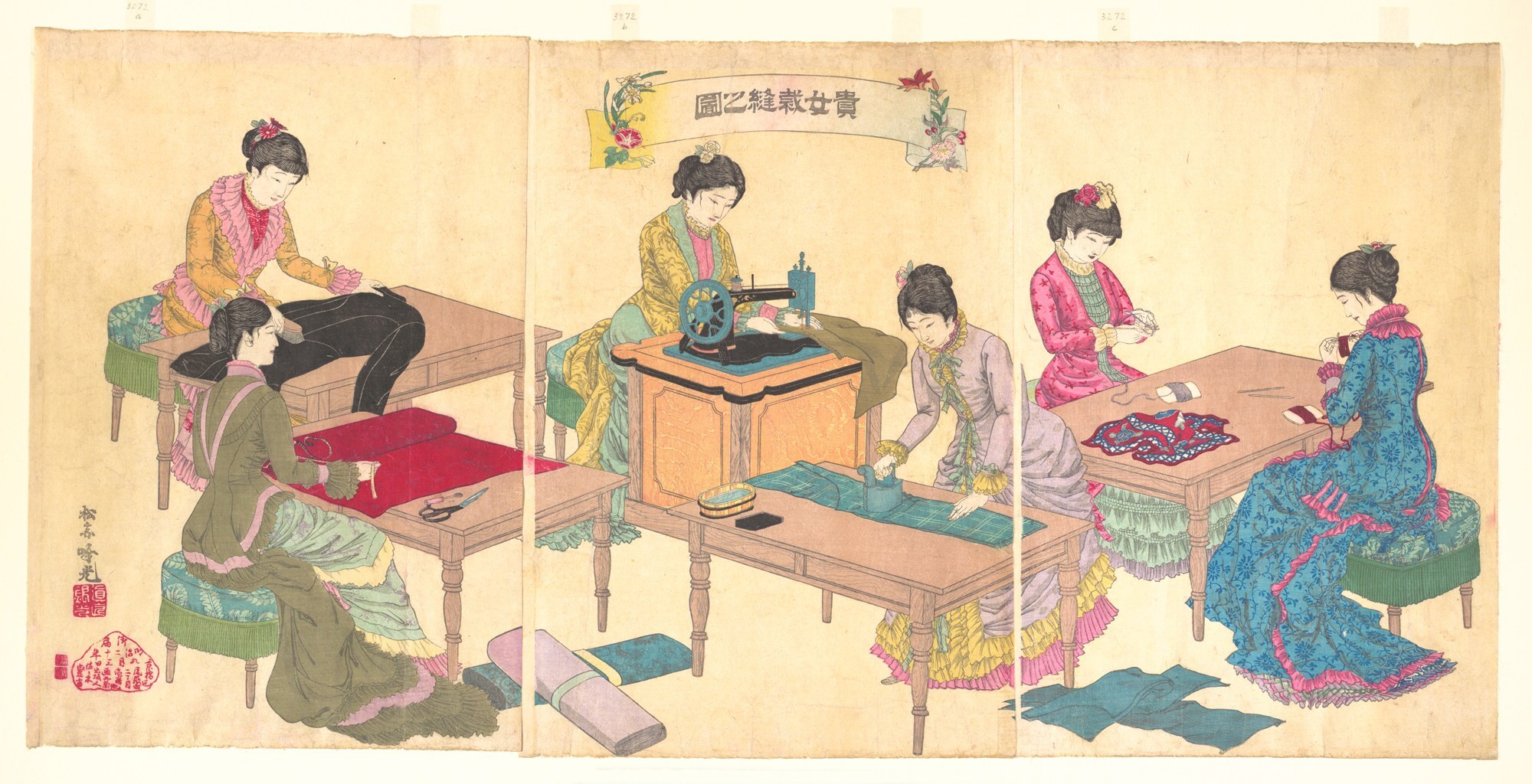
Made-to-order is the older way to wear a kimono; rental is the newer one. Between them sit three changes: who sewed the kimono, what it was made of, and what it was worn for.
When Every Kimono Was Made for Someone: The Bolt, the Household and the Tailor
In the early 20th century, a kimono was made for someone and then remade for someone else. Valk, drawing on the 2006 collection Shōwa no Kimono edited by Kazuko Koizumi, writes that because a kimono taken apart returns to bolt state, it "can be re-stitched multiple times," which "allowed for multiple generations to wear the same kimono"; that, she writes, was the norm for families in the early 20th century. Unstitching was needed for washing and for resizing for another family member, and the knowledge, she writes, "was passed down from mother to daughter." Koizumi, born in 1933, remembered her mother: "my mother took care of all things related to the kimono: from sewing to cleaning and care, right up to re-using the fabric for other things. She did it all herself."
What has been lost is twofold: the assumption that the kimono you wore was sewn to your measurements and would be resewn to them, and the household knowledge, passed from mother to daughter, that made it possible. Home sewing is not the same thing as a commission placed with a shop, but both rest on the same idea, that a kimono is fitted to one person at a time.
Polyester, Ready-Made Sizes and the Rise of Kimono Rental
The shift away came in stages. Koizumi, as Valk reports, places the real move from Japanese to Western clothes in the Showa period (1926–1989), with the last stage in the 1970s. After the war, Valk writes, sewing Western clothes on a machine was quicker than sewing a kimono by hand, and "Synthetic materials and wool were much more affordable than silk." Then came a surge: "When Japan became wealthier in the 1960s and 70s, a ‘kimono boom’ took place." In the postwar years, our interview records, Fujiya dyed thirty or forty bolts in one colour at a time, when, as Nakamura put it, "a bit of unevenness was no problem at all"; as the number of bolts fell, the finish expected of each one rose.
Ready-to-wear never took over the kimono the way it took over Western dress. Valk's footnote is blunt: "Bespoke is standard practice in the kimono industry. There is still relatively little prêt-à-porter aside from the rental industry." Rental, in other words, is where the ready-made kimono lives. She also connects it to travel, citing a 2015 METI survey in which women in their twenties showed the highest rate of kimono use for sightseeing and travelling, "a fact reflected in Japan's booming kimono rental industry in major tourist cities such as Kyoto," which serves domestic as well as foreign customers.
Whether rental is a symptom of the kimono's retreat or a way back into it is an open question, and one ministry has set out its view. The Ministry of Economy, Trade and Industry's March 2025 paper on the kimono trade, Towards Promoting Japanese Dress, reports that the rental market has shrunk in size but held at around 20 percent of the whole kimono market. It presents rental and subscription as a way for newcomers, for whom buying a kimono is a high hurdle, to discover what kimono offer. It then asks whether a path can be drawn from inexpensive rental to buying higher-priced kimono. You can read that as a sales funnel or as an apprenticeship in looking. Both readings are available.
Where Made-to-Order Kimono Is Seen in Tokyo: Shop Floor, Cord Shop, Workroom
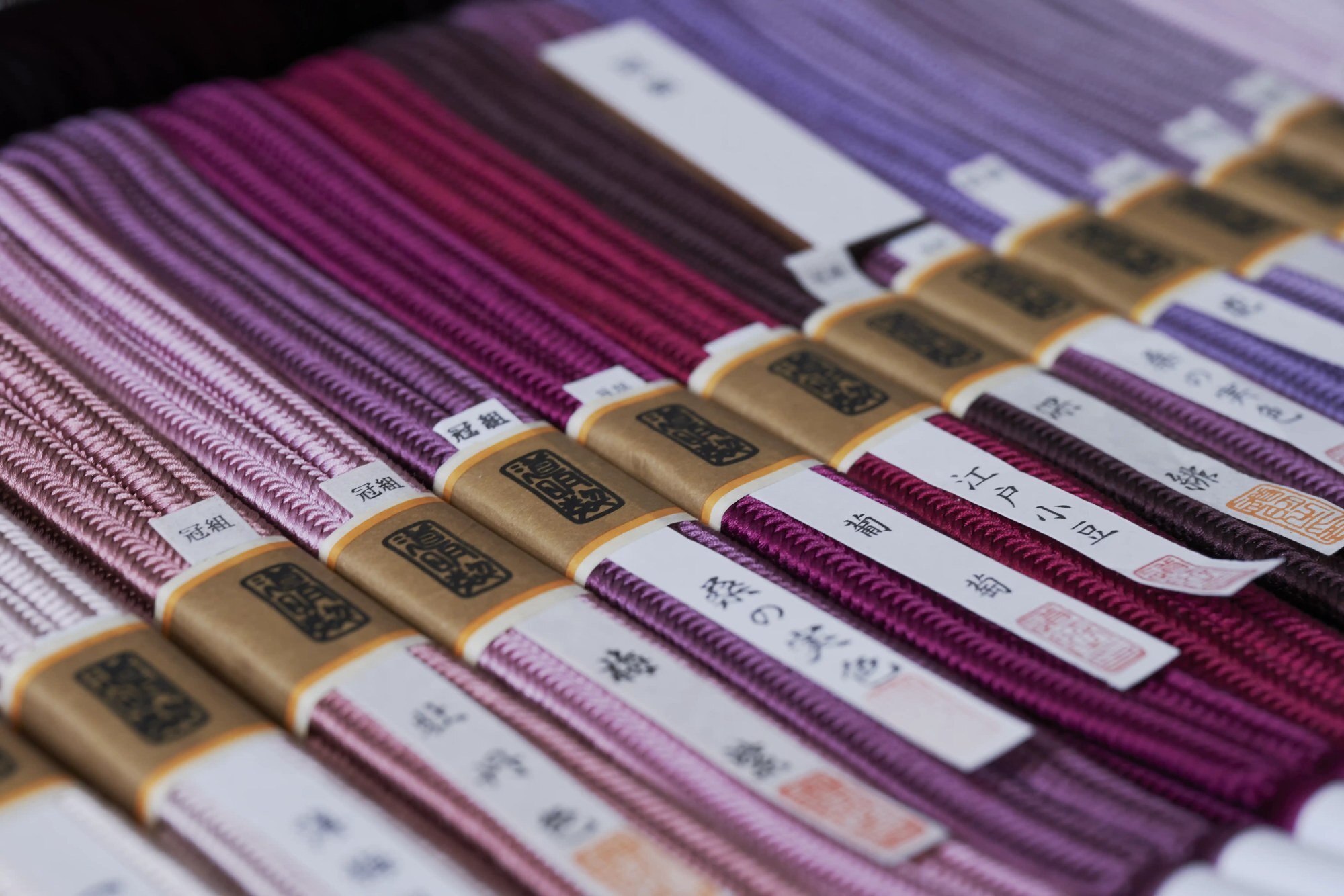
A made-to-order kimono can be seen at three levels in Tokyo, and each is harder to reach than the last.
Anyone can see the first: the shop floor, where bolts are displayed before they become garments. Valk is frank that kimono shops, "whether in department stores or as standalone shops," can feel daunting, with "an aura of cool opulence and a slightly forbidding atmosphere," and that some department stores have made theirs easier to browse. Looking at bolts is how a commission begins, and it is open to anyone who walks in.
The second is visible if you know where to look: the specialists who finish a kimono outfit. The obijime, the braided cord tied over the obi, is a craft of its own. At Domyo, a braiding house in Ueno, Kiichiro Domyo described the house's Miidera series, which draws on a scroll handed down at Miidera temple in Shiga: "While taking in traditional, historical cord designs, we replace the colors in various ways to make them easier to use as obi-jime." For a traveller, it is a reminder that choosing a kimono outfit continues past the cloth to the cord; our article on kumihimo, the silk braiding behind the obijime, traces that craft.
The third level is not visible from the street at all: the workroom where a customer's bolt is stretched and dyed. At Fujiya, the cloth stretched on the floor is a customer's, or, for the past few years, sometimes the workshop's own. This is one of the places where atsurae is carried out. The dyeing itself takes place behind the workshop door; visitors see the room through the workshop's own sessions, not from the street.
What Is Changing Now: Dyeing Workshops Stepping Out From Behind the Order
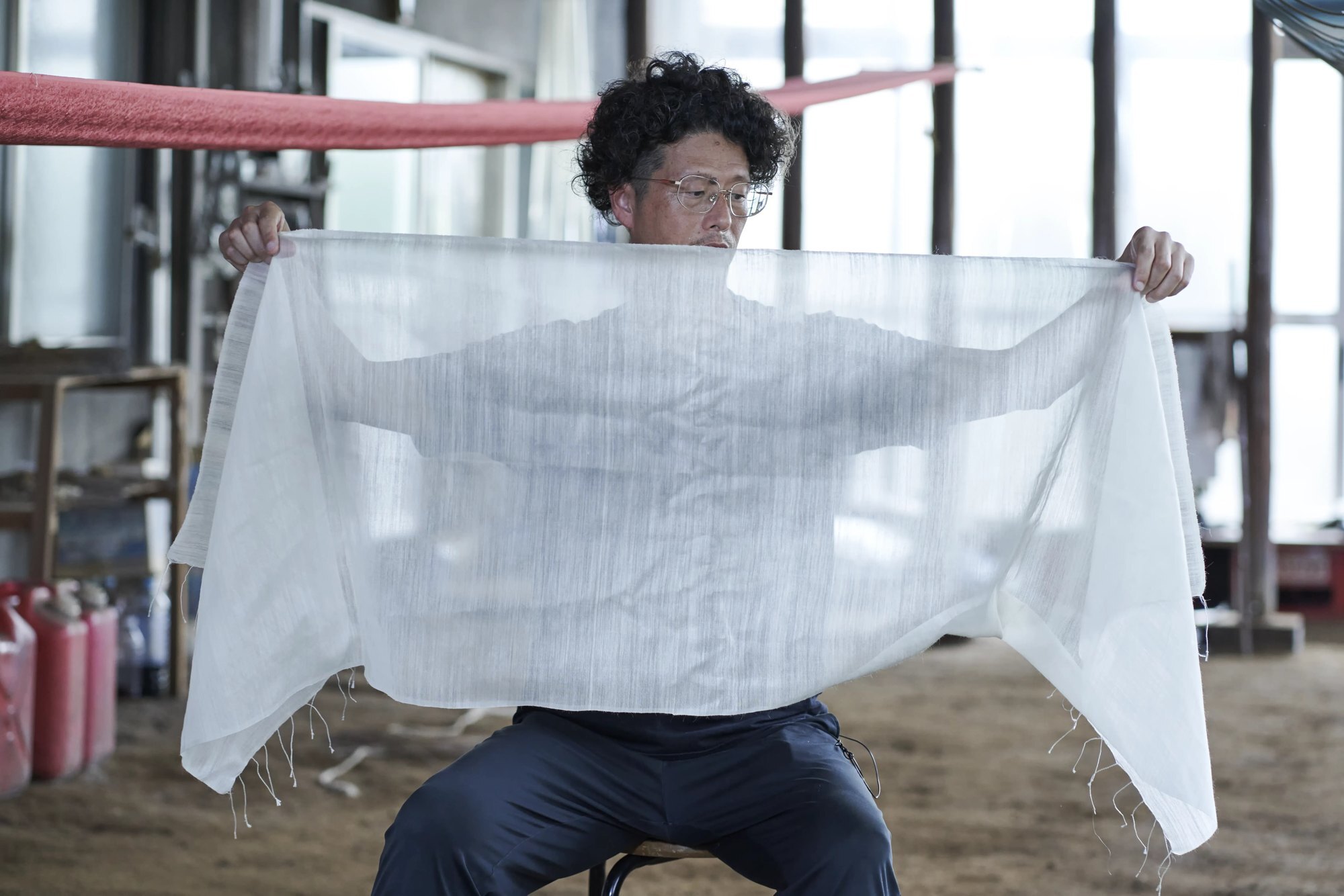
Since 1952, Fujiya has worked behind the order: the commission came through the trade, and the dyer's name did not appear on the finished kimono. The change now under way is that the dyer is stepping forward, and one sign of it is in the materials.
"Over the past four years or so I've started experimenting with cotton, linen, cashmere, wool, and so on," Nakamura said. When he tried cotton with dyes recommended by a materials supplier, "the colors bled and separated — nothing worked. It's incredibly difficult." A workshop that for decades worked only on customers' cloth is now learning fabrics outside its long practice.
He is clear about what the workshop is for. "This space isn't maintained just to preserve the old ways as the old ways — it's maintained, even now, in order to make something that people of today will find good," Nakamura said. In our reading, that includes the visitor who rented a kimono in Asakusa this morning. The history of the made-to-order kimono, from the household needle to the trade chain, ends for now in a Shinjuku workshop that is opening its doors to the people who used to see only the finished garment.