.webp)
Search for a Japan food tour and every result is selling one. The first page is tour operators, TripAdvisor listings and booking platforms, and the AI summary above them cites twenty more. What almost nobody on that page will tell you is that for a good number of visitors, the honest answer is not to book one.
You can see people working this out for themselves in the results. Two of the highest-placed pages are forum threads—one asking whether food tours in Tokyo or Osaka are worth it "or would it be better to find spots on my own," another asking simply where to do one—and a guide to doing it self-guided sits on the same page. The question being asked is not which tour. It is whether.
This guide answers that first, then covers what separates an eight-thousand-yen street-food walk from a luxury food tour of Japan, and how to book either without wasting the good evenings.
What a Japan Food Tour Actually Buys You
Strip away the marketing and a guided food tour provides four things. Every one of them is real, and none of them is the food.
Access to places that will not seat you. This is the big one and the least understood. A meaningful number of Japan's best small restaurants do not take reservations from people they do not know, do not have an English booking channel, and in some cases require an introduction from an existing customer. This is not xenophobia; it is a small counter with eight seats and an owner who cannot risk a no-show or a table that cannot follow the meal. A guide with a standing relationship at those places is selling you the relationship.
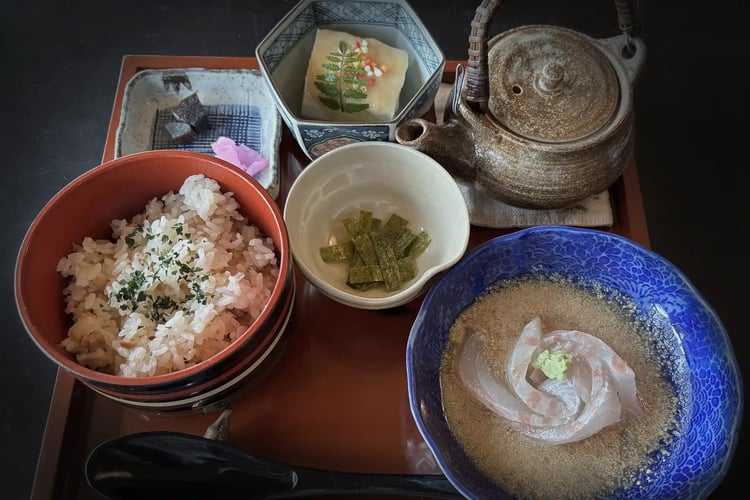
Language at the moment it matters. Not menu translation—your phone does that. What a guide provides is the exchange with the chef: what is good today, what came in this morning, what the thing in front of you is and why it is served in that order. Any counter meal in Japan is a conversation, and eating one without the conversation is eating half of it.
Sequence. A well-built tour is a designed meal spread across several rooms—something light, something raw, something grilled, something sweet, in an order and quantity that works. Left alone, most visitors eat three heavy things in a row and stop.
Editing. Japan has an overwhelming number of good options and no obvious way to sort them from outside. A guide has already thrown away the ninety percent that would be fine, which is the service you are actually paying for.
When You Do Not Need Food Tours in Japan
Here is what the operators will not say. For several of the most popular food experiences in Japan, a guide adds cost and takes away freedom.
Street food and market eating. Standing in a covered market pointing at things is not a skill that requires instruction. Osaka's Kuromon Ichiba and Kyoto's four-hundred-year-old Nishiki are designed to be walked into; the stalls want your business, the prices are posted, and pointing works. A tour of one of these is a tour of a place that needs no tour. Our guide to Kuromon Ichiba Market covers what to eat there and in what order, which is all the guidance the place requires.
Department store food halls. The basement floors of Japanese department stores are among the most extraordinary food spaces in the world, and they are free to enter, open to everyone, and entirely self-explanatory. Nobody needs a guide to walk down a staircase.
Ramen, izakaya, conveyor sushi, and anything with a ticket machine. These are built for people who arrive alone and speak nothing. The ticket machine is the interface. Paying a guide to stand next to you while you use it is paying for company.
Your first two days. This one is counterintuitive and matters more than the rest. A food tour on day one gives you a set of recommendations before you know what you like in this country. The same tour on day four, after you have discovered you love the grilled things and cannot manage the raw ones, is a substantially better tour.
The rule underneath all of this is about price rather than about yes or no: pay access prices only for doors you cannot open. For doors that are already open, a guide can still be worth having—for the language, or for the editing—but you are buying a smaller and cheaper thing, and you should pay accordingly.
A Street-Food Walk and a Luxury Food Tour Are Not the Same Product
The phrase "food tour" covers two businesses that share almost nothing, and the price difference is a symptom rather than the point.
At the accessible end, a group walk of eight to twelve people visits three or four venues over three hours for something in the region of ¥8,000 to ¥12,000 a head. The guide is knowledgeable and probably charming, the venues are chosen because they can absorb a group of twelve without notice, and you will eat well. What you will not do is eat anywhere that could not accommodate twelve strangers at short notice, which excludes most of what makes Japanese dining remarkable.
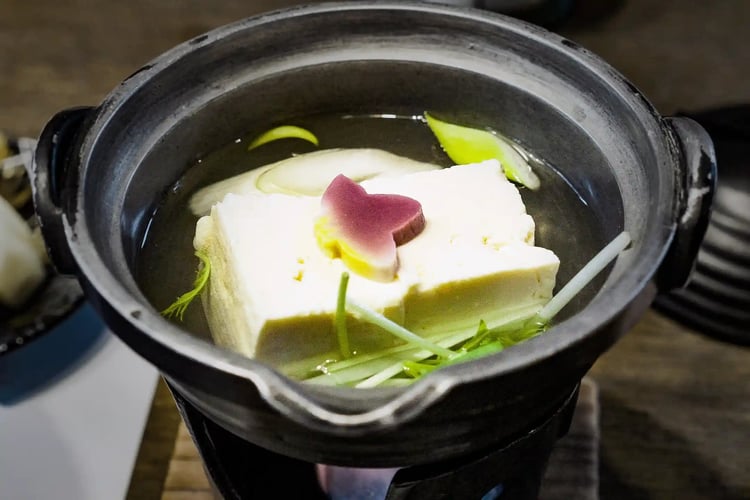
At the other end, a private food tour is built around counters with eight seats, and the whole structure inverts. The itinerary is made after the operator knows who you are. The guide has eaten at these places for years and is known there. The party is two or four. And the cost reflects the fact that a chef is holding half his room for you.
The useful test applies to anything marketed as private: could this itinerary seat a group of twelve? If it could, the operator is not selling you access, whatever the page says and whatever it costs. If it obviously could not, access is exactly what you are buying.
A related question worth asking any operator directly: do you have a relationship with these restaurants, or do you book them like anyone else? The answer, and how comfortably it comes, tells you which business you are dealing with. For what to confirm before you commit to a counter—deposits, cancellation terms, what is expected of you at the seat—our guide to omakase sushi in Japan covers the mechanics.
Which City Rewards a Gourmet Tour of Japan Most: Kaiseki, Volume and Season
Guide value is not evenly distributed across the country, and knowing where it concentrates saves money.
Kyoto is where the introduction culture still has a name. Ichigen-san okotowari—"we do not take first-time guests"—is a real and still-practised custom, applied most strictly by the ochaya of the geisha districts and by a number of ryotei, where a new customer needs to be brought by an existing one. It is a narrower thing than the internet suggests: the number of places holding to it has been falling, and much of what visitors think of as inaccessible Kyoto kaiseki takes bookings like anywhere else. But where it applies, it applies absolutely, and no amount of money presented at the door substitutes for the introduction.
Kyoto's own tourism authority frames the city's food culture around seasonality and the lineage of the tea ceremony rather than around venues, which tells you what the introduction is actually protecting: a room that is composed for the people in it.
Tokyo is difficult in a different way, and the distinction is worth getting right because most advice gets it backwards. A great deal of Tokyo is open—online reservations, walk-in counters, whole floors of restaurants inside department stores and station buildings—so the ordinary problem there is choosing rather than getting in.
But Tokyo also holds the clearest example in Japan of a door that does not open. Sukiyabashi Jiro held three Michelin stars every year from 2007, and was removed from the guide in November 2019—not for any fall in quality, but because it no longer takes reservations from the general public. Michelin's own explanation was that the restaurant "does not accept reservations from the general public, which makes it out of our scope." The route in, for those who have one, is a luxury hotel concierge.
That is the whole argument of this article in one restaurant. In Tokyo you may be buying editing, or you may be buying the concierge relationship, and the two cost very different amounts. Work out which before you pay.
Regional cities such as Kanazawa sit in between, and the value shifts again—to language and season. Stand in Kanazawa's Omicho market in December and the thing you should be eating is kobako-gani, the small female snow crab whose season runs only a few weeks; in another month it is nodoguro, blackthroat seaperch, which is what the city is known for. A guide in a regional city is worth having because what changed changed this month, and nobody in the room can tell you so in English.
Washoku Is a Way of Eating a Year, Not a List of Dishes
One piece of context underneath all three. UNESCO inscribed washoku on its Intangible Cultural Heritage list in 2013, and the inscription is not about restaurants at all—it describes a set of social practices around seasonal ingredients and the celebration of the New Year. That is a useful corrective to the way food tourism is sold here. The thing being protected is a way of eating through a year, not a list of dishes, which is also why "what is in season" is the most productive question you can ask any guide.
Booking a Japanese Food Tour: Timing, Group Size and What to Say in Advance
Three practical matters decide whether the booking works.
Timing within the trip. As above: not the first two days. The exception is a tour explicitly framed as an orientation, which is a legitimate product and should be priced and read as one.
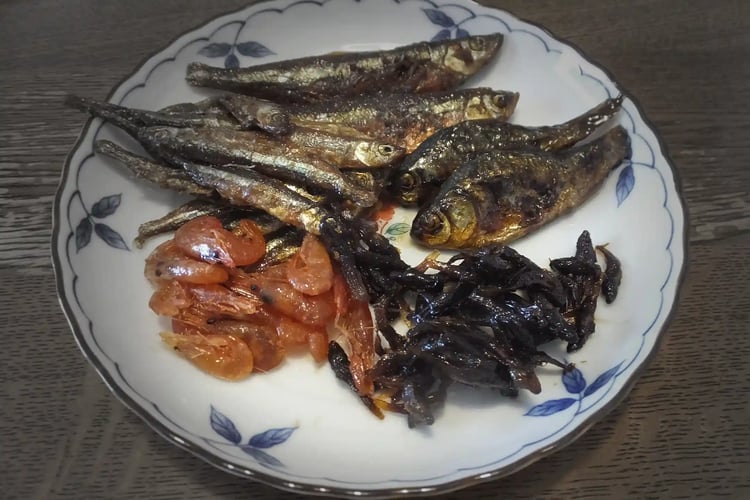
Within the year. Japanese food is genuinely seasonal in a way that changes what a tour is worth, and the good operators will tell you what is in season if you ask before you book. Two structural points: avoid Golden Week in late April and early May, the Obon period in mid-August, and the New Year week if you can, because prices rise and availability tightens across all three; and if you cannot avoid them, book considerably further ahead than you otherwise would.
Dietary requirements, stated early and precisely. This is where visitors most often come unstuck, and the reason is structural rather than cultural indifference. Dashi—the stock underneath an enormous proportion of Japanese cooking—is commonly made with katsuobushi, dried bonito. That makes a great deal of apparently vegetable food non-vegetarian, including many dishes that look like the safe option. Japan's national tourism organization has been pushing dietary-diversity awareness into the hospitality sector for years, and the good operators will design around this if told in advance. None of them can if told on the night. Say it at booking, in writing, and be specific about what it means rather than naming a category.
Group size, asked plainly. Ask the maximum, not the typical. Operators quote the typical.
For where the regional differences actually lie—why Kyoto and Osaka and Kanazawa are eating different food rather than the same food in different rooms—see our guide to Japanese food culture by region, and for the city that rewards a guide most, our Kyoto food tour guide.