Edo Kiriko and Satsuma Kiriko are both Japanese cut glass. Ask where each one came from, and the histories stop matching.
One was cut in Tokyo from 1834 on, and Tokyo's own craft record says it kept its popularity through the years the other was suspended. The other stopped altogether in the early Meiji years and stayed stopped for a century or more; the Government of Japan puts the gap at some 110 years. It exists today because a restoration project that began in Kagoshima in 1985 rebuilt it from a few surviving materials and old photographs.
In US search results, much of what comes up first for "edo kiriko" is selling glass. The history that separates the two crafts is the part a product page has little reason to tell. What follows is that history, then a practical question: what the name on a shelf card actually promises, and where in Tokyo it can be seen.
Want to train your eye on more than glass? The Connoisseur's Guide to Japanese Art and Museum Experiences is a free guide to judging quality across Japanese craft.
Edo Kiriko: What the Cutting Actually Is
Start with the name. The site KOGEI JAPAN explains that kiriko means "cut glass," so Edo Kiriko means "cut glass from the city of Edo". Edo was Tokyo's name during the Edo period (1603 to 1868).
The name is also a registered trademark. The Edo Kiriko Cooperative Association states on its own site that the name belongs to the cooperative and may not be put on products other than those made by its members. It defines Edo Kiriko as cut glass that meets four conditions: it is glass, it is made by hand, it is cut mainly with rotating tools, and it is made in a designated area centered on Koto Ward, across the wider Kanto region. A shelf card that says Edo Kiriko is therefore invoking a name with a published definition.
The craft is dated to 1834, when Kagaya Kyūbei, a glassware dealer in Edo's Ōdenmachō, is said to have been the first in Japan to carve a pattern into glass with kongōsha, an abrasive sand, according to the Association. He is said to have learned the trade in Osaka, and his shop made items such as eyeglasses, thermometers and hydrometers, the Tokyo Metropolitan Government's page adds. The first patterns were cut into transparent, colorless glass, and colored glass came into large-scale production during the Meiji period, KOGEI JAPAN notes. The technique took its modern form in 1881, when the British cut-glass instructor Emmanuel Hauptmann was invited to Japan and more than ten Japanese were taught by him, the Association records. KOGEI JAPAN says the government made the invitation and that British cut-glass technology merged with Edo Kiriko techniques.
One of the questions Google lists for the term in US results is "Why are Edo Kiriko glasses so expensive?" None of the official sources cited here gives a price breakdown. What they document is how a piece is made. The Association's guide lists six stages, from marking guide lines through rough cutting on a diamond wheel and finer cuts to whetstone smoothing, polishing and a final buff with cerium oxide. Tokyo's craft page describes the same broad sequence with different tools, among them emery powder on a metal grinding wheel and natural whetstones from Kyushu. KOGEI JAPAN adds one detail about the first cuts: they are made with "no detailed sketches," so the balance between the thickness and depth of the lines "relies upon the artisan's years of experience."
Nanako and Other Edo Kiriko Patterns That Have Names
The Association's guide shows fourteen typical patterns, each with a name, and the Tokyo Metropolitan Government counts some 20 traditional patterns in all.
KOGEI JAPAN calls nanako the most typical design. The Tokyo page says it looks like a series of fish eggs in reflected light, and KOGEI JAPAN describes numerous fine straight lines that resemble round fish eggs, adding that a closer look shows many small squares arranged side by side. The same source names chrysanthemums and hemp leaves among the other typical designs.
Satsuma Kiriko Stopped, and Edo Kiriko Did Not
Satsuma Kiriko began under the direct patronage of the Satsuma domain, in present-day Kagoshima Prefecture. According to a 2022 feature in Daiwa House's Slowner web magazine, glassmaking started there in 1846, when Shimazu Narioki invited glassmakers from Edo to make items such as medicine bottles. The Tokyo Metropolitan Government's page gives a name for the Edo glassmaker it says the domain invited: Yotsumoto Kamejirō. The craft itself came later. Arima Hitoshi, sales manager of Shimadzu Limited, a maker of Satsuma Kiriko, told the Government of Japan's Highlighting Japan magazine that it was first made in 1851, under the direction of the clan, as an artistic craft for overseas markets. Slowner places that turn under Shimazu Nariakira, who became lord in 1851, and says the domain's workshop developed six colors, including the first red glass successfully made in Japan, with more than 100 craftspeople at its peak.
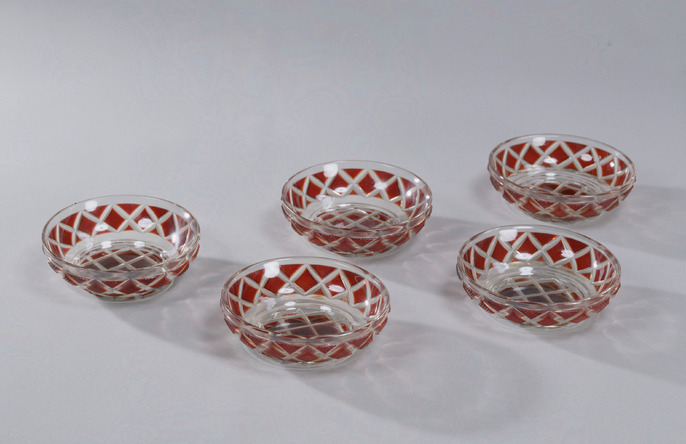
It was expensive, and it was sponsored. "Thickly layering colored glass on clear glass and engraving intricate patterns is expensive and time-consuming. It is not something that can be done easily by an individual," Arima says, calling it a luxury craft product made with support from the clan.
Then the lord died. Nariakira's death in 1858 shrank the business, Slowner reports; the Anglo-Satsuma War destroyed the factory, and production stopped entirely around the time of the Satsuma Rebellion. Highlighting Japan compresses the same sequence: production was scaled down when the lord died, factories vanished in the disturbances at the end of the shogunate, and by the early Meiji period it had ceased. How long the first run lasted depends on the source: about 20 years in Highlighting Japan, about 30 in Slowner, and less than thirty on Shimadzu's own site. The silence that followed is some 110 years in Highlighting Japan and about 100 in Slowner.
Edo Kiriko tells it differently. The Tokyo government page puts the contrast directly: "While Satsuma Kiriko lost the patronage of those in power at that time and the tradition was temporarily suspended, Edo Kiriko maintained its popularity as everyday products having simple beauty for ordinary people and its tradition has been handed down to today's generation." That is a statement about demand rather than patronage. Wikipedia dates a revival of Edo Kiriko after the Second World War, so "unbroken" here means Tokyo's sense: kept going while Satsuma's tradition was suspended.
The two traditions also did not stay apart. KOGEI JAPAN dates the end of Satsuma Kiriko later than the sources above, to the end of the 19th century, and says unemployed craftsmen migrated to Edo with their Satsuma traditions; their technique of using color-coated glass "was soon absorbed" into the production of Edo Kiriko. Wikipedia's entry on Satsuma Kiriko also says the craftsmen and their skills dispersed to Tokyo and Osaka. On this account the break in Kagoshima sent part of the craft to Tokyo.
The revival had a prelude. Highlighting Japan says that in 1982 an expert on the history of glass exhibited a Satsuma Kiriko piece he had reproduced himself at a department store in Kagoshima, which sparked a wish to revive the craft, and that in 1985 Shimadzu Limited took the helm of the project.
Tokyo's craft world has its own cliff. Our article on sword polishing describes the Haitōrei of 28 March 1876, which banned carrying swords in public except in full court dress and for military, police and uniformed officials. It says that this and the postwar occupation nearly ended the craft, and that after 1876 and again after 1945 a polisher's work shifted from preparing blades for combat toward conservation; the polisher Nagaoka Yasumasa calls the edict one of the two great turning points of the modern era. Sword polishing lost its original purpose and carried on by changing what it was for. Satsuma Kiriko lost its sponsor and stopped.
Bokashi: What the Break Left Behind in the Glass Itself
The break left a technique to be found again. Slowner reports that when the restoration began in 1985 almost no one who knew the original methods and almost no records remained, and that recreating the yellow and gold-red colored glass in particular took three to four years. Highlighting Japan says the company worked from the few materials and old photographs that existed to find the colors and cutting angles that express bokashi, and reached the result through repeated trial and error.
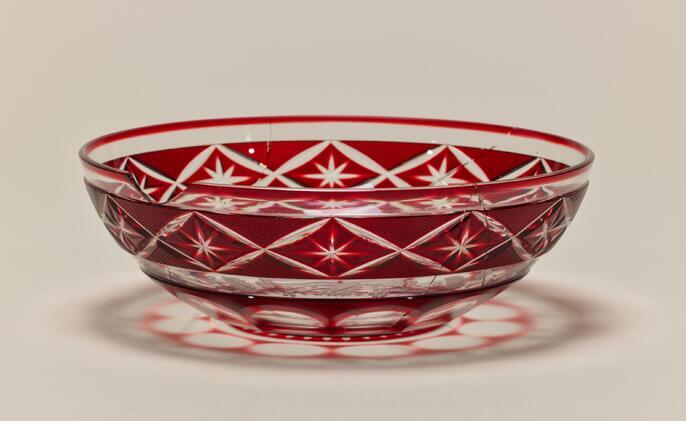
Bokashi, the soft color gradation, is what Highlighting Japan calls the chief charm of Satsuma Kiriko. It is made by cutting patterns into iro-kise glass, thick colored glass laid over clear glass, and because the glass is thick, the shading changes with the depth and angle of each cut. Shimadzu describes the result as a moderate heft in the hand.
The Tokyo Metropolitan Government says Satsuma Kiriko cuts iro-kise glass 2 mm to 3 mm thick, while Edo Kiriko is made by fine carving of colored glass a little under 1 mm thick, which gives sharpness and a clear shine. PREMIUM JAPAN's feature on Satsuma Kiriko puts the color layer of Edo Kiriko at about 1 mm and that of Satsuma Kiriko at up to about 5 mm, so the two sources differ on Satsuma Kiriko's thickness, and it describes the Edo cuts as sharp and light. Wikipedia frames the contrast differently, by tint and pattern, and gives no thicknesses: it calls Edo Kiriko transparent or lightly tinted with bold geometric patterns and Satsuma Kiriko more delicate.
Edo Kiriko's Traditional Craft Designation, and What It Does Not Guarantee
Edo Kiriko carries two government designations. According to the Tokyo Metropolitan Government's craft page (archived October 2025), it was certified as a Tokyo traditional craft on 15 July 1985 and as a national traditional craft on 30 January 2002, and about 80 percent of it is made in Koto and Sumida wards. The Association's site gives the criteria behind both: handwork for the main part of production, traditional techniques, traditionally used raw materials, and, for the national designation, techniques and materials in use for more than 100 years.
A designation and a trademark are different things. The designation describes a craft; the trademark, described above, controls the name. The Association also warns of imitations and counterfeits posing as Edo Kiriko, and of fake and scam websites, and says that products carrying the national traditional-craft seal have passed a strict inspection run by the producers' cooperative against the national criteria.
Those criteria cover how, with what and where a piece is made and, for the seal, an inspection. None of the sources cited here describes a quality grade among pieces that meet them.
Shimadzu's site gives a different kind of marker. It says its Satsuma Kiriko was designated a traditional craft of Kagoshima Prefecture on 31 March 1989, after the restoration that began in 1985. The company says "Shimadzu Satsuma Kiriko" is its registered trademark and that it marks its pieces with the Shimazu family crest and a "SHIMADZU" or "Shimadzu" stamp, depending on the series, in part to distinguish them from goods made and sold elsewhere. Its reproduction series is supervised by the Shōko Shūseikan museum, which holds and displays pieces from the time of Shimazu Nariakira.
By Introduction Only: What a Workshop Visit Would Show
This article does not yet include a firsthand account from inside an Edo Kiriko workshop: Bespoke Discovery has not yet visited or interviewed one for it. What follows comes from our reporting on other Tokyo workshops.
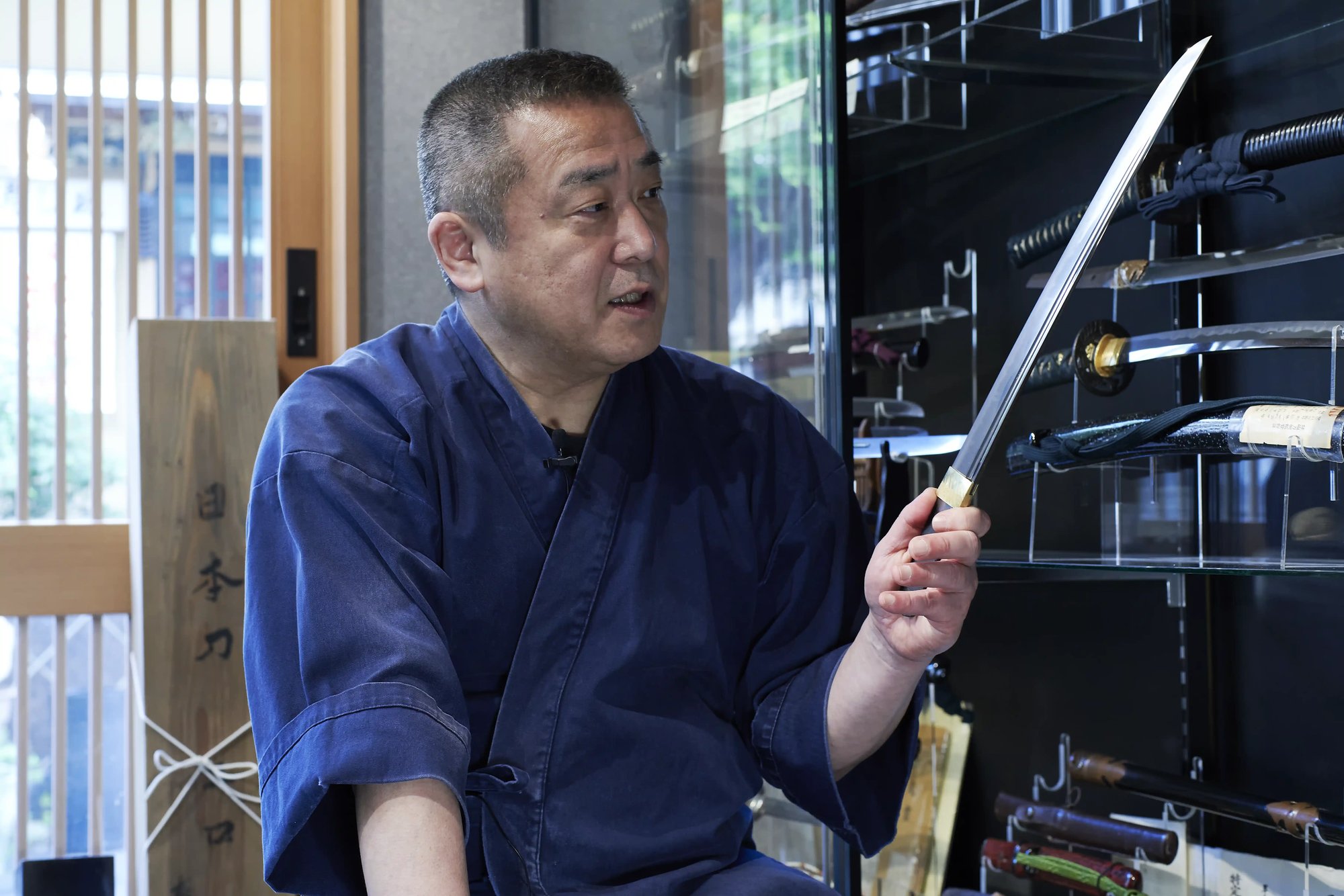
Our sword-polishing article describes a visit to Nagaoka Yasumasa's workshop in Asakusabashi, for the interview published as The Sword Polisher Who Chooses Not to Finish. Visitors are handed a real blade to hold before it is drawn from its scabbard, the sword is taken apart to show that a single bamboo peg, the mekugi, holds it together, and visitors try the polisher's posture. "Most people, after sitting for a minute, will start to ache all over — the lower back, the legs, the shoulders," Nagaoka says.
Our silverware article shows what a deeper level of access can look like. It sets out three levels: an interview and behind-the-scenes feature open to anyone, a hands-on session at a silversmith's workbench, and a bespoke commission. That level sits under a heading that ends "Needs an Introduction," and the article says it "is not a booking page." The sources cited here do not say whether an Edo Kiriko workshop receives visitors this way.
Where Edo Kiriko Can Be Seen Now
The places that are documented are the open ones. The Sumida Edo Kiriko Museum (Sumida Edo Kirikokan), near Kinshicho Station, is a workshop and shop certified by Sumida Ward. A travel-guide listing published with the museum's confirmation says the shop shows the history of Edo Kiriko and the tools used in the craft, that visitors can see the artisans' techniques, and that cutting experiences are offered. The museum's own site is the place for current details. The Association also runs a showroom in Koto Ward, listed by KOGEI JAPAN a short walk from Nishi-Ōjima Station. Published opening hours and closing days differ between listings, so check them with the museum or the Association before a visit.
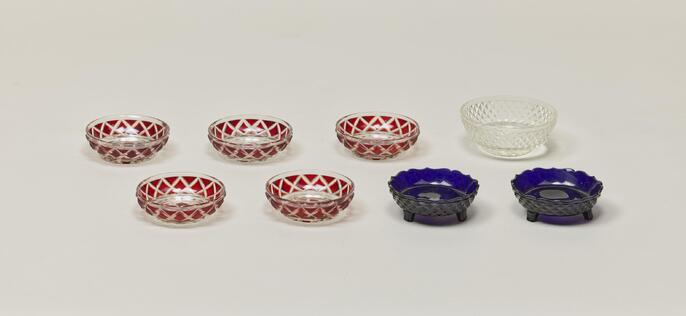
Whether anything deeper exists for Edo Kiriko, such as a visit to watch a named craftsperson work, is not documented in the sources cited here.
For travelers building a wider day of Tokyo craft and quiet cultural sites, our guide to a quiet trip to Tokyo is the place to start mapping the rest of a visit like this one.
Judge the Rest of Japan's Craft
Two Crafts, One Unbroken and One Restarted
In Tokyo, the question is what to add to a line that Tokyo's own record says kept going. The Tokyo Metropolitan Government says craftspeople are keen to make new products with original cuts in addition to the inherited traditional patterns. Wikipedia reports that the craft revived after the Second World War, when contemporary artisans kept the traditional techniques and added modern design. Neither source says how large either change is.
Satsuma Kiriko's present chapter is the restoration's second act. PREMIUM JAPAN notes that 2025 marked the 40th anniversary of the restoration. Slowner points out that the first run lasted about thirty years, so the revived craft has now been made for longer than the original was. Shimadzu now makes faithful reproductions of the originals alongside new lines, among them the nishiki-e series, in which clear glass is overlaid with two different colors. Highlighting Japan describes a glass whose color shifts from deep red to ultramarine, like the Kagoshima sky changing from sunset to approaching darkness. "We want Satsuma Kiriko to be not only a traditional craft, but also a craft that passes on its DNA to the next generation," Arima Hitoshi says.
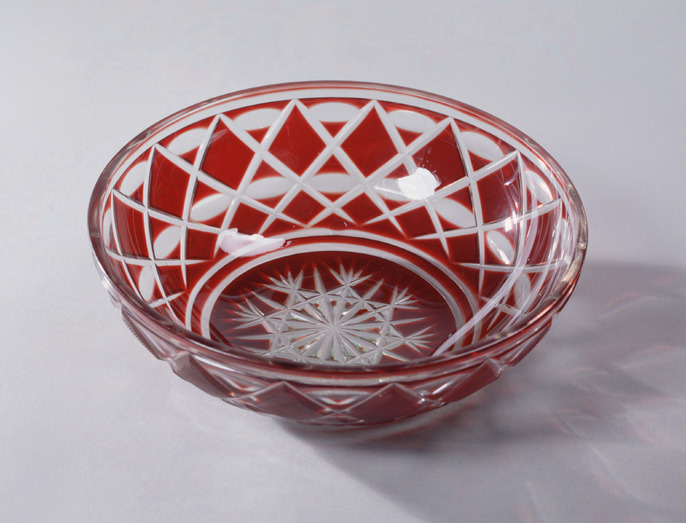
Cover image: Cut-Glass (Kiriko) Bowl, by Miyagaki Hidejirō, Meiji era, ca. 1881, Tokyo National Museum (G-595), CC BY 4.0, via ColBase