Stand in front of a sword case in a Japanese museum and the labels read tachi, katana, wakizashi, tantō. The blades beside the labels look alike: curved, with one edge sharpened. Telling them apart takes three short questions.
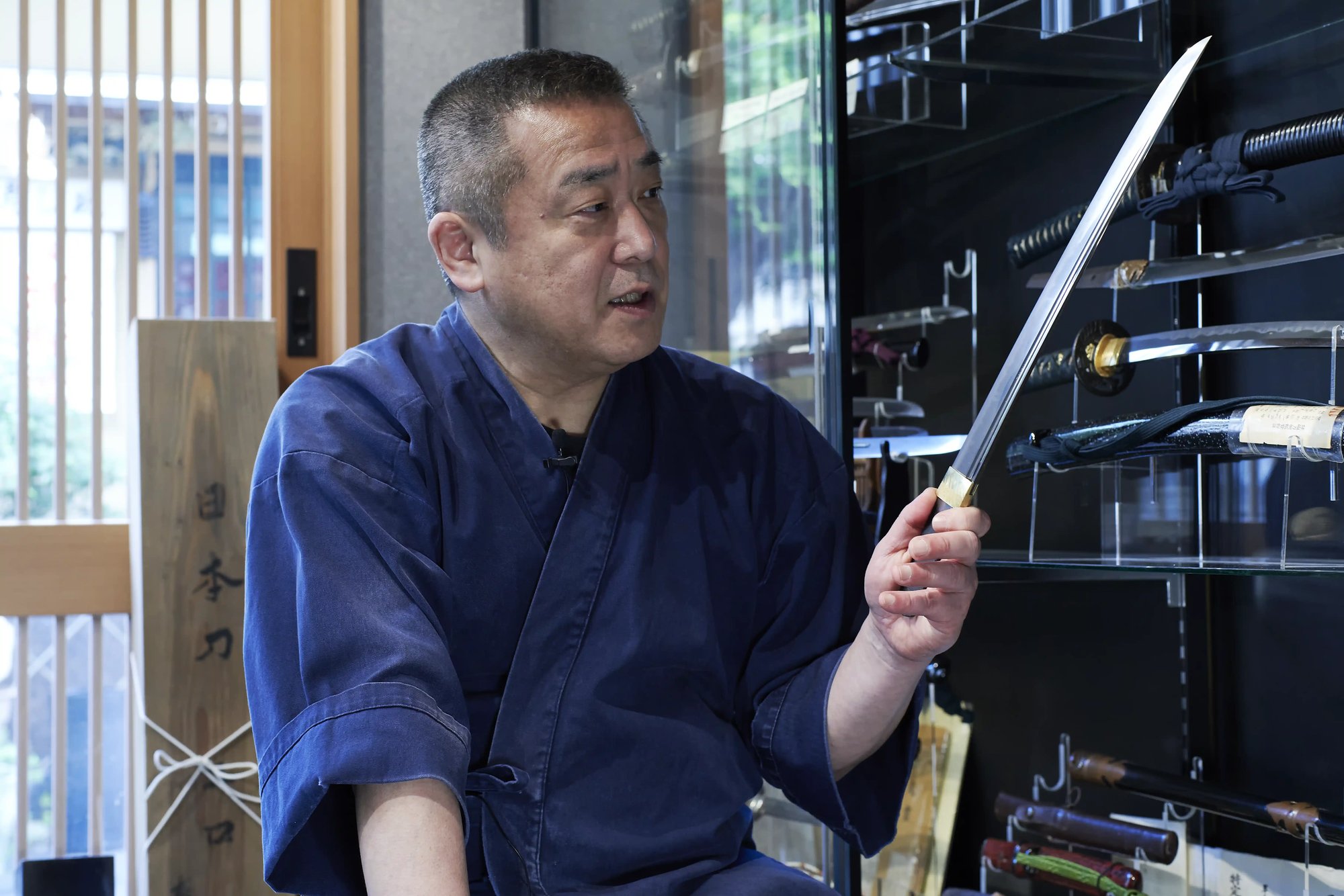
Yasumasa Nagaoka, a togishi (sword polisher) working in Tokyo, spoke with Shohei Toguri, the founder of Bespoke Discovery, in an interview published on the masters site on August 1, 2026. He names three elements of a sword that one looks at and takes pleasure in, and the first is shape: "the sugata — the overall shape, the length and the curve."
This guide sorts the main Japanese sword types by length, by the way each was worn, and by how each was made, drawing on the Japanese Sword Museum in Tokyo, the Kyoto National Museum and the Agency for Cultural Affairs. By the end you should be able to stand at a case, say which kind of sword you are looking at, and say why.
Japanese Sword Types: Why a Polisher Reads a Blade Before Naming It
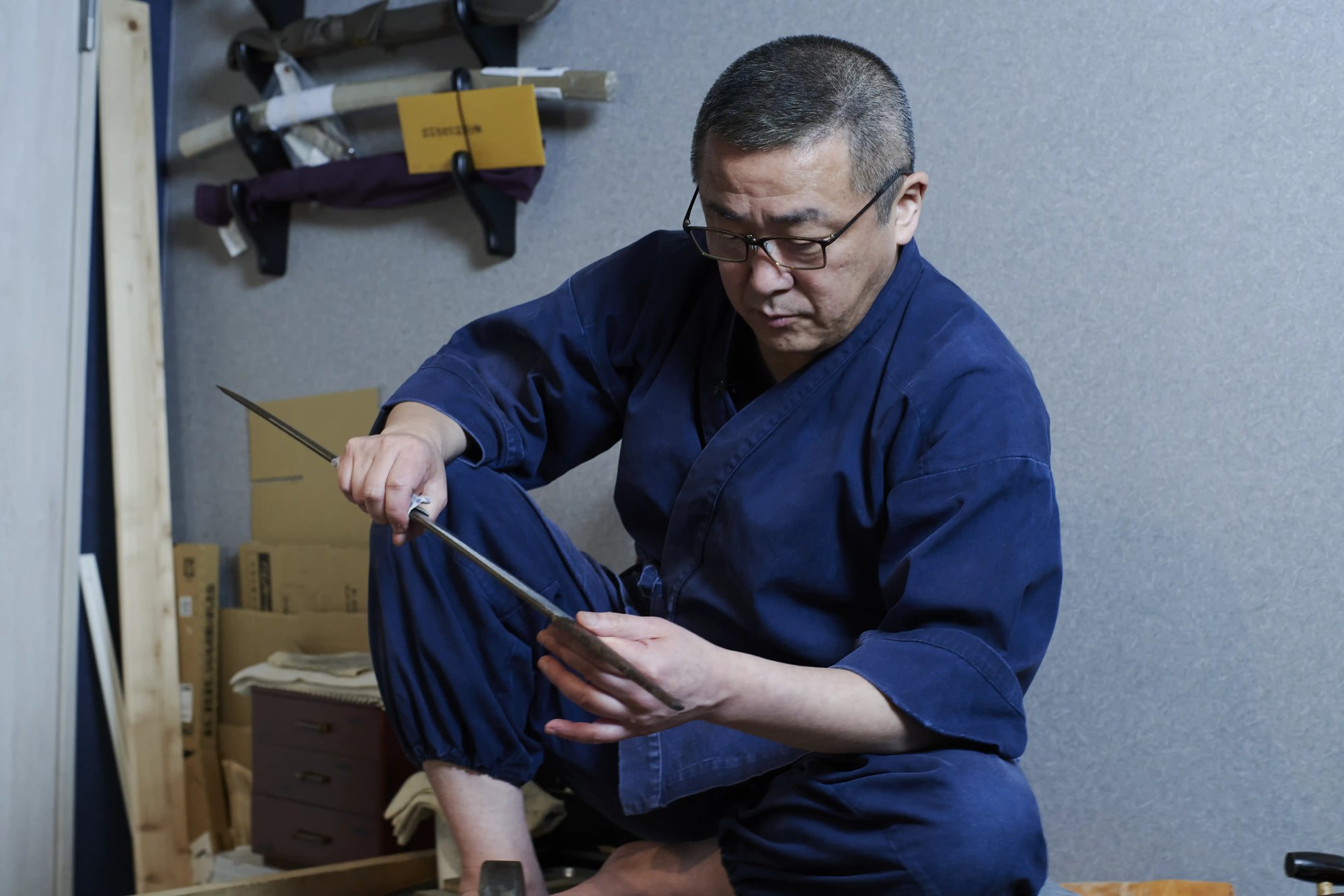
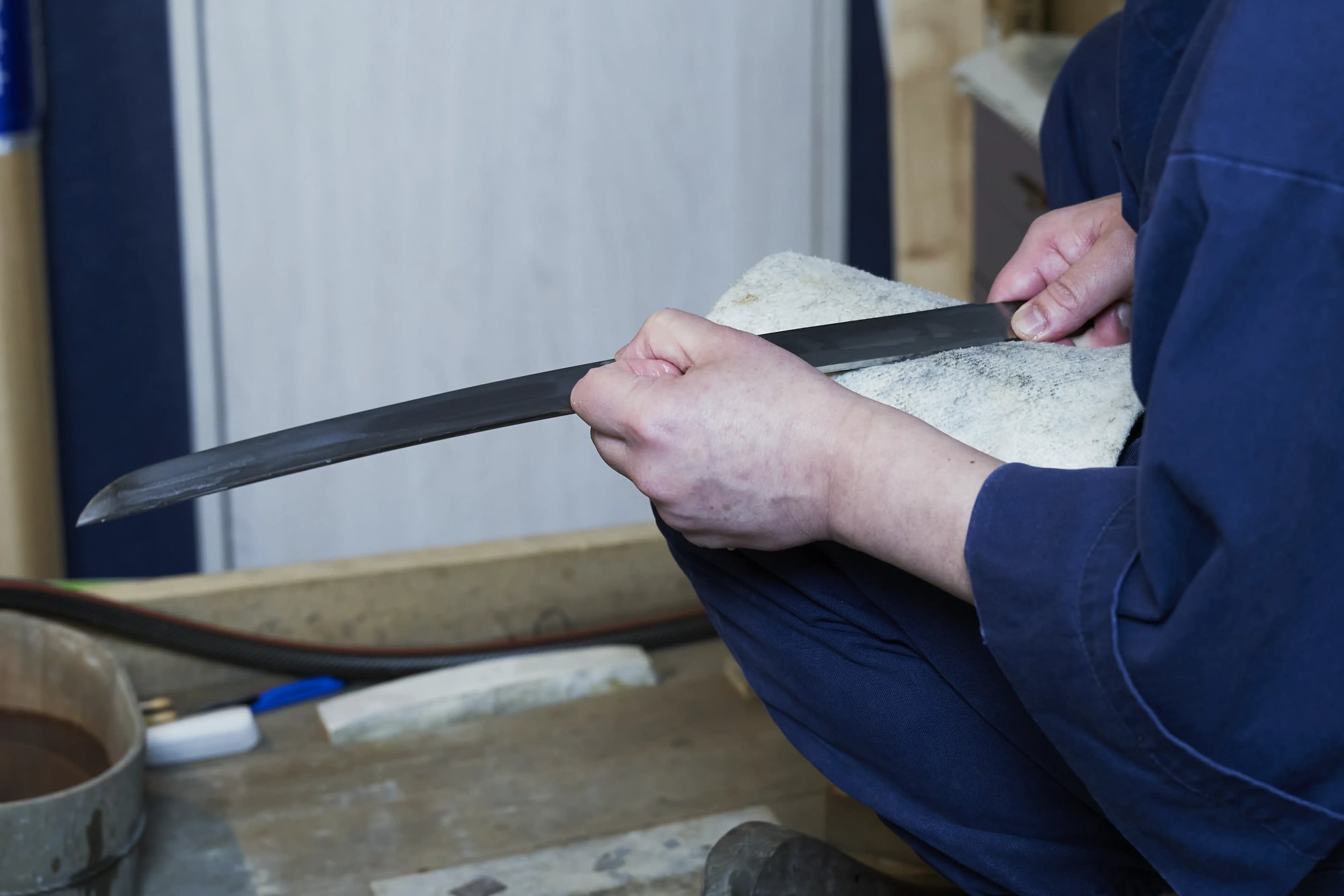
Nagaoka says that "At the stage of seeing the actual blade, I choose which grade of polishing stone (toishi) to begin with."
The three elements he names are the sugata, the overall shape with its length and curve; the hamon, the pattern along the edge; and the jigane, the skin of the steel. None of the three is a type name. The names on a museum label sort blades by length and by how they were worn, and this guide stays with those two questions.
Nagasa: Three Lengths, Three Jobs for the Tantō, the Wakizashi and the Long Sword
Sword collectors call the blade length nagasa, and the Japanese Sword Museum's own journals give it in shaku and sun with a metric conversion. Start there. By length there are three bands, according to the Japanese Sword Museum, which counts in shaku at 30.3 cm each. A tantō is one shaku or less, a wakizashi runs from one to two shaku, and the long swords start at two shaku (60.6 cm), with the katana from there upward and the tachi ordinarily at 70 to 80 cm.
Toshihiko Suekane of the Kyoto National Museum counts differently. Sorting by how a blade is worn, he writes in the museum's Museum Dictionary series (in Japanese) that there are only two kinds, the tachi and the katana. The two counts answer different questions, one about length and one about the way of wearing.
In the Japanese Sword Museum's wording the wakizashi has a job: it is the katana's companion, carried as a spare in the Momoyama and Edo periods and matched with it as a set called a daishō (大小, "large and small"). The tantō is the waist blade the museum also calls a koshigatana.
Tachi vs. Katana: Same Length, Different Way of Wearing It
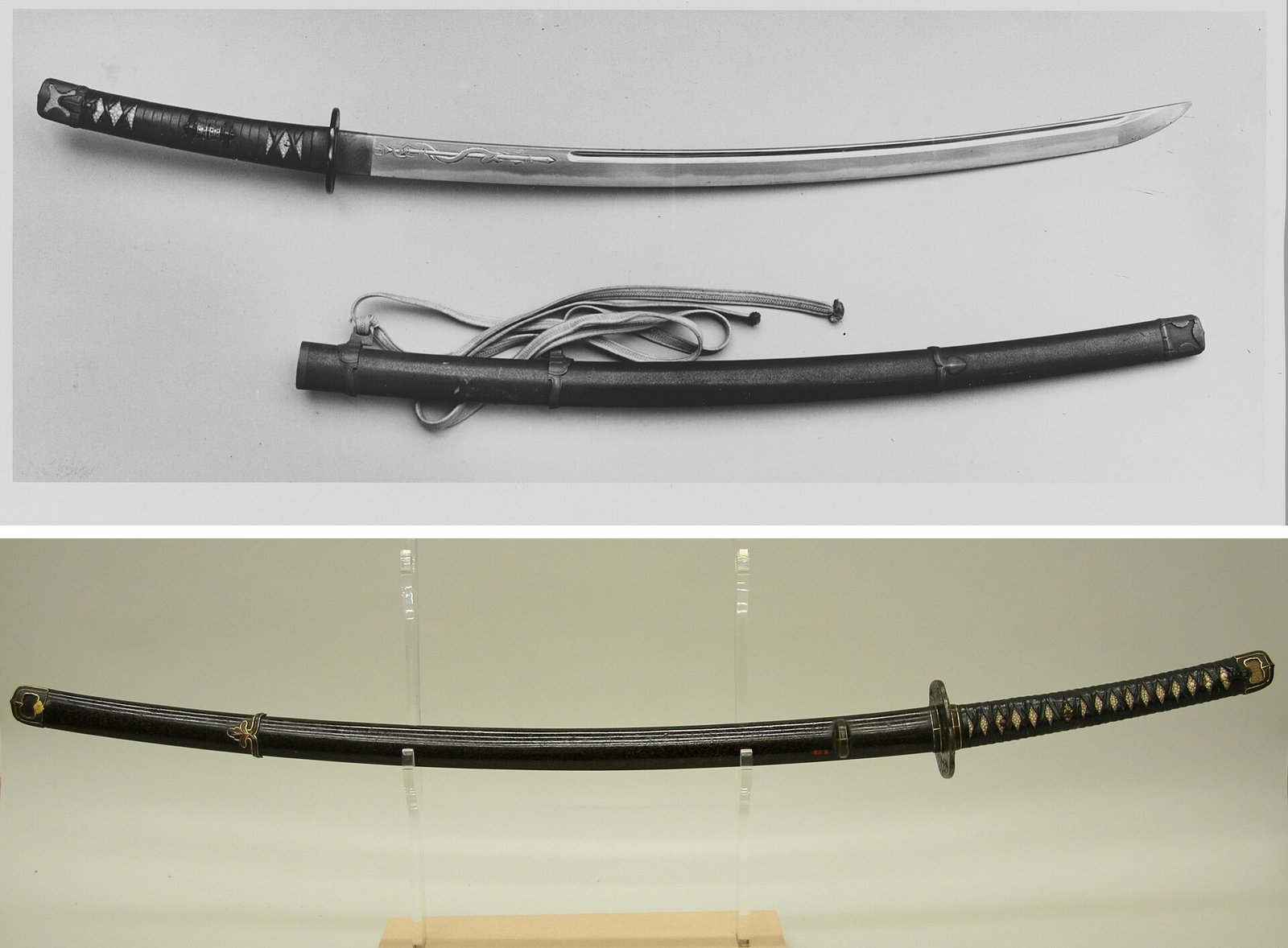
Both are long swords, and their lengths overlap, as the bands above show. Length alone will not sort a blade into one pile or the other. Three things will: the shape of the blade, the way it was carried, and the part that sits inside the handle. The Kyoto National Museum's account makes the second of these the real dividing line.
Sugata: Reading Curve, Width and Tip Before You Read the Label
The first of the three elements Nagaoka names is the sugata. Asked what the word covers, he answers: "There is the length, of course, but it is the matter of the sori, the curve of the blade." He adds that the curve is "a beauty, but it is also the result of changing in response to what each era demanded."
He also describes three shapes that fighting produced: "long ones with a deep curve; short but sturdy ones with width and thickness; short, light ones that could be handled in one hand."
The Japanese Sword Museum's history page (in Japanese) gives reference points a visitor can check. An early tachi, from the late Heian to the early Kamakura period, is slender and curves most strongly near the hilt before narrowing to a small tip. The page also describes wide, very long tachi of the Nanbokuchō period, with blade lengths beyond 90.9 cm (three shaku), and katana of the late Muromachi period that are shorter, mostly around 63.6 cm, with a strong curve toward the tip.
That gives a first test at the case: look at where the curve sits and how quickly the blade narrows. The museum ties a curve strongest near the hilt to early tachi and a curve strongest toward the tip to late Muromachi blades. The test has a trap, explained below under the tang: a blade can be cut down and its curve changed.
Edge Down or Edge Up: How Carrying Style Separates Two Swords
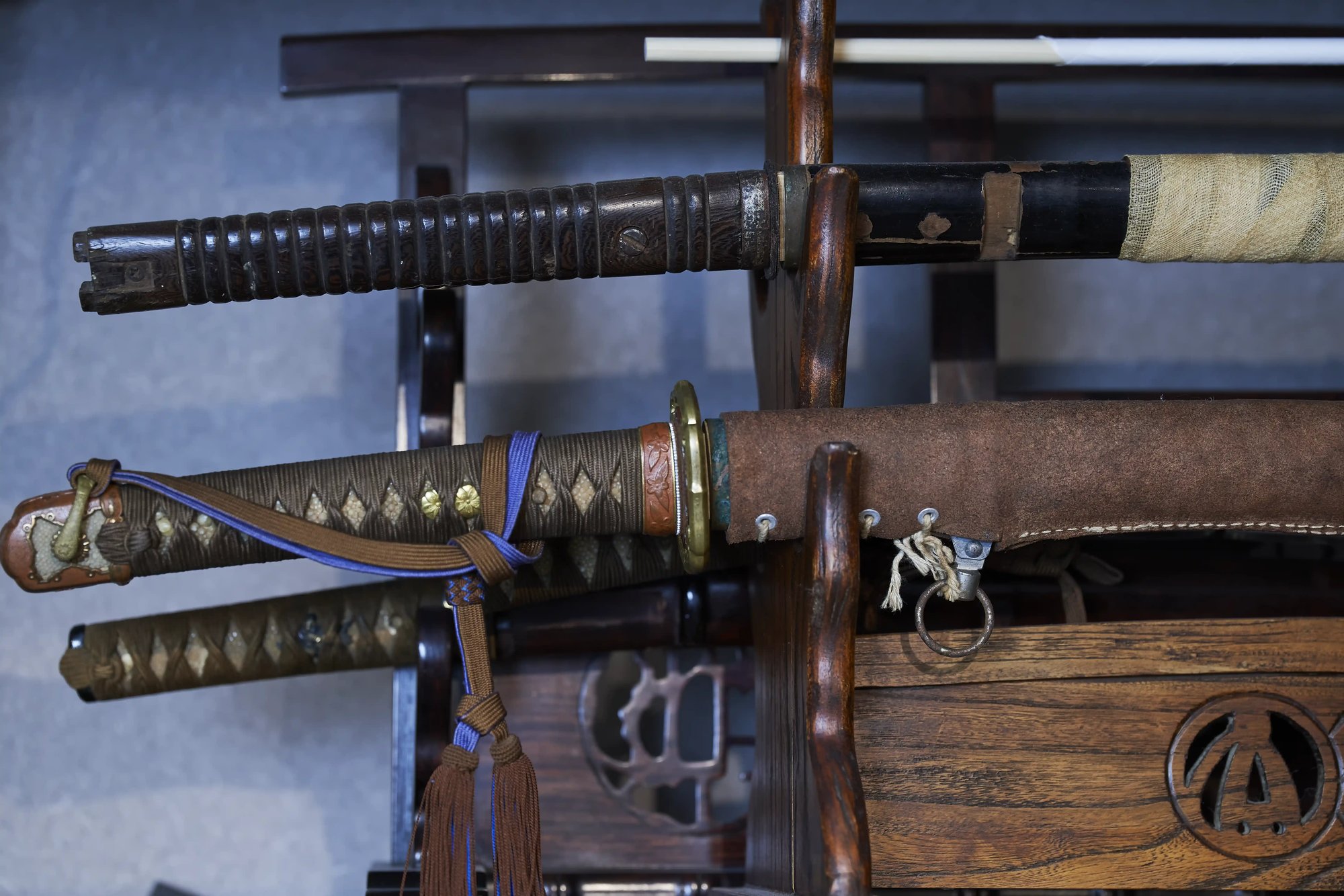
The cleanest dividing line is not on the blade at all. A tachi hangs from the belt with the edge down, and a katana is pushed straight into the sash with the edge up. The Kyoto National Museum's visitor worksheet turns this into a rule for the case: edge down means tachi; edge up means katana, wakizashi or tantō. The curator explains why. Museums display each sword the way it was worn.
A tachi was hung from cords or chains attached at one or two points on the scabbard, a way of wearing a blade that the curator traces back to the Yayoi period. The worksheet associates the tachi with fighting on horseback and the katana, which came later, with fighting on foot. The Japanese Sword Museum dates the wearing of the tachi from the late Heian period (12th century) to the early Muromachi period, and that of the katana from the middle of the Muromachi period (late 15th century) to the end of the Edo period.
The curator treats the tachi as a different kind of sword rather than an earlier katana. He derives the two names from different roots: tachi from a verb meaning to cut off, a name taken from what the sword does, and katana from words meaning one side and blade, a name taken from how it looks. The katana began as a small everyday tool, he says, and warriors later enlarged it into the uchigatana, which borrowed the ridged blade shape and the guard of the tachi.
The mountings follow the same split. The Japanese Sword Museum's page on mountings (in Japanese) says the guards made for tachi and for uchigatana are built with the slot for the tang in opposite top and bottom positions, and that after the Momoyama period guards of the tachi form are limited to ceremonial and festival mountings.
Mei and Nakago: Why a Museum Case Hides the Part a Polisher Reads First
Inside the handle sits the part that a mounted sword hides. The tang, nakago, is the end of the blade that fits into the hilt and is normally hidden there, according to the Kyoto National Museum's worksheet. It is where a smith's signature, a date or a note of provenance can be cut, and the worksheet calls these inscriptions, mei, important for authentication and appraisal. Its rule of thumb for finding a signature is that it normally sits on the outside face when the sword is worn on the left hip.
The tang is also where a sword's history can be rewritten. When a long sword is shortened, a process called suriage, part of the tang is cut off, and with it part or all of the signature. If the whole tang goes, the worksheet calls it ōsuriage and says it is how a tachi becomes a katana. Shortening, it warns, can change a blade's curve and balance. The Japanese Sword Museum says a large number of long Nanbokuchō tachi were cut down this way in the Tenshō and Keichō eras and became unsigned uchigatana.
Nagaoka remarks on how the tang is held. A sword, he says, is "held in place by a single bamboo peg — a mekugi." The worksheet's diagram of a blade marks the peg holes in the tang.
Wakizashi and Tantō: The Short Blades Japan Still Gives at Life's Turning Points
Short blades are easy to dismiss as smaller versions of the long ones. The Japanese Sword Museum defines the wakizashi and the tantō by length, and adds how each was worn: the wakizashi accompanies a katana as one of a pair, and the tantō is the waist blade. Nagaoka adds that swords still mark the turning points of a life, and that at a funeral the blade laid on the deceased can be a real short sword.
Wakizashi: The Second Sword of the Pair
A wakizashi sits in the middle length band and is worn edge up like the katana. The Kyoto museum's worksheet describes it as a short sword paired with a katana.
The interview article describes the wakizashi Nagaoka held as made about 450 years ago in Bizen, in the southeastern part of present-day Okayama Prefecture, in the late Muromachi period, and says the long sword and the short wakizashi were worn as a pair. The Japanese Sword Museum names Bizen and Mino, in present-day Gifu Prefecture, as the two main production centers of that period.
Tantō and Mamorigatana: The Small Sword Laid on the Dead and Given at a Birth
The tantō is the shortest band. The Kyoto museum's worksheet calls it a dagger that is usually around 24 cm long. The curator traces the small blade's ancestry to an everyday tool: before warriors enlarged it, the small katana was carried by people of every age and occupation, and he points to the small cutting tools in the Shōsōin treasury of the Nara period as an example.
Nagaoka describes small blades in life, in the past and now. Of the past, he says, "Some carried one as a mamorigatana, a small sword kept as a protective charm." Of funerals he says that "the custom of laying a blade upon the deceased still exists in Japan," and that "These days the undertaker often sets down a plated replica as a formality, but some people use a real short sword."
The custom of marking a life with a sword goes further. "And the custom of having a new sword made at the turning points of a life — a child is born, comes of age, a new house is built — remains deeply rooted even now," Nagaoka says.
How Japanese Sword Types Changed Shape: Fighting, Peace and Law
In the interview Nagaoka traces how the Japanese sword changed character: "First and foremost, that it is a weapon. From there, something that shows status, an object of prayer, something that places weight on spirituality, and then artistic elements were added more and more, until it took shape as the work of art it is now."
The curved blade itself came first. The Japanese Sword Museum dates the move from straight to curved blades to after the middle of the Heian period, generally after the tenth-century rebellions of Taira no Masakado and Fujiwara no Sumitomo. The sections below take three later turns in order: how fighting changed, what a long peace did to the sword's fittings, and what the law made of it.
Tachi to Uchigatana: When the Way of Fighting Changed the Blade
"The great change is the change in the style of fighting," Nagaoka says. "Depending on how one fought and against whom, the overall shape changed clearly."
The Japanese Sword Museum dates the turn to the late Muromachi period, when fighting became mass combat on foot and the uchigatana, worn edge up in the sash, became the common sword. After the Ōnin–Bunmei war, conflict spread across the country, and ready-made blades, kazu-uchi-mono, circulated alongside carefully forged ones made to order. The tang was made short to suit one-handed use. The museum names Bizen and Mino as the two great production centers.
The Kyoto curator puts the sword in a supporting role before this change: the bow was the warriors' main weapon and the tachi its auxiliary. The University of Tsukuba's Budo World site likewise calls the sword of the formative Heian years a secondary weapon. The katana was enlarged to fight with, and that is when the uchigatana appeared. Read this way, the move from tachi to uchigatana records how fighting changed, from horseback to foot, and from a backup blade to the sword in the sash.
Nagaoka cautions against picturing a sword at work in every battle. Japanese warfare, he says, "did not require killing everyone," and the fighting "aimed at a political settling point." "That is exactly why the Japanese sword, too, was not used as much as people imagine."
Edo Peace: The Sword That Became a Uniform
Nagaoka says that in the age of lasting peace, tenka taihei, the metalwork, the scabbard lacquer and the hilt cord of a sword all turned many-coloured, and even raden, inlay of iridescent shell, appeared. "A weapon would need none of this," he says. "For the Edo samurai, the sword was also one part of a uniform that had to be worn. If you are wearing something you will never use, then, as with a kimono, you want individuality."
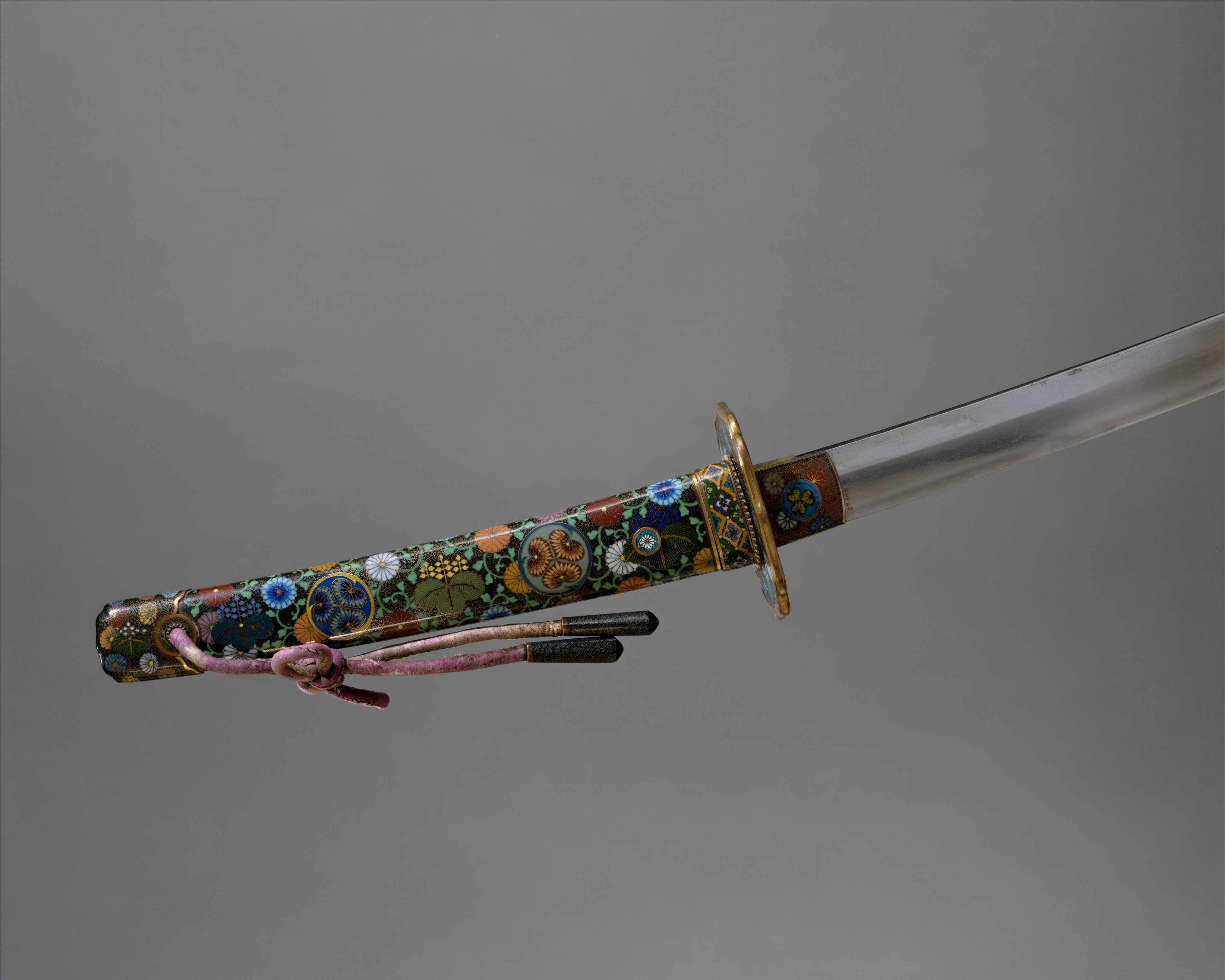
The Japanese Sword Museum's mountings page places the flowering in the middle of the Edo period, when metalwork on the fittings became highly developed and, with the influence of townspeople's culture, scabbard lacquer moved into new finishes. Small fittings were also taken off the sword and appreciated as art in their own right.
Nagaoka corrects the picture of who owned swords. "It wasn't something only the samurai could own; if anything, I think it was something anyone could own," he says, and "There seem to have been restrictions on length and so on." By the Edo period, in his account, "it was clearly the merchants who had more money and more comfortable lives than the samurai, so the ones with fine pieces were often merchants rather than samurai."
For how the warrior's code was rewritten in the same long peace, see what the samurai code actually demands.
From Haitōrei to the Registration Certificate: The Law That Defines a Japanese Sword Today
On March 28, 1876, the Grand Council of State issued the edict known as the haitōrei. Japan's National Archives (in Japanese) records that it banned the wearing of swords except in full dress and for uniformed military, police and officials. Our guide to sword polishing covers the haitōrei and the occupation, told in full.
Whether one may still carry a sword in Japan is a question for current law, not for the edict of 1876. The current law is the Firearms and Swords Control Law. The Agency for Cultural Affairs explains that firearms and swords may not be possessed in principle, that a sword valued as art can be possessed as an exception if it is registered with the prefecture, and that even a registered sword may not be carried, transported or used without a justifiable reason. This is how a government agency describes the law, not legal advice for travelers.
The registration belongs to the sword, not to a person. The agency says the system registers swords of cultural value and does not license an owner, and a registered sword has to travel with its certificate whenever it is possessed, carried or transported. The agency's list of what shows beauty in a sword, namely shape, forging, temper pattern and carving, overlaps with the three elements Nagaoka names.
On the occupation, Nagaoka offers a measured reading. The story of soldiers going house to house with metal detectors is told that way, he says, but "it seems it did not go that far," though "Surrendering and requisitioning themselves, of course, happened." The Nihon Bijutsu Token Hozon Kyokai, which runs the Japanese Sword Museum, puts the emphasis differently in its account of its founding in February 1948, in which swords were in critical danger from the occupation forces' attempt to confiscate them.
Nihontō: The Word for a Sword Made the Traditional Way, and the Shōwa Sword That Is Not
The word nihontō needs a definition of its own. Nihontō means "Japanese sword." For the purposes of its sword registration rules, the Agency for Cultural Affairs defines Nihontō as a blade forged and quenched by traditional methods, for use as a weapon or for appreciation.
The agency's registration rules also say what is left outside. Its list of swords that cannot be registered includes shōwa-tō and Mantetsu-tō, names for swords made of drawn-out steel, half-forged steel or special steel that resemble a Japanese sword but did not go through that process. Foreign swords, commanders' swords and ceremonial swords are on the same list.
The Smithsonian's National Air and Space Museum describes a related object, the shin gunto, as a mass-produced wartime ceremonial sword issued to officers and non-commissioned officers. Ordinary blacksmiths made it in a military arsenal by non-traditional methods between 1935 and 1945, and the museum notes it is often mistaken for a samurai sword. Nagaoka adds a complication a collector would meet: "when demand for guntō arose, old swords were revived with only their fittings remade." The two accounts point the same way. A military-style mounting does not tell you what is inside it, so the question to ask is how the blade was made.
Reading a Sword Type in Person: Three Distances From Glass Case to Bare Blade
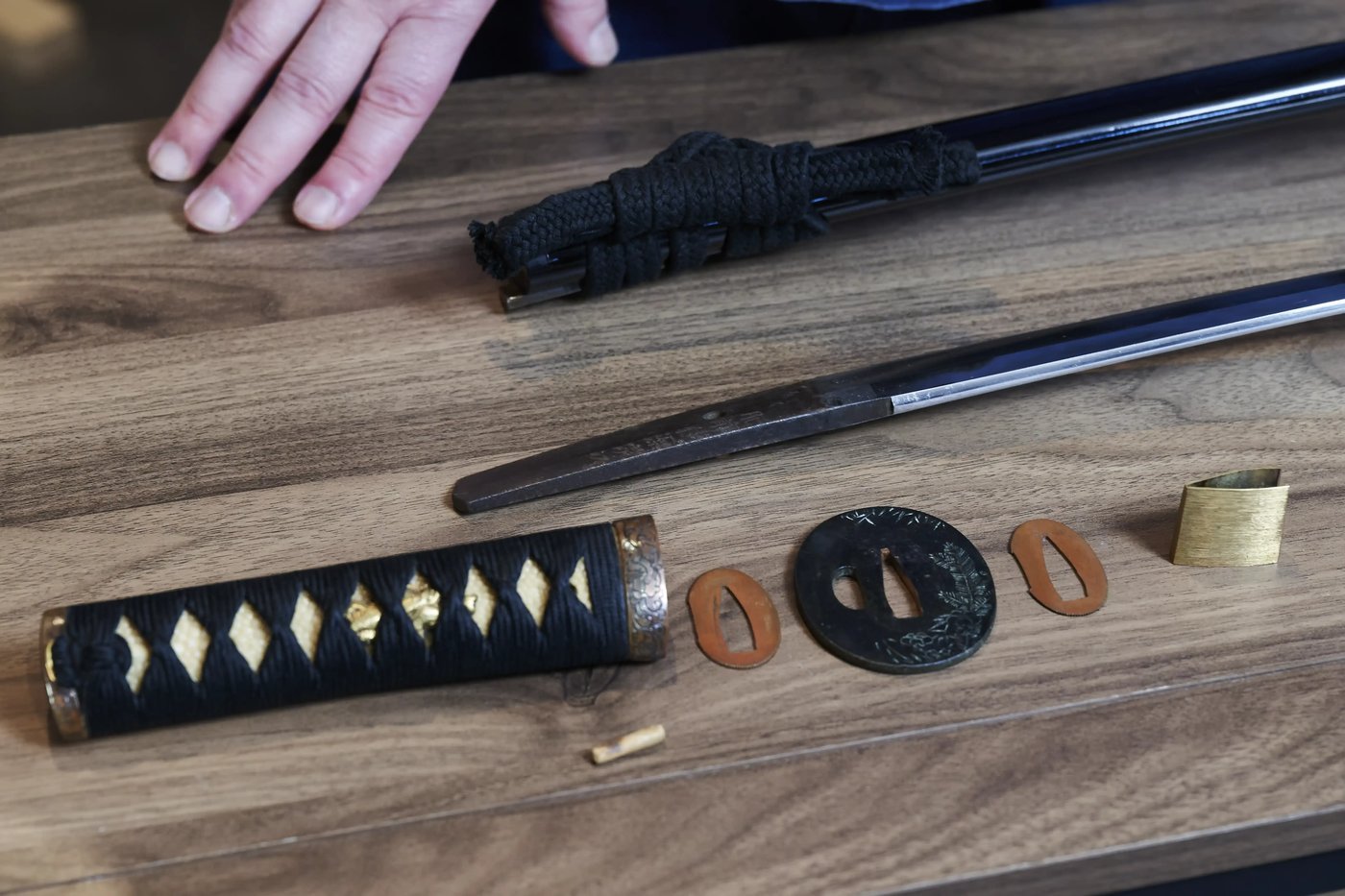
Seeing swords up close happens at three distances. The first needs a ticket: a museum case. The second takes a booking or knowing where to look: a regular appreciation meeting or an exhibition. The third happens in a polisher's own hands: a sword taken apart. A day of museum-going fits into a quiet route through Tokyo built around museums and slow looking, and the sections below stay with the swords.
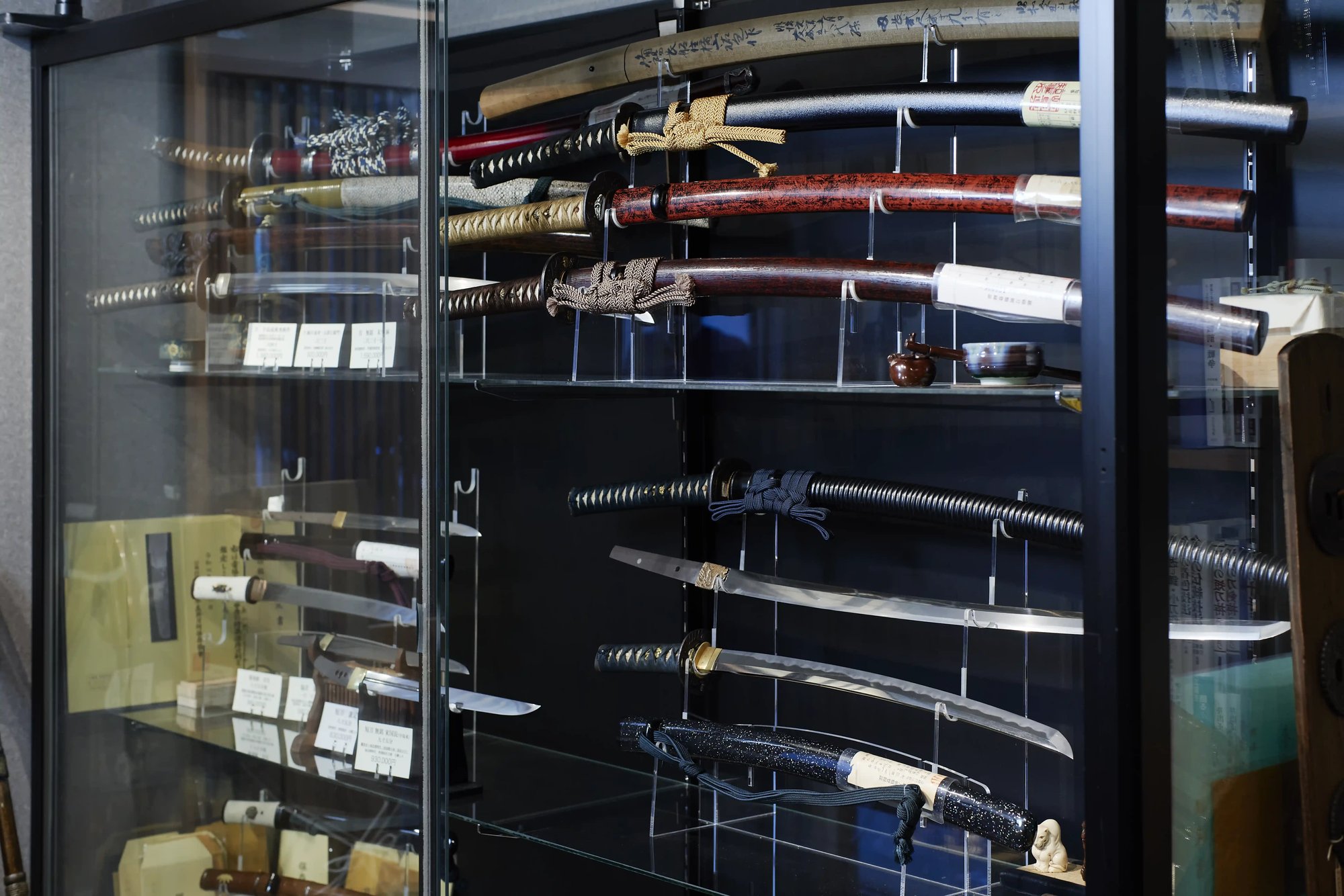
Reading the Label: Tachi, Katana and Kodachi in the Museum Cases
The Japanese Sword Museum, run by the NBTHK in Sumida, Tokyo, shows swords to the public.
Two checks work at a case. The first is the edge: down is a tachi, up is a katana, wakizashi or tantō, because museums display swords the way they were worn. The second is the length, where a label or catalogue gives it, set against the bands above.
Length has an exception. The Agency for Cultural Affairs' Cultural Heritage Online entry for the kodachi attributed to Kunimune, in the Tokyo National Museum, says Kamakura tachi take about 75.8 cm as the standard length, and calls the few that measure around two shaku (60.6 cm) kodachi, small tachi. A blade of that length sits at the lower edge of the katana band, so length alone would not identify it as a tachi.
Gendai Tōshoku-ten and Sword Gatherings: What Those Who Know Can Find
The Gendai Tōshoku-ten, the modern sword-craft exhibition, is held once a year by the NBTHK, and the interview article calls it one of the few public stages where a polisher's work is shown, in the form of a competition. The NBTHK's exhibition page (in Japanese) says its aim is to preserve and improve the traditional skills of polishing and six related crafts, and to raise interest in swords as cultural property.
The Japanese Sword Museum also holds a regular appreciation meeting (in Japanese) once a month, except in August and December, at which attendees hold real swords in their hands. It runs by advance reservation for high-school students and older, and a first-time participant needs the certificate from the museum's sword-viewing manners course.
Fittings Off: What a Hands-On Session Shows That a Label Cannot
The third layer is a session in a polisher's workshop. In the interview Nagaoka describes what a visitor does under his guidance, and it begins with weight: "First, I have them hold the real thing in both hands." Then the sword comes apart. "Take it apart, and you see plainly what role each part plays and what shape it has," he says. "Take it apart and put it back, and you come to feel differently about what you had only been gazing at until then."
Seen against the types above, taking the mounting off removes the way a sword was worn, together with the tachi or katana fittings that expressed it. The length, the curve and the tang remain.
Elsewhere in the interview Nagaoka notes that the Japanese sword "is still made by a division of labour among specialists," from the swordsmith and the polisher to the makers of scabbard, metal fittings, hilt, cord and lacquer, and that "it is completed as a single composite work of art." His full account of the session, and the rest of the interview, is in Nagaoka's full interview.
Reading Swords Today: Why a Polisher Teaches the Public to Look
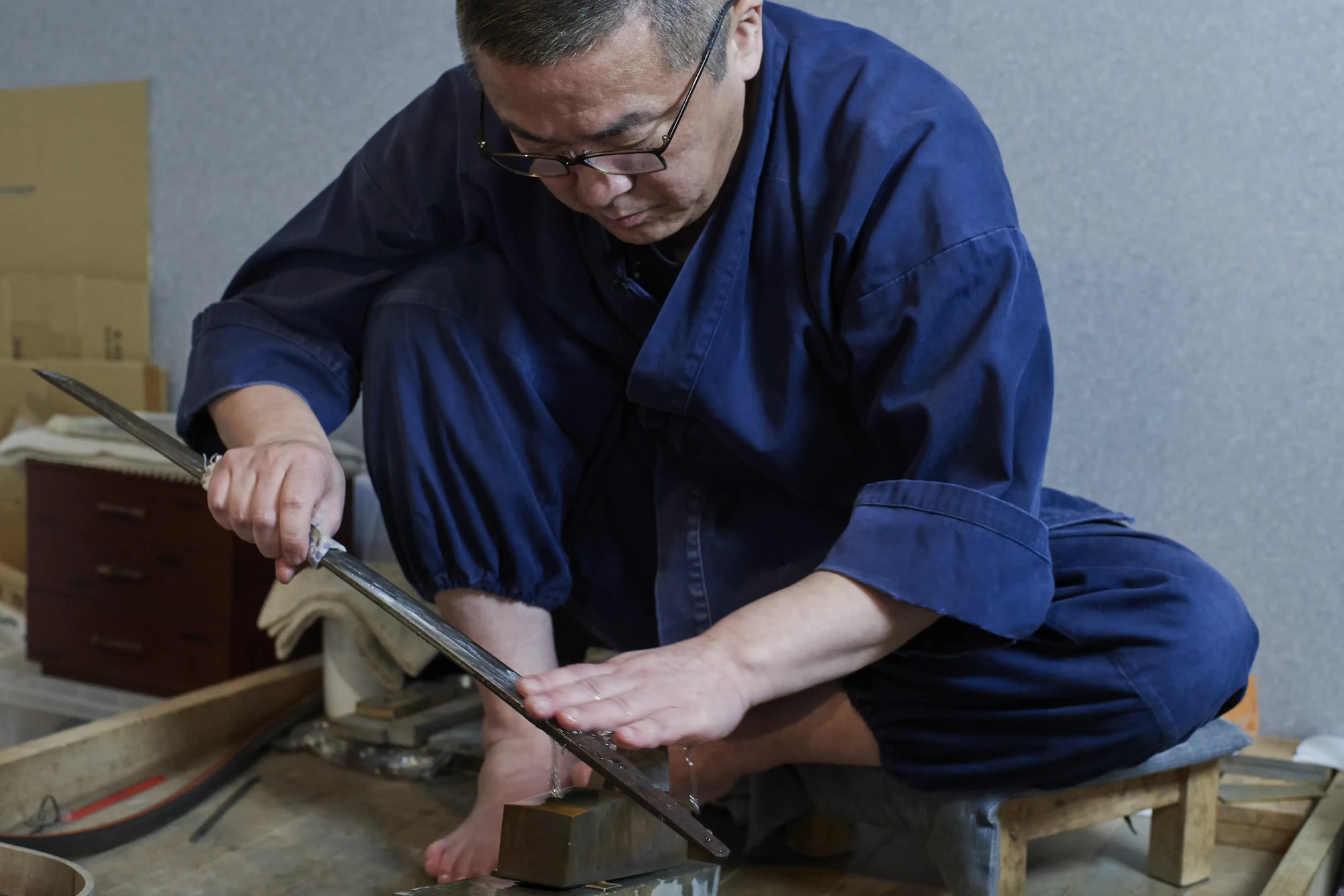
The history above ends with a person, not a date. The interview article reports that Nagaoka holds introductory courses for beginners, creating chances to try holding a real sword, takes a group to the nearby sword museum, and holds gatherings to look at swords with someone knowledgeable beside them. "In the past it tended to be said that a sword is something you hold only after you have studied. Now it is the reverse — please, just take an interest; whatever you don't understand, ask us," he says.
The interview article presents this as more than a way of drawing customers: for Nagaoka it is a condition for handing culture on to the next generation. The craft is small. The interview article gives his own count of "a hundred at most" polishers across Japan.
On how to look, he gives permission. "Whether you like it or not, what you find beautiful — you may decide for yourself," he says, and he adds that "in your first year of taking an interest in swords, your third, your fifth, your taste changes." An old sword is also closer than visitors assume, in his telling: "a sword from the kind of era that appears in textbooks is right there in front of you, and anyone who wants to own one can." The agency's rules for registered swords still apply when one changes hands.
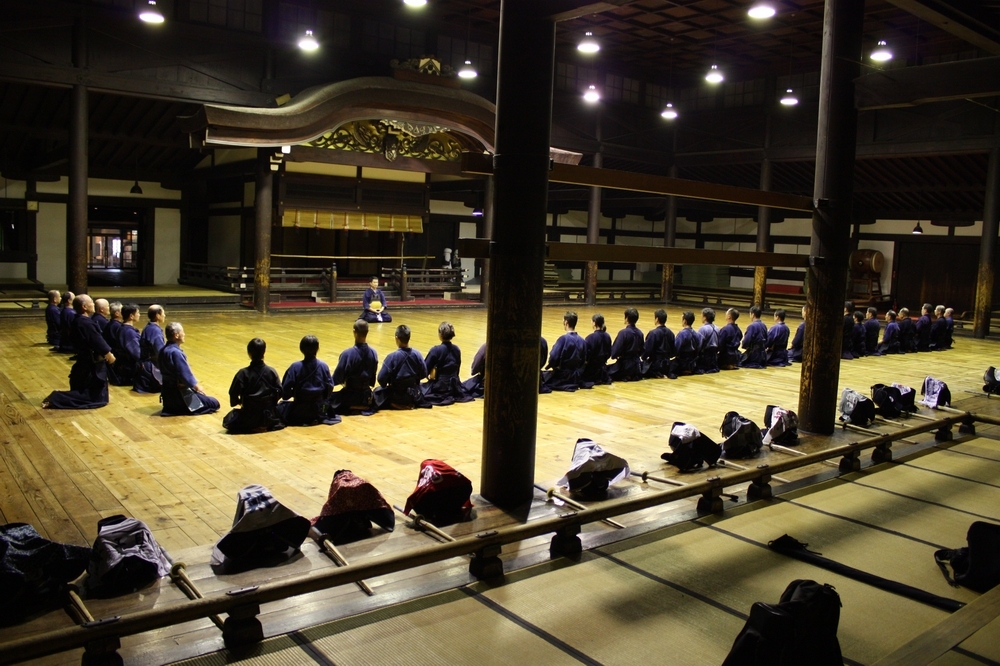
For the sword's afterlife as a martial discipline, see how to watch a kendo practice.
Nagaoka does not claim to know where all this leads. "Culture, if you are not conscious of it, is replaced easily. The Japanese sword may be a symbol of that changeability, too," he says. "Still, I also think that by the time of one's child, and that child's child, people may turn their eyes again to what they have inherited. I don't know what things will be like then, though."