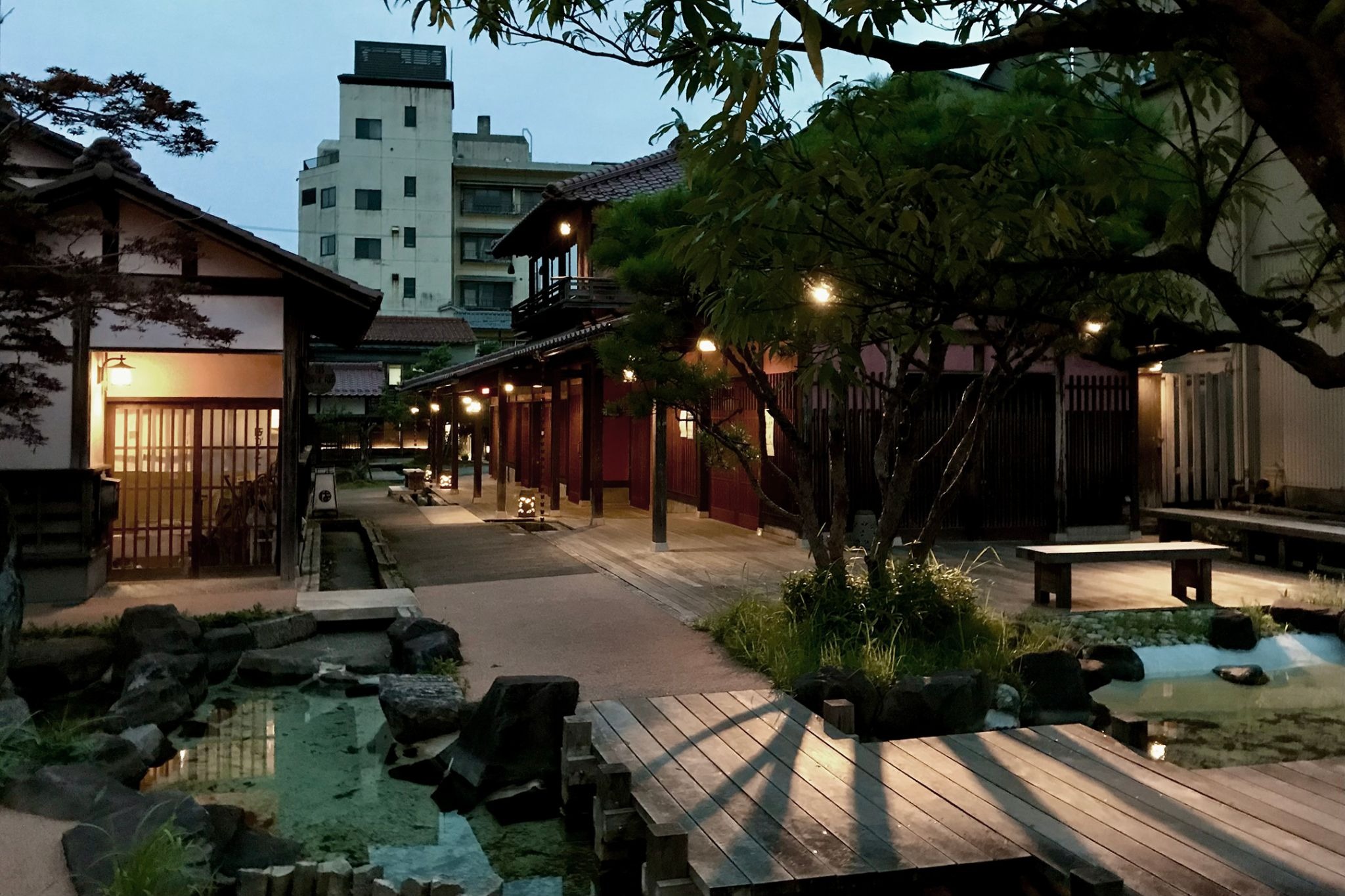
Kuromon Ichiba Market is the easiest food market in Osaka to reach and the hardest one to judge. Five minutes from Dotonbori, a covered arcade of fishmongers, butchers and produce sellers has spent the last decade turning itself into something closer to an open-air restaurant. Some travelers leave delighted. Others leave feeling they paid Tokyo prices for a skewer they ate standing up.
This guide is written for the second group as much as the first. It covers what is genuinely worth eating, when to arrive so the market behaves like a market, and whether Kuromon deserves a morning of a short trip to Osaka at all.
This article opens one doorway into the cuisine of Kansai. The Flavors of Kansai Digital Guide draws Kyoto's quiet refinement, Osaka's lively kitchens, and the seasonal traditions that connect them into a single, fuller reading.
What Is Kuromon Ichiba Market?
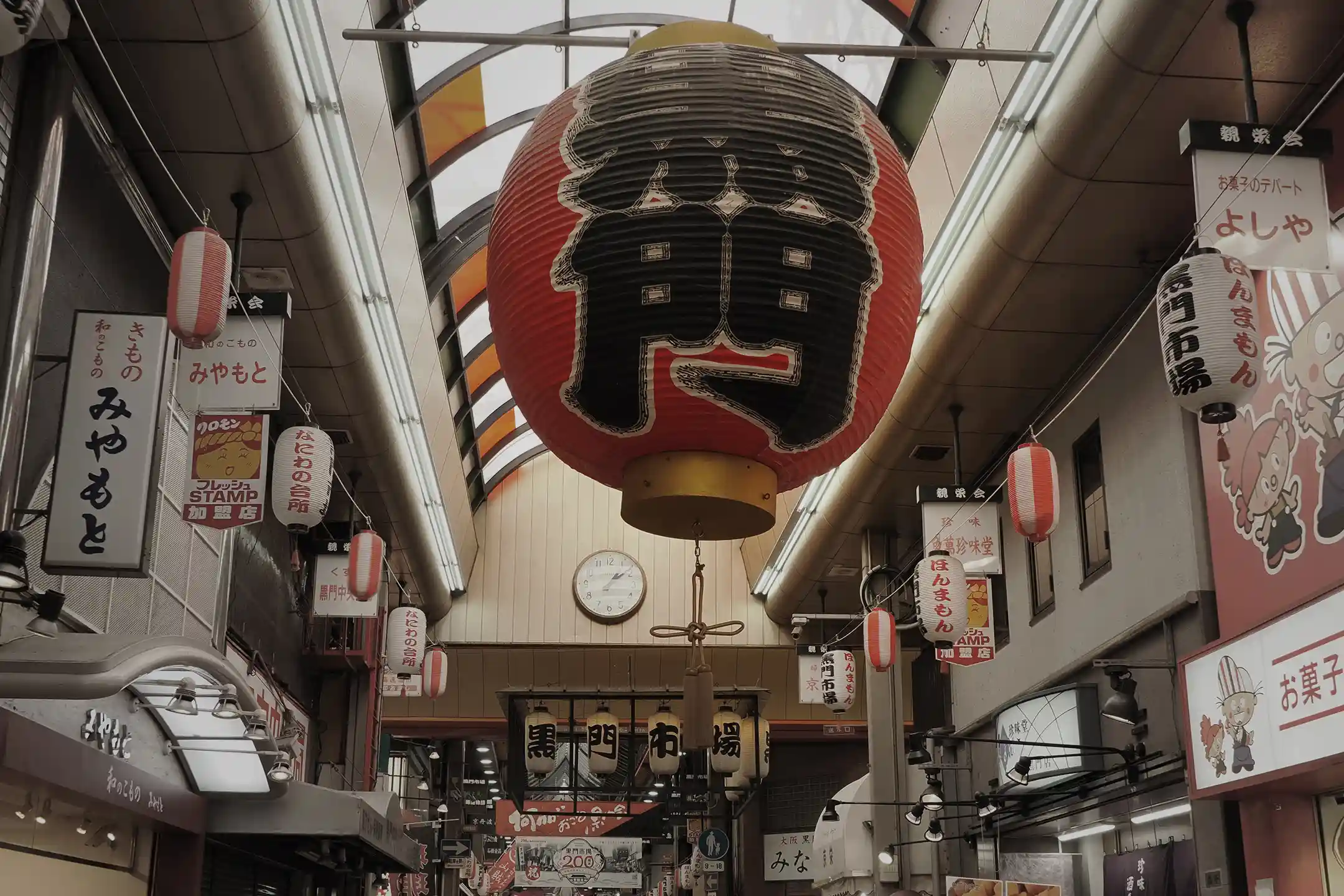
Kuromon Ichiba Market is a covered shopping arcade in Nippombashi, in the Chuo ward of Osaka. According to the Osaka Convention and Tourism Bureau, it runs about 580 meters south from Sennichimae and holds about 150 stores: fresh fish counters, butchers, greengrocers, pickle specialists, knife sellers and prepared-food stalls.
Two misunderstandings are worth clearing up first.
The first concerns the nickname. Kuromon is often introduced in English as "Osaka's Kitchen", which reads as though the phrase belongs to the market. Historically it belonged to the city. Osaka carried the title of the nation's kitchen during the Edo period, when it functioned as the clearing house for rice and goods from across the country, and Kuromon inherited a version of that name much later as a local shorthand. The market is a beneficiary of Osaka's food reputation, not its origin.
The second concerns what kind of market this is. Kuromon is a retail arcade. There is no auction, no pre-dawn trading floor, no restricted zone for licensed buyers, and travelers who arrive expecting the Toyosu experience in miniature are looking for something that was never here. What Kuromon offers instead is proximity: fish, beef, fruit and pickles sold at street level, to anyone, in a walkable line.
The comparison to Europe's covered halls is worth making carefully. La Boqueria in Barcelona and Borough Market in London ran through the same conversion from neighborhood grocery to visitor attraction, and drew the same complaint from the same kind of visitor. Kuromon sits further back on that curve, which is the reason to come early: the grocery layer here is thinner than it was but has not been displaced, and fruit sold by grade, pickles, dried goods and knives are still bought by people who are not on holiday.
From Edo-Period Fish Stalls to Osaka's Kitchen
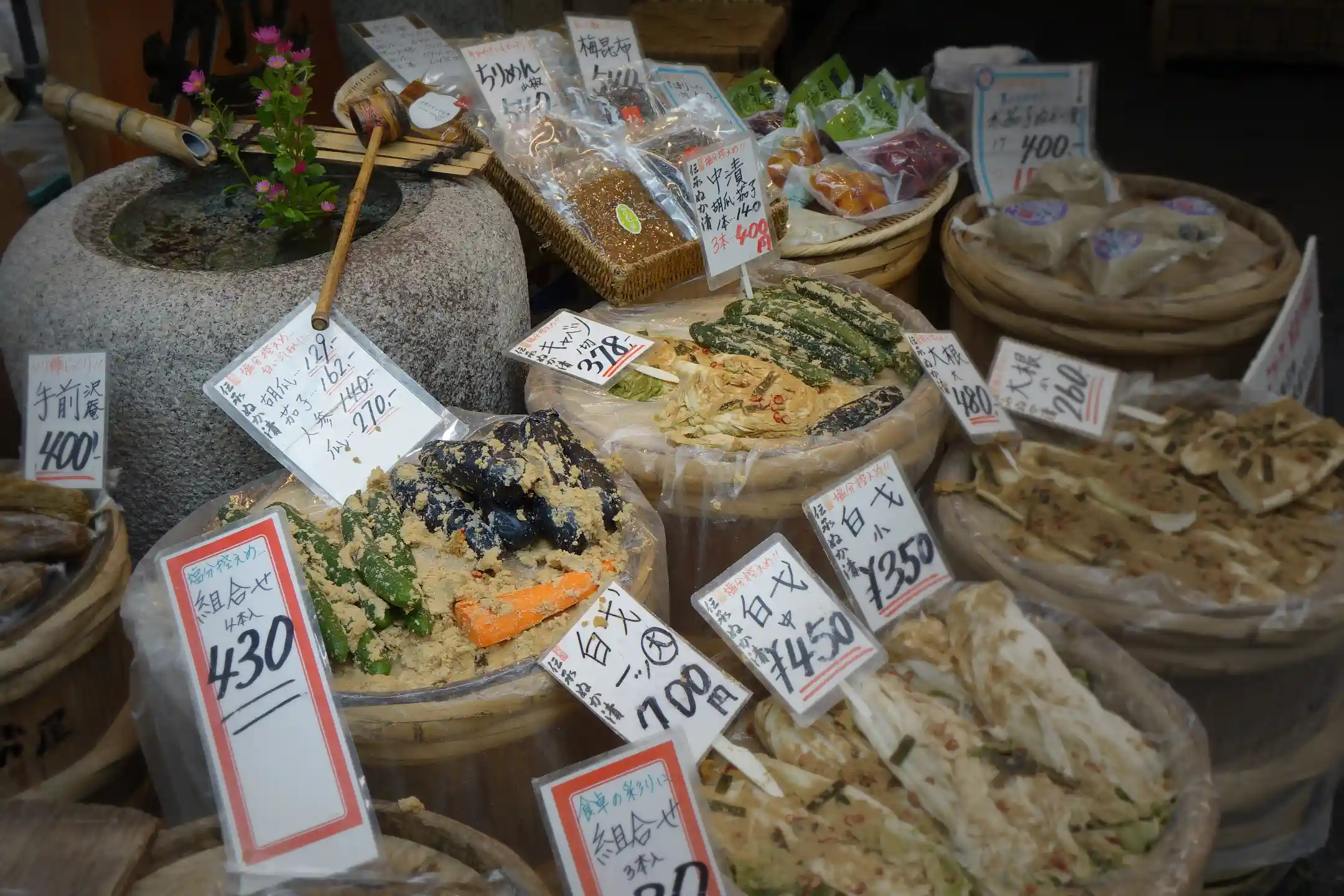
The market began around 1822, when merchants gathered at the black gate of Enmyoji temple in Nippombashi to sell fish brought in from Sakai and Kishu. For its first ninety years it carried the temple's name and traded as Enmyoji Market, and Osaka Prefecture recognized it under that name in 1902.
The name it uses today comes from a fire. The Osaka Convention and Tourism Bureau records that the Great Namba Fire of 1912 destroyed the market together with the temple, the black gate included. When the traders rebuilt, they named it for the gate that was no longer standing: kuromon. It burned again in the air raids of the Second World War and was rebuilt again. Kuromon Ichiba is named for something none of its visitors has ever seen.
Through the decades that followed it supplied restaurant kitchens in Minami and neighborhood households with fish, and it was known to chefs more than to visitors. That is the version older Osaka residents remember, and it explains the air of authority the market still carries.
The change came in the 2010s, as inbound travel to Japan climbed. The arithmetic was hard to ignore: a scallop grilled in front of a visitor carries a margin that the same scallop sold raw to a household does not. Counters that had trimmed fish for restaurants began trimming it into portions for eating on the spot, signage went multilingual, and the share of the arcade given over to standing-and-eating rose through the decade. A market selling groceries competes on price with supermarkets; a market selling experiences does not.
Then it stopped. When international travel closed in 2020, a market that had reorganized itself around visitors found itself without them. The recovery since has restored the crowds but not the older commercial logic, and Kuromon today sells experiences to travelers and groceries to a diminished local trade, in that order.
Understanding this sequence explains almost every complaint written about the place. Kuromon is not a market pretending to be a tourist attraction; it is a market that became one, deliberately, and has not finished deciding what it wants to be.
What to Eat at Kuromon Market
The useful question at Kuromon is not what to eat but what to eat here instead of somewhere else. Anything that rewards being cut and served within arm's reach of where it is stored belongs on the list. Anything a food court could reproduce does not.
Seafood at Kuromon Market: Otoro, Uni and Grilled Scallops
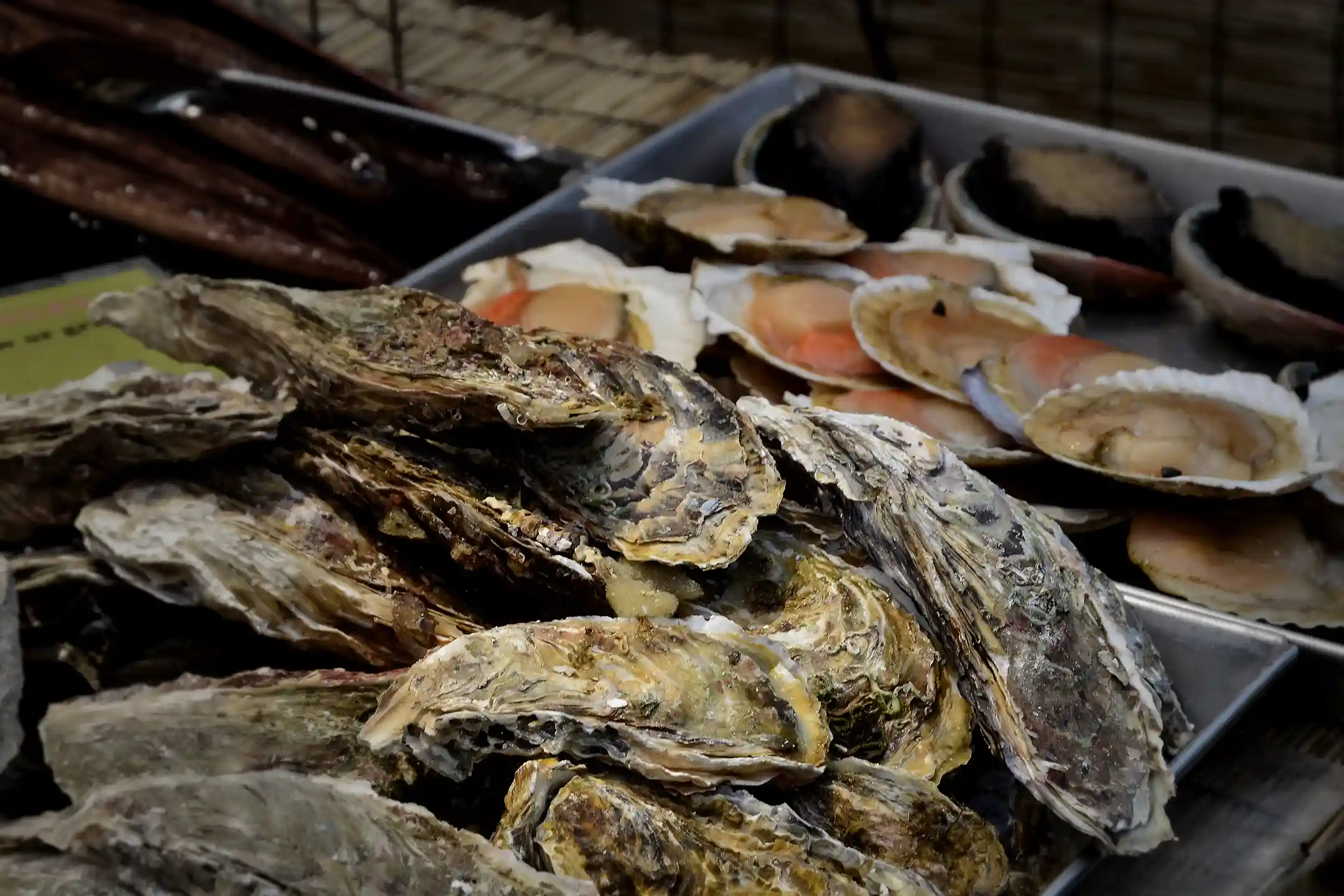
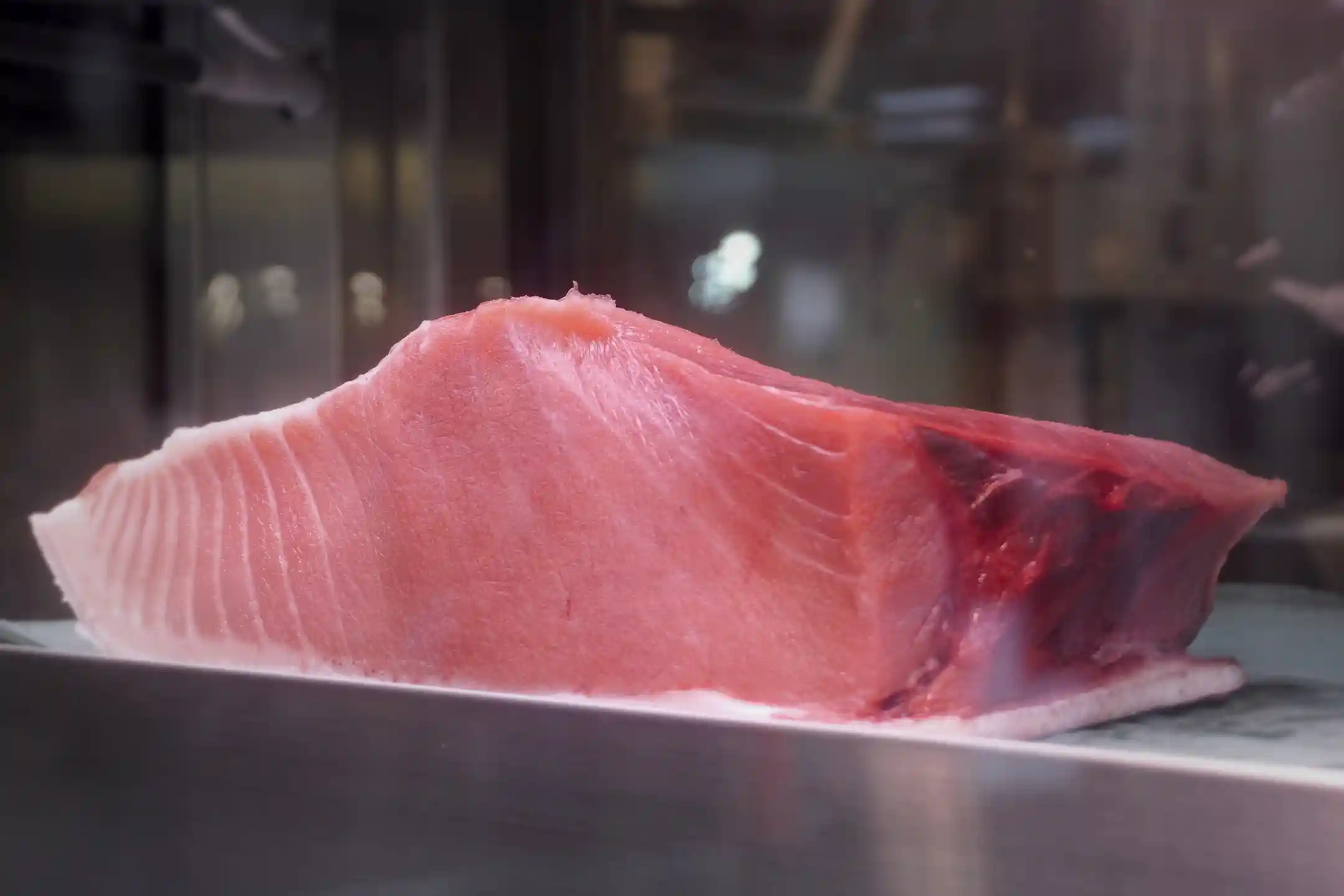
Seafood is the reason the market exists and the strongest argument for visiting. Sea urchin and fatty tuna are where the gap between a market counter and a restaurant shows most, because both are served with almost no intervention: the quality you buy is the quality you eat.
Judge a sea urchin counter by whether the roe sits in its wooden tray with the grading card still visible, and by whether the seller can name the prefecture it came from. Judge a tuna counter by whether the block is cut to order in front of you. Pre-cut sashimi that has been waiting under a lamp has already lost the advantage that brought you to a market.
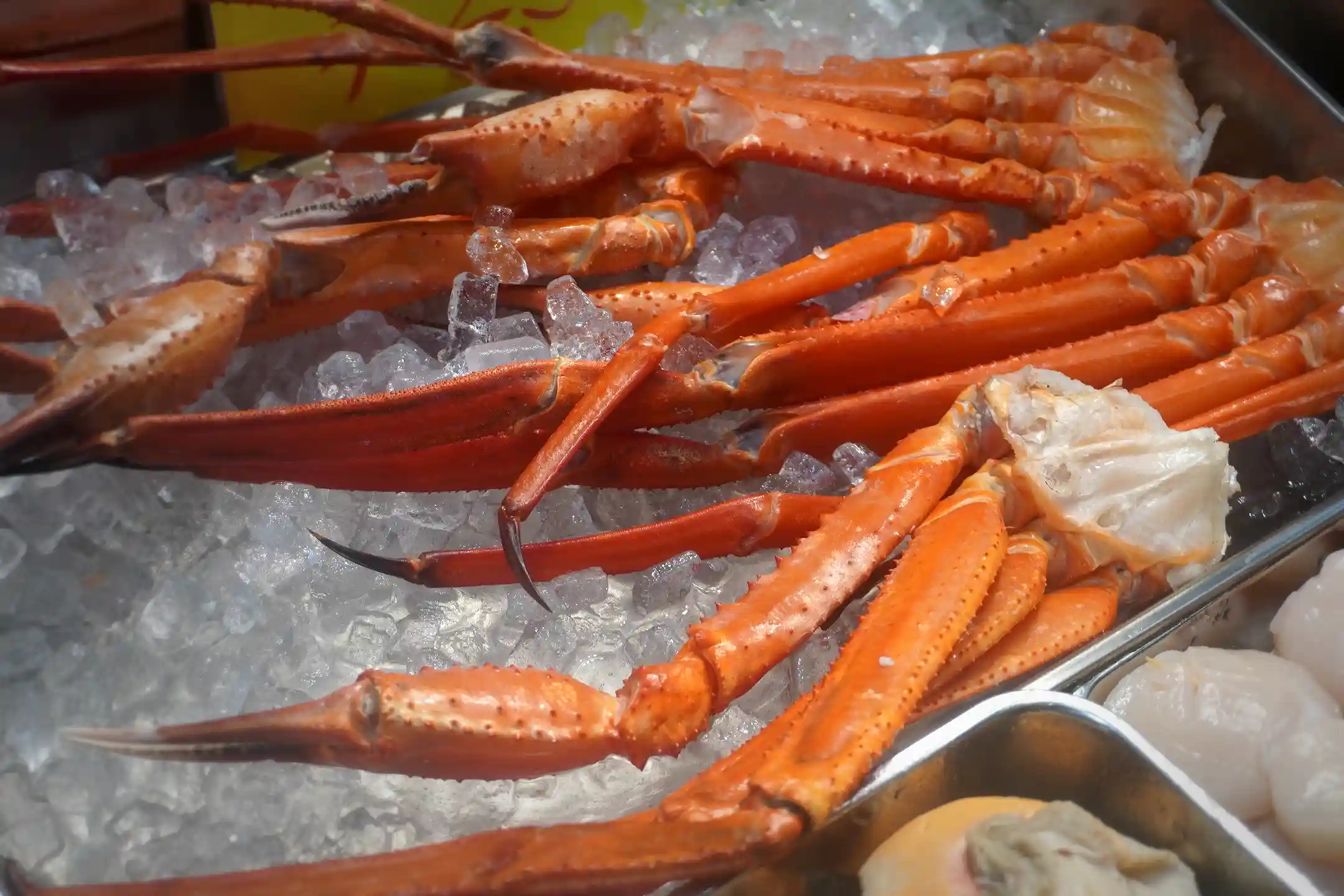
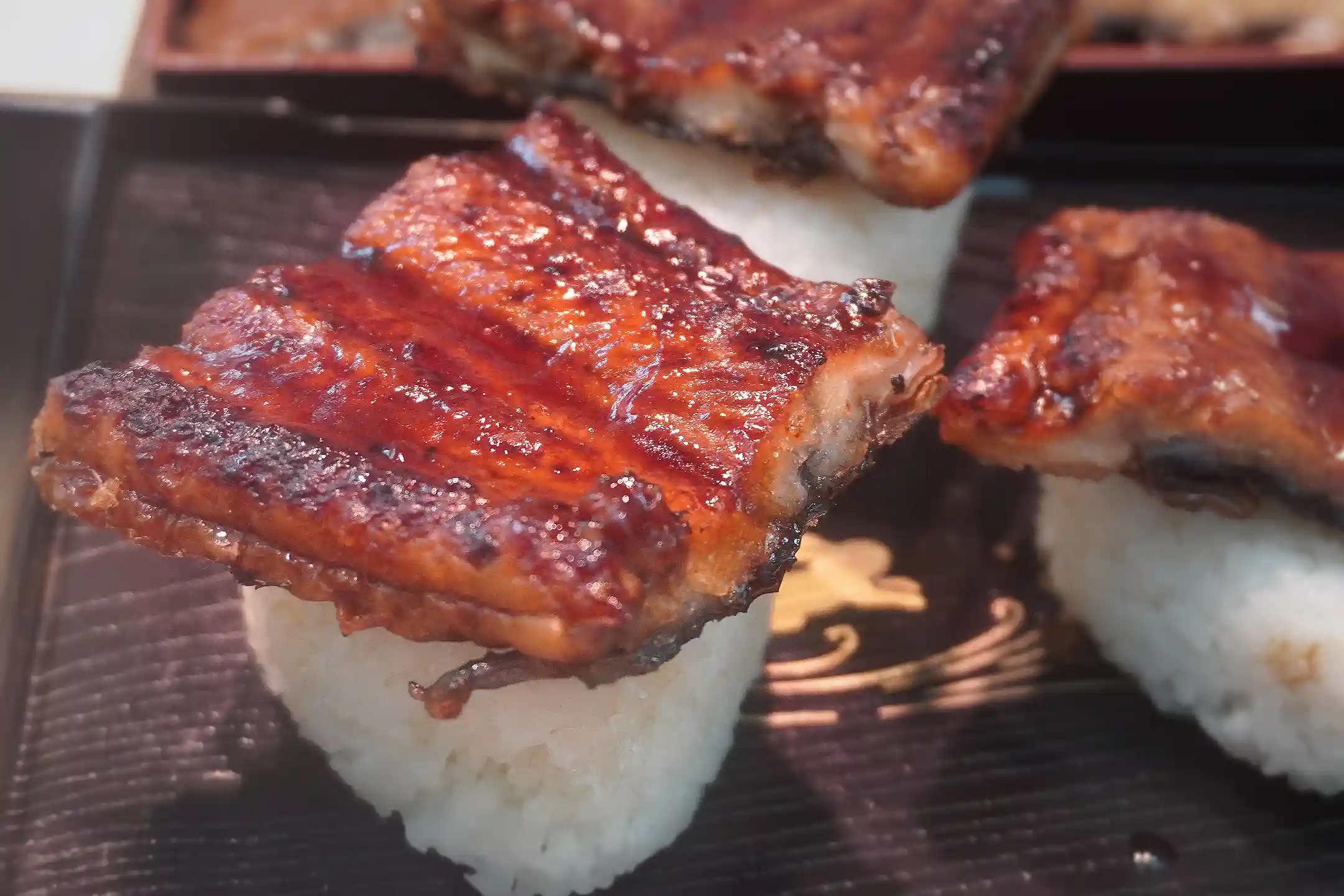
Grilled scallops and oysters are the market's most photographed items and its most variable. A scallop cooked to order in its shell is worth the queue; a tray finished in advance and held warm is not, and the difference is visible from a distance. King crab legs occupy their own category. They are priced by weight, quoted per 100 grams, so confirm the total before the seller cuts: a leg that looks like a modest portion can weigh considerably more than the number on the sign suggests.
The item most specific to this market and this city, though, is fugu. The market's official guide names fugu in winter and conger pike, hamo, in summer as its most famous fish, and states that at least ten per cent of the seafood shops here specialize in the two. Through the winter those counters display whole fish beside tessa, the Kansai name for paper-thin fugu sashimi, so the animal and the slice sit in the same glance. If the question is what to eat here instead of somewhere else, those two answer it more precisely than the crab does.
Wagyu and Kobe Beef Skewers: What You Are Actually Paying For
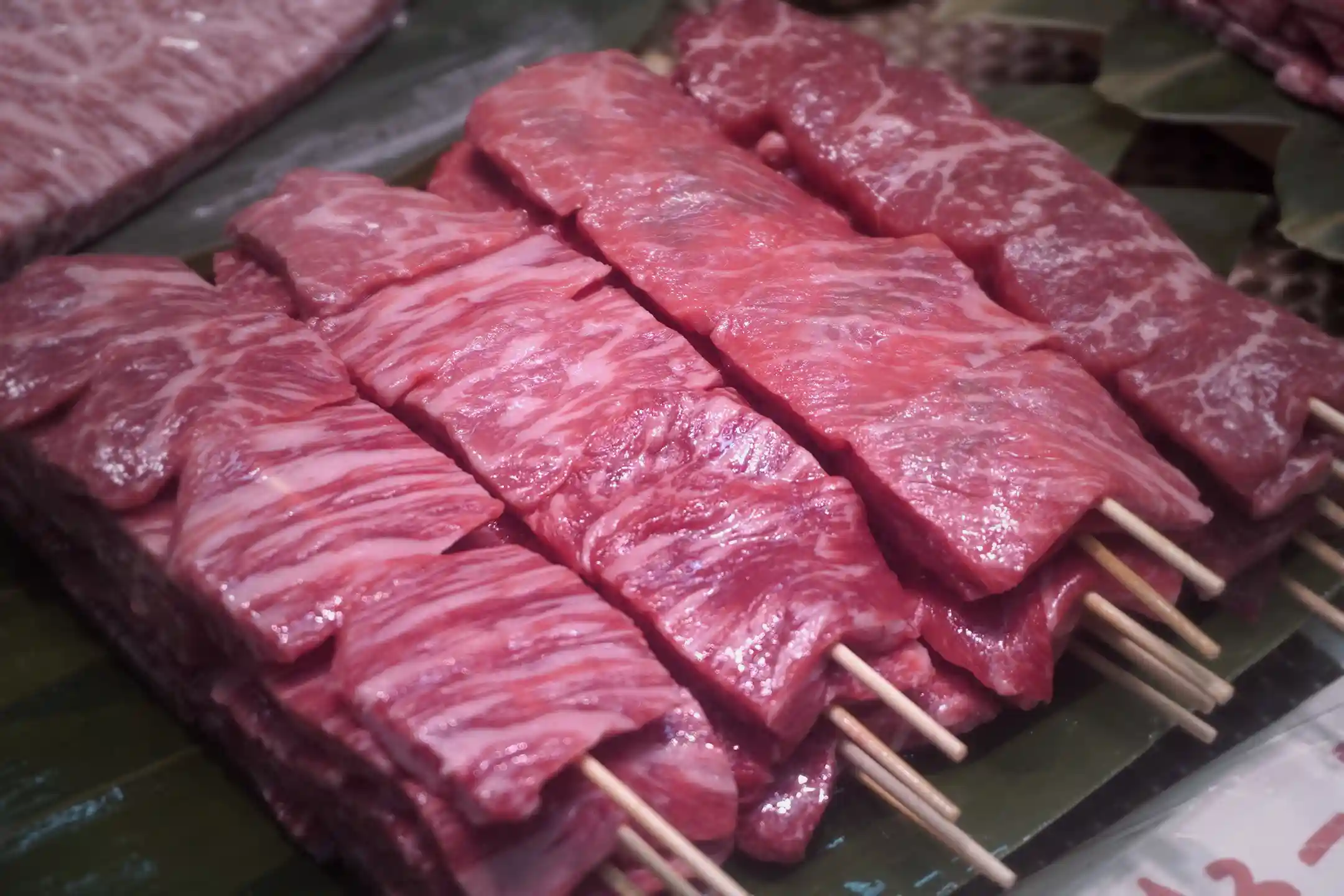
Beef skewers are where the market asks the most of a visitor's trust. A sign reading "Kobe beef" makes a specific claim: Tajima-strain cattle, born and raised in Hyogo Prefecture, certified under the Kobe Beef Marketing and Distribution Promotion Association and meeting its grading thresholds. A sign reading "wagyu" makes a much broader one, covering four Japanese breeds across a wide range of grades. Both can be excellent, and the gap between them is where disappointment usually comes from. Our guide to Japan's beef grading system and its branded names explains what the labels mean before you are standing in front of one.
A practical test: certified Kobe beef is sold with a certificate of authenticity and the association's nojigiku seal, the chrysanthemum mark that only certified carcasses carry. The ten-digit individual identification number displayed beside it is not the proof, because every piece of domestic Japanese beef carries one by law and any of them can be looked up. The seal and the certificate are what separate Kobe from wagyu.
Fruit, Mochi and the Sweets Worth Queuing For
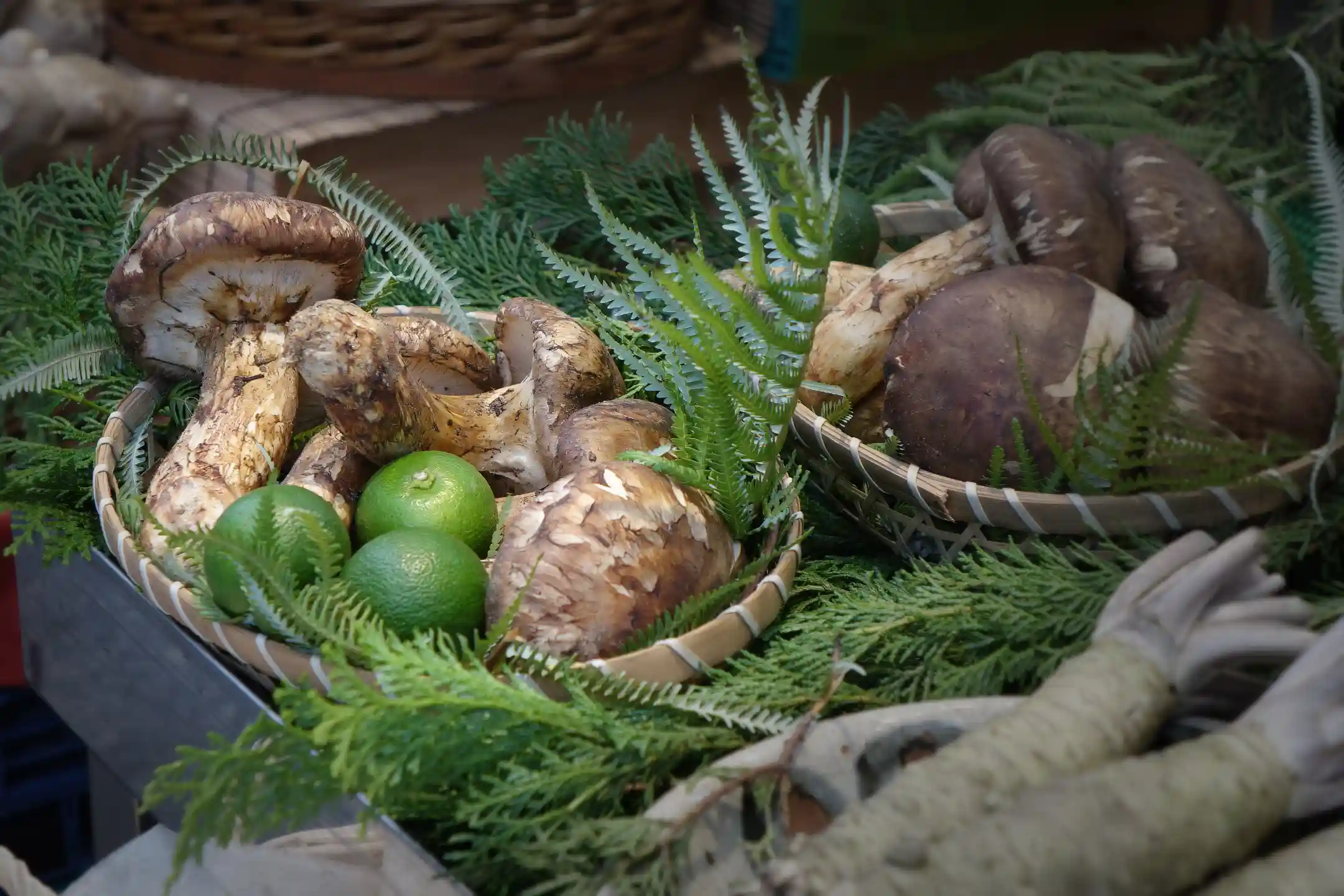
The fruit sellers are the quiet strength of the arcade and the part that still behaves like a grocer's market. Japanese seasonal fruit is graded with a precision that surprises visitors, and a market counter is one of the few places to see the grades side by side and ask what separates them. Strawberries in winter, peaches and melon in summer, and the citrus that arrives in late autumn are sold here across a range of grades. A single piece of premium-grade fruit is a more interesting purchase than a queue-length pastry, and it costs less than the crab.
Mochi is pounded on site at more than one counter, which is worth watching once. Whether it justifies a twenty-minute queue is a question about your morning, not about the mochi.
Is Kuromon Market a Tourist Trap?
The question appears often enough in search results to deserve a direct answer.
Kuromon is not a trap in the sense of dishonesty. Prices are posted, portions are visible, and sellers conceal nothing. It is a trap in a narrower sense: the price reflects convenience and setting more than scarcity, and a visitor who assumes market prices means low prices will be surprised. The grocery function has thinned as the visitor trade grew, and the counters still oriented to local shoppers are now the minority of what you walk past. Both descriptions of Kuromon that circulate online are accurate; they are describing different decades.
Where Osaka Locals Shop Instead of Kuromon Market
Two alternatives are worth knowing, because knowing them turns a visit to Kuromon into an informed choice.
Kizu Wholesale Market in Naniwa ward is the closer answer: a working wholesale market with a public-facing section, smaller and considerably less polished than Kuromon, operating on early hours that reward travelers awake before the arcade opens. Tsuruhashi, east of the center, is the other, a dense lattice of covered lanes around the station forming Osaka's Korean market district, where the trade is unambiguously local.
Neither matches Kuromon for convenience. Both are better answers to the question of where Osaka buys its food, and either can be paired with a wider food-focused itinerary through Japan for travelers who want the contrast.
When Kuromon Is Still Worth Your Morning
Kuromon earns a visit under conditions that are easy to state. Arrive early and treat it as a market. Buy as well as eat, because the fruit, pickles, knives and dried goods are the parts that survived the transition intact. Come with a specific purchase in mind, such as sea urchin from a named prefecture, that a restaurant will not let you compare side by side. And use it as the first stop in a half day that continues elsewhere, given how close it sits to Dotonbori and Namba.
None of that works at midday, when the arcade is full enough that you queue instead of looking, and the market will disappoint anyone hoping for the wholesale spectacle it has never provided.
Hours, Access and the Best Time to Visit
Timing changes this market more than any other variable, and the difference between a good visit and a disappointing one is often ninety minutes.
Opening Hours by Stall Type
The working answer is 8:00 to 18:00. Japan-guide's overview of the market gives those as the typical hours, notes that they vary by store, and records that a considerable number of shops close on Sundays and national holidays even though many open every day.
Within that window the arcade runs on two clocks. Fresh fish and produce counters open at the early end, because their trade was originally with restaurants and households, and they are the first to break down. Prepared-food and standing-and-eating stalls open later and trade latest, so a visitor arriving mid-afternoon will find those still going and the fish counters packing away. If you are making the trip for one specific counter, confirm that counter and not the arcade.
Getting There from Namba and Dotonbori
The arcade begins immediately outside Nippombashi Station, served by the Osaka Metro Sennichimae and Sakaisuji lines. The Japan National Tourism Organization listing for Kuromon Ichiba puts it five minutes southwest of Nippombashi and ten minutes directly east of Namba, close enough that visitors regularly arrive from Dotonbori without realizing they changed districts.
The Ninety Minutes That Decide Your Visit
Arrive between opening and mid-morning and Kuromon behaves like a market. Fish is being cut, deliveries are still arriving, sellers have time to answer a question about where something came from, and you can see the length of the arcade instead of the back of the person in front of you.
Arrive after midday and it behaves like a pedestrian food street. The grills are running, the queues have formed, and the counters that reward conversation are busy with volume. The later version is perfectly pleasant, but it is not what makes Kuromon worth a detour, and it generates most of the complaints.
How to Eat Here Without Getting It Wrong
Kuromon absorbed a large number of visitors quickly, and its etiquette is a live negotiation more than a settled tradition. The first rule is to eat where you buy: counters selling prepared food provide somewhere to stand and a bin for what you finish with, and the expectation is that you use them. The problem is not confined to Osaka. The Nishiki Market merchants' association in Kyoto formally asked visitors to stop eating while walking in 2019, requesting that food be eaten at the storefront or inside the shop; its lanes were too narrow and too crowded for anything else.
Beyond that, a few small courtesies carry a long way. Photographs of a counter are usually welcome if you ask, since the produce on display is stock and not scenery. Cash still matters: card acceptance has spread through the arcade unevenly, and the smaller specialists, which are often the counters most worth buying from, are frequently cash only. Tasting, when it happens, is offered at the seller's initiative.
Kuromon in Half a Day: A Route for Discerning Travelers
Kuromon works best as the opening of a half day.
Begin at the Nippombashi end shortly after the fish counters open and walk the full length once without buying. A single pass takes minutes and is the only reliable way to see what is being cut to order that morning. Then return to the two or three counters that earned it.
Buy the things that travel. Pickles, dried bonito and a knife from one of the arcade's cutlery sellers survive a suitcase and outlast the trip, and they are the part of Kuromon that changed least. If it is a knife you are after, walk a few minutes further west: Sennichimae Doguyasuji is where Osaka's restaurant trade buys its blades, and the choice there is not comparable. Fruit and prepared seafood are for eating that morning.
Then let the market go and walk on. Dotonbori is minutes away and is the stronger choice for takoyaki and kushikatsu, whose specialists are there and not here. Shinsaibashi handles the shopping, and Den Den Town, the electronics district, sits immediately east. Japan's market districts resolved the same arcade logic differently in Kyoto: Nishiki ran through the same conversion from neighborhood grocery to visitor destination and arrived at the same rule about eating on the move, but it did so in a lane roughly half as wide, which is why it reads as the tighter, more regulated version of the story. Our guide to Nishiki Market covers that in detail, and our wider survey of Japan's regional culinary districts sets Kuromon alongside Tsukiji and the rest.

Stay a little longer at the Kansai table
What you've just read is one perspective on a much broader culinary heritage. The Flavors of Kansai Digital Guide weaves together Kyoto's restrained elegance, Osaka's generous spirit, and the seasonal rhythms and regional philosophies that shape both. It is a slower, more connected way to understand the cuisine of this region.

Conclusion
Kuromon Ichiba Market rewards a clear decision more than a long visit. Go early, buy from the counters that still work like a market, take home the things that travel, and eat the Osaka street-food canon where its specialists are. Judged as a wholesale spectacle or as a bargain, Kuromon will disappoint. Judged as a short, convenient window onto how Osaka handles fish, beef and fruit, it holds up.

.webp)