Our search-results check (Ahrefs, United States, October 1, 2026) found course pages from American gardens, studios and an ikebana site among the top results for "ikebana classes". This article is about taking one in Japan, where the first decision is not which class but what kind of lesson you are choosing.
Our answer, stated up front: judge a class by what it teaches you to take away. In our reading, a lesson that only adds flowers misses what Yokoi teaches; a lesson that teaches subtraction is closer to it. The evidence in this article comes mainly from two places: an interview with Kouen Yokoi, a third-generation teacher of the Sogetsu School, conducted by our founder Shohei Toguri and published on August 29, 2026, and the official histories that the Ikenobo, Sogetsu and Ohara schools publish about themselves.
Free Digital Guide: the history, philosophy and modern relevance of ikebana, Japan's art of flower arrangement.
Ikebana Classes in Japan: What You Are Actually Signing Up For
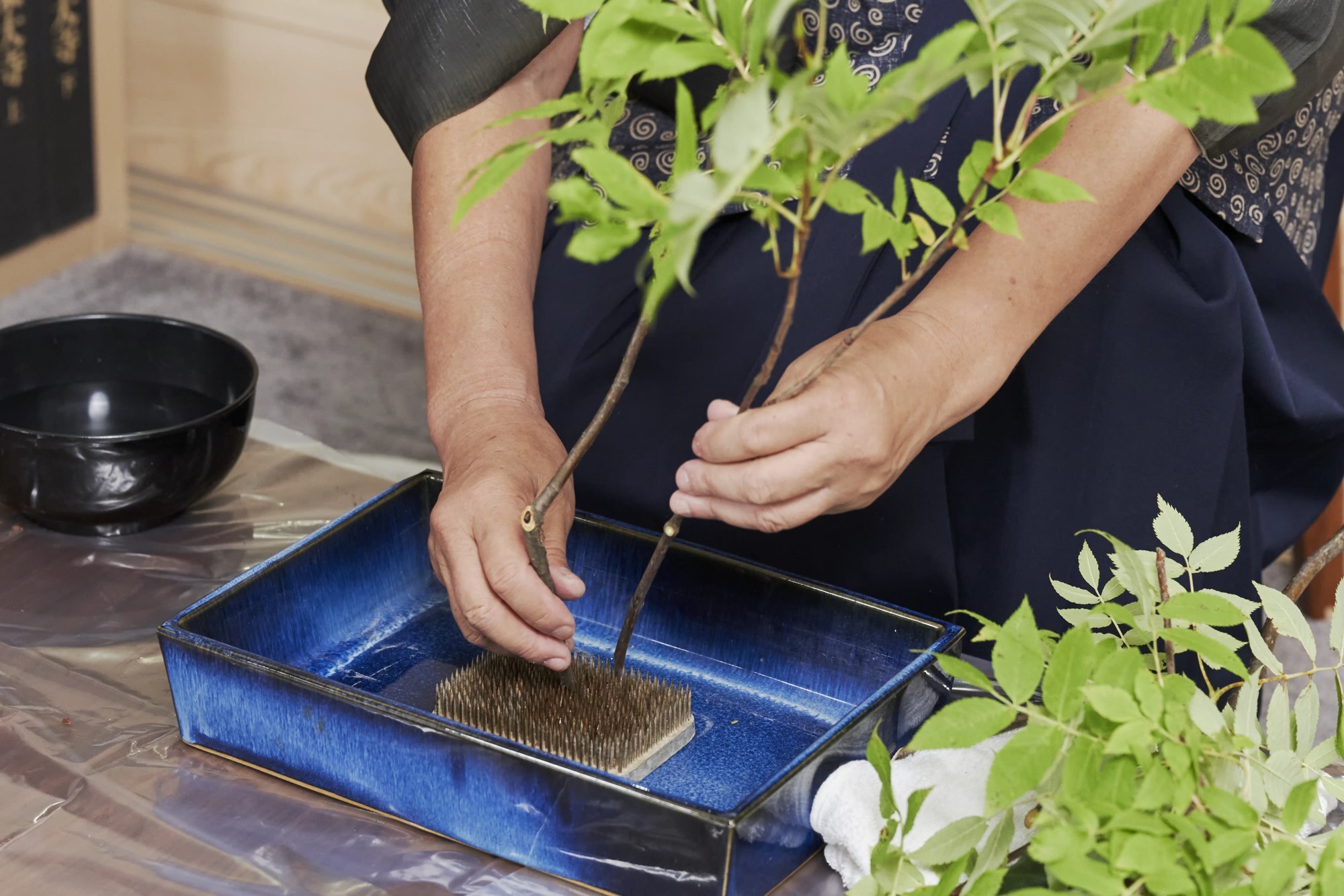
Beginners can learn ikebana, and the teacher and school we cite describe doing exactly that. Kouen Yokoi describes what she does with someone doing it for the first time: "First, I have them experience the trinity called tenchijin — Heaven, Earth, and Man, the three elements." Ohara, one of the three schools compared below, writes on its own site that it has built a curriculum in which students progress in stages, and that the same content is taught at every classroom (our translation of the Japanese page, Ohara School, About).
What a beginner gets from a single lesson is a first move, not a skill. Yokoi's own description of the discipline sets the scale. Asked how invisible space is brought into expression, she answers: "That is probably something you continue for a lifetime." A visitor's lesson in Japan is the entrance to that, and the useful question is whether the entrance is built honestly.
This article leaves out ikebana lessons that happen outside Japan. It covers what happens in the room, which format to choose, which school you are choosing between, and how to tell a serious class from a souvenir activity.
Ikebana Lessons vs. Flower Arranging Classes: What You Take Home Is Different
Ikebana flower arrangement classes and Western flower arranging classes can look alike in a listing, and the difference is the point of this section. The Western approach is not the villain here, and Yokoi does not treat it as one. "The Western style is truly lovely, too," she says. "It is a world that uses flowers, uses plants, to show the flowers themselves as beautiful. The flower is beautiful — that's the point."
Her version of ikebana asks for something else: "I want you to use plants to make a space. The space between one flower and another — this space is beautiful, isn't it." In her account, the first approach ends with beautiful flowers and the second ends with a space.
That difference decides what is worth carrying out of the room. A bouquet wilts. The thing a good lesson leaves you with is a way of looking at the gap between stems. If a class advertises only the arrangement you will take back to your hotel, it is selling the part of the experience that lasts least.
Ikebana Workshop Formats in Japan: Tourist Workshop, Regular Lesson, or Private Teacher
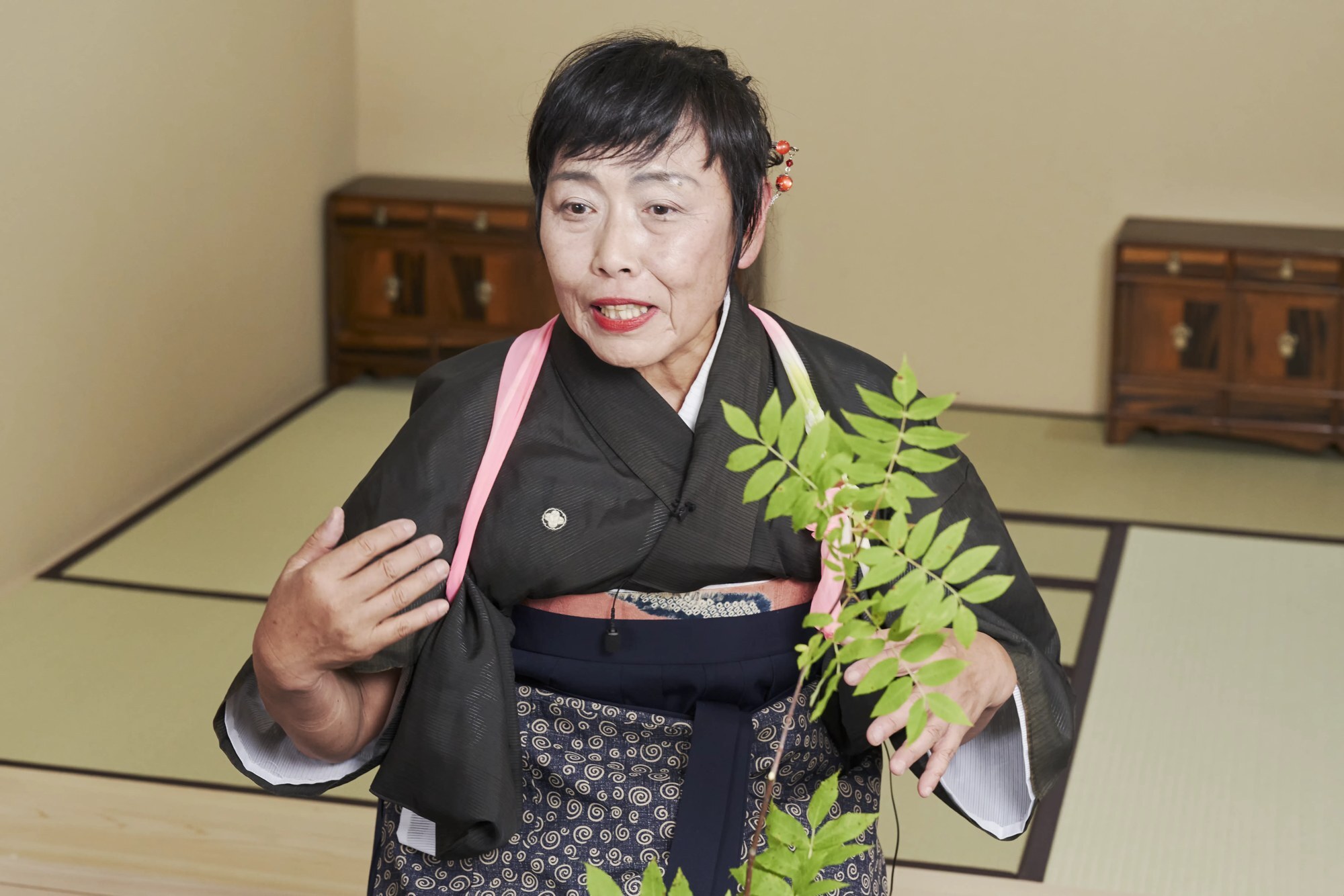
The word "workshop" covers three different things, and sorting them is the most useful step before you choose. We sort what is on offer into three layers. This is our own framework for a traveller, not a count of what exists in Japan.
Layer one: the tourist workshop, open to anyone. This is a lesson designed for a first visit. The interview article's description of Yokoi's first-timer lesson shows what a first-visit lesson can do, whatever the format: a small number of materials and a few principles that show on the table. What it can teach is the first gesture and one idea about space. By its shape, a single visit cannot give you what comes from long correction.
Layer two: the regular lesson, known to those who look. Ohara and Ikenobo run classrooms across the country. Ohara's page refers to teaching at 146 branches nationwide, and Sogetsu's English site lists classes at its headquarters in Tokyo. These are lessons for people who intend to continue. Whether a regular class admits a one-time visitor is each teacher's decision, and we do not claim that they do. What this layer can teach is progress through a curriculum, which Ohara describes for its own classrooms and which a tourist workshop cannot show.
Layer three: the teacher's own circle, reached by introduction. We reserve the third layer for a teacher's own circle of long-standing students, which we assume a traveller would reach only through someone who already belongs to it. We cannot tell you how many such circles exist, or whether any of them accepts a newcomer.
The layers are not a ladder of quality. A layer-one lesson taught by a serious teacher beats a layer-two class taught carelessly. They differ in what they can teach, and the next sections give you the criteria to judge the teacher.
Ikenobo, Ohara, Sogetsu: Three Ikebana Schools, Three Different Lessons
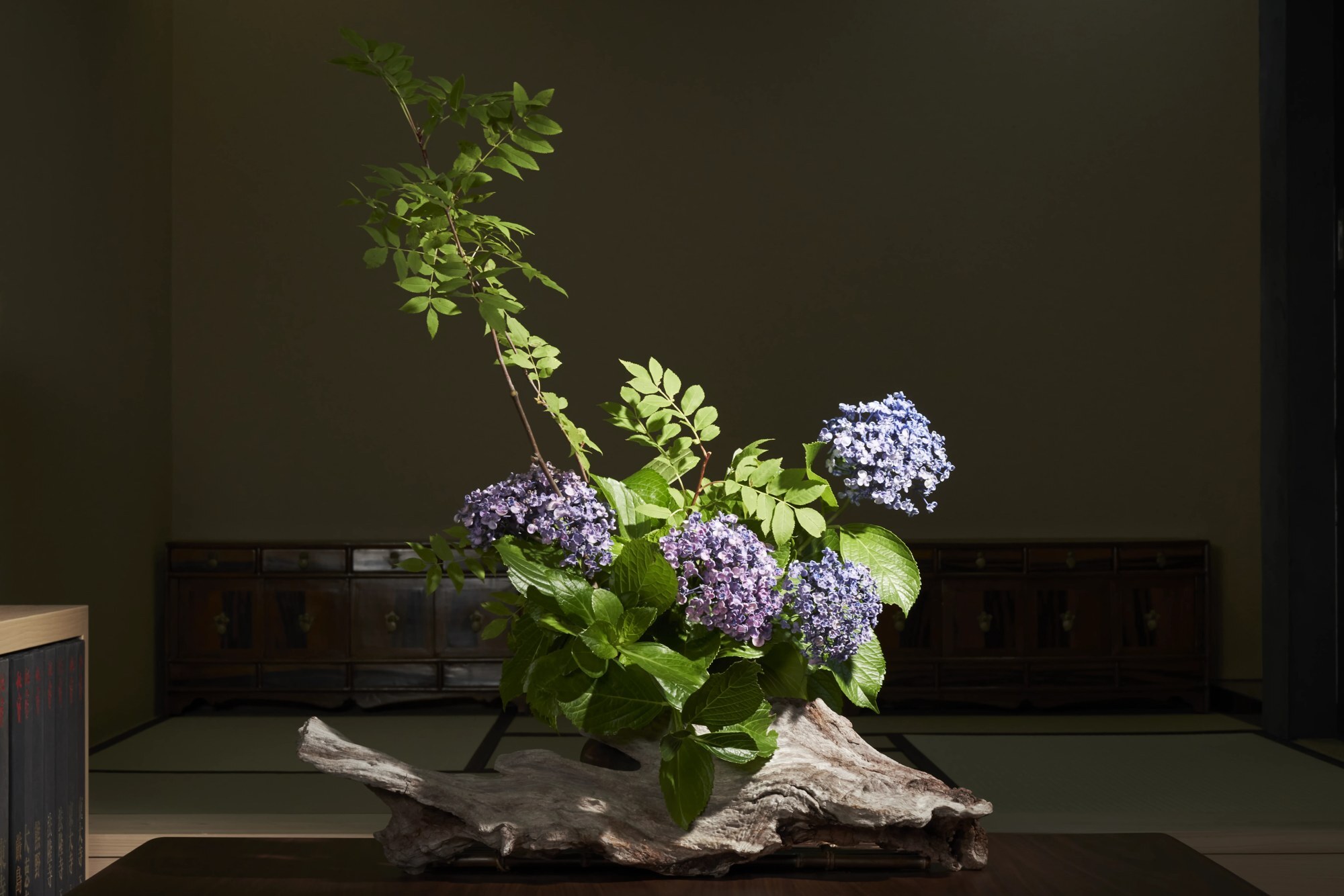
Our interview article puts the number of ikebana schools at more than two hundred. On titles, Yokoi says: "Ikebana has no Living National Treasures. There are too many schools; even an iemoto is not a Living National Treasure." A certified title cannot choose for you, so the choice has to be made on what each school teaches. We describe three, using what each says about itself.
Ikenobo: the lineage that begins in Kyoto. Ikenobo is tied to the Rokkakudo temple in Kyoto, which the school says is known as the "birthplace of ikebana"; successive headmasters have served as the temple's head priests (Ikenobo, Rokkakudo Temple). Its history lists rikka, shoka and the free style jiyuka as styles of equal standing, so a lesson here can range from the formal to the free (Ikenobo, History of Ikebana). Which of those styles a given lesson teaches is something to ask the teacher.
Ohara: the shallow basin and the landscape. Ohara says it was founded in 1895 on the occasion of its moribana style, whose types include natural moribana, which depicts the scenery of nature inside the container. The school also credits itself with first creating the shape that people associate with ikebana, a shallow basin with a kenzan (our translation of Ohara School, About). The same page says the first style a student learns at Ohara is hanaishō, and that some of its types are designed to be seen from several directions. The school describes a graded curriculum that starts from hanaishō, a form it describes as suited to modern living spaces.
Sogetsu: the school that left the alcove. Sogetsu was founded in 1927 when Sofu Teshigahara broke from his father after coming to question traditions in which, as the school puts it, people could not express their originality (Sogetsu, Sofu Teshigahara). The school's own statement is: "Anyone can enjoy Sogetsu Ikebana anytime, anywhere, using any material" (Sogetsu, About). Yokoi makes a related point in a teacher's words: "What my mother and the previous iemoto often said was, 'Sogetsu is what stepped outside the tokonoma.'" She notes that the tokonoma has a back, so an arrangement there does not have to mind being seen from behind. Outside it, she says, "it may be seen from every direction, so make it look good from wherever it is seen."
Choosing between them is choosing a question. The schools are not ranked and we will not rank them. Ask yourself which question you want your lesson to answer. If you want to learn the older formal styles, Ikenobo's history is the one that lists them. If you want a stated, graded curriculum taught the same way in every classroom, Ohara describes exactly that. If you want to learn to treat any material and any room as a place to arrange, Sogetsu's page promises this.
There is also a tension worth knowing about, between form first and expression first. Sogetsu began by questioning tradition, and yet Yokoi, a teacher of that school, says: "Even living freely, I think the school matters enormously. The basics matter most. I would never make light of the school." She adds that "Whether Sogetsu or Ikenobo, it properly begins with a greeting." A free school, in her account, is not a school without a foundation. She does not treat the change as simple loss either: of the postwar shift toward making traditional culture part of daily life, she says, "I think that had its good side, too."
The age of the lineage depends on what you count. Yokoi says: "Starting from Ikenobo, there is a history of more than seven hundred years." Ikenobo's own history dates the name of Senkei Ikenobo to a record of 1462, and it celebrated the 550th anniversary of that record in 2012. We do not decide between these; the interview does not say which starting point Yokoi has in mind. It is a good question to put to a teacher.
From Altar Offering to Weekly Lesson: How Ikebana Became an Okeiko
An okeiko is a lesson or practice session taken under a teacher, and the form we know today took shape over several changes. Several changes, some of them in who practised ikebana, changed how it was taught. The lesson a traveller can join today grew out of these changes.
Yokoi traces it to offerings: "You may take it that it began, originally, from offering flowers to the gods." Ikenobo's history adds that the custom of offering flowers on the Buddhist altar became common after Buddhism reached Japan in the 6th century, and its Rokkakudo page describes priests making floral offerings morning and evening at the temple's altar.
The first change of hands came in the Muromachi period. Ikenobo's history records that in 1462 Senkei Ikenobo, a priest at Rokkakudo, was invited by a warrior to arrange flowers, and that his flowers were praised in Kyoto. The setting had moved from the altar to the room, and the alcove, the tokonoma, was the place where flowers and hanging scrolls were displayed. What was taught begins to survive on paper: Ikenobo's history says a manuscript of teachings with dates from 1486 to 1499 is believed to be the oldest extant example, and that a later headmaster, Senno, passed a document of teachings called a kadensho to his disciples. We explored how the warrior households then made the practice their own in the samurai rooms where ikebana first became a discipline.
The second change was to townspeople. Yokoi says: "In the Edo period, it finally became something for ordinary people." Ikenobo's history records the Tanabata rikka gathering at Rokkakudo becoming a popular annual event in Kyoto. The teaching changed to fit the new pupils: while rikka was popular among townspeople, a more simplified style, shoka, was formalized, and the history says that establishing an introductory shoka course "resulted in a rapid increase in the number of disciples" and that Ikenobo began to include women disciples as well. Yokoi adds that women taking it up begins, more or less, in the Edo period. Ikenobo's own history ties the Meiji period to a deliberate turn to women: in 1879 Sensho Ikenobo was appointed an ikebana teacher at a women's school in Kyoto and focused on teaching women, and "Since then the percentage of women in the ikebana population has increased rapidly."
The third change was in the teaching itself, and the first sign of it is a textbook. Ikenobo says the shoka shofutai style that Sensho formalized was adopted for ikebana education as a style "easy to learn and teach," and that he published the textbook "Hana no Shiori" in 1904. Separately, Yokoi describes a wider consequence of teaching by text: "Once things could be transmitted by text rather than by kuden (oral transmission), schools multiplied." In her account the schools increased most from the Meiji period through Taisho and into the early Showa era.
One tool changed the pace as well. Before the Meiji-era kenzan, Yokoi says, rikka was inserted into a bundle of straw. "Rikka takes me nearly a day and a half to arrange, even now. Thanks to the kenzan, it became possible to arrange quickly, in ten or twenty minutes." Her point is the pace: the tool changed how quickly an arrangement could be made.
Yokoi names one more change, after the war, and she calls it sad: "Make it easy, let it blend into everyday living." In her telling, "The practice of passing on what one received from one's master to the next hand grows thinner and thinner." For the history of ikebana's ideas, rather than its classrooms, our overview of the longer history and philosophy of the form is the place to start.
Inside an Ikebana Lesson: What Actually Happens in the Room
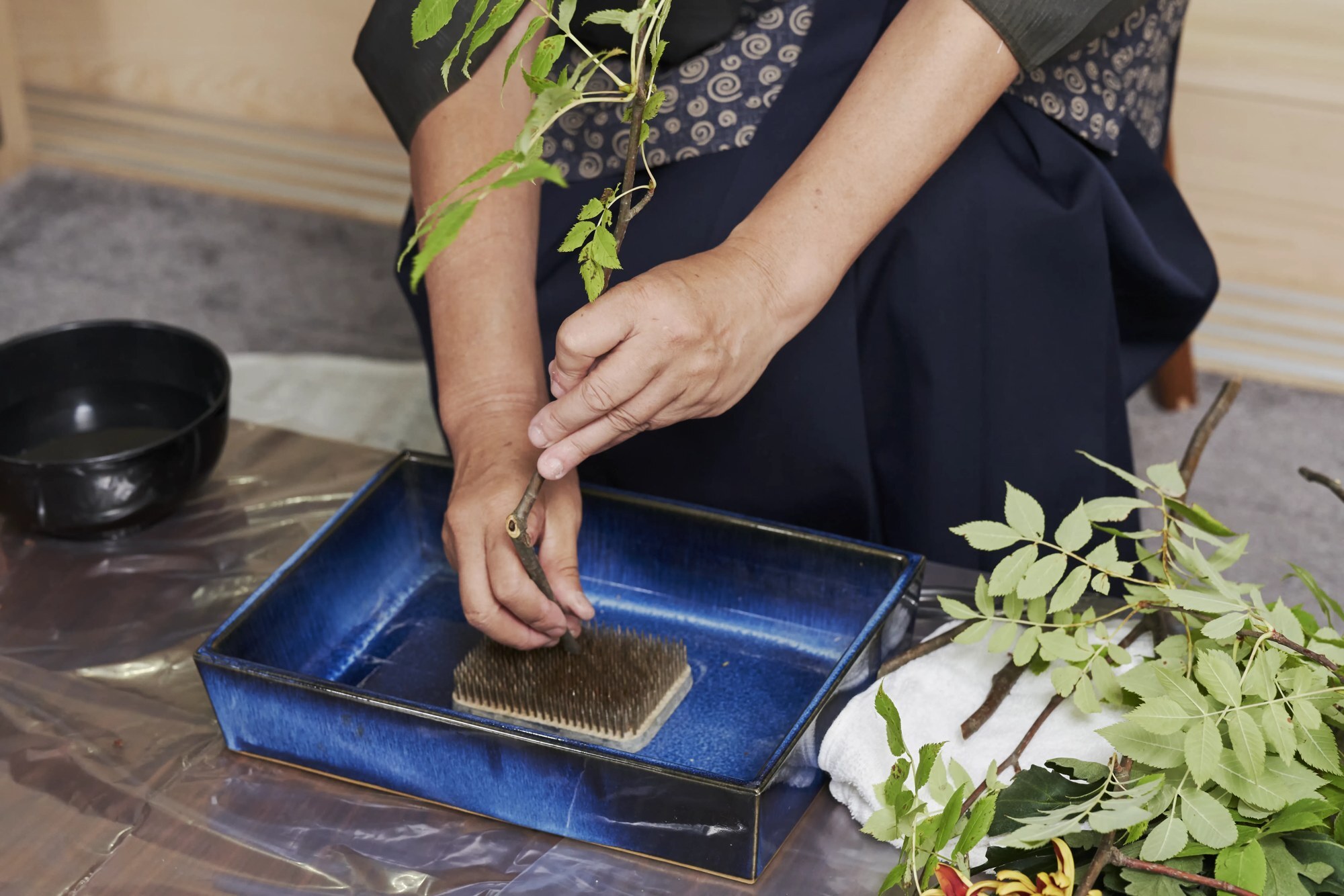
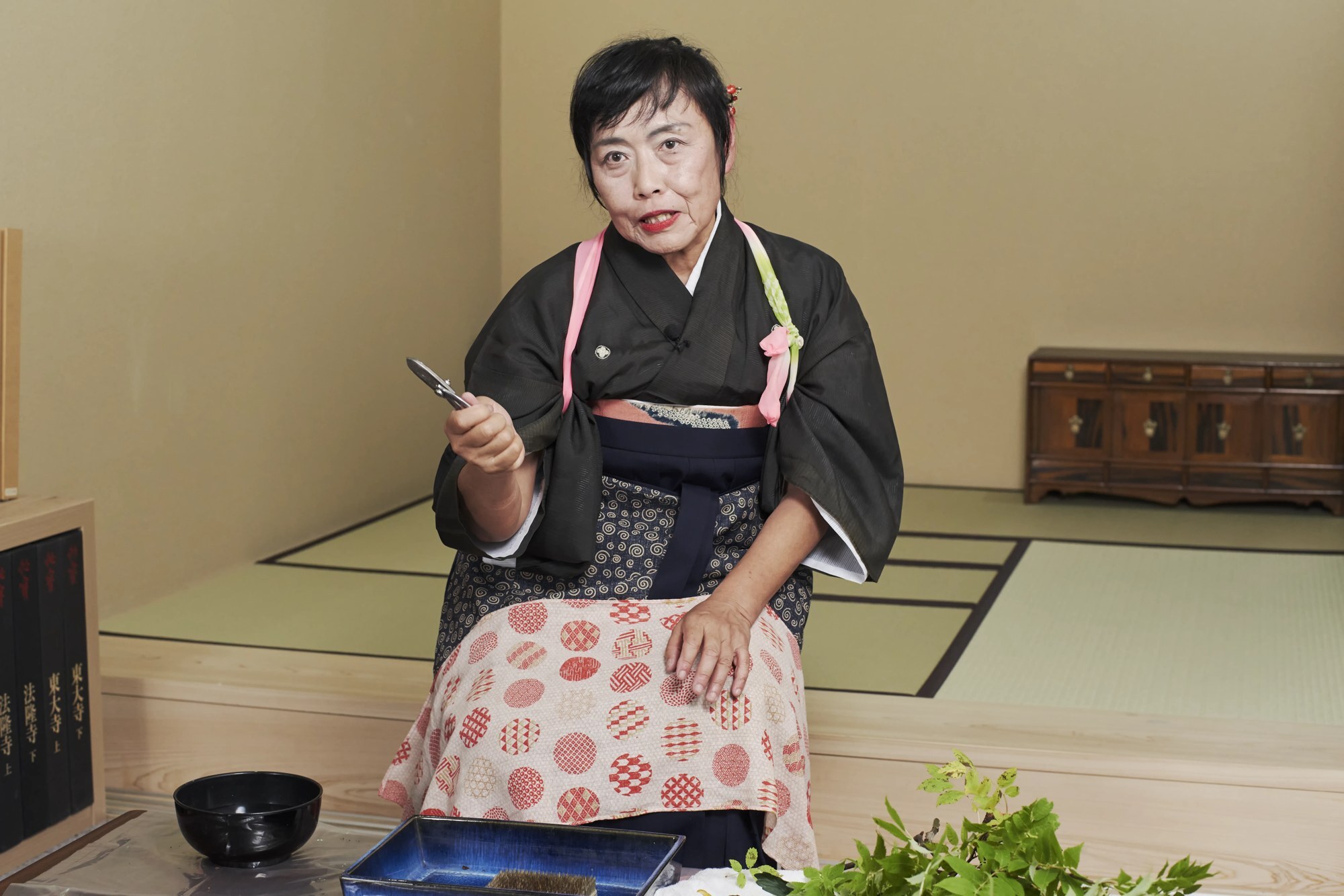
What follows is how Yokoi describes her teaching, in the interview we published on August 29, 2026. It is her account of her own teaching. Our full interview with her is The Space Between the Flowers.
The interview article lists what is prepared: a shallow basin, a kenzan, ringless shears of the warabi-gata type, a few branches and about three flowers. The beginning, in her words, is the three elements of tenchijin. In the practice she holds at a flower shop, she says, "everyone agonizes for about thirty minutes. It's fun to watch." The decision includes cost: "Which flower is best for my assignment, how much will it cost." The season belongs in the choice too: "if you live in Japan, I'd like you to taste, along with it, the pleasure of living the seasons."
The next three sections follow what she says about tenchijin, the kenzan and subtraction. Our interview article notes that first-timers are often surprised by the kenzan, a tool lined with needles, then by the fewness of the materials, and then by the idea that space is born by taking away rather than adding. The interview gives no duration for a lesson, so we give none.
Tenchijin: The Three-Point Rule Behind Every Beginner Lesson
What are the three rules of ikebana? We have no single authoritative list to cite. What Yokoi teaches a first-timer first is tenchijin: Heaven, Earth and Man. It is a composition of lengths and angles, not a list of commandments.
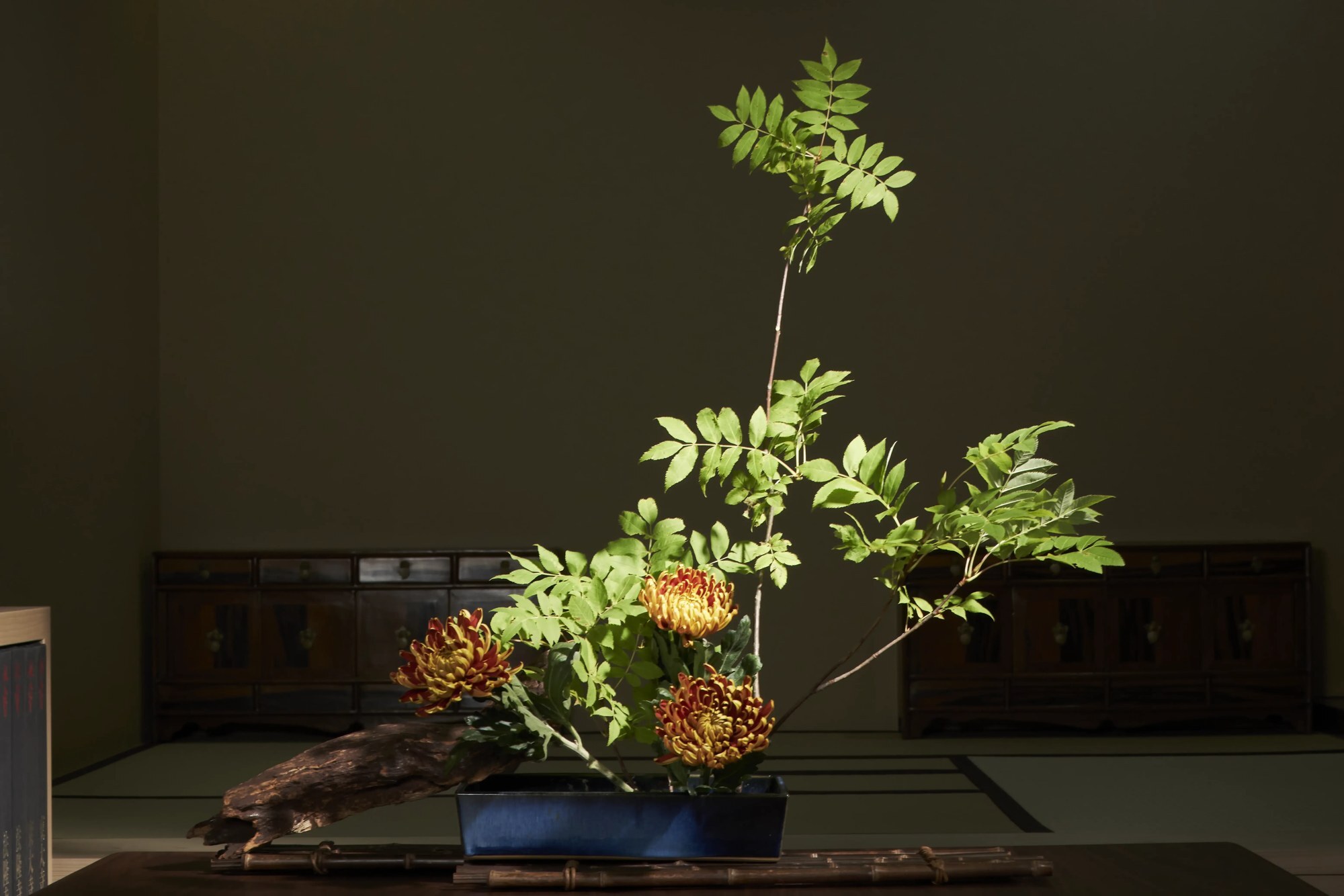
She starts with one line reaching toward Heaven. Her instruction for choosing it is: "Find a good man — tall and slender, with a small head." On size: "For size, take the width of the vessel plus its depth, and one and a half times that is the basic measure." The supporting stem is "three-quarters of that length, tilted a little toward you." She says that this makes Heaven and Earth. Then the flowers: "Tilt the flower toward your left shoulder, and an isosceles triangle forms. This is the foundation of our ikebana."
The useful takeaway is that this lesson gives you measurements to judge by, such as the length of the main stem set against the vessel. The count of three belongs to how Yokoi starts a beginner. Ikenobo's own history describes a drawing of the style later called rikka as composed of seven main parts, called yakueda, so how many principal parts you are taught depends on the style.
Kenzan, the Diagonal Cut, and the Beauty of Subtraction
The kenzan, the spiked metal base that holds the stems, is where subtraction becomes physical. "To the viewer, the kenzan ends up in full view," Yokoi says. Her remedy is to tilt a longer stem forward and make three dimensions look like two, hiding the metal. Among the last steps are putting the last stem in a little lower "to let air pass through" and then shifting the kenzan a little. "Finally, you shift the kenzan a little and let the water show. Here, space is born."
The cut matters too. On shears for cutting wood she says: "Hold the material parallel and cut on the diagonal. Cut on the diagonal and it cuts easily." One exception is the chrysanthemum: it is said to dislike blades, she says, so it is cut by hand, and this is passed down by kuden.
Then comes a further step: she takes something away from the finished work. "When you take away the excess from a finished piece, little by little, air comes into view there." She contrasts this with Western arrangement: "Flower arrangement keeps adding flowers to make it beautiful. But Japanese ikebana is two branches and three flowers." In our reading, her test of a good piece is what was left out rather than what was added.
Some of what she teaches is disappearing, and she says so. She describes an old form called Shoubu, one of the special assignments she teaches: "Teachers who don't know this form have increased, and florists can no longer handle it either." She also shows an old tool called a mister, used for drawing water up into cut stems, and says: "But teachers who know this tool have dwindled quite a lot."
The Same Idea in Other Rooms: Ink, Blossom and the Space Between
The thought that the gap carries meaning is not unique to ikebana. In how sumi-e treats empty paper as part of the picture, the ink painter we interviewed describes the same instinct for empty space: "In a place where there is nothing, you paint just one point, making the most of the empty space around it."
Two crafts, a similar instinct, expressed with different means. The painter leaves paper bare. Yokoi removes stems and lets the water show. Neither is piling on.
How to Tell a Serious Ikebana Class from a Souvenir Activity
These five markers are ours, drawn from what one teacher told us and what the schools publish. Use them as questions to ask, not as a verdict.
Does the teacher look at you? Yokoi says: "I think the master's role is to teach while sharing one interesting exchange after another with each person." She credits her years as a scuba instructor, when she had to read another person's state of mind from the eyes alone. A class where the teacher only reads a script is closer to a demonstration.
Is the school and the teacher's line explained? She says she does not make light of the school, and a serious teacher can say which school they teach and from whom they learned. Ohara's page, for one, describes a research academy of 78 members whose work includes guiding the teachers themselves, the kind of structure worth asking a school about.
Are the flowers of the season? Yokoi, speaking to those who live in Japan, wants them to taste the pleasure of living the seasons alongside choosing the flowers, as quoted above. A class whose materials ignore the calendar teaches less about that.
Does the teacher ever take something away? The test follows from the previous section. If the teacher only adds, you are not being taught what Yokoi calls the beauty of subtraction.
Is the take-home arrangement the main point? Ask what you will leave the room with. If the answer is only a finished arrangement, the class is selling the souvenir.
On price, our sources give no figures and we give none. Yokoi's own flower-shop practice shows that flowers are a real cost ("how much will it cost"), so our questions are these: whether the flowers are part of the fee or bought separately, and whether tools such as the kenzan and shears are lent. Both change what the same price means.
Etiquette and What to Bring: A Short Version
Four points are enough for a first lesson. The first is the greeting Yokoi mentions above: "Whether Sogetsu or Ikenobo, it properly begins with a greeting." Our experience guide, which has a fuller etiquette and packing checklist, adds three more: take your shoes off at the entrance, keep perfume light, and set tools down between steps.
Who Is Teaching Ikebana Now: A Third-Generation Teacher and the Students She Inherited
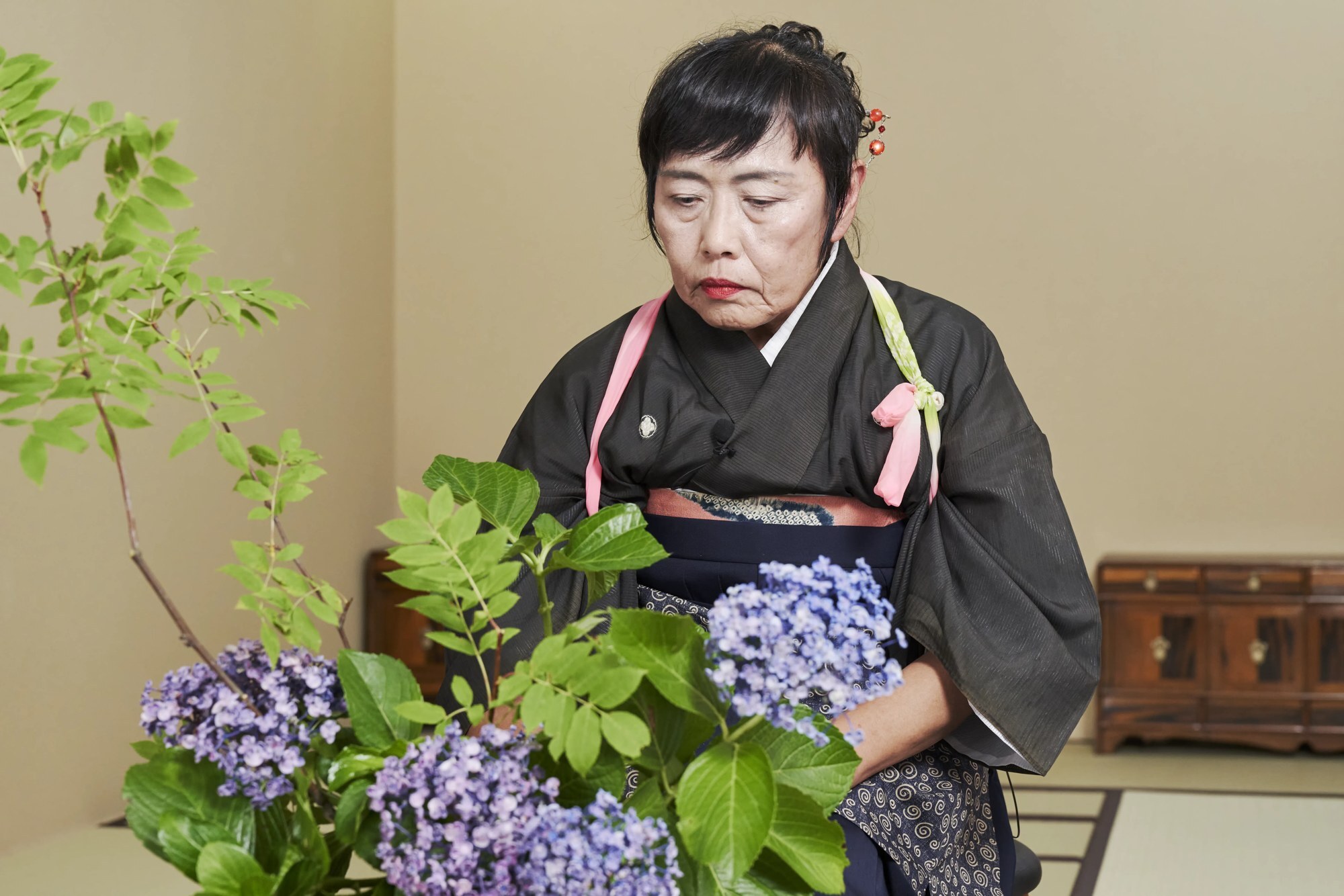
The history above ends with a person, and in this case the person did not plan to inherit it. Kouen Yokoi is a shihan, a certified master, of the Sogetsu School, and its third generation: her grandmother and her mother both taught it. "It was the opposite, in fact," she says of her youth. "Until I entered high school, I resisted my family." Before her mother's death she had studied spatial design at art school, worked in stage design, and dived as a scuba instructor.
What changed was her mother's death. She says her mother left a line behind: "the one who inherits kurenai," the single character that has been handed down through the names of her grandmother, her mother and her. "When I saw it, the feeling that 'I have to carry this on' rose up in me properly." Taking over was not easy. "Taking it on, honestly, frightened me. My mother had around a hundred and fifty students." She asked them to let her continue: "I'm sorry — if you'll allow it, please let me continue."
The first thing she met was the basics. "For half a year, I drilled it into myself thoroughly. I didn't even know the names of the plants." She brought a flower dictionary to the practice room early and looked each plant up. On lineage she reaches for a proverb about fruit trees: peach and chestnut take three years, persimmon eight, and she continues that citron takes eighteen years and apple twenty-five. Those years are for trees, not for students. "Which means this is a world that doesn't hold together unless you continue it as a family, as a lineage."
How long it takes to learn ikebana is a question none of our sources answers with a number of years; Yokoi describes it as a lifetime. She tells of a teacher past eighty who had begun Sogetsu around the same time as her grandmother and, at a convention twenty years ago, bowed to a young iemoto and said: "I still have much to learn from here on, so please guide me."
The inheritance is practical, too. Because she learned the old family forms from her mother, she says, there are many special assignments that are not in the Sogetsu text. "Left alone, these will simply disappear." So she explains to her students why each is needed and has them practise it until it becomes a habit. People from abroad, she says, hold great respect for the fact that the culture has continued for hundreds of years: "I feel they respect the very act of studying one thing continuously." In our reading, that continuity is what stands behind a visitor's lesson.
Ikebana Classes in Tokyo and Kyoto: Where the Experience Differs
The schools keep their headquarters in different places; that says where they sit, not what any teacher in either city teaches. Whether you search for an ikebana class in Kyoto or an ikebana class in Tokyo, the school behind the class matters more than the city.
Kyoto is where Ikenobo is. Its headquarters stand next to the Rokkakudo temple, and the temple is known as the birthplace of ikebana. Tokyo is where Sogetsu has its headquarters, the Sogetsu Kaikan, in Akasaka, Minato-ku, and where the Ohara foundation has its address, in Minami-Aoyama, Minato-ku.
The picture is not neat. Sogetsu has opened a hub in Kyoto, called Sogetsu WEST, and Ikenobo established an office in Tokyo in 1889. Both facts say the same thing: a school's headquarters is not the only place its teaching is found. Choose the city for your itinerary and the teacher for your question. Yokoi's own reminder that the Muromachi shoguns raised ikebana in Kyoto is a good one to carry with you: in our reading, the city explains where the vocabulary comes from, and the lesson tells you what the vocabulary is for.
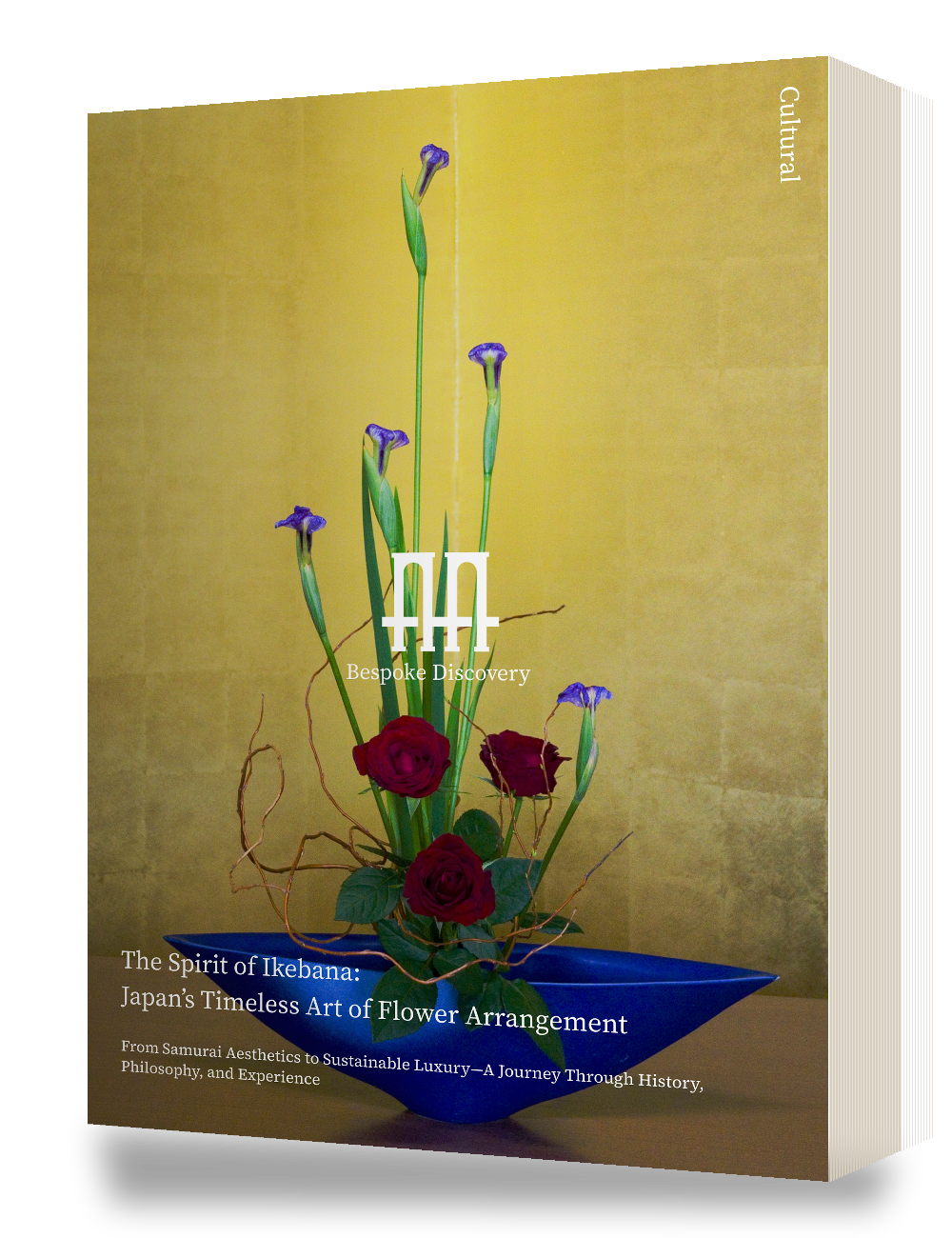
The Spirit of Ikebana
Before You Book an Ikebana Class in Japan: Three Things to Decide
Do you want to learn form or expression? Ikenobo describes the formal lineage, Ohara a graded curriculum, the same in every classroom, Sogetsu the freedom to use any material in any room. Choose by the question, not the prestige.
Do you want an entrance or a path? A visitor's workshop gives you a first gesture, and a regular class gives you progress. They answer different needs, and neither is a lesser version of the other.
Do you want to bring home an arrangement or a way of seeing? If it is a way of seeing, look for the teacher who takes something away.
Two branches and three flowers, Yokoi says, is enough to make one space. Decide what you want that space to teach you, and the rest of the itinerary follows.