When a milestone in life arrives, why not celebrate it with an extraordinary stay at a Japanese onsen ryokan? Japan is home to more than 2,800 onsen (hot spring) areas nationwide, and its diverse water qualities and deep‑rooted bathing culture are highly regarded around the world (*1). An onsen ryokan is a traditional inn steeped in history, where you can restore body and mind through refined hospitality, seasonal scenery, and exceptional cuisine.
If you also make use of rooms with private open‑air baths or day‑use onsen plans, you can turn your special day into a private memory that belongs just to the two of you. In this guide, you’ll explore the history of onsen ryokan, how to choose one, how to use private baths, activities you can enjoy together, and the distinct charms of hot spring regions across Japan—including the best scenes to catch in each season.
Even if you’re new to Japanese culture, this guide explains everything with care so you can follow along with ease. Use it as your companion as you plan.
Japan’s Onsen Ryokan: History, Culture, and the Value of the Experience
For generations, people have cherished onsen ryokan as places where history and tradition come alive through heartfelt hospitality. You slip into a yukata, relax in a tatami‑mat room, soak in hot spring water that flows straight from the source, and savor a multi‑course kaiseki dinner at its seasonal peak—an only‑in‑Japan immersion that stays with you.
Japan’s ancient onsen culture and the ryokan spirit of attentive care continue to captivate travelers from around the globe. In this section, you’ll get to know how onsen ryokan came to be, the cultural context behind them, and why they feel so special. By learning the basics of hot springs, the flow of a ryokan stay, and the many styles of ryokan, you’ll see afresh the depth of the experience awaiting you in Japan.
Onsen Basics and Water Types
Before talking about ryokan, it helps to grasp the fundamentals. In Japan, “onsen” is defined by law as water that emerges from underground at 25°C (77°F) or higher, or that contains a specified minimum concentration of certain minerals (*3).
Onsen waters come in several types (called sen‑shitsu), and their components shape the feel and effects of each bath. There are about ten major categories. For example, sulfur springs are often milky white with a distinctive scent; they’re said to promote circulation and have antibacterial properties, and they have long been cherished as “medicinal baths” for wounds and skin conditions (*4).
Bicarbonate (hydrogen carbonate) springs feel silky and help lift away dead skin cells; many people call them “beautifying baths” because your skin feels smooth after soaking (*4). Chloride springs, which contain salt, warm you to the core and help prevent getting chilled, while carbon dioxide springs cling to your skin with tiny bubbles that stimulate circulation—soothing sore muscles and aiding recovery from fatigue (*4). Sampling different waters from ryokan to ryokan is one of the great pleasures of an onsen journey.
The Flow of an Onsen Ryokan Stay and On‑Site Facilities
From arrival to departure, you’ll be enveloped in distinctly Japanese hospitality. At check‑in, a kimono‑clad attendant (nakai) welcomes you; in your room, tea and sweets are offered to help you settle in. Guest rooms are typically tatami‑mat spaces where you can change into a yukata and lounge, or wander through the garden until dinner.
When it’s time to bathe, you can indulge in large communal baths and open‑air baths fed by free‑flowing onsen water. After your soak, some ryokan have table tennis or retro game corners—a touch of Showa‑era nostalgia that’s part of the fun. Come evening, kaiseki cuisine is served in your room or in a dining venue. Delicately presented courses built around seasonal ingredients are a defining highlight of the ryokan experience. Observe basic onsen etiquette: wash before entering, keep towels out of the water, and note that some communal baths restrict visible tattoos; private onsen or tattoo‑friendly facilities are good alternatives.
After dinner, futons are laid out for you. You drift off to sleep in quiet, with the atmosphere of the hot spring town just beyond your shoji screens. In the morning, wake early for another soak or a stroll; a Japanese breakfast awaits before check‑out. That’s the classic rhythm of a ryokan stay. If it’s your first time, this sequence itself becomes a rare, hands‑on way to experience Japanese culture.
Types of Onsen Ryokan
“Onsen ryokan” covers a spectrum. Historic, long‑established inns (shinise) come first to mind—some operating since the Edo period, with wooden main buildings designated as Registered Tangible Cultural Properties. For example, “Ochiai Rou” in Izu has seven principal structures on the registry (*2).
At such ryokan you feel Japan’s aesthetic sensibility through architecture, gardens, and traditional furnishings. At the same time, upscale modern Japanese resorts are on the rise—rooms with open‑air baths and beds, full internet connectivity, and interiors unified in a warm, contemporary‑Japanese style.
Size varies too. Small inns with fewer than ten rooms charm you with an intimate atmosphere and meticulous service. Large onsen hotels with more than 100 rooms may have pools, spas, and an array of different baths. Some properties take special pride in their water or their views—boasting their own source with free‑flowing baths (gensen kakenagashi), or dramatic open‑air tubs with panoramic scenery.
Whatever the style, one thread runs through them all: a devotion to omotenashi—thoughtful, anticipatory care. From the seated welcome on tatami to seasonal flower arrangements and ikebana displays, that warmth is the essential allure of staying at an onsen ryokan.
How to Choose an Onsen Ryokan: Water Quality, Rooms, Dining, and Location
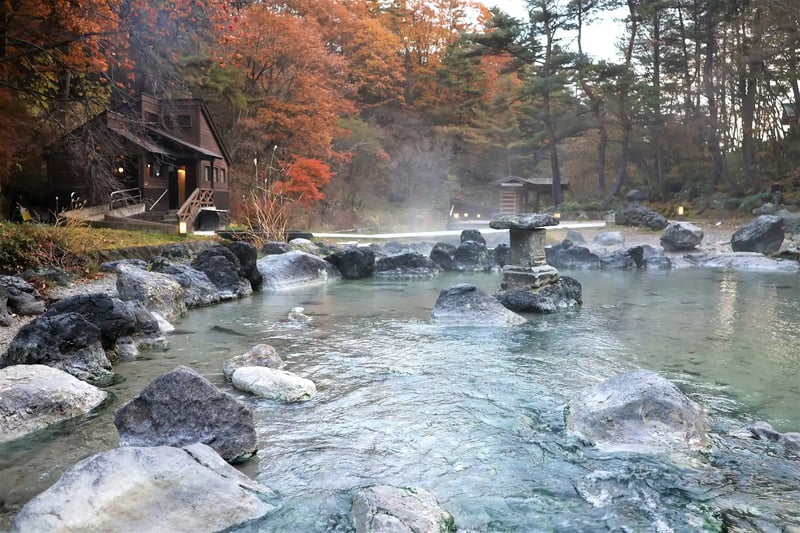
Choosing the right ryokan can make—or break—an anniversary trip. If your goal is deep relaxation, pick waters known to promote circulation; if your priority is radiant skin, look for alkaline baths. Your purpose guides you to the right place.
If you want uninterrupted time for two, go for a room with a private open‑air bath. If you want to savor local, in‑season specialties, focus on properties renowned for their cuisine. And remember: scenery and nearby attractions color your memories just as much as the property itself.
In this section, you’ll find practical tips: how to match water types to your goals, what to look for in a room with an open‑air bath, and how to make the most of your dining. Keep these points in mind as you narrow down your options.
Onsen Water‑Type Matrix by Purpose
Align the hot spring to your aims. To unwind and ease muscle fatigue, sulfur springs and carbon dioxide springs are often recommended; hydrogen sulfide in sulfur springs can dilate capillaries and stimulate metabolism, which is said to help with joint pain and sensitivity to cold (*1).
If your focus is skincare, alkaline simple springs or bicarbonate springs are ideal. Alkaline water gently lifts old keratin and has a soap‑like effect, leaving your skin feeling smooth after a soak (*1). If you’re concerned about persistent skin issues, acidic springs can be considered; they have strong antibacterial action and may help with atopic dermatitis—though their intensity can irritate sensitive skin, so caution is advised (*1). Perceived benefits vary by individual; if you have medical conditions, consult a professional before bathing.
Each water type has its own character. Local nicknames like “beautifying bath” or “healing bath” can be helpful clues. Before you travel, check each ryokan’s website or brochure for the spring’s official classification and stated benefits. Approaching your trip like a “hot spring sommelier” adds a new layer of enjoyment.
How to Choose a Room with a Private Onsen (Open‑Air Bath)
For a private, romantic celebration, rooms with their own open‑air tub are incredibly popular. When comparing them, start with the tub’s design and feel: Is it fragrant hinoki wood, carved stone, or ceramic? The material and shape influence the mood. Confirm practical details too—ample size for two, and whether there’s a jacuzzi function or other features (*2).
Next, consider the view. Does your tub face the ocean, wooded hillsides, a bamboo grove, or star‑filled skies at night? The scenery you enjoy while soaking sets the tone of your celebration (*2). Don’t forget the room itself: Japanese or Western style, beds or futons, a proper living area—ask yourself whether you’ll truly relax spending long stretches of time there.
If uninterrupted together‑time is the goal, check whether in‑room dining is available for dinner and breakfast. With private meal service, you can savor conversation at your own pace without interruption. Since these rooms book quickly for weekends and peak seasons, planning ahead pays off.
Optimizing Your Onsen Ryokan Dining Experience
Meals are central to anniversary memories. Traditional kaiseki dinners spotlight seasonal ingredients unique to each region and change with the calendar—every month brings new flavors.
Some ryokan incorporate beloved local dishes or premium beef; others offer celebratory touches like cakes or champagne. Share requests when you book: disliked ingredients, allergies, or dietary needs for religious reasons.
Some ryokan can prepare vegetarian menus, but changes can be limited; always confirm in advance (*3). If you’d like English descriptions of dishes, ask ahead—many properties are happy to help.
Also consider the setting. In‑room dining offers complete privacy, while others provide private dining rooms. If quiet conversation is your priority, choose a plan with a private space. Take your time with each course, engaging all five senses as you savor a night made just for you two.
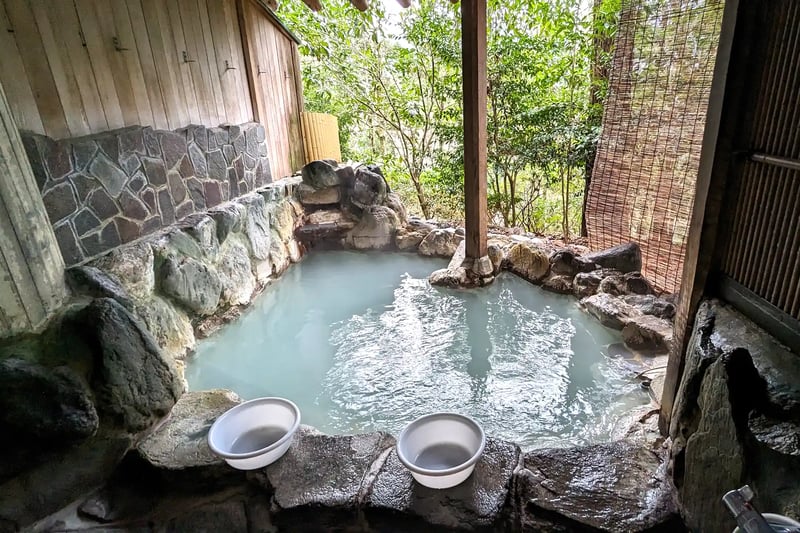
Enjoying Private Onsen: Ryokan with Private Hot Springs and How to Use Private Baths
For an anniversary trip, using a private bath—either reservable baths on site or a room with its own open‑air tub—lets you relax completely on your own schedule. No need to worry about others’ eyes; you can move at your pace and linger as long as you like. There are two main styles: reservable private baths (separate from the main baths) and in‑room tubs supplied with onsen water. Both are ideal for a just‑for‑two experience.
If you’re hesitant about communal bathing, private options offer peace of mind. That sense of seclusion can turn your celebration into an unforgettable memory. This section outlines types of private baths, tips for reserving them, and the advantages of in‑room open‑air tubs.
Types of Private Onsen Baths and How to Reserve
Often called “private onsen” or “family baths,” these spaces are perfect when you want to bathe without an audience. There are two common formats.
First is the timed reservable bath: a smaller bath separate from the main facilities that you book for exclusive use. Second is the private bath inside your room, such as an in‑room open‑air tub. Here we’ll focus on the former.
Pricing varies. Some ryokan charge per session in set‑minute blocks; others allow unlimited use at no extra cost. You might even find room plans that include private‑bath sessions. Check in advance.
Some properties also offer private baths for day visitors. Even if you can’t stay overnight, day‑use packages with lunch—and sometimes yukata rental—let you enjoy a mini getaway.
As for reservations, many ryokan take bookings for private baths at check‑in on a first‑come, first‑served basis, so your preferred slot may be unavailable if demand is high. If you absolutely want a specific time, contact the property beforehand to ask whether advance reservations are possible (*1). Plan well, and you’ll enjoy unhurried soaking, just the two of you.
In‑Room Open‑Air Onsen—Benefits and Maintenance Notes
A private onsen in your own room is hard to beat. You can bathe whenever you like—late at night, at dawn—entirely on your own schedule, without coordinating with other guests. This is especially comfortable if you’re not used to public bathing. You can chat, gaze at the scenery, and unwind together at leisure.
From a maintenance perspective, ask a few smart questions. Many in‑room tubs draw directly from the property’s source, but some are recirculated or heated tap water rather than true hot spring water. If authentic onsen is important to you, confirm before booking: “Is the room bath supplied with hot spring water?” and “Is it free‑flowing from the source (gensen kakenagashi)?”
These days, many ryokan list the water type of in‑room baths on their official sites. For outdoor tubs, leaves or insects may occasionally fall in; if it bothers you, use the provided net or close the lid after use. Wooden tubs are cleaned and maintained regularly, though over time they develop a lived‑in patina along with their lovely scent.
If you can embrace that patina as part of the atmosphere, you’ve reached ryokan connoisseur level. Either way, treat the tub with care—it’s a special space. Rinsing lightly after use helps keep everything pleasant for you and the next guest. 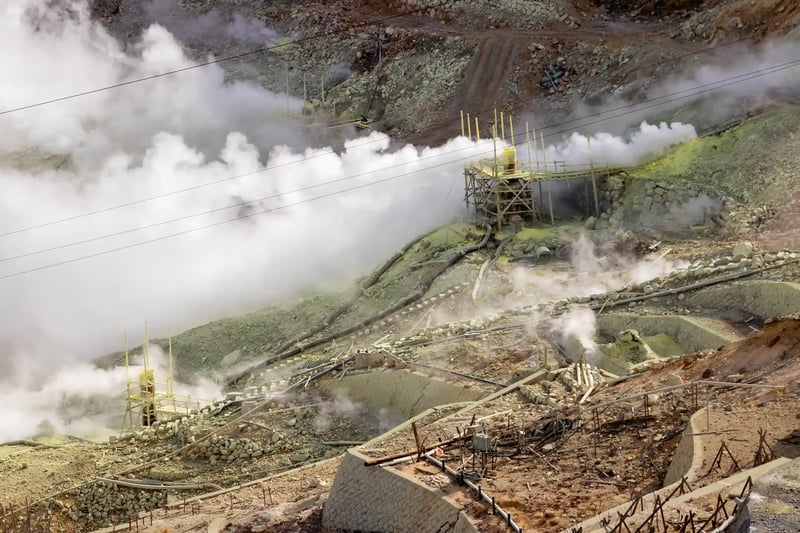
A Refined Half‑Day Trip with Day‑Use Onsen
Even with limited time, a day trip to an onsen ryokan can restore you. Many properties now offer day‑use bathing and short‑stay plans, so you can enjoy superb water and cuisine without spending the night. With a morning‑to‑afternoon window, you can fit in a soak, a scenic walk, and a taste of local specialties—an efficient yet satisfying half‑day escape.
If you want to celebrate like a mini getaway, day‑use onsen is a great option. This section shows how to build a half‑day model plan and what to watch for when booking day‑use. Learn a few tricks and you’ll create a short yet luxurious experience for two.
How to Build a Day‑Use Onsen Half‑Day Plan
If an overnight trip isn’t realistic, day‑use onsen still delivers a quality experience—so long as the schedule stays relaxed. Choose a hot spring area with easy access from where you’re staying, then plan with travel time in mind.
If you’re in Tokyo, Hakone is about two hours away by car or Romancecar; Kusatsu and Ikaho are reachable by limited express trains, making them top day‑trip candidates. Leave early and aim to arrive before lunch.
A sample flow: arrive around 11:00 → enjoy a local specialty lunch in town → stroll or try a light activity in the afternoon → soak in the onsen mid‑to‑late afternoon → head back before evening. Blend sightseeing + soaking + food, and your compact trip will feel fully satisfying.
Day‑Use Onsen Tips
Day‑use plans typically grant access to a guest room and the baths during set daytime hours. Check the time window carefully. Many are midday to early evening—e.g., “12:00–18:00 for up to six hours,” or “13:00–21:00 for up to eight hours.” Overstays may incur extra fees, so give yourself a buffer.
Reserve by phone or online in advance and be punctual, especially if you’ve booked a timed private bath—arriving late can shorten your soak. Confirm what’s included: towels and lounge wear (samue or yukata) may be paid rentals for day‑use; bring your own if needed.
Check‑in/out for day‑use is often simplified, but some properties require ID—have it handy. Lastly, be mindful of busy dates. Weekends and holidays book out quickly, so advance reservations are best. With a little planning, day‑use lets you enjoy the luxury of a ryokan in just a few hours. For half a day, everyday life opens into something luminous—that’s the charm of day‑trip onsen. Use your time well and create a polished half‑day just for the two of you.
Guide to Japan’s Major Onsen Regions: Seasonal Charms and Best Scenes
From region to region, Japan’s onsen towns offer distinct personalities. Each has seasonal landscapes and traditions, showing different faces throughout the year—cherry blossoms in spring, lush greens and fireworks in summer, fiery foliage in autumn, and snow‑view soaking in winter.
If you’re planning an anniversary trip, you’ll want to know what awaits—where to go, and when. Starting with Kanto and Chubu, then Kansai/Chugoku/Shikoku, Kyushu, and finally Hokkaido/Tohoku, here are Japan’s signature onsen areas and their best seasonal scenes.
Use these ideas—nature, festivals, and local flavors—to pick a destination that feels made for you.
Onsen in Kanto and Chubu
Close to Tokyo, Kanto and Chubu brim with celebrated hot springs. Hakone Onsen (Kanagawa) is one of Japan’s premier resort areas, with easy access from the city and a high concentration of luxury ryokan. Under the right conditions, many open‑air baths overlook Lake Ashi or even Mt. Fuji—bathing with that grand view is unforgettable (*1).
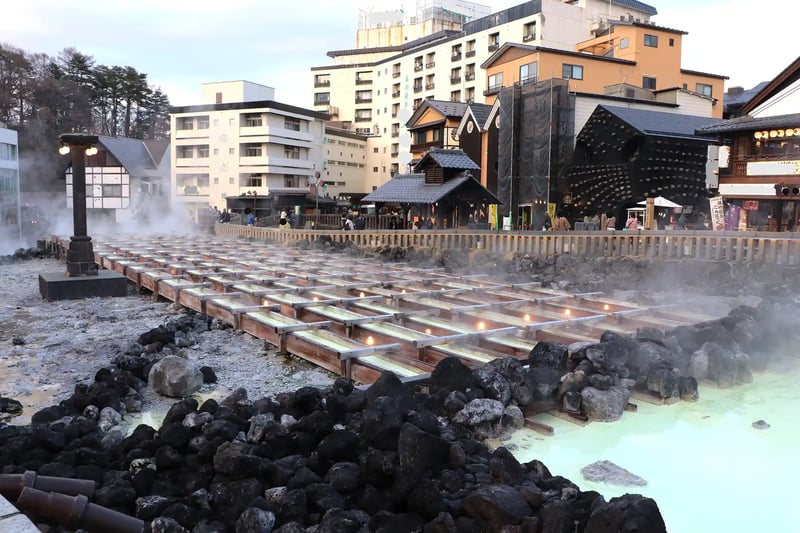
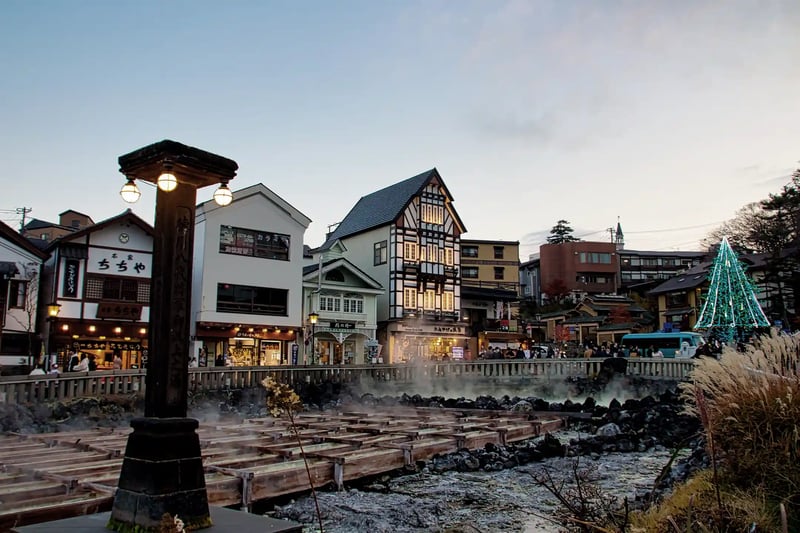
Hakone shines year‑round: cherry blossoms in spring, verdant greens in summer, brilliant foliage in autumn, and a dusting of snow in winter. Kusatsu Onsen (Gunma), renowned for its abundant natural outflow and strongly acidic sulfur springs, centers on the dramatic Yubatake hot water field. In winter, plumes of steam rising under a crisp sky are mesmerizing. Public bathhouses, hand baths, and foot baths are scattered throughout town for casual bathing hops.
Atami Onsen (Shizuoka) stretches along the coast, with luxury hotels and ryokan lining the shoreline. Fireworks festivals take place regularly year‑round, and some rooms and open‑air baths offer direct views of the night sky blooming with color—a wonderfully romantic touch.
In Chubu, Gero Onsen (Gifu) is among Japan’s “Three Great Hot Springs,” along with Arima and Kusatsu. Its silky, alkaline simple spring is famed as a “beautifying bath” (*2). The town along the Hida River carries a timeless charm and legends of white herons. Kurobe–Unazuki Onsen (Toyama), nestled in the Northern Alps, offers ravine scenery from a trolley train in spring through autumn, and serene snow‑view baths in winter.
Elsewhere, Nagano’s Nozawa and Shibu Onsen are famous for “soto‑yu” public bath hopping; Yamanashi’s Isawa Onsen pairs hot springs with local wine culture. With such variety near major cities, you can easily match the season and your personal style.
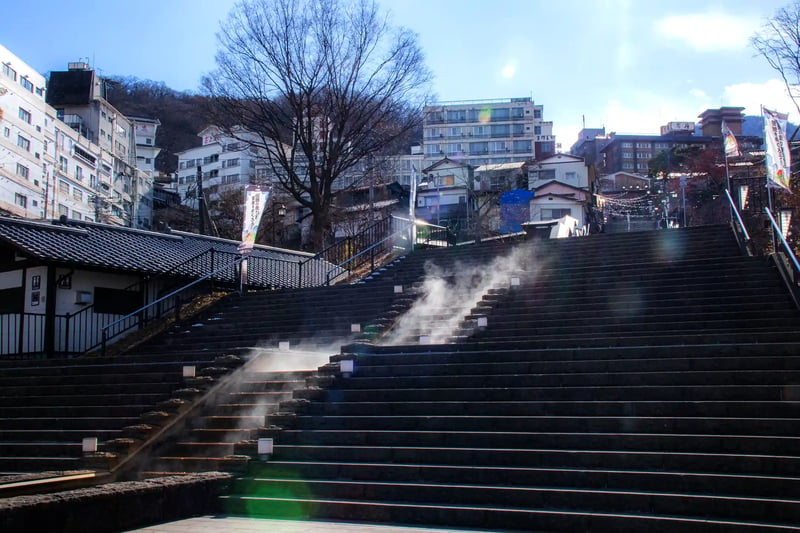
Onsen in Kansai, Chugoku, and Shikoku
Western Japan is just as rich in destinations. Arima Onsen (Hyogo) lies in the Rokko Mountains near Kobe and is one of Japan’s oldest hot springs—listed with Dogo and Shirahama as the “Three Ancient Hot Springs,” and mentioned in the Chronicles of Japan (*2).
Beloved by the warlord Toyotomi Hideyoshi, Arima features two main waters: gold‑hued, iron‑rich kinsen, and clear ginsen. The compact, hilly town is lined with shops and cafés, and you can hop among public bathhouses.
Kinosaki Onsen (Hyogo) is another Kansai icon. Seven public baths line the willow‑shaded Ōtani River, and strolling in yukata and wooden geta between them is a scene straight out of a classic print. Kinosaki is also crab country: from November to March, visitors flock for Matsuba (snow) crab. From the glow of autumn foliage through winter’s chill, a crab‑and‑onsen celebration is a delight for couples.
In Chugoku, Tamatsukuri Onsen (Shimane) is known as a “divine bath” for skincare, with footbaths and the Yuyakushi spring along the riverside stroll. Misasa Onsen (Tottori) is a high‑radon spa with a historic healing ambiance and one of the world’s highest natural radon levels.
In Shikoku, Dogo Onsen (Ehime) is unmissable. The three‑story wooden Dogo Onsen Honkan public bath is an Important Cultural Property and a literary landmark tied to Natsume Soseki’s Botchan (*2). Snack on Botchan dango and wander Dogo’s old‑fashioned shopping street with its mechanical clock and footbath—like stepping back in time.
Tokushima’s Iya Onsen is a secluded valley bath reached by cable car—its rugged open‑air tubs are popular with couples. Kochi’s Ashizuri Onsen‑kyo looks out over the horizon, with sunsets and starry skies lending a southern‑coast atmosphere. Each place offers seasonal beauty and distinctive flavors to savor together.
Onsen in Kyushu
With Oita—the “Onsen Prefecture”—at its heart, Kyushu is a hot spring paradise. Beppu Onsen (Oita) boasts one of the world’s largest numbers of sources and volumes of outflow. Its eight districts (Beppu Hattō) encompass a dazzling diversity of waters—people say that bathing in Beppu is like bathing around the world in one city (*3).
The townscape punctuated by steam vents is uniquely photogenic, especially in the cold months. Don’t miss the Jigoku Meguri (“hells” tour) of vividly colored hot pools and steam vents, or jigoku‑mushi cuisine—seafood and vegetables steamed by onsen vapor.
Nearby Yufuin (Oita), beneath Mount Yufu, is an elegant resort dotted with art galleries and cafés. Lake Kinrin draped in morning mist is magical, particularly when autumn colors arrive.
Kurokawa Onsen (Kumamoto), nestled in wooded hills, has become a favorite among international visitors. With more than 30 open‑air baths and a unique “bath pass” that lets you try three, you can sample riverside caves and waterfall‑view tubs—romantic any time, and downright enchanting when it snows.
In southern Kyushu, Ibusuki Onsen (Kagoshima) is famed for its natural sand baths. You change into a special yukata and are gently covered with geothermally warmed sand—an experience you can enjoy side by side (and snap a commemorative photo). Unzen (Nagasaki), Ureshino (Saga), and Kirishima (Kagoshima) round out a region where spring quality and quantity are superb, and local cuisine—from toriten and chanpon to Kurobuta pork and ocean‑fresh seafood—completes the feast.
Onsen in Hokkaido and Tohoku
Northern Japan offers countless romantic retreats. Noboribetsu Onsen (Hokkaido) is known for its sulfur springs sourced from the volcanic landscape of Jigokudani (“Hell Valley”), along with a variety of other waters. Local folklore features red and blue oni (ogre) statues that greet you around town.
Winter blankets everything in snow, setting the stage for blissful snow‑view soaking. The cold may be bracing, but that only makes the warmth of the water more profound. After bathing, warm yourself from within with hotpot dishes like Ishikari nabe (salmon and miso).
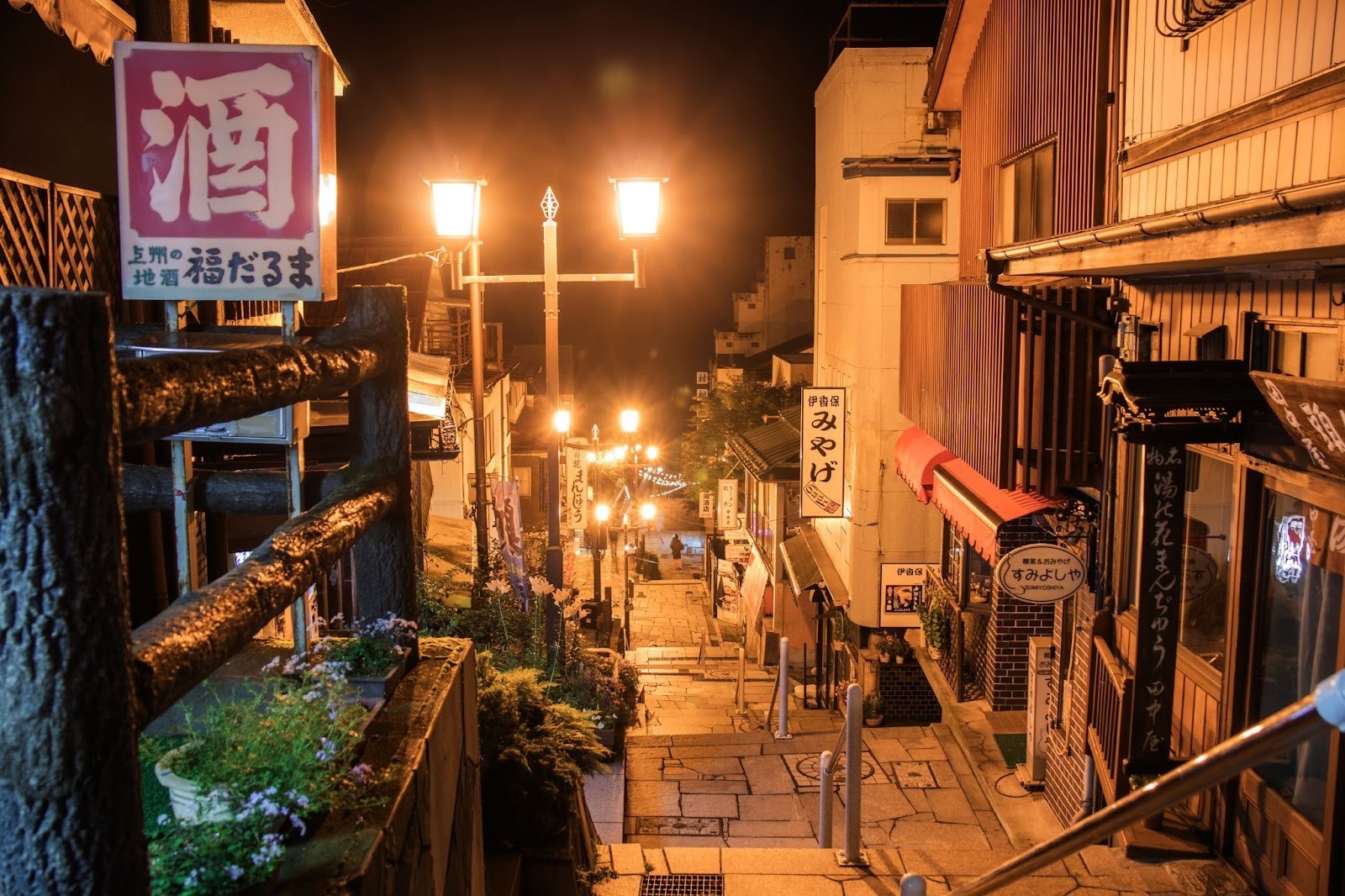
Yunokawa Onsen (Hakodate, Hokkaido) sits by the sea, where the wintry glow of squid‑fishing boats at night is wonderfully romantic. In Tohoku, Ginzan Onsen (Yamagata) is a global favorite—its riverside rows of early 20th‑century wooden inns and gas lamps create a nostalgic streetscape. In snowfall, every angle looks like a postcard; at night, lamplight and snow turn the town into a fairytale.
Nyuto Onsen‑kyo (Akita) lies amid primeval beech forests, home to seven rustic inns with distinct open‑air baths. The milky sulfur springs at Tsurunoyu are so iconic that they often appear on onsen posters—especially under snow. For couples, trying a mixed open‑air bath can be a memorable adventure.
Zao Onsen (Yamagata) doubles as a ski resort; in winter you can combine soaking with viewing the famed “snow monsters” (rime‑coated trees). Its strongly acidic sulfur waters leave your skin refreshed and quickly warm you after ski runs.
Miyagi’s Akiu Onsen and Fukushima’s Iizaka Onsen are among other historic towns where local sake and regional dishes round out the experience. Across the seasons, northern Japan brings snow‑view baths, lush green soaks, and foliage‑framed pools—don’t miss these spectacular scenes.
The Allure of Onsen Ryokan Through the Four Seasons
Japan’s spring, summer, autumn, and winter each transform the ryokan experience. Seasonal subtleties make your stay feel personal and one‑of‑a‑kind.
Imagine: petals drifting onto a steaming bath in spring; cool mountain air and fireworks lighting highland nights in summer; crimson leaves and Matsuba crab in autumn; and snow‑view soaking paired with soul‑warming hotpot in winter. Return in different seasons and you’ll uncover something new each time—that’s the magic of onsen‑hopping.
Below, you’ll find season‑by‑season scenes to inspire your timing and shape a celebration that fits you both.
Spring — Cherry Blossoms over Onsen Open‑Air Baths in Hakone, and a Table Laden with Mountain Vegetables
In cherry blossom season, Hakone’s ryokan blush with pink. At a particular inn in Gora, you can gaze at a splendid weeping cherry from the garden‑view open‑air bath.
As petals flutter down while you soak, you’re immersed in a uniquely Japanese spring. By night, illuminated blossoms set a romantic tone for a moonlit spa hour.
Spring cuisine spotlights sansai (mountain vegetables): tempura and hotpots with tender shoots like tara‑no‑me, kogomi fiddleheads, and bamboo shoots. Sharing their pleasantly bitter notes, you can welcome the new season together. Don’t be surprised if a strawberry dessert appears to close the meal. Spring is a time of beginnings; under full bloom, your soak can feel like a blessing on a new chapter—anniversary included.
Summer — Karuizawa’s Cool Onsen Highlands and a Night Wrapped in Fireworks
When the heat rises, a summer anniversary at a highland ryokan feels perfect. Karuizawa in Nagano sits at elevation, offering cool mornings and evenings. Near the Hoshino area’s popular Tombo‑no‑Yu day spa, staying at a nearby onsen lodge means you can bask in a forest‑ringed open‑air bath.
By day, enjoy forest bathing in the shade or rent bicycles for breezy rides. Come evening, summer festivals and fireworks light up the calendar. Around mid‑August, a musical fireworks event near Karuizawa Ohga Hall paints the night sky.
If your room or terrace faces the display, you can watch from your private perch, just the two of you. Wrapped in yukata, leaning close as the sky bursts into color—that’s a summer memory you’ll carry. On the table: salt‑grilled river fish, chilled seasonal vegetables, and crisp Shinshu soba. After dinner, sip a cold local beer or sake on the rocks, then stroll by a stream where fireflies flicker. That’s a Japanese summer night, ryokan style.
Autumn — Kinosaki’s Foliage Baths and the Luxury of Matsuba Crab
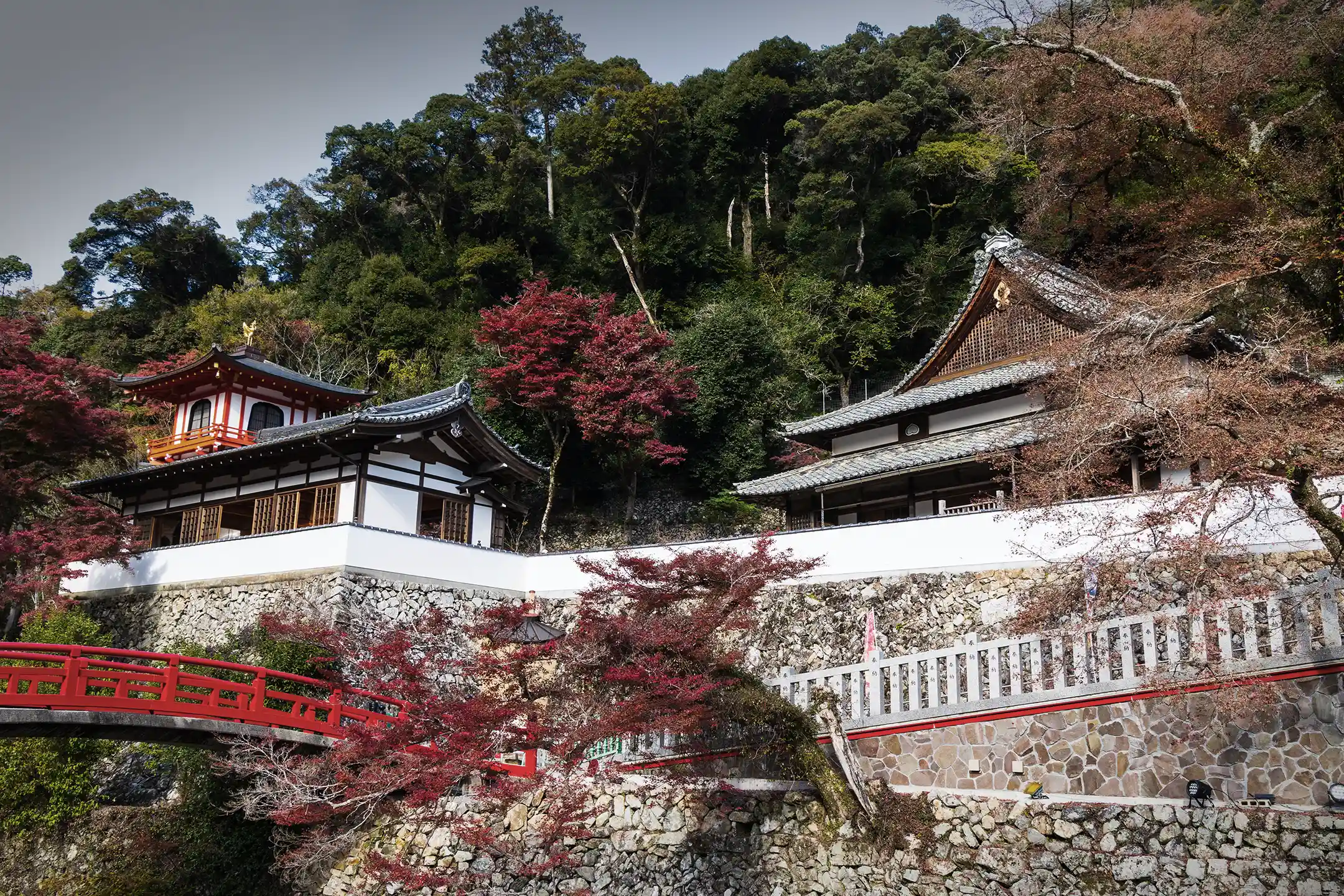
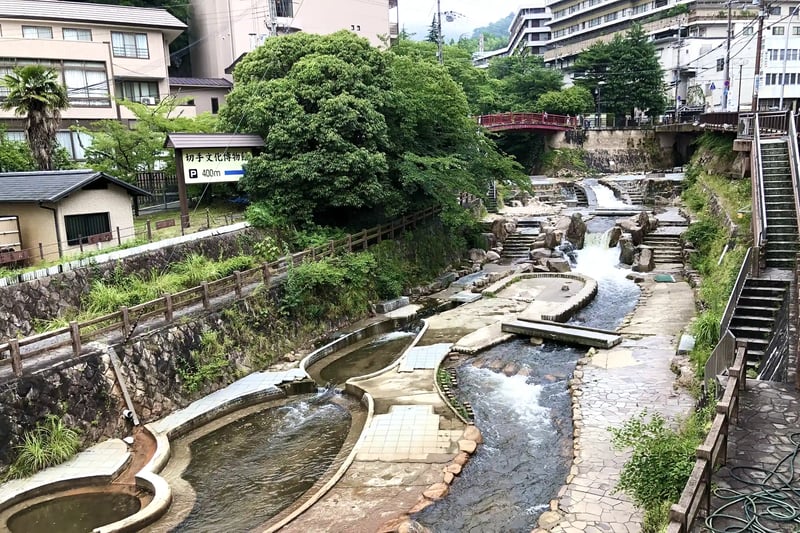
Autumn is for color and flavor. In Kinosaki Onsen (Hyogo), ryokan tucked into the hills offer open‑air baths wrapped in foliage. From the outdoor pools at Kono‑yu or Goshono‑yu, the blaze of red maples creates a breathtaking tableau.
In the clear air, your cheeks cool while steam warms you; watching leaves drift down, you feel the deepening of the season together. From November onward, it’s crab time—Matsuba (snow) crab appears on ryokan menus.
Expect a full kaiseki of crab: sashimi, boiled legs, charcoal‑grilled joints, hotpot, and rice porridge to finish. The sweetness of the meat and richness of the tomalley will bring easy smiles. Some venues even present live crab from the tank—a festive touch for an anniversary dinner.
Afterward, combine bath‑hopping with an evening stroll beneath lit willows and glowing leaves. On long autumn nights, wandering in yukata to the sound of insects is a pleasure in itself. On clear days, take the Kinosaki Ropeway to the summit for views of town and the distant Sea of Japan. In autumn, Kinosaki indulges both eyes and appetite.
Winter — Snow‑View Soaking in Noboribetsu and Hotpots that Warm the Heart
In winter, a true snow‑country ryokan is a world you should experience at least once. In Hokkaido’s Noboribetsu, the pinnacle is yukimi‑buro—soaking outdoors as snow falls.
Sink to your shoulders in a rock‑lined tub blanketed with snow; the contrast of icy air and steaming water feels exquisite. Looking up at snow settling on the trees, you can laugh together, “It’s freezing!”—while your core stays wonderfully warm. Snowflakes that kiss your forehead and lashes melt in an instant.
After bathing, avoid a chill by warming up indoors. On winter nights, strolling the onsen town with steam rising all around, your footsteps squeak in the snow and your two tracks form a straight line—romance in negative space.
Hotpot takes center stage at the table: Ishikari nabe (salmon in miso broth), Hinai‑dori chicken kiritanpo hotpot, or wild boar botan nabe—regional varieties that warm hands and hearts. In Hokkaido, you might feast on hairy crab or cod hotpot with mushrooms like maitake. Hot sake or piping‑hot amazake pairs beautifully.
Some ryokan have hearth lounges where you can sip roasted green tea by the flicker of a sunken fire. Outside may be bitterly cold, but between the onsen’s embrace and sincere hospitality, you’re aglow. In that winter cocoon, your bond feels even stronger.
%20Gunkan%20Maki%20Sushi.webp)