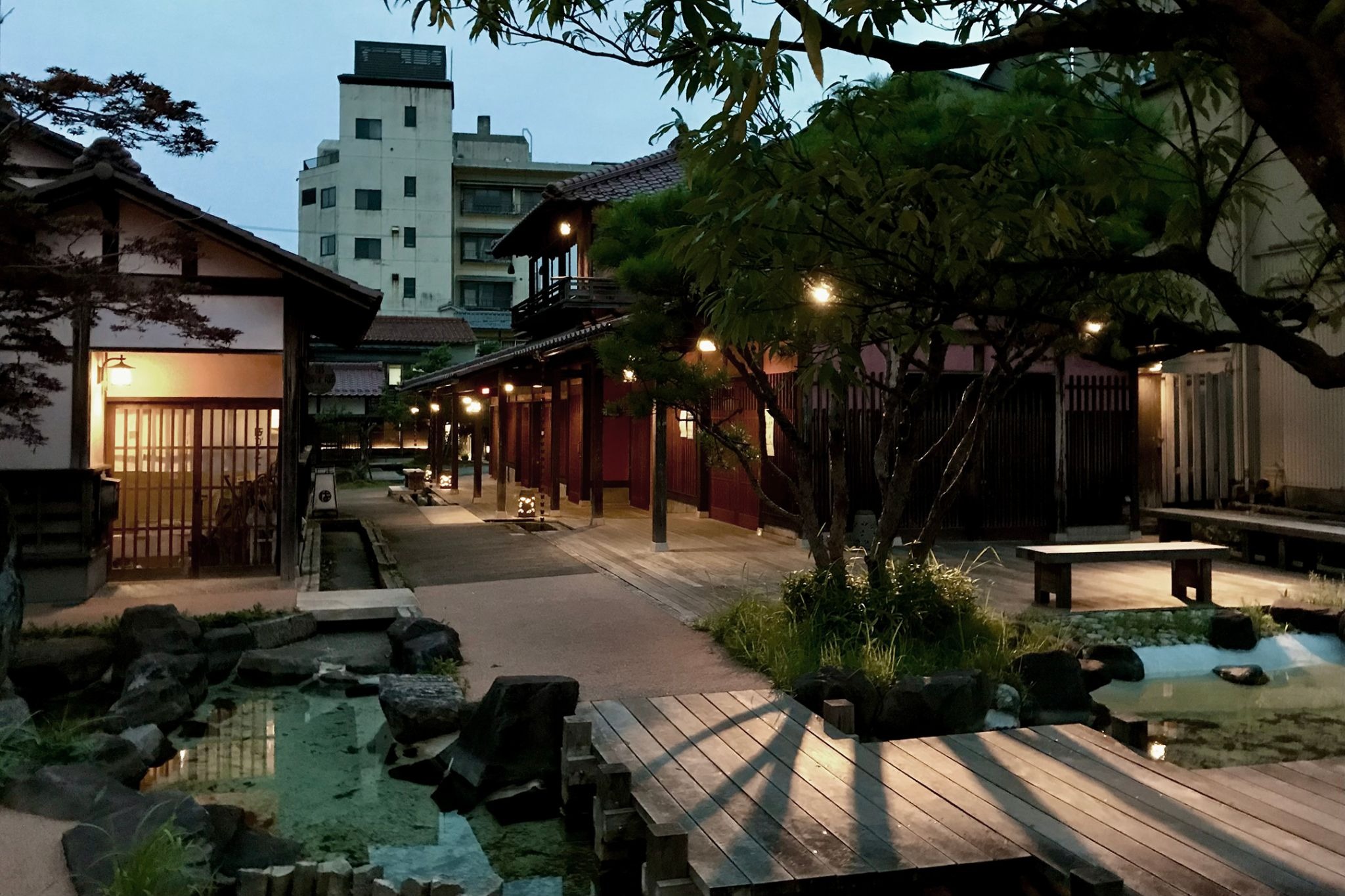
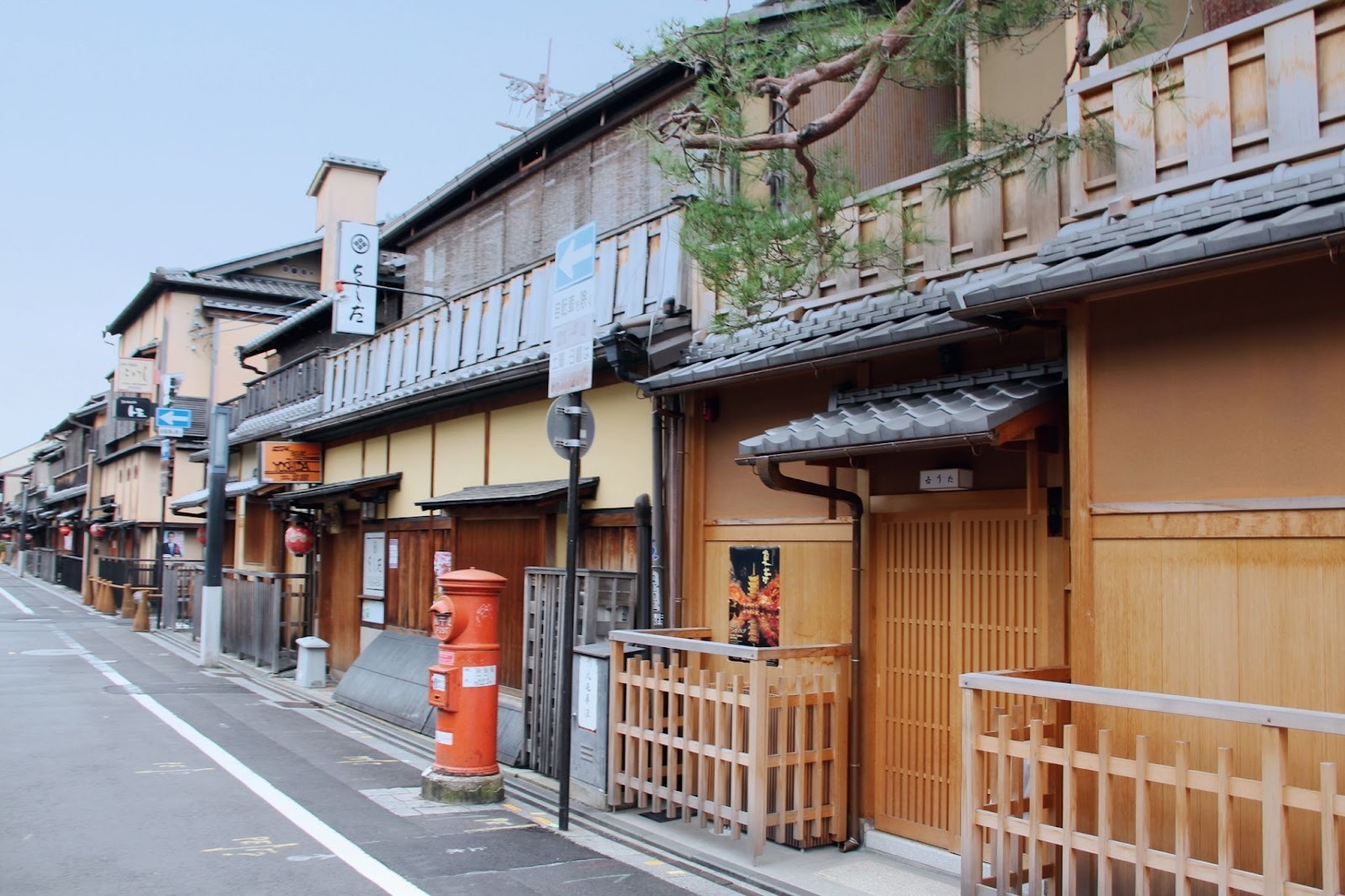
Kyoto is dotted with luxury ryokan where time‑honored culture meets a modern sensibility. When you slip away from the bustle and settle into a haven wrapped in quiet and art, your stay becomes a deeply restorative escape designed for grown‑up travelers.
In spaces where the ancient capital’s aesthetic lives in harmony with state‑of‑the‑art hospitality, you’ll find experiences that spark your curiosity and let you genuinely unwind. Come with us as Luxury Ryokan Kyoto guides you into a world where tradition and art weave together.
This article steps inside a single ryokan. The Digital Guide sets that one stay within a wider landscape — its architecture, its seasonal table, and the quiet craft of omotenashi — gathered into a single, connected reading.
At Luxury Ryokan Kyoto, Experience the Fusion of Traditional Architecture and Contemporary Art
Luxurious spaces reborn from Kyoto’s traditional machiya townhouses
The wooden machiya townhouses that define Kyoto’s streetscape are being reborn as high‑end inns with new life and purpose. At one ryokan in the Gion district, for example, an early‑20th‑century machiya has been carefully renovated so you can enjoy historic pillars, ranma transom carvings, and other original materials alongside modern comforts like underfloor heating and a rain shower (*1).
Step into a room with a classic tokonoma alcove and artful latticework, and you’re greeted by a setting where seasonal garden views and contemporary convenience coexist with effortless grace (*1). These machiya‑style ryokan—where beloved design details meet today’s sense of luxury—make a superb hideaway for you if cultural discovery is your priority.
A special stay surrounded by contemporary art at a Luxury Ryokan
Some of Kyoto’s luxury inns feel like private galleries. Take the boutique hotel The Shinmonzen (architecture by Tadao Ando): elements like shoji screens and cypress baths are paired with bamboo, lacquer, and stone, and the property exhibits works by artists such as Damien Hirst and Louise Bourgeois.
Throughout the house, pieces by renowned contemporary artists—Damien Hirst, Louise Bourgeois, and others—invite you to treat your stay itself as an art‑viewing experience. The contrast between quiet, context‑aware architecture and globally significant artworks heightens your curiosity and leaves you feeling enriched.
Sukiya‑zukuri: Kyoto’s refined aesthetic meets modern design
The tea‑ceremony spirit embodied in sukiya‑zukuri architecture is another central theme at Kyoto’s luxury ryokan. Some venerable inns unify all guest rooms in a sukiya‑style (tea‑house‑inspired) design, creating a pared‑back, sophisticated atmosphere (*3).
From the proportions of the posts to the detailing of the alcove, every decision eschews excess and channels the elegance of wabi‑sabi. While safeguarding tradition, these properties adopt a contemporary design touch, shaping minimal, nature‑harmonious rooms that instantly communicate Kyoto’s aesthetic to you, even on a first visit.
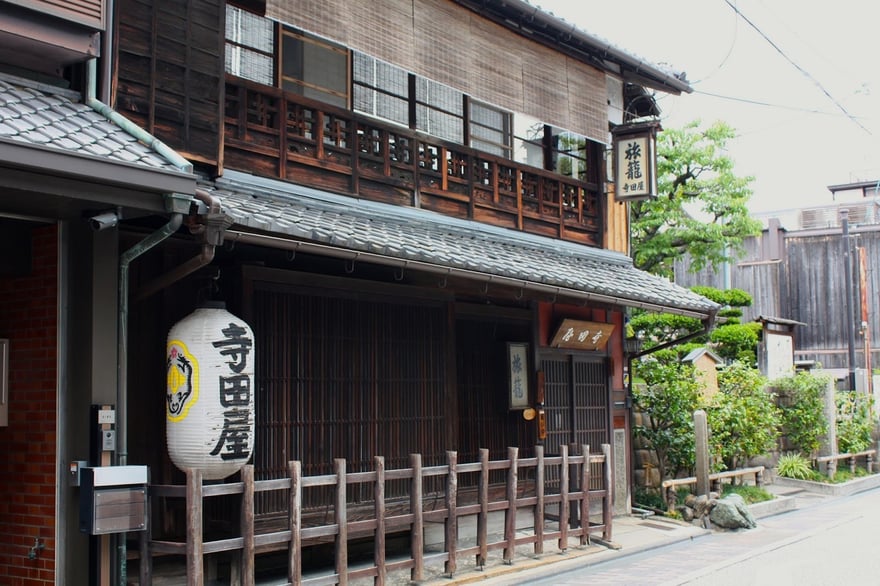
Cultural Experiences Unique to Luxury Ryokan—Deepen Your Appreciation with Tea Ceremony, Ikebana, and Calligraphy
Experience authentic tea ceremony at a time‑honored Luxury Ryokan in Kyoto
At Kyoto’s distinguished luxury inns, you can casually explore chado—the distilled art of Japanese hospitality. One long‑established ryokan hosts evening tea gatherings on the 7th and 17th of each month, welcoming even first‑timers to enjoy a full ritual in its multiple tearooms (*1).
Cradling a bowl of matcha whisked by your host in a hushed tatami room, you feel the etiquette, rhythm, and care that define the ceremony. Because the setting is an intimate ryokan, your once‑in‑a‑lifetime (ichigo‑ichie) encounter becomes a moment that feeds both your mind and your heart.
Encounter Japan’s traditional beauty through ikebana and shodo
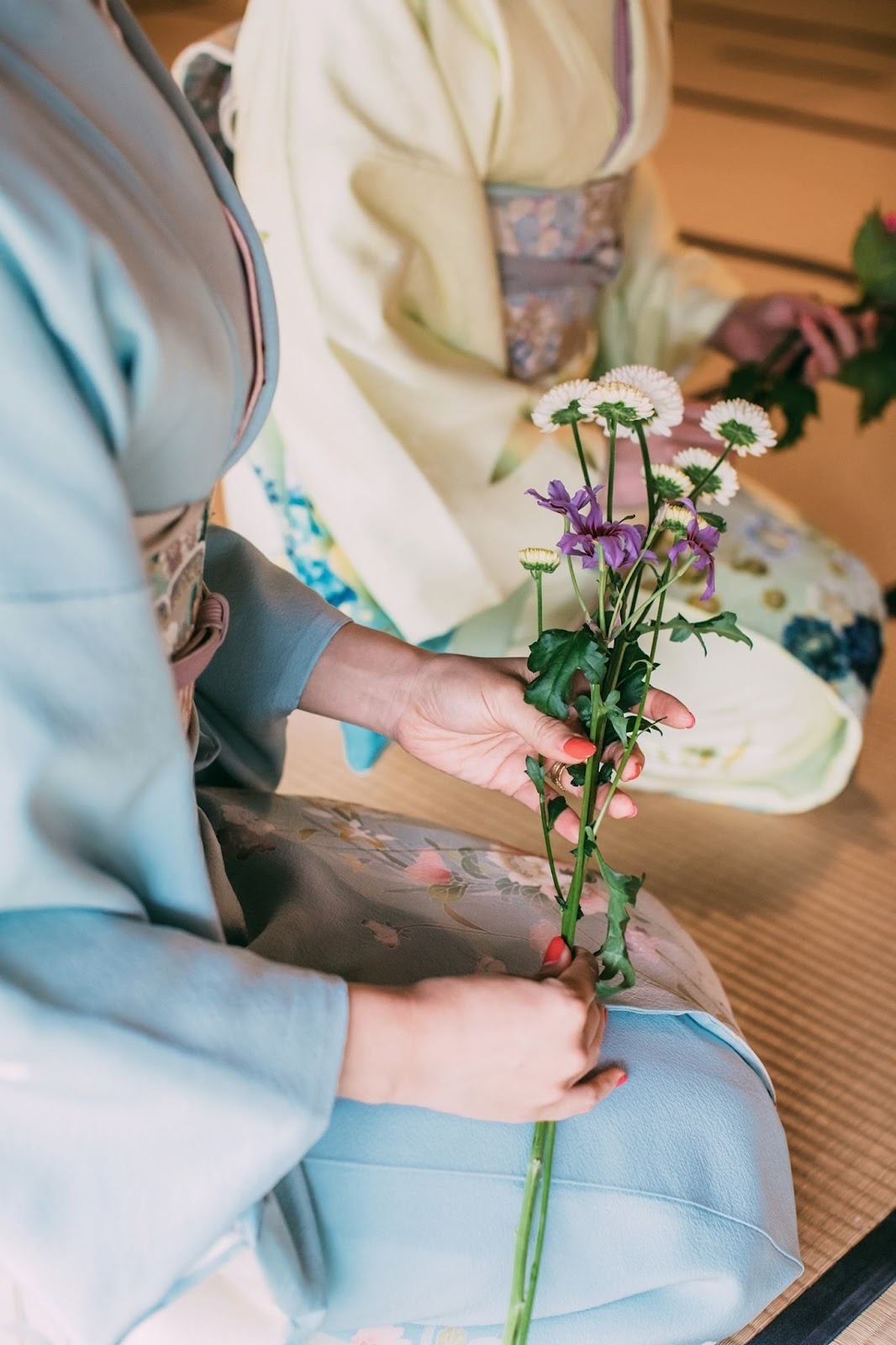
Beyond tea, the true delight of a Luxury Ryokan stay is direct contact with traditional arts such as ikebana (flower arranging) and shodo (calligraphy). At a resort‑style ryokan in Arashiyama, for example, you can join an ikebana lesson with master Ryuho Sasaoka, learning beginner‑friendly techniques you can bring into daily life (*2).
Another inn offers English‑language calligraphy workshops and hands‑on activities like painting traditional paper umbrellas—thoughtful programs designed to satisfy your curiosity. Tea ceremony, ikebana, and calligraphy are all considered geidō (“ways” of art): by practicing forms imbued with philosophy, you expand your perspective. Experiencing them within a ryokan setting gives you a deeper, more rewarding encounter with Kyoto culture.
Special salons led by Kyoto culture experts
Some luxury ryokan host intimate events for staying guests, inviting cultural figures and artists from various fields. At one art‑minded property, you can savor matcha or sake at the bar while viewing antiques curated by a respected Kyoto dealer.
Imagine matcha in a Raku tea bowl or sake served in an antique Baccarat glass—the kind of once‑only luxury that stays with you (*3). These gatherings also create time to hear explanations from knowledgeable guides and ask your own questions, so even while traveling you can enjoy the feeling of a salon. In a city famed for elegance, evenings like this become standout memories for culturally focused travelers.
Savoring Culinary Art at Luxury Ryokan Kyoto—Kaiseki Dining in Crafted Spaces
The aesthetics of Kyoto kaiseki: four seasons on the table
Dining at a Kyoto luxury ryokan is an experience that rises above “just a meal.” Kaiseki, the pinnacle of Japanese cuisine shaped by the tea ceremony, serves a progression of seasonal dishes presented with exquisite restraint.
The heart of kaiseki lies in seasonality and simplicity. Kyoto‑style kaiseki uses the finest ingredients while avoiding heavy seasoning so each season’s true flavor shines. Presentation is equally vital: dishes and garnishes subtly express the time of year—think cherry motifs in spring or maple leaves in autumn.
In spring, perhaps a clear soup with floating sakura petals; in summer, a cool starter plated in glassware reminiscent of running water—the aesthetics of Kyoto and the season itself are distilled into every course. Sensing time’s passing through cuisine, you taste Kyoto culture with all five senses.
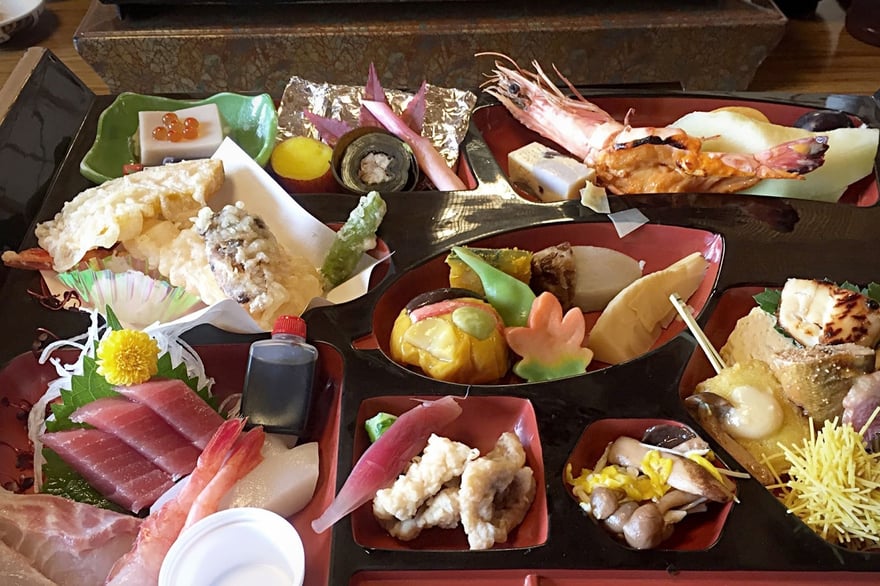
When plates and cuisine are both works of art—collaborations with ceramic artists
The vessels that frame each course are also a form of hospitality. Many luxury ryokan collaborate with local ceramicists—especially makers of Kyo‑yaki and Kiyomizu‑yaki—to select plates and bowls that heighten the character of each dish.
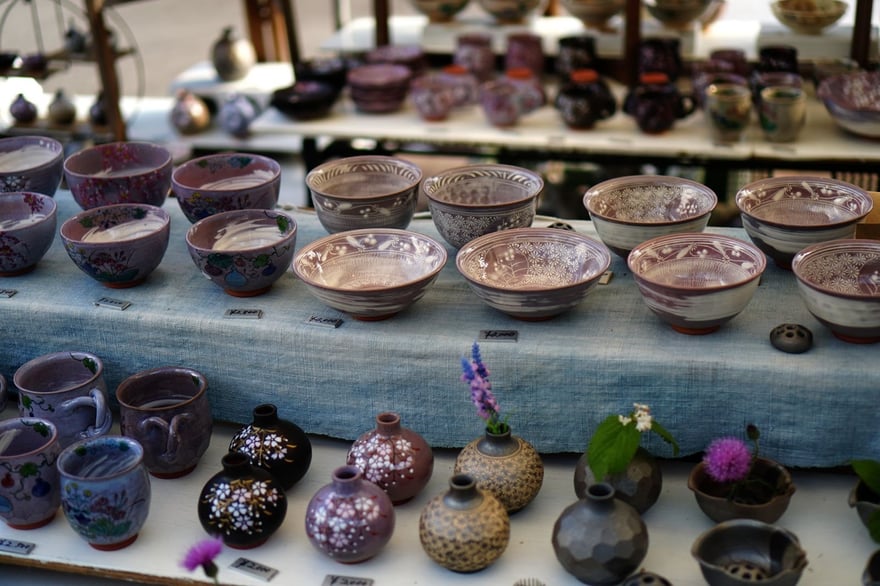
A well‑known example from Hokuriku is a historic ryokan that serves cuisine on local Kutani porcelain and Yamanaka lacquerware, earning high praise for the harmony of food and craft (*2). In Kyoto as well, head chefs curate Kyo‑yaki and Kiyomizu‑yaki to match each dish so plate and cuisine together embody the season.
In practice, kaiseki presentation doesn’t stop at seasonal leaves or blossoms; the vessels themselves may feature spring‑and‑autumn flora or setsugekka (snow, moon, flowers) patterns—transforming the table into a miniature gallery, guide.michelin.com. For culturally minded travelers, this fusion of culinary art and ceramics is a major allure of ryokan dining.
The appeal of Luxury Ryokan with Michelin‑starred restaurants on site
Fitting for a culinary capital, Kyoto has luxury ryokan that partner with or house Michelin‑starred restaurants. Kanamean Nishitomiya, a storied inn in central Kyoto, has held one Michelin star continuously since 2010—now the city’s only ryokan to preserve a star for 16 consecutive years (*3).
Tucked deeper in the mountains outside the city, you’ll also find a cuisine ryokan acclaimed for kaiseki that celebrates mountain vegetables and river fish—Miyamasou, which holds two stars. Chef Hisato Nakahigashi forages each morning, devising a daily menu from his finds, and his approach has influenced internationally renowned chefs (*4).
In short, Kyoto’s Luxury Ryokan let you savor world‑recognized Japanese cuisine in private, unhurried settings. If you love food and culture, tasting the essence of Kyoto kaiseki in such a space is the kind of memory you’ll keep returning to.
Art & Culture Spots to Explore During Your Luxury Ryokan Stay
Kyoto City KYOCERA Museum of Art—visit from your Luxury Ryokan base
If you love the arts, the Kyoto City KYOCERA Museum of Art is a must while you’re in town. Opened in 1933 and comprehensively renewed in 2020, the museum pairs its hybrid Imperial‑Crown‑style architecture with contemporary design, creating a photogenic setting that’s a pleasure to wander.
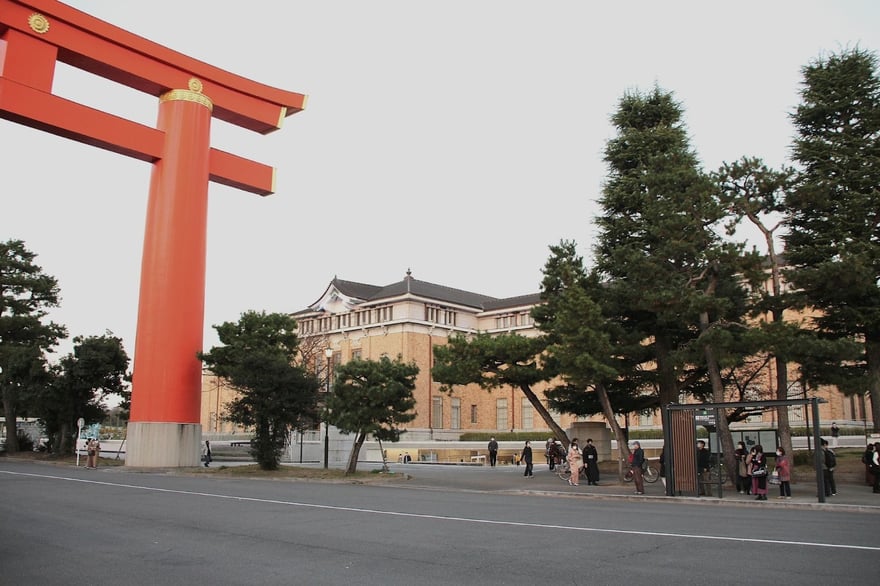
Respecting the retro exterior—its copper‑clad roof and tiled walls—architects Jun Aoki and Tezzo Nishizawa added new underground galleries and a vast glass‑roofed Kyocera Square. Inside, the modern openness meshes perfectly with early‑Shōwa modernism so the building itself feels like art.
The collection includes about 4,000 works, centered on nihonga by giants of the Kyoto school such as Takeuchi Seihō and Uemura Shōen, while the renewed program also highlights modern and contemporary art along with manga and animation culture. After a leisurely breakfast at your ryokan, stroll to this calm Okazaki‑area landmark and feel Kyoto’s current of tradition and creativity firsthand.
Private tours of Kyoto’s traditional crafts, arranged through your Luxury Ryokan
Kyoto is a trove of traditional crafts cultivated over more than a millennium. During your stay, ask the concierge to arrange private visits to artisans’ studios—doors that are usually closed to the public.
At the Kyoto Museum of Crafts and Design (MOCAD), 74 categories of crafts—from Nishijin textiles and Kiyomizu ceramics to Kyoto folding fans—are on display (*3), with multilingual explanations and live demonstrations that illuminate each craft’s background (*3).
If you’d like to go further, specialized Kyoto art tours can take you inside weaving studios to watch artisans at work, or to meet makers of bamboo craft and lacquerware. With an expert guide, you can tailor routes to include long‑established yūzen dye houses, kumihimo braid shops, and even traditional swordsmiths (*4).
You might also browse small craft boutiques across town, choosing Kyo‑yaki tableware, incense, or handmade washi to take home. These private, hands‑on encounters bring Kyoto’s living traditions into focus and make a culture‑driven trip even more satisfying.
Special encounters with local artists, hosted by Luxury Ryokan
Kyoto’s luxury inns sometimes create opportunities to meet local artists and performers up close. One art‑forward hotel stages monthly showcases of Kyoto‑linked craft and artwork, paired with creative cocktails or sake tastings inspired by the featured pieces. Staff introduce the month’s works right in the bar, so you can sip while learning the stories behind them.
Another ryokan might host intimate gallery talks with emerging ceramicists or organize Kyō‑mai dance viewings and conversations with maiko. Because these programs are small and offered exclusively to staying guests, they feel wonderfully private—and bring you close to the artists themselves.
In the intimate setting unique to a ryokan, connecting with local creators becomes an unforgettable way to understand Kyoto on a deeper, more personal level.
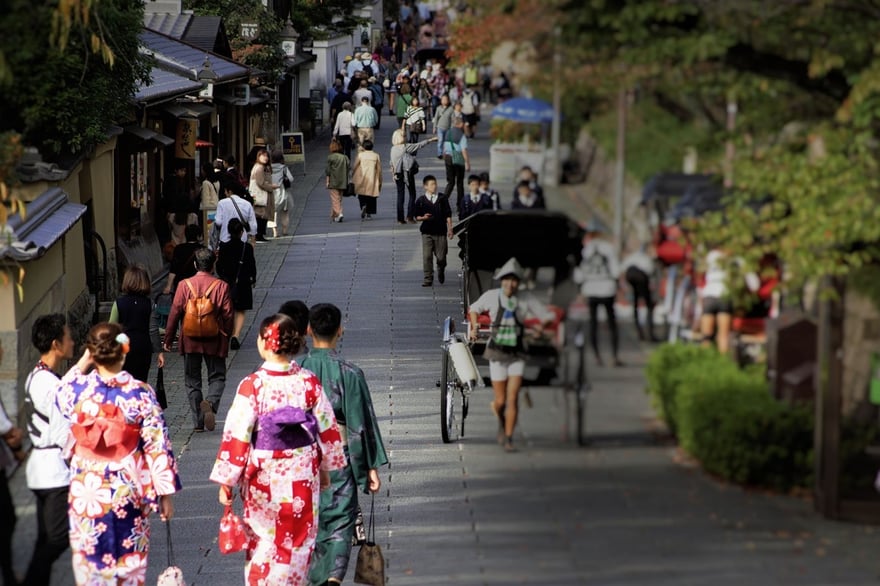
Fulfilling a Greener Stay at Kyoto’s Luxury Ryokan
Eco‑luxury in action: how Kyoto’s Luxury Ryokan balance comfort and sustainability
Kyoto’s high‑end inns are early movers in “eco‑luxury,” bringing comfort and environmental care together. At Kanamean Nishitomiya, for instance, plastic straws have been eliminated to reduce single‑use waste, and amenities use renewable or responsibly sourced materials (*1).
Single‑use toiletry bottles are being phased out in favor of minimal packaging and high‑quality, long‑lasting products (*1). Across the property, lighting has been converted to energy‑saving LEDs, and underfloor heating reduces the need for air conditioning in winter—thoughtful steps toward efficiency.
Equally important is the use of natural Kyoto materials—local timber, washi paper, tatami—in architecture and interiors. A long‑standing ryokan founded in the Meiji era continues to maintain its sukiya‑style wooden buildings with care. Preserving structures made from Kyoto’s traditional materials—wood, paper, earth, stone—for future generations is itself a deeply sustainable approach. By cherishing the old while embracing modern technology for comfort, Kyoto’s Luxury Ryokan are shaping a model of responsible travel for the SDGs era.
See Kyoto by Tesla—Luxury Ryokan with EV charging
If you prefer greener mobility, traveling by EV adds another layer of ease. More luxury hotels and ryokan in Kyoto now provide on‑site charging.
At Four Seasons Hotel Kyoto, for example, Tesla Destination Chargers are installed on the grounds for guests’ use. Park your Tesla at the hotel and let it charge while you’re out exploring, so you can set off again fully topped up.
Citywide, Tesla Superchargers and other fast‑charging spots are expanding—including multiple rapid options near Nijo Castle and other central locations—making it practical to pair a luxury stay with low‑impact drives. Glide quietly to Arashiyama or Higashiyama without tailpipe emissions; Kyoto’s Luxury Ryokan are helping make this new style of travel a reality.
Where advanced technology meets Kyoto’s beauty: a standout Luxury Ryokan case
Pursuing a sustainable stay has also led to properties that harmonize cutting‑edge systems with traditional aesthetics. A leading example is HOTEL THE MITSUI KYOTO. Built on the former estate of the Mitsui family (dating to the Edo period), the hotel preserves the 300‑year‑old wooden Kajiimiya Gate at its main entrance while fusing it with sukiya‑inspired contemporary architecture.
Inside, a grand bath complex draws natural hot spring water from roughly 1,000 meters underground—Kyoto city center’s first flowing source on site. Enabled by modern drilling and engineering, the facility wears a traditional look while operating with sophisticated technology.
Guest rooms feature up‑to‑date climate control and lighting alongside lattice and kumiko woodwork crafted by Kyoto artisans, balancing tech and craftsmanship beautifully. Integrating advanced systems without disturbing Kyoto’s cityscape, properties like this are model cases for combining environmental consideration with comfort.
Amenities and Rooms Devoted to Quiet and Privacy—The Luxury Ryokan Kyoto Standard
Superb bedding and interiors—the serene embrace of Kyoto’s Luxury Ryokan
At Kyoto’s luxury inns, your room itself is a peaceful haven wrapped in fine craft. Warm tatami and wood set the tone for a Japanese interior where discreet technology and curated furnishings fit naturally.
At SOWAKA in Gion, for instance, every room distills Kyoto’s sense of indulgence: amenities include Kazurasei camellia‑oil cosmetics, Gion Tsujiri hōjicha, and beans from long‑loved Inoda Coffee—even spring‑less mattresses crafted by Iwata, founded in 1830 (*1).
True to its concept—“the whole ryokan as a showroom of Kyoto craftsmanship”—everything from interiors to bedding and amenities is selected without compromise (*1). In the soft glow of the lights, slipping into that exceptional bed invites deep, effortless sleep. With tradition and modernity in balance, the design quietly resonates with travelers who value cultural refinement.
Signature Japanese‑modern bathrooms and thoughtful amenities
Bathrooms carry Kyoto’s sensibility, too. Many ryokan offer private, fragrant hinoki cypress tubs so you can soak while enveloped in the wood’s aroma.
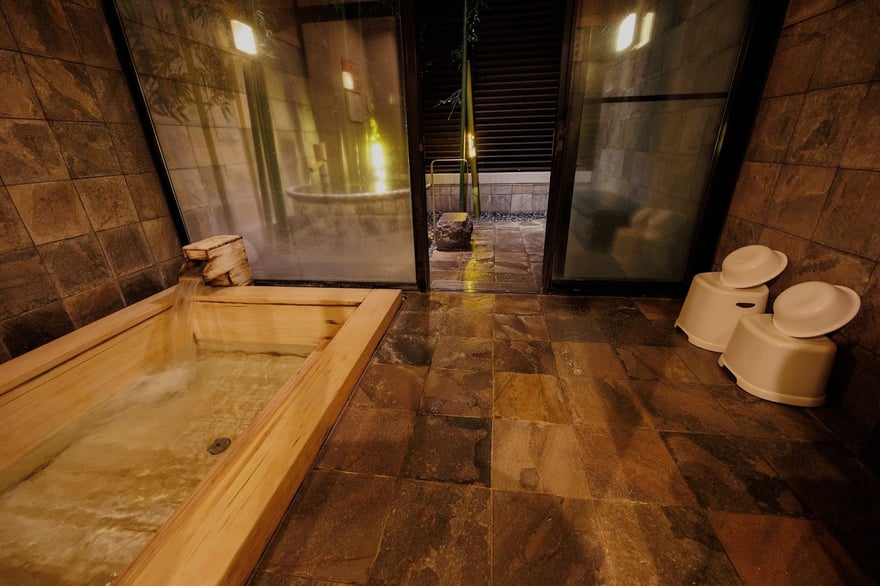
At Fufu Kyoto, opened in 2021, every room has its own hinoki‑tub bathroom, letting you enjoy a forest‑bathing atmosphere in complete privacy. Numerous ryokan feature in‑room open‑air or semi‑open‑air baths as well, so you can enjoy an onsen‑like soak whenever you wish.
Amenities are chosen with care: some properties stock natural bath products made with Kyoto tea‑leaf extract or soaps blended by historic apothecaries. Plush Imabari towels and soft‑to‑the‑touch yukata or pajamas complete the experience so you stay comfortable long after your bath. With Japanese ambiance and modern equipment working in tandem, the bathroom becomes a highlight of your time in.
Room designs that put your privacy first
Kyoto’s Luxury Ryokan often keep room counts modest and square footage generous, giving you space and quiet.
A garden ryokan near Nanzen‑ji, for example, has only 13 rooms; each comes with a private terrace and, in some cases, a sauna or open‑air bath—amenities designed to maximize privacy and comfort (*3). Minimizing contact with other guests, you can relax as if in your own retreat—an approach that resonates with travelers seeking high‑value, high‑touch experiences.
Some inns sit in the very heart of Kyoto yet feel worlds away once you step inside. Sumiya Ryokan, mentioned earlier, is right on lively Sanjo‑dori, but guests often remark that “time seems to stop” the moment they enter (*4). From your window, you might look out over a manicured pocket garden with stone lanterns and verdant moss, letting the city slip from mind. Thick walls keep outside sounds at bay so you can read, listen to music softly, and sink into your own rhythm. This orchestration of privacy and stillness is a major reason Kyoto’s Luxury Ryokan captivate travelers from around the world.
The fuller landscape of the Kyoto ryokan

Conclusion
Kyoto’s Luxury Ryokan offer more than a place to sleep; they create a holistic cultural journey where tradition and art, nature and modernity, all intertwine. Whether it’s a machiya hideaway reborn with contemporary comfort, a sukiya‑style room refined to its essentials, or interiors quietly graced with world‑class contemporary art, every setting becomes a stage that invites your curiosity.
Add hands‑on encounters with geidō—tea ceremony, ikebana, calligraphy—and meals where Michelin‑recognized kaiseki and Kyo‑yaki ceramics turn dinner into an art experience, and you have cherished hours that let you savor Kyoto with all your senses.
At the same time, these inns embrace innovation and sustainability while protecting traditional beauty—an inspiring model for the future of travel. Evenings wrapped in privacy and quiet, and one‑of‑a‑kind meetings with local artists and artisans, become the ichigo‑ichie moments you’ll carry with you. A stay at a Luxury Ryokan in Kyoto doesn’t just frame your trip; it elevates it into art itself.

.webp)