At sushi restaurants, you’ll often see “tamago sushi.” But what exactly is it? It’s a single piece of nigiri topped with a sweet, cooked omelet—simple at first glance, yet surprisingly deep. Tamago sushi is sometimes labeled “egg sushi” or even japanese egg sushi on English menus, but in Japan it can be a chef’s quiet showcase, distilling technique, balance, and aesthetics into one bite. In this guide, you’ll find a thorough explanation of tamago sushi: its flavor and how to enjoy it, its lesser-known historical background, and the key points of craftsmanship that make it truly memorable.
Even if you’re new to sushi—or not very familiar with Japanese culture—you’ll be able to follow along easily. We’ll explain things clearly and gently, so by the time you finish reading, the way you look at tamago sushi will almost certainly change. This is especially for you if you’re curious about Japanese food culture and want to deepen your cultural literacy through real, memorable experiences.
First, the conclusion: Why Tamago Sushi Is Called a “Sushi Shop’s Business Card”
To begin with the takeaway: tamago sushi is so important that it’s often called a “sushi shop’s business card”—its calling card. There are three main reasons for this. Some even say that one bite of tamago reveals a restaurant’s true skill and personality—because chefs pour technique, judgment, and philosophy into this seemingly modest piece(*1).
Here, we’ll organize the core reasons into three points. If you grasp these upfront, the more detailed explanations that follow will be much easier to appreciate.
Reason 1: The chef’s craft is easiest to see
Because tamago sushi uses a cooked omelet rather than seafood, it doesn’t rely on freshness alone. Instead, the chef’s technique—and the entire “design” behind the flavor—shows up plainly. A tamagoyaki (Japanese rolled omelet) may look easy, but in practice the chef must balance delicate factors all at once: sweetness and umami, a tender, airy texture, and a beautiful, even browning(*1). There’s nowhere to hide, and it’s often considered the culmination of fundamental skills—so much so that people have long said, “Eat the tamago, and you’ll know the chef’s ability.”
In some Edo-mae traditions, tamagoyaki is made with a distinctive method: eggs are seasoned with dashi, sugar, and soy sauce, then blended with surimi (minced fish paste) and carefully cooked. The more experienced the chef, the more they refine the heat, timing, and ratios—creating a tamagoyaki that’s unmistakably “theirs,” unique to that shop(*1).
Seen another way, tamagoyaki concentrates each chef’s capability and culinary philosophy, which means you can sense the sharpness of their craft in a single piece of tamago sushi(*2).
Reason 2: Why it appears near the end of the course
At many sushi restaurants, tamago sushi is served near the end of an omakase course. This isn’t just a convenient “final piece” (shime); it’s also a deliberate choice to gather the lingering impressions of the entire meal into something quietly complete. Tamago’s softly sweet, refined flavor works as a palate reset after richer toppings, leaving you with a comfortable sense of satisfaction(*3).
Because tamago often arrives in the later part of the meal, its gentle aroma and mild sweetness smooth out seafood flavors lingering on your palate—and a happy afterglow emerges, the kind that makes you think, “That was truly delicious.”
Some even describe the moment after indulging in rich uni or anago and then taking a bite of tamago as the arrival of the “perfect aftertaste.” It’s not a dessert with excessive sugar; it’s a thoughtfully sweet omelet that closes the meal. That kind of ending—subtle, intentional, and balanced—feels distinctly aligned with Japanese dining sensibilities.
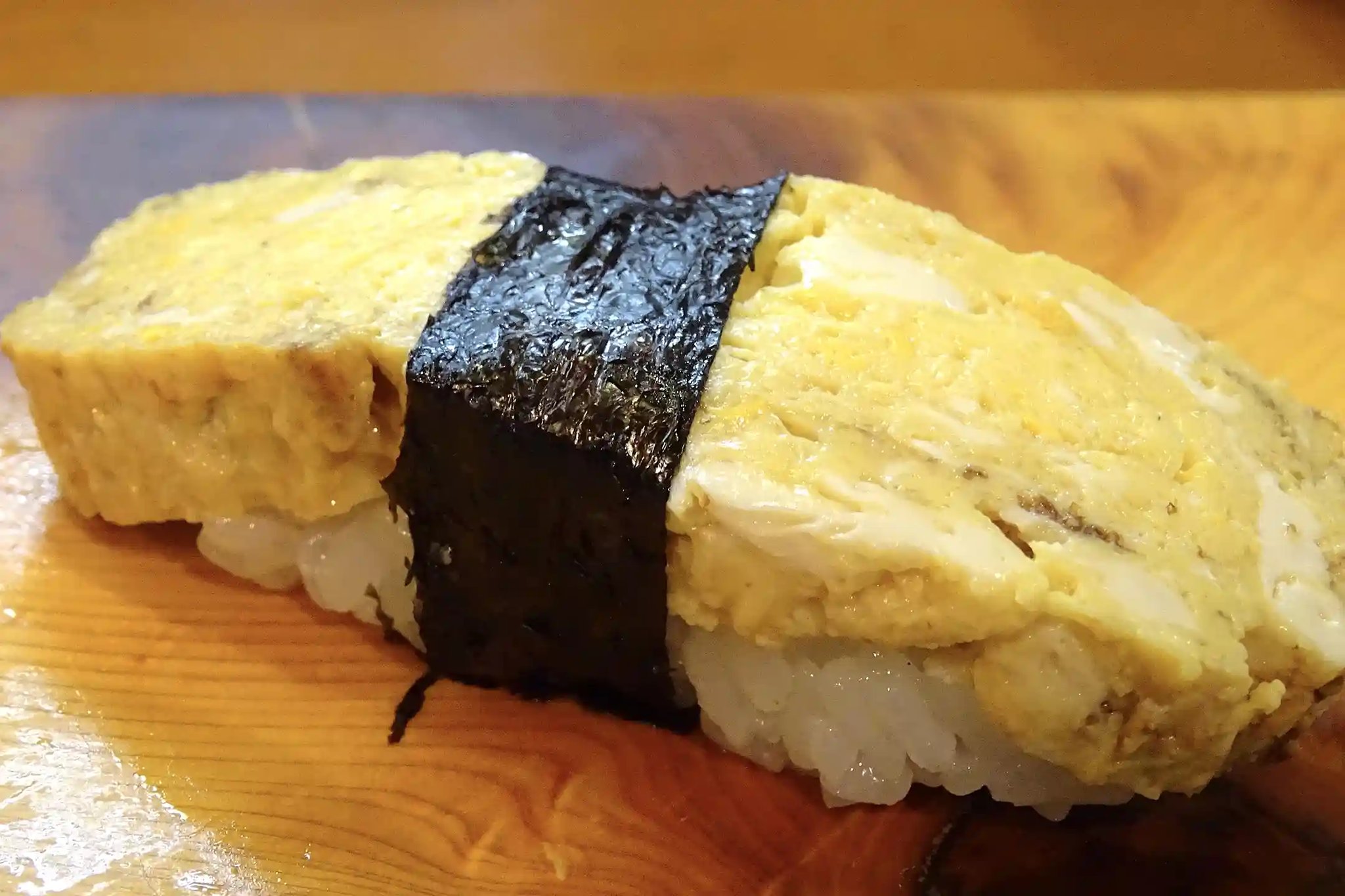
Reason 3: Each shop’s personality comes through
Tamago sushi also has plenty of room for each restaurant’s creativity, making it a piece where a shop’s individuality stands out. Even with the same basic idea—tamagoyaki—the sweetness, texture, and aroma vary dramatically depending on the recipe and cooking style. One long-established shop might blend in minced shrimp or yam to create a silky mouthfeel, while another might emphasize dashi and cook it in a fluffy dashimaki style. In other words, gyoku (tamagoyaki) strongly reflects the shop, which is why people even say, “If the tamago is great, the place is the real deal”(*4).
More recently, some restaurants have adapted for shellfish allergies by adjusting ingredients (for example, switching away from shrimp), evolving their tamagoyaki to match their own approach and their guests’ needs(*5). If you taste and compare tamago across different shops while imagining the story inside each one, your sushi-hopping becomes richer and far more rewarding.
Tamago Sushi Basics: What Is It, and What Does It Taste Like?
To understand the depth of tamago sushi, let’s first organize the basics. We’ll answer beginner questions like “What exactly is tamago sushi?” and “How is it different from a regular Japanese omelet?” Then we’ll explore its defining flavor traits—and the gap between how it’s sometimes imagined overseas and what it’s actually like in Japan.
Don’t worry if you’re new to sushi or not well-versed in Japanese culture: we’ll add brief notes for specialized terms as we go, so you can read with ease.
What tamago sushi is
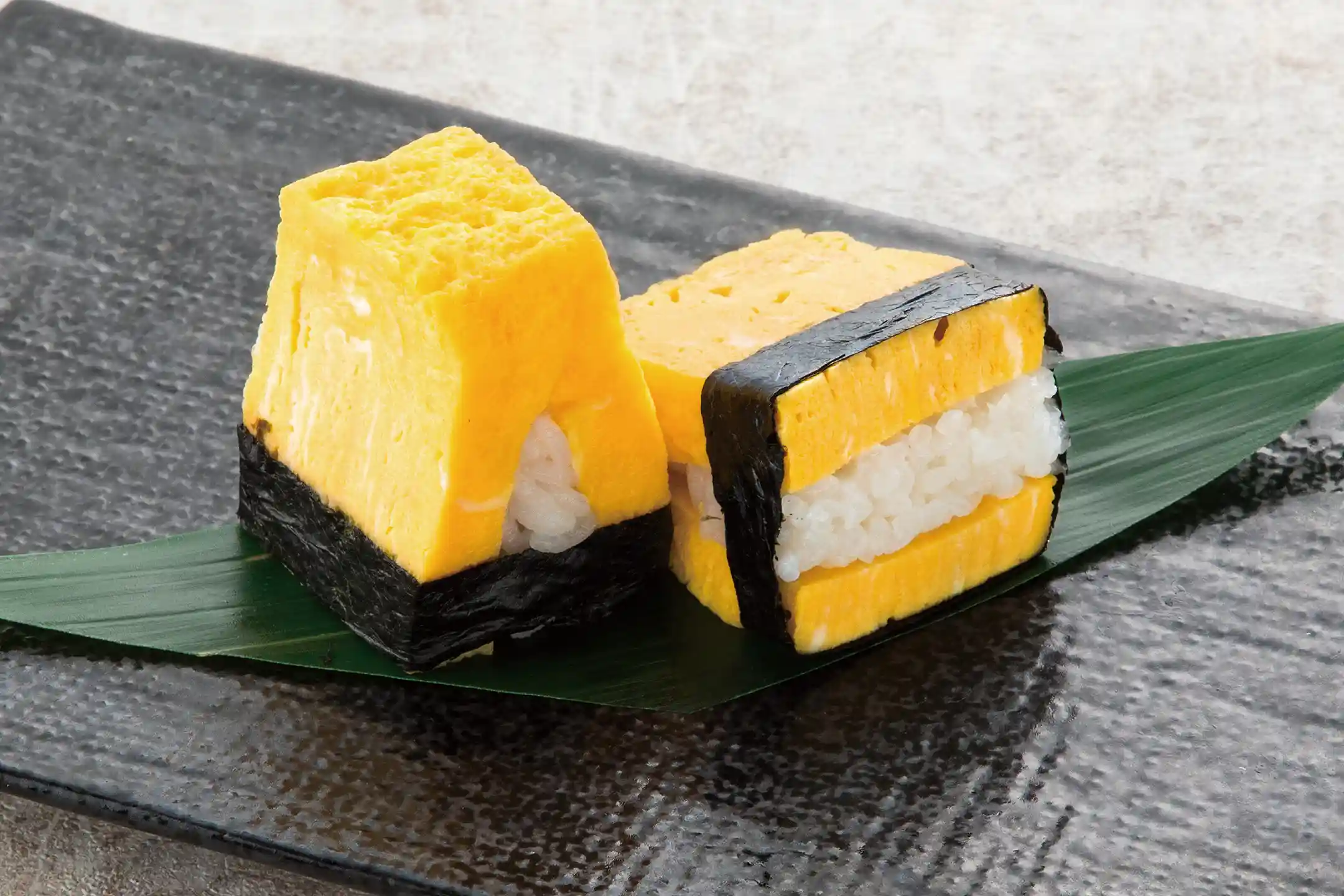
Tamago sushi is nigiri sushi made by placing a slightly sweet tamagoyaki (cooked omelet) on top of vinegared rice (shari). At sushi restaurants in Japan, it’s often called “tamago,” or by the in-house code word “gyoku,” and it’s a classic topping loved by everyone from kids to adults(*1). Overseas, you’ll often see it listed as “Tamago” or “Egg sushi,” and for travelers searching Japanese menus, “Japanese egg sushi” is another common label for the same idea. Because it looks like a bright yellow, lightly sweet omelet, it’s frequently chosen as an approachable entry point into sushi.
The serving style varies by restaurant. A common presentation is a long slice of tamagoyaki set on a small mound of shari and secured with a band of nori (seaweed). Some places, however, serve it as tamago-maki, where the rice is wrapped inside the omelet. Either way, the size and even the temperature are carefully considered—so despite its simplicity, you’re tasting a piece filled with a sushi chef’s intent and ingenuity.
The difference between tamagoyaki and tamago sushi
Tamagoyaki itself—whether atsuyaki tamago (thicker, firmer omelet) or dashimaki tamago (dashi-forward, juicier rolled omelet)—is familiar as a home-style Japanese dish. But tamagoyaki made for sushi has its own conditions and refinements. First, because it must function as a “topping,” the chef designs the sweetness, salt level, and overall seasoning to pair with vinegared rice.
Compared with a typical homemade tamagoyaki, sushi-shop tamagoyaki often uses more sugar and/or dashi, and it’s cooked to stay moist and delicious even after it cools. Its size and thickness are also calculated for ease of eating in one bite, shaped to maintain harmony with the shari as a single nigiri. Tamagoyaki on its own can be a complete flavor, but in tamago sushi, balance with the rice’s acidity is essential.
Some sushi restaurants even adjust the vinegar level of their shari to match the tamago. In other words, they elevate a simple omelet into a true “sushi topping.” Put simply: even if the ingredients are similar, tamagoyaki and tamago sushi differ in purpose, technique, and flavor architecture—and in the latter, you can see the distinctive thinking and skills of a sushi chef.
The flavor profile of tamago sushi
In one phrase, tamago sushi tastes “gently sweet and rich with umami.” Natural sweetness from sugar and deep savoriness from dashi come together, and a soft, comforting flavor spreads as soon as you take a bite. In Edo-mae sushi, tamagoyaki is often described as a slightly sweet, firmly cooked omelet with a lightly browned surface.
That said, finishing choices vary widely by shop: some keep browning subtle on the “show” side, for example. Still, achieving an even, beautiful golden color with consistent doneness requires advanced technique. Properly made tamago concentrates savory depth, with a moist, smooth texture. As you chew, the aroma of dashi and the richness of egg gradually unfold, and an elegant sweetness lingers at the end(*2).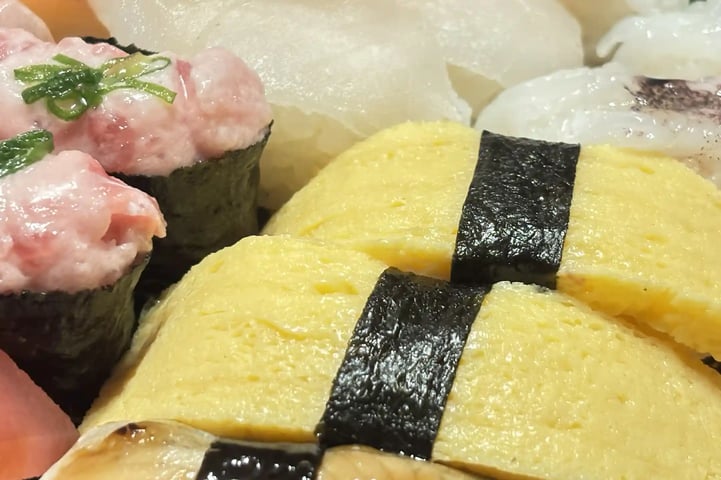 Texture also differs subtly by restaurant. Some are finely textured and tender, almost like castella sponge cake, while others hold more dashi and feel plump and juicy.
Either way, because it’s built specifically to pair with rice, the omelet’s sweetness is tightened and clarified by the vinegared shari—resulting in a balance that’s not cloying and never tiresome. Pay attention to aroma as well: freshly cooked tamago carries a faint toasty note, while even when cooled you can enjoy the mellow fragrance of egg yolk. Overall, tamago sushi isn’t flashy—but its quiet, steadily unfolding deliciousness is exactly its charm.
A common misconception: Is tamago overseas “very sweet”? What about tamago sushi in Japan?
You may hear sushi lovers overseas say, “Tamago sushi is extremely sweet—like a dessert.” It’s true that in Edo-mae sushi, sweet seasoning with sugar is common, and if it’s your first time, it may surprise you with how sweet it feels. But it’s a misunderstanding to label Japanese tamago sushi as “just sweet.” Behind the sweetness, there is real dashi-driven umami, and the balance among sweetness, saltiness, and acidity is carefully designed.
In fact, depending on the region and the restaurant—especially outside the Kanto area—you may be served tamagoyaki with more restrained sweetness(*3). At Kansai-style sushi shops, for example, sugar may be reduced and dashi flavor brought forward, using a dashimaki-style omelet for nigiri; in those cases, it may hardly taste sweet at all. In other words, tamago sushi’s sweetness varies widely by shop and region, so you can’t simply assume “Japanese tamago sushi = extremely sweet.”
Overseas, many people also eat tamago at the end like a dessert—and in Japan, that pattern is similar. But for many Japanese diners, the sweetness of tamago is a “soft, gentle sweetness” meant to create harmony across the entire course, not an intense candy-like sugar hit. Particularly in Tokyo, there’s a noticeable tendency toward “If it’s sweet tamago, eat it as-is without soy sauce,” and enjoying the tamago’s own flavor is a common approach.
All told, Japanese tamago sushi is a delicate balance of sweetness and umami, and the common overseas impression of “it’s just sweet” often dissolves once you taste it in its home context.
Important notes: Allergies and dietary restrictions
Tamago sushi’s gentle flavor is widely loved, but if you’re navigating allergies or dietary practices, there are a few important cautions. First, of course, it uses eggs—so if you have an egg allergy, you must avoid it. What’s often overlooked is what else may be inside the tamagoyaki. Traditional Edo-mae tamagoyaki sometimes includes shrimp or white fish surimi, which can pose a risk if you have a shellfish allergy or fish allergy(*4).
Recently, some restaurants have begun adjusting ingredients (for example, using different fish pastes) to accommodate allergies. Still, if you’re concerned, it’s best to ask the restaurant in advance. Also note that seasoning may include soy sauce and mirin, so if you have soy or wheat allergies, you’ll want to be careful.
If you’re aiming for a gluten-free diet, soy sauce can contain small amounts of wheat. And because it’s difficult to make dashi without animal-derived ingredients, most tamagoyaki uses dashi made from kombu and katsuobushi (bonito flakes), so it generally isn’t suitable for strict vegetarians or vegans. If eggs are okay for you but fish is not (for example, if you’re lacto-ovo vegetarian but avoid fish), and you still want to try tamago sushi, consider asking about the dashi and any hidden flavoring ingredients beforehand.
Fortunately, many sushi restaurants in Japan are understanding about allergies, and if you tell them at the time of reservation, they may be able to accommodate you. In any case, don’t assume “tamago = automatically safe.” Keeping an eye on ingredients matters. To enjoy tamago sushi with peace of mind, take a moment to check that it aligns with your body and your principles—and don’t hesitate to ask the shop a simple question.
History and Culture: Where Tamago Sushi Sits in Edo-mae Sushi
To truly talk about tamago sushi, you can’t skip its historical background and cultural context. When you trace the role tamago played within nigiri sushi—born in the Edo period—and its relationship with Japanese taste and aesthetics, the meaning inside a single piece of tamago sushi becomes much deeper.
So that you can “taste” history and culture—not just deliciousness—we’ll explain things in clear, approachable language while weaving in expert knowledge. The goal is to give you a perspective where eating tamago sushi becomes, in itself, an experience of cultural learning through Japanese food.
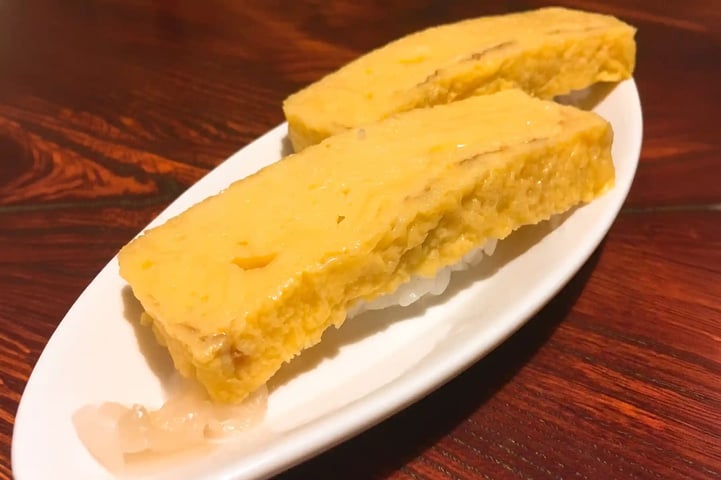
The rise of Edo-mae sushi and tamago sushi
Edo-mae sushi is often said to have emerged in the early 19th century, and in many accounts, tamago was already treated as an important topping from early on.
Historical records from the Edo period suggest that the sushi served by Hanaya Yohei—often cited as the originator of nigiri sushi—included “tamagoyaki” and “tamago-maki,” indicating that tamago had a place on the menu even then. Some sources also note that tamago sushi cost 16 mon per piece, double the price of other nigiri (8 mon). Eggs were precious and expensive at the time, and sushi made with tamagoyaki was a small luxury.
At the same time, eggs were nourishing, and their gentle sweetness appealed to women and children—so tamago sushi may have helped sushi culture spread more broadly(*1). In Edo-mae sushi, which was originally casual fast food you could eat at a street stall, sweet and easy-to-eat tamagoyaki delighted people of all ages, and it gradually became so standard that “if you go to a sushi shop, tamagoyaki is always there.”
Even today, it’s rare to find a sushi restaurant that doesn’t serve tamago. As people say, “The tamagoyaki is the shop’s face,” tamago sushi reflects a restaurant’s individuality and status. It’s also served as the closing piece of a course. Historically and culturally, tamago sushi isn’t a minor supporting character—it’s one of the essential “leads” when you talk about what a sushi restaurant truly is.
How sugar and dashi culture shaped tamagoyaki’s diversity
The seasoning of tamagoyaki strongly reflects regional and historical food culture. In Edo (Tokyo), where Edo-mae sushi originated, eggs and sugar were luxury items, and richly sweet tamagoyaki made with generous sugar came to be preferred. As part of Edo’s spirited sense of style, putting expensive sugar into eggs in abundance was also a kind of bold display—an “iki” flourish.
Sugar also helped improve preservation. In an era without refrigeration, chefs devised sweeter, stronger seasoning to help tamagoyaki keep longer. As a result, Edo-style tamagoyaki became known for dense sweetness, rich depth, and a pleasantly springy texture—traits still carried into the present (and many sushi shops intentionally preserve that traditional sweet profile).
Meanwhile, in Kansai—Kyoto and Osaka in particular—dashi culture developed deeply, along with a distinct sense of when to use sweetness versus savory seasoning. Kansai tamagoyaki traditionally uses abundant kombu and bonito dashi, keeps sugar restrained, avoids heavy browning, and finishes in a paler yellow.
Especially in some Kyoto culinary contexts, there is a sensibility that overt sweetness belongs more naturally in confections, while savory dishes should be appreciated through dashi and salt. This is one reason seasoning can differ dramatically between east and west, producing two major styles: Kanto’s sweet, firm atsuyaki and Kansai’s dashi-forward dashimaki(*2).
Today, efficient distribution means you can find sweet tamagoyaki nationwide, but in long-established sushi shops, local traditions often remain vivid. In other words, Japan’s relationship with sugar and its dashi culture nurtured tamagoyaki’s diversity—and that diversity still shapes the many expressions of tamago sushi you can taste now.
Japanese aesthetics expressed through tamago sushi
When you taste tamago sushi, you can also touch a facet of Japanese aesthetics. Rather than relying on showy luxury ingredients, it takes an everyday ingredient—egg—and prepares it with care until it becomes a finished “work.” In that attitude, you can sense a cultural spirit that honors richness within simplicity. If you look at the flow of a sushi course as a whole, closing with tamago’s gentle flavor reflects a way of thinking that values balance and harmony across the entire experience.
Instead of ending with constant, intense stimulation, the meal quietly lowers the curtain with a soft sweetness, protecting the afterglow of dining as if it were a staged performance. Much like the relief you feel after a bowl of thin tea in tea ceremony, tamago creates a comfortable pause and “space” even within a sushi course.
Tamago sushi doesn’t offer visual extravagance or surprise. Yet that restrained beauty is, arguably, Japanese aesthetics itself. A clean golden cross-section, a faint sweetness that remains on your tongue, and the gentle satisfaction you notice after the meal—these are born not from flashiness, but from a spirit that respects substance and sincerity. From one piece of tamago sushi, you should be able to sense the quiet, profound philosophy of beauty cultivated within Japanese culture.
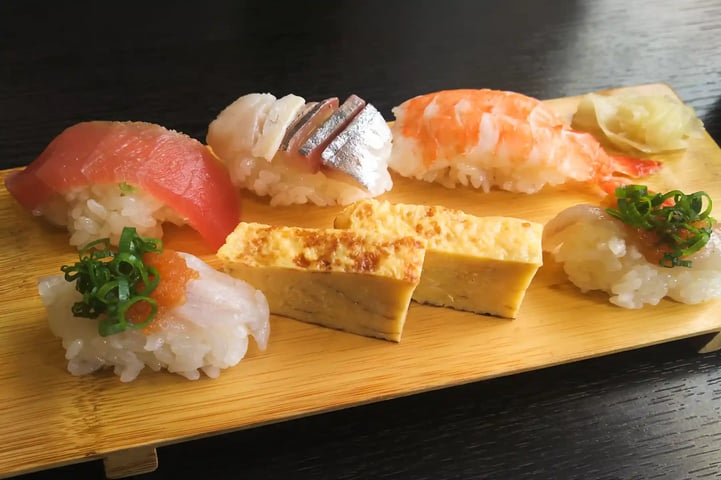
The counter experience: Trust, timing, and unspoken communication
At the counter of a high-end sushi restaurant, a distinctive sense of distance—and trust—is created between chef and guest. Tamago sushi is often served as the course approaches its end, functioning as an unspoken message from the chef that says, “That’s the conclusion of today’s omakase.” Turn it around, and this signal only works because you, the guest, trust the omakase flow enough to place yourself in the chef’s hands(*3).
By offering tamago, the chef is also quietly asking, “How was it?” And by receiving it and eating it, you’re answering, “It was excellent.” This kind of tacit communication can take place. Across the counter, even with few words, trust lives in the exchange, and you respect the chef’s plan all the way to the final piece. That exquisite balance of tension and relief is one of the true pleasures of sushi.
At the moment tamago sushi is served, something like invisible applause may pass between you and the chef. Some restaurants even let you take tamagoyaki home as a souvenir—another expression of trust and hospitality, as if to say, “Please enjoy our tamago at home, too.”
The trust cultivated at the counter takes shape as tamago sushi, and even after you leave, the taste stays as a memory—this, too, is part of tamago sushi’s cultural meaning.
Reading the Craft: “Tamagoyaki × Shari” That Makes Tamago Sushi Work
Tamago sushi’s depth lies in the subtle mastery hidden within what looks like a simple combination of egg and rice. In this section, we’ll unpack how tamagoyaki and shari become a single, completed piece of tamago sushi.
When you taste tamago sushi at a high-end restaurant, understanding what the chef is thinking as they make it will make your experience richer. Now, let’s take a peek behind the scenes—into how tamago sushi comes to life.
How the recipe ratios are designed
In sushi shops, the real work begins at the mixing stage. The basic ingredients are eggs, sugar, salt, soy sauce, and dashi, but the amounts and types are carefully adjusted by each restaurant. Eggs form the base of richness and aroma; sugar brings sweetness and moisture retention; salt and soy sauce tighten the sweetness and add umami; and dashi gives depth to the whole.
For instance, a long-established Kanto shop might add a small amount of richly flavored wasanbon sugar alongside fine white sugar, keep salt restrained to pursue a gentle sweetness, and still add a solid amount of dashi to push umami forward—each element chosen with intention and role clarity(*1).
On the other hand, for dashimaki-style tamago, a chef may sharply reduce sugar and instead tune the flavor with salt and light soy sauce, letting dashi take the lead. The key is harmony with the shari. Because sushi rice already carries vinegar and salt, a tamago mixture that’s too salty may clash—so from the egg-mixture stage, the chef is already reverse-engineering the final balance as “sushi.”
Through repeated trial and error—“This level of sweetness matches our shari,” “This seasoning fits our guests’ preferences”—the chef develops a signature golden ratio. It’s almost like a formulation, and that precision is the essential first step that defines the outline of tamago sushi’s flavor.
Dashi design (kombu, bonito, and more) and layers of aroma
What quietly supports tamagoyaki’s deliciousness is dashi design. Dashi—umami essence extracted from kombu, katsuobushi, and other ingredients—is the backbone of Japanese cuisine, and sushi-shop tamagoyaki is no exception. The type and strength of dashi can dramatically change the omelet’s flavor, and it also creates layers in how aroma rises.
If you use a clear kombu-only dashi, the umami becomes elegant and calm, a background fragrance that highlights tamago’s sweetness while staying understated. If you strongly feature fish-based dashi such as bonito flakes or niboshi, then the moment you bite into the tamago, a gentle sea aroma lifts, and the “sushi-like” savoriness moves to the front. Many high-end shops use ichiban dashi made from kombu and bonito, adjusting intensity to shape the profile.
Aroma also shifts depending on serving temperature. Freshly cooked, warm tamagoyaki releases dashi aroma more readily; cooled tamagoyaki offers a quieter, settled fragrance. Chefs fine-tune the “aroma peak” by choosing whether to cool the tamago after cooking, or to warm it slightly before placing it on shari.
In styles that wrap tamago with nori, the toasted fragrance of seaweed is also considered as part of the equation. Because aroma is designed this carefully, a single piece of tamago sushi can carry multiple layers of flavor. When you eat it, try paying attention to the scent that escapes through your nose—you’ll feel the chef’s meticulous hand at work.
.webp?width=721&height=481&name=Tamago%20Nigiri%20(Sweet%20Rolled%20Omelet%20Sushi).webp)
Heat control technique
In the middle stage of making tamagoyaki, the chef’s skills shine in heat control. Broadly, sushi-shop tamagoyaki includes two types: one built by repeatedly layering and rolling thin sheets (atsuyaki and dashimaki styles), and another poured in thicker and cooked in a more steamed-bake manner (castella-style tamago). In both, the shared challenge is achieving “fluffy” and “moist” at the same time.
If you blast it on high heat, the egg puffs but the surface hardens and the inside dries out. If you cook too long on low heat, moisture escapes and the texture becomes tight and firm. Professionals keep the heat gentle and take time to apply even warmth, avoiding patchy browning and finishing in a beautiful yellow. They also measure how much egg mixture to pour at a time and when to roll, adjusting to retain the right moisture.
With dashimaki, the chef pours the mixture in several rounds and rolls it each time while it’s still semi-set, building layers. The trick is to finish rolling while the center is still not fully cooked, letting residual heat carry it through. That’s how you get a juicy, softly springy inside with a lightly cooked surface.
Castella-style tamago, meanwhile, is often cooked slowly—sometimes around 30 minutes to an hour depending on size and method—flipping partway through to cook evenly(using a specialized tamagoyaki pan and a drop lid, and applying heat from both sides—true artisan technique). Managing heat so it never scorches during a long cook is a nerve game, and finishing with a brief moment of higher heat to tighten the surface shows the chef’s ability to read moisture and bubbles in real time.
In short, tamagoyaki isn’t “just cooking eggs.” It’s an advanced technique of controlling temperature, time, and moisture with precision. Naturally, the quality of that heat work strongly determines the texture and aroma of the tamago sushi you’ll finally taste.
Tools and movement
When you sit at a sushi counter, you may catch a glimpse of the chef preparing tamagoyaki in the back. If you do, it’s worth watching the tools and movements. The square copper tamagoyaki pan is designed for even heat transfer, and its shape differs between Tokyo and Kansai styles. The chef handles it with confidence, using chopsticks or a spatula to spread and roll the egg mixture.
One highlight when making thick tamagoyaki is the “kaeshi”—the flip. Turning a large omelet without breaking it takes real skill, and the quick, smooth moment where the chef uses a lid or cutting board to flip it is easy to find yourself watching closely. Even after cooking, the chef’s knife work shows their sensibility.
When cutting tamago for sushi, the chef draws a well-sharpened knife through in one clean pull so the cross-section looks smooth and beautiful. With no unnecessary force, the interior texture isn’t crushed, and the mouthfeel improves. In some cases, the chef cuts the tamago to the ideal size after you order, then places it on shari and forms the nigiri—every motion efficient, refined, and without waste.
At the moment of serving, you may see finishing touches: a quick nori wrap, or a leaf-shaped pick securing the tamago, depending on the restaurant’s style. These gestures heighten the live, theatrical feel of counter sushi. When tamago sushi arrives, try letting your eyes drift toward the preparation area, too.
A chef who calmly smiles while forming tamago in practiced silence is a moment where you can feel Japan’s craftsmanship spirit up close.
The shari that determines tamago sushi’s final quality
Tamago sushi is only complete when tamagoyaki and shari (vinegared rice) marry as one. Let’s look at how the rice side affects the final experience. First: temperature. Sushi rice is often said to be ideal around body temperature (about 36–37°C), and for tamago sushi, it’s especially important to balance the rice with tamago so the omelet doesn’t feel overly chilled.
That’s why chefs may use tamagoyaki brought back toward room temperature before forming the nigiri, ensuring tamago and shari blend pleasantly the moment you eat it. Vinegar balance matters, too. If the shari’s vinegar is too strong, it can overpower tamago’s delicate sweetness; if it’s too mild, the whole piece can feel unfocused.
Some great restaurants will even use slightly gentler vinegar seasoning than usual to suit tamago, pursuing the precise point where the rice’s acidity and the omelet’s sweetness harmonize(*1). Next is proportion. The ratio between tamago and shari dramatically changes how it feels to eat. The chef subtly adjusts the amount of rice to match the tamago’s thickness and width, aiming for a bite where egg and rice feel evenly matched.
That balance lets you enjoy both flavors simultaneously, and the piece loosens and dissolves in your mouth as one. The nori band is also important. A thin strip of toasted seaweed keeps the tamago stable, but it also adds fragrance and depth. The crisp, savory snap of nori becomes an accent—and it also acts as a “bond” between tamago and shari.
Overall, it’s no exaggeration to say tamago sushi’s completeness depends on the shari. Great chefs either pair it with slightly firmer, more assertive rice so the tamago doesn’t dominate, or choose softer, gentler rice to let tamago’s character shine. When you eat tamago sushi, try paying attention to the shari as well. In the moment when sweet tamago and lightly sour rice become a single harmony, you’ll feel the unique pleasure that only sushi can offer.
.webp?width=721&height=481&name=Tamago%20Sushi%20(Sweet%20Rolled%20Omelet%20over%20Rice).webp)
Checklist: How to recognize great tamago sushi
So how do you judge whether tamago sushi is truly good? To close, here’s a concise checklist of key points. Use it as a small reference when you order at the counter.
Aroma: When you bring it close, can you sense a full, rounded aroma of egg and dashi? If there’s no burnt smell or fishiness and the fragrance feels refined, that’s a strong sign. If it’s freshly made, you may catch a faint sweet scent; if it’s cooled, bonito or kombu notes may appear softly.
Appearance and texture grain: Is the cross-section smooth and evenly golden? Check for uneven scorching or large bubbles that look like holes(*2). A beautiful color and fine, consistent grain are proof of skilled mixing and heat control.
Mouthfeel: When you bite, does the tamago feel fluffy and soft, settling naturally on your tongue? Ideal tamago sushi breaks apart as if melting together with the shari, so you experience tamago’s moistness and the rice’s gentle crumble at the same time. If it’s dry or tough, the cooking or ratios may be less refined.
Flavor balance: Is the sweetness not overly dominant, yet the taste still clear rather than vague? A great tamago harmonizes sweetness, saltiness, and umami, leaving a comfortable aftertaste(*2). Notice whether only sugar sweetness lingers, or whether saltiness is so strong that you lose the sweetness entirely.
Unity with shari: When you eat tamago and shari together, harmony is everything. It’s not ideal if the tamago is too large to bite through cleanly, or if it’s so thin that it loses to the rice’s acidity. The goal is a state where tamago’s richness and sweetness are gently held by the shari’s acidity, leaving a lightly sweet-and-sour afterglow once you finish.
When you put these points together, the true masterpiece is the tamago sushi that makes you think, “I want one more.” As you taste tamago sushi across different restaurants, try using this checklist. If you find a piece with outstanding aroma, appearance, texture, and flavor harmony, you can confidently say that shop has real skill.
(*1 Source: Kaneki “A Sushi Restaurant Teaches You: Tamagoyaki Recipe Features Where Sweetness Is the Key” ※Explains ingredients for tamagoyaki made for sushi toppings https://sushi-kaneki.co.jp/archives/3888)
(*2 Source: Mitorie “The Three great ‘Edo-mae’ Sushi Toppings: Kohada, Anago, and Tamago” ※Describes the flavor profile of tamagoyaki https://mitorie.jp/edomae-sushi-philosophy/)
Style-by-Style Guide: Choosing Tamago Sushi by Atsuyaki, Dashimaki, and a Shop’s Signature
Even though we call it “tamago sushi,” the style differs widely from restaurant to restaurant. In this section, we’ll introduce several representative styles and give you hints for finding the kind that fits your taste.
From traditional Edo-mae atsuyaki rooted in Tokyo, to fluffy and juicy dashimaki styles, to secret house recipes unique to each shop—let’s unpack what’s different and why it matters. As you read, try comparing it with your own preferences: “I love sweet tamago,” “I prefer dashi-forward,” and so on. We’ll share the charm of each style in full, so choosing tamago sushi can become part of the joy of choosing a sushi restaurant.
Edo-mae atsuyaki tamago
First is the Edo-mae atsuyaki tamago style. This is a traditional type commonly seen in sushi restaurants centered around Tokyo, using a thick omelet that’s cooked through and formed into nigiri.
Its defining features are deep sweetness and a dense, satisfying texture. Because the egg mixture is seasoned relatively strongly with sugar and soy sauce and then cooked slowly, the egg’s flavor concentrates, creating a moist mouthfeel reminiscent of castella sponge cake. The sweetness is clear on the tongue, but not cloying; dashi-driven richness supports it underneath, so it stays elegant.
Within that compact density, it never feels hard. When you bite, it gently breaks apart and blends with the shari. Because it’s often made on the sweeter side, it’s popular across ages, and you’ll also see many sushi shops selling whole loaves as souvenirs(*1).
Edo-mae atsuyaki is particularly good at creating a lingering finish through slowly spreading richness and sweetness. When served as the course closer, its sweetness softly gathers the memory of the entire meal, and you can leave with a mellow satisfaction—thinking, “That sushi was wonderful.”
Visually, it’s a clean yellow rectangle with crisp edges, and its cross-section packed with tiny bubbles looks like a true crystallization of craftsmanship. Because it’s “cooked firmly, yet never tough,” this Edo-mae style may be the most immediately understandable—and genuinely moving—first encounter with sushi-shop tamagoyaki.
Dashimaki-style tamago sushi and serving innovations
Next is dashimaki-style tamago sushi. This uses a fluffy, juicy omelet reminiscent of Kansai-style dashimaki, and some high-end sushi restaurants adopt it as well. Its hallmark is a plump, tender texture from abundant dashi, paired with restrained sweetness.
Because the omelet can be so soft it feels like it might collapse when you pick it up, chefs need clever solutions to turn it into nigiri. Some stabilize it with a nori wrap, while others place bite-sized tamago on the shari in a gunkan-like presentation.
Some restaurants even serve the tamago on a plate without forming nigiri, letting you eat it together with the shari yourself. Dashimaki-style tamago sushi is refined and more “adult” in tone, with umami and aroma from dashi taking center stage(*1).
When you bite, dashi seems to seep out with a juicy burst, combining with the rice’s vinegar for an exceptional flavor. However, because it’s soft and moist, if time passes the moisture can move into the rice and make it sticky—so chefs pay close attention to timing, serving it immediately after forming, or placing the tamago on the rice only right before you eat.
Because dashimaki can fall apart when very warm, it may be served slightly cooled, and that cooling point is also part of the technique. Kept just around body temperature—not too cold—the dashi aroma blooms gently on your tongue. Overall, dashimaki-style tamago sushi is defined by its soft, luscious texture and refined umami, making it a wonderful “grown-up tamago” if you find very sweet tamago less appealing.
Try it without soy sauce, and enjoy the harmony of tamago and shari as it is. As you chew, the expanding dashi fragrance can make you feel the quiet sophistication of Japanese cuisine.
Traditional shop recipes with surimi, shrimp, yam, and more
Tamagoyaki recipes vary enormously by restaurant, and some shops continue to protect and pass down secret ratios as part of their tradition. A representative classic style adds minced shrimp (shiba-ebi), white fish surimi, and even grated yam (yamaimo / yamatoimo). In Edo-mae sushi, it has long been common to blend not only eggs but also seafood paste—called namami—into the mixture, adding umami and a distinctive springy resilience.
For example, a long-established Tokyo shop has reportedly maintained a recipe for over 50 years that combines shiba-ebi surimi and yam with eggs, achieving a texture that’s moist and fluffy yet still firm enough to pick up with chopsticks. According to the owner, they have consistently followed the method taught by the previous generation—proof that inherited craftsmanship is alive in that tamago.
There are also lineages that use processed white fish products such as hanpen. Yam’s natural stickiness helps the batter come together and bake up fluffy yet pleasantly chewy, while shrimp or fish paste adds protein and umami that deepens richness. Each traditional recipe creates its own signature texture and savoriness—precisely the part where you can feel the story of the shop.
Because these tamagoyaki carry long histories and narratives of training, eating them can feel meaningful beyond simple deliciousness. As you taste, try imagining, “What might be inside this tamago?” Some restaurants may tell you; others may laugh and say, “That’s a trade secret.” Either way, encountering tamago sushi shaped by a traditional recipe is one of the great pleasures of exploring sushi restaurants.
Sweet / savory / dashi-forward: How to find what you love
Everyone’s preference for tamago sushi is different. Maybe you love clearly sweet tamago; maybe you prefer restrained sweetness with dashi up front. Here are a few tips to help you find what matches you.
If you have a sweet tooth, long-established Tokyo shops and Edo-mae style restaurants are often a great fit. Where you can taste a sugar-forward atsuyaki tamago, the omelet itself can feel as satisfying as a premium castella. If you prefer less sweetness, look for Kansai-influenced restaurants, or even Edo-mae shops that intentionally keep sweetness down and emphasize seasoning. If review sites include comments like “Their tamago is dashi-forward and not sweet,” consider that a strong clue.
If you care most about dashi aroma and depth, you might also look for chefs with training in Japanese cuisine beyond sushi. In those restaurants, tamagoyaki often reflects a love of layered dashi, and you may find yourself thinking in one bite, “Oh—this dashi is different.”
It also helps to focus on texture. Do you prefer a firmly cooked style, or a tender, semi-set, melt-in-the-mouth feel? If you know your preference, restaurant choice becomes easier. If you like fluffy softness, look for shops that highlight “dashimaki tamago.” If you like a firm, classic style, look for places that mention “Edo-mae tamagoyaki craftsmanship.”
In any case, you can often order just one piece of tamago sushi to sample, so be proactive about trying tamago in different places—you’ll start to see your own pattern. Compare the type of sweetness (the sharp sweetness of white sugar versus the refined sweetness of wasanbon), the outline of dashi (bonito-forward versus kombu-soft), and aroma (whether there’s a toasted note from browning). With that awareness, your tamago-sushi journey becomes even more fun.
Ultimately, we hope you find a favorite that makes you think, “I want to eat that shop’s gyoku again.”
.webp?width=721&height=481&name=Temaki%20Sushi%20(Hand-Rolled%20Sushi).webp)
High-end shops, casual shops, and conveyor-belt sushi: What’s different about tamago sushi?
Tamago sushi is served everywhere—from high-end sushi counters to neighborhood shops to conveyor-belt sushi chains—but its quality and role can differ dramatically. At high-end restaurants, tamagoyaki is the embodiment of the chef’s pride, and it’s not unusual to hear that apprentices spend years before they’re allowed to make it well.
Ingredients are carefully selected, prepared from scratch each morning, and the result is a one-of-a-kind flavor and texture unique to that shop. It’s served at the end of an omakase course under careful temperature control, treated as a special finale piece.
In casual neighborhood sushi shops, many still cook tamago in-house, but they may not be able to devote the same level of labor as a top-tier counter. Some use commercial seasonings or specialized equipment to maintain steady quality, and the flavor is often tuned to a broadly appealing, moderate sweetness.
There are also differences in sourcing. While high-end restaurants generally make tamago in-house, conveyor-belt sushi often purchases tamagoyaki from specialized suppliers. In fact, some point out that a large share of tamago served in everyday settings is made from commercial products.
As a result, conveyor-belt tamago can taste similar across brands, often as a sweet, firm atsuyaki style, making dramatic differences harder to notice. That said, in recent years some conveyor-belt shops have started promoting “chef-grilled tamago,” so it’s not a universal rule. Temperature management also differs: high-end shops may rest tamago at room temperature to let flavors settle, or serve it at an ideal point, while conveyor-belt sushi may present it chilled from a refrigerated case—this alone changes aroma and texture.
The manner of serving and the atmosphere also differ. At a high-end counter, a single piece is carefully formed and handed to you, and you eat it under the chef’s attentive gaze. At conveyor-belt sushi, it’s an everyday bite you casually pick up and eat.
Each has its appeal. If what you want is a distilled piece of craftsmanship, go to a high-end shop. If you want good sushi, easily and affordably, conveyor-belt sushi can be more than enough. The quality of ingredients (egg freshness, dashi quality, and so on) generally follows the price, so even within tamago sushi, you should recognize that different price tiers can mean fundamentally different experiences.
If you have the time and budget, it’s a fascinating experience to compare a high-end chef’s tamago sushi with tamago from a neighborhood shop or conveyor-belt sushi. Once you feel the difference, your eye—and palate—for tamago sushi will grow sharper.
The Best Way to Eat It: Temperature, Timing, and Pairings for Tamago Sushi
Finally, let’s summarize tips for enjoying tamago sushi at its absolute best. If you’re going to taste a carefully crafted tamago sushi, you’ll want to bring out its full charm—by understanding why it’s served when it is, how to take it into your mouth, and how to pair it with drinks.
You don’t need to act like a connoisseur, but with just a small shift in attention, tamago sushi can become far more vivid. Stay relaxed, but meet that one piece with care—here are the points that help you enjoy it fully.
What it means when tamago sushi appears in omakase
There is a clear meaning—and a sense of staging—behind serving tamago sushi last in an omakase course.
As discussed earlier, tamago is an important piece. By presenting it at the close, the chef is conveying a message: “Please enjoy the final polish of our restaurant today.” From your side, the moment tamago sushi arrives, you understand, “Ah, the course is coming to an end,” and it becomes your cue to slow down, savor the afterglow, and bring the meal to a graceful close.
What matters here is that you treat tamago sushi as an honored part of the course. Occasionally, someone sees tamago as just dessert, leaves it behind, or treats it lightly—but that’s truly a shame. The chef does not relax until the very end; they offer their best tamago in the final moment. When you understand that intent and finish every piece, the omakase course becomes complete.
Tamago sushi contains the restaurant’s summary of taste—almost like the last sip that ties everything together. Try focusing and letting yourself feel it. Don’t think, “It’s sweet, I’m too full.” Once you take a bite, you’ll often find it goes down surprisingly smoothly. The sweetness and the rice’s acidity leave a comfortable aftertaste, and satisfaction gradually rises.
Many sushi lovers say, “Only when you finish tamago can you say you truly ate at a sushi restaurant.” If you understand why tamago appears in omakase and taste the final piece with intention, you’ll likely step out wrapped in a warm, happy afterglow.
Tips for enjoying it right after it’s served
When tamago sushi is placed in front of you, the key to deliciousness is to eat it fairly soon. Sushi is best right after it’s formed, and tamago sushi is the same—immediately after serving is when temperature and aroma are at their peak.
Pick it up with your hand or chopsticks, bring it close, and first notice the gentle fragrance of egg and dashi that rises as you approach your mouth. Then take it in one bite. Some people flip nigiri so the topping touches the tongue first, but with tamago sushi you don’t need to worry too much—eat it naturally. What matters is not obstructing the melt. Rather than chewing too hard, let tamago and shari roll between your tongue and the roof of your mouth; it will naturally loosen and come apart.
As for soy sauce, as mentioned earlier, each shop has its style: “brushed on,” “okay to dip,” or “better without.” The basic rule is to follow the restaurant’s guidance. If it’s already brushed, don’t add more; if nothing is said, you can decide.
Still, for tamago sushi, it’s a good idea to first take one bite without soy sauce and check the balance of sweetness and saltiness. In many cases, it will already taste complete without any soy sauce at all. If you do add it, don’t soak the rice side—just place a single drop on the tamago side (soy sauce on rice can make it fall apart and can push saltiness too far).
Wasabi is usually not included, so don’t add it yourself—enjoy it as served. Tamago sushi often pairs better with gari (sweet-pickled ginger), so if gari is provided, try taking a small piece afterward; it refreshes your mouth and makes the aftertaste feel even cleaner.
If you keep this flow in mind—smell the aroma → eat in one bite → enjoy how it loosens in your mouth → add only minimal soy sauce if needed—you’ll draw out tamago sushi’s best. Then, if you quietly close your eyes and let your mind drift to the chef’s hands, you may find a truly blissful expression appearing before you notice.
Drink pairings
Lastly, let’s touch on drink pairings for tamago sushi. In sushi restaurants, many people pair the meal with Japanese tea—especially a stronger green tea known as agari—and it matches tamago sushi beautifully. The tea’s pleasant bitterness rinses away tamago’s sweetness, leaving a clean finish.
In the Edo-mae world, people even say, “With sushi, hot tea is more stylish than alcohol,” and it’s classic to sip a more astringent tea after tamago to close the meal. Still, if you’re enjoying alcohol with sushi, what works well when tamago arrives? With tamago’s sweetness and dashi aroma, slightly sweet sake or white wine can pair nicely.
For sake, a fruity, slightly sweet junmai ginjo, or a kimoto-style sake with calm acidity, can harmonize with tamago’s umami. Rather than an extremely dry sake, a rounder profile tends to highlight tamago’s flavor. For wine, instead of very dry sparkling or heavily oaked Chardonnay, pairing a light Riesling with some residual sweetness—or even a small amount of a rich, dessert-adjacent botrytized wine—can create an intriguing echo with tamago’s sweetness.
That said, as a whole, it’s safest and simplest to finish sushi with tea or water. Since tamago itself serves as the closing, it can also help to finish your alcohol before tamago so your palate stays clear. Switching from alcohol to tea for tamago is a smart option. Some restaurants serve a bowl of red miso soup (aka-dashi) after tamago; the saltiness and umami can also feel especially comforting after a sweet finish.
In short, the key to tamago sushi pairing is either “sweetness × astringency” or “sweetness × gentle sweetness.” The bitterness of tea, the savory salt of miso soup, the faint sweet-sour roundness of sake or wine—each can lift tamago sushi’s lingering aftertaste. Choose the closing drink that feels best to you.