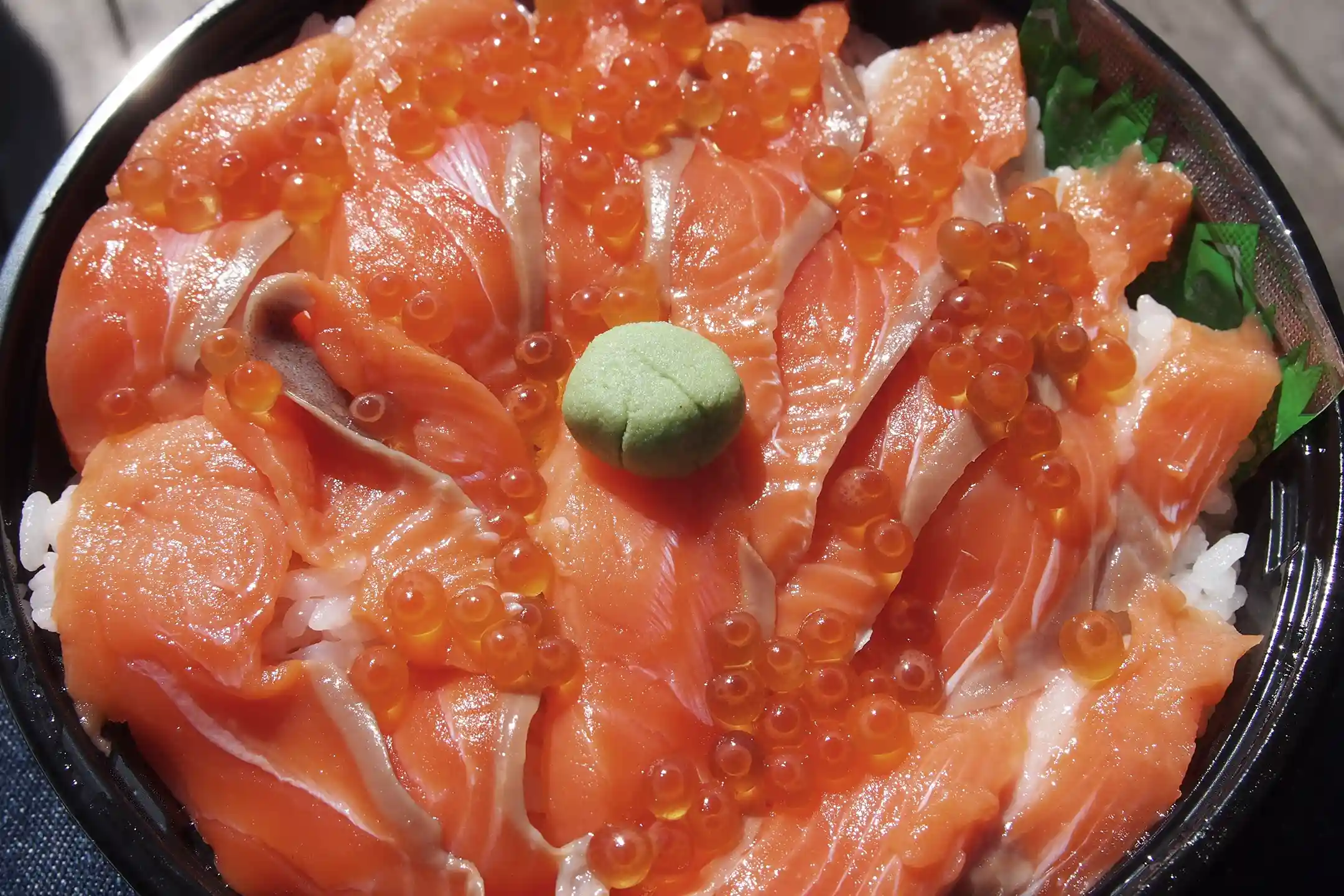
Japan’s beloved “salmon donburi” (often shortened to “salmon don”) isn’t just a meal—it’s a cultural experience in a single bowl. If you searched for salmon don sushi, this is very likely what you had in mind: sashimi-style salmon served over rice, enjoyed with the same attention to balance, aroma, and temperature that defines great sushi.
The key to spotting a truly high-quality salmon donburi comes down to five lenses. Keep these in mind, and you’ll be able to savor an exceptional bowl—whether you’re traveling or enjoying one at home. Read on to the end for practical ways to appreciate salmon donburi with a touch of culinary literacy (and without common missteps).
First, the takeaway: five lenses for recognizing a high-quality salmon donburi
Here are the five checkpoints up front. If you hold onto these, you can enjoy a bowl of salmon donburi both culturally and gastronomically—fully and deeply.
Salmon quality (species/type, cut, and handling) – The fish species, whether it’s farmed or wild, how rich the fat is depending on the cut, and how carefully it’s handled for freshness all shape the final flavor.
Rice temperature and white rice vs sushi rice – Rice is best around body temperature. Sushi rice can refresh rich fat with gentle acidity, while plain white rice receives the ingredient’s flavor more directly.
Balance of sauce and aromatics – Soy-based sauces and aromatics should be added sparingly—just enough to lift the ingredients rather than overwhelm them. Wasabi and ginger are effective for sharpening aroma and keeping flavors clean.
Layering of toppings – If you add salmon roe or egg yolk, choose with balance in mind: saltiness, texture, and aroma. The aesthetics of restraint—knowing what not to add—matters.
Labeling and temperature control at the restaurant – Clear origin and farmed/wild labeling, plus careful management of sashimi and rice temperatures at serving time, are strong indicators of care and trustworthiness.
Salmon quality is decided by species, cut, and handling
As the star of salmon donburi, salmon quality depends on three things: species (type), whether it’s farmed or wild, and the cut and handling before it hits your bowl. In general, wild salmon tends to have firmer flesh and a more pronounced, concentrated savoriness, while farmed salmon is often available year-round with consistently rich fat and a mellow, silky texture (*1).
In Japan, what’s marketed as “sashimi-grade salmon” is often farmed varieties such as Atlantic salmon (Salmo salar). Meanwhile, wild Japanese salmon (such as autumn salmon) can vary seasonally in fat content and often tastes cleaner and lighter. For raw consumption, proper freezing and hygiene control are essential. As one preventive measure against anisakiasis, Japan’s Ministry of Health, Labour and Welfare notes freezing at -20°C for at least 24 hours (*3).
Flavor also changes depending on where the cut comes from. If you love richness, belly cuts—such as harasu (belly meat), often nearer the collar area—tend to be juicy and satisfying. If you prefer a cleaner finish, the leaner back side toward the tail is a better fit, and it also has the advantage of fewer bones, making it easier to eat (*1).
If a restaurant clearly notes terms like “farmed,” “wild,” or “thawed,” it can be a sign that their management and disclosure are careful—so it’s worth checking (*4). When you learn to read these signals, you can enjoy the salmon’s quality with greater confidence and peace of mind.
Rice changes the whole impression through temperature and whether it’s plain or seasoned
The rice—essential to any salmon donburi—dramatically changes how the bowl tastes, depending on temperature and seasoning (plain white rice vs sushi rice). Rice shouldn’t be too hot or too cold. If it’s piping hot, the sashimi warms up and loses its best aroma and texture; if it’s cold, your palate dulls and it becomes harder to sense the fish’s savory sweetness. The ideal is similar to nigiri: rice that retains a gentle warmth, roughly body temperature (*3).
Harmony also shifts depending on whether you choose plain rice or sushi rice. Sushi rice typically adds mild acidity and a whisper of sweetness that helps refresh the fattiness of sashimi—and that acidity can also help keep flavors bright as you eat (*3). Plain white rice, on the other hand, doesn’t add extra flavor, so the rice’s natural sweetness supports the salmon’s umami in a straightforward way, letting ingredient-first simplicity shine.
These days, many places will even let you choose between sushi rice and plain rice, so if you’re unsure, try asking the staff. Either way, paying attention to rice doneness, temperature, and seasoning is a major key to enjoying salmon donburi at a higher level.
With sauce and aromatics, subtraction works better than addition
The sauce (such as a soy-based marinade) and aromatics (wasabi, ginger, scallions, and more) that set a salmon donburi’s direction have one essential rule: don’t add too much. A classic soy-based sauce—often balanced with mirin and sake for a sweet-salty profile—is a time-tested pairing that highlights salmon’s savoriness.
If you add a small amount of grated ginger to a simple soy sauce base, even a fatty salmon can finish cleaner and brighter. Aromatics also work best when you think in terms of synergy with the sauce. For instance, a soy-and-ginger sauce pairs beautifully with chopped scallions or green shiso; a sesame-forward sauce can be balanced with shredded scallions or kaiware daikon (daikon radish sprouts) to add a crisp, peppery lift.
Wasabi and ginger are supporting players: they refine aroma and help keep fish flavors clean. Wasabi contains pungent compounds that have shown antimicrobial activity in some contexts, and it has long been used in Japanese dining as a sharp, clearing accent (*1). Still, you don’t want the heat to dominate—just a tiny dab on the sashimi is enough. And instead of drenching the bowl in soy sauce from the start, add a little at a time and enjoy how the taste evolves. When you adjust sauce and aromatics with a “subtraction” mindset, the salmon’s own sweetness and fragrance stand out, and you can enjoy every bite right down to the last.
Toppings complete the layers of flavor
Toppings that add color and dimension can deepen the “layers” of flavor—when you combine them thoughtfully. A popular choice is salmon roe (ikura), which contributes saltiness and texture. Those little pops of roe add crisp contrast to salmon’s mellow fattiness and create a sense of indulgence (*2).
Ikura’s concentrated savory depth also pairs extremely well with rice, and the aroma that spreads across your palate can feel genuinely special (*2). Egg yolk or onsen tamago (soft-cooked hot-spring-style egg) adds another layer of richness. If you drop a raw yolk into the center and mix—yukhoe-style—the soy sauce base turns rounder and a dense, satisfying richness spreads through the bowl. When salmon’s fat and the egg’s richness meet, you may find it hard to put your chopsticks down.
Avocado or grated nagaimo (Japanese mountain yam) can add creaminess, while aromatic vegetables like green shiso, oba (perilla leaf), and myoga (Japanese ginger) tidy up the finish with a fresh lift (*3). If you scatter thinly sliced nori, a gentle sea aroma rises and the bowl gains extra depth.
That said, too many toppings are a mistake. To keep salmon—the protagonist—from losing its presence, choose only what you truly need, in line with a clear theme. Each topping has a role, and when those roles harmonize, the “work” that is salmon donburi feels complete.
A restaurant’s ability to explain—and its temperature control—shapes your satisfaction
Lastly, pay attention to how well the restaurant explains what it serves, and how carefully it controls temperature. The better the salmon donburi, the more likely the restaurant is to describe its ingredients and technique with care. It’s an important checkpoint whether the menu or signage clearly states the salmon type and origin, whether it’s farmed or wild, and whether freezing treatment was used (*4).
If you see labeling like “Wild sockeye salmon from ___” or “Norwegian salmon trout (farmed),” it becomes easier to imagine the bowl’s direction—and you can feel more at ease. Another signal is whether staff can answer questions promptly, which reflects both knowledge and hospitality. If they offer guidance such as, “Today’s salmon is especially rich, so sushi rice is recommended,” your satisfaction is likely to rise.
Temperature management at serving time also matters. If sashimi is too cold, it’s harder to sense umami; if it warms too much, the texture loosens and loses tension. Good restaurants store sashimi at an appropriate temperature and adjust rice to a comfortable range right before serving. When the bowl arrives, try placing your hand against the bowl: is the sashimi still nicely chilled, and is the rice not visibly steaming?
A bowl that’s temperature-conscious down to the details should stay delicious all the way through. Careful labeling and careful temperature control—restaurants that do both are the ones most likely to bring you a genuinely high-quality salmon donburi you can recommend with confidence.
What Is Salmon Donburi? Differences from Kaisen Don, Chirashi, and Sushi
Here, we’ll clarify what “salmon donburi” means as a dish and sort out how it differs from similar options. Even though they all look like “rice + seafood,” the experience of salmon donburi isn’t the same as kaisen don (seafood bowls), chirashi sushi, or nigiri sushi. Learn what sets each apart, and you’ll gain the culinary literacy to savor salmon donburi more deeply.
.webp?width=705&height=470&name=Salmon%20Bowl%20and%20Tonjiru%20(Pork%20%26%20Vegetable%20Miso%20Soup).webp)
The basic structure of salmon donburi—and the equation behind its deliciousness
Salmon donburi is simple: a bowl of rice topped with salmon sashimi as the centerpiece. Yet its deliciousness follows a surprisingly precise equation. First comes the sweet richness of salmon fat. With high-quality salmon sashimi, one bite can feel like it melts on your tongue, releasing a deep, luscious sweetness.
Next is rice temperature and seasoning. With sushi rice, gentle acidity tightens and refreshes that sweetness; with plain rice, a subtle sweetness supports the fish’s umami. Then comes the saltiness of the sauce—and, sometimes, a quiet touch of acidity. The soy sauce’s savory salt amplifies salmon’s umami, and small additions like vinegar or mirin can keep the finish light and buoyant.
Finally, aromatics like wasabi add heat and fragrance as an accent, sharpening the whole bowl. When everything clicks, the salmon donburi equation—“sweet salmon fat × rice umami × salty sauce × aromatic lift”—is complete, and it plays a kind of happiness on your palate.
So what’s different about kaisen don, chirashi, and sushi?
So, compared with similar dishes, what makes salmon donburi distinct? Kaisen don is a broad category that includes salmon donburi; it refers to bowls of rice topped with assorted seafood sashimi. While salmon donburi is salmon-focused, kaisen don is more like a greatest-hits platter—tuna, sea bream, squid, sea urchin, and more—enjoyed together in one bowl.
Chirashi sushi, on the other hand, is sushi rice scattered with sashimi, shredded egg, simmered vegetables, and other toppings. In chirashi served by sushi chefs, the toppings (seafood) are often pre-treated with craftsmanship—soy curing, vinegar curing, and other preparations—and that’s a major difference from many seafood bowls.
In fact, some Edomae sushi chefs say something along these lines: a seafood bowl can be delicious in its own right, but it’s not the same as Edomae chirashi. Simply slicing sashimi is something a fishmonger can do, while chirashi from a sushi shop includes “work” done to the fish (*1). In other words, if a seafood bowl is about tasting ingredient freshness in a straightforward way, chirashi sushi is a dish completed through technique.
Finally, there’s nigiri sushi. Nigiri arrives as bite-sized, finished pieces, with the balance of shari (sushi rice) and neta (topping) optimized by the chef. Bowl-style dishes (like kaisen don and chirashi) are different: you eat as you go, adjusting how much rice and topping you take in each bite according to your own preference.
If nigiri is like a course—enjoyed piece by piece—then bowls let you draw your own gradient of flavor inside a single vessel. In that sense, salmon donburi holds a unique position: it shares qualities with kaisen don, chirashi, and nigiri, yet remains its own thing—an experience built around savoring salmon as the star, completely, in one bowl.
.webp?width=705&height=470&name=Salmon%20Oyako%20Don%20(Parent-and-Child%20Bowl).webp)
How to order your first salmon donburi without regret
When you order salmon donburi for the first time, it’s natural to hesitate or feel unsure. Here are a few tips to help you choose with confidence. First, if you’re torn, consider “seared,” “marinated,” or “add salmon roe.”
If you’re a little uneasy about raw sashimi, a lightly seared salmon donburi or a soy-marinated salmon donburi is a great place to start. Seared salmon offers a fragrant surface with a rarer center; it tends to soften strong raw-fish impressions and can feel easier to eat. Marinated salmon absorbs the sauce’s savoriness, turning the salmon more intensely flavorful.
A “salmon and ikura donburi” is also a popular pairing. Adding roe boosts texture and saltiness, and the bowl feels more satisfying overall. Next, don’t hesitate to adjust rice quantity, switch to sushi rice, or ask about wasabi. Many shops can accommodate requests like “less rice,” “change to sushi rice,” or “no wasabi / served on the side.” Customize to your appetite and preferences—if you don’t love sushi rice, ask for plain rice, and make the bowl yours.
Finally, be strategic with soy sauce. Instead of pouring it over the entire bowl from the start, you’ll enjoy it more if you dip or season the sashimi little by little. That way the flavor won’t become one-note, and you can keep enjoying the bowl to the end while tuning the intensity yourself—essentially building “your personal best bowl” bite by bite.
Why eating raw salmon became established in Japan
It’s actually only been the past few decades that Japanese people began eating salmon sashimi as an everyday staple. Rather than a strict timeline, let’s unpack the reasons through technology and changing tastes. Donburi culture as a way of eating—and advancements in freezing technology, distribution, and hygiene control—are deeply connected to how raw salmon became widely embraced.
Donburi culture created a “complete-in-one-bowl” experience design
Japan has long had a strong tradition of donburi dishes—tendon (tempura bowls), unadon (eel bowls), gyudon (beef bowls), and more. A donburi is a rational food format where staple and main dish are completed in one vessel, and a single bowl can hold its own narrative arc of flavors.
For example, in the late Edo period, as the dining-out industry grew, dishes like tendon and unadon spread widely; oyakodon (chicken-and-egg bowl) is said to have been born in the Meiji era. Salmon donburi sits on this same continuum: you can enjoy how salmon, rice, and aromatics gradually integrate as you eat. Donburi dishes are also said to be designed with rises and falls in seasoning so you don’t get bored from the first bite to the last (*1).
With salmon donburi too, the sauce increasingly melds into the rice as you continue, and the second half reveals a different kind of savoriness. Because Japan already had this “complete-in-one-bowl” donburi culture, it’s fair to say the ground was ready for a generous bowl topped boldly with raw salmon to feel natural and welcome.
Freezing, distribution, and hygiene control supported the shift to raw salmon
Beyond cultural readiness, raw salmon’s establishment can’t be explained without advances in technology. Historically in Japan, people were cautious about eating salmon raw due to concerns about parasites such as Anisakis (*2). In places like Hokkaido, salmon was traditionally processed as salted fish or dried fish, and it was commonly grilled or simmered—cooked rather than eaten raw. But in the latter half of the 20th century, improvements in aquaculture abroad and the development of freezing infrastructure led to a stable supply of high-quality salmon suitable for raw consumption.
In the 1980s, Norway launched a large-scale campaign called “Project Japan,” promoting farmed salmon to Japan’s sushi market. At first, Japan reportedly pushed back with the idea that “there’s no culture of eating salmon raw,” but persistent sampling and promotion gradually helped salmon take root as a sushi topping. As a result, Norway’s salmon exports to Japan grew dramatically—from roughly 2 tons in 1980 to more than 45,000 tons twenty years later (*2).
Today, salmon is a standard topping at both conveyor-belt sushi and high-end counters, and salmon donburi is enjoyed nationwide. To reduce parasite risk, appropriate processing and temperature control—such as freezing or heating—remain important (*3). In other words, it was progress in technology and hygiene that allowed people to safely discover a new deliciousness in salmon and ultimately accept it as part of the culture.
Flavor is decided by ingredients: the blueprint of salmon, rice, sauce, and aromatics
A salmon donburi’s taste is determined by the ingredients used—and how they’re combined. Here, you’ll learn the key points that influence flavor across each element: salmon, rice, sauce, and aromatics. Understand menu descriptions, and you’ll be able to choose a bowl that truly matches your preferences.
Personality shifts with salmon type—and whether it’s farmed or wild
There are many types of salmon, and whether it’s farmed or wild also changes the flavor. Farmed salmon is managed through feed and environment, so it tends to be richly fatty year-round with a moist, supple mouthfeel. Wild salmon’s fat content changes seasonally; it often has firmer flesh and a stronger, more concentrated savoriness.
When food labeling is provided for packaged sales or takeout, you may be able to confirm labels such as “farmed” or “thawed,” which can serve as a reference for how carefully information is disclosed (*2). On the other hand, in dine-in menus, labeling formats vary by restaurant, so be careful not to assume hygiene management purely from whether labels appear.
Also remember differences by cut. The closer you get to the belly, the richer the fat; the back side tends to be leaner. As a simple guide: if you like fatty, rich slices, choose belly meat closer to the collar; if you prefer a cleaner taste, choose meat closer to the tail. If you’re curious at a restaurant, it’s absolutely fine to ask which cut they’re using.
Your rice choice can shape the sense of luxury
The rice—the foundation of salmon donburi—is a crucial element that can quietly determine the dish’s “class.” First comes the choice between plain rice and sushi rice. Sushi rice is seasoned with rice vinegar and sugar; it tastes gently sweet-tart, and its sushi-rice aroma pairs naturally with sashimi’s richness. Particularly for fatty seafood, sushi rice can leave a cleaner finish.
Plain rice, meanwhile, lets the grain’s soft sweetness shine and receives the salmon’s flavor as-is. At high-end restaurants, chefs may focus intensely on the rice used for shari—cooking it slightly firmer and cooling it to around body temperature—essentially optimizing it for sushi rice (*4).
Rice temperature matters too. If it’s too hot, the sashimi’s texture changes, so it’s typically cooled enough that it won’t steam right before plating. But if it’s too cold, it won’t taste its best either—so temperature is managed with real care.
When making salmon donburi at home, you can do the same: for sushi rice, transfer freshly cooked rice into a hangiri (wooden sushi tub) and cool it quickly to body temperature; for plain rice, let it cool slightly before assembling. Paying attention to rice type, cooking, and temperature is one of the most reliable ways to lift your salmon donburi up a level.
The pairing science of sauce and aromatics
Sauce and aromatics are essential partners that give salmon donburi its direction. A classic soy-based sauce is an obvious match, but there are also more distinctive combinations. For example, a soy sauce blended with sesame oil and ground sesame becomes a sesame-forward sauce with extra depth and toasted aroma—so satisfying that it makes you want to keep eating rice. If you add gochujang for a Korean-style twist, you get a spicy-sweet yukhoe-style sauce that delivers a richer, bolder experience.
You can also refine pairings through aromatics. With sesame sauce, adding shredded scallions and oba (perilla leaf) can unify the aroma and keep it elegant; with a spicy sauce, adding sliced nori or cucumber can introduce texture for balance. In every case, the key is restraint: keep it within a range that doesn’t erase the salmon’s own character.
Wasabi and ginger are the classics, and they help keep fish flavors clean and bright (*1). With citrus, a tiny squeeze of lemon or sudachi can lighten fattiness and leave a fresh finish (*1). Depending on how you combine sauce and aromatics, the same salmon donburi can show you completely different faces.
Toppings complete the layers of flavor
Last comes toppings. Ikura, egg yolk, avocado, and other additions are the finishing move that gives salmon donburi depth. It’s not enough to simply pile them on—how you combine them is where taste and sensibility show.
A favorite “salty layer” is ikura: its poppy texture and moderate saltiness add an accent to salmon’s sweetness (*3). If you want to add a rich layer, egg yolk is a strong choice. Crack and mix it in, and the whole bowl turns smoother; harsh edges in the soy sauce soften, and a dense harmony emerges.
Avocado is often nicknamed “the butter of the sea” for its high fat content, making it naturally compatible with salmon. Add creamy avocado and the bowl becomes even more velvety and indulgent.
If you add crisp green shiso or myoga, their aroma spreads cleanly and refreshes your palate, resetting a rich finish. Sprinkling nori is also classic: it adds a sea aroma, and its slight crispness gives variation to a bowl that can otherwise become monotonous.
But don’t overdo it. To avoid burying salmon’s flavor, select just a little of what pairs best and keep it minimal—that’s the etiquette of a high-quality salmon donburi. Layers completed with “just enough” toppings are exactly what raise your satisfaction with a single bowl.
Recommended salmon donburi by style: sashimi, marinated, seared, salmon-and-ikura, and creative bowls
Even though we say “salmon donburi,” there are many styles depending on preparation and toppings. Each has its own direction of flavor—and its own best occasion. Here, you’ll meet five representative styles, so you can choose the way that matches what you’re craving.
Sashimi salmon donburi: minimal, ingredient-first
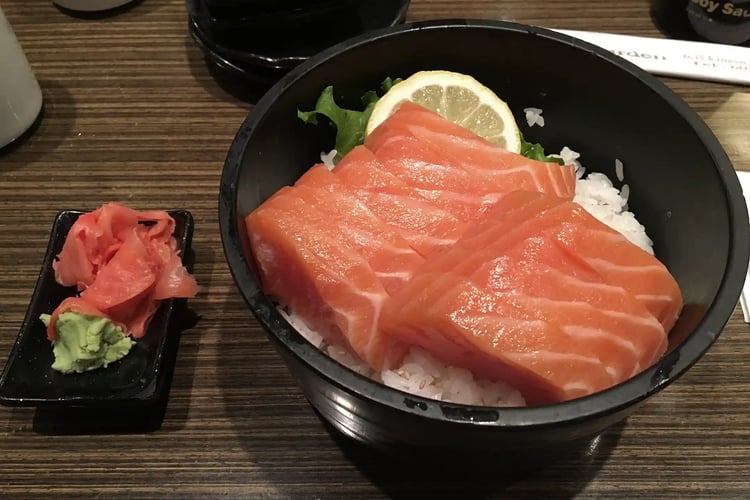
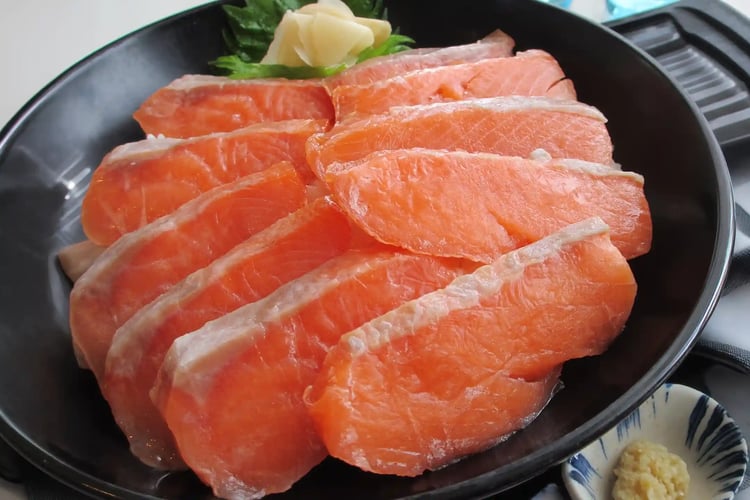
A sashimi salmon donburi puts salmon sashimi itself at center stage in the simplest way. Because it’s a minimal build—fresh salmon sliced a bit thicker and placed over rice—you taste the quality of the ingredients directly, with nowhere to hide.
For your first bite, try it without adding anything. Check the salmon’s natural sweetness and savoriness, and notice how the sushi rice (or plain rice) is prepared. After that, add changes gradually—drip a little soy sauce at a time, or place a tiny dab of wasabi—so you can enjoy variety without getting tired of the bowl.
In this style, rice temperature management is especially important: sushi rice cooled to around body temperature, or plain rice at a comfortable temperature, makes the salmon shine. Because it’s so straightforward, people sometimes say this is the bowl that reveals a restaurant’s true skill—so ordering it first can be a smart move.
Marinated salmon donburi: designed for deeper umami
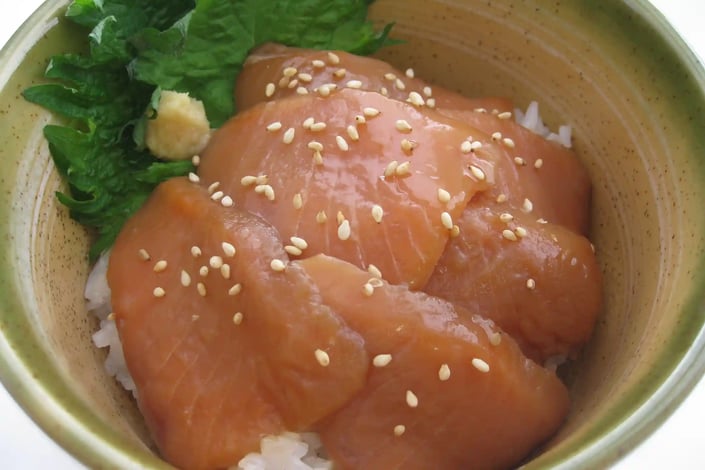
Marinated salmon donburi is made by soaking salmon sashimi in a soy-based sauce before placing it on rice. Marination lightly seasons the surface, firms the flesh, and concentrates umami. The soy sauce’s savory salt and mirin’s sweetness draw out the salmon’s depth—truly a flavor that feels “designed.”
Marination time varies by restaurant. A longer soak can create a slightly sticky, luscious surface texture; a shorter soak keeps more of the fresh sashimi bite and feels lighter. Even with very fatty salmon, marination can help the finish feel cleaner, so you can enjoy the bowl comfortably to the last bite.
Aromatics like wasabi and white sesame pair well here, adding fragrance and texture to the sweet-salty sauce. And if sauce remains, don’t forget to enjoy it to the end—pour it over the rice and savor every last note. This is a connoisseur’s bowl: just one extra step that brings out salmon’s full potential.
Seared salmon donburi: captivating aroma and temperature contrast
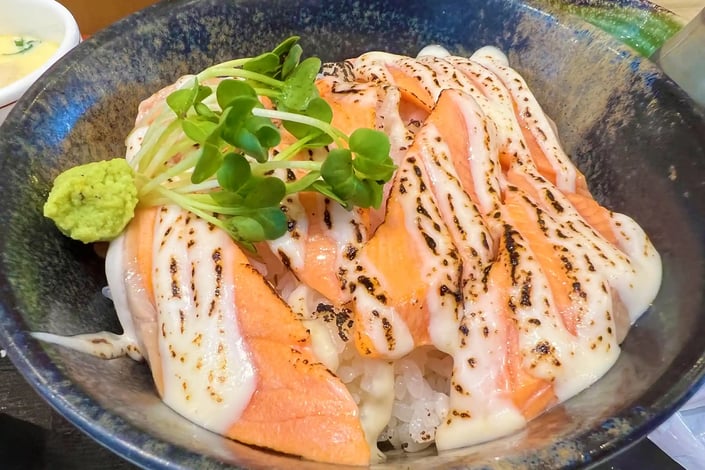
Seared salmon donburi is made by quickly torching the surface of salmon sashimi before serving. Using a burner or open flame creates a fragrant char on the outside while keeping the inside rare and meltingly soft.
That aroma—and the contrast in temperature and texture—is the real pleasure here. The moment it’s seared, the rising smoke and toasty scent sharpen your appetite. In your mouth, you get the browned, savory exterior and the tender, raw interior at the same time. As the fat gently renders, the salmon’s savoriness deepens, and it pairs beautifully with rice (*2).
Keep wasabi minimal at first so you can fully enjoy the seared aroma. After you’ve savored the contrast between the warm, freshly seared surface and the cooler sashimi center, adding a small splash of soy sauce mid-way is a great way to introduce another shift in flavor.
Salmon-and-ikura donburi: the finished form of texture and saltiness
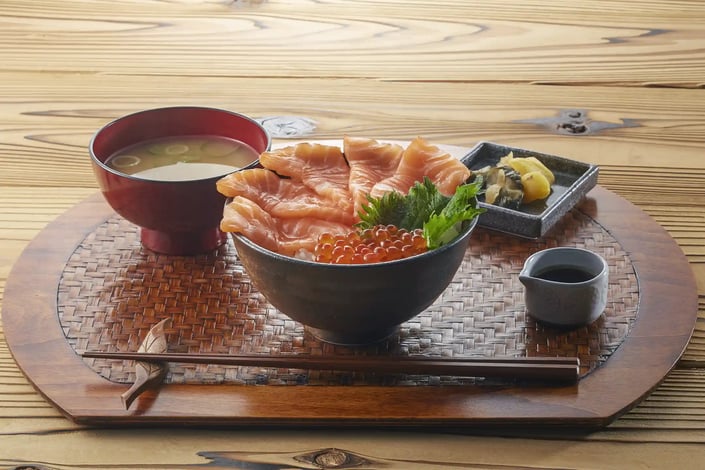
Salmon-and-ikura donburi is a luxurious bowl where salmon sashimi is generously topped with soy-marinated salmon roe. It’s also called “salmon oyako don” (parent-and-child bowl), and even the appearance—orange salmon and red roe sparkling like jewels—can make you hungry on sight.
The appeal is the harmony of texture and saltiness. Silky salmon meets roe that pops as you bite, and each chew releases the roe’s concentrated savory salt across your palate. That saltiness also sinks into the rice, lifting the overall savoriness (*2). The union of salmon’s sweetness and roe’s salty richness is so compatible it’s often described as a “complete pairing.” Add chopped nori or oba (perilla leaf) for a sea aroma and a clean, cooling finish that neatly ties it together.
In Hokkaido, many people are said to associate the word “oyako don” with salmon-and-ikura, but today it’s a classic indulgent bowl enjoyed nationwide. If you haven’t tried it yet, make a point of experiencing this “parent-and-child” duet for yourself.
Creative salmon donburi: the conditions that make yukhoe-style, sesame sauces, and spices work
Creative salmon donburi offers a fresh way to enjoy the genre. Recently, you’ll see many inventive menus: yukhoe-style bowls, sesame-sauce versions, and other spice-forward, globally inspired seasonings.
For example, a salmon yukhoe-style bowl features salmon dressed in a gochujang-based sweet-spicy sauce, topped with an egg yolk, creating a gently spicy yet mellow richness. A salmon sesame-sauce bowl might marinate salmon in a special sauce loaded with ground sesame, finished with white sesame seeds—its toasted depth pairs wonderfully with rice.
So what does it take for a creative salmon donburi to feel truly high-quality? There are two major points. The first is aromatic unity. Align the salmon’s own flavor with the direction of seasonings, herbs, or spices—Japanese aromatics for a Japanese direction, or herbs and olive oil for a Western-leaning one—so the bowl’s overall aroma feels coherent.
The second is salt control. If the sauce seasons too aggressively, salmon’s character gets lost, so careful adjustment is essential to avoid tipping into overly salty territory. The better the creative bowl, the more precise the balance—and the more you can enjoy it without fatigue through the final bite. Creative salmon donburi becomes refined only when it still honors the basic lenses of judgment. In bowls that fuse tradition with fresh ideas, try to taste the chef’s sense of play—and enjoy the new possibilities it opens.