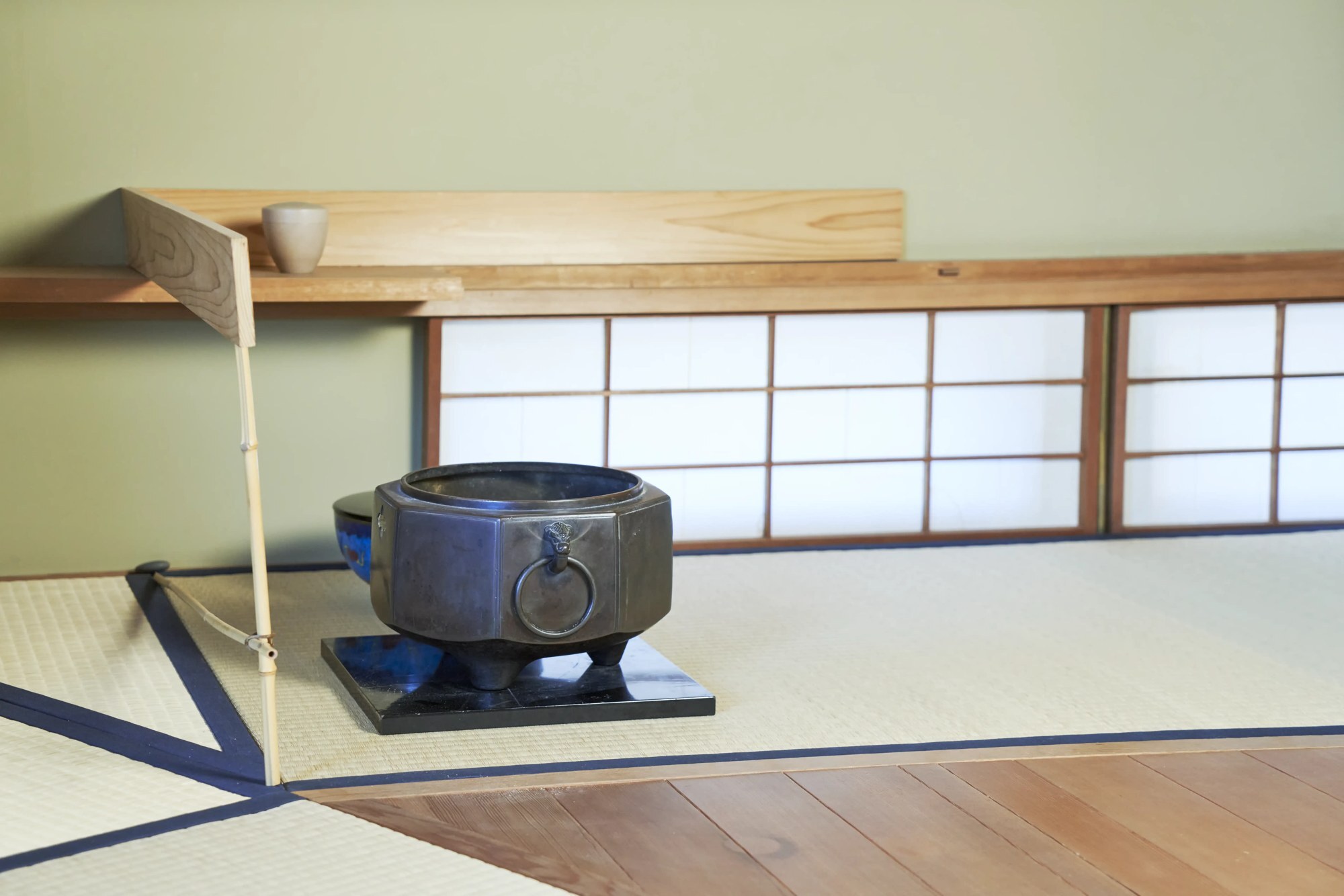
Paul S. Atkins, a scholar of classical Japanese language, literature and culture, walked into a Japanese bookshop in Manhattan and found a section of a shelf marked WABI-SABI. The section, he writes, was stocked with titles such as Wabi Sabi Love, The Wabi-Sabi Way, Wabi-Sabi for Artists, Designers, Poets & Philosophers, and, in lower case, simply imperfect: revisiting the wabi-sabi house.
So: what is wabi sabi? The phrase has had an unusual route. "After taking off in America and other countries," Atkins writes, "the phrase wabi-sabi was imported back to Japan as a compound term" — and the Japanese mentions he found online "typically addressed such topics as how to explain wabi-sabi to foreigners." Then the sentence to carry onto the plane: "Wabi-sabi does not appear in standard dictionaries of the Japanese language."
That is not a gotcha, and it does not make the English idea worthless. It does change what you should do with it. This article covers three things: what the two words actually meant, what the English compound added, and — since you are going to be standing in front of objects rather than reading dictionaries — what to look at instead of looking for wabi sabi. Japan's crafts are a subject of their own, and our guide to the traditional crafts takes them one at a time. This one is about a word that gets in the way of seeing them.
What the two words meant at home, and what to look at instead of looking for them.
Wabi and Sabi Are Two Words, and Neither Meant Beauty
Atkins is precise about the join. Wabi and sabi, he writes, "are similar but distinct concepts, yoked together far more often outside Japan than in it." They came from different places and did different jobs: "sabi out of poetry and wabi out of tea." Both, Atkins writes, "originated in Japanese aesthetics" — but in two different parts of it.
One qualification before the etymologies, because this article will contradict itself otherwise. Beauty is not absent from the record: the art critic Yanagi Sōetsu wrote of a "hidden beauty" behind roughness, and the Tokyo National Museum credits Rikyū with "the beauty of imperfection." What the two words name is not the beauty. It is the condition — a kind of privation, a kind of noticing — that beauty was then found in.
Wabi: Misery That Was Not Chosen, Then Was
Wabi is a noun, and Atkins traces it to a verb: it comes "from the classical Japanese verb 'wabu,' related to the modern verb 'wabiru' and adjective 'wabishii.'" And then the definition that rearranges everything the shelf in Manhattan implies: "Wabu means to languish or be miserable."
Not to find beauty in. To languish.
His example is a ninth-century waka, the thirty-one-syllable form at the centre of classical Japanese poetry. The poet, a courtier named Yukihira, had by some accounts been exiled to Suma Bay. In Atkins's translation:
Should by chance
Someone ask for me,
Answer that I languish
At Suma Bay, shedding
brine upon the seaweed.
That is the register the word started in. A man sending word home that he is wretched. The misery is not an aesthetic position; it is his situation.
What happened next is the part that makes the word useful to a traveller. The misery got chosen on purpose. Atkins sets out the sequence: powdered green tea arrived in Japan around 1200, brought back by Zen monks from China, "using it as a medicine and a stimulant"; by the middle of the sixteenth century it was mundane; and precisely then it was "sublimated to high art, now known as 'chadō' or 'sadō,' the so-called Way of Tea." Warlords competed for the most coveted utensils. The tea room itself, Atkins writes, "might be decorated with rare works of art, such as paintings or calligraphy mounted on hanging scrolls …"
And against that, a reaction with a name: "there emerged a group of connoisseurs and teachers of tea who championed a more severe and austere style of presentation: 'wabi-cha,' which literally means miserable tea." Where, in Atkins's words, "newly ascendant warriors and merchants used the tea gathering to flaunt their wealth," this style "emphasized subtlety, frugality and restraint."
Miserable tea. Not humble tea, not rustic tea — the word for languishing, applied on purpose to a room and its objects by what Atkins calls "a group of connoisseurs and teachers of tea." That is a different proposition from a lifestyle of accepting flaws, and it is a much more interesting one to carry into a museum.
Sabi: Rust, Loneliness, and What the Word Names
Sabi is also a noun from a classical verb, "sabu," and its modern relatives point at a surface and at a mood. Atkins gives the two words it sits beside: "the verb 'sabiru' means to rust, with its connotations of age and decay," and "the modern adjective 'sabishii' means lonely." Rust and loneliness are where the word's family lives; what the word itself names is harder, and he does not pretend otherwise.
Sabi "really took off as an aesthetic ideal in the 17th century," and its home was poetry rather than tea — specifically haiku. Atkins quotes the scholar Makoto Ueda attempting to say what kind of loneliness is meant. Sabi is
"not the loneliness of a man who has lost his dear one, but the loneliness of the rain falling on large taro leaves at night, or the loneliness emerging out of a cicada's cry amid the white, dry rocks, or the Milky Way extending over the rough sea, or a huge river torrentially rushing in the rainy season."
Read that twice, because it is doing something unusual. Every item is weather or landscape. None of them is a person. The loneliness is not an emotion somebody has; it is a property of a situation, noticed.
Atkins gives one verse where the quality was recognised: Bashō saw sabi in these lines by his disciple Mukai Kyorai, in Ueda's translation — "Under the blossoms / Two aged watchmen, / With their white heads together—." Two old men, under cherry blossom, heads touching. Nothing is wrong in the scene. That is the point.
Wabi-Sabi: The Compound Took Hold in English, and It Added Something
The received English description is the one Atkins opens with: wabi-sabi is "typically described as a traditional Japanese aesthetic: the beauty of something perfectly imperfect, in the sense of 'flawed' or 'unfinished.'" It would be easy, and wrong, to finish the section above and declare that usage a mistake. The compound really is recent, and Atkins says of it that "it does not seem to have occurred in Japan" — and neither of those makes it a mistake. Two things stop that verdict.
Wabi-Sabi as Perfectly Imperfect: Where the Phrase Comes From
Take the recency first, because it is the part that sounds like an objection rather than one of the two answers. Atkins states it directly: "The juxtaposition of wabi-sabi as a single term is of recent, not ancient, vintage, and it does not seem to have occurred in Japan." On his account the term "began to appear in print in English around 1980" — he is explicit that this comes from a search of Google Books, which is a measurement of printed English, not of Japanese speech. He suggests a possible cause: the 1972 English translation of the art critic Yanagi Sōetsu's The Unknown Craftsman, which contains an essay called "The Beauty of Irregularity." Behind "roughness," Yanagi wrote, "lurks a hidden beauty, to which we refer in our peculiar adjectives 'shibui,' 'wabi,' and 'sabi.'" Three words, in a row, as a set — and within a decade, in printed English, two of them had fused.
The first thing that stops the verdict is what the fused term does. It is useful, and worth naming. Atkins again: combined, the two words "appear to fill a gap in the Western vocabulary for talking about art and life – a leaning away from perfection, completion and excess, and a yearning toward leaving something undone, broken or unsaid." That is a real gap and the compound fills it. It is a loan that earns its keep.
The second thing that stops the easy verdict is harder, and it is the reason this article is not a debunking. Writing about its own Tea Ceremony gallery, the Tokyo National Museum says of Sen no Rikyū that "he used valuable Chinese works together with simple utensils" and that "he also stressed humility and the beauty of imperfection."
The beauty of imperfection. In English, from a Japanese national museum, about the tea master whose innovations Atkins places at that style's pinnacle — "Wabi-style tea perhaps reached its pinnacle in the 16th century," he writes, "when the celebrated tea master Sen no Rikyū introduced innovations still used today." So the English framing is not an invention imposed from outside. What is new is not the idea; it is the bolting together of two old words into one portable noun, and then into a philosophy of living.
Sabishii: The Loneliness That Did Not Travel
The word in this section's heading is the one Atkins glosses as "lonely," and it is the part that did not cross. Something got left behind in the translation, and it is the part a traveller would actually find in front of an object.
Set the two descriptions side by side. The clinical psychologist Trevor Mazzucchelli, writing on what the psychological evidence says, summarises the received version carefully — "wabi-sabi, as it is commonly understood in the West, rests on three simple ideas: things are flawed, things change, and things are never fully finished." Note his own hedge: as it is commonly understood in the West. Against that, Ueda's sabi: rain on taro leaves, a cicada among dry rocks, a river in flood.
Flawed, changing, unfinished — that is a set of propositions about objects, and it is consoling. Rain falling at night on large leaves is not consoling or unconsoling. It is a noticing with no lesson attached. The wellness register needs the noticing to be good for you; the poetic register does not need it to be for anything.
Mazzucchelli is careful about what the consoling version can deliver, and it is worth quoting in full: "There is no evidence adopting it as a named philosophy guarantees happiness. It is not a treatment for depression." He is describing a real set of psychological principles that the English concept gestures at — self-compassion, acceptance, loosening perfectionism — and noting that the label is not the mechanism.
None of which matters much when you are standing in a gallery. What matters there is that the English idea tells you to look for a quality — imperfection — and the Japanese words tell you to look at a situation. One sends you hunting for chips and cracks. The other sends you to the light, the season and the room.
What to Look At Instead of Looking for Wabi Sabi
So here is the practical reversal. Stop looking for wabi sabi. Look at the three things the words were originally about, all of which are visible to someone who cannot read a label.
Chawan: A Tea Bowl That Was Not Made to Match
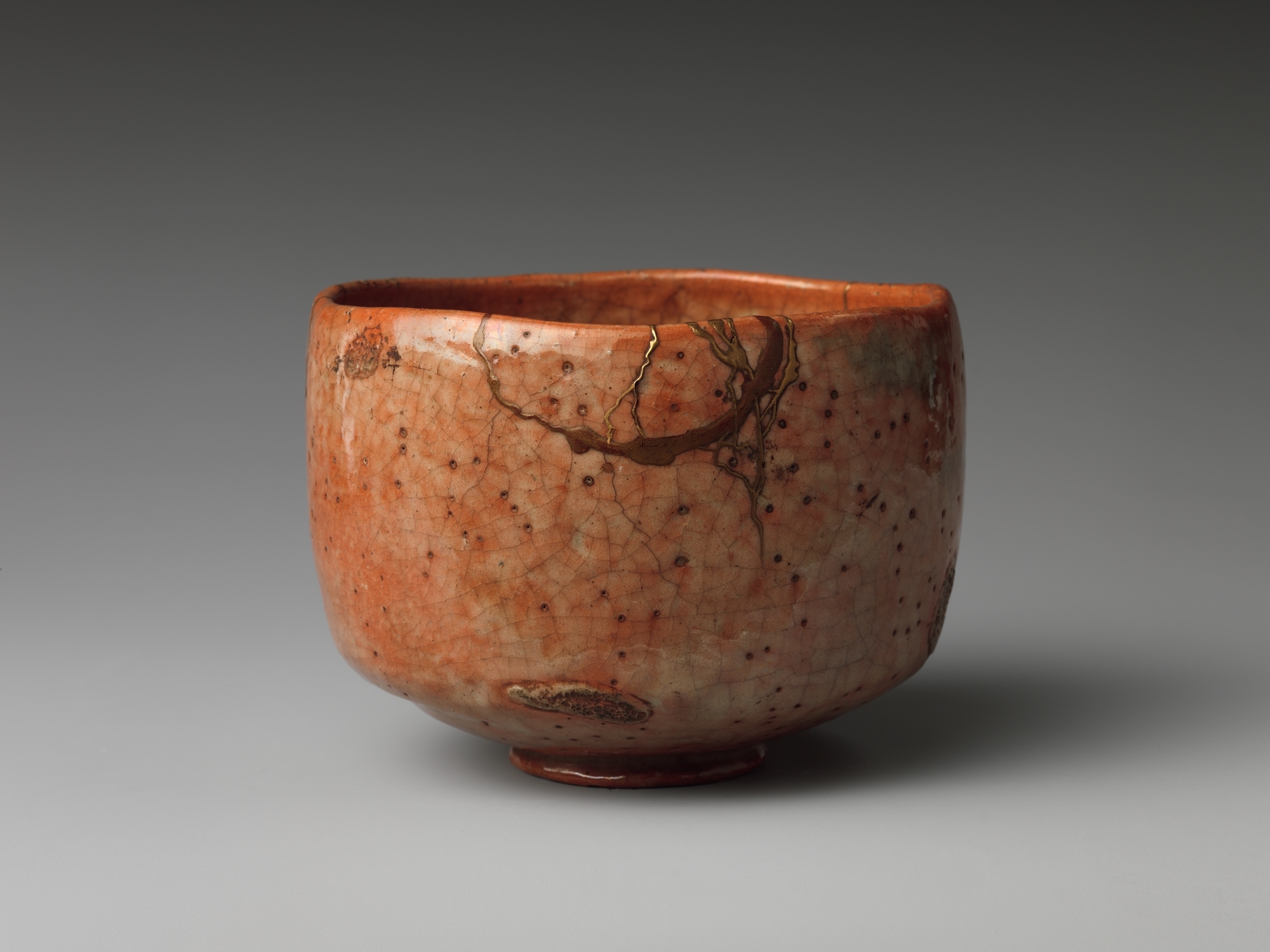
A tea bowl is the easiest place to start, because the decisions are large and there is only one object to look at.
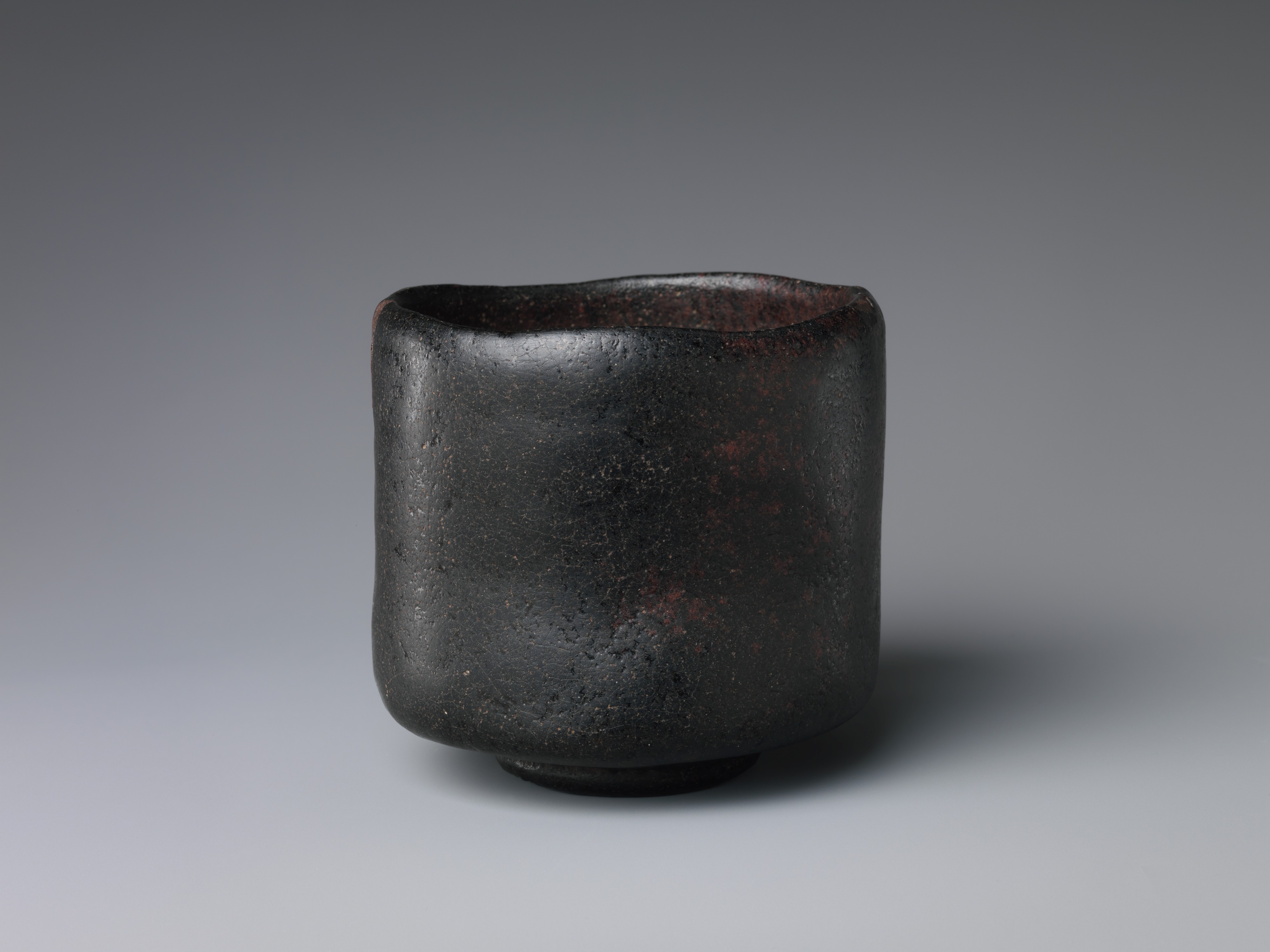
The Metropolitan Museum of Art titles one of its bowls "Red Raku Tea Bowl (Chawan)" — chawan is the word for the vessel, and it is the thing to look at first. Take the museum's Black Raku Tea Bowl, which the museum dates to the early seventeenth century, in the Momoyama period, and describes simply as "Earthenware with black raku glaze (Raku ware)." Black raku is one of the things Atkins lists among Rikyū's innovations, alongside bamboo tea scoops. The museum's description names only the glaze, so the rim and the profile are what there is to look at: whether the profile is the same all the way round. Raku is not always plain — one of the photographs in Atkins's own article is of "a raku-ware teabowl with a design of geese."
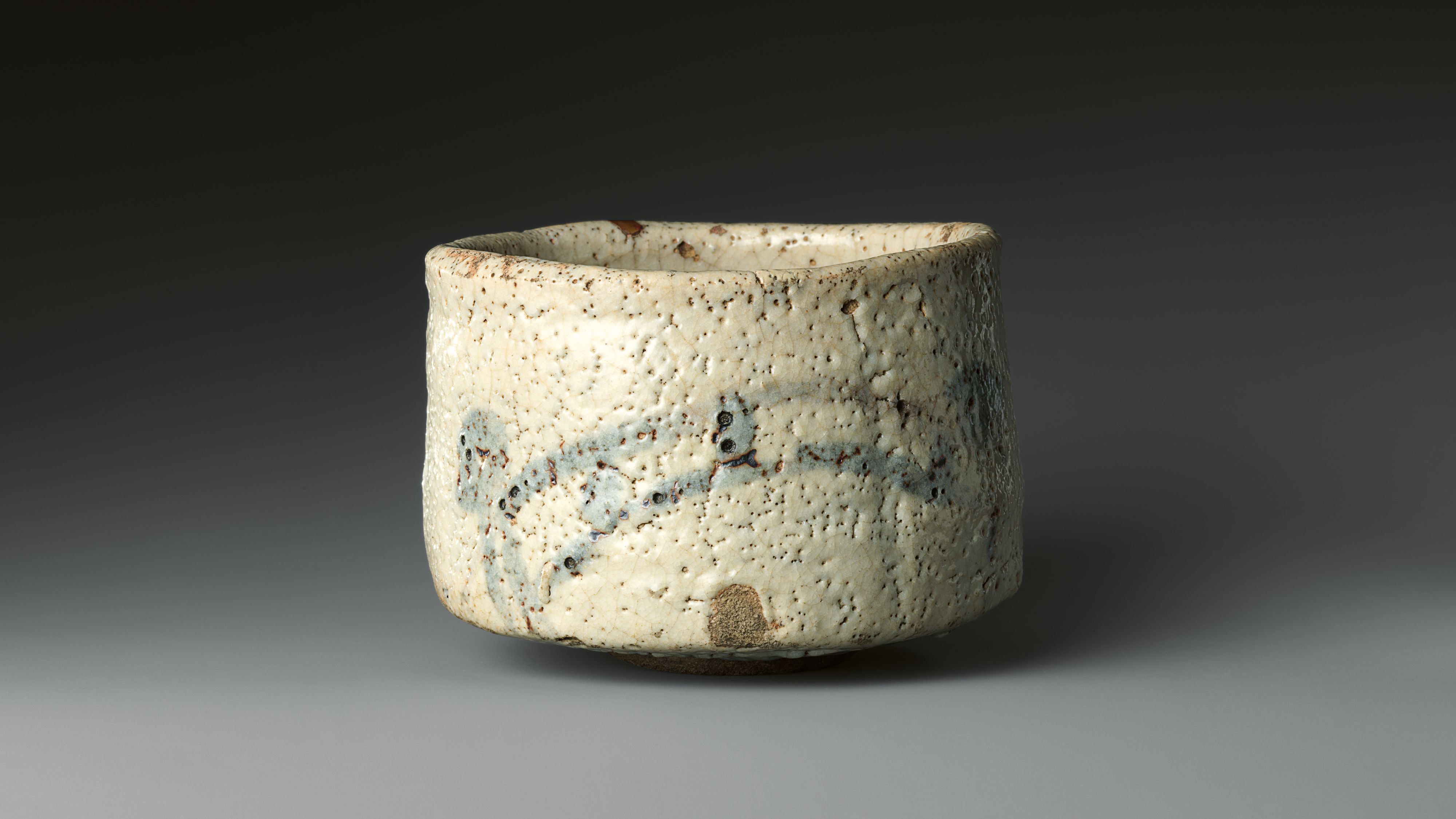
Then the opposite case. The Met's Shino Tea Bowl with Bridge and Shrine, Known as "Bridge of the Gods" (Shinkyō), of the same period, is "Stoneware with iron oxide under glaze (Mino ware, Shino type)": a bowl with a picture on it, and a name. Austerity was a style among styles, not a rule everyone followed. The Tokyo National Museum's phrasing for Rikyū — valuable Chinese works together with simple utensils — says the same thing.
What you are looking for, then, is not roughness. It is whether the object was made to match something else, or made once. That is a question you can put to any bowl in any case, and it does not require the word.
Raku, and a Repair That Was Not Hidden
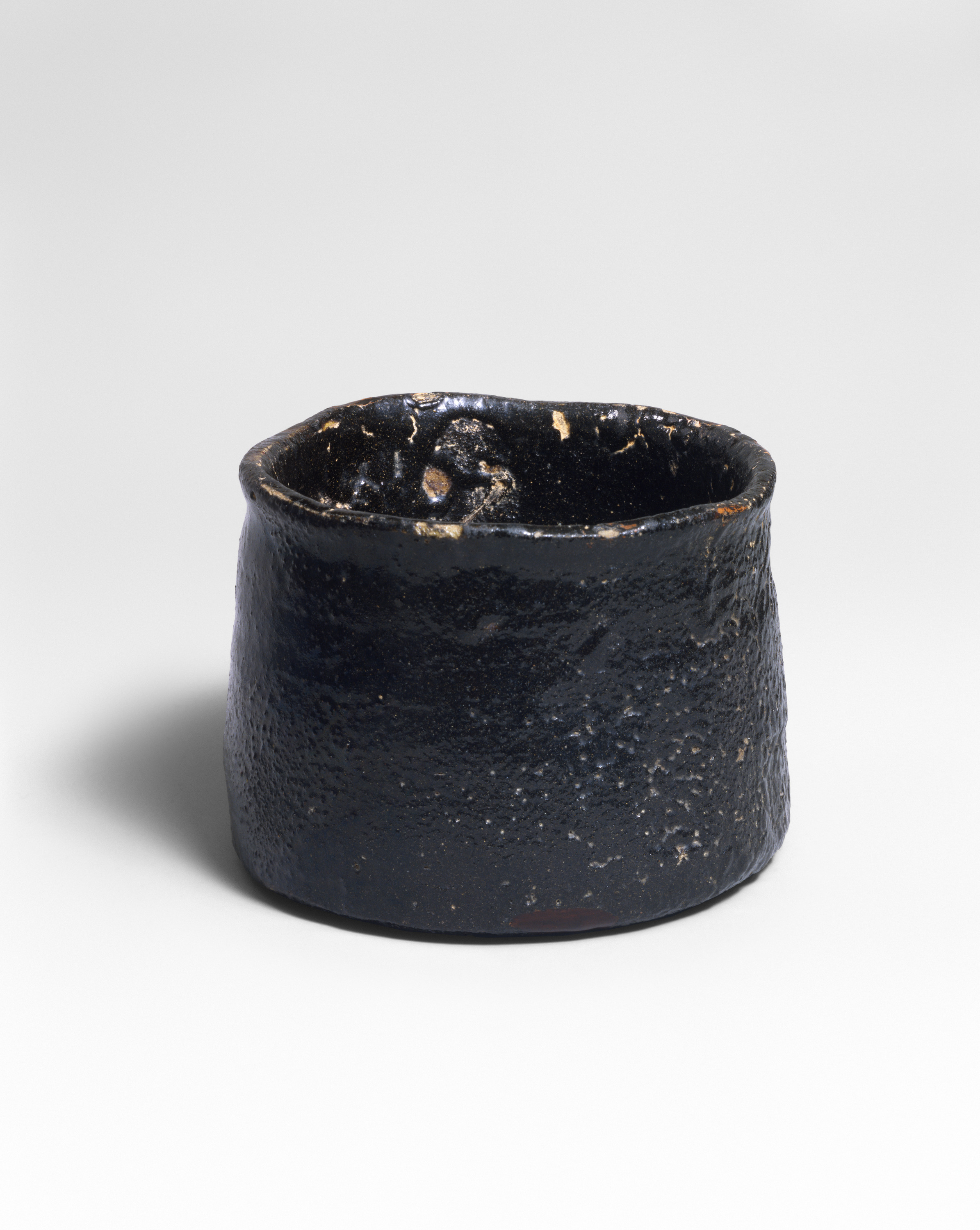
The second thing is repair, and the Met's catalogue gives a clean example without any need to romanticise it. Its Red Raku Tea Bowl, which the museum dates to the eighteenth century, is listed as "Earthenware with red slip under milky glaze (Raku ware, unknown workshop); gold lacquer repairs."
Gold lacquer repairs, in the medium field, alongside the clay and the glaze. Part of what the object is listed as being made of. The technique has its own name and its own literature, and it is not this article's subject. What matters for looking is smaller and more general: in this tradition a mend can be listed as a material. When you are in front of a bowl, find the repairs before you decide what the object is.
Wabi-Cha: A Room Built to Make You Bend
The third thing is the room, and here the sources are unusually concrete. Among Rikyū's innovations Atkins lists "the 'crawling entrance': the 2-by-2-foot door through which attendees wriggle in order to enter the cozy, womblike tearoom."
Two feet by two feet — a door, in Atkins's description, that attendees "wriggle in order to enter." The austerity is not a colour scheme; it is a doorway that makes a physical demand of whoever is coming in. That is what it looks like when an aesthetic has a social argument inside it. The rest of what Japanese buildings do with space and threshold is a subject of its own; the tea room is the compact case.
Chado and Haiku: Where the Words Actually Live
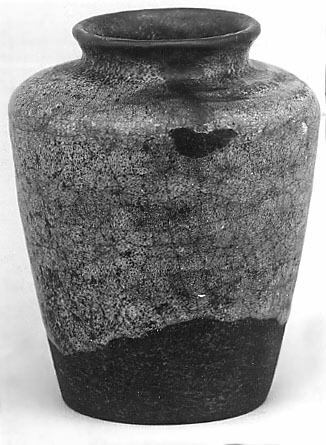
Both words came from somewhere specific, and knowing where changes what you expect to find.
Chado: Where Wabi Was Doing a Job
The Tokyo National Museum's account of its Tea Ceremony gallery sets out the history in a few sentences, and it does so without the vocabulary this article has been unpicking. Tea arrives with Zen monks — the twelfth century on the museum's account, around 1200 on Atkins's: "green tea was ground into a powder and mixed with hot water. Monks drank this tea as a medicine and to stay awake during meditation."
Then the detail that makes the later austerity legible. "Before long, the samurai also began to drink tea and competed for prizes in blind tasting competitions." Competitive tea, with prizes. In the fourteenth and fifteenth centuries the ruling samurai "collected valuable Chinese works like paintings and tea bowls, displaying and using them during tea gatherings."
So when Atkins's teachers of wabi-cha appear, they are not arriving into a blank austerity. They are arguing with a competitive display culture, and "miserable tea" is the name of their argument. That is why the word had work to do. It was a position in a dispute about money and taste, which is a different thing from a mood.
If you want to sit down rather than read about it, tea in Tokyo is arrangeable at several levels of formality. The procedure itself is a separate subject and a separate article.
Haiku: Where Sabi Started
Sabi's home is the other one: "sabi out of poetry." What that means in practice is that the word was developed by people whose job was to notice, in a form with seventeen syllables to do it in.
This is worth carrying into a garden or a gallery because it reframes what you are being asked to do. Ueda's list, quoted earlier, is all perception and no interpretation, and Bashō's example is two old men with their heads together under blossom. A poet recognising sabi is not finding a moral. He is agreeing that something was worth noticing.
The transferable habit, then, is not to ask what an object means. It is to ask what in front of you would be worth seventeen syllables.
Seeing Without the Word in Japan
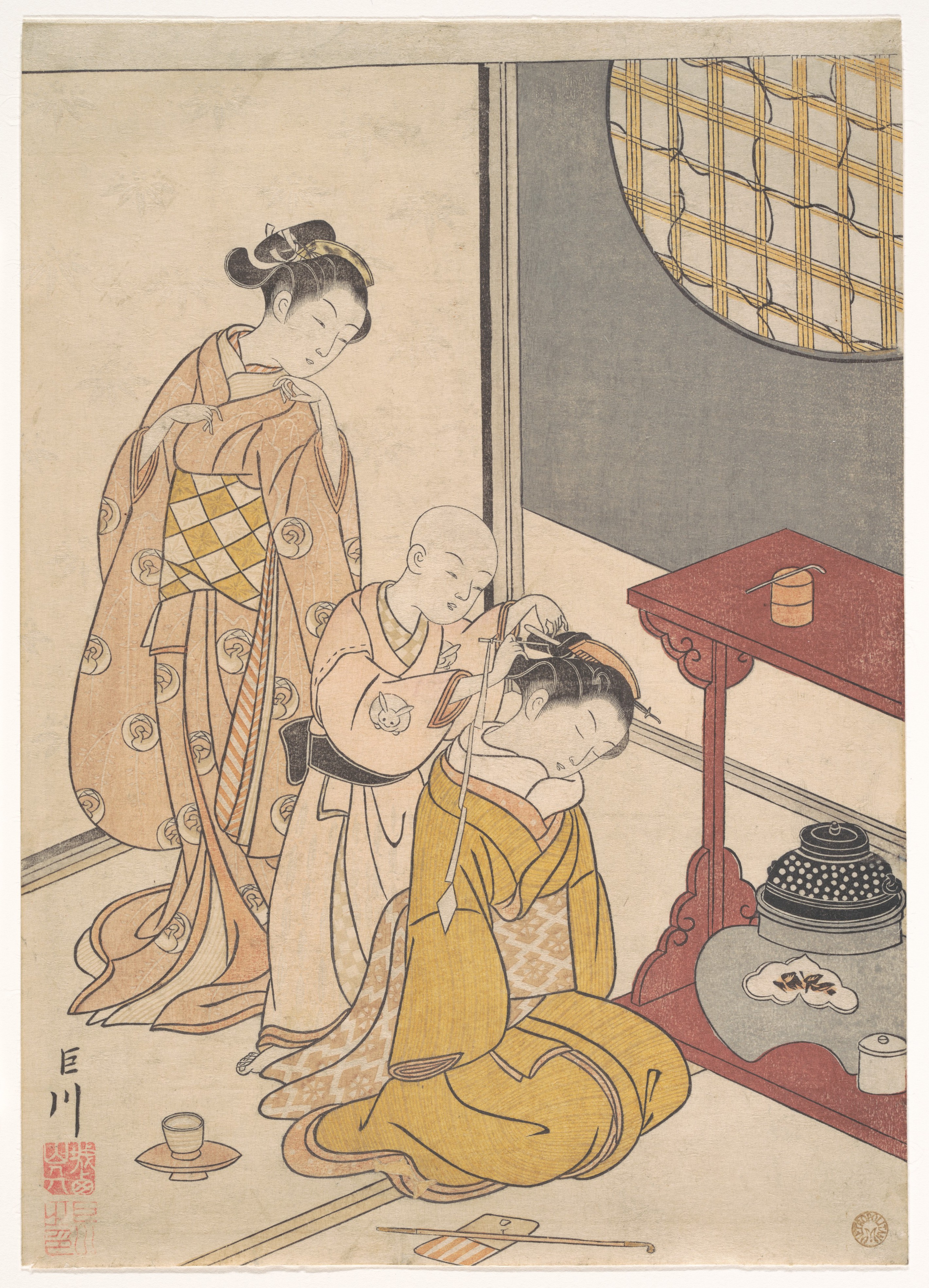
Which brings us to what you can actually do on a trip. There are three levels of access here, and they differ in how much has to be arranged in advance.
Anyone Can Go: Museum Rooms Where the Objects Are Quiet
The first level needs nothing but a ticket. At the Tokyo National Museum in Ueno, the second-floor sequence called "Highlights of Japanese Art" includes a room given to tea — Room 14, Tea Ceremony — and the museum's own description of that room, on its website, is the history quoted above.
One practical warning, and it applies to everything in that building. The museum's change-of-exhibits page states its own working method: "TNM Collection Exhibitions at Tokyo National Museum are rotated almost every week," with the qualification that "Some works are exhibited for a longer period of time." So check the room listing against your own dates rather than assuming a particular bowl will be out: the listing gives each display its own run, and Room 14's tea display is one of several that run on their own dates.
That rotation is itself on the subject. Objects that were made once, shown in a building that changes what is in it almost weekly, are not an irony. They are the same idea expressed as a schedule.
If You Know: The Garden and Its Five Teahouses
The second level requires knowing that it is there. The same museum keeps a garden on the north side of the Japanese Gallery, and its page for the garden says what is in it: "The five historic teahouses in the garden can be booked for tea ceremonies and other events, such as haiku gatherings." Tea and haiku, at one address — the two places the two words came from. The same page adds: "Please note: The Museum Garden may be closed due to bad weather or for maintenance." Worth reading before you build an afternoon around it.
By Arrangement: A Room Someone Prepares for You
The third level has to be arranged, and what it buys is not better objects. It is the presence of somebody who chose them for that day.
The whole argument of wabi-cha was about what a host puts out and what a host leaves out. In a museum the selecting was done by a curator for strangers. In a room prepared for you, the selecting was done for this occasion, this weather, these guests — and the deliberateness is the part the word was invented to describe. You do not need the word to feel it. You need somebody to have made the choices.
Japanese Aesthetics Unveiled
What to Carry Into the Room
Three things, and then the part that is still moving.
First, there are two words, not one. Wabi came out of tea, from a verb meaning to languish, and became the name of a deliberately austere style — wabi-cha, miserable tea — in an argument with competitive display. Sabi came out of poetry, sits beside the modern words for rust and for loneliness, and describes a kind of noticing in which nothing is wrong.
Second, the English compound is recent, is mostly used outside Japan, and is not in standard Japanese dictionaries — and it is still not a mistake. It fills a gap in English, as Atkins says, and the museum in Ueno itself credits Rikyū with stressing humility and the beauty of imperfection. What the compound does is make a philosophy out of two technical words. What it loses is the loneliness, and the fact that the austerity was a position somebody took against somebody else.
Third, if you want to see it, stop looking for a quality and start looking at decisions: whether the bowl was made to match, whether the repair was hidden, whether the door makes you bend. Those are visible without the label, and they are what the words were about before the shelf in Manhattan existed.
And the part that is still moving is the gap between the two. The English term keeps spreading — it is, as Mazzucchelli notes, "having a moment on social media," linked to interior design and makeup trends and happiness — while, on Atkins's account, the compound stays out of the standard Japanese dictionaries and comes up in Japanese mainly as something to explain to visitors. The objects never needed the compound; they were made, catalogued and displayed under other names. The objects are not waiting for the concept to be corrected. They are in a room in Ueno that changes almost every week, which is a reason to go and look while a particular arrangement is up rather than to read another book about the idea.