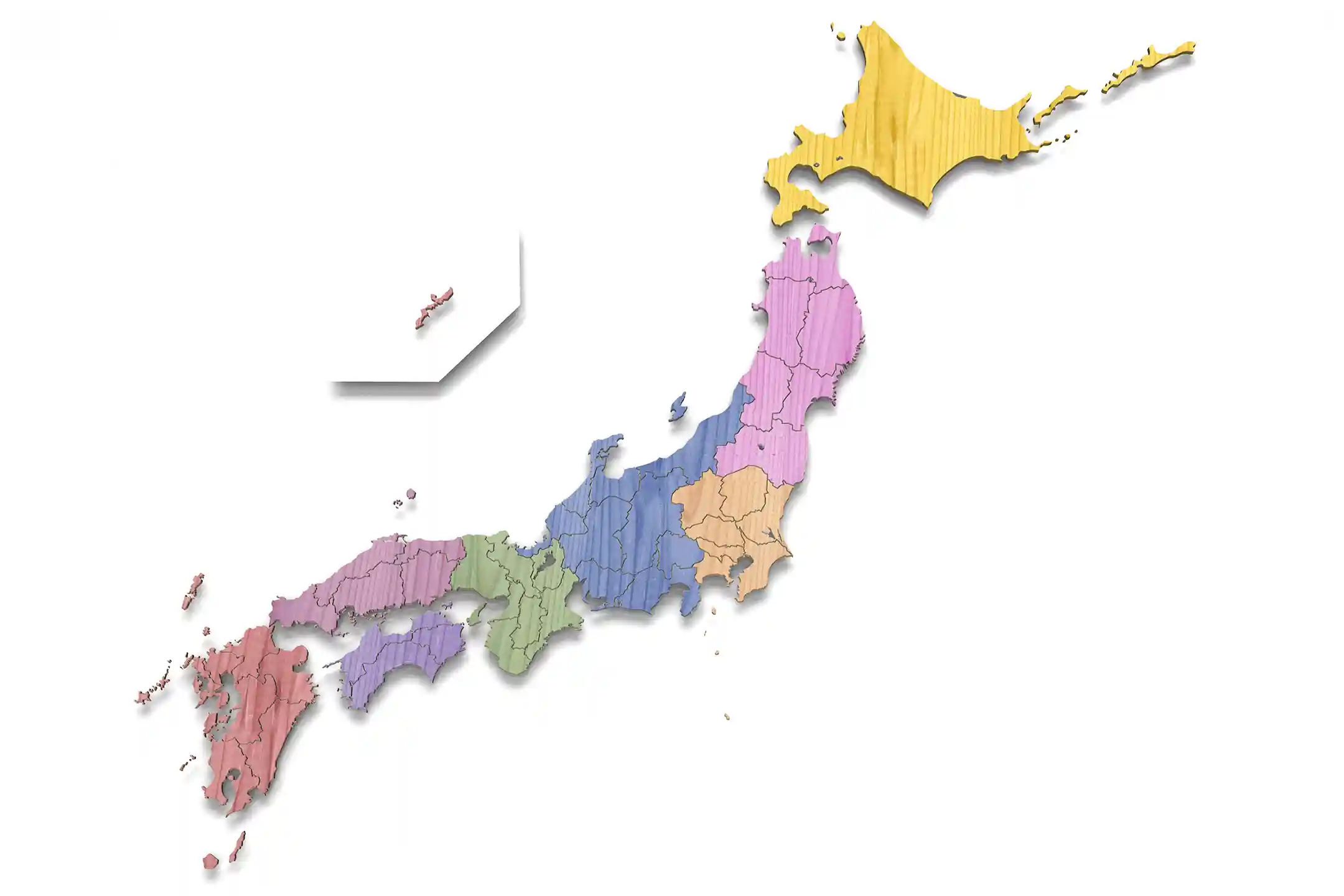
Ask what a prefecture in Japan is and the answer comes back in a single line: there are 47 of them, and they sit between the national government and the cities. That is correct, and it is where the explanation usually stops. It does not tell you why one of the 47 is called a to, one a do, two a fu and forty-three a ken. It does not tell you what a prefecture decides that you will actually feel. And it does not warn you that a place can be in Tokyo and still be a day at sea from Tokyo.
This guide answers the definition first, in as few words as it deserves, and then spends the rest of its length on what a one-line answer cannot carry: where the four names came from, what changed in 1947, what the prefecture on your itinerary costs you at the front desk, and the places where the administrative line and the cultural one come apart.
What follows is one way into a much wider landscape. The Japan's Cities Unveiled Digital Guide gathers history, art, and the texture of refined living across Japan's cities into a single, connected reading.
What Is a Prefecture in Japan? The Short Answer
A prefecture is the upper of Japan's two tiers of local government. Below the national government sit 47 prefectures; below each prefecture sit its municipalities — cities, towns and villages, plus, in Tokyo alone, 23 special wards. Every address in the country resolves through that ladder, and every governor at the prefectural level is elected directly by the people who live there.
The collective Japanese word is todofuken, which is simply the four type-names run together: to, do, fu, ken. English flattens all four into one borrowed word. That flattening is the source of nearly every confusion that follows.
Prefecture Meaning: One English Word for Four Japanese Ones
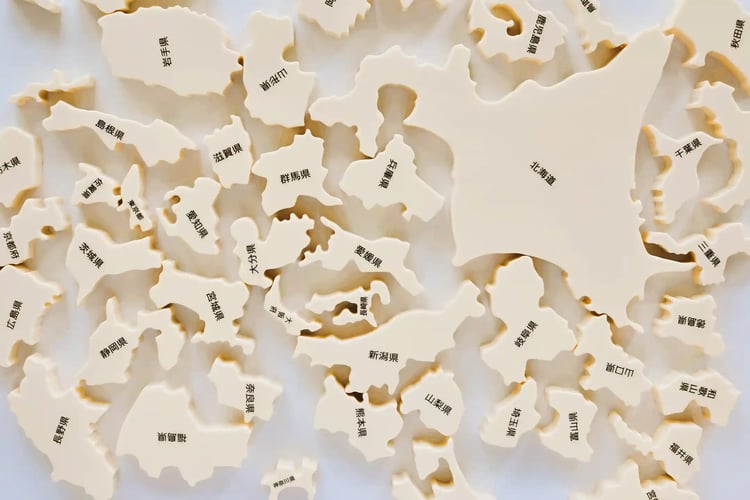
"Prefecture" is a European administrative term pressed into service as a translation. No single Japanese word corresponds to it. When a Japanese sentence names the unit, it names the type: Tokyo-to, Hokkaido, Osaka-fu, Kyoto-fu, and then Aomori-ken, Ishikawa-ken, Hyogo-ken and the rest. A traveler reading English sees 47 identical objects. A traveler reading Japanese sees four categories, three of which have exactly one or two members.
This matters less than it looks, for reasons the next section explains — but it is worth knowing that the suffix is part of the name rather than a rank. Kobe, to take a question people actually type into a search box, is not a prefecture at all. It is a city, and the prefecture around it is Hyogo.
Does Japan Have States? Why the Comparison Breaks Down
There are no states in Japan in the sense the word carries in the United States, Germany or Australia. Japan is a unitary country, and a prefecture's authority is granted by national law rather than reserved against it. The Constitution of Japan devotes four short articles to the subject. Article 92 provides that "regulations concerning organization and operations of local public entities shall be fixed by law in accordance with the principle of local autonomy." Article 94 gives local public entities "the right to manage their property, affairs and administration and to enact their own regulations within law."
Those last two words carry the weight. A prefecture legislates by ordinance, inside limits the national Diet sets. It does not write its own constitution, and it does not write a criminal code of its own, though its ordinances may carry penalties within limits national law fixes. What Article 93 does guarantee is direct election: "the chief executive officers of all local public entities, the members of their assemblies, and such other local officials as may be determined by law shall be elected by direct popular vote within their several communities." A governor answers to an electorate, not to a ministry — which was not true before 1947, and is the single largest change in the system's history.
The Four Types of Prefecture in Japan: To, Do, Fu and Ken
Here is the arithmetic that the English word hides.
How Many Prefectures in Japan Carry Each Name
The 47 divide into one to, one do, two fu and forty-three ken. The to is Tokyo. The do is Hokkaido, which takes no further suffix: it is never written Hokkaido-ken. The two fu are Osaka and Kyoto. Everything else is a ken, which is why English speakers meet the word constantly and the other three almost never.
As Nippon.com puts it, "in English, it is usual to say that Japan has 47 prefectures. In Japanese, however, they are divided into one to (Tokyo), one do (Hokkaido), two fu (Osaka and Kyoto), and the other forty-three ken."
Why the Four Names No Longer Divide Power
The four names describe where a place stood in the nineteenth century, not what it can do in the twenty-first. Under the Local Autonomy Act of 1947, the same source notes, "all 47 prefectures are defined as general public bodies and they basically have the same roles, authority, and rank." Before the war, different statutes governed fu and ken. That distinction was abolished. Kyoto-fu has no power that Nara-ken lacks.
One working exception survives, and it is the one a traveler can see. There is no City of Tokyo. The Tokyo Metropolitan Government describes itself as "a regional government encompassing 23 special wards, 26 cities, 5 towns and 8 villages," and it keeps for itself the city-level jobs that in Osaka or Nagoya would belong to a city hall: water supply and sewerage, and firefighting, "in order to ensure the provision of uniform, efficient services." Shibuya and Chiyoda each elect a mayor and an assembly, but the pipes and the fire engines are metropolitan. That is what the to in Tokyo-to still means.
What the four names never told you is what a place makes or how it tastes. The boundary does that work, and it does it formally. Japan's National Tax Agency grants geographical indications to alcoholic drinks, and the register it publishes shows the unit shifting from entry to entry: GI Hakusan, designated in December 2005, covers a single city in Ishikawa Prefecture; GI Yamagata, designated for sake on 16 December 2016, covers a whole prefecture; GI Nihonshu, from December 2015, covers the country. A bottle labeled Yamagata is making a legal claim about a prefectural line — that the water came from inside it and the brewing, storage and bottling happened inside it too.
How Japan Ended Up With 47 Prefectures
The number 47 is recent and the boundaries are older. Read in order, the sequence explains every irregularity in the present system.
From Domains to More Than Three Hundred Prefectures of Japan
The Meiji Restoration brought down the shogunate, and in 1868 the new government designated ten former shogunate territories as fu — among them Edo, soon renamed Tokyo, along with Osaka, Kyoto, Hakodate, Nagasaki and Nara. The following year seven of the ten were reassigned as ken, leaving three: Tokyo as the seat of government, Osaka as the commercial city, and Kyoto as the location of the palace. Nagasaki, which had been the country's window on the outside world through two centuries of restricted trade, spent a single year as a fu and has been a ken ever since.
Then came the rupture. With the abolition of the han system in 1871, the feudal domains passed under central control, and the reorganization produced more than three hundred prefectures at a stroke. What followed was two decades of consolidation: repeated mergers until, around 1888, the map was close to the one in use today. The lines you cross on a train were drawn by that process, which is why a prefectural border so often follows a mountain ridge or a river — the domains had been shaped by the same terrain.
.webp?width=750&height=500&name=Nagasaki%20Lantern%20Festival%20(Nagasaki%20City).webp)
Tokyo-to, Hokkaido and the 1947 Reset
Two of the four names arrived long after 1888. In 1943 the Ministry of Home Affairs abolished both Tokyo-shi and Tokyo-fu and established Tokyo-to in their place, citing the need for a strong administration to conduct wartime activities, including air defense and the distribution of daily necessities — one government where there had been two, which is the origin of the metropolitan-runs-the-waterworks arrangement described above. Four years later the Local Autonomy Act designated the 23 wards as special wards, and made Hokkaido a self-governing prefecture without giving it the ken suffix, so it remains a do.
The 1947 settlement is the one that still governs. It made the 47 legally equivalent, and it made their governors elected. The final piece arrived a generation later: the Okinawa Reversion Agreement took effect on 15 May 1972, and, as the National Archives of Japan records, Okinawa was returned to Japan on that date. Only from 1972 does the count stand at 47.
The Prefecture That Tried to Change Its Type
The system is not a museum piece. Twice since 2015, voters in Osaka were asked whether to abolish Osaka City and replace it with special wards on the Tokyo model — the proposal known in Japanese as the Osaka Metropolis Plan. Twice they declined, and narrowly. Figures published by Osaka City record 694,844 votes in favor against 705,585 opposed on 17 May 2015, and 675,829 in favor against 692,996 opposed on 1 November 2020. A shift of nine thousand votes in 2020 would have redrawn the second-largest urban government in the country.
Nothing about the arrangement is settled by history alone, in other words. It is settled by law, and law can be changed by the people the law governs — which is Article 93 doing its work.
What a Prefecture in Japan Actually Decides
This is the section a one-line definition cannot reach, and the reason the question is worth asking at all. A prefecture is not an abstraction on a map. It taxes, designates and funds — and it does so on lines that do not always match the ones a visitor assumes.
The Lodging Tax Is Prefectural in Tokyo and Osaka, Municipal in Kyoto
Japan has no national lodging tax. Local governments levy their own, and they do not all sit at the same tier. In Tokyo and in Osaka the tax is prefectural, charged by the metropolitan and prefectural governments respectively. In Kyoto it is not: the tax belongs to Kyoto City. A night in Kyoto City and a night an hour north in the same prefecture are therefore taxed differently, and "which prefecture" is the wrong question to ask there.
The amounts diverge sharply at the top of the market. Tokyo's rate, in force until 31 March 2027, is 100 yen for a room charge of 10,000 to under 15,000 yen and 200 yen at 15,000 yen and above, with nothing below 10,000 yen; from 1 April 2027 it becomes 3 percent of the room charge, with an exemption below 13,000 yen. Osaka Prefecture, since 1 September 2025, charges 200 yen from 5,000 yen, 400 yen from 15,000 yen and 500 yen from 20,000 yen. Kyoto City, since 1 March 2026, runs five bands: 200 yen below 6,000 yen, 400 yen from 6,000, 1,000 yen from 20,000, 4,000 yen from 50,000, and 10,000 yen at 100,000 yen and above.
Read those as a bill rather than a table. At a room charge of 120,000 yen per person per night, two people staying three nights pay 60,000 yen in lodging tax in Kyoto City, 3,000 yen in Osaka, and — until the end of March 2027 — 1,200 yen in Tokyo. From April 2027 the same Tokyo stay is taxed at 3 percent of the room charge — 3,600 yen per person per night, or 21,600 yen for two people over three nights, eighteen times today's bill. The room may cost the same in all three cities. What moves the total is the rate schedule each government chose, and the government that chose it is prefectural in two of the three and municipal in the other.
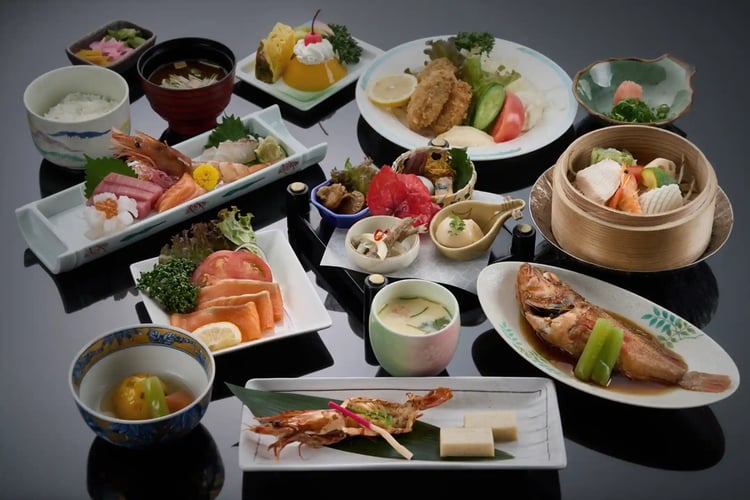
One detail decides which band you land in. All three define the taxable amount as the room charge alone: Osaka's own question and answer sheet instructs a property to deduct the value of meals and banquets from the figure, and to deduct consumption tax from it as well. A ryokan rate quoted with dinner and breakfast therefore has to be unbundled before the band can be read, and a property that quotes an all-inclusive figure is not quoting the taxable one.
What Does Prefecture Mean in Japan for Crafts and Museums
Designation and funding both run along these lines. Under the Act on the Promotion of Traditional Craft Industries of 1974, the Minister of Economy, Trade and Industry designates crafts that meet five conditions — made chiefly for daily use, produced by hand in their essential steps, made by traditional technique, from materials traditionally used, and made by a certain number of people within a defined area. METI counted 244 designated crafts as of 27 October 2025. The designation is national; the "defined area" is local, which is how Kanazawa gold leaf and Kyoto's Yuzen dyeing come to carry the name of a place rather than a workshop. KOGEI JAPAN's entry for Kyo Yuzen defines it as "dyed textiles made throughout Kyoto prefecture," and traces the style to the Edo period and a fan painter named Miyazaki Yuzensai. The prefecture is written into the definition of the craft.
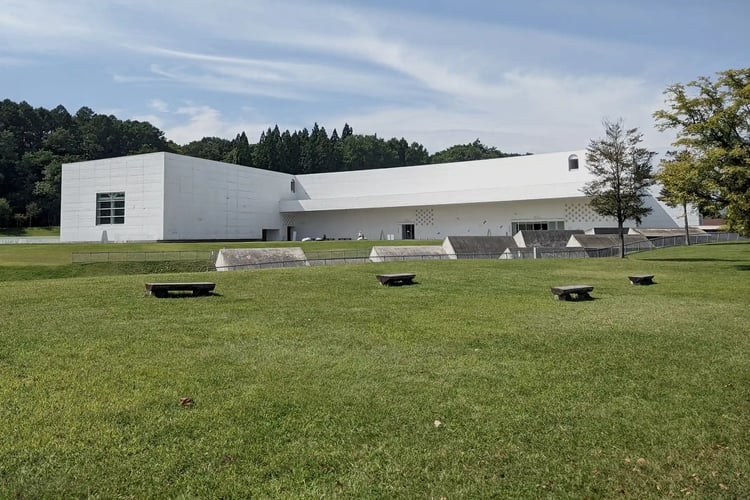
Museums make the point plainly, because the money behind them runs along these same lines. The Aomori Museum of Art is Aomori Prefecture's own institution, opened on 13 July 2006. It began acquiring work by Yoshitomo Nara in 1998 and now holds more than 170 pieces, and its Aomori-ken — rendered by the museum as "Aomori-ken (Aomori-ken Dog)" — stands as its signature work: a dog 8.5 meters high standing outdoors on the west side of the building, by an artist the museum describes as internationally active and from Hirosaki, inside the same prefecture. The title is a pun this article has equipped you to catch: ken is the on-reading of the character for dog and also the word for prefecture. And the prefecture is not the only Aomori in play — the Nebuta Festival sends its illuminated floats through the streets of Aomori City, a separate government wearing the same name. A prefecture that decides to build a collection can build one over decades, because it does not have to justify the spend to anyone outside its own electorate.
Set that beside two institutions of a different kind. The 21st Century Museum of Contemporary Art in Kanazawa takes a city's name rather than a prefecture's. The Chichu Art Museum on Naoshima, in Kagawa Prefecture, was constructed in 2004 as part of Benesse Art Site Naoshima, designed by Tadao Ando, and shows five paintings from Claude Monet's Water Lilies series under natural light. Three institutions at three different scales — a prefecture's museum, a museum carrying a city's name, and a company's art site — and three collecting habits to match. Our guide to Japan's cities follows the arts and the lifestyles rather than the boundaries.
When the Prefecture in Japan Is Not Where You Think
An itinerary written by prefecture will mislead you in three predictable ways. Each of them is worth checking before a route is fixed.
Tokyo Reaches 984 Kilometers Into the Pacific
Ogasawara Village is part of Tokyo. Its postal addresses begin with the metropolitan prefecture, and the village's own access page gives the distances: 984 kilometers from Tokyo to Chichijima, 1,033 kilometers to Hahajima. It lists no air route at all. The scheduled link is the Ogasawara-maru, which leaves Takeshiba Pier and reaches Futami Port on Chichijima twenty-four hours later. "In Tokyo" can mean a day at sea in each direction, which sets a floor under how long the trip has to be.
Kyoto plays the same trick in reverse. Kyoto Prefecture reaches the Sea of Japan, and the fishing village of Ine sits on that coast in Yosa District. The Kyoto Prefectural Tourism Federation counts around 230 funaya boathouses along the bay, their ground floors built for boats and gear and their upper floors lived in, and records the village's selection in July 2005 as an Important Preservation District for Groups of Traditional Buildings. It is about forty-five minutes by car from Miyazu. Nothing about being "in Kyoto" puts it near the temples.
One World Heritage Site, Two Prefectures
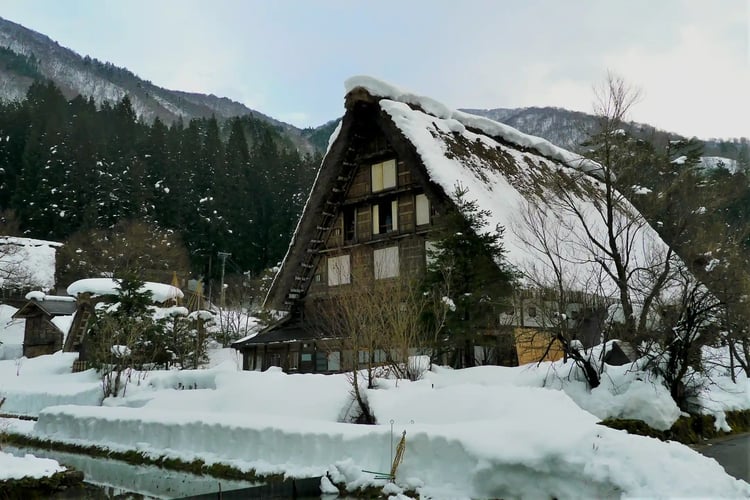
The third trap is a site that refuses to sit in one prefecture. The Historic Villages of Shirakawa-go and Gokayama are a single World Heritage inscription made of three villages — Ogimachi in the Shirakawa-go region, and Ainokura and Suganuma in Gokayama — strung along the Sho River "in Gifu and Toyama Prefectures." UNESCO describes villages that "subsisted on the cultivation of mulberry trees and the rearing of silkworms," and adds that "the large houses with their steeply pitched thatched roofs are the only examples of their kind in Japan."
Each of the three is separately classified as an Important Preservation District for Groups of Historic Buildings under the 1950 Law for the Protection of Cultural Properties — administered through municipal ordinances and preservation plans. It is the same instrument that protects Ine, though the Kyoto Prefectural Tourism Federation renders the category as "Traditional Buildings" rather than "Historic Buildings." The listing is national and the daily rules are municipal, but the prefectures are not bystanders: UNESCO places overall responsibility with the national Agency for Cultural Affairs and lists Gifu Prefecture and Toyama Prefecture among the "associated bodies," and the buffer zones around Ainokura and Suganuma are protected as Gokayama Prefectural Natural Park "under the Toyama Prefectural Natural Parks Regulations." Three tiers of government share three villages. A traveler who books "Shirakawa-go, Gifu" and then finds Ainokura an hour away in Toyama has not made a mistake; the site simply does not respect the line.
The looser groupings people use in conversation — Tohoku, Kansai, Kyushu — are not administrative units at all. No assembly convenes for Kansai and no governor is elected for Tohoku; they are conventional groupings of prefectures, useful in speech and empty in law. Okinawa is the clearest case of the gap: its red-tile roofs and subtropical building traditions belong to a kingdom that was absorbed into the prefectural system, and were outside Japanese administration entirely as recently as 1972. The prefecture is the newest thing about the place.
Our companion guide to Japan's history and administrative divisions follows the same story from the cultural side, while our guide to Japan's geography and administration looks at how regional identities settled where they did.
The fuller landscape

In Closing
.webp?width=750&height=500&name=Ginzan%20Onsen%20(Obanazawa%20City%20%20Yamagata%20Prefecture).webp)
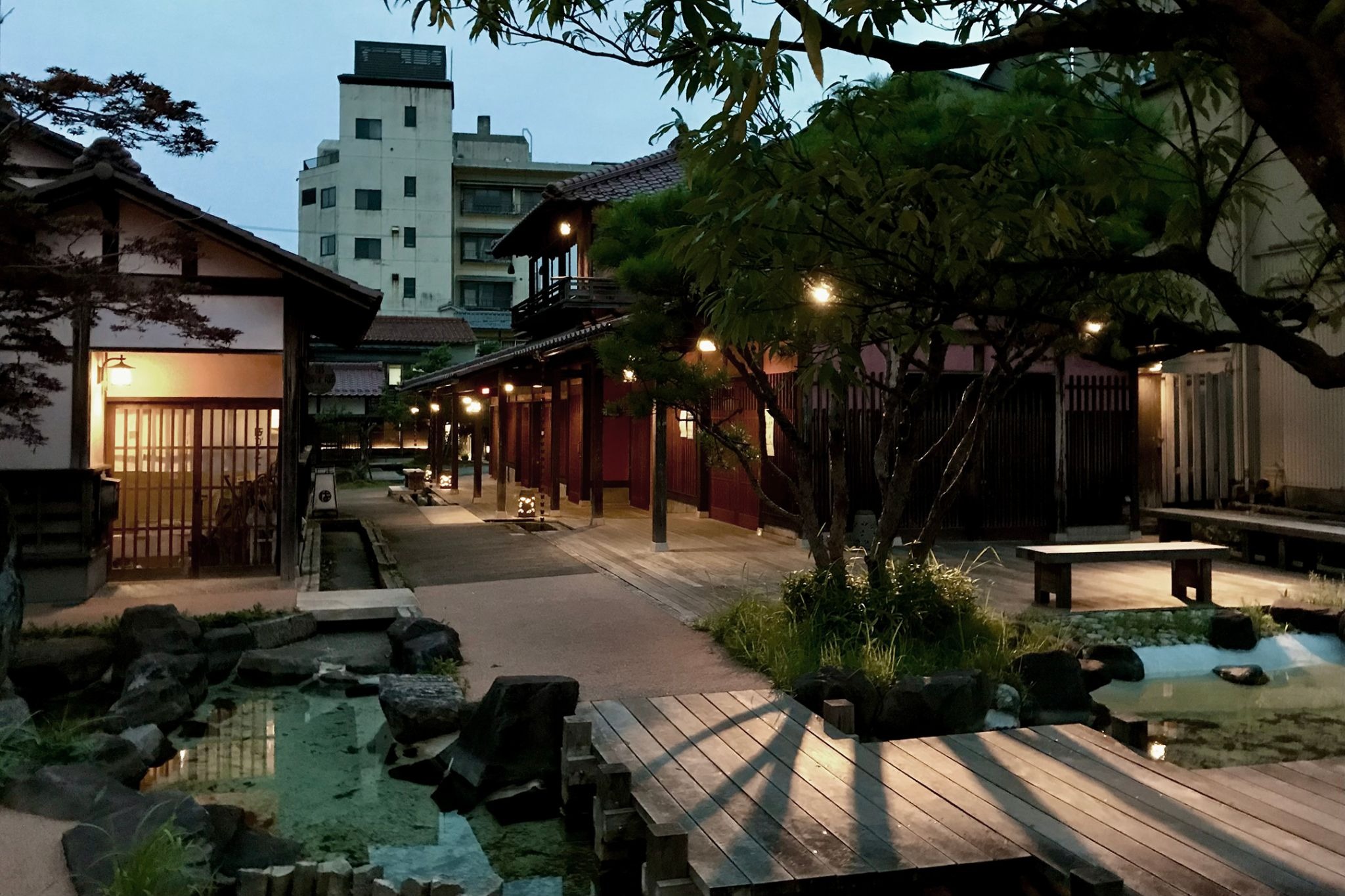
The wooden inns above stand at Ginzan Onsen in Obanazawa, which is to say in Yamagata — the prefecture whose name a bottle of sake is allowed to carry only if the water and the brewing stayed inside the line. That is the whole argument in one valley. The prefecture is not a label on a map; it is a boundary that decides what may be called what, and that tells you which government to look up when the question is who paid for the museum or what the room will cost before you have unpacked.
So the four names are history and the 47 units are law, and the practical questions follow from the second rather than the first. Which government levies the lodging tax where you are staying. Whether the site you have booked sits in one prefecture or two. Whether "in Tokyo" means a train ride or a ferry. Ask those before the itinerary hardens, and the system stops being trivia and starts being useful.

.webp)