.webp)
Sushi is one of Japan’s most iconic traditional foods. Among its many forms, norimaki is a roll where vinegared rice and fillings are wrapped in glossy, jet-black sheets of toasted nori. Take one bite and it all comes together at once: the crisp, fragrant snap of nori, the gentle tang of sushi rice, and the savory depth of the filling—unfolding into a single, satisfying mouthful.
Born as stylish Edo-period fast food, norimaki evolved in wonderfully diverse ways across regions and local cultures. Here, you’ll get a clear guide—from the basics to how to enjoy each type—so even if you’re new to Japanese food culture, you can dive right in. If you’ve ever typed “whats the best sushi roll” into a search bar, this article gives you a smarter way to decide: not by hype, but by craft, balance, and what you personally love. By the time you finish reading, you’ll be able to spot your next “best roll” with a sharper, more confident eye.
First, the Conclusion: You Can Spot the Best Norimaki with 7 Criteria
Here, we’ll organize what makes a “delicious norimaki” into seven perspectives: nori, sushi rice, fillings, rolling pressure, cut surface, serving timing, and aftertaste. Let’s quickly lock in the essentials below (*1).
A Digest of the 7 Criteria (Nori, Sushi Rice, Fillings, Roll, Cut Surface, Serving, Aftertaste)
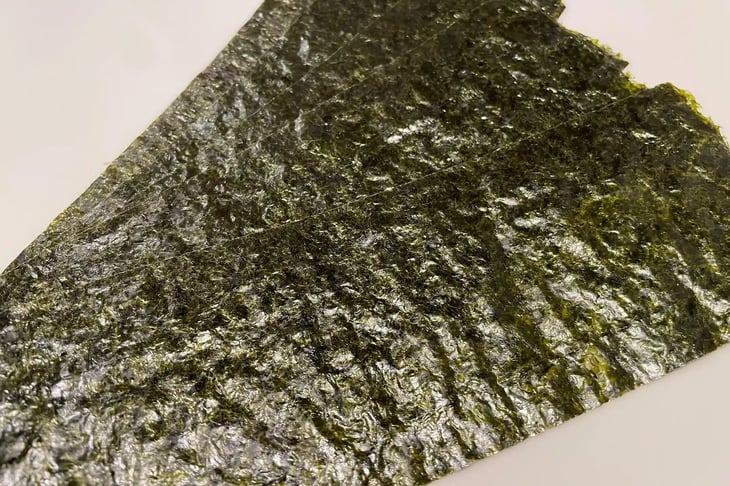
Nori quality: The better the nori—thick enough, glossy, richly aromatic—the more it elevates a roll’s appearance, texture, and flavor (*1). Avoiding humidity matters, and the deciding touch is nori lightly toasted just before serving, releasing that irresistible fragrance.
Sushi rice (shari): Sushi rice adjusted to a “body-warm” temperature with distinct, well-defined grains harmonizes with the fillings and loosens beautifully in your mouth. The balance between vinegar’s acidity and the rice’s natural sweetness is key.
Fillings: Freshness is a given, but smart prep and precise cutting make the real difference. By draining moisture thoroughly and sizing pieces with texture in mind, the filling integrates seamlessly with both nori and rice.
Rolling pressure: Not too tight, not too loose—rolled with a masterfully calibrated touch. When the bamboo mat tightens the roll evenly without crushing the grains, it stays neat, easy to eat, and won’t fall apart.
Cut surface: A roll sliced cleanly in one confident motion with a well-sharpened knife keeps the fillings intact and the colors vivid. Details like dampening the blade and wiping it between cuts are where craftsmanship shines.
Serving timing: Serving at the moment when aroma and texture peak is crucial. Freshly rolled nori is fragrant and crisp, but with time it softens as it absorbs moisture. Great shops plan for humidity shifts and serve at precisely the right moment.
Aftertaste: The hallmark of excellence is refinement all the way through the finish. When the oceanic aroma of nori and the acidity of sushi rice fade cleanly—without any harshness—leaving only a clear, lingering umami, you’re tasting something truly special (*2).
Norimaki Basics: How It Differs from Makizushi, Hosomaki, and Futomaki
First, let’s clarify what “norimaki” actually refers to. In Japan, it’s also called makizushi (rolled sushi), but what people mean can vary by region.
In general, norimaki = a broad category of sushi where fillings and vinegared rice are wrapped in nori. However, depending on size and ingredients, there are types such as hosomaki (thin rolls), chumaki (medium rolls), and futomaki (thick rolls)—and even the names and methods differ between the Kanto and Kansai regions (*1). If you understand these easily confused terms, you’ll enjoy Japanese food culture without second-guessing yourself.
Here, we’ll unpack the core vocabulary—and the deeper appeal of norimaki, including the gestures and technique that make it delicious.
What Norimaki Is (Definition—and Why the Act of “Rolling” Matters)
Norimaki refers broadly to sushi made by spreading vinegared rice over a sheet of nori, placing fillings on top, then rolling it up with a bamboo rolling mat (makisu). As the name suggests, it’s literally “sushi rolled in nori.” And the act of tightening the roll with a makisu is more than a formality—it’s a critical step that shapes texture and flavor. Rolling brings rice and fillings into one cohesive whole while trapping just enough air so the bite loosens gently and pleasantly as you chew.
It also has a practical advantage: it holds its shape and travels well as portable food. Makizushi is said to have emerged in the mid-Edo period, possibly inspired by pressed sushi, devised by sushi craftsmen of the time. Many describe it as a playful invention born of common people’s stylish creativity (*2). In other words, the very act of “wrapping in nori” is what creates norimaki’s taste and charm.
Norimaki / Makizushi / The Difference Between Hosomaki and Futomaki
Kanto and Kansai differ in what they call nori-wrapped sushi—and how they style it. In Kanto (Edo), slender rolls of sushi rice and filling wrapped in toasted nori were broadly called “norimaki,” and in sushi shops, saying “one norimaki” could even imply a hosomaki kanpyo roll by default (*1).
In Kansai (Kamigata), by contrast, “makizushi” tends to mean a thicker futomaki. This reflects different historical paths of sushi culture. Edo-style sushi favored thin rolls made with half-size nori sheets, typically with a single filling (e.g., kanpyo or tekka). Osaka-style sushi traditionally used one to one-and-a-half sheets of nori to make futomaki, often rolling several sweet-simmered fillings such as shiitake mushrooms and koya-dofu (*1).
There are also medium-thickness rolls (chumaki), though the “standard” varies by region. Nori handling differs too: in Kanto, many shops toast the nori before serving, while in Kansai, some serve without toasting (differences depend on the region and shop) (*3). That’s because Kanto-style rolls developed around the idea of eating immediately to enjoy the fragrance of toasted nori, while Kansai-style makizushi is often eaten later—like in picnic lunches—so rolling with dry nori that won’t soften as quickly is more practical (*3).
So yes, names, thickness, fillings, and nori treatment vary. But the core is shared: sushi where rice and fillings are wrapped in nori.
Why Nori Becomes the Star (Aroma, Umami, Clean Bite)
In norimaki, nori isn’t a supporting actor—it’s starring material. High-quality toasted nori releases a warm, sea-scented aroma the instant it’s heated; bite into it and it snaps cleanly, then softens and almost melts in your mouth. That shift in texture blends with rice and fillings to create a layered harmony. Nori is also rich in umami components such as glutamic acid, so the more you chew, the more sweetness and savoriness emerge.
Nori functions as the roll’s structural “frame,” yet it has the rare combination of delicacy and strength: it holds everything together, but yields smoothly when you bite. Better nori has richer color, fewer holes or tears, and a more luxurious aroma and taste (*4).
That’s why skilled chefs obsess over humidity control and often give nori a quick toast right before rolling to bring out its fragrance. Because nori’s aroma, umami, and bite are decisive, people say, “If the nori is good, the makizushi is good”—and they’re not exaggerating (*4).
The Cross-Section Is an Edible Composition (Beauty of Color, Space, Proportion)
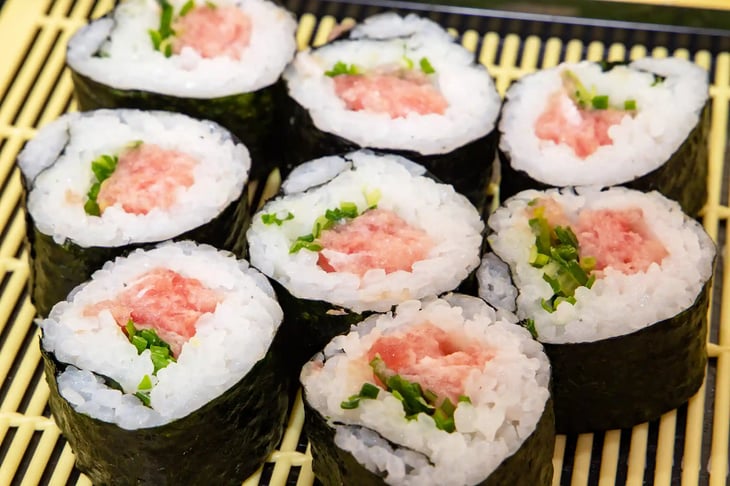
Slice a norimaki roll and you get something like bite-sized art. Inside the black border of nori sits white sushi rice, and at the center, vividly colored fillings—this contrast and placement forms an “edible composition.”
When rolling, sushi chefs calculate the position of each ingredient so the cut surface reveals a balanced pattern. In futomaki, for example, a yellow omelet, pink denbu, green cucumber or mitsuba, and brown shiitake or kanpyo can be arranged so multiple colors appear in harmony. When the ratio of “negative space” (the rice portion) feels just right, the cross-section looks refined rather than crowded.
Nori’s black deepens every other color and sharpens each ingredient’s outline. This visual beauty is part of the pleasure of norimaki, and because it photographs so well, rolls are often plated to show the cross-section clearly. It really is like eating a picture designed by a sushi chef—tasting with your eyes as well as your palate.
Seven Professional Quality Standards That Decide the Best Norimaki
Now, let’s look in detail at the seven criteria professionals use to judge whether a norimaki is truly excellent. This expands on the earlier digest. When sushi chefs roll a single norimaki, they watch every element: nori, sushi rice, fillings, rolling pressure, cut surface, serving timing, and aftertaste. If you keep these standards in mind, you’ll gain a clear lens for evaluating rolls—whether you’re enjoying them at a sushi counter in Japan or recreating them at home. And with that lens, your chances of meeting your own “best roll” go way up.
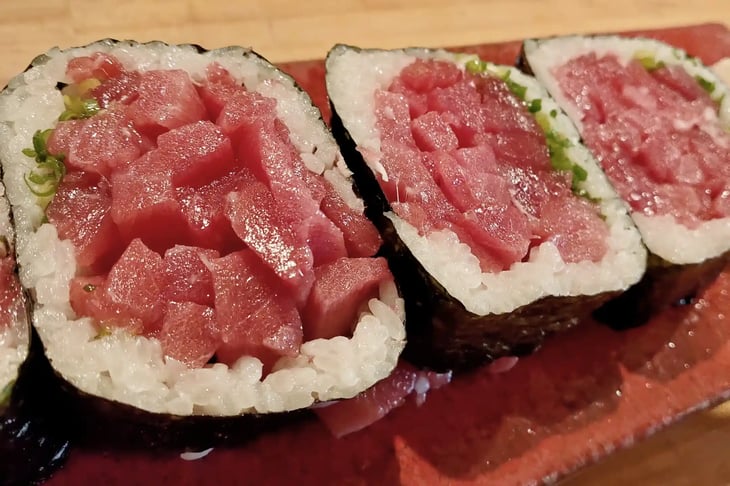
Standard 1: Nori Quality (Origin, Grade, Toasting, Aroma)
Norimaki deliciousness starts with nori. Fine nori is deep black with shine, an appropriate thickness, and almost no holes or chips (*1). Nori is graded by specialized inspectors in each production region, with detailed rankings based on criteria like “color,” “gloss,” and “presence of defects such as holes” (*1). Naturally, the nori used at top-end shops is high-grade, with stronger aroma and deeper umami.
For example, first-harvest (ichiban-tsumi) nori from the Ariake Sea, Japan’s largest nori-producing region, is often described as exceptionally sweet and umami-rich, highly aromatic, clean-biting, and remarkably tender—almost melting in your mouth (*2). Flavor also varies by region: Ariake nori is prized for soft mouthfeel and rich fragrance, while nori from areas like the Seto Inland Sea or Ise Bay can stand out for crisp bite and roasty aroma, each with its own personality (*2).
Chefs inspect nori at purchase by holding it up to light to check uneven coloring and thickness, selecting only the best. In the shop, they manage humidity meticulously and toast quickly right before serving to draw out maximum fragrance. Toasting level matters: a light toast intensifies aroma and adds crispness, but too much can create a burnt smell and flatten the flavor, so it’s kept to a brief kiss of heat.
Nori treated with this level of care—from origin selection to handling—is truly the “face” of norimaki, dramatically affecting both beauty and aroma (*3). The best rolls greet you with a rich nori fragrance the moment you lean in for the first bite.
Standard 2: Sushi Rice (Grain Definition, Moisture, Temperature, Vinegar Clarity)
The sushi rice (shari) that forms norimaki’s foundation is just as critical. In the sushi world there’s a saying: “Rice is seven parts, topping is three,” highlighting how strongly shari determines deliciousness. Ideal sushi rice has distinct grains, isn’t sticky, and loosens gently the moment it hits your mouth (*4). Achieving that involves rice selection, cooking technique, and how the vinegar seasoning is blended.
Rice for sushi is sometimes considered better after it has rested post-harvest rather than being brand-new. Some shops choose older rice or adjust blends depending on condition. Using only new rice can make the texture too moist and clingy, so chefs may intentionally blend in rice with more stable moisture and better vinegar absorption, keeping the mouthfeel light (*4).
Once cooked, rice is mixed with sushi vinegar while still hot, “cutting” through it as you stir, then cooled by fanning to remove excess moisture. Some sushi chefs reportedly time their cooking so rice finishes about 30 minutes before guests arrive, adjusting it to roughly body temperature (*5). Body temperature is often considered the ideal range—too hot or too cold disrupts harmony with fish and other ingredients (*5).
Seasoning varies by shop, shaped by vinegar type and sugar-salt ratios. Some Edo-style shops use red vinegar for a sharper profile; some Kansai styles lean gentler and sweeter. What matters is that you can sense a clear outline of both the rice’s sweetness and the vinegar’s acidity.
Ideally, you first catch a soft rise of vinegar aroma, then the rice’s sweetness follows. When the rice isn’t soggy, and the roll’s tightness lets it break apart lightly, it supports the filling without overpowering it—yet still releases savoriness as you chew. That’s the condition of truly great shari: a quiet backbone that makes everything else shine.
When you eat norimaki from a renowned shop, you’ll feel the rice’s faint warmth and acidity from the very first moment, spreading and loosening in your mouth along with the filling (*4). That unity is professional craft.
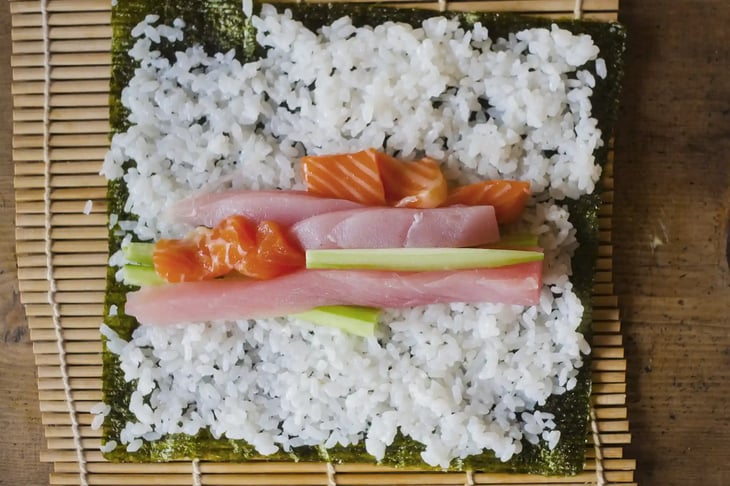
Standard 3: Fillings (Freshness × Cutting × Texture Design Through Thickness)
Norimaki fillings range widely—seafood, vegetables, omelet, kanpyo, and more—but what always matters is proper preparation and cutting. Freshness is non-negotiable: for tekkamaki, you want fresh lean tuna; for kappamaki, crisp cucumber cut right before rolling. The fresher the ingredient, the less off-odor or harshness you’ll taste, and the more its natural umami comes forward.
Beyond that, chefs know the ideal cut for each ingredient. Lean tuna is sliced into slender batons at a thickness that won’t feel fibrous when you bite. Cucumber may be trimmed to reduce watery seed core, then quartered lengthwise to keep crunch while staying roll-friendly. Kanpyo, after being simmered sweet-savory, is thoroughly squeezed to remove moisture.
Jiro Ono is reported to spare no effort for kanpyo used in kanpyo rolls: soaking dried gourd strips overnight, kneading with salt, parboiling, then separating firmer and softer sections and simmering only the softer parts (*6). The result is uniformly tender kanpyo, avoiding any crunchy distraction when rolled (*6).
Aligning hardness and moisture across fillings also creates cohesive texture. If fillings are chunky and tough, or watery and soggy, they can ruin even excellent rice and nori. For cooked items like shrimp or anago, chefs aim for the narrow window where it’s fluffy-tender yet still holds its shape. For thick omelet, rolls often use a slightly sweeter, firmly set style so it won’t crumble and will draw a clean cross-section.
In futomaki with multiple fillings, you get a lively mix of textures in one bite—but if even one element is stringy or overly firm, overall harmony collapses. Pros also adjust thickness carefully: shiitake or koya-dofu may be thin-sliced, kanpyo standardized in width, omelet sized to balance proportion with other ingredients.
With this meticulous “texture design,” fillings only reveal their full value once wrapped by nori and rice. In superb norimaki, each filling tastes good on its own—and even better when chewed together, becoming one integrated bite that stays enjoyable to the last piece.
Standard 4: Rolling Pressure (It Doesn’t Fall Apart, Yet It Isn’t Tight)
What looks simple but is genuinely difficult is the pressure used when rolling with a bamboo mat. Too strong, and the rice grains crush and compact, making the texture heavy. Too weak, and the fillings slip out or the roll collapses into crumbs when lifted.
The ideal norimaki holds its shape when you pick it up with chopsticks, yet loosens softly the instant it enters your mouth. Chefs align the nori edges and tighten with even pressure, carefully avoiding excessive force on the rice—tightening the mat just enough not to crush the grains (*7).
For example, at Jiro Ono’s shop, the craftsman in charge of rolls reportedly “spreads the sushi rice without crushing the grains,” places the filling, then rolls by drawing the mat forward and wrapping in one smooth motion (*7). Pros internalize correct pressure through touch, but as a guide, it’s best when you can see faint air pockets in the rice on the cross-section. A little air keeps the bite light. When rolled too tightly and rice grains press into each other, it won’t loosen well and can feel “packed.”
Over-tight rolling can also stretch nori and, in the worst case, tear it. “It won’t crumble, yet it’s airy”—that balance takes trained intuition. At home, try pressing gently and evenly from above the mat, then rest the roll briefly with the nori seam down so the shape settles.
When you bite into a professionally rolled norimaki, you’ll likely be surprised: it breaks apart softly, yet looks immaculate. It’s a kind of artisan skill you could call “holding without gripping.”
Standard 5: Cut Surface (Blade, Angle, One Clean Stroke)
Slicing the finished roll is another moment where technique shines. Great norimaki has a crisp, beautiful cross-section—no torn nori, no crushed fillings. That begins with a well-sharpened knife. If you press-cut with a dull blade, nori tears into jagged edges like a saw cut, and rice gets smashed.
Chefs use a long blade such as a yanagiba and cut by pulling in a single stroke. Concretely, they place the tip on the board and draw the knife smoothly toward themselves, slicing cleanly in one motion. That reduces friction and leaves a smooth face.
Before cutting, dampening the blade with a cloth helps prevent rice from sticking and makes cuts glide. Many chefs wipe the knife with a wet cloth after each cut, removing rice grains and continuing with a clean edge.
The cutting order is also planned: first halve the roll, then divide each half into three equal pieces (for hosomaki, six pieces is standard). Angle matters too—rather than dropping straight down vertically, pulling slightly at an angle helps avoid pushing fillings out and preserves the cross-section. The ideal cut shows the black of nori, the white of rice, and the colors of fillings clearly, with every layer intact.
Professional sushi shops treat this beauty as part of taste itself. A clean cross-section whets your appetite and photographs beautifully. Roughly cut rolls aren’t just unattractive—they also eat worse. In a carefully made norimaki, even the last piece stays neat and refined.
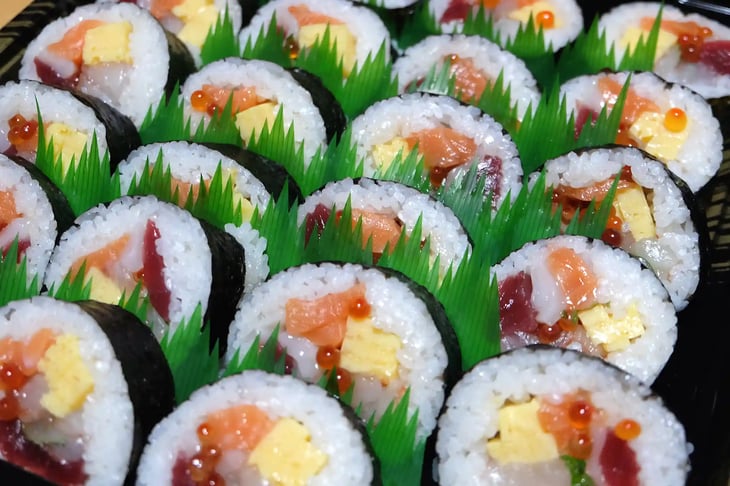
Standard 6: Serving Timing (Managing Humidity and Aroma at Its Peak)
Norimaki is a race against time once it’s rolled. Freshly rolled toasted nori is crisp and highly aromatic, but within minutes it begins to soften as it absorbs moisture from rice. Shops that serve the best norimaki watch for the exact peak of aroma and texture, and present it to you at that moment. At counter sushi, you may often hear something like, “Please enjoy the roll right away—it’s best freshly made.”
Chefs adjust rice timing and rolling order while watching your eating pace. In Edo, hosomaki that let you taste nori’s immediate aroma were a standout offering served between nigiri, prized for their freshness (*3). That’s why Kanto sushi shops developed norimaki with toasted nori, meant to be eaten right after rolling (*3).
Meanwhile, Osaka-style makizushi often assumes you’ll eat it later—like in a picnic bento—so it’s rolled with dry nori (*3). For generations, people have adapted nori handling to the serving moment. In high-quality shops, nori is toasted after you order, rolled immediately on the spot, cut, and handed to you right away. In some temaki-focused shops, a chef may even pass you one roll at a time and gently urge, “Please, right away.”
That attention to timing optimizes everything: nori’s fragrance and snap, rice temperature, and how the fillings settle into place—creating a memorable bite. The best norimaki is always served at its ideal moment. If serving delays leave you with damp nori or fully cooled rice, that’s a key dividing line in quality—and a test of the chef’s pacing and planning.
Standard 7: Aftertaste (Layers of Umami and a Clear Finish)
Finally, pay attention to the aftertaste—the finish that lingers once you’ve swallowed. A good norimaki changes and expands with each bite, and the comfort continues afterward. While chewing, toasted nori fragrance rises through your nose; the rice’s balanced acidity and sweetness remains on your tongue; and the filling’s savoriness builds in layers. After swallowing, ideally there’s no unpleasant fishiness or heaviness—only a faint, refreshing sea aroma that remains softly (*2).
For instance, high-grade nori can leave a distinctive sweetness on your tongue, then dissolve and disappear cleanly (*2). Cheaper nori can leave saltiness or grassy “green” notes in the finish, but the better the nori, the more elegant and light the aftertaste tends to be (*2). If rice isn’t sticky and maintains the right acidity, your mouth feels refreshed after eating. If fillings are fresh and high-quality, they won’t leave lingering greasiness or cloying richness.
Jiro Ono is reported to have said that good sushi can make you want more even when you’re full, and a norimaki that makes you crave “just one more” even after a big meal is exactly that: not heavy, with only umami floating gently at the end (*6). At his shop, even guests who eat more than 20 pieces reportedly say, “I’m full, but the norimaki is a separate stomach,” savoring the afterglow of kanpyo rolls (*6).
When layers of umami stack beautifully and the finish stays clean, you’re tasting true mastery. If your mouth feels oddly sticky afterward, or only saltiness or sweetness remains, it’s not top-tier. After one roll, do you genuinely think, “That was delicious,” with a clear, uplifting finish? That’s the final clue for spotting the best norimaki.
A Type-by-Type Guide: Choosing Norimaki by Purpose (Hosomaki, Futomaki, Ehomaki)
Norimaki comes in many forms, and choosing based on the moment and your purpose makes it even more fun. Here, we’ll cover signature styles—hosomaki, futomaki, and ehomaki—plus roll sushi (uramaki) that evolved overseas, and drink pairings that complement norimaki.
When you’re at a sushi shop wondering, “What should I order?”, remembering this guide will help you meet the best roll for you. Once you know what sets each type apart, you’ll rediscover just how deep and varied the world of norimaki can be.
Hosomaki (Tekka, Kappa): Minimal, So Skill Shows Through
Hosomaki are thin rolls made by spreading a light layer of sushi rice over a half sheet of nori, then rolling one single ingredient as the core. Classic examples include tekkamaki (tuna), kappamaki (cucumber), and kanpyomaki (dried gourd).
Because hosomaki is so simple, a sushi chef’s skill shows plainly. Rolling evenly with a very small amount of rice, prepping the ingredient, calibrating the tightness, achieving a clean cut—none of it can be faked. In Edo-style sushi, it was customary to finish a meal with hosomaki, and it’s said customers would judge a shop’s ability by that final roll.
So much so that people say, “When you think Edo-style norimaki, you think kanpyo rolls.” Kanpyo hosomaki is a traditional item, and even today masters like Jiro Ono praise it as “the yokozuna of norimaki” (*1). Recently, the understated charm of kanpyo rolls has been reappraised, and you may even find more discerning guests ordering kanpyo on purpose instead of tekkamaki (*1).
Hosomaki is also a great first order. At a sushi shop you’re visiting for the first time, ordering tekkamaki or kappamaki quickly tells you about the rice texture, nori quality, and the care of the work. With a minimalist build that carries a chef’s philosophy, hosomaki embodies “simple is best.” It’s small, easy to eat, perfect as a sake companion, and just as useful as a satisfying finale.
.webp?width=730&height=487&name=Kappa-maki%20(Cucumber%20Sushi%20Roll).webp)
Futomaki: Enjoy Seasonal Stories and Layers of Texture
Futomaki uses a full sheet (or one-and-a-half sheets) of nori and rolls in multiple fillings for a more generous, celebratory style. Because the cross-section can form beautiful patterns, in Chiba Prefecture it has even become a traditional festive dish known as “futomaki matsuri-zushi,” essential at celebrations (*2).
Futomaki’s biggest appeal is that one roll delivers multiple layers of flavor and texture. Sweet-simmered shiitake and kanpyo, spinach dressed as ohitashi, sakura denbu, thick omelet, cucumber—combinations vary widely by region and shop. In a classic Kansai-style makizushi, the core may include koya-dofu, kanpyo, sweet-simmered shiitake, plus datemaki (rolled omelet) and mitsuba (*3). Sometimes grilled anago or shrimp is added too, creating an especially lively bite (*3).
Futomaki has long been eaten at seasonal milestones—festivals, hanami picnics, weddings and funerals—so ingredient choices often carry a story. In spring, for instance, sakura denbu or pink-tinted sushi rice might be used to suggest blossoms; for Girls’ Day, rolls inspired by the colors of hishimochi sweets may appear. Chiba’s matsuri-zushi, where flowers or pictures emerge in the cut surface, can be so intricate it’s compared to traditional craftwork (*2).
Texture contrast is another joy: cucumber’s crisp snap, omelet’s fluffy sweetness, the chewy tenderness of shiitake and kanpyo, all gathered by rice that loosens gently. In your mouth, layers stack and shift—each chew changing the experience.
It can feel like a “course meal wrapped into one roll.” When you find futomaki while traveling, look for local ingredients—regional vegetables, local fish—rolled inside. Futomaki’s delight is “wrapping an entire region’s blessings into one bite.” With both boldness and delicacy, it’s also wonderful to share at the table.
Ehomaki: Its Meaning as a Seasonal Custom—and How to Choose (Including Eating Etiquette)
Ehomaki is a thick sushi roll eaten on the night of Setsubun (around February 3 each year), believed to bring good fortune.
Originally a Kansai custom, it has become a nationwide seasonal tradition in recent years. The practice is: “On Setsubun, face that year’s lucky direction (the direction of the Toshitokujin deity), picture your wish, and eat a whole futomaki roll in one go” (*3).
It’s also said you shouldn’t speak while eating—by silently finishing one roll, you symbolically “roll in good fortune and don’t let it escape” (*3). Some say you should include seven fillings, linked to the Seven Gods of Good Fortune, though there’s no strict rule (*4).
In general, families and shops roll a colorful mix of auspicious fillings they prefer. A typical Kansai-style ehomaki includes the sweet-simmered kanpyo, shiitake, and koya-dofu mentioned earlier, plus datemaki, eel (or anago), cucumber, denbu, and so on. Modern varieties include salad-style rolls and seafood-heavy futomaki, but if you have the chance, you may want to taste a traditional combination at least once.
For choosing one, store-bought supermarket ehomaki can be perfectly enjoyable, but if possible, rolls from a sushi specialist or a long-established shop often have more carefully prepared fillings and are especially recommended. Many shops take reservations, so ordering in advance is a reliable move. As for how to eat it, traditionally you don’t cut it—because a folk belief says cutting would “cut off your ties.” Still, if eating an entire roll is too much, your health comes first; you don’t need to force it (*3).
What matters most is facing the lucky direction (some years it’s west-southwest, for example), quietly holding your wish in your mind, and savoring the roll. If you get halfway and then cut and share the rest, that can be perfectly fine. Ehomaki may be a ritual food, but it’s also a deeply flavorful futomaki—so chew slowly and enjoy it as if you’re welcoming good fortune into your year (*3). Choose a roll that leaves you smiling afterward, thinking, “All right—here’s to a healthy year!”
Roll Sushi / Uramaki: Enjoy It as a “Cultural Translation” That Evolved Overseas
One type of sushi that developed in its own way overseas is roll sushi, with the most famous example being the California roll.
It’s a style known as uramaki (inside-out rolling, where nori is inside and rice is outside), combining ingredients not found in traditional Japanese sushi—such as avocado, imitation crab, and mayonnaise. There are multiple origin stories (Los Angeles, Vancouver, and more), but it’s often said that Japanese sushi chefs created it to help locals who were hesitant about raw nori or raw fish feel more comfortable with sushi (*5).
For example, avocado was used as a substitute when fatty toro tuna wasn’t available, and the nori was hidden inside so its flavor wouldn’t feel too direct (*5). A creamy trio—avocado, imitation crab, and a touch of mayonnaise—became the signature combination (*5).
Today, roll sushi has proliferated across the U.S., Europe, and beyond: versions with teriyaki sauce or cream cheese, dragon rolls wrapped around fried shrimp, rainbow rolls topped with colorful fish—endless variations. In Japan, more tradition-focused sushi restaurants don’t often serve them, but in a kind of reverse import, specialty shops influenced by overseas sushi booms have also appeared.
Roll sushi can be seen as a “translation” of sushi culture—norimaki transformed through cross-cultural encounter. So rather than comparing it directly to Edo-mae sushi, it’s best to enjoy it as a different, new dish. Even if you already know classic norimaki well, the first time you try a California roll, you might be surprised by how good it is: avocado’s richness balancing sushi rice, and the unique bite created by nori being inside.
If you get the chance while traveling or at a Japanese restaurant abroad, try it. It’s another way sushi culture has expanded—an experience of “rolled sushi” from a different angle than traditional norimaki.
Pairing Ideas (Japanese Tea, Sake, Champagne)
To enjoy norimaki even more, consider what you drink with it. The classic match is hot Japanese tea (green tea)—what sushi shops often serve as agari. Astringent green tea refreshes your palate, lifting the roasty fragrance of nori and the umami of sushi rice. Especially when brewed strong and served hot, it helps wash away nori’s oils, leaving a clean finish that makes your next bite taste even better.
Next is sake. There was once an old idea that sushi and sake don’t pair well because they’re both rice-based, but in recent years it’s been widely recognized that sake’s umami can harmonize beautifully with sushi’s savoriness. For example, a junmai sake with restrained ginjo aroma, or a richer sake made in kimoto style, can match sushi rice’s acidity and the umami of nori and fish. As you sip, the rice sweetness and fermentation-derived depth spread, layering pleasantly into norimaki’s aftertaste.
Some breweries even market certain bottles as especially sushi-friendly. And finally, an unexpected but delightful option: champagne. Often said to pair not only with French cuisine but also with Japanese food, champagne can be a brilliant match for sushi—especially norimaki. For instance, when you take a sip of richly flavored junmai sake and then bite into a kanpyo roll, you might feel the kanpyo’s sweetness and the sake’s umami merge into a single, comforting impression.
With champagne, the bubbles sparkle across your palate and can carry nori’s fragrance upward, giving you a fresh surprise. Enjoy responsibly, of course—but discovering your own “norimaki pairing” can be part of the fun.
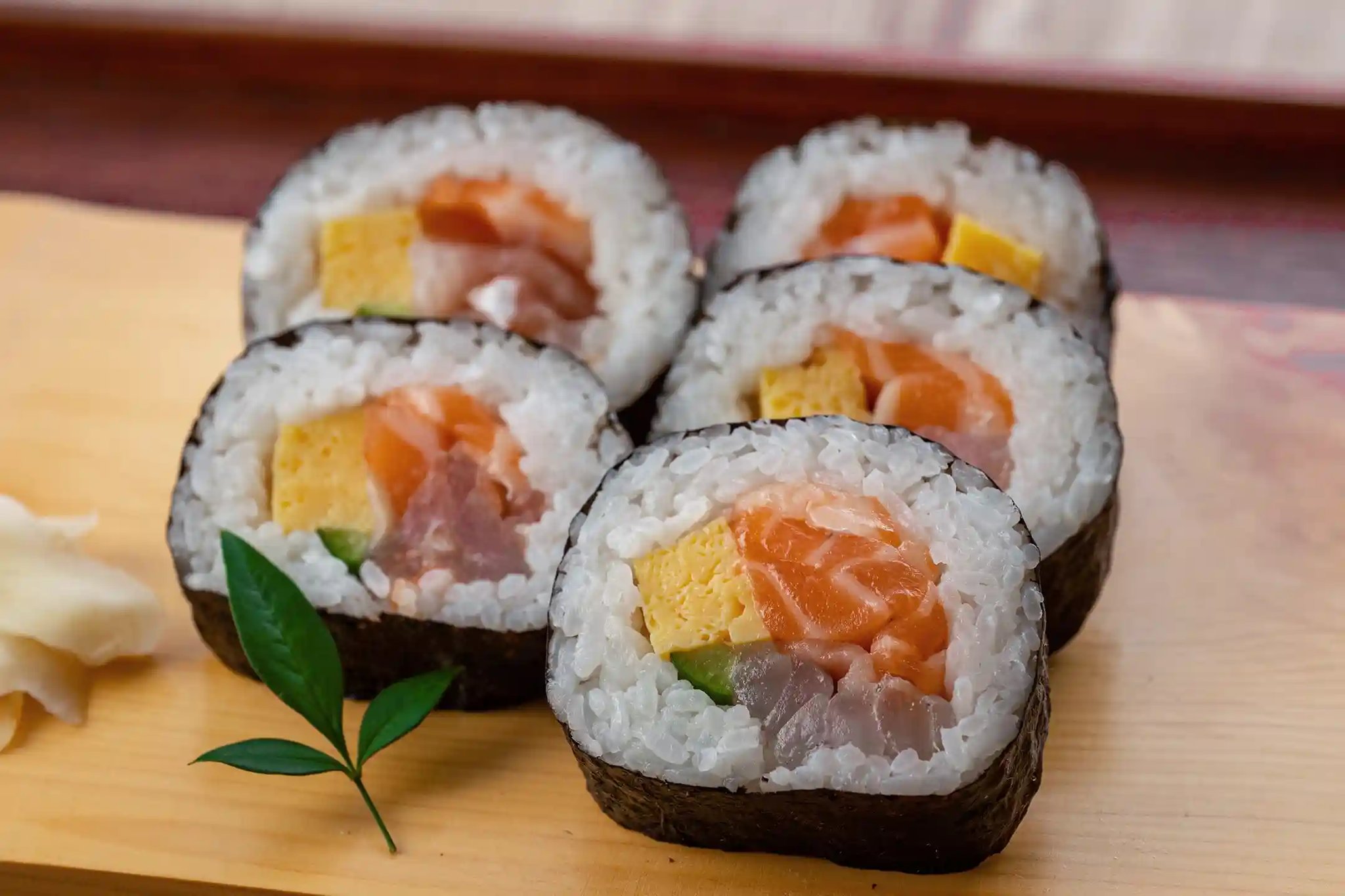
The Best Norimaki in Japan: Choosing Shops and Designing the Experience
Now that you’ve learned norimaki’s appeal and how to evaluate it, let’s talk about how to choose where to eat—and how to shape the experience when you’re enjoying norimaki in Japan. If you’re seeking high-value travel experiences across Japan, what should you look for in a sushi shop to truly savor exceptional norimaki?
We’ll also cover ordering tips at the sushi counter and travel ideas that bring you closer to production regions. If you’re going to do it, you might as well immerse yourself fully in norimaki’s deeper world.
Shop-Selection Checkpoints (Counter Experience / Specialization / Commitment to Nori)
To taste norimaki at its best, choosing the right shop matters. First, consider a sushi restaurant where you can sit at the counter and watch the chef work. That counter experience—where the chef toasts nori in front of you and serves the roll freshly made—can be truly unforgettable. A thin roll handed to you across the counter can feel like a feast all on its own.
Next, check how much specialization and pride the shop has in rolls. For example, a sushi shop known for “their rolls are outstanding,” or a menu with many roll options, is a strong sign. Beyond traditional sushi restaurants, you’ll also find temaki specialty shops and concept sushi bars focused heavily on nori. In places like that, norimaki is the star, so they tend to be uncompromising about nori quality and how it’s served.
In truly excellent shops, nori management is handled with extreme care. Some even re-toast the day’s nori before opening each morning to revive its fragrance (*1). At Jiro Ono’s shop, it’s said they’ve prepared nori daily with steady effort since opening—never letting it run out—and that guests now clearly notice the difference, with kanpyo rolls becoming especially popular (*1). Stories like these are a good indicator: a shop that cares about nori is very likely to deliver high-quality norimaki.
Sometimes menus list origin names or grades. If you see something like “made with first-harvest Ariake Sea nori,” your expectations can rise. Also watch the serving order. Strong shops calculate timing so that when rolls arrive at the end of a nigiri course, both rice and nori are at their best. A shop that toasts nori to order, or one that assigns a dedicated roll specialist (a chef trained specifically in rolling), is also a good sign.
Price-wise, it doesn’t have to be a luxury temple of sushi. Even neighborhood sushi shops can have rolls that shine. It’s worth checking reviews for comments like “their maki is excellent.”
Finally, look around the counter for signs of nori commitment: a wooden box that protects nori from humidity (a nori-bako), notices like “house-made kanpyo,” or signage indicating the nori’s origin. In general, shops that serve the best norimaki reveal their obsession in the details. Choose a place like that, and you’re far more likely to find a roll you’ll genuinely remember.
Ordering Tips: Read the Shop’s Philosophy in Your First Roll
When you visit a sushi shop for the first time, there’s a simple ordering move that helps you enjoy norimaki more deeply: ask for one hosomaki first. If you order something like, “Could I start with one tekka roll?”, the chef will likely think, “Ah, this guest begins with hosomaki,” and prepare it with care.
As mentioned earlier, hosomaki makes a chef’s technique easy to see—so by ordering it first, you can quickly sense the shop’s atmosphere and the quality of their work. Take one bite and notice the rice texture, nori fragrance, and the overall precision. If you think, “Oh—this is good,” you can look forward to everything that follows. If it feels underwhelming, you can pivot without forcing it—maybe toward sashimi or other dishes.
It can also be smart to ask a question about nori. Within a polite range, try something like, “Where is your nori from?” A shop with real pride will often be happy to tell you. A shop that’s indifferent may stumble (and yes, that can hint at quality…though you don’t need to say that out loud).
Most sushi chefs take pride in their ingredients, so you may hear about the nori brand, harvest timing, and more. That gives you confidence—and sparks conversation, which is part of the pleasure of counter dining. Also, be mindful of your pace.
When a roll is served, the best manners (and best flavor) come from eating it without letting it sit too long. If it’s handed to you with a “please,” taking it right away is the tastiest choice and a respectful one. If you’re dining with others and want to share, ask upfront: “Could you cut it from the start so we can share?” That keeps things smooth at the counter.
And if you want to learn more, don’t hesitate to ask. If you say, “This kanpyo is delicious—is it house-made?”, you may hear about their preparation details. Communication at a sushi shop is part of travel’s joy. Read the shop’s philosophy in your first roll, build trust from that moment, and then relax into the experience—letting the chef guide you as you fully enjoy norimaki.
Getting Close to the Source: Travel to Learn Nori Terroir (Process and Landscape)
You can’t talk about norimaki without talking about nori’s production regions. If you’re visiting Japan, a trip that brings you into nori country—experiencing the land, water, and production firsthand—is highly recommended.
One of the most famous areas is the coastal region of the Ariake Sea in northern Kyushu. Stretching across Saga, Fukuoka, and Kumamoto, the Ariake Sea has one of Japan’s largest tidal ranges and vast tidal flats, and the nori grown here has become a premium brand known as Ariake nori (*2). At low tide, broad mudflats appear far offshore; nori nets stretched across poles bathe in sunlight; at high tide, they absorb nutrients underwater—this repetition is key to nurturing tender, fragrant nori (*2). It’s truly a terroir created by the Ariake Sea’s natural environment.
In winter at the Ariake Sea, there are times when fishermen harvest nori in the middle of the night as the tide pulls out, working by flashlight. It’s harsher labor than you might imagine, but harvested nori is quickly taken to port factories and becomes sheet nori through washing, cutting, forming into thin sheets (like paper-making), and drying.
Some production areas accept tours and hands-on nori-sheet-making experiences. For example, Kashima City in Saga Prefecture has hosted events where you can try hand-forming nori sheets, and Yanagawa City has held nori-fishing experiences and factory tours. When you step down onto the tidal flats yourself, you may be stunned by the open, unobstructed expanse of sky and earth (seabed) spreading around you. In winter’s clear air, the view of pole-filled nori fields in the distance is a striking landscape you can only see there.
At factories, you may even get to taste freshly made nori. Newly dried nori can be so glossy it’s described as “It’s absolutely gleaming!” (literally, shining brightly), and one bite can feel like a different world—aroma and sweetness on another level (*3). If it’s freshly toasted, even more so: locally, you might taste the simple luxury of wrapping freshly toasted new nori around a rice ball (*3).
Experiences like this let you feel the value of nori as an ingredient—and the producers’ craft and pride—in your own senses. For your travel plan, you might visit roadside stations and markets along the Ariake coast, compare different nori, and listen to producers’ stories. Near Tokyo, you can also learn about the history of Tokyo Bay, once the producing region of “Asakusa nori,” through museums and archives (such as nori-related museums in Koto Ward).
Either way, traveling through nori’s hometown deepens your understanding of Japanese culture and gives you precious insight into the foundation behind “the best norimaki.” If you can, experience the world of nori with all five senses.
Norimaki History and Regional Character: From Edo-mae to Today
Finally, let’s briefly touch on norimaki’s history and regional character. When and how was norimaki born, and how did it become beloved? As it spread nationwide, it also evolved into local specialties in many places.
Once you know that background, you’ll meet norimaki on your travels with a richer perspective. Let your mind wander through the story of a stylish Edo invention that traveled through time to become what you taste today.
Edo Food Culture and the Idea of “Rolling” (Convenience and Style)
Norimaki (makizushi) is said to have been born in the mid-18th century in Edo (today’s Tokyo) (*1). During the Edo period, sushi had largely been a preserved food—fermented sushi and pressed sushi were mainstream. But as hayazushi (quick sushi using vinegar, including nigiri) began to spread, makizushi is thought to have been devised as a new way to eat sushi. According to documents, it emerged sometime between 1750 and 1776, and seems to have become common by around 1783 (*1).
At that time, Edo was a city where merchant culture flourished, and creativity bloomed even in food. The roots of makizushi are thought to have been inspired by bo-zushi, eaten in Kansai, where fish like mackerel is pressed into a baton shape with sushi rice. Makizushi flips the concept—rather than pressing fish on the outside, you tuck the filling inside and roll it up in nori (*1). It’s a playful inversion, and it worked brilliantly: a portable, easy-to-eat, stylish Edo fast food was born.
In fact, Edo-period makizushi wasn’t something you typically made at home. It was sold as street food at stalls, eaten while out and about (*1). In that sense, it may have been closer to how you think of onigiri today. Edo locals enjoyed norimaki made with high-quality nori harvested around Asakusa (Asakusa nori), treating it as a snack for walks or as a satisfying finish with drinks.
Records from the time include the idea that “when you say norimaki, you mean kanpyo hosomaki,” suggesting it stood out even among Edo-mae sushi (*3). As Edo sushi culture became more refined, norimaki grew so popular it was even given as a gift called kajimi-mai (a sympathy or support gift after a fire). One anecdote says it was valued as a handy offering for people busy cleaning up after fires because it was filling and could be eaten without dirtying your hands.
With this background, norimaki took root as a food that symbolized Edo’s style and wit. After the Meiji era, it began to be made at home, and around the Taisho period, it’s said housewives started preparing makizushi as a form of homemade sushi (*1). Local sushi traditions that once faded after the war later saw revival movements in many regions during the late Showa era and continue today.
The fact that you can casually enjoy norimaki now is thanks to Edo townspeople’s playfulness and practical spirit. When you taste a roll while thinking of that history, it may feel even more special.
Regional Makizushi Differences (Seasoning, Fillings, Cutting Style)
As makizushi spread throughout Japan, it absorbed each region’s food culture and evolved in distinct ways, creating visible local character. First, seasoning differences: Kanto’s Edo-mae sushi tends to feature sushi rice with a sharp, vinegar-forward profile, while Kansai’s Osaka sushi often adds sugar to make the rice slightly sweeter (*3).
As a result, makizushi itself can taste a bit sweeter in Kansai. For example, Kansai fillings like kanpyo and shiitake are often simmered quite sweet-savory. In Kanto, many shops simmer kanpyo more lightly, with restrained soy seasoning.
Nori handling also differs as discussed earlier: toasted nori in Kanto, untoasted nori in Kansai. So regional differences begin at the seasoning level. Next, fillings. A representative example is Chiba’s Boso-style matsuri-zushi.
As noted above, these are futomaki that form flower patterns or images like sea bream in the cross-section—local home cooks developed them through creativity into a regional cuisine (*2). Some are rolled with thick omelet, others use pink sushi rice for striking festive designs, prepared for special occasions. In Osaka, the standard set of fillings mentioned earlier (kanpyo, shiitake, koya-dofu, datemaki, cucumber) is typical, and Setsubun ehomaki is basically built on that foundation (*3).
Along the Seto Inland Sea coast, in places like Hiroshima, you may find makizushi featuring anago as a specialty. Around Kagawa, sushi overall may be seasoned with a Sanuki-style sweetness, and in Fukuoka you might see takana-maki (hosomaki rolled with pickled mustard greens). In Hokkaido, known for seafood, local styles can include salmon (aramaki-zake) or ikura in seafood futomaki as regional fare. Cutting styles vary too: Kansai makizushi, often intended for outings, may be cut on a diagonal and wrapped in bamboo leaves.
Meanwhile, Edo-style hosomaki is neatly cut into uniform round slices, as if measured. Even the names differ: in Aichi (including Nagoya), people may not say “norimaki” as often, and may call futomaki “makimono.”
When you know these differences, you can walk into a sushi shop while traveling and ask with curiosity, “What’s makizushi like around here?” If a local tells you, “In this area, we put ○○ in our rolls,” it becomes part of your travel memory.
Regional makizushi as local cuisine is a mirror reflecting each place’s history, culture, and ingredients. Meeting a region’s unique seasoning and fillings is one of travel’s great pleasures. Wherever you go, pay attention to makizushi—and taste the differences. At the same time, you’ll be traveling through the diversity and richness of Japanese culture itself.