Tokyo has very few ryokan where the bath in your own room is filled with real hot spring water. Among the properties we checked against their own pages and press releases, two do it in the city center: Fufu Tokyo Ginza, where every one of its 34 suites has a bath of water carried from Atami, and Onsen Ryokan Yuen Shinjuku, which is scheduled to open four new ONSEN Suites with Hakone water on November 16, 2026. Several other ryokan with "private onsen" in their listings offer a private open-air bath without spring water, or a genuine hot spring that you share with other guests on the top floor.
None of these is a bad stay. They are different products sold under one phrase. This guide sorts the main options in Tokyo into those three groups, explains what Japanese law counts as onsen, and looks at why a city sitting on deep hot water has so few hot spring inns. It ends with the questions worth asking before you book.
Private Onsen in Tokyo: Three Things the Phrase Can Mean
Booking sites and travel lists use "private onsen" loosely. When you read it next to a Tokyo property, it usually means one of three things.
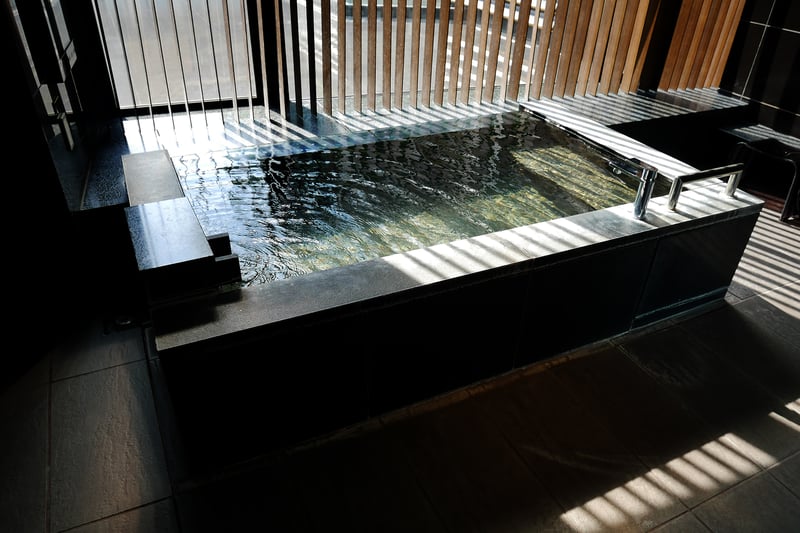
The first is spring water in your room. The bath in the suite is supplied with water from a registered hot spring source, which may be in the building or, in central Tokyo, more often in a resort town an hour or two away. The second is a private bath with tap water: a hinoki tub or a stone tub on a balcony, open to the sky and reserved for you, heated like any other bath. The third is a real hot spring that you share. The water comes from deep under the building, but you reach it in a communal bath on another floor, separated by gender, with other guests.
Each has its place. A couple marking an anniversary may care most about privacy and the view, and a heated hinoki tub on a terrace will deliver both. A traveler who has read about mineral water and wants to soak in it will be disappointed by the same tub. The phrase on the listing does not tell you which one you are buying, so the rest of this guide names the water for each property.
What Counts as Onsen Under Japanese Law
The definition is narrower and more technical than most travelers expect. Japan's Ministry of the Environment summarizes the Hot Springs Act this way: water, mineral water or gas that rises from the ground counts as onsen if it is at least 25°C when taken from the source, or if it contains at least one of the substances in a listed table in the required amount, such as 1,000 mg of dissolved solids per kilogram. Either condition is enough. A cool spring rich in minerals qualifies, and so does a warm one with few.
Two things follow for a visitor. The test is applied at the source, so water carried from Atami or Hakone to Tokyo is described by where it came from. And heated tap water does not become onsen however beautiful the tub, which is why the second group above is a separate product.
Ryokan With Private Onsen in Tokyo: Rooms With Real Spring Water
Among the central Tokyo ryokan we checked, these are the two where the bath in the guest room itself uses spring water, according to their own sites and announcements.
Fufu Tokyo Ginza: Atami Water in All 34 Suites
Fufu Tokyo Ginza opened on November 16, 2025, directly connected to Ginza-itchome Station, according to Travel Voice. Precious reports that all 34 rooms have a bath supplied with natural hot spring water carried from Atami, and the ryokan's own site calls that water the starting point of the Fufu brand. The brand began in Atami, so its Ginza property brings its home spring to the city.
Read the room pages before you picture an open-air bath. Fufu's room listings describe the baths as indoor, with hinoki frames and tiled finishes, and the largest suite has an indoor hinoki tub. Rooms range from about 55 square meters to about 160. The open sky comes on the rooftop, where a lounge called Yusora has a footbath of the same Atami water set in a garden. Dining is at the Japanese restaurant Ginza Gayu and the sushi counter Sushi Ginga.
When it opened, Unseen Japan reported rates starting at ¥169,400 a night for two guests with two meals, rising to about ¥427,900. Rates change by season, so treat these figures as a guide to the range.
Onsen Ryokan Yuen Shinjuku: Four New ONSEN Suites From November 2026
Yuen Shinjuku opened in 2019 in Shinjuku 5-chome, and until now its spring water has been in the shared bath. A July 2026 press release from its operator, UDS, explains that the top-floor bath on the 18th floor, which has an open-air section, uses water carried from Ashinoko Onsen "Tsutsuji no Yu," the Odakyu Yama no Hotel's own spring in Hakone.
The same release announces four ONSEN Suites, made by remodeling an existing suite and other rooms, where that Hakone water reaches the bath in the room. They are 50 square meters with a double bed or 62 with twins, sleep up to four, and are scheduled to take guests from November 16, 2026. The floor is raised in the style of a traditional room, so you take off your shoes when you step up, and the walls are finished in plaster and wooden lattice. Family rooms of 38 to 49 square meters are planned for March 2027, and a new restaurant on the first floor is scheduled to open in November 2026 after the previous one closed at the end of May.
Because the suites are new, there are no guest reviews to read yet. If you book one in the first months, ask the ryokan whether the bath is indoor or open to the air, since the release shows an indoor tub in its illustration but does not say.
Tokyo Ryokan With Private Open-Air Baths but No Spring Water
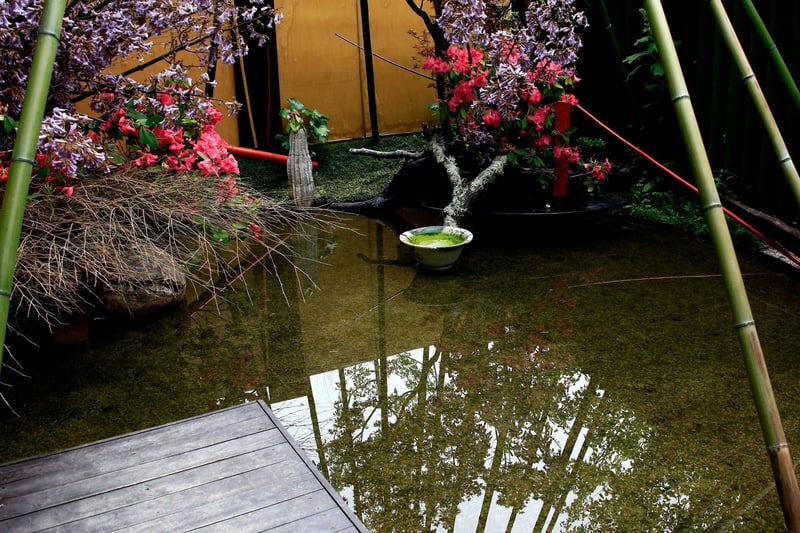
These properties often appear on lists of Tokyo ryokan with private onsen. They have a private bath, often open to the air, but the sources below do not describe spring water in it.
Yuen Bettei Daita: Open-Air Rooms, Spring Water in the Shared Bath
Yuen Bettei Daita, beside Setagaya-Daita Station in Setagaya, opened on September 28, 2020. Traffic News explains its unusual site: it stands on land freed when 1.7 km of the Odakyu Line between Higashi-Kitazawa and Setagaya-Daita was moved underground, so the open-air bath sits above the trains. The ryokan has 35 rooms in seven types. Its shared bath uses an alkaline simple spring carried from Ashinoko Onsen in Hakone.
The same article states plainly that some rooms have open-air baths that are not onsen. That is worth knowing, because Daita appears on many lists of Tokyo ryokan with private onsen. The open-air room is a real pleasure, quiet and green and set apart from the city, but if you want spring water you will walk down to the shared bath for it.
Prostyle Ryokan Tokyo Asakusa: Open-Air Rooms, No Hot Spring Listed
Prostyle Ryokan Tokyo Asakusa has 43 rooms. Ikyu's facility listing marks rooms with open-air baths as available, and marks hot spring and large public bath as not available. Some travel blogs describe its room baths as onsen. On the evidence of the booking listing, they are private baths without a hot spring supply, so ask the ryokan if the water matters to you. For many couples, a bath of their own above Asakusa is exactly the point.
Tokyo Onsen Ryokan Where the Spring Is Shared: Hoshinoya Tokyo
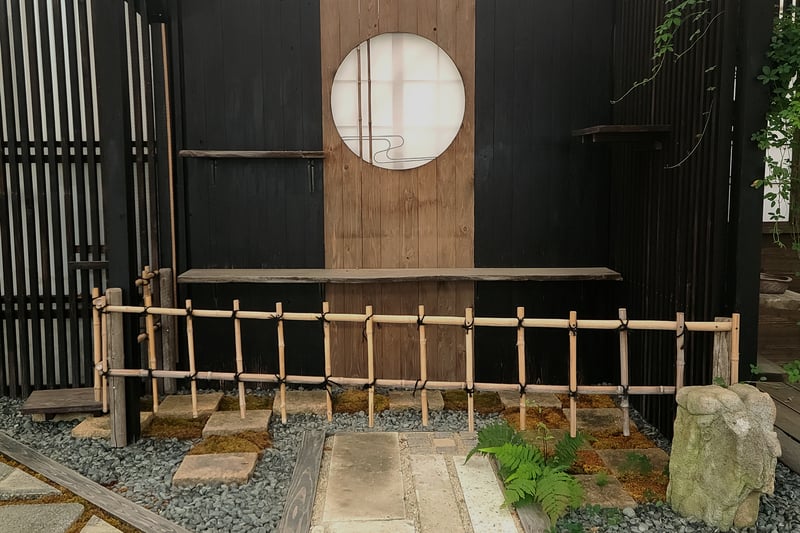
Hoshinoya Tokyo is the clearest case of a real Tokyo hot spring that is not private. It opened in July 2016 in Otemachi, the business district near Tokyo Station, as a 17-story building of Japanese-style rooms. Travel Watch's report gives the details: six rooms on each of fourteen floors make 84 rooms, all Japanese-style, and you take off your shoes at the entrance on the first floor. On the top floor are an indoor bath and an open-air bath fed by Otemachi Onsen, drawn from 1,500 meters underground. The water is amber, a strongly saline spring, and the open-air bath is enclosed by high walls so that you look straight up at the sky.
Each room has its own bathtub, but the spring is described only on the 17th floor. If your priority is soaking in mineral water in the middle of Tokyo, Hoshinoya does that. If your priority is never sharing a bath, it does not. Hoshinoya's own page adds the feature that makes the building feel like an inn: every floor works as a small ryokan of six rooms, connected along a tatami corridor to its own ochanoma, a traditional lounge. From the street, the tower is wrapped in a lattice of asanoha-kuzushi, an Edo-komon pattern that looks plain from a distance and shows its fine geometry as you come closer.
Why Central Tokyo Has So Few Onsen Ryokan
Tokyo does have hot water underground, as Otemachi shows. Two sets of rules shape how little of it reaches a ryokan, and what the word ryokan means once it does.
Deep Wells and Tokyo's Drilling Rules
Drilling for hot water in Tokyo is regulated to prevent the ground from sinking. A 2005 report of the Tokyo Metropolitan Nature Conservation Council recommends the spacing: in designated areas, a new well deeper than 500 meters should be at least 1,000 meters from an existing source, judged by the deeper of the two wells, and shallower wells need 500 or 200 meters. The distance can be waived if the combined draw of the old and new wells stays within the permitted volume. A separate Tokyo screening standard for pumping equipment, attached to the same report, caps the daily draw from one source at 50 cubic meters in eight wards in the east and north, including Sumida, Koto and Edogawa, and at 150 cubic meters across most of the rest of Tokyo.
Read together with the 1,500-meter well under Hoshinoya, the rules describe the conditions. A deep source is expensive to drill, usually has to sit a kilometer from any other deep source, and yields a limited daily volume. Supplying a bath in every guest room from such a well is a far larger demand than supplying one shared bath. The two central Tokyo ryokan we found that put spring water in their rooms both bring it in from resort towns with their own springs. The rules do not say this is why. They do show the limits any city-center spring has to work within.
Since 2018, Ryokan and Hotels Share One License
The second rule concerns the word itself. Under the Hotel Business Act, Japan once licensed hotels and ryokan separately, with different minimums. A summary of the amendment published by Takamatsu City sets out what changed on June 15, 2018: the two categories were merged into a single "ryokan and hotel business," the minimum of 10 rooms for a hotel and 5 for a ryokan was abolished, and the minimum room size was unified at 7 square meters, or 9 with a bed.
Since then, the law no longer distinguishes a ryokan from a hotel. The name reflects the design and service an operator has chosen, and it tells you nothing about the water. Our guide to the history of the Japanese ryokan covers what the older inns were like.
Celebrated Tokyo Ryokan Without a Spring
Some of Tokyo's most admired ryokan are not onsen ryokan at all. Takanawa Hanakohro in Shinagawa has 16 rooms and opened on November 1, 2016. In May 2025, its operator announced that it had become the first ryokan in the world to receive Forbes Travel Guide's five-star rating for five consecutive years. The release lists a spa among its facilities and does not mention a hot spring. It belongs on a list of Tokyo's finest ryokan, and earlier versions of this article placed it among onsen ryokan, which it is not.
Hōmeikan in Hongo, Bunkyo City, is a different kind of landmark. LEON describes its main building as dating from 1905 and listed as a Registered Tangible Cultural Property in 2000, with a tiled bath painted with swimming fish. It was a boarding house when the founder bought it in 1934 and became a full ryokan after the war. In March 2025, Time Out Tokyo reported that the main building was offering day plans only during a major renovation. That was the status as of March 2025, so check before you plan around it, and do not expect a hot spring.
How to Choose a Private Onsen Ryokan in or Near Tokyo
Start with the water and work outward. Before booking any room described as having a private onsen, ask the ryokan three questions in writing. Is the bath in this room supplied with hot spring water? If so, from which source, and is it in the building or carried in? Is the bath indoors, semi-open or fully open-air? A good ryokan answers these easily, and the answers will tell you which of the three groups the room belongs to.
Then decide what you are really after. If it is privacy and atmosphere, an open-air room bath at Yuen Bettei Daita or Prostyle Asakusa may suit you as well as spring water would. If it is the water, the central Tokyo options we found are Fufu Tokyo Ginza, the new suites at Yuen Shinjuku, or the shared spring at Hoshinoya Tokyo. If you want both, an open-air bath in your room filled from a spring on the property, the simplest answer is often a night outside the city. The Odakyu Yama no Hotel spring that supplies two Tokyo ryokan is itself in Hakone, and our guide to Hakone ryokan covers the options there.
Our broader guide to choosing a ryokan walks through meals, room types and etiquette, and if you would rather stay in the city without a bath at all, see our guide to Japanese-style hotels in Tokyo.
Yukata, Shoes and the Bath
A few customs apply in all of these properties. At Hoshinoya and in the new Yuen Shinjuku suites you take off your shoes at the threshold, and the floor beyond is for bare or socked feet. The yukata, a cotton robe provided in the room, is loungewear and sleepwear inside the ryokan, worn left side over right. In a shared bath you wash and rinse at the shower stations before you enter the water, and towels stay out of the bath. In a private bath in your room, these rules relax, but rinsing first still keeps the water clear for a second soak.
Tokyo Onsen Ryokan, Sorted by Their Water
Laid side by side, the options in central Tokyo fall into four groups.
- Spring water in your room: Fufu Tokyo Ginza, with Atami water in all 34 suites since November 2025, and Yuen Shinjuku's four ONSEN Suites with Hakone water, scheduled from November 16, 2026.
- A private open-air bath without spring water: Yuen Bettei Daita, whose shared bath does use Hakone spring water, and Prostyle Ryokan Tokyo Asakusa, whose booking listing shows no hot spring.
- A deep Tokyo spring in a shared bath: Hoshinoya Tokyo, with Otemachi Onsen from 1,500 meters on the 17th floor.
- Celebrated ryokan without a spring: Takanawa Hanakohro and Hōmeikan.
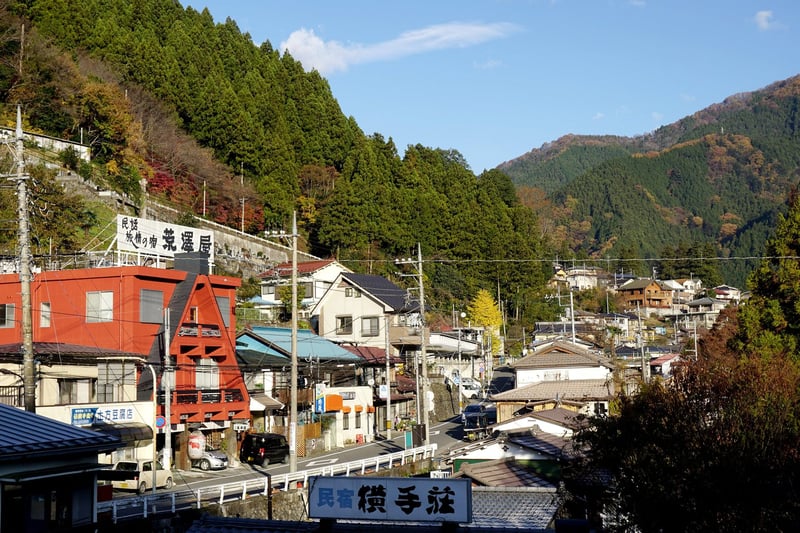
This guide covers central Tokyo. The metropolis also runs west into the mountains of Okutama and out to the Izu and Ogasawara islands, and Tokyo's pumping standard leaves several areas outside its designated zones, including Okutama, Hinohara and the islands. We have not surveyed ryokan there, so if you are prepared to travel within Tokyo for a night, ask about the water in the same way.