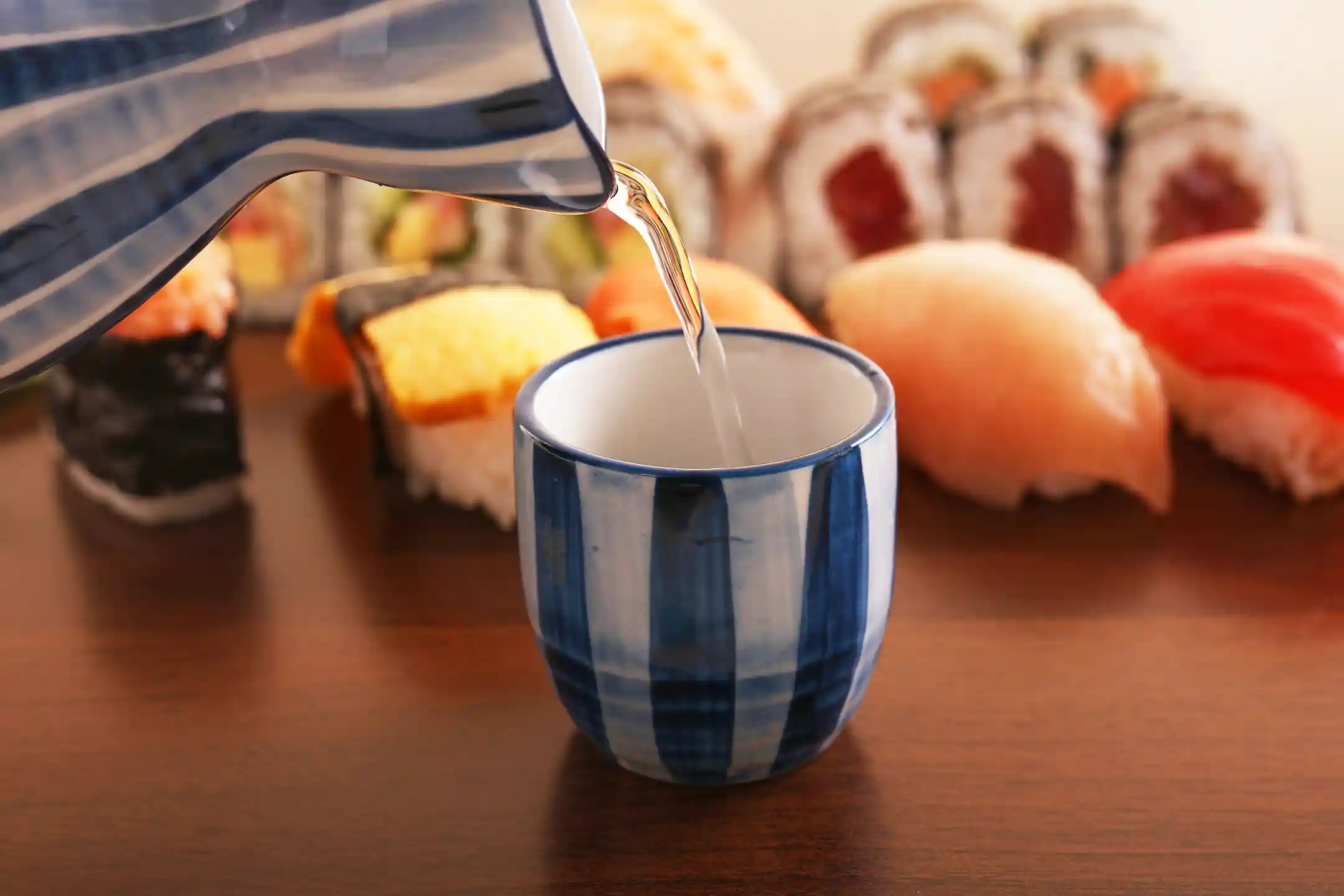
Sake and sushi are among Japan’s signature food pairings. Their compatibility isn’t just habit or tradition—it’s supported by clear sensory logic and shaped by history. In this article, you’ll unpack why sake pairs so well with sushi through the mechanics of flavor, and explore the cultural connection that developed from the Edo period to the present.
You’ll also find a wide-ranging guide: the best sake styles for different sushi toppings, easy ways to enjoy sake and sushi at home or at conveyor-belt sushi, smart and polished etiquette at high-end sushi counters, plus common mistakes and how to avoid them. Once you see how deep the sushi-and-sake world really is, each piece you eat can feel more intentional—and more special—than ever.
The 3 Core Reasons Sake and Sushi Pair So Well
There are three core reasons sushi and sake are often called a “golden duo.” The first is that their fermentation-derived umami overlaps and amplifies, bringing out sushi’s flavors. Umami components found in seafood and rice are complemented by the amino-acid-driven umami created during sake brewing, so when you taste them together, the flavors gain depth and dimension(*1).
The second reason is the palate-reset effect created by acidity. The vinegar tang in sushi rice combines with sake’s moderate acidity and alcohol to rinse away lingering richness after fattier toppings(*2). That’s why your mouth can feel “reset” piece by piece, and you can clearly sense the delicate flavors of the next bite. The third reason is how freely you can adjust sake’s aroma and temperature. Sake can be enjoyed across a wide temperature range—from chilled to hot—and its aroma and body shift noticeably with temperature.
For example, when served chilled, the aroma stays restrained and the finish feels crisp, so it won’t interfere with the subtle character of light white fish. On the other hand, when gently warmed or served hot, its umami and aroma open up, giving it the presence to stand up to richer, more robust toppings(*2). You can also choose the intensity of aroma by selecting different sake styles, from brightly perfumed ginjo to calmer, more understated bottles—so you can tune your pairing to match the personality of the sushi in front of you. With these three factors working together, sake and sushi create a true synergy that makes each taste better than it would be on its own.
Cultural History: Why Sake and Sushi Became the Classic Pair
The sushi-and-sake combination isn’t simply “because people have always enjoyed them together.” There’s a sense of inevitability—something history itself shaped. Once you know the background, you’ll have better conversation at the sushi counter, and the flavors in front of you will feel even more layered.
Here, you’ll look at sushi’s evolution from its earliest form as a fermented food to Edomae sushi and the role alcohol played along the way; how Edo’s street-stall culture brought sushi together with warmed sake; and how modern innovations—refrigeration and ginjo brewing—expanded what sushi pairing could be.
From Narezushi to Edomae: Sushi’s Evolution and Sake’s Place Beside It
Sushi’s origins trace back to a preserved food made by lactic-acid fermentation of fish and rice: narezushi (fermented sushi). In the Nara and Heian periods, foods like funazushi (fermented crucian carp sushi) from Ōmi were recorded even as tribute items—proof of just how old and storied this tradition is. In those fermentation methods, rice was fermented to create acidity, which meant you had to let it sit for a long time.
In the Edo period, however, rice vinegar—closely tied to sake-making—became widely available, and people could add acidity without long fermentation. From around the 1680s, “hayazushi” (quick sushi) and oshizushi (pressed sushi) emerged in various regions, and in the early 19th century, akazu (red vinegar), made by acetic fermentation of sake lees, was developed. Using this, Edomae nigiri sushi was born.
At the time, sushi was a popular fast food served quickly at street stalls, and customers typically ate it standing. At these sushi stalls, people often enjoyed warmed sake (kanzake). In Edo, it was common to drink sake warmed for preservation and flavor, and it naturally matched the relaxed, unpretentious atmosphere of the stalls.
Because many nigiri toppings were seasoned with vinegar or soy sauce, with pronounced saltiness and acidity, warmed sake paired beautifully—refreshing the finish and warming the body. As sushi changed from a preservation method into nigiri, sake remained close by: as the source of a key seasoning (vinegar) and as a drink enjoyed alongside the meal.
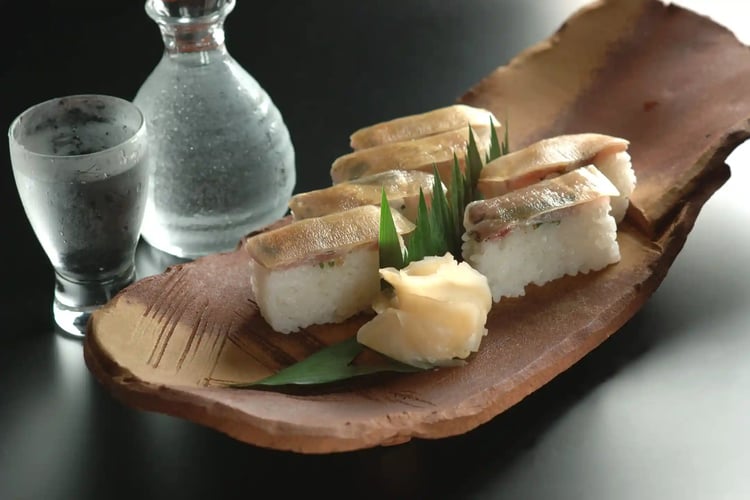
Edo Street Stalls and Warmed Sake: The Original “This Just Works” Moment
Edo-period sushi stalls were casual, approachable fast-food spots—but the sushi-and-sake combinations served there became the starting point of the pairing we still know today. The sake commonly drunk in Edo wasn’t the fruity ginjo style many people imagine now; it tended to be richer and drier. With limited preservation technology, warming sake became a practical habit to stabilize and enjoy it, and stalls would serve sake warmed in a hot-water bath.
For example, people likely developed simple but effective “rules of thumb,” such as gently warming sake to draw out umami for mild white fish, while pairing more intensely flavored toppings—like kohada brushed with sauce or simmered anago—with hotter sake that carried more body. Some even say sushi chefs and regulars would adjust the temperature of warmed sake to find “the state that best matches what you’re eating right now.” Those experiences in Edo’s stall culture helped nurture the tradition of “sushi with sake—enjoyed with temperature as a tool.”
There was no modern “food pairing theory,” of course. Yet people already knew the match through their senses: feeling comforted on a cold day by hot sake with a rich saba nigiri, or enjoying a clean, refreshing combination on a summer evening with sake at room temperature (hiya) and delicate white fish. In other words, they learned the harmony through lived experience.
How Refrigeration and Ginjo Brewing Transformed Modern Sushi Pairings
As time moved into the Meiji era, artificial ice became possible, and sushi topping freshness control improved dramatically. Toppings that had once been preserved by vinegar-curing or soy marination could now be served fresh, helping sushi spread beyond Edo to other regions. This shift changed sushi’s relationship with sake, too: as toppings became fresher and more delicate, people began preferring calmer, less intrusive sake that wouldn’t overpower the fish.
In the 20th century, sake entered an era of innovation as well. Sake competitions began in the late Meiji period, and regions competed to improve quality. Senzaburō Miura, in the Meiji 20s (late 1880s through the 1890s), researched and established a brewing method suited to Hiroshima’s soft water (the so-called soft-water brewing method / “7-9-10 method”), influencing the development of modern sake-making that ferments slowly at low temperatures.
In 1907 (Meiji 40), at the first National Sake Appraisal, Hiroshima sake received high acclaim. After the war, alongside rapid economic growth, the “tanrei karakuchi boom” arrived, and cleaner, crisper sake that matched lighter dishes gained strong support. As for rice-polishing technology, innovations such as vertical rice polishing machines were developed in the early 20th century, accelerating the use of highly polished rice.
Over time, other technical elements—temperature control, yeast selection, and more—accumulated, and ginjo sake moved toward broader commercial availability. In the 1970s, advances in temperature management and yeast technology helped ginjo brewing develop. Ginjo had once been sake made mainly for competitions, but by the 1980s it became widely available for sale, and in 1989, labeling rules for tokutei meishō-shu (special designation sake) such as ginjo were established under the “Seishu Manufacturing Method and Quality Labeling Standards.”
Today, at high-end sushi restaurants, it’s increasingly common for you to be offered pairings that change in small pours along the flow of an omakase course. From ginjo served in a chilled glass so you can savor the aroma, to junmai at room temperature for aged toppings, and finally warmed sake to finish with a comforting glow—thanks to refrigeration and ginjo technology, the ways you can combine sushi and sake have expanded dramatically. You can keep the traditional appeal of “sushi with warmed sake” while also enjoying the refined, varied pairings that feel distinctly modern.
Taste Science Behind the Sake and Sushi Pairing Equation
What supports the harmony between sushi and sake is taste science. If you analyze the pairing through five axes—umami, acidity, sweet/dry balance, aroma, and temperature—you start to see clear criteria for choosing well. This is a world of nuanced matching that can’t be captured by a simple assumption like “sushi equals dry sake.”
Once you understand how each element influences sushi’s characteristics, you can build your own personal pairing equation. In this section, you’ll explore the logic linking sushi and sake through umami synergy, the balance between acidity and sweetness/dryness, the intensity of aroma, and the impact of temperature.
Umami Synergy: Seafood Umami × Sake’s Amino Acids
When you pair sushi with sake and think, “This tastes twice as good together,” you’re often experiencing umami synergy. Sake is widely known for having a relatively high amino-acid presence compared with many other alcoholic drinks, and those amino acids themselves act as umami components.
For example, when glutamic-acid-rich umami derived from rice koji meets nucleotide-based umami such as inosinate found in seafood, the human palate is known to perceive umami far more intensely. In fact, there are reports that broth made by combining kombu dashi (glutamate) and katsuobushi dashi (inosinate) can have umami strength 7–8 times greater than either broth on its own.
With sushi, umami compounds in the seafood topping, nori, and soy sauce combine with sake’s amino acids to draw out each other’s savoriness. If you take a bite of lean tuna and then a sip of sake, the amino acids in the sake can “lean into” the fish’s umami, making it feel richer and more profound.
Sake is also rich in organic acids (such as succinic acid), which relate to perceived savoriness as well; when they combine with the umami present in sushi toppings, the flavor gains thickness and structure. This overlap of umami resonates with Japan’s dashi culture—and it’s a major reason sushi and sake feel like an intuitive match without you needing to overthink it(*1).
It’s also said that sake’s amino acids help bring out fish-specific umami. In practice, the diverse organic acids in sake can soften fishy odors, while amino acids lift the fish’s savory character—so when paired with fish dishes, both sides can taste even better(*1).
How to Read Acidity and Sweet/Dry: Sake Meter Value Alone Doesn’t Decide Sushi-Friendliness
When you think about choosing sake for sushi, it’s easy to assume “dry is always best.” It’s true that crisp, dry sake often pairs beautifully with sashimi and sushi, and some junmai labeled “super dry” are praised for matching lean red fish or oily blue fish(*2).
However, simplifying it to “the higher the sake meter value (a sweet/dry indicator calculated from specific gravity), the better it pairs with sushi” is a mistake. The sake meter value is only a rough guide to sugar content; the overall impression changes dramatically depending on its balance with acidity and amino-acid level.
For instance, even with a positive sake meter value, if amino acids are high you may perceive sweetness and richness on the tongue. Conversely, even if the sake meter value is negative (sweeter), high acidity can make it feel surprisingly clean. In fact, some people say from experience that sake with acidity above 2.0 can feel not particularly sweet even when the sake meter value is negative.
When you consider compatibility with sushi, don’t focus only on “dry vs sweet”—pay attention to the strength and type of acidity the sake carries. Acidity counters sweetness and saltiness on the palate and helps define flavor contours. For example, if you pair a sweet sake with fatty, naturally sweet toppings like toro or salmon, the combined sweetness may feel a bit heavy or cloying(*3).
In that case, switching to a sake with moderate acidity can help: the acid rinses away the fat and tightens the sweetness. On the other hand, for salty, strongly seasoned items like kohada (silver-skinned fish) or soy-marinated ikura, dry sake can add a refreshing lift and create balance with the salt. Because the overall impression is so strongly shaped by the balance of acidity and sweet/dry character, the key to success is to judge holistically rather than relying on a single number on the label.
Also, there are various opinions on how to categorize sake meter value ranges. For example, some define +3.5 to +5.9 as “dry,” and +6 or higher as “very dry,” but these are only guidelines(*3). Even at the same +6, flavor differs by bottle—so in the end, it’s smart to check the back label for acidity, amino acids, alcohol percentage, and other components as well.
Aroma Intensity: How to Aim Ginjo Aromas and Aged Aromas at Sushi
Sake’s aroma varies widely by style, and it can steer the entire direction of your pairing. Fruity, vivid ginjo aromas are compelling on their own—but if the aroma is too strong, it can cover up the delicate fragrance of subtle white fish.
By contrast, gently scented junmai sake or koshu (aged sake) with mature aromas often has less “self-assertion,” which can help highlight the topping’s individuality. So how should you think about aroma as a pairing criterion for sushi? The key is balancing “the strength of the food’s aroma” with “what you want to enjoy most.”
For neutral, lightly aromatic toppings—white fish, squid, shellfish—choosing a sake with similarly restrained aroma is the safe, reliable move. A calm junmai ginjo or honjozo won’t interfere with the natural scents of the rice and topping, and you’ll get an elegant harmony(*4).
%2c%20Ochoko%20(Cups)%2c%20and%20Rice%20Ears.webp?width=750&height=500&name=Japanese%20Sake%20with%20a%20Tokkuri%20(Carafe)%2c%20Ochoko%20(Cups)%2c%20and%20Rice%20Ears.webp)
On the other hand, for blue fish with a stronger inherent aroma, or toppings with roasty notes like smoked items or soy-marinated preparations, it can be interesting to pair a sake with a moderate ginjo aroma. In an “aroma × aroma” pairing, each side can elevate the other’s character. In fact, some point out that aromatic ginjo-style sake may help soften the stronger odors of fish like sardine or mackerel. Still, when you pair with a highly aromatic sake, it’s wise to keep pours smaller and reset your palate with water or gari (pickled ginger) in between.
To avoid “aroma fatigue,” another technique is switching vessels mid-way. After enjoying fragrance fully in a wine glass, pouring the same sake into an ochoko can make the aroma feel gentler, bringing freshness back to your palate.
In reality, the shape of the vessel changes how you perceive aroma: a narrow-mouthed glass concentrates scent, while a wide-brimmed hirazake (flat cup) disperses it. If you use the former for aromatic ginjo, and the latter for calmer junmai or aged sake, each bottle’s strengths stand out more clearly.
In sushi pairing, a helpful question to guide you is: “For this topping, do I want to add aroma for extra enjoyment—or keep it down and let the ingredients speak?” Ultimately it comes down to your preference, but when you’re unsure, returning to the basics helps: use a gently aromatic sake as your foundation, then bring in more aromatic bottles as accent points when needed. That approach will keep you from major misfires.
Temperature Is Seasoning: How Chilled, Room Temp, and Warmed Sake Change Outline and Finish
Sake temperature influences taste and aroma so strongly that calling it “seasoning you drink” is hardly an exaggeration. Even the same bottle can feel almost like a different drink when served chilled versus warmed.
When pairing with sushi, chilled sake or room temperature is often said to be the safe choice—but by changing temperature based on the topping, your pairing options expand dramatically. A simple framework is: “cooler for delicate toppings, warmer for stronger toppings.”
For example, chilled sake is recommended for white fish like hirame (fluke) or tai (sea bream). When served cold, the mouthfeel becomes clearer and the finish cleaner, so it refreshingly highlights the subtle sweetness of white fish or the umami of kombu-jime.
Conversely, for sushi with naturally powerful umami—like saba or maguro—it can be surprisingly effective to warm the sake, from hitohada-kan (body-temperature warm) up to atsukan (hot). Warming opens up sake’s umami and generous aroma, allowing it to harmonize with fatty, richly flavored toppings without being overwhelmed. With chutoro, for instance, warmed sake can melt into the fat, leaving a comfortable sweetness in the lingering finish.
Temperature also changes how you perceive spiciness/dryness and sweetness. Generally, chilling tends to make sake feel drier and sharper, while warming makes sweetness and umami feel stronger—so you can fine-tune based on the seasoning of the topping. For example: sharp and clean chilled sake for white fish eaten with salt; slightly mellow nurukan (gently warm) for soy-forward zuke maguro, and so on. Seasonal factors matter, too.
In summer, you might refresh yourself with chilled ginjo while enjoying seasonal hamo or kohada; in winter, hot sake with winter yellowtail or simmered anago can warm you from the core. Temperature is truly a “sixth seasoning,” a crucial element that lets you shape the sushi-and-sake relationship however you like. Even with one bottle, try it at different temperatures and look for the sweet spot. You’ll likely discover something that doesn’t feel like “the same sake, the same sushi” at all.
How to Choose Sake That Matches Sushi: Pick Confidently by Type
Sake comes in many styles with different aromas and flavors—and sushi toppings are just as diverse. Memorizing every possible combination is a lot, but if you grasp the compatibility between broad categories, you’ll have a clear guide you can rely on.
Here, you’ll break sake into several types and learn the traits that make each one easier to pair with sushi. By understanding the patterns of “what tends to work well with what,” you’ll be able to choose the best bottle for your preferences and the moment you’re in.
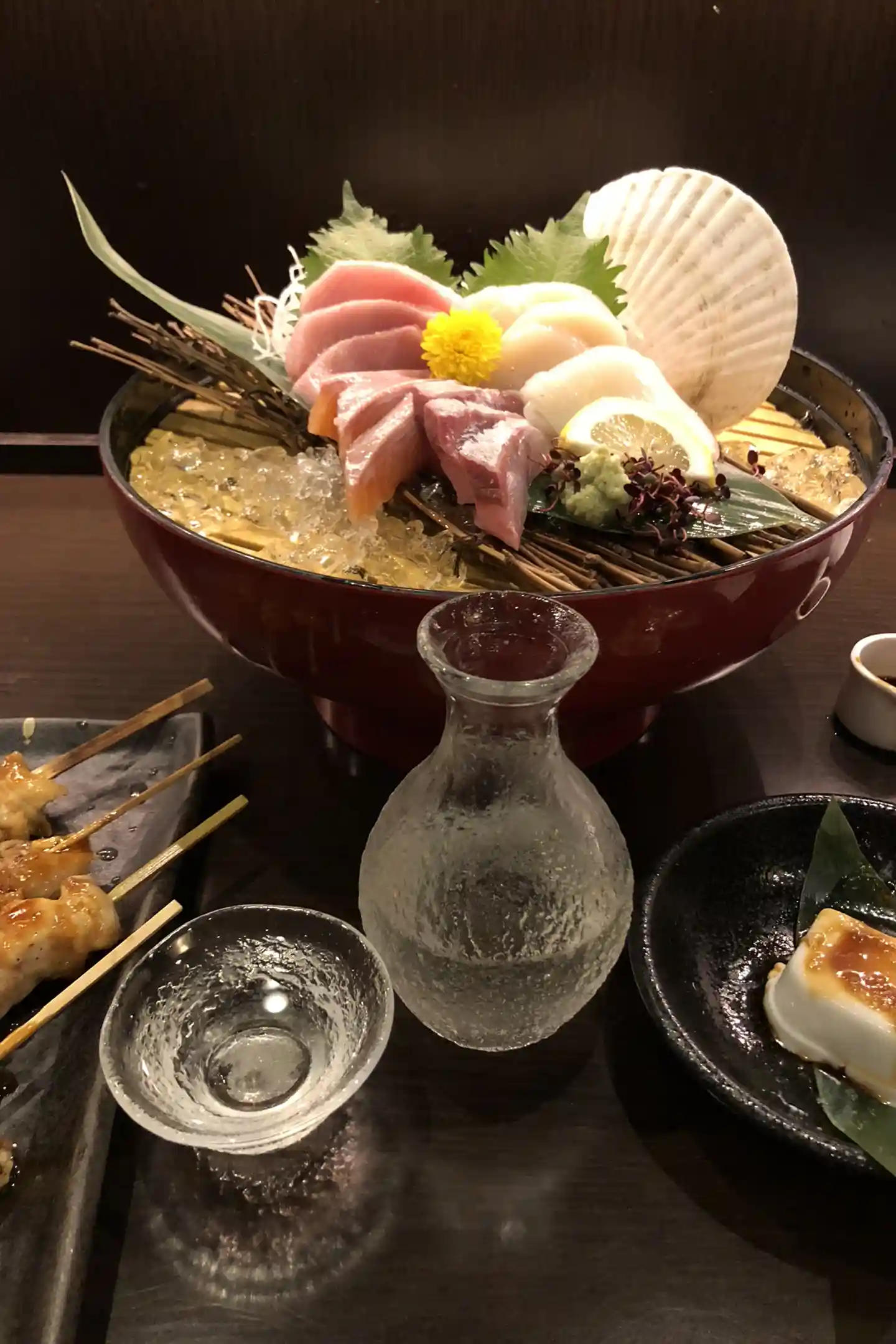
Low-Aroma and Versatile: Junmai, Tokubetsu Junmai, and Honjozo
If you want something that pairs easily with a wide range of sushi, reach for junmai or honjozo—styles with gentle aroma and a solid sense of rice-derived umami. These tend to prioritize body over fragrance, which makes them less likely to interfere with the delicate scents of the rice and topping.
For example, junmai that carries a calm aroma reminiscent of freshly cooked rice, plus deep rice-born savoriness, is famously compatible with many foods—and sushi is no exception(*1). If you order an assorted nigiri platter with many different toppings and wonder what to start with, choosing junmai or honjozo as your first glass is a safe move that rarely goes wrong.
Sake labeled tokubetsu junmai or tokubetsu honjozo often reflects an extra layer of care in ingredients or method. Many of these bottles remain low in aroma while drawing out rice umami beautifully. They can support everything from white fish to red fish, from tamagoyaki to shellfish to rolls, staying all-around and dependable.
In practice, junmai’s rice umami is said to bring out the natural savoriness of tuna or bonito, and crisp, dry junmai or honjozo is often said to reset and harmonize the vinegar notes of silver-skinned fish. These junmai/honjozo styles also handle warming well, and it’s fun to watch their expression change with temperature.
Chilled they feel clean; at room temperature they soften; warmed they broaden—so they can feel like “three delights in one.” When ordering at a restaurant, you can even say, “Let’s try it chilled first, and later could you warm it?” That way, you can keep pairing through the meal without getting bored, even with just one bottle.
Because the aroma is gentle, you’re less likely to feel tired after the second and third sips, making these true “ideal mealtime sakes.” Many sushi regulars and sake-savvy staff even recommend starting with junmai as your first choice. It’s worth remembering sake and sushi—and especially “sushi and junmai”—as a reliable, classic combination.
Bright and Delicate: When to Use Ginjo and Daiginjo
Ginjo and daiginjo shine with fruit-like, elegant aromas and a smooth, refined mouthfeel. At first glance, you might think sushi’s subtle flavors would be overwhelmed—but when used well, ginjo can act like a refined spice that elevates sushi.
When you’re savoring delicate white fish or shellfish, letting a light veil of ginjo’s fruity aroma mingle with the food can make the whole experience feel more graceful. Pair a ginjo with a green-apple-like aroma with hirame kombu-jime, for instance, and you may find the aroma creates a fresh harmony through the nose, leaving a cool, clean finish.
For shellfish with a seaside minerality—like akagai or mirugai—the brightness of ginjo can add color and lift to that oceanic character. The key caution is aroma intensity. Pairing daiginjo with every single piece of sushi isn’t the best strategy; when the fragrance dominates, you’ll want to pour smaller amounts or drink more sparingly. As a baseline, try a more restrained ginjo for lighter toppings, and bring out a boldly aromatic daiginjo for more distinctive toppings or for side dishes (tsumami) where it can really shine.
In fact, light and clean ginjo is often said to pair well with white fish or squid, while ginjo styles are also said to help soften the stronger odors of blue fish. Experience supports this, too: there are cases where daiginjo served in a hinoki-scented cup (which slightly suppresses aroma) paired with tai and made its sweetness stand out, and other cases where a highly aromatic chilled daiginjo paired with aji namerō, and the two flavors lifted each other. It comes down to balance and judgment.
Another key to enjoying ginjo with sushi is temperature control. If you want the aroma to sing, chill it well and use a wine glass; if you want the aroma more restrained, let the temperature rise a bit and use an ochoko—control it to match the scene. In that spirit, if you go with a group, you can even ask for the same ginjo in two servings—one chilled and one at room temperature—and compare.
Chilled for delicate sushi toppings, room temperature for fragrant grilled bites like aburi or saikyo-yaki-style side dishes—one ginjo can show multiple faces, and that’s part of the fun. Overall, as long as you don’t misjudge the moment, ginjo and daiginjo can become a tasteful supporting actor that elegantly frames sushi.
Staying Close with Umami and Acidity: Kimoto, Yamahai, and Low-Temp Aged Sake
Among sake styles, kimoto-based sakes (including yamahai) with firm acidity and deep richness, as well as low-temperature aged sakes (koshu) that gain umami over years, are known for their “information-rich” flavor. Often described as full-bodied and dry, they can feel powerful on their own—but with sushi toppings that carry heavier flavors, they show their real strength.
Think of toppings like soy-marinated maguro, sauce-brushed simmered anago, intensely rich uni, or ikura—pieces packed with saltiness, sweetness, and umami. With these, kimoto or yamahai junmai can work beautifully. Kimoto-style sakes often carry mellow lactic acidity and abundant umami, and sometimes even aromas reminiscent of aged cheese or nuts. So if you pair one with vinegar-cured kohada or pressed saba sushi, the acidity from the vinegar and the acidity from kimoto can meet smoothly, lifting the fish’s savoriness even more(*1).
A gently warmed yamahai can also be outstanding with shellfish rich in succinic acid, with enough umami weight to stand up to the roasty character of grilled hamaguri, for example(*1). Low-temperature aged koshu may surprise you with its amber color, but its flavor can carry a depth and sweetness reminiscent of Shaoxing wine or sherry, making it a natural partner for sauce-glazed anago or sweet-savory tamagoyaki.
There’s also a general idea that full-bodied sake pairs well with strong umami in red fish, and particularly that tuna’s umami and junmai’s umami complement each other. On the other hand, when a dish is extremely umami-heavy, it’s also said you can intentionally aim for a “wash effect” by choosing a very light, clean sake to rinse the palate.
With sushi, that means if otoro is intensely fatty, you might even choose an ultra-light sake to sweep the fat away. In other words, bold kimoto/aged styles create powerful umami synergy with sushi’s heavyweight toppings, raising the presence of both sides. For “information-rich” flavors—dark soy sauce depth, fish roe salinity, aburi char—try pairing with a sake that’s equally layered. You’ll likely find a rich, mutually elevating marriage waiting for you.
And because these sakes gain even more depth with temperature changes, you should absolutely try them warmed as well. Especially with koshu, warming can bring out a syrupy sweetness, leaving an unforgettable finish when paired with anago brushed with nikiri soy sauce.
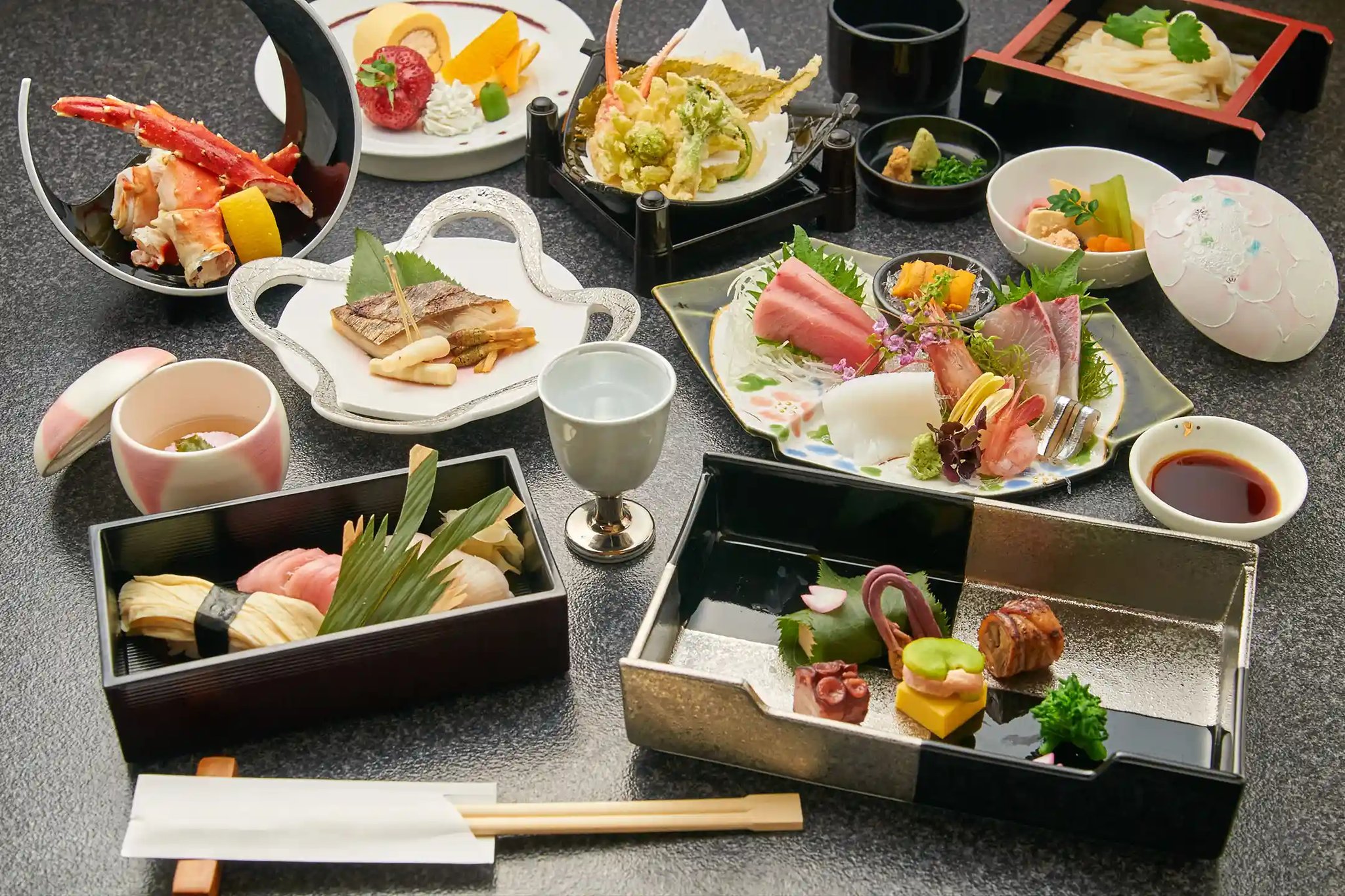
Surprisingly Great Wild Cards: Sparkling, Nigori, Kijoshu, and Koshu
Finally, let’s touch on unconventional sake styles. These include sparkling sake with carbonation, nigori with visible rice particles, kijoshu (a sweet sake brewed using sake instead of water in the fermentation), and long-aged koshu. At first glance, they might seem like they wouldn’t match sushi—but depending on the topping, they can click in surprisingly satisfying ways.
For example, fizzy sparkling sake can be fantastic with fish roe like ikura or kazunoko, where the popping texture echoes the bubbles. The carbonation softens saltiness and keeps the finish light. In other words, while fatty dishes may call for either light/clean or aged styles, salt-driven toppings like ikura can benefit from a light sparkling sake that acts as a palate cleanser.
Nigori has thick rice sweetness and richness, but if you take a small sip and then bite into uni, the creamy sweetness of uni and the silky sweetness of the sake can intertwine into an exquisite “sweet-umami” experience. The key is quantity—keep it modest. Many nigori are slightly sparkling, so chill it thoroughly and enjoy it in small sips, almost like an aperitif. Kijoshu, with its honey-like sweetness, is often thought of as a dessert sake—but unexpectedly, it pairs beautifully with tamagoyaki.
If you finish an Edomae meal with sweet, thick omelet, letting just a drop of kijoshu mingle can elevate the egg’s umami and dashi character into something like dessert wine. Kijoshu is also said to pair with blue cheese, and in the spirit of fermented-on-fermented combinations, some connoisseurs even enjoy it with shiokara or shutō (though that’s a tangent, since it isn’t sushi).
As mentioned earlier, koshu can match anago, simmered fish, smoked toppings, and creamy uni with a port-wine-like balance of sweetness and acidity. For instance, if you take a 15-year-aged koshu at room temperature and place a single drop onto saltwater uni, the aged aroma can nestle into uni’s rich savoriness, transforming it into something like a deeply flavored Japanese bouillabaisse.
Distinctive sakes can sometimes function like seasoning in their own right. In the world of sushi, this can feel less orthodox—yet with creative sushi or sushi at a home party, these playful pairings are absolutely worth trying. An unexpected match might lead you to a new favorite.
Quick Reference: Recommended Sake and Sushi Pairings by Topping
One of sushi’s great pleasures is its seasonal variety of toppings. Here, you’ll find representative toppings paired with compatible sake styles, plus a one-line description of the flavor effect you get from each match. Use these as handy conversation starters at the counter when you ask, “What would you pair with this piece?”
Sake That Pairs with White Fish (Tai, Hirame, Suzuki)
Recommendation: light, dry ginjo or a nimble honjozo – For refined, mild white fish, the foundation is a sake with a clean, crisp profile. Among ginjo and honjozo, types with bright acidity can lift white fish’s delicate sweetness without getting in the way. If you pair a fresh ginjo with tai kombu-jime finished with a squeeze of citrus, the lemon-like acidity can harmonize beautifully, leaving a sharp, satisfying finish.
With heavier junmai, there are times when the sake’s umami steps forward too much and the fish feels quieter by comparison. The rule of thumb for white fish × sake is to keep it light and sharp—especially effective when you eat white fish sushi with salt.
Sake That Pairs with Shellfish (Hotate, Akagai, Mirugai)
Recommendation: umami-forward junmai or gently warmed kimoto/yamahai – Shellfish carry subtle sweetness and a distinctive seaside aroma. With sake, you can bridge that sweetness and soften the aroma in a pleasant way.
For sweetness like scallop adductor muscle, pairing at room temperature with a junmai rich in rice umami lets both sides’ sweetness expand. For the oceanic character of akagai or mirugai, a gently warmed yamahai is recommended. Yamahai’s lactic acidity can soften shellfish aromas while highlighting the umami that emerges the more you chew(*1).
Shellfish dishes are also sometimes served with lemon or ponzu, and similarly, honjozo or ginjo that carries a citrus-like acidity can help reduce fishiness as well(*1). For example, chilled dry ginjo with tsubugai sashimi can leave an impressively clean finish. The shellfish minerality and sake’s depth reinforce each other, creating a quietly nourishing, savory combination.
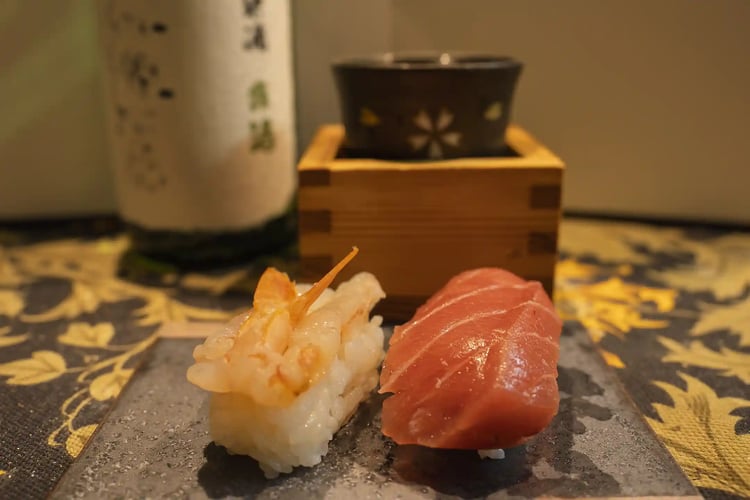
Sake That Pairs with Silver-Skinned Fish (Kohada, Aji, Saba)
Recommendation: dry junmai ginjo with firm acidity, or crisp honjozo – “Hikarimono” (silver-skinned blue fish) toppings are often vinegared, or served with ginger and scallion. In other words, acidity and aromatics are central. Sake that has noticeable acidity or a clean dry profile tends to match best.
For vinegar-cured kohada, a sharp, dry junmai ginjo can harmonize acid-to-acid while sharpening the finish even further. For pressed saba sushi, lightly warming a honjozo to wash away fat is also an excellent move. When served warmer, sake’s dryness stands up and it can quickly sweep lipids off your tongue, so you meet the next bite with a fresh palate.
For items seasoned strongly with aromatics—like aji or iwashi namerou—sake with a lively ginjo aroma can also work. The bright aroma can soften the stronger fish notes, and together with ginger or shiso, it creates a complex yet comfortable flavor.
And because silver-skinned fish is all about freshness, pairing with fresh nama-zake (unpasteurized sake) can be especially satisfying—their “juiciness” can feel in sync.
Sake That Pairs with Red Meat (Maguro / Tuna)
Recommendation: umami-focused junmai, or a calm aged sake – Lean tuna is practically concentrated umami. So your sake approach can go two ways: choose a sake with enough umami to stand beside it, or go lighter and let the tuna shine through subtraction.
The classic choice is junmai. Its rice umami can pull more savoriness from the tuna, and its moderate body matches the volume of lean red meat. Especially when paired with junmai at a temperature close to room temp, the umami from both sides can fuse on your tongue, and the slow, expanding richness is hard to beat.
On the other hand, for zuke tuna or soy-forward lean tuna, adding a small amount of aged koshu or a sake with cedar barrel notes can create an intriguing effect. For example, if you place a drop of darker koshu onto lean tuna, it can add depth like a wine sauce—an indulgent little marriage.
To avoid excessive fragrance, it’s generally safer to avoid sake with very strong ginjo aroma. Tuna itself isn’t especially aromatic, so if the sake becomes perfume-like, the fish flavor can fade. That’s why calm, umami-rich junmai remains the standard.
Also, tuna tastes differ by cut. For lean meat, junmai works as described; for toro, you’ll want a different strategy (covered next). Still, with a “royal road” topping like tuna, the best answer is often not to chase novelty: meet it with a classic sake that supports the ingredient’s quality head-on.
Sake That Pairs with Chutoro and Otoro
Recommendation: think in two choices—cut with acidity, or wrap in sweet-umami – Chutoro and otoro bring the pleasure of luxurious fat, but they can also leave weight on the finish. This is where sake’s acidity and sweetness come into play.
For the “cut with acidity” approach, a light, dry sake is ideal. Especially crisp honjozo or clean junmai ginjo can wash fat from your mouth while leaving behind toro’s umami. Take your toro bite, then immediately follow with a sip of sharply chilled dry sake—your palate will feel refreshed for the next piece.
For the “wrap in sweet-umami” approach, a slightly sweet sake that stays close to toro’s sweetness can work. For example, if you warm a yamahai junmai to nurukan, sweetness and richness increase and can harmonize with toro fat. Or you can go bold and take a small sip of a sweet sake like kijoshu and let it season your mouth—toro fat and sweet sake can unify into a dense finish, almost like you’re eating a tuna rillettes.
One caution: if you use sweet sake, watch the quantity. Sweet × fat can become heavy quickly, so keeping it to a very small amount is the trick. Even among professionals, opinions split on toro strategy. Some say, “Pair otoro with Champagne (sparkling wine),” while others say, “No—use hot sake to melt the fat.” Even within the range of sake, there isn’t just one correct answer. It can be fun to prepare two kinds of sake for two toro pieces and find what you personally love.
For chutoro, you might start with a clean style, then switch to a richer style for otoro—adding contrast lets you enjoy two approaches in a single course. The key is definition: do you want your sake to stand up to the fat, or fully embrace it? Choosing sake for toro is a moment to show your pairing skills.
Sake That Pairs with Uni (Sea Urchin)
Recommendation: junmai with gentle sweetness, or kijoshu/nigori as an accent – Uni, sometimes called “milk of the sea,” is defined by rich sweetness and a seaside aroma. High-quality uni (like saltwater uni) can be especially sweet, so sake with soft sweetness tends to match well.
For example, pair an umami-forward junmai that carries a faint rice sweetness with uni while chilled: the sweetness of uni and the sweetness of the sake can melt together, leaving a softly nectar-like impression in the finish. It’s also said that sake can “wrap” the aroma of roe and seafood in a way that makes it even more compatible than wine.
In uni pairing, choosing a sake with that kind of embracing character is key. Specifically, koshu with aged sweetness or very sweet kijoshu can pair beautifully with uni. If you add just a tiny spoonful of kijoshu or a single drop onto uni and eat it, the flavor can become intensely concentrated—almost like uni marinated in soy. But because kijoshu is extremely sweet, once again, keeping it to a small amount is the best move.
The same applies to nigori: with uni gunkan, for example, taking only one small sip from a guinomi as an accent can be effective. With creamy uni, nigori’s thickness and gentle fizz can create a rich feel—something like “Japanese sparkling × uni pasta,” but translated into sushi form.
Uni-and-sake can feel like an advanced pairing, but in reality, uni has long been one of the peak companions for sake. Try eating uni with salt instead of soy sauce, then follow with sake—the sweetness can expand dramatically. With your favorite uni as the centerpiece, explore and find your personal “uni-sake” match.
Sake That Pairs with Ikura (Salmon Roe)
Recommendation: sparkling sake or junmai with lively acidity – Ikura (often soy-marinated) concentrates saltiness and umami. So you want a sake that can refresh your mouth.
Your first option is sparkling sake. The bubbles soften ikura’s salt, and together with the popping texture, the pairing becomes genuinely fun. Sparkling sake isn’t only an aperitif—it can also serve as a palate break for salty dishes. If you eat ikura gunkan and sip sparkling sake together, the carbonation can wash away soy sauce, leaving a finish that feels surprisingly light.
Your second option is a dry sake with strong acidity. For example, even a super-dry junmai with a sake meter value of +10 or higher can still feel clean and tight if acidity is elevated, washing away oil and bringing everything into a crisp conclusion. Sweeter sake with a negative sake meter value is generally safer to avoid. Ikura already has a sweet-salty character; if the sake is sweet too, the whole pairing can feel heavy (and in this sense, while sweet kijoshu can be great with uni, it tends not to match ikura as well).
Also, in Hokkaido there’s a habit of eating ikura with white rice, and it’s sometimes said that local crisp dry sakes like “Kunimare” or “Otokoyama” pair especially well (salt and dry in ideal balance). As sushi, ikura gunkan also brings the aroma of nori, so pairing with a light ginjo that complements nori’s toasted fragrance can also be delicious.
Either way, the keywords for ikura are “reset and refreshment.” Choose a sake that doesn’t leave salt lingering after you swallow—a sake that makes you want to reach for one more piece.
.webp?width=750&height=500&name=Masu-zushi%20(Pressed%20Trout%20Sushi).webp)
Sake That Pairs with Anago, Tamago, and Rolls
Recommendation: warmed sake, aged sake, or gently sweet junmai that stays close to sauce and sweetness – For sweeter toppings like anago kabayaki or tamagoyaki, decide whether you want to amplify the sweetness or cut through it. For nigiri with plenty of anago tsume (sweet soy glaze), warmed sake with aged aromas pairs especially well. For example, if you warm a 3-year-aged koshu to hitohada-kan, its caramel-like toastiness can blend with the sauce, creating a rich feeling reminiscent of teriyaki with Shaoxing wine.
On the other hand, tamagoyaki can surprisingly fit with a sweeter junmai. The egg’s gentle sweetness resonates with rice sweetness, letting you finish almost in a dessert mood. In fact, while it’s common not to pair sweet sake with mild sushi, when the topping itself is strongly sweet—like tamago—sweet sake is said to work well.
For rolls, it depends on the filling. For kanpyo-maki with sweet-savory flavor, choose a slightly sweet sake; for tekkamaki where tuna is the main note, choose something cleaner; for unusual rolls like natto-maki or ume-shiso, pick a sake that stays close to each distinct aroma. With rolls where nori fragrance is strong, you can also amplify that toastiness with warmed sake. For example, pairing nori with taruzake (sake carrying cedar barrel aroma) can be fascinating—your mouth fills with distinctly Japanese fragrance.
Sake also relates to supporting elements like miso soup and gari. If sweetness lingers after anago or tamago, tightening the finish with a dry “chawan-zake” can be its own pleasure. The key is to watch overall balance and adjust like a seesaw—sweet to dry, rich to light—so you can enjoy the full meal without fatigue.
By Scene: Practical Sake and Sushi Tips for Conveyor-Belt, Home Sushi, and Temaki Parties
Putting sushi-and-sake pairing into practice isn’t limited to high-end restaurants. Even at everyday conveyor-belt sushi, supermarket sushi, or a casual temaki party at home, a few small tweaks can help you find a great match. Here, you’ll get easy, low-risk tips for each light, approachable scenario.
Start Small and Try Different Temperatures to Understand Compatibility
When you first pair sake with sushi, you don’t need to open a full 1.8-liter bottle. Trying small amounts at different temperatures is the best approach. At conveyor-belt sushi, for example, you can order one small carafe (or a single glass), enjoy it chilled in the first half, then ask the staff to warm it partway through—giving you two experiences from one sake.
It becomes easy to discover things like, “This topping works when it’s cold, but that topping shines when it’s warmed,” and even if something doesn’t click, the “damage” (so to speak) stays minimal. At home with temaki, you can prepare a few small bottles—300 ml or 180 ml—and set up a three-tier plan: refrigerator, room temperature, and a small warming pot. You’ll be surprised how close it can feel to a restaurant’s temperature-based pairing.
Especially if you’re new to sake pairing, you’ll want to feel firsthand just how dramatically flavor changes between chilled and warmed. Then you naturally start building your own internal data: “This topping tastes better with it cold,” “That one really likes it warm.”
When you spend one meal exploring a single sake while changing its temperature, your pairing sense improves without forcing it. Budget-wise, it can be as simple as buying two “one-cup” junmai sakes at around 500 yen each—one for chilled, one for warming.
If you do it with family or friends like a mini tasting session, it becomes a fun event in itself. Sake can be cooled back down once it drops in temperature, and kan-samashi (warmed sake that has cooled) has its own charm, too. Don’t rush—go in small steps, almost like an experiment, and you’ll naturally get a feel for what works.
Soy Sauce, Sauce, and Wasabi Change the Pairing
Sushi comes with seasonings: soy sauce, tare (sauce), and wasabi. In reality, the intensity of these seasonings changes how well a sake matches. For example, zuke tuna heavily dipped in soy sauce becomes salt-forward, so pairing with a dry sake that keeps things clean is the standard.
On the other hand, if you eat white fish sushi with salt, a gently sweet sake can still highlight the ingredients beautifully. In other words, even just the amount of soy sauce can change what the “best” sake is. Similarly, anago brushed with sweet-savory tsume can pair well with a sake that has acidity to tighten the sauce—but if you ask for only half the sauce, sweetness drops and your range of possible sakes widens.
Whenever you can adjust seasoning to your preference, try doing it with sake pairing in mind. At some conveyor-belt sushi spots, you’ll find salt, ponzu, or lemon alongside soy sauce. For instance, salt × sake can feel unexpectedly elegant: sprinkle salt on white fish and pair with junmai, and you may find the delicate umami of both fish and sake stands out more clearly.
Salmon or shrimp also sometimes pair well with a Western-style touch like olive oil + salt, and in that case, a ginjo with noticeable acidity can harmonize almost like white wine. Wasabi works the same way. Strong wasabi often calls for dry sake that won’t be pushed around, while kohada without wasabi may match a sake with gentle sweetness.
If you’re doing temaki at home, it can be fun to set out soy sauce, salt, ponzu, olive oil, and more—then explore which sake works with each. Sushi flavor varies wildly depending not only on topping and rice, but also on seasoning. If you pay attention to seasoning—the “director” of intensity and direction—your sake choices become far more accurate.
How to Choose Sake for Supermarket Sushi
When you enjoy sushi from a supermarket or department-store food hall at home, what sake should you choose? The key is three points: “low aroma, acidity to tune the palate, and not too heavy.” Compared with freshly made sushi, packaged sushi can sometimes have rice that feels a bit dry or toppings that release moisture.
So if you pair it with a very flamboyant sake, imperfections can stand out. Also, because it sits in a pack longer, vinegar and seasoning liquids can feel more integrated and stronger. So first, choose a gentle-aroma junmai or honjozo and let the sushi’s flavor come forward. If it feels too quiet, you can always adjust later with condiments.
Next, choose a sake with acidity. Especially with chirashi or rolls (rather than nigiri), there’s often more rice that lingers on your tongue, so acidity that cleans the palate becomes useful. If you chill an acidic yamahai junmai or kimoto-style sake, it can refresh the stronger seasoning typical of supermarket sushi. “Don’t make it too heavy” also matters.
Because this is casual sushi meant for easy enjoyment, it’s often better to choose something light and drinkable rather than a koshu with very strong aged aroma or a high-alcohol genshu. Concretely, a versatile choice is around 15% alcohol with a sake meter value around +3 to +5—something like a medium-dry junmai. As for recognizable examples, Niigata-style light dry sake, or a classic easy-drinking bottle like “Kubota Senju (Ginjo),” is often said to pair with many toppings without fuss(*2).
Recently, you can also find sparkling sake at convenience stores and supermarkets. That fizzy sensation can reset your mouth with just a sip, acting like a convenient palate break. Buy an affordable conveyor-belt sushi set, then pair it at home with whatever sake you like—this alone becomes excellent practice. Don’t overthink it. Start with the sushi closest to you, and you’ll likely discover your own “This works!” combinations.
High-End Sushi: How to Order Sake and Mind Your Manners During Omakase
When you enjoy an omakase at a high-end sushi restaurant you’ve long admired, you might feel unsure about how to order sake or what etiquette to follow. Naturally, you want to carry yourself smoothly and savor the sushi-and-sake pairing at its fullest. In this section, you’ll learn practical points—from basic counter behavior to question ideas that deepen your pairing, to how to think about glassware—so you can leave a refined impression while enjoying yourself completely.
Counter Basics: Temperature, Tempo, and Being Considerate About Photos
At a high-end sushi counter, every small action carries a sense of poise. First, eat in rhythm with the chef’s tempo. Sushi served immediately after it’s formed is all about freshness, so when a piece is placed in front of you, it’s elegant to eat it right away—even if you’re mid-conversation. If you leave it sitting for minutes, the rice can dry out and the topping temperature can drop, and the intended experience can be lost.
Also, adjust your drinking pace to match the service flow. Drinking too slowly and making the sushi wait—or eating quickly and leaving too much sake behind—both disrupt the beauty of the sequence. The ideal pace is to let your sake decrease steadily as well, taking one or two sips to reset each time a new piece arrives. It’s also a good idea to confirm the restaurant’s approach to temperature.
For example, if a restaurant says, “We serve sake at different temperatures to match the food,” it’s smarter to trust them rather than specifying details yourself. If you do have preferences, telling them upfront—“I’d love to try a few temperature ranges if possible”—makes it easier for the staff to support you.
As for photography, etiquette begins with asking permission in advance. And if you do take photos, treat it as a single quick moment—don’t keep retaking shots while letting the sushi sit. Flash is essentially off-limits. If you get distracted by shooting, the sushi dries, and it’s discourteous to the chef as well.
And with aroma: avoid strong perfume. Sushi counters are close spaces, and scent affects the food directly. It also interferes with your ability to enjoy sake aroma. If possible, keep it to a light, unscented deodorant and skip perfume entirely.
Clothing should be clean and match the tone of the restaurant (a jacket or calm colors work well). If you keep these points in mind, even your first visit to a high-end sushi counter can feel confident—and you’ll be able to focus fully on the marriage of sushi and sake.
Question Examples to Maximize Your Pairing Experience
When you order omakase at a high-end sushi restaurant, you may be served sake not only between pieces, but sometimes alongside a specific bite. Recently, more restaurants also have sommeliers or sake navigators who propose pairings designed for the course flow. In those moments, you should feel free to ask questions proactively.
For example, when a sake is served, you can ask: “Could you tell me about how this sake was made (is it kimoto?), and what rice variety it uses?” A sommelier might respond, “Yes, it’s a kimoto junmai from Yamagata, made with the rice ‘Kame no O.’” Then you can reply, “Kame no O—of course, that would match the lean tuna beautifully,” and the conversation naturally deepens along with your understanding.
Or, if sake arrives together with a piece, a great question is: “May I ask what made you choose this sake for this bite?” Professionals always have intention, and you might hear something fascinating like, “This white fish is kombu-jime to add umami, so we chose a room-temperature sake with a touch of aged aroma.”
If you want to go a step further, try asking: “If this junmai were warmed, would the mood change?” Depending on the restaurant, they may warm a small amount for you to taste. That kind of exchange teaches you the impact temperature has in a very real way.
Asking about fish aging also helps you understand pairing logic. “How many days has this tuna been rested?” “X days.” “I see—so that’s why you chose a yamahai that can stand up to the aged character.” When you work through the reasoning like this, your pairing sense grows quickly. Of course, talking too much is poor manners, but if the chef or sommelier has a free moment, measured conversation is often welcomed.
What matters is showing curiosity with respect. If you approach with a tone like, “This is so delicious—if you don’t mind, could you share a little?” you’ll likely hear invaluable insights. And what you learn becomes a real asset the next time you choose pairings yourself. A high-end sushi experience isn’t only luxury—it can also be a place of learning.
.webp?width=750&height=500&name=Medium-Fatty%20Tuna%20Nigiri%20(Chutoro).webp)
How to Choose Cups and Glasses: Do You Want Aroma to Rise or Stay Quiet?
At high-end sushi restaurants, the serving style for sake is often carefully considered. Depending on the place, you might be served in an ochoko, a hirazake (flat cup), a wine glass, or even a cedar masu. Sometimes you can request a vessel as well.
What you’ll want to know is how vessels change aroma and flavor. Generally, a narrow-mouthed glass concentrates aroma and makes it feel more vivid, while a wide-mouthed flat cup disperses aroma and makes it feel softer. For example, if you say, “I’d like to enjoy the next sake with a more restrained aroma—could I have it in a flat cup?” you may be seen as someone who really understands how to enjoy sake.
On the other hand, it can also be fine to say, “I’d love to smell this daiginjo more—could I have a little in a wine glass?” Depending on the restaurant, they may accommodate if they have an available glass.
The vessel is a core part of the experience. When you share your preference, being specific helps, such as: “I like it a bit colder, so I’d enjoy a slimmer glass,” and so on. For example, flat cups tend to suit room temperature to warmed sake, ochoko are often used for warmed sake but don’t emphasize aroma as much, and wine glasses suit chilled sake and lift aroma.
If you’re the type who prioritizes fragrance, telling them that may mean the sommelier serves you in a wine glass from the start. If you say, “I want it to stay subtle so it won’t distract from the food,” you might be offered a gentle-aroma sake in an ochoko. It’s often said that drinking sake in a wine glass lifts aroma so clearly that it’s even praised overseas—but that strength can be good or not-so-good depending on what you want.
In the end, it comes down to what you want to enjoy. If you’re conscious of whether you want to “fully savor aroma” or “let the sake play a supporting role for the meal,” and you know you can adjust that direction through the vessel, your satisfaction at high-end restaurants will rise significantly. And as a basic rule, at a restaurant you’re visiting for the first time, it’s best to follow the house style. Once you’ve visited a few times and built trust, that’s when it feels just right to say, “Today I’m in the mood for ___, so could we do it this way?”