Stillness is not simply the absence of sound. It's the whisper of water nearby, the scent of wood, the way steam gently loosens your breath. These subtle sensations are what transform a journey into something you carry with you long after you return home.
Staying at a ryokan in Hakone is not about "checking off" sights — it's about peeling back the layers of Japanese culture, one by one, until they become part of your own understanding. Architecture, fine art, cuisine, and the preservation of nature may each seem to stand alone, yet all are held together by a single shared aesthetic.
What follows is a guide to experiencing Hakone's ryokans as cultural immersion — balancing scholarly perspective with the genuine thrill of discovery, structured around the themes below.
The Exceptional Cultural Experiences That Await You at a Hakone Ryokan
A ryokan in Hakone is far more than a place to sleep. It is a place where three distinct narratives converge on a single stage: the context of nature (a national park), the context of history (post roads and checkpoints), and the context of lived culture (architecture, food, and the art of graceful movement) (*1)(*2). A single night here can become a richly immersive fieldwork experience — one that allows you to understand Japanese culture not just intellectually, but physically (*4).
The History and Stories That Old Hakone Ryokans Hold
Hakone was a strategically vital post on the main Edo-period highway, home to one of Japan's most significant checkpoints. The Hakone Sekisho was established at its current location in 1619 and remained in operation for some 260 years, as documented by official sources (*2).
When you stay at a ryokan here, the geographical significance of the place — that curious coexistence of the tension of the checkpoint and the liberation of the hot spring — begins to make visceral sense. As you walk back to your inn in the fading light of evening, you can almost feel the presence of travelers who passed through these same hills centuries before. That kind of imaginative connection is what transforms textbook knowledge into a story that belongs to you (*2).
The Beauty of Traditional Architecture and Art Found in Hakone Ryokans
The real charm of traditional Japanese architecture lies not in grandeur, but in ma — the art of negative space. Sitting on tatami (floor mats woven from rice straw and rushes) and watching soft light filter through shoji (sliding paper screens) teaches you something profound: that a thoughtfully designed space has the power to bring your emotions into balance.
Hakone also carries a fascinating layer of modern history. Land once belonging to an imperial detached palace was opened to the public after the war and carefully developed into parkland. Odawara Prefectural Onshi Hakone Park occupies the former site of the Hakone Detached Palace, and the park still preserves the original foundation stones of the main building alongside a lakeside pavilion evoking the elegance of that era (*3). The "wa" of ryokan architecture and the memory of Japan's modern age of official hospitality converge naturally in the landscape of Hakone (*3).
.webp?width=750&height=500&name=Hakone%20Checkpoint%20Entrance%20(Kyoguchi-gomon%20Gate).webp)
Art Tours and Workshops You Can Enjoy During Your Ryokan Stay
If you want your cultural stay to translate into genuine, lasting knowledge, the combination of viewing and making is hard to beat. Yosegi-zaiku — the traditional Hakone craft of assembling intricate geometric patterns from natural-colored woods of different species — can be experienced first-hand through workshops held at local art museums (*5).
Hakone's museums also regularly host lectures, workshops, and gallery talks, with event details published on their official sites (*6). When you plan a ryokan stay that goes beyond "what to see" and extends to "what to understand and what to make with your own hands," the journey shifts from being a traveler's trip to something more like a curator's expedition — one where you actively shape the story (*5)(*6).
Three Recommended Hakone Ryokans for a Truly Cultural Stay
Choosing a ryokan is, in itself, an act of editorial intent — a declaration of what kind of cultural experience you're after. What's the building's story? How close is it to the world of fine art? What culinary philosophy guides the kitchen? How does it relate to the surrounding natural landscape? With a focus on culturally enriching stays, here are three Hakone ryokans introduced through the lens of their stories and design philosophies (*1)(*2).
Gora Kadan — A Cultural Retreat Where Modernity and Tradition Meet
Gora Kadan traces its origins to a former villa of the Kan'in-no-Miya imperial household and is said to carry forward the spirit of geihin — the gracious hosting of distinguished guests (*1). The ryokan's name, its history, and its commitment to inheriting that tradition of refined hospitality are all explained on the official website (*1).
The English-language official page further describes the property's roots as a former imperial summer villa, noting how the fusion of traditional Japanese aesthetics with contemporary design sensibility is carried through to the cuisine — including kaiseki (多皿料理; a multi-course meal composed of seasonal, locally sourced ingredients) — and the ryokan's natural hot spring baths (*2). If you want to experience "the essence of Japanese culture" not as a reconstruction of the past but as something alive and current, Gora Kadan may be exactly the right address (*2).
Suishoen — Immersing Yourself in Art and Refined Design
Suishoen sits in Kowakidani, a corner of Hakone rich with historical depth. The property includes the "Mitsui Suishoen," a nationally registered Tangible Cultural Property originally built as a villa for the Mitsui financial conglomerate — a fact stated clearly on the ryokan's official website (*3).
At the same time, the guest rooms have been designed for thoroughly contemporary comfort, with each room offering a different layout, artwork, and design concept (*3). In other words, a single stay here allows you to inhabit two distinct registers of time: the textured patina of a cultural heritage building, and the ease of a beautifully considered modern space. It's the kind of place where the ryokan itself becomes a kind of small gallery, even before you've set foot in Hakone's museums (*3).
Ten-Yu — Where All Five Senses Are Invited to Experience Japan
Ten-Yu features open-air hot spring baths in every guest room and opened in 2017, as confirmed by official property information and related announcements (*4)(*5). Though relatively new, it reinterprets the full grammar of the Japanese ryokan — hot spring, cuisine, natural scenery, and quiet space — at a contemporary scale (*4).
Guests can also enjoy live music performances — jazz, classical, and more — through a regular concert programme, with the full calendar of performers published on the official site (*6). Ryokans that attend thoughtfully to sound as a cultural element are rarer than you might expect in a hot spring destination. If you're drawn to an artistically layered stay, there is something quietly special about a place that designs the auditory experience with the same care as everything else (*6).
Luxury Ryokans in Hakone — Creating the Most Refined Cultural Stay Possible
"Luxury ryokan" is not simply a question of price. What truly determines the quality of your stay is the precision of cultural interpretation — whether the ryokan has found a way to translate tradition into something legible, relevant, and beautiful for the present moment (*1). In Hakone, when a ryokan's aesthetic vision, its cuisine, and its approach to service all point in the same direction, the stay itself becomes something you might describe as a work of art.
Ryokans Dedicated to Exceptional Interiors and Private Sanctuary
The refinement of a great ryokan is expressed not only in the quality of its materials, but in its commitment to protecting the contours of your private world. A guest room with its own rotenburo (屋外/半屋外の風呂; an outdoor or semi-outdoor bath), a private balcony, and a thoughtfully arranged sitting room create the conditions for a kind of introspection that's hard to find anywhere else (*2)(*3).
Academic research into ryokan culture has explored concepts such as omotenashi and omoiyari — the Japanese art of anticipatory hospitality — as serious subjects of scholarly inquiry (*1). The most refined stays are those where the space around you is designed not for spectacular impressiveness, but for a quality of quiet ease — a sense of being held at exactly the right distance (*1).
Michelin-Starred Cuisine at Hakone Ryokans
A Michelin star measures culinary excellence. But kaiseki — the multi-course haute cuisine of the Japanese ryokan — operates as something even more layered: it is the art of editing land and season. Every decision, from which local ingredients to feature, to the sequence of courses, the choice of vessels, and the emotional journey they create in the diner, adds up to a complete artistic statement (*4).
Washoku (和食; traditional Japanese cuisine) was inscribed on UNESCO's list of Intangible Cultural Heritage in 2013, and Japan's Ministry of Agriculture, Forestry and Fisheries has documented its defining characteristics — diversity of ingredients, sensitivity to the seasons, and more (*4). When you understand the spirit behind kaiseki, a ryokan dinner stops being "an elaborate meal" and becomes something more like a beautifully structured cultural seminar.
For those planning a trip to Japan, the Michelin Guide's official definitions provide a reliable reference for understanding what different star ratings represent, and can help you design an itinerary that combines a Hakone ryokan stay with a starred dining experience in Tokyo (*5).
Cultural Salons and Special Seminars Available at Hakone Ryokans
The real value of a cultural salon is not being dazzled by excellence — it's walking away with the vocabulary to describe what you just experienced. In Hakone, you can engage with geisha culture directly: official tourism information describes how, through music, dance, traditional parlor games, and conversation, you can connect with the living history and disciplined practice behind this art form (*6).
Some ryokans have also introduced evening music concert programmes, turning the hours after dinner into a cultural experience in their own right (*3). Spend your afternoon being intellectually energized by a museum visit, and let the evening's performance bring your senses back into balance — this rhythm of stimulation and reflection is one of the quietly underrated pleasures of a high-end Hakone stay (*6).
Eco-Friendly Stays at Hakone Ryokans
Luxury and sustainability are not opposites. In fact, enhancing the quality of an experience while causing no harm to local resources is at the very heart of high-value travel. Japan's Tourism Agency has noted the importance of data-driven, long-term destination management that balances the needs of both residents and visitors — and has developed the internationally aligned JSTS-D framework in response (*1). Choosing an eco-conscious ryokan is not only a feel-good decision; it's a meaningful investment in the future of the places you love to visit.
Hakone Ryokans Leading the Way in Sustainable Practice
When it comes to sustainability at a ryokan, what matters is not bold declarations but consistent, day-to-day practice. Ten-Yu, for example, has publicly outlined its efforts to reduce single-use plastics, including a shift to refillable amenity containers in guest rooms (*2).
The wider group to which Ten-Yu belongs has also shared its approach to the UN Sustainable Development Goals (SDGs), reflecting a design philosophy in which environmental consideration is woven naturally into the guest experience (*2). The more elevated the stay, the more apparent it becomes whether the choices around resources — linens, toiletries, energy, food sourcing — are thoughtfully aligned or quietly contradictory. Holding that question in mind as you choose your ryokan is, in itself, part of what makes for a culturally conscious journey (*1)(*2).
A Guide to Hakone Ryokans with EV Charging Facilities
If you're driving to Hakone in an electric vehicle, the key consideration is simple: can you charge at your destination while you sleep? Japan's Ministry of Economy, Trade and Industry has been actively expanding EV charging infrastructure, and verifying charging availability has become an increasingly important step when booking accommodation (*3).
For Tesla drivers, the official Destination Charger locator allows you to filter accommodation options by charging availability. Gora Kadan, for instance, is listed as offering one charging point at up to 8kW, with a note that guests should check in with the front desk on arrival (*4).
For drivers of other EV brands, it's worth confirming the charging standard, output, and any conditions of use directly with the property in advance. This kind of practical preparation isn't just logistical housekeeping — it's how you protect your freedom on the road (*3)(*4).
Environmental Conservation Efforts in the Hakone Region — and How You Can Contribute
To truly savor the natural beauty of Hakone is to take some responsibility for protecting it. Within the Fuji-Hakone-Izu National Park, the Hakone area is home to an active Park Volunteer programme, with participants involved in nature interpretation, information-gathering, clean-up activities, trail safety checks, minor maintenance work, and environmental surveys (*5).
What you can contribute as a visitor doesn't have to be large in scale. Being mindful of crowding, carrying out your own waste, staying on designated trails, and respecting local guidelines — each of these small acts supports the continuity of the landscapes and culture you came to experience (*5). A truly exceptional stay is one where your appreciation of nature finds its expression in the way you move through it.
Cultural Workshops and Local Connections to Enrich Your Hakone Ryokan Stay
The depth of a journey is measured by the quality of your connections with the place itself. Hakone holds a rare combination: the work of living craftspeople, layers of living history, and a thriving contemporary art scene — all of them accessible through the intimate frame of a ryokan stay. Cultural workshops and local encounters don't always make for dramatic photographs, but they have a way of showing up, unexpectedly, in the conversations you have when you get home.
Yosegi-Zaiku — Experiencing Hakone's Traditional Woodcraft Firsthand
Yosegi-zaiku was designated a Traditional Craft by the Japanese government in 1984 (Showa 59), with the official designation date formally recorded (*1). This national recognition is what distinguishes the craft from a charming souvenir industry — it frames it as a living tradition of regional identity and skill transmission (*1).
The Hakone Tourism Association also highlights this 1984 designation by what was then the Ministry of International Trade and Industry as a landmark moment in the craft's history (*2). And the good news is that you don't have to admire it from a distance: workshops where you can try yosegi-zaiku for yourself are held at local museums, with full details — including dates and session lengths — available on official sites (*3).
There's something quietly revelatory about the process: each small choice you make — which pattern, which wood combination — connects you to the thinking of the craftspeople who developed the tradition over generations. That's the irreplaceable value of making something with your own hands (*3).
%20and%20Kumiko%20Patterns%20(Detail%20of%20a%20Partition).webp?width=750&height=500&name=Yosegi-zaiku%20(Marquetry)%20and%20Kumiko%20Patterns%20(Detail%20of%20a%20Partition).webp)
History and Culture Seminars Led by Local Experts
The Hakone Sekisho was one among the many checkpoints established across Japan during the Edo period, and details about the number of such checkpoints, their role, and the date of Hakone's establishment are available in English on the official site — making it an excellent starting point even for first-time visitors (*4).
The history of Odawara Prefectural Onshi Hakone Park, meanwhile, reads like a microcosm of modern Japan: the construction of an imperial detached palace, its destruction in a natural disaster, and its post-war opening to the public — each stage a small chapter in the intertwined story of state, nature, and tourism (*5). A guided walk or seminar led by a local expert — a curator, a licensed guide — can join these scattered historical dots into a coherent narrative, transforming Hakone in your mind from a hot spring resort into a fully realized cultural landscape (*4)(*5).
Artist-Led Tours of the Hakone Open-Air Museum
The Hakone Open-Air Museum offers guided tours that include curatorial commentary and behind-the-scenes access to the collection, with event details posted on the official website (*6). The museum has also hosted artist-led workshops — such as one led by sound artist Akinori Matsumoto — with dates, capacity, and programme information published officially (*7).
Moving from "looking at art" to "understanding the logic behind its making" is a shift that changes everything about how you engage with a collection. And when you return to your ryokan that evening, the quiet of the room becomes something else entirely — a second exhibition space, where you can sit with what you've experienced and, slowly, find your own words for it (*6)(*7).
Booking and Stay Tips to Help You Get the Most from Your Hakone Ryokan
The more culturally intentional a trip, the more preparation shapes the quality of everything that follows. But you don't need to eliminate every uncertainty before you arrive. What matters is designing your stay so that cultural differences become points of discovery rather than sources of awkwardness — and so that the learning feels effortless rather than effortful.
What to Look for When Choosing a Hakone Ryokan for Cultural Depth
If you're coming to Japanese culture with a beginner's to intermediate level of familiarity, look for a ryokan that builds explanation into the experience. A ryokan stay is centered on a sequence of rituals: removing your shoes at the entrance, putting on a yukata, entering the onsen, sitting down to kaiseki — each one a small, meaningful act (*1). The more gracefully a ryokan guides you through these moments, the more the learning feels like pleasure (*1).
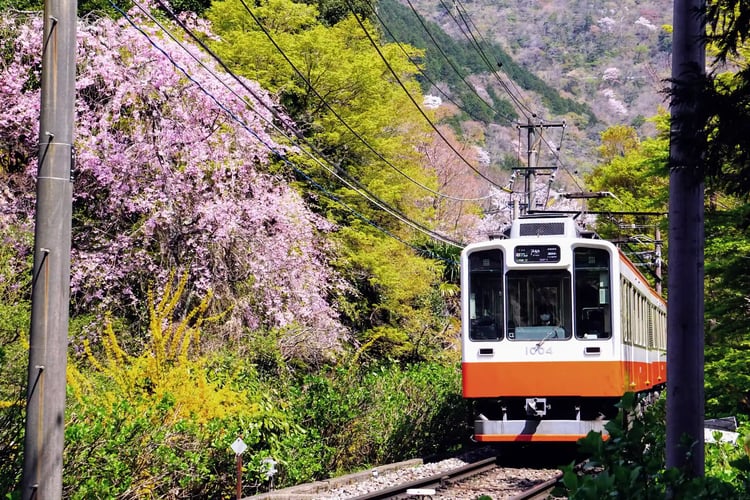
Logistics matter too. The Hakone Tourism Association provides clear information on how to get here: from Shinjuku by Romancecar to Hakone-Yumoto, or from Tokyo Station by Shinkansen connecting to the Hakone Tozan Railway (*2). Understanding your route and transfer points before you travel means you arrive at your ryokan relaxed and ready — with the full evening ahead of you to begin the experience (*2).
Japanese Etiquette Worth Knowing Before Your Ryokan Stay
The essentials of onsen etiquette are straightforward: wash your body thoroughly before entering the communal bath, and never bring a towel into the water. The Japan National Tourism Organization offers a clear, accessible guide to onsen manners that's well worth a quick read before you go (*3).
As for yukata and slippers — these are provided for relaxing in your room, but whether they're appropriate to wear in shared spaces varies from property to property. Some official guidance notes this distinction and encourages guests to check with the ryokan directly (*4). And here's a reassuring truth: the act of asking is itself a form of good manners. No one expects you to arrive knowing everything — thoughtful curiosity is always welcome (*4).
The Cultural Insights and Personal Discoveries Your Ryokan Stay Will Give You
Perhaps the most lasting takeaway from a ryokan stay is an understanding that Japanese culture communicates more through design than through explanation. Academic research confirms that omotenashi and related concepts in established ryokan culture have become serious subjects of scholarly study (*5) — and yet what strikes you most, in the moment, is how little needs to be said.
The broader context of Japan's evolving travel culture — from EV charging integration to sustainability frameworks — is also visible in how thoughtfully the best ryokans approach these questions, as reflected in the Tourism Agency's JSTS-D guidelines (*6). Tradition and forward-thinking innovation, tranquility and contemporary convenience — the ability to hold these in balance is precisely why Hakone's ryokans continue to be sought out by those who want not just a beautiful stay, but a meaningful one (*6).