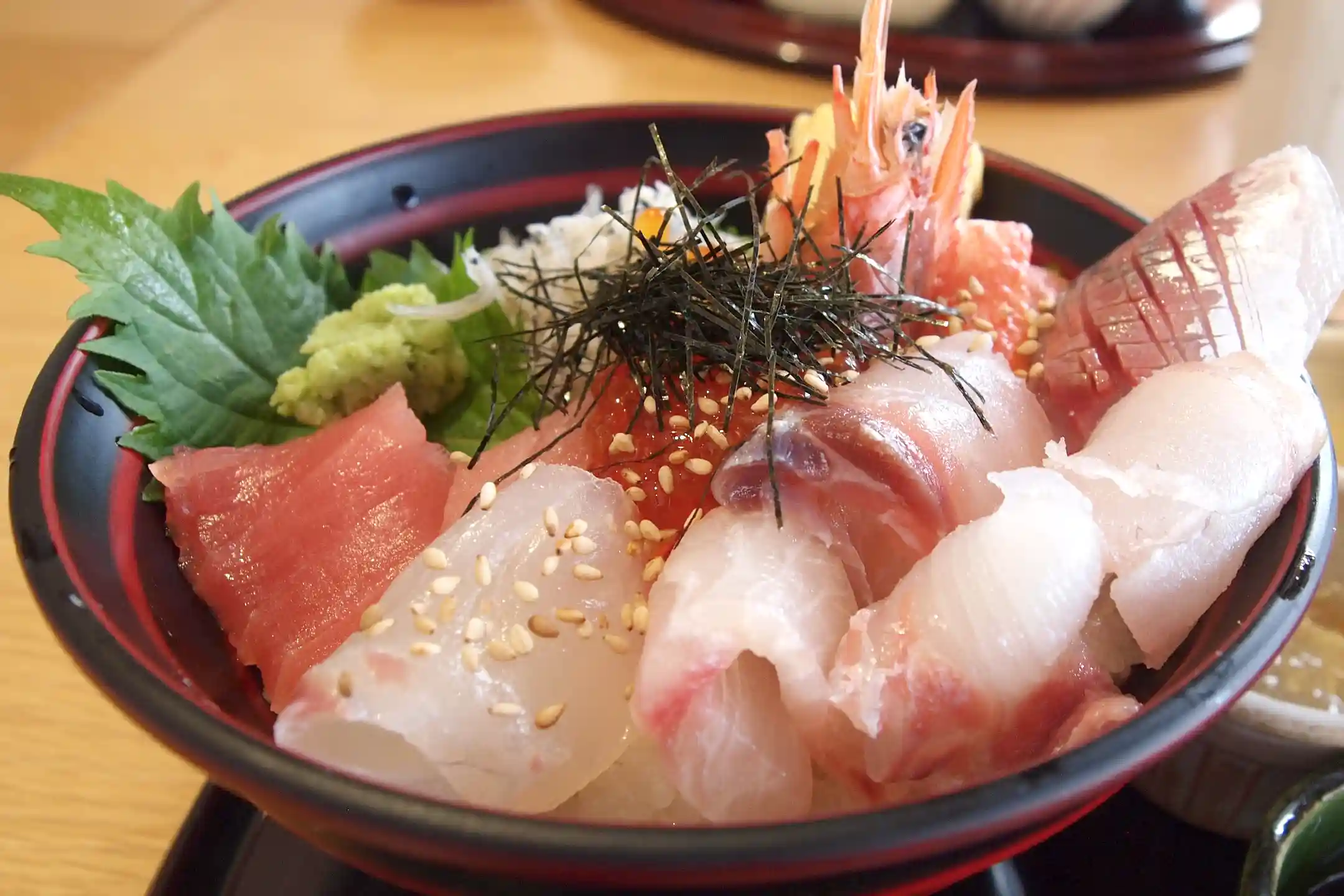
When you travel in Japan, there’s a moment that feels almost cinematic: a bowl filled to the brim with vibrant toppings, enjoyed together with rice. That, in a word, is sushi-don.
Sushi-don is, simply put, donburi served in a sushi style. You spoon vinegared rice (sushi rice) into a bowl, then pile it high with seasonal seafood and beautifully colorful toppings. It’s effortless yet visually striking—so even if you’re new to Japanese food culture, you can enjoy it with your eyes first, and then, on the first bite, savor how natural umami meets the gentle tang of the rice.
Like a little jewel box you can eat, sushi-don holds Japan’s traditions and sense of seasonality in a single bowl—and it can make travel memories feel even richer. In this article, you’ll get a full guide: the basics of sushi-don, its main varieties, the right way to eat it, and a distinctive kanikama sushi-don recipe that doubles as a sushi bowl with imitation crab you can recreate at home. By the time you finish reading, you’ll know how to order sushi-don with confidence and enjoy it in the most delicious way. Now, let’s travel together into the captivating world where sushi and donburi meet.
What Is Sushi-don? A Definition and Appeal That Makes Sense Once You Separate “Sushi” and “Donburi”
Sushi-don is a dish that condenses the essence of sushi into a single bowl. You mound vinegared rice (rice prepared for sushi) in a donburi bowl, then arrange a colorful variety of toppings—seafood, vegetables, and more—on top.
Compared with traditional nigiri sushi, served piece by piece, sushi-don stands out because many flavors and textures coexist in one bowl. You may also see related menu terms like kaisen-don or chirashi-zushi, but strictly speaking, they aren’t identical—even when they look similar at first glance.
In general, kaisen-don is often made with plain steamed rice, though some restaurants do use vinegared rice. When the rice is vinegared, it may be labeled “chirashi,” “kaisen chirashi,” or described in the menu text—so it’s worth checking the description carefully(*1). The biggest appeal of sushi-don lies in that vinegared rice: its fragrance and acidity create a clear sense of unity with the toppings, making the bowl feel “sushi-like” from the first bite.
Mini Glossary: Sushi/Donburi/Shari
Sushi – Originally, “sushi” referred broadly to Japanese dishes that combine toppings with vinegared rice. Its roots trace back to preserved foods made by fermenting fish with salt and cooked rice; in early forms, people mainly ate the fish and often discarded the rice once it soured. Later, people began eating the rice as well, and eventually—by using vinegar instead of long fermentation—sushi evolved into the quicker style we know today.
In the world of sushi, many chefs emphasize one consistent point: the rice (shari) is the foundation. In Edo-style sushi in particular, shari seasoning and temperature are treated as core “craft,” with the idea that rice served around skin-warm temperature helps keep balance and aroma stable(*2). This is how strongly shari’s seasoning and temperature are believed to shape the quality of sushi as a whole(*2).
Each grain of shari absorbs vinegar just enough—slightly warm, never overly soft, and pleasantly firm. When it reaches your mouth, gentle sweetness and acidity rise together. The shari itself is lightly seasoned, yet the vinegar’s tang is clearly present; once it meets the umami of neta (toppings), it creates a precise, satisfying harmony(*2). In sushi, that unity between shari and neta is everything.
Donburi, on the other hand, is a Japanese meal style in which rice and toppings are served together in a deep bowl. It developed within the busy merchant culture of Edo, valued for practicality: you can enjoy rice and the “main dish” at the same time, in one vessel. Because rice and toppings travel to your mouth together, their flavors mingle naturally, producing a distinctive sense of cohesion.
Sushi-don sits at the intersection of these two cultures—donburi and sushi. The acidity and temperature of vinegared rice lift the aroma and taste of seafood, while the bowl format lets rice and toppings harmonize into a deep, layered experience. With the fragrance of sushi rice and the ease of donburi, sushi-don offers a sushi experience that’s casual, yet unmistakably rooted in sushi craft.
.webp?width=800&height=533&name=Kaisen-don%20(Seafood%20Rice%20Bowl).webp)
How It Differs from Kaisen-don, Chirashi-zushi, and Nigiri
Let’s organize the differences between sushi-don and similarly named dishes. First, kaisen-don, as mentioned above, is typically a donburi topped with sashimi and other seafood over plain steamed rice. It’s a simple, delicious way to enjoy fresh seafood, but in sushi circles you may hear it described as “a different category” from Edo-style chirashi-zushi.
One Ginza sushi chef explains the difference in spirit: kaisen-don is delicious, but chirashi-zushi from a sushi restaurant reflects the chef’s deliberate “work” on each topping(*3). In other words, sushi-restaurant chirashi isn’t just raw fish placed on top. Each topping may be prepared with technique—marinated in soy sauce, lightly seared, cured, simmered, and so on—to create the best match with vinegared rice. By contrast, kaisen-don shines through its straightforward celebration of freshness, but because the rice is not always vinegared, the “sushi” character can feel softer.
Now, what about chirashi-zushi? It shares a key point with sushi-don—both use vinegared rice—but the serving style differs. Sushi-restaurant chirashi is often packed into a lacquered box or wooden tub, then topped with a carefully arranged lineup of seasonal seafood, tamagoyaki (Japanese omelet), simmered shiitake, and other sushi toppings. It’s visually festive and has long been served at celebratory occasions as a traditional form of sushi.
Sushi-don, by contrast, is typically served more casually in a donburi bowl, with toppings arranged in a bowl-forward style. That said, modern menus sometimes blur labels—for instance, vinegared rice in a bowl topped with sashimi may be called “kaisen chirashi,” depending on the restaurant.
Finally, nigiri sushi. Nigiri is made by forming small bites of vinegared rice and placing a slice of neta on each, served piece by piece. With sushi-don, you can keep eating while combining rice and multiple toppings in the proportions you personally enjoy.
Nigiri offers a bite-sized balance of neta and shari optimized by the chef’s hands, while sushi-don invites you to choose the balance yourself—lifting a topping with your chopsticks and enjoying it together with rice in your preferred ratio. Differences include whether the base is plain rice or vinegared rice, the plating vessel, and eating style—as well as how directly the sushi chef’s technique shapes the final dish. When you’re trying to tell them apart at a restaurant, don’t rely on the name alone: check whether vinegar is used in the rice, and whether it’s served in a donburi bowl.
Sushi-don stands apart as a dish served by sushi restaurants specifically to highlight the harmony of vinegared rice and carefully chosen neta—clearly distinct from a simple kaisen-don or everyday homemade chirashi-zushi.
How to Choose Sushi-don Without Regret: Pick a Winner by Checking Shari, Toppings, and Temperature
If you’re going to enjoy sushi-don, you naturally want to meet a bowl that feels like a true “hit.” The key evaluation points are shari (vinegared rice), toppings, and temperature. Sushi-don can look so luxurious that your eyes go straight to the seafood—but in reality, the quality of the shari often shapes the entire experience just as much as (or sometimes more than) the neta does.
In the sushi world, people say, “Shari matters as much as neta,” and even in a bowl, that idea still holds. For example, in Niigata Prefecture’s “Echigo Sushi Bowl,” different shops offer their own original “sushi-restaurant donburi.” At “Shinten-gai O-Zushi,” for instance, they use shari made from a blend of Niigata-grown Koshihikari rice adjusted for moisture level suited to sushi, and they top it with around eight kinds of neta(*1). That kind of confidence—especially in the rice foundation—shows you that even when it’s served as donburi, specialists treat it with real seriousness.
When choosing a restaurant, try focusing on a simple question: Is the rice delicious? High-quality shari won’t feel sticky or heavy; it separates gently, and the fragrance of vinegar rises softly. Also pay attention to temperature at the moment it’s served. Ideally, the shari is slightly warmer than skin temperature, the toppings are pleasantly cool, and the bowl maintains a clear temperature contrast rather than turning into one indistinct mass. If the shari is overly chilled—or if the vinegared rice is oddly hot—you lose aromas and flavors that should have been there.
In fact, at high-end sushi restaurants, temperature may be adjusted depending on the neta: for tuna, which is rich, aromatic, and fatty, shari may be served warmer with a clearer vinegar presence; for shellfish, which can develop off-notes at higher temperatures, shari may be cooled before serving(*2).
With sushi-don, too, temperature awareness can be the difference between “good” and “unforgettable.” If thick slices of neta are used, slightly warm rice helps fish fats loosen and bloom on your tongue. If cooked anago (sea eel) is included, whether it has been gently warmed before topping can change how the sauce and texture read in each bite. A bowl with thoughtful temperature control is the kind of “hit” you remember.
Finally, consider how the toppings are handled—especially once the bowl arrives in front of you. Your satisfaction can change dramatically depending on how you use soy sauce and condiments. First: be careful not to overdo soy sauce. In the excitement, you might feel tempted to drizzle soy sauce all around the bowl, but this is generally considered a no-go. When you pour soy sauce directly into the bowl, it can pool at the bottom; the rice then absorbs it and turns unnecessarily salty(*3). Before you know it, everything tastes like soy sauce, and you lose the original character of the ingredients you came for.
The right approach is to dip the toppings little by little. Sushi-don often comes with a small dish; pour soy sauce there, then cut a topping into a bite-sized piece or pick it up with chopsticks, lightly dip it, and eat it together with rice. That small step keeps the bowl from becoming dominated by soy sauce, letting you enjoy it from the first bite to the last(*3).
How you use wasabi and ginger matters, too. If you dissolve wasabi into soy sauce, its aroma fades quickly, so it’s better to place just a tiny amount directly on the sashimi(*3). Gari (sweet pickled ginger) is for refreshing your palate between bites, letting you meet the next mouthful with a clean, vivid sense of taste. Use condiments with a light touch—enough to enhance, never enough to bury the ingredients’ aromas.
Depending on the bowl, you may also find nori, sesame, citrus, or even wasabi leaves (such as soy-marinated wasabi stems) served alongside. Think of these as “rhythm makers” for your palate: add them little by little as you go to create changes in flavor and texture. A concrete example: one sushi shop in Niigata serves a sushi-don topped with marinated white fish and recommends adding grated yam (tororo) partway through. First you enjoy the ingredients as-is; then, in the second half, you mix in tororo for a mellow mouthfeel and an extra layer of savory depth(*4).
When you build gentle highs and lows like this inside one bowl, you can stay engaged—and satisfied—right through the final bite. Overall, your odds of choosing a “hit” bowl go up when you judge the quality and temperature of the shari, and when you notice the thoughtfulness of seasoning and serving style after it arrives.
When picking a restaurant, it can also help to choose places praised in reviews for “great rice,” or restaurants that serve the bowl already seasoned to match the toppings (meaning they’ve designed it so you can enjoy it without adding soy sauce)(*4). Use your own set of criteria, and go find the best bowl for you.
Types of Sushi-don: Recommended Categories Chosen by Classics, Popularity, and Season
Sushi-don comes in an astonishing range of variations, and that variety is part of the fun—you can choose based on your personal preferences. Here, we’ll introduce the main types of sushi-don from several angles: flavor profile, texture, seasonality, and even price range. Each bowl has its own personality. Whether you’re thinking, “I want something rich and fatty,” “I want something clean and aromatic,” or “I want to taste something truly seasonal,” choosing with intention will make the experience more satisfying.
From classic, widely loved bowls to categories defined by presentation and eating style; from bowls designed for those who prefer not to eat raw fish to bowls built around seasonal peak ingredients—we’ll cover each category’s key traits. Once you’ve read this, you should be able to find a sushi-don that fits you perfectly.
Classic Sushi-don: Tekka-don/Salmon-don/Ikura-don/Negitoro-don
Let’s start with four of the most classic, most popular sushi-don styles. Each features a clear “main character” topping, making them especially approachable if you’re trying sushi-don for the first time.
Tekka-don(てっかどん) – Often served as a tuna bowl (sometimes with lightly seasoned or marinated tuna), this is a donburi where deep-red lean tuna covers the vinegared rice. Lean tuna tastes clean yet satisfying, with umami that expands as you chew. Because it’s lower in fat, it can feel relatively light, and a gentle soy-based seasoning can deepen its savoriness without overwhelming the rice.
Tekka-don pairs beautifully with dry junmai sake—clean, crisp, and not overly aromatic—because it highlights the tuna’s savory depth. It also matches tea exceptionally well, refreshing your palate after the meal.
Salmon-don – A bowl centered on salmon, especially popular with younger diners and international travelers. Salmon’s orange sheen hints at its appeal: rich, sweet fattiness that melts smoothly on your tongue. To keep that lush mouthfeel feeling bright, some bowls come with shiso leaves, citrus, or grated radish.
For salmon-don, a chilled dry white wine with citrus notes—such as Sauvignon Blanc—can be a wonderful pairing, rinsing the richness and leaving a lighter finish. Of course, green tea or oolong tea, with a pleasant astringency, also works well by cleansing the palate between bites.
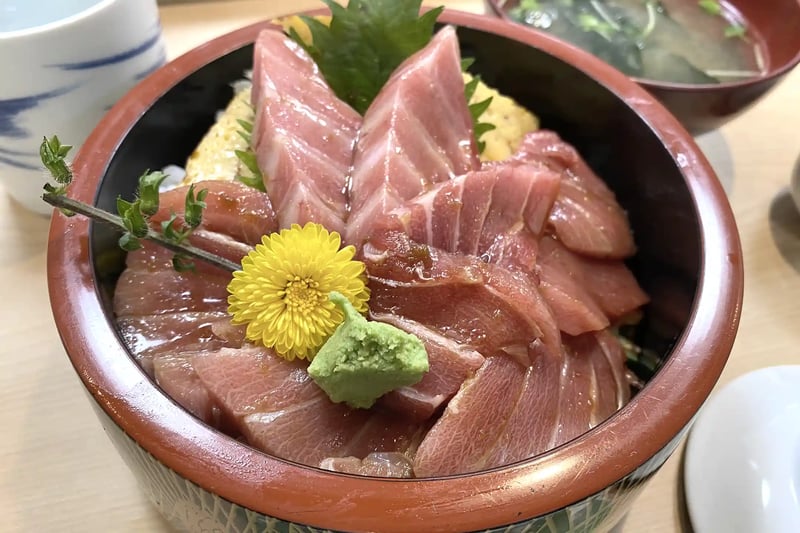
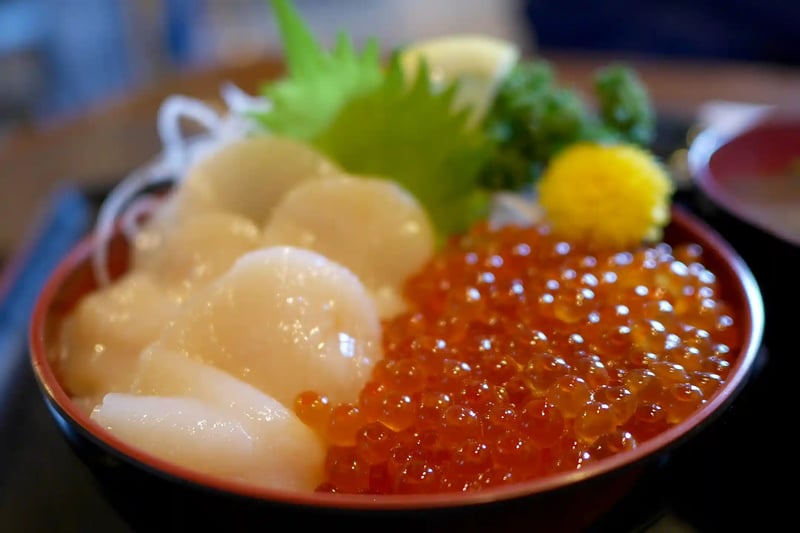
Ikura-don – So beautiful it’s sometimes described as a “jewel bowl,” ikura-don is topped generously with salmon roe. The pearls pop gently as you bite, releasing a marine aroma and a distinct saltiness. Soy-marinated ikura has concentrated umami, and it pairs wonderfully with vinegared rice.
A playful pairing is a sparkling beverage—happoshu (low-malt beer) or sparkling wine—because the bubbles’ freshness and slight bitterness catch the roe’s richness and leave you with a clean finish. If you prefer sake, rather than a highly fruity ginjo, try a calm, gently aromatic junmai or honjozo served chilled; it tends to complement ikura without overpowering it. For a non-alcohol option, sparkling water or ginger ale can also wash through ikura’s bold flavor with refreshing ease.
Negitoro-don – Made by finely chopping tuna scraped from around the bones (nakaochi) or fatty toro, then mixing it with green onion and placing it on rice. The sweetness of toro’s fat and the fragrance of scallion merge into a creamy, rich experience. Because it’s soft and smooth, a “knowing” way to enjoy it is simple: just a small drizzle of soy sauce.
Negitoro-don pairs well with lighter beer or a highball. The carbonation and crisp finish reset your palate between bites, balancing negitoro’s mellow richness. If you don’t drink alcohol, try sparkling water with a squeeze of lemon—something bright and brisk to keep your mouth feeling refreshed.
Each bowl has a distinctive personality, but what they share is harmony with vinegared rice. With that gentle acidity, fats and saltiness feel balanced, and you can enjoy every bite right to the end. If you’re deciding what to order, starting with these classics—and choosing based on whether you want something rich or something lighter—is a reliable way to find your match.
The Difference Between “Chirashi-style” and “Heaped/Arranged-style” Bowls
Broadly speaking, sushi-don comes in two styles. One is chirashi-style, and the other is what we’ll call “heaped/arranged-style.” Chirashi-style refers to bowls where finely chopped ingredients are “scattered” over vinegared rice—examples include bara-chirashi and gomoku chirashi.
Heaped/arranged-style refers to bowls where sashimi and toppings are presented in larger pieces—this includes kaisen-don and the classic bowls mentioned above. These two styles differ clearly in both appearance and texture.
The biggest charm of chirashi-style sushi-don (such as bara-chirashi) is that every bite tastes different. Because chopped ingredients are distributed evenly across the vinegared rice, the combination you pick up changes depending on where you place your chopsticks. One bite might be tuna and cucumber; the next might be shrimp and shiitake—so you experience many flavors in a single bowl. Also, because the toppings’ umami gently permeates the vinegared rice, the bowl tends to read as a mellow, unified blend overall(*1).
Chirashi-style bowls often include many cooked or seasoned ingredients—thin egg strips, sweet-simmered shiitake, vinegared lotus root—and some are designed to remain delicious even after time passes. Colorful and inviting, they’ve also long been loved as home cooking.
Heaped/arranged-style sushi-don, meanwhile, lets you enjoy the presence of each neta directly. Larger slices of sashimi are laid out beautifully over the rice, creating a sense of luxury—almost like a sashimi set neatly tucked into a bowl. The visual impact easily rivals chirashi-style, but because the ingredients aren’t chopped and mixed throughout, you can taste each element more distinctly(*1).
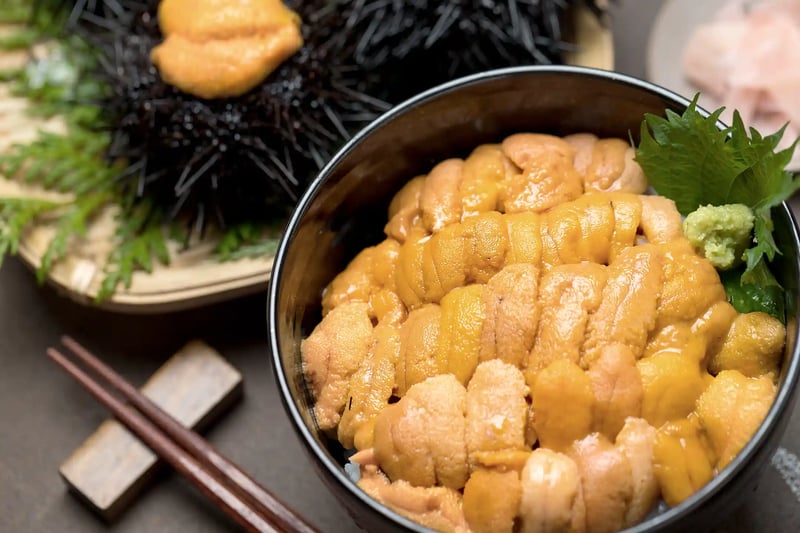
With tuna, you taste tuna; with uni, you taste uni—clearly—and then you can bring in rice as you like, almost “building your own nigiri” with chopsticks. In this style, the chef’s plating sense shines: the arrangement, the height, the balance, and the placement of toppings can vary widely from restaurant to restaurant. And because the pieces tend to be larger, it’s easier to feel that satisfying “Yes, I really ate something special” fullness.
It’s not that one style is better; it’s simply a different way of creating texture and satisfaction. Chirashi-style offers blended harmony and variety, while heaped/arranged-style offers bold clarity and contrast. When you order sushi-don, you might decide by mood: “Today I want to taste a little of everything—let’s go chirashi,” or “No, today I want to indulge in sashimi—heaped style, please.” Either way, the deliciousness created by vinegared rice and toppings remains at the center.
Chirashi-style tends to feel homier and practical; heaped/arranged-style emphasizes craft and presentation. Once you know the difference, you’ll read menus with sharper eyes—and you’ll enjoy choosing even more.
Satisfying Even Without Raw Fish: Aburi/Simmered Anago/Egg/Tempura/Kanikama Sushi-don
You may associate sushi with raw fish, but in fact, sushi-don offers plenty of choices you can enjoy even if raw fish isn’t for you. Even within Edo-style sushi tradition, toppings are not “raw-only.”
For example, anago and shrimp are steamed or simmered; kohada is cured with vinegar; egg is grilled—Edo-style chefs have long applied many kinds of deliberate “work” to their toppings(*2). So even if you don’t eat raw fish, you can still taste sushi culture fully. Sushi-don reflects that same breadth: there are bowls centered on cooked toppings and processed ingredients.
A classic option is aburi (light searing). Aburi means briefly searing the surface of fish over flame or with a torch to add a toasted aroma. When fatty toppings like salmon or engawa (flounder fin) are seared, excess fat renders slightly and the flavor concentrates, wrapped in fragrant smokiness. Any strong raw aroma softens too, which can make it easier to enjoy if you’re not comfortable with raw fish. Bowls like aburi salmon-don or aburi shime-saba-don let you savor both aroma and richness.
Next is simmered anago-don: tender, fluffy sea eel simmered and glazed with sauce over rice. The sweet-savory sauce, reminiscent of kabayaki eel, soaks in beautifully, making each bite deeply satisfying.
While it isn’t raw fish, anago is also a classic neta in Edo-style sushi, beloved for refined umami and soft texture. Alongside anago, you may find bowls topped with similarly prepared simmered scallops or simmered octopus. Because these are thoroughly cooked, they offer reassurance—yet they still deliver the depth you expect from sushi-restaurant craft.
Egg-forward sushi-don is another distinctive choice. A bowl generously layered with thick tamagoyaki or thin egg strips can look like a golden carpet. Tamagoyaki carries dashi fragrance and gentle sweetness, and it pairs exceptionally well with vinegared rice.
If you scatter ikura or nori on top for color and texture, it becomes a truly satisfying dish. Egg is popular with everyone from kids to adults, so it’s a topping that lets you keep eating with ease even if raw fish isn’t your preference.
You can also consider sushi-don that incorporates tempura. Strictly speaking, it’s closer to tendon than sushi, but some restaurants serve creative dishes like “tempura sushi-don,” where shrimp tempura or white fish tempura is placed on vinegared rice and finished not with tentsuyu, but with a slightly sweet sauce designed to match sushi rice. The crisp batter and vinegared rice pairing feels refreshingly new, and if you love fried foods, it can be an especially happy choice. Because tempura has seasoning and is fully cooked, there’s none of the raw-fish aroma, and the texture contrast is part of the fun.
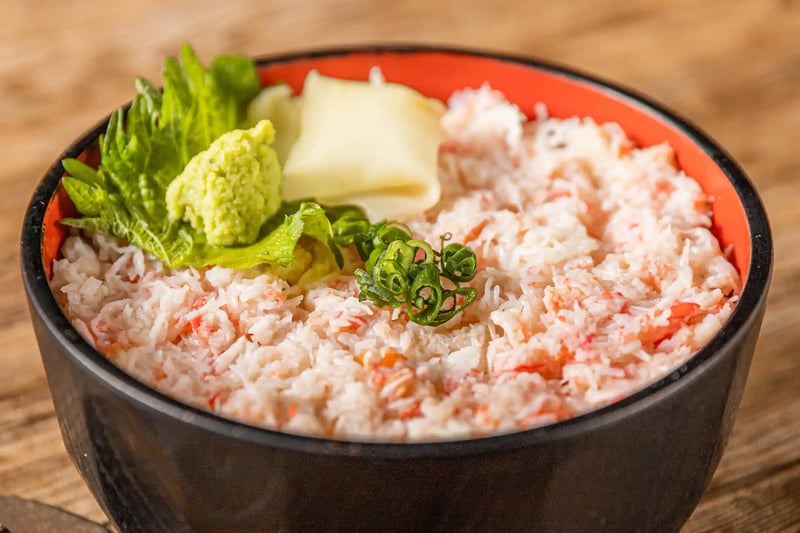
And then there’s the one you shouldn’t overlook: kanikama sushi-don. Kanikama is short for kani-fumi kamaboko—crab-flavored fish cake. It’s not real crab meat; it’s a processed food made from fish paste. As we’ll explore in detail later, kanikama is a clever ingredient that lets you enjoy “crab-like flavor and texture” with ease.
It’s also familiar as a sushi topping at conveyor-belt sushi restaurants, often used in salad gunkan. When you use plenty of kanikama to build a bowl, you get a friendly, reasonably priced crab-inspired donburi—something that can be surprisingly hard to achieve with fresh crab.
Because kanikama is already heat-processed and not raw, you can eat it comfortably, and its uniquely shreddable, fibrous texture becomes especially enjoyable when combined with vinegared rice. What’s more, by pairing it with aromatics and seasonings (as you’ll see later), you can draw out a deliciousness that stands on its own—without needing to rely on “it’s just a substitute.”
In this way, sushi-don opens wide even if raw fish isn’t your favorite: lightly seared toppings, simmered items, egg, tempura, kanikama—these cooked or processed options reveal just how deep and generous sushi culture can be. Don’t get locked into “sushi equals raw fish.” Enjoy sushi-don in the style that suits you best.
Even at sushi restaurants, if you ask, “Can you make it without ○○ (that topping)?” they may increase egg or simmered items instead. No need to push yourself—enjoy sushi-don in a way that feels right for you.
Seasonality Basics: Calendars, Regions, and How to Ask for the Shop’s Best Picks
What multiplies the pleasure of sushi-don is seasonality. In Japan, people even say, “Fish has four seasons,” because different seafood peaks at different times of year. Spring brings first bonito (hatsu-gatsuo) and cherry sea bream; summer brings uni and anago; autumn brings saury and returning bonito; winter brings yellowtail and fugu… and so on. Fish store nutrients in their bodies to prepare for spawning or overwintering, which is why peak-season fish often has firmer texture and deeper fat and flavor(*3).
For example, kan-buri—winter yellowtail, sometimes called the champion of cold seasons—builds abundant fat to thrive in cold seas, creating a richness whose sweet fat spreads across your mouth. Similarly, autumn saury becomes plump and delicious because it eats heavily before spawning.
These peak-season toppings are exactly what you’ll want to seek out in sushi-don as well. Some restaurants offer seasonal-limited sushi-don or a “today’s recommended bowl.” When you order sushi-don as a traveler, don’t hesitate to ask: “Do you have today’s recommendation?” or “Is there something seasonal right now?” Sushi chefs and staff will often be happy to tell you what they bought fresh at the market that morning and what’s at its best today(*3).
In summer, you might hear, “We have rock oysters today,” or “It’s the season for shinko (young kohada).” In winter, you might hear, “The winter yellowtail is beautifully fatty,” or “We have shirako ponzu.” In Japanese sushi shops, there’s also the idea of omakase—letting the chef choose the best of the day for you. Even with sushi-don, if you’re unsure, try asking, “Which recommended ○○-don would you choose here?” You may discover a seasonal specialty unique to that restaurant.
Keep in mind that “seasonal” can vary by region, too. For instance, saury’s peak may arrive a bit earlier in Hokkaido than elsewhere. And even fish caught year-round, like tuna, often comes with insider preferences—“The ones from this fishing ground in this month are especially good,” and so on.
When you eat sushi-don on the road, pay special attention to local fish. If you see “local fish bowl” or a topping labeled with a specific region of origin, it could be a once-in-a-lifetime encounter. A sushi-don shaped by season, region, and a chef’s technique can become a travel memory unlike anything else.
Kanikama Sushi-don: How to Make a Sushi Bowl with Imitation Crab More Than a Stand-In
From here, we’ll spotlight the article’s sub-theme: kanikama sushi-don. Kanikama is also known in English as “imitation crab,” and it’s one of Japan’s notable achievements in fish-paste processing. As a sushi-don topping it may feel unusual at first, but it has been reappraised in creative Japanese cuisine and is increasingly treated as an ingredient with its own strengths.
Kanikama isn’t only “a replacement for crab.” With smart pairing and a little technique, it becomes an ingredient with its own deliciousness and value. In this chapter, you’ll learn the core of kanikama—surimi technology and flavor design—along with tips for using it well, how to choose a truly good product, a practical kanikama-centered sushi-don recipe, and even how to enjoy it when eating out.
If you’ve thought of kanikama as “that bright-red crab-style thing,” this chapter may completely change how you see it.
What Is Kanikama? Surimi Technology and Flavor Design
Kanikama is short for “kani-fumi kamaboko” (crab-flavored fish cake). True to the name, it’s a fish-based processed product made to resemble crab meat. Ingredients vary somewhat by product, but the basics are typically surimi made from Alaska pollock (suketoudara) as the main base, with egg white, starch, salt, plus seasonings and coloring added(*1).
In simple terms: fish meat is ground into a paste (this is “surimi”), then heated and shaped into products like kamaboko or chikuwa. Japan-developed surimi technology is recognized globally under the name SURIMI, and products like kanikama, chikuwa, satsuma-age (fried fish cakes), and fish sausages are enjoyed worldwide(*1). With kanikama specifically, what stands out is the careful attempt to recreate crab-like flavor and fibrous texture.
Since 1972 (Showa 47), when the Ishikawa-based seafood processor Sugiyo developed and launched the world’s first flake-style crab-flavored fish cake, “Kaniashi,” companies have continued research to raise quality. Today, some products shred in a way remarkably close to real crab fibers, and some incorporate crustacean extracts so that, when you bite, you catch a subtle shellfish-like aroma. For example, Sugiyo’s “Kōribako,” released in 2004, aimed boldly at the aroma and umami of real crab—winning major honors including the Minister of Agriculture, Forestry and Fisheries Award and the Emperor’s Cup(*2).
In other words, kanikama isn’t merely an inexpensive alternative; it’s closer to “another form of crab,” created through analysis and technical craft. Even its appearance is designed: the surface is tinted red and the inside white to mimic boiled crab leg meat, and the seasoning often uses crustacean extracts and umami seasonings to recreate crab’s gentle sweetness. It’s flavor architecture in a very literal sense.
Because surimi itself can be relatively neutral, there are also techniques that soak it in seasoning liquid to impart crab-like flavor. For texture, methods that shape it into fibers that break apart—often described as “marine fiber” processing—pursue that crab-like sensation of crumbling along strands as soon as it reaches your mouth. Kanikama is the result of these accumulated innovations.
Kanikama is popular not only in Japan but internationally, especially as a salad ingredient and sushi topping. In North America in particular, it’s widely consumed as a representative product in the category of “SURIMI SEAFOOD.” In that sense, it’s a global food born from Japanese food technology. Using kanikama in sushi-don matters because it can provide stable, accessible “crab-likeness” at a reasonable price—something difficult to guarantee with rare and expensive crab meat.
Additionally, utilizing fish surimi supports effective resource use and can be considered a more sustainable choice. Kanikama—where technique meets culture—is drawing attention not as a mere substitute, but as an ingredient with its own place in modern food tradition.
How to Choose Delicious Kanikama: Texture, Aroma, and How to Read the Ingredients Label
To make kanikama sushi-don truly delicious, start by choosing high-quality kanikama. Supermarkets carry many varieties, but the main selection points are three: texture, aroma, and the ingredients label.
Choose by texture: Good kanikama has clear fibers, and when you tear it by hand, it separates into strands with a light, flaky feel. If you can gently test it in the pack (though of course it may be difficult to do this before purchasing), a type that splits into fibers will give you a texture closer to real crab leg meat.
On the other hand, kanikama that crushes into a mushy mass, or products that are excessively springy, may not blend well with other toppings and vinegared rice in a sushi-don. Products that highlight “easy shredding” in their description (for example, “shreds well” or “focus on fibrous texture”) are often a good bet.
Choose by aroma: When you open the package, ideally you catch a faint crab-like aroma—not an overly fishy smell. In recent years, premium kanikama products may include snow crab extract or essence, and some can be surprisingly close to real crab’s fragrance.
For example, if the ingredients list includes “crab extract” or “crustacean extract,” it means crab-derived components are used for aroma. These products often carry the distinctive sweet richness of crustaceans, so in sushi-don they can hold their presence even among other seafood toppings. One important note: such products will, naturally, include “crab” in allergen labeling(*3).
If you have a crustacean allergy, you’ll need to choose products that do not use crab extract—specifically, those whose ingredients label does not list “crab.”
Choose by ingredients label: As mentioned above, the ingredients list gives you a strong sense of what a kanikama product is like. A typical list looks like: “fish meat (surimi), starch, egg white, salt, seasonings, coloring…”(*4).
If the label specifies the fish type (e.g., “Alaska pollock surimi”), that can be a sign of confidence in quality. If additives are a concern, you may also find products labeled “no phosphates” or “additive-free,” so check the packaging. You can also confirm from the label whether crab extract is included—the key to the aroma and umami described earlier.
At the same time, note whether it’s refrigerated or frozen. Most supermarket packs are refrigerated fish-paste products, but frozen kanikama exists in commercial and imported lines. This doesn’t automatically determine freshness, but some products can become watery after thawing—so it’s worth choosing based on when and how you plan to use it.
Finally, check allergen labeling. Kanikama often contains allergens such as egg white, wheat, and soy. Keeping your own and your family’s needs in mind, choose a product you can enjoy with peace of mind.
Putting these points together, kanikama that is fibrous, naturally fragrant, and has a simple, clear ingredients list tends to work best for sushi-don. Recently, manufacturers have released premium-minded kanikama (such as Sugiyo’s “Kōribako” or Ichimasa Kamaboko’s “Okhotsk” series). Treating yourself to one of these can be a great choice. Once you have delicious kanikama in hand, it’s time to make it the star of your sushi-don.
Kanikama Sushi-don Recipe: Designing Layers of Acidity, Umami, and Aroma
Now, let’s introduce a sushi-don recipe that places kanikama at center stage. The key is building multiple layers of flavor to highlight what kanikama does best. Keep a balance of “acidity, umami, aroma, texture, and richness.” Below is one example structure.
Vinegared rice (acidity): First, prepare vinegared rice as the base of your sushi-don. Mix a slightly sweet sushi vinegar—3 tablespoons vinegar, 1.5 tablespoons sugar, 1 teaspoon salt—into 2 cups (2-go) of freshly cooked rice. Fan it to release steam and cool it slightly, then mound it in your bowl. If you cook the rice slightly firmer, you’ll keep a crisp, defined grain texture that contrasts nicely with kanikama’s softness. If you mix in a spoonful of toasted white sesame seeds, you’ll also add a gentle nuttiness.
Kanikama + seasoning (umami): Tear high-quality store-bought kanikama into strands by hand and place it in a bowl. Toss it with a very small amount of light soy sauce and mirin for a subtle under-seasoning (be careful not to add too much—about 1 teaspoon each total). Kanikama already contains salt, so a light touch is enough. This step adds a faintly Japanese savory note and helps it blend even more smoothly with the vinegared rice. Some products are delicious as-is and don’t need seasoning, so taste and adjust.
Color and aromatics (aroma): Next, prepare aromatics. Highly recommended: finely grated yuzu zest and shiso leaves (ōba). Grate the zest of about half a yuzu, and combine it with 5–6 shiso leaves sliced thinly. The citrus lift and shiso freshness give kanikama’s gentle sweetness an airy, bright accent. If you have them, chopped myoga or asatsuki (thin scallions) also work well. When you layer aromas, the bowl’s overall fragrance becomes dramatically richer.
Texture accents (texture): Texture also plays a big role in satisfaction. For a crisp element, take one cucumber, cut it lengthwise, scoop out the seeds with a spoon, and slice it into thin half-moons. Massage with a pinch of salt, let it sit for 5 minutes, then squeeze out moisture. This removes excess water and keeps the crunch clean and snappy. Also prepare an appropriate amount of shredded nori. Nori’s crisp bite and ocean aroma are a perfect match with kanikama, and sprinkling it at the end adds visual dimension as well.
Adding richness (richness): Kanikama is high-protein and low-fat, so while it has umami, it doesn’t naturally carry the same fatty richness as real crab. To fill that gap, use egg yolk or avocado. Place one raw egg yolk in a small bowl and marinate it (for 30 minutes) in a mixture of 1 teaspoon soy sauce and 1 teaspoon mirin—this creates a deeply savory “marinated yolk” (if you prefer extra safety, use a pasteurized egg yolk or skip the raw yolk). Slice half an avocado and sprinkle with lemon juice to prevent browning. With the yolk’s concentrated savoriness and the avocado’s creamy texture and fats, the bowl gains depth and a satisfying roundness.
Once everything is ready, sprinkle shredded nori over the vinegared rice in your bowl. Heap the seasoned kanikama on top. Arrange the salted cucumber around it, and mound the sliced shiso and yuzu zest as a bright finishing crown.
Place the marinated yolk gently in the center, add avocado slices to the side, and if you like, top with a small amount of ikura for extra color and that delightful popping texture. Now your kanikama sushi-don is complete.
The base seasoning is already balanced through the rice’s acidity and kanikama’s saltiness, but when you eat, you can add just a few drops of soy sauce and mix as you break the yolk. A mellow, soy-yolk sauce spreads through the bite. As soon as you take that mouthful, kanikama’s sweetness and umami, the fragrance of yuzu and shiso, the richness of yolk and avocado, and the textures of cucumber and nori come together at once—like a five-part ensemble of “acid, sweet, salty, aroma, and texture.” It’s a bowl designed to overturn the assumption that kanikama must taste one-note, delivering a layered, satisfying finish.
You can also adapt the ingredients freely to your preferences. For instance, if you swap yuzu for lemon or lime juice, you’ll push freshness even further. If you swap avocado for a small amount of mayonnaise mixed into the kanikama, you can add richness and umami quickly and easily. You could also add chopped beni shoga (red pickled ginger). The point is to honor kanikama’s flavor while supplementing what it lacks through other ingredients. Use this recipe as a base, and create your own ideal kanikama sushi-don.
Kanikama sushi-don is also visually beautiful. Orange-red kanikama, green shiso and avocado, the yolk’s yellow, the nori’s black, translucent ikura—it’s colorful and highly photogenic. It looks luxurious for how simple it is, and if you serve it for guests or at a party, it’s almost guaranteed to become a conversation piece.
Enjoying Kanikama When Eating Out: How to Find It at Conveyor-belt Sushi, Prepared Foods, and More
Making kanikama sushi-don at home is great, but you can also enjoy kanikama across Japan’s dining scene. Conveyor-belt sushi chains, in particular, are a treasure trove for kanikama. The most famous example is probably “kani salad gunkan.”
This gunkan sushi is made by mixing shredded kanikama with mayonnaise and piling it generously on vinegared rice wrapped with nori. It’s a classic menu item loved by both children and adults. In fact, many gunkan items labeled “crab-style” or “kani-mayo” often use kanikama as the main ingredient(*6).
In other words, kanikama is the true identity behind that beloved kani salad gunkan. When you visit a conveyor-belt sushi restaurant, try picking up a plate. The richness of mayonnaise and the gentle sweetness of kanikama are a reliable pleasure—and some locations mix in corn or smoked squid, offering extra variety in taste and texture. As you choose plates passing by, check whether they feel properly chilled, and if possible, order a freshly made one so you can better enjoy kanikama’s moist, delicate texture.
You can also find kanikama sushi in supermarket prepared-food sections. Kanikama is a staple filling in futomaki (thick sushi rolls). When that red kanikama sits alongside cucumber, tamagoyaki, and kampyo, it adds color and keeps the flavor balance lively. You may also see thin kanikama rolls included in bento sets or inari-sushi assortments.
These are easy ways to taste kanikama sushi. When you buy them, check that the shari isn’t dried out and the kanikama isn’t crumbly. Fresh prepared sushi keeps kanikama moist and the rice pleasantly hydrated. Because prepared foods inevitably dry out and lose aroma over time, it’s best to enjoy them as soon as possible—ideally the same day.
Some creative Japanese restaurants and sushi bars also use kanikama in unexpected ways. For example, some wrap kanikama in tempura batter and fry it—something like a “kanikama fry” in the spirit of a crab cream croquette—then serve it in a sushi-don-like dish. Others lightly cure kanikama with vinegar and shape it into pressed sushi. These inventive approaches have been reported as well.
At sake bars, you may even encounter lightly torched kanikama served as a drinking snack. A quick sear adds a toasted aroma, and it can be a quietly popular pairing with sake. If you come across kanikama dishes while dining out, try them—you’ll likely taste the restaurant’s particular creativity in every bite.
The Story Behind Sushi-don: Edo-style Sushi, Donburi Culture, and Today’s “Sushi Bowl”
Behind sushi-don—casual as it may look—lies a long history of Japanese food culture and ingenuity. In this chapter, we’ll unpack the historical and cultural background to help you understand sushi-don more deeply: how Edo-style sushi was born and developed, the rational beauty of donburi as a vessel culture, and how Japanese sushi-don differs from the “Sushi Bowl” context that has spread overseas today.
The Edo-style Sushi Mindset: Speed and Preservation (Sushi Isn’t Only Raw Fish)
To trace sushi-don’s roots, let’s begin with Edo-style sushi. When many people hear “sushi” today, they picture nigiri topped with raw fish. But if you look at its origins, two keywords stand out: preservation and fast food.
Sushi’s origin is often said to be narezushi, a preserved food that began in Southeast Asia, where fish was fermented with salt and rice (the rice helped lactic fermentation preserve the fish; after fermentation, the rice became porridge-like and was often not eaten). Over time, people adapted it so that the rice—if only lightly fermented—could be eaten too, leading to early-modern forms where fish and rice were enjoyed together.
Then, in the Edo period, instead of slow fermentation, people began using vinegar to create quick “haya-zushi”(*1). This is the direct ancestor of modern sushi. In Edo (today’s Tokyo), a man named Hanaya Yohei is said to have devised nigiri sushi in the 1820s. The style—small hand-pressed vinegared rice eaten on the spot—became wildly popular at street stalls.
In an era without refrigeration, chefs applied many forms of “work” (preparation techniques) to make fish last longer and taste better. For example, kohada and saba were cured with salt and vinegar; lean tuna was marinated in soy sauce; shrimp and anago were simmered until tender and seasoned; eggs were made into thick omelets—cooked toppings were used often(*2). This is the essence of Edo-style sushi: rather than serving raw fish as-is, chefs showed skill by applying steps to draw out the best possible flavor and balance(*2).
Sushi-don inherits this flow. As noted earlier, chirashi-zushi from sushi restaurants often includes toppings that have been “worked.” When you taste sushi-don, try imagining what’s behind each piece: “This one is raw, but lightly cured,” or “This squid has been marinated, so it’s balanced even without extra soy sauce.” With that mindset, your bowl can feel even deeper.
Once you move beyond the assumption that sushi equals raw fish and realize sushi-don sits on the same line as Edo-style wisdom—speed and preservation—you may find yourself feeling a quiet respect for every slice in your bowl.
The Donburi Bowl as a Vessel: One-bowl Rationality and a Sense of Beauty
Now let’s look at donburi culture. Donburi is, in a sense, a completed form within Japanese food culture. Rice, the staple, is topped with a main dish; the meal is complete in a single bowl. It’s rational yet bold—and, in its own way, beautiful. As daily life grew busier from Edo into Meiji, donburi dishes developed as fast food that could deliver nutrition quickly.
Tendon, unadon, gyudon, oyakodon—there are many donburi dishes, and each one contains a small universe inside its bowl. When Japanese cooks plate a donburi, they haven’t simply piled things in randomly; they’ve long exercised an aesthetic sense.
In tendon, for instance, shrimp tails may be set upright to create dimension, and color contrast is carefully considered. Sushi-don works the same way: within a bowl, you can express seasonality and story. The balance of red, green, yellow, and black; the composition created by neta placement—plating reflects the maker’s sensibility.
This is part of a wider Japanese culinary aesthetic. Rationality and beauty might seem opposed, but the donburi bowl embodies both. And because the bowl is pleasantly deep, as you eat, rice and toppings gradually mingle just enough; near the end, you often get that lingering, blended deliciousness—an appealing “afterglow.”
With sushi-don, you may experience the vinegared rice soaking up seafood umami in the final stretch—so that even the last bites of rice alone taste wonderful. Donburi can be seen as a symbol of Japanese openness and love of clever solutions. Sushi-don, which places sushi into that bowl format, is a fusion of practicality and beauty.
Modern Sushi-don vs Overseas “Sushi Bowl” Context
Finally, let’s touch on the relationship between modern Japanese sushi-don and the “Sushi Bowl” that has become popular overseas. In recent years, dishes called “Sushi Bowl” and “Poke Bowl” have surged in popularity across Europe, North America, and Oceania.
At first glance, they may look similar to sushi-don, but their origins and priorities differ. The overseas Sushi Bowl is, in a sense, a deconstruction of sushi—breaking it apart and rebuilding it.
Sushi ingredients (fish, raw vegetables, fruit, seaweed, and more) are freely topped over rice, sometimes finished not only with soy sauce but also spicy sauces or mayo-based sauces, creating a multi-cuisine flavor experience. Poke bowls, originating in Hawaii, often mix soy-marinated tuna with avocado, nuts, and other ingredients into a colorful bowl, prized for combinations that ignore rigid conventions.
Japanese sushi-don (especially sushi-restaurant kaisen bowls and chirashi) differs in that it places strong emphasis on the design of vinegared rice and seasonal ingredients. Overseas Sushi Bowls often lean toward health-mindedness and visual fun, while Japanese sushi-don traditionally values harmony between shari and neta, seasonality, and the natural character of ingredients.
In Japan, for example, restaurants may be particular about which rice vinegar they use or the precise ratio of their blended vinegar, pursuing the ideal pairing with toppings. They prepare seasonal seafood and recommend it to guests—“We have this today.” Compared with overseas Sushi Bowls, which may keep similar menus year-round, Japanese sushi-don often features seasonal limited offerings or daily omakase-style bowls, giving it a more delicate “sushi-like” sensibility.
That said, Japan has also begun embracing overseas-inspired ideas in a kind of reverse import. Creative bowls now appear, such as vinegar-seasoned rice mixed with kale or quinoa and topped with salmon and cream cheese—an explicitly “Sushi Bowl” style approach. Sushi-don is a generous format, continuing to evolve by welcoming both tradition and innovation.
As you enjoy sushi-don in Japan, keep the Japanese elements in focus—vinegared rice fragrance, seasonal toppings, and that careful harmony. It’s one of the best ways to taste sushi-don more deeply.
Conclusion
We’ve covered sushi-don and kanikama sushi-don from a wide range of angles. Sushi-don is a deeply satisfying dish where traditional sushi culture and donburi culture meet—and behind its convenience live the skills of craftspeople and the gifts of the four seasons. And kanikama sushi-don, as a newer idea, can be seen as a distinctly modern way to enjoy sushi-don—born from technique and thoughtful ingenuity.
Convenience, beauty, learning—sushi-don holds all of these values at once. When you visit Japan, use what you’ve learned here and treat yourself to an authentic sushi-don experience. Ask for today’s recommendations when you order, or use soy sauce the right way so you can truly sense each ingredient’s aroma—those small choices can deliver a completely different kind of delight. And if you enjoy a conversation at the counter, your travel memories may deepen even further.
Sushi-don isn’t just a meal—it’s an experience that lets you taste Japan’s food culture as a whole. Including kanikama sushi-don (a sushi bowl with imitation crab that can be surprisingly satisfying), explore the many variations and find your own “favorite bowl.” That encounter may well add a new shade of Japan to the cultural refinement you’ve cultivated in the suburbs of New York.
Author Bio

Shohei Toguri