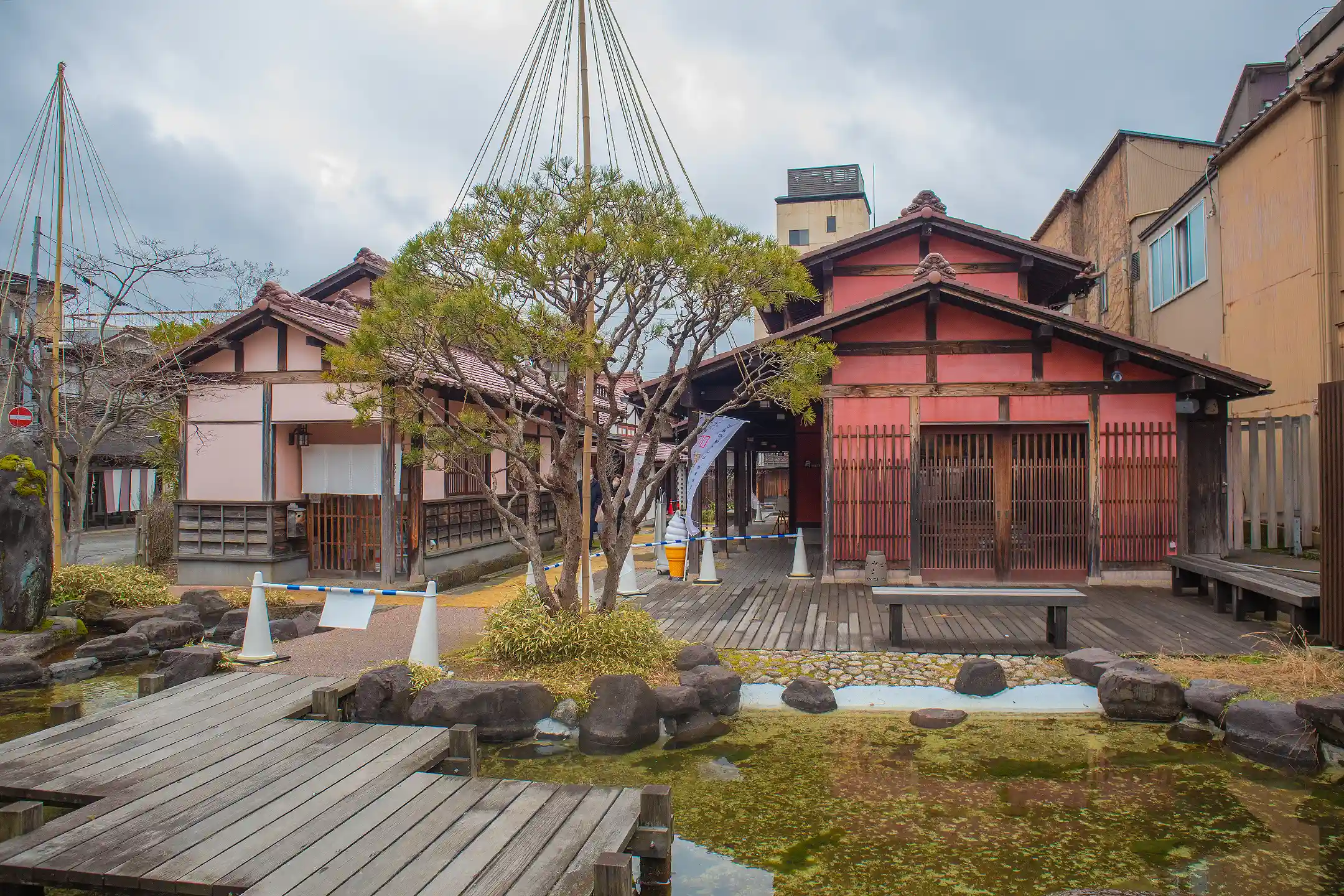
Kaga Onsenkyo (Kaga Hot Spring Villages)—often searched simply as kaga onsen—is located in the southern part of Ishikawa Prefecture and is made up of four hot-spring areas: Yamashiro, Yamanaka, Katayamazu, and Awazu (*1). Step away from the noise of the city, sink into renowned waters with 1,300 years of history, and you’ll likely feel the tightness in both body and mind gradually soften into a deep sense of ease. It’s also an easy destination to include on an international trip, and pairing it with sightseeing in the nearby historic city of Kanazawa remains one of the most popular ways to travel.
Dotted with high-quality ryokan that balance wellness and luxury, Kaga Onsenkyo is the kind of place where quiet helps you look inward and return to yourself. In this article, we’ll introduce its appeal and how to spend your time here in a comprehensive, easy-to-follow way—even if it’s your first visit to kaga onsen. From seasonal highlights and tips for choosing the right ryokan, to the proper way to bathe and recommended stays by travel style, we’ve packed in practical details that are especially useful for mature travelers, including those in their 50s and beyond. Stay with us to the end.
What Is Kaga Onsen?—Four Hot Springs That Invite Quiet Renewal
Kaga Onsenkyo is the collective name for four hot-spring areas scattered across Ishikawa’s Kaga region (Yamashiro, Yamanaka, Katayamazu, and Awazu). Each has its own history, mineral profile, and atmosphere, so you can enjoy a wide range of charms in one region (*1). It’s about 40 km south of Kanazawa City, and access is easy—generally under an hour by limited express train or car—so you can build an itinerary where you savor traditional culture and cuisine in Kanazawa, then unwind at Kaga’s hot springs afterward (*2).
Long cherished as a therapeutic hot-spring retreat—and as a place where writers and artists once stayed—this region, wrapped in a serene environment and abundant nature, can be described as a countryside sanctuary for renewal. Here, we’ll first cover the essentials: how to get there, the best seasons to visit, and how to choose your base area.
Access and Getting Around
Thanks to the extension of the Hokuriku Shinkansen, direct access from the Tokyo area has improved dramatically. From March 2024 onward, you can ride the “Kagayaki” Shinkansen from Tokyo Station to Kagaonsen Station without transfers in as little as about 2 hours 43 minutes—roughly comparable to the time it takes to reach Shin-Kobe Station (*3). (As always, timetables and fastest connections can vary by season and day of the week, so check the latest schedule before departure.)
From Osaka and Kyoto, you’ll typically take the Limited Express Thunderbird to Tsuruga, then transfer to the Hokuriku Shinkansen (such as “Tsurugi”) to reach Kagaonsen Station. From Nagoya, the usual route is the Limited Express Shirasagi to Tsuruga, then the Shinkansen. Another option is Komatsu Airport (KMQ), the closest airport. It’s about a 1-hour flight from Haneda Airport to Komatsu, then about 40 minutes by local bus from the airport to Kagaonsen Station—so door-to-door, total travel time often isn’t drastically different from taking the Shinkansen, depending on connections (*3).
From Kagaonsen Station, each hot-spring area is about 10–20 minutes away by car or shuttle bus. Many ryokan offer free station pick-up, and a sightseeing loop bus called the “CAN BUS” also runs from in front of the station, making it easy to tour the region. If you’d like the freedom to explore by car, major rental car companies have offices right near Kagaonsen Station (Toyota Rent a Car, ORIX Rent a Car, etc.).
If you’d rather not travel with heavy luggage, consider using the “Luggage Delivery Service” available at the tourist information center inside Kagaonsen Station. This paid service delivers your bags to your ryokan the same day, and it’s popular because it lets you enjoy sightseeing hands-free. It also makes bus rides and car trips far more comfortable. Use these flexible transportation options and services well, and you can create a truly stress-free journey.
Best Seasons and How to Spend Your Time
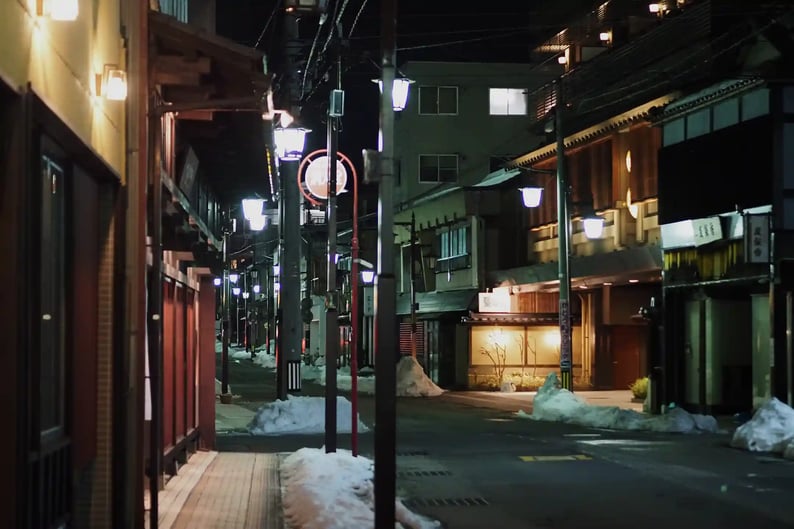
Kaga Onsenkyo shows a different face in every season, which makes it rewarding whenever you visit. Spring brings cherry blossoms, summer brings vivid green, autumn turns the landscape with fiery foliage, and winter offers snow scenes—each one letting you savor Japan’s seasonal atmosphere to the fullest (*5).
At the same time, the Hokuriku region is also known for frequent rain and snow—so much so that people have long said, “Even if you forget your bento, don’t forget your umbrella” (*6). It’s wise to build a rainy-day plan into your itinerary: museums, art museums, and traditional craft studios are reassuring indoor options. Around Kaga City, you’ll find weather-friendly spots such as the Kutani-yaki Kiln Ruins Exhibition Hall and Yunokuni no Mori (Kaga Traditional Crafts Village).
Choosing clothes that match the weather matters too. In spring and autumn, days can be warm while mornings and evenings are cool, so bring a cardigan or light outer layer you can easily put on and take off. In summer, humidity can make it feel muggy, so breathable clothing is best. In winter, pack a warm coat and thick sweater, plus non-slip shoes or boots for safety (*7).
You’ll often walk on stone paths and gentle slopes in the hot-spring towns, so comfortable walking shoes are ideal. That said, ryokan typically provide yukata and danzen (hanten) as in-house wear, so once you’re on the property you can relax in comfortable clothing. Dress for the season, and enjoy your stay in Kaga to the fullest.
Choosing Your Base Location
Where you stay within Kaga Onsenkyo can strongly shape your satisfaction. Yamashiro and Yamanaka Onsen sit in quiet mountain settings, and in riverside inns, opening the window can bring soothing forest greens and the sound of running water. Katayamazu Onsen, by contrast, lies along Lake Shibayama-gata, offering open views and especially beautiful sunsets.
For example, in Katayamazu, fireworks are launched over the lake every night in summer, creating a dreamy light show for travelers (*8). If you’re thinking, “I want a sky full of stars in a truly dark night,” then a mountain hot-spring town may suit you better. In Awazu and parts of Yamanaka—where the towns are smaller and there’s less artificial light—night falls into deeper darkness, and starlight can appear especially crisp.
Quietly looking up at the night sky can feel like a moment that brushes up against Zen. Atmosphere also changes with the scale and layout of the town: Yamashiro Onsen, with several long-established ryokan clustered together and a slightly lively elegance; Yamanaka Onsen, with a narrow, atmospheric streetscape following the gorge; Katayamazu Onsen, open by the lakeside with many modern facilities; and Awazu Onsen, a small, rustic hot-spring town. Your choice of base will shape the impression you take home.
Match your location to the kind of stay you want (deep quiet vs. more sightseeing, for example). Since travel between hot-spring areas is typically under 30 minutes by car, it’s also a luxurious option to stay multiple nights and explore a different onsen town each day.
How to Choose a Kaga Onsen Ryokan—Privacy, Design, and Hospitality
Kaga Onsenkyo offers a wide range of distinctive ryokan. Options span from historic, long-established inns to modern luxury resorts, but what matters most is choosing the one that matches your priorities. The first thing to weigh is privacy and quiet—especially if your goal is a genuinely restorative kaga onsen stay.
If you’re looking for an adults-only hideaway, consider a small-scale ryokan with fewer rooms. Beniya Mukayu (べにや無何有) in Yamashiro Onsen is a small luxury ryokan with only 16 rooms, and it does not accept children under age 7 (*1). By narrowing its guest profile this way, the property can maintain a hushed atmosphere, letting you spend your time in calm comfort.
On the other hand, if you want everyone in the family to enjoy the hot springs together, choose a ryokan that explicitly welcomes kids. Large ryokan such as Hatori (葉渡莉) in Yamashiro Onsen, and KAI Kaga operated by Hoshino Resorts, are relatively accommodating for stays with small children. At KAI Kaga, co-sleeping for children age 6 and under is free, and the property includes family-friendly facilities such as a kids’ room and a pool (*2). For peace of mind, check policies in advance on official sites or booking platforms—look for notes like “children welcome” or “no stays under X age.”
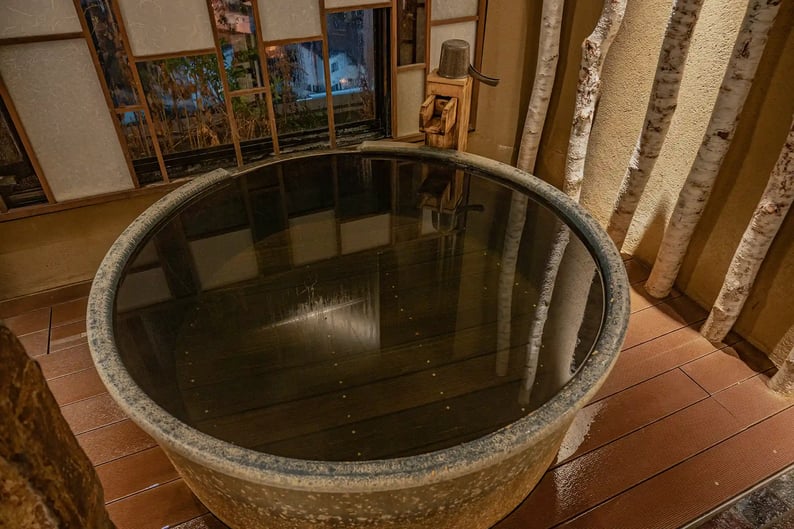
Design and in-room facilities are also key. Many Kaga ryokan are known for refined spaces where tradition meets modern sensibility. For instance, Beniya Mukayu works directly with renowned architects and craft artists, and features minimal, high-quality design that uses natural materials throughout—earthen walls, tatami, and more. Every room includes an open-air bath, creating a luxurious private world where you can bathe in silence (*3).
Also pay attention to sleep-focused touches such as soundproofing and lighting control: how well the room blocks corridor or neighboring noise, and whether you can lower lighting to create a quiet nighttime mood. If reviews mention “the property is quiet” or “I could relax and read in my room,” that’s often a sign of thoughtful hospitality and real care for guest comfort.
As for bedding, some ryokan offer Simmons mattresses or custom pillows. Because pillow height and firmness are personal, more inns now provide a selection of loaner pillows. If sleep quality matters to you, it can be worth requesting your preference when you book. The same goes for humidifiers and air purifiers—if you tell the ryokan in advance, everything goes more smoothly.
Next: hospitality and language support. Many upscale ryokan in Kaga Onsenkyo are accustomed to welcoming international guests, and more properties now offer English support at the front desk or concierge. For example, Beniya Mukayu can provide guidance and service in English (*4), so overseas guests can stay with confidence. You’ll also see more ryokan accommodating global needs, such as credit card payments and vegetarian-friendly meal options.
That said, allergy-friendly meals and religious dietary restrictions (vegan, halal, etc.) are not guaranteed everywhere. We’ll discuss dietary details in the next section, but if you have special requests, it’s essential to communicate clearly with the ryokan when you book and to coordinate thoroughly in advance. Many requests are difficult to fulfill if asked suddenly at check-in, since ingredients and preparation may not be available—so reach out at least several days before your stay.
Finally, consider the check-in flow. Luxury ryokan often choreograph a smooth welcome—from a lobby drink to escorting you to your room. Valet parking on arrival, careful luggage handling, and staff accompaniment are all part of the indulgence. If privacy is especially important to you, you may also want to consider ryokan that complete check-in procedures in your room.
Recently, some properties have introduced contactless check-in or advance online check-in. Use available information and inquiries to determine whether a ryokan offers the service style that genuinely helps you relax.
Checking Room Design and Bath Facilities
Because you’ll spend so much time in your room, its design and equipment strongly affect your comfort. Start with materials. Many luxury ryokan in Kaga use local wood, washi paper, Kutani-yaki tiles, and other natural or traditional materials, offering a soothing experience both visually and to the touch.
For example, guest rooms at the long-established Hakusan Shobutei (白山菖蒲亭) in Yamashiro Onsen feature diatomaceous earth plaster walls and striking washi art in the tokonoma alcove—its calm beige tones naturally settle the mind. Lighting and sound control matter as well. If a room uses layered indirect lighting and lets you adjust to softer illumination at night, it’s gentler on your eyes for late reading or work, and it helps you shift into a restful “sleep mode” before bed. If you’re sensitive to noise, choosing a reinforced concrete structure over wood construction, or rooms with soundproof doors, can be reassuring. Some ryokan even promote “soundproof rooms.”
Also check the water facilities that make a ryokan stay feel truly special: whether the in-room bath uses hot-spring water, the size and usability of the shower booth, the brightness of the vanity area, and how well amenities are stocked. These days, more ryokan offer hot-spring baths in every room. For example, as mentioned earlier, Beniya Mukayu has open-air baths in every room with free-flowing source water, so you can enjoy the onsen whenever you like without worrying about other guests (*3).
Meanwhile, some ryokan primarily use shared baths, so if an in-room bath is non-negotiable for you, confirm in advance. There can also be differences in what’s provided—bath towels, skincare basics (cleansing oil, lotion, etc.)—so if you have particular preferences, you may want to bring your own. For bedding, more properties now focus on premium textures not only for mattresses and pillows, but also sheets and pajamas.
Some ryokan offer a pillow selection service where you can choose your preferred firmness (for example, Araya Totoan (あらや滔々庵) provides three types of pillows, such as memory foam and buckwheat hull). In drier seasons, it’s also worth checking whether humidifiers are available. Use brochure photos, official websites, and reviews to judge whether the property truly creates a quiet, comfortable room environment.
Dining Style and Dietary Requests
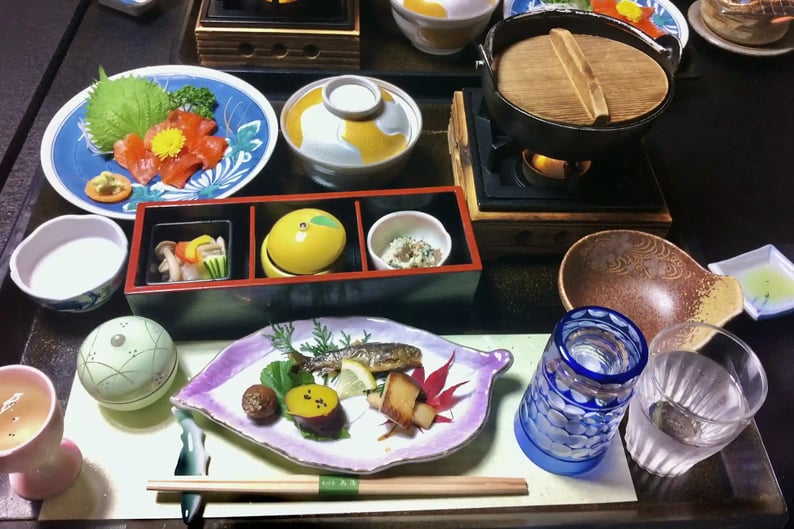
One of the great pleasures of a ryokan stay is the food. In Kaga Onsenkyo, the standard is kaiseki cuisine using plenty of local Kaga vegetables and seafood from the Sea of Japan—delicately prepared seasonal dishes you can savor at your own pace. Dining service differs by property, but two styles are most common: private dining-room kaiseki and in-room dining.
Private dining-room kaiseki means you eat in a private or semi-private space within the dining area, maintaining a sense of privacy and allowing you to relax without worrying about other guests’ eyes. In-room dining is exactly what it sounds like—your meal is served in your guest room—making it especially comfortable if you’re traveling with small children and want to dine without hesitation.
However, due to hygiene standards and service efficiency, more ryokan now do not offer in-room dining, so if you want it, you’ll need to choose a property that supports it. Now, let’s address dietary restrictions and preferences. Traditional kaiseki often relies heavily on seafood, meat, and dashi made from animal-based ingredients. At the same time, more travelers now request vegetarian or vegan options for health, lifestyle, or religious reasons.
In Kaga Onsenkyo, some ryokan may prepare special menus without animal-based ingredients if you contact them in advance, but properties that can do this consistently are still limited. The rule is simple: if you have requests, consult before your stay—always. Many ryokan let you declare allergies or disliked ingredients at the time of booking, and within that range they can often swap ingredients.
For example, if you say “I’m allergic to shellfish” or “I can’t eat raw fish,” most ryokan will adjust the menu if you tell them ahead of time. Vegan (strict plant-based) requests are more complex, since even vegetable-forward dishes like yudofu may still include dashi made with bonito flakes. Policies vary widely by ryokan, so contact them directly by phone or email and discuss your needs clearly.
In fact, even on ryokan booking forums, you’ll see advice along the lines of: most kaiseki meals include fish or meat, and you should ask in advance whether changes are possible (*3). Specialized requests such as gluten-free or halal are often approached in good faith by the ryokan, but complete guarantees can be difficult—so practical self-preparation may also matter.
For example, if you need gluten-free options, you might bring wheat-free soy sauce (such as tamari) to use at the table (and if you explain the situation, many ryokan will gladly support you). In the end, it really comes down to one thing: “contact and consultation in advance.” Your ryokan wants you to enjoy your stay, so don’t hesitate to share your needs.
If it’s truly difficult to accommodate, another option is to switch to a plan that dines out for both breakfast and dinner, rather than forcing yourself into ryokan meals. That flexibility is also a key to a satisfying trip.
Private Spas and Treatments
If you want wellness elements that ease day-to-day fatigue, pay attention to on-site spa facilities and treatment menus. Among Kaga Onsenkyo’s luxury ryokan, some properties include full-scale esthetic salons and relaxation facilities.
For example, Beniya Mukayu has a dedicated spa building called “Spa Entei (スパ猿蹄),” offering modern healing treatments that incorporate medicinal herbs and hot-spring-inspired rituals (*4). With a wide menu—body massage, facial treatments, foot care, and more—you can expect a deeper refresh when combined with onsen bathing.
If you want treatments, booking in advance is standard. Popular time slots (before or after dinner, or after breakfast) fill quickly, so it’s smart to reserve spa appointments at the same time you book your stay. You can ask about availability after check-in, but if you want to build it into your schedule, advance booking is the surest way. Beyond private spas, also check whether the property offers reservable private baths or private saunas.
Ryokan that provide paid, reservable private baths separate from the main bath let you soak without concern, whether you’re traveling as a family or as a couple. The long-established Hoshi (法師) also offers private baths with different themes by reservation, and more recently, some properties have begun promoting private spa experiences with saunas. According to Hoshi’s official information, the property has multiple rooms with open-air baths, private baths available to general guests, and a sauna attached to the main bath as well (*5).
Private-bath fees and time limits vary by property, and many operate by reservation. Some ryokan ask you to confirm availability and book at check-in, while others let you reserve in advance. Weekends and peak seasons get crowded, so if you definitely want a specific time, calling ahead to secure it is wise.
For avoiding crowds, there’s also a simple trick for public baths and saunas: the bath often becomes quieter during dinner and breakfast service. If you bathe while most guests are eating, you may get a near-private, spacious feeling. As for saunas, in today’s sauna boom, the focus is on respecting etiquette and quietly “totonou.” If others are present, keep conversation to a minimum, and enjoy self-löyly (pouring aromatic water over hot stones to create steam) only if the facility explicitly allows it.
In a private sauna, you can relax even more, and if permitted you may enjoy adding your preferred aroma oils. That sharpened, clear “totonou” sensation that comes from repeated hot–cold contrast bathing is a highlight we truly hope you’ll experience.
The Best Fit by Travel Style—With Kids, As a Couple, or Solo
Choosing a ryokan that matches your travel style is essential. If you’re traveling with children, you’ll feel more at ease with properties offering family-friendly facilities and services: kids’ spaces, ways to secure a private bath for family time, flexible meal timing, and more. For example, KAI Kaga, mentioned earlier, has a kids’ room stocked with picture books and toys. It also allows co-sleeping free of charge for up to the number of children age 6 and under (*2), which is gentle on your budget as well.
If you’re traveling with infants, confirm in advance what baby items are available for loan: cribs, diaper trash bins, hot-water pots for formula, and so on. Some ryokan also provide baby soap and bath chairs. Even in quiet luxury properties, private dining options let you eat without worrying about others, and using a private bath can make bathing with a baby safer and more comfortable.
If you’re traveling as a couple or spouses, it’s wonderful to choose a ryokan that values a grown-up atmosphere and lets you step into something truly out of the ordinary. Many Kaga ryokan are skilled at anniversary plans and special touches—arranging bouquets and cakes, offering champagne service in a private open-air bath, and other thoughtful gestures.
To fully enjoy time together, you may prefer a quiet ryokan with few rooms, or a property with a bar lounge where you can linger and talk late into the evening. Hanamurasaki (花紫) in Yamanaka Onsen, for example, offers river-view rooms with open-air baths, and you can also choose in-room dining—making it easy to enjoy a romantic stay without feeling watched.
Kaga Onsenkyo is also an excellent destination for solo travel. More properties now offer plans specifically for solo guests. Yunokuni Tensyo (ゆのくに天祥) in Yamashiro Onsen, for instance, offers a dedicated dinner plan and even a solo-traveler plan with esthetic treatments. You can design time entirely for yourself—reading in a quiet setting, or combining the trip with work as a “workation” to focus on writing or projects. Overall, many Kaga ryokan welcome solo travelers, and you won’t feel an “unwelcome alone” vibe. Rather, staff often watch over you with an appropriate, comfortable distance, so you can relax with confidence.
For workation suitability: Wi‑Fi is essentially standard now, and some properties even include co-working spaces. If you choose a ryokan with a later checkout (11:00 or noon), you can comfortably balance a morning bath and work without rushing. Whether you’re traveling with kids, as a couple, or solo, you’ll find a “best answer” in Kaga Onsenkyo. Keep these selection tips in mind, and you can create a stay with truly high satisfaction.
Kaga Onsen Water Qualities and Bathing Basics—Temperature, pH, How to Bathe, and Using the Sauna Well
The hot-spring water in Kaga Onsenkyo varies by location, and so do its commonly described characteristics. When you see mineral profile information in your ryokan’s guide or in tourism pamphlets, take a moment to check it. For example, Katayamazu Onsen is classified as a “sodium/calcium chloride spring,” and its source temperature is high—around 72°C (*1).
Chloride springs are sometimes called “heat-retaining waters” because salts can adhere to the skin and reduce sweat evaporation, helping you stay warm longer after bathing. They are traditionally said to be associated with easing sensitivity to cold, supporting recovery from fatigue, and helping with dry skin and muscle stiffness; after bathing in Katayamazu, many guests report a warmth that lingers from the core (*1).
Meanwhile, Yamashiro Onsen is classified as a “sodium/calcium sulfate–chloride spring (slightly alkaline).” Slightly alkaline waters are often described as “beautifying waters” that help remove old keratin and leave skin smooth, and Yamashiro has long been praised as “the waters of longevity.” Yamanaka Onsen is a “calcium/sodium sulfate spring,” a profile commonly introduced in Japan as supportive for everyday aches and circulation-related concerns.
Knowing these components can make bathing even more enjoyable. Some ryokan also have staff with certifications such as onsen sommelier, so if you’re curious, feel free to ask. (If you have a medical condition, are pregnant, or are traveling with health concerns, it’s best to consult a clinician about hot-bath safety beforehand.)
Next, let’s review the right way to bathe and basic etiquette. Japanese onsen culture includes long-standing customs and manners, but you don’t need to overthink it—if you keep a few essentials in mind, you’ll be fine.
Before entering, rinse yourself (kakeyu / kake-mizu) to help your body adjust. If you plunge in immediately, you can get lightheaded, so start by pouring water over your body—beginning with hands and feet, and moving from areas farther from the heart—so your body gets used to the temperature. Then, instead of staying in for a long stretch, it’s ideal to bathe in shorter intervals.
Especially with hotter water, step out after about 3–5 minutes at first, sit on a stool in the washing area, and rest briefly. This “interval break” helps prevent overheating and dizziness. When you exit the bath, also be careful not to stand up suddenly. While you’re warming up, blood circulation increases and blood pressure shifts.
According to onsen experts, when leaving the tub, it’s good to pause in a half-body-bath posture—sit on the edge, rest your legs in a footbath-like position for a moment, then stand up slowly (*2). Avoiding abrupt posture changes helps reduce the risk of dizziness caused by a temporary drop in blood pressure.
Don’t forget hydration after bathing. You sweat more than you expect in an onsen, so replenish water and salts with cool water or a sports drink. Some ryokan provide cold water or mugicha (barley tea) in the changing area. Whether you rinse off at the end (a quick final rinse over the body) depends on the spring type. With gentle, heat-retaining waters such as chloride springs or bicarbonate springs, some guides recommend not rinsing with tap water, leaving mineral components on the skin (*3).
On the other hand, with more stimulating waters—strongly acidic springs or sulfur springs—it can be wiser to rinse thoroughly in the shower to avoid skin irritation (*4). Many Kaga Onsenkyo waters are considered relatively gentle, so it’s generally fine to finish by lightly splashing onsen water over yourself and stepping out.
If a little mineral content remains on your skin, you may stay warmer longer, and the skin-smoothing feel can linger too. After bathing, put on your yukata and cool down for a while in the post-bath area. Some ryokan even offer “after-bath treats” like chilled amazake, beer, or milk—one sip can feel like pure happiness as it sinks into your warmed body.
How to Enjoy the Sauna and Cold Bath
If you love saunas, using a sauna at a hot-spring ryokan can easily become a trip highlight. In Kaga Onsenkyo as well, some ryokan have dry saunas or mist saunas attached to their public baths. The essentials of sauna enjoyment are etiquette and your own pace. First, respect the quiet. This is a space where you focus on heat and recovery, so keep chatting to a minimum and devote yourself to resetting body and mind.
If you need to speak, do it softly and briefly. When others are present, entering in silence is generally the norm. Even if there’s a TV or music, seasoned sauna-goers try to make as little noise as possible and simply let the heat do its work. Once you’ve perspired enough, step out without pushing yourself, rinse off sweat with water, then move to the cold bath.
Some Kaga ryokan are set up so you can enjoy the full flow—sauna → cold bath → rest (outdoor air bathing). For example, the public bath at Beniya Mukayu includes an indoor bath, an open-air bath, and a dry sauna; after the sauna, you can refresh in a cold bath with medicinal herbs floating on the surface. In the cold bath, ease in slowly—starting with hands and feet, then moving in further. Even if it feels shockingly cold at first, take deep breaths; after 20–30 seconds, it often starts to feel manageable. After the cold bath, sit on a bath chair or bench and rest your body while breathing in fresh air.
If the ryokan has an outdoor resting area, be sure to feel the breeze. In spring and summer, fresh green and starry skies; in autumn and winter, crisp, cool air—each season reaches your senses and can amplify the “totonou” sensation. If you have the space to yourself, you may even be able to enjoy self-löyly. When you pour the provided aromatic water over the sauna stones, hot steam rises instantly and the room fills with fragrance. That said, if other guests are present—or if the ryokan does not permit it—doing löyly on your own is not allowed. Likewise, towel-whipping to fan heat (neppa) should be avoided when others are nearby.
If you can book a private or in-room sauna, you can enjoy sauna and cold-bath time privately with your spouse or friends. Repeat the hot–cold contrast cycle within your time slot, then drink cold water at the end—you’ll likely be wrapped in an extraordinary sense of clarity and refreshment. Even for seasoned, well-traveled adults, Kaga’s onsen × sauna experience can bring a pleasantly new kind of restoration.
Recommended Kaga Onsen Ryokan—Find Your Best Match by Type
From here, we’ll introduce highly regarded ryokan in Kaga Onsenkyo by type. We hope this helps you choose the perfect “this is the one” for your goals and preferences. As evaluation axes, we’ll look at privacy, hot-spring facilities, service responsiveness, family-friendliness, and more, and we’ll pick standout choices in each category. These are all reliable properties you can consider today, though policies and facilities can change over time. Let’s go through them one by one.
Ryokan with Strong Open-Air Baths in Guest Rooms
If you’re thinking, “I want to soak whenever I like in my own room,” or “I want luxurious onsen time without worrying about other eyes,” then ryokan with well-equipped open-air baths in guest rooms are ideal. Among them, Beniya Mukayu in Yamashiro Onsen stands out: all 16 rooms have private open-air baths with free-flowing source water (*1).
Each room features a different style of semi-open-air bath—cypress wood, Shigaraki ware, and more—and you can bathe whenever you like, day or night, while enjoying garden views. Also popular is Araya Totoan (あらや滔々庵), a long-established ryokan in Yamashiro Onsen founded around 400 years ago, which equips some suites with open-air baths accented by Kaga ceramics. It’s beloved because you can enjoy hot springs in a private space while still staying in a traditional inn with deep history.
In Katayamazu Onsen, Kasui-kyo (佳水郷) highlights lake-view rooms with open-air baths. From the bath on your terrace—set as if it reaches out over the lake—you can claim the sunset over Shibayama-gata or the early-morning water surface for yourself. Beyond privacy, pay attention to water freshness as well. Many ryokan supply water directly from their own sources or via dedicated pipes, often offering non-circulated, non-diluted free-flowing baths. In Awazu Onsen, Hoshi also offers special rooms with open-air baths in its annex “Enmeikaku.”
Staying at one of the world’s oldest-class inns with a 1,300-year history—then savoring a hidden-style bath in your own room—feels like the kind of luxury you want to experience at least once in your life. Rooms with open-air baths tend to book quickly and cost more, but the value is absolutely there. For anniversaries and special trips, they’re worth serious consideration. If only some rooms include open-air baths, availability is limited, so book early. Check room types on official sites and call to confirm vacancies so you can secure what you want.
Ryokan with Private Baths and Private Saunas
If you want to enjoy hot springs without holding back as a family or group, ryokan with reservable private baths (family baths) or private saunas are a perfect fit. In Kaga Onsenkyo, many properties offer private baths on a paid reservation basis. For example, Hanatsubaki in Yamanaka Onsen has four different reservable open-air baths—rock baths, cypress baths, and more—and if there’s availability, you can reserve on the day.
A large property like Yunokuni Tensyo in Yamashiro Onsen is also known for its scenic private baths, used one group after another in 30–45 minute blocks. Prices vary by property, but a typical range is about ¥2,000–¥4,000 per group. Cost can change depending on size, view, and bath type. If advance reservations are available, calling before check-in makes your day much smoother. As for private saunas, they’re still not very common in Hokuriku, but Kaga Onsenkyo does have examples.
At the newer property Sora in Katayamazu Onsen, there’s a plan where your group can reserve a Finnish-style private sauna building. With self-löyly and an outdoor air-bathing space, you can enjoy a full, authentic “totonou” experience.
Rooms with private saunas are also worth noting. For example, Yunokuni Tensyo has a sauna-equipped suite where you can go back and forth between sauna and cold bath as many times as you like, without anyone interrupting. When using reservable facilities, basic manners include being on time and tidying up afterward. Arrive at the waiting area at least five minutes before your slot, and leave promptly when your time ends.
If an infant needs to wear a swim diaper, confirm in advance whether it’s permitted even in a private bath (policies differ by ryokan). If you feel unwell during your slot, don’t push yourself—step out and contact staff. Even in private spaces, it’s important to follow minimum rules for safety and comfort while you enjoy a blissful, deeply relaxing time. Since private baths and saunas fill quickly on weekends and peak seasons, planning early is strongly recommended.
Ryokan with English Support for International Guests
If you’re visiting from overseas, or traveling with family or friends who share English as a common language, staff language support becomes a major point. Many quality ryokan in Kaga Onsenkyo have strengthened English support in response to inbound demand.
Beniya Mukayu in Yamashiro Onsen, for instance, is accustomed to providing service in English at both the front desk and in-room guest support, and it welcomes many international travelers. Information pamphlets and in-house signage include English, and the official website supports multiple languages (*4). At Kasui-kyo in Katayamazu Onsen as well, English-speaking staff are available, allowing overseas groups to stay comfortably.
On the payment side, most ryokan accept major credit cards (Visa, Mastercard, Amex, JCB, etc.), and recently some properties have added contactless payments and e-money options. Also check multilingual in-house guidance. Whether instructions for bathing, dining menus, and evacuation route maps are readable in English can make a big difference in how secure international guests feel.
At Hoshino Resorts KAI Kaga, for example, in-house descriptions and activity introductions support not only English but also Chinese and Korean, and international staff members also work on site. Some ryokan prepare English guides to onsen etiquette as well, which is especially helpful if it’s your first time bathing in Japan. In terms of payments, more properties now use card terminals that don’t require a PIN, and some support Apple Pay and similar services—convenient if you don’t carry much cash. Free Wi‑Fi is standard now, so you won’t need to worry about connectivity either.
Overall, ryokan with strong English support often also deliver a higher level of hospitality across the board. Even the speed and clarity of their response when you email in English can be a useful indicator. At Kaga Onsenkyo, you can experience Japan’s traditional culture with confidence while receiving internationally comfortable care. If you’re welcoming overseas guests, you’ll find plenty of ryokan you can recommend with real assurance.
Family-Friendly Ryokan for Traveling with Children
A hot-spring trip with small children comes with plenty of considerations, but Kaga Onsenkyo also offers a strong lineup of family-welcoming ryokan. There are several ways to judge whether a property is truly child-friendly. First: flexibility in meal timing. A ryokan that can start dinner earlier to match a child’s rhythm, and that offers private dining so you don’t worry about bothering others, is ideal.
At Kissho Yamanaka in Yamanaka Onsen, you can choose dinner start times beginning in the 5 p.m. hour, and you can enjoy a relaxed family meal in a private dining setting. Next: private bath availability. If you want to bathe together as a family, public baths can make you feel you must be extra considerate, but a private bath lets you relax even if your child suddenly cries.
As mentioned, Yunokuni Tensyo in Yamashiro Onsen has scenic private baths and is popular with families. If you’re traveling with a baby, also focus on baby-item loans and services. For example, Hatori offers free loans of baby bath chairs and baby beds, and it allows you to bring baby food at mealtimes. Smaller details—whether diaper trash bins are available, whether you can request hot water for formula—can often be confirmed in official site Q&As.
In quiet luxury ryokan where calm is emphasized, parents may need to gently remind children not to run in corridors, but if staff welcome families warmly, you won’t feel uncomfortable or out of place. In that sense, some properties like KAI Kaga also offer kid-oriented programs (such as Kaga shishi-mai lion dance experiences), designed so your family can share memorable moments together.
If you’re concerned about nighttime crying, choosing a cottage-style property or a ryokan with detached rooms can be a smart move. If you’re farther from other rooms, you won’t worry as much about sound. At Hoshi in Awazu Onsen, there are also detached tatami rooms facing a spacious Japanese garden, making it comfortable even for three-generation trips. Overall, many ryokan in Kaga are relatively accommodating to children, often providing smaller yukata sizes and kids’ slippers. With so many family-friendly options, you can enjoy a hot-spring journey without feeling you have to brace yourself—let it be a trip where parents and children both truly relax.
Choosing Ryokan Across Kaga’s Four Hot Springs—Yamashiro, Yamanaka, Katayamazu, Awazu
To really understand Kaga Onsenkyo, you need to know the distinct personalities of its four hot-spring areas—Yamashiro, Yamanaka, Katayamazu, and Awazu. Each differs in natural setting, town atmosphere, and historical background, and that changes the kind of stay that suits you best. Here, we’ll introduce the appeal of each onsen town, along with the characteristics of representative ryokan there, so you can choose a destination that fits your interests.
Yamashiro Onsen|Savor Crafts and History
Yamashiro Onsen is one of the largest hot-spring towns in Kaga Onsenkyo and boasts 1,300 years of history since its opening. Legend says that during the Nara period, the high priest Gyoki—traveling to train near Mt. Hakusan—saw an injured crow healing its wounds in a spring, and discovered that hot-spring water was bubbling up there. This is said to be the origin of Yamashiro Onsen, and its symbol mark features the three-legged Yatagarasu crow (*1).
At the heart of the town stands Kosoyu (古総湯), a beautiful wooden building that recreates a Meiji-era public bathhouse. Around it spreads a charming warren of lanes known as Yunogawa (湯の曲輪), a streetscape often described as the original scenery of the onsen town (*1). One of Yamashiro’s great strengths is its natural affinity with traditional crafts and the arts.
It’s one of the birthplaces of Kutani-yaki, a signature Kaga craft, and near the onsen town you’ll find the Kutani-yaki Kiln Ruins Exhibition Hall and the Ishikawa Kutaniyaki Art Museum. At the museum, you can connect with more than 360 years of Kutani-yaki history, then enjoy tea on the second-floor café while appreciating the vessels themselves (*2).
Yamashiro was also loved by writers and artists; many cultural figures, including Akiko Yosano and Rosanjin, stayed here. Some ryokan even display their art collections, letting you enjoy an artful onsen time. A top recommendation, as mentioned earlier, is Beniya Mukayu. It’s one of Yamashiro’s most luxurious stays, and its refined spaces—harmonizing with the forest across the grounds—embody the concept of “richness in having nothing.” In the morning, the owner couple offers matcha served in a nodate-style outdoor tea moment, adding a quietly luxurious cultural experience to your stay.
If you want to taste Yamashiro’s character even more deeply, the long-established Araya Totoan is also unmissable. It’s known for hosting the Meiji-era literary master Kyoka Izumi, and its reputation rests on attentive service only possible in a small ryokan with just 10 rooms. Throughout the property, Kutani-yaki and local lacquerware adornments are carefully placed, and even the tableware at meals is often made by Yamashiro ceramic artists—making the “marriage of vessels and cuisine” one of the pleasures.
Its hot springs are known for being relatively hot, offered just as the source provides, and the bathhouse name—“waters that flow and flow”—matches its abundant volume. Yamashiro Onsen suits a stay where you admire crafts and feel history’s breath. Museum and gallery visits, ceramic painting experiences, and browsing local gallery shops for vessels—this is the kind of trip that will stimulate your senses.
Yamanaka Onsen|Immerse Yourself in Gorge and Forest
Yamanaka Onsen opens along the deep Kakusenkei Gorge carved by the Daishoji River. It’s also famous as the place where Matsuo Basho wrote, “Yamanaka ya / kiku wa taoraji / yu no nioi,” and stayed for nine days during his Oku no Hosomichi journey. Basho praised Yamanaka’s waters as sinking into the core of the body and nourishing both body and spirit, and the gorge’s seasonal beauty is a joy year-round (*3).
Spring cherry blossoms, summer green, autumn foliage, winter snow—Kakusenkei is a place where walking is rewarding in every season. Especially from spring through autumn, platforms called kawadoko are set up along the river, becoming a popular spot where you can enjoy tea and sweets to the sound of the stream (*3).
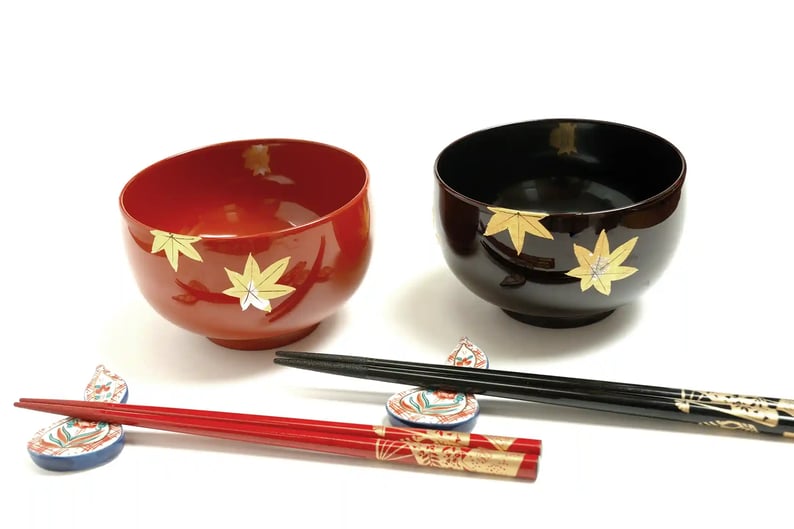
Yamanaka’s appeal is its sense of unity with nature. If you wake early and walk the riverside path, clear air and birdsong greet you. After enjoying a morning bath at the famous public bath “Kiku no Yu,” it’s delightful to stroll Yuge Kaido, a street lined with shops for the traditional craft “Yamanaka lacquerware.” Yamanaka lacquerware is so renowned for wood-turning craftsmanship that it’s called “Yamanaka of the wood base,” and you can find beautifully grained bowls, chopsticks, accessories, and more at approachable prices (*2).
Some shops also offer studio visits and lacquer painting experiences, so taking home a piece you made yourself can become a wonderful travel memory. With many properties emphasizing quiet, Yamanaka Onsen can deliver an ideal adults-only restorative trip. At the top of recommended stays is Hanamurasaki, built along the gorge. Every room faces the Daishoji River, and from your open-air bath you can claim the greenery and river sounds as your own. With a relatively late checkout at 12:00, you can enjoy your morning without rushing—soaking while gazing out at the gorge’s beauty.
Another popular option is Kissho Yamanaka, a service-rich ryokan with an “everything included” feel: morning taiko performances by local geisha in the lobby, complimentary post-bath beer, and even free late-night soba as a light meal. With footbaths and private baths, there’s plenty to enjoy without leaving the property. Whether you want to hole up and bathe endlessly, or head out for scenic walks, a Yamanaka stay truly deserves to be called a retreat held by forest and stream.
Katayamazu Onsen|A Waterside and Sky Retreat
Katayamazu Onsen is the only hot-spring area in Kaga Onsenkyo that rises right beside a lake. It faces the expansive lagoon-like Lake Shibayama-gata, where open views let sky and water seem to blend together. Compared with the other three hot springs, it’s newer—opening in the Meiji period—but that also means modern resort development has progressed, and there are many stylish large-scale ryokan.
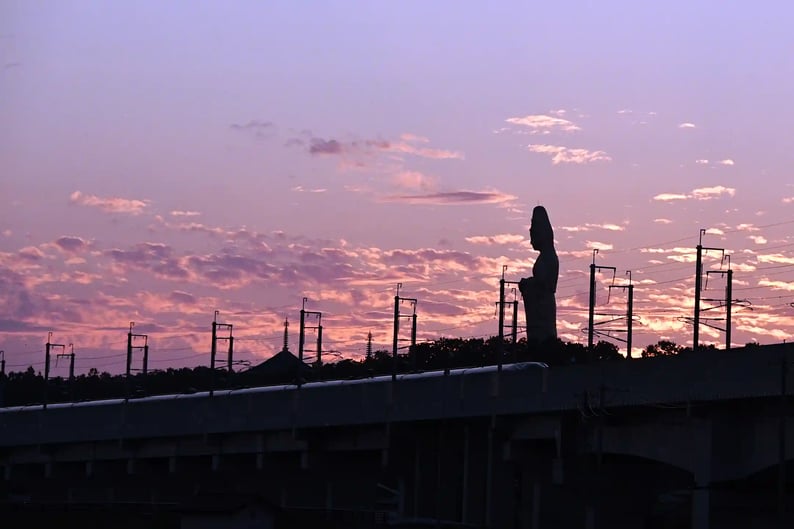
The highlight of Katayamazu is, without question, the lake scenery. By day, you can look toward the distant Hakusan mountain range and enjoy sweeping views from the lakeside path. At dusk, the lake surface turns orange and Mt. Hakusan becomes a silhouette—an unforgettable sight. At night, the floating Ukimido hall is illuminated, and in summer, fireworks are launched every evening (*3). Reflected on the lake, the fireworks add a gentle beauty to the quiet onsen town.
The water quality is a chloride spring, rich in minerals and widely known in Japan for warming you from the core and helping you stay warm afterward (*3). It’s often introduced as supportive for sensitivity to cold, which many people experience, and it’s loved as a hot spring that carries the blessings of the lagoon. A recommended stay in Katayamazu is Kasui-kyo. Every room is lake-view, and from the spacious public bath and open-air bath you can also look out over Shibayama-gata. In an infinity-style open-air bath connected to the indoor bath, you can experience the strange, beautiful sensation that the bath surface and lake surface have become one (*3).
Another popular option is Kohan no Yado Morimoto, also standing by the lake, known for its views from open-air baths and footbaths. Katayamazu suits a modern resort-style stay. The town is laid out flat in a grid, making rental-bike exploration easy, and around the lagoon you’ll find parks and photogenic spots such as Ukimido.
Many ryokan also offer hotel-like comfort—Western-style lounges, spas, pools, and more. In the openness created by sky and lake, you can truly forget daily life and relax into a retreat experience. Especially memorable are open-air baths at sunset and early-morning walks along the lakeside—these are Katayamazu signatures.
Awazu Onsen|The Calm of an Ancient Spring
Awazu Onsen is an ancient spring said to have opened in Yoro 2 (718) by the monk Taicho. It’s considered Hokuriku’s oldest hot spring, and within Kaga Onsenkyo it’s the only one that belongs to Komatsu City, located slightly apart from the other three in the foothills of satoyama countryside. It’s a quiet onsen town that preserves the feel of a “classic therapeutic hot-spring retreat,” and its compact streets carry a gentle nostalgia.
Its founding legend is connected to faith in sacred Mt. Hakusan: Taicho, guided by an oracle from Hakusan Gongen, had this land dug, where a spiritual spring emerged and saved people suffering from illness. The waters of Awazu have continued flowing for 1,300 years, and there’s even a saying: “Bathe once and you become beautiful; bathe twice and you won’t know illness” (*4).
Its water is described as a 100% pure sodium-rich mirabilite spring—colorless and clear, yet with a silky, smooth feel on the skin. It’s often introduced as associated with easing everyday aches and supporting circulation, and its pleasant texture is sometimes linked with “beauty” impressions in Japanese onsen culture (*4).
The symbolic ryokan of Awazu is Hoshi. A guardian-of-the-waters inn that has continued since the opening era, it’s an exceptionally old-established ryokan where the 46th-generation owner still protects the noren curtain; it has even received Guinness recognition as one of the world’s oldest-class inns. Inside, there’s a strolling-style grand garden where you can enjoy seasonal beauty.
Its main bath “Junibo no Yu” uses free-flowing water from its own dug source, generously filled with soft water quality. Hoshi also offers programs that only a historic ryokan can: early-morning garden walks and even a morning devotion experience (sutra chanting at the property’s guardian shrine). Within the “luxury of doing nothing,” you may still find learning and discovery.
Another notable Awazu stay is Yumoto no Yado Showaso (湯元の宿 昭和荘). It’s a small ryokan with just eight rooms, but it has its own source, and its indoor bath is open for bathing 24 hours a day—beloved even by local guests. Wild herb tea served after bathing and sweets handmade by the proprietress are popular, and it’s praised for a comforting, home-like warmth.
Awazu Onsen isn’t flashy, but it’s a quiet hot-spring village close to the satoyama landscape. Nearby, you’ll find places such as Natadera (a historic temple known for autumn foliage) and Yunokuni no Mori (a crafts-themed park), so you can enjoy nature and culture at an unhurried pace. Rather than racing through attractions, this is a destination that suits staying in one place—reading, walking, and spending time with yourself.
If you especially want to savor the “luxury of doing nothing” loved by literary-minded travelers and true connoisseurs, Awazu’s ancient waters are likely to bring you real calm. Time feels slower here, and you can forget the rush of daily life as your body and mind gently loosen.
Model Courses—How to Spend One Night / Two Days and Two Nights / Three Days
Finally, here are model courses to help you enjoy Kaga Onsenkyo efficiently. For first-time visitors, we’ve prepared two options: a one-night/two-day plan, and a two-night/three-day plan that’s also recommended for repeat visitors. The first is ideal for a short weekend-style trip that still captures Kaga’s essence, while the second is a relaxed plan that can also incorporate Kanazawa sightseeing.
You can certainly visit all four hot-spring areas, but the key is balancing travel time with rest. For a comfortable pace, a good adult-travel rule is to limit major sightseeing to one or two spots per day, and spend the rest of your time slowly enjoying hot springs and your ryokan. Now, let’s look at the specific plans.
One Night / Two Days Model
〈Day 1〉 Arrive at Kagaonsen Station in the afternoon → Go straight to your ryokan via the property’s shuttle → Check in around 3 p.m., take a breath with a welcome drink in your room (such as Kaga bōcha) → Head right to the public bath. In the early afternoon on arrival day, public baths are often quieter, so you can enjoy a luxurious soak. Let the hot springs ease away your travel fatigue.
After bathing, rest in the lounge or lie down in your room. Toward evening, enjoy cooling down by an irori hearth, or a local performing-arts show in the lobby (if your ryokan offers one). Dinner begins around 6 to 7 p.m. Savor kaiseki cuisine featuring Kaga vegetables and seafood from the Sea of Japan. Do try local drinks too—beer, or regional sake such as “Kikuhime.”
After dinner, once your stomach has settled a little, enjoy one more soak in the night bath. With lighting lowered, the atmosphere feels more dreamlike than during the day. A chilled cup of Kaga bōcha or milk offered in the changing area can feel wonderfully refreshing on your warmed body.
After that, enjoy whatever night ritual your ryokan provides. At KAI Kaga, for example, you can see a Kaga shishi-mai lion dance show in the lounge, while Kissho Yamanaka offers complimentary late-night soba after bathing. Around 10 p.m., before bed, slip into your room’s open-air bath and reset the day while gazing at a sky full of stars. Then sleep, feeling the “luxury of doing nothing.”
〈Day 2〉 Wake up around 7 a.m. Open the window, breathe in fresh morning air, and do a light stretch. If you like, join an early-morning zazen session or a tai chi class (depending on the ryokan). After a morning bath, head to breakfast. Enjoy gentle nourishment—Japanese breakfast dishes rich in local vegetables, freshly made onsen rice porridge, miso soup with Kaga miso, and more.
After breakfast, until checkout (around 10 or 11 a.m.), enjoy a walk or explore the property. If there’s lobby coffee service, sip a cup and don’t forget to browse for souvenirs. After checkout, leave your luggage at Kagaonsen Station and head out for half-day sightseeing. A top recommendation is exploring the Yamashiro Onsen townscape. Take the local bus about 15 minutes from the station, get off at “Kosoyu-mae,” admire the retro Kosoyu building, and take a break at Hazuchiwo Chaya next door with a Kaga bōcha soft-serve treat. A Kutani-yaki painting experience at the Kutani-yaki Kiln Ruins Exhibition Hall (reservation required) can be done in about an hour, so you might try it too.
For lunch, enjoy local specialties like jibuni stew or a Kaga-vegetable set at a restaurant in Yamashiro Onsen. Around 2 p.m., return to Kagaonsen Station and head home by limited express or Shinkansen. If you’re returning toward Tokyo, the direct “Kagayaki” lets you get home smoothly with no transfers (*1). A short trip, but one that condenses hot springs and Kaga culture into a satisfying essence—well done, and welcome back.
Two Nights / Three Days Model
〈Day 1〉 Arrive at Kanazawa Station in the morning. Store luggage in a coin locker, then start with classic Kanazawa sightseeing. Stroll Kenrokuen Garden and Kanazawa Castle Park, and enjoy the historic streets of Higashi Chaya District. For lunch, indulge in a seafood rice bowl at Omicho Market. Around 2 p.m., leave Kanazawa for Kagaonsen Station by JR limited express (about 25 minutes).
After arriving, head straight to your ryokan via shuttle and check in. First, warm up in the public bath, then relax in the lounge afterward. Before dinner, you might join a Kaga cultural experience hosted by the ryokan (such as watching Kaga shishi-mai or Kutani-yaki painting). Enjoy Kaga kaiseki dinner slowly at the property, then spend the night as you like—sampling local sake in the bar, or gazing at stars from an open-air bath.
〈Day 2〉 After a morning bath and breakfast, check out around 10 a.m. Leave your luggage at the ryokan and go out for a hot-spring “bath-hopping” day. Move to a different onsen town to enjoy a new kind of water and streetscape. For example, if you stayed in Yamashiro Onsen on night one, head to Yamanaka Onsen for night two. You’ll arrive in about 30 minutes by shuttle bus or taxi. In Yamanaka, start by walking Kakusenkei Gorge, then relax at a kawadoko platform. For lunch, try soba served in Yamanaka lacquerware bowls, or the local B‑grade treat “Yamanaka Onsen Ontama Soft” (soft-serve with an onsen egg-style topping).
In the afternoon, you can also try a day-use bath at the public bath “Kiku no Yu” (it’s a fun way to feel a sense of local interaction at a community bath). Around 3 p.m., check in to your second-night ryokan. After walking the onsen town, soothe your pleasantly tired body again in hot springs, then enjoy the property’s Kaga cuisine for dinner. On the second night, take it slow—reserve a private bath, or book a massage to deepen your relaxation.
〈Day 3〉 Sleep in, then after breakfast, pack and enjoy your final soak until checkout. After leaving, have the ryokan take you to Kagaonsen Station and store your luggage. If you have time before your train, stroll the Daishoji area within walking distance of the station. Daishoji was once a castle town for a branch of the Maeda family of the Kaga Domain, and it remains a quiet town with former samurai residence sites and temples.
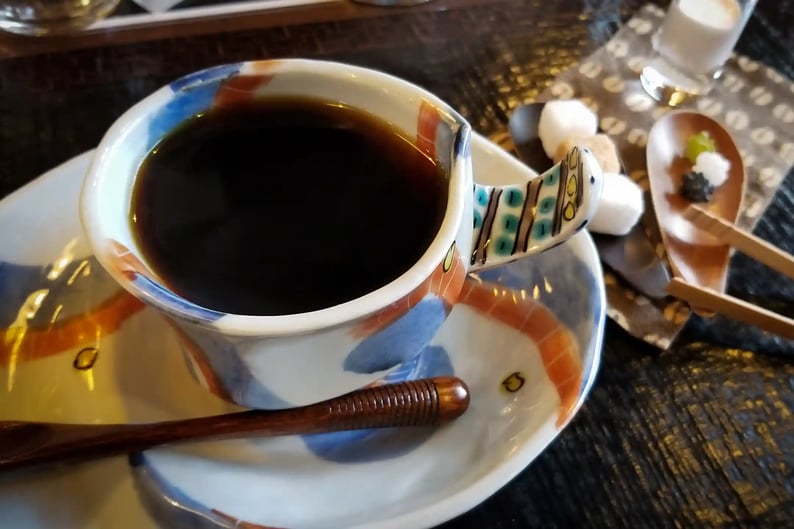
It’s also connected to Kutani-yaki origins, and the Ishikawa Kutaniyaki Art Museum is about a 15-minute walk from the station. How about reflecting on your trip over a coffee served in Kutani-yaki vessels at the museum’s second-floor café? When it’s time, board the Shinkansen from Kagaonsen Station. Toward Tokyo, the direct “Kagayaki” takes about 2 hours 40 minutes with no transfers (*1). Toward Osaka, connections via limited express + Shinkansen take about 3 hours (*1).
That’s the two-night/three-day model course. By combining Kanazawa and Kaga Onsenkyo at a comfortable pace, you can enjoy both historic-city sightseeing and a true hot-spring ryokan stay (*2). You could also switch the order—staying one night in Kaga first, then spending the second night in Kanazawa (*2). What matters most is balance: movement, sightseeing, and rest. For travelers who value comfort and recovery, kaga onsen is an ideal destination to reset your rhythm and return home lighter.