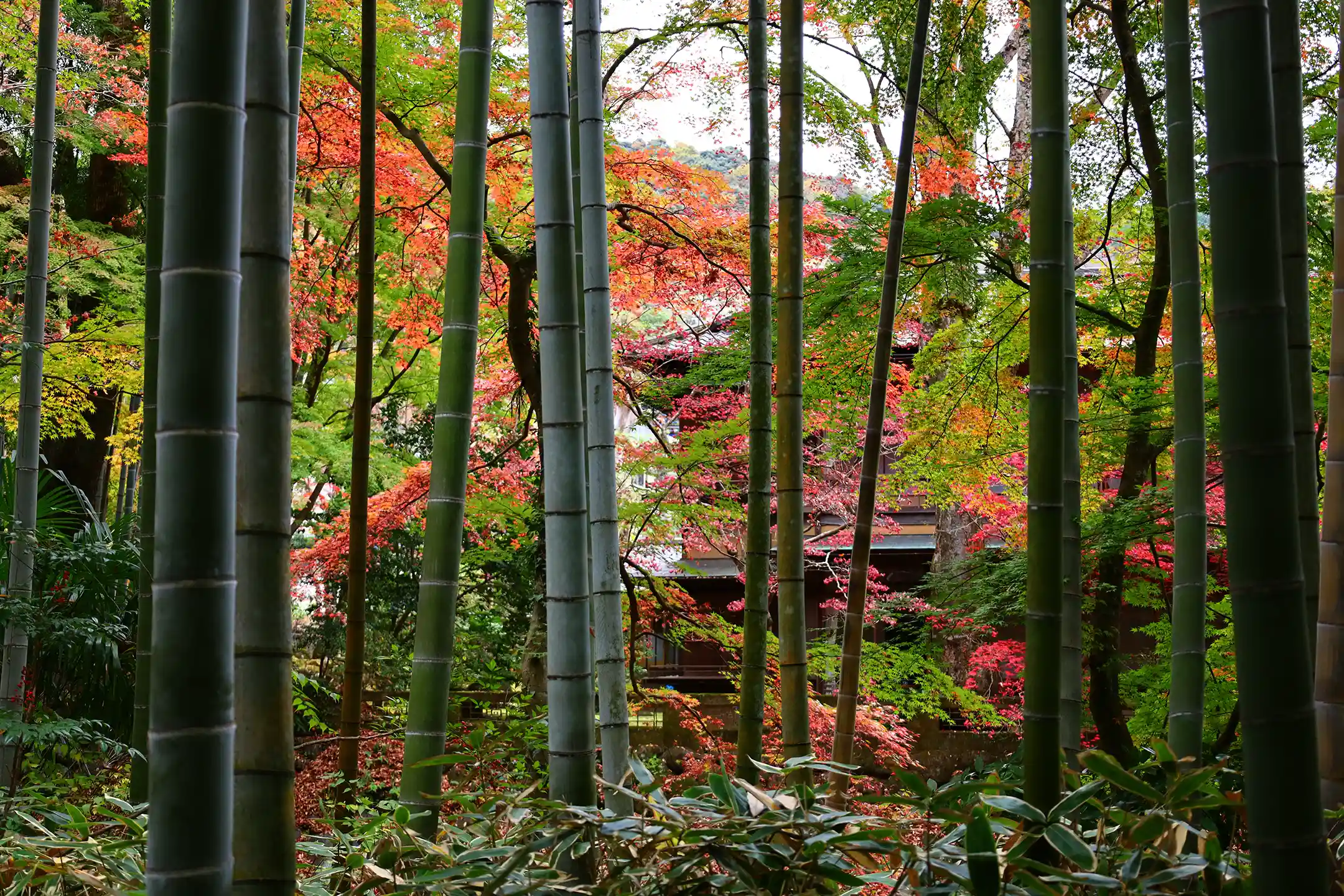
Kyoto’s onsen ryokan offer an exceptional stay where the depth of traditional culture and modern sophistication come together in perfect balance. From an open-air bath cradled by quiet nature, you can take in scenery that shifts with the seasons, then return to a Japanese-style space that recalls the calm of a tea room and let your mind settle—an extraordinary luxury that feels like stepping into a work of art, far removed from everyday life.
What makes these ryokan so compelling is how you can savor “the real Kyoto” through all five senses: architecture shaped by Kyoto’s aesthetic values, deeply attentive hospitality, and cultural programs that spark your intellectual curiosity. In this article, you’ll find ways to enjoy Kyoto onsen ryokan that suit a culture-seeking explorer.
From spaces where tradition and innovation harmonize, to encounters between fine cuisine and art, to sustainable initiatives designed with the future in mind, we’ll approach the appeal of Kyoto onsen ryokan from multiple angles. As you soak at an unhurried pace, why not immerse yourself completely in the culture and refinement that only Kyoto can offer?
Serene Luxury at a Private Onsen Ryokan in Kyoto (private onsen kyoto)
The Hidden Appeal of a Private, Retreat-Like Onsen at a Kyoto Ryokan
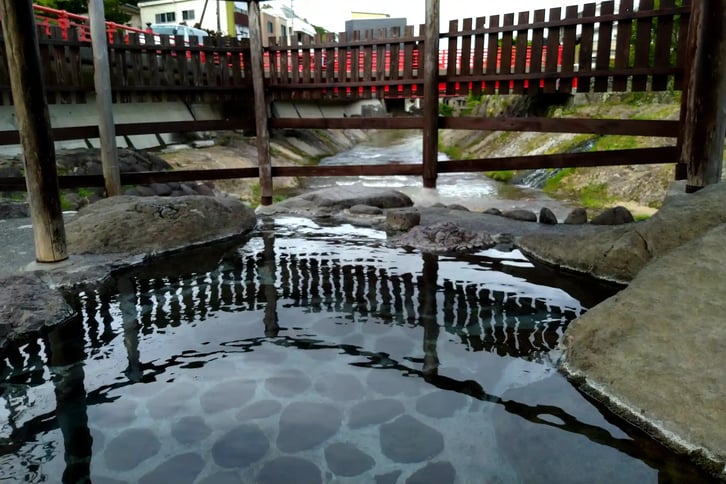
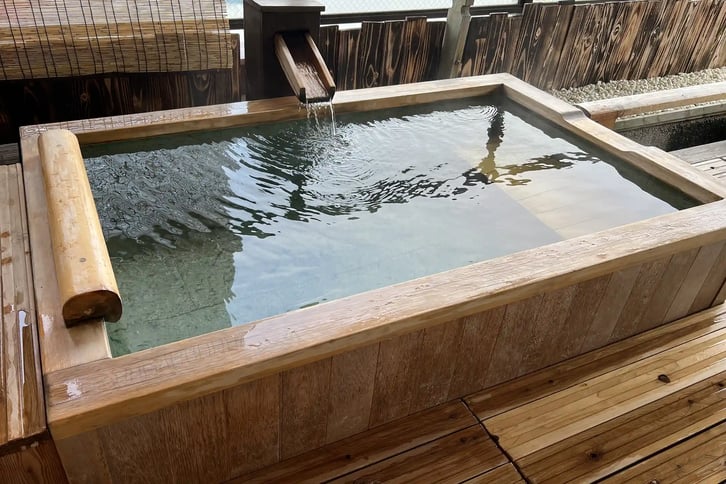
A private onsen with its own open-air bath attached to your room is the ultimate indulgence—one that lets you enjoy a soak without worrying about anyone else’s eyes. After a long day walking through Kyoto, slipping into your in-room open-air bath brings a restorative calm that no one can interrupt. Unlike a shared public bath, it’s a completely private space, so you’re far less likely to feel self-conscious about being nude or worry about tattoos while bathing (*1).
And even if you’re traveling as a couple or married pair who can’t bathe together in gender-segregated public baths, your in-room onsen lets the two of you enjoy the experience at your own pace, without watching the clock (*1). If you listen closely, you’ll hear only the wind moving through the trees and the soft sound of water. It’s a special moment in which you can “have” Kyoto’s quiet nature all to yourself—and feel your body and mind gradually loosen.
In fact, when you sink into an open-air bath set within a spacious, modern Japanese-style room, the natural view before you works in tandem with the hot water to make the bustle of daily life fade away, gently restoring both body and spirit (*2). The pleasure of enjoying high-quality natural hot spring water—whenever you like, as much as you like, flowing freely—is exactly what makes a true “hideaway” so extraordinary. In a private space where no one disturbs you, the time you spend surrendering to a soak while sensing Kyoto’s four seasons may become a once-in-a-lifetime memory.
Architecture and Design That Create a Kyoto-Only Sense of Privacy
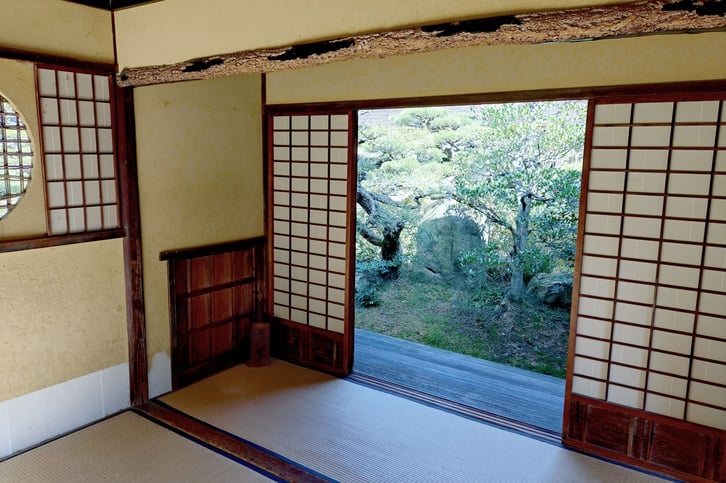
Kyoto’s private onsen ryokan are infused with “Kyoto-ness” in their architecture and design as well. Whether it’s a guest room incorporating sukiya-zukuri (tea house architecture) or a hidden inn created by renovating a traditional Kyoto machiya townhouse, these properties often strip away unnecessary decoration and instead place artisan-crafted furniture and washi paper lighting within the space—creating an atmosphere of refined quiet and warmth (*3).
The beauty of “ma,” the intentional breathing room created by tatami floors and soft light filtering through shoji screens, is Kyoto’s long-cultivated aesthetic in itself (*4). Intricate local craftsmanship appears even in the smallest fittings, and by giving each room its own distinct character, these ryokan offer guests an experience that feels truly one of a kind (*4).
For example, in a space where the warmth of wood, the gentle glow of washi, and the texture of stone are in harmony, you’ll find a soothing balance of stillness and comfort that settles the heart (*3). In the tokonoma alcove, Kyoto crafts or paintings may be displayed with understated elegance, alongside seasonal flowers—details that let you feel the spirit of hospitality in every corner.
Beyond the window, Kyoto’s beautiful gardens and mountain ridgelines unfold as borrowed scenery, while seasonal landscapes that change expression with time feel like living paintings. In a Japanese-style space like this, the time you spend there can feel like art in itself—an invitation to quietly savor Kyoto’s atmosphere with a calm mind.
Experiencing True Luxury Onsen in Kyoto (luxury onsen kyoto)
The Fusion of Artistic Aesthetics and Tradition Found in the Finest Onsen Ryokan
Kyoto’s long-established luxury ryokan weave artistry and traditional beauty into the architecture itself and the way spaces are appointed. For example, a luxury hotel standing directly in front of Nijo Castle preserves within its grounds a dignified nagaya-mon gate built more than 300 years ago; the moment you pass through it, a different world—wrapped in stillness—opens up before you (*1). A strolling garden spanning roughly 1,300 square meters is in stunning harmony with the buildings, and at every turn you’ll sense the beauty of Japan’s traditions (*1).
Another appeal unique to Kyoto ryokan is that the garden changes its expression each time you visit: cherry blossoms in spring, fresh green maples in summer, vivid autumn leaves, and snowy scenes in winter (*2). Guest rooms draw on traditional styles such as shoin-zukuri and sukiya-zukuri, while also offering modern comfort.
The serene Japanese space—filled with soft light slipping through lattice doors and shoji screens, and the gentle scent of tatami—feels like an artwork that embodies Kyoto’s aesthetic sensibility in its own right (*3). Contemporary art and antique furnishings are placed subtly within historic buildings, and as you walk through the property you may feel as if you’re touring a museum. Time spent surrounded by Kyoto’s proud traditional architecture, gardens, and works of art becomes a luxurious experience in which you can feel the old capital’s culture and beauty on your skin.
Top-Tier Amenities and Meticulous Attention to Detail
In a true luxury onsen ryokan, refinement and intention shine from each amenity to the smallest details.
At Banyan Tree Higashiyama Kyoto, for instance, there are eight guest rooms supplied with natural hot spring water drawn from within the grounds, and the bathtubs are made with hinoki cypress. You’ll also find four types of bath sachets—organic, Kyoto-inspired ingredients such as sake lees, yuzu, hōjicha (roasted green tea), and green tea placed in hemp bags (*4). If you float these locally connected ingredients in a hinoki-scented bath, your soak becomes a deeply relaxing moment in which you can feel Kyoto with all five senses.
At the same time, these properties don’t forget a sense of global luxury—such as adopting amenities created in partnership with world-class skincare brands. In fact, The Hotel Seiryu Kyoto Kiyomizu stocks in-room amenities from the Spanish luxury skincare brand “Natura Bissé,” and even provides bath salts made with Kyoto-produced hinoki essential oil (*5).
Linens such as towels and yukata robes are carefully selected for their superior feel against the skin, while bedding may feature mattresses from top manufacturers or sleep sets crafted by Kyoto artisans—promising deep rest and a comfortable awakening.
Interiors, too, may include collaborative works with renowned designers or traditional craft brands, and you can sense a unified aesthetic sensibility in everything from furnishings to a single light fixture. This devotion to detail elevates your time at the ryokan beyond a simple extension of daily life, transforming it into a special “lifestyle experience.”
Five of Kyoto’s Best Onsen Ryokan (best onsen in kyoto)
Ryokan Where You Can Fully Enjoy Culture and Art
Among Kyoto’s onsen ryokan, some offer carefully designed ways to engage with culture and art while you stay. One standout is a long-established ryokan in Yunohana Onsen, located on the outskirts of Kyoto City. In recent years it has collaborated with a contemporary artist active on the global stage, boldly renovating the interiors. In 2021, a gallery space that also functions as the lobby was created; within this striking setting—punctuated by iron cubes—multiple contemporary artworks are permanently displayed (*1).
Then in 2022, the ryokan introduced a massive 140-square-meter art suite called “Kofu.” It’s a special room with an open-air bath, designed so you can spend the night immersed in the worldview of contemporary art (*1). This attempt to blend a traditional Japanese space with avant-garde expression has drawn attention as a compelling “fusion of Japan’s traditional culture and contemporary art.”
Elsewhere, a ryokan in Takao, Kyoto, hosts a summer event each year during dinner on a kawadoko (riverside dining platform), where you can watch a maiko perform Kyoto-style dance and interact with her (*2). The plan—enjoying Kyoto cuisine on the riverside while watching an elegant dance up close, then taking photos and chatting—has earned a reputation as “a dreamlike world you don’t often get to experience” (*2). Being able to explore a gallery-like space or enjoy traditional performing arts without leaving your ryokan—this kind of cultural luxury is an ideal match for travelers with a deep well of curiosity.
Ryokan That Deepen History and Intellectual Discovery
Kyoto also has onsen ryokan that give you a doorway into deeper knowledge of the area’s history and culture. In long-established inns with histories spanning centuries, the property itself feels like part of Kyoto’s living past, and even the atmosphere inside can be richly stimulating.
For example, among the long-established ryokan sometimes referred to as the “Kyoto Gosanke,” there are properties known for having hosted world-renowned designers and prominent writers as regular guests during the Showa era, and for placing different artworks and furnishings in each guest room (*3). In the on-site library you’ll find books on Kyoto’s culture, history, and architecture; quietly turning the pages allows you to deepen your learning about Kyoto (*4).
In addition, many modern high-end accommodations offer robust cultural lectures and activities led by specialists. Experiences might include receiving tea service in a tea room supervised by the head family of a tea school (*5), or joining a breathing program while looking out at a morning garden—programs designed to refine both intellect and sensibility for guests (*5). Some properties also offer tours in which staff guide you through historic buildings and collections, revealing another side of the ryokan as a “museum you can stay in.”
In these ryokan, you don’t merely pass time in comfort—you learn about Kyoto’s profound history and traditions, and spend hours that genuinely satisfy your intellectual curiosity.
Ryokan That Make a Sustainable Stay Possible
Kyoto is also seeing growing attention onsen ryokan that proactively pursue sustainable initiatives mindful of the environment and society. For example, the onsen ryokan “SuiSen” in Kameoka, Kyoto, supports the United Nations SDGs and is promoting a shift to clean energy through measures such as actively introducing solar power generation and improving energy efficiency across its facilities (*6).
It also works on thorough local sourcing and food loss reduction. Rice is cooked in small portions for each guest to minimize waste, and careful systems are in place to reduce leftover ingredients (*7). Vegetables and other ingredients are selected as much as possible from Kyoto and nearby areas, with a clear commitment to supporting local farmers and producers (*7).
In addition, some long-established ryokan in Kyoto City collaborate with local neighborhood associations to preserve historic streetscapes. Hiiragiya Ryokan, for instance, works with residents to protect the scenery of older streets and actively participates in community traditions such as the Gion Festival (*8). Its cuisine incorporates seasonal Kyoto vegetables harvested in Shugakuin and nearby areas as well as local seafood, allowing guests to enjoy Kyoto’s abundance while also contributing to the regional economy (*8). The ryokan also promotes the preservation and revitalization of local culture through projects that sell traditional crafts and works created by students within the property (*9).
From an environmental standpoint, staff participate in activities such as cutting reeds at Lake Biwa to help protect water quality, continuing regional environmental efforts beyond the inn itself (*6). Ryokan with this kind of sustainable mindset are gaining support as a form of “travel for the future”—luxurious, yet accompanied by a comfortable sense of ethics. At a Kyoto onsen ryokan where you can enjoy a deeply fulfilling stay while also contributing to the environment and society, why not experience a future-oriented kind of luxury for yourself?
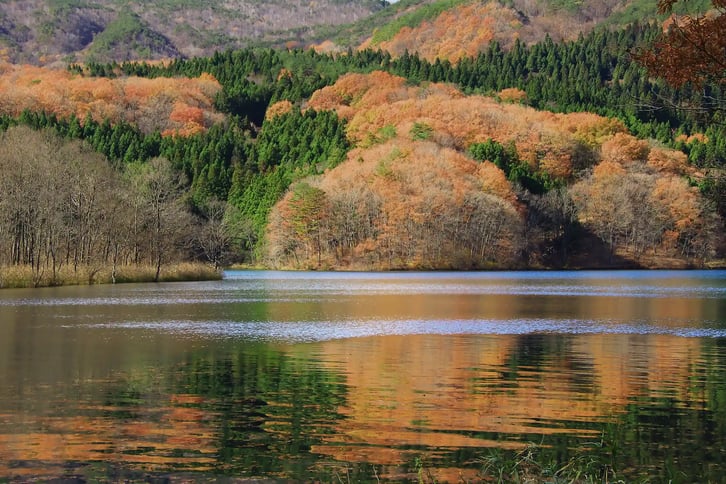
The Fusion of Art and Culture You Can Experience at a Kyoto Onsen Ryokan
Workshops Where You Learn Kyoto’s Traditional Crafts Up Close
Some ryokan offer programs that let you engage with Kyoto’s traditional crafts during your stay—and experience them firsthand. For example, one ryokan in central Kyoto plans workshops titled “A Hands-On Session to Learn Kyoto Techniques from Artisans,” creating a place where you can learn authentic traditional crafts directly from working professionals (*1). These programs are designed so you can casually step into craft worlds that are usually hard to access, such as lacquerware decoration or even tatami-making experiences.
In a warm, small-group atmosphere, you can watch an artisan’s masterful handwork up close and then try creating something yourself—often taking your finished piece home as a personal travel memory. These workshops are structured to be easy for beginners to follow, and some inns provide English-friendly programs, so guests from abroad can participate with confidence. By encountering Kyoto’s representative techniques—lacquer artistry, Kyo-yaki (Kyoto ceramics), and yuzen dyeing—you’re likely to deepen your cultural understanding even further.
Some ryokan also host tea-service experiences in a tatami sitting room or ikebana workshops, and these experiences offer another appeal: you get to touch “Kyoto culture as it lives in daily life.” In the relaxed setting of a ryokan, immersing yourself in creation while receiving guidance from a master craftsperson is one of the most luxurious ways to travel.
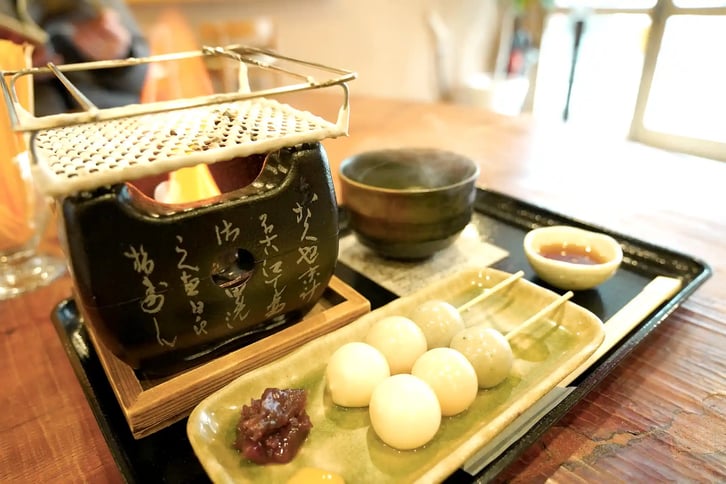
Museum- and Gallery-Hopping Within the Onsen Ryokan
Some Kyoto onsen ryokan offer art-viewing experiences that feel much like visiting a museum. They display artworks and craft pieces throughout the property, creating an environment where you can appreciate them as if wandering through a gallery. In recent years, some hotels have even started offering tours led by staff with deep knowledge of art, guiding you through the works on display.
For example, a luxury hotel near Kyoto Station provides an “Art Tour” that takes you around artworks scattered throughout the public spaces of the property, with explanations from hotel staff (*2). Carefully selected by professional curators, the tour highlights a few pieces—ranging from contemporary art to works inspired by Kyoto’s traditional crafts—and has become popular as a personal viewing experience that feels distinct from a conventional museum visit.
Even at onsen ryokan, the okami (female proprietor) or staff may share the stories behind paintings and antiques in the collection, or—if you wish—guide you through historic buildings on the grounds. Some properties host exchange events with local artists or limited-time exhibitions, and being able to encounter Kyoto’s art scene while simply staying overnight is a major draw.
After your bath, strolling through the property and listening closely to explanations of the works can deepen the emotion and knowledge you gained on your trip. Enjoying the meeting point between onsen and art—two luxuries that might seem unrelated at first—is another experience unique to Kyoto ryokan.
Gourmet Experiences That Complete a Refined Kyoto Stay
Introducing Calm, Aesthetic Restaurants and Cafés That Reflect the Ryokan’s Philosophy
When you talk about staying at a Kyoto onsen ryokan, you can’t leave out the culinary side of the experience. The property’s own restaurants and cafés often reflect the ryokan’s aesthetic vision and Kyoto’s distinctive sensibility in a particularly vivid way.
For example, at the previously mentioned MUNI KYOTO, a restaurant founded by world-renowned chef Alain Ducasse is located within the property, and chefs who trained in Monaco and Paris serve French cuisine crafted with Kyoto’s seasonal ingredients (*1). With beautiful garden views stretching out from large windows, the space—where you can admire nature through the seasons while tasting dishes as delicate as art—has the feel of a “museum of food.”
Meanwhile, at an onsen ryokan along the river in Arashiyama, a saryo (café) is set on a private terrace overlooking scenic beauty; in the daytime you can enjoy matcha and wagashi (Japanese sweets), and at night it becomes a quiet bar where you can savor local sake or cocktails. Kyoto kaiseki served in a space colored by ranma woodwork and softly glowing andon lanterns carries a refined aesthetic not only in taste, but also in the choice of vessels and the plating—so that the act of dining itself can feel like viewing art.
Some properties even have kappo-style counters where you can watch the chef’s techniques from just across the bar, and certain ryokan prepare special seats where the head chef speaks directly about seasonal ingredients and the intent behind each dish. In fact, at a premium chef’s counter within a decentralized resort in Higashiyama, you can spend an indulgent evening in an intimate, 12-seat setting—conversing with the chef while savoring a creative full-course menu that weaves French technique with Japanese sensibility (*2).
In this way, each ryokan’s restaurants and cafés promise a culinary experience in which local aesthetics and hospitality are distilled into “food.”
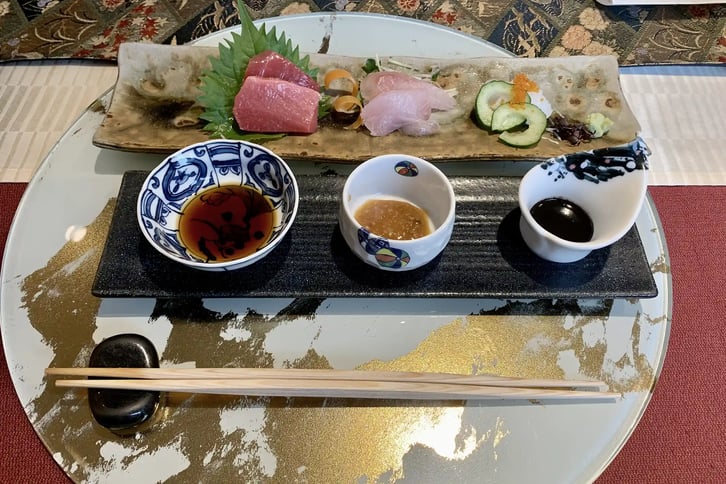
Kyoto Food Culture Lectures That Deepen Your Understanding
Another appeal unique to high-end ryokan is that they may offer opportunities not only to enjoy exceptional food, but also to learn about Kyoto’s food culture and deepen your insight.
Kyoto’s culinary culture is so highly valued that “Kyo-ryori” (Kyoto cuisine) was designated a nationally Registered Intangible Cultural Property in 2022, and special lectures and events may be held with proprietors of long-established restaurants or food researchers. For example, at a traditional restaurant, a seminar titled “A Supreme Moment to Learn the History of the Gion Festival and the Traditions of Food” was held, offering a chance to learn about the origins of the Gion Festival and the meaning behind festival cuisine while enjoying dishes from the Kyoto restaurant “Toriyone” (*3).
On another day, an event themed around “Understanding the Essence of Chicken Cuisine Rooted in Kyoto” featured a specialist lecture on Kyoto’s chicken culture as an ingredient, alongside cuisine from Nakamura-ro—offering a new cultural perspective through food (*3). Depending on the accommodation, you may find plans that partner with outside food-culture events like these, or in-house offerings such as private cooking classes or sake-tasting seminars.
The knowledge you gain through Kyoto food culture lectures is likely to become a lasting treasure—something you can carry home and bring back to your own table, along with the afterglow of your journey.
Future-Oriented Initiatives and Sustainability at Kyoto Onsen Ryokan
Developing Eco-Friendly Transportation Options and Charging Infrastructure
For travelers with a strong environmental awareness, the sustainability of how you move around at your destination is an important point as well. In Kyoto’s luxury hotels and ryokan, there is a growing movement to install charging facilities for guests arriving by electric vehicle (EV).
In fact, in 2018, four Tesla urban Superchargers (rapid chargers) were installed at RIHGA Royal Hotel Kyoto as the first such installation at a hotel in Kyoto City, making them available 24 hours a day (*1). It is said that a 30-minute charge can provide roughly 270 km of driving range, making it practical even between sightseeing stops in Kyoto (*1). The installation was designed to take up minimal space and to be mindful of Kyoto’s cityscape, with care taken not to harm the historical scenery.
Since then, major luxury hotels in Kyoto City have continued introducing charging stations. For example, Four Seasons Hotel Kyoto provides 16 kW EV charging facilities for guests 24 hours a day (*2).
Even long-established ryokan are beginning to equip their private parking areas with standard chargers, and an environment is gradually taking shape where travelers visiting Kyoto by EV or plug-in hybrid can stay with peace of mind. Some accommodations have also begun offering rentals of e-bikes or EV cars during your stay, proposing a new travel style: exploring Kyoto with carbon-neutral mobility.
At onsen ryokan located in quiet, green areas such as Arashiyama and Higashiyama, initiatives have also begun—such as switching free guest shuttle services to electric buses. A proactive stance toward eco-friendly mobility doesn’t just add convenience; it can also leave you with a calm sense of satisfaction. Being able to enjoy an exceptional Kyoto stay alongside EVs and the latest technology is another part of what makes future-minded ryokan so appealing.
Examples of Sustainable Onsen Ryokan Living in Harmony with the Local Community
In line with Kyoto’s goals as a sustainable tourist destination, more examples are emerging of ryokan that coexist closely with their local communities. Kyoto City has established the “Kyoto Tourism Morals (Kyoto Guidelines for Tourist Conduct)” to promote accommodations that remain in harmony with local areas, and one ryokan recognized as a model case is Watazen Ryokan.
Founded in Tenpō 1 (1830), this long-established ryokan is located in central Kyoto and has long been committed to contributing to the local community. It works with local neighborhood associations to protect the townscape and is deeply involved in traditional events such as the Gion Festival (*3). It also provides space for nearby students and young artists, using the ryokan as a hub for sharing local culture by hosting gallery exhibitions and workshops on site (*3).
At another long-established inn, Hiiragiya Ryokan, the property partners with art university students studying Kyoto traditional crafts. Through a project that exhibits and sells student-made craft works within the ryokan, it supports young talent while contributing to cultural promotion (*4).
Hiiragiya is originally known for its spatial beauty—sukiya architectural details and inner courtyards that shift with the seasons—but in addition to these visible charms, its behind-the-scenes sustainable efforts are also appreciated. For example, it continues steady work such as reusing vegetable trimmings left over from cooking and kombu kelp used for making dashi in staff meals to reduce food loss, and recycling plastic from used amenities (*4).
In this way, integrating consideration for the local community and the environment into ryokan management can be seen as an approach well suited to Kyoto as a sustainable destination. A ryokan that offers a luxurious stay while walking alongside the community is likely to give you both “the comfort of feeling like you’ve become part of the neighborhood” and “future-oriented values” that linger long after you leave.