In the millennium-old capital of Kyoto, choosing a “private ryokan” allows you to embrace serenity and learning at once. Sukiya and machiya aesthetics, a tokonoma that mirrors the seasons, the quiet presence of a garden, and Kyoto kaiseki served in your room or a private dining salon—here, the essence of Japanese culture across clothing, cuisine, and living is distilled into a single space. As you entrust yourself to attentive hospitality, your senses sharpen and your intellectual curiosity is deeply fulfilled.
With the hush that comes from having only a handful of rooms and the stories carefully passed down through generations, a uniquely “educational stay” awaits—one you can only encounter in Kyoto.
This article steps inside a single ryokan. The Digital Guide sets that one stay within a wider landscape — its architecture, its seasonal table, and the quiet craft of omotenashi — gathered into a single, connected reading.
The Appeal of Staying at a Private Ryokan in Kyoto — A Luxurious Cultural Experience Immersed in History and Tradition
A stay at a private ryokan in Kyoto offers value that goes far beyond a simple night’s lodging. With over a thousand years of history, Kyoto is a treasure house of Japanese culture and tradition—a special place where you can experience its essence without compromise.
A ryokan compresses the best of Japanese culture into one setting: tatami-matted rooms, seasonal flowers arranged in the tokonoma, meticulously maintained gardens, and Kyoto cuisine crafted by skilled chefs—an immersion across clothing, cuisine, and living (*1). Surrounded by stately traditional architecture and engaging all five senses, you can feel Japan’s aesthetic spirit; a stay at a ryokan is the very definition of a luxurious cultural experience (*1).
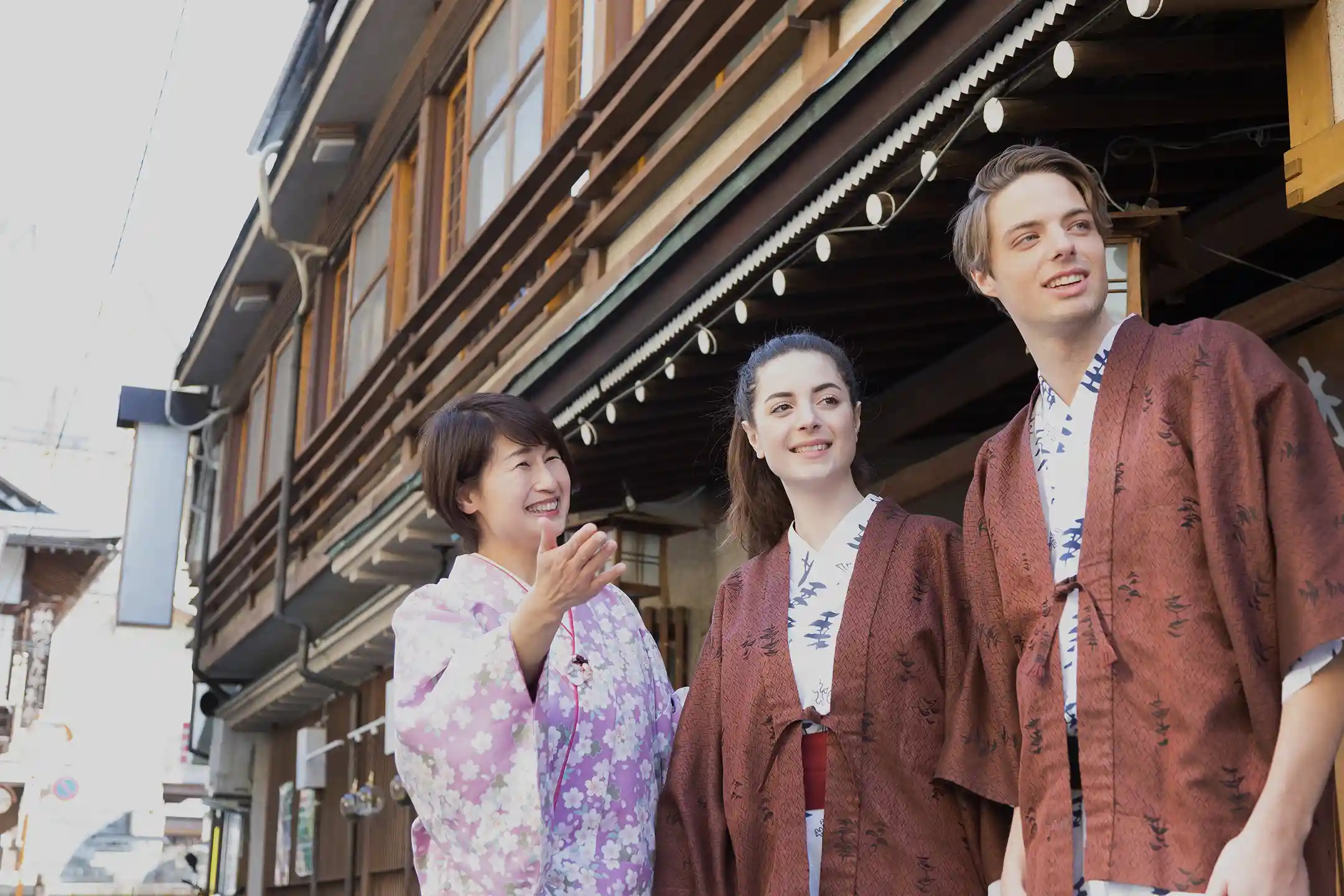
The chief allure of a private ryokan lies in the tranquility and finely tuned hospitality that only a small number of rooms can provide. Among Kyoto’s long-established ryokan are many with just one party per day or only a few rooms, giving you the sensation of being invited to your own private villa. The okami (proprietress) and nakai (attendants) welcome you with care, guide you to your room in kimono, and look after you with thoughtful attention throughout your stay—a precious chance to feel the Japanese spirit of omotenashi, increasingly rare in everyday life (*2).
As a guest, you sense the season in the coolness of water sprinkled at the entrance, find the colors of the annual calendar in your room’s arrangement, and feel soothed by gentle Kyoto dialect exchanged in conversation. In each of these gestures, you encounter the warmth of Japanese hospitality (*2).
Moreover, many Kyoto ryokan carry stories handed down across generations. At long-established inns founded in the Edo or Meiji eras, the buildings themselves are living witnesses to history. A ryokan with over two centuries of operation is hardly unusual, and records show stays by literary figures and global dignitaries.
Sleeping within such walls invites you to reflect on the eras the building has seen—an intimate brush with Japanese history. Time spent in spaces that retain old-world charm while offering modern comfort becomes unforgettable for travelers who delight in learning.
Traditions You Can Experience Only at a Private Ryokan
Because private ryokan operate on a small scale and by advance reservation, they sometimes offer cultural experiences you won’t find at large inns or hotels.
For example, you might receive an introductory tea ceremony lesson in a room reserved entirely for you, learning temae and etiquette. In some plans, a tea master visits your guest room to explain the meaning of the hanging scroll, seasonal flowers, and utensils while guiding you one-on-one (*3).
Kneeling on tatami to whisk matcha and savor a single bowl in quiet is a moment where you can directly feel the depth and aesthetic of Japanese culture (*3). Another special experience is ozashiki-asobi: inviting geimaiko (apprentice geisha and geisha) from Kyoto’s flower districts—typically closed to first-time patrons—into your private room to enjoy dance and conversation (*4).
In places like Kamishichiken, one of Kyoto’s five hanamachi, ryokan or hotels can arrange geiko entertainment, letting you appreciate elegant dance and arts up close (*4). These cultural experiences, made possible precisely because you’re at a private ryokan, offer deep insight into Kyoto’s traditional performing arts and will satisfy your curiosity to the fullest
Private Ryokan Spaces that Stimulate Your Aesthetic Sense — Traditional Architecture and Refined Interiors
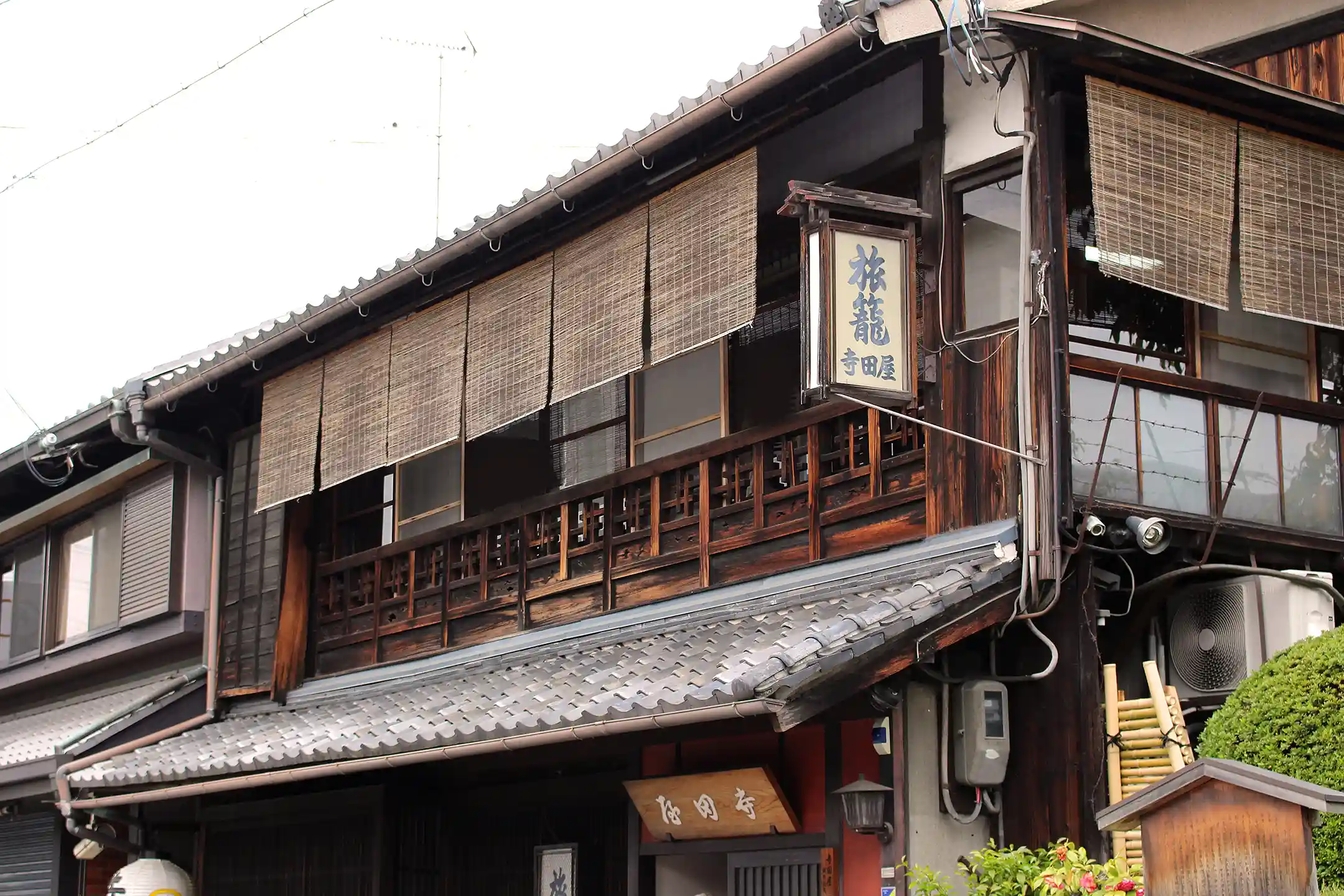
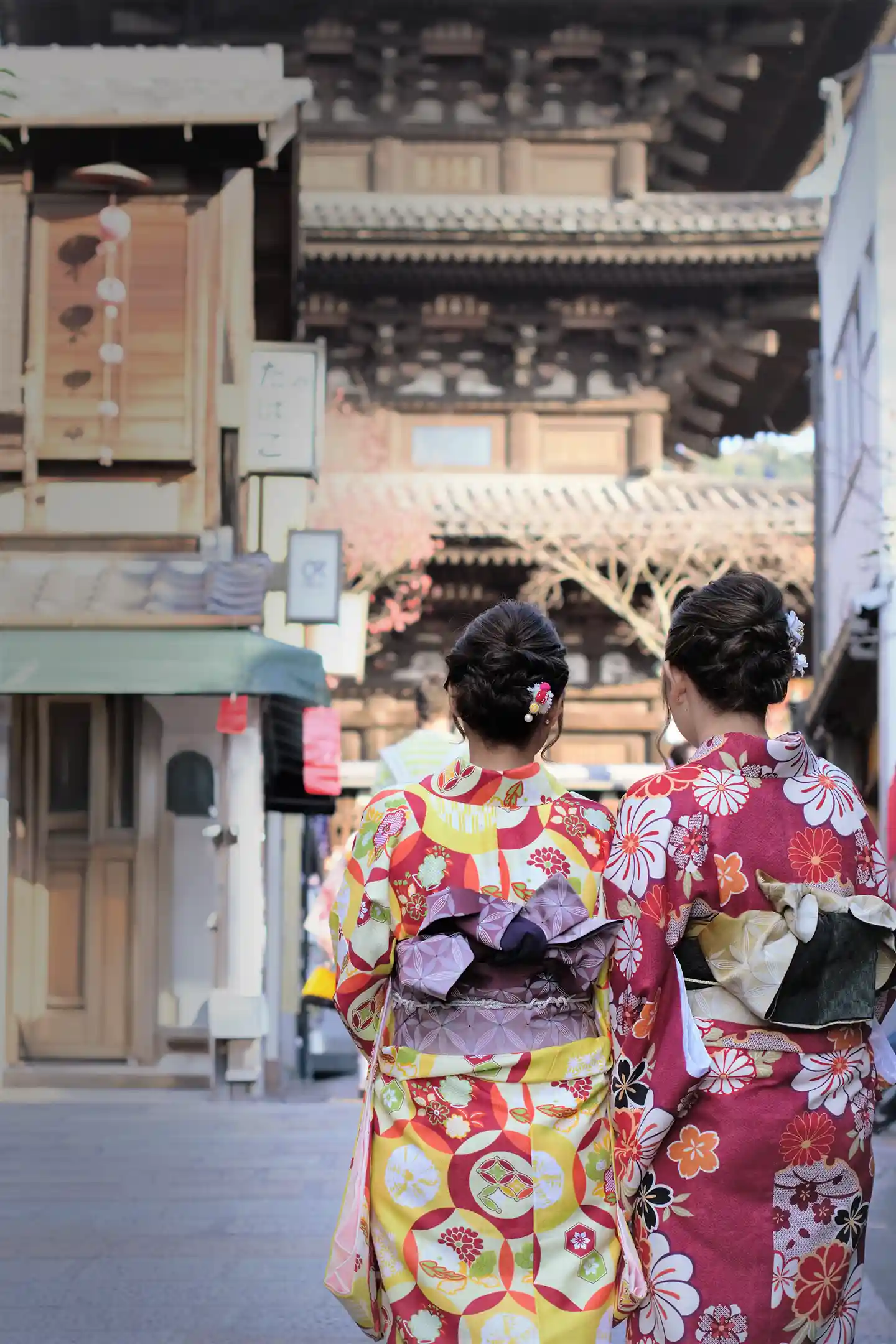
Kyoto’s private ryokan also captivate with their refined spatial design that stirs your aesthetic sensibilities. The ancient capital retains many buildings in traditional styles such as sukiya-zukuri and Kyoto machiya, and quite a few inns have been created by restoring and repurposing them.
Take Juhachiharu Ryokan, for instance—a machiya built in 1909 preserved as a Registered Tangible Cultural Property and converted into an inn with only five rooms. With lattice doors, a storehouse, and other period details intact, guests can fully feel “ancient Kyoto” (*1).
Staying in a property clad in the weighty narrative of a historical structure invites you to contemplate the era it was born from and the craftspeople who shaped it.
Inside such traditional ryokan, you’ll find Kyoto-specific materials and design flourishes throughout: floorboards and pillars polished to a warm amber sheen, soft light filtering through shoji, the fragrance of igusa rising from tatami—elements that evoke Japan’s particular sense of wabi-sabi.
Kyoto’s architectural vocabulary is devised to bring seasonal change and the passage of time indoors; even watching the fresh green of New Year bamboo gently fade becomes part of a year’s aesthetic rhythm (*2).
Seasonal flowers and hanging scrolls in the tokonoma are time-honored ways to honor and welcome a guest. In the unhurried flow of time, simply admiring nature’s beauty in each moment becomes, in itself, the aesthetic experience a Kyoto ryokan offers (*2).
At the same time, interiors that fuse tradition with modernity are emerging, creating uniquely stimulating spaces.
Hotel SOWAKA (a small, high-end inn in a ryokan style) is one example: a former fine-dining house over 100 years old, boldly renovated with contemporary design. Its main building retains sukiya details while each guest room features different ranma transoms and window frames, juxtaposing varied textures so you can feel both the playfulness and the skill of traditional artisans (*3).
In a lobby lounge where black washi tatami contrasts beautifully with plaster walls, you might sip a welcome drink while relaxing in a library lined with art books (*3). Inns like this, which honor tradition while expressing beauty unconstrained by convention, offer fresh inspiration to culturally curious travelers.
Stories Embedded in Architecture — Uncovering the Design Secrets of a Ryokan
When you visit a private ryokan in Kyoto, take time to notice the stories hidden in the architecture and interiors.
For example, Kuraya Kiyomizu-Gojo is a machiya once used by Kyoto ware potters in the late Meiji period as both studio and shop, now reborn as an inn. With original pillars and doors preserved, the building still hums with the bustle of those days, and Kyoto ceramics are displayed throughout (*4).
Subtle lighting that creates a calm atmosphere, guest rooms opening onto small inner gardens, tea utensils of Kiyomizu ware and pewter—craftsmanship and aesthetic sensibility live in every detail (*4).
These are not mere decorations but clues to the region’s culture and history. Ask the staff, and you may hear engaging episodes about the objects in the tokonoma or the building’s origin. Knowing this background deepens your time at the ryokan, filling it with richer satisfaction.
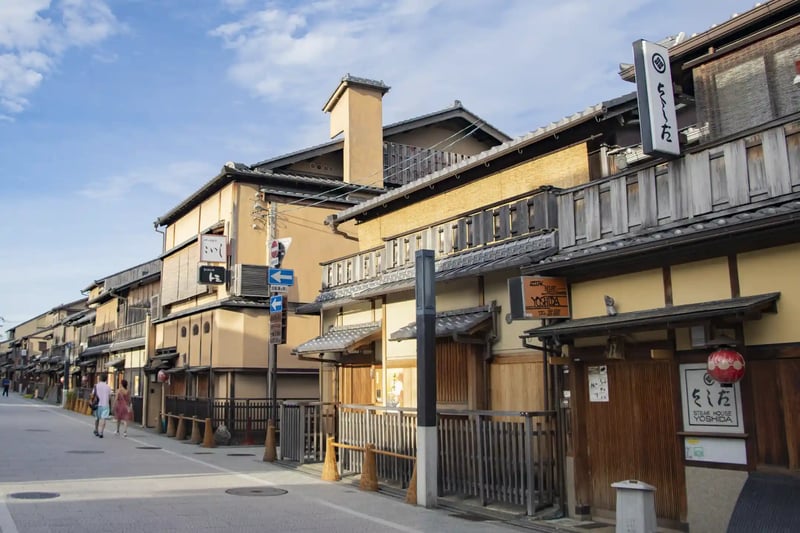
Savoring Kyoto Cuisine in Private — The Quiet Luxury of Dining in Your Own Room
One of the great pleasures of staying at a Kyoto ryokan is unhurriedly enjoying seasonal Kyoto cuisine in a private setting.
Unlike typical hotel restaurants, ryokan usually serve dinner and breakfast in your guest room or a private dining room. Loosening your knees on tatami while courses are brought with impeccable timing—this is luxury savored in calm, far from the bustle.
The nakai’s graceful, meticulous service brings a sense of occasion you simply can’t reproduce at home (*1). As you enjoy each course with its explanation, the visual beauty and delicate flavors of Kyoto cuisine naturally unfold stories of the city’s culture and seasons.
Kyoto’s culinary culture is notably refined within Japan. As the imperial capital for some 1,200 years, the city nurtured its own traditions shaped by the imperial household, the court nobility, and temples and shrines. Kyoto cuisine often features tofu, yuba, and nama-fu—local specialties—presented with vibrant color and subtle taste (*2).
Menus draw on seasonal Kyoto vegetables and pure spring water, crafting courses that follow a theme for the time of year. Each dish carries the chef’s spirit and layers of history, letting you learn the region’s traditions through food (*2).
At a certain luxury ryokan, breakfast might include a Western option with vegetarian accommodations for health-conscious guests (*3). Dinner, on the other hand, showcases a rising chef’s kaiseki, rich with local ingredients like yuba and Kamo eggplant (*4).
Even the tableware reflects Kyoto’s aesthetic; together with seasonal garnishes, every plate feels like a small work of art (*4). Dining slowly in a quiet private room, you’ll find yourself contemplating the chef’s craft and wisdom—truly “learning Kyoto’s history through cuisine.”
Learning Kyoto’s History Through Food — A Special Experience Where Dining Meets Knowledge
Mealtimes at a private ryokan satisfy your curiosity as much as your palate.
As dishes arrive, listen for tidbits from the nakai: “The maki-e lacquer motif on this lid is …,” or “Today’s sashimi has been matured using ▲▲….” Such explanations often hide rich stories about Kyoto’s culinary heritage.
Kyo-kaiseki traces its origin to the simple kaiseki ryori served at tea gatherings, later evolving into the festive banquet style known as kaiseKi ryori. Dinner at a ryokan blends these streams, balancing formality, seasonality, and delight.
With that background, you’ll understand why a delicately seasoned soup appears first or why a vinegared dish serves as a palate pause—each course takes on meaning, turning your meal into a deeper experience.
As a land of famed waters, Kyoto also fostered a rich sake culture. Some ryokan partner with local breweries to offer carefully curated Kyoto sakes from Fushimi, pairing beautifully with the cuisine—chilled and refreshing in summer, gently warmed in winter.
Even if you don’t usually drink, hearing from the okami or a sommelier about a label’s story and the brewery’s history can open new doors. This fusion of food, culture, and knowledge is an ideal dinnertime for culture-seeking travelers.
Eco-Friendly Private Ryokan in Kyoto — Stays that Put Sustainable Travel into Practice
As sustainable travel gains importance worldwide, Kyoto’s luxury ryokan are advancing initiatives considerate of the environment and society. Traditional wooden ryokan already embody sustainability: built from natural materials and harmonized with the four seasons. Machiya inns constructed with wood, paper, and earth place a smaller burden on the environment than modern concrete buildings and feature time-tested energy efficiency—cool in summer through ventilation, warm in winter through insulation.
Reviving old buildings as inns also reduces waste and passes cultural assets to the next generation—a sustainable approach in itself. In recent years, such “renovation inns” have multiplied, aided by improved legal frameworks (*1).
Many ryokan now align with modern SDGs. One long-established inn runs its business on the founding ethos of mottainai—“treat things with care and be kind to people” (*2).
Concretely, they reduce food waste by serving appropriate portions and repurposing leftovers for staff meals, minimizing waste at every step (*3). Participating in Kyoto’s waste reduction network, they submit annual reduction plans and manage targets in partnership with the city (*3).
Inside, you’ll find recycled-paper toilet tissue and water-saving faucet inserts—small steps that add up to a lower carbon footprint throughout the property.
Some ryokan also prioritize contributions to the local community. At Watazen Ryokan in central Kyoto, the okami has earned an international sustainable tourism credential and publicly commits to responsible tourism (*2).
The inn collaborates with shopping streets for cleanups and tree-planting, and hosts children’s traditional events—activities that look beyond guests to the wider community (*2). This reflects a distinctly Kyoto mindset: an inn is a member of the town. Staying there directly supports the city’s sustainability.
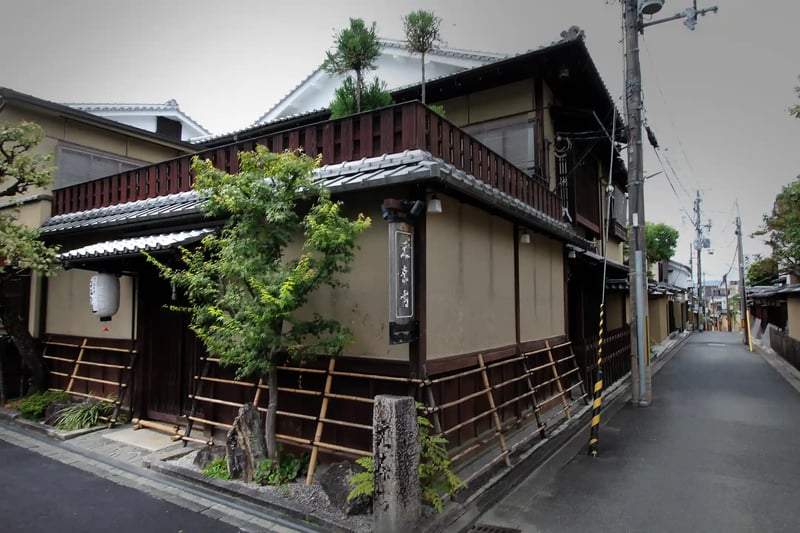
「Eco-Luxury」 Where Tradition and Sustainability Coexist
A stay at an eco-forward private ryokan in Kyoto epitomizes “eco-luxury.” When meals feature local organic vegetables and pesticide-free teas, you savor indulgence while supporting local producers and farm-to-table practices. Sleeping surrounded by natural materials like tatami and washi walls brings peace of mind with fewer chemicals, while the fragrance of wood and grass soothes your senses.
Many inns are also reducing single-use plastics: adopting reusable cloths and spa socks, and switching amenities like toothbrushes to bamboo or other eco-minded materials. Guest rooms curated with just the essentials feel minimally beautiful, aligning with Japan’s wabi-sabi aesthetic.
You’ll also be gently encouraged to make mindful choices—guidance on sorting waste in your room, or an option to skip unnecessary linen changes through eco-cleaning plans. There’s no pressure; rather, the environment makes it easy to choose well. Comfort and service aren’t compromised; you may find yourself even more moved by the sincerity of sustainability-conscious hospitality.
If you want to immerse yourself in tradition while practicing sustainable travel, Kyoto’s private ryokan are ideal. Time spent in sympathy with efforts to preserve streetscapes and cultural heritage creates lasting learning and healing for you, too.
Private Ryokan that Connect You with Local Artists — Deepening Your Cultural Learning
Some private ryokan in Kyoto enrich your learning by arranging programs that connect you with local artisans and artists. Inns with a deep appreciation for traditional crafts and the arts may offer studio visits or workshops for guests.
At Tawaraya Ryokan, for example, a special tour titled “Meet with Artisans” takes you from the inn to visit a Nishijin weaving house, a Kyoto embroidery workshop, and even a gold-leaf artisan’s home (*1).
Watching a Nishijin loom at work, hearing the history of technique from a master embroiderer couple whose practice dates to the Meiji era, and conversing with a fourth-generation artisan while overlooking a beautiful garden—through such close encounters, you feel how Kyoto’s traditional industries are handed down (*1). With staff or specialist guides providing interpretation and context, you gain deep understanding beyond language barriers.
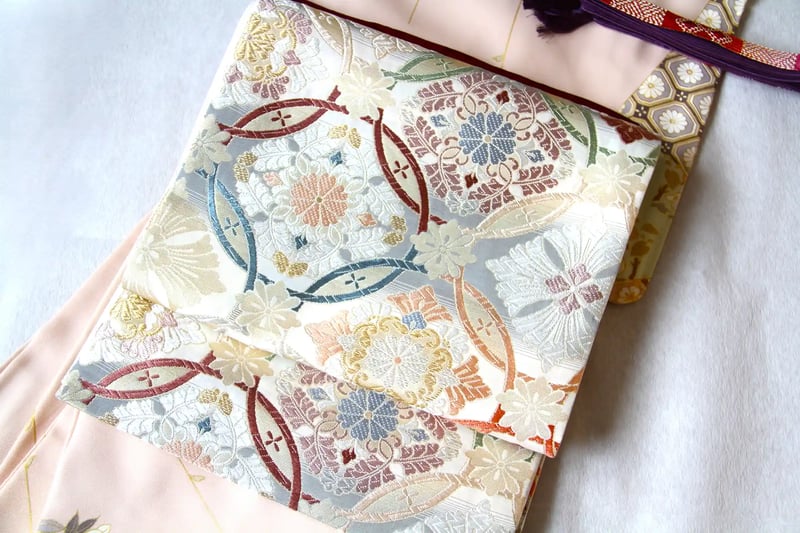
Some inns themselves serve as art spaces. Tawaraya, renowned as a traditional Japanese inn associated with tea culture, has begun offering tea ceremony experiences for guests. The third-generation proprietor personally prepares tea and explains etiquette and history (*2).
By stepping into the world of chanoyu, you sense how tea has been woven into daily life in Kyoto (*1). Other inns feature artist-collaboration rooms or in-house galleries showcasing young creators, letting you feel Kyoto’s creative pulse up close.
Small-Group Art & Culture Tours with Artists and Experts
Private ryokan also excel at tailor-made art and culture tours that are possible precisely because groups are small. You might arrange to throw a pot on the wheel in a ceramicist’s studio or blend aromas at a venerable incense house.
Some properties host special lectures on Kyoto’s traditions of kōdō (the incense ceremony) and kadō (flower arranging) right on site. Directly learning techniques and philosophies from masters is a rare opportunity made possible by the inn’s trusted local networks.
If you love art, consider seasonal events. Kyoto occasionally opens cultural properties for special nighttime viewings with artistic light-ups. A private ryokan’s concierge stays on top of such happenings and can help with bookings and logistics.
Between moments of calm at the inn, step out to a collaboration event with local artists. You’ll find the day’s stimulation settling into meaningful reflection by evening, your sensibilities sharper than before. Kyoto’s private ryokan welcome you not as a mere sightseer but as a “co-creator of culture,” providing learning and discovery tailored to your intellectual appetite.
【Carefully Curated)Five Recommended Private Ryokan in Kyoto — For a Truly Special Stay
Finally, here are five especially recommended private ryokan in Kyoto, selected by travel style. All are renowned luxury properties with distinct personalities. Choose by the facets that matter to you—culture, cuisine, sustainability.
Hiiragiya Ryokan — A Grand Old Inn Perfected by Culture and Tradition
Founded in 1818 and run by direct succession for over 200 years, Hiiragiya is one of Kyoto’s emblematic ryokan. Its two-story wooden sukiya main building preserves its original charm, complemented by a newer wing for comfort. Beloved by literary giants and international luminaries, the property’s sliding-door paintings and furnishings are all authentic—Kyoto’s “guest house” in spirit. Gazing at the courtyard garden that reflects the seasons, you can immerse yourself in genuine Japanese culture (*1).
Kyoshojuku Yasaka Yutone — A Gourmet Hideaway for Kyoto Kaiseki
A discreet seven-room retreat near the stone lanes by Yasaka Pagoda in Higashiyama. Each room features a cypress bath and Simmons bed, blending Japanese ambiance with Western comfort. The cuisine is particularly celebrated: creative kaiseki that highlights healthy Kyoto staples like nama-fu and yuba, praised by guests as “gentle on the body yet delicious” (*2). With Kyoto’s aesthetic visible in the ceramics and plating, you can savor the chef’s signature kaiseki in a private setting at your own pace.
Kyoto Nanzenji Yachiyo — Gardens and Yudōfu; Tradition and Cuisine in an Eco-Minded Inn
A long-established ryokan in the quiet environs of the famous Nanzen-ji Temple. Originating as a culinary inn, it still enjoys a strong reputation for cuisine. Kyoto dishes once favored by cultured regulars showcase seasonal ingredients with refined flavors, and the signature “Nanzen-ji tofu” is a specialty unique to this property (*3).
The garden, designed by the Meiji-era master Ogawa Jihei (Ueji), offers a soothing green vista, and vegetarian kaiseki is available (*3). The union of a contemplative, eco-sensitive garden with traditional cuisine defines this restful eco-luxury inn.
Tawaraya Ryokan — An Artistic Inn Where the Spirit of Tea Meets Modern Japanese Style
Though centrally located, Tawaraya wraps you in the quiet of a tea room once you step inside. Founded in the Taishō era and long a gathering place for tea masters, the inn embodies the spirit of chanoyu throughout (its name alludes to “charcoal,” essential for the tea hearth). Traditional shoin-style rooms are rich with character, each with distinct design.
As noted earlier, tea experiences are available; guests can learn how to whisk matcha and what to appreciate in tea utensils directly from the proprietor (*2). It’s a place to appreciate Japanese culture in the round, where the time-honored and the new harmonize.
Kamishichiken Oku — Suite-Style Luxury that Reimagines the Kyoto Ryokan
A six-suite ryokan opened in the 2020s in the Kamishichiken flower district, championing a “LUXURY TRAVEL STYLE” that fuses Japanese tradition with modern luxury. Rooms range from purely Japanese spaces with yukimi shoji and tsuboniwa gardens to open layouts with Shigaraki-ware outdoor soaking tubs on the terrace, even suites that recreate the mood of a traditional ochaya (teahouse) (*4).
Dine privately in your room or linger in the bar lounge. If you wish, the inn can arrange a genuine geiko/maiko banquet at a partner ochaya or invite a maiko to perform in your suite (*4). You’ll enjoy a contemporary level of comfort while touching the world of traditional performing arts—a promise of an exceptionally adult stay.
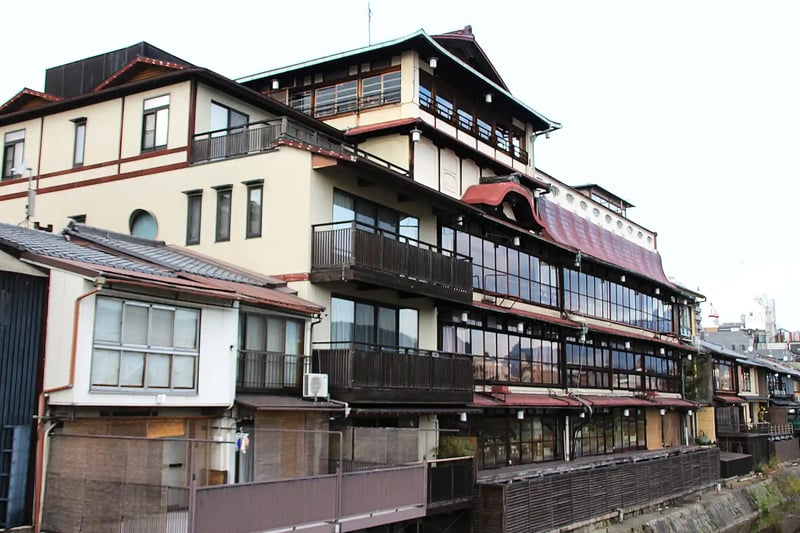
A Complete Guide to Getting 100% Out of Your Private Ryokan Stay in Kyoto
To make the most of your time at a private ryokan in Kyoto, a little preparation and a few on-the-spot choices can multiply your moments of wonder—especially for a journey that feeds your curiosity.
First, sharpen both knowledge and sensibility. Before you go, read up on your chosen ryokan and Kyoto’s culture. Official websites and brochures often share a building’s origins, the okami’s philosophy, or the stories behind the cuisine. With that in mind, you’ll find yourself noticing: “So this hanging scroll in the tokonoma carries this meaning…”
Brushing up on basic etiquette—like how to bathe or behave in a washitsu—helps you relax into the setting. Knowing to remove slippers on tatami, or to avoid stepping on a zabuton, makes communication with staff smoother.
Next, consider visiting a few hidden cultural spots beforehand to deepen your experience. If you love pottery and mingei, stop by the Kawai Kanjiro Memorial Museum in Higashiyama before check-in. The home-studio of this Shōwa-era ceramic artist is registered as a National Registered Tangible Cultural Property (*1), with his works arranged as they were.
You can even sit on the chairs as if welcomed into the Kawai household, perhaps greeted by the resident cat “Eki-chan.” It’s a warm, quiet place—ideal for tuning your senses before entering the ryokan.
If you prefer nature and temple calm, head to Shinnyo-dō (Shinshō-dō), formally Jōdō sect’s Shinshō-dō, near Ginkaku-ji. Outside the peak autumn season, it’s so tranquil you may feel you have the grounds to yourself.
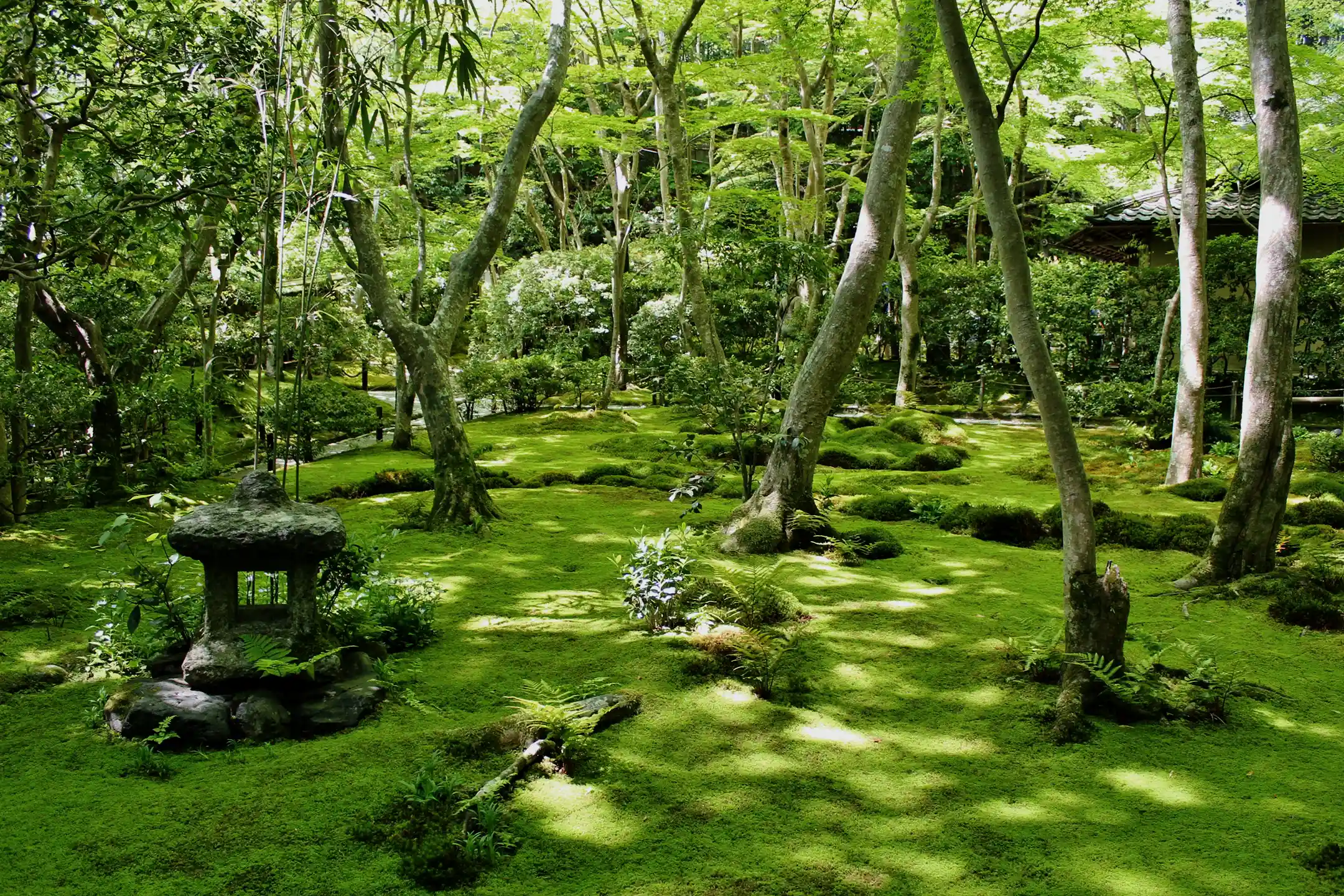
The official guide even notes that “in each of the four seasons, you can almost have the precincts to yourself,” outside the autumn rush (*2). Sit by the mossy garden to watch fresh green maples, listen to distant birdsong, and feel your mind grow clear.
Arriving at your ryokan after time at such a quiet temple sets you free from bustle and brings your senses to a fine point.
Also, build white space into your schedule. The true merit of a private ryokan reveals itself when you don’t overpack your days: read unhurriedly within the inn, soak more than once, wander the garden.
Sip matcha on the engawa or in the lounge while gazing at the greenery; browse a small in-house art corner; enjoy casual conversation with the okami—through such moments, you glimpse Kyoto’s aesthetic and way of life. Set your phone aside, surrender to the quiet, and let inspiration and peace of mind find you.
For travelers hungry for learning, a Kyoto private ryokan makes the stay itself a stage for discovery. Prepare a little beforehand, then engage all five senses—and that “sixth sense”—on site.
Above all, treasure your interactions with the people of the inn. These custodians of Kyoto’s pride and tradition may well become the highlight of your trip. Immerse yourself in a serene cultural space, and enjoy a journey that leaves your knowledge and sensibility noticeably refined.
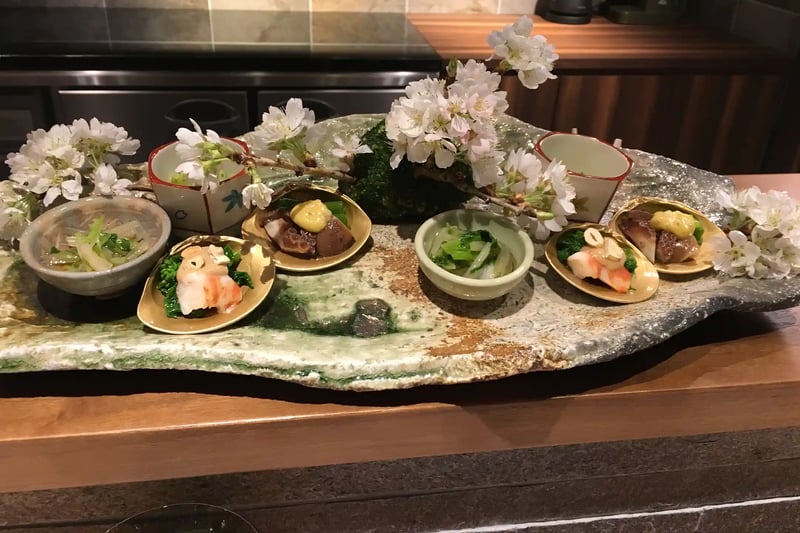
Hone Your Knowledge and Sensibility — Hidden Kyoto Spots to Visit Before You Check In
Kawai Kanjiro Memorial Museum (around Gojō-zaka in Higashiyama) – A small museum in the former home and studio of Kawai Kanjiro, a leading potter of the Taishō–Shōwa eras. The building preserves the atmosphere of a machiya and is designated by Kyoto City as a tangible cultural facility. You’ll find not only his works but also furniture and fittings of his own design—everything left in place, transporting you to his time. Away from the crowds, it’s a quiet haven where you can experience the heart of the mingei movement.
Shinnyo-dō (Shinshō-dō) (Jōdoji area, Sakyō Ward) – A connoisseur’s favorite for both fresh green leaves and autumn foliage. Outside peak fall, visitors are few; in the season of green maples or on a snowy morning, you may have the spacious grounds nearly to yourself. In clear, bracing air, stroll past the three-story pagoda and karesansui garden to reset your mind and ease travel fatigue. The official website even recommends visiting during quieter seasons.
Other Hidden Gems – If time allows, enjoy the harmony between Western architecture and Japanese gardening at Murin-an (the Meiji-era villa of Yamagata Aritomo with a tea salon) near Nanzen-ji, or explore the avant-garde building and works of Kyoto-born painter Domoto Inshō at the Domoto Inshō Museum of Fine Arts (Kita Ward). These relatively uncrowded spots let you encounter Kyoto’s arts in peace.
The fuller landscape of the Kyoto ryokan

At Last
Private ryokan in Kyoto elevate lodging into a place to experience culture. Layered time in historic architecture, carefully maintained settings, the choreography of omotenashi in the okami and nakai’s gestures, and Kyoto cuisine savored quietly in your own room—each becomes a gateway to deeper knowledge and a sharper sensibility.
Tea ceremony, geimaiko performances, and artisan visits form a special path into “living Kyoto” beyond sightseeing. Meanwhile, natural materials, local sourcing, and waste reduction embody the harmony of tradition and sustainability—true eco-luxury.
Before your stay, do a little homework on history and etiquette; on site, leave room for unstructured time, and let your eyes linger on gardens, calligraphy, and ceramics. In the hush, open your senses and listen for human stories—Kyoto shifts from a place you “see” to a place you “understand and co-create.” By journey’s end, you’ll notice your knowledge and sensibility have deepened a step.
Author Bio

.webp)