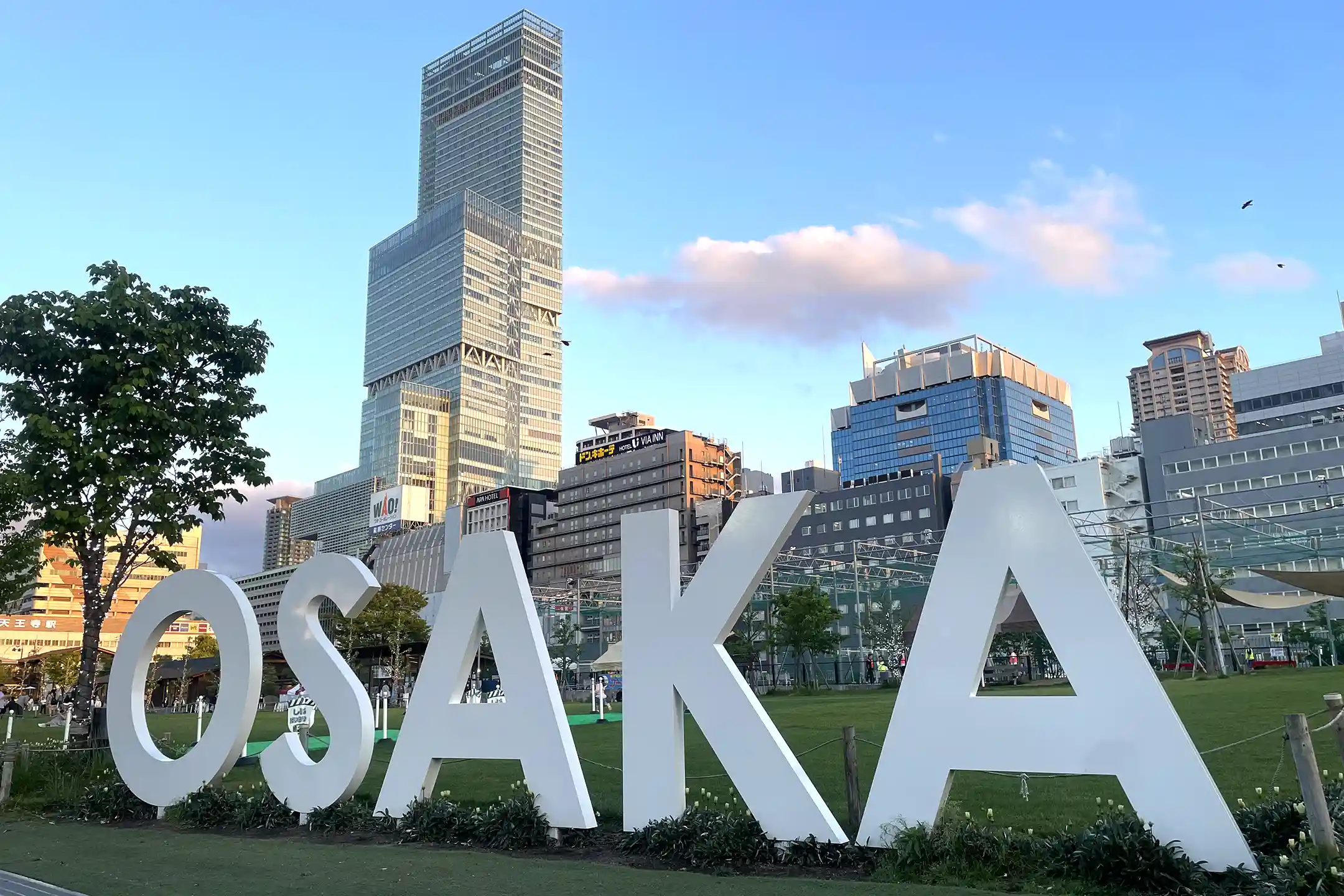
Osaka is dotted with places where you can enjoy cultural depth and gentle calm at the same time. From Osaka Castle, a famed fortress with layers of early-modern history, to the Nakanoshima district where contemporary architecture reflects on the rivers, to Umeda’s cityscape framed by a forest of high-rises—this is a city that gathers many kinds of charm into one compact canvas.
So you won’t feel overwhelmed even on a first trip, this article curates must-see places to visit in Osaka by major areas, along with practical ideas for avoiding crowds and enjoying the city through the seasons. Deepen your appreciation for art and history, then step away from the bustle to taste true tranquility—why not open the door to a more elevated Osaka journey?
Recommended Places to Visit in Osaka and How They Relate Geographically
Osaka’s main sights are clustered compactly within the city, and once you understand how the key areas connect, you can travel efficiently without rushing.
For example, the Osaka Castle area (Chūō Ward, Uemachi Plateau) sits on the eastern side of the city. From there, Umeda in Kita Ward is about 15 minutes away via the Osaka Metro Tanimachi Line, while Namba to the south is about 20 minutes by Osaka Metro. The Nakanoshima area (Kita Ward) is within walking distance of Umeda, and the Tennoji/Abeno area (Tennoji Ward) lies about 4 km south of Osaka Castle in a straight line, connected by the JR Osaka Loop Line.
For getting around, public transportation is both convenient and environmentally gentler than taxis for most city routes. If you set out a bit earlier in the morning and plan your evenings around illuminations or night views—shifting your schedule away from peak hours—you’ll also sidestep the worst crowds. In fact, Osaka Castle’s main keep gets especially busy on weekends between 10:00 and 15:00, so visiting on a weekday or right after opening at 9:00 is recommended(*1).
Because the major spots within each area are generally within a 30-minute range on foot or by subway, you’ll get the best balance of thoughtful discovery and quiet restoration by choosing a theme or area for the day and exploring at an unhurried pace.
If It’s Your First Time, These Classics Are Non-Negotiable
Start with Osaka’s signature essentials. Osaka Castle’s Main Keep is the city’s symbol, and it’s also a must as a history museum housing materials connected to Toyotomi Hideyoshi. The current keep is the third iteration, rebuilt in 1931 through citizens’ donations, and together with remains from the Toyotomi and Tokugawa periods, it’s designated as a Registered Tangible Cultural Property of Japan(*2).
From the top-floor observatory, you can take in a sweeping view of the Osaka Plain—and if you go first thing in the morning, you can enjoy it at a relaxed tempo. Next, head to Umeda for the Kuchu Teien Observatory at Umeda Sky Building. This boldly imaginative structure links two towers, and it has been selected in the UK as one of the “Top 20 Buildings in the World”(*3). The cityscape at dusk from the 173-meter-high open-air garden is unforgettable—a view where skyline and sky seem to melt together.
If you’re drawn to art, you also shouldn’t miss the Osaka Nakanoshima Museum of Art, which opened in 2022. Inside its “floating black box” of a building, it holds roughly 6,000 works—masterpieces by Modigliani and Dalí, and art tied to Osaka such as the Gutai movement—letting you enjoy the collection alongside striking contemporary architecture(*4).
Finally, make your way to Abeno Harukas Observatory (HARUKAS 300), a flagship 300-meter-class tower in southern Osaka. The view from 300 meters is nothing short of spectacular, and some travelers report that around 9:00 p.m. it can be pleasantly uncrowded, allowing you to savor the night panorama at ease(*5). If you drop by after dinner, you’ll be able to quietly take in Osaka’s glittering lights in a calm, grown-up mood.
Quiet, Under-the-Radar Retreats
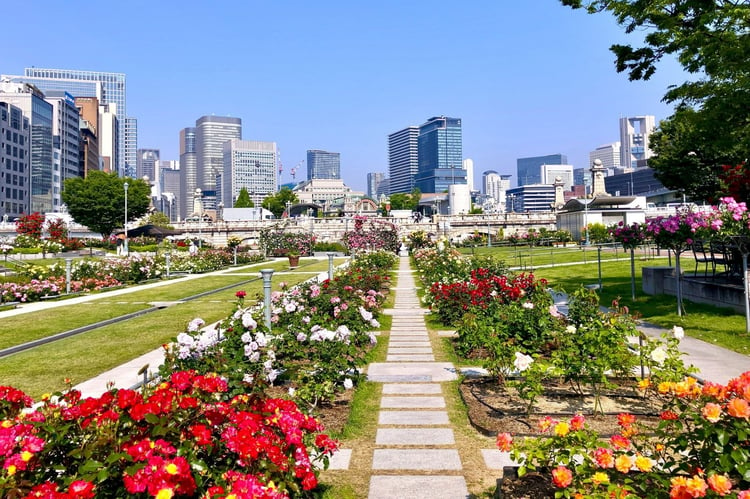
Even amid Osaka’s energy, you can find hidden corners where stillness settles in. The Nakanoshima Park Rose Garden, on Nakanoshima, is an urban oasis where about 3,700 rose bushes bloom—hard to believe you’re surrounded by office buildings. It’s open 24 hours, and one of its charms is that you can stroll quietly even at night(*6). Sit on a bench with the river breeze moving through the roses, and you’ll likely feel your mind gently reset.
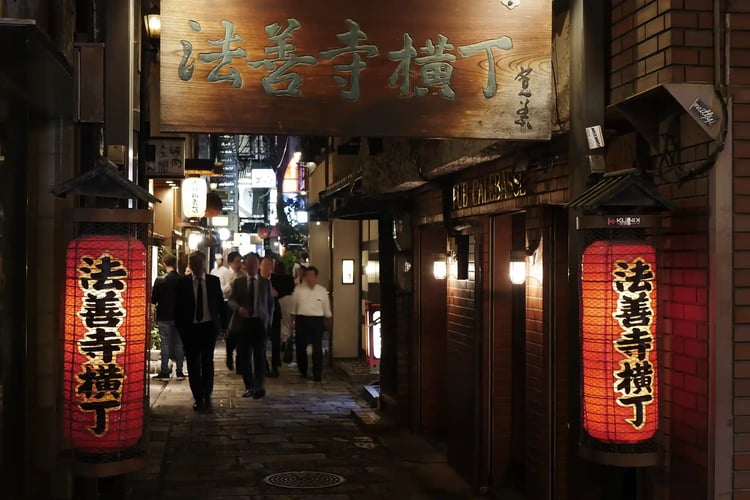
Another favorite is Hozenji Yokocho near Dotonbori: a narrow, stone-paved alley that carries a Showa-era atmosphere despite being in the heart of Minami’s entertainment district(*7). Traditional kappo restaurants and kushikatsu shops glow under lantern light, and once you step inside, the hush—footsteps echoing on stone—can make the surrounding clamor feel like it vanished. Watching people softly ladle water onto the moss-covered “Mizukake Fudō” as they pray may leave you feeling quietly cleansed.
After visiting the lively main keep at Osaka Castle, it’s also worth catching your breath in Nishinomaru Garden on the western side of the grounds. With broad lawns and seasonal flowers, it’s a green, open garden where you can look up at the keep—a beloved place of rest for locals as well(*8). It’s famous in spring for roughly 300 cherry trees in full bloom, but outside peak blossom season, or at off-peak times, it’s comparatively less crowded, letting you enjoy the historic scenery in a calmer setting.
Ideal for Rainy Days or Evenings
On rainy days or at night, spend your time well in indoor cultural venues and elevated night-view spots.
For a rainy-day plan, consider watching Bunraku puppet theater at the National Bunraku Theatre. Bunraku is a traditional performing art that originated in Osaka, a distinctive puppet drama recognized in 2008 as a UNESCO Intangible Cultural Heritage(*9). The theater offers English audio guides, and you’ll likely find yourself absorbed by the narrator’s chanting, the shamisen, and the lifelike movement of the puppets. Tickets can be booked in advance, and on the day of a performance there are also “single-act seats” (makumi)—sold for individual acts (about 24 seats per performance, around 1,000 yen)—so you can try it casually too(*10).
For nighttime classics, the night views from Umeda Sky Building or HARUKAS 300 are always reliable. Reports note that about one hour before closing (around 9:00 p.m.) at the Harukas observatory can be especially calm—fewer families, and sometimes no waiting to enter—so you can fully take in the panoramic skyline in a composed atmosphere(*5).
And in winter, the Nakanoshima area hosts large-scale illumination events such as “Osaka Hikari Renaissance,” where an enchanting sea of light spreads from around City Hall to nearby parks after dusk(*11). Spend a rainy day enriching your mind with museums and traditional arts, then look down quietly on the city’s sparkle from above at night—this kind of rhythm suits an adult, high-quality Osaka trip beautifully.
How to Choose Places to Visit in Osaka|A Theme-Based Travel Guide
To experience Osaka more deeply, it helps to choose your spots around a theme that genuinely interests you. If you love art, plan around museums and architecture; if traditional culture calls to you, build in Bunraku or ukiyo-e; if you want nature and views, aim for gardens and observatories—planning by theme like this makes the trip feel richer and more personal. And while you’re at it, consider lower-impact transportation choices, too.
In the city center, you can get almost everywhere by public transit and on foot, and with Osaka’s subway network and rental bicycles, you can travel comfortably while reducing emissions. Below, you’ll find guidance for choosing where to go in Osaka across three themes: “Art and Architecture,” “Traditional Performing Arts and Kamigata Culture,” and “Gardens and Night Views.” Each theme features highly specialized spots, but don’t worry—we also include beginner-friendly context and etiquette tips along the way.
Deepen Your Appreciation of Art and Architecture
Osaka is an exciting city for art fans and architecture lovers alike. Start in the Nakanoshima area, where two major museums sit side by side. The Osaka Nakanoshima Museum of Art is a new municipal museum holding around 6,000 works of art and design from the late 19th century to the present(*1). Highlights include Modigliani’s nudes, Basquiat paintings, and key works by Yūzō Saeki, an Osaka-born artist—an impressively varied collection.
The building itself also deserves your attention: its pitch-black rectangular exterior and soaring, open atrium feel boldly original. Nearby, the National Museum of Art, Osaka (NMAO) is globally unusual for having all its galleries underground, while above ground a huge steel structure—evoking the vitality of bamboo—rises dramatically(*2). Designed by renowned architect César Pelli, the museum extends down multiple basement levels, with an airy interior where natural light filters in. Between exhibitions, it’s worth popping into the museum shops and cafés attached to these institutions as well.
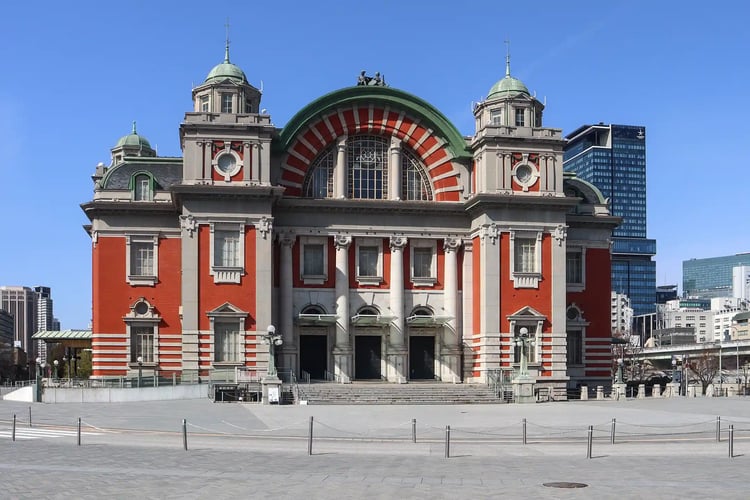
Beyond Nakanoshima, exploring historic civic architecture is one of Osaka’s great pleasures. Osaka City Central Public Hall (completed in 1918) is a lavish Neo-Renaissance building—red brick with a verdigris dome roof—and it is designated as an Important Cultural Property of Japan. Built through a donation from stockbroker Einosuke Iwamoto, it has been cherished for over a century as a civic “hall of culture”(*3). There are also interior tours, and the grand hall, illuminated through stained glass, is a must-see.
Next door is the Osaka Prefectural Nakanoshima Library (opened in 1904), another standout—its neoclassical design and Greek-temple-like columns are instantly striking. Inside, monumental Corinthian colonnades and a domed ceiling make it feel like a treasure house of Meiji-era cultural heritage(*4). As you move between museums and historic buildings like these, try looking closely at exterior details and architectural styles—and imagine the prosperity of Osaka in the era that produced them.
Encounter Traditional Performing Arts and Kamigata Culture
Osaka has been known since the Edo period as “Kamigata,” a region where distinctive performing arts flourished. Traveling to catch that lingering cultural fragrance adds another layer of savor to your trip. Begin at the National Bunraku Theatre, where you can watch Bunraku, Osaka’s own puppet theater tradition.
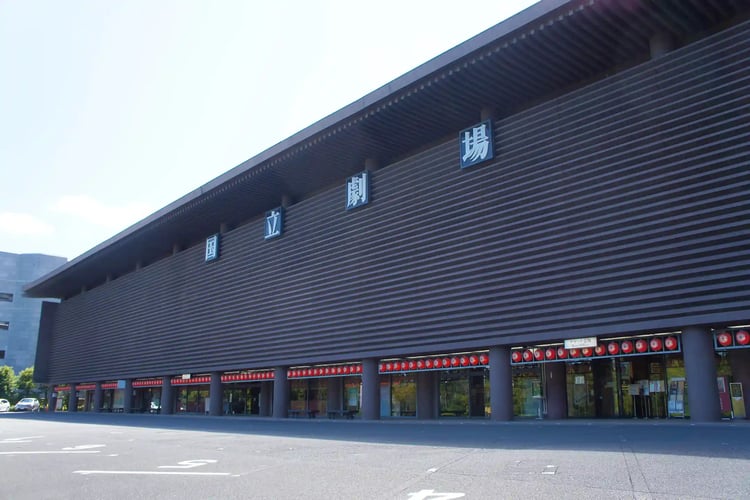
As mentioned earlier, Bunraku is a composite art form created by the unity of the tayū (narrator), shamisen, and puppet handlers. Its artistry is so highly regarded that it stands alongside kabuki and noh as a UNESCO Intangible Cultural Heritage(*9).
The theater provides on-screen captions during performances and explanatory pamphlets for beginners, so you can feel comfortable even if it’s your first time. Reserving tickets in advance is the surest route, but there are also same-day “single-act seats” (makumi), letting you experience a portion of Bunraku casually for around 1,000 yen(*10). As for etiquette, keep in mind that talking and photography during the performance are prohibited—settle in and watch quietly. In the rear exhibition area, you can also see historical materials and puppets, which helps deepen your context for what you’re seeing on stage.
Next, consider visiting the Kamigata Ukiyoe Museum. It’s a small private museum located near Hozenji in front of Dotonbori, but it’s a rare place—the only museum in the world with a permanent exhibition dedicated to “Kamigata ukiyo-e.” These are ukiyo-e woodblock prints published in Osaka during the Edo period, especially famous for “yakusha-e,” actor portraits depicting kabuki stars from Dotonbori’s theater district.
The museum rotates and displays around 30 actor prints at a time, introducing the stylish, sensuous world of Kamigata actor portraits(*5). There’s also a hands-on printing experience corner—trying your own pull from a block can give you a feel for the craft behind the art.
As a viewing courtesy, note that photography is prohibited in the gallery. Finally, if you want to experience Osaka’s distinctive humor and storytelling, another option is to visit Tenma Tenjin Hanjōtei (Kita Ward), a regular venue for Kamigata rakugo, or a traditional yose theater such as Wahha Kamigata (Minami).
At Kamigata performing arts venues, switch your phone off before the show, and enjoy the shared atmosphere where performers and audience become one—laughing and feeling moved together. Time spent immersed in Osaka’s traditional culture can add warmth and human depth to your journey.
Enjoy Gardens and Night Views
If you want to forget the city’s noise and be soothed by greenery and light, garden strolls and night-view watching are the perfect pairing. For a historic garden, start with Keitakuen in Tennoji Park. Completed in 1918 as the garden of the Sumitomo family’s main residence, it was created over a decade by Kyoto’s famed gardener, the 7th-generation Ogawa Jihei (Ueji)(*6). This is a Japanese stroll garden centered on a pond, and in spring’s fresh green and autumn’s foliage, the scenery becomes richly colored and deeply atmospheric.
There’s also the teahouse “Chōsei-an” inside the garden, where reservation-based tea gatherings may sometimes be held. Standing quietly by the water and looking at mossy stone lanterns, you may forget you’re in a major city at all. When viewing the garden, it’s considerate to avoid using tripods and to share the calm with other visitors.
Next, treat yourself to golden hour from an observatory with a citywide panorama. Recommended choices are the Kuchu Teien Observatory at Umeda Sky Building and the Abeno Harukas observatory, especially around sunset. During the so-called “magic hour,” the crimson sky and the city’s first lights blend together into a dreamlike scene that photographs beautifully. At HARUKAS 300, the openness feels particularly expansive thanks to its 300-meter height.
At observatories, monopods or tripods may be allowed in some cases, but they can be prohibited during crowded periods(*7). Follow staff guidance and share the space considerately. If your goal is night photography, you’ll often find fewer people and easier conditions for equipment use on weekdays or later at night.
Also, Osaka Castle’s main keep is illuminated at night, and even viewing it from outside carries a distinctive charm. In spring evenings, Nishinomaru Garden hosts nighttime cherry-blossom viewing (kanshō night hours), drawing many photography enthusiasts even though tripods are prohibited(*8). Wherever you go for night views, turn off your flash so you don’t disturb others, and enjoy the glow quietly. You may not get a sky packed with stars—but savoring the city’s nightscape as a “modern constellation” is one of the special pleasures of traveling in Osaka.
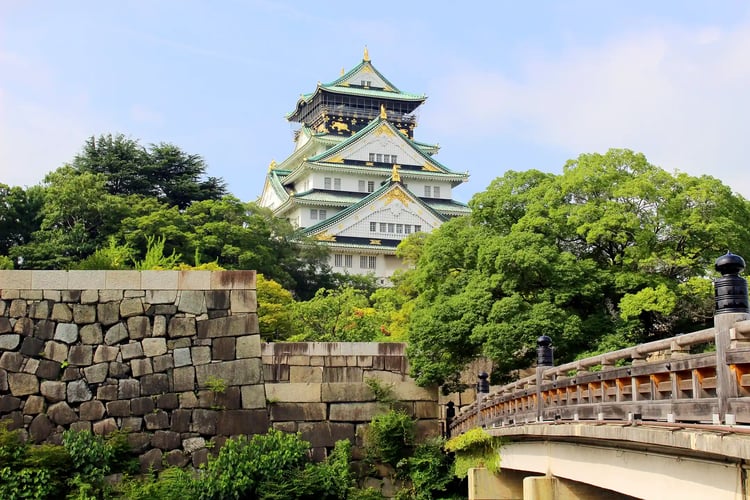
Places to Visit in Nakanoshima|A Day of Museums and Riverside Scenery
If you want to satisfy your curiosity while also being soothed by waterside views, spend a full day in the Nakanoshima area. This long, narrow island between the Dōjima and Tosabori rivers is one of Osaka’s defining cultural zones. Museums, galleries, and retro architecture cluster within walking distance, and riverside promenades are well maintained.
You can also access the area easily by public transit via nearby stations on the Keihan Nakanoshima Line or the Osaka Metro Yotsubashi Line, with landmarks scattered station by station. If you build a route you can cover on foot from morning to evening, you’ll have an intelligent, satisfying walk that combines art appreciation, architectural discovery, and riverside strolling in a single day.
Highlights and Facilities
Begin with the Osaka Nakanoshima Museum of Art and the National Museum of Art, Osaka, both mentioned earlier. They face each other in the western part of Nakanoshima, making the location ideal for museum-hopping. At the Nakanoshima museum, you can immerse yourself in modern and contemporary collections; at the National Museum, you can explore contemporary exhibitions from Japan and abroad. They’re only a few minutes apart on foot, making this an indulgent route for art lovers.
Then walk east along the river and you’ll come upon the retro Osaka City Central Public Hall and the Osaka Prefectural Nakanoshima Library. As noted, the Public Hall is a Neo-Renaissance building from the 1910s, and with an interior tour (reservation required), you can visit lavish special rooms and halls with a guide. Next door, the Nakanoshima Library (opened in 1904) is a weighty stone building, also designated as cultural property.
Inside, you’ll find a stained-glass-lit dome and marble colonnades, and you can look around freely. Continue to the eastern end of Nakanoshima and you’ll reach Osaka City Hall and Nakanoshima Park. The park’s Rose Garden is a walking spot where you can enjoy roses across the seasons; in spring and autumn, colorful blooms appear, and you can capture beautiful photos with the river and the high-rise skyline as a backdrop.
On the north side of the park is the Osaka Museum of Oriental Ceramics (with one of the world’s leading collections of East Asian ceramics), a must if you love fine objects. Nakanoshima truly is an “island of knowledge.” From art to historic architecture to nature, the variety of highlights within walking distance makes it well worth dedicating a full day to exploring slowly and thoroughly.
Breaks and Dining
As you explore Nakanoshima, pace yourself with good breaks—and enjoy the food along the way. Stylish cafés and restaurants dot the riverside. For example, GARB Weeks in Nakanoshima Park is a popular café-restaurant with terrace seating overlooking the river and rose garden. At lunch, you can enjoy salads and pasta made with local vegetables; at tea time, seasonal sweets—on a clear day, time seems to flow a little more slowly here.
Museum cafés are also worth your attention. At the Nakanoshima Museum Café on the first floor of the Osaka Nakanoshima Museum of Art, you’ll find museum-original blended coffee and desserts inspired by artworks—perfect for lingering in the afterglow of what you’ve just seen.
There’s also a retro café operating inside the Nakanoshima Library, where you can enjoy tea and baked sweets surrounded by classic interiors. For dinner, consider extending your walk to the “Nakanoshima Banks” area along the Dōjima River in western Nakanoshima. At the riverside THE BANKS Restaurant & Cafe, you can enjoy a satisfying dinner—like carefully selected wagyu or grilled seasonal fish—while feeling the river breeze (terrace seating may require reservation).
If you’re after something especially memorable, how about dinner at Nakanoshima SOCIAL EAT AWAKE on the basement level of Osaka City Central Public Hall? Enjoying cuisine and wine in a space that embraces the atmosphere of an Important Cultural Property can easily become a highlight of your trip.
When using these popular venues, reservations are advisable—especially on weekends or at night(*reservations especially recommended). A day in Nakanoshima should feel like a luxurious balance of intellectual stimulation and the joy of excellent food.
Places to Visit around Osaka Castle and the Uemachi Plateau|Castles, Modern History, and Gardens
Osaka’s Uemachi Plateau area has been shaped as the city’s center from ancient times through the modern era. In particular, the neighborhoods around Osaka Castle gather an array of spots you won’t want to miss if you love history. Here’s a route where you can learn about Osaka’s transformation from the Warring States era into the modern age, while quietly savoring the grandeur of the castle grounds and the changing garden scenery across the seasons.
As you walk through Osaka Castle Park, surrounded by stone walls, you’ll sense how the glory of the nation’s rulers and memories of the Siege of Osaka still breathe here—beautifully harmonized with today’s well-maintained public park. With museums displaying historical materials and vantage points that look out over the city from higher ground, you can enjoy thoughtful exploration and a refreshing reset at the same time.
Highlights
Start, of course, with Osaka Castle’s Main Keep. Rebuilt by the Tokugawa after the Summer Siege of Osaka, and later restored in the Showa era through citizens’ efforts, this keep can be seen as Osaka’s history embodied. Inside, as a history museum, it displays valuable cultural assets related to Toyotomi Hideyoshi’s life and the castle’s evolution(*1).
From the top-floor observatory, you can see across the Osaka Plain, the surrounding skyscrapers, and even the Ikoma mountain range in the distance—a view where past and present intersect in a way that can genuinely move you. After the keep, head to Nishinomaru Garden on the western side of the castle grounds. Said to be the former site of the residence of Hideyoshi’s principal wife, Nene, it opened in 1965 as a lawn garden where citizens can relax(*2).
In spring, about 300 cherry trees bloom and the area becomes famous for blossoms with nighttime lighting, but on ordinary days it remains a quiet garden surrounded by trees—an ideal place to rest on a bench while admiring the keep in a beautifully composed view. Next, visit the Osaka Museum of History just southwest of the castle. This modern 13-story building is filled with hands-on exhibitions that let you learn Osaka’s history from ancient times to the present. On the 10th floor, a powerful highlight is the full-scale reconstruction of the Naniwa Palace Daigokuden (Great Hall of State) from the Nara period, making you feel vividly that this area was once the seat of the capital(*3).
Another distinctive pleasure here is the view: through large glass windows, you can look out over Naniwanomiya-ato Park and Osaka Castle’s keep. After absorbing the exhibits, seeing the real ruins and the castle beyond helps your understanding settle more deeply. Finally, take a stroll through Naniwanomiya-ato Park at the museum’s base. This historic site park preserves traces of Naniwa Palace, where Japan’s capital once stood in the 7th–8th centuries; today, the palace’s footprint is indicated by the placement of foundation stones.
It’s a quiet expanse of lawn. For those uninterested in ruins it may look like “just a big open space,” but that’s exactly why it’s perfect for sitting on a bench and doing absolutely nothing for a while(*4). On a clear day, you might pick up a coffee to go from a nearby café and take a slow breath in the greenery while imagining ancient romance. Around Osaka Castle, in this way, you can enjoy a richly layered time where imposing fortifications, historical heritage, and serene gardens come together.
Breaks and Staying Nearby
When your feet need a break around Osaka Castle, choose a lounge with a view or a spot that leans into Japanese aesthetics.
A strong recommendation is an upper-floor lounge in a hotel next to Osaka Castle Park. For instance, at Hotel New Otani Osaka, the top-floor lounge “Sky Lounge” lets you spend tea time looking out through large windows at the keep beyond Nishinomaru Garden. In spring you’ll see a carpet of blossoms below; in summer, deep greens; at night, the illuminated castle floating against the dark—each season brings a different expression. If you want a window seat, reserving in advance is reassuring.
Also, within Nishinomaru Garden, the teahouse “Hōshō-an” sits quietly. This authentic sukiya-style teahouse was donated in 1969 by Kōnosuke Matsushita. It’s normally closed to the public, but special tea gatherings are sometimes held(*5). If your timing aligns, joining for a bowl of usucha and wagashi can be a rare experience. Even if it doesn’t, you can still enjoy matcha sweets at a nearby Japanese café, or pick up a simple mochi snack at a stall near Ōtemon Gate—small breaks that carry a sense of Japanese charm.
To close out sightseeing—or in the late afternoon when the day catches up with you—treating yourself to a hotel spa is another kind of luxury. The same Hotel New Otani Osaka has relaxation facilities within its fitness club, and even if you aren’t staying there, you may be able to book massage treatments by reservation. Or you could head to the Osaka Marriott Miyako Hotel in Tennoji and unwind in a high-floor spa & sauna (in some cases, limited to hotel guests). If you reset your body at the end of the day, you’ll be ready to enjoy the rest of your trip in full. Around Osaka Castle, combining historical walks with modern spaces for restoration can make your stay kind to both body and mind.
Places to Visit in Umeda and Umekita|Cutting-Edge Urban Development and Views
Umeda—Osaka’s premier downtown district—packs in both state-of-the-art urban development and the city’s distinctive commercial culture and night-view spots.
Stay at a high-rise hotel, tour the newest destinations, enjoy shopping at long-established department stores and gallery-hopping, then finish the night soaking in the glitter of the skyline—Umeda and the Umekita area are made for this kind of city-forward plan.
In recent years, redevelopment known as “Umekita Phase 2” has progressed here. North of Osaka Station, Grand Front Osaka—combining greenery with commercial facilities and a major knowledge hub—has become a core destination, and in 2024, Grand Green Osaka (the Umekita Sotoniwa area) partially opened. This station-connected mega project has created lush green space alongside the latest technology and business hubs, drawing attention from Japan and abroad.
As you walk between high-rises through parks and refined commercial zones, you’ll feel Osaka’s future-oriented energy and hospitality spirit. Here are the highlights of the Umeda area, along with tips for high-quality shopping.
Highlights
In Umeda, the cityscape itself—where old and new landmarks coexist—is a highlight. Start with Grand Front Osaka, a large mixed-use complex that opened in 2013, housing a shopping mall, offices, hotels, and Knowledge Capital (a collaboration hub linking industry, academia, and government). Its cutting-edge buildings and open spaces with water features and greenery stand out, and on weekends you’ll often find markets and events.
Then visit the new area north of Osaka Station: Umekita Sotoniwa (Grand Green Osaka), a much-talked-about spot that partially opened in 2024. Centered on the expansive 4.5-hectare urban park “Umekita Park,” the North and South Towers are being developed, with the latest commercial facilities, hotels, and offices opening in stages(*1). Securing this much green space directly connected to a major station is globally notable, bringing softness and a place for connection right to the city’s gateway.
Inside the park you’ll find lawns, waterside zones, and children’s play areas—ideal when you want to sit down for a moment mid-shopping. In the evening, there are also fountain-and-light performances, and it’s already becoming a popular new oasis in Umeda. Of course, Umeda’s established face—Umeda Sky Building—remains as iconic as ever. Popular with international travelers, it watches over the district with a shape and viewpoint experience you won’t find elsewhere.
And speaking of Umeda, you can’t forget the department stores. Long-standing names like Hankyu, Hanshin, and Daimaru line the station area, and Hankyu Umeda Main Store in particular is historic, first opening in 1929(*2). The current rebuilt building is impressive, and from the basement food hall to the top floors, it’s lively every day. The large open atrium “Shukusai Hiroba” hosts events and exhibitions, carrying forward the glamour of Osaka’s department store culture.
When night falls, make time for Umeda’s night views. Whether it’s the Kuchu Teien Observatory at Umeda Sky Building, the red illumination of the HEP FIVE Ferris wheel, or the panorama from a bar lounge high in a luxury hotel, you have plenty of choices. Umeda’s nightscape symbolizes the prosperity of “Osaka Kita,” and as you watch the grid of city lights stretch outward, your travel memories may feel even brighter.
Shopping Guide
Shopping in Umeda is a steady stream of encounters with quality. Department stores—where global brands and curated domestic and international shops gather—are essential. At Hankyu Umeda Main Store, you’ll find not only the latest fashion, but also, on the 7th-floor living section, a Japanese sundries salon offering seasonal items like folding fans and chirimen handicrafts. With motifs drawn from the seasons, these make especially thoughtful souvenirs(*3).
Also, peek into specialty shops that handle traditional crafts. Hankyu’s art gallery sometimes hosts exhibitions featuring Arita ware or Wajima lacquerware—an opportunity to see and purchase one-of-a-kind pieces. In the basement food hall at Hanshin Umeda Main Store, you’ll find a strong lineup of Osaka local sake and Japanese sweets, so if food culture is part of what excites you, it’s well worth a look.
Beyond department stores, Umeda also has distinctive shops scattered throughout. At lifestyle stores inside Grand Front Osaka, you may find craft goods from across Japan, shops proposing craft perfumes made with natural fragrance materials, and select stores carrying tableware—both Western and Japanese—made through artisans’ handwork.
For example, at Takumi no Hako Kyoto on the 1st floor of the South Building, you can buy items that reinterpret Kyoto traditional crafts with a modern touch. You might discover pieces like yuzen-dyed stoles or Kyo-yaki accessories—beautiful items you can use stylishly in everyday life.
If you’re looking for Japanese paper goods or lacquerware tableware, Nakagawa Masashichi Shoten in Hankyu Sanbangai is also recommended. Its shelves are filled with modern-produced interpretations of artisan skills from around Japan, and with English explanations available, it’s also a smart option for gifts for visitors from abroad.
In addition, large commercial facilities in Umeda regularly host craft pop-ups and regional product fairs. For instance, the “Japan Handcraft Expo” held at Hankyu in autumn features demonstrations and direct sales by traditional craftspeople—giving you a chance to meet pieces you normally can’t find. These limited-time event details are shared on department stores’ official sites and social media, so if your schedule aligns, consider stopping by.
Shopping in Umeda goes beyond purchasing—it’s a way to feel Japan’s craftsmanship and design currents up close. Encounters with truly fine pieces will likely satisfy the heart of a traveler who values culture and discernment.
Places to Visit in Namba and Dotonbori|Kamigata Performing Arts and Alley Culture
Namba and Dotonbori, the heart of Osaka Minami, are famous for their lively downtown atmosphere—but behind the buzz, there are also places where you can enjoy culture quietly. The area often brings to mind casual street food and neon lights, yet with a small shift in perspective you’ll find traditional theaters, atmospheric back alleys, highly specialized shops, and other calm alternatives.
To enjoy Minami while avoiding the nighttime crush, timing matters. If you aim for early morning or those in-between afternoon hours, even famous spots can feel surprisingly peaceful. In this chapter, you’ll find places in Namba where you can connect with Kamigata performing arts, wander alleys, and unwind in relaxed cafés and bars—quiet pleasures suited to grown-up travel.
Highlights
In Namba, the first place to note is the National Bunraku Theatre. As the home of Bunraku described earlier, it’s well worth visiting if your schedule aligns with a performance. Both daytime and evening shows tend to be long, but even a single-act viewing is enough to absorb the atmosphere. The Nipponbashi area where the theater sits is relatively calm during the day, and even visiting the venue itself can be worthwhile (the lobby also has a free puppet display corner).
On your walk toward Dotonbori, you’ll find the Kamigata Ukiyoe Museum. As introduced in the previous chapter, this small museum exhibits ukiyo-e printed in Osaka during the Edo period, especially colorful actor prints of kabuki stars. If you quietly engage with the art that supported Dotonbori’s glamorous theater district, you may find the bustle of the old playhouses rising vividly in your imagination.
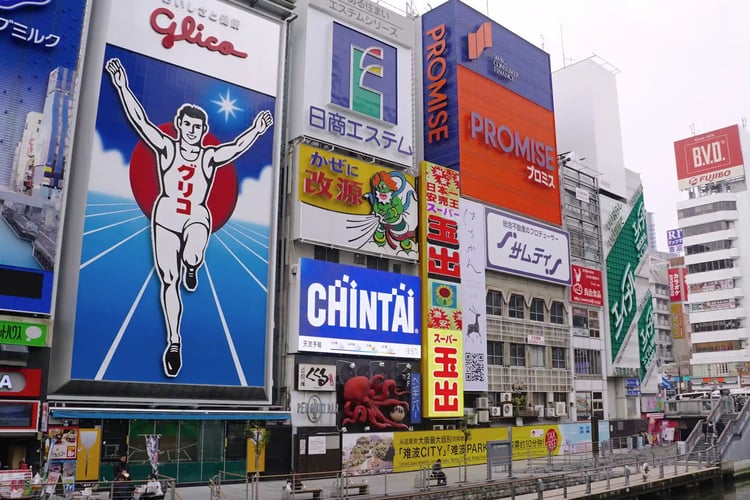
Next, step off the main Dotonbori flow into Hozenji Yokocho. This stone-paved alley is about 3 meters wide and roughly 80 meters long, but it’s a richly atmospheric place that preserves the look of a postwar dining street even today(*1). In the daytime, foot traffic is light, and you’ll see people in a quiet lane pressing their hands together before the moss-covered Fudō Myōō at Hozenji.
Here, try ladling water onto the famed Mizukake Fudō and offering a quiet prayer. Many long-established restaurants in the alley open mainly at night, but even just walking the empty stone path before lunchtime opening has a special charm.
Another uniquely Minami destination is the Sennichimae Doguyasuji Shopping Street. Located just south of Dotonbori in a corner of Namba, this arcade of specialty shops traces its origins to a store founded in Meiji 15 (1882), and it’s known as “the kitchenware district of the west”(*2). Cooking tools and professional kitchen equipment line the covered street, attracting not only chefs but travelers from around the world seeking unusual utensils and hyper-realistic food samples.
The peak bustle comes in the afternoon, but if you go right after opening in the morning, it’s quieter and you can browse carefully. At knife shops you may catch glimpses of craftsmen sharpening blades, and at food-sample specialty shops you can sometimes try making miniature food models yourself—experiences that are low-key yet deeply curiosity-stirring.
As you can see, even in Namba and Dotonbori, choosing the right times and places lets you step away from the noise and sink into Osaka’s culture. The Glico sign and crowds at night are certainly “Osaka,” but weaving in these quieter spots between the bustle adds contrast and depth to your trip as a whole.
Relaxing Cafés and Bars
After walking through Minami, take a breather in a calm café or bar tucked into the backstreets. In recent years, Osaka’s coffee culture has been growing, and around Shinsaibashi and Namba you’ll find distinctive roasters and cafés scattered throughout the area.
For example, LiLo Coffee Roasters in Nishishinsaibashi (Shinsaibashi/Amerikamura) is a coffee stand that roasts carefully selected beans from around the world in-house and prepares each cup by hand drip. Along with fragrant coffee, staff may explain origins and flavor profiles thoughtfully, making it a dream space if you truly love coffee. You can also take it to go and enjoy it on a bench along the Dotonbori canal.
At night, how about slowing down in a small bar with jazz drifting through the air? Minami has a number of hidden, intimate jazz bars—often tiny, basement spaces with a short counter and a softly lit back wall of bottles. As classic records play one after another and the bartender quietly shakes a cocktail, sipping whisky can make the city’s chaos feel strangely unreal.
A few times a month, there may also be live performances by professional musicians, letting you enjoy authentic jazz up close (cover charge required). Minami is often seen as flashy entertainment territory, but step into the right alley and you’ll find plenty of places where you can spend the evening in a more subdued, adult way. That ability—to offer both spectacle and quiet—might be one of Osaka’s deepest charms.
Places to Visit in Tennoji and Abeno|Temples, Parks, and Contemporary Art
Tennoji and Abeno in southern Osaka are a layered area where venerable temples and shrines dating back to Prince Shōtoku’s era coexist with modern urban parks, supertall towers, and contemporary art. From the Shitennōji area, which preserves traces of ancient capitals, to Tennoji Park laid out in the Meiji period, to the 300-meter-class supertall “Abeno Harukas,” the region stacks eras like pages in a living book.
Here, you’ll find key highlights to visit in Tennoji and Abeno, along with places where you can enjoy food at an unhurried pace. Spend time in this blend of ancient and contemporary, and you’ll feel the depth of Osaka’s timeline and the breadth of its culture on your own skin.
Highlights
Start with Shitennōji, one of Osaka’s most celebrated ancient temples. Founded in 593 (the first year of Empress Suiko) by Prince Shōtoku, it is among Japan’s earliest official Buddhist temples and has a history spanning over 1,400 years(*1).
As you enter the grounds, you’ll notice the “Shitennōji-style garan layout,” where the Middle Gate leads in a straight axis to the five-story pagoda, the Golden Hall, and the Lecture Hall. This precious arrangement preserves continental architectural ideals from the 6th–7th centuries, letting you sense the founding-era vision. The stone torii known as the “Gokuraku Gate,” expressing the Pure Land worldview, is an Important Cultural Property—and among the largest stone torii in Japan from the pre-modern era.
On the 21st and 22nd of each month, the temple hosts an open-air market fondly called “Shitennōji-san,” drawing many stalls and crowds. Yet on ordinary days, it’s surprisingly quiet—an excellent place to steady your mind in the middle of the city. Within the grounds you’ll find “Gokuraku Pond,” modeled after the Pure Land’s waters, as well as the Japanese garden “Satori no Niwa,” making it a pleasure to stroll slowly.
A five-minute walk south from Shitennōji brings you to Tennoji Park. This historic park was developed through Emperor Meiji’s reverence for Prince Shōtoku, and within its green grounds you’ll find multiple cultural facilities. On a hill at the park’s north side stands the Osaka City Museum of Fine Arts. Opened in 1936, it’s a dignified building with a collection of about 8,000 works, including Chinese and Japanese paintings and sculptures.
Inside, you can quietly “converse” with excellent works—such as National Treasure-level Chinese celadon from the Song dynasty and Buddhist paintings from Japan’s early modern period—in a calm environment. Next is Keitakuen in the park’s center, the Japanese garden donated by the Sumitomo family—an urban oasis.
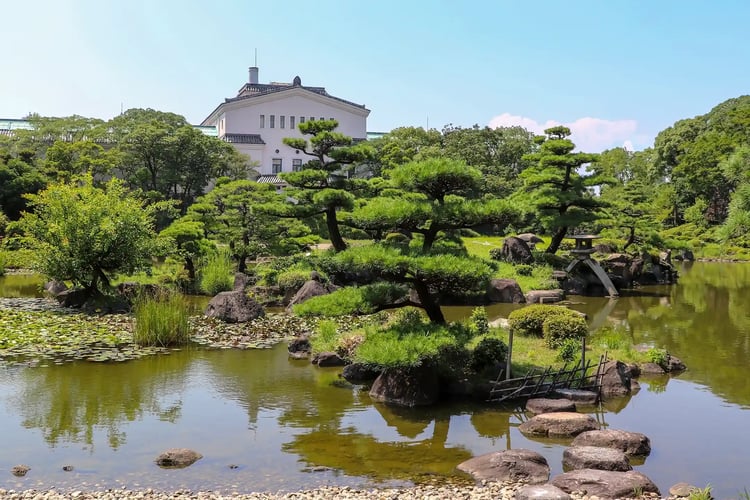
From spring’s fresh greens to autumn foliage, the garden is lovely, and the borrowed scenery of modern high-rises creates a one-of-a-kind view. The contrast with Abeno Harukas beyond the garden is especially evocative, letting you feel the coexistence of history and the present. The garden’s teahouse “Chōsei-an” can be used by reservation, and tea events are also held. There is also a zoo (Tennoji Zoo) on the park’s south side, but if you’re seeking a quiet trip, let’s skip it this time.
Rising directly adjacent to the park is Abeno Harukas. At around 300 meters, it is a landmark supertall mixed-use complex, housing commercial spaces, offices, a hotel, and a museum. On the 16th floor, the Abeno Harukas Art Museum hosts collaborations with major overseas museums and exhibitions of masterpieces from Japan and abroad—letting you enjoy art in a contemporary exhibition environment.
Recently, high-quality exhibitions have included Impressionism shows and Ancient Egypt exhibitions, among others. From HARUKAS 300 (floors 58–60), a 360-degree panorama opens over Osaka and beyond, sometimes reaching as far as the Akashi Strait. The view from late afternoon into night is especially impressive—the contrast between Tennoji Park’s greenery and the city’s lights is something you’ll want to see with your own eyes.
In short, Tennoji and Abeno let you experience Osaka’s many faces along a single continuous route—from ancient sacred ground to near-futuristic observatory heights.
Calm, High-Quality Dining Choices
In Tennoji and Abeno, you’ll also find dining options that are quiet and genuinely high quality. For a park-side break, a perfect choice is a café around the Tenshiba entrance plaza near Keitakuen. Facing the broad lawn, these cafés let you enjoy coffee and seasonal desserts while looking out at greenery—an easy way to slow your pace after temple visits or museum time. Because many open early, they also work well for breakfast before sightseeing.
For a health-conscious mood, consider a modern Japanese dining spot in Abeno that uses local vegetables. Department-store dining floors, in particular, often have calm seating and well-balanced set meals that feature seasonal produce and carefully prepared dashi soups—comforting choices that don’t feel heavy. With some restaurants offering private or semi-private seating, you can also dine without worrying about your surroundings, even if you’re alone.
If you want an afternoon tea that feels like a fitting finale to your day, visit “LOUNGE PLUS” on the 19th floor of the Osaka Marriott Miyako Hotel. This lobby lounge has a lofty ceiling and panoramic windows, and its seasonally changing afternoon tea sets are popular(*1). Autumn sets themed around Japanese chestnuts or grapes, for instance, can be as visually stunning as they are delicious. Sink into a sofa seat with tea, and your tired legs may finally let go.
If you want to avoid crowds, weekday afternoons around 2:00–4:00 p.m. are a good target. And at night, it’s also luxurious to sip a cocktail in the hotel bar while looking out at the illuminated Tsūtenkaku and Osaka’s night skyline. In Abeno, you have many choices for enjoying food in a calm way away from the noise. After temple visits and museum time, being warmly “hosted” by refined dining leaves a graceful aftertaste on your journey.
Choosing Places to Visit in Osaka by Season and Time of Day
Osaka shows different expressions across the four seasons, and when you build an itinerary around the time of year, your experience becomes even more vivid. Even within a single day, small adjustments—morning vs. evening, daytime vs. night—can help you avoid crowds and encounter more dreamlike scenes.
Here, you’ll find especially recommended spots for each season (spring, summer, autumn, winter), ways to handle heat and cold, and ideas for enjoying early mornings and evenings. We’ll also weave in clothing guidance and event information, so you can use these as hints for an Osaka trip full of seasonal texture. Make season and time your allies, and draw out Osaka’s charms to their fullest.
Recommended in Spring
Spring in Osaka is one of the best seasons: cherry blossoms and other flowers color the city, and outdoor events increase. From late March to early April, the cherry trees in Osaka Castle’s Nishinomaru Garden (about 300 Somei Yoshino) reach their peak, and illuminated nighttime blossom viewing is also held(*1). To avoid crowds, aim for just after opening around 9:00 a.m., or near closing time in the early evening.
At Expo ’70 Commemorative Park (Suita City), the Natural and Cultural Gardens also offer vibrant seasonal displays like tulip festivals and poppy fields, and the wide grounds make it easy to spend time slowly. Even if daytime feels warm, mornings and nights can still be chilly in spring, so bring a light coat or cardigan.
Osaka’s spring traditions also include the “Nakanoshima Festival” held around Nakanoshima during Golden Week in May, and the Mint Bureau’s “Cherry Blossom Passage” (typically held in mid-April). The Mint’s passage is especially beautiful with tunnels of double-flowered cherry blossoms, but it can be extremely crowded—so if you want a calmer viewing, go on a weekday right after it begins.
For clothing, during peak blossom season you may still face cold days, so a light sweater with a jacket is a good baseline. Spring winds can also be strong, so if you suffer from pollen allergies, don’t forget a mask. In a fresh spring breeze, Osaka—where you can admire history and flowers together—shines with a special kind of appeal.
Recommended in Summer
Summer in Osaka is hot and humid, and outdoor sightseeing in the daytime can drain your energy quickly. That’s why an indoor-focused museum itinerary can feel much more comfortable. For example, you might spend time in air-conditioned venues like the Osaka Science Museum, the Osaka City Museum of Fine Arts, or Kaiyukan (the aquarium at Osaka Port). At the science museum, you can cool off while viewing a near-real starry sky projected on a 26.5-meter dome—among the world’s largest-class planetariums(*2).
Another unique option is Takimi Koji beneath Umeda Sky Building, a retro Showa-style dining street recreated indoors—walking through the reproduced streetscape is a surprisingly memorable experience. If you do go outdoors, keep it to the relatively cooler morning and evening hours. For clothing, choose breathable short sleeves and light long pants, and use a hat or parasol to avoid direct sun. It’s also comforting to carry one light layer for air-conditioning. And of course—hydrate frequently.
As for summer traditions, Tenjin Matsuri in late July (one of Japan’s three great festivals) is famous. The boat procession on the Ōkawa River and nighttime fireworks are worth seeing—but the crowds are intense, so if you want to avoid the crush, securing paid seating or even enjoying the atmosphere via TV coverage is another approach. In August, fireworks festivals like PL Fireworks Art (Tondabayashi City) take place across the prefecture, and in urban areas you can sometimes even find quieter rooftop “hidden spots” for viewing.
In summer Osaka, don’t push yourself—switch skillfully between indoor and outdoor time, and stay comfortable as you seek out coolness. And do taste what the season offers: shaved ice in the height of summer, or chilled drinks around Dotonbori—these are small pleasures that belong to that moment.
Recommended in Autumn
Autumn in Osaka brings comfortable weather and many cultural events. October through November is peak foliage season. In Osaka City, famous leaf-viewing spots include the ginkgo avenue in Osaka Castle Park (golden leaves) and the maples at Katsuo-ji near the foothills of Mt. Ikoma (Minoh City). In the city center, the ginkgo street trees along Midosuji turn a vivid gold all at once in late November, making for a crisp, satisfying walk. For clothing, bring a light outer layer for mornings and evenings; many days you’ll be perfectly comfortable in just a long-sleeved shirt during the day.
This is also the season when Osaka’s “autumn of art and appetite” arrives in full. For instance, in October, “Osaka Culture and Arts Festival” is held across the city, with music performances and art exhibitions staged in historic buildings. In mid-November, outdoor market events like “Lohas Festa” are held at Expo ’70 Commemorative Park, and it’s fun to browse craft booths and organic food stands beneath the clear autumn sky.
Because autumn is also typhoon season, bring rain gear and don’t forget to check for event cancellations. As the season deepens, days get shorter—but that’s exactly why illuminations and night views begin to feel even more vivid.
In November, as part of Osaka Hikari no Kyoen, the Midosuji Illumination lights up, bathing Midosuji in champagne-gold light across about 4 km. After dinner, taking a gentle walk into the longer autumn night can feel wonderfully romantic. Savor Osaka’s autumn, where art, food, and even sports all gather in one richly concentrated season.
Recommended in Winter
Winter in Osaka is relatively mild, but cold winds can still cut through, so dress warmly and head out prepared. In December, the city fills with illuminations—especially Nakanoshima’s “Osaka Hikari Renaissance” and the Midosuji Illumination. In Nakanoshima, for about two weeks in mid-December each year, the area from the front of Osaka City Hall through the park zone is lit from 17:00 to 22:00, offering sound-and-light art experiences(*3). Wear gloves and a scarf, and stroll with a hot drink in hand.
Around Christmas, Umeda Sky Building hosts a German-style Christmas market, where you can enjoy German sweets and hot wine while gazing at the tree. For the year-end and New Year period, there’s the joy of temple bells on New Year’s Eve and the first shrine/temple visit of the year on January 1. Popular hatsumōde spots in Osaka include Sumiyoshi Taisha and Osaka Tenmangu, but because they become extremely crowded, if you want a calmer visit, consider going in mid-January after the first three days have passed.
For clothing, a coat is essential, and depending on the day, a lightweight down jacket can add peace of mind. Indoors, heating is strong, so layering makes it easy to adjust.
Winter air is clear, so views from observatories can reach farther than at any other time of year. Some people even report seeing the Akashi Kaikyō Bridge from HARUKAS 300. Sunset comes before 5:00 p.m., but that means you can enjoy night views earlier—without having to stand in the cold for too long. Watch the skyline from an observatory around dusk, return to your hotel earlier, and warm yourself in a spa or sauna—this is a kind of winter luxury.
Winter in Osaka has fewer events, but you can use that quietness to devote time to calm pleasures like museum visits or Bunraku. If you do, you may find the season leaves you not colder, but more deeply satisfied.