You can find out what nihon buyo is in about thirty seconds. It is Japanese traditional dance — the NIHONBUYO Association's own English FAQ calls it "Japanese classical dance," and both names point at the same thing. There are schools, there is a long repertoire. The story is not the hard part either. Shochiku publishes English synopses of the month's pieces on its monthly programme page: six of them in September against seven single-act rows, because the two acts of one play share a synopsis. It sells programmes with "English synopses … in the back pages." It offers a captioning device carrying "[e]ssential translations of dialogue and lyrics, as well as explanations relating to kabuki," and a simplified English audio guide giving "[b]rief description and synopsis only." You can arrive knowing what happens.
This article is about the other half: what the fan is doing, who is making the sound and whether you can see them, and what the kimono is adding. Two of the three come from the dancers' own association and one from the public body that runs Japan's national theatres. Both publish in English.
It is not a list of pieces. If you want the wider map of Japanese performance, our guide to the performing arts and music of Japan covers the neighbours: noh, kyogen, bunraku, the music that runs under all of them.
Nihon Buyo Is Kabuki Dance That Left the Kabuki Stage
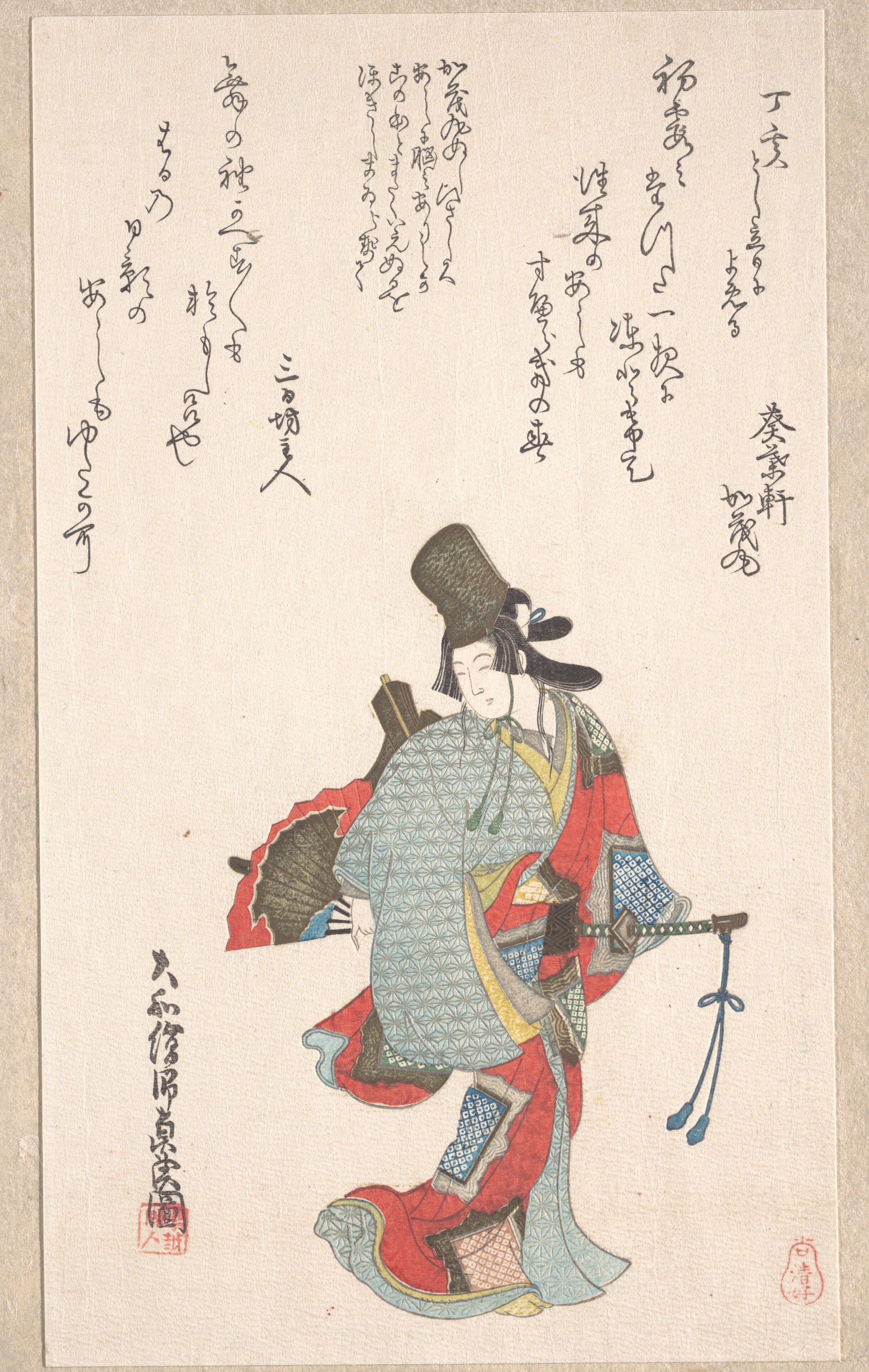
The sentence to start from is the one the NIHONBUYO Association — a public-interest incorporated association, by its own description — opens its explanation with: "NIHONBUYO is dance based on the techniques of Kabuki dance."
Based on the techniques of — that is the association's own phrase. The vocabulary is kabuki's vocabulary, performed outside kabuki's theatre — the association writes that "[i]n Modern Japan, NIHONBUYO became independent from Kabuki" — and, crucially, danced by women as well, in an art whose parent stage the Japan Arts Council's introduction to kabuki still describes as one "in which men perform all roles."
The separation has a period and a person attached to it, and both are more recent than "classical" suggests. The association credits "the author and prominent literary figure Shoyo Tsubouchi," towards the end of the Meiji period (1868–1912), with proposing a major change in Japanese theatre, and records, separately, the change in the word: "A new term 'buyo' was coined to replace 'buto', which had been a Japanese translation of the word 'dance'." The name of the art is a late-Meiji coinage, not an ancient one.
What followed is the part that matters for who is on the stage. The association describes a Taishō-period movement to create new works — its English page spells it the "Sin-buyo Movement" — in which "many female NIHONBUYO performers were active," and says that during the Shōwa period "children from ordinary homes also aspired to become professional NIHONBUYO performers." An art that had belonged to male specialists in female roles became one in which women were active and in which children from ordinary homes aspired to turn professional. That is the departure, and it is a change in who was doing it as much as in what was being made.
Shosagoto: What Changes When the Play Is Removed
Inside kabuki, dance has a name of its own. The Japan Arts Council, the public body that runs Japan's national theatres, sets it out in its classification of kabuki plays: "Shosagoto refers to dances or dance dramas." The same page explains how those dances get loose from the plays they belong to — "in some cases plays are created purely as dance performances. In others, the dance portions of plays are produced separately and performed as independent programs."
That last clause is the whole hinge. A dance section can be lifted out of the play it belongs to and put on a programme by itself.
Which raises the obvious question: if you take the story away, what is left holding it together? The association's own history answers it, and the answer is not about plot at all. Describing the Genroku period, when kabuki's basic form was set, it says that because theatre was male-only and dance belonged to the onnagata — the actors specialising in female roles — "Kabuki dance was focused on showing the beauty of the onnagata rather than on telling a story."
That emphasis did not hold. The same page describes later works — buyo geki — as having "a more profound, dramatic element," and the Japan Arts Council defines shosagoto as "dances or dance dramas." So some of what you will see carries a plot and some does not, and neither body offers a rule for telling which in advance.
Shochiku, which runs the theatre, settles the practical half: its monthly programme page carries a synopsis covering the piece, even when a single act of it is what is on sale.
Natori: Where a Dancer's Name Comes From
The NIHONBUYO Association sets out how a professional name is reached, plainly. "With dedication in studying NIHONBUYO, students can reach the 'natori' level, and earn a professional name. More training leads to the 'shihan' level, with the qualification to become a teacher of NIHONBUYO." The association then adds a qualification: "the stages of training and the name of the qualification differs depending on the school."
Two bodies publish a figure in English. The NIHONBUYO Association's own description of itself says that "[c]urrently, there are 108 schools and approximately 3,700 dancers, as well as 26 branches nationwide." Separately, the Nihon Buyo Foundation — a different organisation — calls Nishikawa, Fujima, Bandō, Hanayagi and Wakayagi the "[m]ajor schools," which "have handed down and developed further their traditions as pioneers," and says that "approximately 5,000 professional dancers are actively working in nihon buyo circles." The association's page does not say what its 3,700 counted.
What Is Happening on the Stage
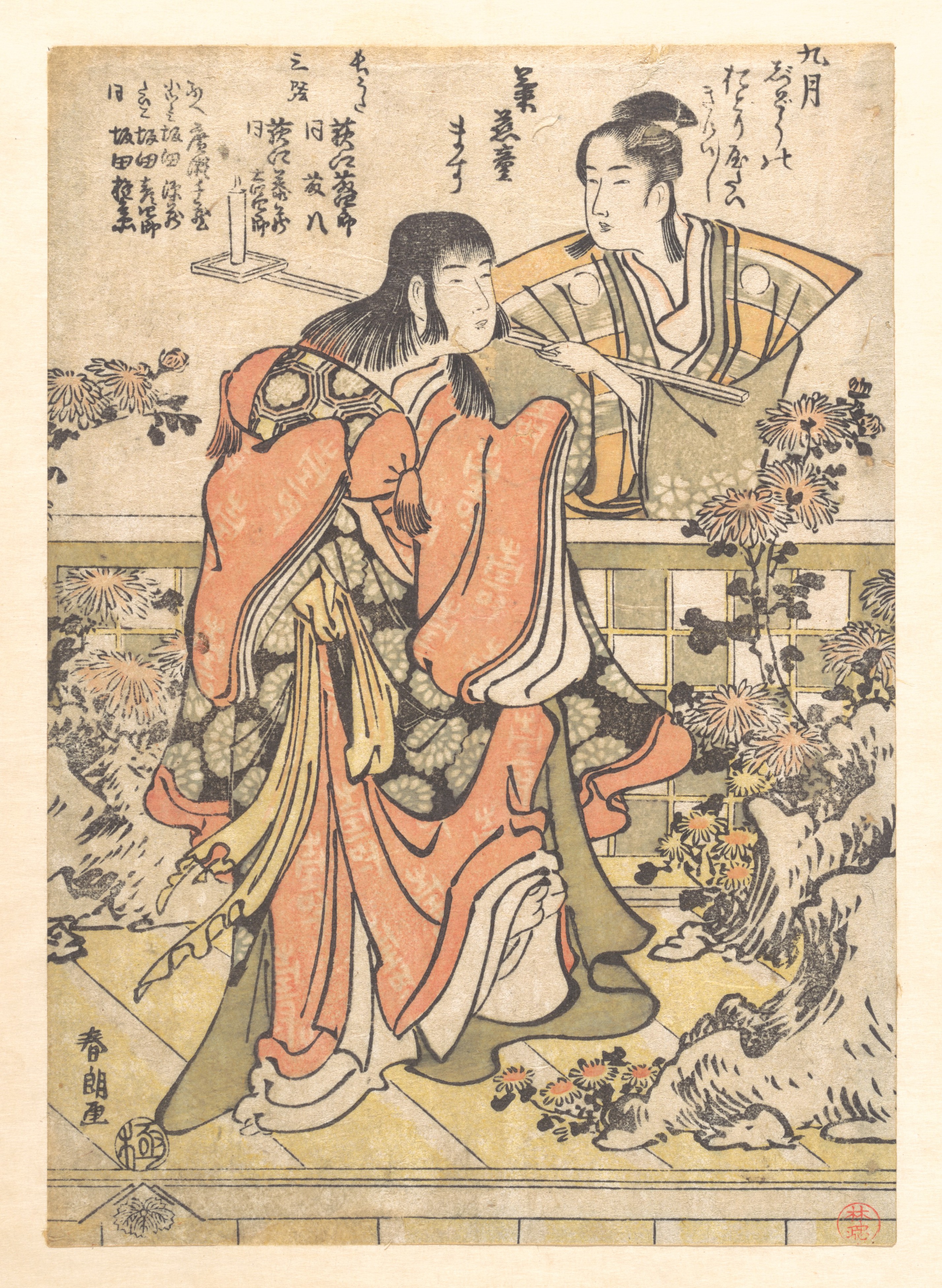
"Graceful" is where a description can stop, and it tells you nothing you can use. What follows are the fan, the sound and the kimono, in the order a viewer meets them.
Mitate: The Fan Is Whatever It Needs to Be
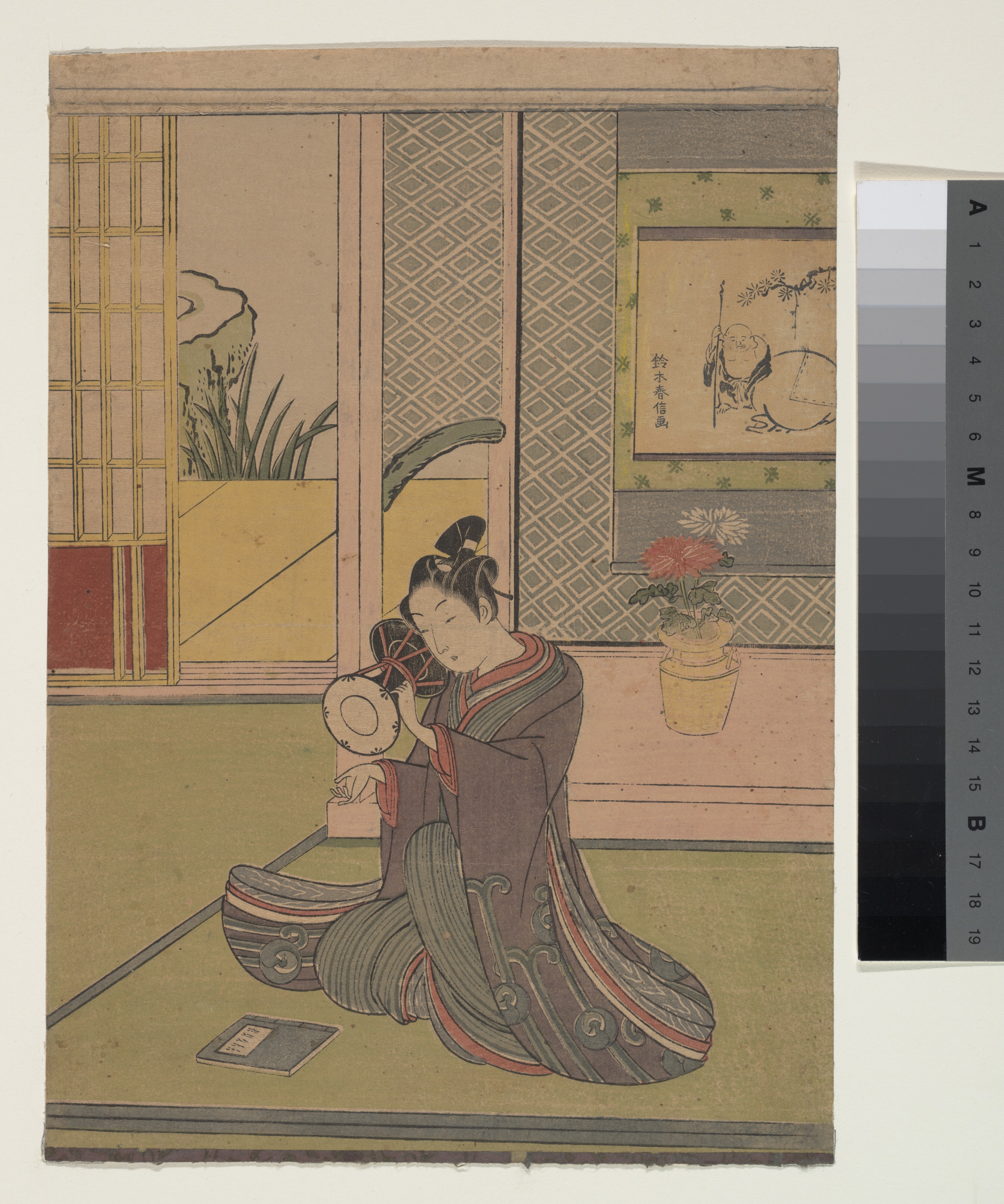
The fan is hard to miss, and the association gives it a job. It puts the practice in a category: "Using an object, for example a fan, to dance is a characteristic of Japanese performing arts. These objects can represent a divine spirit, and at times, it is thought that the act of holding the object can make a person qualified to perform a dance."
Then it opens out. "In Kabuki, the fan can be replaced by other objects such as a round fan (uchiwa) or drum, spear or sword, a willow or cherry branch, that are held in the hand while dancing." And there is a form with nothing in the hands at all: "Te-odori is a type of dance in which the dancer does not hold an object. Instead, they move their palm in fluttering motions as they dance."
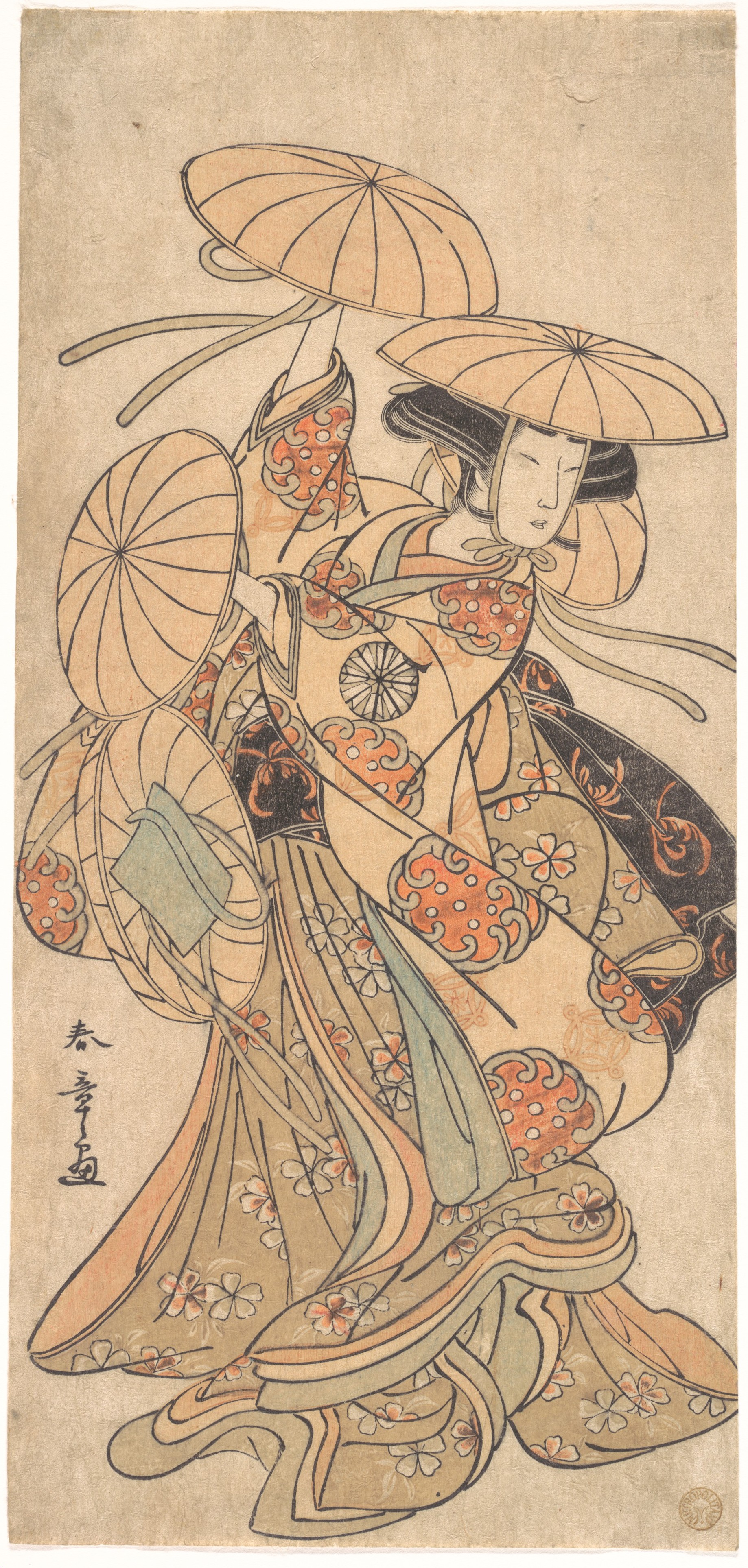
Where this becomes something to actually watch for is what the fan turns into. The NIHONBUYO Association names the mechanism directly — "using the fan to depict crashing waves, or the kimono sleeve to keep off falling snow. This is also where the long tradition of the Japanese spirit of 'mitate' (using something to express an object or a situation) is alive."
So: the fan is a fan, and then for a passage it is water, and then it is a fan again. The fan is what the convention works on, so that is where to look.
There is a second target once you have the first. The same source says a dancer "becomes a part of nature and describes scenery, such as the blowing wind, a tree, the moon over a mountain," and then makes the comparison itself: this is "an element that is rarely seen in other forms of dance such as ballet or flamenco." That is the line to carry in as a first-time viewer. In a lot of dance the body is a character. Here it is sometimes the weather.
The sleeve does related work. The NIHONBUYO Association notes that the sleeve "has long been associated with expressing feelings of love such as in legends and in waka poetry," and that the dance uses it "for example through holding the sleeve or hiding the face with the sleeve." A raised sleeve across the face is carrying that meaning.
Nagauta and Debayashi: Music That Tells You Where You Are
Where the musicians are put is a decision with a name attached to it, and it is worth knowing which one you are looking at.
The Japan Arts Council's page on nagauta — song-led shamisen music, one of several kinds the council lists for kabuki — states its origin flatly: "It originated as musical accompaniment to Kabuki dance." It specifies the instrument, too: "The shamisen used here is a hosozao (thin neck), which has a high timbre, and suits subtle melody." A high, thin, articulate sound rather than a heavy one.
And it describes the arrangement you will be looking at: "During debayashi, on-stage performance, the musicians normally play lined up on a platform covered by a red felt carpet."
That red platform is a useful landmark, because the kuromisu is not one. The same page notes that nagauta singers and shamisen players are "responsible for much of the geza." The council's own page on geza glosses it in its heading as "off-stage musical accompaniment and sound effects," and locates it in the kuromisu, the musicians' room at stage right. So the first thing to check when the curtain opens is whether any of the players are in front of you. If you can see them, the piece has made the music part of what you are looking at.
Sung text also changes what a captioning device would be for. Kabuki dialogue is spoken by actors; where a dance is set to sung text, the caption is translating what the dancing is set to. Whether one can be issued for a short act depends on the act.
Shigusa: What the Kimono Does to a Gesture
The NIHONBUYO Association describes the art as having three parts: "NIHONBUYO has three elements: odori, mai, and shigusa."
Shigusa is gesture and bearing, and the NIHONBUYO Association ties it directly to what the dancer is wearing: what stands out, it says, is "the beauty of gestures and movements (shigusa) that comes from wearing a kimono" — "[t]he line of a straight back, movements that are centered, the graceful, circular gestures, and the sleeve that follows the lines of these movements, or a quick flutter of the hem" — all of it, the association says, "the way the kimono moves together with the body."
Read that as an instruction and it moves your eye off the choreography. The garment is participating. Which puts the back, the sleeve and the hem on your list.
Watching a Piece You Cannot Read
Two practical ways in, and neither requires knowing the piece beforehand.
Odori and Mai: Rhythm, and What Is Not Rhythm
Two of the three elements — odori and mai — are, in effect, a viewing guide. The NIHONBUYO Association puts them like this: "Odori emphasizes the element of rhythm and moving to it, and mai is soft, with internal expression at its base."
Neither is pinned to a part of the body, so there is no rule to look up. What the pair gives you is a question to put to a passage: is this being driven by a pulse, or is the pulse incidental to it?
What a dancer holds and what a dancer does with the feet are both old. The Nihon Buyo Foundation traces the art's earliest recorded ancestor to the Kojiki, completed in 712, and to the goddess it calls Amenouzume-no-mikoto, who "put grass on her dress and hair for decorations, clasped a bundle of bamboo leaves in her hand, and stamped her feet on a large pail." The foundation adds: "Similar stage props and style of beating rhythm with feet are still used in today's nihon buyo." Something held in the hand, and a rhythm beaten with the feet. A very short list, and it has survived.
Henge-buyo: One Dancer, Several Beings
In some pieces the dancer becomes somebody else partway through. That is the form of the piece.
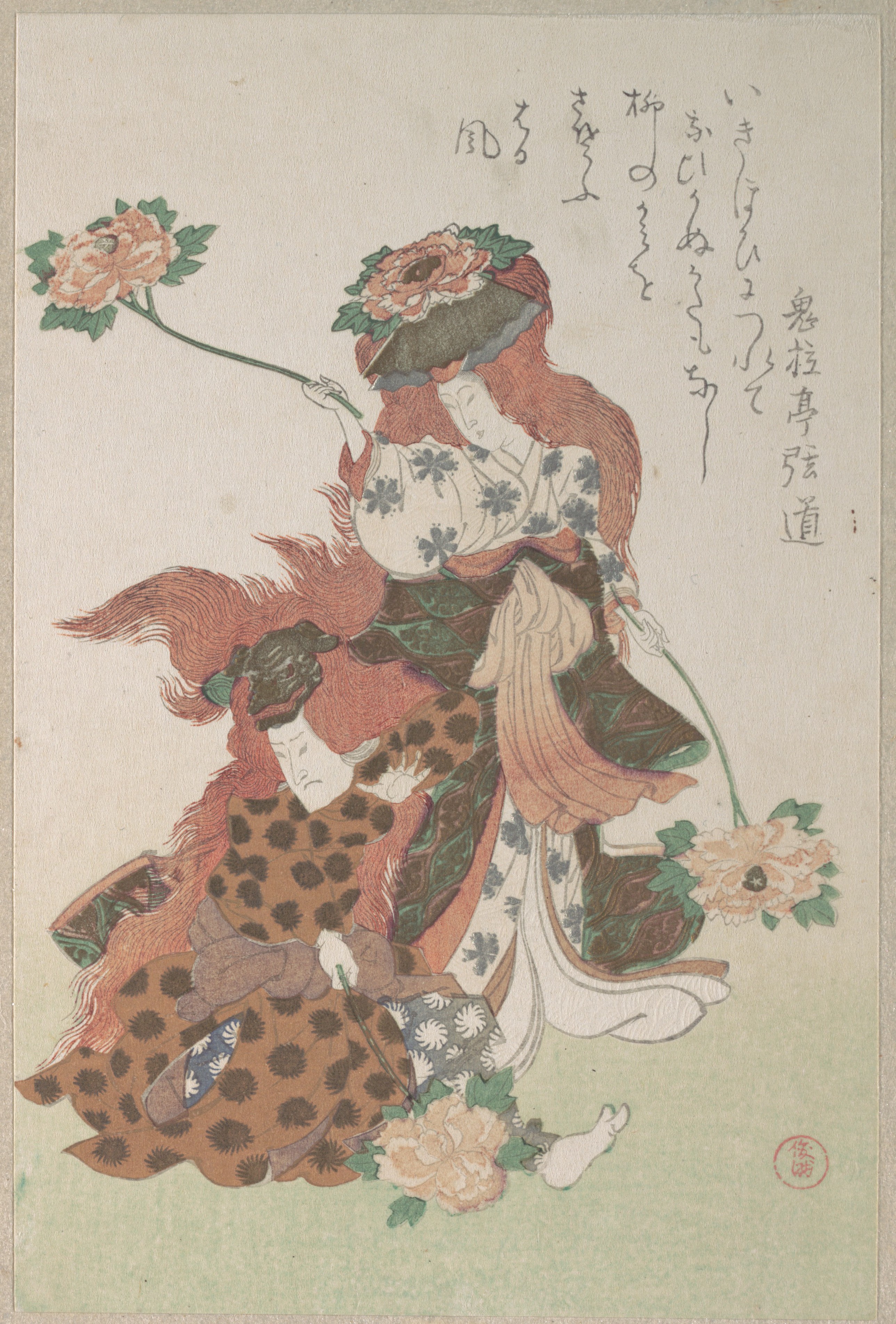
The Japan Arts Council describes when this appeared: "Only the dancing of female characters was presented in the early days. From the late 18th century, however, the dances of male characters were also performed. This led to a programs [sic] in which a single actor danced several different characters. Those programs are known as henge-buyo (transformation dances)."
The NIHONBUYO Association describes the same practice from inside the art and gives it a lineage that is not theatrical at all: "Taking on the role of multiple characters, one after another, within one dance is also specific to NIHONBUYO, and is an extension of the idea of henge-shin, where a Buddha or bodhisattva assumes an alternate form to lead a living being to enlightenment, and Japanese spirituality."
Whatever weight you give the religious derivation, the practical consequence is the same: when the dancer reappears as somebody else, the subject of the piece is that one performer moving through several beings. The range is the point, and the association describes it in both places: across a performer's repertoire — "[o]ne day a lovely girl, on another day a brave warrior, an elderly woman, a fox" — and, in henge-buyo, inside a single piece.
Where to See Nihon Buyo in Tokyo
One correction first, because it changes where you look. Tokyo's National Theatre is not open. The Japan Arts Council's English site records it as having "been closed to undergo redevelopment, with its performances continually presented at alternative venues." The programme continues; the building does not host it.
What follows are two routes that do work. Neither excludes the other. What differs is whether the listing is in English.
Single Act Seats: A Dance You Can Buy by the Act
The Kabukiza in Ginza sells tickets for individual acts, not just for the full programme. Shochiku, which runs the theatre, describes the scheme on its Single Act Tickets page: "You can choose to watch particular scenes at an affordable price within a short time. It is an ideal way to enjoy kabuki for both novices and experts, as well as tourists who want to save some of their time for sightseeing."
Because a dance piece can stand as an act on its own, it is one of the things on a kabuki bill you can buy in isolation. Shochiku's first-visit page puts the range for a single act at "[s]ome acts last about 20 minutes, while others could last 90 minutes long," so a twenty-minute dance is the short end of that range rather than the standard length of one. The September 2026 programme is a fair illustration — the theatre labels each piece on the bill, and three of that month's six pieces are marked Dance. Against the single-act prices published for that month, the evening's opening dance ran 4:00 to 4:19 pm at 600 yen for a fourth-level seat. A thirty-minute piece later the same evening, which the programme's overview calls a dance drama, was 900 yen; the matinee's opening dance act, forty-one minutes, was 1,500 yen.
One thing the programme page says about the nineteen-minute act is worth carrying in, given everything said so far about women entering this art. Hinazuru Sanbasō "adapts the ceremonial dance Sanbasō, traditionally performed as a prayer for peace, for onnagata (male specialists in female roles)," and the three performers named are men. Nihon buyo took women in; the kabuki stage it came from did not — and this act, the cheapest on that month's bill, is on that stage.
Two things Shochiku's first-visit page adds. The fourth level is the top floor: those seats are "furthest from the stage," and "the main stage and the hanamichi (runway) may be partially out of sight." What that costs you depends on the piece.
And there is a captioning device, which is where the arithmetic gets interesting. Shochiku's page for international visitors prices it separately: "Full Show (1st-3rd level):¥1,500 (CASH ONLY)" and "Single Act (Upgrade 2nd level / 4th level):¥1,000 (CASH ONLY)." On the cheapest act that thousand yen is more than the seat itself, and the theatre takes cash for it. The same page adds a warning that bears on short acts: "If the performance time is very short, the captioning service may not be provided." On the September bill the three acts labelled Dance ran 19, 30 and 41 minutes; the other four acts, from three plays, ran 50, 57, 106 and 108.
Two caveats, both from Shochiku's own pages. The programme and the prices change every month — "Details for each month's Single Act Tickets will be decided by the first performance date of the month and will be announced on the website." These figures are an example, not a rate card. Two Shochiku pages describe buying them and they do not quite agree. The single-act page says purchase "cannot be made by Ticket Phone Shochiku, Ticket Web Shochiku or at the theatre's 2nd basement Box Office"; the first-visit page says they are sold "both online in advance (Reserved Tickets) and at the Single Act Ticket Box Office on the day (Non-reserved Tickets *4th level only)." The route neither page rules out is the second one: the Single Act Ticket Box Office, on the day, fourth level. Shochiku warns that "[s]ales will end as soon as capacity is reached." If you are already building your days around art and architecture in Tokyo, a nineteen-minute act drops into a day without displacing anything.
Association and School Performances: Announced in Japanese
The second route is the one whose listings are in Japanese: performances mounted by the association, by individual schools, and by teachers presenting their students.
These are public, and the association's own answer has two parts. Its English FAQ answers "Where can I watch NIHONBUYO?" like this: "You can purchase via the ticketing page," and then, "[i]f there are available seats on the day of the performance, you can purchase tickets directly at the reception desk of the NIHONBUYO Association in the theater." The same page also says what is available in English — "For some of the performances hosted by our association, simultaneous commentary and earphone guides in English are available."
The listings themselves are on the association's performance page, and they are concrete enough to plan against: each entry gives the date, the hall, the organiser and the ticket agent. The association's own annual performance runs at Asakusa Kokaido, and a separate body — the Nihon Buyo Hozonkai, 日本舞踊保存会 — presents the results of its training programme at a Chuo City public hall in Nihonbashi. Which dates fall inside your trip is on that page.
The friction is in the language. That page gives dates, venues, prices and ticket agents in Japanese. Nothing is closed to you; the information simply is not translated. The association's own overview page marks its telephone line for Japanese-language enquiries, and the FAQ names a ticketing page without linking to one, so buying ahead means finding it in Japanese. The same FAQ says the English earphone guide is available at some performances without saying which.
Japan Immersive Art — Experiences Th
What to Carry Into the Room
Three things, and none of them requires knowing the piece.
First, the relationship to kabuki. What you are watching is built from kabuki's technique and is sometimes performed detached from kabuki's plays — some pieces carry a plot, some do not, and the sources do not offer a rule for telling which. The synopsis is published in English. So is a good deal of what to watch for, once you know which bodies publish it.
Second, the fan and the kimono. The fan stops being a fan and becomes water; the sleeve keeps off snow; and in kabuki, the association says, the fan itself can be replaced in the hand by a branch or a blade. And the association puts part of what you are watching in the hem and the sleeve, not only in the limbs. Both are visible to someone who cannot read a character of the lyrics.
Third, where to go. The Kabukiza sells acts singly and cheaply; the route neither of its pages rules out is the box office on the day, fourth level. Captions are a separate rental, in cash, and not guaranteed on the shortest acts. The association's own performances are open too, with English earphone guides at some of them, but you will be navigating Japanese listings to find them.
And then the part that is moving right now. The National Theatre is shut: the Japan Arts Council records it as closed for redevelopment, its programmes moved to other venues. The art itself is on a different schedule. The association's own listings run through the season ahead, and the Nihon Buyo Hozonkai — a separate body again — keeps booking halls to present the results of its training programme.
The NIHONBUYO Association describes a form that has "continued to grow, exploring how it can interact with and be relevant to each period in time," and this is what that looks like from the outside. What you would be buying a ticket for is not a preserved thing being shown to you. It is an art still training its successors and still booking rooms. And a dance act at the Kabukiza, on the fourth level, bought singly, came to six hundred yen in the month described here, which is a different way to spend an evening than looking at what a city has already finished making.