.webp)
Why not reframe your New Year’s visit to Meiji Shrine (Meiji Jingu) as a wellness experience that recenters both body and mind? If you are planning Meiji Shrine hatsumode (hatsumōde), the sacred forest at the heart of the city lets you savor the hush of the season and a sense of refined time while following an eco‑conscious plan for paying your respects.
This guide offers practical tips so you can align yourself with the spiritual culture of Shinto, avoid the worst crowds, and welcome the year in a calm, grounded state.
This article offers one way into hatsumode — its atmosphere, its meaning, one thread of a much older story. The Hatsumode Digital Guide draws together the ritual itself, its regional variations, the spiritual architecture of shrine culture, and the quiet codes of conduct that shape the experience into a single, connected reading.
Essential Basics for Meiji Shrine hatsumode—Access, Opening Hours, Time Needed, Map
Before you plan your hatsumode, let’s organize the fundamentals. We’ll walk you through how to get to Meiji Jingu, the differences among its entrances, New Year opening hours and special traffic restrictions, a rough idea of how long the visit takes, and how to read the precinct map. Cross‑check the latest official announcements as you go so you can proceed with confidence.
Choosing Access and Entrances (Train, On Foot, Taxi, Accessibility)
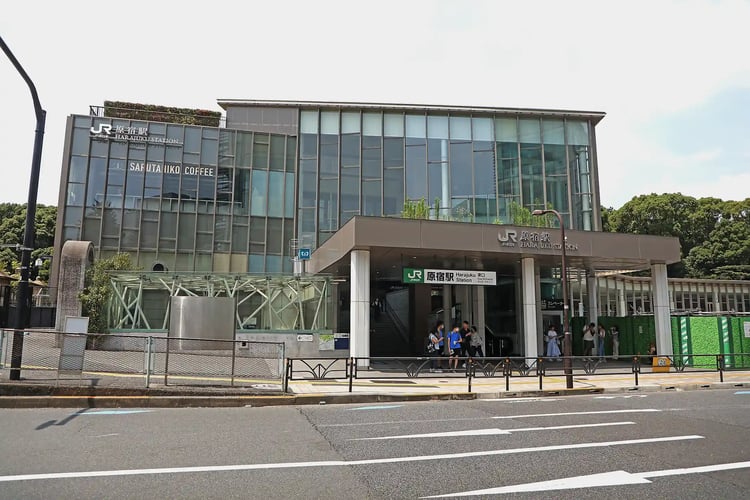
Public transportation is recommended for reaching Meiji Jingu. If you arrive by train, there are three main gateways—Harajuku Entrance (South), Yoyogi Entrance (North), and Sangubashi Entrance (West)—each with its own nearest station. Harajuku Entrance, just a one‑minute walk from JR Yamanote Line Harajuku Station and Tokyo Metro Meiji‑Jingumae Station, is the busiest during the first three days of the New Year, yet its straight approach into the grounds makes it very easy to navigate.
If you use a wheelchair or are pushing a stroller, Harajuku Entrance is especially convenient. Paved guidance strips run along both sides of the approach, and ramps have been installed where thresholds would otherwise create steps, allowing you to proceed toward the Main Sanctuary without worrying about level changes(*1).
By contrast, Yoyogi Entrance and Sangubashi Entrance, about a five‑minute walk from JR/Toei Oedo Line Yoyogi Station and Odakyu Line Sangubashi Station respectively, tend to be slightly less crowded and feel more tranquil than Harajuku. Because Sangubashi Entrance is closest to the Odakyu Line and a bit farther from other lines, it’s a useful option for avoiding congestion(*1).
Do note that during the first three days of January (January 1–3), large‑scale traffic restrictions are implemented in and around Meiji Jingu, and vehicles are not permitted to enter the grounds. If you plan to come by taxi or rental car, you’ll need to wait until restrictions are lifted on the 4th and then enter from Yoyogi Entrance (North). Parking is limited, however, so public transit remains the wiser choice.
Even if you’re within walking distance, pedestrian traffic swells around Omotesando and Yoyogi Park over the year‑end and New Year holidays, and sidewalks can become crowded depending on the time of day. For safety and comfort, confirm in advance the smoothest route from your nearest station.
Gate Opening Times, Temporary Restrictions, and Checking the Latest on the Gyoen Garden
Meiji Jingu is typically open throughout the night from New Year’s Eve into New Year’s Day, with extended hours during the hatsumode period. In Reiwa 7 (2025), for example, gates opened at 6:40 on New Year’s Eve and remained open straight through to 18:30 on January 1, with gates also open roughly 6:40–18:00 on January 2 and 3(*2).
Although the usual January closing time is 16:20, special extensions during hatsumode give you more breathing room(*2). That said, hours may change in response to crowd conditions, so be sure to check the “Latest Information” on the official website right before your visit.
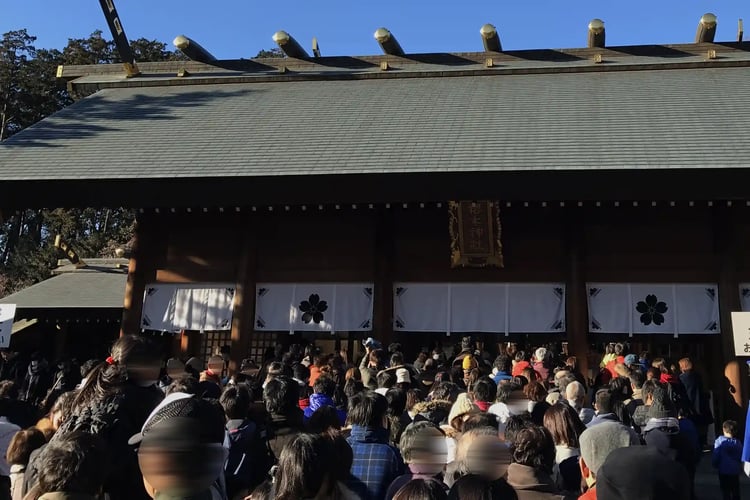
You’ll also want to be mindful of peak congestion. Meiji Jingu ranks first in Japan for hatsumode visitors (around three million over the first three days), and the grounds can be extremely crowded at certain hours. Every year, the period from 22:00 on New Year’s Eve to about 3:00 on January 1, as well as from around 10:00 onward on January 1–3, draws the heaviest crowds, with the possibility of lengthy waits(*2). To help distribute congestion, the shrine actively encourages visitors to come at different times; whenever possible, avoid the peak hours(*2).
Meiji Jingu’s Gyoen (the Inner Garden) is also open during the first three days with special hours: 8:00–16:30 on January 1 and 8:30–16:00 on January 2–3, returning to the usual 9:00 opening from the 4th onward.
The Gyoen, which includes the famed Kiyomasa‑no‑Ido spring, is popular. You can expect admission limits and lines during the period, but mornings are generally more relaxed. In any case, please follow on‑site signage and the directions of security staff on the day, and prioritize safety. Keep the official schedule in mind, but be ready to adapt to conditions as they unfold.
Meiji Jingu and the Basics of Shinto—A Living Spiritual Culture in the Forest
Understanding Meiji Jingu as a place—and the basics of Shinto—deepens and enriches your hatsumode. Here you’ll learn how this vast, intentionally created forest was conceived and cultivated as an “eternal woods,” how the layout of shrine buildings and approaches speaks within the embrace of a guardian forest, and the core Shinto concepts of harae (purification), musubi (harmonious generative bonding), and ke‑to‑hare (the ordinary and the festive).
With these foundations, the air of the forest and each gesture you make during your visit take on greater meaning, allowing you to engage quietly and sincerely with a sacred culture.
Designing the Forest—From Planted Woodland to Evergreen Canopy
The expansive woods of Meiji Jingu were, in fact, planted by human hands when the shrine was established. The vision was to create an “eternal woods” worthy of enshrining Emperor Meiji and Empress Shōken—a place where people could offer prayers in quiet. Roughly 100,000 trees were donated from across Japan, and some 110,000 young volunteers carried out the planting and the construction of the approaches.
Instead of cedar avenues like at Ise Jingu or Nikkō Tōshōgū, the plan called for evergreen broadleaf species (evergreens such as chinquapin, oak, camphor) suited to Tokyo’s climate. In the Taishō era, many large trees in Tokyo were dying due to pollution, and planners looked a century ahead, deciding that “broadleaf evergreens are the species that will thrive here” (*1).
Records say that then‑Prime Minister Ōkuma Shigenobu advocated cedar groves, but landscape experts explained scientifically that “on Kanto loam, a dry soil, cedar is ill‑suited,” and they held fast to the plan centered on evergreen broadleaf species(*1).
As a result—just as envisioned—the Meiji Jingu forest adapted to urban conditions and even escaped the spread of fire during the 1945 Tokyo air raids, serving as a refuge for many. From an original 365 species and about 120,000 trees in the Inner Precinct, natural selection trimmed the composition to about 234 species and some 36,000 trees today, with the forest as a whole growing richer.
Over the last century, surveys have documented around three thousand species of living things here, including newly identified and endangered species. Watching a planted woodland mature into a true forest that sustains biodiversity has become a symbol of sustainable cycles.
This green oasis in the city changes with the seasons and offers comfort to all who enter. Step into the precincts and you’ll feel the clarity of the air, and even the distant noise of traffic seems to soften. Surrounded by quiet and abundant greenery, you may feel your daily busyness gently fall away as your body and mind come back into balance.
Meiji Jingu’s woods, created with passion and scientific insight, embody an “eternal forest”—a symbol of the sustainability of Japan’s spiritual culture to be handed down to future generations.
Enshrined Deities, Sanctuary Layout, and the Meaning of the Approach
Meiji Jingu enshrines Emperor Meiji and Empress Shōken. This shrine, which honors the imperial couple who achieved the Meiji Restoration and laid the foundation for modern Japan, offers daily prayers for the prosperity of the Imperial Household, the flourishing of the nation, and peace in the world.
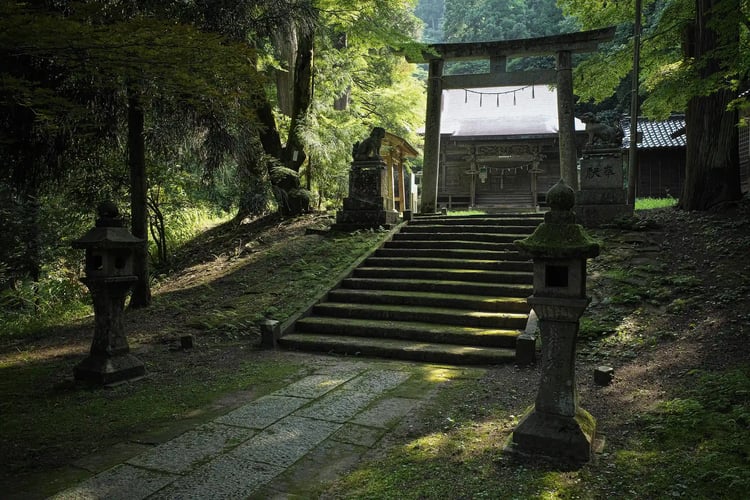
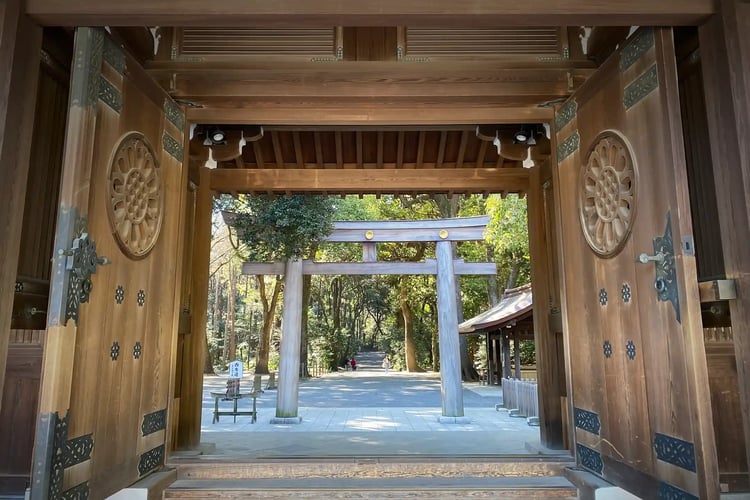
The buildings follow traditional forms with a restrained, dignified design; their quiet presence amid the forest steadies your heart. The approach to the Main Sanctuary carries layered meanings. Rather than a straight line, it curves gently—a purposeful transition that helps your mind shift from the city’s bustle to a sacred realm.
Underfoot, the blanket of white pebbles (tama‑jari) helps strip away distraction and impurity as you walk, calming the heart. Meiji Jingu’s official Q&A even explains that by passing beneath the torii and stepping over the pebbles, “your body and mind are gradually purified so you can offer prayers in their clearest state” (*2). In that sense, the pebbled path prepares you for prayer.
There’s also etiquette in how you walk: the center line, seichū, is traditionally called the “path for the deities,” so you should keep to the sides. As you tread the pebbles and let the stillness of the forest enfold you, you’ll naturally stand taller and feel your worldly worries rinse away.
The long approach is designed as a road of mental preparation, purifying you step by step as you advance.
Reading Hatsumode Through Shinto—The Essence of the New Year Visit and Japan’s Festivals & Rites
Let’s revisit the origins and meaning of hatsumode from the perspective of Shinto’s spiritual culture and reflect on its modern significance. Visiting a shrine at the New Year is rooted in a tradition of offering thanks for the past year and praying for safety in the year to come.
By understanding how other year‑end and New Year rites (Ōharae, Joya‑sai, Saitan‑sai) interrelate, you can see the role hatsumode plays in full relief. We also propose ways to practice hatsumode as a mindful ritual by focusing on breath, posture, and intention.
When you treat hatsumode not as a mere seasonal event but as a chance to reset body and mind and set your intention for the year, the experience becomes more meaningful.
Origins of Hatsumode and Its Contemporary Meaning
Hatsumode is your first shrine or temple visit of the year. It traces back to the court custom of toshi‑gomori in the Heian period, when people kept vigil from New Year’s Eve through dawn on New Year’s Day to pray to their tutelary kami.
Over time, the practice split into New Year’s Eve visits (joya‑mode) and New Year’s Day morning visits (ganjitsu‑mode). In Edo times, people typically visited their local tutelary deity or a shrine/temple in the year’s lucky direction (ehō). The more modern style of traveling to a famous shrine farther afield spread from the mid‑Meiji era onward with the rise of railways—some say railway companies promoted “hatsumode,” helping the practice take root.

At its core, hatsumode is about gratitude for the safety of the previous year and prayers for peace in the new one—unchanged across time. At the shrine you put your hands together, sharing your wishes for your family’s health and well‑being for the year, while silently offering thanks for last year’s protection.
Today, hatsumode is also a moment to pause amid busy lives and renew your resolve before the kami. Visiting your tutelary shrine—or one you feel connected to—at the year’s start marks a fresh beginning and strengthens your forward‑looking mindset. Rather than simply making requests, approach with a frame of “Thank you for last year. Please watch over me again this year,” which deepens your dialogue with the divine and clarifies your goals.
The Association of Shinto Shrines (Jinja Honchō) explains that speaking clear, specific words carries kotodama—the spiritual efficacy of language. Hatsumode is not only for petitioning; it’s also a place to affirm your inner vows as living words. In this way, hatsumode remains a tradition of facing the kami at the year’s threshold to renew gratitude and resolve, a significance passed down through the ages.
The Place of Year‑End/New Year Rites
To understand hatsumode fully, it helps to know the sequence of Shinto rites around year’s end and New Year—beginning with Ōharae, the Great Purification.
At Meiji Jingu, the Year‑Crossing Great Purification (Toshikoshi Ōharae) is held every December 31 to cleanse the year’s tsumi and kegare (transgressions and impurities), preparing you to welcome the new year. Ōharae is a central rite conducted at the end of June and December; at year’s end, you symbolically transfer impurities to a human‑shaped paper doll (hitogata), which is then burned—a ritual reset of body and mind.
Late on New Year’s Eve comes Joya‑sai, a festival that celebrates the year’s turning and prays for happiness in the new one—the last ceremony of the year. At Meiji Jingu, priests offer gratitude for the past year and prayers for peace that night.
At dawn on New Year’s Day, Saitan‑sai, the first great festival of the year, is celebrated. An imperial envoy is dispatched, and prayers are offered for national prosperity and world peace. Meiji Jingu also conducts this solemn rite on the morning of January 1. While these services are private or for limited participants, your general hatsumode is part of the same flow.
In other words: Ōharae purifies the year, Joya‑sai marks the crossing, Saitan‑sai celebrates the new year, and you, through hatsumode, offer gratitude and vows—the whole cycle together completes the year‑turning rites.
With this in mind, you’ll naturally approach hatsumode not just to “wish for things,” but with the humble heart of “Thank you for protecting me last year; please continue to watch over me this year.” As part of the New Year rite cycle, hatsumode is a time and place to cleanse and renew.
A Mindful Framework for Hatsumode
Think of hatsumode as a mindfulness practice—anchoring your awareness in the present moment. Focus on three points during your visit: breath, posture, and intention.
Breath: As you pass beneath the torii or while waiting to pray, take slow, deep breaths. Use abdominal breathing—inhale gently through the nose and exhale long through the mouth. If you can, count quietly to ten (one… two…) as you breathe.
Even this simple practice steadies your mind and prepares you to step before the kami. Zen master Hakuin also recommended breath‑counting (sūsokukan) as a supreme practice. When you fill your lungs with the clear air of Meiji Jingu’s forest, you may feel distractions fall away.
Posture: When you stand before the deity, lengthen your spine and compose yourself. In the formal two bows, two claps, one bow (ni‑rei ni‑hakushu ichi‑rei), bend at the waist to about 90 degrees for each deep bow; clap twice with your hands at chest height, the right hand slightly lower; finish with a final deep bow. This is the proper etiquette recommended by Jinja Honchō and is fully appropriate at Meiji Jingu.
What matters is not only form but heart; as Jinja Honchō teaches, “understanding the spirit that underlies the form” is essential. Perform each motion with care, and your heart naturally clears.
Intention: Finally, choose a single intention for the year and pray with that in mind. Specific wishes are fine; you might instead hold a guiding word such as “Health,” “Gratitude,” or “Courage,” and vow to embody it.
Many people pray silently, but framing your words as commitments—“I will …,” “I give thanks for …”—is powerful. In Japan, words have long been believed to carry spirit (kotodama), and even when unspoken, clearly articulating them strengthens realization.
Hatsumode is your chance to declare the plan for your year before the kami. At Meiji Jingu, omikuji take the form of waka poems called Ōmikokoro, imparting divine counsel.
Carry the poem you draw as a “word‑spirit” guiding you through the year. However you do it, if you leave with a positive vow rooting itself within you, it will sustain you day by day.
Flow and Etiquette for Meiji Shrine hatsumode—Avoid Crowds, Keep a Quiet Heart
Here’s a step‑by‑step guide for the day itself—from arrival to departure. You’ll find notes on preparation, how to move along the approach, bowing at the Hall of Worship, and practical ways to avoid crowds.
When you know the flow and etiquette beforehand, you won’t be swept up by the crowd and can keep your own pace. Use the following as your personal flowchart for a serene, fulfilling New Year visit.
Preparing to Enter—Temizu (Purification) and a Short Breathing Practice
Once you pass the torii into the sacred precinct, purify yourself at the temizuya (ablution pavilion) near the Hall of Worship. The formal ladle steps are as follows(*1):
Hold the ladle in your right hand and pour water over your left hand. Switch the ladle to your left hand and wash your right hand. Switch back to your right, pour water into your left palm, and rinse your mouth (do not touch the ladle to your lips). Wash your left hand again, then tip the remaining water down the handle of the ladle to rinse it before returning it to its place.
After completing the sequence, offer a light bow. During the hatsumode period, simplified “running water” stations are also set up, but following the full steps helps align your mind before you proceed. After temizu, try the breathing technique mentioned earlier as you walk toward the Hall of Worship.
Step to the side of the approach, close your eyes, and take three cycles of slow abdominal breaths. Even this brief pause resets you. The abbot of Engaku‑ji of the Rinzai school has also emphasized that counting breaths refines the mind; short, deep breathing is surprisingly effective.
Amid the bustle, this inward quieting prepares you to approach the kami at your best.
Bowing Etiquette—Ni‑rei Ni‑hakushu Ichi‑rei and the Meaning of Tamagushi Offering
At the outer Hall of Worship (gehaiden), it’s time to pray. For general worship, you place your offering in the box, ring the bell, and follow the sequence of two bows, two claps, one bow. To review(*2): compose yourself and bow deeply (about 90 degrees) twice.
Open your hands to shoulder width, bring them together at chest height with your right hand slightly lower, and clap twice. Then align your fingers, keep your hands together at your chest, and pray silently. Lower your hands and close with one final deep bow.
This pattern is standard at most shrines nationwide, and Meiji Jingu is no exception. Some shrines may use other forms—always follow the signs on site.
The essential point is to fill the form with sincerity. As Jinja Honchō notes, “it’s important to understand the heart that underlies the etiquette.” Clapping is not merely to make a sound; it resonates with gratitude and your vow.
Bowing expresses reverence and feeling; what matters is the readiness to bow from the heart. The same calm courtesy applies when you receive amulets or talismans.
If you apply for a special inner‑hall worship (shōden sanpai), you may also offer a tamagushi (a sakaki branch with paper streamers) in the formal rite known as tamagushi hairei. You receive the branch with both hands, bow before the offering table, rotate it clockwise so the base faces the deity, place it, and then perform ni‑rei ni‑hakushu ichi‑rei.
Don’t worry about the motions—just follow the priest’s guidance. While general worship doesn’t involve a tamagushi, it helps to understand its spirit: the tamagushi symbolizes presenting your sincere heart and receiving divine grace. Hold that feeling, and your two bows, two claps, and final bow naturally carry true intent.
Timing and Route Design to Avoid Congestion
To avoid heavy crowds at Meiji Jingu, focus on timing and entrance choice. As mentioned, the worst bottlenecks are just after midnight on New Year’s and during daytime peaks. Conversely, early morning is comparatively quiet.
For example, from around 3:00–6:00 on January 1, or right at opening on January 2–3 (around 7:00), the rush has usually eased and waits are shorter(*2). If you dress warmly, you’ll enjoy the serenity of these hours. Choosing an entrance also matters: skip Harajuku Entrance on the Omotesando side and enter via Yoyogi or Sangubashi. Sangubashi is often the best‑kept secret given its user base(*2).
When you reach the Hall of Worship, you don’t have to aim for the center to offer your coin and pray. Jinja Honchō affirms that praying from the sides is perfectly fine if you do so with sincerity—the kami watch over you with a broad heart.
On site, staff may also announce that “you’ll receive the same blessings from the sides.” As long as you follow etiquette—no cutting in, courtesy to others—you can move to less crowded spots.
How you spend the wait matters too. Standing in winter cold saps energy and frays patience. Wear warm layers (hand warmers, thick socks, hat), do light stretches, and try the breathing meditation described earlier.
Focus on the scenery and the scent of the forest; your mind settles. As the line moves, keep a little bow in your step. When it’s your turn, place your offering calmly and pray with composure. With these small choices, your first prayer of the year can be offered in quiet.
Offerings and How to Frame Your Words
When you step before the deity, think about your offering and your inner words. The monetary offering expresses gratitude and intention; 5‑yen coins are popular for the pun on “go‑en” (good connections), but amount matters less than sincerity. Place it gently—don’t throw—step back, and offer a light bow.
As for the prayer itself, rather than listing wishes on the spot, try a sequence of gratitude → vow. Instead of a passive “Please make X happen,” try “Thank you for X last year. This year I will take on Y; please watch over me.”
Jinja Honchō also emphasizes that hatsumode is not only for requesting favors but for expressing thanks. Meiji Jingu offers broad prayers for national peace, and you can mirror that spacious heart in your own way. At the moment you bow your head, pledge your own resolve before the kami.
Simply deciding, “I will make this the year I act on what I prayed for,” can transform your visit into lasting nourishment. When you finish, bow quietly and take your leave unhurriedly. Letting the resonance linger turns hatsumode from a mere event into a solemn rite that stays with you.
Places to Meet Quiet—Mini‑Meditations in the Forest, the Gyoen, and a Teahouse
Even during hatsumode, Meiji Jingu holds pockets of surprising quiet. Here are a few spots to visit before or after you pray.
An early‑morning walk along the forest approach, the seasonal beauty of the Gyoen garden, the spring at Kiyomasa‑no‑Ido, and a pause at the on‑site teahouse (café)—each invites a brief “mini‑meditation.” If the crowds tire you, step away to reflect. You’ll refresh body and mind and discover new charms of Meiji Jingu.
Early‑Morning Approach Walk—A Guide to Walking Meditation
Even during hatsumode, Meiji Jingu at dawn can be astonishingly still. If you arrive in those quieter hours, try a walking meditation along the approach. It’s simple: pause beneath the torii, take a deep breath, align your posture, and begin a slow walk. Cycle your attention through four anchors: soles → breath → gaze → posture.
First, feel the soles of your feet, noticing the texture of the pebbles as you step. Then sync your breath with your pace—inhale through the nose, exhale through the mouth over two to three steps. Soften your gaze a few meters ahead, letting the greenery rest in the edges of your vision. Keep your spine long and your chin slightly tucked.
As you loop through these points, your awareness settles in the present. Footfalls and nature’s subtle sounds come to the fore, and a steady calm emerges.
Many visitors say, “Just walking the approach brings me into balance.” In the clear air of morning, a few minutes of walking meditation can prepare you to pray with deeper quiet.
Enjoying the Gyoen and the Etiquette of Quiet
Meiji Jingu’s Gyoen is a garden of seasonal beauty, home to the famous Kiyomasa spring. It draws many visitors during hatsumode, but it’s far quieter than the area around the Main Sanctuary. When you visit, please keep the etiquette of quiet.
Avoid loud conversation; if possible, walk in companionable silence. At Kiyomasa‑no‑Ido, people take turns to look into the spring—wait quietly. Reduce shutter and device sounds where you can.
Share space when taking photos; don’t linger. If others are waiting, move on promptly. Smoking and eating are not permitted inside the garden (except in designated areas), so attune your senses instead: the trickle of spring water, birdsong, the scent of seasonal blossoms—each becomes a meditation.
When you sit on a bench, place the phone aside and gaze at the greenery. The Gyoen appears in poems by Emperor Shōwa; the tranquility you find here is a rare form of healing. With a little care, you’ll enjoy a truly serene interlude.
Breathing Practice at Kiyomasa‑no‑Ido
Kiyomasa‑no‑Ido is a rare urban spring with clear water flowing year‑round, famed for its clarity around 15°C. Lines are common during hatsumode, but waiting time is perfect for breath practice.
As you near the spring, close your eyes and repeat gentle abdominal breaths. Focus on each inhale and exhale; you’ll feel calmer, and impatience eases. When your turn comes, first look at the sky mirrored on the surface.
The water’s constant clarity can be cleansing just to witness. Breathe in slowly, exhale as you hold a quiet intention. If you take photos, keep it brief and make room for the next person.
There’s no need to force a “wish” here. Simply feel the vitality of the spring and your own breathing—that’s enough. Take one last, fresh breath, offer a small bow, and step away. Those few minutes will deepen your memory of hatsumode.
A Refined Pause—Savoring Tea or Amazake
Between prayer and strolling, take a break at the on‑site café, Mori no Terrace, which opens from New Year’s Day.
Matcha or amazake served in the spacious interior will warm you right through. Sip quietly; try to avoid loud sipping or clattering your cup. With each mouthful, notice aroma and temperature—let your senses reset. Amazake, a traditional fermented drink at shrines, is often called a “drinkable infusion” for its gentle nourishment.
Keep conversations soft and unhurried; a single cup while gazing out at the forest is a perfect way to distill the morning’s feelings. Food and drink from stalls, including amazake or sacred sake, should be enjoyed at designated spots—avoid walking while eating, and dispose of cups properly. Attending to these small gestures elevates the entire experience. A calm pause is an essential thread in your Meiji Jingu New Year visit.
A More Elevated Shrine Experience—Inner‑Hall Worship, Special Prayers, and Kagura
Beyond general worship, Meiji Jingu offers more formal experiences in the Kaguraden (Hall of Sacred Music and Dance), including inner‑hall worship (shōden sanpai) and special prayers (gokigan).
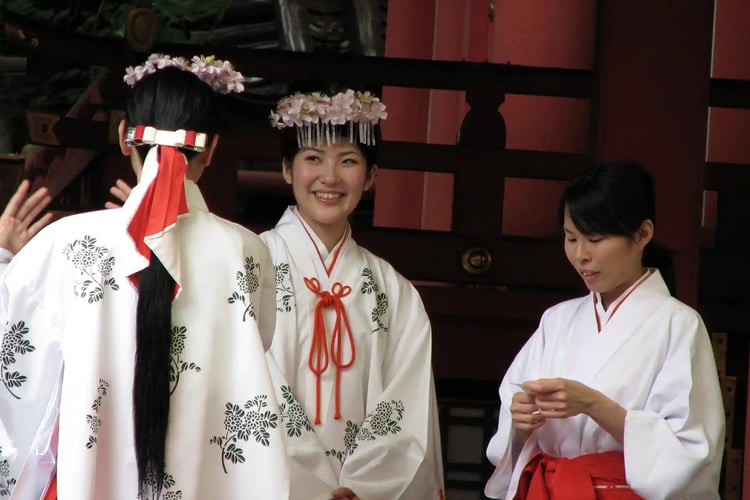
Priests perform purification and recite norito (ritual prayers), and you may witness a tamagushi offering and shrine maiden dance. Even during busy hatsumode, the Kaguraden feels comparatively quiet, with a small number of participants—lending a private atmosphere.
You’ll want to know the basics in advance, such as reception hours and offerings (hatsuho‑ryō). Below, we explain how to apply, what to wear, the types of prayers available and their timing, and how to attend kagura with respect. For dates and fees—details that change—check official information as you plan.
How Inner‑Hall Worship Works and What to Wear
Inner‑hall worship is a formal service in the Kaguraden where priests offer prayers on your behalf. During hatsumode, reception for the New Year’s First Prayer Festival begins at 1:00 on January 1; for individuals, offerings begin at 10,000 yen on January 1–3 and 5,000 yen from January 4 onward (no reservation required).
After reception, participants are guided into the inner area in small groups. Purification, norito, tamagushi offering, and kagura dance follow in a sequence lasting roughly 15–20 minutes. You’ll receive a talisman and sacred sake afterward; total time including waiting is usually 30–60 minutes. Dress with respect for a sacred space.
Men should wear a jacket or suit‑equivalent; women, a jacket or dress/skirt and polished attire. Avoid overly casual clothing (jeans, athletic sneakers). Remove hats and scarves during the rite. No photography or talking; set your phone to silent and put it away. Because you share the service with others, be mindful: sit upright, avoid crossing or stretching your legs, and follow the priests’ directions. Bring sincerity—there’s nothing to fear.
Enshrine the ofuda (talisman) you receive at home and return it to the shrine’s collection point after a year. This cycle deepens your relationship with the shrine. Inner‑hall worship is a premium experience, but having the chance to offer a tamagushi and witness kagura in that setting is rare—follow the dress code and etiquette, and savor Meiji Jingu’s distinctive refinement.
Types of Prayers and Time Required
Meiji Jingu accepts a wide range of petitions: family safety, warding off misfortune, business prosperity, traffic safety, academic success, good relationships, safe childbirth, first shrine visit for newborns, Shichi‑Go‑San, recovery from illness, and more.
You’ll write your request on a form at reception; if you’re unsure, the staff can advise. Multiple petitions can be combined into one prayer, though focusing on a primary intention is best.
Services are performed throughout the day; waiting times grow with crowds, but the rite itself takes about 15 minutes. Individual reception hours are typically 1:00–17:00 on January 1 and 9:00–16:30 on January 2–7. During the first three days, come with extra time to spare.
Wait quietly until your name is called, then follow instructions for the tamagushi offering and bows. From reception to finish, plan on 30–40 minutes, though it can exceed an hour in peak times. You’ll receive your talisman and omamori afterward—don’t forget them.
Note that offerings (hatsuho‑ryō) are higher during the first three days (from 10,000 yen for individuals). Check ahead and bring cash to keep things smooth. This is a personal audience with the kami—perform each motion with care, speak your gratitude and wish from the heart, and the experience will stay with you.
Kagura (Shrine‑Maiden Dance and Gagaku)
During New Year prayers, kagura may be offered—shrine‑maiden dances and court music. For inner‑hall worshippers, works such as “Yamato‑mai” may be performed. These are offerings to the deities, not staged shows, so the proper way to attend is in silence.
No talking or photography during performance. Even if you’re moved by the tone of the hichiriki and ryūteki or the dancers’ poise, applauding is unnecessary. When the performers withdraw, offer your applause in your heart. Seeing kagura at a major shrine like Meiji Jingu at New Year is a rare privilege—let gratitude and awe fill you quietly.
If you’re not attending inner‑hall worship but happen to hear gagaku, pause and listen softly. Even that can feel purifying. Kagura is an art that connects people and the divine; experiencing it here will make your hatsumode even more special.
Privacy Considerations and Avoiding Crowds
Because inner‑hall worship and special prayers take place away from the general crowd, they offer a relatively private environment. That said, the Kaguraden can fill during the first three days—consider shifting your timing.
Late on New Year’s Day or from January 4 onward, crowds typically subside. While you’ll enter your name and address at reception, forms are promptly collected and not shared beyond the shrine—there’s little risk of others hearing your details.
Extend the same courtesy to others: no photos that capture faces, minimal conversation in waiting rooms. Everyone shares the space with serious intentions. Mutual respect keeps the rite solemn.
It’s warmer indoors, so remove bulky layers and place your bag neatly at your feet to avoid blocking passages. In a compact space, calm, deliberate movements stand out. Sit upright and quiet, and you’ll enjoy a focused, special time of prayer. Inner‑hall worship depends on each person’s sincerity—tend to the details and embrace a one‑of‑a‑kind experience.
Amulets and Returning Them—Choosing Omamori, Ofuda, and Hamaya, and the Cycle of Thanks
Many visitors seek amulets and lucky items (juyohin) at New Year. Meiji Jingu offers a range of limited items such as zodiac ema plaques and clay bells, as well as hamaya (evil‑warding arrows), kumade (good‑fortune rakes), and fuku‑ōgi (auspicious fans).
Below, you’ll find the meanings of these items, how to choose them, and how to return items used for a year. These are not mere souvenirs—they are tangible connections with the kami. By choosing and handling them properly and returning them with gratitude when their time ends, you elevate your practice.
Meanings and How to Choose
The main categories are engi‑mono (lucky items) and omamori/ofuda (amulets/talismans). Zodiac‑themed ema and clay bells are especially popular; for Reiwa 7, limited items feature the serpent (mi).
Hamaya ward off misfortune, kumade “rake in” good fortune, and fuku‑ōgi invite auspicious winds. Display them at home to wish for a safe year. Quantities are limited, so visit the amulet counters early if you have specific items in mind.
Omamori come in many forms—traffic safety, health, academic success, matchmaking, and more. Choose those aligned with your needs or your family’s. If you’re unsure, ask a shrine maiden for guidance. Because omamori are carried with you, consider size and shape.
Slim, wallet‑friendly amulets are increasingly popular. In general, you renew amulets yearly. Their spiritual presence is said to watch over you for one year, so you return older items to the shrine and receive new ones in the New Year.
Meiji Jingu provides collection points for returning last year’s items while distributing the new year’s offerings. This cycle expresses gratitude for blessings received. Notably, Meiji Jingu has also created a “Disaster‑Removal and Good‑Fortune” amulet made from timber of the old South Torii that served for a century—an example of circular use linking past grace to the future. Learn the stories behind your items and carry them with care; they’ll quietly watch over you every day.
How and When to Return Items
Return old omamori and ofuda with thanks. During hatsumode, Meiji Jingu sets up multiple collection points (including near the entrances). A permanent collection site stands by the South Divine Gate, and temporary stations appear during the first three days.
Items accepted include omamori, ofuda, hamaya, and ema received from shrines. Human‑shaped dolls, kumade, and New Year decorations are not included—please note the difference. Follow on‑site guidance and place your items in the designated boxes.
Important: remove any packaging first. Do not return items in plastic, envelopes, or wrapping. This prevents harmful emissions during burning and keeps the collection ritually pure. Meiji Jingu asks you to remove newspapers and bags and take them home. There’s no set fee to return items; if you wish, you can place a small offering as thanks.
Bow lightly and say in your heart, “Thank you for this year.” The items are then ritually burned later at the shrine’s ceremony for old talismans. There’s no fixed timing, though many people return items at the next hatsumode. If you live far away, your local shrine may accept them, but ideally you return them to the shrine where you received them. The essential thing is gratitude—closing the loop and welcoming a new connection.
Receiving Goshuin and Proper Manners
You can receive a goshuin (calligraphed seal) for hatsumode at Meiji Jingu, although demand during the first three days is so high that you may be offered a pre‑written sheet.
A goshuin is proof of worship gifted by the shrine; it’s not a stamp‑collecting game(*1). Please worship first and then line up quietly. Many others are waiting—avoid loud conversation and never pressure the attendants.
When it’s your turn, open your goshuin‑chō to the desired page before handing it over. The Miyagi Prefectural Shrine Office also notes that “you open your own book before presenting it.” While the calligraphy is being written, wait in silence—don’t lean in or chat.
When you receive it back, offer thanks and your donation. Check that the ink is dry; if needed, place a slip sheet before closing. Bow, step aside, and make space for others.
Keep your goshuin carefully in a clean place, perhaps near a home altar. While goshuin originated as proof of sutra copying, they now serve as mementos of shrine worship. Even so, as the Miyagi Shrine Office stresses, “the meaning lies in having worshiped.” Receive Meiji Jingu’s goshuin with that spirit, and each page becomes a testament to your practice—a quiet protection for your year.
Nearby Wellness Bases and Stay Suggestions
Before or after hatsumode, it’s rewarding to layer in nearby wellness‑oriented stops—the perfect way to extend the balanced state you’ve cultivated.
Yoyogi Park, which adjoins Meiji Jingu’s green belt, is ideal for a stroll. Just minutes from lively Harajuku, you’ll find yourself wrapped in the quiet of a vast woodland. Early mornings are sparse; walking slowly under the trees settles the excitement of your visit. Sit on a bench, close your eyes, and you may hear only birds and wind.
In Omotesando, you’ll find calm cafés and yoga studios with a wellness bent. If you woke early for hatsumode, treat yourself to an organic breakfast in a quiet back‑lane café while the streets are still peaceful—soft lighting, plants, and an almost meditative cup of coffee.
If you have more time, head toward Sendagaya to stroll the ginkgo avenue of Meiji Jingu Gaien or visit a quieter neighborhood shrine like Hatomori Hachiman.
In short, alongside Harajuku’s buzz, the area shelters spaces of stillness and restoration. Weave them into your plan and your hatsumode becomes even richer. Time set aside for quiet in the middle of Tokyo is an ideal way for wellness‑minded travelers like you to spend the day—let your first itinerary of the year be both refined and gentle.
A 90‑Minute Morning Retreat Model
Here’s a sample morning retreat that pairs Meiji Jingu hatsumode with a nearby stroll—a 90‑minute plan:
6:30 Meet at Harajuku Station. In the early dark, pass through the First Torii at Harajuku Entrance and enter the approach. Walk through the hushed forest and feel the clarity of the air. Practice walking meditation—focus on your footsteps and breath.
6:45 Arrive at the Hall of Worship and pray. With little or no wait, you can take your time with ni‑rei ni‑hakushu ichi‑rei. Just before dawn, the sanctuary holds a special stillness—perfect for a calm vow.
7:00 Stroll past highlights like the “Married Camphors” near the Main Sanctuary and return via South Divine Gate toward the Gyoen East Gate. On January 1, wait for the 8:00 opening (use the time for breath practice); on January 2–3, opening is at 8:30.
8:00 Enter the Gyoen. Head straight to Kiyomasa‑no‑Ido to view the spring. Take a photo or two and pray for a peaceful year. Wander around the South Pond, then sit quietly on a bench and listen to the forest.
8:30 Exit the garden and step into Mori no Terrace café next door. With the soft morning light, savor a warm cup of amazake. Feel warmth spread from within and your senses brighten. Looking out at the woods, seal your intentions for the year.
9:00 Leave the café and part ways. With the day still young, you have plenty of time for whatever comes next. Clear in body and mind, you’re ready to begin the year’s first day.
By using the early hours, you can blend hatsumode with a wellness practice—adjust the plan to your pace and welcome the New Year morning at Meiji Jingu.
Wellness Spots Within Walking Distance
Other calming places lie within easy reach. Yoyogi Park, of course, and the neighboring Meiji Jingu Museum—its contemporary building houses artifacts related to Emperor Meiji and invites quiet reflection on history.
If you prefer to avoid crowds entirely, consider a reservation‑based spa tucked away off Harajuku’s back streets, or a hotel’s early yoga class to warm up post‑prayer muscles.
From Omotesando toward Aoyama, tranquil residential streets hide aromatherapy salons popular with international visitors. A treatment there is a luxurious way to soothe the year’s fatigue. The key is quiet. For sensitive travelers, serene spaces often outshine conventional tourist bustle.
Let Meiji Jingu be your starting point and orbit nearby wellness spots to make your New Year’s time in Tokyo deeply restorative.
Extended Stroll Routes
If you have time, extend your walk. From Meiji Jingu, cross through Yoyogi Park and follow the greenway toward Sangubashi Station for a surprisingly gentle urban stroll.
Or drift from Harajuku through Omotesando’s back lanes toward Killer Street, peeking into stylish cafés and galleries at an unhurried pace. Venture farther to Shinjuku Gyoen—founded in 1906—where you can bathe in a vast landscape blending Japanese and Western garden design. It offers a different kind of quiet than Meiji Jingu’s woods.
By deliberately choosing quieter parks and side streets after your visit, you can carry the morning’s calm through the day. In Tokyo, clamor and quiet sit side by side; following hatsumode with more serene settings lets the good resonance linger.
.png)
There is more to stay with here.
Hatsumode is not a single moment — it is a practice shaped by centuries of spiritual culture, regional meaning, and quietly observed tradition. This article has traced one path through it. The Digital Guide follows the wider landscape: the shrines and their significance, the rituals and their origins, the unspoken customs that give the experience its depth.

Finally
This has been a proposal for a wellness‑minded, sustainable journey centered on Meiji Shrine hatsumode. If you value thoughtful aesthetics and well‑being, you’ll likely feel right at home with this plan.
Restoring yourself in a pure forest while touching the spirit of Japanese culture—this is travel for adults at its most refined. By welcoming the New Year quietly at Meiji Jingu, may your year be rich and well‑balanced. May you have a truly wonderful hatsumode.