Both names sit on Japanese Black beef and both get called the best in Japan, so the comparison usually collapses into adjectives. The written rules do not collapse. Kobe beef is a test a carcass has to pass: a closed Hyogo bloodline, a marbling floor, a weight ceiling. Matsusaka beef is a record of where and how a heifer was finished, and its definition sets no grade at all. We could not find a side-by-side tasting published by either certifying body, so a confident verdict on which tastes better is somebody's opinion. This comparison keeps the rules, the numbers and the opinions apart, and ends with the questions worth asking at the table.
Matsusaka Beef vs Kobe Beef: Two Different Kinds of Rule
Set the two published specifications next to each other. The Kobe column comes from the Kobe Beef Marketing and Distribution Promotion Association's articles and its FAQ. The Matsusaka column comes from the Matsusaka Beef Council's definition and FAQ.
| Kobe beef | Matsusaka beef | |
|---|---|---|
| Cattle | Tajima cattle bred across generations only from Hyogo's own sires | Any Japanese Black registered in the council's identification system |
| Sex | Unmated females and castrated males | Unmated females only |
| Where it lives | Raised in Hyogo by registered producers, and shipped to a meat center in the prefecture | Born anywhere. In the former 22 municipalities of the production area by 12 months of age, with its longest and final fattening there |
| Grade floor | Beef Marbling Standard (BMS, a 12-step scale) of No. 6 or above; yield letter A or B; quality grade 4 or above | None in the definition |
| Carcass weight | 270 to 499.9 kg for females, 300 to 499.9 kg for steers | None in the definition |
| Age | 28 to 60 months at shipping; the FAQ gives 30 to 32 months as typical | Generally around 30 months or more; the Tokusan tier averages 42 months |
| Annual volume | 6,820 head certified in fiscal 2024 | About 9,100 head shipped, of which about 340 are Tokusan (fiscal 2023) |
The left column describes a gate and the right column describes a biography. A Kobe carcass has to score. A Matsusaka animal has to have lived a particular life, and it can satisfy every line of that definition without reaching A5, the shorthand that pairs the top yield letter with the top quality number. The Tokusan entry in Japan's Geographical Indication (GI) register draws a similar line, contrasting its producers with the many other regions that differentiate their brands by meat grade. An American reader may find USDA Prime the handy contrast: Prime is a grade and says nothing of place. Kobe combines a grade with a place and a bloodline, while Matsusaka's definition names a place and a way of finishing and leaves the grade to the seal. Our guide to what Matsusaka beef is follows that biography in full, and our guide to what Kobe beef is walks through the certificate line by line.
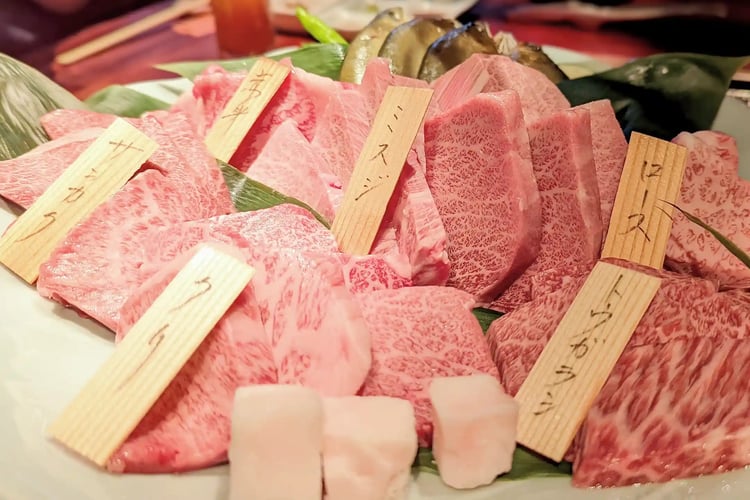
The volume line holds two surprises. The association's published table counts 7,330 head certified as Tajima beef in fiscal 2024, of which 6,820 also became Kobe beef. That is about 93 percent. In fiscal 2008 the same table shows 2,955 of 5,727, about 52 percent, so the pass rate has climbed sharply while the name has stayed the same. The association does not explain the climb. The GI register records a 2019 revision that raised both the floor and the ceiling on carcass weight (for females, from a 230 to 470 kg range to 270 to 499.9 kg), but we could not establish when the association's own rule changed, so we draw no link between the two. By head count Kobe is the smaller of the two brands, with the caveat that the figures come from different years and that one counts certifications while the other counts shipments. The real rarity on the Matsusaka side is Tokusan Matsusaka, the council's "specially designated" tier, at about 340 animals.
Kobe vs Matsusaka: How Tajima Cattle Fed Two Brands
The two brands start from the same working animal, in a country where, on the Matsusaka council's telling, beef eating had faded with Buddhism in the Heian period and cattle had become draft animals. The association's account of the Kobe legend says Tajima cattle, named for the northern district of Hyogo, were farmers' work animals when the port opened in 1868, and that the name followed once an Englishman had obtained and eaten one and foreign ships began asking for the beef. The association files it under legend, and it is worth reading as one.
The Matsusaka Beef Council's history page begins in the same hills. In the Edo period, Tajima calves went to Kishu, today's Wakayama, to be reared, and came on to the Matsusaka district at about two years old as farm animals. The Tokusan entry places the trade in Hyogo cows, fattened and sold on to the cities, among the traffic of pilgrims heading for Ise, and the council's chronology records that by 1874 females fetched more than males and that Matsusaka cattle raised on Hyogo stock of the Tajima line were already gaining a name for quality.
Then the paths split on the question of where value lives. Hyogo put its value in the animal's descent. A Kobe city tourism column on the Kobe Beef Gallery dates Tajima registry records to around 1897, earlier than most of Japan, and the association says it avoids crossing with wagyu from other prefectures to this day. Matsusaka put its value in the finishing, and the Tokusan entry says farmers there specialized early in long fattening. The Matsusaka name traveled first on foot, in the cattle drives to Tokyo of the early Meiji years, and the honor at the 1935 national exposition, which the council credits with spreading it nationwide, sealed it.
The written rules arrived long after the reputations. Kobe's register entry says that even once the name had become a byword for a feast, nobody had clearly defined which meat it meant. The association was founded in 1983 to do that, issuing certificates, designating shops and placing the bronze statues you see today. On the Matsusaka side, the identification system began running in 2002, the council formed in 2004, and the definition now in force dates from April 2016.
Each rule now shuts the other brand out. Both systems typically separate breeding from fattening: the Kobe FAQ has Hyogo calves leaving breeders at 8 to 9 months, and Matsusaka farmers buy at calf markets the council names in Hyogo, Miyazaki and Kagoshima. A Hyogo calf bought by a farmer in Mie can never be Kobe beef, because it has left the prefecture. That same calf is the only kind eligible for Matsusaka's top tier, because Tokusan Matsusaka means a calf from Hyogo, above all the Tajima district, fattened in the production area for 900 days or more.
The two brands are often said to share Tajima ancestry. That holds as a broad statement about the breed, since the association says Tajima bloodlines were used to improve wagyu across Japan, and it holds firmly for Tokusan. For ordinary Matsusaka beef it cannot be assumed, because nothing in the definition asks about pedigree.
What the Numbers Can and Cannot Say About Taste
Most comparisons assign each brand a flavor, sometimes calling Kobe lighter and cleaner. We could not trace that to a measurement or to either certifying body, and neither body offers a comparison.
The figure everybody reaches for does not settle it either. The Matsusaka Beef Council publishes a melting point of 17.4 °C for subcutaneous fat, from 288 animals measured by the Mie Prefecture Livestock Research Institute, and sets it beside 25.9 °C for wagyu generally. That second number comes from a different laboratory in Aichi, and neither is a Kobe figure. The Kobe association says only that its marbling has a melting point low enough to melt at skin temperature, and the Tokusan entry uses the same phrase of its own fat. So 17.4 °C cannot be set against Kobe, and any article that does so is comparing a measurement with a phrase.
What can be compared is what the rules let into each category, because some of the variables that move fat composition are written into them. Our article on Kobe beef fat explains the chemistry: oleic acid melts far lower than the saturated fats it replaces.
Why Sex Matters for Kobe Beef's Fat
Kobe admits steers and Matsusaka does not, and the sex of the animal shows up in the fat. The Tokusan entry makes the point in its own favor: in field tests of Japanese Black cattle at the same 30 months of age, monounsaturated fat stood at 63.3 percent in females and 60.1 percent in steers. It does not name the study. The clearest public dataset we found belongs to neither brand. A 2024 analysis by Kyoto Prefecture's livestock center measured 3,259 Japanese Black cattle fattened in Kyoto:
- Oleic acid: 54.14 percent in 2,261 steers, 56.54 percent in 998 females
- Saturated fatty acids: 38.00 percent in steers, 35.61 percent in females
These are Kyoto cattle, measured in the fat between muscles, so the figures describe no Kobe or Matsusaka animal and only the direction carries over. The spread inside each sex is also wide: the standard deviation for oleic acid is 3.93 points in steers and 3.22 in females, larger than the 2.40-point gap between the averages. So plenty of individual steers will outscore individual females, and a plate of Kobe beef may come from either sex without the menu telling you which.
Sex is only part of the picture in that report. Once sex, year and age are set aside, the biggest share of the variation is genetic, with a heritability of 0.61 for oleic acid, and the highest- and lowest-scoring farms differ by about 3 points. Kobe's own register entry credits its high monounsaturated share largely to the Tajima line. So the closed bloodline belongs on the list of differences, though we found no public data showing which way it moves this particular comparison.
Long Fattening and Tokusan Matsusaka Beef
Age is the other variable the rules touch. In the Kyoto data, oleic acid and total monounsaturated fat rose with slaughter age, on a fitted curve charted from 22 to 35 months. The Tokusan entry reports about 0.5 percentage points more monounsaturated fat for each extra month between 22 and 34 months, and the council says longer fattening lowers the melting point, most markedly in Tokusan.
The ages in the two systems overlap more than the brand names imply. Kobe cattle go to market at around 30 to 32 months, and ordinary Matsusaka is shipped at around 30 months or more. Tokusan is the outlier, at an average of 42 months, and that lies beyond the range of the published curves.
What follows is our inference, and we found no study that tests it on these brands. On sex and age alone, the widest gap should fall between a long-fattened Tokusan heifer and a Kobe steer near 30 months, though that extends the published curves and leaves the bloodline out. Between an ordinary Matsusaka heifer and a Kobe heifer of similar age, nothing in the rules predicts a direction, and the difference would come down to bloodline, farm and feed. It also would not mean one is better. The review cited in that fat article warns that very high monounsaturated content is not simply an improvement.
Beer, Music and Massage: What the Two Certifying Bodies Say
Here both bodies have answered the same questions. On beer they nearly agree. The Kobe FAQ says it is hardly ever given, and the Matsusaka FAQ says some farmers give it to an animal whose appetite has dropped, and that the cattle do not all drink it. Neither describes the routine indulgence that overseas menus imply.
Massage is where the emphasis differs. The Kobe FAQ says some small-herd farmers may use methods like these but that they are not the standard for Kobe beef, and that massage may help indirectly by reducing stress without itself softening the meat or adding marbling. The Matsusaka council's page on raising cattle says there are farmers who massage with shochu in order to soften the meat. That reports what those farmers intend, and it cites no test. Of the two bodies, only Kobe's addresses whether it works. On music, the Kobe FAQ calls the effect on quality unproven, and the Matsusaka page does not mention it.
Past the anecdotes, both describe work that is less photogenic. The Kobe FAQ lists dried grass, rice straw and compound feed, with no fresh grass. The Matsusaka page describes clean individual stalls, brushing and washing, and a feed blend each farm keeps to itself and adjusts to the animal's age and condition.
How to Verify Kobe Beef and Matsusaka Beef at the Counter
Common advice says to check the individual identification number, and that is half right. Every head of cattle in Japan carries a ten-digit number from the same national system, and the Matsusaka system is built on that ear tag, so the digits alone cannot separate either brand from other domestic beef. What matters is which database you type them into and what comes back.
For Kobe, the association's criteria page names a bronze cattle statue as the sign of a registered shop or restaurant, and the nojigiku chrysanthemum stamp as the mark on certified meat. Its FAQ says the identification information displayed in a shop or restaurant returns the animal's bloodline, birthplace, rearing place, market, and whether it was certified as Tajima and as Kobe beef. Since August 2023 the association has also run DNA checks at randomly chosen registered shops and says it publishes every result.
For Matsusaka, the document to ask for is the Matsusaka seal or certificate. The seal carries the number, the fattening location, the farmer's name and the quality grade, written as Tokusan, A5, A4 and so on, and the council's search page returns more than 30 fields for the animal. Because the definition has no grade floor, that printed grade is information you actually need. The Tokusan entry reports about 83 percent of its animals at A or B grade 4 or 5 in fiscal 2014, so the top tier does not guarantee even that. A menu that says only "Matsusaka" has not told you the grade, whereas Kobe's certificate guarantees at least BMS No. 6.
The council treats the reading "Matsuzaka" and the kanji 松坂 as errors, so the spelling on a menu is not always the one the brand itself uses.
Kobe Beef and Matsusaka Beef Outside Japan
Two dates are worth knowing abroad. The Kobe FAQ gives February 2012 and Macau for the first export. The Matsusaka chronology records Tokusan going to the United States for the first time in January 2015.
The legal coverage also differs in a way menus rarely mention. The GI register lists Kobe Beef as No. 3, registered on 22 December 2015, under the names Kobe Beef, Kobe Niku and Kobe Gyu. The Matsusaka entry, No. 25 of 3 March 2017, is for Tokusan Matsusaka specifically. So in that register the Kobe name is protected whole, while the Matsusaka entry covers only Tokusan. Both names are also registered trademarks in Japan, held by local cooperatives. These are Japanese registrations, and they do not by themselves settle what a menu in the United States may print.
What a Visitor Can Actually See in Matsusaka and Kobe
The two places offer different kinds of access. Many itineraries suggest ranch visits and meeting producers. For Matsusaka, the council answers directly that it does not accept general visitors at farms, on disease-control grounds.
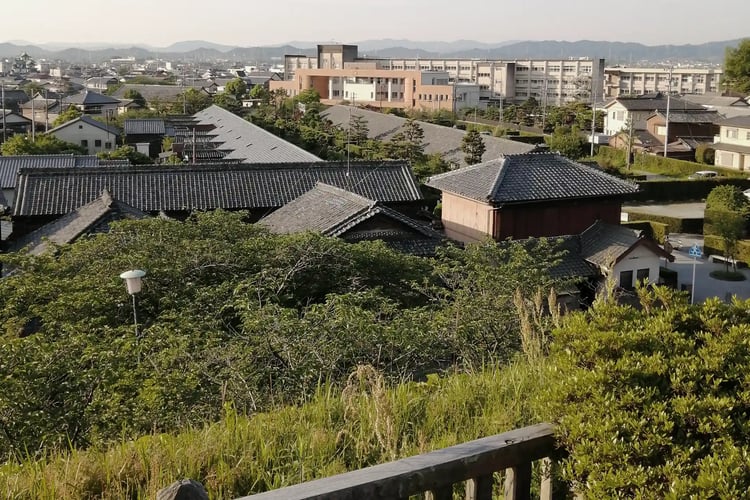
What Matsusaka offers instead is one day a year. The 75th Matsusaka Meat Cattle Show is scheduled for Sunday 29 November 2026 at Bell Farm, rain or shine, with 50 Tokusan animals that came through the preliminaries, followed by an auction the council says the public may watch freely. The record price is 50 million yen, set at the 53rd show in 2002. This is the one public showing of the live animals we found on the council's pages. The final is held at the end of November each year, so confirm the date for your own trip. Cotton, not cattle, built the town's older wealth: the Former Hasegawa Jirobee Residence belonged to Ise merchants who ran cotton shops in Edo, and the samurai quarter survives nearby.
Kobe's access is an ordinary attraction beside the Shinkansen. The Kobe Beef Gallery opened in March 2019 on the third floor of a building connected to Shin-Kobe Station, and the tourism column cited above, dated August 2024, describes a free exhibit of about 30 minutes run with the association's help, plus a restaurant serving steak from 100 grams. Its example was 8,000 yen for 100 grams of lean meat with rice and sides, so check the current price and closing days. For the cattle themselves, the longer trip is to the Tajima Cattle Museum in Shin'onsen in northern Hyogo, whose page notes the region's Tajima cattle system was designated a Globally Important Agricultural Heritage System in 2023. In the city, Ijinkan-dori's Western merchant houses and the Hyogo Prefectural Museum of Art on the waterfront fill out the day.

For restaurants, our guide to where to eat Kobe beef covers registered rooms, and the Matsusaka guide linked above covers the two old houses in that town.
Matsusaka Beef or Kobe Beef: Which Should You Choose?
The honest answer to Matsusaka vs Kobe depends on what you want guaranteed.
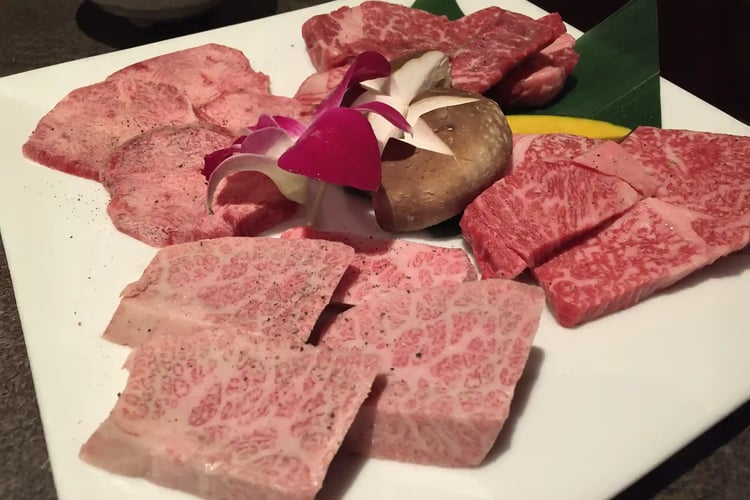
Choose Kobe beef if you want a floor printed into the name. Every certified piece has cleared BMS No. 6, grade 4 and a weight ceiling, comes from a closed line, and sits inside a system that spot-checks shops by DNA. Accept that the range is wide: BMS 6 and BMS 12 are both Kobe, and the animal may be a steer or a heifer. Our guide to the wagyu grading system explains what those numbers measure.
Choose Tokusan Matsusaka if the long-fattened heifer is what interests you. It is the most specific thing either brand sells: a Hyogo-born heifer, 900 days or more of fattening, about 340 animals a year. Its register entry concedes the cost of that choice, with carcasses about 70 kg lighter than the national average for females. Choose ordinary Matsusaka beef if you value the recorded life of the animal, and read the grade on the seal, because the name will not supply it.
Whichever you order, these questions tell you more than the brand does:
- Is it a heifer or a steer? Only a Kobe menu needs to answer this.
- How old was the animal at shipping?
- What is the BMS number, and for Matsusaka, what does the seal show: Tokusan, A5, A4?
- What bloodline and birthplace does the record show? Kobe's is fixed by rule, and ordinary Matsusaka's is not.
- Does the identification number return a certification from the brand's own system?
If you want to taste the difference yourself, control what you can: the same cut, the same cooking, the same sex and, as far as the restaurant can tell you, a similar age. The Matsusaka council's published research on the wagyu aroma, which it reports strongest at 80 °C in dilute salt water and weaker above that, leads it to recommend sukiyaki and shabu-shabu. That finding concerns wagyu generally, so it gives no reason to assign a dish to either brand.
Both names usually appear in Japan's "big three," though the third place is argued between Omi and Yonezawa. That disagreement shows what kind of list it is, a matter of reputation with no certificate behind it, which is the opposite of what makes these two brands worth comparing.
One story, opening onto many

Conclusion
Kobe beef is defined by a test on a closed Hyogo bloodline, and Matsusaka beef by the record of a heifer's fattening in one district of Mie, with no grade required. The two started from the same working cattle and now exclude each other: a Hyogo calf sold to Mie can never be Kobe beef, and only such a calf can become Tokusan Matsusaka. We found no head-to-head tasting from either certifying body. The written rules do show which variables differ, chiefly the bloodline, the sex and the age of the animal, so ask about those, and check the number in the brand's own system.