
Search for luxury travel in Japan and the results are agencies, each promising access. What none of them explains is what the money is actually buying, or why a suite in an international hotel and a room in a hot-spring inn are compared as though they were the same kind of thing.
Two claims sit underneath this article. The first is that international luxury in Japan is real and works, and that the Japanese end of the market is judged on a different set of items — that one comes from a study of guest reviews. The second is that what foreign guests report missing is not comfort; that one comes from a travel company's own inbound research, reported inside one of those papers, and it is worth knowing where it came from before you lean on it.
What follows is a way of reading the market, not a promise about doors. Nobody, this company included, can sell you a relationship that was built by somebody else over years of returning. If you already know what kind of place you want and are choosing between districts, our district-by-district guide to where to base yourself in Tokyo is the practical companion to this one.
Western Luxury Is Available, and It Is Not the Ceiling
The international brands are here, and they are not a compromise. What is worth being precise about is which things they are good at, because the list is specific and it is not the same list as the one on the other side.
What the International Luxury Hotels Do Very Well
One study is doing most of the work in this section, so here is what it actually looked at. Shunichiro Morishita, writing in the Journal of Global Tourism Research in 2023, took six properties and read the hundred most recent Tripadvisor reviews of each, six hundred in all, posted between May 2012 and October 2022. The hotels were the top three in Jalan's Aspirational Hotel Ranking — the Ritz-Carlton, the Hilton and the ANA InterContinental in Tokyo. The inns were the top three in Travel News Shinsha's hundred hotels and inns selected by professionals, omotenashi category — Kagaya, Hachimanya and Suimeikan. Six properties, all of them already famous, chosen for reputation. Not a census of Japanese lodging, and this article calls it the satisfaction study.
On that sample, his summary of the hotels is one clause: "high-quality club lounges, afternoon tea, and staff service characterized the hotels."
Read that as a description of a product rather than a compliment. A lounge and an afternoon service are repeatable, staffable and schedulable. They are the things an organisation can guarantee to a guest it has never met, in a language it can be certain of, on a Tuesday in February. That is a real achievement, and it is what the money buys.
It also explains why this end of the market is easy to shop for. Everything that makes it good can be described in advance, which is why it can be sold through a website, a call centre and a loyalty programme.
Where the Two Luxury Lists Stop Overlapping
The same study describes the other three properties differently. Morishita notes that the inns "were rated highly for offering abundant breakfasts and dinners, indoor and outdoor hot spring baths, guest rooms and facilities, and front desk staff."
The two lists barely touch. No lounge appears on the second one; no bath appears on the first. What guests are being pleased by is a different set of things, and that is the useful finding — not that one end is grander than the other.
It is worth killing a tempting misreading here, because the same paper kills it. The Japanese end is not indifferent to space or view. "The most frequently used word for ryokan tangible services was room (324)," Morishita writes, and he reads the high-rated ones as showing that "guests were satisfied with the size and cleanliness of the ryokan rooms and the view from the window." Hot spring follows at 219 and bath at 185. Rooms and views are being praised on both sides of the comparison. The difference is in what else is on the list.
Morishita is also blunt about how often the two get flattened together: satisfaction surveys "conducted at many ryokans and hotels use uniform items related to facilities, guest rooms, meals, and staff service, despite the differences between these types of accommodation." If the industry's own instruments erase the difference, a comparison site will too. Choosing a small hotel is a different exercise from choosing a large one for the same reason.
The Japanese High End Is Built Around Different Things
Three of those differences are worth knowing before you compare two prices, because each one changes what the price contains.
Meals Are Not an Amenity at a Ryokan
Food words appear on both sides of the satisfaction study, which is worth saying before the difference. Among the words it groups under the hotels' intangible service, breakfast appears 129 times and meal 63; on the inn side, meal appears 155 and food 90. Hotels are not indifferent to what they serve, and the paper says so directly: they "enhance the quality and quantity of breakfast and evening meals to improve satisfaction."
The difference is what the evening meal is doing there. At a hotel it is a service you may or may not buy. At an inn it is generally inside the tariff, which is why the study's summary of the inns puts "abundant breakfasts and dinners" among the things guests rated them highly for.
That is a structural difference rather than a matter of degree. When the meal is inside the product, the kitchen sets the shape of the evening, and the room rate is doing something other than paying for a bed. Comparing that rate with a room-only rate elsewhere is comparing two numbers that count different things.
It also has a cost that the brochures do not mention, and the research names it. In a second paper — a 2022 study of the inns most popular with foreign guests, which this article calls the attractiveness study — Morishita reports that the fixed plan of two meals per night, "which is a characteristic of a Japanese inn, restricts the freedom of action and is shunned by foreign visitors to Japan," citing work by Murayama. If you were planning to eat somewhere else on the second night, the thing you liked about the format is the thing that will be in your way.
Ryokan Is Not a Hotel Category
Here the law is more interesting than the brochures. Japan's Hotel Business Act, in the English translation published on the government's Japanese Law Translation database, divides the hotel business into three: "the business of operating an inn or hotel, the business of operating a common lodging house, or the business of operating a boarding house."
Inn and hotel are one category, not two. The Act defines it as "the business of running a facility, receiving lodging fees, and allowing people to lodge there, other than the business of operating a common lodging house or the business of operating a boarding house" — a positive requirement, with the boundaries drawn by excluding the other two. A licence under Article 3 is a licence to run that, from either end of it.
So the distinction every traveller feels between an inn and a hotel is not one the licensing system draws. The Act draws no line between them, which means the word is held up by practice — by what guests expect and what operators do. That is worth knowing when a property calls itself one thing and behaves like the other: there is no definition it is failing to meet.
What follows is that the word carries no guarantee, and the checking has to be done at the level of the specific place. Our comparison of ryokan and traditional hotels is written at that level.
What the State Does When a Skill Matters
The third difference is not about what you can buy. It is about what happens to a skill here when the market is not trusted with it.
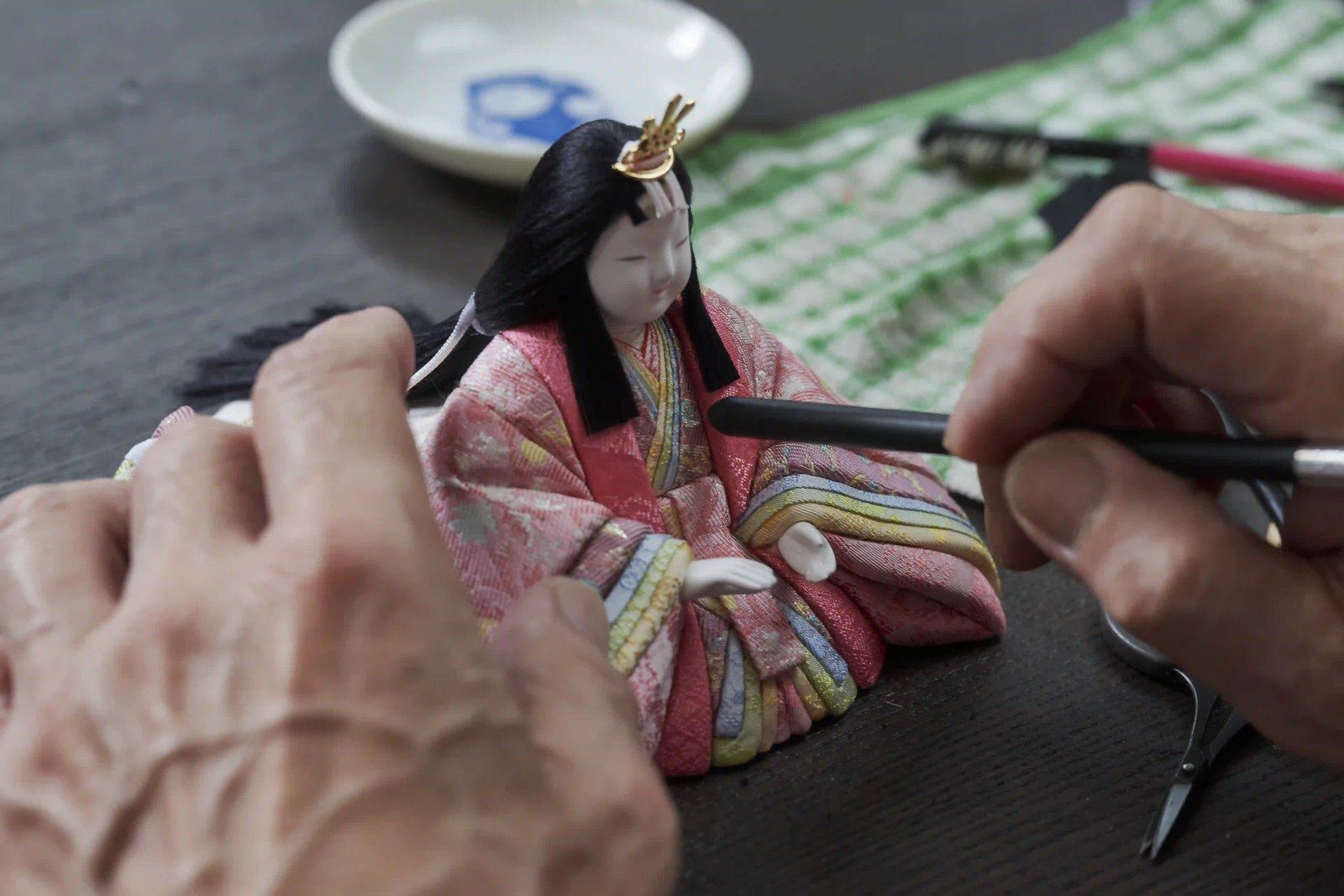
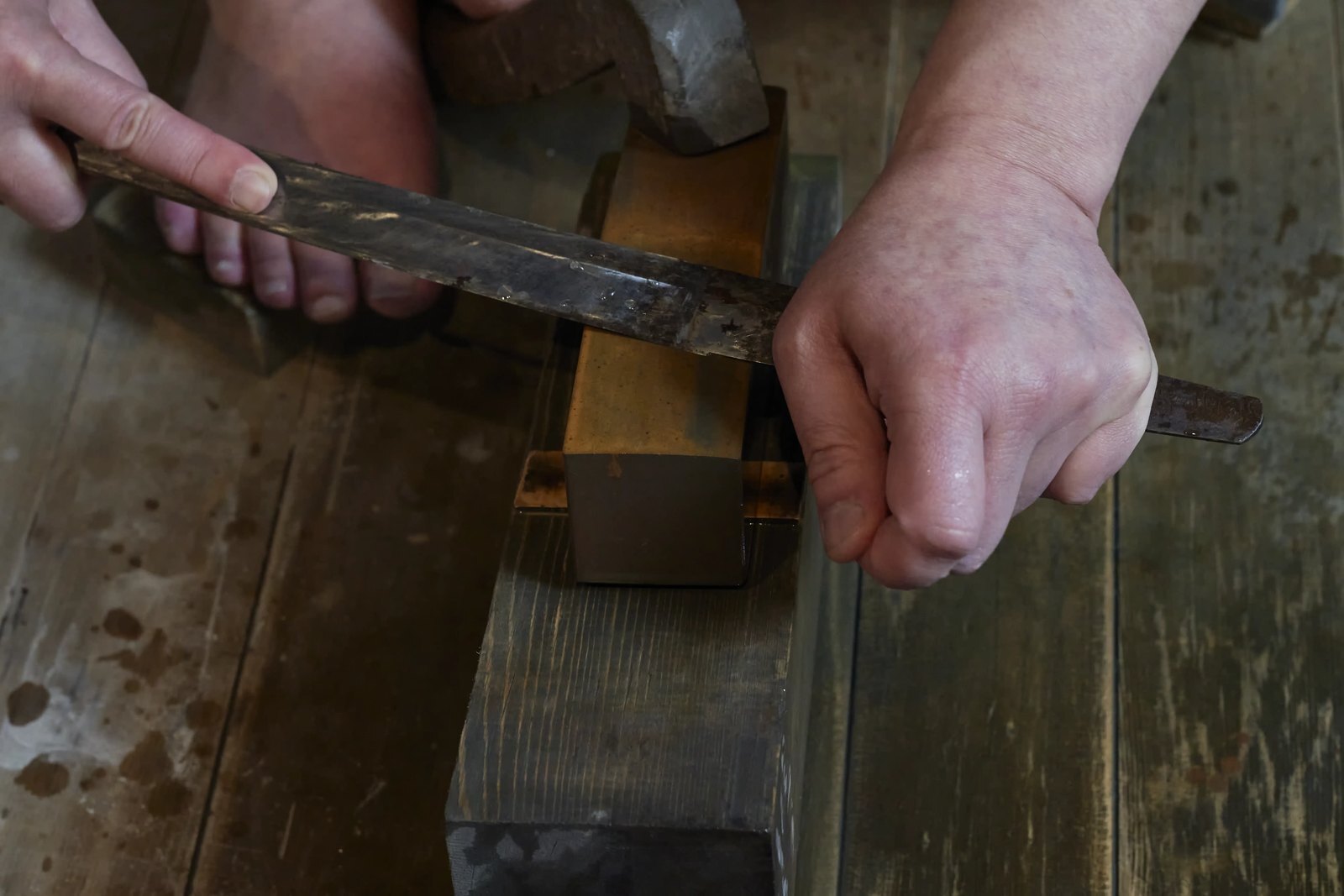
The Agency for Cultural Affairs describes the system of Selected Conservation Techniques, "established when the Act on Protection of Cultural Properties was amended in 1975." Under it, the Minister "selects and designates traditional techniques and skills that are considered essential for conserving cultural properties," and the system "creates official recognition for preservation groups and holders of selected conservation techniques." The state then "creates its own documentation and trains successors."
Two things follow, and one of them is a warning. The first is that when this country judges a technique essential, it does not leave the question of whether it survives to whoever happens to be buying: it writes the technique down and pays to teach it to somebody. The second is that these are techniques for conserving cultural property — not a register of makers taking commissions. Rarity documented by a ministry is not availability, and reading one as the other is how a traveller ends up disappointed by an answer nobody was ever going to give.
The Gate That Money Does Not Open
Which brings the argument to the part the agency pages skip, and to the place where the research says something genuinely surprising.
Omotenashi Is Not Written Down
A 2016 case study of the onsen town of Kurokawa, by the same researcher, looked at how its inns produce the service they are known for. The answer was not a written standard. The transfer of the relevant knowledge and skills from senior to junior staff "is achieved through on-the-job-training without a detailed manual," with junior staff "determining their own style, applying it through their customer relations, and receiving feedback from the customers as well as from their Okami."
The town-level finding is stranger still. The inns of Kurokawa "compete for business in the same area" and yet "share their best practices, skills, and knowledge of omotenashi in the union." The capability is held collectively, by a place, rather than privately by a brand.
And Morishita adds the consequence plainly: "the majority of ryokans in other areas have had difficulty emulating this particular business approach." Whatever that capability is, it is not a feature of a building or a line on a rate card. It lives in an organisation and in a town, and most inns elsewhere have found it hard to copy.
What Visitors Themselves Say Is Missing
The obvious assumption is that what visitors want more of is comfort. The evidence points somewhere else, and it is worth being careful about whose evidence it is.
The attractiveness study — the 2022 paper introduced earlier, which compared Japanese and English reviews of the inns most popular with foreign guests — found the appeal to be specific and physical: "the experience of wearing a yukata and eating Japanese food in a Japanese-style room at a ryokan (Japanese inn) and taking in an onsen (hot spring) in a private open-air bath without hesitation is attractive."
The complaint, though, does not come from those reviews. It comes from JTB's 2018 inbound research, which the attractiveness study reports in its own words. Start with the good news, because the paper puts it first: "More than 90 % of respondents were 'very satisfied' or 'satisfied' with their lodging facilities." Then the other side. Foreign visitors "were dissatisfied with Japanese inns because 'the rooms are small,' 'the facilities are dirty and old,' 'the prices are expensive,' 'I could not interact with Japanese people,' 'I felt ignored,' and 'I had trouble understanding how to eat Japanese food, but they did not tell me.'" Drawing on the same research, the paper concludes that visitors "are dissatisfied with their low interaction with Japanese people, Japanese lifestyle, and local communities, which means they prefer to experience more of these."
Hold two of those together. In the satisfaction study, room size was among the things guests praised; in the JTB list, small rooms are a grievance. The two do not have to be reconciled — the satisfaction study does not report where its reviewers came from, and the two are not asking the same people. What matters is which complaints are about comfort and which are not. Satisfaction with the lodging facilities themselves is already above ninety per cent. The middle of that list is somewhere else entirely: being looked after impeccably by people you never actually meet is a describable experience, and it is not the one being asked for.
The attractiveness study adds the warning that goes with it: "Foreign visitors will not accept one-sided hospitality based on the providers' beliefs."
What a Luxury Traveller Can Realistically Do
Which forces an honest accounting of what a trip can and cannot produce.
It cannot produce a relationship. Being known somewhere is a function of returning, and a first visit is by definition not a return. Anyone who tells you otherwise is selling the appearance of the thing.
What a trip can do is arrange the conditions in which contact is possible at all: fewer places, longer in each, hours that are not the busy ones, and a subject you actually want to ask about. It also means asking a question that has an answer — the last item on the JTB list is a guest who could not work out how to eat what was in front of them and was not told. That is a conversation waiting to happen, and it starts with the guest.
Deciding What the Luxury Is For
All of which turns into a choice you can actually make.
Comfort, Access, or Understanding
Three different things get sold under one word, and they are bought in different places.
Comfort is the international product, and it is excellent: lounges, service, predictability, a standard that holds on any date. Access is the ability to be somewhere that is not generally open, which no operator can guarantee to you in advance. Understanding is what you leave with — whether the week made sense of something — and it is mostly a function of how much time you spent in how few places.
The three are not ranked. But a trip designed for one of them will underperform at the other two, and a trip bought for comfort will not deliver understanding by accident.
The Trade-off Nobody Lists
The trade-off is not between good and bad properties. It is that the qualities you are travelling for and the qualities that make a place easy to deal with can sit in different places.
The attractiveness study cites a figure that puts a floor under that. In a 2018 Japan Finance Corporation study of small and medium-sized businesses, 88.8 per cent of respondents had "websites that do not support foreign languages," and on accepting foreign visitors, 17.1 per cent "actively accept," 47.7 per cent "may accept," and 35.2 per cent "do not want to accept, if possible."
Read the last figure slowly. Those are not hotel groups. They are small and medium-sized businesses. More than a third of them would rather not have you, which is less hostility than an honest assessment of what a business with no foreign-language capacity can do well — and it is the reason the easiest places to book are not a random sample of the good ones.
The failures, meanwhile, are shared. In the satisfaction study, guests of the hotels and guests of the inns alike were "dissatisfied with the age-related deterioration of guest rooms and facilities, inadequate cleaning, and inadequate staff." Neither format protects you from a building that has been left too long, and neither price point does either.
Tokyo's Luxury Hotels and Ryokans
What to Decide Before You Spend on Luxury Japan Travel
Three things to settle, and then the part of this that is moving.
First, decide which list you are buying from. In the satisfaction study, the hotels were rated for lounges, afternoon tea and staff service; the inns for meals, baths, rooms and the front desk. Those lists barely overlap, and a rate compared across them is a number compared with a different number.
Second, stop treating the word ryokan as a category. The Hotel Business Act puts inns and hotels in one licensing class, so nothing about the word is guaranteed and the checking happens at the level of the individual property. Check the meal plan while you are there: it is inside the price, and it is the thing most likely to conflict with what you had planned for the evening.
Third, be honest about which of comfort, access and understanding you want, and accept that the third is bought with time rather than money. What is documented is narrower than the slogans: the service Kurokawa's inns are known for is passed on "without a detailed manual" and shared among competitors in a union, and most inns elsewhere "have had difficulty emulating" it. That is a fact about how hard the thing is to copy, which is worth more to a buyer than a claim about who can open what.
The part that is still moving is the reception itself, and the honest way to say it is to date the evidence. The attractiveness study was published in 2022, at the end of the pandemic, and its framing was that inns which had struggled to fill rooms would improve by taking foreign guests once travel resumed. It sets out the background, sourced in turn to the Japan Tourism Agency and the health ministry. Arrivals had passed 10 million in 2013 and reached 31.8 million in 2019, then fell to 4.1 million in 2020. Hotel rooms had overtaken inn rooms in 2010. And the number of inns had fallen from a peak of 83,226 in 1980 to 38,662 by 2018. Efforts to make reception more multilingual, the paper says, "have earned a reputation. It was unclear, however, what foreign visitors to Japan find appealing about Japanese inns."
That last sentence is the live part. A shrinking format is being asked to open itself to guests whose reasons for coming were, as recently as that paper, not well understood by the people receiving them — and the survey evidence says those guests want more contact, not more comfort. It is a better moment to arrive than it sounds, provided you arrive with something to ask, which is much the same argument as the case for a quieter route through the city.