Japanese chopsticks (hashi) are more than utensils; they mirror a way of life and a mindful ethos. This article explores the history and cultural background of chopsticks, teaches correct technique and etiquette, and shares tips for integrating wellness (mind–body balance) and sustainability (living with care for the planet).
If you’re new to Japan’s chopstick culture, don’t worry—we start with the foundations. If you searched “how to use chopstick,” consider this your invitation to bring a sense of Zen and sustainable abundance to your table.
Lifestyle—Food, Clothing, and Home—and Chopsticks: History and the Aesthetics of Ma
At first glance, using chopsticks may seem routine, yet Japan’s chopstick culture carries deep history and distinctive aesthetics. Chopsticks arrived from ancient China and were initially reserved for the imperial court and aristocracy. Over time they spread to warrior households and common people, evolving alongside table manners.
Influenced by Zen thought and the tea ceremony, the aesthetic of ma—purposeful space and interval—shapes how you handle chopsticks. Movements that leave room for stillness create a calm rhythm at the table, offering a natural counterpoint to Western cutlery culture.
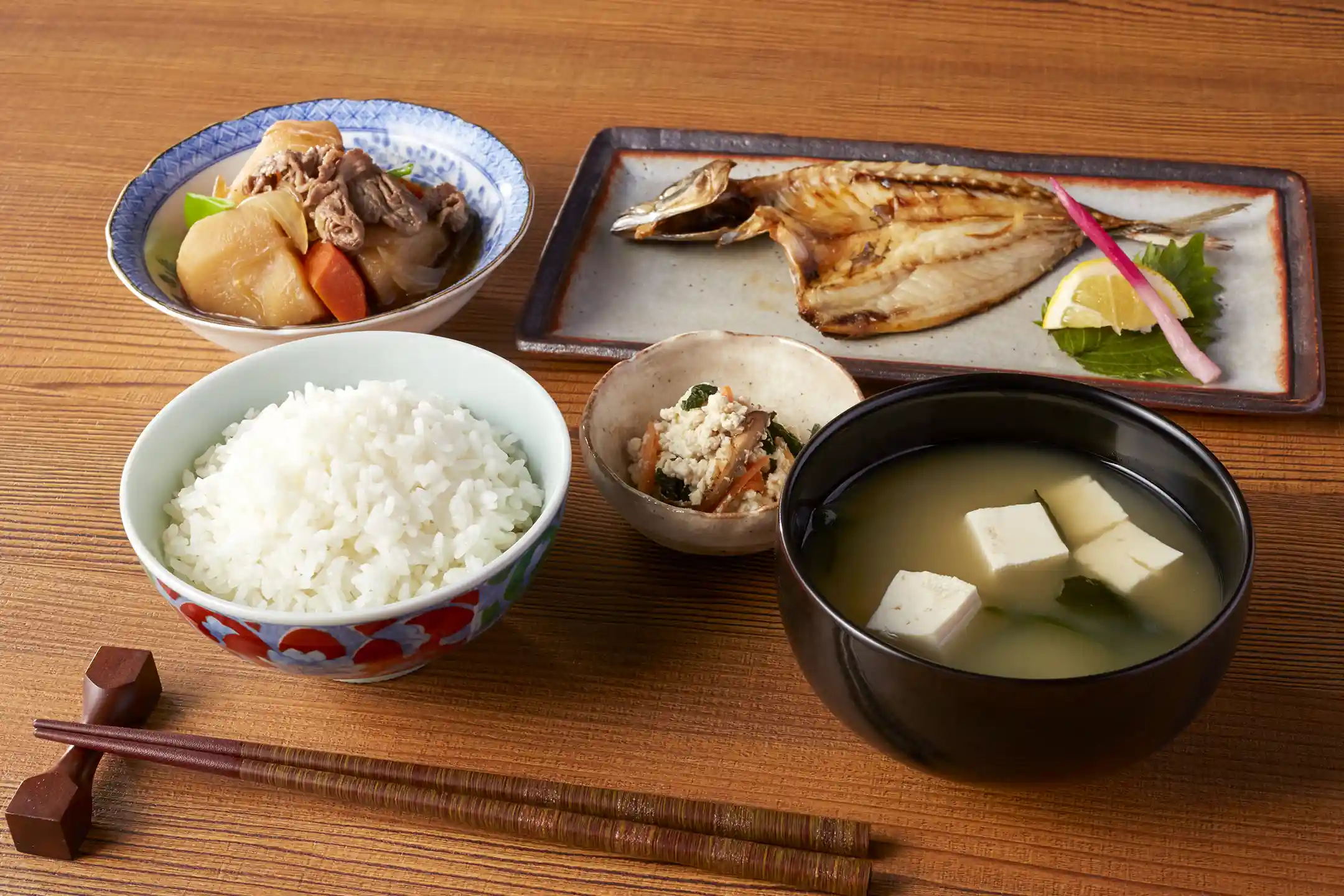
In the West, you might complete a set of silverware to align the whole table. In washoku (Japanese cuisine), hospitality is expressed through seasonal variety in tableware and chopsticks. Even the simple act of picking up your chopsticks sits in harmony with the room and table setting, and that quiet rhythm nudges you to savor every bite.
Zen and Bodily Conduct
Zen’s spirit is reflected in how you move with chopsticks. Before eating, bring your palms together, bow lightly, and say itadakimasu—a moment to appreciate the life you are about to receive and to settle your mind. If you bring the same awareness to each motion—almost like meditation—your manners naturally become composed. When you raise food to your lips, pause for a breath, avoid rushing, and chew with attention; it’s a practical way to experience Zen’s teaching to be “fully present in this moment.”
Just as zazen centers you on the breath, let your chopstick movements grow gentle, set distractions aside, and keep your mind with the act of eating. Accumulating these small, mindful gestures transforms a meal from mere intake into a brief practice of self-cultivation. A quiet moment before the meal and a closing gochisōsama after also express gratitude and restraint in the spirit of Zen.
Living Space and Dining Flow (Floor Seating/Chair Seating)
In traditional floor seating, one person’s dishes are arranged together on a small tray-table, which naturally encourages good posture and elegant chopstick movements. With modern chair seating, you can achieve the same ease and grace by arranging the table and tableware so your body isn’t strained and your reach is simple and smooth.
Mini Glossary (Chopsticks, Zen Tray, Oshiki, Chopstick Rest)
箸 (hashi): The paired, slender tools used for eating in Japan. Typically made from wood, bamboo, resin, or metal, they pick up food by pinching between the fingers.
膳 (zen, individual tray-table): A small tray or stand that holds one person’s meal. Historically, a set menu—often “one soup, three dishes”—was plated on each person’s tray. The tray functions as a mini table that carries chopsticks and vessels together.
折敷 (oshiki): A square tray or board placed beneath vessels. Typically made of wood or lacquer, it’s a traditional mat that can also serve directly as a surface for plating. While its etymology has multiple theories, one traces back to the old practice of folding leaves to make a mat (*1). Unlike a carrying tray, an oshiki adds seasonality and formality to the table.
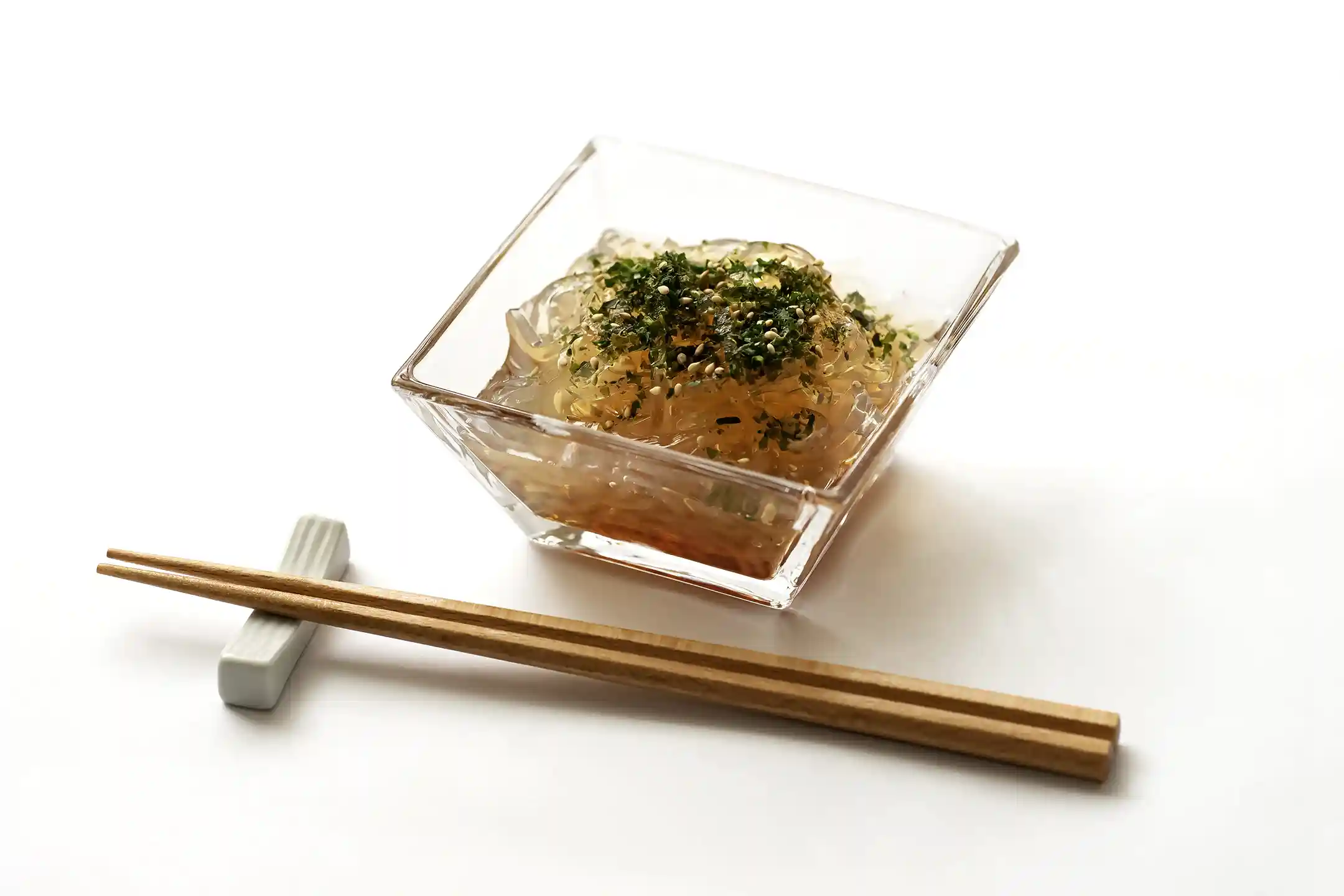
箸置き (hashi‑oki, chopstick rest): A small stand or ornament for setting down your chopsticks. Made from ceramics, wood, glass, and more, it keeps chopsticks from rolling and prevents the tips from touching the table for hygiene (*2). If you pause during the meal, use a chopstick rest rather than laying your chopsticks across a bowl.
Basic How to Use Chopstick—Three-Point Support and a Steady Wrist
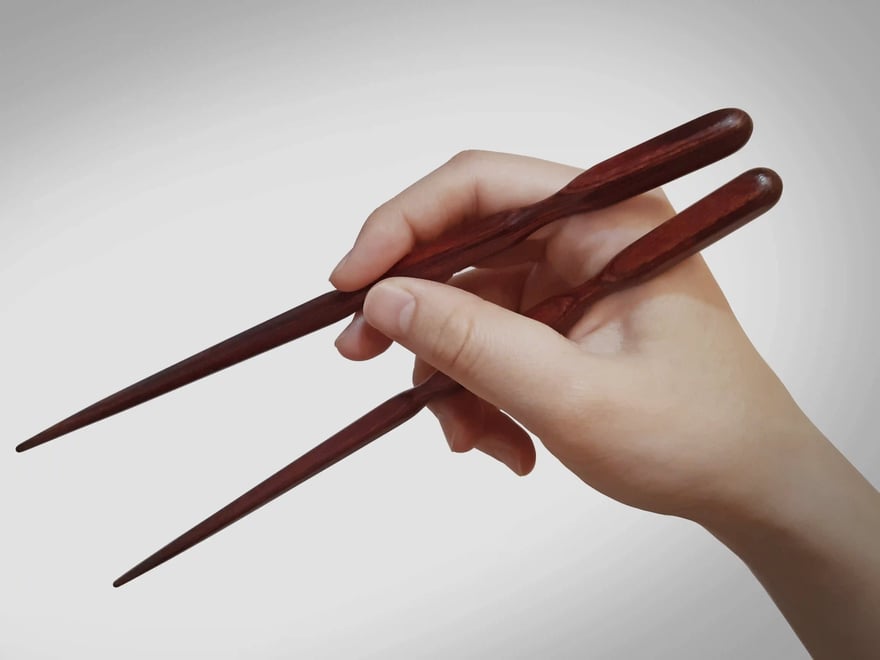
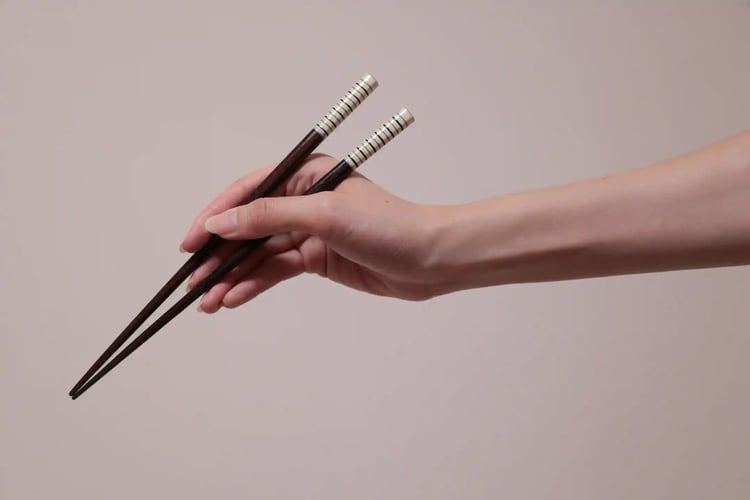
If you want to handle chopsticks well, the first step is learning the correct grip. In Japan, the standard is the “three-point support” method, in which your thumb, index finger, and middle finger hold the upper chopstick while your ring finger and the base of your thumb stabilize the lower chopstick(*1).
Concretely, hold one chopstick as you would a pencil—lightly with thumb, index, and middle finger—near the upper third. The other chopstick rests against the base of your thumb and the side of your ring finger. Keep the lower stick fixed at these two points and move only the upper stick up and down. If your hand stays relaxed, the tips align and it becomes easy to grasp food.
It’s said that some kindergartens in Japan practice picking up a single grain of rice to train fingertip control and focus. It may feel challenging at first, but with repetition your grip grows efficient, and strength transfers cleanly to the tips without extra effort.
A Five-Step Drill to Master the Grip
To make learning smooth, try this five-step practice:
Check your posture – Sit with your spine long, let your shoulders rest, and avoid flaring your elbows. Keep both feet grounded and face the table squarely. Good posture steadies your fingertips.
One-chopstick “pencil hold” practice – Start with one chopstick like a pencil, supported by thumb, index, and middle fingers. Hold it around the upper third for balance and practice moving the tip up and down to feel how your fingers work.
Set the lower chopstick – Tuck the second chopstick (the lower one) between the side of your ring finger and the base of your thumb. This lower stick stays put. Return the upper stick to the pencil-hold position. You’ve now formed the three-point support.
Open and close the upper stick – With the lower stick fixed, open and close only the upper one using the index and middle fingers. Make sure the tips open and close evenly and simulate the act of gripping. Begin with larger movements, then refine until the tips align precisely.
Practice from small to long items – Start with easy-to-grab foods like beans or vegetable sticks, then move to tiny items like a rice grain, and finally tackle longer items like asparagus. Small foods train delicate pressure; long foods develop balance at the tips and the way you use your wrist. Progressively, you’ll handle many shapes confidently.
Common Mistakes and How to Fix Them
Beginners often fall into a few patterns. Gripping—clenching chopsticks in a fist—locks your fingers and kills fine control. Return to the pencil hold, open each finger, and reset them in the proper places.
Crossed tips happen when the upper and lower sticks fall out of alignment. This usually comes from inconsistent position and pressure. Put your chopsticks down, realign so the tips are parallel, and pick them up again.
If you move from the elbow with big motions, the grip becomes unstable. Build flexibility with simple wrist and finger stretches—press palms together and gently rotate side to side, or bend each finger back a little to loosen the joints. These quick routines improve overall wrist mobility so even long meals won’t tire your hands.
A Mindful Way to Eat
Mastering technique is only part of it; you’re also shaping a heartfelt dining experience. Mindful eating means savoring each bite with awareness, and a Japanese table—with chopsticks—is a natural stage for it.
Before you pick up your chopsticks, take a slow breath to settle, then bow your head and say itadakimasu. That brief moment boosts gratitude and focus. Try setting your chopsticks down between bites and let all five senses meet the food.
Notice aroma, texture, and taste, and resist rushing to the next mouthful. Over time your pace slows, and you may find it easier to stop before you’re overly full.
How to Use Chopsticks at the Table and Etiquette—Giving Form to Hospitality
From family meals to formal banquets, etiquette shifts with the setting. Good manners—and knowing how to use chopstick—show up at the chopstick tips and communicate care for the people around you.
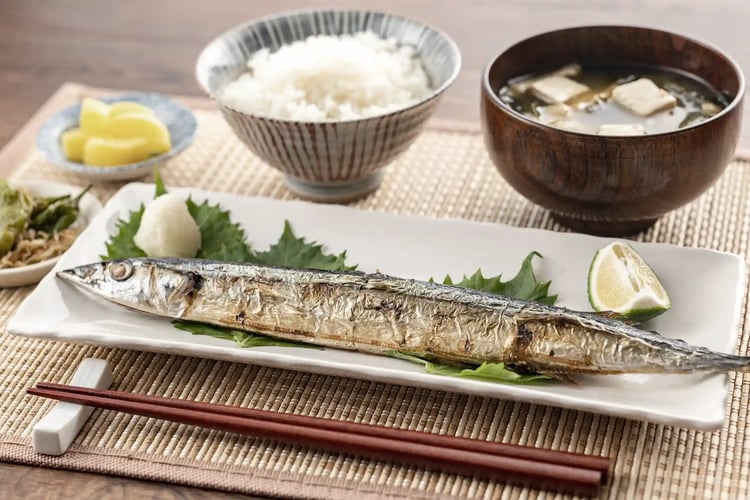
As a baseline, pick up your chopsticks only when you begin the meal. In washoku, after the greeting itadakimasu, you lift your chopsticks with both hands and then start. Even at home, simply move your chopsticks gently from where they’re placed to your setting, nod slightly, and begin; that alone raises the tone.
At kaiseki or shojin (Buddhist vegetarian) meals, the host typically invites everyone to start—“Please enjoy”—and guests follow. When sharing dishes, use the serving chopsticks provided rather than your own; avoid taking food directly from the communal plate with your personal chopsticks.
If there are no serving chopsticks, one workaround is to turn your chopsticks around and use the handle end for taking from the shared plate—but strictly speaking it’s not ideal. Handle vessels properly, too: lift soup and rice bowls with your left hand and eat with your chopsticks in your right; for flat plates, don’t lift the dish—use your chopsticks while the plate stays on the table.
For small bowls, it’s fine to support them lightly with your left hand. Whenever you set your chopsticks down, use a chopstick rest, and avoid watashi‑bashi—resting them across the top of a bowl.
Sequence of Service (Home Meals, Kaiseki, Shojin Cuisine)
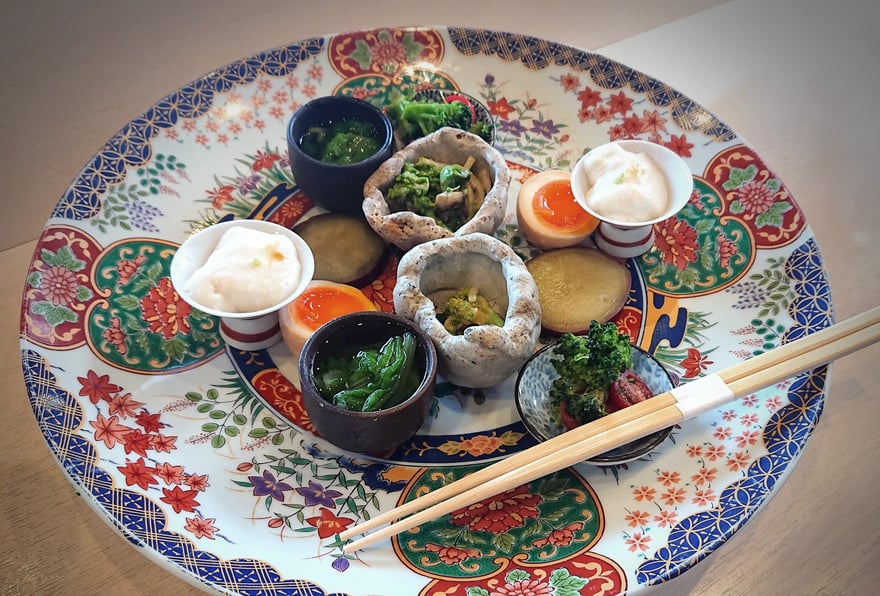
At home, all dishes may be set at once, and you’re free to pick your own order. That said, try to finish once you’ve touched a dish and aim for balanced progress—soup, main, sides—so your place looks tidy.
In kaiseki, dishes arrive in sequence: starting with sakizuke or appetizers, then a lidded soup, mukōzuke (sashimi), grilled and simmered courses, and finally rice with pickles. Ideally, everyone begins a course together and finishes before the next arrives. In formal tea-ceremony kaiseki, there are detailed protocols—like opening a bowl’s lid or when to set down chopsticks—but simply mirror the host’s movements and you’ll be fine.
In shojin cuisine, monks follow specific tableware rules (like stacking bowls called ōryōki). Silence is often observed; you may place your chopsticks down together at a signal and wait quietly. In every setting, greet the beginning and end of the meal properly; when you finish, align your chopsticks on the rest and offer thanks with gochisōsama deshita.
Taboos and What to Do Instead
Traditional etiquette lists “forbidden” ways of handling chopsticks, called kirai‑bashi (taboo chopstick manners). Here are a few common ones and what to do instead:
Sashi‑bashi – Spearing food with your chopsticks. It can be insulting to the chef and looks like you’re testing doneness(*1). If something is too slippery, use a spoon or fork, or move it to a small plate before picking it up with chopsticks.
Mayoi‑bashi – Hovering indecisively over dishes. It keeps others waiting and looks messy. Decide your next bite in your mind, then commit.
Yose‑bashi – Pulling a distant dish toward you with your chopsticks. It’s unsafe and impolite. Move the dish gently with your hand or ask, “Could you pass the soy sauce?” and so on.
Watashi‑bashi – Resting your chopsticks across the top of a bowl during the meal. It can signal you’ve had enough or intend to leave food. Always use a chopstick rest instead.
There are many others—pointing at someone with chopsticks, licking the tips, and so forth. To show consideration for your companions and respect for the food, avoid forbidden manners and learn the graceful alternatives.
Checklists for Guests and Hosts
Guest (invited): At a formal Japanese meal, follow the seating order. Seats nearer the alcove (tokonoma) or the far end of the table are higher in status; take the place you’re shown. Mind your pace so you neither finish far ahead nor fall behind; keep rhythm with the host and other guests.
Watch your volume. In washoku settings, quietness is part of the pleasure; enjoy conversation but keep your voice gentle. Try to set down your chopsticks when others do and finish at a similar time. When you’re done, return the chopsticks neatly to their rest and thank the host sincerely.
Host (inviting): As host, think not only of manners but also of the chopsticks themselves. Provide matching sets of chopsticks and rests for all guests and, if possible, place them in easy reach beforehand.
Add serving chopsticks or spoons to shared platters so guests won’t need to use their own. For left-handed guests, place the rest on the opposite side as a courtesy. While dining, discreetly check guests’ progress, pace the timing of courses, and invite those who’ve finished to enjoy the next dish.
Chopstick Materials and How to Choose—Sustainable and Refined
Because you use them every day, materials and quality matter. Each material has its own feel, weight, and mouthfeel—and its own appeal. Choosing durable chopsticks also reduces disposables and supports the environment. Below are key material traits and tips on care and selection.
Properties of Lacquer, Bamboo, Wood, and Metal
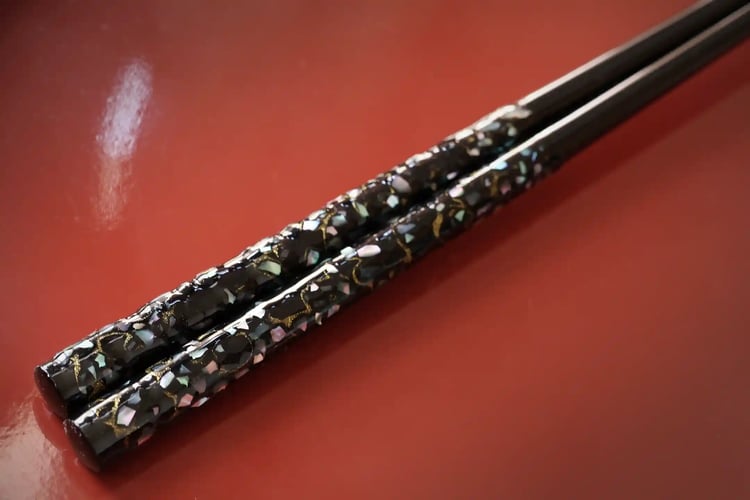
Lacquered chopsticks: Wood coated with lacquer. The surface is smooth and gentle on the lips, and heat doesn’t transfer easily from hot soups. They feel luxurious and grow more comfortable with use. Even if lacquer wears, it can be reapplied—so with care, lacquered chopsticks are a sustainable choice you can keep for years.
Bamboo: Exceptionally light with springy strength. Bamboo grows quickly and regenerates easily, making it low-impact environmentally. Slim, resilient tips make it easy to pick up small items. From affordable pairs to high-end pieces used in tea practice, quality bamboo has dense fibers that resist slipping.
Wood: Crafted from cypress, zelkova, rosewood, and more. Texture and weight vary by species, but wood generally offers warmth and a pleasing heft. Natural grain is part of the beauty. Plain wood feels light and rustic; finished wood resists staining. When sourced from responsibly managed forests, wood is sustainable. Many regional craft traditions—like Wakasa‑nuri or Tsugaru‑nuri—use local woods and techniques.
Metal: Stainless steel or titanium is extremely durable and won’t bend or break. It resists odors and is easy to keep hygienic, and it tolerates high heat. However, metal can feel heavy and the tips may be slippery, so choose carefully.
Safety and Maintenance
Prioritize safety when you buy. Look for finishes that comply with food-safety standards. Some decorative, low-cost pairs aren’t intended for eating; check packaging and maker information.
For longevity, daily care is essential. Wood and bamboo are best hand-washed with a soft sponge. Wipe dry with a cloth and air-dry in the shade. Treat lacquer gently to avoid scratching. Unless they are marked “dishwasher-safe,” avoid high heat and strong jets.
A tiny amount of edible oil on a cloth rubbed into wood now and then prevents drying and cracking. If the tips have worn down too thin or the finish has peeled to expose bare wood, it’s time to replace them. Maintain and refresh at the right moments to use them safely for years.
How to Choose Size and Length
Comfort depends on length. As a rule of thumb, measure the distance between the tips of your thumb and index finger when they open at 90 degrees; 1.5 times that distance is a good chopstick length. If that span is 14 cm, aim for around 21 cm.
Common retail sizes are ~21 cm for women and ~23 cm for men, but choose based on your hand. Thickness matters too: slender chopsticks suit narrow fingers; larger hands often prefer a slightly thicker, gently rounded body. Tip shapes vary: sharper tips grip tiny items; rounded tips shed rice grains more easily.
For specific uses, cooking chopsticks (saibashi) are usually 30 cm or longer. Children should move up sizes as they grow. Most pairs are ambidextrous, but corrective models with a right-hand groove also exist in left-handed versions. Check handedness when you buy.
Ethical Purchasing Guide (Origin, Certification, Workshops)
Choose with an eye to environment and community. Pairs made from domestic wood or FSC-certified timber help forest stewardship, and buying from local studios supports traditional industries. Carry your own reusable chopsticks when you dine out to cut down on disposables.
Chopsticks as Travel Souvenirs
Chopsticks are iconic and make welcome gifts abroad. Regional craft pairs—like Wakasa‑nuri or Tsugaru‑nuri—are light, useful, and travel-friendly.
For delicate lacquer, pack in a case or tube and place near the center of your suitcase to prevent damage. Finished wood is unlikely to be confiscated at quarantine, but always check regulations for your destination. If you’re buying multiple pairs, have each boxed for gifting, and include a short note about chopstick culture—it adds meaning and delight.
Setting a Japanese Table with Chopstick Rests, Harmonized Tableware, and Scent
A beautiful Japanese table emerges when chopsticks, vessels, and small objects harmonize. Reduce visual noise, unify textures, and be thoughtful with fragrance, and you can enjoy an elegant Japanese atmosphere at home.
Below you’ll find how to place chopstick rests correctly, combine vessels while creating ma (purposeful space), and balance aroma with food. Use these ideas to turn your dining area into a small “Japanese oasis.”
Position and Orientation of Chopstick Rests (Right-Handed/Left-Handed)
A chopstick rest may be small, but it matters. For right-handed diners, place it at the lower-right of your setting (from your perspective), with the thin tips of the chopsticks pointing to the left. This angle makes it natural to pick them up with your right hand.
When the tips point left, your right thumb meets the near side of the chopsticks and you can lift smoothly. For left-handed diners, mirror the placement—rest at the lower-left, tips pointing right. At formal meals, set one guest’s rest on the opposite side if they’re left-handed.
When you pause mid-meal, don’t lay chopsticks across bowls (watashi‑bashi). Always return them to the rest(*1). If there’s no rest, you may fold a paper sleeve into a temporary one; in restaurants, ask and they may bring a fresh rest.
Colors and Textures of Tableware, and How to Create Ma
In Japanese table styling, harmony in color and texture—and the spacing between pieces—are essential. Limit the color palette to roughly three hues at once and lean on natural materials like wood and lacquer for coherence.
Leave comfortable space between dishes; visually it’s cleaner and it gives a feeling of ease. Plate with margins at the rim to keep things elegant, and let light and shadow play in those margins—the beauty of ma stands out(*2).
.webp?width=750&height=500&name=Green%20tea%20and%20Japanese%20sweets%20(wagashi).webp)
Balancing Aroma and Food
Scent shapes atmosphere, but during a meal, let the food lead. If you use fragrance, keep it light and time it well.
Before guests arrive, you might gently diffuse Japanese aromas (cypress, yuzu) and switch it off just before seating so only a trace remains. Lighting a single piece of sandalwood or agarwood and enjoying the lingering scent is another subtle option.
During the meal, keep the air essentially unscented. Choose unscented candles so the dishes’ aromas shine. After dessert, the fragrance of tea or a faint incense can deepen relaxation. For instance, you might switch to a bright citrus note at the end—changing the scent with the scene helps everyone unwind.
Tips for Bringing This into Homes Abroad
It’s simple to evoke a Japanese mood anywhere. Lay a linen runner on a wooden table, set white Japanese plates with a wooden soup bowl, and add a chopstick rest with your chopsticks. A single seasonal flower at the center completes the feel.
Skip harsh overhead light and favor indirect lamps that create soft shadows—they suit the aesthetic beautifully. When you and your guests linger and eat slowly with chopsticks, you’ll share the spirit of wa (harmonious Japanese sensibility) wherever you are.
Deepening Your Knowledge of Chopsticks Through Experience
Beyond reading, real experiences enrich your understanding. Chopstick handling is a kind of movement art—something you learn by doing. Practice in a quiet setting where you can listen to yourself, then let what you learn settle into daily life. Here are some ways to explore.
Etiquette Lessons at Cha-kaiseki or Kappo Restaurants
Workshops at historic restaurants or tea rooms let you learn from professionals, practicing chopstick use and vessel handling as you enjoy a kaiseki course. Feedback helps you catch your habits and refine your skills.
Retreats for Zazen and Shojin Cuisine
At Zen temples, retreats may begin with morning meditation and include silent meals of shojin cuisine in the monks’ hall. Carrying your chopsticks in quiet and finishing every drop engraves gratitude—and good handling—deeply.
.webp?width=750&height=500&name=Nanakusa%20Gayu%20(Seven-Herb%20Rice%20Porridge).webp)
Chopstick-Making Workshops (Bamboo and Thinnings)
In craft villages, you can carve your own pair from bamboo or thinned timber. Working with the material deepens attachment to your tools and nurtures care for what you use.
A Three-Minute Everyday Routine
You can polish your skills through daily habits. Try these three simple practices:
A deep breath before eating – Before taking your chopsticks, sit down and breathe once, gently, to steady yourself.
Posture check – Sit tall, relax your elbows, and face the table correctly.
A quiet first bite – After the very first bite, set your chopsticks down and wait until you swallow before reaching for the next.
With these three in mind at each meal, your handling naturally grows more refined, and you may find it easier to stop at about 80% full. Small attentions add up; your gestures become beautiful, and your everyday wellness benefits.