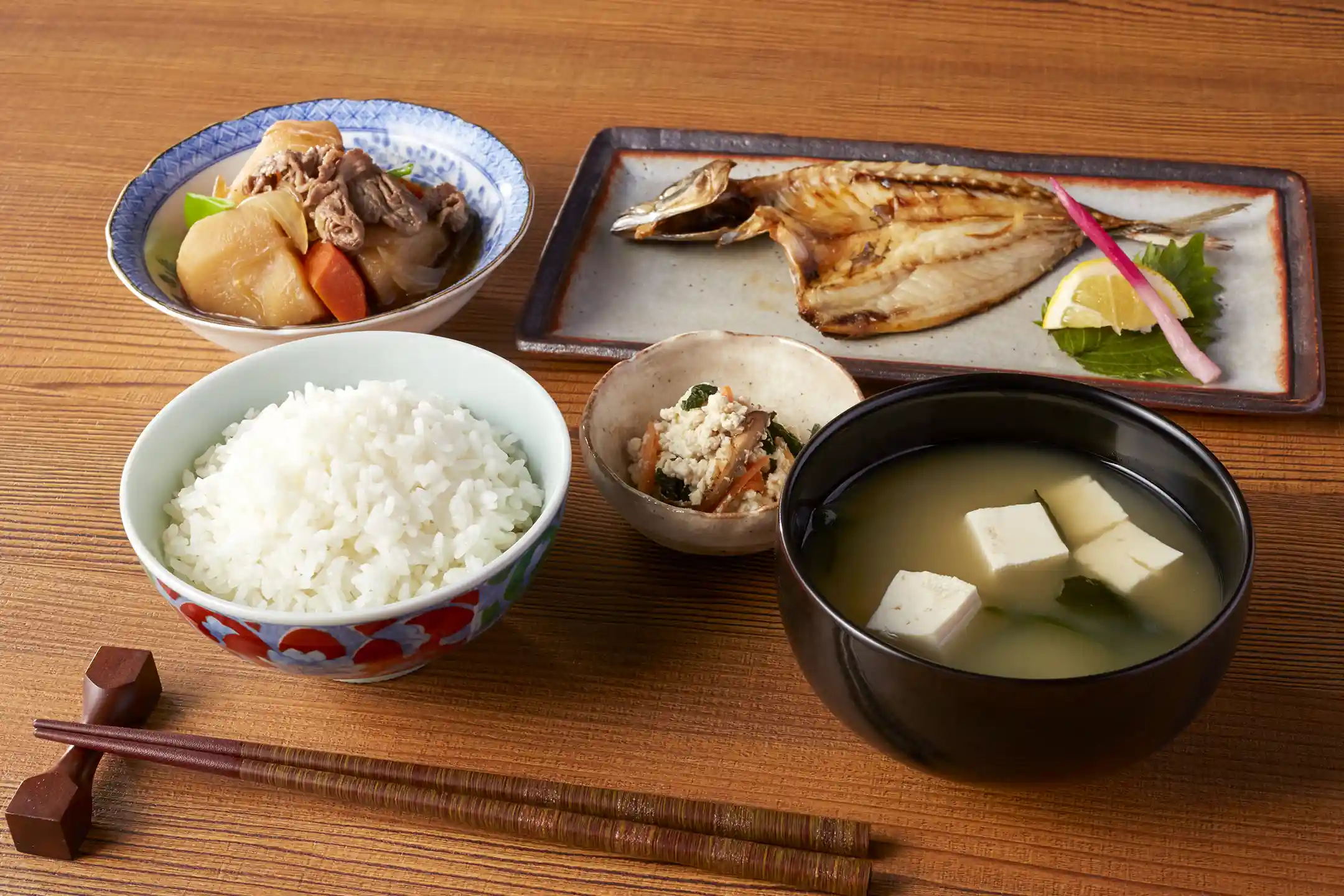
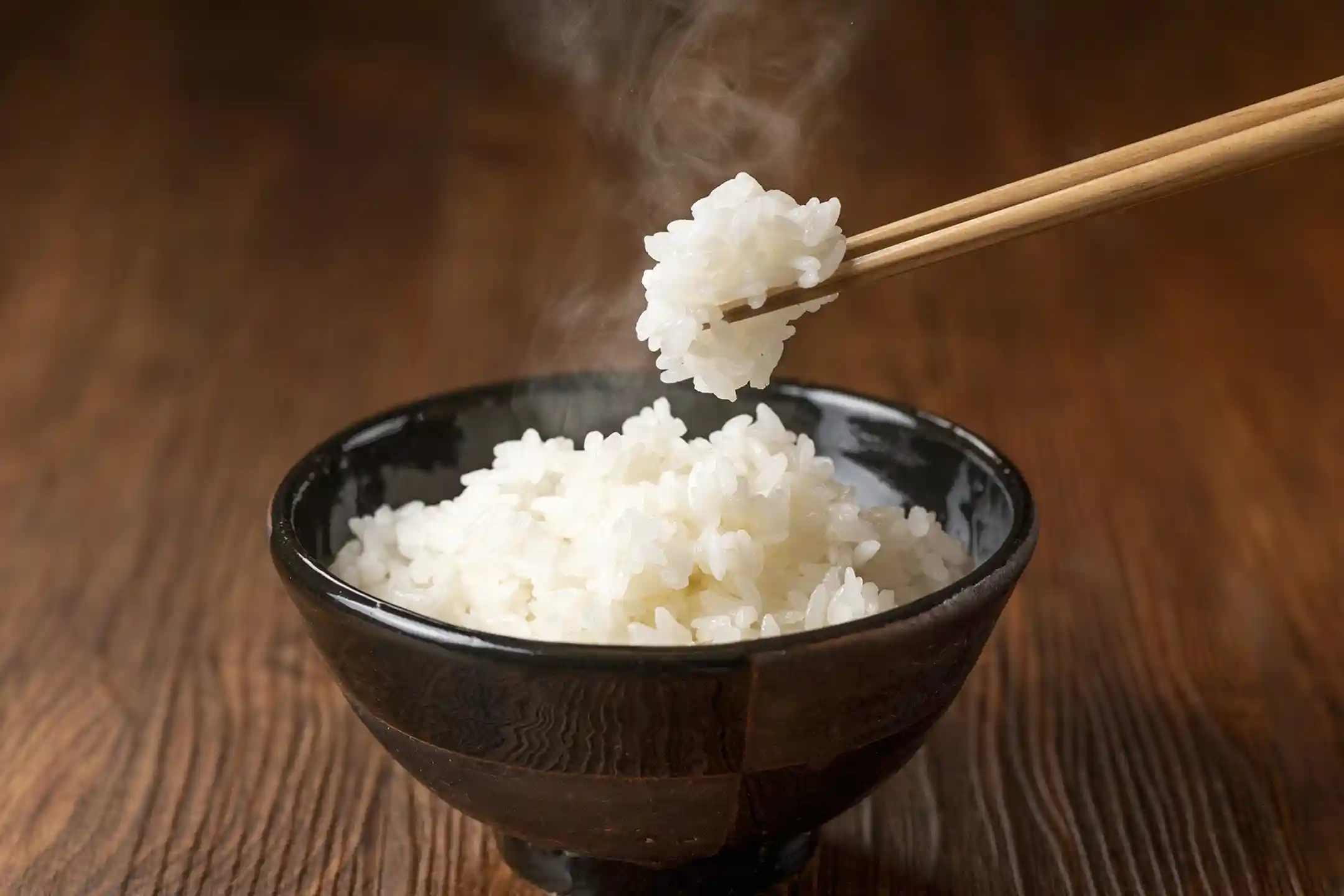
Handling chopsticks gracefully at a Japanese table not only refines your poise but also creates a calm, welcoming atmosphere for everyone dining with you(*1). In this guide, you’ll start with the correct way to hold chopsticks, then move through traditional etiquette and dish‑specific techniques, and even touch on wellness and sustainability. By the end, you’ll feel confident using chopsticks in high‑end Japanese restaurants and on your travels to traditional ryotei (fine‑dining establishments). As your movements grow more thoughtful, everyday meals turn into richer moments rooted in Japanese culture.
First Chopstick Skills to Learn: Master the Correct Grip in Four Steps
Begin with the foundation: a stable, relaxed grip. The four steps below build a graceful form. The key is to avoid clenching your dominant hand—let your fingertips do the fine work. Your non‑dominant hand (often the left) supports bowls or plates to steady your posture. Let’s start from the basics.
The Basics of the Correct Grip
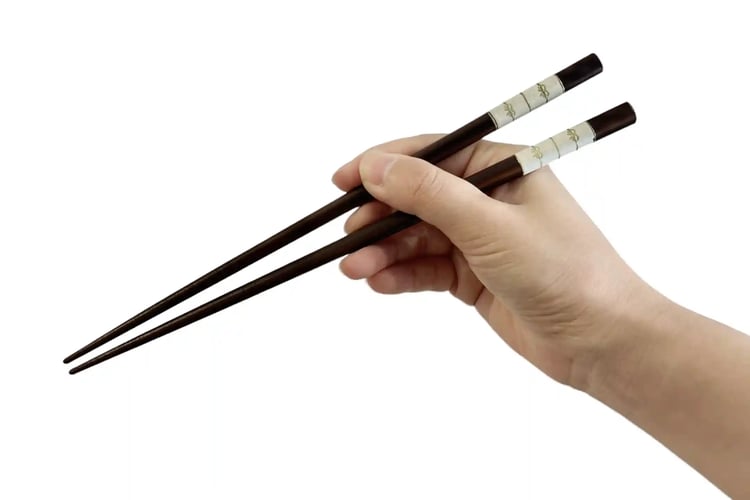
Hold the first chopstick (the upper one) like a pencil, lightly between your thumb, index, and middle fingers. Position your fingers about one‑third of the way down from the top so the tips extend forward; this makes the hold more stable.
Next, take the other chopstick (the lower one) in your right hand and slide it between the base of your thumb and ring finger. Fix the lower chopstick firmly against the side of your ring finger and the base of your thumb so both tips line up neatly. Keep the lower chopstick still; move only the upper one up and down with your index and middle fingers.
Open and close the tips; you’ll feel how you can pick up anything from a single grain of rice to a larger piece with control(*1). It may feel awkward at first, but once familiar you’ll be surprised by the precision.
If the gap between chopsticks is too narrow, the tips may cross and limit movement. Leave enough space to move the upper chopstick with three fingers, and hold the sticks slightly farther back to give your hand room to work comfortably.
Common Habits and How to Fix Them
A classic mistake is nigiri‑bashi—gripping chopsticks in a fist. You sometimes see this in small children, but as an adult it’s best avoided. Historically, clutching chopsticks during a meal could read as aggressive; over‑gripping looks tense, not elegant(*2).
Another frequent habit is cross‑bashi, where the upper and lower sticks cross so the tips don’t meet accurately. It can look like you’re “using” chopsticks, but the power doesn’t reach the tips, making small items especially hard to pick up.
One cause is holding the chopsticks too short, which shrinks your finger range. To fix crossing, slide your hold up to around the top third, and keep an eye on the pivot points so the sticks don’t intersect. In particular, make sure your middle finger supports the upper chopstick correctly; if it slips under the lower chopstick, smooth opening and closing becomes difficult.
Even if nigiri‑bashi or crossing has become your default, you can retrain your hands by consciously returning to the correct form. Once you get it, you’ll enjoy the satisfying feeling of full tip control.
Practice Methods and a One‑Minute Drill
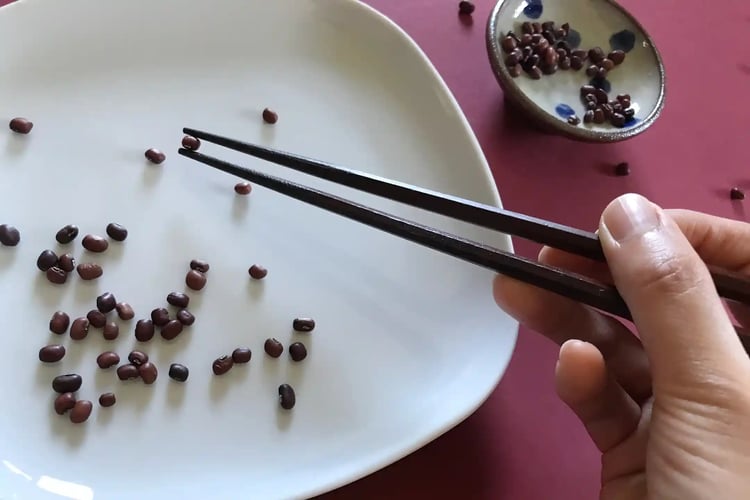
After you’ve learned the grip, build fingertip dexterity. A great starter is the bean‑picking drill.
Begin with larger, easier items—soybeans or peanuts—moving them from a plate to another container. Then progress to smaller beans like black soybeans or adzuki, thin and light items such as paper scraps or beads, and soft items like jelly or tofu. Gradually vary size, firmness, and slipperiness.
For the final challenge, practice lifting a few cooked spaghetti strands or sōmen noodles at a time. Noodles have length and weight, so you’ll need steady pressure and sustained control—perfect advanced training.
Make it fun by turning practice into a short time trial: how many beans can you transfer in one minute, how many noodles can you lift? Even brief daily sessions strengthen the tiny muscles in your fingers and make your chopsticks work feel far smoother.
Posture matters, too. Sit at a height appropriate for the table, relax your elbows (don’t flare them), and keep your shoulders soft. With correct form and repetition, you can feel confident within just a few weeks.
How to Eat with Chopsticks: Core Movements for Rice, Soups, and Small Dishes
In Japanese dining, how you handle bowls matters as much as how you use chopsticks. By holding rice and soup bowls properly and guiding food with tidy tips, your whole mealtime presence becomes more polished.
Below are the essentials for rice, soup, and small side dishes. Learn how to judge a comfortable bite size and how to share thoughtfully, so you can enjoy washoku—at a Michelin‑starred counter or at home—with confidence.
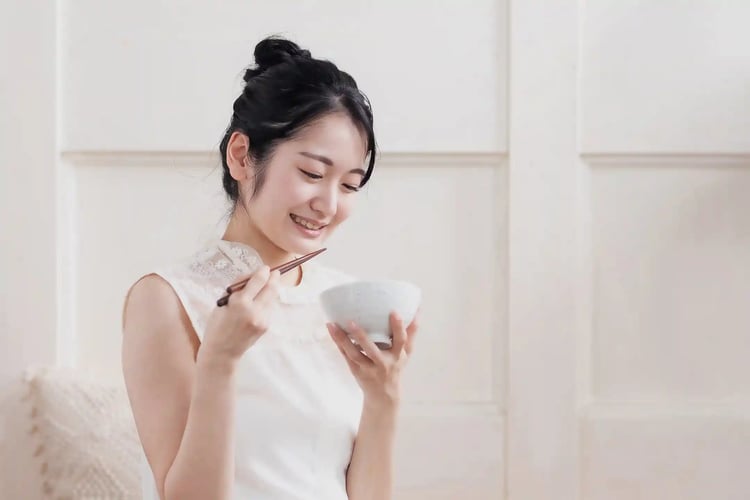
How to Serve and Eat Rice
First, check your bowl hold. Lift the rice bowl with your right hand, then support it from below with the four fingers of your left hand (index to little finger) gathered against the foot ring (kōdai). Let your left thumb rest lightly on the rim(*1).
Avoid hooking your fingers deep over the rim—the so‑called “cat grip.” Think of supporting with fingertips. Hold the bowl around chest height so it’s easy to bring toward your mouth. Scoop modest mouthfuls with your tips and guide them in without spilling.
Overfilling your mouth looks inelegant; aim for small bites(*2). If rice sticks to the rim or table, quietly pick up the grains with your tips. Finishing every grain shows appreciation to the people who grew and cooked your rice. At the end, sweep any clinging grains from the inside of the bowl with your tips.
Also avoid te‑zara—raising your free hand under your mouth like a “hand plate”—as this is considered poor manners in washoku(*3). If you need to catch drips or small bits, use a small plate or a paper kaishi instead.
Soups and Handling Ingredients
For miso soup or clear broth, handle the lidded bowl properly. Lightly hold the lid with your right hand, steady it with your left, remove it quietly, and place it on the table without turning it upside down. Support the bowl’s foot ring with your left hand, lift it, and sip the broth directly while holding chopsticks in your right.
If the soup has ingredients, you can either carry them to your mouth with chopsticks or sip broth and solids together. For larger items like tofu or potatoes, lift them gently with the tips and then sip the broth afterward. When sipping, use your tips to lightly hold ingredients back so nothing rushes in or splashes(*4).
If you want only broth, set your chopsticks on the rest, lift the bowl with both hands, and drink quietly. Avoid loud slurping; take your time. Don’t tilt the bowl while pointing your chopstick tips toward someone, as that’s unsafe.
When drinking, don’t leave your chopsticks stuck inside the bowl; either keep them in your hand or rest them on the chopstick rest. When finished, replace the lid—right side up—gently.
Small Bowls and Sharing Plates
When small dishes like simmered vegetables or dressed salads are served individually, lightly lift the small bowl with your left hand and carry modest amounts to your mouth with your chopsticks. As with rice bowls, if a vessel can be held, do hold it—this is a basic point of washoku manners.
When sharing from a large platter, avoid direct chopsticks (jika‑bashi) as much as possible. In formal settings there will be shared tongs or serving chopsticks; use them to portion food onto your plate. If none are provided, ask the staff—they’ll bring them.
At home, some people use the opposite ends of their chopsticks (the handle side) to serve, but be mindful—some diners prefer stricter hygiene. Either way, the rule is simple: make sure your personal tips don’t touch communal food.
When offering something to another person, don’t do chopstick‑to‑chopstick passing (hashi‑watashi). It evokes bone‑passing at funerals and is strictly avoided. If you must offer food, place it on the rim of the other person’s small plate and say, “Please enjoy this,” so they can take it themselves(*5). That small courtesy makes the exchange smooth for everyone.
Whole Fish with Bones and Dealing with Small Bones
Eating grilled or simmered fish with bones takes a little practice. Start on the upper side: flake off bite‑sized pieces with your tips and eat carefully. Even after finishing the top, do not flip the entire fish over. Turning it is associated with a boat capsizing, so you avoid it in formal settings.
Once the top side is gone, lift the central spine gently with your chopsticks and set it to the side of the plate. The lower flesh will now be easy to eat(*6). If a small bone touches your mouth, don’t make a fuss—cover your mouth with your free hand and discreetly remove it. Place bones neatly at the plate’s edge so they don’t look messy.
A clean, aligned skeleton at the end is considerate to the person clearing the plates. If you worry about drips while eating fish, don’t use te‑zara; use a small plate or kaishi to catch them. Fish on the bone is a great stage for your chopsticks skill—stay calm and you’ll be fine.
Using Chopsticks by Dish: Sushi, Sashimi, Tempura, Noodles, and Hotpot
Different dishes call for small shifts in technique. For sushi, sashimi, tempura, noodles, and hotpot, keep the following tips in mind. In every case, be gentle so you preserve the ingredient’s aroma and texture—that’s the heart of eating beautifully and deliciously.
Sushi (Nigiri and Rolls)
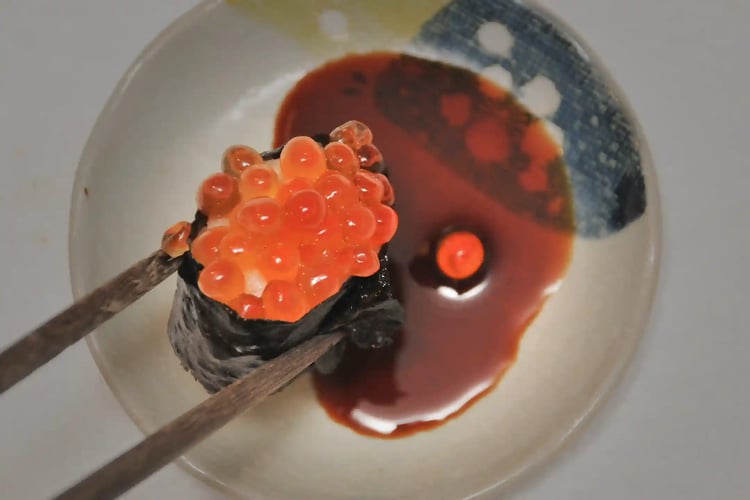
You can eat sushi with chopsticks or with your hands. If using chopsticks, keep the neta (fish or topping) and shari (vinegared rice) from falling apart. For nigiri, turn the piece gently onto its side on the plate, then hold it between the upper and lower chopsticks before lifting—this stabilizes it(*1).
Dip only the topping side lightly in soy sauce (if the rice absorbs soy sauce, it crumbles). Ideally, eat each piece in one bite. If that’s hard, avoid returning a half‑eaten piece to the plate; finish it neatly instead.
For rolls, they’re already bite‑sized, so pick them up as they are. If the nori is hard to bite through, hold the roll steady with your chopsticks and finish it in one go.
Sashimi
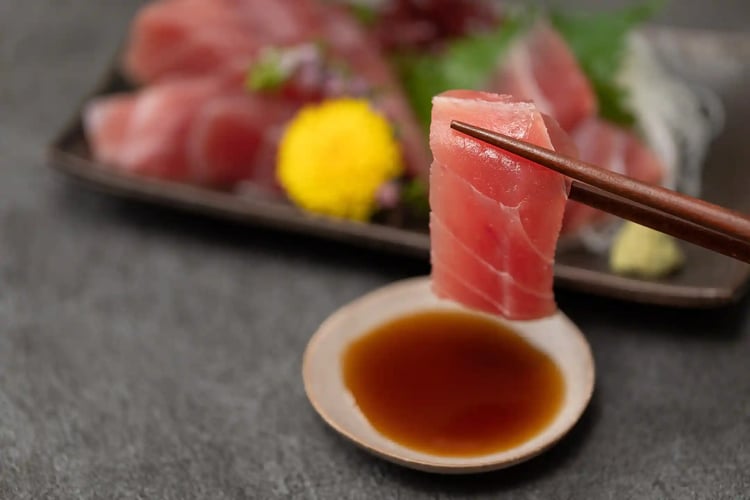
Treat sashimi with a light touch so its delicate flavor shines. Rather than dissolving wasabi into soy sauce, place a small dot on top of the sashimi. Then dip just one edge lightly into soy sauce and eat(*2). Soy is only there to add a hint of aroma—less is more. This also keeps the presentation clean and prevents drips, while letting the fish speak for itself.
In principle, one slice equals one bite. If a slice is large, fold it gently with your chopsticks before bringing it to your mouth. Garnishes like shredded daikon (tsuma) or shiso can be eaten as palate cleansers as you like, but you aren’t obliged to finish every leaf.
Tempura
Handle tempura softly so you don’t crush the batter. When moving pieces from the shared platter to your plate, lift them lightly with your tips—avoid squeezing.
If you use tentsuyu (dipping broth), dip only the edge briefly so the batter doesn’t soak(*3). To keep that crisp snap, don’t leave tempura in the broth. If seasoning with salt, use just a pinch to draw out the ingredient’s sweetness. If it’s very hot, you can pause for a moment—but enjoy it promptly so you taste it at its best.
Noodles (Soba and Udon)
For noodles, balance courtesy with taste. For soba, don’t dunk the whole bundle; dip the leading half lightly into the sauce and then slurp in smoothly(*4).
For udon and other soup noodles, aim to avoid splashes as you eat. Ideally, finish each bite cleanly rather than biting noodles off mid‑air. If they’re too long, it’s fine to bite—just cover your mouth subtly and manage the dangling ends quickly and neatly.
As for slurping sounds, a modest sound is acceptable in many casual settings, but avoid loud slurping that could bother others. In formal situations or when dining with international guests, try to keep it quiet.
Hotpot (Nabe)
In hotpot, use the provided serving chopsticks or ladle—never put your personal tips directly into the pot. Wait until ingredients are properly cooked, then portion them into your own bowl. Because hotpot is shared, good manners and cleanliness keep the table harmonious for everyone.
Chopstick Etiquette Basics: 7 NG Practices to Avoid
Knowing what not to do is part of moving beautifully. Traditional etiquette includes many taboos collectively called kirai‑bashi (“disliked chopstick uses”)(*1). Here are seven especially common “NG” examples.
Each one is easy to do without thinking, but the reasons behind them make sense once you know the background. To avoid creating discomfort for others, keep these out of your routine.
Representative NG
Sashi‑bashi (stabbing): Stabbing food with your chopsticks. It’s rough and can send food flying.
Tate‑bashi (standing upright): Sticking chopsticks upright in a bowl of rice. Because this mirrors a Buddhist funeral offering, it’s strictly taboo.
Watashi‑bashi (resting across a vessel): Placing your chopsticks across the top of a bowl or plate mid‑meal. This reads as “I’m done.” For pauses, use a chopstick rest instead(*2).
Utsushi‑bashi / Hashi‑watashi (passing chopstick‑to‑chopstick): Passing food from one set of chopsticks to another. This evokes the passing of bones after cremation and is strongly avoided(*3). If you must transfer something, place it on a plate—don’t pass directly.
Neburi‑bashi (licking): Licking sauce or food off your chopsticks. It looks sloppy and unsanitary. If the tips get messy, wipe them with fresh paper—don’t put them in your mouth.
Yose‑bashi (pulling with chopsticks): Dragging a dish toward you with your chopsticks. It looks lazy and can damage the vessel. Use your hands to move dishes.
Mayoi‑bashi (hovering): Wandering your chopsticks indecisively over the dishes. It reads as restless and undermines poise. When deciding, pause inwardly, choose, and then pick up your food.
(*1 Reference:Hyozaemon「Chopstick Manners and Taboos (List of Kirai‑bashi)」https://www.hyozaemon.co.jp/culture/manners/)
(*2 Reference:MATCHA「Chopstick Manners (Watashi‑bashi)」https://matcha-jp.com/jp/876)
(*3 Reference:nippon.com「Surprisingly Little‑Known Chopstick Manners (Hashi‑watashi)」https://www.nippon.com/ja/japan-data/h01362/)
Choosing and Setting Fine Chopsticks: Material, Length, Feel, and Storage
Because you use them every day, choose chopsticks that fit your hand and treat them well. Here’s how to pick the right size, material, and finish—and how to care for them so they last.
Size and Balance
Match length to hand size. A traditional guideline is “one‑span‑and‑a‑half” (hito‑ata‑han): measure the span when your thumb and index finger are open at a right angle (one ata), and multiply by 1.5 for your ideal length(*1).
For example, if one ata is 14 cm, then chopsticks around 21 cm will feel natural. Too long, and control suffers; too short, and your fingers may touch the bowl—unsanitary.
Balance matters, too. A pair with a center of gravity that lets the tips dip slightly when held often feels more stable. Test by opening and closing the tips—choose the pair that feels effortless.
Choosing by Material
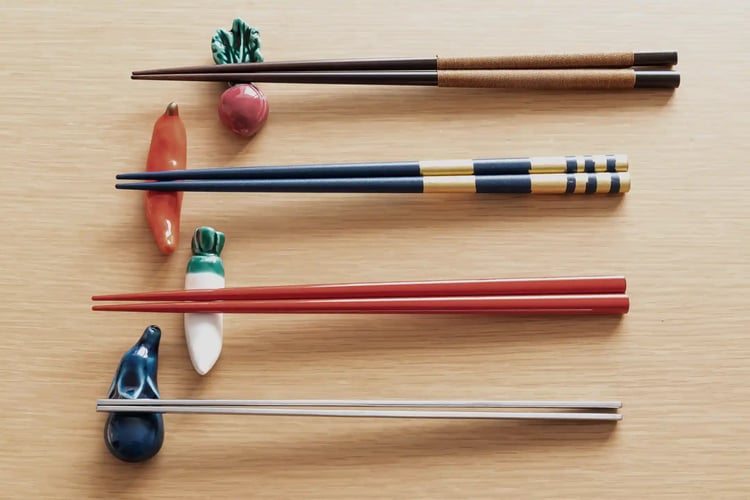
Common materials include wood, bamboo, resin, and metal. Each has strengths, so rotate by purpose and setting.
For daily use, many people prefer natural wood or bamboo: they’re light, pleasant in the hand, and absorb just enough moisture to reduce slipping. Bare wood or oil‑finished pairs feel gentle at the lips and add warmth to everyday meals.
For outdoors or on the go, resin and metal are convenient—durable and travel‑friendly. Since metal can be slippery, look for textured tips. Let the setting guide your choice and expand your chopsticks repertoire.
Care and Storage
Good care dramatically extends lifespan. Wash soon after use—letting residue sit makes it harder to remove and, for wooden pairs, can cause stains or odors.
Use mild dish soap and a soft sponge. Avoid steel wool and abrasive cleansers, which damage lacquer and painted finishes. Use the sponge’s corner to clean the fine tip area. After washing, towel‑dry and let them air‑dry in a breezy spot. Don’t leave them wet; moisture invites mold or splitting.
Once dry, store away from direct sun and high heat or humidity. Avoid home dishwashers. Natural wood and lacquer don’t love high temperatures; finishes can deteriorate, leading to warping or discoloration.
If the finish wears after years of use, many specialists can re‑lacquer(*2). In fact, makers of Wakasa‑nuri chopsticks in Obama, Fukui offer refinishing services so you can keep using your favorite pair for years to come.
Eating Through a Wellness Lens: Mindful Eating
Once you’re comfortable with technique, try mindful eating—focusing on the meal, your senses, and your inner cues. By noticing your breath and chewing, and listening for hunger and fullness, you enrich your experience and support healthy digestion. Let this be the shift from mere refueling to a moment that balances body and mind.
Breath × Bite Size: How to Pace Yourself
Before you begin, take a few deep breaths. Slow inhalations and exhalations activate your parasympathetic nervous system and help you relax—an easy way to prevent rushing. Before each bite, pause for a second, take in the aroma, breathe in, and then bring the food to your mouth.
Chew well and savor texture and flavor. Aim for about 30 chews per bite to naturally slow your pace(*1). It’s said your brain takes roughly 20 minutes from the start of eating to register fullness(*1). Eating slowly helps you avoid overshooting that signal. Keep bites modest; set your chopsticks down occasionally, breathe, enjoy conversation, and give your meal at least 20–30 minutes.
You’ll become attuned to your body’s “I’m satisfied” signal and find you need less to feel content. Being mindful of hunger and fullness is a practical first step toward wellness‑oriented eating.
Posture and Steady Hands
Mindful eating also cares about posture. Sit toward the front of your chair with your spine tall and your pelvis neutral. Don’t collapse into the backrest; when you’re upright, your organs aren’t compressed and breathing is easy. Plant both feet firmly on the floor for stability. In this position, your chopsticks movements naturally become more careful.
Keep your elbows lightly at your sides and relax your shoulders. Don’t flare your elbows or lean on the table—both reduce control. Support vessels with your left hand and let your right hand with the chopsticks move in harmony.
For example, when holding a soup bowl, support the foot ring steadily with your left hand, and carry ingredients gently with your right—smooth, unhurried motions. If you set your chopsticks down between bites to reset posture and breathe, you’ll curb the tendency to rush. When breath, posture, and movement align, the meal itself becomes meditative—a quiet time to meet your food and yourself.
Words and Pause Before and After a Meal
Rituals matter. In Japan, we say “itadakimasu” before eating and “gochisōsama” after—simple phrases of gratitude. Try saying them with intention.
At your seat, bring your hands together and say “itadakimasu,” feeling thanks for the ingredients and the people who prepared them. That brief pause becomes a switch from busyness to the meal.
Enjoy conversation, but don’t fear silence. Sharing a quiet moment to focus on the food can be lovely. When a bite is especially good, a simple smile can communicate it better than words. When someone else is speaking, set your chopsticks down to listen attentively (light nods while chewing are fine; for serious topics, stop your hands).
When you’re finished, bring your hands together again and say “gochisōsama” with a calm heart. Notice not just your satisfied stomach but also the sense of ease in your mind.
Enjoying Chopstick Culture Sustainably: Personal Chopsticks, Craft, and Repair
There’s also a sustainable way to enjoy chopsticks culture. Rather than relying on disposables, keep a favorite pair for years, explore regional craft traditions, and support both the environment and cultural heritage.
Bringing Your Own Chopsticks and Hygiene
More people now carry personal chopsticks for dining out. In Japan, it’s said around 20 billion pairs of disposable chopsticks are still used every year(*1). Using your own reduces waste. Carry them in a protective case and keep them clean. After use, wash and dry them promptly so they’re hygienic for next time.
Some restaurants, however, may decline personal chopsticks for hygiene policy reasons. High‑end venues may prefer you to use their provided pair, while casual places may welcome yours. Check in advance and adapt to the setting.
Craft Traditions and Local Experiences
Across Japan, you’ll find proud chopsticks‑making regions, each with its own character—Wakasa‑nuri from Obama in Fukui, or Yoshino cedar chopsticks from Nara, to name a couple. Visiting workshops or trying a hands‑on experience deepens your connection.
Under a craftsperson’s guidance, you might carve your own chopsticks or try applying lacquer. You’ll smell the wood, feel its texture, and touch a living tradition. The finished pair becomes a durable travel memory—and personalized chopsticks make wonderful gifts.
Many makers use local wood and bamboo, including thinnings from forest care, putting resources to good use(*2). Some Wakasa‑nuri makers specifically source thinned wood and bamboo to support forest cycles(*2). Using chopsticks from a place you love can bring that landscape back to your table.
Repair and Refinish
A cherished pair may develop worn tips or scuffed finishes over time—but that doesn’t mean goodbye. Quality chopsticks can often be repaired or refinished. Lacquered pairs, for example, can be re‑lacquered by specialists(*3).
In Obama, Fukui, long‑standing shops offer recoating services so you can keep using a favorite pair for years(*3). If a tip chips or a stick breaks, a craftsperson may be able to re‑shape and match the length. Consulting experts keeps memories alive and reduces waste.