Search for kabuki dance and the first results define it: a classical Japanese theatre that mixes drama with dance. That is correct, and it does not help anyone deciding what to watch in Tokyo. What helps is the order of events. Kabuki began as a dance, performed by a woman and then by groups of women imitating her. Two bans, one on women and one on young men, removed the dancers from the stage in turn. Kabuki also borrowed from Noh. Three plays the Japan Arts Council lists among kabuki's leading works come from that source: Kanjinchō and Musume Dōjōji from Noh plays, and Shunkyō Kagamijishi from a group of lion dances based on one.
This guide follows that history only as far as it changes what you notice. It asks why every performer on a kabuki stage is a man, how a painted pine behind the actors points to a Noh or kyōgen ancestor, and how the music offers a first guess at whether a dance is about a feeling or a story. The evidence is mostly public: the Japan Arts Council's English guide to kabuki, a Japan Foundation interview with a kabuki choreographer, nippon.com, Japan's dance associations and a Government of Japan feature, together with three of our own interviews, with a Noh performer, a kyōgen performer and a nihon buyo dancer.
Kabuki Dance Began as a Dance: Okuni, Two Bans and the Men Who Stayed
Kabuki dance is the dance that kabuki grew out of, and that still sits inside it. The Japan Arts Council hedges the origin story in its introduction to kabuki: "It is said that Kabuki began as a form of dance called kabuki-odori". Kanjuro Fujima VIII, a kabuki choreographer, says it without the hedge in a Japan Foundation interview: "But originally, in Okuni's era, Kabuki was dance." Today that dance is catalogued as shosagoto, the third of the three kinds of play the council lists. It is easy to picture the relationship the other way round, with kabuki as a play that happens to include dances. The history runs the other way: a dance that took on plots.
Kabuki-odori: A Dance Before It Was a Play
The council's account of the beginning of kabuki places it at the start of the seventeenth century, in Kyoto. The dancer was Okuni, "a woman who referred to herself as a shrine maiden from Izumo Taisha shrine in Shimane." The wording is careful: it reports what she called herself.
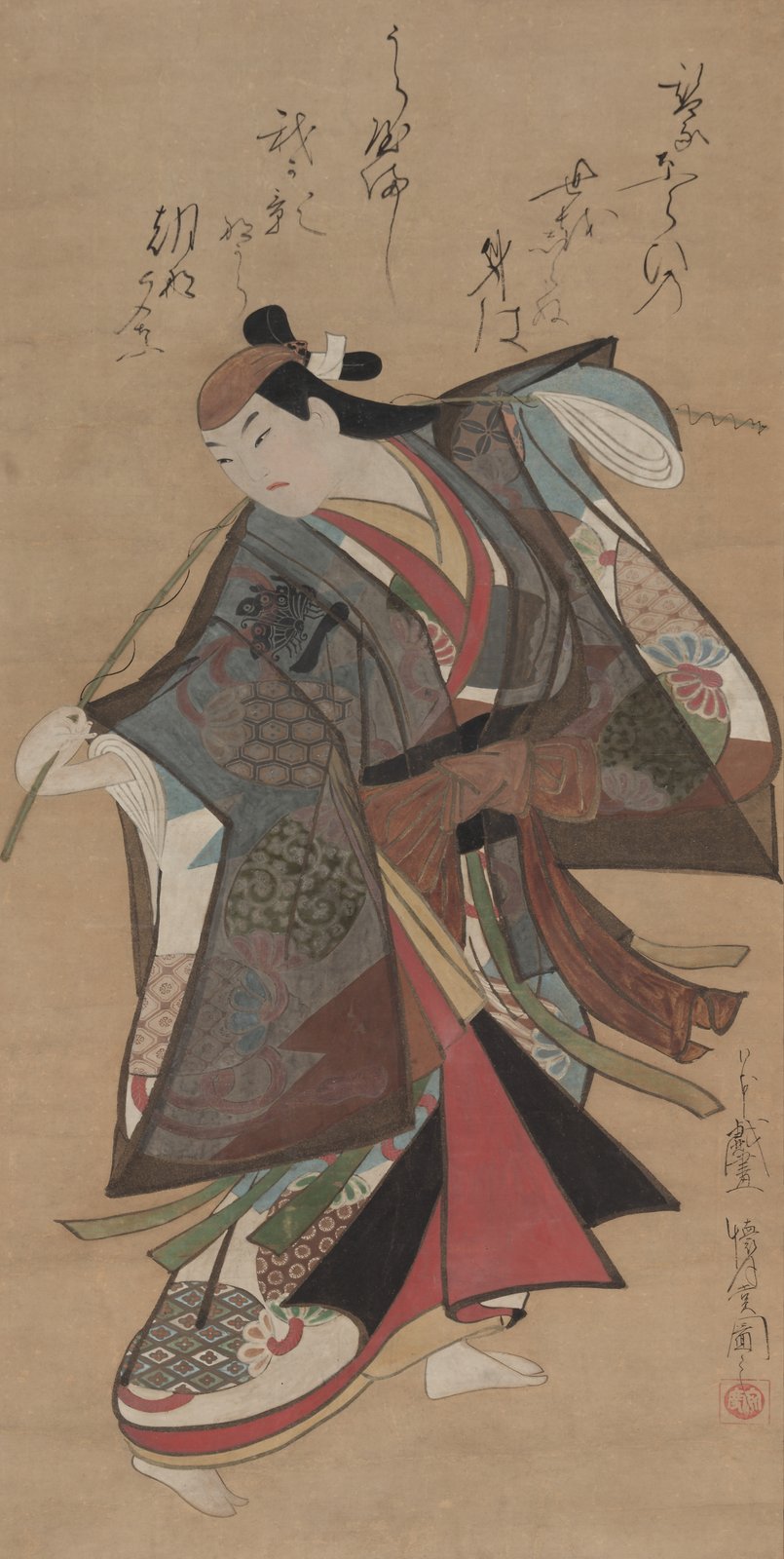
What she danced was built from figures on the street. According to the council, "Kabuki-odori was a dance that came into style at the time, incorporating the costumes and movements of the kabukimono who dressed in strange-looking costumes and moved in an odd way." It used song and dance "to play out scenes where female actors dressed as men visited teahouses and frolicked with the women there." Nippon.com's history of kabuki's origins calls the result "an exaggerated caricature of these kabukimono men." The first kabuki dancers were women dressed as men, lampooning men. Four centuries later the stage runs the other way, with men dressed as women, and that inversion is the shortest route to what the bans did.
The Nihon Buyo Foundation, in its overview of nihon buyo, uses another name, nenbutsu odori, for what she performed in Kyoto, and glosses it as "a primitive kind of dance in which dancers jumped about to the rhythm of the accompanying bell." The council and nippon.com call her dance kabuki-odori.
Yukari Onoe, a nihon buyo dancer of the Onoe school, tells the story in similar terms. In our interview she said that Kabuki itself began "when a woman named Izumo no Okuni danced in the flamboyant dress of a kabukimono," and that "It began as popular entertainment, beloved by ordinary people." She dates the independent dancers and the schools later: "By the Taishō era, dancers independent of Kabuki appeared, and various schools formed — that is Nihon Buyō."
Onna-kabuki and Wakashu-kabuki: The Bans That Took the Dancers Off the Stage
Once kabuki-odori was popular, "groups of female performers mimicking this original dance style began to appear one after the other." The council notes that these troupes "also used a new instrument known as the shamisen." Music comes up again in the second half of this guide.
Success brought regulation. "Onna-kabuki became so popular that oftentimes fights would break out between people in the audience," the council says, and the authorities tightened control until they banned it "for the reason of it corrupting public morals." The council's text gives no year for either ban. The first date comes from outside it: nippon.com writes that "In 1629, under the third shōgun Iemitsu, a complete ban was imposed on women appearing on the public stage," and Kokugakuin University's Murasaki Fujisawa, in a short answer for foreign students, also gives 1629 and ends: "Ever since then, all-male casts have become the norm for kabuki."
The council says wakashu-kabuki "was also being performed at the time" and gained popularity afterwards. It was "distinctive for its acrobatic-style movements and clown-like roles," yet "basically the performances still promoted the alluring looks of the young male performers." So the officials "cracked down on wakashu-kabuki, and finally banned it."
Two decisions about public order took the dancers off the licensed stage: first the women who made the form, then the young men of wakashu-kabuki. Nippon.com adds a limit to the first ban. It applied to the large theatres the shogunate licensed, and "female performers continued to appear in smaller, temporary theaters, in traveling troupes, and in performances given in private residences." The women kept dancing. The licensed stage lost them.
Yarō-kabuki: What Happens to a Dance When It Has to Carry a Plot
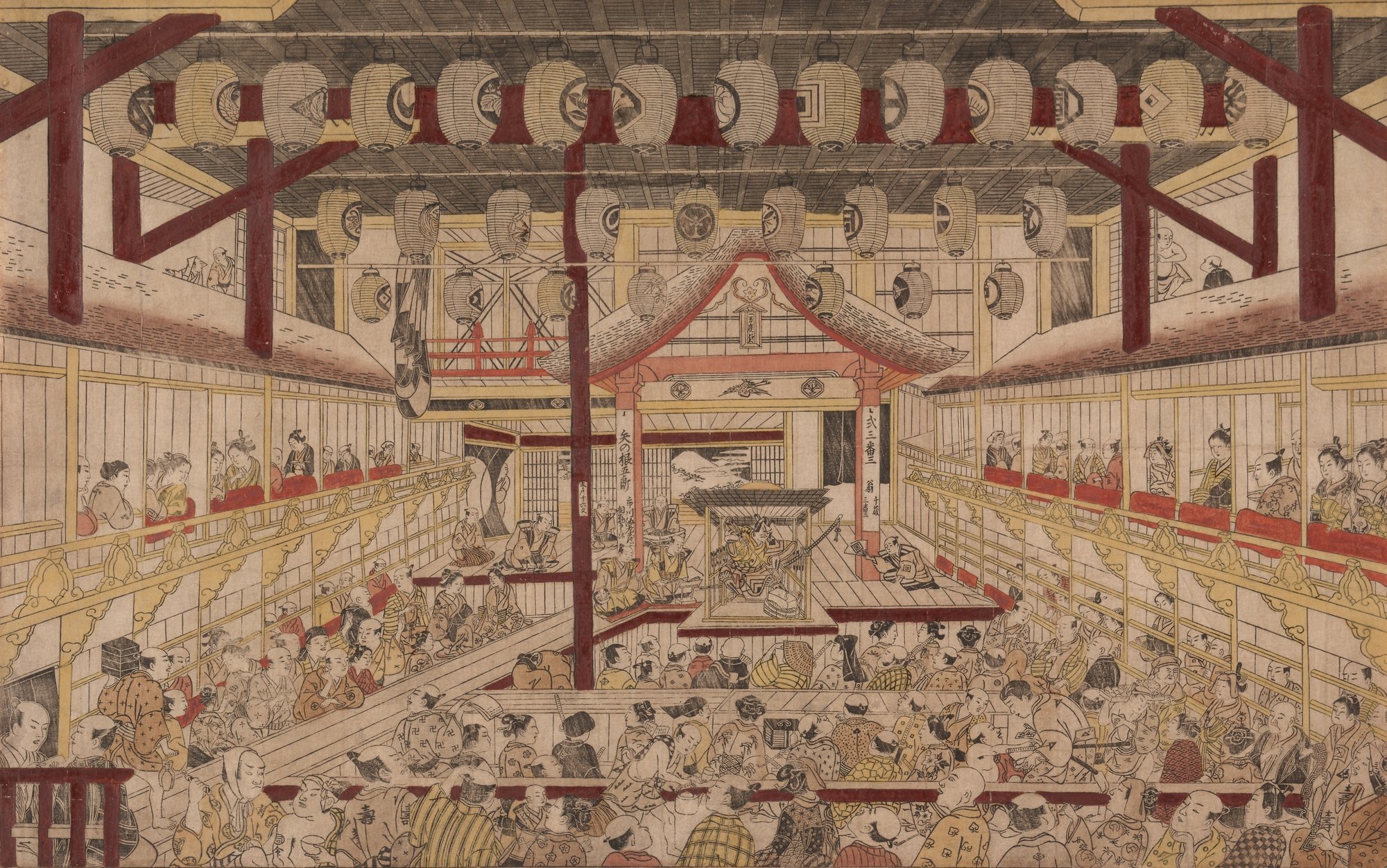
After the second ban, "Kabuki actors started searching for a new performance style using adult men," the council says. The result, yarō-kabuki, was "performed by men with a hairstyle of shaved forelocks to indicate their coming of age." What was shown changed with the performers: the performances "evolved from being singing and dancing reviews to multi-layered dramatic stories, which required even more skilled performers than previously." Nippon.com draws the irony: "the strict censorship imposed by the shogunate ultimately gave kabuki a greater artistic sophistication and depth."
The dance did not vanish into the plots. In the council's history of the development period, "Kabuki was also evolving as a dancing style that it originated from," and the nagauta dance dramas "were first formed as a performance art for the onnagata role."
The sequence has three links: a ban on boys, troupes of adult men, and, in the council's account, nagauta dance dramas first formed for the onnagata role.
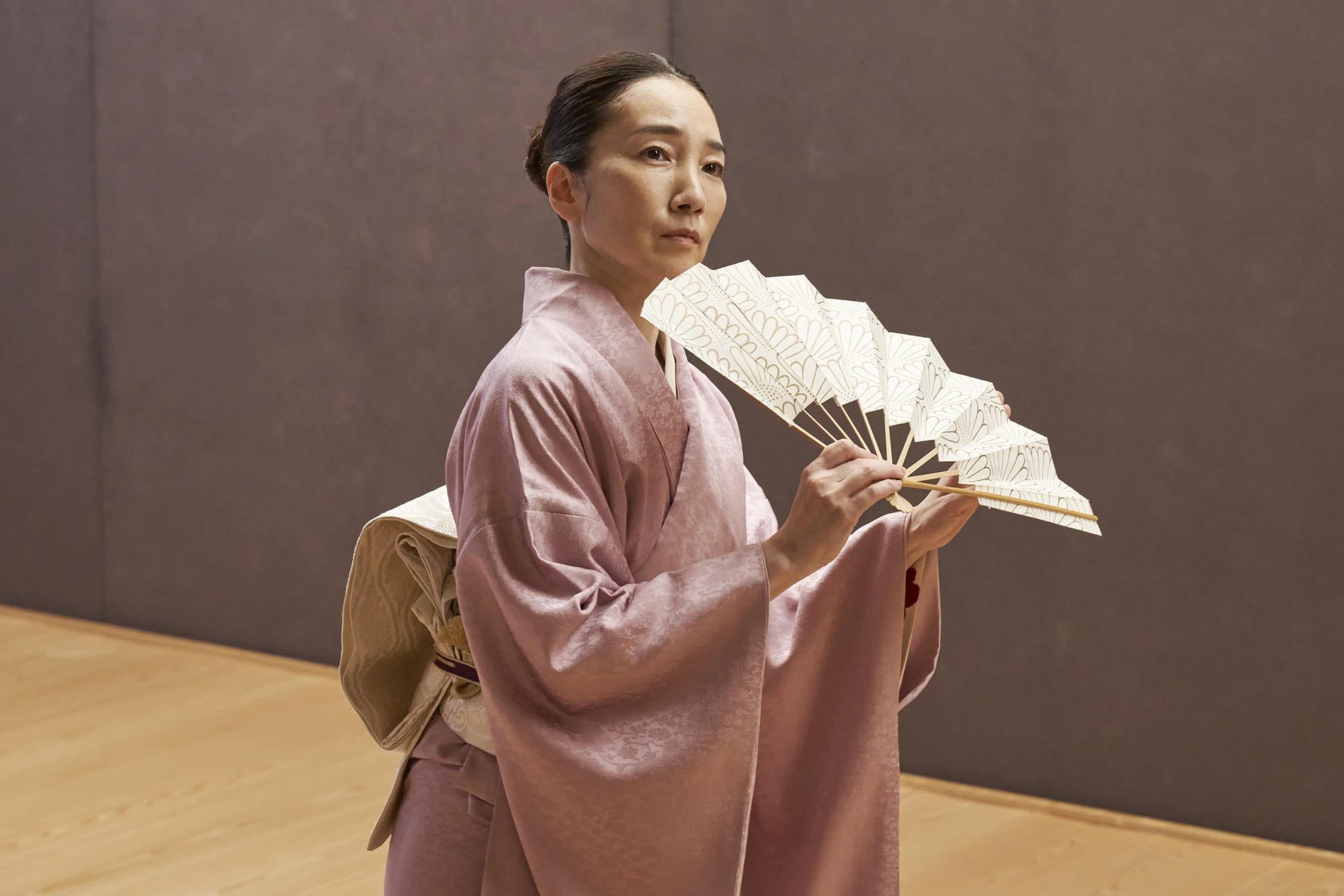
Yukari Onoe makes a related point from the dancer's side. "Kabuki is built from drama, dance, and music together," she told us. In her account the onnagata came first: "The onnagata's dance took shape first, and from it shamisen music developed, and dance-dramas emerged." She also names one difference between the two arts: "In Kabuki, several performers might play out different roles; in Nihon Buyō, one dancer plays all of them alone."
Kabuki Dance Borrowed from Noh: Dōjōji, Shakkyō and the Pine-Board Stage
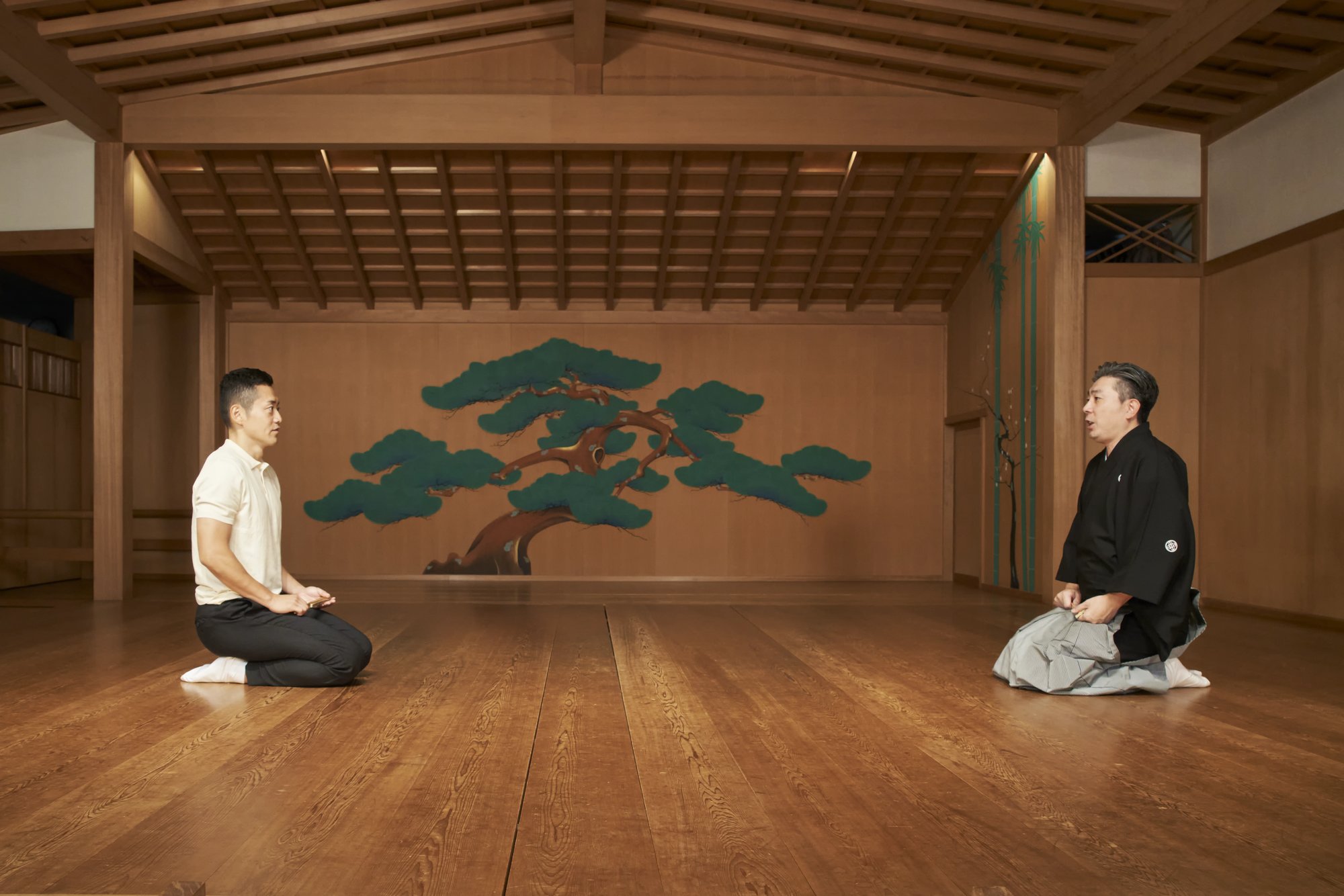
Kabuki borrowed from Noh more than once. Kanjuro Fujima VIII thinks it began with Okuni: "When Izumo no Okuni began Kabuki there was the influence of Noh theater that probably made the dance aspect dominant over the theatrical aspect." The council says kabuki "was influenced early on by its theatrical predecessors of Noh and Kyogen." The NIHONBUYO Association dates a later wave to the Bakumatsu period, 1853 to 1868, when "many refined pieces were created based on the Noh and Kyogen theatre."
One borrowing is a lion. The council describes a group of kabuki dances, shishi-mono or shakkyō-mono, based on the Noh play Shakkyō, in which a Buddhist priest visits Mount Seiryō in China and sees a lion playing with peonies. On its page for Shunkyō Kagamijishi the council records a loss: "After Ichikawa Danjuro IX died, performance of this repertoire ceased, but Onoe Kikugoro VI successfully revived it."
Dōjōji: A Noh Story Cut Down to One Woman's Feeling
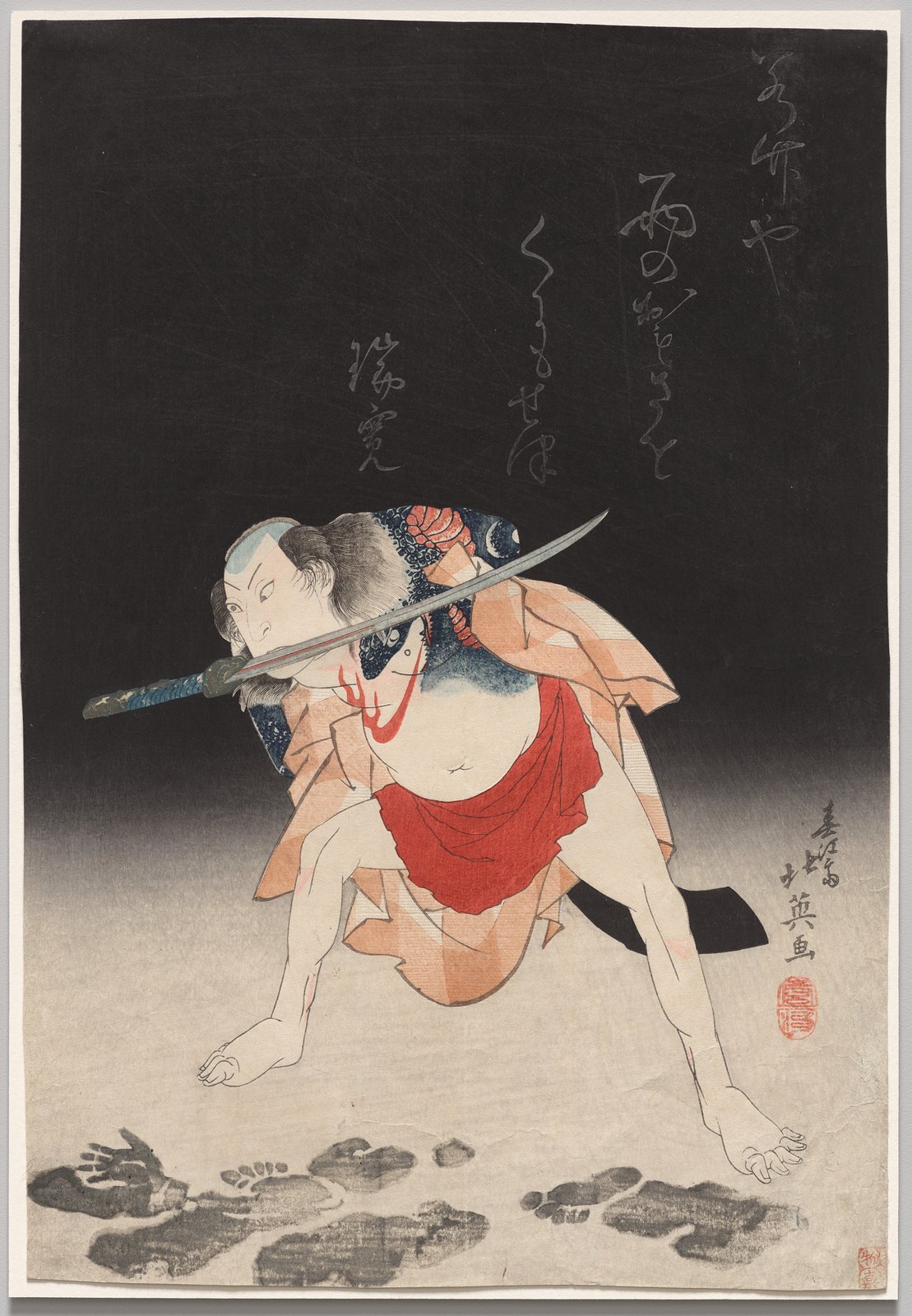
The council's page on Kyōganoko Musume Dōjōji calls it "a masterpiece in the tradition of Kabuki dance called onnagata (female roles) buyo" and says that in it "a single onnagata performs solo for nearly one full hour." Its account of the development period traces the piece to Noh: "the sections depicting the emotions of a woman in love were taken out and developed into this stand-alone dance drama."
The story is not gone: the council's summary still has the dancer Hanako jump into a temple bell and reappear as a serpent. What changed is where the weight sits. The council explains that "the dancing expresses various images of women desperately in love," and that is why the routine is divided into several parts. In one of them, the kudoki, a woman reveals her pathos and pain "in takemoto and nagauta music."
This is a change of use. A plot-bearing Noh piece became a showcase for one dancer's range of feeling. For this piece at least, expect to read its sections as images of love, not only as steps in a story.
Yukari Onoe, who dances Musume Dōjōji herself, contrasted the Kabuki staging of the piece with suodori in our interview. In the Kabuki version, she said, "the dancer appears in sumptuous costumes against a lavish stage set painted with cherry trees in full bloom," and "the costume changes again and again through hikinuki (an onstage quick-change revealing a new costume in an instant) and hayagawari (rapid transformations)." Nihon Buyō, she said, "went on to establish suodori (dance stripped of wig, makeup and elaborate costume, focused on movement alone), a form both spare and profound: the only set is a folding screen, a single costume is worn throughout, and scenery and inner emotion are conveyed through dance alone."
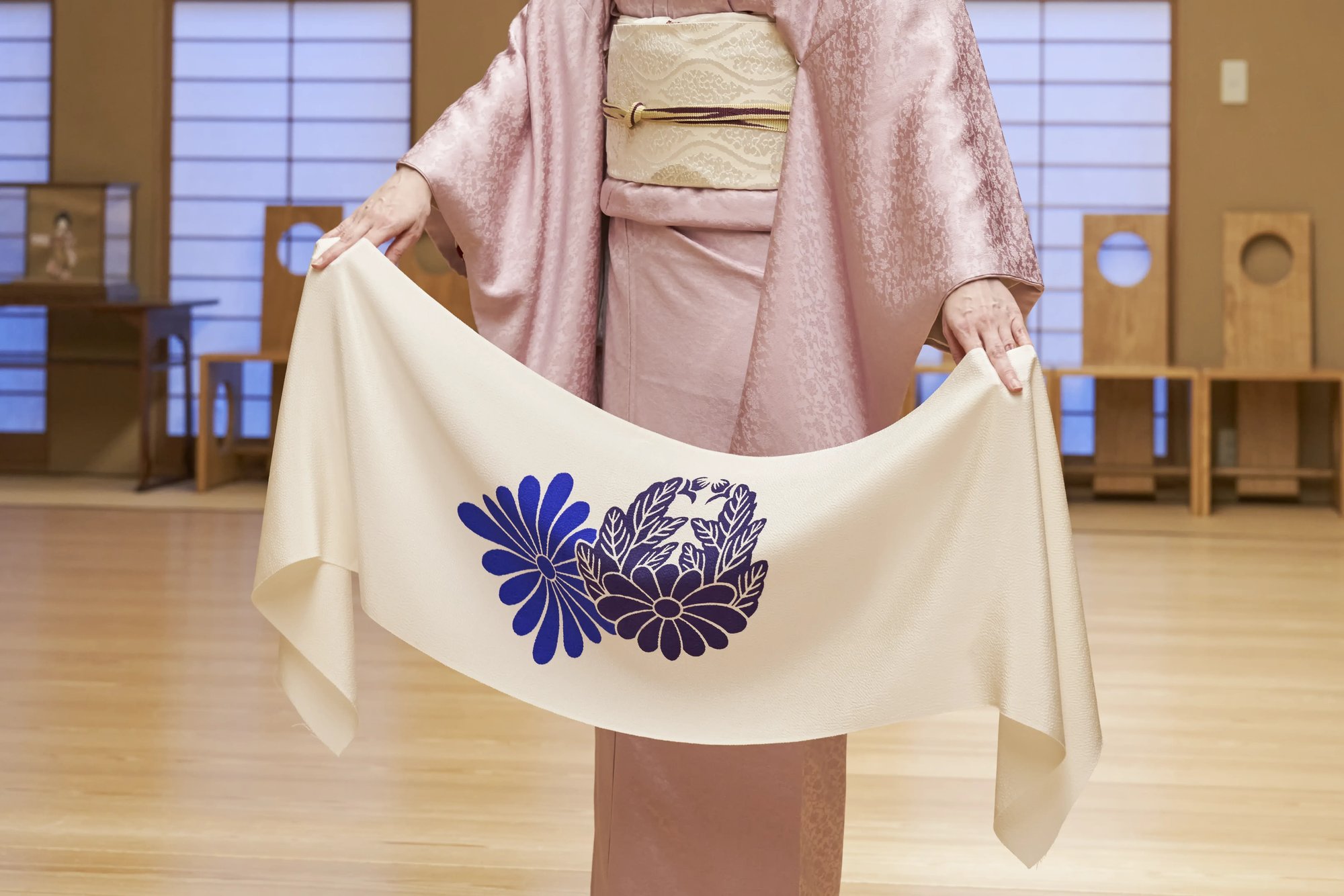
She also described the hand towel, the tenugui, that the dance uses. The one she uses for Musume Dōjōji, she said, is the towel her father once used when he danced Ninin Dōjōji with the then-head of the Onoe family, Onoe Baikō, and it bears two family crests.
Matsubame-mono: A Painted Pine on a Kabuki Stage
The council's page on matsubame-mono production says that from the first performance of Kanjinchō onward, "many works known as matsubame-mono were created as Kabuki plays from Noh and Kyogen." The name comes from the board, matsubame, that hangs as the backdrop at center stage with a painted pine, and "The pine tree is copied from the old pine tree drawn on Noh stages." The entrance speech, the nanori, follows Noh and kyōgen as well, the same page says Kanjinchō's costumes are based on Noh costumes, and nagauta verses in the utaigakari are sung in a style similar to Noh chanting.
Kanjinchō is the example. The council's page on the play calls it "a matsubame-mono play, based on the Noh play" Ataka. The development-period account says it was "a remake of the original version of one of these 18 plays to include Noh elements," the 18 being plays created by the Ichikawa family.
Tomoyuki Takeda, a Kanze-school shite-kata performer, described the Noh pine to us in our interview with a Noh performer on dancing toward a pine: "It is said that our forebears offered sarugaku before pine trees." He says the old pine was understood as "something like a yorishiro for what one believed in, for gods and buddhas," and concludes: "If we think of it that way, then to dance toward a pine is not simply to have nature as a background. It is to offer the art toward something unseen." Of the painted pine on today's Noh stage he says "for us it is not merely a background." Ohkura Motonari, a kyōgen performer, was asked in our interview with him where the painted pine comes from. He answers "There are various theories," and points to the Yōgō pine at Kasuga Taisha in Nara, where by legend Kasuga Daimyōjin alighted. Of the stage he says: "So we stand on the stage in a very sacred frame of mind."
The council describes the kabuki pine as a set piece. Takeda describes the Noh pine as an address, and Ohkura ties it to a legend of a deity's descent. The name is the handle: the pine board is what gives matsubame-mono its name, so a pine board behind the actors is the cue to ask whether the piece comes from Noh or kyōgen. For the Noh side of the comparison, see our guide to what to look for in a Noh performance.
Lyric Dance or Dance Drama: Telling Kabuki Dance Apart by Its Music and Its Plot
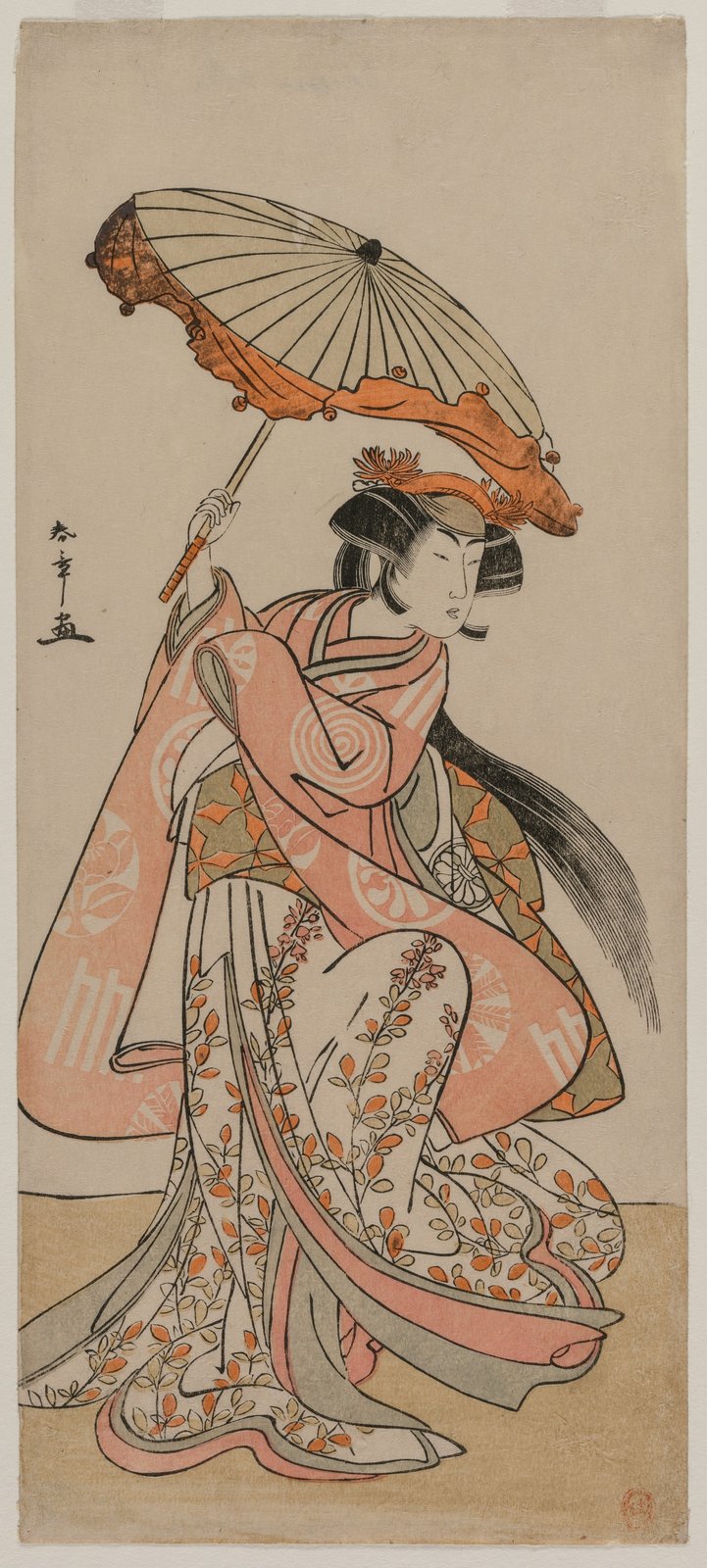
Two questions arise before any dance: does it tell a story, and what is the music? The council's descriptions of the music offer a first guess at the answer to the first. A first guess is a way to listen; it does not sort dances into boxes. One accompaniment does not guarantee a plot, and the council's own examples below show why.
Jidai-mono, Sewa-mono, Shosagoto: Where Dance Sits Among the Three Kinds of Kabuki Play
The Japan Arts Council's classification of kabuki plays notes that "Over 300 Kabuki plays are still performed today," and groups them by content into three types: jidai-mono, historical plays; sewa-mono, contemporary domestic plays; and the third, which the council labels "Shosagoto (Kabuki dance)."
Jidai-mono carries one more trace of the shogunate's rules. The council says some of these plays did include Edo-period events, and that they used events and names from more ancient times "to avoid the Tokugawa shogunate's bans and taboos of stories about more recent incidents." The third type is the dance. Here the point is only the classification: dance has its own seat among the three.
Nagauta Against Tokiwazu: Dances of Feeling and Dances That Tell a Story
The same development-period history draws a line between two families of music. The dance dramas accompanied by nagauta "were first formed as a performance art for the onnagata role." The council's page on nagauta classifies it as utai-mono, which it glosses as "a song/musical piece that emphasizes the melody." Musume Dōjōji, the dance of a woman's feelings described above, is the council's example of a nagauta dance drama.
The other family is jōruri, narrative music. The council says: "Unlike nagauta, this type of joruri is originally a narrative art form and therefore it produces pieces with strongly dramatic elements even in shosagoto," which, it adds, has evolved to be performed by both onnagata and tachiyaku, the male roles. It counts gidayu-bushi, whose narration it calls takemoto, among the joruri styles. Its page on tokiwazu-bushi describes the staging: "In Kabuki, this music is mainly performed on stage, in view of the audience, as an accompaniment to dancing." The music is "characterized by calm, stately melodies."
So the guess is this. In nagauta pieces, listen for melody and ask what feeling the dancer is giving shape to. In joruri pieces, listen for a narrator and ask what is being told. The council's examples show the limits. The kudoki of Musume Dōjōji, the dance of a woman's feeling described above, is accompanied by takemoto as well as nagauta. Kanjinchō, a verbal contest at a checkpoint, has a nagauta accompaniment that the council calls famous. Separately, the council's page on kiyomoto, another narrative music, describes it as "emotional poetry and prose narrated in a technically accomplished manner in a very high register."
From Choreographer to Teacher: How Kabuki Dance Became a Lesson for Townspeople
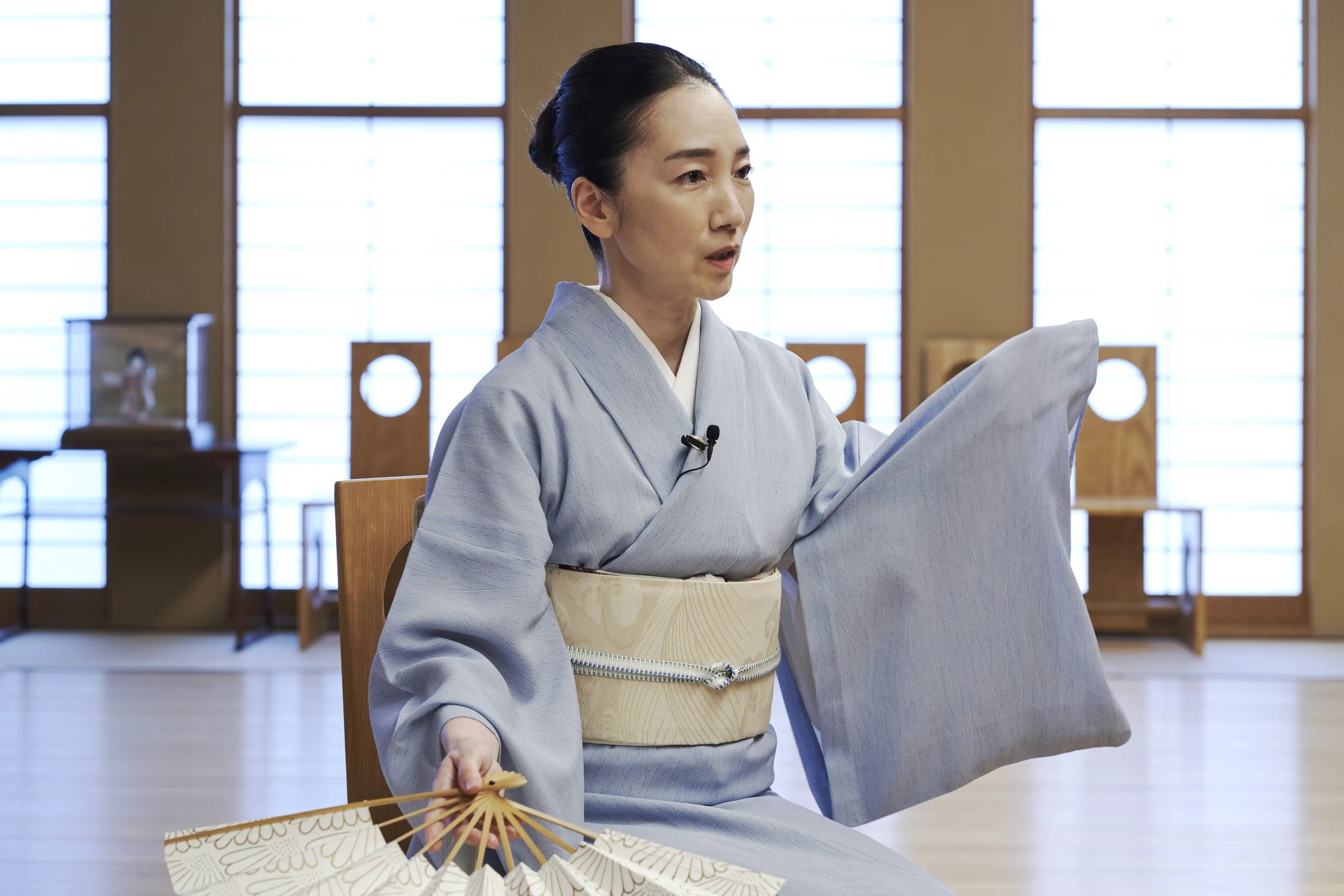
Women were excluded from the licensed stage but did not disappear. Nippon.com writes: "Many women also became successful teachers of dance and the shamisen." Kanjuro Fujima VIII reaches a similar conclusion by another route. In the 2006 Japan Foundation interview, he says that when the music "became popular and Kabuki gained popularity as a result, there would naturally be a lot of amateurs wanting to learn the art," and that the need was for teachers: "While Kabuki is a strictly male art, I think this need led to a role for talented women dance teachers and their presence gave birth eventually to what we know as Nihon buyo today."
Yukari Onoe is a nihon buyo teacher today. She told us: "I used to think teaching wasn't suited to me, but when people asked me to teach them, and I began, I found myself watching my own dancing more objectively."
Schools Founded by Kabuki Men: Nishikawa, Fujima and Hanayagi
The Government of Japan's Highlighting Japan says of the Nishikawa school: "Established over 300 years ago, the Nishikawa School is the oldest of the five major schools of the Nihonbuyo tradition."
On the Fujima school, the Japan Foundation's Performing Arts Network Japan is specific. "The Fujima school was started by Fujima Kanbei in the Edo Period," it writes, and its head at the time, Kanjuro Fujima VIII, was the "heir to a family that has long been known as leading Kabuki furitsuke-shi (choreographers)." Asked what a choreographer does if actors created and passed down kabuki's movements, he answers: "I think most people have a misunderstanding concerning this." The correction follows: "The kata of Kabuki—in other words the choreography of Kabuki—is not handed down through the families of Kabuki actors but through our families of Nihon buyo." His example is Musume Dōjōji at the Kabukiza: "the actors come to practice at the Kanjuro studio, because the Dojoji choreography belongs to the Kanjuro family."
The council reports the other half, with a hedge: it is "often said that actors who are accomplished in a particular acting technique or performance style are carrying on those skills that have been passed down through their lineage." Two bodies, two kinds of form: acting kept in actor lineages and, in the case Fujima describes, dance movements kept by choreographer families. The kyōgen performer describes form differently again. Ohkura Motonari says: "What I hold most important is not breaking the kata". Fujima quotes his grandfather, Kanjuro VI: "There is no one single form. You should make your own forms. That is the job of a furitsuke-shi." The kata is kept unbroken in one craft and tailored in the other: Fujima describes the choreographer's job as choreographing "in a way that brings out the best in each actor."
Lessons Before Leisure: Dance as Cultivation in the Edo Period
The NIHONBUYO Association writes: "During the Edo period (1603~1868), it was common to receive basic education at terakoya temple schools and learn dance and music as a form of higher education." Dance, in this account, came after schooling, as an accomplishment.
The audience's side comes from Nishikawa Minosuke, a nihon buyo master whose career spans fifty-seven years, who told Highlighting Japan in 2020: "Kabuki was a performance entertainment that regular people themselves couldn't do." He continued: "However, people who saw the dance in kabuki wanted to try it themselves and it gradually became an independent identity." Read with Fujima's account, the order is plain. Spectators wanted to dance, teachers were needed, and a stage art became a lesson. In kabuki dance, watching and learning grew from the same appetite.
Three Tiers of Access to Kabuki Dance: The Theatre, the Recital and the Rehearsal Room
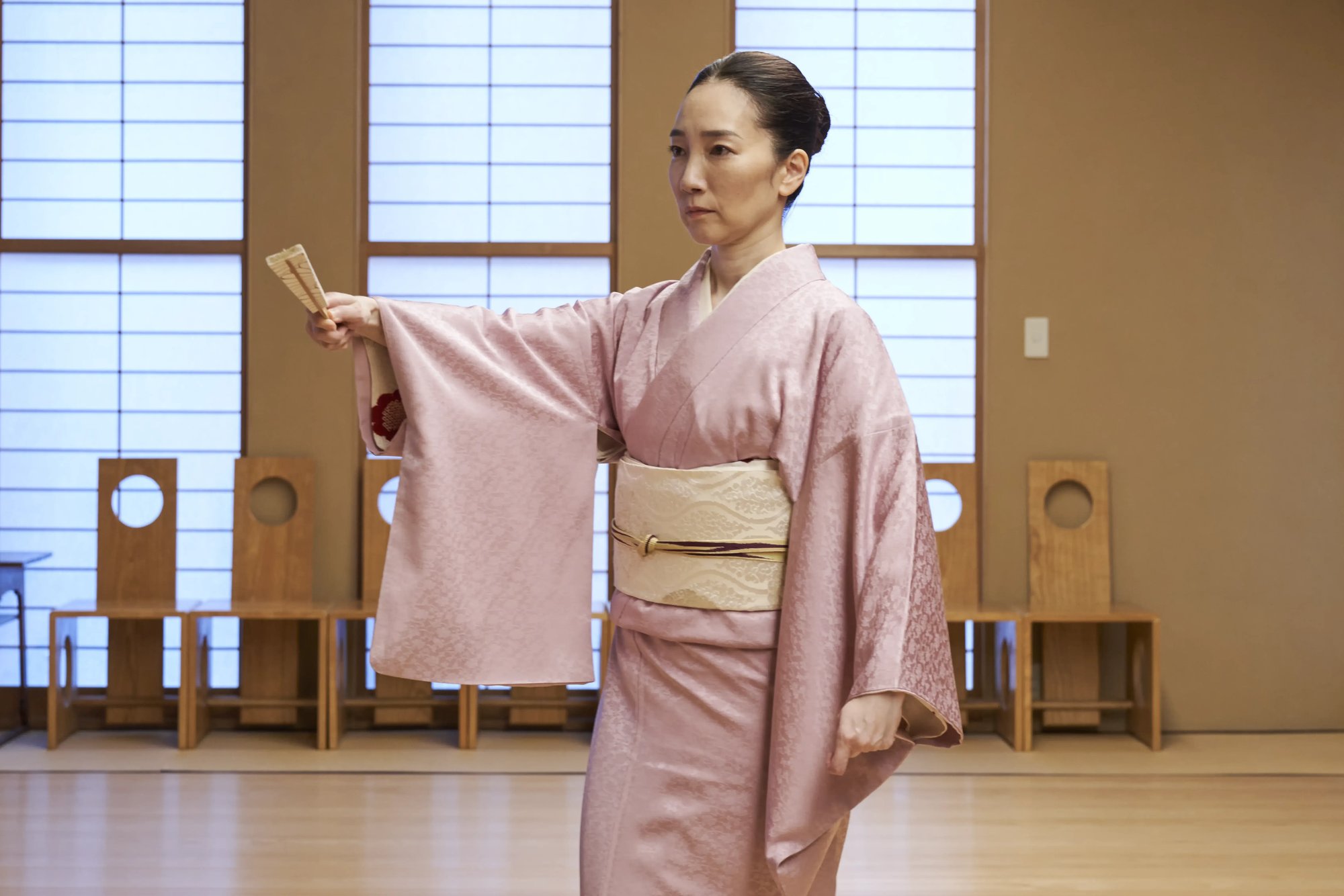
A viewer can meet kabuki dance at three distances. They are not three prices. They are three kinds of knowing.
Anyone can see it. The first tier is the kabuki programme itself. Shochiku's English page for the Kabukiza lists each month's programme, and what is on the bill changes from month to month. How a single act is sold, where the cheap seats are and what the captioning device costs are covered in where to see nihon buyo in Tokyo. If kabuki is one evening in a longer plan, a quiet route through Tokyo shows where it can sit.
You find it if you know it exists. The second tier is the dance world outside the theatre, where kabuki's dance continues as nihon buyo. The NIHONBUYO Association describes teachers who give "performances for their students to show what they have learned," organise their own performances, and take part in performances organised by the Japanese Classical Dance Association and the National Theatre, "as well as by local governments and at schools." The association's own performance listings are public, and they are published in Japanese, even on the page marked English.
Yukari Onoe, who danced in Kabuki as a child, marks the difference between the two worlds in time on stage. "In Kabuki you can stand on stage every day for twenty-five days. Nihon Buyō performances are usually a single day," she told us.
It helps to be introduced. The third tier is the rehearsal room behind a kabuki production, the place where its dances are made. Fujima describes the schedule: "In the case of Kabuki, there are only three days before the start of performances when all the actors come together to rehearse on stage. Until then, the actors, shamisen and drum performers all practice separately on their own." This tier is a workplace, not a performance. It is a fact about how a production reaches the stage, and whether a visitor can be introduced into such a room is a question for a person who knows the room.
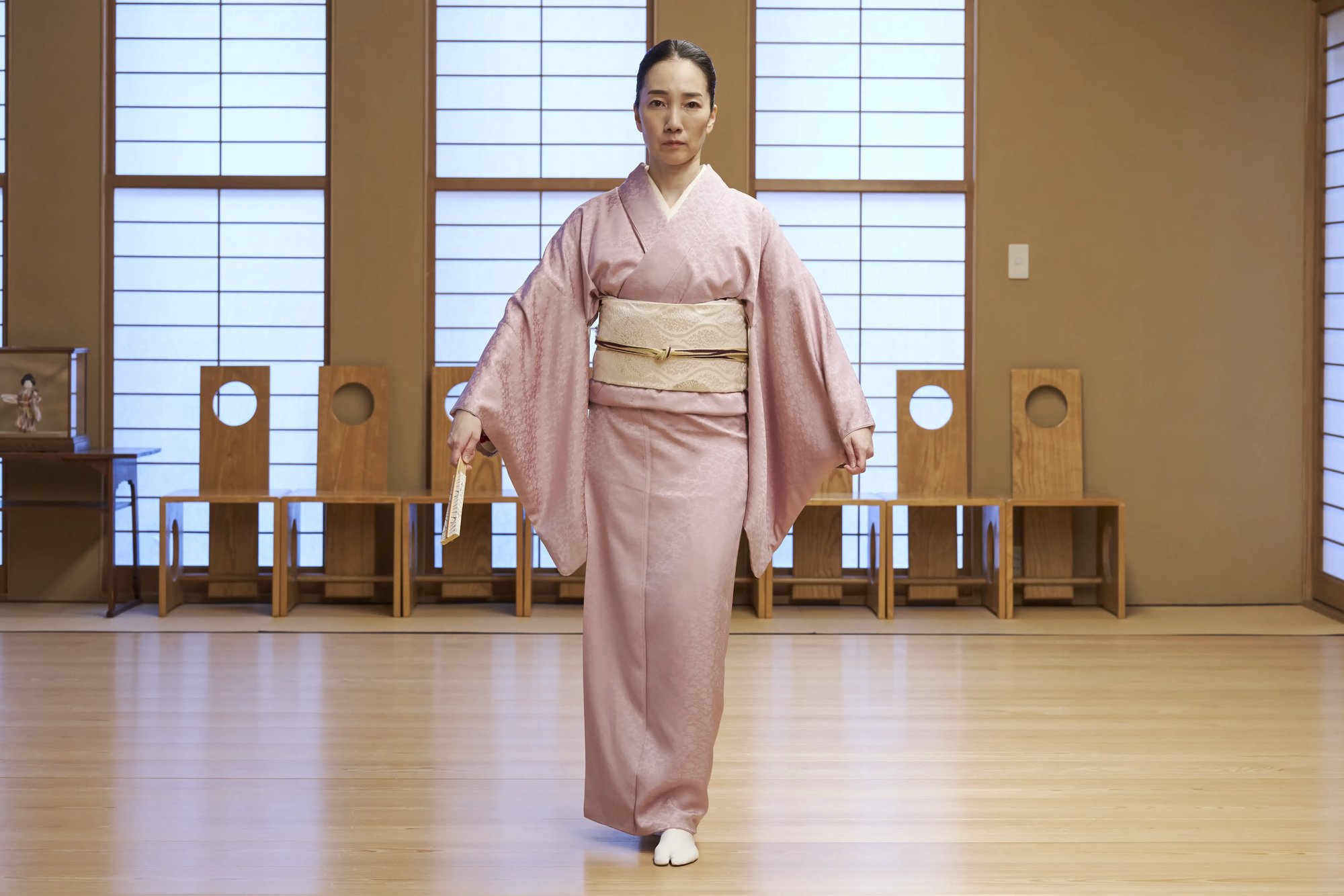
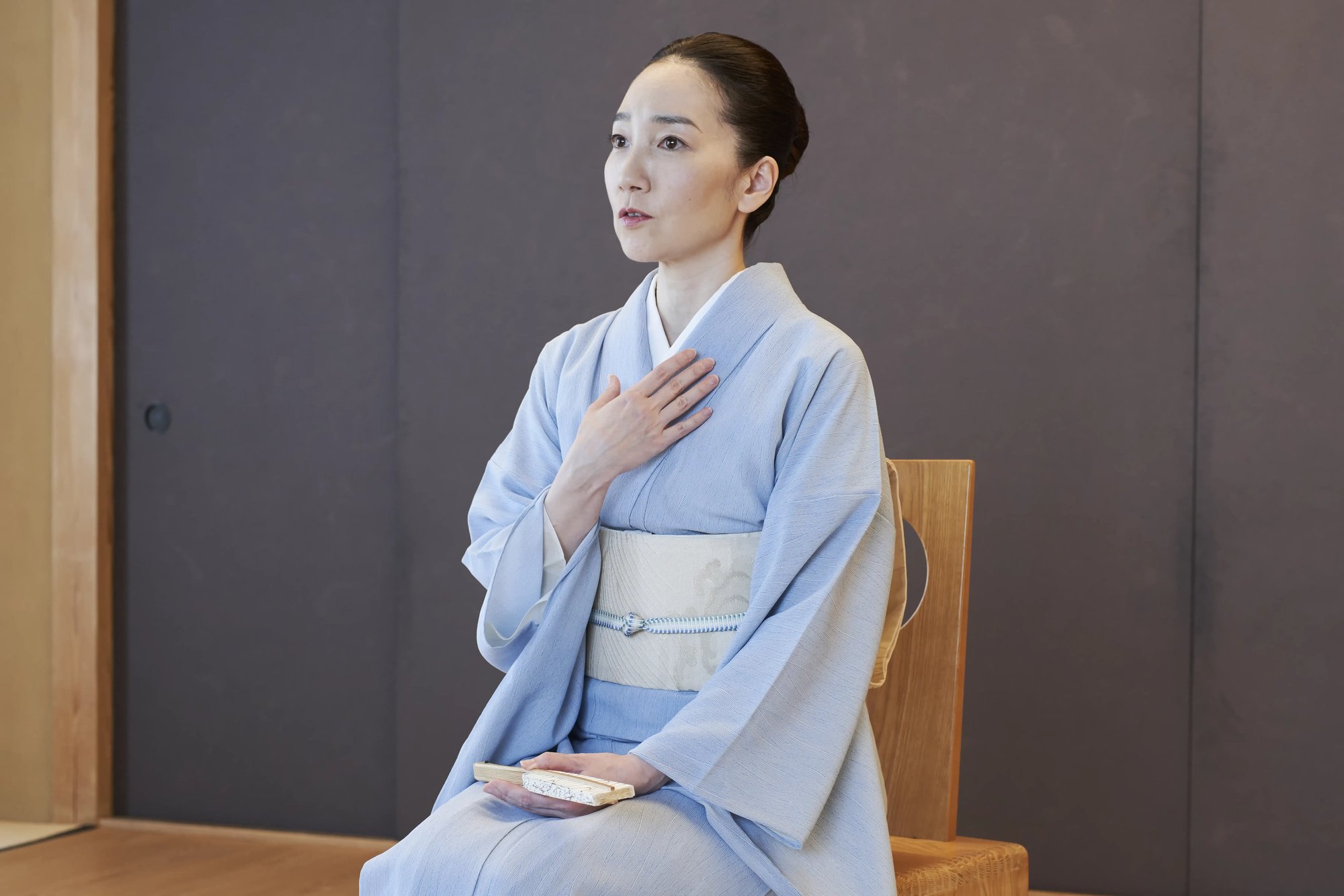
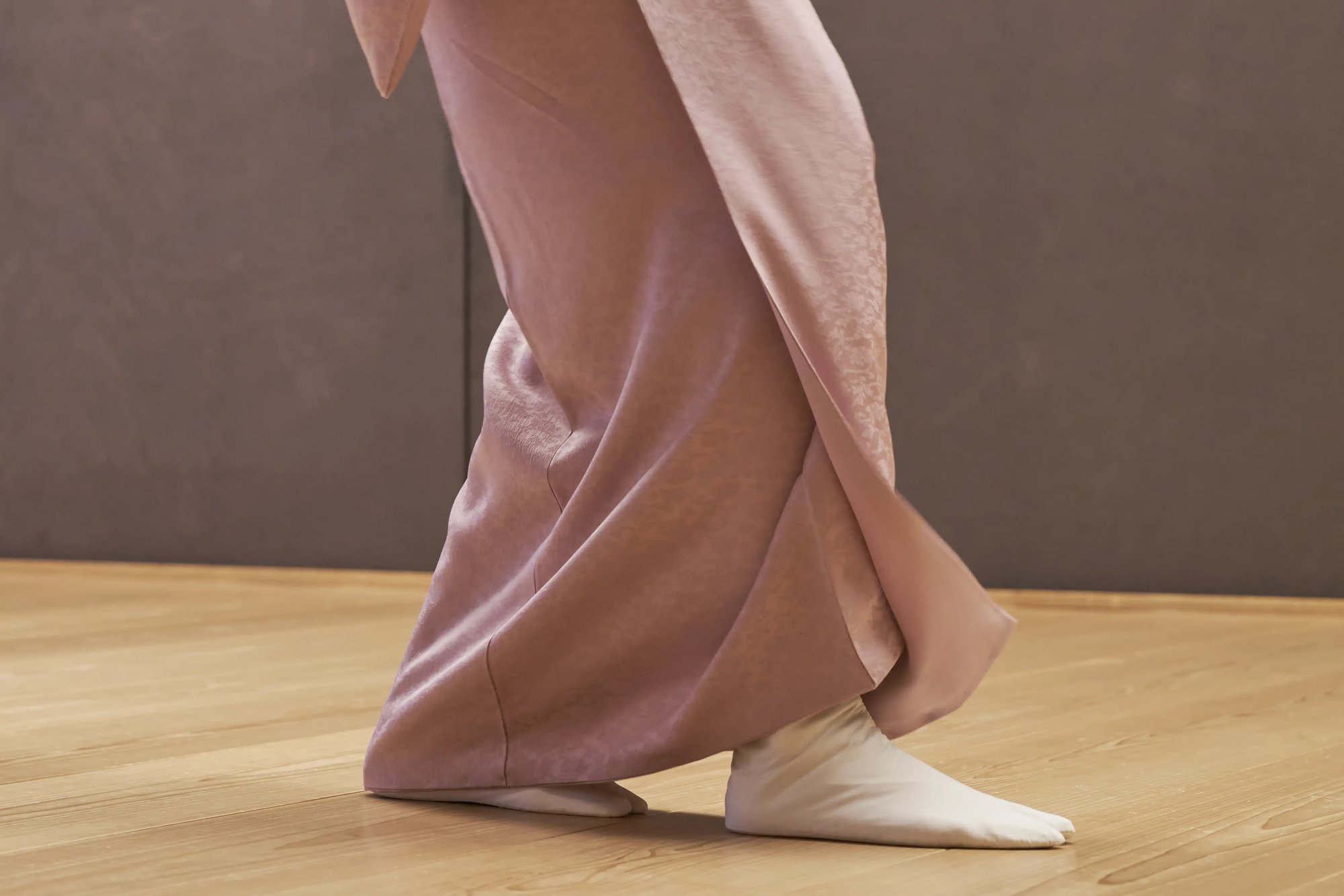
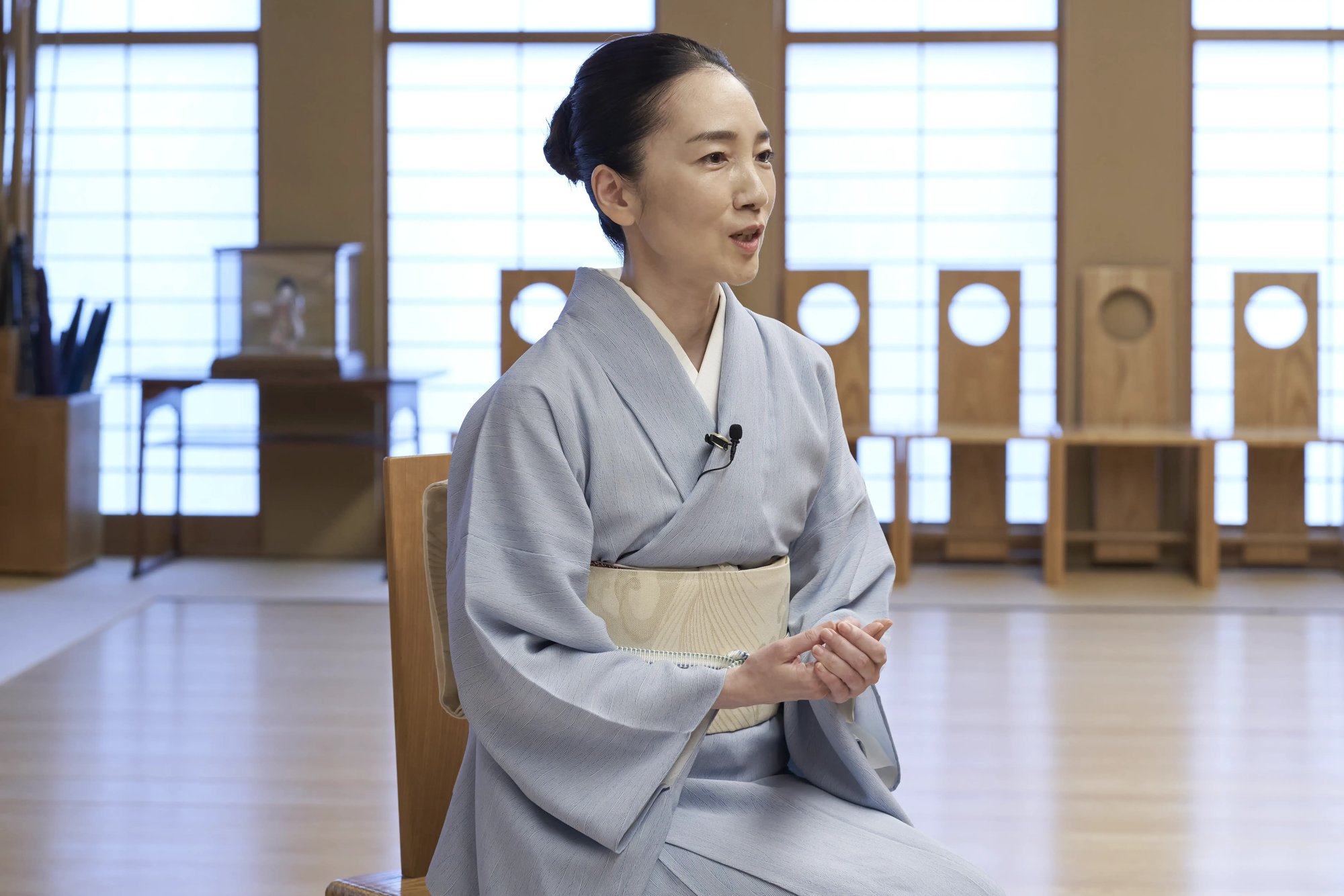
A nihon buyo teacher's studio is a different kind of room from the rehearsal room behind a production, and Yukari Onoe described hers in our interview. The keiko-ba is the studio where lessons and rehearsals take place. "This is the Onoe school's keiko-ba," she said. "On practice days I'm here, and my students come. We line up and practice dancing together." A beginner's first lesson starts with clothing and doors: "For beginners, it starts with learning to wear a kimono. How to open the sliding door, how to enter, all of that together. You come in, bow, open the fan, learn to stand and sit, suri-ashi — gliding steps that brush across the floor."
Two things in the room carry the past. One is sound. The studio keeps cassette tapes recorded over many years, which she called "an essential sound source for practice today." The other is the fan. In practice, she said, "when we bow, we always place the fan in front of us," and the dance fan carries "the meaning of a yorishiro, a vessel in which a god may dwell, so we never use it to fan ourselves." Dancers are taught "never to set it down carelessly, or step over it." For a viewer the practical point is to watch how a dancer handles the fan.
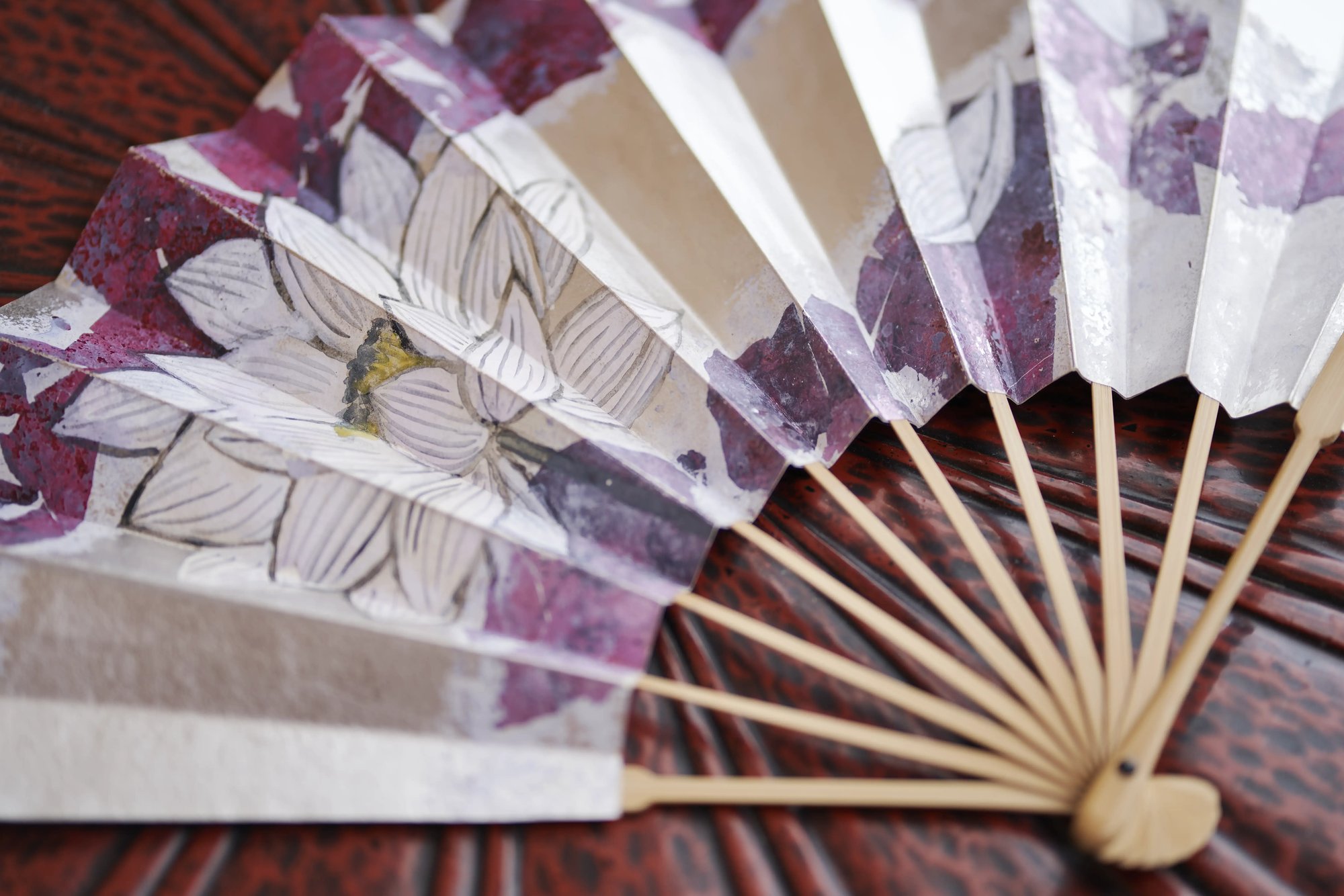
Asked where first-time students are most often surprised, she gave several examples, among them: "You try to open the fan, and it won't open." People are also surprised, she said, "by how much muscle it actually uses." Asked what kind of people she wants to come, she said: "Anyone, really. Even people who know nothing, who are encountering Nihon Buyō for the first time." She hopes people can feel "the happiness of people from different backgrounds sharing what is common, what connects, through a single art form." These are her words about her own studio. Whether a visitor can join a session is for the teacher to say.
Who Dances Kabuki Dance Today: A Ban From 1629 That Still Shapes the Stage
Is kabuki still male only? On the main stages, yes. The Japan Arts Council's introduction says: "Kabuki evolved as a form of theatre in which men perform all roles." Nippon.com, in February 2025, put it this way: "Today, no women perform on the main kabuki stages—all the female roles are played by specialized male actors known as onnagata."
Outside the kabuki theatre the picture differs. In the 2020 Highlighting Japan feature, Nishikawa Minosuke estimates the number of nihon buyo dancers in the tens of thousands, "90 percent of them female." That is one master's estimate, not a census, and it counts the dancers of the art that descended from kabuki, not kabuki's own.
Yukari Onoe puts the contrast in her own terms. Describing how nihon buyo became its own world, she said: "Where Kabuki is centred on men, the fact that women entered this world is, I think, one of its major distinguishing features." Her own school illustrates it. The name of the iemoto, the head who carries a school's hereditary name, passed to her younger brother, while her father "wanted me to keep dancing, to build a career as a female dancer."
In 2006, Fujima described a disagreement within nihon buyo. In the interview, he said: "In the Nihon buyo world lately there have been people who try to put on more radical performances using accompaniment by synthesizer or guitar or the like, but I don't think that is the right direction to go." His own proposal ran the other way: "Since Nihon buyo was born out of Kabuki, I want to borrow more of the strengths of Kabuki to make Nihon buyo more interesting."
In February 2020, Highlighting Japan reported that Minosuke was taking part in an initiative of the Japanese Classical Dance Association to give performances at the National Theatre aimed at foreign visitors during the then-upcoming Tokyo Olympics. His daughter Kei, also a dancer, said: "There are many people who don't know about Nihonbuyo and I want to raise awareness even if only to a few people," and added: "That goes for people from overseas. I want them to become interested, too."
Asked what challenge she faces now, Yukari Onoe named a building first: "The first thing that comes to mind is the absence of the National Theatre." She described what the full stage gave dancers, "the large stage machinery, the trap floors, the hanamichi," and what is lost without it: "Performers can no longer absorb, through actually dancing a performance, what they used to acquire in practice — which means they also cannot pass it on to others." That is her account from our interview. The National Theatre's own announcements are the place to check its current schedule.