As you immerse yourself in Japan’s traditional crafts and artisan culture with all five senses, the practice of ikebana becomes a way to balance body and mind. This guide is the definitive companion for travelers like you who seek a truly luxurious journey. If you value wellness and sustainability alongside refined taste and social standing, a Japanese cultural trip steeped in “quiet” and “handwork” will offer special value. Get ready for unrepeatable moments of encounter—ichi-go ichi-e—awaiting you. Now, let us guide you into the serene, profoundly layered world of ikebana experiences—ideal for choosing the right ikebana kurs (course) in Japan.
The Essence of Traditional Crafts and Artisan Culture——The Value Born from Quiet and Handwork
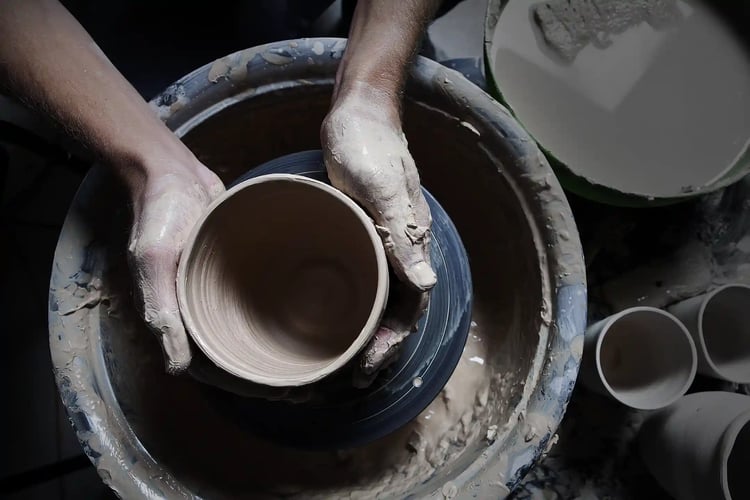
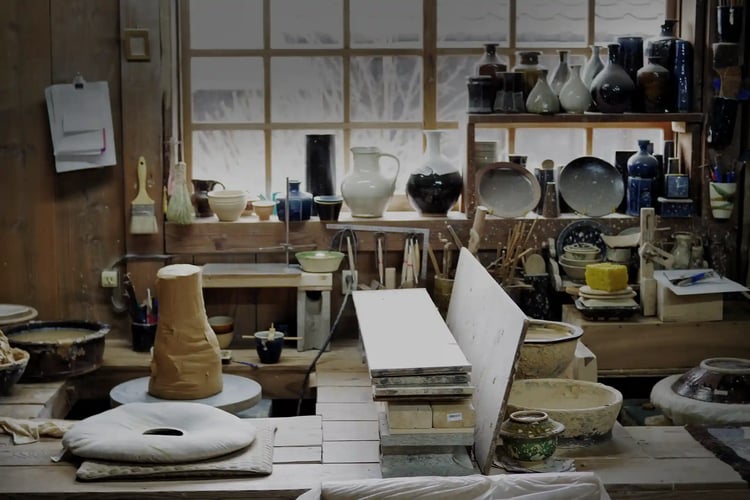
Within Japan’s traditional crafts and artisan culture lives a distinctive value embodied in “quiet” and in “handwork.” Imagine the faint whirr of a potter’s wheel (rokuro) inside a ceramics studio or the tranquil air filling a sumi-dye workshop—scenes that can feel cleansing to a contemporary mind.
This is more than making things. It’s time spent touching the core of Japanese aesthetics—utility in beauty and the idea of ma, the meaningful “space” and restraint. Watching unnamed artisans pour their spirit into a single piece, you sense a philosophy of “creating richness through the minimal.” The subtractive aesthetic, which removes excess ornament to draw out the material’s character, can be felt in the workshop atmosphere itself; that very space invites your imagination to roam.
When one craftsperson takes full responsibility for a process end to end, the result carries a throughline of the maker’s thought, and the quality allows no compromise. In this world of handwork, you feel a warmth and storytelling that mass-produced goods simply cannot convey.
Why Craft Tourism Creates High Added Value
Craft tourism—drawing growing attention in recent years—elevates the value of “quiet and handwork” into the form of a journey. Distinct from mass tourism, the experience of visiting an artisan’s studio in a small group and witnessing creation on site is rare, and it brings a deep sense of fulfillment.
For example, in Kanazawa, Ishikawa Prefecture, a program called “Kanazawa Ichigo Ichie” arranges small-group visits to renowned artists’ studios. You can tour the only workshop that handles all 15 processes of Kaga Yuzen from start to finish, offering the thrill of touching “the real thing you can only see here” (*1).
By observing everyday work and sometimes speaking directly with the artisan, you can feel the stories behind the pieces and a lived respect for tradition. The emotion that arises from such encounters often leads not only to memories but also to purchases. When you acquire a piece you love on the spot, your payment goes straight back to the artisan, which is another compelling aspect of this model (*1).
Because it brings together the narrative power of seeing rare traditional techniques up close and the direct support of the local economy, craft tourism is recognized as a high-value form of travel.
Tuning the Senses——Sound, Scent, Touch, Light, and Shadow
On site, craft engages your whole body, tuning senses that daily life rarely reaches. In a quiet studio, the faint contact of tool against material or the crackle of charcoal can be almost musical. Gentle scents—of wood, washi, or dyes from natural materials—brush your nose. When you touch woodgrain shaped by a craftsperson’s hands or feel the tooth of washi, warmth travels from your fingertips and calms your heart.
Traditional spaces also innovate with light. Soft natural light filtered through shoji and the play of shadow cradle the works. Washi diffuses strong sunlight into eye-friendly scattered light, bathing the room in a calm, even glow.
The delicate balance of light and shadow feels like a living embodiment of In’ei Raisan (In Praise of Shadows). These intentional prompts to your senses gently detach you from clock time and let you feel a slower current—a gift for any traveler.
Responsible Travel and Cultural Stewardship
Consider the role travel itself plays in carrying culture forward. From a perspective of responsible travel and cultural conservation, there is much you can do. Whenever possible, choose locally produced goods so value cycles back into the region. Beyond appreciating works in a studio, purchase a piece that speaks to you, or donate to local cultural preservation.
Recently in Japan, a framework called “Donate & Go” has emerged: you donate to help protect culture and landscapes in the place you visit, and in return receive location-limited experiential gifts. Rather than stop at consumption, this lets you actively participate in protecting history, culture, and the natural environment; donors receive experience-based gifts redeemable at local partners (*2).
This kind of structure turns you into a steward of culture and nature and creates a deeper connection with the destination. For the environment, consider public transit or EVs for transport, and choose accommodations with environmental certifications. Because this is a journey that savors quiet, pick hours that avoid crowds even at popular sites.
Visiting early morning or at dusk, when it’s less busy, lets you soak in culture in calm surroundings while also easing pressure on destinations. These small considerations, accumulated, promise a richer trip even as they help protect the future of traditional culture.
The Fundamentals of an Ikebana Experience (ikebana kurs)——A Gentle Guide to History and Schools
The tradition of attending to seasonal flowers took root in the Muromachi period and has been passed down for over 500 years.
Ikebana (kado) grew out of the practice of kuge, offering flowers before the Buddha. Kyoto’s Rokkakudo (Choho-ji) is considered the birthplace of ikebana. Records say that in the mid-15th century, the monk Ikenobo Senkei arranged flowers in a vessel and became the talk of the capital (*1).
The event of “Ikenobo Senkei’s flowers” captivating the public is regarded as the moment ikebana emerged as an art for appreciation. Later, Ikenobo Senno systematized its theory and wrote Ikenobo Senno Kuden, codifying forms and mindsets, and ikebana spread into the cultures of samurai and townspeople.
From the Momoyama to the Edo period, forms evolved from the opulent rikka to the simpler seika/shoka. After a brief decline in the Meiji era, ikebana revived when adopted in school education. Many schools arose through this long history—today said to number over 300. Among them, the three major lineages—Ikenobo, Ohara-ryu, and Sogetsu-ryu—are particularly well known. In the contemporary ikebana world, these three dominate, with each reportedly counting over a million students or members (*2).
Each school maintains branches overseas, and organizations such as Ikebana International have helped grow a global community of enthusiasts—another sign of ikebana’s worldwide reach.
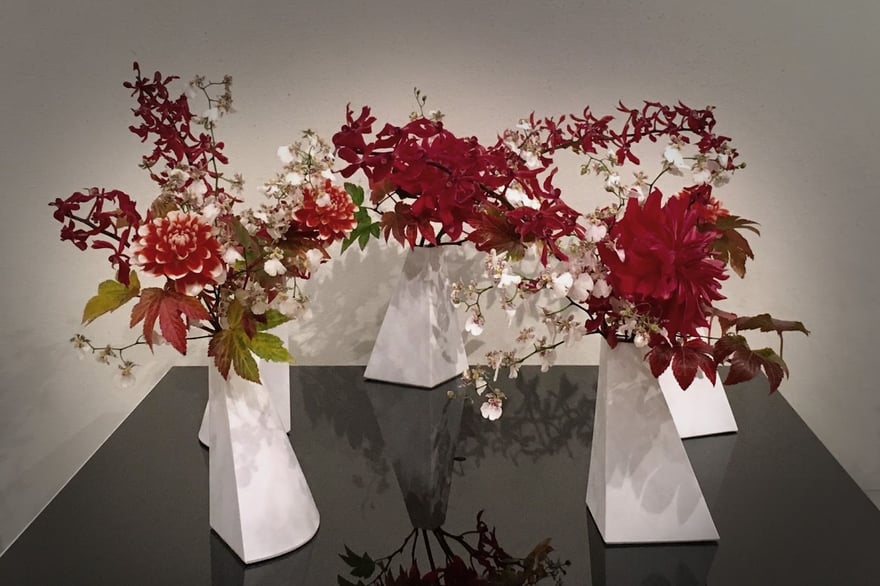
Understanding the Major Schools——Finding the Right Fit for Your ikebana kurs
Now, let’s gently cover the characteristics of the main schools with first-timers in mind. Ikenobo, as the original house of ikebana, is the oldest lineage.
Based at Kyoto’s Rokkakudo and carried on by generations of monks, it often presents traditional, dignified styles. Influenced by the tea notion “let flowers be as they are in the field,” it honors the beauty in plants’ natural state. Ikenobo passes down three forms—rikka, seika, and jiyuka—with rikka especially known as the form that most fully embodies Ikenobo’s ideals (a vertical composition theorized as a triad of heaven, earth, and human).
At the same time, it embraces expressions suited to modern life, such as the freer jiyuka that took shape from the Meiji period onward.
Ohara-ryu, founded by Ohara Unshin from the late Meiji to Taisho era, branched from Ikenobo yet became known for innovation, actively incorporating Western flowers and styles. Its greatest breakthrough was moribana, a form that uses a shallow water basin and a needle holder (kenzan).
Unlike the tokonoma-centered rikka that preceded it, moribana opened ikebana to tables and Western rooms. It readily welcomed Western blooms, matching modern sensibilities of the time. Ohara-ryu is also acclaimed for shakkei moribana, which “sketches” natural scenery on the vessel, recreating landscapes with delicate fidelity.
Because Ohara-ryu often uses richly colored Western flowers, you—especially if you come from Europe or North America—may encounter compositions featuring familiar materials, making it one of the most approachable schools internationally (*3).
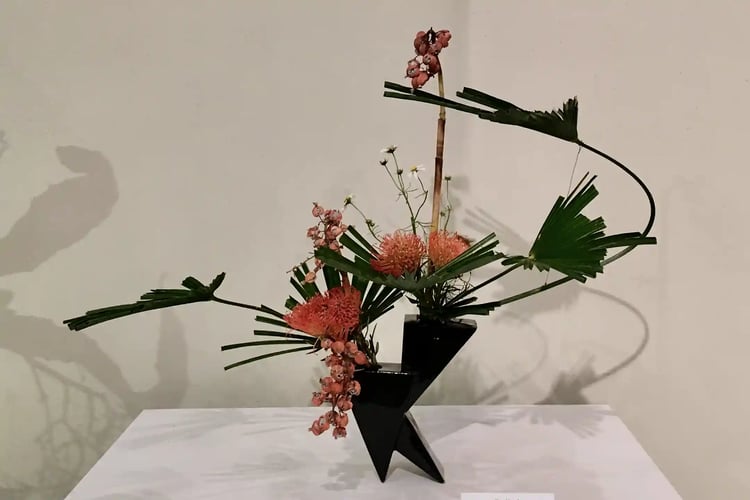
Sogetsu-ryu was established in Tokyo in 1927 by Teshigahara Sofu. It honors an unbounded imagination unconstrained by traditional forms, with the motto: “Anytime, anywhere, by anyone, with any materials.”
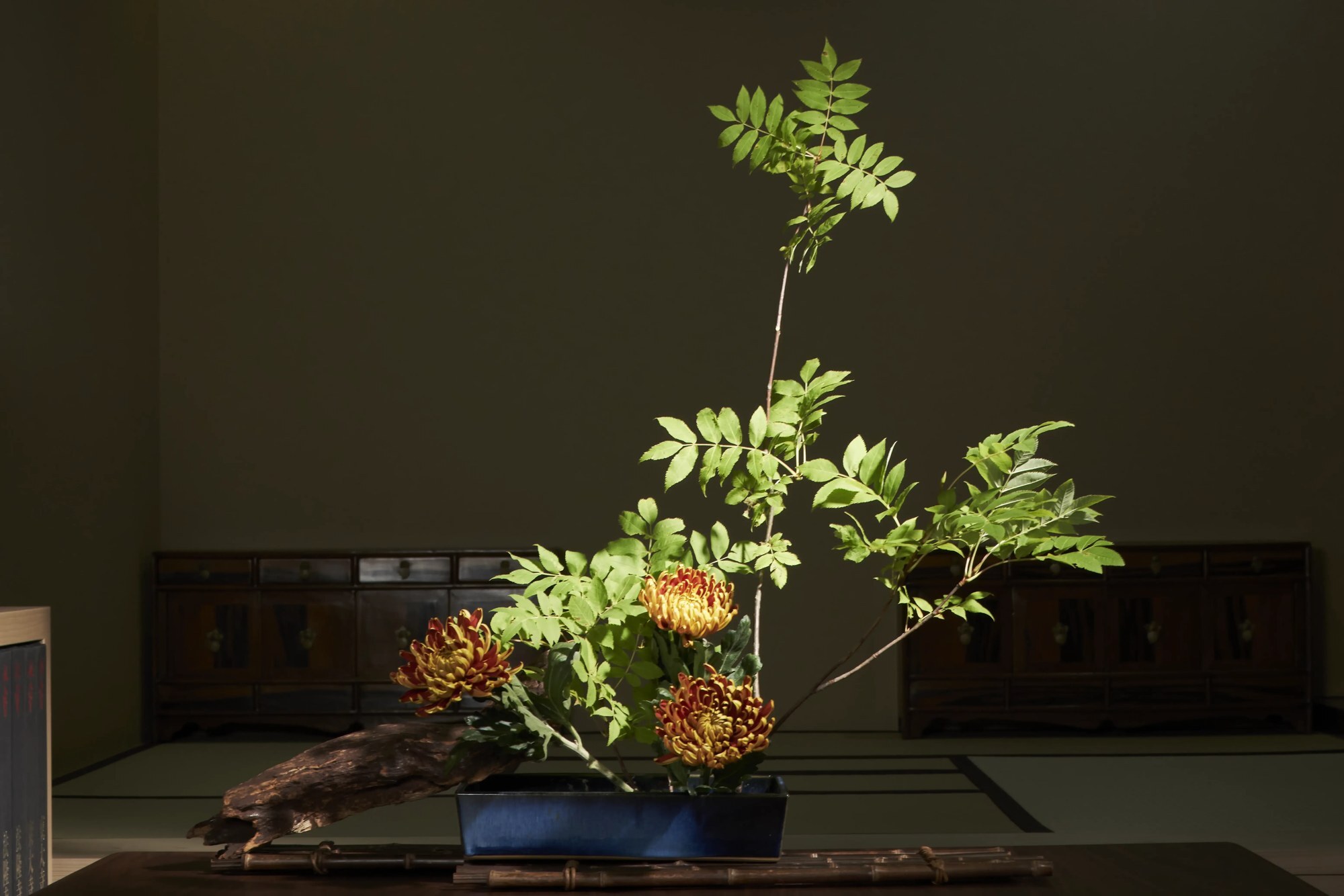
Indeed, Sogetsu often employs driftwood, metal, or even plastic alongside flowers to create bold works, achieving sculptural, object-like artistry (the founding master created pieces spanning up to ten meters). With postwar changes in values, Sogetsu expanded rapidly and today boasts one of the largest numbers of overseas branches.
Among the three majors, Sogetsu offers the highest degree of expressive freedom—perfect if you want to enjoy ikebana as “art without a single right answer” (*3). It draws strong support from younger generations and art-forward enthusiasts, evolving flexibly with each era’s sensibilities.
Even so, across schools, the underlying aesthetics share much: Japan’s unique sense of ma (active space), wabi–sabi, and an insistence on seasonality.
Learning kado is a superb way to understand traditional aesthetics experientially. Ideas hard to grasp from books—like the spirit of wabi–sabi, the beauty of empty space, and the appeal of asymmetry—become intuitive when you work with flowers (*4). This is Japanese culture tasted by the heart through lived experience.
Ikebana intentionally finds charm in arrangements that stop short of perfection, valuing the tension of space. Leaving ample ma between the main flower and supporting branches gives the whole piece a breathing grace and poise. Emptiness here is not void; it is the Japanese beauty that “speaks by not speaking.”
You also recognize life’s transience in a single bud or a leaf about to wither, expressing wabi–sabi. Beauty is not only in full bloom—there is deep pathos in the ephemerality of falling petals or the incomplete form.
Seasonality is crucial. Clear conventions guide which materials suit which time of year. In spring, budding shoots; in autumn, colored leaves and berries—the flowers themselves tell the story of the season.
By honoring each material’s shun—its peak—you seal nature’s time into a single work. In touching ikebana’s unique aesthetics, your mind wanders beyond flowers you see to the nature-view and life-view that stand behind them.
How to Choose a High-Quality Ikebana Kurs (Course)
If you’re going to try ikebana, choose an uncompromisingly “high-quality experience”—content, setting, and instructor alike. Below are key points for a satisfying experience: how to select a master instructor, what to look for in the space, and what to prepare for the day.
Because you travel with global awareness and a taste for luxury, we’ll also cover availability of English support and private lessons—so you can pinpoint the ikebana kurs that fits you.
Criteria for Selecting a Master Instructor——A Profile You Can Trust
The quality of your ikebana experience depends greatly on your teacher’s mastery.
First, look at the school affiliation and qualifications. Each school has ranks for instructors: for example, in Ikenobo, titles such as “○-grade Iemoto Lecturer” or “○○ Assistant Professor”; in Ohara-ryu, “First-Class Iemoto Professor,” “Headquarters Instructor”; in Sogetsu-ryu, “Shihan” (with grades), certified officially. Such titles indicate substantial training and achievement—reassuring for you as a learner.
Check whether official sites or profile pages clearly list credentials and career highlights. A teacher with awards or exhibition history in Japan and abroad often shows strong creativity and teaching ability. English explanations and interpretation matter for overseas travelers and those new to Japanese culture.
In recent years, many masters—including from the three major schools—have taught abroad, and the number of teachers fluent in English has increased (*1). Inquire in advance about English instruction or interpreter support so you can relax. When you meet a teacher with a trustworthy profile, you’ll feel safe stepping into ikebana’s deeper world.
Quality of the Space——Natural Materials, Daylight, and Quiet
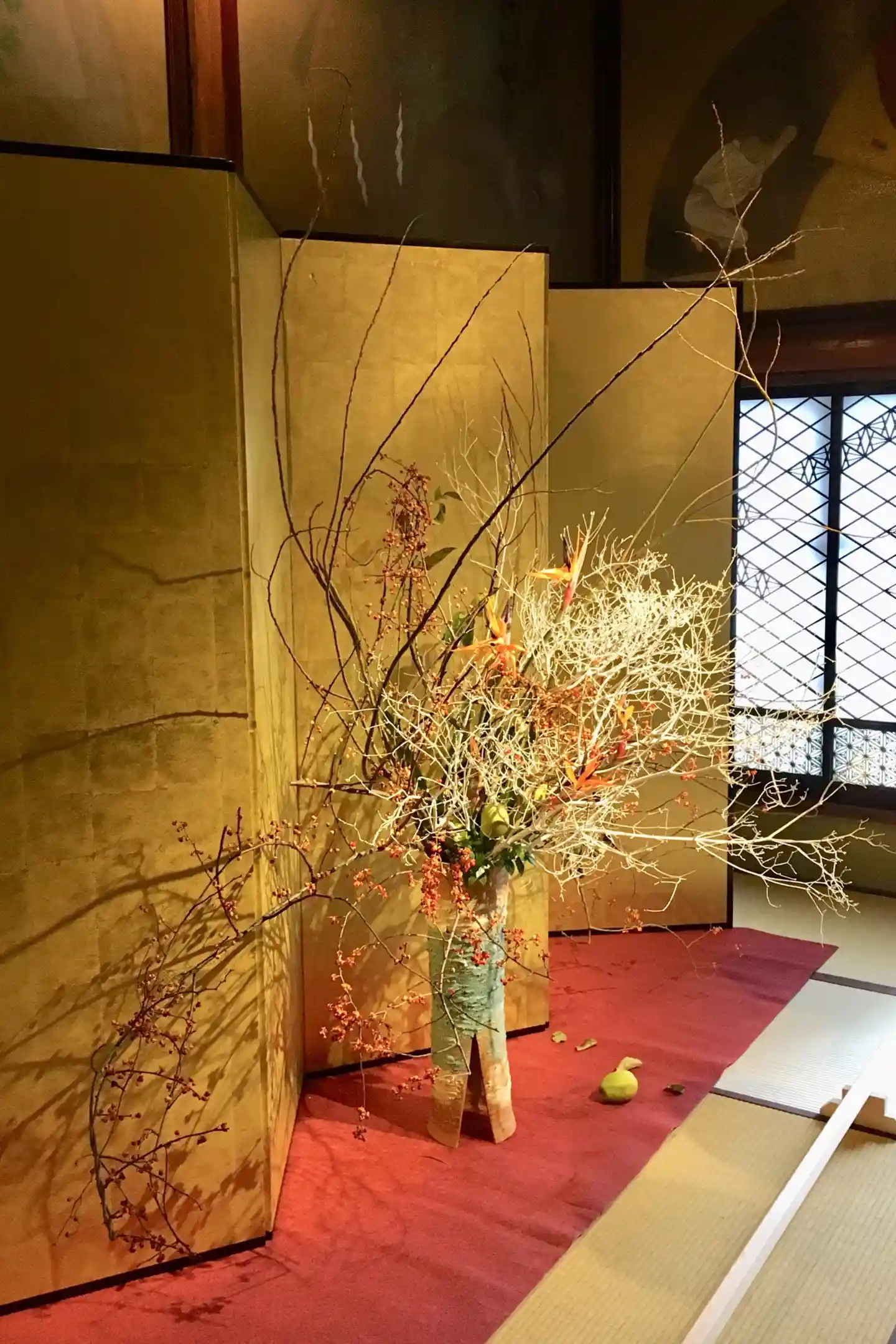
An elevated ikebana experience also depends on the space that holds it. Ideally, you’ll work in a setting rooted in traditional Japanese design. Specifically, look for natural materials: pale, unfinished wood (shiraki), tatami, and washi.
A room with tokonoma alcove and shiraki pillars carries the tea room’s elegant simplicity, clearing the mind so you can face the flowers. Sitting on tatami naturally lengthens your spine and steadies you; the gentle scent of straw and wood increases relaxation.
Washi on walls and shoji plays a crucial role. Soft natural light passing through washi creates tender shadows on the flowers and a calm expression in the room (*2). Instead of harsh direct sun, the diffused, indirect light from washi flatters the colors and stays easy on the eyes, even over time.
Morning light through shoji can be as soft as mist—a “magic of light” unique to traditional spaces. Under this gentler illumination, you can savor details: the edge of petals, the sway of stem-shadows. Preview photos of the venue and ask yourself: “Is this a space where I can feel centered and focused?”
What to Bring, What to Wear, and How Long It Takes
Finally, let’s cover what to bring, attire, time, and budget.
As for dress, choose something comfortable that you won’t worry about getting a little wet or marked. You’ll stand and sit, handle materials and water; it’s best to avoid overly tight skirts or sleeves that trail. Because you may sit seiza in a Japanese room, pants or skirts below the knee work well. Light colors can show pollen or leaf marks, so if that concerns you, opt for patterns or mid-tones.
Out of respect for Japanese culture, skip overly casual shorts and beach sandals. Take care with perfume: ikebana, like tea ceremony, asks you to appreciate subtle ambient scents; strong perfume can overwhelm both the room and the flowers’ own fragrance. In tea rooms, perfume is considered strictly off-limits; keeping scent restrained is part of courtesy (*4).
So aim for unscented—or the barest hint. You don’t need special tools. The class provides shears, kenzan, and vessels. Depending on the season, a handkerchief for drying hands or thin work gloves can be handy.
Gloves aren’t required, but if the kenzan’s pins make you uneasy, bring light gardening gloves. Because trimmings and water can wet your hands, tuck a handkerchief in your pocket.
Most beginner experiences run about 1–2 hours. A typical flow: 30 minutes for history and demonstration, about an hour for arranging, and roughly 15 minutes for viewing and photos. Private or in-depth sessions can stretch to 2–3 hours.
For instance, a special plan at the Ohara-ryu Kaikan in Omotesando pairs ikebana with a Satsuma biwa performance for a full three hours (180 minutes), letting you savor the arts of Japan at a relaxed pace 【Ohara-ryu Kaikan example) (*3). Private lessons in a hotel room may take around an hour—choose according to your schedule and focus.
Ikebana as Mindfulness——How Body and Mind Settle
Freed from a busy day, the time you spend in dialogue with flowers goes beyond hobby; it becomes mindfulness in action with real effects. While you focus on arranging, awareness roots itself in the “here and now,” and your inner balance returns.
This section explores how ikebana shifts body and mind through three lenses—breath and posture, focus and space, stress reduction and creativity—mixing research with felt experience. Whether you are joining a short workshop or a multi-day ikebana kurs, the benefits accrue.
.webp)
Breath and Posture——Form that Organizes Body and Mind
How you breathe and sit while arranging plays an important role in settling body and mind.
For posture: seated seiza or perched lightly on a chair, keep your spine straight—a “form” akin to martial arts or zazen. With a long spine, your lower abdomen (tanden) engages and your center stabilizes. This tanden-aware posture invites deeper breathing and helps balance the autonomic nervous system.
Before you begin, a teacher will often say: “First, sit at ease with your back long.” You’ll feel your mind settle in a breath. As for breathing: at key moments—trimming a branch, setting a stem in the vessel—you naturally exhale slowly.
Under tension, people tend to hold their breath. In ikebana, breathing out while your hands move dissolves strain and improves delicate work—much like synchronizing breath in yoga. Inhale, exhale; with each stem, your breath finds rhythm, and a sense of unity with the flowers arises.
Tea ceremony also asks for calm breath with each motion; ikebana is similar. Breathe in deeply, place a bold branch; breathe out gently while you adjust fine leaves. Heart rate and movement steady; awareness sharpens.
Attend to these two forms—correct posture and gentle breath—and even as a beginner you’ll be surprised how calm and focused you feel. The completed work reflects that calm, carrying poised elegance. In traditional ways, “enter through form, arrive at heart”—you’ll feel that in ikebana, too.
Focus and Space——Steps that Heighten the Meditative Effect
The process of arranging is a kind of moving meditation. From selecting materials and composing, to placement and final viewing, your attention naturally goes deeper into flow.
Facing the materials—Which branch will lead? Which flower will support? What silhouette will emerge?—the act of composing already nudges everyday noise to the background. Once the shears are in hand and you begin, the world narrows to flowers and vessel.
Cutting a stem, setting it into the kenzan, adjusting the angle—each step invites patience. You end up focusing fully on the present moment, much like meditation where breath becomes the sole object. Thoughts arise and pass; at times you find your hands and eyes working in near selfless concentration.
Time may feel faster (or slower). You might look up and say, “An hour already?” But it’s not a draining focus; afterward you feel clear and fulfilled. Experiencing the balance of concentration and quiet space leaves a lucid blankness inside where scattered thoughts have settled.
By the end, your mind is crisp and your heart calm—like finishing a short session of zazen. That is the meditative gift of ikebana.
Stress Reduction and the Activation of Creativity
Another charm of ikebana is how it eases stress and kindles creativity. Simply seeing flowers and plants can lower blood pressure and reduce stress hormones.
Shaping beauty with your own hands amplifies relaxation even further (*1). For those working at an urban pace, meeting flowers in this way can be a rare form of restoration.
Ikebana also sparks creativity. You decide materials, placements, heights, and angles—you can project your sensibility into every choice and pursue a beauty that is distinctly yours.
In practice, people create completely different works from the same materials. Learning classic forms while adding what’s “you” brings a joy and sense of accomplishment rarely felt in daily life (*2).
As you master basics and begin selecting and placing with your own eye, you may find new facets of yourself—“I didn’t know I could think like this.” Because ikebana expresses personal creativity as much as technique, the practice can activate creative thinking (*2).
“As you face the flowers, you face yourself—and that replenishes you,” one master says (*2). Through ikebana, stress softens, and a spark of creativity lights the heart—true nourishment and energy for a modern life.
Model Itineraries——Ikebana × Traditional Crafts and Artisan Culture in Tokyo, Kyoto, and Kanazawa
Now for the practical side: three model courses linking Tokyo, Kyoto, and Kanazawa. Each weaves a theme and route unique to the region, pairing ikebana with other traditions and craftsmanship in a generous plan.
We’ll also note crowd-avoidance timing and lower-impact transport (EVs and public transit), helping you shape a high-value, sustainable journey. You’ll find tips on transfers and car services to balance comfort and efficiency.
Across a full day, your senses and mind are enriched—so you can indulge in Japan’s aesthetic spirit.
Tokyo——Encounters with Contemporary Art and Wagashi Wood Molds
Morning: Begin in Tokyo with a private ikebana lesson. Look for a Japanese-house-style salon away from the central bustle or a small-group class in a room with a refined Japanese concept.
In Kojimachi or Azabu, for instance, you can book English-capable private classes. Start around 9:00 a.m., receive guidance from a master in a quiet setting, and touch the season’s flowers for a gentle start. After you finish one work at an unhurried pace, take commemorative photos. You can bundle your own arrangement to take with you—many teachers can format the session as an introductory ikebana kurs on request.
Lunch to early afternoon: With your senses sharpened by ikebana, meet contemporary art. If there’s a special exhibition on flowers or nature at Roppongi’s Mori Art Museum or Omotesando’s Nezu Museum, go. Experiencing the fusion of traditional flowers and contemporary art can ignite fresh inspiration.
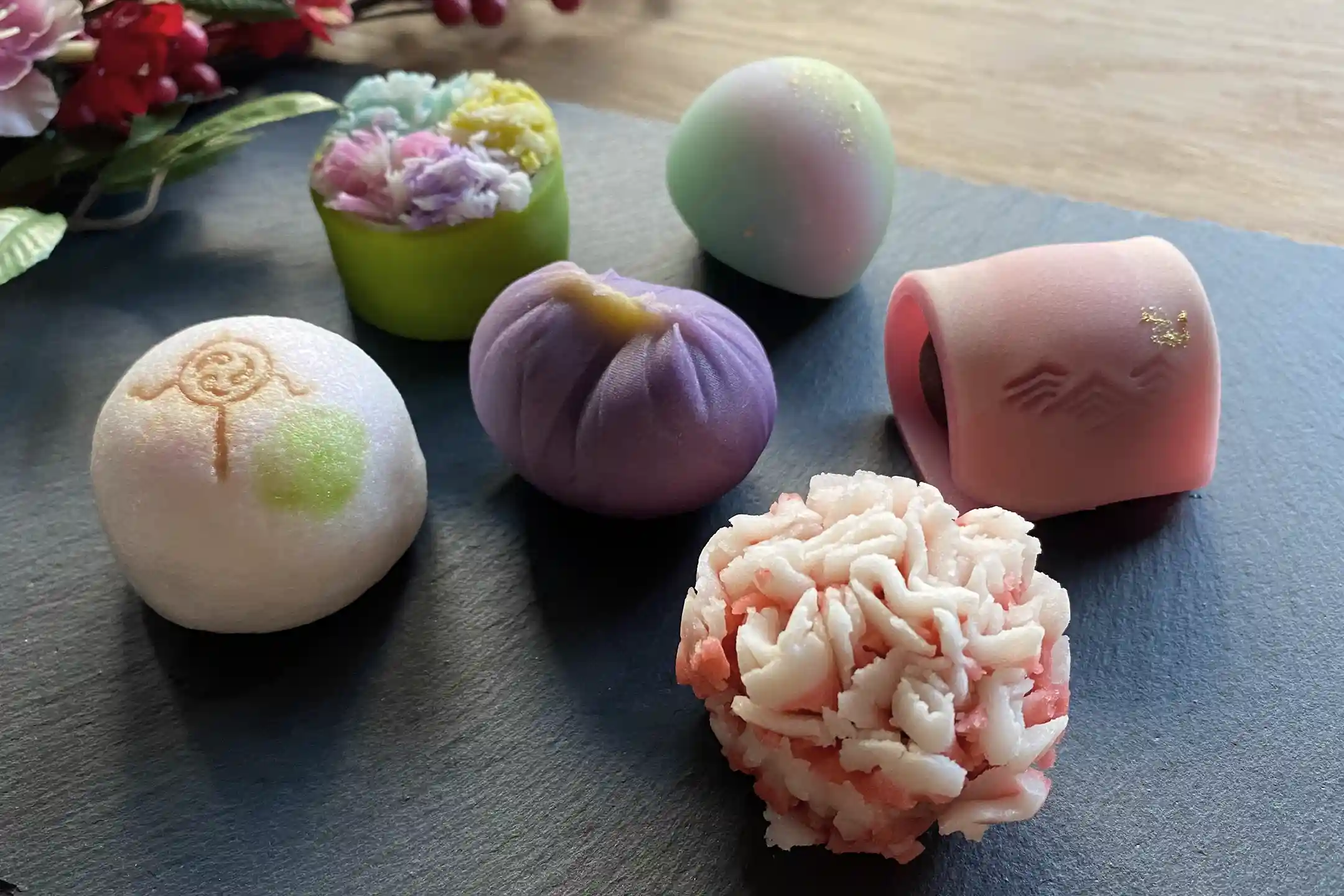
Afternoon: To connect with Tokyo’s artisan culture, visit a workshop for wagashi wood molds (kigata), carved boards used for shaping nerikiri or rakugan. The carving is a marvel of technique.
In Asakusa or Nihonbashi, long-standing kigata studios may accept visitors by reservation and sometimes offer simple carving experiences. Hear about their history, then listen to the shavings from a plane and smell the wood; you’ll notice how the “quiet and handwork” you felt in ikebana extends into sweets-making as well.
Afterward, don’t miss seasonal jōnamagashi with matcha at the adjacent confectioner. Tasting a sweet pressed in a mold you just saw deepens your respect for craftsmanship.
Evening to night: As night falls, stroll a Japanese garden under lights. In Tokyo, gardens like Rikugien and Hama-rikyu often open for special evening viewings.
Rikugien’s autumn foliage and spring weeping cherry illuminations are especially famous. At night, the garden’s silence differs from the daytime—the silhouettes of trees and reflections on water have the mood of an ink painting. Check dates in advance and, to avoid crowds, aim for the start or the last hour (Rikugien’s night viewing is typically 18:30–21:00).
Walk at leisure, savoring the play of moss and stone lantern shadows. With an EV taxi or hired car back to your hotel, you can linger in the day’s afterglow as you ride. In Tokyo, tradition and the contemporary, craftsmanship and art, cross paths in a luxurious day.
Kyoto——Learning Orthodoxy at the Birthplace, with Tea and Incense
Early morning: Wake early for temple visiting before the city stirs. In the quiet of the 7 a.m. hour, a Zen temple like Tofuku-ji or the sub-temples of Myoshin-ji can appear in misty serenity.
Rokkakudo (Choho-ji) opens at 6 a.m. Its museum displays items connected to generations of Ikenobo (visiting hours start at 8:30). Stand alone in the main hall with hands together, then gaze at the “navel stone” by the pond, and you’ll feel the long flow of kado in this city.
Morning: In the birthplace of ikebana, experience a private lesson in the Ikenobo tradition. In Kyoto, Ikenobo instructors sometimes teach private classes at home or in a studio. Ikenobo Kaikan (headquarters) stands at Karasuma Rokkaku and occasionally hosts one-day classes for international guests. Arrive at your reserved time and learn the basic shapes—rikka or seika.
Conversation with a teacher in gentle Kyoto dialect carries its own warmth. After setting your piece in the tokonoma, you may be treated to a bowl of tea. This special Kyoto hospitality makes your work feel even dearer.
Afternoon: Next, meet tea and incense—the other refined arts. For lunch, join a casual tea gathering in a machiya townhouse. In Gion, venues host accessible tea sessions (with English guidance).
Listening to the whisk in a quiet room while drinking tea, you’ll feel ichigo ichie—the “one time, one meeting” ethos shared with ikebana—settle in your bones. A single stem will likely adorn the tea room’s tokonoma; fresh from your lesson, you may sense the intention in that small arrangement.
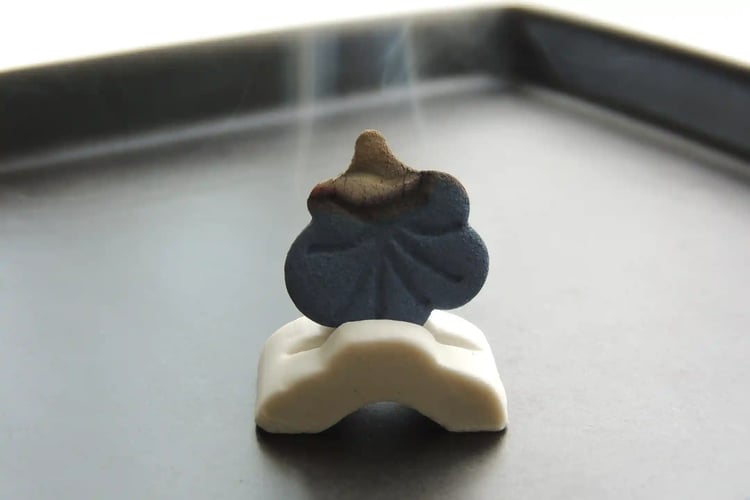
Then a mini experience of kōdō (listening to fragrant wood). In Kyoto, venerable incense houses like Shoyeido and Kungyokudo offer workshops for comparing woods or making kneaded incense. Kōdō, alongside kadō and sadō, is a courtly way; discerning rising scents is advanced practice, but as an experience, it’s simply delightful.
The depths of aloeswood and sandalwood quiet the mind and sharpen your senses, polishing the concentration you’ve built through ikebana.
Evening: Though Kyoto swells with midday visitors, carve out “space” at dusk on the Kamo River. Rest at a cafe near Sanjo Ohashi to watch the water, or stroll the riverside path—intentionally building margin into your day. Avoid the crowds and soak up the city’s quiet.
As lamps glow, you might return to Rokkakudo; on some evenings lanterns and lights create a dreamlike mood. Night: Consider an evening where Kyoto cuisine meets traditional performance.
In a private machiya setting, pair kaiseki with a maiko’s dance and parlor games. In the day’s theme of flowers, tea, and incense, you close with hair ornaments (the flowers a maiko wears) and sake—a refined pleasure unique to Kyoto.
The next morning, when you meet your own arrangement again in your room, its freshness will cleanse your mind. You’ll feel how deeply yesterday’s learning took root.
Kanazawa——Kaga Yuzen, Gold Leaf Workshops, and Seasonal Branch Materials
Morning: In the old capital of Hokuriku, spend the day with the fusion of traditional craft and natural beauty. Begin with studio visits. Kanazawa is a trove of crafts—Kaga Yuzen dyeing and gold leaf among them.
First thing, head for a Kaga Yuzen dye workshop. Through special tours arranged by the tourist association, you can visit the studios of celebrated artists. There you may witness the rarity of all processes—from design through coloring, steaming, and washing—under one roof (Kanazawa has a workshop that completes all 15 steps in-house; this sense of “only here” marks it as a high-value program (*1)).
Seeing lifeless white cloth come alive, and artisans hand-painting motifs one by one at close range, you’ll be struck by their focus and technique. The color sensibility of traditional attire shares much with ikebana; you may glean ideas for palette and composition.
Afterward, rest with Kaga bōcha and sweets nearby. Kanazawa confections are famed for mirroring the seasons with birds-and-flowers motifs—don’t miss a seasonal fresh sweet.
Afternoon: Now try an arrangement focused on branches. In Kanazawa, seasons are pronounced—winter snow ropes, early plum, fresh green maples, autumn foliage. If you study ikebana here, embrace the seasonal branches of the land. In the city and surrounds, qualified instructors from Ikenobo, Sogetsu, or Ohara may offer small-group experiences.
At a machiya salon in Ikenobo style, for example, your lesson may center on the season’s branches—ume, camellia, nandina, or spirea. Arriving at your reservation, you and the teacher first observe branches from a garden or nearby satoyama.
Reading the material’s natural line, you choose the angle with “the most becoming face.” Then you secure branches in a water basin or vessel and add flowers.
Branches may look daunting, but with pointed guidance you’ll be fine. As you balance a bold line against small flowers that set it off, time slips by. The finished work distills Hokuriku’s seasonality, and you may feel, for a moment, like part of nature yourself.
Evening: After ikebana, stroll Kenrokuen—Kanazawa’s famed garden—to study natural tree forms. Ancient pines and reflections of fall colors on winding streams reward every turn. To avoid crowds, go near closing, when visitors thin.
As you walk, look for trees akin to the branches you used, or examine mossy roots and the undersides of leaves. Your understanding deepens with each step. Pause for Kaga bōcha soft-serve in the garden teahouse—a local treat.
Night: Close the day with dinner in a machiya. In Higashi Chaya or Kazue-machi, discreet restaurants in renovated townhouses await. Kaga kaiseki there uses vessels and garnishes that echo seasonal flora—like ikebana upon the plate.
A sprig of nandina with the appetizers, or maple leaves on a large platter—cuisine, too, shows reverence for nature, with a playful wink. If you have energy, add a brief visit to a gold-leaf studio. Kanazawa leads Japan in gold leaf, and some workshops open by reservation at night.
Watching gold leaf applied, you’ll be riveted by masters handling sheets with ultra-fine bamboo brooms. Thinking how such brilliance is a mark of long-honed skill, the day’s theme—“quiet and handwork”—will resonate even more. Your Kanazawa day becomes a rich symphony of local nature, craft, and kado—sure to be a highlight of your journey.
This model course is a proposed scenario. For actual experiences, please confirm reservations and schedules with each venue or class. Crowd levels and seasonal events reference information current as of 2025.
Practical Guide——Etiquette, Manners, and Safety
Lastly, here are practical tips to help you enjoy ikebana smoothly. It’s natural to worry about missteps in another culture.
But if you hold to basics, you’ll be fine. From greetings and conduct to tool handling and allergy considerations, this is what’s reassuring to know in advance. Don’t overthink the finer points—treat these as “know more, enjoy more.” Your exchanges with Japanese hosts will be more fluid, and your learning deeper.
Greetings, Conduct, and How to Treat the Tokonoma
When you arrive at a class or a teacher’s home, start with entry etiquette. Remove your shoes at the entrance and set them neatly; in Japan, removing shoes is part of courtesy. If slippers are provided, change into them.
On first meeting, bow lightly and say, “Thank you for having me today.” A warm, polite greeting makes a good impression and eases early nerves. Once shown to a room, unless directed otherwise, don’t approach the tokonoma on your own or touch any display. The tokonoma is the most formal, almost sacred, place in a Japanese room; stepping into it or treading on it is a breach of etiquette (*1).
When viewing, don’t crowd the hanging scroll or flowers in the tokonoma; sit seiza or kneel and look from a respectful distance. Ask before taking photos. When a teacher demonstrates, naturally clear the front view and watch from a spot that doesn’t obstruct. If another participant’s work is placed on the tokonoma or display stand, avoid stepping in too close; give it its space—this is good manners.
When appreciating others’ pieces, it’s fine to say quietly, “How lovely,” or “The line of that branch really lives,” but avoid loud, critique-like comments. Respect others’ work and offer gentle praise. Since ikebana lessons tend to have a host (teacher) and guests (participants), carry the tea-room spirit of the bow and you won’t go wrong.
Begin and end with greetings—“Please guide me today,” and “Thank you very much”—and let your actions carry sincere intent. Courtesy builds trust with your teacher, and what you learn will sink deeper.
Scent, Pollen, and Handling of Blades
Next, a few notes on fragrance, allergies, and tool safety. As noted earlier, keep perfume to a minimum. Tea ceremony considers perfume prohibited; in ikebana, strong scents are also out. Some classes burn incense, and you want to leave room for the flowers’ own delicate aroma. Unscented deodorant is best (*2, *4). If you have hay fever or specific sensitivities—such as to Asteraceae pollen, or Japanese cedar and cypress branches—tell the organizer in advance; they may substitute materials.
If you remain concerned, wearing a mask is fine—just mention it. No one wants sneezing or runny noses to break concentration; never hesitate to ask for accommodations.
As for shears and kenzan: florists’ shears are thick-bladed and weighty; beginners sometimes pinch their fingers. Many teachers advise handling tools with both hands—not carrying a stem in one and shears in the other; set tools down between steps. When placing shears on the table, don’t point the blades toward yourself. There are finer points of etiquette, but beginners won’t be asked to follow every last one.
Still, treat them as blades. If people are near you, don’t gesture with shears in hand. Because fragments can fly when you cut, some classes offer table covers or aprons for safety.
Kenzan pins are sharper than they look. If you remove one from a vessel, use a kenzan lifter if provided; if you must grip it, hold it through a thick cloth or towel.
Never rub the pins with your hand when washing. Fill a bowl, submerge, and swish to loosen debris; use a brush from the side to lift finer bits. In beginner classes, you may not clean up yourself, but it’s useful to know.
Also, if you drop shears on tatami or the floor, don’t step on the tatami edging (heri) or threshold to grab them; in a Japanese room, stepping on the heri is considered impolite. Walk around calmly and pick them up without a fuss.
Finally, your mindset. Observe safety and manners, but don’t tense up—enjoy yourself. If you make a small misstep, your teacher will guide you kindly.
Saying at the start, “Please feel free to correct me if I err,” puts everyone at ease. Japanese traditional arts have forms, but beneath them is a heart of care and respect. Keep that, and the rest is received with a smile.
Begin with a greeting and end with a greeting—this runs through all the dō arts: kadō, sadō, shodō. Conclude with, “I truly enjoyed today. Thank you,” and offer a small bow as you put on your shoes to leave. With these basics, you’ll enjoy ikebana safely and fully—free to focus on your dialogue with flowers and spend your time meaningfully.


%20is%20Gratitude.webp)